
Last Updated: June 25, 2026
Thank you for visiting! By the way… any links on this page that lead to products on Amazon and other stores/partners are affiliate links Aquarium Store Depot earns a commission if you make a purchase.
Table of Contents
- Key Takeaways
- Species Overview
- Classification
- Origin & Natural Habitat
- Appearance & Identification
- Average Size & Lifespan
- Care Guide
- What People Get Wrong
- Tank Mates
- Food & Diet
- Breeding & Reproduction
- Common Health Issues
- Common Mistakes to Avoid
- Where to Buy
- Frequently Asked Questions
- Closing Thoughts
- Recommended Video
- References
- What Most Care Guides Get Wrong
- The Reality of Keeping Beckfords Pencilfish
- Is the Beckfords Pencilfish Right for You?
- What It Is Actually Like Living With Beckfords Pencilfish
- Species Comparison
Beckford’s pencilfish is the hardiest pencilfish species and the best starting point for anyone interested in the group. It tolerates a wider range of water conditions than other pencilfish, eats prepared foods more readily, and shows good color without demanding blackwater conditions. Start here or do not start at all.
Beckford’s pencilfish is the entry point for pencilfish. If you cannot keep this one, the others will destroy you.
The Reality of Keeping Beckfords Pencilfish
Group size is not a suggestion. The minimum school size for beckfords pencilfish is not just a guideline. In small groups, these fish lose color, become stressed, and display abnormal behavior. A proper group of 6 to 8+ is where you start to see natural schooling behavior, full color expression, and the confidence that makes them worth keeping.
Hardy does not mean indestructible. The beckfords pencilfish tolerates a range of conditions, but it still needs basic care. Ammonia spikes, dramatic temperature swings, and neglected water changes will catch up to even the toughest species. The difference is margin of error, not immunity.
Store appearance is not home appearance. Fish in store tanks are stressed, crowded, and under inappropriate lighting. The beckfords pencilfish almost always looks better in a properly set up home aquarium than it does at the store. Dark substrate, live plants, and appropriate lighting bring out colors and behaviors you will never see in a retail environment.
Biggest Mistake New Owners Make
Keeping them with fish small enough to eat. This is a predator. It will eat anything it can fit in its mouth. If you stock smaller fish with a beckfords pencilfish, you are feeding it expensive live food.
Beckford’s pencilfish are one of the most rewarding nano species for the planted tank hobbyist. They’re peaceful, active, and show stunning color in soft, slightly acidic water with proper group size. Keep 8 or more in a planted tank and they’re a constant visual highlight — small fish that genuinely punch above their weight in terms of display value.
Key Takeaways
- The hardiest and most adaptable pencilfish with a pH tolerance of 5.0 to 8.0
- One of the larger pencilfish at roughly 2.5 inches (6.5 cm), needing at least 15 gallons
- Males develop striking red and orange patches that intensify during displays and sparring
- Peaceful community fish though males is territorial with each other
- Nocturnal color change is normal: the lateral stripe fades and spots appear when lights go off
Species Overview
| Field | Details |
|---|---|
| Scientific Name | Nannostomus beckfordi |
| Common Names | Beckford’s Pencilfish, Golden Pencilfish, Red Pencilfish |
| Family | Lebiasinidae |
| Origin | Guyana, Suriname, French Guiana, and lower Amazon basin |
| Care Level | Easy to Moderate |
| Temperament | Peaceful (males territorial with each other) |
| Diet | Omnivore (micropredator) |
| Tank Level | Mid |
| Maximum Size | 2.5 inches (6.5 cm) |
| Minimum Tank Size | 15 gallons (57 liters) |
| Temperature | 73-82°F (23-28°C) |
| pH | 5.0-8.0 |
| Hardness | 2-15 dGH |
| Lifespan | 3-5 years in captivity |
| Breeding | Egg scatterer |
| Breeding Difficulty | Moderate |
| Compatibility | Peaceful community |
| OK for Planted Tanks? | Yes |
Classification
| Taxonomic Level | Classification |
|---|---|
| Order | Characiformes |
| Family | Lebiasinidae |
| Subfamily | Pyrrhulininae |
| Genus | Nannostomus |
| Species | N. beckfordi (Gunther, 1872) |
Beckford’s pencilfish need soft, slightly acidic water and a planted tank to display their best colors. They’re not difficult to maintain once conditions are right, but they’re not for beginners with hard tap water or bare tanks. The setup investment pays off quickly with this species.
This species was described by Albert Gunther in 1872, making it one of the earlier pencilfish species known to science. It was named after Frederick Beckford, who collected specimens in British Guiana (modern-day Guyana).
Note on family placement: Pencilfish belong to Lebiasinidae, which is separate from Characidae. This family was not affected by the 2024 Melo et al. revision that reorganized several characin families. Lebiasinidae has been taxonomically stable, and Nannostomus is universally recognized as the pencilfish genus.
Origin & Natural Habitat
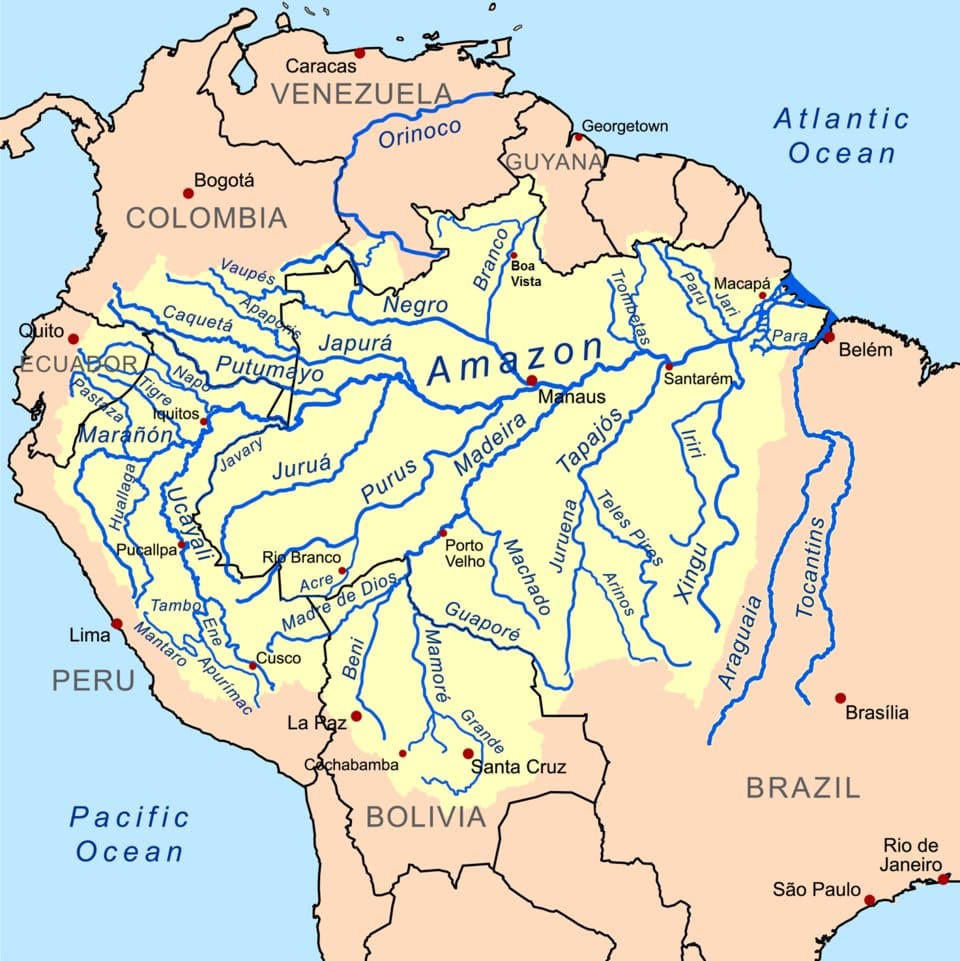
Beckford’s pencilfish has one of the widest distributions of any pencilfish species. It’s found across Guyana, Suriname, French Guiana, and the lower Amazon basin in Brazil. This broad range is one reason it’s so adaptable in captivity. Populations from different regions have been exposed to a wide variety of water conditions over evolutionary time.
In the wild, they inhabit slow-moving streams, swamps, and flooded forest areas with dense vegetation. The water ranges from clear to tannin-stained, with substrates of sand, mud, and accumulated leaf litter. Fallen branches and submerged roots provide shelter and territory markers.
Unlike some of the more specialized pencilfish that come from narrow ranges with very specific water chemistry, N. beckfordi occupies a range of habitats from soft, acidic blackwater streams to moderately hard coastal waterways. This natural versatility translates directly into easier aquarium care.
Appearance & Identification
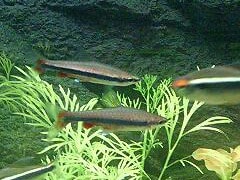
Beckford’s pencilfish has the classic pencilfish body plan: elongated, somewhat cylindrical, and streamlined with a pointed snout. The base body color is gold-brown to olive, overlaid with a prominent dark lateral stripe that runs from the snout through the eye to the base of the caudal fin. Above this stripe is a golden band that gives the fish its “golden pencilfish” trade name.
What really sets well-conditioned specimens apart is the red and orange coloration. Males develop vivid red patches on the anal fin, ventral fins, and along the lower body, with orange highlights along the dorsal area. In peak condition, the red is quite intense, earning this fish the alternate name “red pencilfish.”
Like all pencilfish, N. beckfordi often holds itself at an oblique swimming angle, hovering slightly head-up in the water column. This is normal pencilfish behavior, not a sign of illness or swim bladder problems.
One of the most interesting features of this species is its nocturnal color change. When the lights go off, the bold lateral stripe fades and is replaced by a pattern of dark spots or blotches. If you turn on the lights at night and see a completely different-looking fish, don’t panic. They’ll revert to their daytime pattern within minutes.
Male vs. Female
Males are more colorful than females, with more intense red and orange patches, especially on the fins and lower body. Males also are slightly slimmer. Females are more subdued in coloration with a rounder belly, particularly when carrying eggs. The differences become more obvious as the fish mature, and males displaying at each other will show their best colors.
Average Size & Lifespan
Beckford’s pencilfish is one of the larger pencilfish species, reaching about 2.5 inches (6.5 cm) in length. That’s noticeably bigger than species like the coral red pencilfish or dwarf pencilfish, which top out around 1 to 1.5 inches. The larger size makes them a bit more visible in a community tank and slightly more robust overall.
With proper care, expect a lifespan of 3 to 5 years. Clean water, a varied diet, and a low-stress environment are the main factors that push them toward the upper end of that range.
Care Guide
Tank Size
A 15-gallon tank is the minimum for a group of 6 to 8 Beckford’s pencilfish. Since they’re one of the larger pencilfish species, they benefit from a bit more room than their smaller cousins. A 20-gallon long is an even better starting point if you plan to keep them with other species, as the extra horizontal space gives territorial males room to set up domains without constant clashes.
Water Parameters
| Parameter | Ideal Range |
|---|---|
| Temperature | 73-82°F (23-28°C) |
| pH | 5.0-8.0 (very adaptable) |
| General Hardness | 2-15 dGH |
| KH | 1-8 dKH |
| Ammonia / Nitrite | 0 ppm |
| Nitrate | Below 20 ppm |
This is where Beckford’s pencilfish really stands out from other pencilfish species. That pH range of 5.0 to 8.0 is remarkably wide for a pencilfish. While they’ll show their best colors in slightly acidic to neutral water, they don’t require the ultra-soft blackwater conditions that species like the coral red pencilfish demand. If your tap water is moderately soft to neutral, you can likely keep these fish without any special water treatment.
That said, water quality still needs to be good. Keep up with regular water changes (20 to 25 percent weekly) and make sure ammonia and nitrite stay at zero. They’re forgiving on chemistry but not on cleanliness.
Filtration & Water Flow
Pencilfish come from slow-moving water, so gentle filtration is the way to go. A sponge filter or a hang-on-back filter with a reduced flow rate works well. If you’re using a canister filter, point the output toward the glass or use a spray bar to diffuse the current. Strong flow will stress these fish and push them into corners of the tank.
Lighting
Moderate to subdued lighting works best. Beckford’s pencilfish aren’t as light-sensitive as some of the more specialized pencilfish, but they’ll display better colors and behave more naturally under diffused light. Floating plants are a great way to create shaded areas while still providing enough light for any rooted plants below.
Plants & Decorations
A planted tank is ideal for Beckford’s pencilfish. Use a mix of stem plants, Java fern, Anubias, and floating plants to create a layered environment with plenty of visual barriers. Driftwood and branching hardscape add natural structure and give territorial males areas to claim as their own.
Leaf litter on the substrate is a nice touch that mimics their natural habitat. Indian almond leaves or oak leaves break down slowly, release beneficial tannins, and give the tank a more natural look. They also support the growth of biofilm and microorganisms that the fish will graze on between feedings.
Substrate
A dark substrate is recommended. Sand or fine gravel in dark brown or black tones will bring out the best coloration. Pencilfish will wash out visually over light-colored substrates, and darker backgrounds encourage bolder behavior.
What People Get Wrong
Beckford’s pencilfish are frequently confused with other Nannostomus species at the store level. Several pencilfish look similar, and mislabeling is common. The key identifier for Beckford’s is the double horizontal stripe pattern with reddish fin coloration. Confirm the species before purchasing — the care requirements are similar across pencilfish, but knowing your species helps with sourcing and breeding.
Water chemistry is where most pencilfish care fails. Beckford’s pencilfish come from soft, slightly acidic Amazonian waters. Hard, alkaline tap water keeps them alive but suppresses their color — the red and gold tones that make this species attractive won’t appear in the wrong chemistry. A simple water softener or RO unit makes a visible difference.
Tank planting is not optional. Beckford’s pencilfish use plant cover for security. Open, bare, or sparsely planted tanks keep them stressed and hiding. Dense planting with floating plants to reduce surface light creates the environment that shows off their natural behavior and color.
Tank Mates
Beckford’s pencilfish are peaceful community fish that do well with a wide range of similarly sized, calm species. The main consideration is avoiding anything large enough to eat them or active enough to outcompete them for food.
Best Tank Mates
- Small, peaceful tetras (ember tetras, cardinal tetras, rummy-nose tetras)
- Other pencilfish species such as the coral red pencilfish, three-lined pencilfish, or dwarf pencilfish
- Small rasboras (chili rasboras, harlequin rasboras)
- Corydoras species (pygmy, habrosus, or panda corydoras)
- Otocinclus
- Dwarf Apistogramma species
- Cherry shrimp (adults are safe)
- Nerite snails
Tank Mates to Avoid
- Large or aggressive cichlids
- Fast, boisterous species (tiger barbs, serpae tetras) that will outcompete them for food
- Predatory fish large enough to swallow them
- Highly active surface dwellers that will dominate the mid-water zone
Food & Diet
Beckford’s pencilfish are micropredators that feed on tiny invertebrates, insect larvae, and zooplankton in the wild. They have relatively small mouths, so food size matters. The good news is that they’re more willing to accept prepared foods than many other pencilfish species.
- Best foods: Live baby brine shrimp, daphnia, grindal worms, microworms
- Frozen foods: Cyclops, baby brine shrimp, daphnia, bloodworms (chopped small)
- Dry foods: High-quality micro pellets, crushed flakes, slow-sinking granules
Feed small amounts two to three times per day rather than one large feeding. A mix of live or frozen foods alongside quality dry foods will keep them in the best condition. Males that are regularly fed live foods will develop noticeably more intense red coloration.
Is the Beckfords Pencilfish Right for You?
Before you add a Beckfords Pencilfish to your tank, here is an honest assessment of what you’re signing up for. I’d rather you know exactly what to expect now than find out the hard way after you’ve already bought one.
- Experience level: Beckfords Pencilfishs are best suited for intermediate to advanced keepers. They have specific requirements that can overwhelm beginners.
- Tank size commitment: You’ll need at least 15 gallons, though bigger is always better. Make sure you have room for the tank before buying.
- Tank mate planning: Beckfords Pencilfishs is territorial, so plan your community carefully. Not every fish will work as a tank mate.
- Maintenance demands: Expect regular water testing and consistent water changes. Beckfords Pencilfishs are sensitive to parameter fluctuations.
- Budget reality: Keeping Beckfords Pencilfishs costs more than typical setups. Budget for ongoing costs, not just the initial purchase.
- Time investment: Beyond daily feeding and weekly maintenance, regular observation is the best way to catch health issues early.
- Long-term commitment: With proper care, Beckfords Pencilfishs can live up to 5 years. Make sure you’re ready for years of consistent care.
Breeding & Reproduction
Beckford’s pencilfish is bred in captivity and are considered one of the easier pencilfish to spawn, though raising the fry still takes some dedication.
Breeding Difficulty
Moderate. Spawning can happen in a well-maintained community tank, but raising fry to a viable size requires a dedicated setup. The adults will eat eggs and fry if given the opportunity.
Spawning Tank Setup
- Breeding tank: 5 to 10 gallons with very dim lighting
- Decor: Dense clumps of fine-leaved plants like Java moss, or spawning mops
- Filtration: Gentle sponge filter only
- Substrate: Bare bottom or a layer of marbles to protect fallen eggs
Water Conditions for Breeding
- Temperature: 79 to 82°F (26 to 28°C), slightly warmer than usual
- pH: 5.5 to 6.5 (softer, more acidic than normal range)
- Hardness: 2 to 5 dGH (soft water improves egg viability)
While Beckford’s pencilfish are tolerant of a wide pH range in everyday life, breeding success improves significantly in softer, more acidic water.
Conditioning & Spawning
Condition a pair or a small group (one male to two or three females) with plenty of live foods for one to two weeks before placing them in the breeding tank. Males will display to females with intensified coloration and fin flaring. Spawning typically occurs in the morning, with eggs scattered among fine-leaved plants a few at a time over the course of several hours.
Egg & Fry Care
Remove the adults immediately after spawning, as they will eat the eggs. Eggs hatch in approximately 24 to 36 hours, and the fry become free-swimming about 3 to 4 days later. Fry are very small and need infusoria or commercially available liquid fry food for the first week, followed by freshly hatched baby brine shrimp as they grow. Keep the water clean with small, frequent water changes, and maintain very dim lighting during the early stages.
Common Health Issues
Ich (White Spot Disease)
Pencilfish is susceptible to ich, particularly after being shipped or introduced to a new tank. Watch for small white spots on the body and fins, along with flashing (rubbing against surfaces). Treat with gradual temperature increase to 82°F (28°C) combined with aquarium salt or a commercial ich medication.
Velvet Disease
Velvet presents as a fine gold or rust-colored dusting on the skin and is harder to spot than ich. Affected fish may clamp their fins and breathe rapidly. Treat with copper-based medications and dim the lights, as the velvet parasite relies on photosynthesis.
Bacterial Infections
Poor water quality can lead to fin rot, mouth fungus, and body ulcers. Prevention is the best approach here. Maintain clean water with regular changes, avoid overcrowding, and quarantine new arrivals before adding them to an established tank.
Internal Parasites
Wild-caught specimens may carry internal parasites. Signs include weight loss despite eating, stringy white feces, and a sunken belly. If you suspect parasites, treat with a medicated food containing praziquantel or levamisole.
Common Mistakes to Avoid
- Keeping them solo or in pairs: Beckford’s pencilfish are best kept in groups of 6 or more. Small numbers lead to shy, stressed fish that hide constantly. A proper group encourages natural behavior and male displays.
- Too much water flow: They come from slow-moving or still water. Strong currents will stress them out and keep them pinned in low-flow corners of the tank.
- Food too large: Their mouths are smaller than you’d expect for a 2.5-inch fish. Crush flakes and pellets, or use micro-sized foods to make sure they can actually eat what you’re offering.
- No visual barriers: Males are territorial. Without driftwood, plants, or other structure to break up sight lines, one dominant male will harass the rest of the group.
- Skipping quarantine: This applies to any new fish, but pencilfish is sensitive during acclimation. Quarantine new arrivals for 2 to 4 weeks before adding them to your main tank.
- Bright lighting with no cover: Subdued lighting or floating plants make a big difference. Under harsh light, they’ll look washed out and stay hidden.
Where to Buy
Beckford’s pencilfish is the most commonly available pencilfish in the aquarium trade. You may find them at well-stocked local fish stores, but for consistent availability and healthy stock, these trusted online retailers are reliable options:
Prices are typically very reasonable compared to rarer pencilfish species. Look for captive-bred specimens when possible, as they will acclimate faster and accept prepared foods more readily than wild-caught fish.
Frequently Asked Questions
What’s the most popular pencilfish?
Beckford’s pencilfish (Nannostomus beckfordi) is widely considered the most popular pencilfish in the hobby. It’s the easiest to find, the hardiest to keep, and the most forgiving on water parameters. For hobbyists who want a pencilfish without the demanding water chemistry of species like the coral red pencilfish, Beckford’s is the go-to choice.
Do pencilfish change color at night?
Yes. All Nannostomus species, including Beckford’s pencilfish, display a nocturnal color pattern. When the lights go off, the dark lateral stripe fades and is replaced by spots or blotches. This is completely normal and not a sign of stress or illness. The daytime pattern returns within minutes of the lights coming back on.
Are Beckford’s pencilfish good for beginners?
They’re a solid choice for anyone who has some basic fishkeeping experience. Their wide pH tolerance (5.0 to 8.0) and hardiness make them much more beginner-friendly than most pencilfish species. The main challenge is making sure the food you offer is small enough and that the tank has enough structure for territorial males.
Can Beckford’s pencilfish be kept with shrimp?
Adult cherry shrimp and other similarly sized shrimp are safe with Beckford’s pencilfish. However, very small shrimp and baby shrimp may be picked off, since these fish are micropredators that naturally hunt tiny invertebrates. If breeding shrimp is your priority, provide dense moss and plant cover to give shrimplets hiding spots.
How many Beckford’s pencilfish should I keep together?
A minimum group of 6 is recommended, though 8 to 12 is ideal. Larger groups spread out male aggression so no single fish bears the brunt of territorial behavior. In a group of this size, you’ll also see more natural behavior and better coloration as males display to each other.
Why do my pencilfish swim at an angle?
The oblique, slightly head-up swimming posture is characteristic of all pencilfish and is perfectly normal. It’s actually where the “pencilfish” name comes from. If a fish is swimming erratically, upside down, or listing to one side, that would be cause for concern, but a consistent slight angle is just how they hold themselves in the water.
What It Is Actually Like Living With Beckfords Pencilfish
In a proper school, beckfords pencilfish display natural movement patterns that are genuinely engaging to watch. The fish interact with each other, establish subtle hierarchies, and move through the tank with purpose.
They spend most of their time near the surface, which fills a level of the tank that many other species ignore. This makes them excellent complements to mid-water and bottom-dwelling fish.
Feeding time is when their personality comes out. They learn your routine quickly and will anticipate feeding before you even open the lid.
Their color and behavior improve over time as they settle into a stable environment. Fish that have been in the same tank for months look noticeably better than recently added stock.
They coexist peacefully with virtually every other appropriately-sized community fish. This compatibility makes tank planning straightforward.
How the Beckfords Pencilfish Compares to Similar Species
If you’re considering a Beckfords Pencilfish, you’ve also looked at the Dwarf Pencilfish. Both fill similar roles, but the differences matter when planning your tank. The Beckfords Pencilfish has its own distinct personality and care needs. In my experience, the choice often comes down to the specific community you’re building and whether your water parameters favor one over the other.
The Ember Tetra is worth considering as well. While the Beckfords Pencilfish and the Ember Tetra share some overlap in care, they bring different energy to a tank. If you have the space, keeping both in separate setups gives you a great chance to compare their behavior firsthand.
Closing Thoughts
Beckford’s pencilfish is the kind of fish that grows on you. It’s not the flashiest thing in the store, but once you have a group settled into a planted tank, the subtle gold tones, the flashes of red on displaying males, and the elegant pencilfish posture all come together into something really appealing. There’s a reason this species has been a staple in the hobby for decades.
What I appreciate most is the balance it strikes. You get the pencilfish look and behavior without the demanding water chemistry that makes some species challenging. It’s an accessible entry point into the Nannostomus genus, and for many keepers, it becomes a gateway to exploring other pencilfish species down the line.
Recommended Video
Check out our tetra tier list video where we rank the most popular tetras in the hobby, including the Beckford’s pencilfish:
References
- Froese, R. and D. Pauly, Eds. FishBase. Nannostomus beckfordi. Accessed 2025.
- SeriouslyFish. Nannostomus beckfordi species profile. Accessed 2025.
- Weitzman, S.H. and J.S. Cobb (1975). A revision of the South American fishes of the genus Nannostomus Gunther. Smithsonian Contributions to Zoology, No. 186.
- Practical Fishkeeping. Nannostomus beckfordi care guide. Accessed 2025.
- About the Author
- Latest Posts

I’m Mark Valderrama, founder of Aquarium Store Depot and a fishkeeper with over 25 years of hands-on experience. I started in the hobby at age 11, worked at local fish stores, and have kept freshwater tanks, ponds, and reef tanks ever since. I’ve been featured in two best-selling aquarium books on Amazon and built this site to share practical, experience-based fish keeping knowledge.
Leave a Reply