Last Updated: June 25, 2026
Thank you for visiting! By the way… any links on this page that lead to products on Amazon and other stores/partners are affiliate links Aquarium Store Depot earns a commission if you make a purchase.
Table of Contents
- Key Takeaways
- Species Overview
- Classification
- Origin & Natural Habitat
- Appearance & Identification
- Average Size & Lifespan
- Care Guide
- What People Get Wrong
- Tank Mates
- Food & Diet
- Breeding & Reproduction
- Common Health Issues
- Common Mistakes to Avoid
- Where to Buy
- Frequently Asked Questions
- Closing Thoughts
- Recommended Video
- References
- What Most Care Guides Get Wrong
- The Reality of Keeping Dwarf Pencilfish
- Is the Dwarf Pencilfish Right for You?
- What It Is Actually Like Living With Dwarf Pencilfish
- Species Comparison
The dwarf pencilfish is one of the smallest aquarium fish available and one of the most demanding. It needs pristine water quality, tiny food, and a tank free of aggressive feeders. Any competition for food and it loses. Any ammonia spike and it dies. This is a nano specialist for experienced keepers only.
Dwarf pencilfish are not beginners’ fish. They are tiny, fragile, and unforgiving.
The Reality of Keeping Dwarf Pencilfish
Group size is not a suggestion. The minimum school size for dwarf pencilfish is not just a guideline. In small groups, these fish lose color, become stressed, and display abnormal behavior. A proper group of 6 to 8+ is where you start to see natural schooling behavior, full color expression, and the confidence that makes them worth keeping.
Tank mate selection requires thought. The dwarf pencilfish is not aggressive in the traditional sense, but it is assertive enough to cause problems with the wrong companions. Slow-moving, long-finned species are targets. Fast, short-finned fish of similar size are fine. Plan your community around this reality.
Store appearance is not home appearance. Fish in store tanks are stressed, crowded, and under inappropriate lighting. The dwarf pencilfish almost always looks better in a properly set up home aquarium than it does at the store. Dark substrate, live plants, and appropriate lighting bring out colors and behaviors you will never see in a retail environment.
Biggest Mistake New Owners Make
Keeping them with fish small enough to eat. This is a predator. It will eat anything it can fit in its mouth. If you stock smaller fish with a dwarf pencilfish, you are feeding it expensive live food.
Dwarf pencilfish are one of the most delicate-looking fish in the hobby, and they live up to it in the best way, not because they are fragile, but because they require a thoughtful, species-appropriate setup. Soft, acidic water, a nano-species-only tank, and proper group size of 8 or more is what turns a collection of hiding fish into a genuine display. Get those conditions right and they are endlessly rewarding.
Key Takeaways
- One of the smallest pencilfish species at only 1.4 inches (3.5 cm), perfect for nano tanks of 10+ gallons
- Three bold black stripes with red patches between them create a striking pattern for such a tiny fish
- Soft, acidic water is essential for long-term health and vibrant coloration
- Not a tight schooler but does best in groups of 8 or more for natural behavior
- Micropredator that thrives on live and frozen foods like baby brine shrimp and daphnia
- Nocturnal color change is normal: stripes fade and spots appear when the lights go off
Species Overview
| Field | Details |
|---|---|
| Scientific Name | Nannostomus marginatus |
| Common Names | Dwarf Pencilfish, Marginated Pencilfish |
| Family | Lebiasinidae |
| Origin | Guyana, Suriname, French Guiana, Amazon tributaries in Brazil |
| Care Level | Moderate |
| Temperament | Peaceful |
| Diet | Omnivore (micropredator) |
| Tank Level | Mid |
| Maximum Size | 1.4 inches (3.5 cm) |
| Minimum Tank Size | 10 gallons (38 liters) |
| Temperature | 73-82°F (23-28°C) |
| pH | 4.0-7.0 |
| Hardness | 1-10 dGH |
| Lifespan | 3-5 years in captivity |
| Breeding | Egg scatterer |
| Breeding Difficulty | Moderate |
| Compatibility | Peaceful community |
| OK for Planted Tanks? | Yes |
Classification
| Taxonomic Level | Classification |
|---|---|
| Order | Characiformes |
| Family | Lebiasinidae |
| Subfamily | Pyrrhulininae |
| Genus | Nannostomus |
| Species | N. marginatus (Eigenmann, 1909) |
Dwarf pencilfish are tiny and delicate-looking, but they’re reasonably hardy once established in soft, acidic water. The challenge is their small size (predation risk from tank mates) and the need for precise water chemistry. Not for beginners, but a great intermediate nano species.
This species was described by Carl H. Eigenmann in 1909. The genus name Nannostomus comes from the Greek “nanos” (small) and “stomus” (mouth), which is an apt description for these tiny-mouthed fish.
Note on family placement: Pencilfish belong to Lebiasinidae, which is separate from Characidae. This family was not affected by the 2024 Melo et al. revision that reclassified parts of Characidae. Lebiasinidae has been taxonomically stable, and Nannostomus is universally recognized as the pencilfish genus.
Origin & Natural Habitat
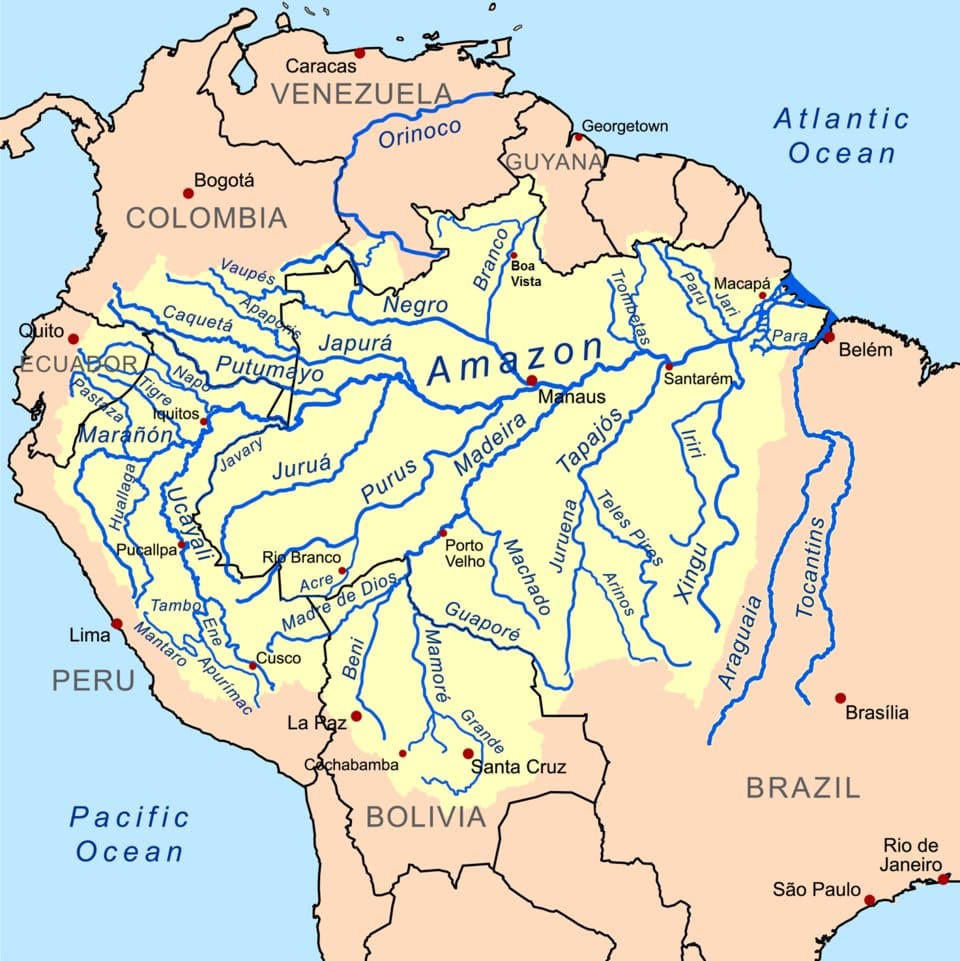
The dwarf pencilfish has one of the wider distributions among pencilfish species. It’s found across Guyana, Suriname, French Guiana, and in Amazon basin tributaries in Brazil. This broad range means wild populations are in relatively good shape compared to more restricted species like the coral red pencilfish, which is limited to a single river system in Peru.
In the wild, dwarf pencilfish inhabit slow-moving streams, swamps, and flooded forest areas with dense vegetation. The water is typically soft, acidic, and stained dark with tannins from decomposing leaves and wood. The substrate is covered in leaf litter, and the water moves slowly or is nearly still. These are heavily shaded environments where direct sunlight rarely reaches the water surface.
Understanding this natural habitat is key to getting the best out of them in an aquarium. They come from environments with very little mineral content, dim lighting, and an abundance of cover. Replicating even some of these conditions in your tank will make a noticeable difference in their behavior and coloration.
Appearance & Identification
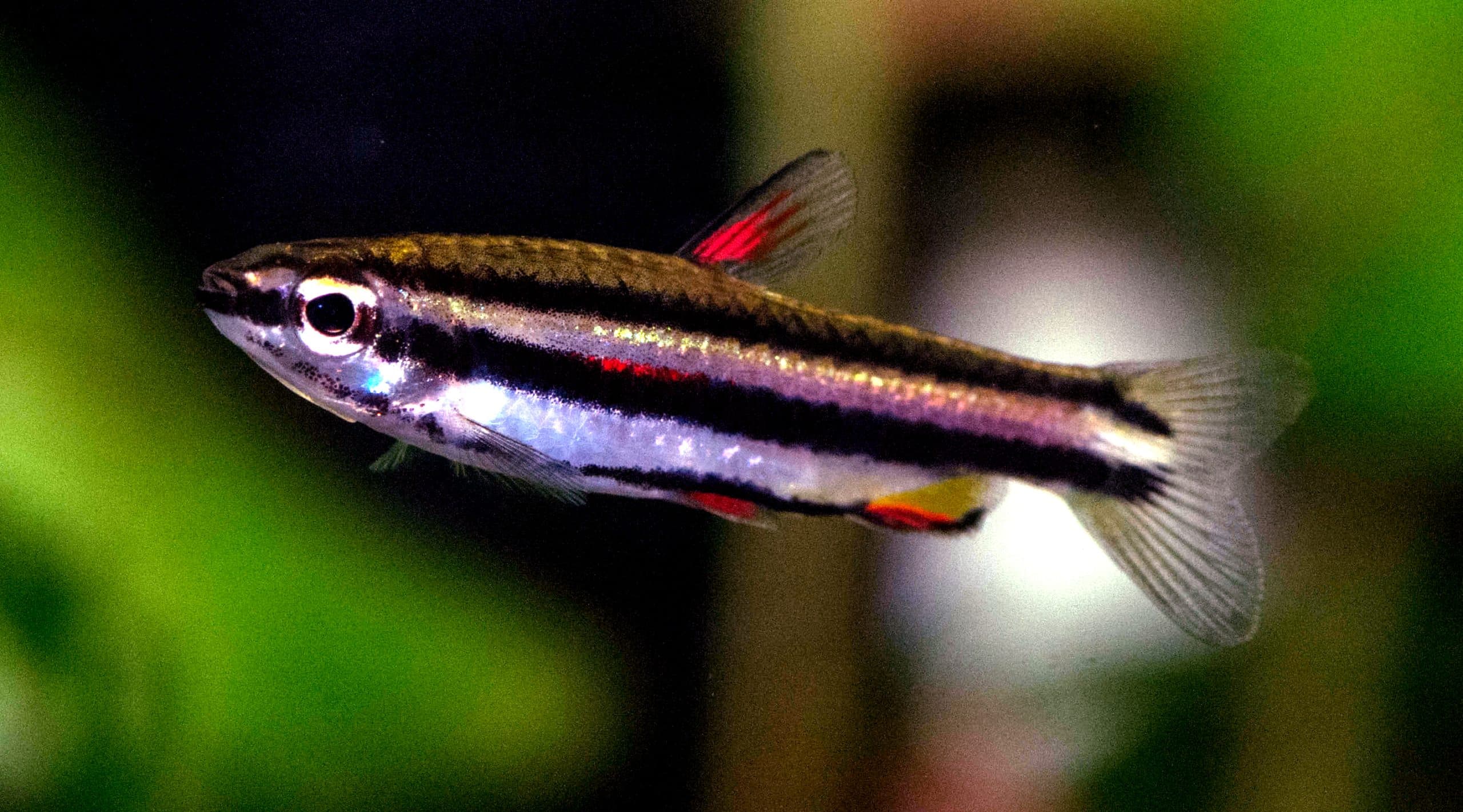
The dwarf pencilfish has an elongated, streamlined body typical of the Nannostomus genus. Its most distinctive feature is the three bold black horizontal stripes that run the length of the body. Between those stripes sit vivid red patches that, in well-conditioned fish, can glow with real intensity. The overall effect is a fish that looks carefully hand-painted.
Like all pencilfish, N. marginatus often holds itself at a slightly oblique angle in the water, tilted head-up. This is completely normal pencilfish behavior and not a sign of swim bladder issues or illness. It’s just how they rest and hover.
One of the more interesting traits of this species is its nocturnal color change. When the lights go off, the bold black stripes fade and are replaced by a pattern of dark spots or blotches. If you flip the lights on at night and see your pencilfish looking completely different, don’t panic. It’s normal, and the daytime pattern returns within minutes of the lights coming back on.
Male vs. Female
Sexing dwarf pencilfish takes a careful eye. Males are typically more intensely colored, with deeper reds and crisper black stripes. They also are slightly slimmer in body shape. Females are a bit rounder, especially when carrying eggs, and their coloration is more muted. The anal fin is another useful indicator: in males, it’s more rounded and may show more color, while in females, it’s more straight-edged.
Average Size & Lifespan
The dwarf pencilfish is one of the smallest species in the Nannostomus genus, reaching a maximum of about 1.4 inches (3.5 cm). Most individuals in the aquarium stay closer to 1.2 inches (3 cm). That tiny size makes them excellent candidates for nano tanks, though they still need a group to feel comfortable.
With proper care, expect a lifespan of 3 to 5 years. Soft, acidic water, a varied diet rich in live foods, and a well-planted tank are the keys to reaching the upper end of that range. Fish kept in hard water or stressful conditions typically won’t live as long or color up as well.
Care Guide
Tank Size
A 10-gallon tank is the minimum for a group of 8 to 10 dwarf pencilfish. For a larger group with tank mates, a 20-gallon long is a better choice. The long footprint gives them more horizontal swimming space, which suits their behavior. These fish don’t need tall tanks since they primarily occupy the middle water column.
Water Parameters
| Parameter | Ideal Range |
|---|---|
| Temperature | 73-82°F (23-28°C) |
| pH | 4.0-7.0 (prefers acidic) |
| General Hardness | 1-10 dGH |
| KH | 0-4 dKH |
| Ammonia / Nitrite | 0 ppm |
| Nitrate | Below 15 ppm |
Soft, acidic water is really important for this species. While they can survive in neutral water, you won’t see their best coloration or behavior unless the pH is on the acidic side and the hardness is low. If your tap water is hard and alkaline, RO/DI water remineralized to target parameters is the most reliable approach.
Indian almond leaves, alder cones, and driftwood all help lower pH naturally while releasing beneficial tannins that these fish encounter in the wild. The tinted water also does put them at ease and encourages more natural behavior.
Filtration & Water Flow
A gentle sponge filter or a hang-on-back filter with a reduced flow rate works best. Dwarf pencilfish come from still or very slow-moving water, and strong currents will stress them out and push them into corners. If you’re using a canister or HOB filter, baffle the output or aim it at the glass to break up the flow.
Water quality needs to be excellent. These fish are sensitive to elevated nitrates and organic waste buildup. Small, frequent water changes (15 to 20 percent twice weekly) are better than large weekly changes for maintaining stability in a soft-water setup.
Lighting
Keep lighting subdued. In the wild, these fish live under heavy forest canopy where very little direct light reaches the water. Bright lighting will wash out their colors and make them shy. Floating plants are one of the best tools for diffusing light naturally while adding cover that makes the fish feel secure.
Plants & Decorations
A well-planted tank is ideal. Dense planting gives dwarf pencilfish cover and helps define different areas of the tank. Great plant choices include:
- Floating plants: Amazon frogbit, salvinia, red root floaters for light diffusion
- Mid-level: Java fern, Anubias, Cryptocoryne species
- Background: Vallisneria, stem plants
- Ground cover: Java moss, Christmas moss
Driftwood and leaf litter round out the setup. Dried Indian almond leaves scattered across the substrate add a natural look and release tannins that benefit the fish. Replace the leaves as they decompose.
Substrate
A dark substrate is the best choice. Black sand or fine dark gravel brings out the fish’s colors and mimics the dark, leaf-littered bottoms of their natural habitat. Avoid bright white or light-colored substrates, which can make the fish appear washed out and stressed.
What People Get Wrong
Dwarf pencilfish get confused with other Nannostomus species, especially the coral-red pencilfish and the three-lined pencilfish. All look similar at a glance but have different stripe patterns and color intensity. Confirm the species before you buy. Pencilfish are frequently mislabeled at stores and online.
Tank mate selection is the most critical decision. Dwarf pencilfish are genuinely small, usually under 1 inch. Any community fish that’s more than 2 to 3 inches becomes a potential predator. People put them in standard community tanks with corydoras, tetras, and gouramis without realizing that some of those fish will eat anything that fits in their mouth. Species-only or dedicated nano setups are the safest approach.
Water chemistry requirements are routinely underestimated. Dwarf pencilfish from soft Amazonian tributaries need acidic, soft water, not neutral tap water. In the wrong chemistry they live but don’t color up and their lifespan shortens. The vivid coloration you see in photos comes from optimal conditions, not average conditions.
Tank Mates
Dwarf pencilfish are genuinely peaceful and won’t bother anything they can’t fit in their tiny mouths. The bigger concern is choosing tank mates that won’t outcompete them for food or stress them with boisterous activity. Think small, calm, and compatible with soft, acidic water.
Best Tank Mates
- Ember tetras
- Green neon tetras
- Other Nannostomus species like the coral red pencilfish or three-lined pencilfish (avoid keeping species that look too similar to prevent hybridization)
- Pygmy corydoras (Corydoras pygmaeus), habrosus corydoras
- Otocinclus
- Small rasboras (chili rasboras, strawberry rasboras)
- Dwarf Apistogramma species
- Cherry shrimp (adults are safe)
Tank Mates to Avoid
- Active, fast-moving species that would outcompete them for food (tiger barbs, danios)
- Large or aggressive fish
- Species requiring hard, alkaline water (African cichlids, livebearers)
- Nippy species that might target their small fins
Food & Diet
Dwarf pencilfish are micropredators in the wild, feeding on tiny invertebrates, insect larvae, worms, and zooplankton. They have very small mouths, so food size matters a lot. Standard-sized pellets or whole bloodworms are simply too big for them.
- Best foods: Live baby brine shrimp, daphnia, grindal worms, microworms, vinegar eels
- Frozen foods: Cyclops, baby brine shrimp, daphnia
- Dry foods: High-quality micro pellets, crushed flake food (accepted by most individuals, but live and frozen should still make up the bulk of the diet)
Feed small amounts two to three times daily rather than one large feeding. These fish graze continuously in the wild, so multiple small meals better match their natural feeding pattern. A diet heavy in live and frozen foods brings out the most vivid red coloration.
One thing to watch for: in a community tank, dwarf pencilfish are slow, deliberate feeders. Faster tank mates can easily eat all the food before the pencilfish get a chance. Target feeding with a pipette or turkey baster helps make sure they get their share.
Is the Dwarf Pencilfish Right for You?
Before you add a Dwarf Pencilfish to your tank, here is an honest assessment of what you’re signing up for. I’d rather you know exactly what to expect now than find out the hard way after you’ve already bought one.
- Experience level: Dwarf Pencilfishs are best suited for intermediate to advanced keepers. They have specific requirements that can overwhelm beginners.
- Tank size commitment: You’ll need at least 10 gallons, though bigger is always better. Make sure you have room for the tank before buying.
- Tank mate planning: Dwarf Pencilfishs is territorial, so plan your community carefully. Not every fish will work as a tank mate.
- Maintenance demands: Expect regular water testing and consistent water changes. Dwarf Pencilfishs are sensitive to parameter fluctuations.
- Budget reality: Keeping Dwarf Pencilfishs costs more than typical setups. Budget for ongoing costs, not just the initial purchase.
- Time investment: Beyond daily feeding and weekly maintenance, regular observation is the best way to catch health issues early.
- Long-term commitment: With proper care, Dwarf Pencilfishs can live up to 5 years. Make sure you’re ready for years of consistent care.
Breeding & Reproduction
Breeding dwarf pencilfish is achievable for hobbyists willing to put in the effort. It’s not as straightforward as breeding something like a livebearer, but it’s within reach for anyone with some experience.
Breeding Difficulty
Moderate. Getting healthy adults to spawn isn’t the hard part. The challenge is raising the tiny fry, which need extremely small food and pristine water conditions to survive.
Spawning Tank Setup
- Breeding tank: 5 to 10 gallons with very dim lighting
- Decor: Dense clumps of Java moss, fine-leaved plants, or spawning mops
- Filtration: Gentle sponge filter only
- Substrate: Bare bottom or a mesh screen to protect fallen eggs from being eaten
Water Conditions for Breeding
- Temperature: 79 to 82°F (26 to 28°C), slightly warmer than normal
- pH: 5.0 to 6.0
- Hardness: Near zero, very soft
- Use RO/DI water to achieve these conditions reliably
Conditioning & Spawning
Condition breeding pairs or small groups with plenty of live foods for two to three weeks before moving them to the spawning tank. Males will court females with subtle body displays. Spawning usually occurs among fine-leaved plants, with the female depositing a few eggs at a time over the course of several days.
Adults will eat their own eggs if they find them, so dense plant cover is essential for protecting at least some of the spawn. Some breeders remove the adults after spawning activity is observed.
Egg & Fry Care
Eggs hatch in approximately 24 to 36 hours, and the fry are extremely tiny. They absorb their yolk sac over the next day or two, after which they need microscopic first foods.
- First foods: Infusoria, paramecium, green water
- After 7 to 10 days: Newly hatched baby brine shrimp, vinegar eels, microworms
- Water changes: Very small, frequent changes to maintain quality without shocking the fry
Growth is slow. Expect several months before the fry start showing adult coloration and reach a size where they can join the main tank safely.
Common Health Issues
Ich (White Spot Disease)
Ich can appear during acclimation or after sudden temperature drops. Slowly raising the temperature to 82°F (28°C) and using a half dose of ich medication is the safest treatment approach for these small fish. They is sensitive to full-strength medications, so go easy.
Velvet Disease
Velvet (Oodinium) presents as a fine gold or rust-colored dust on the skin. It is hard to spot on these small fish until it’s advanced. Dimming the lights and looking at the fish from an angle helps you catch it early. Treatment involves raising temperature, darkening the tank, and using copper-based medication at reduced doses.
Water Chemistry Stress
This is arguably the most common issue with dwarf pencilfish. Keeping them in hard, alkaline water leads to washed-out coloring, chronic stress, and increased susceptibility to infections. If your fish look perpetually pale and hide constantly, check your water hardness and pH before anything else.
Starvation
Their tiny mouths mean they physically can’t eat many common aquarium foods. In community tanks with faster feeders, pencilfish can slowly waste away even when food is being added to the tank. Watch for a sunken belly and make sure they’re actually eating at feeding time.
Common Mistakes to Avoid
- Hard, alkaline water: The single biggest mistake. These fish need soft, acidic conditions to thrive. Neutral-to-alkaline water means dull colors, stressed fish, and a shorter lifespan.
- Keeping too few: Dwarf pencilfish aren’t tight schoolers, but they need the security of a group. Keep 8 or more. Small groups of 3 or 4 are shy and hide constantly.
- Food too large: Standard pellets and whole frozen bloodworms are too big. Use micro-sized foods and crush flakes into fine particles.
- Bright lighting with no cover: These fish come from shaded forest streams. Bright, open tanks stress them out and bleach their colors. Add floating plants.
- Strong water flow: They come from nearly still water. A powerful filter will push them around and exhaust them.
- Keeping with aggressive feeders: Pencilfish are slow, cautious feeders. Pair them with species that won’t eat all the food first.
Where to Buy
Dwarf pencilfish are available from specialty online retailers. You’re unlikely to find them at big-box pet stores, but these trusted sources regularly stock them:
When purchasing, look for active fish with clear eyes and bold coloring. Avoid any that appear sunken or washed out. Ask the seller about water parameters the fish have been kept in so you can match them during acclimation.
Frequently Asked Questions
What’s the difference between Dwarf Pencilfish and other pencilfish?
The dwarf pencilfish (N. marginatus) is one of the smallest species in the genus. Compared to the coral red pencilfish (N. mortenthaleri), the dwarf has a more muted red coloration and less intense territorial behavior. The three-lined pencilfish (N. trifasciatus) is noticeably larger and has a different color pattern with more prominent red in the fins. The dwarf pencilfish is the easiest of the three to keep in a community setting because of its calm, non-territorial nature.
How many Dwarf Pencilfish should I keep together?
A minimum of 8 is recommended, and more is better. While they don’t school tightly like neon tetras, they feel much more secure in a group and will display more natural behavior. In groups of fewer than 6, they will hide and stay pale. A group of 10 to 12 in a well-planted tank is where you really get to see them at their best.
Why do my Dwarf Pencilfish change color at night?
This is completely normal. All Nannostomus species display a nocturnal color pattern where the bold daytime stripes fade and are replaced by spots or blotches. It’s thought to be a camouflage response. The regular pattern returns within minutes of the lights coming on. If you see this during the day, however, it could indicate stress or illness.
Can I keep Dwarf Pencilfish in a planted nano tank?
Absolutely. A planted 10-gallon tank is a great setup for a group of 8 to 10 dwarf pencilfish. The main challenge is maintaining soft, acidic water chemistry in a smaller volume, since small tanks are more prone to parameter swings. Regular water changes and consistent use of RO/DI water help keep things stable.
Do Dwarf Pencilfish eat shrimp?
Adult cherry shrimp and amano shrimp are safe with dwarf pencilfish. Their mouths are too small to eat adult shrimp. However, newborn baby shrimp will almost certainly be eaten, so if you’re trying to breed shrimp in the same tank, expect some losses among the shrimplets.
Why are my Dwarf Pencilfish so pale?
The most likely cause is water that’s too hard or alkaline. Check your GH and pH first. Other factors that wash out coloring include bright lighting, stress from boisterous tank mates, not enough cover in the tank, and a diet lacking in live or frozen foods. Fix the water chemistry and add some floating plants, and you should see improvement within a couple of weeks.
What It Is Actually Like Living With Dwarf Pencilfish
In a proper school, dwarf pencilfish display natural movement patterns that are genuinely engaging to watch. The fish interact with each other, establish subtle hierarchies, and move through the tank with purpose.
They spend most of their time near the surface, which fills a level of the tank that many other species ignore. This makes them excellent complements to mid-water and bottom-dwelling fish.
Feeding time is when their personality comes out. They learn your routine quickly and will anticipate feeding before you even open the lid.
Their color and behavior improve over time as they settle into a stable environment. Fish that have been in the same tank for months look noticeably better than recently added stock.
They coexist peacefully with virtually every other appropriately-sized community fish. This compatibility makes tank planning straightforward.
How the Dwarf Pencilfish Compares to Similar Species
If you’re considering a Dwarf Pencilfish, you’ve also looked at the Beckford’s Pencilfish. Both fill similar roles, but the differences matter when planning your tank. The Dwarf Pencilfish has its own distinct personality and care needs. In my experience, the choice often comes down to the specific community you’re building and whether your water parameters favor one over the other.
The Ember Tetra is worth considering as well. While the Dwarf Pencilfish and the Ember Tetra share some overlap in care, they bring different energy to a tank. If you have the space, keeping both in separate setups gives you a great chance to compare their behavior firsthand.
Closing Thoughts
The dwarf pencilfish is one of those fish that rewards the keeper who takes the time to set things up right. In hard, bright, bare tanks, they’re forgettable. In a dimly lit blackwater tank with soft, acidic water and plenty of plants, they transform into something genuinely beautiful. The way a group of them hovers at their characteristic oblique angle, red patches glowing against dark water, is the kind of thing that makes you stop and watch every time you pass the tank.
They’re not demanding fish, but they do have specific needs. Soft water, small foods, dim lighting, and a group of at least 8. Meet those requirements, and they’ll reward you with years of subtle, elegant beauty. Build the blackwater setup first. The fish will do the rest.
Recommended Video
Check out our tetra tier list video where we rank the most popular tetras in the hobby, including the Dwarf Pencilfish:
References
- Froese, R. and D. Pauly, Eds. FishBase. Nannostomus marginatus. Accessed 2025.
- SeriouslyFish. Nannostomus marginatus species profile. Accessed 2025.
- Weitzman, S.H. and J.S. Cobb (1975). A revision of the South American fishes of the genus Nannostomus. Smithsonian Contributions to Zoology, 186, 1-36.
- Eigenmann, C.H. (1909). Reports on the expedition to British Guiana. Annals of the Carnegie Museum, 6(1), 1-54.
- About the Author
- Latest Posts

I’m Mark Valderrama, founder of Aquarium Store Depot and a fishkeeper with over 25 years of hands-on experience. I started in the hobby at age 11, worked at local fish stores, and have kept freshwater tanks, ponds, and reef tanks ever since. I’ve been featured in two best-selling aquarium books on Amazon and built this site to share practical, experience-based fish keeping knowledge.
Leave a Reply