
Last Updated: June 25, 2026
Thank you for visiting! By the way… any links on this page that lead to products on Amazon and other stores/partners are affiliate links Aquarium Store Depot earns a commission if you make a purchase.
Table of Contents
- What Care Guides Get Wrong
- Key Takeaways
- Species Overview
- Classification
- Origin & Natural Habitat
- Appearance & Identification
- Average Size & Lifespan
- Care Guide
- Is It Right for You?
- Tank Mates
- Food & Diet
- Breeding & Reproduction
- Common Health Issues
- Common Mistakes to Avoid
- Where to Buy
- Frequently Asked Questions
- Species Comparison
- Closing Thoughts
- Recommended Video
- References
If you’re building a nano tank and want a corydoras that actually stays small enough to fit, the habrosus cory is one of the best options in the hobby. This tiny bottom dweller tops out at just 1.4 inches (3.5 cm), making it one of the famous “dwarf trio” of corydoras alongside the pygmy corydoras (Corydoras pygmaeus) and Corydoras hastatus. But unlike the pygmy cory, which spends a lot of time swimming in the midwater column, the habrosus is a dedicated bottom dweller that stays right where you’d expect a cory to be.
What Most Care Guides Get Wrong About the Habrosus Cory
The Habrosus Cory is one of the three dwarf corydoras species, and the misconception is that all three dwarfs are interchangeable. They are not. The Habrosus is a true bottom dweller that stays on the substrate, unlike the Hastatus which mid-water schools, and unlike the Pygmy which hovers above the bottom. The other mistake is keeping too few. Because they are small (about 1.3 inches), people think a group of 4 is fine. It is not. These fish are visibly more confident and active in groups of 8 to 10+. A small group just hides all day.
Also called the salt and pepper cory for its speckled patterning, this little fish packs a lot of personality into a very small package. In my 25+ years in the hobby, I’ve seen these become increasingly popular as nano tanks have taken off, and for good reason. They bring all the classic corydoras charm to tanks where standard-sized corys would feel cramped. Here’s everything you need to know about keeping them happy and healthy.
Key Takeaways
- One of the “dwarf trio” of corydoras species, maxing out at just 1.4 inches (3.5 cm), perfect for nano tanks of 10 gallons or more
- True bottom dweller, unlike the pygmy cory which swims midwater, habrosus stays on the substrate where corys belong
- Keep in groups of 8 or more for confident, natural behavior. Larger groups bring out their best social interactions
- Sand substrate is essential for their delicate barbels and natural foraging behavior. Gravel is never acceptable
- Obligate air breather, occasional darts to the surface are completely normal and not a sign of distress
Species Overview
| Field | Details |
|---|---|
| Scientific Name | Corydoras habrosus |
| Common Names | Habrosus Cory, Salt and Pepper Cory, Venezuelan Pygmy Cory |
| Family | Callichthyidae |
| Origin | Venezuela and Colombia (Orinoco basin tributaries) |
| Care Level | Easy |
| Temperament | Peaceful |
| Diet | Omnivore |
| Tank Level | Bottom |
| Maximum Size | 1.4 inches (3.5 cm) |
| Minimum Tank Size | 10 gallons (38 liters) |
| Temperature | 72 to 79°F (22 to 26°C) |
| pH | 6.0 to 7.5 |
| Hardness | 2 to 15 dGH |
| Lifespan | 3 to 5 years |
| Breeding | Egg depositor (T-position spawning) |
| Breeding Difficulty | Moderate |
| Compatibility | Community (nano-peaceful) |
| OK for Planted Tanks? | Yes |
Classification
| Taxonomic Level | Classification |
|---|---|
| Order | Siluriformes |
| Family | Callichthyidae |
| Subfamily | Corydoradinae |
| Genus | Corydoras |
| Species | C. habrosus (Weitzman, 1960) |
The habrosus cory was described by Stanley Weitzman in 1960. The species name “habrosus” comes from the Greek word meaning “graceful” or “delicate,” which is a fitting description for this dainty little catfish. Unlike several other popular corydoras that were reclassified in the 2024 Dias revision (moving to Hoplisoma or other new genera), Corydoras habrosus has retained its placement in the original Corydoras genus. So when you see “Corydoras habrosus” on a retailer’s website, that name is taxonomically current.
Note on taxonomy: The 2024 phylogenetic revision by Dias et al. reorganized many corydoras species into new genera, but the habrosus cory remains within the true Corydoras lineage. This is the same group that includes the other two members of the dwarf trio, Corydoras pygmaeus and Corydoras hastatus.
Origin & Natural Habitat

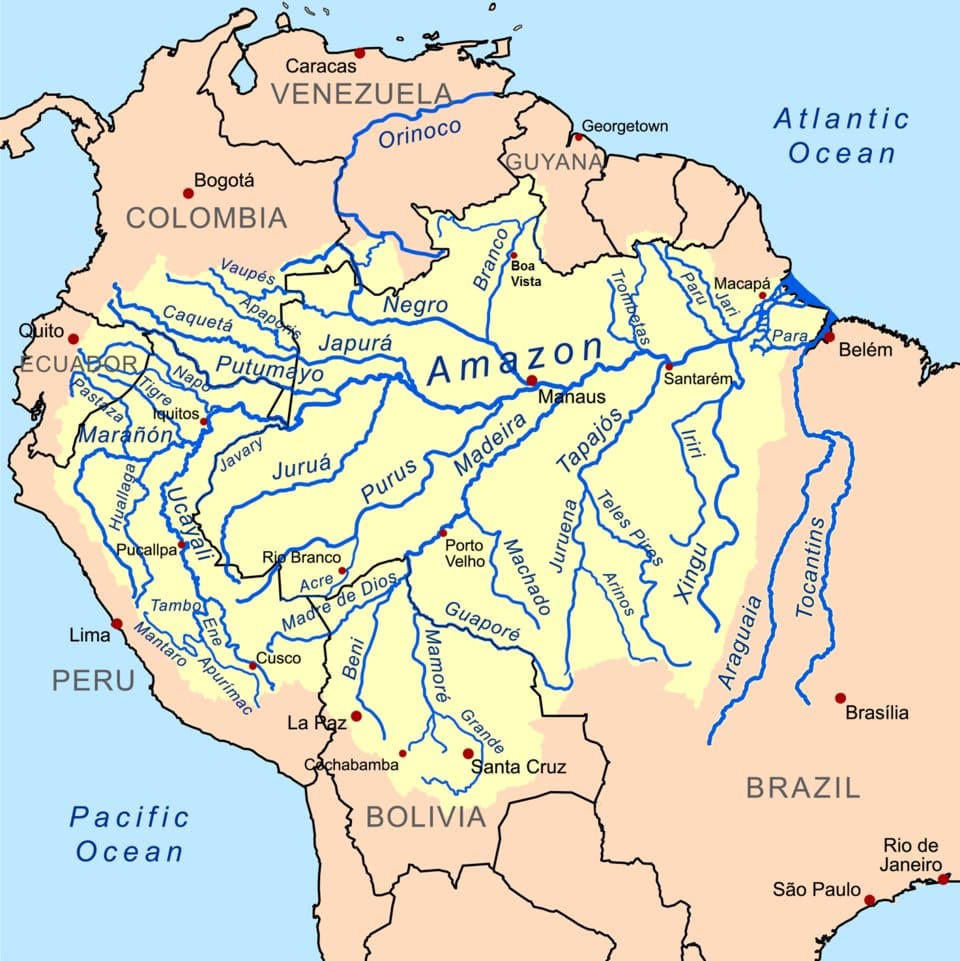
The habrosus cory is native to Venezuela and Colombia, specifically found in tributaries of the Orinoco River basin. This is a different region from many popular corydoras species, which tend to come from the Amazon drainage. The Orinoco basin covers a vast area of northern South America, and habrosus have been collected from slow-moving streams and shallow waterways in this system.
In the wild, these little catfish inhabit clear to slightly tannin-stained waters with sandy or muddy bottoms covered in leaf litter. The streams they call home are typically shallow, slow-moving, and heavily shaded by overhanging vegetation. The substrate is soft and fine, perfect for their foraging habits. Water conditions tend to be slightly acidic and soft, with temperatures staying in the mid to upper 70s°F year-round.
Like other corydoras, habrosus are found in groups, often mixed in with other small fish species. They spend their time sifting through the sandy bottom for tiny invertebrates, organic matter, and biofilm. This social, bottom-focused lifestyle is exactly what you want to replicate in your aquarium.
Appearance & Identification
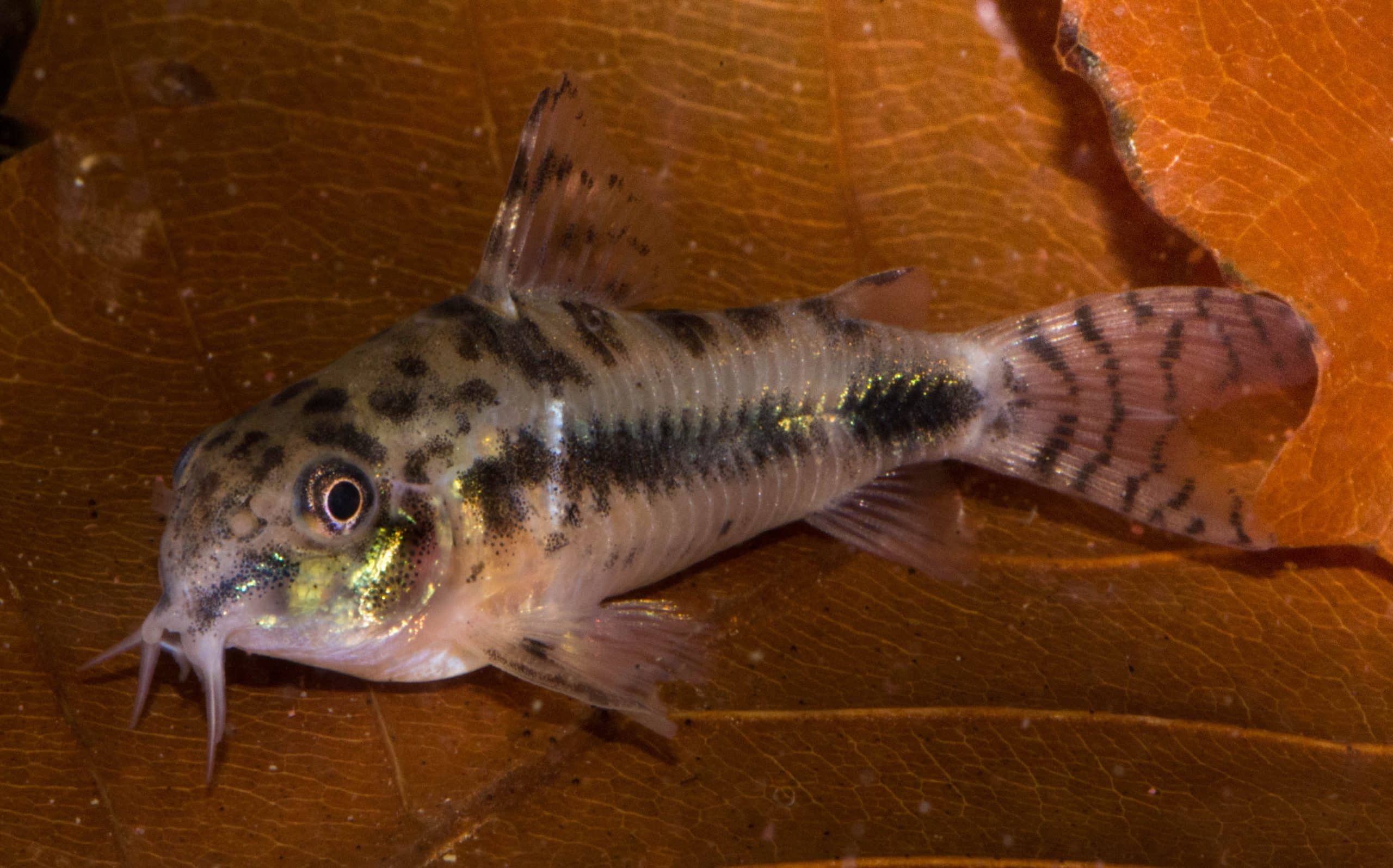
The habrosus cory has a distinctive appearance that sets it apart from the other two dwarf corydoras species. The base body color is a pale, silvery to light tan, overlaid with an irregular pattern of dark spots, blotches, and speckles. This “salt and pepper” pattern is where the common name comes from. There’s also a prominent dark lateral stripe that runs along the midline of the body from behind the gill plate to the base of the tail, though this stripe tends to be broken up and uneven rather than a clean, solid line.
One of the easiest ways to distinguish habrosus from the other dwarf corys is this broken, blotchy patterning. The pygmy cory (Corydoras pygmaeus) has a much cleaner, thinner horizontal stripe along its side, while Corydoras hastatus has a distinct dark spot at the base of the tail. Habrosus looks more “messy” in comparison, like someone flicked a paintbrush of dark pigment across a light body. It’s charming in a scruffy sort of way.
The body shape is the classic corydoras form, compact and slightly rounded with two rows of overlapping bony scutes along each side. The head is broad and flat with two pairs of short barbels. Fins are mostly transparent with subtle spotting. Overall, they look like a miniaturized version of a standard corydoras, just with that distinctive speckled pattern.
Male vs. Female
Sexing habrosus corys follows the same general rules as other corydoras species, but it can be trickier due to their tiny size. Mature females are noticeably rounder and wider when viewed from above, especially when carrying eggs. Males are slimmer and slightly smaller overall. The difference becomes most obvious when you compare fish side by side in a group. Both sexes share the same coloration and patterning, so body shape is your primary indicator. You’ll probably need a well-established group of adults before the differences become clear.
Average Size & Lifespan
Habrosus corys reach a maximum size of about 1.4 inches (3.5 cm) in total length. That’s roughly the size of a large neon tetra. Females are slightly bigger and rounder than males, but even the largest female won’t break the 1.5 inch mark. Most fish you see in stores are juveniles at around 0.75 to 1 inch, so they still have a bit of growing to do.
With proper care, habrosus corys live 3 to 5 years in the aquarium. That’s a respectable lifespan for such a small fish. Reaching the upper end depends on stable water quality, a varied diet, and low stress. Keeping them in appropriate group sizes goes a long way toward reducing stress and supporting longevity. A single habrosus hiding in the corner of a tank isn’t going to live as long as one that’s part of a confident, active school.
Corydoras habrosus is a micro corydoras species reaching less than 1.5 inches (3.8 cm). They are sensitive to water quality, need larger groups than most cories, and are better suited to experienced nano aquarists.
Care Guide
Tank Size
A 10-gallon (38 liter) tank is the minimum for a group of habrosus corys, and honestly, they’re one of the few corydoras species where a 10-gallon actually works well. Their small size means they don’t need the floor space that bigger species like sterbai or bronze corys demand. A 10-gallon long is ideal because it maximizes bottom surface area, which is what matters for these dedicated bottom dwellers.
If you’re keeping a larger group of 12 or more, or you want to build a community around them with other nano fish, a 15 to 20-gallon (57 to 76 liter) tank gives everyone more breathing room. More floor space means less competition for foraging spots and more natural behavior overall.
Water Parameters
| Parameter | Recommended Range |
|---|---|
| Temperature | 72 to 79°F (22 to 26°C) |
| pH | 6.0 to 7.5 |
| Hardness | 2 to 15 dGH |
| Ammonia / Nitrite | 0 ppm |
| Nitrate | Below 20 ppm |
Habrosus corys prefer the cooler side of the tropical range. They’re not warm water corys like sterbai, so don’t pair them with discus or other fish that need temperatures in the 80s. The sweet spot is somewhere around 74 to 76°F (23 to 24°C), which lines up nicely with most standard community tank temperatures.
Like all corydoras, they’re obligate air breathers. You’ll see them periodically zoom to the surface, grab a gulp of air, and head right back to the bottom. This is perfectly normal behavior and not a sign of oxygen issues. However, if you notice them doing it constantly, every few seconds rather than every few minutes, check your water quality. That kind of frantic surface breathing usually points to elevated ammonia, nitrite, or low dissolved oxygen.
Filtration & Water Flow
Gentle filtration is the name of the game for habrosus corys. These are tiny fish that can be pushed around by strong currents, so avoid high-powered hang-on-back filters or canister filters with aggressive output. A sponge filter is honestly the perfect choice for a habrosus tank. It provides solid biological filtration, creates virtually no current at the substrate level, and won’t suck up baby corys if you’re lucky enough to get some spawning.
If you’re using a hang-on-back or canister filter, baffle the output or angle it toward the surface so the flow doesn’t blast the bottom of the tank. A gentle ripple on the surface is all you need for gas exchange.
Lighting
Habrosus corys don’t have strong lighting preferences, but they’re most active under subdued to moderate light. In their natural habitat, overhanging vegetation creates dappled shade, so replicating that feel helps them feel secure. Floating plants are your best friend here. A layer of Amazon frogbit, red root floaters, or salvinia across the surface softens the light and gives these little corys the confidence to spend more time out in the open.
Plants & Decorations
Habrosus corys are completely plant-safe. They’re too small to uproot anything and have zero interest in eating plant tissue. Low-light plants like java fern, anubias, and java moss are great choices. Cryptocorynes work well too and create nice ground-level hiding spots among their leaves. Floating plants, as mentioned, help diffuse light and make the fish more comfortable.
For hardscape, small pieces of driftwood and smooth stones provide resting spots and visual barriers. Leaf litter (Indian almond leaves, oak leaves) is a fantastic addition that mimics their natural habitat, provides grazing surfaces for biofilm, and gently tints the water with beneficial tannins. Just make sure nothing has sharp edges that could damage their tiny barbels.
Substrate
This point cannot be overstated: sand substrate is mandatory for habrosus corys. Fine, smooth sand (play sand, pool filter sand, or aquarium-specific sand) is the only acceptable option. These fish spend every waking moment sifting through the substrate with their sensitive barbels, and even moderately coarse gravel will wear those barbels down to stumps.
For a fish this small, barbel damage is especially concerning because it directly impacts their ability to find food. Habrosus are already tiny and don’t have a lot of energy reserves to spare. If their barbels are damaged and they can’t forage effectively, they decline fast. A thin layer of fine sand, maybe half an inch to an inch deep, is all you need. Watching a group of habrosus sift through sand together is one of those simple joys of the hobby.
Is the Habrosus Cory Right for You?
Before you buy, run through this honest checklist. The Habrosus Cory is a great fish for the right keeper, but it is not for everyone.
- You want a true bottom-dwelling dwarf cory that actually stays on the substrate
- You have a 10-gallon or larger tank dedicated to small, peaceful species
- You can keep a group of 8 to 10+ for confident foraging behavior
- You use sand substrate (essential for their tiny barbels)
- You want the most patterned of the three dwarf corydoras species
- Your tank has gentle filtration that will not overpower these tiny fish
Tank Mates
Choosing tank mates for habrosus corys is all about size. At just over an inch, these fish can become snacks for anything with a big enough mouth. Stick with other small, peaceful species that won’t outcompete them for food or stress them out with aggressive behavior.
Best Tank Mates
- Ember tetras, a perfect nano pairing that occupies the middle to upper water column
- Celestial pearl danios (galaxy rasboras), small, peaceful, and visually stunning alongside habrosus
- Chili rasboras and other small rasbora species that stay under an inch
- Neon tetras and green neon tetras, classic community fish that leave bottom dwellers alone
- Otocinclus, peaceful algae eaters that coexist beautifully with small corys
- Cherry shrimp and other dwarf shrimp, they share the bottom peacefully and habrosus won’t bother adult shrimp
- Other habrosus corys, bigger groups are always better, so add more of the same species first
Tank Mates to Avoid
- Any fish over 3 inches, even peaceful larger fish can accidentally eat something this small
- Aggressive or territorial species (cichlids, bettas with aggressive temperaments, tiger barbs) that will harass or stress them
- Large bottom dwellers like standard-sized corydoras, larger loaches, or plecos that will outcompete them for food and space
- Fast, aggressive feeders that will consume all the food before it reaches the bottom
Food & Diet
Habrosus corys are omnivores that eat the same types of food as larger corydoras, just in smaller portions. In the wild, they forage through sandy substrate for tiny invertebrates, biofilm, algae, and organic detritus. In the aquarium, they’re not picky at all, but the food needs to be small enough for their tiny mouths.
Crushed sinking pellets or micro-sized wafers should form the staple diet. Full-sized Hikari algae wafers or large cory pellets are too big for habrosus to eat efficiently. Break them up or use products specifically designed for nano fish. Repashy gel foods are also excellent because you can spread a thin layer on a dish or flat rock, and the corys will graze on it over time.
Supplement regularly with frozen or live foods. Baby brine shrimp, micro worms, daphnia, and finely chopped frozen bloodworms are all great options. These protein-rich foods help maintain condition and are especially important if you want to see breeding behavior. Feed small amounts once or twice daily, and make sure the food actually reaches the bottom. In a community tank, target feeding near their favorite resting spots works best.
Breeding & Reproduction
Breeding habrosus corys is moderately challenging but absolutely doable for dedicated hobbyists. They follow the same general corydoras breeding pattern, with T-position spawning and adhesive eggs deposited on flat surfaces. The challenge is mostly in raising the incredibly small fry.
Breeding Difficulty
Moderate. Triggering spawning isn’t terribly difficult once you have a well-conditioned group, but the fry are extremely tiny and require appropriately sized first foods. They’re not as easy to raise as larger corydoras species simply because of the scale involved.
Spawning Tank Setup
A dedicated breeding tank of 5 to 10 gallons works well for habrosus. Keep the setup simple with a bare bottom or very thin layer of fine sand. Include smooth surfaces for egg deposition like glass walls, broad plant leaves (anubias is great for this), or small slate tiles. Use a sponge filter to provide gentle filtration without any risk of sucking up the tiny fry. Keep the tank dimly lit with a few hiding spots to reduce stress on the adults.
Water Conditions for Breeding
The classic corydoras breeding trigger works here: a large, cool water change simulating the start of the rainy season. Drop the temperature by 3 to 5°F using fresh, cooler water. Soft, slightly acidic conditions (pH around 6.5, hardness below 8 dGH) tend to produce the best results. Some breeders perform 50% water changes with cooler, soft water over several consecutive days to get things started.
Conditioning & Spawning
Condition your breeding group with heavy feedings of protein-rich live and frozen foods for 2 to 3 weeks before attempting to trigger spawning. Baby brine shrimp, micro worms, and finely chopped bloodworms are excellent choices. A ratio of 2 males to each female tends to work best.
When ready, habrosus corys spawn using the classic corydoras T-position. The male positions himself at a right angle to the female, who cups a small number of eggs in her pelvic fins. She then swims to a chosen surface and deposits the adhesive eggs. The eggs are quite small, even for corydoras standards. A single spawning typically produces 30 to 60 eggs scattered across various surfaces in the tank.
Egg & Fry Care
Remove the adults or transfer the eggs after spawning, because habrosus will eat their own eggs if given the chance. The eggs are tiny and adhesive, so carefully scraping them off surfaces with a fingertip or soft tool works, though it takes patience. A few drops of methylene blue in the hatching container helps prevent fungal growth.
Eggs hatch in 3 to 5 days depending on temperature. The fry are incredibly small, among the tiniest of any commonly bred corydoras. After absorbing their yolk sacs over 2 to 3 days, they need infusoria, vinegar eels, or extremely fine powdered fry food as a first food. Graduate to baby brine shrimp and micro worms as they grow. Keep the rearing tank spotlessly clean with gentle daily water changes. Growth is slow, and it takes several months for fry to reach a size where they look like miniature adults.
Common Health Issues
Barbel Erosion
The number one health concern for any corydoras, and especially these tiny ones. Rough substrate grinds down their delicate barbels, making it progressively harder for them to locate food. For a fish this small, barbel damage is a serious threat because they simply can’t afford to miss meals. The prevention is simple and absolute: use fine, smooth sand. If you notice shortened or missing barbels, switch substrates immediately. Partial regrowth is possible in clean conditions, but prevention is always better than treatment.
Ich (White Spot Disease)
Habrosus corys can contract ich, and treating it requires caution. Like all corydoras, they’re sensitive to many common medications, especially those containing copper or malachite green. The heat treatment method (raising temperature to 86°F) is problematic for habrosus because their preferred range tops out at 79°F, and pushing much beyond that stresses them significantly. If you need to treat ich, use half-strength medication formulated for scaleless fish and monitor closely. Prevention through quarantining new arrivals is always the safest approach.
Bacterial Infections
Red patches on the belly, cloudy eyes, or frayed fins can indicate bacterial infections. These are almost always secondary to poor water quality or injuries from inappropriate substrate. Small fish like habrosus are particularly vulnerable because they have less body mass to fight off infections. Maintaining clean water with low nitrates and pristine substrate conditions is your best defense. Mild infections often clear up with consistent water changes alone.
General Prevention
Quarantine all new fish for at least two weeks before adding them to an established tank. Perform weekly water changes of 25% to 30%, and keep nitrates below 20 ppm. Make sure these small corys are actually getting enough food in a community setting, as starvation and stress from underfeeding is a real risk with nano fish that compete poorly against faster species. A healthy, well-fed habrosus cory in clean water on sand substrate is a remarkably trouble-free little fish.
Common Mistakes to Avoid
- Using gravel instead of sand, this is the biggest mistake people make with any corydoras. It’s even more critical with habrosus because their tiny barbels are incredibly delicate. Always use fine, smooth sand.
- Keeping too few, habrosus corys need a minimum group of 8, and they really start showing their best behavior in groups of 10 to 12 or more. Smaller groups tend to hide constantly and you’ll rarely see them.
- Mixing with fish that are too large, at 1.4 inches, habrosus are small enough to be swallowed by many common community fish. Size-match your tank mates carefully.
- Confusing them with pygmy corys, the pygmy cory (Corydoras pygmaeus) is a midwater swimmer, while habrosus is a bottom dweller. They have different behaviors and should be chosen based on what role you want filled in the tank.
- Assuming they eat leftovers, these fish need dedicated feedings with appropriately sized sinking foods. They can’t survive on whatever drifts down from midwater feeders.
- Not providing enough cover, habrosus are more timid than larger corys. Without plants, leaf litter, and hiding spots, they’ll spend most of their time stressed and hidden instead of actively foraging.
Where to Buy
Habrosus corys are increasingly popular in the nano fish hobby, but they’re not quite as common as pygmy corys at your typical local fish store. Chain pet stores rarely carry them. Your best bet is a specialty aquarium shop, or better yet, a reputable online retailer that specializes in healthy, well-conditioned fish.
I’d recommend checking Flip Aquatics or Dan’s Fish for availability. Online specialty retailers tend to ship healthier stock than what you’ll find at big box stores, and they understand the importance of proper packaging for small, delicate fish like habrosus. Expect to pay around $4 to $8 per fish, with discounts often available when you buy groups of 8 or more.
Frequently Asked Questions
What is the difference between habrosus and pygmy corydoras?
The biggest difference is behavior. The pygmy cory (Corydoras pygmaeus) is a midwater swimmer that hovers and schools in the water column, behaving more like a tetra than a traditional cory. The habrosus cory is a true bottom dweller that stays on or near the substrate, sifting through sand exactly the way larger corydoras species do. In terms of appearance, pygmaeus has a cleaner, thinner horizontal stripe, while habrosus has a more irregular, speckled “salt and pepper” pattern. Choose pygmaeus if you want a midwater schooler. Choose habrosus if you want a nano bottom dweller.
How many habrosus corys should I keep together?
A minimum of 8, but 10 to 12 is better. In larger groups, they become noticeably bolder and more active, foraging together across the substrate rather than hiding individually. A small group of 3 or 4 will spend most of their time tucked behind decorations, and you’ll miss out on the social behavior that makes these fish so enjoyable to watch.
Can habrosus corys live in a 5-gallon tank?
A 10-gallon tank is the recommended minimum. While habrosus are tiny, they need to be kept in groups of 8 or more, and a 5-gallon simply doesn’t provide enough floor space or water volume to support a group that size comfortably. A 10-gallon, especially a 10-gallon long, gives them the room they need to forage and behave naturally.
Do habrosus corys need sand substrate?
Yes, absolutely. Sand isn’t optional for any corydoras species, and it’s especially important for habrosus because their barbels are so small and delicate. Gravel will damage them quickly and impair their ability to find food. Fine play sand, pool filter sand, or dedicated aquarium sand all work perfectly.
Why does my habrosus cory keep swimming to the surface?
This is completely normal. All corydoras are obligate air breathers and regularly dart to the surface to gulp air, which they process through a modified section of their intestine. Occasional trips are healthy behavior. If it’s happening constantly (every few seconds), check your water quality and dissolved oxygen levels because excessive surface breathing can indicate a problem.
Can I keep habrosus corys with shrimp?
Yes, habrosus corys are one of the best fish for shrimp tanks. They’re small enough that adult cherry shrimp and other dwarf shrimp are completely safe around them. They may eat the occasional newborn shrimplet, but they won’t actively hunt shrimp. Many nano tank keepers successfully maintain habrosus alongside thriving shrimp colonies.
Are habrosus corys good for beginners?
Yes, with a couple of caveats. They’re hardy and easy to care for as long as you provide sand substrate and keep them in proper group sizes. The main beginner pitfall is not realizing how important these two factors are. If you start with the right setup (sand, group of 8+, gentle filtration, stable water quality), habrosus are very forgiving and straightforward to keep.
How the Habrosus Cory Compares to Similar Species
Habrosus Cory vs. Pygmy Corydoras
The Pygmy Corydoras hovers slightly above the substrate and mid-water schools more than the Habrosus, which is a dedicated bottom forager. The Pygmy is slightly smaller and more commonly available. Both need groups of 8+. Choose the Habrosus if you want a true substrate dweller, or the Pygmy if you want more mid-water activity.
Habrosus Cory vs. Hastatus Cory
The Hastatus Cory is the most unusual of the three dwarfs because it actively mid-water schools like a tetra. The Habrosus stays firmly on the bottom. If you want a tiny cory that forages on substrate, pick the Habrosus. If you want one that schools in open water, the Hastatus is your fish.
Expert Take (Mark Valderrama, AquariumStoreDepot)
After 25 years in the hobby and time managing fish stores, the habrosus cory is one of those species I always recommend to hobbyists ready to move beyond the basics. Corydoras habrosus is a micro corydoras species reaching less than 1.5 inches (3.8 cm). They are sensitive to water quality, need larger groups than most cories, and are better suited to experienced nano aquarists. Keep habrosus in groups of 10 or more. At under 1.5 inches (3.8 cm), this species relies heavily on group security – small groups become skittish and are prone to stress-related disease.
Closing Thoughts
The habrosus cory fills a niche in the hobby that not many fish can. It’s a true bottom-dwelling corydoras that actually fits in a nano tank. If you want the full corydoras experience, the sand sifting, the social schooling, the adorable little barbels, but you’re working with a 10-gallon tank, habrosus is your fish. Compared to the pygmy cory that drifts around the midwater, habrosus gives you that classic bottom-dweller behavior in a miniature package.
Give them sand, keep them in a big group, make sure they’re actually getting fed, and add some leaf litter and hiding spots. That’s really all there is to it. They’ll reward you with hours of watching tiny little catfish do exactly what catfish do best, just on a smaller scale.
Have you kept habrosus corys? I’d love to hear about your experience, drop a comment below!
Recommended Video
Check out our corydoras tier list video where we rank the most popular corydoras species in the hobby, including the habrosus cory:
References
- Corydoras habrosus Profile. Seriously Fish
- Corydoras habrosus (Weitzman, 1960). FishBase
- Habrosus Corydoras Care Guide. Practical Fishkeeping
- Corydoras habrosus. The Aquarium Wiki
- About the Author
- Latest Posts

I’m Mark Valderrama, founder of Aquarium Store Depot and a fishkeeper with over 25 years of hands-on experience. I started in the hobby at age 11, worked at local fish stores, and have kept freshwater tanks, ponds, and reef tanks ever since. I’ve been featured in two best-selling aquarium books on Amazon and built this site to share practical, experience-based fish keeping knowledge.
Leave a Reply