
Last Updated: June 25, 2026
Thank you for visiting! By the way… any links on this page that lead to products on Amazon and other stores/partners are affiliate links Aquarium Store Depot earns a commission if you make a purchase.
Table of Contents
- What Care Guides Get Wrong
- Key Takeaways
- Species Overview
- Classification
- Origin & Natural Habitat
- Appearance & Identification
- Average Size & Lifespan
- Care Guide
- Is It Right for You?
- Tank Mates
- Food & Diet
- Breeding & Reproduction
- Common Health Issues
- Common Mistakes to Avoid
- Where to Buy
- Frequently Asked Questions
- Species Comparison
- Closing Thoughts
- Recommended Video
- References
The hastatus cory is the smallest commonly available corydoras, and it behaves nothing like a typical cory. It spends most of its time hovering in the mid-water column, schooling with a tight formation that looks more like a group of tiny tetras than a group of catfish. If you expect it to forage along the bottom like a bronze cory, you will be confused. It hovers. That is what it does.
At barely three-quarters of an inch, it needs a nano-appropriate setup with gentle filtration, no large tank mates, and a group of at least ten to display its schooling behavior. This guide covers its unique mid-water lifestyle, because the hastatus cory is a corydoras that forgot it was supposed to stay on the bottom.
Do not buy the hastatus cory as a bottom dweller. It is a mid-water schooler in a catfish body, and you need to stock around that.
What Most Care Guides Get Wrong About the Hastatus Cory
The Hastatus Cory breaks the most fundamental rule people expect from corydoras: it does not stay on the bottom. This tiny species (barely reaching 1 inch) actively mid-water schools like a tetra, hovering in the water column for much of the day. People buy it expecting typical cory bottom-feeding behavior and get confused when it swims in open water. The other misconception is about tank mates. At under 1 inch, this fish is prey for anything with a mouth big enough. Standard community fish that are perfectly safe with larger corys will eat Hastatus. You need to plan tank mates very carefully.
The hastatus cory is one of the three “dwarf corys” alongside the pygmy corydoras (Corydoras pygmaeus) and Corydoras habrosus. Of those three, hastatus is the smallest, and it’s the one that most fully commits to mid-water schooling. If you’re looking for a nano fish with real personality and a fascinating backstory, this little catfish delivers in ways you wouldn’t expect from something this tiny.
The Reality of Keeping Hastatus Cory
The hastatus cory breaks every rule about what a corydoras is supposed to do. It does not sit on the bottom. It does not forage through substrate all day. It hovers in the mid-water column and schools like a tetra. If you buy this fish expecting a bottom dweller, you bought the wrong cory.
At barely three-quarters of an inch fully grown, the hastatus is one of the smallest catfish in the hobby. That size makes it vulnerable to everything. Tankmates that ignore larger cories will eat a hastatus. Filter intakes that pose no threat to a bronze cory will trap a hastatus. Even feeding requires extra care because the food needs to be small enough for a mouth that measures in millimeters.
Group size matters more here than with any other corydoras. A group of four hastatus hides constantly and shows zero interesting behavior. A group of twelve transforms into a hovering cloud that moves through the tank in synchronized formation. The difference is not subtle.
Biggest Mistake New Owners Make
Keeping them in groups too small to school. Four or five hastatus will spend their entire lives hiding behind a plant and you will wonder why you bought them. Get twelve or more. That is when the mid-water schooling behavior that makes this species unique actually starts.
Corydoras hastatus is one of the smallest and most atypical corydoras species. Unlike most cories that bottom-dwell, hastatus schools in midwater, which changes how you set up the tank, choose tank mates, and manage water flow.
Expert Take (Mark Valderrama, AquariumStoreDepot)
The hastatus is not a traditional corydoras. Think of it as a nano schooling fish that happens to be a catfish. A group of 12 to 15 in a mature planted nano tank with gentle flow creates one of the most unique displays in freshwater aquariums. No other cory does what this fish does. But it needs numbers to do it.
Key Takeaways
- The smallest corydoras species at just 1 inch (2.5 cm), making it a true nano fish
- Schools in mid-water unlike typical corys, hovering in tight groups like a tetra rather than staying on the bottom
- Needs large groups of 10 or more to feel secure and display natural schooling behavior
- Distinctive black tail spot at the base of the caudal fin is the easiest identification feature
- Obligate air breather that darts to the surface periodically to gulp atmospheric air
Species Overview
| Field | Details |
|---|---|
| Scientific Name | Corydoras hastatus (Eigenmann & Eigenmann, 1888) |
| Common Names | Hastatus Cory, Dwarf Cory, Tail-spot Pygmy Cory, Micro Catfish |
| Family | Callichthyidae |
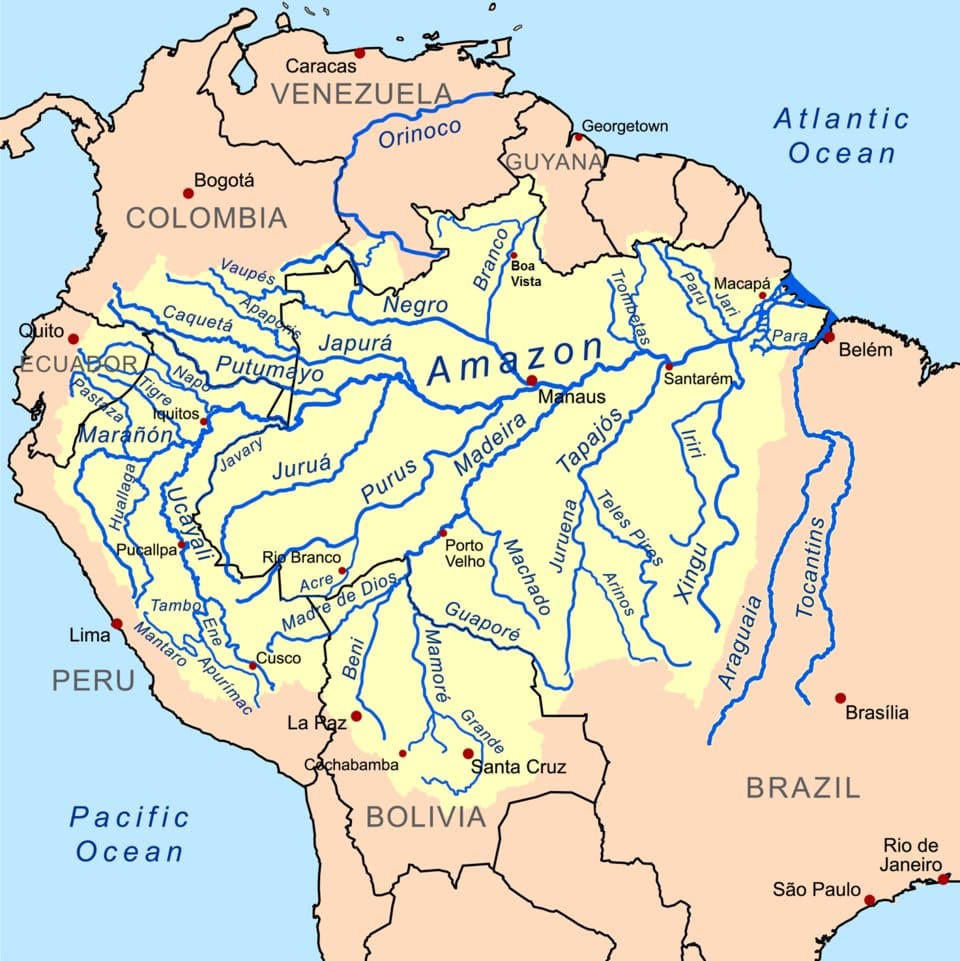
| Origin | Brazil and Paraguay (Amazon and Paraguay river basins) |
| Care Level | Moderate |
| Temperament | Peaceful |
| Diet | Omnivore |
| Tank Level | Mid-water (unusual for corydoras) |
| Maximum Size | 1 inch (2.5 cm) |
| Minimum Tank Size | 10 gallons (38 liters) |
| Temperature | 72 to 79°F (22 to 26°C) |
| pH | 6.0 to 7.5 |
| Hardness | 2 to 15 dGH |
| Lifespan | 3 to 4 years |
| Breeding | Egg depositor (T-position) |
| Breeding Difficulty | Moderate to Difficult |
| Compatibility | Nano community |
| OK for Planted Tanks? | Yes |
Classification
| Taxonomic Level | Classification |
|---|---|
| Order | Siluriformes |
| Family | Callichthyidae |
| Subfamily | Corydoradinae |
| Genus | Corydoras |
| Species | C. Hastatus (Eigenmann & Eigenmann, 1888) |
Corydoras hastatus was described by Carl H. Eigenmann and Rosa Smith Eigenmann in 1888 from specimens collected in the Mato Grosso region of Brazil. It belongs to the subfamily Corydoradinae within the armored catfish family Callichthyidae. The species name “hastatus” comes from the Latin word for “spear,” referencing the distinctive spear-shaped marking at the base of the tail.
Note on naming: Don’t confuse hastatus with its two dwarf cousins. Corydoras pygmaeus (the pygmy corydoras) has a horizontal black stripe along the body, while Corydoras habrosus (the salt and pepper cory) has a more mottled, spotted pattern. The hastatus cory’s clean body with just the tail spot makes it the easiest of the three to identify.
Origin & Natural Habitat
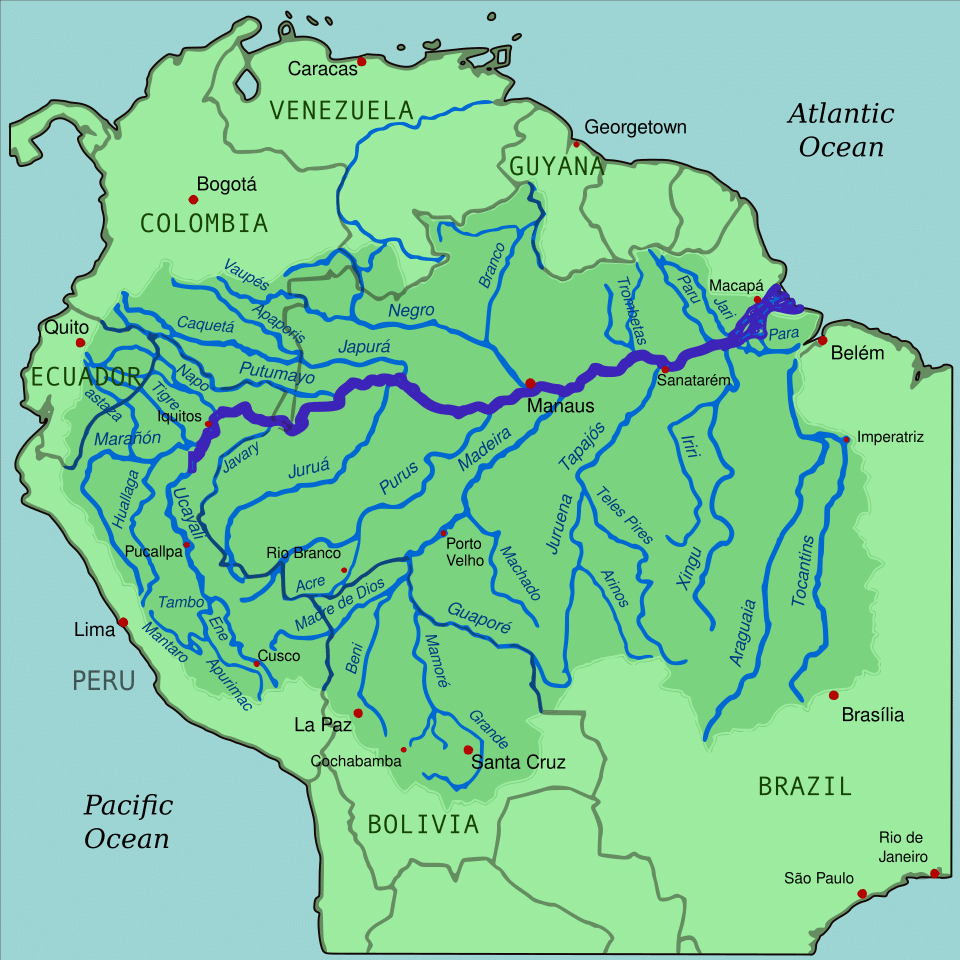

The hastatus cory is native to Brazil and Paraguay, with populations found across both the Amazon and Paraguay river basins. The type locality is in the Mato Grosso region of Brazil, which sits right at the intersection of these two major drainages. They’ve been collected from various tributary streams and floodplain habitats throughout this range.
In the wild, hastatus corys inhabit shallow, slow-moving streams and flooded areas with dense vegetation. Unlike their larger cousins that stick to the bottom, these tiny catfish are frequently found hovering among aquatic plants in the mid-water column. The substrate in their natural habitat is typically soft sand or fine silt covered with decomposing leaf litter.
The water in their native range is warm, soft, and slightly acidic, often stained brown with tannins from decaying organic material. They’re found in areas with abundant plant growth that provides cover from predators, which makes sense given their extremely small size. In the wild, they’ve been observed schooling with similarly sized and patterned characins, likely as a form of mimicry for predator protection. That mid-water schooling behavior isn’t just a quirk. It’s a survival strategy.
Most hastatus corys in the aquarium trade are wild-caught from Brazil. Captive-bred specimens do show up from specialty breeders, but they’re not mass-produced like bronze or peppered corys.
Appearance & Identification
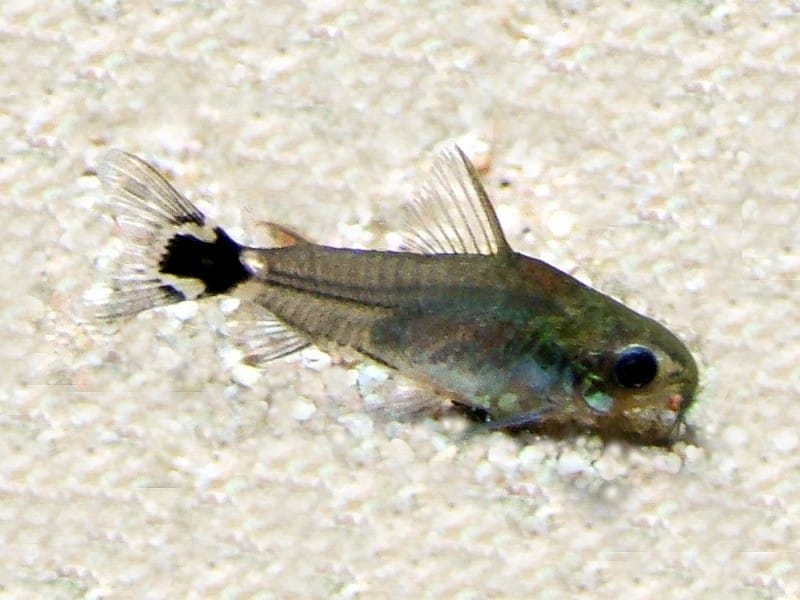
The hastatus cory is a tiny, streamlined catfish that looks almost nothing like the chunky, armored body you’d expect from a corydoras. The body is elongated and compressed, much more so than larger cory species. The overall coloration is a translucent silvery-gray to pale olive, often with a subtle iridescent sheen along the flanks.
The defining identification feature is the black diamond-shaped or arrowhead-shaped spot at the base of the caudal fin. This tail spot is bordered by lighter coloring and is clearly visible from a distance. It’s where the common name “tail-spot pygmy cory” comes from, and it’s the easiest way to tell hastatus apart from the other two dwarf cory species.
Like all corydoras, the body is covered in two rows of overlapping bony plates (scutes) instead of scales, and they have the characteristic short barbels around the mouth. The pectoral fin spines are present but tiny, so netting issues are less of a concern compared to larger species. That said, still be careful when handling them. Use a cup or container for transfers instead of a fine mesh net whenever possible.
Interestingly, the tail spot pattern of the hastatus cory closely resembles the coloration of certain small characins (tetras) that share the same habitat. This is believed to be a form of Batesian mimicry, where the small, vulnerable catfish gains protection by schooling with similarly marked tetras, making it harder for predators to single them out.
Male vs. Female
Sexing hastatus corys follows the same general pattern as other corydoras species, though the differences are subtle given their tiny size:
- Females: Slightly larger and noticeably rounder when viewed from above, especially when carrying eggs. Mature females have a wider belly profile.
- Males: Slightly smaller and more slender than females. When viewed from above, they appear more streamlined through the body.
Honestly, at this size, telling males from females is tough unless you have a group of mature fish and can compare them side by side. The easiest time to differentiate is when females are gravid, as their bellies become visibly plumper with eggs.
Average Size & Lifespan
The hastatus cory maxes out at about 1 inch (2.5 cm), making it the smallest species in the entire Corydoras genus. To put that in perspective, it’s roughly half the size of a pygmy cory (C. Pygmaeus), which reaches about 1.2 inches. This is a genuinely tiny fish. When you see one in person for the first time, you’ll be surprised at just how small they really are.
With proper care, hastatus corys typically live 3 to 4 years in captivity. That’s a shorter lifespan than larger corydoras species, which is common with very small fish. Clean water, stable parameters, a good diet, and the security of a large group are the biggest factors in helping them reach the upper end of that range.
Care Guide
Tank Size
A minimum of 10 gallons (38 liters) is recommended for a group of hastatus corys. While their tiny size might tempt you to try a 5-gallon setup, these fish need space for their mid-water schooling behavior. They swim around more than you’d expect from a corydoras, and cramming them into a tiny tank means they never get to form those beautiful, coordinated schools.
A 10-gallon tank works well for a dedicated group of 10 to 15 fish. If you’re building a nano community with other small species, bump up to 15 or 20 gallons (57 to 76 liters) to give everyone enough room. Unlike most corys where floor space is the priority, hastatus corys actually use the vertical space in the tank, so a standard-height tank works fine.
Water Parameters
| Parameter | Ideal Range |
|---|---|
| Temperature | 72 to 79°F (22 to 26°C) |
| pH | 6.0 to 7.5 |
| Hardness | 2 to 15 dGH |
| KH | 1 to 10 dKH |
Hastatus corys prefer soft, slightly acidic water, but they’re reasonably adaptable as long as conditions stay stable. The key word there is stable. At this size, even small parameter swings can be stressful. Consistency in temperature and pH matters more than hitting a perfect number.
Like all corydoras, they’re sensitive to elevated nitrate levels. Keep nitrates below 20 ppm with regular water changes. Their small body mass means they have less tolerance for poor water quality than their larger cousins. If you’re running a nano tank, stay on top of your water change schedule because small volumes can deteriorate quickly.
Filtration & Water Flow
A gentle sponge filter is the best option for hastatus corys. These tiny fish come from calm, slow-moving waters, and a powerful filter will push them around the tank. Sponge filters provide excellent biological filtration, gentle water movement, and zero risk of the fish getting sucked into an intake. For a 10-gallon hastatus tank, a single sponge filter is all you need.
If you’re using a hang-on-back filter, make sure the intake is covered with a fine sponge pre-filter. At 1 inch, these fish (and especially their fry) can easily get pulled into unprotected filter intakes. Keep the flow gentle. You want enough water movement for good oxygenation without creating a current that forces them to fight against it.
Lighting
Moderate to subdued lighting works best for hastatus corys. They come from habitats with overhanging vegetation and stained water, so bright, intense lighting can make them feel exposed and stressed. If you’re running a planted tank with higher light levels, floating plants are your best friend here. They’ll diffuse the light and create the shaded conditions these little catfish prefer.
Under the right lighting, you’ll notice a subtle iridescent sheen on their flanks that’s easy to miss in harsh, overhead light. Moderate, angled lighting brings out the best in their appearance.
Plants & Decorations
A densely planted tank is the ideal setup for hastatus corys. Unlike larger corys that need wide open floor space, hastatus actually benefit from having plants throughout the water column because that’s where they spend most of their time. Good choices include:
- Java moss, Christmas moss, and other fine-textured mosses for cover and biofilm growth
- Java fern and Anubias attached to driftwood for mid-level structure
- Cryptocoryne species for lower-level planting
- Floating plants like Amazon frogbit, salvinia, or red root floaters to diffuse light and create security
- Small pieces of driftwood and smooth stones for hiding spots on the bottom
Indian almond leaves or other dried botanical leaves on the bottom add a natural touch, provide tannins that soften the water, and grow biofilm that the fish will graze on. Just make sure there’s still some open swimming space in the mid-water for the school to move around in. You want a balance between cover and open water.
Substrate
Fine sand substrate is the way to go. Even though hastatus corys spend less time on the bottom than other species, they still descend to forage regularly. Their delicate barbels are even more fragile than those of larger corydoras, and rough gravel will damage them. Fine-grain sand (pool filter sand, play sand, or aquarium-specific sand) lets them sift naturally without risk of injury.
A thin layer of sand topped with scattered dried leaves creates a very natural look that mimics their wild habitat. Dark sand can help bring out the subtle coloring of these fish and makes the black tail spot more visible against the background.
Is the Hastatus Cory Right for You?
Before you buy, run through this honest checklist. The Hastatus Cory is a great fish for the right keeper, but it is not for everyone.
- You want a corydoras that breaks the mold by mid-water schooling like a tetra
- You have a dedicated nano tank (10+ gallons) with no fish large enough to eat a 1-inch adult
- You can keep a group of 10 to 12+ for visible schooling behavior
- You use sponge filtration or intake guards to prevent these tiny fish from getting trapped
- You enjoy watching unusual behavior that challenges expectations
- Your tank is planted with open swimming areas for mid-water schooling
Tank Mates
Choosing tank mates for hastatus corys requires one simple rule: everything in the tank needs to be small and peaceful. At 1 inch, these fish are bite-sized for a lot of species that you might normally consider “community safe.” Any fish large enough to fit a hastatus in its mouth will eventually try.
Best Tank Mates
- Other dwarf corys: Pygmy corydoras (C. Pygmaeus) and salt and pepper corys (C. Habrosus) are perfect companions and may even loosely school together.
- Small rasboras: Chili rasboras, exclamation point rasboras, strawberry rasboras, and other micro rasboras are ideal mid-water companions.
- Small tetras: Ember tetras, green neon tetras, and similar nano tetras share the same water preferences.
- Otocinclus: Peaceful, small algae eaters that occupy different feeding niches.
- Dwarf shrimp: Cherry shrimp, Amano shrimp, and other small shrimp species coexist peacefully. Hastatus corys won’t bother adult shrimp.
- Small snails: Nerite snails, mystery snails, and ramshorn snails make good cleanup companions.
Tank Mates to Avoid
- Any fish over 2 to 3 inches: Even peaceful species like angelfish, standard-sized gouramis, or larger tetras can view hastatus corys as a snack.
- Aggressive or territorial species: Bettas (some individuals may harass them), dwarf cichlids, and anything that guards territory on the bottom.
- Fast, competitive feeders: Fish that will outcompete these tiny catfish for food at every feeding, leaving them hungry and stressed.
- Large catfish or loaches: Even peaceful bottom dwellers like bristlenose plecos are too big and may intimidate or accidentally injure them.
The best hastatus cory tank is a dedicated nano community with other micro-sized species. That’s where they really shine.
Food & Diet
Feeding hastatus corys requires thinking small. Their mouths are tiny, so standard-sized sinking pellets and wafers that work for larger corys are simply too big. You need food that fits their miniature proportions.
- Staple: Crushed high-quality flakes or micro pellets designed for small fish. Anything that sinks slowly works well since these fish feed in the mid-water column as much as on the bottom.
- Frozen foods: Baby brine shrimp, daphnia, cyclops, and micro bloodworms. These are eagerly accepted and provide excellent nutrition. Daphnia and cyclops are the perfect size for their tiny mouths.
- Live foods: Freshly hatched brine shrimp (Artemia nauplii), micro worms, grindal worms, and vinegar eels. Live foods bring out the most active feeding behavior and are especially important for conditioning breeders.
- Biofilm: Hastatus corys naturally graze on biofilm growing on plant surfaces, driftwood, and dried leaves. Indian almond leaves and alder cones encourage biofilm growth, providing a constant supplemental food source.
Feeding tip: Feed small amounts 2 to 3 times daily rather than one large feeding. Their tiny stomachs can’t hold much at once, and frequent small feedings better mimics their natural grazing behavior. In a community tank, make sure food is reaching them. Because they feed in the mid-water, they may actually miss food that sinks quickly to the bottom and food that floats on the surface. Slow-sinking foods are ideal.
Breeding & Reproduction
Breeding Difficulty
Breeding hastatus corys is moderate to difficult. It’s definitely possible for dedicated hobbyists, and it’s been done successfully many times, but it requires more attention to detail than breeding common species like bronze or peppered corys. The fish are small, the eggs are tiny, and the fry are absolutely minuscule. Everything about breeding this species happens on a miniature scale.
Spawning Tank Setup
- A separate breeding tank of 5 to 10 gallons (19 to 38 liters) works well given their small size
- Use a bare bottom or very thin layer of fine sand for easy egg visibility
- Include clumps of java moss, which is a preferred egg deposition site
- Fine-leaved plants like Cabomba or water sprite provide additional spawning surfaces
- A gentle sponge filter for filtration is essential because anything stronger will harm the eggs and fry
Water Conditions for Breeding
- pH: 6.0 to 6.8
- Hardness: 2 to 8 dGH (soft water helps trigger spawning)
- Temperature: A large cool water change (dropping temperature by 3 to 5°F) simulates the rainy season and is the most reliable spawning trigger
- Use aged, slightly acidic water. Adding Indian almond leaves or alder cones can help create the right conditions.
Conditioning & Spawning
Condition your breeding group with frequent feedings of live and frozen foods, especially baby brine shrimp and daphnia, for at least 2 weeks before attempting to spawn. A group of 6 to 8 fish (more males than females) gives you the best odds. Spawning is usually triggered by a significant cool water change that drops the temperature a few degrees, mimicking the arrival of fresh rainwater in their natural habitat.
Hastatus corys follow the classic corydoras T-position mating behavior. The female holds 1 to 2 eggs at a time between her pelvic fins while the male fertilizes them. She then deposits the adhesive eggs on plant leaves, java moss, or the tank glass. The clutch sizes are small compared to larger corydoras, typically 30 to 50 eggs total, laid over the course of several hours.
Egg & Fry Care
Remove the adults after spawning, as they will eat the eggs. The eggs are very small, about 1 mm in diameter, and hatch in 3 to 5 days depending on temperature. Adding a few drops of methylene blue can help prevent fungal growth, which is a common problem with eggs this tiny.
The fry are extremely small when they become free-swimming, usually 2 to 3 days after hatching. They need microscopic first foods like infusoria, vinegar eels, or paramecium for the first week. After that, they can graduate to freshly hatched brine shrimp nauplii and micro worms. Growth is slow, and it can take 3 to 4 months before the fry start looking like miniature adults. Keep the water pristine during this period with frequent small water changes.
Common Health Issues
Barbel Erosion
Even though hastatus corys spend less time on the bottom than other species, barbel erosion from rough substrate or poor water quality is still a concern. Their barbels are even more delicate than those of larger corydoras, and once damaged, they’re slower to regenerate in fish this small.
Prevention: Use fine sand substrate and keep water quality high. If you notice shortened or reddened barbels, check your water parameters immediately and do a water change.
Ich (White Spot Disease)
Ich is caused by the protozoan Ichthyophthirius multifiliis and shows up as small white spots on the body and fins. Hastatus corys are particularly vulnerable after shipping or introduction to a new tank when their immune systems are compromised.
Treatment: Raise the temperature gradually to 82°F (28°C) and treat with a half-dose of a copper-free ich medication. Corydoras are sensitive to many medications, and at this body size, the margin for error with dosing is very thin. Always start with half the recommended dose and monitor closely. Salt treatments should be used cautiously, as corydoras don’t tolerate high salt concentrations well.
Stress-Related Issues
Small group size is one of the biggest health risks for hastatus corys, even though it doesn’t seem like a “disease.” When kept in groups smaller than 6, these fish become chronically stressed, spending most of their time hiding rather than schooling. Chronic stress suppresses their immune system and makes them vulnerable to infections they’d normally fight off.
Prevention: Keep them in groups of 10 or more. A large school of hastatus corys is a healthy school. If you can only get 3 or 4, wait until more are available rather than adding a small group that will spend its life hiding behind the filter.
General Prevention
- Quarantine all new fish for at least 2 weeks before adding to your main tank
- Maintain stable water parameters with regular 20 to 25% weekly water changes
- Use sand substrate to protect barbels
- Keep them in groups of 10 or more to reduce stress
- Never use copper-based medications at full dose with catfish
- Avoid sudden temperature or pH swings, which are especially dangerous for nano-sized fish
Common Mistakes to Avoid
- Keeping too few: This is the number one mistake with hastatus corys. A group of 3 or 4 will hide constantly and never display their incredible mid-water schooling behavior. You need at least 10 to see what these fish are really about. In bigger groups, they form tight, coordinated schools that hover in the water column like a cloud of tiny silver darts. It’s mesmerizing.
- Housing with fish that are too large: Just because a fish is labeled “peaceful community” doesn’t mean it’s safe with a 1-inch catfish. Anything over 2 to 3 inches is a potential predator. Keep your hastatus with other nano species only.
- Expecting them to act like regular corys: If you buy hastatus corys expecting them to waddle around the bottom like bronze or peppered corys, you’ll be confused. These fish swim in the mid-water column. That’s normal. That’s what they do. They’ll descend to the substrate to feed and forage, but their home base is mid-water.
- Feeding food that’s too large: Standard sinking wafers and pellets are simply too big. You need micro-sized foods: crushed flakes, baby brine shrimp, daphnia, cyclops. If the food doesn’t fit in their mouth, they can’t eat it.
- Blocking surface access: Like all corydoras, hastatus are obligate air breathers that need to dart to the surface to gulp atmospheric air. Dense floating plant coverage with no gaps will prevent this. Always leave some open surface area.
- Using strong filtration: A powerful canister filter or hang-on-back with high flow will push these tiny fish around the tank. Gentle sponge filtration is ideal. If using other filter types, baffle the output and cover the intake.
- Confusing them with pygmy corys: Hastatus and pygmy corys look similar at first glance but they’re different species with different markings. The hastatus has a distinct black spot at the tail base, while the pygmy has a horizontal black stripe along the body. Make sure you’re buying the right one.
Where to Buy
Hastatus corys are not a species you’ll typically find at chain pet stores. They’re a specialty fish that requires seeking out dedicated online retailers or local stores that focus on nano and unusual species. When you do find them, buy a proper group. Don’t settle for 2 or 3 just because that’s all they have in stock.
- Flip Aquatics. A reliable source for quality freshwater fish, including nano species, with careful shipping practices.
- Dan’s Fish. Known for healthy, well-acclimated fish and transparent livestock sourcing.
Always buy a group of at least 10 when purchasing hastatus corys. These fish need a large school to thrive and display their natural mid-water schooling behavior. Most online retailers offer quantity discounts on nano fish, so buying a proper group is often more affordable than you’d expect.
Frequently Asked Questions
What is the smallest corydoras species?
Corydoras hastatus is the smallest corydoras species commonly available in the hobby, reaching a maximum size of just 1 inch (2.5 cm). It’s even smaller than the pygmy cory (C. Pygmaeus), which reaches about 1.2 inches, and the salt and pepper cory (C. Habrosus), which reaches about 1.4 inches. Together, these three species are known as the “dwarf trio” of corydoras.
Why does my hastatus cory swim in the middle of the tank?
This is completely normal and actually one of the most fascinating things about this species. Unlike nearly all other corydoras that are strict bottom dwellers, hastatus corys naturally school in the mid-water column. In the wild, they school with similarly sized and patterned tetras as a form of protective mimicry. If your hastatus are hovering in mid-water, they’re doing exactly what they’re supposed to do.
How many hastatus corys should I keep together?
A minimum of 10 is strongly recommended. While most corydoras species do okay in groups of 6, hastatus corys really need larger groups to feel secure enough to come out and school in the open. In groups smaller than 8 to 10, they hide behind plants and decorations rather than displaying their natural mid-water behavior. Bigger groups of 15 to 20 or more are even better.
Can hastatus corys live with pygmy corys?
Absolutely. Hastatus corys and pygmy corydoras are excellent tank mates and will sometimes loosely school together. They share the same water parameter preferences and both appreciate densely planted tanks. Just make sure you have enough of each species (10+ of each) so they can form their own schools as well.
Why does my hastatus cory dart to the surface?
Like all corydoras, hastatus corys are obligate air breathers. They periodically dart to the surface to gulp atmospheric air, absorbing oxygen through a specialized section of their intestine. Occasional trips to the surface throughout the day are perfectly normal. If they’re doing it constantly and frantically, check your water quality and oxygenation levels, as excessive surface breathing can indicate poor dissolved oxygen or elevated ammonia/nitrite.
What’s the difference between hastatus and pygmy corys?
The easiest way to tell them apart is the markings. Hastatus corys have a clean silvery body with a distinctive black diamond-shaped spot at the base of the tail. Pygmy corydoras have a prominent black horizontal stripe running along the length of the body from snout to tail. Hastatus are also slightly smaller (1 inch vs. 1.2 inches) and spend even more time in the mid-water column than pygmy corys do.
Do hastatus corys eat algae?
They’ll graze on biofilm and soft surface algae opportunistically, but they’re not effective algae cleaners. Their diet is primarily small invertebrates, micro-organisms, and whatever small food particles they can find in the water column and on surfaces. Don’t count on them for algae control. If you need algae management in a hastatus tank, otocinclus or nerite snails are better options.
How the Hastatus Cory Compares to Similar Species
Hastatus Cory vs. Pygmy Corydoras
The Pygmy Corydoras is the middle ground of the dwarf trio. It hovers near the bottom and occasionally mid-water schools, but not as dramatically as the Hastatus. The Pygmy is slightly easier to find and a bit more forgiving. If you want the full mid-water schooling experience, the Hastatus is more dramatic. For a more typical nano cory, the Pygmy is easier.
Hastatus Cory vs. Habrosus Cory
The Habrosus stays on the substrate foraging, while the Hastatus actively schools mid-water. They are opposite ends of the dwarf cory spectrum. Some keepers combine both species in a nano tank to fill different zones, which works well if the tank is large enough (15+ gallons).
What It Is Actually Like Living With Hastatus Cory
Living with hastatus cories means looking for them. Seriously. At less than an inch, they are easy to lose track of, even in a nano tank. Then you spot the school hovering together near a clump of moss and it clicks. This is a fish that is better as a group than as an individual.
They perch on leaves. This is something that no other corydoras does regularly. A hastatus will land on an anubias leaf or a piece of driftwood and sit there, tail dangling, like a bird on a branch. It is bizarre and charming.
The most surprising thing about keeping hastatus is how much personality they pack into three-quarters of an inch. They interact with each other constantly, hovering, drifting apart, regrouping. There is always motion in the school, but it is gentle motion. Nothing frantic. Nothing stressful to watch.
Closing Thoughts
The hastatus cory is not a bottom dweller. It schools mid-water like a tetra, and if you treat it like a regular cory, you will miss the entire point.
The hastatus cory is one of those species that completely redefines what you think a corydoras can be. It’s the smallest, it schools in mid-water like a tetra, and it has that intriguing mimicry relationship with wild characins. This isn’t a fish you get because you want a bottom cleaner. You get it because you want a tiny, fascinating schooling fish with a behavior that’s unlike anything else in the cory family.
The care isn’t complicated, but it does require thinking differently. Give them a planted nano tank, soft sand substrate, gentle filtration, and a big school of at least 10. Pair them with other nano species that won’t see them as food. Feed micro-sized foods multiple times a day. Do that, and you’ll be rewarded with one of the most entertaining and unusual displays in the freshwater hobby. Watching a cloud of 15 to 20 hastatus corys hovering in formation in mid-water, occasionally darting to the surface for a gulp of air, is something you won’t forget.
Recommended Video
Check out our corydoras tier list video where we rank the most popular corydoras species in the hobby, including the hastatus cory:
References
- Seriously Fish, Corydoras hastatus species profile. seriouslyfish.com
- FishBase, Corydoras hastatus (Eigenmann & Eigenmann, 1888). fishbase.se
- The Aquarium Wiki, Corydoras hastatus. theaquariumwiki.com
- Practical Fishkeeping, Dwarf corydoras care and identification. practicalfishkeeping.co.uk
- About the Author
- Latest Posts

I’m Mark Valderrama, founder of Aquarium Store Depot and a fishkeeper with over 25 years of hands-on experience. I started in the hobby at age 11, worked at local fish stores, and have kept freshwater tanks, ponds, and reef tanks ever since. I’ve been featured in two best-selling aquarium books on Amazon and built this site to share practical, experience-based fish keeping knowledge.
Leave a Reply