
Last Updated: June 25, 2026
Thank you for visiting! By the way… any links on this page that lead to products on Amazon and other stores/partners are affiliate links Aquarium Store Depot earns a commission if you make a purchase.
Table of Contents
- What Care Guides Get Wrong
- The Reality of Keeping False Rummy Nose Tetra
- Key Takeaways
- Species Overview
- Classification
- Origin & Natural Habitat
- Appearance & Identification
- Average Size & Lifespan
- Care Guide
- Is It Right for You?
- What People Get Wrong
- Tank Mates
- Food & Diet
- Breeding & Reproduction
- Common Health Issues
- Common Mistakes to Avoid
- Where to Buy
- Frequently Asked Questions
- What It Is Actually Like Living With False Rummy Nose Tetra
- Species Comparison
- Closing Thoughts
- Recommended Video
- References
The false rummy nose tetra is the budget alternative to the true rummy nose. It is hardier, cheaper, and more widely available. The trade-off is less intense red coloration and slightly less impressive schooling behavior. Want the best display? Get the true rummy nose. Want reliability at a lower price? The false rummy nose delivers.
The false rummy nose is the practical choice. The true rummy nose is the show-stopper. Pick your priority.
The Reality of Keeping False Rummy Nose Tetra
Group size is not a suggestion. The minimum school size for false rummy nose tetra is not just a guideline. In small groups, these fish lose color, become stressed, and display abnormal behavior. A proper group of 6 to 8+ is where you start to see natural schooling behavior, full color expression, and the confidence that makes them worth keeping.
Tank mate selection requires thought. The false rummy nose tetra is not aggressive in the traditional sense, but it is assertive enough to cause problems with the wrong companions. Slow-moving, long-finned species are targets. Fast, short-finned fish of similar size are fine. Plan your community around this reality.
Hardy does not mean indestructible. The false rummy nose tetra tolerates a range of conditions, but it still needs basic care. Ammonia spikes, dramatic temperature swings, and neglected water changes will catch up to even the toughest species. The difference is margin of error, not immunity.
Store appearance is not home appearance. Fish in store tanks are stressed, crowded, and under inappropriate lighting. The false rummy nose tetra almost always looks better in a properly set up home aquarium than it does at the store. Dark substrate, live plants, and appropriate lighting bring out colors and behaviors you will never see in a retail environment.
Biggest Mistake New Owners Make
Keeping them with fish small enough to eat. This is a predator. It will eat anything it can fit in its mouth. If you stock smaller fish with a false rummy nose tetra, you are feeding it expensive live food.
False rummy nose tetras are one of the best schooling fish in the hobby, when you can tell them apart from the true rummy nose. The red head, black-and-white tail pattern, and tight schooling behavior make this species a standout in any planted tank. The catch is that they need soft, acidic water to color up fully, and a group of at least 8 to show the synchronized schooling behavior that makes them worth buying.
Key Takeaways
- Often sold as the “rummy nose tetra” interchangeably with Hemigrammus bleheri and H. Rhodostomus, so check carefully when buying
- Excellent water quality indicator – the red nose fades noticeably when stressed or when water conditions decline
- Keep in groups of 8 or more for the best schooling behavior; they form tighter schools than most tetras
- Minimum tank size is 20 gallons (76 liters) to give the school enough swimming room
- Moderate care level – they need clean, stable water and are less forgiving of poor conditions than hardier tetras
- Soft, acidic water preferred – pH 5.5-7.0, with best coloration in the lower range
Species Overview
| Field | Details |
|---|---|
| Scientific Name | Petitella georgiae |
| Common Names | False Rummy Nose Tetra, False Rummy-Nose, Petitella Rummy Nose |
| Family | Acestrorhamphidae |
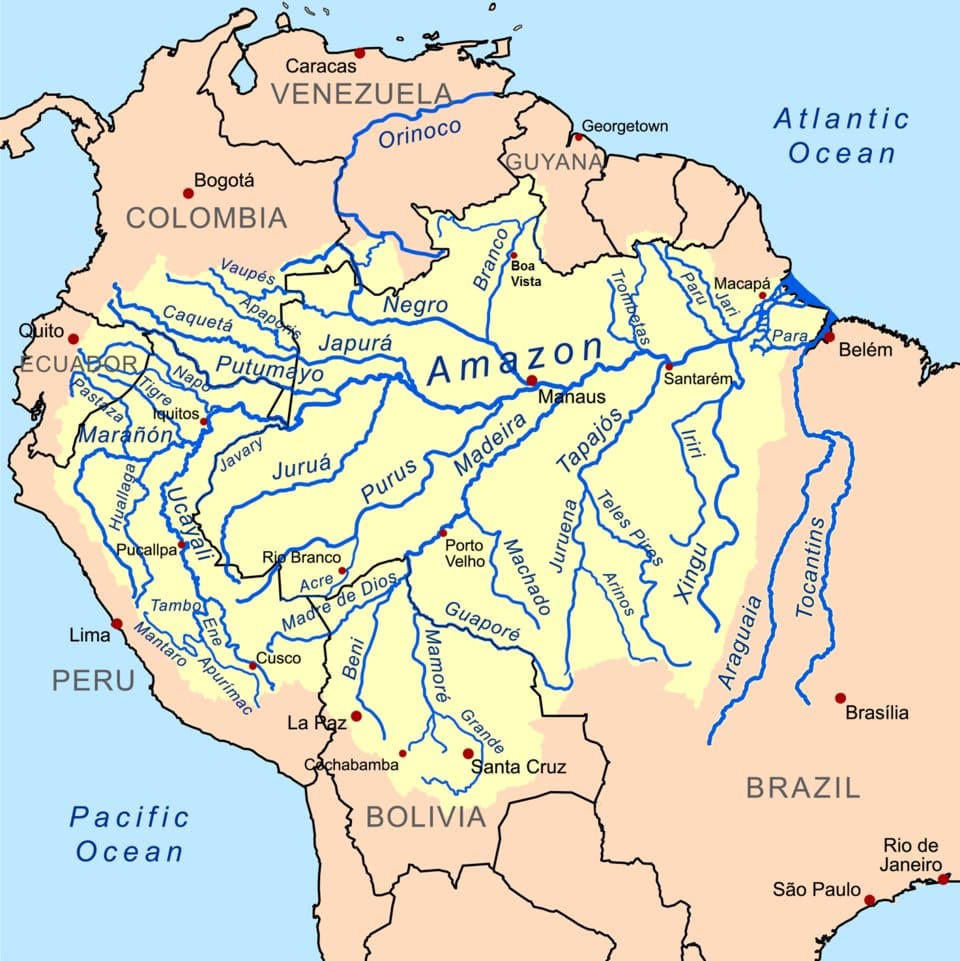
| Origin | Upper Amazon basin, Peru (Rio Huallaga, Rio Maranon) |
| Care Level | Moderate |
| Temperament | Peaceful |
| Diet | Omnivore, micro predator |
| Tank Level | Mid to Bottom |
| Maximum Size | 2.5 inches (6 cm) |
| Minimum Tank Size | 20 gallons (76 liters) |
| Temperature | 75-82°F (24-28°C) |
| pH | 5.5-7.0 |
| Hardness | 2-12 dGH |
| Lifespan | 5-6 years in captivity |
| Breeding | Egg scatterer |
| Breeding Difficulty | Difficult |
| Compatibility | Community |
| OK for Planted Tanks? | Yes |
Classification
| Taxonomic Level | Classification |
|---|---|
| Order | Characiformes |
| Family | Acestrorhamphidae (reclassified from Characidae, Melo et al. 2024) |
| Genus | Petitella |
| Species | P. Georgiae (Gery & Boutiere, 1964) |
False rummy nose tetras need soft, slightly acidic water and a mature tank to thrive. They’re more sensitive than common tetras like black skirts or serpae tetras, but manageable for intermediate hobbyists who pay attention to water chemistry. The visual payoff (tight schooling with vivid red and white tail coloration) is worth the extra care.
The genus Petitella is small, containing only a handful of species. For a long time, the false rummy nose was lumped together with the other rummy nose tetras under Hemigrammus, but it was moved to its own genus based on differences in dentition and other morphological features. Some older references and fish store labels still list it as Hemigrammus georgiae, so don’t be surprised if you see that name floating around.
Note on reclassification: In 2024, a major phylogenomic study (Melo et al.) split the traditional family Characidae into four separate families. The genus Petitella was moved into the newly erected family Acestrorhamphidae. Some older references still list this species under Characidae.
Origin & Natural Habitat

The false rummy nose tetra is native to the upper Amazon basin in Peru, specifically the Rio Huallaga and Rio Maranon drainages. These rivers are major tributaries of the Amazon system, flowing through some of the most remote and biodiverse freshwater habitats on earth.
In the wild, Petitella georgiae inhabits slow-moving blackwater and clearwater tributaries rather than the main river channels. These smaller streams are shaded by dense tropical canopy, with water stained dark by tannins from decaying leaves and wood. The water is soft, acidic, and low in dissolved minerals. The substrate is typically covered with leaf litter, fallen branches, and submerged root systems that provide shelter and foraging opportunities.
Understanding this habitat is key to keeping them well in captivity. They come from warm, soft, gently flowing water with plenty of natural cover. While commercially bred specimens are more adaptable than wild-caught fish, they still show their best coloration and behavior when conditions lean toward their natural preferences. Tannin-stained water, dim lighting, and a dark substrate will bring out the deepest reds in their nose coloration.
Appearance & Identification
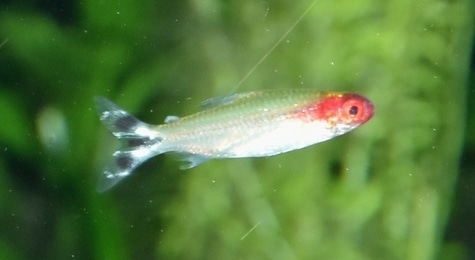
The false rummy nose tetra has a sleek, torpedo-shaped body with a silvery base color that can take on a slight greenish or olive hue along the back. The defining feature is the brilliant red patch on the head, which extends from the snout through the gill cover and, in healthy specimens, can reach slightly past the operculum onto the forward body. The caudal (tail) fin displays a bold black-and-white pattern with horizontal black stripes separated by white bands.
So how do you tell the three “rummy nose” species apart? It’s not always easy, but there are reliable differences. In the false rummy nose (P. Georgiae), the red coloration on the head is more extensive, often extending past the gill cover. The caudal fin pattern has more black pigment with less white in the central lobes compared to the true rummy nose (Hemigrammus bleheri). The true rummy nose typically has a broader, more diffuse red blush that doesn’t extend as far back, and more white separating the black bars on the tail. The third species, Hemigrammus rhodostomus, has the least red on the head, typically confined to the snout area. For a deeper look at the true rummy nose, check out our Rummy Nose Tetra Care Guide.
In practice, all three species are sold interchangeably at most pet stores, and the staff rarely know the difference. Unless you’re specifically looking at the caudal fin pattern and head coloration side by side, it’s easy to mix them up. The good news is that care requirements are essentially identical for all three.
Male vs. Female
Sexing false rummy nose tetras is tricky until they reach full maturity. Females are slightly rounder and fuller-bodied, especially when carrying eggs. Males are slimmer with a more streamlined profile. There are no significant color differences between the sexes. The most reliable way to tell them apart is by observing body shape in mature adults from above, where the wider midsection of egg-laden females becomes more apparent.
Average Size & Lifespan
Adult false rummy nose tetras typically reach about 2.5 inches (6 cm) in total length, making them a medium-sized tetra. They’re a bit larger than neon tetras but still well suited for tanks in the 20-40 gallon (76-151 liter) range.
With proper care and stable water conditions, you can expect a lifespan of 5 to 6 years. In my experience, hobbyists report them living longer in well-maintained setups, but that 5-6 year range is a realistic expectation. Because these fish are sensitive to water quality, their longevity is closely tied to how consistent you keep their environment. Poor water conditions will shorten their lifespan significantly.
Care Guide
Tank Size
A 20-gallon tank is the minimum for a school of false rummy nose tetras, but a 30-gallon or larger is even better. These are active swimmers that form tight schools, and they need horizontal space to move together naturally. A 20-gallon long is a solid starting point for a group of 8-10 fish.
The schooling behavior is one of the main reasons people keep this species, and it simply doesn’t look right in a cramped tank. Give them room, and you’ll be rewarded with a display that few other freshwater fish can match.
Water Parameters
| Parameter | Ideal Range |
|---|---|
| Temperature | 75-82°F (24-28°C) |
| pH | 5.5-7.0 |
| Hardness | 2-12 dGH |
| KH | 1-8 dKH |
Water quality is where the false rummy nose tetra demands more attention than your average community fish. They aren’t fragile, but they’re noticeably less forgiving than something like a glowlight tetra or a black skirt tetra. Ammonia and nitrite must be at zero, and nitrates should stay below 20 ppm for the best coloration and health.
They show their most vivid red coloration in softer, slightly acidic water. If you’re running a standard community tank with neutral pH and moderate hardness, they’ll do fine, but the red on the nose won’t be as intense. Adding driftwood, Indian almond leaves, or peat filtration helps soften the water and bring out their best colors. Stability is the real key here. Sudden swings in pH or temperature will stress them quickly, and you’ll see it immediately as the red fades from their head.
Filtration & Water Flow
Gentle to moderate flow works best for false rummy nose tetras. In the wild, they come from slow-moving tributaries, so you don’t want a strong current pushing them around. A hang-on-back filter with a spray bar or a canister filter with a diffused output is ideal. Sponge filters also work well in smaller setups and provide excellent biological filtration with minimal current.
Because these fish are sensitive to water quality, consistent filtration and regular water changes are critical. Weekly water changes of 20-25% will help keep parameters stable. Don’t let maintenance slide with this species. Their red nose color is literally your indicator of whether you’re doing a good job.
Lighting
Moderate to subdued lighting is ideal. False rummy nose tetras come from shaded forest streams, and they feel most comfortable when they’re not under harsh, bright lights. If you’re running a planted tank with stronger lighting, floating plants will create the shaded areas these fish prefer and help them feel secure.
Under dim lighting with a dark background, the contrast of the red head and black-and-white tail against the silvery body is striking. Overly bright lighting can wash them out and make them appear pale and stressed.
Plants & Decorations
A planted tank is the ideal environment for false rummy nose tetras. Dense planting along the back and sides with open swimming space in the center gives them both cover and room to school. Java fern, Anubias, Cryptocoryne species, and Vallisneria all work well. Floating plants like Amazon frogbit or red root floaters will diffuse the light and make the fish feel at home.
Driftwood is a great addition, both for aesthetics and for the tannins it releases into the water. A few dried Indian almond leaves scattered on the substrate complete the natural look and provide beneficial tannins that these fish appreciate. The overall goal is to recreate the shaded, tannin-rich conditions of their native Amazonian tributaries.
Substrate
Dark substrate is highly recommended. A fine dark sand or a dark planted tank substrate will make the red, silver, and black coloration pop. Light-colored gravel will wash out their colors and can make the fish appear dull. If you want the full visual impact of a false rummy nose school, go dark on the bottom.
Is the False Rummy Nose Tetra Right for You?
Before you buy, run through this honest checklist. The False Rummy Nose Tetra is a great fish for the right keeper, but it is not for everyone.
- You want a tight-schooling tetra with a vivid red nose marking
- You can maintain stable, clean water conditions. The red nose fades when water quality drops
- You keep a school of 10+ for the dramatic synchronized schooling behavior
- You have a 20-gallon or larger tank with open swimming space
- You understand that the nose color is a live indicator of your water quality
- You do not mind that this species is sometimes confused with the true Rummy Nose
Avoid If:
- You want true rummy nose tetras – false rummy nose tetras are a different species with less tight schooling behavior
- You cannot maintain pristine water quality – they are as sensitive to ammonia and nitrate spikes as their close relatives
- You keep a group under 8 – small groups school poorly and the head coloration develops less intensely
What People Get Wrong
The confusion between false rummy nose tetras and true rummy nose tetras (Hemigrammus rhodostomus) is real and widespread. They look nearly identical in store tanks. The key visual difference is in the tail pattern: the black markings on true rummy nose tetras extend further into the tail fin than in false rummy nose tetras. If you care about species accuracy, examine the tail before buying. If you don’t, they’re similar enough in care requirements that it rarely matters in practice.
Water chemistry is where most keepers miss the mark. False rummy nose tetras come from soft, slightly acidic Amazonian waters. In hard, neutral tap water they survive but stay pale and show chronic mild stress. The vivid red head coloration is water-chemistry-dependent: it only comes out in soft, slightly acidic water. If the fish look washed out, check the chemistry first.
Group size is the most common mistake with any schooling tetra, and it applies doubly here. False rummy nose tetras in small groups of 4 or 5 scatter and hide. In groups of 10 or more they form tight, synchronized schools that move as a single unit. That behavior is the entire point of this species, and it only happens at proper school size.
Tank Mates
False rummy nose tetras are peaceful community fish that won’t bother anything. Their only real requirement is that tank mates are similarly non-aggressive and won’t outcompete them for food or stress them out. Because they’re a water quality indicator species, keeping them with other fish that produce heavy bioloads can indirectly cause problems.
Best Tank Mates
- Corydoras catfish – peaceful bottom dwellers that stay out of the rummy noses’ mid-water territory
- Rummy nose tetras (H. Bleheri) – you can actually mix the rummy nose species together without any issues
- Cardinal tetras – similar water requirements and a beautiful color contrast
- Harlequin rasboras – peaceful schoolers from similar soft-water habitats
- Ember tetras – tiny, peaceful, and they appreciate the same warm, soft conditions
- Otocinclus catfish – gentle algae eaters that are completely non-threatening
- Kuhli loaches – peaceful bottom dwellers that add activity to the lower tank zone
- Apistogramma dwarf cichlids – a natural South American biotope pairing
- Pencilfish – gentle, slender characins from overlapping habitats
- Cherry shrimp – adult shrimp are safe with these peaceful tetras
Tank Mates to Avoid
- Angelfish – they will eat false rummy nose tetras once large enough
- Tiger barbs – too nippy and aggressive for these peaceful schoolers
- Large cichlids – any fish big enough to view a rummy nose as a snack
- Red tail sharks – territorial and prone to chasing small tetras
- Fast, aggressive feeders – anything that will outcompete rummy noses at feeding time, as they are somewhat timid eaters
Food & Diet
In the wild, false rummy nose tetras are micro predators that feed on tiny invertebrates, insect larvae, and zooplankton. In captivity, they’re not picky eaters, but they do best with a varied diet that includes both prepared and live or frozen foods.
A high-quality flake food or micro pellet is a good daily staple. Supplement with frozen or live foods several times per week to maintain peak coloration and health. Daphnia, brine shrimp, bloodworms, cyclops, and mosquito larvae are all eagerly accepted. The difference in color intensity between a fish fed only flakes and one getting regular live food is noticeable.
Feeding frequency: Once or twice daily, offering only what they can consume in about 2 minutes. These are small-mouthed fish, so make sure food particles are appropriately sized. Crush flakes if needed.
Pro tip: False rummy nose tetras prefer to eat in the mid-water column. Slow-sinking foods work better than foods that float on the surface for too long or drop straight to the bottom. If you’re keeping them with bottom feeders like corydoras, any food that makes it past the tetras will get cleaned up below.
Breeding & Reproduction
Breeding false rummy nose tetras is considered difficult and is rarely accomplished in home aquariums. They’re egg scatterers like most small characins, but getting the conditions right requires patience and very specific water chemistry.
Breeding Difficulty
Difficult. This is not a beginner breeding project. The false rummy nose is significantly harder to spawn than more forgiving tetras like glowlights or ember tetras. Very soft, acidic water is essential, and even experienced breeders report inconsistent results.
Spawning Tank Setup
Use a separate breeding tank of 10-15 gallons (38-57 liters). Keep the lighting very dim or cover the sides and back of the tank to reduce light exposure, as both eggs and newly hatched fry are extremely light-sensitive. Add clumps of fine-leaved plants like Java moss or use spawning mops to give the fish surfaces to scatter their adhesive eggs on. A mesh screen over the bottom helps prevent the adults from eating eggs that fall.
Water Conditions for Breeding
This is where it gets demanding. You need very soft, acidic water to trigger spawning. Aim for pH 5.5-6.0, hardness of 1-4 dGH, and a temperature of 79-82°F (26-28°C). RO water remineralized to the target hardness, or peat-filtered water, is typically necessary. A small air-powered sponge filter is all the filtration you need in the breeding tank.
Conditioning & Spawning
Condition breeding pairs separately for 2-3 weeks with a rich diet of live and frozen foods, particularly daphnia, brine shrimp, and bloodworms. Females will become noticeably rounder when full of eggs. Select the healthiest, most colorful male and the plumpest female and introduce them to the breeding tank in the evening. Spawning typically occurs in the early morning hours. The pair will scatter eggs among the fine-leaved plants, and the eggs are slightly adhesive.
Egg & Fry Care
Remove the adults as soon as spawning is complete. Like most egg-scattering tetras, they will eat their own eggs given the opportunity. Eggs typically hatch in 24-36 hours, and the fry become free-swimming about 3-4 days later. Keep the tank very dark during this initial period.
First foods should be infusoria or commercially available liquid fry food. After about a week, you can introduce freshly hatched baby brine shrimp (BBS) and microworms. Fry growth is slow, and maintaining pristine water quality in the rearing tank is critical. Small, frequent water changes using water matched to the tank’s parameters will help keep things stable without shocking the delicate fry.
Common Health Issues
False rummy nose tetras are healthy when kept in clean, stable water, but they’re more susceptible to stress-related illness than hardier tetra species. Their built-in color indicator is a valuable early warning system.
Ich (White Spot Disease)
Ich is the most common ailment, usually triggered by temperature fluctuations or stress from a new environment. The white spots are easy to identify. Gradually raise the temperature to 82°F (28°C) and treat with a standard ich medication. False rummy nose tetras generally tolerate most ich treatments, but avoid copper-based medications at high doses if you’re keeping them with invertebrates.
Bacterial Infections
Fin rot and bacterial infections can occur when water quality slips. The first sign is a fading of the red head color, followed by frayed fins or cloudy patches on the body. Improving water quality through water changes is the first step. In severe cases, a broad-spectrum antibacterial treatment may be needed. Catching it early by watching for color loss makes a big difference in outcomes.
General Prevention
Prevention is everything with this species. Quarantine all new fish for at least two weeks before adding them to your main tank. Maintain consistent water parameters and stay on top of your water change schedule. The fading nose color is your best diagnostic tool. If you notice the red becoming pale or washed out, test your water immediately and look for other signs of stress. A healthy false rummy nose with vibrant red coloration is a sign that your tank is in excellent shape.
Common Mistakes to Avoid
- Keeping too few – Groups under 8 lead to stressed, skittish fish that never school properly. Get 8-12 minimum for the best behavior and color. A solo or paired rummy nose is a miserable rummy nose.
- Adding them to an uncycled or immature tank – These fish need established, stable water conditions. Adding them to a tank that’s only a few weeks old is asking for trouble. Wait until your parameters are rock solid.
- Ignoring the nose as a water quality indicator – If the red is fading, something is wrong. Don’t dismiss it as “just how they look.” Test your water and investigate.
- Strong current – While they’re decent swimmers, a powerful filter output or powerhead pushing them around will cause chronic stress. Keep the flow gentle to moderate.
- Inconsistent water changes – Skipping water changes or doing large, infrequent ones instead of smaller, regular ones is a recipe for problems with this species. Weekly 20-25% changes keep things stable.
- Not distinguishing species when buying – If you want a specific rummy nose type, learn to tell them apart before you shop. Most stores label all three the same way.
Where to Buy
False rummy nose tetras (or fish labeled simply as “rummy nose tetras”) are available at many local fish stores and chain pet retailers. Prices typically range from $3-6 per fish, with discounts often available when purchasing a school. Most stores don’t distinguish between the three rummy nose species, so examine the fish carefully if you specifically want Petitella georgiae.
For healthier, better-acclimated stock, I recommend ordering from reputable online retailers like Flip Aquatics or Dan’s Fish. Both specialize in quality freshwater fish and take better care of their stock than most big box stores. Online retailers are also more likely to correctly identify which rummy nose species they’re selling.
Frequently Asked Questions
What is the difference between the false rummy nose and the true rummy nose tetra?
The false rummy nose (Petitella georgiae) and the true rummy nose (Hemigrammus bleheri) are different species that look very similar. The key differences are in the head coloration and the tail pattern. In the false rummy nose, the red on the head will extend further back, past the gill cover. The caudal fin pattern shows more black pigment with less white in the central lobes. The true rummy nose has a broader, more diffuse red blush that typically doesn’t extend as far, and more white separating the black bars on the tail. Care requirements are virtually identical for both species.
Why does my rummy nose tetra lose its red color?
Fading red coloration is almost always a sign of stress or declining water quality. Test your water for ammonia, nitrite, and nitrate immediately. Common causes include a recent water change with mismatched parameters, temperature fluctuations, high nitrate levels, or the fish being newly introduced to the tank. Once the stressor is resolved and water quality improves, the red color should return within a few hours to a couple of days. Persistent fading may indicate illness.
How many false rummy nose tetras should I keep?
A minimum of 8 is recommended, but 10-12 or more is ideal. Rummy nose tetras are one of the tightest schooling species in the freshwater hobby, and larger groups produce far more impressive schooling displays. In small groups, they are stressed, skittish, and their coloration suffers.
Are false rummy nose tetras good for beginners?
They’re suitable for beginners who have some experience maintaining stable water parameters, but they’re not the best first fish. Unlike hardier tetras such as black skirt tetras or glowlights, rummy nose types demand consistent water quality and react quickly when conditions slip. If your tank is well-cycled and you stay on top of maintenance, they’re manageable. If you’re brand new to the hobby, consider starting with a hardier species first.
Can I keep different rummy nose species together?
Yes, you absolutely can. Petitella georgiae, Hemigrammus bleheri, and H. Rhodostomus will school together without issues. In fact, since most stores sell them interchangeably, there’s a good chance a group labeled as one species actually contains a mix. Care requirements are the same for all three, so mixed schools work perfectly fine.
Do false rummy nose tetras nip fins?
No. False rummy nose tetras are not fin nippers. They’re among the most peaceful tetras available and are safe to keep with long-finned species like bettas and angelfish (though angelfish may pose a predation risk to the tetras, not the other way around). As long as they’re kept in a proper school, aggression is essentially nonexistent.
What It Is Actually Like Living With False Rummy Nose Tetra
In a proper school, false rummy nose tetra display natural movement patterns that are genuinely engaging to watch. The fish interact with each other, establish subtle hierarchies, and move through the tank with purpose.
They spend most of their time near the surface, which fills a level of the tank that many other species ignore. This makes them excellent complements to mid-water and bottom-dwelling fish.
Feeding time is when their personality comes out. They learn your routine quickly and will anticipate feeding before you even open the lid.
Their color and behavior improve over time as they settle into a stable environment. Fish that have been in the same tank for months look noticeably better than recently added stock.
They coexist peacefully with virtually every other appropriately-sized community fish. This compatibility makes tank planning straightforward.
How the False Rummy Nose Tetra Compares to Similar Species
False Rummy Nose Tetra vs. Rummy Nose Tetra
The true Rummy Nose Tetra has a red marking that stops more abruptly at the gill cover, while the False Rummy Nose has the red extending slightly further. Care is identical. For practical purposes, both give you the same schooling behavior and the same water-quality indicator nose. Buy whichever is available and healthy.
False Rummy Nose Tetra vs. Cardinal Tetra
Both are popular schooling tetras that look best in groups of 10+. The Rummy Nose types are better synchronized schoolers that move in tighter formation. The Cardinal Tetra has more individual body color. If tight schooling behavior is the priority, the Rummy Nose type wins.
Closing Thoughts
The false rummy nose tetra is one of those fish that rewards good fishkeeping. Put in the effort to maintain clean, stable water in a well-planted tank, and you’ll be rewarded with one of the most visually striking schooling displays in the freshwater hobby. That tight formation of red noses, silver bodies, and patterned tails moving as a single unit is hard to beat.
They’re not the easiest tetra to keep, and they’ll let you know if you’re cutting corners. But that’s part of what makes them rewarding. A school of false rummy noses with vibrant red heads is a badge of honor for any community tank. It means you’re doing things right.
If you’re interested in the closely related true rummy nose, check out our Rummy Nose Tetra Care Guide. And for another stunning tetra that thrives in similar conditions, have a look at our Cardinal Tetra Care Guide.
Recommended Video
Check out our tetra tier list video where we rank the most popular tetras in the hobby, including the rummy nose types:
References
- Petitella georgiae Profile – Seriously Fish
- Petitella georgiae (Gery & Boutiere, 1964) – FishBase
- Gery, J. & Boutiere, H. (1964). Petitella georgiae gen. Et sp. Nov. – original species description
- Melo, B.F. Et al. (2024). Phylogenomic revision of Characidae – reclassification of Acestrorhamphidae
- About the Author
- Latest Posts

I’m Mark Valderrama, founder of Aquarium Store Depot and a fishkeeper with over 25 years of hands-on experience. I started in the hobby at age 11, worked at local fish stores, and have kept freshwater tanks, ponds, and reef tanks ever since. I’ve been featured in two best-selling aquarium books on Amazon and built this site to share practical, experience-based fish keeping knowledge.
Leave a Reply