
Last Updated: June 25, 2026
Thank you for visiting! By the way… any links on this page that lead to products on Amazon and other stores/partners are affiliate links Aquarium Store Depot earns a commission if you make a purchase.
Table of Contents
- What Most Care Guides Get Wrong
- The Reality of Keeping Cobalt Blue Zebra
- Key Takeaways
- Species Overview
- Classification
- Origin & Natural Habitat
- Appearance & Identification
- Average Size & Lifespan
- Care Guide
- Is This Species Right for You?
- Tank Mates
- Food & Diet
- Breeding & Reproduction
- Common Health Issues
- Common Mistakes to Avoid
- Where to Buy
- FAQ
- What It Is Actually Like Living With Cobalt Blue Zebra
- Species Comparison
- Closing Thoughts
The Cobalt Blue Zebra is a Lake Malawi mbuna, and if you do not know what that means, here is the short version: small, colorful, and aggressive enough to kill tank mates that do not fit the program. Mbuna are not community fish. They are colony fish that need hard, alkaline water, overstocked tanks to spread aggression, and a keeper who understands that these fish play by different rules than anything else in freshwater. The blue mbuna that claims every rock and defends it like rent is due.
Mbuna are not community fish. They are a controlled chaos that looks incredible when you get it right.
This species lives 8 to 10 years. Every one of those years requires maintaining Lake Malawi water chemistry and managing mbuna aggression dynamics.
These Lake Malawi natives have been a cornerstone of the African cichlid hobby for decades, and it’s easy to see why. They’re robust, moderately aggressive (by mbuna standards), and that color is absolutely unbeatable as a centerpiece in a Malawi biotope. Pair them with yellow or orange species, and you’ve got a tank that looks like a living work of art.
In this guide, I’ll walk you through everything you need to know to keep Cobalt Blue Zebras thriving. From proper tank setup and diet to managing their territorial side and breeding them successfully.
The Cobalt Blue Zebra is a small fish with big demands. Get them right and your tank looks like a coral reef. Get them wrong and you have a war zone.
What Most Care Guides Get Wrong About Cobalt Blue Zebra
The biggest mistake people make with Cobalt Blue Zebras is underestimating their aggression because of their calm appearance. That powder blue coloring looks peaceful, but these are true mbuna with full mbuna attitudes. A dominant male will claim a territory and defend it vigorously. The second misconception is that all blue zebras are the same species. There are multiple Metriaclima species sold under similar names, and each has slightly different behavior. Make sure you are buying Metriaclima callainos specifically if you want the true Cobalt Blue Zebra.
The Reality of Keeping Cobalt Blue Zebra
Mbuna keeping is a different discipline from regular fishkeeping. The Cobalt Blue Zebra is no exception. Here is what you need to prepare for.
Hard, alkaline water is mandatory. Lake Malawi chemistry means pH between 7.8 and 8.6, high GH, and high KH. There is no faking this. If your tap water is soft and acidic, you need to buffer every water change without exception.
Overstocking is the strategy. Keeping 3 or 4 Cobalt Blue Zebras leads to one bully and victims. You need groups of 12 or more to spread aggression. But overstocking only works with heavy filtration and consistent water changes.
Diet is critical. Spirulina and veggie-based foods are essential. High-protein diets cause Malawi Bloat, which is often fatal.
Rockwork defines territories. Mbuna need piles of rocks with caves and passageways. Without proper rockwork, dominant fish have nowhere to establish boundaries and subordinates have nowhere to hide. Stack rocks from substrate to near the waterline.
Biggest Mistake New Cobalt Blue Zebra Owners Make
Understocking. Keeping a small group of Cobalt Blue Zebras means the dominant fish picks off the weak ones. You need a large group to distribute aggression. Twelve is the minimum for most mbuna species.
Expert Take
Start with a group of 12 or more in a 55 gallon minimum. Use aragonite or crushed coral substrate to buffer pH naturally. Feed spirulina-based food as the staple. Stack rocks to create territories. This formula works for Cobalt Blue Zebras and most other mbuna.
Key Takeaways
- Stunning solid blue coloration. Males display consistent cobalt blue; one of the boldest blue fish in freshwater
- Moderately aggressive. Territorial but manageable in a properly stocked mbuna community
- Grows to 5 inches (13 cm). Medium-sized mbuna that needs at least 55 gallons
- Long-lived. Can reach 10 years with proper care
- Herbivore. Plant-based diet is critical to prevent Malawi Bloat
- Maternal mouthbrooder. Breeds readily in captivity with proper setup
Species Overview
| Common Name | Cobalt Blue Zebra, Cobalt Blue Cichlid |
| Scientific Name | Metriaclima callainos (syn. Maylandia callainos) |
| Care Level | Intermediate |
| Temperament | Aggressive |
| Max Size | 5 inches (13 cm) |
| Min Tank Size | 55 gallons (208 liters) |
| Diet | Herbivore |
| Lifespan | 8. 10 years |
| Water Temp | 76. 82°F (24. 28°C) |
| pH | 7.8. 8.6 |
| Origin | Lake Malawi, Africa |
Classification
| Kingdom | Animalia |
| Phylum | Chordata |
| Class | Actinopterygii |
| Order | Cichliformes |
| Family | Cichlidae |
| Genus | Metriaclima |
| Species | M. Callainos |
Origin & Natural Habitat
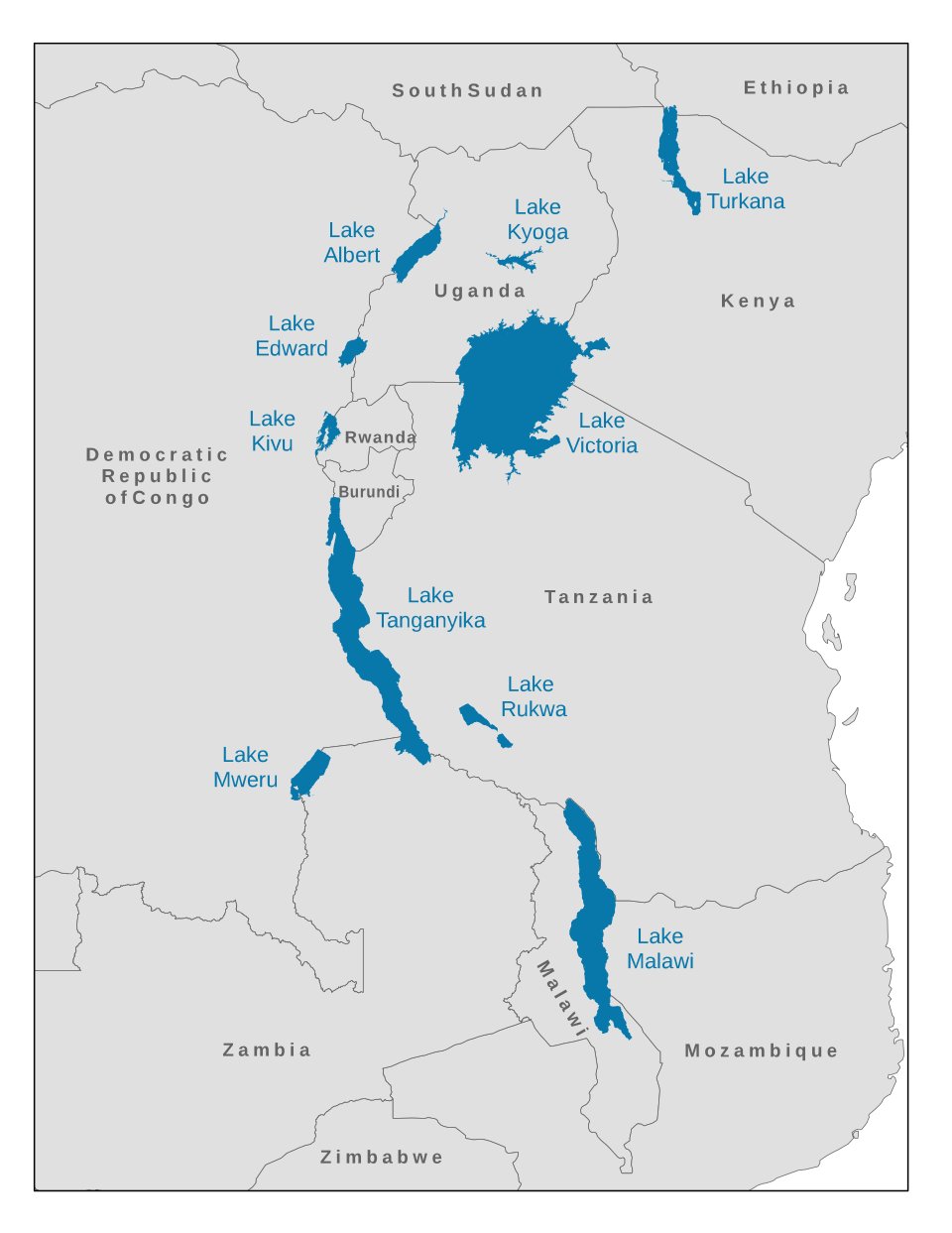
The Cobalt Blue Zebra is endemic to Lake Malawi in East Africa, where it primarily inhabits the rocky shoreline around the Nkhata Bay region. They can also be found in the northeast portion of the lake, from Lkombe to Puulu. Like all mbuna, they are rock dwellers that spend their lives in and around the boulder-strewn shallows of the lake.
In their natural habitat, Cobalt Blue Zebras occupy both sandy shallows and deeper rocky zones. They graze on the aufwuchs that coats every rock surface. The biofilm of algae, diatoms, and tiny invertebrates that forms the foundation of the mbuna food web. Males hold territories among the rocks, while females and juveniles form loose aggregations that move through the habitat grazing.
The water in this region of Lake Malawi is crystal clear, warm (76. 82°F / 24. 28°C), and highly alkaline with a pH of 7.8. 8.6. The mineral content is high, resulting in hard water with significant calcium and magnesium levels. These stable conditions are what you need to replicate in the home aquarium.
Appearance & Identification
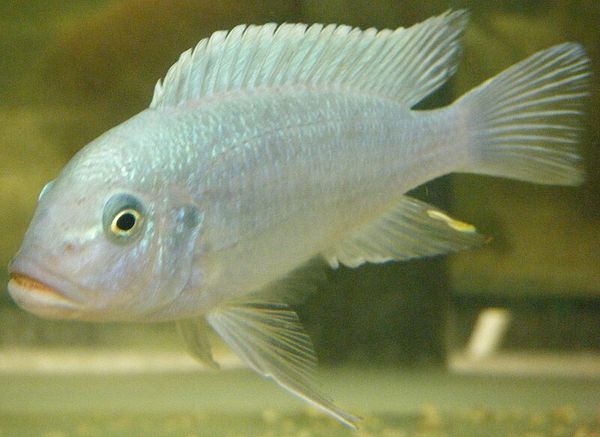
The Cobalt Blue Zebra’s claim to fame is its remarkable coloration. Males display a consistent, uniform light cobalt blue across their entire body. No stripes, no patterns, just pure blue. Despite the “Zebra” in their common name, they show no banding whatsoever. The only accent comes from the orange egg-shaped spots on the anal fin, which play a role during breeding.
Their body shape is classic mbuna. Robust, laterally compressed, with a slightly downturned mouth adapted for scraping algae from rock surfaces. Under good aquarium lighting, the blue color practically glows, making this one of the most visually impactful species you can keep.
Male vs. Female
While both sexes display blue coloration, there are noticeable differences once you know what to look for.
| Feature | Male | Female |
|---|---|---|
| Color | Vivid, intense cobalt blue | Lighter, grayish-blue |
| Size | Up to 5 inches (13 cm) | Up to 4 inches (10 cm) |
| Egg Spots | 4+ prominent spots on anal fin | Fewer or absent |
| Body Shape | More robust head and body | Slightly slimmer, rounder when gravid |
| Behavior | Highly territorial, displays frequently | More social, schools with other females |
Average Size & Lifespan
Cobalt Blue Zebras are a medium-sized mbuna, reaching about 5 inches (13 cm) at full maturity. Males are slightly larger than females, which max out around 4 inches (10 cm). They have a sturdy build that’s characteristic of the genus.
One of the best things about this species is their longevity. With proper care. Clean water, a plant-based diet, and a well-structured tank. Cobalt Blue Zebras can live 8. 10 years in captivity. That’s a long relationship with a fish, and it’s well worth the investment in proper setup and care.
Care Guide
Tank Size
A 55-gallon (208-liter) tank is the minimum, but 75 gallons (284 liters) or more is strongly recommended, especially for a mixed mbuna community. The tank should be at least 4 feet (120 cm) long to provide adequate horizontal swimming space. In a well-stocked mbuna community of 10 or more fish, 75. 100 gallons (284. 379 liters) is the sweet spot.
Water Parameters
| Temperature | 76. 82°F (24. 28°C) |
| pH | 7.8. 8.6 |
| General Hardness (dGH) | 10. 20 dGH |
| Carbonate Hardness (dKH) | 10. 15 dKH |
| Ammonia | 0 ppm |
| Nitrite | 0 ppm |
| Nitrate | <20 ppm |
A laterite-based or aragonite substrate helps maintain the high pH and alkalinity these fish need. Avoid using driftwood, peat, or anything else that would lower pH. If your tap water is soft, you’ll need to buffer it. Crushed coral in the filter or substrate works great for this.
Filtration & Water Flow
Robust filtration is a must. A canister filter or wet/dry filter rated for at least 1.5 times your tank volume is ideal. Adding a powerhead creates the moderate water movement these fish are accustomed to and improves oxygenation. Lake Malawi has highly dissolved oxygen levels, so good surface agitation is important.
Weekly water changes of 25. 40% keep nitrates low and water quality high. In heavily stocked tanks, don’t skip these. Mbuna produce significant waste, and elevated nitrates are a direct path to health problems.
Lighting
Standard aquarium LED lighting is perfect. Cobalt Blue Zebras look absolutely stunning under good lighting. The blue really pops. A photoperiod of 8. 10 hours is ideal. Moderate lighting also promotes natural algae growth on rocks, giving the fish something to graze on between feedings.
Plants & Decorations
This is a rockwork-focused setup. Build complex rock structures with lots of caves, tunnels, and passages. Each territorial male needs his own cave, and subordinate fish need escape routes and hiding spots. Limestone, lava rock, and ocean rock all work well.
Cobalt Blue Zebras may uproot plants, so stick with hardy species attached to hardscape. Anubias on rocks, Java Fern on driftwood. Ensure all rock structures are stable, as these fish will dig around the base.
Substrate
Fine sand is recommended. Aragonite sand is ideal as it naturally buffers pH upward. Pool filter sand is a budget-friendly alternative that looks great. These fish enjoy burrowing and sifting through sand, so a sand substrate encourages natural behavior and makes cleanup easier.
Is the Cobalt Blue Zebra Right for You?
Cobalt Blue Zebras are one of the cleanest looking mbuna you can keep. Their solid blue coloration makes them an instant centerpiece. But they are still mbuna through and through.
- Great fit if you want a solid colored blue mbuna that does not have complicated pattern requirements for identification
- Great fit if you are building a mixed mbuna community with species like Red Zebras, Yellow Labs, and Acei
- Great fit if you have at least a 55 gallon tank with plenty of rockwork for territory establishment
- Not ideal if you expect a peaceful fish based on their calm blue appearance. They are moderately aggressive
- Not ideal if you want to mix them with Peacock cichlids. The aggression mismatch will stress your Peacocks
- Not ideal if you already have Maingano or other blue species that could create confusion and trigger extra aggression
Cobalt Blue Zebras are hardy, beautiful, and straightforward to keep for anyone with basic mbuna experience. They are an excellent addition to most Malawi community tanks.
Tank Mates
Best Tank Mates
Cobalt Blue Zebras work well in mixed mbuna communities with species of contrasting color and similar temperament. Good companions include:
- Yellow Lab (Labidochromis caeruleus). Classic color contrast pairing
- Red Zebra (Metriaclima estherae). Orange vs. Blue makes a stunning display
- Auratus (Melanochromis auratus). Aggressive but can coexist in large tanks
- Acei Cichlid (Pseudotropheus acei). Uses different tank zones, reduces conflict
- Synodontis catfish. Hardy bottom dwellers that stay out of the way
Tank Mates to Avoid
- Peacock cichlids (Aulonocara spp.). Too peaceful for a mbuna-dominated tank
- Other solid blue mbuna. Similar coloration triggers territorial conflict
- Small community fish. Will be harassed or eaten
- Haplochromis species. Most haps are too gentle for mbuna company
- Long-finned species. Will be targeted for fin nipping
Food & Diet
Cobalt Blue Zebras are vegetarians in the wild, feeding almost exclusively on algae-covered rocks. In the aquarium, spirulina-based flakes and pellets should be the daily staple. Supplement with blanched vegetables like spinach, peas, and zucchini for variety.
This is a species where diet really matters. Avoid live worms, brine shrimp in large quantities, and especially beef heart. These high-protein, high-fat foods can cause bloat and other digestive problems. Algae wafers and nori sheets on a veggie clip are excellent additions to the rotation.
Feed 2. 3 small meals per day, only providing what the fish can eat within a few minutes. Overfeeding pollutes the water and promotes obesity. Both bad news for mbuna.
Breeding & Reproduction
Cobalt Blue Zebras are maternal mouthbrooders that breed readily in captivity. With good water quality, proper nutrition, and a dominant male with access to females, spawning is almost inevitable.
Spawning Behavior
Males become particularly vibrant when ready to spawn, building nests in the substrate or clearing flat rock surfaces. The male courts females with energetic displays. Shaking, flaring, and leading the female to his chosen site. The female deposits eggs a few at a time, then picks them up in her mouth. When the male flashes his anal fin egg spots, the female attempts to collect these “eggs,” inadvertently picking up the male’s milt to fertilize the eggs in her buccal cavity.
A single spawning can produce 10. 50 fertilized eggs, depending on the female’s size and maturity.
Mouthbrooding & Fry Care
The female holds the developing eggs and fry for approximately 3 weeks. During this time she won’t eat, and her mouth will appear noticeably swollen. She’ll become more reclusive, preferring to hide among the rocks.
Once released, the fry are free-swimming and can take newly hatched brine shrimp, daphnia, or crushed flake food right away. For the best survival rates, isolate the holding female in a separate tank a few days before she’s expected to release. Keep at least 3 females per male to prevent over-harassment.
Common Health Issues
Malawi Bloat
The number one threat to Cobalt Blue Zebras. Malawi Bloat is caused by a protozoan that thrives when the fish is stressed or fed an inappropriate high-protein diet. Watch for swollen abdomen, white stringy feces, loss of appetite, and labored breathing. If caught early, treatment with Metronidazole in a hospital tank can help. Prevention through proper diet and water quality is far more effective than any treatment.
Ich (White Spot Disease)
Stress from transport or water quality drops can trigger ich. Look for small white spots on the body and fins. Gradually raise temperature to 82°F (28°C) and apply a quality ich treatment. Cobalt Blue Zebras are hardy and recover quickly when treatment begins early.
Fin Rot & Bacterial Infections
Injuries from territorial disputes can lead to secondary bacterial infections if water quality is poor. Frayed fins, red patches, and cloudy eyes are warning signs. Maintain pristine water conditions and treat with antibacterial medications if necessary. Regular water changes are the best preventive measure.
Common Mistakes to Avoid
- Feeding a protein-heavy diet. These are herbivores. Spirulina and vegetables first, protein treats sparingly
- Insufficient rockwork. Without ample caves and visual barriers, aggression escalates
- Mixing with peaceful species. Peacocks and haps don’t belong in a mbuna tank
- Skipping water changes. Mbuna tanks are overstocked; water quality degrades fast without regular maintenance
- Keeping too many males. One dominant male per species is ideal; extra males cause constant fighting
- Using a tank that’s too small. 55 gallons is minimum; 75+ is much better for a community setup
Where to Buy
Cobalt Blue Zebras are widely available at local fish stores and online retailers that specialize in African cichlids. They’re a common and affordable mbuna, priced at $5. $12 per fish. For the best quality and selection:
- Flip Aquatics. Consistent quality and healthy fish with reliable shipping
- Dan’s Fish. Trusted source for Cobalt Blue Zebras and other popular mbuna
Buy a group of at least 6, with 1 male to 3+ females. Since sexing is tricky with juveniles, buying a slightly larger group and rehoming extra males once they color up is a solid strategy.
FAQ
What’s the difference between Cobalt Blue Zebra and other blue mbuna?
The Cobalt Blue Zebra (Metriaclima callainos) has a uniform, solid cobalt blue color without stripes or barring. This distinguishes it from Demasoni (blue with black vertical bars), Maingano (dark blue with light blue horizontal stripes), and Saulosi males (blue with black bars). The solid, unbroken blue is the Cobalt Blue Zebra’s signature.
Are Cobalt Blue Zebras aggressive?
Yes, they are aggressive and territorial, especially during breeding. However, they’re roughly mid-range on the mbuna aggression scale. More aggressive than Yellow Labs or Rusty Cichlids, but less extreme than Auratus. Proper stocking, ample rockwork, and a female-heavy ratio go a long way toward managing their behavior.
How many Cobalt Blue Zebras should I keep?
In a 55. 75 gallon tank, keep 6. 10 with a ratio of 1 male to 3+ females. In larger tanks (100+ gallons), you can maintain a larger group. The key is keeping a single dominant male. Extra males will be chased relentlessly.
Can Cobalt Blue Zebras live with Peacocks?
Not recommended. Most Peacock species (Aulonocara) are significantly more peaceful than Cobalt Blue Zebras and will be stressed and outcompeted in a mbuna-dominated environment. Stick to other mbuna of similar temperament.
What should I feed Cobalt Blue Zebras?
A primarily vegetarian diet is essential. High-quality spirulina flakes or pellets should be the staple, supplemented with blanched veggies and algae wafers. Limit protein-rich foods to occasional treats. Avoid bloodworms and beef heart entirely. These can cause fatal bloat in herbivorous mbuna.
How long do Cobalt Blue Zebras live?
With proper care, Cobalt Blue Zebras can live 8. 10 years in captivity. Maintaining excellent water quality, providing a plant-based diet, and minimizing chronic stress are the keys to maximizing their lifespan.
What It Is Actually Like Living With Cobalt Blue Zebra
This is the part no other care guide gives you. Forget water parameters for a minute. Here is what it is actually like to share your tank with this species.
They have more personality than you expect. The Cobalt Blue Zebra is not a fish that just sits in the background. Once settled in, they become interactive, curious, and responsive to your presence.
Feeding time reveals their character. Watch how the Cobalt Blue Zebra approaches food and you will see real personality. Some are bold, some are cautious, and their feeding behavior tells you a lot about their mood and health.
They establish routines. After a few weeks, your Cobalt Blue Zebra will have favorite spots, preferred paths through the tank, and predictable patterns. Learning these routines makes you a better keeper.
Color is a health indicator. The Cobalt Blue Zebra’s coloration is a real-time report card on your husbandry. Vibrant color means happy fish. Faded color means something is wrong. Pay attention.
How the Cobalt Blue Zebra Compares to Similar Species
Choosing the right Malawi cichlid means understanding how similar species compare. Here is how the Cobalt Blue Zebra stacks up against species you will also be considering.
Cobalt Blue Zebra vs. Red Zebra Cichlid
Cobalt Blue Zebras and Red Zebras are closely related Metriaclima species with nearly identical care requirements. The only real difference is color, and that makes them one of the best mbuna pairings in the hobby. The blue and orange contrast in a properly aquascaped tank is genuinely impressive. Both species share similar aggression levels, so neither dominates the other. Keep 1 male to 3 or 4 females of each species for the best results. You can learn more in our Red Zebra Cichlid Care Guide.
Cobalt Blue Zebra vs. Powder Blue Cichlid
The Powder Blue Cichlid (Pseudotropheus socolofi) offers a similar blue tone but is a different genus entirely. Powder Blues are calmer than Cobalt Blue Zebras, making them a better choice for less aggressive setups. If you want a blue mbuna that plays nicer with milder tankmates, go with the Powder Blue. If you want the bolder, more robust Metriaclima temperament, the Cobalt Blue Zebra is your fish. You can learn more in our Powder Blue Cichlid Care Guide.
Closing Thoughts
The Cobalt Blue Zebra is one of those species that justifies an entire tank setup. That electric blue color is genuinely unmatched in the freshwater world, and watching a dominant male patrol his rocky territory is endlessly entertaining. Paired with contrasting species like Yellow Labs or Red Zebras, a Cobalt Blue Zebra community tank is about as visually stunning as freshwater gets.
They’re not a beginner fish, but they’re well within reach for anyone with some aquarium experience and a willingness to commit to the basics. Alkaline water, plant-based diet, plenty of rockwork, and consistent maintenance. Get those fundamentals right, and your Cobalt Blues will be turning heads for a decade.
This article is part of our Lake Malawi Cichlid Species Directory: Complete A-Z Care Guide List. Visit the hub page to explore care guides for all 28 Lake Malawi cichlid species we cover.
Recommended Video
References
- Seriously Fish. (n.d.). Metriaclima callainos. https://www.seriouslyfish.com/species/metriaclima-callainos/
- FishBase. (n.d.). Maylandia callainos, Cobalt Cichlid. https://www.fishbase.se/summary/Maylandia-callainos.html
- Practical Fishkeeping. (n.d.). Cobalt Blue Zebra species profile. https://www.practicalfishkeeping.co.uk
- The Aquarium Wiki. (n.d.). Maylandia callainos. https://www.theaquariumwiki.com/wiki/Maylandia_callainos
- About the Author
- Latest Posts

I’m Mark Valderrama, founder of Aquarium Store Depot and a fishkeeper with over 25 years of hands-on experience. I started in the hobby at age 11, worked at local fish stores, and have kept freshwater tanks, ponds, and reef tanks ever since. I’ve been featured in two best-selling aquarium books on Amazon and built this site to share practical, experience-based fish keeping knowledge.
Leave a Reply