
Last Updated: June 25, 2026
Thank you for visiting! By the way… any links on this page that lead to products on Amazon and other stores/partners are affiliate links Aquarium Store Depot earns a commission if you make a purchase.
Table of Contents
- What Most Care Guides Get Wrong
- The Reality of Keeping Black Phantom Tetra
- Key Takeaways
- Species Overview
- Classification
- Origin & Natural Habitat
- Appearance & Identification
- Average Size & Lifespan
- Care Guide
- Is This Fish Right for You?
- Tank Mates
- Food & Diet
- Breeding & Reproduction
- Common Health Issues
- Common Mistakes to Avoid
- Where to Buy
- Frequently Asked Questions
- What It Is Actually Like Living With Black Phantom Tetra
- How It Compares to Similar Species
- Closing Thoughts
- Recommended Video
- References
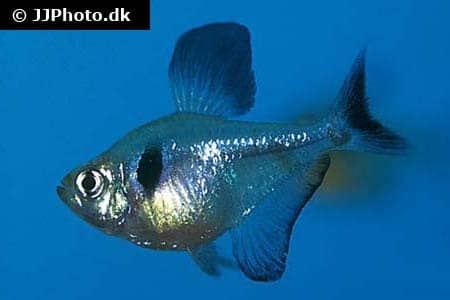
The black phantom tetra is the best display tetra most people have never kept. Males flare their oversized dorsal fins at each other in constant sparring matches that look like a slow-motion boxing match. Keep fewer than 6 and you lose the behavior entirely. Keep them in a proper school and you get a show that never stops.
Male black phantom tetras flaring at each other is one of the best free shows in the freshwater hobby.
The Reality of Keeping Black Phantom Tetra
Male sparring is the main attraction. Male black phantom tetras spread their oversized fins and face off with each other in ritualized displays. No physical contact. Just fin-flaring, posturing, and dramatic showmanship. This behavior is constant in a group with multiple males and it is genuinely entertaining.
Females are a completely different fish visually. Males are dark, dramatic, and large-finned. Females are lighter colored with reddish-tinted fins and a more compact body. Both are attractive, but for different reasons. A mixed group shows both looks.
They need dark backgrounds to look their best. Against a light background, black phantom tetras look washed out. Against a dark background with moderate lighting, the dark coloring becomes rich and dramatic, and the fin displays are much more visible.
Biggest Mistake New Owners Make
Keeping all females or only one male. The sparring behavior between males is the entire appeal of this species. Without multiple males, you miss the show.
Black phantom tetras are peaceful, adaptable, and one of the most reliably attractive small tetras. They display beautifully in planted tanks and tolerate a wide range of water parameters.
Expert Take (Mark Valderrama, AquariumStoreDepot)
The black phantom tetra is one of the most behaviorally interesting small fish in the hobby. The male sparring displays are fascinating and they happen all day long. If you want a fish that does more than just swim around, this is an excellent choice.
Key Takeaways
- Hardy and beginner-friendly – one of the easiest tetras to keep, adaptable to a wide range of water conditions
- Striking sexual dimorphism – males have large black fins, females have reddish-pink fins, making mixed groups visually stunning
- Males spar with dramatic fin displays – flaring and posturing that’s entertaining to watch and rarely causes any harm
- Keep in groups of 6. 8 minimum – proper group size prevents fin-nipping and brings out natural behavior
- 20-gallon tank minimum with dim lighting and dark substrate for best coloration
Species Overview
| Field | Details |
|---|---|
| Scientific Name | Megalamphodus megalopterus (formerly Hyphessobrycon megalopterus) |
| Common Names | Black Phantom Tetra |
| Family | Acestrorhamphidae |
| Origin | Upper Paraguay & Guaporé River basins (Brazil, Bolivia) |
| Care Level | Easy |
| Temperament | Peaceful |
| Diet | Omnivore |
| Tank Level | Mid |
| Maximum Size | 1.8 inches (4.5 cm) |
| Minimum Tank Size | 20 gallons (75 liters) |
| Temperature | 72. 82°F (22. 28°C) |
| pH | 6.0. 7.5 |
| Hardness | 2. 18 dGH |
| Lifespan | 3. 5 years in captivity |
| Breeding | Egg scatterer |
| Breeding Difficulty | Moderate |
| Compatibility | Community |
| OK for Planted Tanks? | Yes |
Classification
| Taxonomic Level | Classification |
|---|---|
| Order | Characiformes |
| Family | Acestrorhamphidae (reclassified from Characidae, Melo et al. 2024) |
| Subfamily | Megalamphodinae |
| Genus | Megalamphodus |
| Species | M. Megalopterus (Eigenmann, 1915) |
The black phantom tetra was originally described by Carl Eigenmann in 1915 as Megalamphodus megalopterus. For decades it was placed in Hyphessobrycon, the enormous catch-all genus that housed dozens of loosely related tetras. The species name megalopterus means “large-finned” in Greek – a fitting description once you see a mature male’s oversized dorsal fin.
Note on reclassification: The 2024 phylogenomic study by Melo et al. Reorganized the tetra family tree significantly. The black phantom was returned to its original genus Megalamphodus within the new family Acestrorhamphidae, subfamily Megalamphodinae. This same subfamily includes other “rosy tetra clade” species like the red phantom tetra and the bleeding heart tetra. Most hobby sources still reference the old name Hyphessobrycon megalopterus, but the scientific literature now uses Megalamphodus megalopterus.
Origin & Natural Habitat
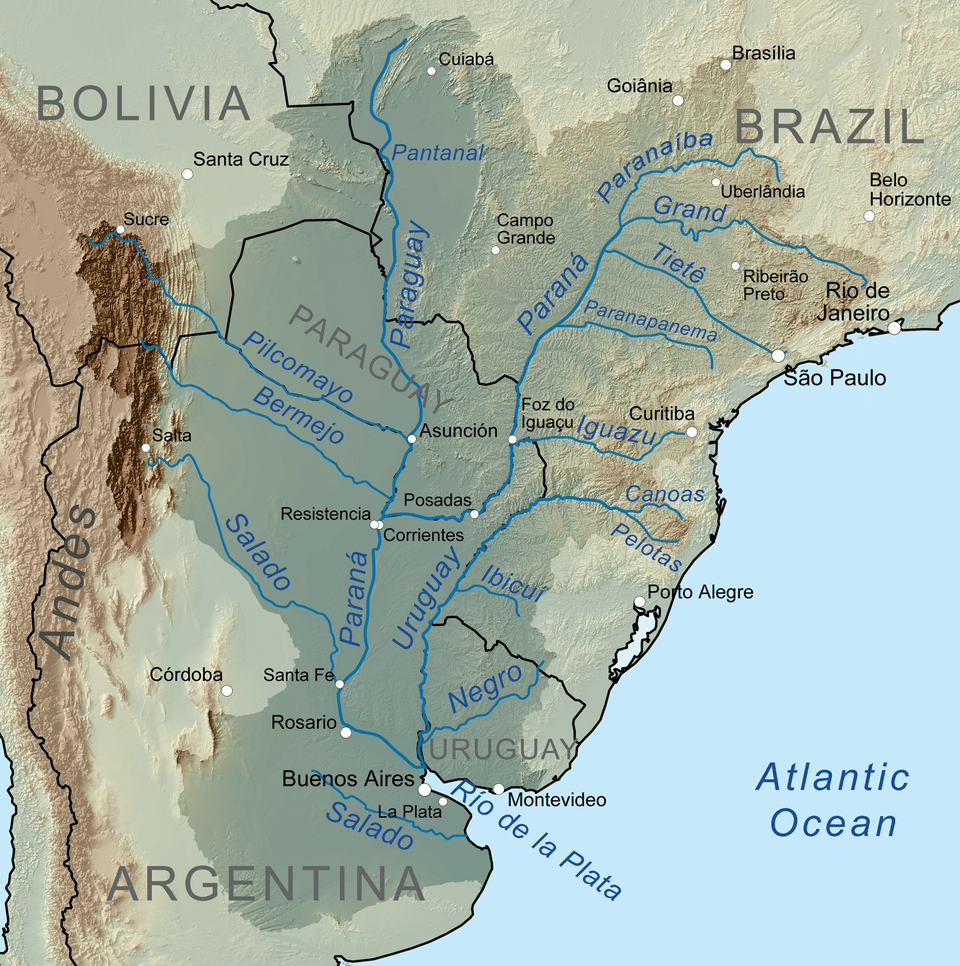
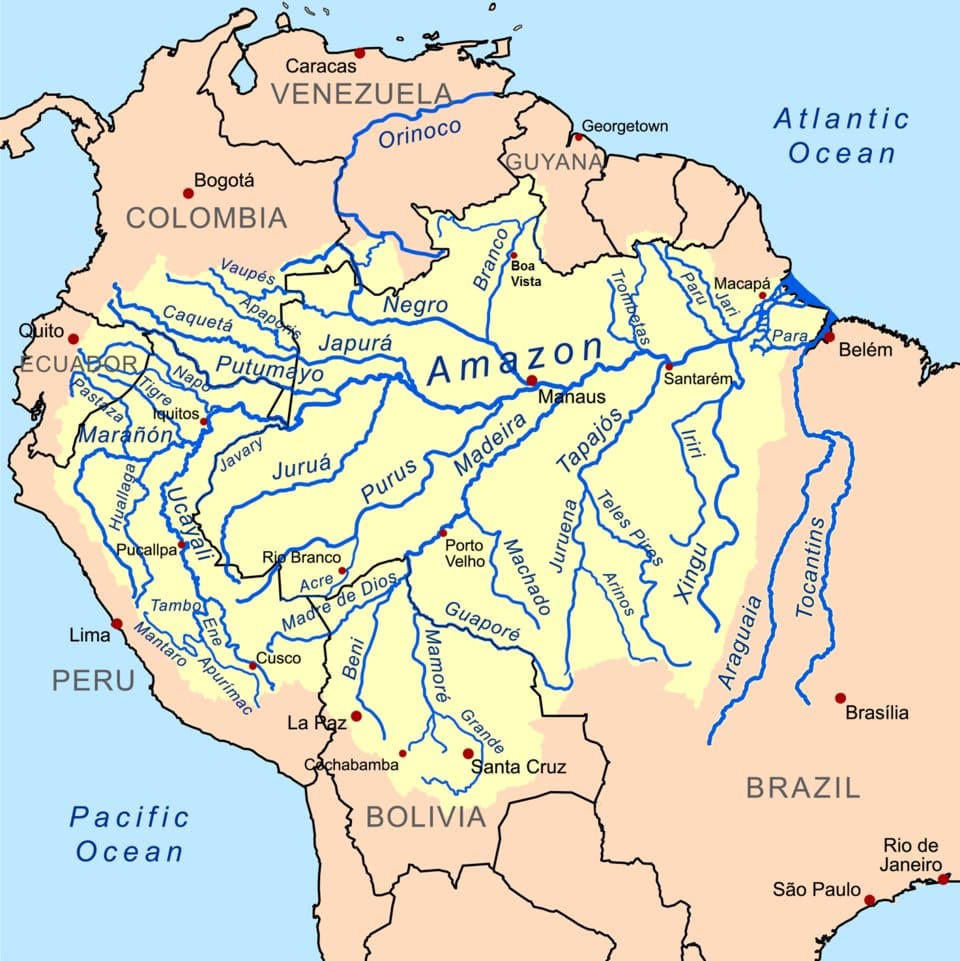
The black phantom tetra is native to the upper Paraguay River basin and the upper Guaporé (Iténez) River drainage in central South America, spanning parts of Brazil and Bolivia. The type locality is the Rio Guaporé, which forms part of the border between the two countries.
In the wild, these fish inhabit slow-moving tributaries, streams, and marshy areas with soft, sandy or muddy substrates. The habitat is typically shaded by overhanging vegetation, with plenty of submerged roots, fallen branches, and leaf litter. The water is often stained brown from tannins – soft, slightly acidic, and warm.
This is classic South American blackwater and clearwater habitat, and it explains why black phantoms look their best in aquariums that replicate these conditions – dim lighting, dark substrate, and plenty of botanical elements.
Appearance & Identification
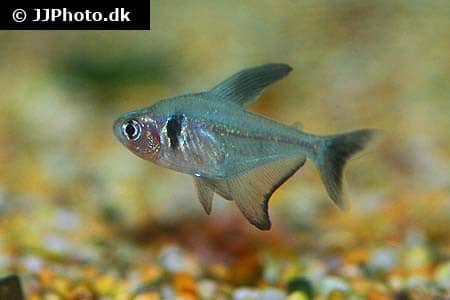
The black phantom tetra has a laterally compressed, somewhat deep body with a distinctive smoky gray to dark charcoal coloration. A prominent dark shoulder spot (humeral blotch) sits just behind the gill cover, which is one of its most recognizable features. The overall impression is of a shadowy, elegant fish – nothing flashy, just effortlessly cool.
Under good conditions, the body takes on a subtle silvery sheen with darker edges. The fins are where things get really interesting, and this is where the dramatic sexual dimorphism comes into play.
Male vs. Female
This is one of the easiest tetras to sex, and the differences are striking:
- Males are slimmer and develop very large, dramatic black dorsal, anal, and pelvic fins. The dorsal fin in particular becomes tall and sail-like. Males are darker overall and intensify their coloration during displays.
- Females have a rounder, deeper body (especially when carrying eggs) with shorter fins that are reddish-pink in color. The pectoral fins in females also show a distinctive pink-red hue.
Keeping a mixed group of males and females together creates a beautiful contrast – the dark, dramatic males alongside the warmer-toned females. It’s one of the best examples of sexual dimorphism in the tetra world.
Average Size & Lifespan
Black phantom tetras reach about 1.5 to 1.8 inches (4. 4.5 cm) in standard length, placing them in the medium range for commonly kept tetras. They’re noticeably larger than neons but smaller than bleeding hearts or Congo tetras.
With proper care, expect a lifespan of 3 to 5 years. Consistent water quality and a varied diet are the biggest factors in maximizing their longevity.
Care Guide
Tank Size
A 20-gallon tank is the recommended minimum for a group of 6. 8 black phantom tetras. They’re active mid-level swimmers and need enough horizontal space to school and for males to establish display territories. If you want a larger group of 10+ (recommended for the best behavior), step up to a 30-gallon or larger.
Water Parameters
| Parameter | Ideal Range |
|---|---|
| Temperature | 72. 82°F (22. 28°C) |
| pH | 6.0. 7.5 |
| Hardness | 2. 18 dGH |
| KH | 4. 8 dKH |
Black phantoms are impressively adaptable. They’ll do fine in a fairly wide range of conditions, which is one reason they’re such a good choice for beginners. That said, they show their best coloration in softer, slightly acidic water with some tannins – think driftwood and Indian almond leaves. Avoid extremes and keep parameters stable.
Filtration & Water Flow
Gentle to moderate flow suits them best. In the wild, they inhabit still to slow-moving water, so don’t blast them with a strong current. A sponge filter or a hang-on-back with a baffle works well. Weekly water changes of 20. 25% keep things clean.
Lighting
Subdued lighting is the key to getting the best out of black phantom tetras. Under harsh, bright lights they look pale and washed out. Dim the lights, add floating plants for shade, and watch the transformation – their colors deepen, their fins spread, and their behavior becomes much more confident and natural.
Plants & Decorations
A densely planted tank with driftwood, root structures, and a dark substrate is the ideal setup. The dark background makes their subtle coloration pop. Live plants provide security and natural territory boundaries that help manage male displays. Java fern, Anubias, Cryptocoryne, and floating plants like Amazon frogbit all work beautifully.
Substrate
Dark sand or fine gravel is strongly recommended. A dark substrate enhances their coloration dramatically – on light-colored substrate, they will look washed out and stressed. This is one of those fish where the substrate choice makes a huge visual difference.
Is the Black Phantom Tetra Right for You?
Black phantom tetras combine dramatic looks with fascinating behavior. Here’s who should keep them:
- You enjoy watching natural display behaviors. Male black phantoms put on an incredible show
- You want a tetra that offers visual variety between males and females in the same school
- You have a planted tank with moderate to low lighting. Their dark coloring pops in these conditions
- You appreciate dramatic fin shape. Males develop some of the largest dorsal fins relative to body size of any tetra
- You want a hardy, easy-to-keep species that still offers sophisticated behavior
- Perfect for hobbyists who value behavior and personality as much as color
Tank Mates
Best Tank Mates
Black phantom tetras are peaceful community fish that pair well with a wide range of tank mates:
- Other tetras – neon tetras, ember tetras, rummy-nose tetras, cardinal tetras
- Red phantom tetras – the classic pairing, creating a beautiful dark-and-red contrast in the same tank
- Corydoras catfish – ideal bottom-dwelling companions
- Pencilfish – gentle nano fish from similar habitats
- Honey gouramis – peaceful, complementary colors
- Dwarf cichlids (rams, Apistogramma) – natural South American biotope pairing
- Otocinclus – peaceful algae eaters that stay out of the way
- Hatchetfish – occupy the top level, filling a different zone
Tank Mates to Avoid
- Large aggressive cichlids – anything that could eat or bully them
- Slow-moving long-finned fish (bettas, fancy guppies) – black phantoms may nip at trailing fins, especially in small groups
- Dwarf shrimp – adult shrimp are fine, but baby shrimp will be hunted
Food & Diet
Black phantom tetras are unfussy omnivores that accept just about anything you offer. In the wild, they feed on small insects, larvae, and organic matter. In the aquarium, a high-quality flake or micro-pellet should form the staple diet.
Supplement with frozen or live foods 2. 3 times per week to maintain good condition and bring out the best coloration. Daphnia, baby brine shrimp, cyclops, and bloodworms (in moderation) are all excellent choices. A little spirulina or vegetable-based food rounds things out nicely.
Feeding tip: Feed small amounts once or twice daily – only what they can finish in 2 minutes. These fish have small mouths, so make sure the food is appropriately sized.
Breeding & Reproduction
Black phantom tetras are egg scatterers and moderately easy to breed compared to some other tetras. They’re a good species for hobbyists looking to try their hand at tetra breeding for the first time.
Spawning Tank Setup
Set up a separate 10-gallon breeding tank with very dim lighting. Use fine-leaved plants like Java moss or spawning mops to catch eggs, and consider a mesh or marble layer on the bottom to protect fallen eggs from the parents. Water should be soft and slightly acidic – pH 6.0. 6.5, temperature around 76. 80°F (24. 27°C), with minimal hardness.
Conditioning & Spawning
Condition a breeding pair (or small group) with plenty of live foods for 1. 2 weeks. When the female is visibly plump with eggs and the male is showing intense coloration, introduce them to the spawning tank in the evening. Spawning usually occurs the following morning. The female scatters eggs among the plants while the male fertilizes them.
Egg & Fry Care
Remove the adults immediately after spawning – they will eat the eggs without hesitation. Eggs are light-sensitive, so keep the tank dark or very dimly lit. Hatching occurs in about 24. 36 hours, and fry become free-swimming 3. 4 days later. Feed infusoria or liquid fry food initially, graduating to baby brine shrimp as they grow.
Common Health Issues
Black phantom tetras are hardy fish, but they’re susceptible to the same common tropical fish diseases:
Ich (White Spot Disease)
The most common ailment – white salt-grain-like spots on the body and fins. Usually triggered by temperature fluctuations or stress. Raise the temperature gradually to 82°F and treat with a standard ich medication.
Fin Rot
Bacterial deterioration of the fins, often caused by poor water quality. Particularly worth watching for in males with their large fins. Improve water quality with extra water changes and treat with antibacterial medication if needed.
General Prevention
Quarantine new fish for 2. 3 weeks before adding them to your main tank. Maintain stable water parameters – consistency matters more than hitting exact numbers. Regular water changes and a varied diet keep the immune system strong.
Common Mistakes to Avoid
- Keeping too few – In groups smaller than 6, black phantoms become shy, stressed, and more likely to nip at other fish. A group of 8+ is ideal.
- Bright lighting with no shade – These fish look terrible under bright lights. Add floating plants and use subdued lighting to bring out their best colors.
- Light-colored substrate – A white or light sand substrate will wash out their coloration significantly. Always use dark substrate with this species.
- Pairing with long-finned fish – Black phantoms can be fin-nippers, especially in undersized groups. Keep them away from bettas and fancy guppies.
- Expecting instant color – Pet store specimens often look pale and drab from stress. Give them a few weeks to settle in and their true colors will emerge.
Where to Buy
Black phantom tetras are widely available at local fish stores, chain pet retailers, and online. They’re typically priced between $3. 6 per fish, making them one of the more affordable tetras. Because they’re commercially bred in large numbers, availability is good.
Only add them to a fully cycled, stable tank. Black phantoms handle a range of water chemistry, but they do not handle ammonia or nitrite. A new tank that has not finished cycling will stress them out and open the door to disease.
For quality stock with live arrival guarantees, check Flip Aquatics and Dan’s Fish. Both carry this species regularly, though stock can fluctuate. Buying online lets you get healthy, well-acclimated specimens shipped directly to your door.
Frequently Asked Questions
How many black phantom tetras should I keep?
A minimum of 6, but 8. 10 is ideal. Larger groups distribute male aggression, reduce fin-nipping of tank mates, and produce much better schooling and display behavior. In a proper group, male sparring displays become a regular and entertaining feature.
Are black phantom tetras aggressive?
Not truly aggressive, but males are territorial and will spar with each other through dramatic fin-flaring displays. This is normal behavior and rarely results in injury – it’s more like a posing contest. The main concern is fin-nipping, which is almost always solved by keeping them in larger groups.
Can you keep black and red phantom tetras together?
Absolutely – it’s one of the best combinations in the hobby. The dark coloration of the black phantoms alongside the warm red tones of the red phantoms creates a stunning visual contrast. They have nearly identical care requirements and coexist peacefully.
Why do my black phantom tetras look pale?
The most common causes are stress (from too few in the group, too-small tank, or aggressive tank mates), bright lighting, light-colored substrate, or poor water quality. Fix these issues and give them a few weeks – their color should deepen noticeably. Well-settled black phantoms in a dim, planted tank look dramatically different from stressed pet store fish.
Do black phantom tetras nip fins?
They is mild fin-nippers, particularly if kept in insufficient numbers (fewer than 6). In a proper school, the nipping behavior is directed at each other during displays rather than at tank mates. Avoid housing them with slow-moving, long-finned species like bettas or fancy guppies.
What It Is Actually Like Living With Black Phantom Tetra
Watching male black phantom tetras spar is addictive. They face each other, spread their oversized fins to maximum extension, and hold the pose for several seconds before darting away. It happens dozens of times a day.
Despite the dramatic displays, no actual fighting occurs. The sparring is purely ritualistic and no fish gets hurt. This makes it one of the most entertaining social behaviors you can observe without any welfare concerns.
They prefer the lower to middle water column and look best in tanks with plenty of plants and dark substrate.
They are completely peaceful toward other species. All the drama stays within the school.
How the Black Phantom Tetra Compares to Similar Species
Black Phantom Tetra vs. Red Phantom Tetra
Red phantoms are the warm-toned counterpart. Vivid red versus the black phantom’s smoky darkness. Both are equally peaceful and share similar care requirements. The main difference beyond color is that male black phantoms are more dramatic displayers, putting on more visually striking fin-flaring shows. Red phantoms school more cohesively. Keeping both together is one of the best tetra combinations in the hobby. The warm red and cool dark fish create a natural contrast that looks deliberate and artistic. Check out our Red Phantom Tetra care guide for more details.
Black Phantom Tetra vs. Emperor Tetra
Emperor tetras share the black phantom’s elegant fin development and dignified presence, but in completely different colors. Deep purple-blue versus smoky black. Both species reward patience as males develop their full finnage over months. Emperors are slightly more refined in appearance; black phantoms are more dramatic in behavior. Both are excellent peaceful community choices. If you want color and elegance, go emperor. If you want behavioral drama and dark sophistication, go black phantom. Check out our Emperor Tetra care guide for more details.
Closing Thoughts
The black phantom tetra is proof that you don’t need bright colors to make a visual impact. Their moody, smoky coloration, dramatic fin displays, and the striking contrast between dark males and pink-finned females make this one of the most visually interesting tetras available. Add in their hardiness, affordability, and peaceful temperament, and you’ve got a fish that deserves way more attention than it gets.
Give them dim lighting, a dark substrate, a proper group of 8 or more, and watch the magic happen. They’re especially stunning paired with red phantom tetras for a dark-and-red theme that’s hard to beat.
For more tetra species to consider alongside your black phantoms, check out our care guides for bleeding heart tetras, ember tetras, and rummy-nose tetras.
Recommended Video
Check out our tetra tier list video where we rank the most popular tetras in the hobby, including the black phantom tetra:
References
- Hyphessobrycon megalopterus Profile – Seriously Fish
- Megalamphodus megalopterus (Eigenmann, 1915) – FishBase
- Black phantom tetra – Wikipedia
- Phylogenomics of Characidae – Melo et al, 2024
- About the Author
- Latest Posts

I’m Mark Valderrama, founder of Aquarium Store Depot and a fishkeeper with over 25 years of hands-on experience. I started in the hobby at age 11, worked at local fish stores, and have kept freshwater tanks, ponds, and reef tanks ever since. I’ve been featured in two best-selling aquarium books on Amazon and built this site to share practical, experience-based fish keeping knowledge.
Leave a Reply