
Last Updated: June 25, 2026
Thank you for visiting! By the way… any links on this page that lead to products on Amazon and other stores/partners are affiliate links Aquarium Store Depot earns a commission if you make a purchase.
Table of Contents
- What Most Care Guides Get Wrong
- The Reality of Keeping
- Key Takeaways
- Species Overview
- Classification
- Origin & Natural Habitat
- Appearance & Identification
- Average Size & Lifespan
- Care Guide
- Tank Mates
- Food & Diet
- Is the Chocolate Cichlid Right for You?
- Breeding & Reproduction
- Common Health Issues
- Common Mistakes to Avoid
- Where to Buy
- Frequently Asked Questions
- What It Is Actually Like
- Species Comparison
- Closing Thoughts
- References
Chocolate cichlids are the gentle giants of the South American cichlid world. They change color based on mood, get massive, and need a tank most hobbyists are not willing to provide. At over 12 inches fully grown, this fish needs a 125 gallon minimum, and that is not a suggestion. I have seen chocolate cichlids stunted in 75 gallon tanks, and a stunted chocolate cichlid is a stressed, aggressive shadow of what it should be. Get the space right and you have twelve inches of cichlid that would rather hide behind a log than fight.
Twelve inches of cichlid that would rather hide behind a log than fight.
What Most Care Guides Get Wrong About Chocolate Cichlid
The biggest mistake with Chocolate Cichlids is underestimating their territorial needs. Most guides give minimum tank sizes that work only if the fish is alone. Add tank mates and you need significantly more space plus sight-line breaks. In my 25 plus years in the hobby, I’ve seen more cichlid aggression problems caused by cramped tanks than by genuinely aggressive fish.
What the tank size guides miss: in a tank that’s too small, the chocolate cichlid’s color stays dark – flat brown, minimal pattern, no iridescence. That’s chronic stress showing up as coloration. A healthy chocolate cichlid in a correctly sized tank shifts color constantly. A stressed one in an undersized tank locks into dull brown and stays there. The color shift is the health indicator most guides don’t tell you to watch.
The Reality of Keeping Chocolate Cichlid
Chocolate cichlids are gentle giants that change color based on mood, and they have a lot of moods.
They get massive. Chocolate cichlids reach 10 to 12 inches. A 75-gallon is the bare minimum for a single fish, and 125 gallons for a pair.
Color changes are constant. Stress turns them dark. Excitement turns them lighter with vivid patterns. Breeding brings out colors you did not know they had. Their skin is a real-time mood indicator.
They are surprisingly peaceful for their size. Chocolate cichlids coexist with other large South Americans better than most cichlids their size. But they will eat anything that fits in their mouth.
They bond for life. A bonded pair of chocolate cichlids is one of the most fascinating things in the hobby. They communicate, share parental duties, and will defend fry aggressively.
Biggest Mistake New Chocolate Cichlid Owners Make
Underestimating their adult size. Juvenile chocolate cichlids in a fish store look manageable. An adult at 12 inches in a 55-gallon tank is not manageable. Plan for the adult size from day one.
Expert Take (Mark Valderrama, AquariumStoreDepot)
After 25+ years in the hobby, the chocolate cichlid is the large cichlid I recommend when someone wants a showpiece fish but is done with the aggression that comes with oscars or Jack Dempseys. The peaceful-for-its-size characterization is real – I’ve watched chocolate cichlids ignore tank mates that would have been attacked immediately by most other cichlids their size. What surprises people most is the color. The name undersells it completely. A healthy adult in peak condition shifts from chocolate brown to vivid emerald green in minutes. Under the right lighting, over dark substrate, it’s as visually striking as any fish I’ve kept. Get the tank size right – 125 gallons for a pair minimum – and this fish runs for 10 to 15 years without drama. One thing I’ll add from years of watching people buy this fish: a 4-inch juvenile in a store display tank doesn’t telegraph the 12-inch adult that’s coming. I’ve seen that mismatch disappoint more owners than any care failure – they genuinely didn’t picture the adult size when they bought it. Factor in that 12-inch adult before you set up the tank, not after.
Key Takeaways
- Surprisingly peaceful for its size. Despite reaching 12 inches, the chocolate cichlid is far less aggressive than most large cichlids
- Dramatic color-changing ability. Adults shift between chocolate brown, emerald green, gold, and reddish tones depending on mood and environment
- 75-gallon minimum for a single adult – that’s the floor, not the target. Pairs need 125 gallons
- Tolerant of a wide pH range (5.0-7.5), making it more accessible than many SA cichlids
- Biparental substrate spawner with devoted parental care, including excavating pits in the substrate for fry
Species Overview
| Field | Details |
|---|---|
| Scientific Name | Hypselecara temporalis |
| Common Names | Chocolate Cichlid, Emerald Cichlid, Chocolate Emerald Cichlid |
| Family | Cichlidae |
| Origin | Amazon River basin, South America |
| Care Level | Moderate |
| Temperament | Semi-aggressive (peaceful for a large cichlid) |
| Diet | Omnivore |
| Tank Level | Middle to Bottom |
| Maximum Size | 12 inches (30 cm) |
| Minimum Tank Size | 75 gallons (284 liters) |
| Temperature | 75 to 84°F (24 to 29°C) |
| pH | 5.0 to 7.5 |
| Hardness | 1 to 12 dGH |
| Lifespan | 10 to 12 years |
| Breeding | Substrate spawner |
| Breeding Difficulty | Moderate |
| Compatibility | Community (with medium to large peaceful fish) |
| OK for Planted Tanks? | Partially (may uproot delicate plants) |
Classification
| Taxonomic Level | Classification |
|---|---|
| Order | Cichliformes |
| Family | Cichlidae |
| Subfamily | Cichlinae |
| Genus | Hypselecara |
| Species | H. Temporalis (Günther, 1862) |
The chocolate cichlid was first described by Albert Günther in 1862. The genus name Hypselecara comes from the Greek words “hypselos” (high or tall) and “kara” (head or face), referring to the species’ high, rounded forehead profile. The species name temporalis refers to the temporal region of the head, likely describing the prominent head shape.
This fish has been bounced around taxonomically over the years and has appeared under various genus names in older literature, including Heros and Cichlasoma. The current placement in Hypselecara is well-established. There is one other species in the genus, H. Coryphaenoides, which is less commonly seen in the hobby.
Origin & Natural Habitat
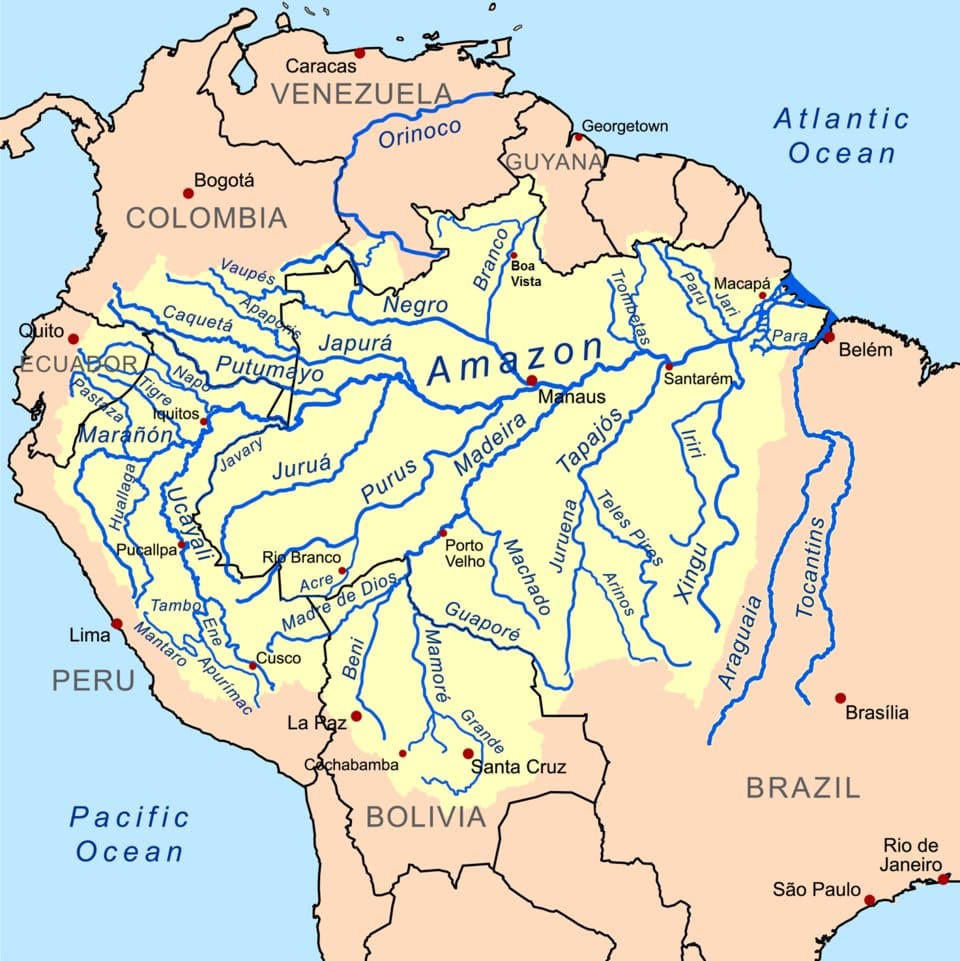
The chocolate cichlid is widely distributed throughout the Amazon River basin, occurring in Peru, Colombia, Venezuela, and Brazil. Its range encompasses the Ucayali and Amazonas river drainages in Peru, the Amazonas drainage in Colombia, and the Solimoes-Amazon system and tributaries in Brazil including rivers in the state of Amapá. This broad distribution mirrors the oscar’s range, though the chocolate cichlid is less well known despite being similarly widespread.
In the wild, chocolate cichlids inhabit slow-flowing, turbid waters over muddy or sandy substrates. They’re found in silt-laden rivers and their associated floodplain lakes and backwaters. Unlike some cichlids that prefer clear or blackwater conditions, chocolate cichlids are adapted to murkier environments where visibility is reduced. They use fallen wood, root tangles, and submerged structures as shelter and territory markers.
The water in their native habitat is warm (77-86°F / 25-30°C), soft to moderately hard, and slightly acidic to neutral. These are fairly typical Amazonian conditions, which helps explain the species’ adaptability in captivity. Seasonal flooding expands and contracts their available habitat, and they’re accustomed to gradual changes in water level and chemistry.
Appearance & Identification
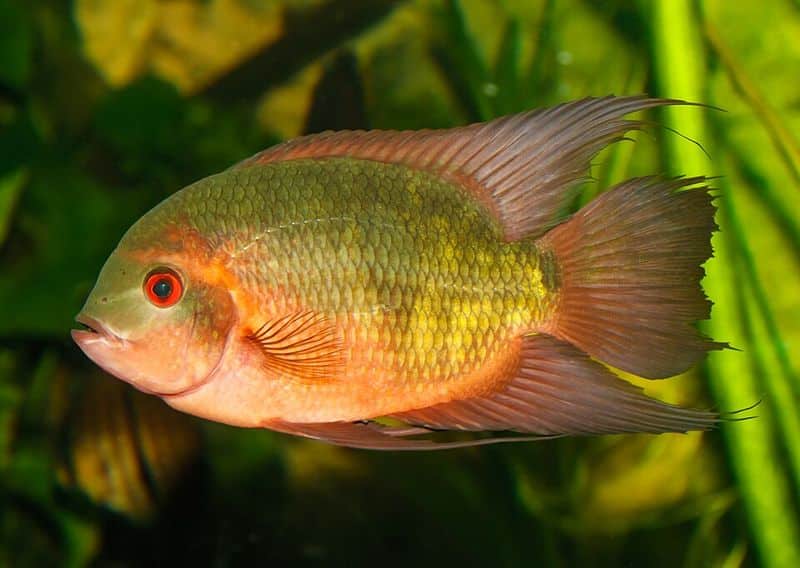
The chocolate cichlid is a deep-bodied, laterally compressed fish with a rounded profile and a prominent, slightly convex forehead. At first glance, the body shape is reminiscent of a large severum or uaru, with a disc-like profile that gives the fish a substantial, imposing presence in the aquarium.
What makes this species truly special is its remarkable color-changing ability. The base coloration can shift dramatically between chocolate brown, olive green, emerald green, golden yellow, and even reddish tones. These changes can happen in minutes, triggered by mood, social interactions, light conditions, and breeding status. A fish that looks plain brown in the morning will display vivid emerald green by afternoon. During breeding, both parents may display their most intense colors simultaneously.
A dark lateral spot is present on the mid-body, and a dark blotch may appear on the operculum (gill cover). The fins are dark with subtle iridescence. The eye is often reddish-orange, providing a nice contrast against whatever body color the fish is displaying at the moment.
Juveniles are considerably less impressive, showing a drab olive-brown coloration with dark barring. The color-changing ability develops gradually as the fish matures, with full adult coloration appearing at around 4-5 inches.
Male vs. Female
Sexing chocolate cichlids becomes more feasible as the fish mature, though it remains challenging in younger specimens.
| Feature | Male | Female |
|---|---|---|
| Body Size | Larger, up to 12 inches | Slightly smaller, up to 10 inches |
| Nuchal Hump | Develops a pronounced frontal hump with maturity | Little to no frontal hump |
| Fin Extensions | Dorsal and anal fins more pointed and elongated | Fins more rounded |
| Body Shape | Slightly deeper body | Slightly slimmer profile |
| Coloration | Often more intense color displays | Similar range but sometimes less vivid |
The most reliable sexing indicator in mature fish is the nuchal hump. Adult males develop a noticeable frontal bump on the forehead that becomes more pronounced with age, while females maintain a smoother profile. During spawning, the breeding tubes provide definitive identification, with the female’s tube being wider and blunter.
Average Size & Lifespan
Chocolate cichlids reach an impressive 10-12 inches (25-30 cm) in captivity, with some reports of larger specimens in very spacious tanks. Growth rate is moderate to fast, with well-fed juveniles gaining an inch or more per month during their first year. Plan for adult size from the start, as these fish will outgrow undersized tanks quickly.
With proper care, chocolate cichlids can live 10-12 years in captivity. This is a meaningful long-term commitment. Like most large cichlids, their longevity depends on consistent water quality, a proper diet, and adequate housing throughout their lives.
ASD Difficulty Rating
Moderate | 5/10
Chocolate cichlids are large, peaceful herbivores reaching 10 to 12 inches (25 to 30 cm). They need a 125-gallon minimum for a pair, warm soft water, and a varied diet including plant matter. One of the most peaceful large cichlids in the hobby – but demanding on space and long-term commitment.
Care Guide
Tank Size
A minimum of 75 gallons (284 liters) is necessary for a single adult or a mated pair. For a community setup with chocolate cichlids and other mid-to-large species, 125 gallons or larger is strongly recommended. These are big fish that need room to swim and establish comfortable territories.
A standard 75-gallon tank (48 x 18 x 21 inches) provides adequate floor space, but the 18-inch width is important for allowing the fish to turn comfortably. Taller tanks accommodate their deep body shape. For a pair with potential breeding plans, a 90 to 125-gallon setup provides the best environment.
Water Parameters
| Parameter | Recommended Range |
|---|---|
| Temperature | 75 to 84°F (24 to 29°C) |
| pH | 5.0 to 7.5 |
| General Hardness | 1 to 12 dGH |
| Ammonia | 0 ppm |
| Nitrite | 0 ppm |
| Nitrate | Below 20 ppm |
One of the notable advantages of the chocolate cichlid is its broad tolerance for water chemistry. With a pH range spanning from 5.0 to 7.5 and hardness from 1 to 12 dGH, this species accommodates a wider range of tap water conditions than many South American cichlids. Most hobbyists can keep chocolate cichlids without the RO systems or elaborate water softening setups that species like altum angelfish or wild discus require.
While adaptable, they still benefit from soft to moderately soft water and a slightly acidic pH for optimal coloration and health. Consistency matters more than hitting a specific target. Avoid dramatic swings in any parameter, and maintain clean water through regular water changes.
Filtration & Water Flow
Run a strong canister filter – chocolate cichlids produce more waste than their peaceful temperament suggests. Target 4 to 5 times tank volume turnover per hour and go bigger rather than smaller if you’re deciding between filter sizes. Keep the flow moderate. These fish are from slow, turbid Amazon waters, not fast rivers, and a strong current across the whole tank will stress them.
Weekly water changes of 25-30% help keep nitrate levels in check and maintain the clean conditions these fish need to display their best coloration. Deteriorating water quality is one of the fastest ways to dull a chocolate cichlid’s impressive color palette.
Lighting
Standard to moderate aquarium lighting works well. Chocolate cichlids aren’t particularly light-sensitive, but subdued lighting often brings out more natural behavior and can enhance their color-changing displays. Their iridescent coloration look best under moderate rather than intense lighting. If you’re keeping live plants, match the lighting to plant needs; the fish will adapt.
Plants & Decorations
Chocolate cichlids and planted tanks have a complicated relationship. Hardy plants attached to hardscape – java fern on driftwood, anubias on rock, bolbitis on wood – will survive. Anything rooted in the substrate is at risk during breeding season, because a spawning pair will rearrange the entire bottom to suit themselves. Large amazon swords may hold on if well-established, but don’t count on it.
Large pieces of driftwood and smooth boulders form the backbone of a good chocolate cichlid setup. Vertical slate pieces are valuable if you’re hoping for breeding, as the fish often use them as spawning surfaces. Create some open swimming areas along with sheltered zones behind driftwood where the fish can retreat when they want privacy.
Substrate
Fine to medium sand is the preferred substrate. Chocolate cichlids spawn by excavating pits in the substrate, and sand allows this natural behavior without risk of injury. Sand is also easier to clean and looks natural in an Amazon biotope setup. Avoid sharp or coarse gravel that could injure the fish’s mouth during digging.
Tank Mates
For a large cichlid, the chocolate cichlid is remarkably laid-back. While they are territorial during breeding and may squabble with other large fish over prime spots in the tank, they’re nowhere near as aggressive as oscars, Jack Dempseys, or other large New World cichlids. This makes them one of the best large cichlids for community setups.
Best Tank Mates
- Severums. Similar size, temperament, and water preferences. One of the most natural pairings
- Geophagus species. Peaceful eartheaters complement chocolate cichlids well in large setups
- Angelfish. Can coexist in large tanks, though angelfish should be well-established before adding a chocolate cichlid
- Large tetras. Silver dollars, Congo tetras, and similar deep-bodied schooling fish make good companions
- Plecostomus. Bristlenose plecos, royal plecos, and other mid-to-large pleco species coexist well
- Large catfish. Pimelodid catfish, raphael catfish, and similar species occupy different tank zones
- Uaru. Similar size and peaceful nature make these a good match in tanks of 125+ gallons
Tank Mates to Avoid
- Highly aggressive cichlids. Red devils, jaguar cichlids, and other pugnacious species will dominate chocolate cichlids
- Small fish. Anything that fits in the mouth is at risk. Keep all tank mates over 3-4 inches minimum
- Aggressive territorial cichlids. Convict cichlids and similar species may provoke conflicts in moderate-sized tanks
- African cichlids. Incompatible water requirements and behavioral styles
Food & Diet
Chocolate cichlids are unfussy eaters – they’ll take pretty much anything you put in the tank. In the wild their diet is a mix of invertebrates, algae, plant matter, and whatever small organisms they find along the substrate. In captivity that translates to most quality foods without negotiation.
A high-quality cichlid pellet appropriate for their size should form the dietary base. Supplement with frozen foods like krill, shrimp, bloodworms, and mysis shrimp. Vegetable matter is important for this species: spirulina-based foods, blanched zucchini, spinach, and shelled peas should be offered regularly. The combination of protein and plant matter promotes the best health, coloration, and growth.
Feed adult chocolate cichlids once or twice daily, offering only what they can consume in a few minutes. Like many large cichlids, they are enthusiastic eaters and will happily overeat if given the opportunity. Monitor body condition and adjust feeding amounts accordingly. Obesity is a real concern with large cichlids that have constant access to food.
Is the Chocolate Cichlid Right for You?
Before you commit, here is the honest breakdown. The chocolate cichlid is one of the most rewarding large South Americans you can keep – but the tank size requirement is real and the lifespan is long.
Good fit if:
- You have a 75-gallon minimum for a single adult, or ideally 125 gallons or larger for a pair with community fish
- You want a large, peaceful cichlid that coexists with other medium-to-large South Americans without constant dominance behavior
- You’re drawn to dynamic color-changing behavior – this fish is visually different from one hour to the next depending on mood
- You want to observe impressive biparental brood care: excavating pits, herding fry, vivid breeding coloration
- You’re ready for a 10 to 12 year commitment with a fish that develops more personality as it ages
Think twice if:
- Your tank is under 75 gallons – juveniles look manageable; 12-inch adults are not
- You want an aggressive, dominant centerpiece fish – the chocolate cichlid would rather avoid confrontation than escalate it
- You have a planted aquascape you want preserved – breeding pairs excavate substrate and will uproot plants during spawning
- You’re not prepared for the bioload of a large cichlid – weekly 25 to 30% water changes are required, not optional
Breeding & Reproduction
Breeding Difficulty
Moderate. Chocolate cichlids can breed in home aquariums once a compatible pair has formed. They’re substrate spawners with devoted biparental care, and watching a pair raise a brood is one of the most rewarding experiences in cichlid keeping. The main challenge is obtaining a compatible pair, since sexing juveniles is unreliable.
Spawning Tank Setup
A breeding pair should be housed in a tank of at least 75 gallons. Provide vertical slate pieces, flat rocks, and smooth driftwood surfaces as potential spawning sites. A sand substrate is important because the pair will dig pits in the substrate as part of their brood care. Keep the décor relatively simple and stable, as breeding pairs may rearrange lighter objects.
Water Conditions for Breeding
Slightly softer, warmer water encourage spawning. Target pH 6.0-6.5, hardness below 8 dGH, and temperatures of 80-84°F (27-29°C). A large water change with slightly cooler water can help trigger breeding behavior. Maintain excellent water quality with nitrates below 10 ppm.
Conditioning & Spawning
Condition the pair with increased feedings of high-quality live and frozen foods for several weeks. When ready, both fish intensify their coloration dramatically, often displaying their most vivid emerald green or golden tones. They clean a vertical surface (slate is a favorite) and begin the spawning process. The female deposits rows of adhesive eggs on the surface, and the male follows to fertilize them. Clutch sizes are variable, ranging from 200-600 eggs depending on the female’s size and condition.
Egg & Fry Care
Both parents actively guard the eggs, fanning them and removing any that turn white. Eggs hatch in approximately 3-4 days, and the parents move the wrigglers to pre-dug pits in the substrate. The fry become free-swimming about 5-7 days after hatching.
Parental care in chocolate cichlids is impressive. Both parents herd and guard the free-swimming fry, leading them around the tank and aggressively defending them from any perceived threat. The fry are fed freshly hatched baby brine shrimp, microworms, and finely crushed spirulina flake. The parents continue to guard the brood for several weeks, and some pairs remain attentive for up to a month or more.
Common Health Issues
Hole in the Head Disease (HITH)
Like many large South American cichlids, chocolate cichlids are susceptible to HITH. The condition presents as pitting and erosion around the head and lateral line, linked to poor water quality, nutritional deficiency, and Hexamita infection. Prevention through regular water changes, a varied diet with adequate vitamins, and maintaining low nitrate levels is the best approach. Treatment involves water quality improvement and metronidazole when parasites are suspected.
Ich (White Spot Disease)
Chocolate cichlids can develop ich when stressed by temperature changes, poor water quality, or introduction of new, infected fish. Treatment involves raising the temperature to 84-86°F (29-30°C) and using a commercial ich medication. These robust fish respond well to treatment when caught early.
Bloat
Internal bacterial infection or digestive issues can cause abdominal swelling, loss of appetite, and lethargy. Bloat in large cichlids is often associated with poor diet, internal parasites, or stress. Feeding a balanced diet with adequate vegetable matter helps prevent digestive issues. Epsom salt (1 tablespoon per 5 gallons) provides relief for mild cases, while severe infections require antibiotic treatment.
Fungal Infections
White, cotton-like growths on the body or fins indicate fungal infection, occurring on damaged tissue or in immunocompromised fish. These are secondary infections following injury or stress. Treatment with antifungal medications like methylene blue or commercial fungal treatments is effective. Address the underlying cause (water quality, aggression from tank mates) to prevent recurrence.
Hard Rule: 125 gallons for a pair. Not negotiable.
Chocolate cichlids grow to 10 to 12 inches (25 to 30 cm) and need a 125-gallon minimum for a pair. Cramped conditions cause persistent low-grade aggression that suppresses their natural peaceful behavior. Get the tank size right before anything else.
Common Mistakes to Avoid
- Expecting a plain brown fish. The name “chocolate cichlid” undersells this species. Under proper conditions, they display a stunning range of colors including emerald green, gold, and red. Don’t be disappointed by juvenile or stressed coloration
- Underestimating adult size. At 12 inches, chocolate cichlids are serious fish that need serious tank space. Plan for a 75-gallon minimum from the start
- Mixing with overly aggressive species. While they can hold their own against moderate tank mates, truly aggressive cichlids will dominate chocolate cichlids. Choose companions that match their semi-aggressive but peaceful nature
- Neglecting vegetable matter in the diet. These omnivores need plant-based foods as part of their regular diet. A protein-only diet can lead to digestive issues and reduced coloration
- Failing to provide spawning surfaces. If you want to see breeding behavior, include vertical slate or smooth stone surfaces. Without appropriate spawning sites, even a ready pair may not breed
- Poor water quality maintenance. Like all large cichlids, chocolate cichlids produce significant waste. Regular water changes and robust filtration are non-negotiable
Where to Buy
Chocolate cichlids are available from specialty fish stores and online retailers, though they’re not as commonly stocked as oscars or severums. They may be listed under either “chocolate cichlid” or “emerald cichlid” depending on the retailer, and sometimes under the older taxonomic name Cichlasoma temporale in older listings.
Flip Aquatics is a great source for quality South American cichlids, and Dan’s Fish is another reputable option. Both retailers ship with live arrival guarantees and maintain healthy stock.
When selecting chocolate cichlids, look for alert, active fish with clear eyes and intact fins. Don’t judge them by juvenile coloration, which is drab. Focus on health indicators: good body weight, responsive behavior, and no visible signs of disease. If buying juveniles to grow out (the most common option), get 4-6 to allow natural pair formation.
Frequently Asked Questions
How does the chocolate cichlid compare to an oscar?
Both are large South American cichlids from similar habitats, but their personalities differ significantly. Oscars are more aggressive, more interactive with their owners, and more destructive in the tank. Chocolate cichlids are calmer, less aggressive, and better suited to community setups with other peaceful-to-moderate species. If you want a big cichlid without the oscar’s level of tank-wrecking chaos, the chocolate cichlid is worth considering.
Why does my chocolate cichlid change color?
Color changes in chocolate cichlids are normal and are triggered by mood, social interactions, breeding status, stress, and environmental conditions. A fish displaying vivid emerald green or golden tones is feeling confident and comfortable. Darkening or paling can indicate stress, submission, or illness. Breeding pairs often display their most intense and varied coloration. This color-changing ability is one of the species’ most fascinating traits.
Will chocolate cichlids destroy my plants?
They’re less destructive than oscars but more than, say, festivum. Chocolate cichlids may uproot plants during digging and rearranging, especially when breeding. Plants attached to driftwood or rocks (java fern, anubias) are safe. Rooted plants are at moderate risk, particularly smaller or less-established ones. If planted aquascaping is your priority, there are better cichlid choices.
Are they really peaceful for their size?
Relatively speaking, yes. Chocolate cichlids are significantly less aggressive than oscars, Jack Dempseys, green terrors, and most other large New World cichlids. They can coexist with a range of medium to large peaceful species in adequately sized tanks. That said, they’re still cichlids. Breeding pairs will defend their territory and fry, and dominant individuals may chase subordinates. “Peaceful for a large cichlid” is the most accurate characterization.
Is the emerald cichlid the same as the chocolate cichlid?
Yes. “Chocolate cichlid” and “emerald cichlid” are both common names for Hypselecara temporalis. The “chocolate” name refers to the brown coloration they often display, while “emerald” describes the stunning green tones they can show under different conditions. Both names describe the same fish.
What It Is Actually Like Living With a Chocolate Cichlid
The name tells you nothing about what this fish is actually like to keep. Here is what daily life looks like.
The fish hides. All 12 inches of it. Chocolate cichlids are not the dominant, front-of-tank fish that their size implies. They’re shy. A new fish spends its first few weeks behind the driftwood. A settled fish still retreats when it feels uncertain. The behavior that eventually signals a comfortable fish is when it stops hiding and starts claiming space – moving through the tank with intention, displacing other fish from the substrate, patrolling its zone.
Color change is constant and informative. A stressed fish goes dark – flat chocolate brown, minimal pattern, no iridescence. A comfortable fish lightens to olive-green with visible spangling. A fish in peak condition and good mood shifts into vivid emerald green or gold. You learn to read your fish by its color, and once you can read it, you’ll know something is wrong before any other symptom appears.
Breeding is a visual event. When a pair is ready to spawn, both fish display their most intense colors simultaneously. One fish may be emerald green while the other shows gold and red tones. They clean the spawning surface together, circle each other, and then the female lays eggs in neat rows. The brooding behavior that follows – fanning the eggs, herding free-swimming fry, driving off tank mates – is one of the most complete parental behavior sequences in freshwater cichlid keeping.
They respond to you. After a few months, a settled chocolate cichlid tracks you across the room. It comes forward when you approach the tank. This is a fish with enough intelligence to recognize its keeper, and that responsiveness is part of what makes it compelling for the long term.
How the Chocolate Cichlid Compares to Similar Species
Chocolate Cichlid vs. Oscar
Both are large South American cichlids, both need 75-plus gallons, both live 10 to 15 years. The difference is personality. Oscars are assertive, curious, and frequently disruptive – they rearrange everything, attack new additions, and require close management. Chocolate cichlids are calm, tolerant, and community-viable in a way that oscars rarely are. Choose the oscar if you want a highly interactive, aggressive fish that defines the tank by dominance. Choose the chocolate cichlid if you want a large cichlid with presence and personality that shares space gracefully with other fish.
Chocolate Cichlid vs. Green Terror
Both have iridescent coloring and get to similar sizes, but the temperament gap is significant. Green Terrors are genuinely aggressive – they assert dominance over other fish, disrupt community setups, and require careful stocking. Chocolate cichlids are one of the most peaceful large cichlids in the hobby. Choose the Green Terror if you want a dominant, visually commanding fish that controls the tank on its own terms. Choose the chocolate cichlid if you want the same visual impact without the constant aggression management.
Chocolate Cichlid vs. Severum (Heros efasciatus) — Choose the Severum if you want a slightly smaller, equally peaceful cichlid that stays under 12 inches and works in tanks as small as 75 gallons for a single adult – the severum is easier to house and has stable coloration that’s consistently attractive. Choose the Chocolate Cichlid if you want the dynamic color-shifting behavior and the full biparental brood care display – the chocolate cichlid’s mood-linked color changes make it a genuinely different ownership experience that a severum doesn’t replicate.
Closing Thoughts
A chocolate cichlid changes color with its mood. If it is always dark, something is wrong.
The chocolate cichlid is the large South American cichlid that deserves far more attention than it gets. It combines the presence and personality of a big cichlid with a temperament that actually allows you to keep it in a community setting. The color-changing ability adds a dynamic element that few other freshwater fish can match. And the devoted parental care displayed by breeding pairs is genuinely moving to witness.
If you’re in the market for a large, impressive cichlid and you don’t want to deal with the aggression and chaos that comes with many species in this size range, give the chocolate cichlid a serious look. Set up a 75+ gallon tank with sand substrate, some substantial driftwood, and a few slate pieces. Add a group of juveniles and give them time to grow into their colors. The transformation from drab juvenile to color-shifting adult is one of the most satisfying journeys in the South American cichlid hobby.
This article is part of our South American Cichlids species directory. Explore more South American cichlid care guides.
References
- Seriously Fish. Hypselecara temporalis species profile. seriouslyfish.com
- FishBase. Hypselecara temporalis (Günther, 1862). fishbase.se
- Kullander, S.O. (2003). Family Cichlidae. In: Reis, R.E., Kullander, S.O. & Ferraris, C.J. (eds.) Check List of the Freshwater Fishes of South and Central America. Porto Alegre: EDIPUCRS.
- Practical Fishkeeping. Chocolate cichlid care guide. practicalfishkeeping.co.uk
- About the Author
- Latest Posts

I’m Mark Valderrama, founder of Aquarium Store Depot and a fishkeeper with over 25 years of hands-on experience. I started in the hobby at age 11, worked at local fish stores, and have kept freshwater tanks, ponds, and reef tanks ever since. I’ve been featured in two best-selling aquarium books on Amazon and built this site to share practical, experience-based fish keeping knowledge.
Leave a Reply