
Last Updated: March 26, 2026
Thank you for visiting! By the way… any links on this page that lead to products on Amazon and other stores/partners are affiliate links Aquarium Store Depot earns a commission if you make a purchase.
Most Betta Fish owners kill their fish slowly without realizing it. Tiny bowls, no heater, zero filtration. I have kept bettas for over 25 years and the difference between a Betta Fish surviving and actually thriving is night and day. This is what real Betta Fish care looks like.
If your Betta Fish is not flaring, building bubble nests, and actively exploring, something is wrong with the setup.
A healthy Betta Fish lives 3 to 5 years. That means years of weekly water changes, a heated and filtered tank, and a varied diet. This is not a disposable pet.
A betta in a filtered, heated 5-gallon tank acts like a completely different animal than one sitting in a cup at the pet store. The difference is not subtle. It is dramatic.
Table of Contents
- What Most Care Guides Get Wrong About Betta Fish What They Actually Need to Thrive
- Key Takeaways
- A Quick Overview
- Classification
- All About Betta Fish Care
- The International Congress (Competitions)
- The Major Factors We Need To Know
- Live Plants
- Different Types
- Putting It Together – Creating An Amazing Aquarium
- Tank Water Quality
- Additional Resources (Books To Read)
- Where To Buy
- FAQS
- Is the Betta Fish Right for You?
- How the Betta Fish Compares to Similar Species
- Closing Thoughts
- The Reality of Keeping Betta Fish
- What It Is Actually Like Living With Betta Fish
The Betta Fish for some of us fish keepers was our first experience with a pet fish. It was our introduction to this wonderful world of aquarium keeping. Betta Fish after all has a lot going for them that makes them great pets. They have a great personality and come in a variety of colors. They can exist in smaller tanks and is relatively hardy as long as the environment is properly cared for.
What Most Care Guides Get Wrong About Betta Fish What They Actually Need to Thrive
Want a centerpiece fish for a nano tank? Get a betta. Want a peaceful community schooler? Get ember tetras instead. Want low maintenance? Get neither. Both need real care.
The most common mistake I see with bettas is the bowl. It is still the number one killer of betta fish in this hobby. A betta in an unheated, unfiltered bowl is not living. It is slowly dying. The pet store cup is transport, not housing. The second mistake is assuming all bettas can have tank mates. Every betta has a different temperament. Some tolerate a community setup with small, peaceful fish. Others attack anything that moves, including snails. You cannot predict this before you try it, so always have a backup plan. Finally, people underestimate how much bettas respond to enrichment. A betta in a bare 5 gallon tank with nothing to explore will sit at the bottom and do nothing. Add plants, a cave, something to investigate, and you see a completely different fish. They are curious, interactive animals that need stimulation.
The Reality of Keeping Betta Fish
They are not low-maintenance pets. Bettas need a heater, a filter, and weekly water changes just like any other tropical fish. The myth that they thrive in small, unfiltered containers has killed millions of these fish. A proper betta setup starts at 5 gallons with a gentle filter and a heater set to 78 degrees.
Aggression varies wildly between individuals. Some bettas tolerate tank mates without issue. Others attack anything that moves, including snails. There is no way to predict this before you try it. Always have a backup plan if your betta turns out to be a loner.
Fin rot is the number one killer. Poor water quality causes fin rot faster in bettas than in almost any other fish. Those long, flowing fins are bacteria magnets in dirty water. Weekly 25% water changes are not optional. They are the single most important thing you do for this fish.
Biggest Mistake New Owners Make
Putting a betta in an unheated bowl and calling it a day. Bettas are tropical fish that need 76 to 82 degrees. Below 74, their immune system shuts down and they stop eating. A $15 heater is the difference between a vibrant fish and a slow death.
Expert Take
After 25 years of keeping bettas, the single best upgrade you can make is a quality heater in a 5-gallon filtered tank. Everything else matters less than getting the basics right first.
Key Takeaways
- Betta fish are the best beginner fish to start your aquarium journey with
- A 5-gallon aquarium is a minimum needed for a single adult Beta fish
- Betta fish require heaters as they prefer warmer waters
- Betta fish are aggressive to other Bettas but is bullied by many tropical fish
- There are a vast variety of Betta fish varieties available with many of the rarer variants being better acquired via online stores
A Quick Overview
| Scientific Name | Betta splendens |
| Common Names | Betta Fish, Siamese Fighting Fish |
| Family | Gourami |
| Origin | Thailand |
| Diet | Omnivore |
| Care Level | Beginner |
| Activity | Slow to Moderate |
| Lifespan | 2 – 5 years |
| Temperament | Peaceful (Aggressive to own kind) |
| Tank Level | Middle to top |
| Minimum Tank Size | 5 gallon |
| Temperature Range | 76°-81°F |
| Water Hardness | 5 to 20 DH |
| pH Levels | 6.5. 8.0 (for most varieties) |
| Filtration/Water Flow | Low |
| Water Type | Freshwater |
| Breeding | Egg-layer |
| Difficulty to Breed | Easy to breed |
| Compatibility | Community tank (with properly selected species) |
| OK, for Planted Tanks? | Yes |
Classification
| Taxonomic Rank | Classification |
|---|---|
| Common Name | Betta Fish |
| Scientific Name | Betta splendens |
| Order | Anabantiformes |
| Family | Osphronemidae |
| Genus | Betta |
| Species | B. Splendens |
All About Betta Fish Care
The Betta Fish’s scientific name is Betta splendens. They are also known as Siamese Fighting Fish. They originate from Asia and were kept in the past for their fighting nature. They were originally brought into aquariums by locals who caught on rice paddies. They were first imported to the US in 1927. These days, Bettas are primarily kept for their appearance. They have been selectively bred over the years into many different colors and tail types. They are now known as the designer fish in the freshwater hobby.
In the wild, Betta splendens originate from Southeast Asia. They are native to areas that are visited by frequent flooding that will also go through periods of intense droughts afterward. As a result, Betta evolved to become a labyrinth fish. A labyrinth is a fish that has the ability to take in oxygen from the air as well as take oxygen from its grills. Because of this adaption, Bettas have the ability to live outside of water for short periods of time and can breathe the air around them provided they can stay moist. This is the reason why you will see Bettas in small containers at the pet store or at home (though I would not recommend this — more on this as we through this post).
Here is a short video on Betta for a quick intro from my YouTube Channel. If you like it, please subscribe for more great videos!
Betta is pronounced Bet-tah. It is very common for newcomers to pronounce it as Bay-tah. They received their name from the ancient Asian “Bettah” warrior clan. They were discovered in Thailand. Their Thai name is Iken Bettah, which is translated as “biting fish.” They are also known as Siamese fighting fish. This name was taken from the word Siam, with Siam being the former name of Thailand. They became very popular in the mid-1800s for their fighting. The fighting sport became so popular that the King of Thailand ended up regulating the sport and taxing it. The sports competitions were actually measured on the fish’s bravery versus the damage they inflicted on their opponent, however.
Male and Female Differences
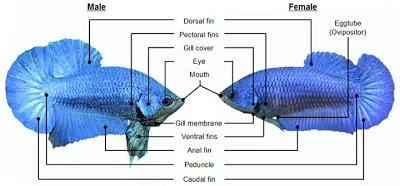
Males and females are distinctly different when it comes to Betta Fish. The males are more colorful with larger fins. Females have shorter fins and are duller in color. Male betta fish also will have a more torpedo-shaped and larger body. Female betta fish also have an Ovipositor on the undersize of their body. These are tiny tubes that release eggs.
The International Congress (Competitions)
Betta Fish breeding has been very popular over the years with breeders raising some of the most beautiful fish you will ever see in the hobby. In fact, there are competitions for the show Bettas (pronounced Bet-uh) hosted by the International Betta Congress (IBC). Below is a video by DocAquaTV showing an IBC competition in full swing. There is a huge community when it comes to Betta Fish, and seeing these unique-looking and high-quality Betta is a real treat.
I would highly encourage anyone who is passionate about keeping these fish to look into a scientific-based community like the International Betta Congress and maybe even think about joining to deep dive into the Betta world. They offer a lot of benefits like their membership forum and magazine. They have been around since 1967 and really take efforts to bring education and care to Bettas all over the world.
The Major Factors We Need To Know
Now that we know a little bit about the Betta itself and the scientific-based community that supports them let’s talk caring for your betta. We are going to split care for a Betta Fish into the following elements:
- Housing
- Filtration
- Heating
- Decor
- Diet
- Tank Mates
Aquarium (Housing)
I’m going to be very upfront and clear to my readers here with this statement. The best aquarium to start with for a Betta is a 5-gallon tank. That’s correct, 5 gallons. You may be a little taken aback by this statement as you may have visited your pet store and seen many of the “Betta tanks” available for sale. Many of them are badly undersized.
I encourage anyone who is keeping a Betta Fish long-term to invest in a proper five Gallon tank like the the ones offered by Marineland and Fluval. Betta fish live best in a good-sized tank and you want the best for your pet. Invest in the proper tank so your fish can thrive.
We also want to limit the number of male bettas in our aquariums. We should only have 1 male betta in our aquarium unless we are using tank dividers to keep our male bettas separated. Keeping more than 1 male is going to require more than 5 gallons. A 20-gallon tank is best for housing multiple male bettas – 3 to 4 are best for a 20-gallon tank using a 1 betta for every 5 gallons approach.
Aquarium Filtration
Contrary to what you may see in the chain pet stores, Betta fish are not best served in a fish bowl. We want their tanks filtered. This will make it easier to maintain as a fish tank without a filter is going to need a water change every 2 to 3 days. This can get very old fast! We want to make tank maintenance easy to do rather than a major chore. Having proper filtration that houses a lot of beneficial bacteria in your tank will provide a proper nitrogen cycle for your fish tank and for your Betta. This will cut down the number of times you will need to change the water int he tank every month and give your Betta a better environment to grow and thrive. I would recommend a Power Filter if you are not using an aquarium kit or all-in-one tank. The best power filter for a small tank like this is going to be a Penn Plex Power Filter or AquaClear as these companies design power filters at this size and both are adjustable.
When using a power filter, you will still need to protect your Betta. Bettas are known for having delicate fins and being very curious. It’s pretty common for them to get sucked into a filter accidentally or have one of their fins damaged. You will want to dampen the intake of your betta fish filter by putting a sponge over it and adjusting the flow to make it calmer and suitable for the Betta. Bettas prefer calmer waters, and some power filters on the market are designed for a higher gallon-per-hour applications. Adjust it down for your Betta and let them adjust to the flow. Another alternative is to use a low-flow canister like an Aquael Multikani.
Tap Water
Because Siamese fighting fish have labyrinth fish, it is a common misconception to put them in any type of water. While we can use tap water, we want to make sure we have the right type of tap water. Tap water needs to be chlorinated with a proper water conditioner produce like Seachem Prime. Water conditioners like Seachem Prime will remove chlorine, harmful chemicals, ammonia, and nitrite from your tap.
Never stick a Betta in straight tap water. Always make sure to dechlorinate tap water to keep your fish safe.
Tank Heating (Water Temperature)
It may not seem like it because you see many of these Betta for sale at pet stores in bowls or small tanks, but they are actually tropical fish and betta fish need water water. They are most comfortable with water temperatures at 75 to 82 degrees with 78 degrees being your target temperature. I would recommend choosing a quality heater from our Best Aquarium Heaters Reviews post. Eheim heaters are one of the most reliable heaters on the market and are worth a look. Neo Therm Heaters are great as well. They have a smaller footprint that works better with the smaller size of the Betta Fish tanks and will fit in all-in-one tank chambers. Both heaters are accurate up to 1 degree of water temperature, the best in our industry.
I would also highly recommend that you get a Digital Thermometer as a backup for your heater’s internal thermometer. If you have the budget, you can invest in a proper Aquarium Heater Controller for a more foolproof water temperature regulation system.
Tank Decorations
There are two parts of the Decor for Betta’s tank: plants and hardscape (rocks and branches). For plants, specifically artificial plants (I’ll touch on live plants later in the post), we need to be very selective about what we put in our Betta Fish tank.
Silk plants like the Marina Naturals Plant shown above are what we want to purchase for our Bettas. Traditional plastic plants you will see at the pet store are not safe for a Betta Fish. This is because many will contain sharp edges and do not give way if the Betta runs into them. This leads to the delicate fins of the Betta Fish getting torn up which in turn causes injury and possible infection. We want to prevent as much harm to the delicate fins of our Betta, so let’s stay away from the hard plastic plants if we are going to shop for artificial plants.
For hardscaping like rocks, we again want to watch out for sharp edges. Hardscaping for Betta Fish needs to be soft or round. You should be able to run your fingers through the hardscape and not get your fingers caught. If your fingers get caught, you have rough edges that will be dangerous to your Betta. Either consider sanding down the hardscape or picking another one.
Another factor to consider with Betta decorations is to watch out for rocks and other hardscaping with lots of small holes. Betta Fish have a tendency to get caught or stuck in holes. I would recommend that you purchase smooth round rocks or rocks with larger holes that your Betta will not get stuck in.
The image above is a good example of a hardscape that is suitable for a Betta Fish. A Coconut shell decoration you can find at a pet store is smooth and the hole is large enough to fit the Betta without it getting caught or stuck inside. Lastly, the water surface should have space for your Betta to build bubble nests.
Diet (Feed Them Right!)
A Betta Fish is a fish with lots of vibrant colors. That is why it’s vital that your betta fish eat quality food to be happy and achieve brighter colors. The fish food hierarchy in today’s hobby is frozen food, fried dried, pellet, then flake food. We want to be selective in what we feed our Betta fish so I will help with the breakdown. Let’s feed your Betta the best food available.
Frozen food is at the top of our list because you can get some of the highest-quality blends and mixes. Unfortunately, frozen foods are going to be the one food you will have a hard time finding online. Even if you do find it, the shipping costs is expensive to the point where it is not worth it. Do yourself and your local store a favor and pick these up locally. I would recommend frozen blood worms, black worms, and daphnia. All is found at your local pet stores.
Next would be freeze-dried. For freeze-dried, I would recommend either freeze-dried Bloodworms or Blackworms. The great thing with freeze-dried foods is because they are dehydrated foods, they will soak up vitamin supplements. Consider supplementing your food with a product like VitaChem to boost their immune system and to keep betta fish healthy. Mixing VitaChem plus Blackworms is a great nutritional mix to feed your betta fish.
One thing to note in this blog post is that I am not recommending brine shrimp as a food source. You may be wondering why I don’t when many fish stores and bloggers are happy to recommend it. I do not recommend brine shrimp because there are way better food sources you can feed your fish. It’s great if you are in pinch, the store doesn’t have much else, or if you have a picky fish. Brine shrimp are just low on nutritional value. We can do better, so why not?
Pellet food would be the next food I would touch on. There is really only one pellet food I would recommend for a Betta. That would be NorthFin’s Betta Bits Food.
Pellet fish should be presoaked before giving to your Betta. This will prevent the pellets from expanding in your Betta’s stomach and causing issues like bloat or constipation. You can also soak pellet food with vitamins.
Flake food I will avoid. Many types of flake food in our industry are simply not up to snuff for our fish and it’s hard to soak them in vitamins. If you want to go with flake food to feed your betta fish, I would consider flake food with probiotics. One such flake food that comes to mind would be Cobalt Aquatics Tropical Fish Color Formula. It is flake food loaded with probiotics and one of the mainstream flake foods around that I would be okay with recommending.
The main benefit of live food is the live beneficial bacterial cultures that you are feeding your Betta. These are priceless nutrients that your betta fish need and truly can extend their lifespan and quality of life. However, there are major cons with live food.
The biggest issue is disease and poor quality live food. You really need to do your due diligence if you are going to feed live foods to your Betta fish. It may even be better to grow them yourself if you really want or find a very trusted retailer who sells them. For live foods, I would highly recommend blackworms. Earthworms are also another natural source that you can pull from your garden and feed to your Betta if you are willing to cut them into bits. Microworms would be another live food to look at. All three of these is cultured at home if you are willing to do so. I included a video from AquaStudent below explaining how to keep blackworms. It’s probably more relevant to Keeping Cichlids given how much you can grow, but I wanted to provide it anyway for your reference. If you take care of live food, you can have success with them. It’s just not something I would not consider for a beginner.
Tank Mates
I’ll start this section with a very honest statement. Not every Betta is meant for a community tank. There is also the size of the tank you need to consider as tank mates in a Betta Fish aquarium should not be considered unless you have an aquarium 10 gallons or larger in size. To maintain the lowest levels of aggression possible with these mixed setups, a planted tank setup is going to be key to keeping the fighting down.
I’ll provide a list below and then explain after. I’m going to start from safest to riskiest. The best tank mates for a Betta Fish are community fish and inverts like:
- Snails
- Medium-sized Shrimp
- Corydoras catfish
- Plecos
- Schooling Fish
Snails are going to be our best test tank mate to start with. Snails are low risk to add to an aquarium and we can take time to observe our Betta’s reaction to them. If your Betta is nipping at the antennas of the nails, this is a likely sign that your particular Betta is not going to accept tank mates readily.
If snails are not harassed, then we can attempt the next set of possible tank mates. These would be Freshwater Aquarium Shrimp like Cherry, Amano, or Ghost shrimp. If your Betta is not attacking snails, there is a good chance they will leave pet shrimp alone. The great thing with shrimp is they are colorful and is used to contrast your Betta colors. Be careful of overpopulation though as shrimp can breed rapidly. There is a chance they could eat the shrimp. A bamboo shrimp is the safest shrimp you can pair with a betta.
The next set of teammates would be bottom-dwelling fish like Corydoras and Pleco. Because we are working with fish who inhabit a different section of our tank area, it is likely that both sets of species will leave each other alone.
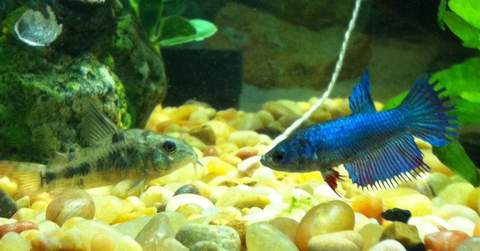
The final and riskiest set of tank mates are going to be school fish like Tetras and Rasboras. The activity level of these fish may actually stress out the more calm Betta. We have to observe their interactions and watch for warning signs. It is very possible to have a Betta that lives happily in a tank with schooling fish.
Bettas are naturally solo fish though. To add tank mates into an aquarium with a Betta is asking the fish to adapt outside of its natural tendencies. Take your time and be patient. Be ready to make changes with your tank mates if things do not work out well for you.
Another thing I forgot to mention in this section is DO NOT place two males in the same tank. Males fighting is where the Bettas got their Siamese Fighting fish came from. Two males will fight to the death in an aquarium. Avoid placing two males in the same aquarium at all costs. There is only one exception – which I cover in this post and is reserved for seasoned aquarists.
Male Bettas will also show aggression to females. It is best if you want multiple Bettas in your aquarium to go female only. Females are not as colorful as males, but a group of 5 females will complement the colors of your tank as they have unique colors and fins in their own right. A group of female Bettas will require a larger tank and there are really no guarantees of their compatibility as they reach maturity.
Lastly, avoid fish like tiger barbs that enjoy nipping at long fish.
Live Plants
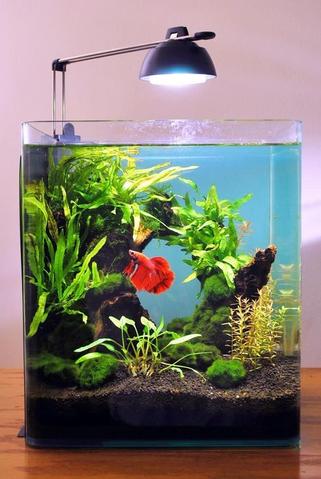
Live plants are a wonderful addition to your Betta to simulate natural habitat. Not only do they add natural hiding places for your Betta, but they are also natural filtration in your aquarium. I recommend live plants for most freshwater setups because they are great for improving water quality. Some plants are also known for being natural water conditioners as they can remove harmful chemicals in your water.
I would highly recommend Low Light Aquarium Plants for your aquarium. If you do decide to go with live plants, get a Planted Tank LED fixture that can grow plants. I am recommending low-light plants because they are easy to grow and keep. However, many lights that come with starter aquariums will not have the proper light to grow even low-light aquarium plants.
For tanks these small, there is a Finnex FugeRay model that is available that will adequately cover a standard 5-gallon tank. Another option is a Fluval Plant Bluetooth Nano. The Fluval Nano is a perfect light for desktop aquariums.
With one of these lights, you are set to grow just about any low-light aquarium plant you can acquire. For low-light plants here are several you can obtain that would work well in a Betta tank:
Different Types
There is actually a large variety of Betta Fish available for sale in our hobby. For most of the Bettas, you will see that the pet store will not have a specific breed or type listed. There are actually large numbers of available varieties with Bettas. Many have exotic colors and fins. I’m going to talk about several here to show you the vast variety of Bettas available today. If you are shopping online for exotic-style Betta Fish, I would highly recommend that you purchase from a place that offers What You See Is What You Get (WYSIWYG) fish for purchase and from a place that offers you a multiple-day guarantee.
Veil Tail
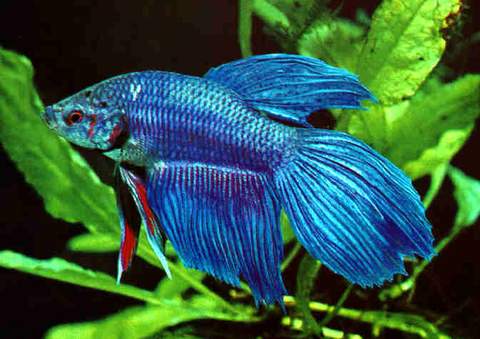
The Veil Tail Betta is the most common Betta you will find at a pet store. They are often labeled as Siamese Fighting Fish at chain pet stores. It is very likely if you are reading this article after you have purchased a Betta yourself that you have a Veil Tail. They are the most widely available Betta in the hobby. After all, this was the original domestic Betta that was brought over to the US. They are also one of the easiest Betta Fish to breed. These Bettas are known for their easy-going nature and are one of the better candidates for a community aquarium.
Half Moon
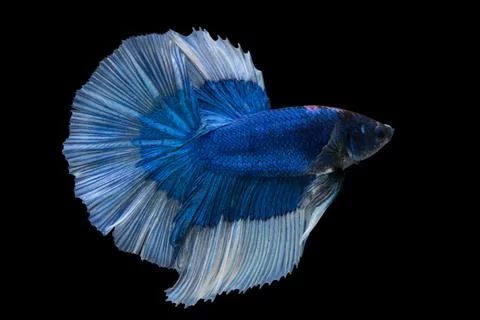
The Half Moon Betta is a Betta that is bred and raised in captivity. It gets its name its tail that spreads 180 degrees to form the half-moon. It is a very striking Betta to have. It is notorious for being a very challenging Betta to breed. They are becoming one of the easier-to-find exotic Betta types nowadays due to their popularity. It was first bred in the 1980s. Half Moon Bettas are also known for their aggressiveness. They are best suited to be solo in an aquarium. Many of the fancier Bettas are only available through local breeders, specialty fish stores, or online.
Rose Tail
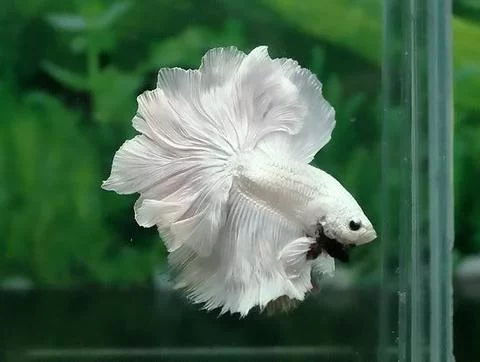
A Rose Tail is a variation of the Half Moon. The ends of their tails are more ruffled creating a striking appearance. As the Half Moon, they are also very difficult to breed. It requires a genetic mutation to occur to get the look and as a result, they tend not to be as hardy as other Betta fish species. They are an amazing-looking Betta
Plakats
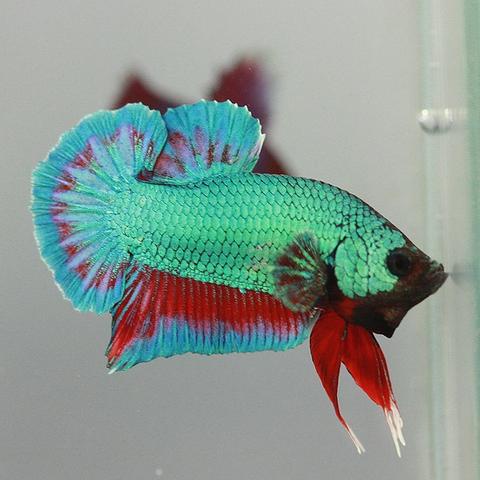
Plakats are a short-finned version of the traditional Betta you find in stores. Plakats are the original Betta and very close to the ones you will find in the wild. They are known as the ancestors of all Bettas in the trade today. They are more actively swimming fish over the other fancier varieties and will do better in larger tanks as a result. It is actually possible to find a Halfmoon Plakat from a breeder. Given the fact the Plakat Betta is closer to a wild Betta, they are hardier, less prone to injury, and more energetic than fancier Bettas.
Purchasing a fancy Plakat fish is a good balance if you want a fancy Betta, but would prefer a hardier and more active sub-type. The picture above is a Halfmoon Plakat. Another popular variety of Plakat are Koi Bettas.
Elephant Ear
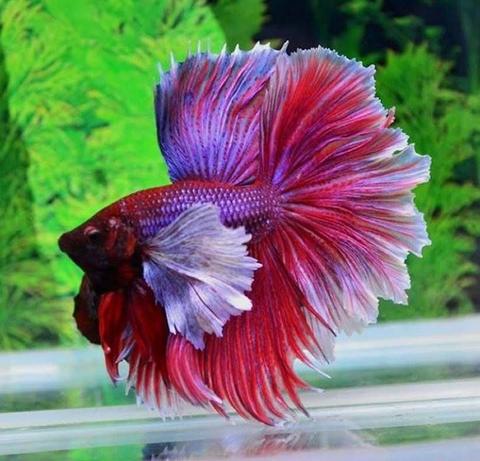
These Bettas get their names from their pectoral fins that look like the ear of an elephant. These are one of the more exotic and striking Betta you will find. These varieties can also be found in the wild (though with less bold colors than their captive-bred varieties). They are aggressive Betta and best suited as a sole specimen. They slow down a lot later in life, so a calm tank alone is the best for them.
Crowntail
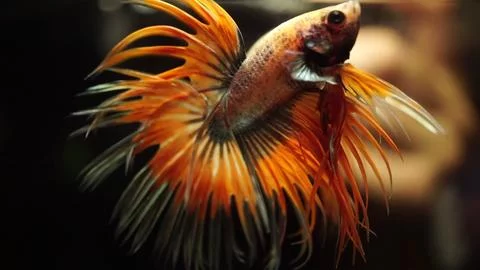 Crowntail Betta Fish”/>
This unique-looking variety has web fins that resemble a crown. It is one of the new varieties among breeders debuting in 1997. This Betta variety produces some of the most exotic colors and mixes available in the trade. Because of its breeding though, this also makes it one of the more difficult Betta to find and take care of. They are more delicate than the other Bettas on the list. It requires exceptionally higher water quality for its fins to stay healthy.
Putting It Together – Creating An Amazing Aquarium
We spent quite a bit of time talking about Bettas, their care requirements, food, and types of Bettas. It’s time to put it all together and built a set up for you. I’m going to use a Fluval Spec V for this build. It is an all-in-one tank with 5 gallons as its volume. The tank really solves a lot of issues for us, namely the filtration and the lighting. The lighting that comes with the unit can grow Low Light Aquarium Plants and the aquarium size is ideal for our Betta. You can use any Aquarium Substrate you want since both Java Fern and Java Moss are water column feeders so either will do fine without an active substrate.
- Tank – Fluval Spec V
- Lighting – Fluval Spec V light is perfect :). No changes are needed!
- Aquarium Filter – Fluval Spec V stock filtration
- Heater – Cobalt NeoTherm
- Hardscape – Coconut Shell or Fluval Driftwood
- Plants – Java Fern and/or Java Moss (Micro Swords and Crypts work as well)
- Substrate – Activ Betta Gems Live Gravel
- A single Male Betta of your choice – Once the tank is cycled!
We can either use a simple aquascape or get fancy with some Driftwood, to ensure it has no sharp edges by sanding down any rough spots. If we go with driftwood, we can attach the moss and ferns to the hardscape with either thread or superglue. Below is a video by Fishaholic showing how to attach Java Fern to driftwood.
Tank Water Quality
Now that you have your Betta tank, you may have questions about water quality. Bettas in general are hardy fish, with fancy sub-types begin to be more sensitive. We want to keep our water quality in good condition when taking care of a Betta. I would recommend doing water changes weekly about 15-20%. You can reduce the water changes if your water quality is high. I always say water changes based on your water parameters. Get used to testing your water conditions every week using a high-quality aquarium water test kit and always use a water conditioner on your tap water.
Some tanks can go bi-monthly or monthly depending on how well the tank is filtered, which your aquarium test kit will hope you monitor when you should make a water change. Check for ammonia, nitrite, and nitrate levels. Ammonia levels and nitrite levels should be at 0 and keep your nitrates below 25.
For pH, Bettas are pretty tolerant of neutral to soft water. They are best with a neutral pH of 7. They will do fine in a slightly acidic pH if accumulated to it, but as close to 7 as possible is ideal.
Maintenance Checklist
Here is a quick maintenance checklist guideline that will help keep your Betta fish happy and to have a long and healthy life.
| Daily | Weekly | Monthly |
| Check water temperature (76 – 81 F) | Change 25-50% water in the tank | Replace filter media or filter cartridge (mechanical and chemical) |
| Observe fish and check for signs of ill health | Siphon out uneaten food and water | Wash media in aquarium water (if reusable) |
| Check equipment to see if it is working (heaters, filtration system, pumps) | Test water parameters | Clean rocks, decor, and/or driftwood |
| Feed your fish | Check plant health and prune overgrowth | |
| Check water levels to see if topping off is needed | Clean off algae from glass |
Additional Resources (Books To Read)
There are some incredible books available about Bettas that go beyond the scope of this blog post. I would encourage you to look into these books and purchase them if you are serious about taking your Betta Fish keeping to another level.
The Betta Bible is the source when it comes to knowledge about Betta Keeping. It is an expensive book, but well worth it. It is loaded with detailed and expert-level information. It has information about the genetics of Bettas, breeding, and the history of the Bettas in our hobby. It is loaded with over 150 pictures of various types of Bettas and the style of writing is very down-to-earth.

The Betta Bible
The Best Book About Keeping Bettas!
With over 300 pages and written by Ecologist Dr Martin Brammah. This offers one of the best deep dives into the world of Betta care!
Written by Dr. Brammah, this book has been known in the hobby as the book of all books. It’s a must-buy in my opinion. The kindle version is a steal at the price if you can get that. It is everything you would want to know and more about Bettas jammed packed into 300 pages.
The Simple Guide
If the Betta Bible is too much to start with, the Betta Fish book by Walter James is a good alternative. Weighing in at only 124 pages, it is a more digestible deep dive into Betta Fishkeeping.
Where To Buy
Betta fish is purchased at local fish stores, chain pet stores, and online fish stores. You will get the best selection from an online store as they will have many varieties that other stores won’t carry. You can go wrong either way. Bettas will ship in good condition due to their hardiness and ability to breathe air outside of the water.

Betta Fish
Use Coupon Code ASDFISH at Checkout
Betta Fish are one of the most beautiful varieties of freshwater fish available in the hobby. Easy to care for with plenty of varieties!
What It Is Actually Like Living With Betta Fish
Your Betta Fish will learn to recognize you. It will swim to the front of the tank when you approach, flare at its own reflection, and patrol every inch of its territory like it owns the place. Because in its mind, it does.
Feeding time is the highlight of the day. Bettas are aggressive eaters that will snatch food from the surface the moment it hits the water. They prefer variety. Pellets one day, frozen bloodworms the next, an occasional freeze-dried daphnia treat.
Bubble nests appear without warning. Your male will spend hours building and repairing a cluster of bubbles at the surface. This is normal healthy behavior, not a sign that it needs a mate.
At night, bettas sleep. Sometimes in strange positions. On a leaf, wedged behind a filter, or resting on the substrate. The first time you see it, you will think something is wrong. It is not.
FAQS
Are They Easy To Care For?
Yes, Betta fish are one of the easiest freshwater fish to care for. They have a labyrinth organ, which allows them to tolerate smaller spaces and water with high nutrient content. That being said, Betta fish should still have a tank at least 5 gallons in size, a quality filtration unit, heating, and regular feeding and tank cleaning.
Can They Live In Tap Water?
Yes, a Betta fish can live in tap water if you condition the water prior to putting your new fish in your tank. You will want to use a conditioner like Seachem Prime. If you are thinking about using purified water, avoid distilled water or RODI water. You can use that type of water if you use an aquarium materializer, but most aquarists do fine with tap water + a water conditioner when it comes to running a Betta tank.
How Often Should You Change The Water?
If you keep your Betta in an aquarium, you should consider changing your aquarium water every 7-10 days. I know some people do keep Bettas in bowls. If you are keeping them in a bowl, you should consider changing the bowl water every other day.
How Often Should I Feed Them?
You should feed your Betta fish twice per day. Keep in mind, that you need to have the filtration to feed them that much. Test your tank water to see if your levels are stable. If not, you can feed them less. It’s also okay to have a freshwater fish fast for a day every week. Fasting is actually good for their digestive system!
Is the Betta Fish Right for You?
Before you add a betta fish what they actually need to thrive to your tank, it’s worth asking whether this species actually fits your setup and your goals. Here’s a quick breakdown to help you decide.
This species is a good fit if:
- You have a large enough tank to manage territories. Cramped conditions amplify aggression.
- You’re comfortable managing aggression through stocking ratios, line of sight breaks, and tank layout.
- You can commit to regular water changes. These fish produce more waste than many smaller species.
- You’re not planning a peaceful community tank. Betta Fish What They Actually Need to Thrives need tank mates that can hold their own.
- You enjoy watching active, interactive fish. Cichlids have personality that smaller species simply don’t match.
- You have backup plans. Sometimes a particular fish just doesn’t work out, and you need a way to rehome it.
- You’re feeding a varied, high-quality diet. Color and health depend on nutrition.
If most of those points line up with your setup, the betta fish what they actually need to thrive is worth serious consideration. If several don’t, it’s better to choose a species that matches your tank now rather than trying to make it work.
How the Betta Fish Compares to Similar Species
Want a centerpiece fish for a nano tank? Get a betta. Want a peaceful community schooler? Get ember tetras instead. Want low maintenance? Get neither. Both need real care.
Choosing between similar species is tricky. Here’s how the betta fish what they actually need to thrive stacks up against some common alternatives.
The betta fish what they actually need to thrive occupies a specific niche in the aquarium hobby, and direct comparisons really depend on what you’re looking for. In my experience, the most common question people ask is whether they should choose the betta fish what they actually need to thrive or something similar that’s more widely available. The answer comes down to three things: tank size, water parameters, and what other fish you’re keeping. If your setup matches what the betta fish what they actually need to thrive needs, it’s hard to beat. If not, there are alternatives worth exploring.
Closing Thoughts
A Betta Fish tank is in my mind the best way to introduce yourself to the wonderful world of aquarium keeping. A Betta tank is small and low on maintenance making it a lower barrier to entry than other aquarium setups. There are a large variety of Betta breeds and colors. It is difficult to really get bored keeping Betta because there is so much variety and they are loaded with personality. If you have any questions, leave a comment below. Thank you for reading.
- About the Author
- Latest Posts

I’m Mark Valderrama, founder of Aquarium Store Depot and a fishkeeper with over 25 years of hands-on experience. I started in the hobby at age 11, worked at local fish stores, and have kept freshwater tanks, ponds, and reef tanks ever since. I’ve been featured in two best-selling aquarium books on Amazon and built this site to share practical, experience-based fish keeping knowledge.


Leave a Reply to Mark Cancel reply