
Last Updated: June 25, 2026
Thank you for visiting! By the way… any links on this page that lead to products on Amazon and other stores/partners are affiliate links Aquarium Store Depot earns a commission if you make a purchase.
Table of Contents
- What Care Guides Get Wrong
- The Reality of Keeping Checker Barb
- Key Takeaways
- Species Overview
- Classification
- Origin & Natural Habitat
- Appearance & Identification
- Average Size & Lifespan
- Care Guide
- Is It Right for You?
- Tank Mates
- Food & Diet
- Breeding & Reproduction
- Common Health Issues
- Common Mistakes to Avoid
- Where to Buy
- Frequently Asked Questions
- Species Comparison
- Closing Thoughts
- Recommended Video
- References
The checker barb is everything people wish the tiger barb was. It is colorful, active, and fits into a community tank without terrorizing everything in it. Males develop attractive fin coloration and a checkered pattern that gives the species its name, and they do it without nipping, chasing, or stressing out their tank mates.
In a group of six or more, checker barbs are reliably peaceful, easy to care for, and consistently attractive. They are not flashy in the way that tiger barbs or odessa barbs are, but they will not cause you problems either. This guide covers the straightforward care they need, because the checker barb is what people wish the tiger barb was: colorful, active, and not a menace.
If you want a barb that does not come with a behavioral warning label, start here.
The Reality of Keeping Checker Barb
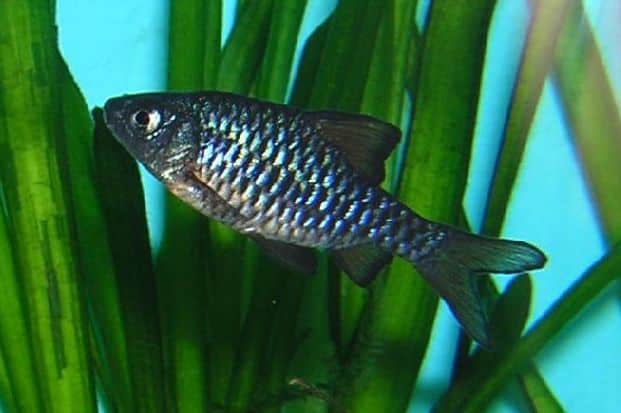
The checker barb gets its name from the black-edged scales that create a checkerboard pattern across its body. It is a small, peaceful species that stays under 2 inches and works well in community tanks starting at 15 gallons.
Males develop red-tipped fins during breeding that add a subtle accent to the checkered body pattern. This combination of pattern and color makes the checker barb more visually interesting than its size suggests.
They are hardy and adaptable, tolerating a wide range of parameters. This makes them a good choice for beginners who want something more distinctive than a zebra danio but equally reliable.
Biggest Mistake New Owners Make
Keeping them in groups too small to show natural behavior. Like all barbs, checker barbs need a school. Six is the minimum. In smaller groups, they lose confidence and hide among plants instead of swimming in the open.
Checker barbs (Oliotius oligolepis) are a small, attractive barb with a distinctive checkered scale pattern. They are peaceful, hardy, and suitable for community tanks from 20 gallons.
Expert Take (Mark Valderrama, AquariumStoreDepot)
The checker barb is the nano barb that more people should consider. At under 2 inches, a group of eight fits a 15-gallon tank comfortably. The checkered pattern is unique among commonly available barbs, and the red-tipped fins on males add color without the aggression concerns of tiger barbs. It is the peaceful, pretty, small barb that fills a gap in many community setups.
Key Takeaways
- Peaceful schooling barb that works well in most community tanks. Keep them in groups of at least 6, though 8 to 10 is even better
- Males develop striking orange-tipped fins and a distinct checkerboard scale pattern that intensifies in planted aquariums
- Stays small at around 2 inches (5 cm), suitable for tanks as small as 20 gallons
- Hardy and adaptable with wide tolerance for water conditions, excellent for beginners
- Easy to breed as egg scatterers with eggs hatching in 24 to 48 hours
- Endemic to Sumatra, but virtually all fish in the hobby are commercially bred
Species Overview
| Field | Details |
|---|---|
| Scientific Name | Oliotius oligolepis (Bleeker, 1853) |
| Common Names | Checker Barb, Checkered Barb, Checkerboard Barb, Island Barb |
| Family | Cyprinidae |
| Origin | Sumatra, Indonesia |
| Care Level | Easy |
| Temperament | Peaceful |
| Diet | Omnivore |
| Tank Level | Middle to Bottom |
| Maximum Size | 2 inches (5 cm) |
| Minimum Tank Size | 20 gallons (76 liters) |
| Temperature | 72 to 79°F (22 to 26°C) |
| pH | 5.5 to 7.5 |
| Hardness | 2 to 12 dGH |
| Lifespan | 3 to 5 years |
| Breeding | Egg scatterer |
| Breeding Difficulty | Easy |
| Compatibility | Community |
| OK for Planted Tanks? | Yes |
Classification
| Taxonomic Level | Classification |
|---|---|
| Order | Cypriniformes |
| Family | Cyprinidae |
| Subfamily | Barbinae |
| Genus | Oliotius |
| Species | O. Oligolepis (Bleeker, 1853) |
The Checker Barb was originally described by Pieter Bleeker in 1853 as Barbus oligolepis. It was later moved into Puntius, the catch-all genus for small Asian barbs. More recently, it was transferred to Oliotius to better reflect evolutionary relationships among Southeast Asian barb species. You’ll still see it listed as Puntius oligolepis in older references, but Oliotius oligolepis is the currently accepted name.
Origin & Natural Habitat
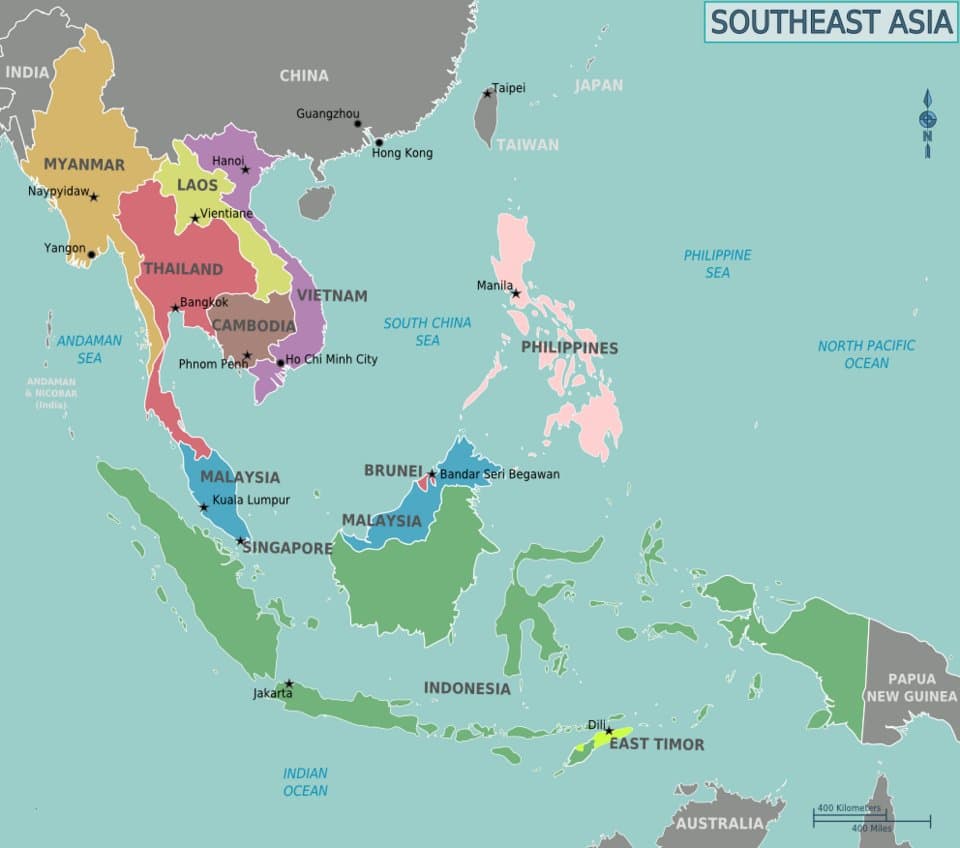
The Checker Barb is endemic to Sumatra, Indonesia. Its natural range is concentrated in the western part of the island, where it inhabits slow-moving creeks, small rivers, and lake margins. These are warm, forested waterways shaded by dense tropical canopy, with soft, slightly acidic water filtered through layers of decomposing leaves.
In the wild, these barbs favor calm waters with plenty of vegetation. The substrate is sand and fine gravel with accumulated leaf litter, and the water is often lightly tannin-stained. The species is classified as Least Concern by the IUCN, and virtually all Checker Barbs sold in the hobby today are commercially bred in fish farms across Southeast Asia.
Appearance & Identification
The Checker Barb is a small, moderately deep-bodied fish that tops out at about 2 inches (5 cm). Its most recognizable feature is the distinctive checkerboard pattern formed by dark-edged scales arranged in neat rows along the flanks. The base body color ranges from silvery-green to warm golden-olive depending on the fish’s condition and environment, often with a subtle iridescent sheen.
What really makes this species stand out are the fins. In well-conditioned males, the dorsal, anal, and pelvic fins develop beautiful orange to reddish-orange tips with dark edges, giving the fish an elegant look that belies its modest price tag.
Male vs. Female
Males are the more colorful of the two, with those signature orange-tipped fins, distinct black edging, deeper golden tones, and a slimmer body profile. Females are rounder and fuller-bodied, especially when carrying eggs, with more translucent fins that show only pale yellow at best. The checkerboard pattern is present on both sexes but more sharply defined in males.
Average Size & Lifespan
Checker Barbs reach a maximum size of about 2 inches (5 cm), with most specimens settling around 1.5 to 1.75 inches (4 to 4.5 cm). They typically reach full size within 6 to 8 months. With proper care, expect a lifespan of 3 to 5 years. Clean water, a varied diet, and a stress-free environment with plenty of companions are the biggest factors in reaching the upper end of that range.
Care Guide
Tank Size
A 20-gallon (76-liter) aquarium is the minimum for a group of 6 to 8 Checker Barbs. For a larger group or a community setup, bump up to 30 or 40 gallons. These are active swimmers, so longer tanks are always preferable to tall, narrow ones.
Water Parameters
| Parameter | Recommended Range |
|---|---|
| Temperature | 72 to 79°F (22 to 26°C) |
| pH | 5.5 to 7.5 |
| Hardness | 2 to 12 dGH |
| Ammonia | 0 ppm |
| Nitrite | 0 ppm |
| Nitrate | Below 20 ppm |
One of the best things about Checker Barbs is their adaptability. While they prefer soft, slightly acidic water, most dechlorinated tap water within the ranges above works just fine. They do best at the slightly cooler end of the tropical spectrum.
Filtration & Water Flow
A standard hang-on-back or sponge filter with a turnover rate of 4 to 5 times the tank volume per hour is ideal. Checker Barbs come from slow to moderately moving water, so keep flow gentle. Weekly water changes of 20 to 25% will maintain good water quality.
Lighting, Plants & Substrate
Moderate lighting works best, as their natural habitat is shaded by forest canopy. Add floating plants if running high-intensity lights. Checker Barbs look their best in a well-planted aquarium with dense planting along the sides and open swimming space in the center. Java fern, Anubias, Cryptocorynes, and Vallisneria all work well. Driftwood and Indian almond leaves help recreate their natural environment.
For substrate, dark sand or smooth gravel makes their colors pop. Avoid sharp-edged substrates that could damage their barbels.
Is the Checker Barb Right for You?
Before you buy, run through this honest checklist. The Checker Barb is a great fish for the right keeper, but it is not for everyone.
- You want a reliable, peaceful barb that works with nearly any community fish
- You have a 20-gallon or larger planted tank
- You can keep a group of 6-8+ for the best visual effect
- You want a species that is genuinely forgiving of beginner mistakes
- You enjoy warm reddish tones with a distinctive checkered pattern
- Your tank needs a mid-level schooling fish that is active but not aggressive
Tank Mates
Checker Barbs are genuinely peaceful fish that integrate well into community setups. They’re not fin nippers like some barb relatives, and they’re not aggressive or territorial.
Best Tank Mates
- Other small, peaceful barbs (Cherry Barbs, Gold Barbs)
- Rasboras (Harlequin Rasboras, Lambchop Rasboras)
- Small tetras (Ember Tetras, Neon Tetras, Cardinal Tetras)
- Corydoras catfish
- Small loaches (Kuhli Loaches, Pygmy Chain Loaches)
- Peaceful dwarf gouramis and Otocinclus
- Dwarf shrimp (Neocaridina and Amano shrimp)
Tank Mates to Avoid
- Large, aggressive cichlids (Oscars, Jack Dempseys)
- Large predatory species
- Fin-nipping species like Serpae Tetras or aggressive Tiger Barb groups
- Slow-moving, long-finned fish (Bettas, fancy guppies) as a precaution
Food & Diet
Checker Barbs are easy-to-feed omnivores that accept just about anything. A good-quality flake or micro pellet food should form the base of their diet. Supplement regularly with live or frozen foods like bloodworms, brine shrimp, and daphnia, which are especially important for bringing out the full intensity of those orange fin tips on males.
They’ll also nibble on blanched vegetables and pick at algae in the tank. Feed small amounts twice daily rather than one large feeding, and remove uneaten food after a few minutes.
Breeding & Reproduction
Breeding Difficulty
Checker Barbs are among the easier barbs to breed. They’re egg scatterers with no parental care, and spawning can happen spontaneously in a well-maintained tank. To raise fry, you’ll need a dedicated setup since adults will eat the eggs.
Spawning Tank Setup
Set up a 10 to 15-gallon breeding tank with a layer of marbles or spawning mops on the bottom so eggs fall where adults can’t reach them. Java moss also works well. Keep lighting dim and add a gentle sponge filter.
Water Conditions for Breeding
Slightly softer, more acidic water encourages spawning. Aim for pH 6.0 to 6.5, temperature around 77 to 79°F (25 to 26°C), and hardness of 2 to 6 dGH.
Conditioning & Spawning
Condition a small group (2 males and 3 to 4 females) with live and frozen foods for about a week before introducing them to the breeding tank. Spawning usually occurs in the morning, with the pair scattering eggs among plants or marbles. A single female can produce 100 to 300 eggs.
Egg & Fry Care
Remove the adults immediately after spawning. Eggs hatch in 24 to 48 hours, and fry become free-swimming about 3 to 4 days after hatching. Start feeding infusoria or liquid fry food, then transition to baby brine shrimp after a week. Keep water clean with frequent small water changes.
Common Health Issues
Checker Barbs are hardy fish without species-specific diseases, but they’re susceptible to common freshwater ailments when water quality slips.
Ich (White Spot Disease)
Shows up as tiny white spots on the body and fins, usually triggered by temperature fluctuations or stress. Gradually raise the temperature to 82 to 86°F (28 to 30°C) and treat with a quality ich medication. Caught early, it’s very treatable.
Fin Rot
Appears as fraying or disintegrating fin edges, almost always tracing back to poor water quality. Improve conditions with frequent water changes and use antibacterial medication in severe cases. This is especially noticeable on males with their colorful finnage.
Columnaris
White or grayish patches on the body, often around the mouth or gills. Requires antibacterial treatment and isolation of affected fish. The best prevention for all these issues is consistent maintenance, regular water changes, and quarantining new additions.
Common Mistakes to Avoid
- Keeping too few. They need a group of at least 6. Keeping just 2 or 3 results in stressed fish that hide and never color up.
- Skipping live and frozen foods. A flake-only diet won’t bring out the full intensity of those orange fin tips.
- Using bright, bare tanks. These fish come from shaded forest streams. Dark substrate and dense planting bring out their best.
- Ignoring water changes. They’re tolerant, but letting nitrates creep up dulls colors and invites health problems.
- Pairing them with aggressive species. Just because they’re barbs doesn’t mean they can handle large or aggressive tank mates.
Where to Buy
Checker Barbs are widely available and very affordable, making them one of the best-value fish in the hobby. Most local fish stores carry them regularly. For guaranteed quality and healthy stock, I recommend trusted online retailers.
Flip Aquatics is a great option for sourcing healthy barbs with careful shipping practices. Dan’s Fish is another excellent choice with a wide selection and solid reputation. Both ship directly to your door.
When buying, try to purchase a group of at least 6 from the same source. Look for active fish with clear eyes, intact fins, and visible checkerboard patterning.
Frequently Asked Questions
How many Checker Barbs should I keep together?
A minimum of 6, though 8 to 10 is ideal. Larger groups bring out more natural behavior and bolder coloring, and males will compete harmlessly, which intensifies their fin displays.
Are Checker Barbs fin nippers?
No, they’re among the most peaceful barb species available. They lack the fin-nipping reputation of Tiger Barbs. Keeping them in proper schools eliminates any minor nipping risk.
Can Checker Barbs live with shrimp?
Yes, they’re generally safe with adult Neocaridina and Amano Shrimp. They may eat very small shrimplets, so a heavily planted tank is important if you want your shrimp colony to sustain itself.
Do Checker Barbs eat plants?
They may nibble on very soft or tender leaves occasionally, but they’re not plant destroyers. Hardy species like Java fern, Anubias, and Cryptocorynes will be left alone.
Are Checker Barbs good for beginners?
Absolutely. Their hardiness, peaceful temperament, easy feeding requirements, and tolerance for a range of water conditions make them one of the best barb species for new fishkeepers.
How the Checker Barb Compares to Similar Species
Checker Barb vs. Melon Barb
Both are peaceful, community-safe barbs of similar size. The Checker Barb has more defined patterning; the Melon Barb has warmer solid tones. Both are excellent beginner barbs. The Checker Barb is slightly more widely available.
Checker Barb vs. Six-Banded Barb
The Six-Banded Barb has clean vertical bars, while the Checker Barb has a more checkered pattern with red finnage. Both are peaceful schoolers. The Checker Barb will show more individual character, while the Six-Banded Barb looks best in a tight school.
What It Is Actually Like Living With Checker Barb
Checker barbs are active but polite. They school mid-tank, investigate their surroundings, and coexist with everything. The checkered pattern catches light in a way that makes them more noticeable than their small size suggests.
Male displays are subtle. The red fin tips intensify slightly during courtship, and males position themselves near females with fins spread. It is understated compared to tiger barb sparring but elegant.
They are one of the best barbs for planted tanks because they do not eat plants and their small size means minimal substrate disturbance.
Closing Thoughts
The checker barb is everything people wish the tiger barb was. Colorful, active, and it leaves its tank mates alone.
The Checker Barb is a hidden gem in the hobby. It doesn’t have the name recognition of a Tiger Barb or the flashy color of a Cherry Barb, but in a well-planted community tank, a healthy school of Checker Barbs is genuinely beautiful. The combination of their intricate checkerboard patterning, orange-tipped fins on the males, and calm disposition makes them an ideal choice for community setups of all kinds.
If you’re looking for a small, peaceful barb that’s easy to care for, affordable, and offers more visual interest than most people expect, give the Checker Barb a serious look. They’re proof that you don’t need to spend a fortune to stock a stunning aquarium.
Recommended Video
Check out our barb species overview video where we cover some of the most popular barbs in the hobby, including the Checker Barb:
References
- Froese, R. And D. Pauly, Editors. FishBase. Oliotius oligolepis (Bleeker, 1853). fishbase.se
- Seriously Fish. Oliotius oligolepis – Checkered Barb. seriouslyfish.com
- IUCN Red List of Threatened Species. Oliotius oligolepis. Assessment 2020.
- About the Author
- Latest Posts

I’m Mark Valderrama, founder of Aquarium Store Depot and a fishkeeper with over 25 years of hands-on experience. I started in the hobby at age 11, worked at local fish stores, and have kept freshwater tanks, ponds, and reef tanks ever since. I’ve been featured in two best-selling aquarium books on Amazon and built this site to share practical, experience-based fish keeping knowledge.
Leave a Reply