
Last Updated: June 25, 2026
Thank you for visiting! By the way… any links on this page that lead to products on Amazon and other stores/partners are affiliate links Aquarium Store Depot earns a commission if you make a purchase.
Table of Contents
- The Reality of Keeping Festivum Cichlid
- Key Takeaways
- Species Overview
- Classification
- Origin & Natural Habitat
- Appearance & Identification
- Average Size & Lifespan
- Care Guide
- Tank Mates
- Food & Diet
- Breeding & Reproduction
- Common Health Issues
- Common Mistakes to Avoid
- Where to Buy
- Frequently Asked Questions
- What It Is Actually Like Living With Festivum Cichlid
- Closing Thoughts
- References
Festivum cichlids are one of the most overlooked South American cichlids in the hobby, and for no good reason. They are peaceful, hardy, and surprisingly intelligent. The problem is that people stock them wrong. Festivums are shy fish that need groups, tall tanks, and calm tank mates. Put one alone in an aggressive community and it will hide permanently. I have kept festivums for years and the fish you see cowering in a pet store tank is nothing like the one thriving in a proper setup. The South American sleeper pick that nobody recommends and nobody regrets buying.
The angelfish alternative your grandfather kept and the hobby forgot.
What Most Care Guides Get Wrong About Festivum Cichlid
The festivum cichlid suffers from a perception problem. Most hobbyists think it’s a bland, unremarkable fish, and that’s because they’ve only seen stressed juveniles in store tanks. A mature festivum in a well-planted tank is a genuinely attractive fish with a unique body shape, distinctive diagonal bar, and subtle gold-green coloring. The other misconception is about their temperament. Care guides often list them as “semi-aggressive,” but I’d describe them as assertive at most. They hold their own in community tanks but rarely initiate real aggression. They’re significantly calmer than most cichlids their size, which makes them versatile tank mates for a wide range of species.
The festivum won’t win any flashiness contests. It’s not going to light up your tank like a well-colored red head tapajos or command attention like a full-grown oscar. But what it will do is add something subtle and elegant to a South American community setup: a fish with a distinctive diagonal stripe, a tapered body, and a calm confidence that makes it an excellent companion for angelfish, discus, and other peaceful cichlids. In my 25+ years in the hobby, the festivum has been a fish I keep coming back to precisely because it does everything well without demanding the spotlight.
The Reality of Keeping Festivum Cichlid
Festivum cichlids are peaceful, hardy, and overlooked. That last part is changing.
They are genuinely peaceful. Festivums coexist with community fish in ways most cichlids cannot. They rarely bother tank mates outside of breeding.
They need vertical space. Festivums have a tall body shape and prefer tanks with height. A standard 55-gallon works better than a long, shallow tank.
They pair bond. Once a pair forms, they stay together. Watching a bonded pair interact is one of the most rewarding experiences in South American cichlid keeping.
Growth is slow. Festivums take 12 to 18 months to reach adult size. Do not expect instant gratification.
Biggest Mistake New Festivum Cichlid Owners Make
Keeping them with aggressive cichlids. Festivums are peaceful and will not defend themselves against fish like firemouths or convicts. They need calm tank mates or they hide permanently and stop eating.
Expert Take (Mark Valderrama, AquariumStoreDepot)
Give the Festivum Cichlid a 55-gallon minimum with driftwood, tall plants, and peaceful community fish. They thrive in warm, slightly acidic water and reward patient keepers with pair bonding behavior you will not see from most cichlids.
Key Takeaways
- One of the most peaceful mid-sized cichlids available, ideal for South American community setups
- Adaptable water parameter tolerance with a wider pH and hardness range than many SA cichlids, making it suitable for more aquarists
- Recognizable diagonal stripe running from the mouth to the dorsal fin, earning it the common name “flag cichlid”
- 55-gallon minimum for a small group, with planted tanks providing the best environment
- Breeding is achievable but challenging due to easily spooked parents that may eat their eggs or fry
Species Overview
| Field | Details |
|---|---|
| Scientific Name | Mesonauta festivus |
| Common Names | Festivum, Flag Cichlid, Barred Cichlid, Festive Cichlid |
| Family | Cichlidae |
| Origin | Widespread across South America: Amazon, Paraná, Paraguay, and Guaporé drainages |
| Care Level | Easy to Moderate |
| Temperament | Peaceful |
| Diet | Omnivore |
| Tank Level | Middle |
| Maximum Size | 6 inches (15 cm) |
| Minimum Tank Size | 55 gallons (208 liters) |
| Temperature | 72 to 82°F (22 to 28°C) |
| pH | 6.0 to 7.5 |
| Hardness | 2 to 10 dGH |
| Lifespan | 8 to 10 years |
| Breeding | Substrate spawner |
| Breeding Difficulty | Moderate |
| Compatibility | Community |
| OK for Planted Tanks? | Yes (excellent choice) |
Classification
| Taxonomic Level | Classification |
|---|---|
| Order | Cichliformes |
| Family | Cichlidae |
| Subfamily | Cichlinae |
| Genus | Mesonauta |
| Species | M. Festivus (Heckel, 1840) |
The festivum was originally described by Heckel in 1840 as Heros festivus and has since been reassigned to Mesonauta. The genus name translates roughly to “middle sailor” or “mid-level swimmer,” referring to the fish’s tendency to occupy the middle water column. The species name festivus means “festive” or “handsome” in Latin.
The genus Mesonauta contains several described species, including M. Insignis, M. Mirificus, and M. Acora. There is some taxonomic confusion in the hobby, as different Mesonauta species look quite similar and are often sold under the same common name. True M. Festivus has a broader natural range than many of its congeners and is the species most commonly seen in the trade.
Origin & Natural Habitat
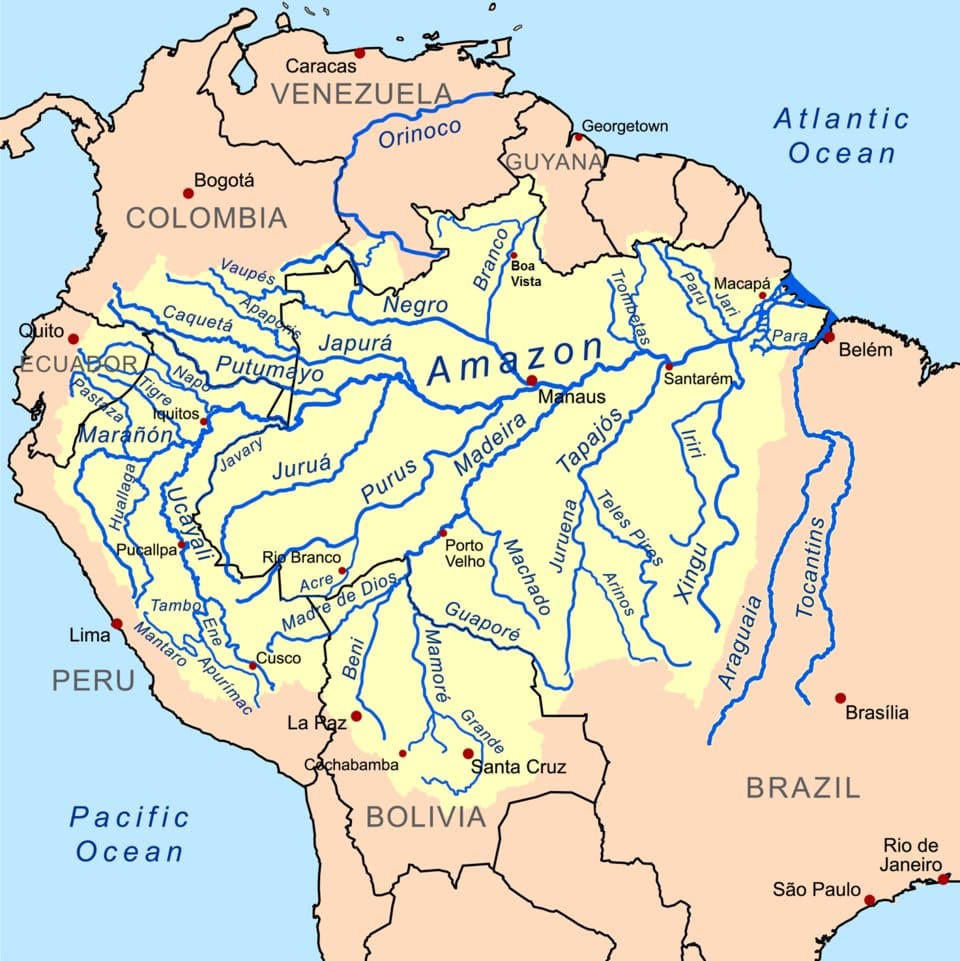
The festivum has one of the broadest geographic distributions of any South American cichlid. It occurs across multiple river basins including the Amazon, Paraná, Paraguay, Guaporé, Mamoré, and Tapajós drainages, spanning portions of Brazil, Peru, Bolivia, and Paraguay. This wide range suggests impressive adaptability and helps explain why the species does well under a variety of aquarium conditions.
In the wild, festivum are found in shallow, slow-moving water with abundant aquatic vegetation. They favor areas with dense plant cover near sandy or muddy shores, where they can navigate through stems and leaves with their laterally compressed body. Flooded forest areas, vegetated pools, and quiet backwaters are typical habitats. The water ranges from clear to slightly tannin-stained, with moderate temperatures and soft to moderately hard conditions.
Their close association with vegetated areas is notable. Unlike many cichlids that prefer open water or rocky habitats, festivum are genuinely plant-loving fish. They use vegetation as cover, forage among stems and leaves, and spawn on flat surfaces within planted areas. This natural preference makes them exceptional candidates for planted aquariums.
Appearance & Identification
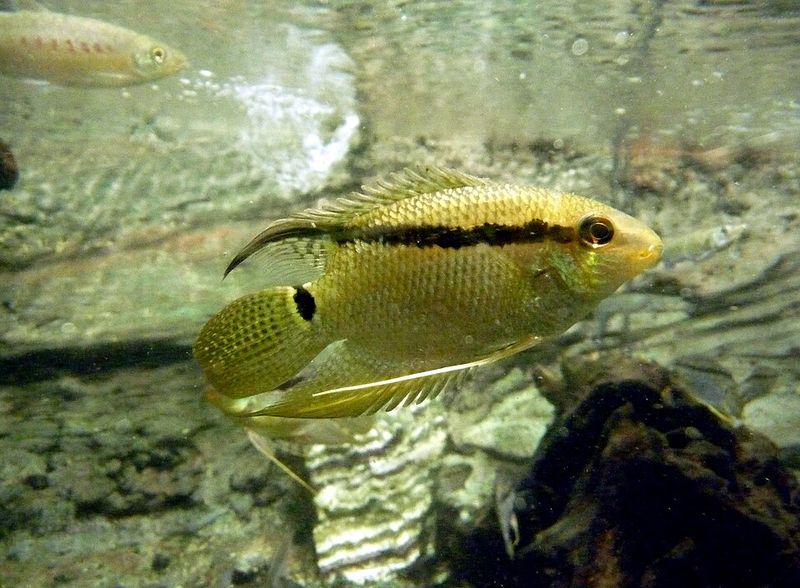
The festivum has a distinctive body shape that sets it apart from most other cichlids: laterally compressed with a tapered, pointed head that angles upward toward a high dorsal fin, creating an almost triangular profile when viewed from the side. The body is olive-green to yellowish-green with a silvery sheen. The most prominent marking is a bold black diagonal stripe that runs from the corner of the mouth upward through the eye to the base of the soft dorsal fin. This “flag” stripe is the feature that earns it the common name “flag cichlid.”
A dark spot is present at the base of the caudal fin, and faint vertical bars may appear across the body depending on mood. The fins are translucent with a greenish-yellow tint. Under good conditions and with a proper diet, the overall coloration becomes quite attractive, with golden tones developing on the body and subtle iridescence on the scales.
The overall impression is of a sleek, elegant fish rather than a flashy one. Festivum aren’t going to grab attention from across the room, but up close, their subtle beauty and unique body shape make them quite appealing.
Male vs. Female
Sexing festivum is moderately difficult but somewhat more feasible than with many other cichlids. Males are larger with more extended dorsal and anal fins.
| Feature | Male | Female |
|---|---|---|
| Body Size | Larger, up to 6 inches | Slightly smaller, up to 5 inches |
| Dorsal & Anal Fins | More extended, pointed trailing edges | Shorter, more rounded trailing edges |
| Body Depth | Slightly deeper body | Slightly slimmer |
| Coloration | May show slightly more intense coloring | Generally similar |
| Breeding Tube | Narrow and pointed | Wider and blunter |
These differences become more apparent as the fish mature. In juveniles, sexing is unreliable. Starting with a group of 6 or more and allowing natural pair formation is the most effective approach for anyone interested in breeding.
Average Size & Lifespan
Festivum reach 4-6 inches (10-15 cm) in captivity, with males at the larger end of the range. They’re not fast growers, taking 12-18 months to approach adult size. This moderate growth rate is part of their appeal for community setups, as they don’t outgrow their tank mates as rapidly as larger cichlids.
With good care, festivum live 8-10 years in captivity. This is a solid lifespan that provides plenty of time to enjoy their companionable presence in a community setup. Consistent water quality and a varied diet are the biggest factors in reaching the upper end of this range.
ASD Difficulty Rating: Tier 2 – Intermediate
Festivum cichlids are peaceful for a cichlid but still need quality water, a 55-gallon minimum, and thoughtful tank mate selection. They are more sensitive to nitrate buildup than their calm temperament suggests.
Care Guide
Tank Size
A minimum of 55 gallons (208 liters) is recommended for a small group of festivum. While a pair could technically be housed in a 40-gallon tank, the additional volume of a 55 provides more stable water chemistry and room for the group dynamics these social fish benefit from. For a community setup with festivum and other species, 75 gallons or larger is ideal.
A standard 55-gallon tank (48 x 13 x 20 inches) works, though the wider footprint of a 75-gallon (48 x 18 x 21 inches) gives the fish more room to move and establish territories. These fish use all levels of the water column but spend most time in the middle zone, so both length and height matter.
Water Parameters
| Parameter | Recommended Range |
|---|---|
| Temperature | 72 to 82°F (22 to 28°C) |
| pH | 6.0 to 7.5 |
| General Hardness | 2 to 10 dGH |
| Ammonia | 0 ppm |
| Nitrite | 0 ppm |
| Nitrate | Below 20 ppm |
One of the festivum’s biggest advantages over many other South American cichlids is its relatively broad tolerance for water conditions. While they prefer soft, slightly acidic water, captive-bred specimens adapt well to moderately hard water with a neutral pH. This makes them accessible to hobbyists who don’t have access to RO water or naturally soft tap water.
They’re also tolerant of a wider temperature range than many SA cichlids, handling everything from 72°F to 82°F (22-28°C). This broader range means they is kept with both warm-water species (at the higher end) and more temperate community fish (at the lower end). As always, stability matters more than hitting a specific number.
Filtration & Water Flow
Moderate filtration with gentle to moderate flow suits festivum well. They come from slow-moving, vegetated water and don’t appreciate strong currents. A quality hang-on-back filter or canister filter rated for your tank size provides adequate biological and mechanical filtration. In planted setups, a canister filter with a spray bar creates good circulation without excessive turbulence.
Weekly water changes of 20-25% maintain water quality for festivum. They’re not as sensitive to nitrate accumulation as discus or uaru, but they still benefit from consistent maintenance. Clean water brings out better coloration and more confident behavior.
Lighting
Moderate lighting works well, especially in planted setups. Festivum appreciate some shaded areas created by floating plants or tall stems, which mimics the dappled lighting of their natural habitat. If you’re growing live plants, choose a light level that suits your plant species; the festivum will adapt. They’re not as light-sensitive as some other SA cichlids.
Plants & Decorations
If there’s one cichlid that was made for planted tanks, it’s the festivum. These fish naturally inhabit densely vegetated water and feel most at home surrounded by live plants. Unlike uaru or large plecos, festivum leave plants alone. They’ll use them for cover, navigate through stems, and shelter among leaves, but they rarely cause damage.
Good plant choices include amazon swords, vallisneria, java fern, anubias, cryptocoryne species, and floating plants like amazon frogbit. Dense planting with open swimming channels between planted areas creates the ideal environment. Driftwood and smooth stones add additional structure and create territorial boundaries.
Flat rocks or broad leaves provide potential spawning surfaces if you’re interested in breeding. Position these in sheltered areas where the fish feel secure.
Substrate
Fine sand or smooth gravel both work well for festivum. Sand gives a more natural look and is easier to keep clean, while nutrient-rich planted tank substrates support the live plants these fish thrive alongside. Choose based on your planting goals; the fish are not substrate-dependent like eartheaters.
Is the Festivum Cichlid Right for You?
Before you commit to this species, here’s an honest assessment of whether it fits your setup and experience level.
- An overlooked gem for South American community tanks. Festivums add cichlid personality without cichlid aggression.
- Need at least 55 gallons. They reach 6-8 inches and need swimming space, especially in pairs or groups.
- Peaceful enough for large community setups. They coexist well with angelfish, larger tetras, corydoras, and other mild-mannered South Americans.
- Unique appearance. The diagonal bar and flag-like body shape set them apart visually from anything else in the hobby.
- Not commonly available. You need to order from specialty stores or online breeders.
- Hardy and adaptable. Tolerant of a range of water conditions, making them practical for most setups.
Tank Mates
Festivum are one of the best cichlids for community tanks. Their peaceful nature, moderate size, and mid-water habitat preference make them compatible with a wide range of species. They rarely initiate aggression and are more likely to retreat than confront when challenged.
Best Tank Mates
- Angelfish. One of the most classic and natural pairings. Both are peaceful, mid-sized SA cichlids that complement each other beautifully
- Dwarf cichlids. Apistogramma species and rams occupy the bottom level and don’t conflict with festivum
- Geophagus species. Peaceful eartheaters coexist well in large enough setups
- Medium tetras. Bleeding heart tetras, diamond tetras, emperor tetras, and similar species make excellent schooling companions
- Corydoras catfish. Peaceful bottom dwellers that complement the mid-water festivum perfectly
- Pencilfish and hatchetfish. Small, peaceful species that fill out different tank zones
- Bristlenose plecos. Useful algae cleaners that stay out of the festivum’s way
Tank Mates to Avoid
- Large aggressive cichlids. Oscars, Jack Dempseys, and similar fish will bully festivum without hesitation
- Fin nippers. Tiger barbs and serpae tetras may target the festivum’s trailing fin extensions
- Very small fish. While festivum are peaceful, very small species like neon tetras is seen as food by full-grown adults
- Boisterous, hyperactive species. Fast-moving, high-energy fish can stress the calm festivum
Food & Diet
Festivum are omnivores that accept a wide variety of foods without fuss. In the wild, they feed on a mix of plant matter, worms, crustaceans, and small invertebrates. In captivity, they’re unfussy eaters that readily accept most prepared and frozen foods.
A high-quality cichlid pellet or flake makes a good staple diet. Supplement with frozen bloodworms, brine shrimp, daphnia, and mysis shrimp several times per week. Include some vegetable matter in the diet: blanched zucchini, spirulina-based foods, and algae wafers are all accepted and provide nutritional balance. The combination of animal and plant matter reflects their natural omnivorous feeding habits.
Feed 2-3 times daily in moderate amounts. Festivum are not aggressive feeders, so in community setups, make sure food reaches the mid-water column where they feed rather than being consumed entirely by more assertive surface or bottom feeders.
Breeding & Reproduction
Breeding Difficulty
Moderate. Festivum will spawn in well-maintained aquariums, but successfully raising fry is challenging because the parents are easily startled and prone to eating their eggs or fry when disturbed. Success comes with patience, a quiet tank placement, and minimal interference during the spawning process.
Spawning Tank Setup
A dedicated breeding tank of 40-55 gallons works well. Include flat rocks, broad-leafed plants (amazon swords are ideal), and slate pieces as potential spawning surfaces. The tank should be placed in a quiet area with minimal foot traffic and disturbances. Dense planting around the perimeter provides security for the breeding pair while leaving open spawning areas.
Water Conditions for Breeding
Slightly softer, more acidic water (pH 6.0-6.5, 2-5 dGH) at the warmer end of their range (78-82°F / 26-28°C) encourage spawning. A large water change with slightly cooler water can trigger breeding activity. Good water quality with low nitrates is essential.
Conditioning & Spawning
Condition the pair with varied, high-quality foods including live and frozen options for 2-3 weeks. When ready, the pair selects and cleans a flat surface, a flat rock or broad leaf. The female deposits 200 or more adhesive eggs in neat rows, and the male fertilizes them in multiple passes. Both parents participate in cleaning the eggs and fanning them.
Egg & Fry Care
Both parents guard the eggs and fan them to maintain water flow. Eggs hatch in approximately 3-4 days, and fry become free-swimming about 3-4 days later. Here’s the catch: festivum parents are notoriously skittish. Sudden movements, loud noises, or even turning lights on too abruptly can spook the parents into eating their eggs or fry. This is one of the most frustrating aspects of breeding this species.
If the parents successfully bring fry to the free-swimming stage, the young is fed freshly hatched baby brine shrimp and finely ground flake food. Some breeders opt to remove eggs and hatch them artificially using an airstone and methylene blue to prevent fungus, which eliminates the skittish-parent problem but loses the interesting parental behavior. It often takes multiple spawning attempts before a pair successfully raises fry.
Common Health Issues
Ich (White Spot Disease)
Festivum can contract ich when stressed by temperature fluctuations, new tank additions, or poor water quality. Treatment is straightforward with a gradual temperature increase to 82-84°F (28-29°C) and a commercial ich medication. These fish tolerate standard ich treatments well.
Fin Rot
Bacterial fin rot can affect festivum, particularly in tanks with poor water quality. The trailing fin extensions are often the first to show damage. Mild cases resolve with improved water quality through increased water changes. More advanced infections require antibiotic treatment with medications like kanamycin.
Bacterial Infections
Festivum can develop bacterial infections that manifest as cloudy eyes, body sores, or lethargy. These are almost always secondary to stress from poor water quality, bullying, or other environmental factors. Address the root cause first (improve water quality, remove aggressive tank mates), then treat with appropriate medications if needed.
Hard Rule
Festivum cichlids need stable water with nitrates below 20 ppm. They are more sensitive to poor water quality than their peaceful temperament suggests – skip water changes and they deteriorate faster than most cichlids their size.
Common Mistakes to Avoid
- Keeping with aggressive tank mates. Festivum are peaceful fish that won’t fight back against bullies. Pair them with other peaceful species
- Housing in bare or sparsely decorated tanks. Festivum need plant cover and structure to feel secure. A bare tank produces stressed, hiding fish that never show their best behavior or coloration
- Keeping a single specimen. While not as social as some cichlids, festivum do better in pairs or small groups. A lone fish may be reclusive and timid
- Overlooking them at the fish store. Juveniles and stressed specimens look dull. Given proper conditions, these fish develop attractive coloration that photos rarely capture
- Disturbing breeding pairs. If your festivum spawn, resist the urge to check on the eggs constantly. Frequent disturbances cause the parents to eat their brood. Patience and a hands-off approach improve success rates dramatically
Where to Buy
Festivum are available at many local fish stores, though they’re not always prominently displayed. Ask specifically for them if you don’t see them in the display tanks. They’re affordable and reasonably easy to find, though specific Mesonauta species identification at the retail level is often unreliable.
Flip Aquatics and Dan’s Fish are both reliable online sources for quality freshwater fish, including South American cichlids. Both ship with live arrival guarantees and maintain healthy stock.
When buying festivum, look for active fish with clear eyes, intact fins (especially the trailing extensions), and good body condition. Buy a group of 4-6 if possible, as they do better in company. Don’t judge their potential by how they look in a store tank. A stressed festivum in a bare display tank looks nothing like a settled one in a well-planted home aquarium.
Frequently Asked Questions
Are festivum really peaceful?
Yes, festivum are one of the most peaceful mid-sized cichlids you can keep. They rarely initiate aggression and are more likely to flee than fight. The main exception is during breeding, when pairs may defend their immediate spawning territory. Even then, the defense is relatively mild compared to most cichlid species.
Can I keep festivum with angelfish?
Absolutely. This is one of the most classic and natural combinations in the South American cichlid hobby. Both species are peaceful, similarly sized, and occupy similar water levels. In a well-planted 55-gallon or larger tank, festivum and angelfish complement each other beautifully.
Do festivum damage plants?
No, festivum are one of the best cichlids for planted tanks. Unlike many herbivorous cichlids, they leave plants alone. They may occasionally nibble on very soft-leaved species, but significant plant damage is rare. They actually benefit from planted environments, using vegetation for cover and security.
How big do festivum get?
Festivum reach 4-6 inches (10-15 cm) in captivity, with males at the larger end. They’re a moderate-sized cichlid that fits well in community tanks without outgrowing their space too quickly. Growth rate is moderate, reaching adult size in 12-18 months.
Why aren’t festivum more popular?
Festivum lack the dramatic coloring of species like discus or the bold personality of oscars. They’re subtle, understated fish in a hobby that often favors the flashy and the dramatic. Store specimens are often poorly displayed and look unremarkable. But among fishkeepers who appreciate elegant, well-behaved community fish with interesting behavior, festivum have a devoted following. They’re the kind of fish you grow to appreciate rather than being immediately dazzled by.
What It Is Actually Like Living With Festivum Cichlid
This is the part no other care guide gives you. Forget water parameters for a minute. Here is what it is actually like to share your tank with this species.
They have more personality than you expect. The Festivum Cichlid is not a fish that just sits in the background. Once settled in, they become interactive, curious, and responsive to your presence.
Feeding time reveals their character. Watch how the Festivum Cichlid approaches food and you will see real personality. Some are bold, some are cautious, and their feeding behavior tells you a lot about their mood and health.
They establish routines. After a few weeks, your Festivum Cichlid will have favorite spots, preferred paths through the tank, and predictable patterns. Learning these routines makes you a better keeper.
Color is a health indicator. The Festivum Cichlid’s coloration is a real-time report card on your husbandry. Vibrant color means happy fish. Faded color means something is wrong. Pay attention.
How the Festivum Cichlid Compares to Similar Species
The freshwater angelfish is the comparison most people make first, and it’s a fair one. Both are tall-bodied South American cichlids with diagonal markings. Angelfish are more popular, more colorful (with dozens of selectively bred varieties), and easier to find. Festivums are harder to source but offer a more relaxed temperament that causes fewer community tank problems. Angelfish will eat small fish and becomes quite territorial during breeding; festivums are calmer in both scenarios. If you want a classic look with more variety, go angelfish. If you want a peaceful tank mate that still has cichlid personality, the festivum is underappreciated.
The keyhole cichlid is another peaceful South American cichlid worth comparing. Keyholes are smaller (4-5 inches vs. 6-8 for festivums) and arguably even more peaceful. Both are excellent community cichlids that won’t bully tank mates. The choice comes down to size preference and availability. Keyholes are slightly easier to find, while festivums offer more physical presence in a larger tank.
Closing Thoughts
A festivum in the right tank is confident and active. In the wrong tank, it is invisible.
The festivum cichlid doesn’t need to be the star of your tank to earn a permanent place in it. It’s the kind of fish that makes a community work. Peaceful, adaptable, plant-friendly, and interesting to observe, the flag cichlid fills a niche that few other mid-sized cichlids can match. It’s the neighbor who never causes problems, keeps to itself, and somehow makes the whole block a nicer place to live.
If you’re building a South American community tank with angelfish, tetras, and corydoras, adding a group of festivum rounds out the setup beautifully. They won’t demand your attention every time you walk past the tank, but when you stop and watch them navigate through plant stems with that distinctive diagonal stripe and quietly confident demeanor, you’ll understand why some of us think the most overlooked fish in the hobby is also one of the best.
This article is part of our South American Cichlids species directory. Explore more South American cichlid care guides.
References
- Seriously Fish. Mesonauta festivus species profile. seriouslyfish.com
- FishBase. Mesonauta festivus (Heckel, 1840). fishbase.se
- Kullander, S.O. (2003). Family Cichlidae. In: Reis, R.E., Kullander, S.O. & Ferraris, C.J. (eds.) Check List of the Freshwater Fishes of South and Central America. Porto Alegre: EDIPUCRS.
- Practical Fishkeeping. Festivum cichlid care guide. practicalfishkeeping.co.uk
- About the Author
- Latest Posts

I’m Mark Valderrama, founder of Aquarium Store Depot and a fishkeeper with over 25 years of hands-on experience. I started in the hobby at age 11, worked at local fish stores, and have kept freshwater tanks, ponds, and reef tanks ever since. I’ve been featured in two best-selling aquarium books on Amazon and built this site to share practical, experience-based fish keeping knowledge.
Leave a Reply