
Last Updated: June 25, 2026
Thank you for visiting! By the way… any links on this page that lead to products on Amazon and other stores/partners are affiliate links Aquarium Store Depot earns a commission if you make a purchase.
Table of Contents
- What Care Guides Get Wrong
- The Reality of Keeping Sawbwa Barb
- Key Takeaways
- Species Overview
- Classification
- Origin & Natural Habitat
- Appearance & Identification
- Average Size & Lifespan
- Care Guide
- Is It Right for You?
- Tank Mates
- Food & Diet
- Breeding & Reproduction
- Common Health Issues
- Common Mistakes to Avoid
- Where to Buy
- Frequently Asked Questions
- Species Comparison
- Closing Thoughts
- Recommended Video
- References
The sawbwa barb is scaleless, which means it has almost no defense against poor water quality. Ammonia burns, bacterial infections, and medication reactions all hit harder and faster than they would with a scaled fish. It is a stunning little species with blue body coloration and red-tipped nose and tail, but it demands pristine, stable water to show any of that.
In a mature, well-maintained tank with soft water and a group of at least eight, sawbwa barbs are one of the most visually unique nano fish in the hobby. This guide covers why water quality is everything for this species, because the sawbwa barb has no scales. That one fact changes everything about how you keep it.
If your tank is not fully cycled and stable, the sawbwa barb will be the first fish to tell you. It tells you by dying.
Calling it a barb sets the wrong expectation. It’s a lake specialist pretending to be a community fish.
The Reality of Keeping Sawbwa Barb
The sawbwa barb (also called the Asian rummynose) is a tiny, delicate species from Myanmar with a translucent body and red nose and tail markings that resemble the rummy-nose tetra. It stays under 1.5 inches and needs soft, slightly acidic water.
Bought as a colorful nano barb, it fades, stops eating, and dies in hard water or temps above 75F because it’s an Inle Lake specialist.
It is not a standard community barb. The sawbwa is sensitive to water quality, needs a mature tank, and does best with peaceful nano tankmates that will not outcompete it for food.
Males are territorial in a small way, claiming areas around plant stems and driftwood. This territorial behavior is mild and entertaining rather than problematic.
Biggest Mistake New Owners Make
Treating it like a hardy barb. The sawbwa is not a cherry barb or a gold barb. It needs stable, clean water in a mature tank. Adding sawbwa barbs to a new setup or a tank with inconsistent maintenance is asking for losses.
Sawbwa barbs (Sawbwa resplendens) are a rare, strikingly colored species from Inle Lake, Myanmar. They prefer hard, alkaline water – the opposite of most barbs – and need carefully matched tank mates.
Expert Take (Mark Valderrama, AquariumStoreDepot)
The sawbwa barb is the Asian rummynose, and in a well-maintained nano tank, it is every bit as attractive as its tetra namesake. A group of ten in a mature 10-gallon with soft water, live plants, and gentle filtration creates a delicate display that rewards careful observation. This is a fish for patient keepers with stable tanks.
Key Takeaways
- Scaleless barb that needs careful handling and stable water quality to avoid skin infections
- Cool water species that thrives at 68-75°F (20-24°C), well below typical tropical temperatures
- Keep in groups of 8 or more to reduce skittishness and spread out male aggression
- Micro predator that does best with live and frozen foods like daphnia and brine shrimp
- Endangered in the wild, making captive-bred specimens the responsible choice
Species Overview
| Field | Details |
|---|---|
| Scientific Name | Sawbwa resplendens |
| Common Names | Sawbwa Barb, Asian Rummy Nose, Naked Micro Fish |
| Family | Cyprinidae |
| Origin | Lake Inle, Myanmar |
| Care Level | Moderate |
| Temperament | Peaceful (males can spar) |
| Diet | Micro predator / Omnivore |
| Tank Level | Mid |
| Maximum Size | 1.5 inches (3.5 cm) |
| Minimum Tank Size | 10 gallons (38 liters) |
| Temperature | 68-75°F (20-24°C) |
| pH | 7.0-8.0 |
| Hardness | 5-15 dGH |
| Lifespan | 3-5 years in captivity |
| Breeding | Egg depositor (leaf spawner) |
| Breeding Difficulty | Moderate |
| Compatibility | Nano community |
| OK for Planted Tanks? | Yes |
Classification
| Taxonomic Level | Classification |
|---|---|
| Order | Cypriniformes |
| Family | Cyprinidae |
| Subfamily | Cyprininae |
| Genus | Sawbwa |
| Species | S. Resplendens (Annandale, 1918) |
Sawbwa resplendens is a monotypic genus, meaning it’s the only species in the genus Sawbwa. The name comes from the Burmese word for “prince” or “chief.” Despite being called a “barb” in the hobby, this fish is quite different from typical barbs. It lacks scales entirely, making it one of the very few scaleless cyprinids kept in aquariums.
Origin & Natural Habitat
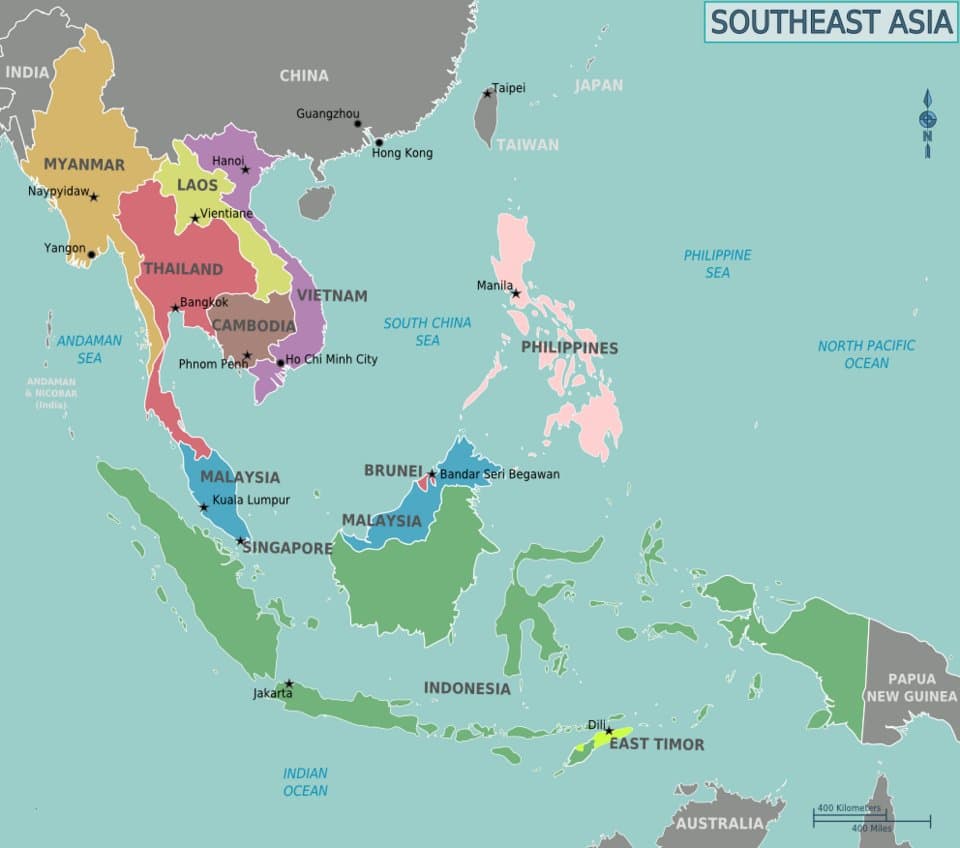
The Sawbwa barb is endemic to Lake Inle in the Shan State of Myanmar. This shallow freshwater lake sits at about 2,900 feet (880 meters) above sea level, which is key to understanding this fish’s care needs. The altitude means the water is naturally cooler than lowland tropical environments.
Lake Inle is heavily vegetated, and Sawbwa barbs are found in large shoals among dense aquatic plants, both in clear open water and in the surrounding swamps. The water is alkaline, moderately hard, and well oxygenated.
Unfortunately, the lake’s ecosystem is under serious pressure from agricultural runoff, deforestation, and sedimentation. The Sawbwa barb is listed as Endangered on the IUCN Red List. Most specimens in the hobby are captive bred, which is the responsible way to obtain this species.
Appearance & Identification
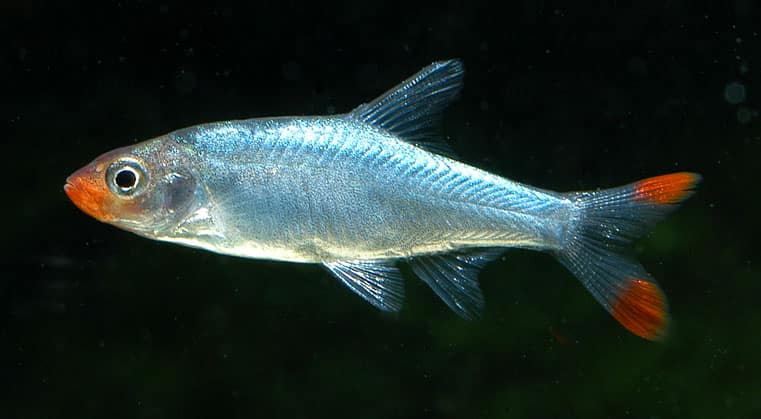
The Sawbwa barb is a small, slender fish with a translucent, metallic silvery-blue body. The most obvious feature is that it has no scales at all. Males develop vivid red-orange coloration on the snout and tail fin tips, earning the common name “Asian rummy nose.” Males also show more intense blue coloring overall.
Females are considerably plainer, lacking the red markings entirely and showing a more muted, silvery body color. They’re slightly larger and rounder than males, especially when carrying eggs.
Male vs. Female
Sexing is straightforward once they mature. Males are smaller, slimmer, and display bright red on the nose and tail tips. Females are larger, fuller bodied, and lack the red markings. In a mixed group, the difference is obvious at a glance.
Average Size & Lifespan
Adults reach about 1.5 inches (3.5 cm), making them a true nano fish. In a well-maintained aquarium, expect a lifespan of 3 to 5 years. Their lack of scales makes them more sensitive to environmental stress, so consistent water quality is especially important for longevity.
Care Guide
Tank Size
A 10-gallon (38-liter) tank is the minimum for a group of 8, but 15 to 20 gallons is better for a larger group or adding tank mates. These active swimmers appreciate horizontal space, and extra room helps spread out aggression between males.
Water Parameters
| Parameter | Ideal Range |
|---|---|
| Temperature | 68-75°F (20-24°C) |
| pH | 7.0-8.0 |
| Hardness | 5-15 dGH |
| KH | 4-10 dKH |
These are not your typical tropical fish. They come from a high-altitude lake and need cooler water than most community species. Keeping them at standard tropical temps of 78-80°F will stress them over time. The water chemistry is actually easy to accommodate, though. If your tap water falls in the 7.0-8.0 pH range with moderate hardness, you’re probably set without modifications.
Because these scaleless fish have their skin directly exposed to the water, stability matters more than hitting exact numbers. Consistent, regular water changes are essential.
Filtration & Water Flow
Gentle filtration is a must. A sponge filter is an excellent choice, providing biological filtration with minimal current. For larger setups, use a hang-on-back or canister filter with the flow turned down. Weekly water changes of 20-25% keep things stable.
Plants & Decorations
Heavy planting is the single best thing you can do for Sawbwa barbs. Dense plant cover provides retreat spots, breaks up line-of-sight between sparring males, and recreates their natural habitat. Vallisneria, Java fern, Anubias, Cryptocorynes, and Java moss all work well. Add driftwood and smooth rocks for structure, but make sure everything has smooth surfaces since their scaleless skin is easily damaged.
Substrate
Fine sand or a smooth planted tank substrate is ideal. Avoid anything coarse or sharp-edged. A dark substrate helps their silvery-blue bodies and red markings stand out.
Is the Sawbwa Barb Right for You?
Before you buy, run through this honest checklist. The Sawbwa Barb is a great fish for the right keeper, but it is not for everyone.
- You can maintain stable soft water with consistent parameters
- You have a well-established tank with low nitrates and excellent water quality
- You appreciate a unique species with a fascinating red-tipped nose and blue body
- You can keep a group of 10+ in a 20-gallon or larger tank
- Your tank has gentle filtration without strong current
- You want a species that most fishkeepers have never seen in person
- You are an experienced enough keeper to maintain stable water chemistry
Tank Mates
Best Tank Mates
The key is matching their cool water needs and peaceful temperament. Most standard tropical community fish run too warm:
- White cloud mountain minnows – perfect match for temperature, size, and temperament
- Celestial pearl danios – another cool-water nano that pairs beautifully
- Rosy loaches – peaceful bottom dwellers from similar Myanmar habitats
- Emerald dwarf rasboras (Danio erythromicron) – natural Lake Inle companions
- Cherry shrimp – safe with adults, though tiny shrimplets may be picked off
- Nerite snails – great algae cleaners that tolerate harder, cooler water
Tank Mates to Avoid
- Most tropical community fish – 78-82°F is too warm for Sawbwa barbs
- Aggressive or boisterous species – anything that outcompetes them for food
- Large or predatory fish – at 1.5 inches, they’re snack-sized
- Tiger barbs and nippy species – too rough for delicate, scaleless fish
Food & Diet
Sawbwa barbs are micro predators, feeding on tiny invertebrates and zooplankton in the wild. While they can be trained to accept dried foods, they do best when live and frozen foods make up a significant portion of their diet. Frozen or live daphnia, baby brine shrimp, cyclops, and micro worms will bring out the brightest colors and keep them in peak health.
Many will reluctantly accept crushed flake food or micro pellets, but don’t rely on dry food alone. Some individuals stubbornly refuse anything that isn’t alive or frozen.
Feeding frequency: Two to three small feedings per day. These are small fish with fast metabolisms, and multiple small meals mimic their natural feeding on drifting zooplankton.
Breeding & Reproduction
Breeding Difficulty
Moderate. Achievable with proper conditions, though raising the extremely small fry is the biggest challenge.
Spawning Tank Setup
Use a 5 to 10-gallon (19-38 liter) breeding tank with broad-leaved plants like Anubias or Java fern. Sawbwa barbs are leaf spawners that deposit eggs on the undersides of broad leaves rather than scattering them. Keep temperature around 68-72°F (20-22°C) with a gentle sponge filter.
Conditioning & Spawning
Condition with live and frozen foods for 1-2 weeks. Use a ratio of at least 4 females per male to reduce aggression. Unlike many small cyprinids that need soft, acidic water to breed, Sawbwa barbs need moderately hard water (10+ dGH) with a pH around 7.0-7.5. Several pairs may spawn simultaneously.
Egg & Fry Care
Remove adults after spawning, as they’ll eat eggs and fry. Eggs hatch in 48-72 hours. Fry are extremely tiny and need infusoria or liquid fry food for the first 5-6 days before graduating to freshly hatched baby brine shrimp. Keep the fry tank very clean with small, frequent water changes.
Common Health Issues
Bacterial & Fungal Infections
Scaleless fish are significantly more prone to infections because their skin provides less barrier. Any scratch or wound can develop quickly. Prevention is everything: clean water, smooth decorations, and minimal handling.
Ich (White Spot Disease)
Scaleless fish absorb medications more readily, so standard doses can be toxic. Use half-strength treatments. Heat treatment (raising to 82°F / 28°C) can work but monitor closely since this exceeds their normal comfort range.
Temperature Stress
Keeping them above 78°F (26°C) causes chronic stress, increased disease susceptibility, and shortened lifespan. If your home runs warm, consider a cooling fan for the tank during summer.
General Prevention
Quarantine new fish for two weeks. Avoid copper-based medications, as scaleless fish are extremely sensitive to copper. When treating any illness, always start with reduced doses.
Common Mistakes to Avoid
- Keeping them too warm – Sawbwa barbs need 68-75°F. Standard tropical temperatures of 78-80°F will cause chronic stress.
- Too few fish – Groups under 8 lead to excessive skittishness and concentrated male aggression.
- Rough decor or substrate – Sharp materials injure their scaleless skin, leading to infections.
- Only feeding dry food – These micro predators need live or frozen foods to thrive and show their best colors.
- Housing with boisterous tank mates – Large or aggressive fish will stress them and outcompete them for food.
Where to Buy
Sawbwa barbs are a specialty fish you won’t typically find at big box pet stores. Check dedicated online retailers or specialty local fish stores that carry nano and unusual species.
I recommend checking Flip Aquatics and Dan’s Fish for availability. Both specialize in healthy, well-acclimated fish and are reliable sources for less common species. Availability may be seasonal, so check back periodically if they’re out of stock.
When purchasing, buy a group of at least 8-10 at once to ensure a proper social group with a good mix of males and females.
Frequently Asked Questions
How many Sawbwa barbs should I keep together?
A minimum of 8, with 10-12 being better. Larger groups spread out male aggression and produce bolder, more colorful fish. Aim for at least 4 females per male.
Can Sawbwa barbs live in a tropical tank?
Not ideally. They prefer 68-75°F (20-24°C), and standard tropical temperatures of 78-82°F will stress them over time. They need a cool-water or subtropical setup.
Are Sawbwa barbs hard to keep?
Moderate difficulty. The main challenges are cooler water temperatures, appropriate live or frozen foods, and high water quality for a scaleless species. Meet those three needs and they’re not particularly demanding.
Do Sawbwa barbs really have no scales?
Yes. Sawbwa resplendens is one of the very few scaleless cyprinids, making water quality and careful handling especially important.
Can Sawbwa barbs be kept with shrimp?
Adult cherry shrimp are safe. However, very small shrimplets may be picked off since Sawbwa barbs naturally eat tiny invertebrates. Dense moss gives baby shrimp the best survival chance.
How the Sawbwa Barb Compares to Similar Species
Sawbwa Barb vs. Golden Dwarf Barb
The Golden Dwarf Barb is hardier, more forgiving, and easier to find. The Sawbwa Barb is more visually striking but significantly more sensitive. For beginners, the Golden Dwarf Barb is the clear choice. For experienced nano keepers looking for something special, the Sawbwa Barb is worth the effort.
Sawbwa Barb vs. Emerald Dwarf Rasbora
Both are small, colorful fish from Myanmar that need groups and stable water. The Emerald Dwarf Rasbora is slightly easier to keep and more colorful overall. The Sawbwa Barb has the unique rummy-nose-style red marking. Both are excellent choices for an experienced nano keeper.
What It Is Actually Like Living With Sawbwa Barb
Sawbwa barbs are ethereal. The translucent body with red accents at the nose and tail creates a ghostly, elegant effect in planted tanks. Under good lighting, they seem to glow.
Male territorial displays involve hovering near their claimed spot and gently pushing away rivals. No damage, no stress. Just fish being fish in a structured environment.
Feeding requires small foods. Crushed flake, micro pellets, and live baby brine shrimp are the staples. Standard-sized pellets are too large for their tiny mouths.
Closing Thoughts
The Sawbwa barb is genuinely unique in the freshwater hobby. A scaleless barb with a red nose and tail tips, the sole member of its genus, from an endangered lake in Myanmar. There’s nothing else quite like it. It’s not a fish for every setup, but if you can provide cooler temperatures, a gentle environment, and quality live foods, you’ll be rewarded with one of the most distinctive nano fish available.
If you’ve kept Sawbwa barbs, I’d love to hear about your experience. Drop a comment and let us know how your setup is working!
Recommended Video
Check out our video on barbs to learn more about this fascinating group of fish:
References
- Sawbwa resplendens Profile – Seriously Fish
- Sawbwa resplendens (Annandale, 1918) – FishBase
- Sawbwa resplendens IUCN Red List Assessment – IUCN
- About the Author
- Latest Posts

I’m Mark Valderrama, founder of Aquarium Store Depot and a fishkeeper with over 25 years of hands-on experience. I started in the hobby at age 11, worked at local fish stores, and have kept freshwater tanks, ponds, and reef tanks ever since. I’ve been featured in two best-selling aquarium books on Amazon and built this site to share practical, experience-based fish keeping knowledge.
Leave a Reply