
Last Updated: June 25, 2026
Thank you for visiting! By the way… any links on this page that lead to products on Amazon and other stores/partners are affiliate links Aquarium Store Depot earns a commission if you make a purchase.
Table of Contents
- The Reality of Keeping Golden Dwarf Cichlid
- Key Takeaways
- Species Overview
- Classification
- Origin & Natural Habitat
- Appearance & Identification
- Average Size & Lifespan
- Care Guide
- Tank Mates
- Food & Diet
- Breeding & Reproduction
- Common Health Issues
- Common Mistakes to Avoid
- Where to Buy
- FAQ
- Closing Thoughts
- References
- What Most Care Guides Get Wrong
- Is the Golden Dwarf Cichlid Right for You?
- What It Is Actually Like Living With Golden Dwarf Cichlid
- Species Comparison
Golden dwarf cichlids are the perfect nano tank cichlid, but only if you understand what nano tank means for a cichlid. They still need territory, still become aggressive when breeding, and still demand soft, acidic water that most beginners do not provide. I have kept nannacara in tanks as small as 10 gallons and the key is understanding that small fish does not mean simple fish. Get the parameters right and this is one of the most rewarding cichlids you can keep. All the cichlid personality in a body smaller than most tetras.
What Most Care Guides Get Wrong About Golden Dwarf Cichlid
The biggest misconception about Golden Dwarf Cichlids is that “beginner-friendly” means “community-safe.” It doesn’t. A pair in breeding condition will injure fish twice their size – corydoras, tetras, other dwarf cichlids – without hesitation and without warning. In my 25 plus years in the hobby, I’ve sold Golden Dwarf Cichlids to customers with community tanks who came back weeks later describing unexplained injuries and disappearing fish. The fish didn’t change. The customer didn’t account for what happens when a pair claims territory and spawns. A dedicated 20-gallon for a breeding pair is not overcaution – it’s the setup that actually works.
The Reality of Keeping Golden Dwarf Cichlid
Golden dwarf cichlids are tiny, territorial, and perfect for nano tanks if you understand what territorial means at this scale.
Nano does not mean no territory. Even in a 15-gallon tank, golden dwarf cichlids claim space and defend it. Decoration and sight line breaks are essential.
Females are the aggressive ones during breeding. A breeding female golden dwarf cichlid will attack anything near her eggs, including fish twice her size. Plan your stocking accordingly.
They are surprisingly hardy. More tolerant of water parameter variations than most dwarf cichlids, making them a good entry point for nano cichlid keeping.
Pairs work, groups do not. In a standard 20-gallon, one male and one or two females is the maximum. More than that leads to constant territorial disputes.
Biggest Mistake New Golden Dwarf Cichlid Owners Make
Assuming nano means no aggression. A breeding female golden dwarf cichlid in a 10-gallon tank will terrorize every other fish in there. Give them enough space and hiding spots or keep them in a species-only setup.
Expert Take (Mark Valderrama, AquariumStoreDepot)
Give the Golden Dwarf Cichlid a 15 to 20-gallon tank with sand, caves, and dense planting. They are one of the few cichlids that work in true nano setups if you respect their territorial needs.
Key Takeaways
- One of the hardiest dwarf cichlids: Nannacara anomala tolerates a broader range of water conditions than most Apistogramma species, making it forgiving for intermediate keepers.
- Males display stunning understated color: Pale blues, greens, and golds shimmer across the body with metallic iridescence that photographs struggle to capture.
- Females transform during breeding: The female’s dramatic color change to a bold checkerboard pattern during brood care is one of the most striking transformations in the dwarf cichlid world.
- Easy to breed: This is one of the most readily bred dwarf cichlids, making it an excellent candidate for hobbyists looking to gain breeding experience.
- Peaceful until breeding: community-friendly, but breeding females become intensely protective and can terrorize much larger tank mates.
Species Overview
| Property | Details |
|---|---|
| Scientific Name | Nannacara anomala |
| Common Names | Golden Dwarf Cichlid, Goldeneye Cichlid, Golden-Eyed Dwarf Cichlid |
| Family | Cichlidae |
| Origin | Guyana, Suriname |
| Care Level | Easy to Intermediate |
| Temperament | Semi-aggressive (especially when breeding) |
| Diet | Omnivore (carnivore-leaning) |
| Tank Level | Bottom to middle |
| Maximum Size | 3.5 inches (9 cm) males; 2 inches (5 cm) females |
| Minimum Tank Size | 20 gallons (75 liters) |
| Temperature | 72 – 79°F (22 – 26°C) |
| pH | 6.0 – 7.5 |
| Hardness | 3 – 10 dGH |
| Lifespan | 3 – 5 years |
| Breeding | Substrate spawner (cave/shelter) |
| Breeding Difficulty | Easy |
| Compatibility | Community-friendly except during breeding |
| OK for Planted Tanks? | Yes |
Classification
| Taxonomic Rank | Classification |
|---|---|
| Order | Cichliformes |
| Family | Cichlidae |
| Subfamily | Cichlinae |
| Genus | Nannacara |
| Species | N. Anomala (Regan, 1905) |
Nannacara anomala was described by Charles Tate Regan in 1905. The genus name Nannacara comes from the Latin “nanus” (dwarf) and the Greek “akara” (a name used for cichlids), essentially meaning “dwarf cichlid.” Unlike the Apistogramma species that dominate the dwarf cichlid market, Nannacara belongs to the subfamily Cichlinae rather than Geophaginae, placing it in a different evolutionary branch of the cichlid family tree. Most specimens in the hobby today are commercially bred in Eastern Europe and Southeast Asia rather than wild-caught, which contributes to the species’ hardiness and adaptability in captivity.
Origin & Natural Habitat
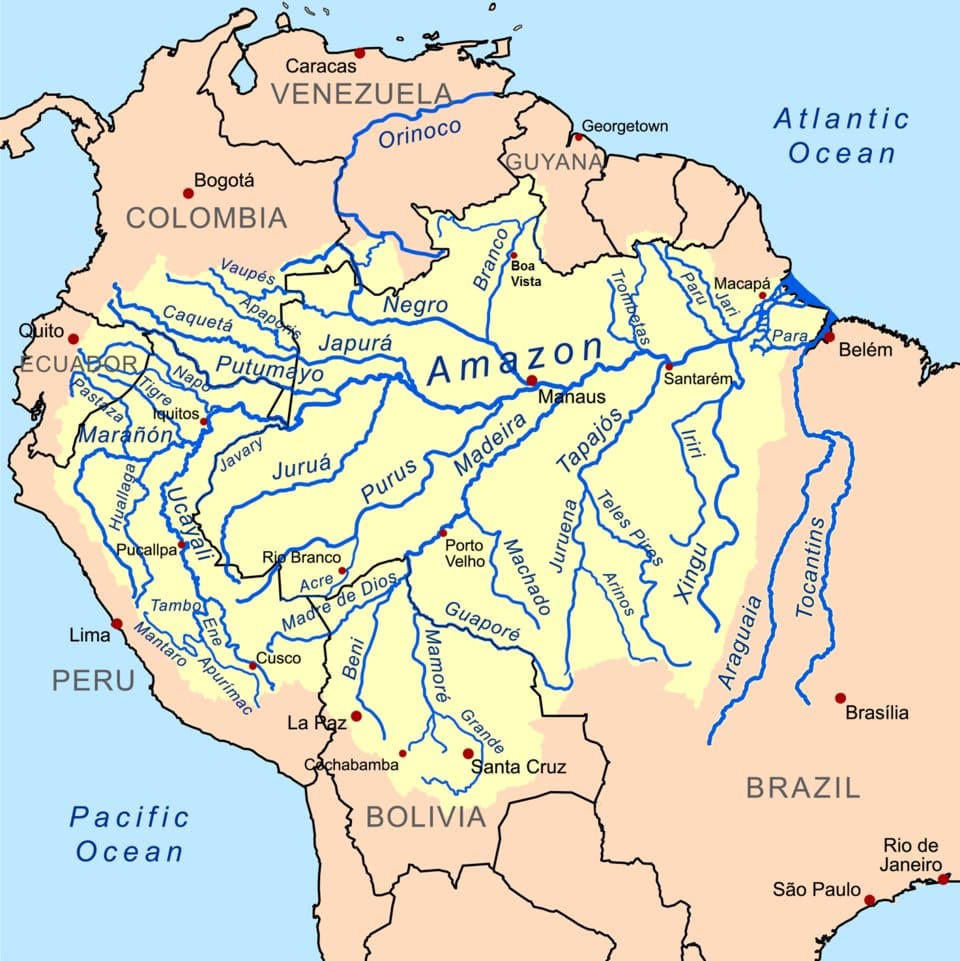
The Golden Dwarf Cichlid is native to the coastal river systems of Guyana and Suriname, from the Aruka River in northwestern Guyana eastward to the lower Marowijne River that forms the border between Suriname and French Guiana. This is a relatively narrow geographic range along the northern coast of South America, encompassing low-lying, seasonally flooded savannah landscapes.
In the wild, N. Anomala inhabits the flooded grasslands and slow-moving waterways of the coastal zone. These are shallow, warm-water habitats with dense aquatic vegetation, soft sandy or muddy substrates, and water that ranges from clear to moderately tannin-stained. Unlike many Apistogramma species that are strictly blackwater fish, the Golden Dwarf Cichlid encounters a wider range of water conditions in its natural habitat, including seasonal fluctuations in hardness and pH. This natural exposure to variable conditions helps explain why captive specimens are notably more tolerant of different water chemistries than many other dwarf cichlids.
Appearance & Identification
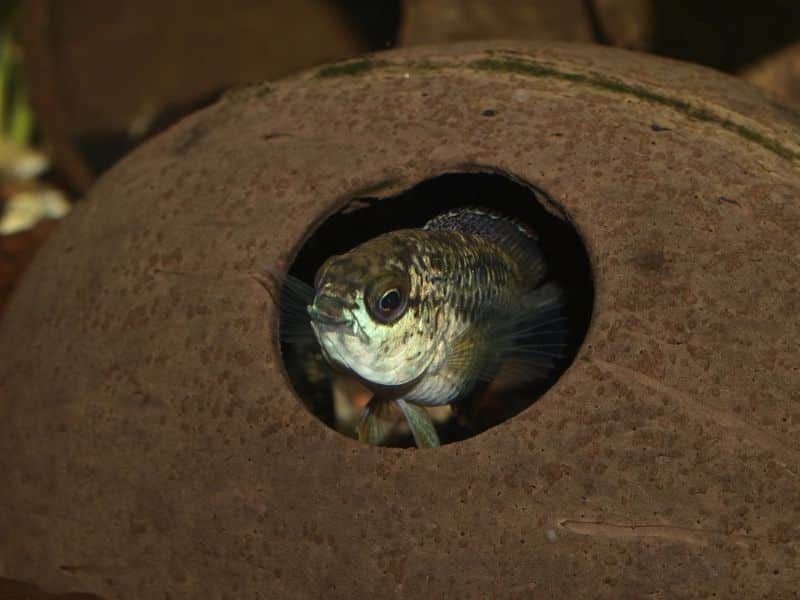
Male Golden Dwarf Cichlids are subtly beautiful fish that reward close inspection. The body displays a complex interplay of pale blue, green, and golden tones, overlaid with iridescent scales that shimmer differently depending on the angle of light. The face often shows a greenish-blue cast, while the body tends more toward golden-olive. The dorsal and anal fins are elongated and pointed in mature males, often edged in red or orange. Under good conditions, the overall effect is a fish that seems to glow with an inner light, particularly in the late afternoon when aquarium lighting hits at low angles.
Females are dramatically different from males, both smaller and more plainly colored in their non-breeding state. A normal female displays a yellowish body with a prominent dark lateral line running from the snout to the caudal peduncle. But it’s during breeding that the female undergoes one of the most remarkable transformations in the dwarf cichlid world. She develops a bold black-and-yellow checkerboard pattern across her entire body, a visual signal that researchers believe serves as a recognition cue for her fry. The contrast between the subtle, shimmering male and the bold, patterned breeding female is truly striking when seen side by side.
Male vs. Female
| Feature | Male | Female |
|---|---|---|
| Size | Up to 3.5 inches (9 cm) | Up to 2 inches (5 cm) |
| Coloration | Pale blue, green, and gold with iridescence | Yellow with dark lateral line; checkerboard when breeding |
| Fins | Elongated, pointed dorsal and anal fins | Short, rounded fins |
| Body Shape | Deeper bodied, stockier build | Compact, smaller overall |
| Eye Color | Golden (hence “Goldeneye Cichlid”) | Golden, though less prominent |
The size difference between the sexes is dramatic. Males are nearly twice the length and considerably more robust than females. This makes sexing straightforward even in juvenile fish, as males begin outgrowing females at a relatively early stage. The elongated fins and iridescent coloration of the males also develop gradually, becoming more impressive as the fish matures.
Average Size & Lifespan
Males reach about 3 to 3.5 inches (7.5 to 9 cm) in captivity, while females stay much smaller at around 1.5 to 2 inches (4 to 5 cm). The dramatic size difference between the sexes is one of this species’ most distinctive characteristics. At the pet store, juveniles may all look similar in size, so be aware that the eventual size disparity will become quite pronounced.
Golden Dwarf Cichlids live 3 to 5 years with proper care. Their relatively cool-water preference and hardy constitution can contribute to longevity when conditions are stable. Hobbyists report specimens reaching 5 or more years in well-maintained setups.
ASD Difficulty Rating
Beginner-Friendly | 4/10
Golden dwarf cichlids are one of the more accessible dwarf cichlids, tolerating a wider range of water parameters than most Apistogramma species. They are cave-spawning parents that become highly aggressive toward tank mates during and after spawning – plan the community setup accordingly.
Care Guide
Tank Size
A 20-gallon (75-liter) tank is suitable for a pair or a small group of one male with two females. Given the male’s larger size compared to many other dwarf cichlids, a bit more space doesn’t hurt. If you plan to keep multiple females, ensure each has her own territory with a minimum floor area of about 16 by 16 inches (40 by 40 cm) per female. A 30-gallon (115-liter) tank is ideal for a group with multiple females.
Water Parameters
| Parameter | Recommended Range |
|---|---|
| Temperature | 72 – 79°F (22 – 26°C) |
| pH | 6.0 – 7.5 |
| General Hardness (GH) | 3 – 10 dGH |
| KH | 2 – 8 dKH |
| Ammonia | 0 ppm |
| Nitrite | 0 ppm |
| Nitrate | < 20 ppm |
This is where the Golden Dwarf Cichlid really shines compared to many other dwarf cichlids. It tolerates a considerably wider range of water chemistry than most Apistogramma species, thriving in moderately soft to slightly hard water at pH values from mildly acidic to slightly alkaline. If your tap water falls somewhere in the 6.5 to 7.5 pH range with moderate hardness, you can likely keep this species without any water modifications at all. This accessibility is a major selling point for hobbyists who don’t want to invest in RO systems or complex water treatment.
That said, water quality still matters. Zero ammonia and nitrite are non-negotiable, and nitrates should be kept below 20 ppm through regular water changes. Weekly 20 to 30 percent water changes are recommended, as these fish are still cichlids that appreciate clean, well-maintained conditions.
Filtration & Water Flow
Moderate filtration with a gentle to medium flow rate works well. These fish are more tolerant of water movement than many Apistogramma species, but they still prefer calmer conditions. A hang-on-back filter, sponge filter, or small canister filter all work well. Aim for about 4 to 5 times tank volume turnover per hour, with the output diffused if necessary to prevent strong currents at the bottom of the tank.
Lighting
Standard aquarium lighting is fine for Golden Dwarf Cichlids. They’re less sensitive to bright light than many Apistogramma species, though they still appreciate some shaded areas created by floating plants or tall stem plants. The males’ iridescent coloration actually shows best under moderate lighting where the scales can catch the light at varying angles.
Plants & Decorations
A well-planted tank with driftwood and hiding spots is ideal. Unlike some more delicate dwarf cichlids, N. Anomala is plant-friendly and won’t damage your aquascaping. Provide caves and sheltered areas using driftwood, coconut shells, or clay pots, as these serve as spawning sites and territorial refuges. Both sexes appreciate having cover, and the female in particular needs a dedicated spawning site.
Good plant choices include Amazon Swords, Java Fern, Anubias, Cryptocoryne, and Vallisneria. Floating plants like Water Lettuce or Amazon Frogbit add welcome shade and make the fish feel more secure. The overall tank design should provide a mix of open swimming space and densely planted or decorated areas that define territories.
Substrate
Fine sand is preferred, as these fish do forage near the substrate, but they’re less obligate substrate-sifters than Apistogramma species. Smooth, fine-grained gravel can work in a pinch, but sand is always the safer choice and provides a more natural appearance. A darker substrate can help bring out the golden and iridescent tones of the fish.
Tank Mates
Best Tank Mates
Golden Dwarf Cichlids are peaceful in most setups in community settings and get along with a wide range of similarly sized, non-aggressive species. The main caveat is breeding behavior, when the female becomes surprisingly fierce. Good tank mate choices include:
- Tetras (Cardinal, Neon, Ember, Rummy-Nose). Peaceful schoolers that occupy mid-water
- Pencilfish (Nannostomus species). Gentle dither fish
- Hatchetfish. Surface dwellers that avoid bottom territories entirely
- Corydoras. Peaceful bottom dwellers, though watch for territory disputes during breeding
- Rasboras. Small, peaceful, and compatible with the water parameters
- Otocinclus. Non-threatening algae grazers
- Small livebearers (Endlers, certain Guppies). Compatible in harder water setups
Tank Mates to Avoid
- Other dwarf cichlids. Territory conflicts, especially during breeding
- Larger aggressive cichlids. Will dominate and stress the Golden Dwarf Cichlids
- Fin nippers. Tiger Barbs and similar species target the male’s extended fins
- Very small fish during breeding. A protective female can injure or kill tiny tank mates
- Large Plecos. Can disturb spawning sites and overwhelm territories
Food & Diet
Golden Dwarf Cichlids are omnivores with a strong carnivorous preference, feeding primarily on small worms, crustaceans, and insects in the wild. In captivity, they readily accept a wide range of foods. High-quality cichlid pellets can serve as a staple, supplemented regularly with frozen bloodworms, brine shrimp, daphnia, and mysis shrimp. Live foods are eagerly consumed and are particularly valuable for conditioning breeding pairs.
Unlike some strictly carnivorous dwarf cichlids, N. Anomala also benefits from occasional vegetable matter. Spirulina flakes, blanched cucumber slices, and algae-based foods is offered as occasional supplements. This dietary flexibility is another advantage of the species and makes feeding straightforward. Feed small amounts twice daily, ensuring food reaches all areas of the tank so subordinate fish can eat without being driven off by the dominant male.
Is the Golden Dwarf Cichlid Right for You?
Before you buy, here is the honest breakdown.
Good fit if:
- You have a 15 to 20-gallon tank with fine sand, caves, and dense plants – this species thrives in a proper nano cichlid setup
- You want a pair-bonding cichlid with visible spawning behavior and active brood care in a small footprint
- Your tap water is neutral to moderately soft – this species tolerates a wider pH range than most Apistogramma species
- You want a beginner-accessible dwarf cichlid that still has real personality and compelling breeding behavior
Think twice if:
- You have a heavily stocked community tank – a breeding pair will claim territory aggressively and stress or injure smaller tank mates
- You expect this species to be peaceful at all times – the breeding aggression is real and can be severe in confined spaces
- Your tank is under 15 gallons – even for a nano cichlid, smaller tanks amplify territorial behavior during spawning
- You keep small fish under 1.5 inches alongside them – very small fish are at risk when the pair is actively guarding
Breeding & Reproduction
Breeding Difficulty
Easy. The Golden Dwarf Cichlid is one of the most readily bred dwarf cichlids available, and it’s frequently recommended as an ideal first breeding project for hobbyists interested in cichlid reproduction. Given appropriate conditions, most pairs will spawn without much intervention required from the keeper.
Spawning Tank Setup
A 20-gallon (75-liter) tank with one male and one to two females works well as a breeding setup. Provide each female with at least one potential spawning cave. Coconut shell halves, overturned clay pots, or flat rocks with overhangs all serve as suitable spawning sites. Include driftwood and plants to create visual barriers, particularly important if the male needs somewhere to hide from an aggressive brooding female. A sponge filter is recommended to protect fry from being drawn into the filtration.
Water Conditions for Breeding
One of the advantages of breeding Golden Dwarf Cichlids is that they don’t require extreme water conditions. A pH of 6.5 to 7.0, temperature around 76 to 78°F (24 to 26°C), and moderate hardness (5 to 8 dGH) are ideal. Many hobbyists have bred this species successfully in straight tap water with no modifications at all, provided the parameters fall within reasonable ranges. Consistent conditions matter more than hitting exact numbers.
Conditioning & Spawning
Condition breeders with increased feedings of protein-rich live and frozen foods for one to two weeks. The female will begin inspecting potential cave sites and may clean a surface inside her chosen shelter. When ready, she deposits up to 200 to 300 eggs on the ceiling or walls of the cave. The eggs are small and adhesive.
After spawning, the female undergoes her dramatic color transformation, developing the bold black-and-yellow checkerboard pattern that is unique to breeding Nannacara anomala females. She takes sole charge of the eggs and becomes extremely aggressive, driving the male and all other fish away from the cave entrance. In smaller tanks, this aggression is intense enough to cause real problems, so ensure the male has plenty of hiding spots.
Egg & Fry Care
Eggs hatch in approximately 3 to 4 days at breeding temperatures. The wrigglers remain in the cave for several more days while absorbing their yolk sacs. Once free-swimming, the fry emerge as a tight school led and fiercely protected by the checkerboard-patterned mother. The contrast between her bold pattern and the tiny fry is quite a sight. First foods should include freshly hatched baby brine shrimp, which the relatively large fry can accept from day one. Supplement with microworms or commercial liquid fry food. Growth is rapid with consistent feeding, and fry begin showing color at around 6 to 8 weeks.
Common Health Issues
Ich (White Spot Disease)
Ich is the most common disease threat for any freshwater fish. The classic white spots, scratching behavior, and clamped fins are unmistakable. Golden Dwarf Cichlids are robust enough to handle standard treatments well. Raising the temperature to 86°F (30°C) for 10 to 14 days is effective, and this hardy species tolerates the temperature increase without significant issues. Prevention through proper quarantine of new additions remains the best approach.
Bacterial Fin Rot
Fin rot occurs when water quality deteriorates or after fin damage from aggression. The edges of the fins become ragged and may develop a white or reddish margin. Improving water quality with increased water changes often resolves mild cases without medication. More advanced infections require broad-spectrum antibacterial treatment. Males, with their longer fins, are more susceptible than the shorter-finned females.
Hole-in-the-Head Disease
While less common in this species than in some other cichlids, HITH can still occur with poor water quality and nutritional deficiencies. Small pits on the head and lateral line area are the defining symptoms. Prevention through regular maintenance and a varied diet that includes vitamin-rich foods is the most effective strategy.
Stress-Related Illness
Chronic stress from aggressive tank mates, inadequate hiding spots, or unstable water conditions can suppress the immune system and make the fish vulnerable to opportunistic infections. The most common manifestation is general lethargy, loss of color, and reduced appetite. Addressing the source of stress, whether it’s a bully in the tank, insufficient cover, or poor water quality, is always the first step.
Hard Rule: Clear the tank before breeding. The pair will injure anything that comes near.
Golden dwarf cichlid pairs become highly aggressive the moment spawning starts. Remove other tank mates from a breeding setup or provide heavily planted cover – the pair will attack and injure any fish near the spawning site, regardless of how peaceful they were before.
Common Mistakes to Avoid
- Underestimating breeding aggression: The female’s transformation from a peaceful community member to a ferocious brood guardian catches many keepers off guard. A breeding female will relentlessly chase fish much larger than herself. Have a plan for managing this aggression, whether it’s removing the breeding pair to a separate tank or ensuring ample hiding spots for other fish.
- Not providing enough caves: Without a suitable spawning cave, females will become stressed or attempt to spawn in inappropriate locations. Always provide at least one cave per female, plus extras.
- Keeping too many males: Multiple males in a small tank leads to constant territory disputes. One male per 20-gallon tank is the general rule. A second male requires at least 40 gallons with well-separated territories.
- Assuming they’re always peaceful: Outside of breeding, Golden Dwarf Cichlids are genuinely community-friendly. But during breeding, all bets are off. Plan your tank setup with breeding aggression in mind, even if you’re not specifically trying to breed them. Given how easily they spawn, it’s likely to happen.
- Overlooking them for flashier species: This is less a care mistake and more a hobby mistake. Many aquarists skip right past Nannacara anomala in favor of brighter Apistogramma species, missing out on one of the most rewarding and beginner-friendly dwarf cichlid experiences available.
Where to Buy
Golden Dwarf Cichlids are more commonly available than many specialty dwarf cichlids, and you will find them at well-stocked local fish stores. For online purchasing, these are reliable sources:
- Flip Aquatics. Quality livestock with careful shipping. They carry a variety of dwarf cichlid species and are worth checking for Nannacara anomala availability.
- Dan’s Fish. A trusted source for freshwater fish with competitive pricing. Their inventory rotates regularly, so check back if the species isn’t currently listed.
Most specimens available in the trade are commercially bred rather than wild-caught, which means they are hardy, well-adapted to aquarium conditions, and free of the parasite concerns that sometimes accompany wild-caught fish. Look for active fish with clear eyes, intact fins, and good coloration.
FAQ
Are Golden Dwarf Cichlids good for beginners?
Yes, this is one of the best dwarf cichlids for hobbyists transitioning from general community fish to cichlid keeping. Its tolerance for a wider range of water conditions, hardy constitution, and straightforward care requirements make it considerably more forgiving than most Apistogramma species. Understanding basic cichlid territorial behavior is helpful, but not strictly necessary for success.
Why does my female Golden Dwarf Cichlid have a checkerboard pattern?
The dramatic black-and-yellow checkerboard pattern is a breeding display unique to Nannacara anomala females. It develops when the female is guarding eggs or free-swimming fry and serves as a visual recognition signal for the young. If your female has developed this pattern, she’s almost certainly guarding a clutch of eggs or fry somewhere in the tank.
Can I keep Golden Dwarf Cichlids with Apistogramma?
It’s not recommended in standard-sized tanks. While the species have different temperaments outside of breeding, the territory conflicts during breeding are problematic. Both species defend spawning sites aggressively, and mixing them in a 20 to 30-gallon tank invites trouble. In very large tanks (55+ gallons) with well-separated territories, cohabitation is theoretically possible but rarely ideal.
How many Golden Dwarf Cichlids can I keep in a 20-gallon tank?
One male with one or two females is ideal for a 20-gallon tank. Given the significant size difference between males and females, one male with two females represents a manageable bioload while allowing for natural social dynamics. Never keep two males in a 20-gallon setup.
Do Golden Dwarf Cichlids need soft water?
Not necessarily. Unlike many Apistogramma species that require soft, acidic water, N. Anomala thrives in a wider range from soft to moderately hard water (3 to 10 dGH) and pH from mildly acidic to slightly alkaline (6.0 to 7.5). Most tap water in the United States falls within acceptable ranges for this species.
How big do male Golden Dwarf Cichlids get?
Males reach 3 to 3.5 inches (7.5 to 9 cm), which is notably larger than many Apistogramma species. Females stay much smaller at about 1.5 to 2 inches (4 to 5 cm). The size difference between the sexes is one of the most dramatic among commonly kept dwarf cichlids.
What It Is Actually Like Living With Golden Dwarf Cichlid
This is the part no other care guide gives you. Forget water parameters for a minute. Here is what it is actually like to share your tank with this species.
They have more personality than you expect. The Golden Dwarf Cichlid is not a fish that just sits in the background. Once settled in, they become interactive, curious, and responsive to your presence.
Feeding time reveals their character. Watch how the Golden Dwarf Cichlid approaches food and you will see real personality. Some are bold, some are cautious, and their feeding behavior tells you a lot about their mood and health.
They establish routines. After a few weeks, your Golden Dwarf Cichlid will have favorite spots, preferred paths through the tank, and predictable patterns. Learning these routines makes you a better keeper.
Color is a health indicator. The Golden Dwarf Cichlid’s coloration is a real-time report card on your husbandry. Vibrant color means happy fish. Faded color means something is wrong. Pay attention.
How the Golden Dwarf Cichlid Compares to Similar Species
If you are deciding between dwarf cichlids for a nano or community setup, here is how the Golden Dwarf Cichlid compares on what actually matters for ownership.
Golden Dwarf Cichlid vs. Dwarf Flag Cichlid (Laetacara curviceps) : Choose the Dwarf Flag Cichlid if you want the most peaceful, community-compatible dwarf cichlid with similar size and cave-spawning behavior – flag cichlids are significantly less aggressive during breeding and work better in mixed community tanks. Choose the Golden Dwarf Cichlid if you want a slightly more assertive personality with the distinctive metallic sheen and the dramatic pair-bonding display that makes this species stand out in a dedicated nano setup.
Golden Dwarf Cichlid vs. Checkerboard Cichlid (Dicrossus filamentosus) : Choose the Checkerboard Cichlid if you want the most visually distinctive nano cichlid with that striking pattern – but know it requires soft, acidic blackwater conditions and is more demanding than the Golden Dwarf. Choose the Golden Dwarf Cichlid if you want a more forgiving water chemistry requirement combined with reliable breeding behavior and strong parental instincts across a wider range of setups.
Closing Thoughts
Golden dwarf cichlids prove that small cichlids still demand big attention to detail.
The Golden Dwarf Cichlid is proof that the best fish in the hobby aren’t always the most hyped ones. While it lacks the marketing buzz of the latest Apistogramma variant or the flashy blue of a Ram cichlid, Nannacara anomala quietly delivers one of the most satisfying dwarf cichlid keeping experiences you can have. It’s hardy, it’s beautiful in an understated way, it breeds readily, and the female’s checkerboard brood care display is genuinely one of the most memorable things you’ll witness in a freshwater aquarium.
If the Apistogramma care sheet scared you off, start here. Same pair bond, same cave spawning, same brood defense – in a fish that handles tap water better than most of the genus. Set up the 20-gallon, add caves, keep the water soft. Then wait for the first spawn. The female defending that clutch – checkerboard pattern blazing, going after anything that comes within six inches – is one of the most memorable things you’ll see in a freshwater aquarium. It happens in a tank that fits on a shelf.
This article is part of our South American Cichlids species directory. Explore more South American cichlid care guides.
References
- Seriously Fish. (n.d.). Nannacara anomala. Retrieved from https://www.seriouslyfish.com/species/nannacara-anomala/
- Froese, R. & Pauly, D. (Eds.). (2024). Nannacara anomala in FishBase. Retrieved from https://www.fishbase.se/summary/Nannacara-anomala.html
- Regan, C.T. (1905). A revision of the fishes of the South American cichlid genera Acara, Nannacara, Acaropsis, and Astronotus. Annals and Magazine of Natural History, Series 7, 15(87), 329-347.
- Linke, H. & Staeck, W. (1994). American Cichlids II: Large Cichlids. Tetra Press.
- About the Author
- Latest Posts

I’m Mark Valderrama, founder of Aquarium Store Depot and a fishkeeper with over 25 years of hands-on experience. I started in the hobby at age 11, worked at local fish stores, and have kept freshwater tanks, ponds, and reef tanks ever since. I’ve been featured in two best-selling aquarium books on Amazon and built this site to share practical, experience-based fish keeping knowledge.
Leave a Reply