
Last Updated: June 25, 2026
Thank you for visiting! By the way… any links on this page that lead to products on Amazon and other stores/partners are affiliate links Aquarium Store Depot earns a commission if you make a purchase.
Table of Contents
- The Reality of Keeping Dwarf Flag Cichlid
- Key Takeaways
- Species Overview
- Classification
- Origin & Natural Habitat
- Appearance & Identification
- Average Size & Lifespan
- Care Guide
- Tank Mates
- Food & Diet
- Breeding & Reproduction
- Common Health Issues
- Common Mistakes to Avoid
- Where to Buy
- FAQ
- Closing Thoughts
- References
- What Most Care Guides Get Wrong
- Is the Dwarf Flag Cichlid Right for You?
- What It Is Actually Like Living With Dwarf Flag Cichlid
- Species Comparison
Dwarf flag cichlids are the most peaceful cichlid you will find, and that is both their strength and their weakness. They thrive in community tanks but get destroyed by anything aggressive. One pushy tank mate and this fish stops eating, loses color, and hides until it wastes away. I have kept laetacara curviceps for years and the number one killer is not water quality. It is bad tank mate choices. The cichlid for people who want cichlid behavior without cichlid aggression.
What Most Care Guides Get Wrong About Dwarf Flag Cichlid
The biggest misconception about Dwarf Flag Cichlids is that “peaceful cichlid” means it works in any community tank. It doesn’t. Add a tiger barb, an aggressive gourami, or anything that nips fins and the dwarf flag shuts down – stops eating, loses color, hides until it wastes away. In my 25 plus years in the hobby, I’ve seen this fish thrive in the right setup and waste away in the wrong one. The difference was never the water. It was always the company.
The Reality of Keeping Dwarf Flag Cichlid
Dwarf flag cichlids are the most peaceful cichlid you can keep, and that peace comes with a vulnerability most keepers underestimate.
They are genuinely community safe. Dwarf flags coexist with tetras, corydoras, and other peaceful species without issue. They are one of the few cichlids that earns the community fish label.
They cannot handle aggression. Put them with anything remotely aggressive and they hide, stop eating, and fade. They need calm tank mates.
Pair bonding is the reward. A bonded pair of dwarf flags displays fascinating courtship and parental behavior. Watching them guard fry together is the reason to keep this species.
They need clean water. More sensitive to nitrate buildup than their peaceful nature suggests. Weekly water changes keep them healthy and colorful.
Biggest Mistake New Dwarf Flag Cichlid Owners Make
Mixing them with semi-aggressive cichlids because they are cichlids too. Dwarf flag cichlids are not built for aggression. A single firemouth in the same tank will dominate them completely.
Expert Take (Mark Valderrama, AquariumStoreDepot)
Give the Dwarf Flag Cichlid a 20-gallon minimum with sand, plants, and gentle community tank mates. They thrive in soft, slightly acidic water with low to moderate flow. This is the cichlid for people who want cichlid behavior without cichlid aggression.
Key Takeaways
- One of the most peaceful cichlids available: The Dwarf Flag Cichlid’s calm temperament sets it apart from most other dwarf cichlids. It rarely causes problems in a community setting.
- Both parents care for eggs and fry: Unlike many dwarf cichlids where only the female provides brood care, Laetacara curviceps is a biparental substrate spawner. Watching a bonded pair raise their young together is fascinating.
- Adaptable to a range of water conditions: This species tolerates a wider pH and hardness range than many South American dwarf cichlids, though soft, slightly acidic water remains ideal.
- Subtle but attractive appearance: Metallic blue-green speckles across the face and body create a shimmering effect that’s particularly appealing under aquarium lighting.
- Perfect for planted tanks: Their peaceful nature and preference for well-decorated environments make them ideal residents for planted community aquariums.
Species Overview
| Property | Details |
|---|---|
| Scientific Name | Laetacara curviceps |
| Common Names | Dwarf Flag Cichlid, Flag Acara, Smiling Acara, Sheepshead Acara |
| Family | Cichlidae |
| Origin | Brazil (lower Amazon basin) |
| Care Level | Easy to Intermediate |
| Temperament | Peaceful |
| Diet | Omnivore |
| Tank Level | Bottom to middle |
| Maximum Size | 3 inches (7.5 cm) |
| Minimum Tank Size | 20 gallons (75 liters) |
| Temperature | 72 – 82°F (22 – 28°C) |
| pH | 5.5 – 7.5 |
| Hardness | 2 – 10 dGH |
| Lifespan | 5 – 8 years |
| Breeding | Substrate spawner (biparental) |
| Breeding Difficulty | Moderate |
| Compatibility | Excellent community fish |
| OK for Planted Tanks? | Yes (excellent choice) |
Classification
| Taxonomic Rank | Classification |
|---|---|
| Order | Cichliformes |
| Family | Cichlidae |
| Subfamily | Cichlasomatinae |
| Genus | Laetacara |
| Species | L. Curviceps (Ahl, 1923) |
Laetacara curviceps was originally described by Ernst Ahl in 1923. The genus Laetacara was established by Kullander in 1986 and the name comes from the Latin “laetus” (joyful or pleasant) and “acara” (a common name for cichlids), which is quite fitting for such an amiable species. Unlike the Apistogramma genus (subfamily Geophaginae), Laetacara belongs to the subfamily Cichlasomatinae, placing it in the same broader group as the familiar Blue Acara and Green Terror. There has been some taxonomic confusion in the hobby between L. Curviceps and the closely related L. Dorsigera, with some fish in the trade mislabeled between the two species.
Origin & Natural Habitat
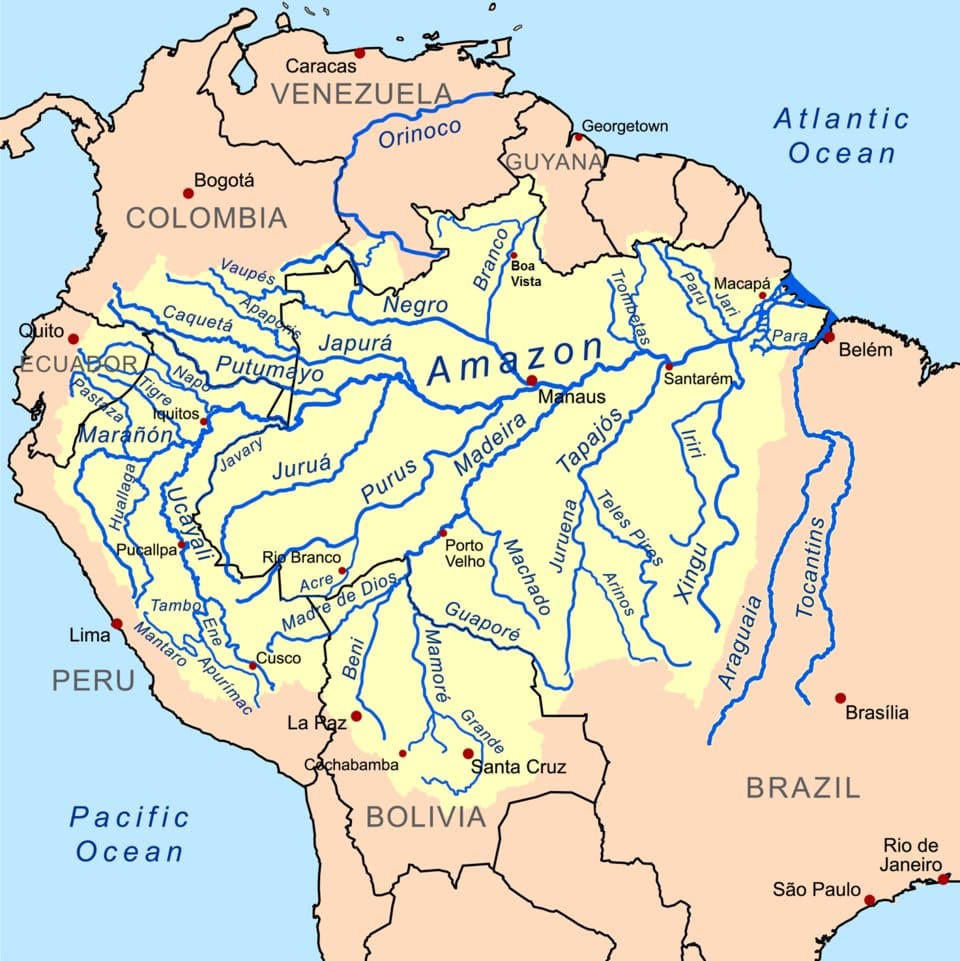
The Dwarf Flag Cichlid is native to the lower Amazon basin in Brazil, where it inhabits slower-moving tributaries, backwaters, and shallow areas along the margins of larger rivers. Its distribution covers a considerable area within the Amazon drainage, and different populations may show subtle variations in coloration and patterning.
In the wild, L. Curviceps is found in clear, low-flow waters with abundant aquatic vegetation. The substrate is sand or fine sediment with areas of leaf litter and submerged plant growth. These are shallow, warm habitats where plants like Cabomba and Myriophyllum grow densely, providing shelter and foraging grounds. The water is soft and slightly acidic, but the species encounters a range of conditions across its distribution. This habitat preference explains why Dwarf Flag Cichlids do so well in planted aquariums and why they seem genuinely more comfortable in tanks with live vegetation than in sparse setups.
Appearance & Identification
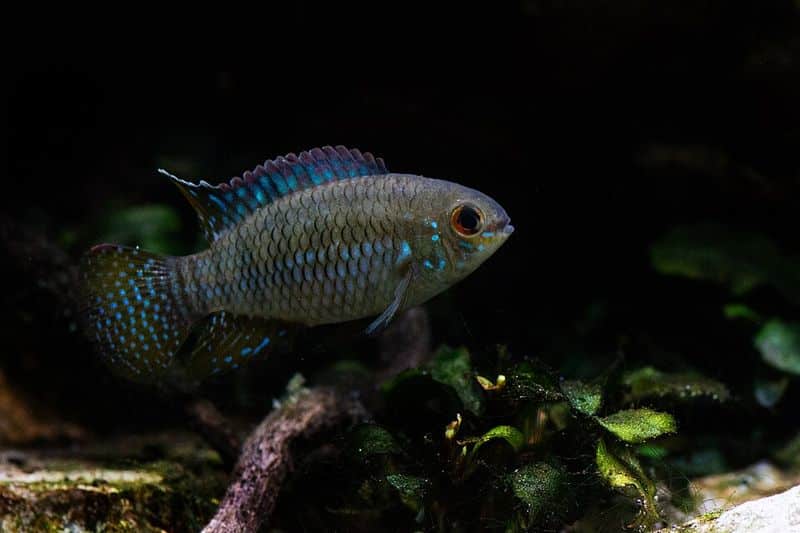
The Dwarf Flag Cichlid is an understated beauty. Its body displays a warm olive to golden-brown base color that’s overlaid with rows of metallic blue-green speckles, particularly concentrated on the face, gill covers, and upper body. These iridescent markings create a shimmering effect under aquarium lighting that photographs rarely capture accurately. A dark spot sits prominently on the midflank, and a dark bar runs vertically through the eye. The face has a slightly rounded, almost friendly profile that gives the fish its “Smiling Acara” nickname.
The fins are transparent to pale with subtle coloration. In breeding condition, both sexes may develop enhanced colors, with deeper golden tones and more prominent iridescent markings. The dorsal and anal fins become slightly more pointed in mature males. Overall, this is not a fish that screams for attention from across the room, but up close, the combination of metallic speckles and warm body tones is genuinely attractive.
Male vs. Female
| Feature | Male | Female |
|---|---|---|
| Size | Up to 3 inches (7.5 cm) | Slightly smaller, up to 2.5 inches (6 cm) |
| Fins | Slightly more pointed dorsal and anal fins | Rounded fins |
| Dorsal Spot | May lack dark spot at dorsal fin base | Often displays dark spot at dorsal fin base |
| Coloration | Similar to female, slightly more iridescent | Similar to male, may show warmer tones |
| Body Shape | Slightly larger, more elongated | Slightly rounder, especially when gravid |
Sexing Dwarf Flag Cichlids is tricky compared to more dimorphic species like Apistogramma. The size difference between the sexes is modest, and coloration is similar in both males and females. The most reliable indicators are the presence or absence of a dark spot at the base of the dorsal fin (more common in females) and the subtle differences in fin shape. Comparing multiple specimens side by side is often the most practical approach, and even then, certainty is elusive.
Average Size & Lifespan
Dwarf Flag Cichlids reach about 2.5 to 3 inches (6 to 7.5 cm) in captivity. FishBase records a maximum total length of about 4 inches (10 cm), but that’s exceptional and rarely achieved in home aquariums. Most specimens will settle in the 2.5 to 3 inch range, making them a manageable size for a 20-gallon or larger tank.
With proper care, Dwarf Flag Cichlids can live 5 to 8 years, which is notably longer than many Apistogramma species. Their robust constitution and tolerant nature contribute to this longevity. Consistent water quality, a varied diet, and a low-stress environment are the keys to reaching the upper end of that range.
ASD Difficulty Rating: Tier 1/2 – Beginner-Intermediate
Dwarf flag cichlids (Laetacara curviceps) are one of the most peaceful dwarf cichlids available, tolerating a range of water parameters. They pair-bond and claim territory, but the aggression is mild compared to most cichlids.
Care Guide
Tank Size
A 20-gallon (75-liter) tank is adequate for a single pair. If you want to keep a small group or add community tank mates, a 30-gallon (115-liter) or larger provides more flexibility. These fish are not as intensely territorial as most Apistogramma species, so space requirements are more moderate. That said, breeding pairs do establish a defended zone around their spawning site, so factor that into your stocking plans.
Water Parameters
| Parameter | Recommended Range |
|---|---|
| Temperature | 72 – 82°F (22 – 28°C) |
| pH | 5.5 – 7.5 |
| General Hardness (GH) | 2 – 10 dGH |
| KH | 2 – 8 dKH |
| Ammonia | 0 ppm |
| Nitrite | 0 ppm |
| Nitrate | < 20 ppm |
The Dwarf Flag Cichlid is notably adaptable when it comes to water chemistry. It accepts a wider range of pH and hardness than many South American dwarf cichlids, making it a practical choice for hobbyists whose tap water doesn’t fall into the extremely soft, acidic range that Apistogramma species demand. While soft, slightly acidic water is ideal, captive-bred specimens will thrive in moderately hard, neutral water without issues. This flexibility is one of the species’ strongest selling points.
Regular water changes of 20 to 30 percent weekly are recommended. These fish are tolerant but not bulletproof, and consistent maintenance keeps them healthy and colorful. Ammonia and nitrite must always be zero, and nitrates should stay below 20 ppm.
Filtration & Water Flow
Gentle to moderate filtration suits this species well. They come from low-flow habitats and don’t appreciate strong currents, but they’re less sensitive to flow than many Apistogramma species. A hang-on-back filter, sponge filter, or small canister filter all work well. If breeding is a goal, a sponge filter is the safest option to protect free-swimming fry.
Lighting
Standard aquarium lighting works well. These fish are not as light-sensitive as many Apistogramma species, and they actually look their best under moderate lighting where their metallic blue-green speckles can catch the light. If you’re growing demanding plants that need stronger light, the Dwarf Flag Cichlid will adapt fine. Some floating plants to create a mix of light and shade is always a nice touch.
Plants & Decorations
Live plants are highly recommended for this species. In the wild, L. Curviceps lives among dense aquatic vegetation, and they’re clearly more comfortable and confident in planted tanks. Amazon Swords, Cryptocoryne, Java Fern, Anubias, Vallisneria, and stem plants like Cabomba or Hygrophila all work well. Be aware that this species has been observed occasionally nibbling on soft-leaved plants, though it’s not destructive.
Provide some caves or sheltered areas using driftwood, rocks, or clay pots for spawning and retreat. These fish are less dependent on caves than Apistogramma species, but they still appreciate having hiding spots available. The ideal setup combines open planted areas with denser sections and a few sheltered spots.
Substrate
Fine sand is ideal, though smooth, fine-grained gravel is also acceptable for this species. They’re not as dedicated to substrate sifting as Apistogramma, so the substrate choice is more flexible. A planted tank substrate with a sand cap works well if you’re growing rooted plants.
Tank Mates
Best Tank Mates
This is where the Dwarf Flag Cichlid truly excels. Its peaceful nature makes it compatible with a wide range of community fish, far more than most other cichlid species. Great choices include:
- Tetras (Cardinal, Neon, Ember, Rummy-Nose, Black Neon). Excellent community companions
- Rasboras (Harlequin, Lambchop, Chili). Peaceful schoolers
- Pencilfish (Nannostomus species). Gentle dither fish
- Corydoras. Peaceful bottom companions that complement the cichlids nicely
- Hatchetfish. Surface dwellers that complete the vertical zoning
- Otocinclus. Algae grazers that pose no threat
- Small peaceful Gouramis (Honey Gourami, Sparkling Gourami). Similar temperament
- Dwarf Plecos (Bristlenose). Peaceful algae eaters
Tank Mates to Avoid
- Aggressive cichlids. Dwarf Flag Cichlids are too peaceful to hold their own against bullies
- Large, boisterous species. Giant Danios, larger barbs, and similar high-energy fish create stress
- Highly territorial dwarf cichlids. Aggressive Apistogramma species may bully the more docile Flag Cichlids
- Fin nippers. Though their fins aren’t as elaborate as some species, persistent nippers still cause stress
- Predatory fish. Anything large enough to consider a 3-inch fish as food
Food & Diet
Dwarf Flag Cichlids are adaptable omnivores that accept a wide range of foods. High-quality cichlid pellets or flakes can serve as a staple, supplemented with regular offerings of frozen bloodworms, brine shrimp, daphnia, and mysis shrimp. Live foods are appreciated and are particularly useful for conditioning breeding pairs. The species’ omnivorous nature means they also benefit from occasional vegetable matter like spirulina-based foods.
Feed small amounts two to three times daily. These fish are not picky eaters, which is another advantage over more specialized dwarf cichlids. A varied diet promotes the best coloration and overall health. Ensure that food reaches all areas of the tank so that all fish, including any subordinate individuals, can access their share.
Is the Dwarf Flag Cichlid Right for You?
Before you add a Dwarf Flag Cichlid to your tank, here is an honest assessment of what you’re signing up for. I’d rather you know exactly what to expect now than find out the hard way after you’ve already bought one.
- Experience level: Dwarf Flag Cichlids are best suited for intermediate to advanced keepers. They have specific requirements that can overwhelm beginners.
- Tank size commitment: You’ll need at least 20 gallons, though bigger is always better. Make sure you have room for the tank before buying.
- Tank mate planning: Dwarf Flag Cichlids is territorial, so plan your community carefully. Not every fish will work as a tank mate.
- Maintenance demands: Expect regular water testing and consistent water changes. Dwarf Flag Cichlids are sensitive to parameter fluctuations.
- Budget reality: Keeping Dwarf Flag Cichlids costs more than typical setups. Budget for ongoing costs, not just the initial purchase.
- Time investment: Beyond daily feeding and weekly maintenance, regular observation is the best way to catch health issues early.
- Long-term commitment: With proper care, Dwarf Flag Cichlids can live up to 8 years. Make sure you’re ready for years of consistent care.
Breeding & Reproduction
Breeding Difficulty
Moderate. Dwarf Flag Cichlids are biparental substrate spawners that form monogamous pair bonds. Getting them to pair up is sometimes the biggest challenge, as forced pairs (putting one male and one female together) don’t always hit it off. Allowing a small group to form natural pairs is more reliable. Once a pair bonds and conditions are right, spawning follows without much difficulty.
Spawning Tank Setup
A 20-gallon (75-liter) tank works well for a breeding pair. Provide flat rocks, broad-leaved plants (like large Anubias or Amazon Sword leaves), or sheltered areas where the pair can deposit their eggs. Unlike cave-spawning Apistogramma, Dwarf Flag Cichlids prefer to spawn on open surfaces or under gentle shelter rather than inside enclosed caves. A sponge filter keeps fry safe while maintaining water quality.
Water Conditions for Breeding
Soft, slightly acidic water gives the best breeding results. Target a pH of 6.0 to 6.8, temperature around 78 to 80°F (26 to 27°C), and general hardness below 8 dGH. While this species is more flexible than many dwarf cichlids, breeding success improves notably when water conditions lean toward the softer, more acidic end of their range. Consistent parameters are more important than exact numbers.
Conditioning & Spawning
Condition the pair with increased feedings of live and frozen foods for two to three weeks. A bonded pair will begin cleaning a chosen spawning surface together, an activity that’s easy to spot if you’re watching for it. The female deposits approximately 200 to 300 eggs on the prepared surface in a series of passes, with the male following behind to fertilize each batch.
What makes this species particularly interesting is its biparental care. Both the male and female participate in guarding and tending the eggs. They take turns fanning the clutch to maintain water circulation and removing any eggs that develop fungus. While the pair becomes more territorial during this period, their aggression is notably restrained compared to many other cichlid species. They’ll discourage intruders but rarely cause serious injury.
Egg & Fry Care
Eggs hatch in approximately 3 to 4 days at breeding temperatures. The parents may move the wrigglers to a prepared pit in the substrate, where they remain for another 3 to 5 days while absorbing their yolk sacs. Once free-swimming, the fry are shepherded by both parents in a tight school. This cooperative parental behavior is one of the most rewarding aspects of breeding this species, as watching the pair work together to guide and protect their fry is genuinely captivating.
First foods should include freshly hatched baby brine shrimp and fine commercial fry foods. The fry are relatively large for a dwarf cichlid, which makes initial feeding easier. Growth is moderate with consistent feeding, and young fish begin developing their parents’ iridescent markings at around 8 to 12 weeks.
Common Health Issues
Ich (White Spot Disease)
Ich affects all freshwater fish, and Dwarf Flag Cichlids are no exception. The standard white spots, flashing, and clamped fins are the telltale signs. Gradual temperature increase to 86°F (30°C) for 10 to 14 days is an effective treatment that this hardy species handles well. Prevention through quarantining new fish and maintaining stable temperatures is always the preferred approach.
Bacterial Infections
Like all fish, Dwarf Flag Cichlids can develop bacterial infections when stressed or when water quality declines. Symptoms may include fin erosion, redness on the body, or lethargy. Maintaining consistent water quality through regular changes and avoiding sudden parameter swings is the best prevention. Broad-spectrum antibacterial treatments are effective for established infections caught early.
Hole-in-the-Head Disease
HITH is a possibility with any cichlid species, presenting as small pits or erosions on the head. It’s linked to poor water quality, nutritional deficiencies, and high nitrate levels. A varied diet, regular water changes, and maintaining nitrates below 20 ppm effectively prevent this condition.
Internal Parasites
While less common in captive-bred specimens, internal parasites can cause weight loss, reduced appetite, and white stringy feces. Quarantining all new fish for at least two weeks before adding them to your display tank is standard practice that helps prevent introducing parasites to established populations.
Hard Rule
Dwarf flag cichlids need a 30-gallon minimum despite their small size. They pair-bond and claim territory – in a 20-gallon community setup, the pair will stress all other fish during breeding, even though dwarf flags are calm by cichlid standards.
Common Mistakes to Avoid
- Pairing them with aggressive cichlids: The Dwarf Flag Cichlid’s peaceful nature is its biggest asset and its biggest vulnerability. Don’t house them with aggressive species that will bully and outcompete them. They need tank mates of similar temperament.
- Sparse, unplanted tanks: This species is clearly more comfortable and confident in planted aquariums. A bare tank with no cover produces stressed, pale fish that never show their best coloration or behavior. Invest in live plants and natural decorations.
- Forcing pairs: Simply putting one male and one female together doesn’t guarantee a compatible breeding pair. If possible, start with a small group of 4 to 6 juveniles and let them form natural pair bonds. Forced pairs may coexist without ever breeding.
- Overlooking them entirely: This species doesn’t get the marketing attention that Apistogramma or Ram cichlids receive, so many hobbyists don’t even know it exists. If you want a genuinely peaceful cichlid for a community tank, few options are better than L. Curviceps.
- Neglecting the diet: While they’re easy to feed, a monotonous diet of only dry flakes won’t produce the best results. Regular frozen and live food supplements keep them healthy and colorful.
Where to Buy
Dwarf Flag Cichlids are less commonly stocked than species like German Blue Rams or popular Apistogramma, but they is found through specialty retailers and online sellers. Check these trusted sources:
- Flip Aquatics. A reliable retailer for dwarf cichlids with quality livestock and careful shipping practices. Check their inventory for Laetacara species availability.
- Dan’s Fish. Another trusted option for healthy freshwater fish at competitive prices. Their selection changes frequently, so check back regularly.
You will also find them at local fish stores that specialize in South American species, or through aquarium club auctions where hobbyist breeders sometimes offer them. Given the species’ prolific breeding, hobbyist-bred specimens are often available through local channels.
FAQ
Are Dwarf Flag Cichlids really peaceful?
Yes, they’re genuinely one of the most peaceful cichlid species available. Outside of breeding, they rarely bother tank mates and can coexist with a wide range of community fish. During breeding, they become mildly territorial around their spawning site, but even then, their aggression is notably restrained compared to most other cichlids. They’ll ward off intruders without causing serious harm.
What’s the difference between Laetacara curviceps and Laetacara dorsigera?
L. Dorsigera (Red-Breast Flag Cichlid) is a closely related species that’s sometimes confused with L. Curviceps in the trade. The most notable difference is that breeding L. Dorsigera males develop a prominent red or reddish-pink chest and belly area, which L. Curviceps lacks. Both species share similar peaceful temperaments and care requirements, so either makes an excellent community fish.
Can I keep Dwarf Flag Cichlids with shrimp?
Adult shrimp like Amano Shrimp are safe. Smaller species like Cherry Shrimp or Neocaridina are at some risk, as any cichlid will eat what fits in its mouth. Baby shrimp are particularly vulnerable. If you’re maintaining a breeding shrimp colony, a separate tank is the safer option. In a heavily planted tank with lots of hiding spots, some cohabitation is possible, but expect some predation on smaller individuals.
How long do Dwarf Flag Cichlids live?
With proper care, 5 to 8 years is typical, which is notably longer than many Apistogramma species. Their hardy constitution and relatively low-stress temperament contribute to this longevity. Consistent water quality, a varied diet, and compatible tank mates are the foundations of a long, healthy life.
Do Dwarf Flag Cichlids eat plants?
They may occasionally nibble on soft-leaved plants, but they’re plant-safe. Tougher-leaved plants like Java Fern, Anubias, and Cryptocoryne are virtually never bothered. If you notice nibbling on delicate stem plants, ensuring the fish have adequate vegetable matter in their diet (spirulina flakes, etc.) reduces the behavior.
What It Is Actually Like Living With Dwarf Flag Cichlid
This is the part no other care guide gives you. Forget water parameters for a minute. Here is what it is actually like to share your tank with this species.
They have more personality than you expect. The Dwarf Flag Cichlid is not a fish that just sits in the background. Once settled in, they become interactive, curious, and responsive to your presence.
Feeding time reveals their character. Watch how the Dwarf Flag Cichlid approaches food and you will see real personality. Some are bold, some are cautious, and their feeding behavior tells you a lot about their mood and health.
They establish routines. After a few weeks, your Dwarf Flag Cichlid will have favorite spots, preferred paths through the tank, and predictable patterns. Learning these routines makes you a better keeper.
Color is a health indicator. The Dwarf Flag Cichlid’s coloration is a real-time report card on your husbandry. Vibrant color means happy fish. Faded color means something is wrong. Pay attention.
How the Dwarf Flag Cichlid Compares to Similar Species
If you’re considering a Dwarf Flag Cichlid, you’ve probably also looked at the Golden Dwarf Cichlid. Both fill similar roles, but the differences matter when planning your tank. The Dwarf Flag Cichlid has its own distinct personality and care needs. In my experience, the choice often comes down to the specific community you’re building and whether your water parameters favor one over the other.
The Checkerboard Cichlid is worth considering as well. While the Dwarf Flag Cichlid and the Checkerboard Cichlid share some overlap in care, they bring different energy to a tank. If you have the space, keeping both in separate setups gives you a great chance to compare their behavior firsthand.
Closing Thoughts
Dwarf flag cichlids are peaceful to a fault. That peace only works if every tank mate respects it.
The Dwarf Flag Cichlid is the cichlid you recommend to someone who says they want a cichlid but doesn’t want to deal with aggression. It’s the fish that proves not all cichlids are territorial bullies, and it does so while looking quietly beautiful and offering genuinely fascinating biparental breeding behavior. Watching a bonded pair work together to guard their eggs and shepherd their fry is one of the most rewarding experiences in the freshwater hobby, and you can enjoy it without your other fish suffering in the process.
If you’ve described your tank as a “peaceful community” but found it boring, this is the fix. A bonded pair adds active territory, visible pair bonding, and brood defense behavior that makes people stop and watch. Build the stocking list carefully – no fin nippers, nothing fast or aggressive – and let them do the rest. The cichlid for people who want cichlid behavior without cichlid aggression earns that description every day it’s in the tank.
This article is part of our South American Cichlids species directory. Explore more South American cichlid care guides.
References
- Seriously Fish. (n.d.). Laetacara curviceps. Retrieved from https://www.seriouslyfish.com/species/laetacara-curviceps/
- Froese, R. & Pauly, D. (Eds.). (2024). Laetacara curviceps in FishBase. Retrieved from https://www.fishbase.se/summary/Laetacara-curviceps.html
- Kullander, S.O. (1986). Cichlid fishes of the Amazon River drainage of Peru. Swedish Museum of Natural History.
- Stawikowski, R. & Werner, U. (1998). Die Buntbarsche Amerikas, Band 1. Eugen Ulmer.
- About the Author
- Latest Posts

I’m Mark Valderrama, founder of Aquarium Store Depot and a fishkeeper with over 25 years of hands-on experience. I started in the hobby at age 11, worked at local fish stores, and have kept freshwater tanks, ponds, and reef tanks ever since. I’ve been featured in two best-selling aquarium books on Amazon and built this site to share practical, experience-based fish keeping knowledge.
Leave a Reply