
Last Updated: June 25, 2026
Thank you for visiting! By the way… any links on this page that lead to products on Amazon and other stores/partners are affiliate links Aquarium Store Depot earns a commission if you make a purchase.
Table of Contents
- What People Get Wrong
- The Reality of Keeping Rosy Loach
- Key Takeaways
- Species Overview
- Classification
- Origin & Natural Habitat
- Appearance & Identification
- Average Size & Lifespan
- Care Guide
- Should You Get This Fish?
- Tank Mates
- Food & Diet
- Breeding & Reproduction
- Common Health Issues
- Common Mistakes to Avoid
- Where to Buy
- FAQ
- Species Comparison
- What It’s Actually Like
- Closing Thoughts
- Recommended Video
- References
The rosy loach is one of the smallest loaches in the hobby at barely over an inch, and it fills a niche almost nothing else does: a true nano loach that thrives in a 10-gallon planted tank, stays visible during the day, and develops coloration that genuinely turns heads. Males flush warm rosy pink when they’re competing or displaying – in a well-conditioned group, that color is something you have to see in person.
What trips people up is the word “loach.” Rosy loaches don’t come from the rocky, fast-flowing streams where most loach species live. They come from shallow, sun-drenched, vegetated grasslands in Myanmar – gently flowing water, heavy plant cover, and plenty of open space to socialize. This is a schooling fish that happens to be a loach, not a bottom-hugging recluse that hides all day.
At barely an inch long, they shouldn’t be this interesting. In a planted nano tank built for them, they always are.
ASD Difficulty Rating: Easy to Intermediate. Manageable for a patient beginner, but only in the right setup. Requirements: mature tank (at least 2 months cycled), fine sand substrate, group of 8 to 10 minimum, and a diet that includes live or frozen micro foods. Add them to a new tank or buy too few and you’ll lose them. Get the setup right first.
What People Get Wrong
Rosy loaches are sold as easy nano fish, and they can be – but only if you avoid the three things that sink most first-time keepers.
Buying too few. The rosy loach social hierarchy needs at least 8 fish to spread aggression across the group. In a group of 3 or 4, dominant fish fixate on specific individuals and stress them to death. This isn’t an exaggeration – it’s what happens. A group of 10 looks completely different from a group of 4. Same species, but one setup works and one doesn’t.
Adding them to a new tank. Rosy loaches need a biologically mature aquarium. Ammonia and nitrite swings that a larger fish tolerates will kill fish this small within days. A tank that’s been running for at least two months, with established biofilm and stable parameters, is what this species requires. They’re not a fish you add during the cycling process.
Assuming sand is optional. Their barbels – the sensory organs around the mouth – are their primary foraging tools. Rosy loaches sift through substrate constantly looking for food. Coarse gravel damages those barbels over time, and once damaged, they can’t forage properly. Fine sand is not an aesthetic preference. It’s what keeps these fish functioning correctly.
The Reality of Keeping Rosy Loach
Rosy loaches are technically nemacheilid loaches, not “true loaches,” and their behavior reflects that. They’re not going to burrow into your substrate or hide in a cave all day. In a group of 8 or more, they’re active, visible, and constantly interacting – jockeying for social position, chasing each other in harmless displays, and darting through the bottom and mid portions of the tank. Feeding time is genuinely entertaining. Males in peak condition flush that distinctive pink, and social activity ramps up around it.
The water quality requirement is real. At barely an inch, any parameter fluctuation hits harder than it would with a 4-inch fish. An ammonia spike that a yoyo loach shrugs off can wipe out a group of rosy loaches over a weekend. This is not a species that forgives a new tank or an inattentive water change schedule.
Group size is the other non-negotiable. Eight or more brings out the coloration, the social behavior, and the confidence that makes this species worth keeping. Fewer than 6 and they become pale, nervous, and hidden. You won’t understand why people are enthusiastic about them until you see the right group size in the right setup.
Biggest Mistake New Owners Make
Keeping them in a new, unstable tank. Rosy loaches need a mature setup with stable chemistry and established biofilm. A tank that’s been running for less than two months doesn’t have the biological stability this tiny species requires. The loss rate in brand-new tanks is high – and once they start declining, they’re very difficult to recover.
Expert Take (Mark Valderrama, AquariumStoreDepot) When rosy loaches started showing up more regularly in the trade, the most common mistake I saw at the store counter was customers buying pairs or trios because they were nervous about the cost of buying 8 to 10 at once. Those same customers would come back weeks later confused about why their fish were pale and hiding. Group size for this species isn’t a suggestion – it’s the difference between keeping them and displaying them. If you can’t budget for 8 right now, wait until you can.
Hard Rule: Eight rosy loaches minimum. Not four, not six, not “I’ll add more later.” A group of four doesn’t function – one or two fish absorb all the aggression and decline from stress. Buy the right number at the start or wait until you can.
Key Takeaways
- One of the smallest loaches at only 1 to 1.2 inches (2.5 to 3 cm), purpose-built for nano and planted aquariums
- Keep in groups of 8 to 10 or more – the social hierarchy requires it; smaller groups stress fish and wash out their color
- Males develop vibrant orange-pink coloration when conditioned and displaying – remarkable for a fish this size
- Mature tank required – stable, established water chemistry with biofilm; not suitable for new setups
- Fine sand substrate is essential – their sensory barbels need soft substrate to forage correctly
- Omnivorous micropredator – needs live and frozen micro foods alongside quality dry foods; all-flake diets are not sufficient
Species Overview
| Field | Details |
|---|---|
| Scientific Name | Petruichthys sp. ‘rosy’ |
| Common Names | Rosy Loach, Rosy Botia |
| Family | Nemacheilidae |
| Origin | Shan State, eastern Myanmar |
| Care Level | Easy to Moderate |
| Temperament | Peaceful (mildly competitive within groups) |
| Diet | Omnivore / Micropredator |
| Tank Level | Bottom to Mid |
| Maximum Size | 1.2 inches (3 cm) |
| Minimum Tank Size | 10 gallons (38 liters) |
| Temperature | 68 to 78°F (20 to 26°C) |
| pH | 6.5 to 7.5 |
| Hardness | 5 to 12 dGH |
| Lifespan | 5 to 7 years |
Classification
| Taxonomic Level | Classification |
|---|---|
| Order | Cypriniformes |
| Family | Nemacheilidae |
| Subfamily | – (no formal subfamilies recognized under current usage) |
| Genus | Petruichthys |
| Species | Petruichthys sp. ‘rosy’ (undescribed; genus established by Kottelat, 2012) |
The taxonomy of this species has been a genuine rollercoaster. When it entered the trade around 2006, it was sold under the fictitious name Tuberoschistura arakanensis – a name never formally described. It was later traded as Yunnanilus sp. ‘rosy’ before ichthyologist Maurice Kottelat placed it in the new genus Petruichthys in 2012. More recently, some authorities have assigned it to Physoschistura mango. The species itself remains formally undescribed – unusual for a fish this commercially available. You’ll see all of these names used by different retailers and databases, but they all refer to the same fish.
Origin & Natural Habitat
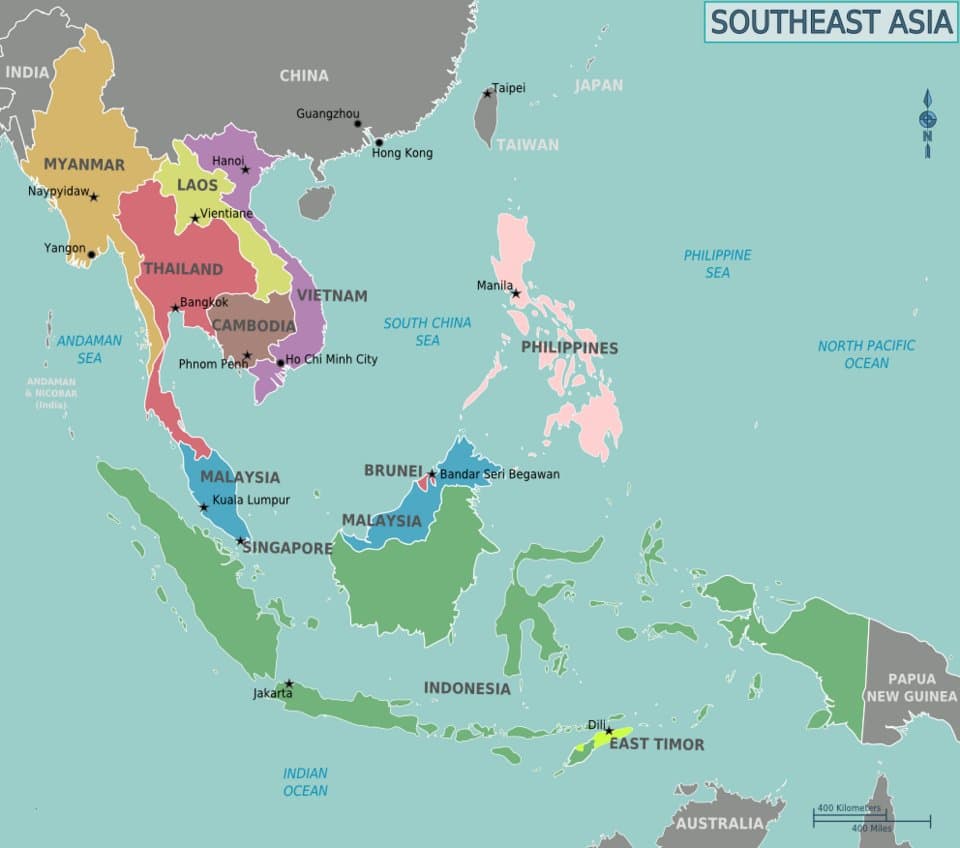
Rosy loaches originate from Shan State in eastern Myanmar, where they inhabit shallow, flooded grasslands fed by natural springs. The water is clear, warm, and typically no deeper than about 12 inches (30 cm), with abundant aquatic vegetation throughout.
This environment is fundamentally different from the rocky, fast-flowing mountain streams most loaches call home. Rosy loaches live among dense plant cover in gently flowing, sun-drenched shallows. They share these habitats with Danio margaritatus (the celestial pearl danio) – which tells you exactly what kind of environment to recreate, and explains why these two species pair so naturally in a planted nano tank.
When you set up a densely planted 10-gallon with gentle flow and fine sand, you’re essentially recreating their native habitat. That’s why they do so well in these setups – it’s not a compromise, it’s exactly where they came from.
Appearance & Identification
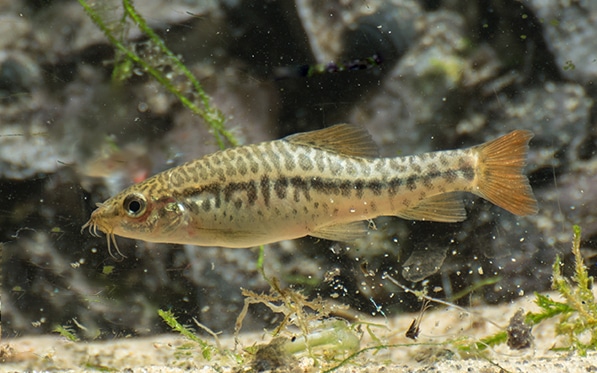
For such a tiny fish, the rosy loach has remarkable coloration. The body is elongated and slightly compressed, with a pointed snout and small barbels around the mouth characteristic of nemacheilid loaches. They have a subtle stripe along the midline and scattered dark markings – but the real visual impact is the sex-linked color difference, which is among the most dramatic of any nano fish in the hobby.
Males in breeding condition develop an intense orange-pink to rosy hue across their entire body. This coloration deepens when males compete or display for females, and it turns heads even among more expensive fish. Females have a more subdued brownish base with irregular dark spots – attractive in their own quieter way, but nothing like a conditioned male at full color.
One of the most entertaining aspects of this species is the constant social posturing – brief chases, fin flares, and lateral displays that are completely harmless but endlessly watchable. It’s cichlid behavior at 1/20th the scale.
Male vs. Female
| Feature | Male | Female |
|---|---|---|
| Body Color | Pale orange base, intensifying to rosy-pink when displaying | Brownish base with irregular dark spots |
| Size | Slightly smaller and slimmer | Noticeably larger and rounder-bellied |
| Body Shape | Slim, streamlined | Fuller, deeper body when carrying eggs |
| Behavior | More active, frequently displays and competes | Generally calmer, less showy |
Sexing rosy loaches is straightforward once they’re mature. Color alone makes males and females easy to tell apart. Males are the smaller, slimmer, brighter fish; females are larger, rounder, and muted. A mixed-sex group brings out the most natural behavior and the most vivid male coloration.
Average Size & Lifespan
Rosy loaches max out at 1 to 1.2 inches (2.5 to 3 cm), making them one of the smallest loach species in the hobby. Their size is central to their appeal for nano setups, but don’t mistake small for simple. These fish are active, always moving, and pack more personality per inch than almost anything else you can keep in a 10-gallon.
With proper care, a varied diet, and stable water conditions, rosy loaches live 5 to 7 years. That’s a meaningful commitment for a fish this small – longer than most nano species people casually add to community tanks.
Care Guide
Tank Size
A minimum of 10 gallons (38 liters) works for a proper group of rosy loaches. Some sources suggest 6 gallons, but the extra volume of a 10-gallon provides meaningfully more stable water parameters and enough footprint for 8 to 10 fish. Since these fish are most active along the bottom and lower mid-water, a longer, shallower aquarium is better than a tall one.
If you’re building a fuller nano community with multiple species, step up to 15 or 20 gallons (57 to 76 liters). More volume means more stability – and stability is what rosy loaches need most.
Water Parameters
| Parameter | Ideal Range |
|---|---|
| Temperature | 68 to 78°F (20 to 26°C) |
| pH | 6.5 to 7.5 |
| GH | 5 to 12 dGH |
| KH | 3 to 6 dKH |
| Ammonia | 0 ppm |
| Nitrite | 0 ppm |
| Nitrate | Under 30 ppm |
Consistency matters more than hitting an exact number within the range. Rosy loaches adapt well across these parameters but don’t tolerate sudden swings. Keep dissolved oxygen levels high, particularly at the warmer end of their range. Weekly water changes of 25 to 30% are the most reliable way to maintain the clean, stable conditions they need.
Filtration & Flow
Unlike most loaches, rosy loaches come from gently flowing water. A sponge filter or small hang-on-back filter is appropriate – avoid powerheads or anything creating strong current. The priority is clean water, not high flow. A sponge filter is ideal: gentle circulation, excellent biological filtration, and no intake suction risk for tiny fish. If you use a HOB or canister, fit the intake with a pre-filter sponge.
Lighting
Moderate lighting suits rosy loaches well, particularly in a planted setup. They come from sun-drenched shallows and aren’t bothered by bright tanks – just provide shaded areas through plant cover so fish can move in and out of light as they choose. A standard planted tank light on an 8 to 10-hour cycle is all you need.
Plants & Decorations
Dense planting isn’t optional – it replicates their natural habitat and brings out the best behavior. Fine-leaved plants like Java moss, Christmas moss, Pearlweed, and Rotala species provide cover, egg deposition sites, and surfaces for microorganisms to colonize. Floating plants help diffuse light and give fish a sense of security overhead.
A heavily planted tank is where rosy loaches feel genuinely at home. They’re more secure, display more vivid colors, and are far more likely to breed in dense vegetation than in an open setup.
Substrate
Fine sand is the right substrate. Rosy loaches use their barbels to sift through the bottom while foraging, and coarse gravel damages those barbels over time – impairing their ability to find food. Pool filter sand, play sand, or dedicated aquarium sand all work well. Aim for 1 to 2 inches (2.5 to 5 cm) depth.
Should You Get This Fish?
The rosy loach is excellent in the right setup – and genuinely unsuitable in the wrong one. Be honest with yourself before you buy.
Good Fit If:
- You have a mature planted tank (10+ gallons, running at least 2 months)
- You can commit to a group of 8 to 10 or more from day one
- You already feed live or frozen micro foods, or are willing to start
- You want a bottom-to-mid dweller that complements nano mid-water species
- You enjoy watching complex social behavior in small fish
- You have a planted shrimp tank and want a loach-type fish that won’t decimate your colony
Avoid If:
- Your tank is new or still cycling – rosy loaches don’t survive parameter instability
- You want to start with a pair and “see how it goes” – small groups don’t work for this species
- Your tank includes fish over 2 inches that may view a 1-inch fish as a snack
- You’re counting on them to control algae – they don’t
- You have a gravel substrate and aren’t willing to change it
- You want a fish that stays on the bottom and out of sight – rosy loaches are social and visible
Tank Mates
Size is the primary concern. Anything large enough to eat a 1-inch fish is off the table. Beyond that, avoid boisterous feeders that outcompete rosy loaches at mealtimes – these small fish need calm, similarly-sized tank mates to thrive.
Best Tank Mates
- Celestial pearl danios (Danio margaritatus) – natural habitat companion from the same Myanmar grasslands
- Chili rasboras and other Boraras species
- Ember tetras
- Dwarf rasboras (Boraras maculatus)
- Pygmy corydoras
- Neocaridina shrimp (cherry shrimp, blue dream, and similar)
- Small snails (nerite, ramshorn)
- Endler’s livebearers
Tank Mates to Avoid
- Any fish over 2 inches (5 cm) that might view them as food
- Bettas and cichlids – too aggressive for fish this small
- Fast, aggressive feeders that outcompete them at mealtimes
- Large loaches like clown or yoyo loaches – size mismatch and flow requirements differ
- Territorial bottom dwellers that claim the same zone
Food & Diet
Rosy loaches are omnivorous micropredators. In the wild, they feed on tiny invertebrates, insect larvae, and microorganisms. Quality dry foods are accepted, but an all-flake or all-pellet diet is not sufficient – color fades and condition declines without regular live and frozen foods.
The best foods for rosy loaches:
- Frozen: Baby brine shrimp, daphnia, cyclops, micro bloodworms
- Live: Baby brine shrimp, microworms, grindal worms, daphnia
- Dry: Crushed high-quality flakes, micro pellets, powdered foods designed for small fish
Feed small amounts two to three times daily. Their mouths are tiny – crush flakes or select nano-sized foods. In a well-planted, established tank, they graze on biofilm between feedings, which is part of why tank maturity matters for long-term condition.
Breeding & Reproduction
Breeding Difficulty
Rosy loaches are one of the more accessible loach species for home aquarium breeding. Successful spawning is well-documented among dedicated hobbyists. Not as straightforward as livebearers, but a keeper with the right setup can achieve consistent results.
Spawning Tank Setup
A mature, densely planted tank is the foundation. Fine-leaved plants like Java moss, Weeping moss, or spawning mops provide the egg deposition sites these fish prefer. The tank needs stable parameters and a healthy group of at least 8 to 10 individuals with both sexes represented.
Water Conditions for Breeding
No dramatic parameter manipulation required. Maintaining clean, stable conditions within their normal range – 68 to 78°F (20 to 26°C), pH 6.5 to 7.5 – is sufficient. Frequent feedings of live and frozen foods condition adults and trigger spawning readiness on their own.
Conditioning & Spawning
Males intensify their rosy coloration and become more active in displays as they approach spawning condition. Spawning occurs among fine-leaved plants, where females deposit small, slightly sticky eggs that adhere to plant surfaces. The eggs are tiny and very difficult to spot.
Egg & Fry Care
Remove adults after spawning – they eat the eggs. Eggs hatch in approximately 24 to 36 hours depending on temperature, with fry becoming free-swimming within another day or two. The fry are extremely small and require infusoria or powdered fry food for the first one to two weeks before graduating to freshly hatched baby brine shrimp. Growth is slow but steady, with sex-linked coloration appearing after a few months.
Common Health Issues
Ich (White Spot Disease)
Rosy loaches can contract ich like any freshwater fish – tiny white spots on body and fins. At this size, even a mild case is serious. Treat with half-dose medications appropriate for small or scaleless fish. Gradually raising temperature to 82°F (28°C) can accelerate the parasite’s life cycle, but watch dissolved oxygen levels carefully at higher temperatures.
Wasting Disease (Skinny Disease)
Shows as a sunken belly and progressive weight loss even in fish that appear to eat. Often linked to internal parasites or bacterial infection. Newly imported fish are particularly susceptible. Quarantine new arrivals, feed a varied protein-rich diet, and isolate any fish showing wasting symptoms for targeted treatment.
Stress-Related Issues
Rosy loaches kept in groups smaller than 6 develop chronic stress, suppressing immune function and opening the door to infections. You’ll see it as color loss, hiding, and reduced appetite. There’s no medication for inadequate social structure – the fix is group size. Maintain 8 to 10 individuals minimum and the stress-related health problems largely resolve themselves.
Common Mistakes to Avoid
- Keeping too few. 3 or 4 fish is not a group – it’s a stress experiment. You need 8 to 10 minimum to see natural behavior and prevent chronic bullying of subdominant fish.
- Using gravel substrate. Damages barbels, impairs foraging. Fine sand only.
- Adding them to a new tank. They need a mature, biologically stable setup. A freshly cycled tank will lose them.
- Feeding only dry food. They’re micropredators. Live and frozen foods are part of the baseline diet, not occasional treats.
- Keeping them with large fish. Anything over 2 inches may eat them or outcompete them at feeding time.
- Skimping on plants. Dense planting is what makes them secure enough to display natural behavior. A sparse or bare tank produces hiding, stressed fish that never show their best color.
Where to Buy
Rosy loaches are becoming more available as nano fishkeeping grows in popularity, but they’re still inconsistently stocked at local fish stores. Your best bet is ordering from online vendors who specialize in quality freshwater fish and have experience shipping small, delicate species safely:
- Flip Aquatics – Excellent source for nano fish; experienced with packaging small, delicate species for transit
- Dan’s Fish – Reliable selection of uncommon loaches and nano species with live arrival guarantees
When ordering, buy 8 to 10 at once. Don’t try to save money by buying 4 with plans to add more later – the stress from an undersized group will cost you more in losses. Look for active fish with rounded bellies in seller photos. Thin or lethargic fish are a red flag; these tiny loaches are very difficult to bring back once they’ve declined.
Frequently Asked Questions
Are rosy loaches good for nano tanks?
They’re one of the best nano tank choices available. Small size, diurnal activity, complex social behavior, and remarkable male coloration make them ideal for planted tanks of 10 gallons or more. They occupy bottom to lower mid-water, which pairs perfectly with top-dwelling and mid-water nano species.
Can I keep rosy loaches with shrimp?
Yes – rosy loaches are one of the few loach-type fish that work in shrimp tanks. They’re too small to threaten adult Neocaridina shrimp and generally ignore them. They may eat newborn shrimplets, but in a planted tank enough will survive to maintain the colony.
How many rosy loaches should I keep?
At least 8 to 10. In smaller groups, dominant fish fixate on specific individuals and stress them chronically. A larger group spreads the social pressure, allows the natural hierarchy to form, and brings out the male coloration and competitive displays that make this species worth keeping. This is not negotiable.
Do rosy loaches eat algae?
They graze on biofilm and microorganisms, but they’re not algae eaters. Don’t expect meaningful algae control from rosy loaches. For a nano tank, nerite snails or Amano shrimp are the better tools for that job.
Are rosy loaches the same as celestial pearl danios?
No – completely different families. Celestial pearl danios are cyprinids; rosy loaches are nemacheilid loaches. They share the same Myanmar grassland habitat and make excellent tank mates, but they are not related and have different behavior (CPDs are mid-water; rosy loaches occupy bottom to lower mid).
Why do my rosy loaches keep chasing each other?
Normal social behavior. Rosy loaches have a complex hierarchy and constantly jockey for position within the group. Males chase and display at each other regularly. As long as no fish are being physically injured or driven into permanent hiding, this is healthy – it’s exactly what you want to see in a proper-sized group.
How the Rosy Loach Compares to Similar Species
Rosy Loach vs. Kuhli Loach
The kuhli loach is the most common “small loach” recommendation, but it behaves very differently. Kuhli loaches are secretive, primarily nocturnal, and rarely visible during daylight – you’ll know they’re in there, but you won’t see much of them. Rosy loaches are the opposite: diurnal, visible, and actively social during the day. If you want a loach you can actually watch, choose the rosy loach. If you want a substrate-lurking, snake-like fish that cleans up after dark, the kuhli loach is your pick. They can be kept together in a larger nano setup, but expect completely different behavior from each species.
Rosy Loach vs. Dwarf Chain Loach
The Dwarf Chain Loach is bigger, bolder, and more active. It thrives in larger community tanks (20+ gallons) with moderate flow and does real work on pest snail populations. The rosy loach is smaller and specifically suited to planted nano setups of 10 gallons. If you want a loach for a general community tank, the Dwarf Chain Loach is the better pick. For a planted nano where size and gentleness matter, the rosy loach wins.
Rosy Loach vs. Emerald Dwarf Rasbora
These two are completely unrelated but occupy similar territory in the nano tank world. Emerald dwarf rasboras are mid-water schoolers with striking green and red coloration; rosy loaches are bottom-to-lower-mid dwellers with that distinctive male pink flush. Both need groups, both need calm tank mates, and they can be kept together – covering different tank levels for a complete nano community. Choose based on tank level: mid-water goes to the emerald dwarf rasbora, bottom goes to the rosy loach.
What It’s Actually Like Living With Rosy Loach
Rosy loaches add a layer of activity to nano tanks that shrimp and snails simply can’t provide. They dart through the lower third of the tank, briefly resting on substrate or plant surfaces before zipping to a new position. The movement is constant but not frantic – it reads more like purposeful exploration than nervous energy.
Male coloration is the reward for good care. In a mature tank with clean water and a varied diet, males develop that rosy pink flush that deepens during displays. It’s subtle in photos and genuinely impressive in person – the kind of color that makes visitors stop and ask what that tiny fish is.
They coexist with shrimp, which is not something you can say about most loach species. Rosy loaches are simply too small to threaten adult cherry shrimp, and they generally ignore them. This makes them one of very few loach-type fish that actually works in a planted shrimp tank without constant worry.
Closing Thoughts
The rosy loach is one of the hobby’s genuinely underrated fish. It’s the only loach species that truly fits a 10-gallon planted tank, it stays visible during the day, and the male coloration – in a properly conditioned group – surprises people every time. If you’re building a planted nano and want a bottom-to-mid dweller that complements your mid-water schoolers, this is the fish.
Get the group size right, give them a mature planted tank with fine sand, feed varied foods, and they’ll reward you with years of complex social behavior and color that punches well above its size class. The requirements are real, but none of them are difficult. Get the setup right and there’s very little that can go wrong.
Recommended Video
References
- Petruichthys sp. ‘rosy’ Profile – Seriously Fish
- Rosy Loach Care Guide – Aquadiction
- Rosy Loach Ultimate Care Guide – Fish Laboratory
- Breeding Rosy Loaches – Loaches Online Forum
- About the Author
- Latest Posts

I’m Mark Valderrama, founder of Aquarium Store Depot and a fishkeeper with over 25 years of hands-on experience. I started in the hobby at age 11, worked at local fish stores, and have kept freshwater tanks, ponds, and reef tanks ever since. I’ve been featured in two best-selling aquarium books on Amazon and built this site to share practical, experience-based fish keeping knowledge.
Leave a Reply