
Last Updated: June 25, 2026
Thank you for visiting! By the way… any links on this page that lead to products on Amazon and other stores/partners are affiliate links Aquarium Store Depot earns a commission if you make a purchase.
Table of Contents
- What Care Guides Get Wrong
- The Reality of Keeping Dwarf Chain Loach
- Key Takeaways
- Species Overview
- Classification
- Origin & Natural Habitat
- Appearance & Identification
- Average Size & Lifespan
- Care Guide
- Is It Right for You?
- Tank Mates
- Food & Diet
- Breeding & Reproduction
- Common Health Issues
- Common Mistakes to Avoid
- Where to Buy
- FAQ
- Species Comparison
- Closing Thoughts
- Recommended Video
- References
The dwarf chain loach breaks the rules that apply to almost every other loach in the hobby. It swims in the middle of the tank, not just the bottom. It stays small, topping out around 2 to 2.5 inches. It is active during the day, not just at dusk. And it schools tighter than most tetras. If you want a loach that actually shows itself, this is the one.
But it is still a loach. Medication sensitivity applies. Sand substrate matters. And group size is critical. Keep fewer than six and you lose the schooling behavior that makes this species special. This guide covers what it takes to keep dwarf chain loaches the right way, because their small size does not mean small requirements.
The dwarf chain loach is the only loach that will make you forget it is a loach. Do not let that fool you into treating it like a tetra.
The Reality of Keeping Dwarf Chain Loach
The dwarf chain loach is one of the few loaches that swims actively in mid-water rather than staying on the substrate. This surprises people who expect it to behave like a typical bottom dweller. It darts through the water column, chases tankmates playfully, and often hovers mid-tank between bursts of activity.
At 2 to 2.5 inches, it is small enough for tanks starting at 20 gallons. But do not let the size fool you. Dwarf chain loaches are bold, sometimes pushy, and will harass slow-moving fish if they do not have enough of their own kind to interact with. A group of six or more keeps the social dynamics internal.
They are scaleless and every medication protocol requires half-dosing. This is not optional. Full-dose ich treatments that are routine for tetras and barbs will kill dwarf chain loaches within days.
Biggest Mistake New Owners Make
Keeping three or fewer and watching them harass other fish. Dwarf chain loaches redirect their social energy onto tankmates when the group is too small. Six is the minimum, eight is better. In a proper group, the chasing stays among the loaches and leaves everything else alone.
Dwarf chain loaches (Ambastaia sidthimunki) are small, active loaches with distinctive chain-like markings. They are social and need to be kept in groups – not suitable for solitary keeping like larger loach species.
Expert Take (Mark Valderrama, AquariumStoreDepot)
The dwarf chain loach is the best small loach for planted community tanks. It stays under 2.5 inches, it swims at all tank levels, and its chain-link pattern is distinctive without being flashy. A group of eight in a 20-gallon long with fine sand, driftwood, and moderate planting is a setup that works every time. Just respect the half-dose medication rule and keep the group size adequate.
Key Takeaways
- Social fish that need a group: Keep at least 6, ideally 10 or more. Solitary Dwarf Chain Loaches become stressed and can turn aggressive toward similar-looking tank mates.
- Surprisingly active midwater swimmers: Unlike most bottom-dwelling loaches, these fish shoal in midwater and are constantly on the move, making them a fantastic display species.
- Excellent snail control: Dwarf Chain Loaches will eagerly eat pest snails, making them a natural solution for planted tank keepers dealing with snail outbreaks.
- Sensitive to water quality: They need a mature, well-filtered aquarium with pristine water conditions. Never add them to a newly cycled tank.
- Peaceful community fish: They get along well with most similarly sized, non-aggressive species but will snack on baby shrimp.
Species Overview
| Property | Details |
|---|---|
| Scientific Name | Ambastaia sidthimunki |
| Common Names | Dwarf Chain Loach, Dwarf Botia, Chipmunk Botia, Dwarf Loach, Sid |
| Family | Botiidae |
| Origin | Thailand (Mae Klong basin) |
| Care Level | Intermediate |
| Temperament | Peaceful, social |
| Diet | Omnivore |
| Tank Level | Bottom to midwater |
| Maximum Size | 2.5 inches (6 cm) |
| Minimum Tank Size | 30 gallons (115 liters) |
| Temperature | 75 – 82°F (24 – 28°C) |
| pH | 6.0 – 7.5 |
| Hardness | 5 – 12 dGH |
| Lifespan | 8 – 12 years |
| Breeding | Egg scatterer |
| Breeding Difficulty | Extremely difficult |
| Compatibility | Peaceful community tanks |
| OK for Planted Tanks? | Yes |
Classification
| Taxonomic Rank | Classification |
|---|---|
| Order | Cypriniformes |
| Family | Botiidae |
| Genus | Ambastaia (Kottelat, 2012) |
| Species | A. Sidthimunki (Klausewitz, 1959) |
The taxonomic history of this species has been a bit of a rollercoaster. It was originally described as Botia sidthimunki by Klausewitz in 1959, then moved to Yasuhikotakia sidthimunki, before being placed in the current genus Ambastaia by Kottelat in 2012. Its only congener is A. Nigrolineata, and the two are sometimes confused with each other. Juveniles of A. Sidthimunki typically have dotted patterns, while A. Nigrolineata displays horizontal lines.
Origin & Natural Habitat
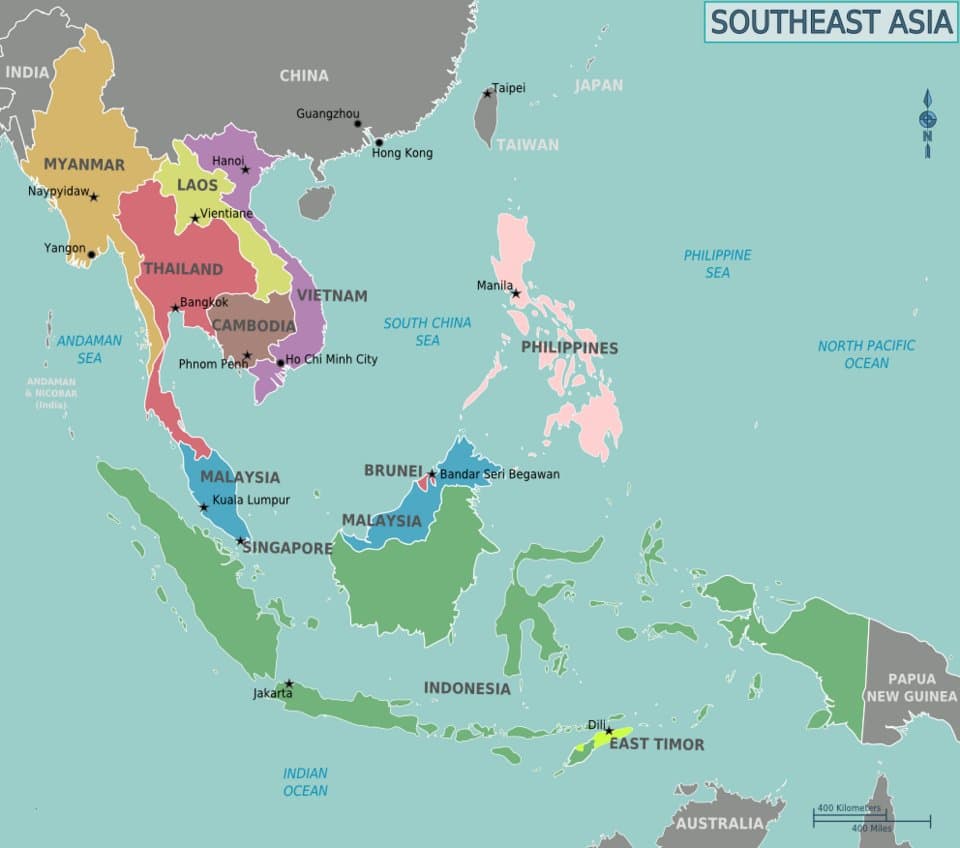
The Dwarf Chain Loach is native to Thailand, specifically the Mae Klong basin including the Khwae Noi River, and has also been recorded in the Ataran River along the Thai-Myanmar border. Historical records from the Mekong and Chao Phraya basins are now believed to be misidentifications of the closely related A. Nigrolineata.
In the wild, these loaches inhabit clear, well-oxygenated streams and tributaries with moderate flow. They’re typically found over sandy or rocky substrates among submerged roots, aquatic plants, and fallen leaves. This species is classified as critically endangered in Thailand due to overfishing for the aquarium trade and habitat loss from dam construction and agricultural runoff. Fortunately, commercial breeding programs in Southeast Asia have reduced pressure on wild populations, and virtually all specimens sold in the hobby today are captive-bred.
Appearance & Identification
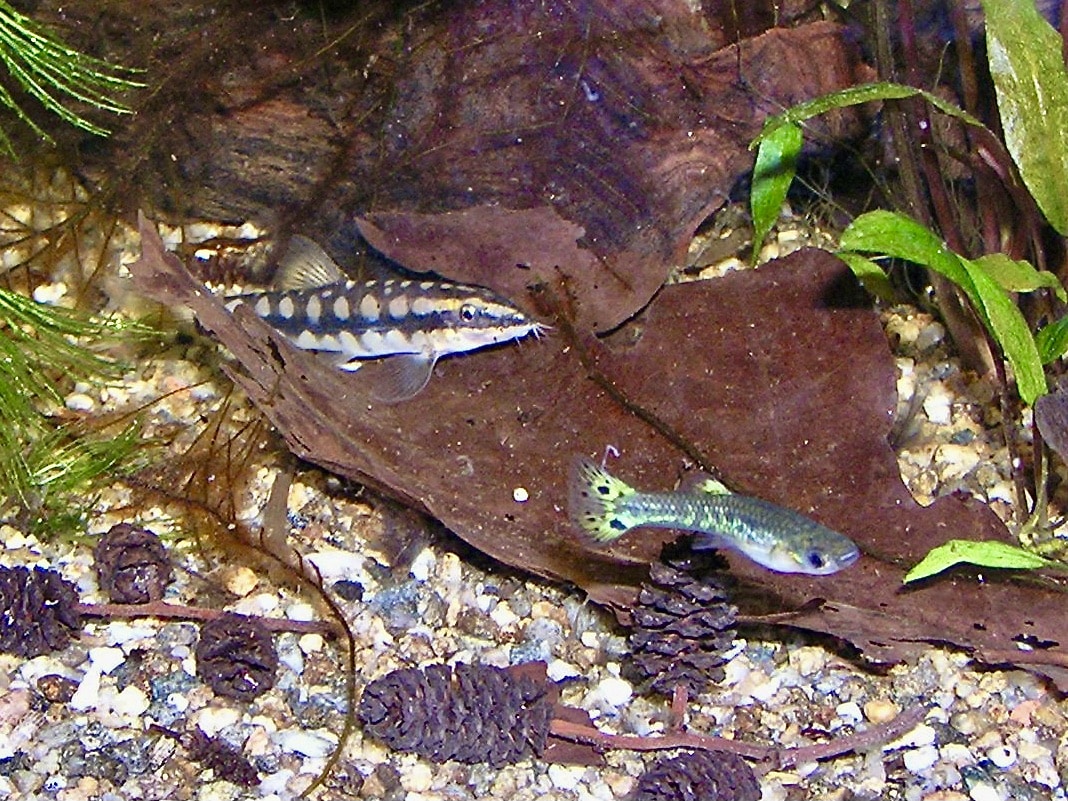
The Dwarf Chain Loach has a torpedo-shaped body with a golden to silvery base color overlaid with bold, dark brown to black markings. These markings create a distinctive chain-link or ladder pattern along the upper half of the body, which is where the common name comes from. The pattern varies between individuals; some display more square-shaped markings while others lean toward circular spots. A dark lateral stripe runs along each flank, connected by vertical bars to a dorsal stripe running along the back.
They have a slightly downturned mouth equipped with four pairs of barbels, which they use to sift through substrate in search of food. Like other botiids, they possess a suborbital spine beneath each eye that can be erected as a defense mechanism. Be cautious when netting these fish, as the spine can become entangled in mesh.
Male vs. Female
| Feature | Male | Female |
|---|---|---|
| Body Shape | Slimmer, more streamlined | Fuller, rounder belly (especially when mature) |
| Snout | Slightly more elongated | Shorter, more rounded |
| Lips | Noticeably fleshier and thicker | Less pronounced |
| Size | Slightly smaller | Slightly larger at maturity |
Sexing Dwarf Chain Loaches is difficult in juvenile fish. The differences become more apparent as they reach sexual maturity, with females developing a noticeably fuller body and males showing the distinctive fleshy lips.
Average Size & Lifespan
Dwarf Chain Loaches typically reach about 2 inches (5 cm) in home aquariums, with a maximum recorded size of 2.5 inches (6 cm). When you pick them up from the store, most juveniles will be around 1 inch (2.5 cm) or smaller. They’re one of the smallest members of the Botiidae family, which is a big part of their appeal for hobbyists who want loach behavior in a smaller tank.
As for lifespan, expect 8 to 12 years with good care. There are reports of individuals living as long as 15 years, though that’s on the exceptional end. The keys to longevity are consistent water quality, a varied diet, and keeping them in a proper group so they’re socially comfortable. A stressed, solitary Dwarf Chain Loach rarely reaches its full lifespan potential.
Care Guide
Tank Size
A minimum of 30 gallons (115 liters) is recommended for a group of 6 Dwarf Chain Loaches. If you want to keep a larger group of 10 or more (which they genuinely appreciate), consider stepping up to a 40-gallon (150-liter) tank or larger. These fish are incredibly active swimmers and need the horizontal swimming space. A longer tank footprint is better than a tall one.
I wouldn’t recommend trying to squeeze them into anything smaller than 30 gallons. I know they’re tiny fish, but their activity level is off the charts compared to most loaches, and they need room to swim, explore, and establish their social hierarchy.
Water Parameters
| Parameter | Recommended Range |
|---|---|
| Temperature | 75 – 82°F (24 – 28°C) |
| pH | 6.0 – 7.5 |
| General Hardness (GH) | 5 – 12 dGH |
| KH | 3 – 8 dKH |
| Ammonia | 0 ppm |
| Nitrite | 0 ppm |
| Nitrate | < 20 ppm |
The most important thing to understand about Dwarf Chain Loach water requirements is that stability matters more than hitting a perfect number. These fish are sensitive to fluctuations and do not tolerate accumulated organic waste. They should only be added to a fully cycled, mature aquarium. Weekly water changes of 30 to 50 percent are strongly recommended.
Filtration & Water Flow
A quality canister filter or hang-on-back filter that turns over the tank volume at least 4 times per hour is ideal. Dwarf Chain Loaches come from well-oxygenated streams, so they appreciate moderate water flow. An additional powerhead or air stone can help boost oxygenation if needed. These fish are intolerant of poor water quality, so don’t skimp on filtration. Sponge prefilters on intake tubes are a smart addition since juveniles are small enough to get sucked in.
Lighting
Standard aquarium lighting works fine. Dwarf Chain Loaches don’t have specific lighting requirements, but they do appreciate shaded areas created by floating plants or driftwood overhangs. They’re not particularly light-shy and will be active under normal lighting conditions, especially once they’re settled in and kept in a proper group.
Plants & Decorations
A well-decorated tank is essential for Dwarf Chain Loaches. These fish are naturally inquisitive and love exploring their environment. Provide plenty of hiding spots using driftwood, smooth rocks, caves, and even PVC pipe sections or clay pots. They enjoy squeezing into tight gaps and crevices, so make sure there are no sharp edges that could injure them and seal any openings small enough to trap a fish.
They do well in planted tanks and won’t typically damage aquatic plants. Hardy species like Java Fern, Anubias, and Vallisneria are all good choices. Floating plants can help diffuse light and make them feel more secure. One important note: a tightly-fitting lid is absolutely necessary. Dwarf Chain Loaches are known jumpers, and an uncovered tank is an invitation for disaster.
Substrate
Sand or very fine, smooth gravel is the only appropriate substrate for Dwarf Chain Loaches. They use their sensitive barbels to sift through the substrate searching for food, and coarse or sharp-edged gravel can damage these delicate structures. A soft sand substrate also allows them to exhibit their natural foraging behavior, which is fun to watch. Avoid anything rough or angular.
Is the Dwarf Chain Loach Right for You?
Before you buy, run through this honest checklist. The Dwarf Chain Loach is a great fish for the right keeper, but it is not for everyone.
- You want a small, active loach that uses the entire tank rather than just hiding on the bottom
- You can commit to a group of 6 or more. Their social dynamics are half the fun
- You have a 20-gallon or larger community tank with peaceful to moderately active tank mates
- You enjoy watching complex social hierarchies and playful chasing behavior
- Your tank has a mix of hiding spots and open swimming space
- You want a loach that actually helps with pest snails without being aggressive toward fish
Tank Mates
Dwarf Chain Loaches are peaceful community fish that get along well with a wide range of similarly sized species. Their active, mid-to-bottom swimming style makes them a fantastic addition to a community tank because they occupy space that many fish don’t. Just they do eat small invertebrates in the wild.
Best Tank Mates
- Tetras: Neon Tetras, Cardinal Tetras, Rummy Nose Tetras, and other small to medium tetras
- Rasboras: Harlequin Rasboras, Chili Rasboras, Lambchop Rasboras
- Corydoras Catfish: Panda Corys, Sterbai Corys, Bronze Corys
- Livebearers: Platies, Endler’s Livebearers
- Other Peaceful Bottom Dwellers: Kuhli Loaches, Otocinclus Catfish
- Small to Medium Plecos: Bristlenose Pleco, Clown Pleco
- Gouramis: Honey Gouramis, Pearl Gouramis
Interestingly, adding dither fish like rasboras or tetras can actually encourage Dwarf Chain Loaches to come out and swim more openly. When they see other fish confidently moving around the tank, they feel safer and will spend more time in the open.
Tank Mates to Avoid
- Large, aggressive cichlids: Oscars, Jack Dempseys, or large Central American cichlids will bully or eat them
- Highly territorial fish: Red-Tailed Sharks or Rainbow Sharks in smaller tanks
- Cherry Shrimp and small invertebrates: Dwarf Chain Loaches will eat baby shrimp and may harass adult shrimp. They’re not the best choice for a dedicated shrimp tank.
- Very large or boisterous fish: Anything that could outcompete them for food or stress them with aggressive behavior
- Slow-moving, long-finned fish: While not fin nippers by nature, keeping them with very slow bettas or fancy guppies will lead to issues in smaller tanks
Food & Diet
Dwarf Chain Loaches are omnivores with a preference for meaty foods. A varied diet is the key to keeping them healthy, colorful, and active. Here’s what to feed them:
- Staple diet: High-quality sinking pellets or wafers designed for bottom feeders. Make sure the food is small enough to fit in their tiny mouths.
- Frozen foods: Bloodworms, brine shrimp, daphnia, and cyclops. These are eagerly accepted and provide excellent nutrition.
- Live foods: Live blackworms, brine shrimp, and daphnia are excellent for conditioning and bringing out their best colors.
- Gel foods: Repashy gel food is a great option that sticks to surfaces and lets them graze.
- Snails: These loaches will happily eat pest snails like bladder snails, ramshorn snails, and Malaysian trumpet snails. Their pointed snouts are well-suited for extracting snails from their shells.
Feed small amounts two to three times daily rather than one large feeding. Dwarf Chain Loaches have small stomachs and do better with frequent, smaller meals. Since they’re active throughout the day, they’ll forage almost constantly between feedings.
Breeding & Reproduction
Breeding Difficulty
Let me be upfront: breeding Dwarf Chain Loaches in a home aquarium is extremely difficult. Commercially, they’re bred using hormone injections to induce spawning, and private hobbyist breeding success is essentially unheard of. This is likely because they’re seasonal, migratory spawners in the wild, meaning they travel to specific areas with particular conditions to breed, a scenario that’s nearly impossible to replicate in an aquarium.
There is one well-documented case of a hobbyist named Mark Duffill who achieved spawning in 2007 from a large group of 36 fish. His experience offers some clues about what might trigger breeding behavior.
Spawning Tank Setup
Based on the limited breeding reports available, a spawning setup should include a large aquarium (55 gallons / 210 liters or more) with plenty of driftwood, live plants, and piles of smooth cobbles where eggs and fry can hide. Dense plant cover is critical because adults do not provide parental care and will eat their own eggs and fry if given the chance.
Water Conditions for Breeding
The one documented hobbyist spawning appeared to be triggered by a series of cool water changes following a period of elevated summer temperatures. During the water changes, Indian almond leaves were added to the tank, which softened the water and dropped the pH from around 7.6 to 6.8. This simulated the transition from dry season to wet season conditions. Aim for a temperature around 79 – 84°F (26 – 29°C) during the spawning phase.
Conditioning & Spawning
If you’re serious about attempting a spawn, start with a large group of at least 20 to 30 fish. Condition them with a varied, high-quality diet that rotates daily. Think frozen bloodworms, brine shrimp, daphnia, spirulina flakes, and other protein-rich foods. Adding dither fish like rasboras may help the loaches feel secure enough to exhibit spawning behavior. Spawning has been described as the entire group swimming together in a tight shoal, darting in and out of hardscape features in an excited manner.
Egg & Fry Care
Dwarf Chain Loaches are egg scatterers that offer no parental care. Fertilized eggs hatch in approximately 14 to 15 hours at temperatures between 79 – 84°F (26 – 29°C). Newly hatched larvae are tiny, approximately 0.1 inches (2.4 mm), and will need microscopic foods like infusoria or commercially available liquid fry food before graduating to newly hatched baby brine shrimp. Dense plant cover and crevices in the hardscape provide some natural protection from predation by adults.
Common Health Issues
Dwarf Chain Loaches are reasonably hardy once established in a mature aquarium, but like all botiid loaches, they have some specific health vulnerabilities to be aware of. An important note: loaches are sensitive to many common fish medications, especially those containing copper. Always check that any treatment you use is labeled as safe for scaleless or scale-reduced fish.
Ich (White Spot Disease)
Ich is one of the most common diseases in freshwater fish, and Dwarf Chain Loaches are susceptible, particularly when stressed by poor water quality or sudden temperature swings. Look for tiny white spots covering the body and fins. Raising the temperature gradually to 86°F (30°C) can help speed up the parasite’s life cycle. Use ich medications at half the recommended dose since loaches are sensitive to many treatments.
Skinny Disease (Chronic Wasting)
This is a particular concern with botiid loaches, especially newly imported specimens. Skinny disease is actually a symptom rather than a single disease. It’s typically caused by internal parasitic nematodes that leach nutrients from the fish, causing progressive weight loss even when the fish is eating. You may notice a “knifeback” appearance where the muscles waste away. Treatment involves anti-parasitic medications such as Praziquantel (found in Hikari PraziPro) or Levamisole. Quarantining new arrivals and prophylactically treating for internal parasites is a smart preventive step.
Skin & Gill Flukes
Flukes are parasitic flatworms that attach to the skin or gills. Symptoms include excessive mucus production, flashing (rubbing against objects), and rapid gill movement. Praziquantel is the treatment of choice for flukes and is well-tolerated by loaches.
Bacterial Infections
Poor water quality can lead to bacterial infections that manifest as fin rot, redness on the body, or lethargy. The best prevention is maintaining clean water with regular water changes. If you notice symptoms, address water quality first, then treat with a broad-spectrum antibiotic safe for scaleless fish if necessary.
Common Mistakes to Avoid
- Keeping them alone or in pairs: This is the single biggest mistake. Dwarf Chain Loaches are social fish that need a group of at least 6. A solitary loach will become stressed, withdrawn, or aggressive toward other fish.
- Adding them to a new tank: These fish need a mature, fully cycled aquarium. They’re extremely sensitive to ammonia, nitrite, and organic waste accumulation. Wait at least 3 months after cycling before adding them.
- Using rough substrate: Coarse gravel damages their barbels, which are critical sensory organs for feeding. Always use sand or very fine, smooth gravel.
- Skipping the lid: Dwarf Chain Loaches are jumpers. A tight-fitting lid with no gaps is essential.
- Neglecting water changes: These fish need consistent, weekly water changes of 30 to 50 percent. Letting maintenance slide will quickly lead to health problems.
- Medicating at full dose: Like most loaches, they’re sensitive to medications, especially copper-based treatments. Always use half doses and monitor closely.
- Keeping them with shrimp: If you’re running a shrimp breeding colony, these loaches will eat the babies. They’re not a good fit for dedicated shrimp setups.
Where to Buy
Dwarf Chain Loaches can be tricky to find at local fish stores since they’re not as commonly stocked as some other loach species. Your best bet for healthy, well-conditioned specimens is to order from reputable online retailers:
- Flip Aquatics. Known for their excellent livestock quality and careful shipping practices. A great place to look for Dwarf Chain Loaches.
- Dan’s Fish. Another reliable source for healthy loaches with a strong reputation among hobbyists.
When purchasing, try to buy a group of 6 or more at once. This lets them establish their social hierarchy from the start and reduces stress. Look for specimens that are active, have clear eyes, and show no signs of wasting or fin damage. Quarantine new arrivals for at least 2 weeks and consider a preventive deworming treatment before adding them to your display tank.
FAQ
How many Dwarf Chain Loaches should I keep together?
A minimum of 6, but 10 or more is even better. These are highly social fish that form complex hierarchies. Keeping fewer than 6 can lead to stress, hiding behavior, and aggression toward tank mates. In larger groups, they’re far more confident, active, and entertaining to watch.
Will Dwarf Chain Loaches eat snails?
Yes, they’re excellent snail eaters. They’ll readily consume pest snails like bladder snails, ramshorn snails, and small Malaysian trumpet snails. Their pointed snouts are specially adapted for extracting snails from their shells. If you’re dealing with a snail infestation in a planted tank, a group of Dwarf Chain Loaches is one of the most effective and entertaining natural solutions.
Can Dwarf Chain Loaches live with shrimp?
It depends on your goals. They will eat baby shrimp and may harass smaller adult shrimp like Cherry Shrimp. If you’re running a serious shrimp breeding colony, Dwarf Chain Loaches are not compatible. However, in a larger, heavily planted tank, some adult Amano Shrimp may coexist since they’re larger and faster. Just don’t expect the shrimp colony to grow.
Are Dwarf Chain Loaches good for beginners?
They’re best suited for intermediate hobbyists. While they’re not extremely demanding, they do require a mature tank, consistent water quality, and need to be kept in groups. A beginner who has a well-established aquarium and is diligent about maintenance can keep them successfully, but they’re not a great first fish.
Do Dwarf Chain Loaches dig up plants?
Generally, no. They’re considered safe for planted tanks. They may sift through sand substrate, but they’re too small to uproot most established plants. Hardy species like Java Fern, Anubias, and Vallisneria do particularly well with them. Plants with delicate root systems might occasionally get disturbed, but major uprooting is rare.
Why are my Dwarf Chain Loaches hiding all the time?
This usually means one of two things: either you don’t have enough of them, or the tank lacks dither fish. Dwarf Chain Loaches kept in groups of fewer than 6 are shy and reclusive. Adding more loaches or introducing peaceful, active schooling fish like rasboras or tetras can dramatically change their behavior. A well-planted tank with plenty of hiding spots paradoxically makes them feel secure enough to come out more often.
How the Dwarf Chain Loach Compares to Similar Species
Dwarf Chain Loach vs. Skunk Loach
The Skunk Loach is more aggressive, grows larger, and needs a bigger tank. The Dwarf Chain Loach is the better community fish by a wide margin. Both eat snails, but the Dwarf Chain Loach does it without terrorizing your other fish. For most community setups, the Dwarf Chain Loach is the smarter pick.
Dwarf Chain Loach vs. Rosy Loach
The Rosy Loach is even smaller and more peaceful, but it lacks the active, playful personality of the Dwarf Chain Loach. If you want a nano loach that stays tiny and quiet, go Rosy. If you want a small loach with big personality and constant activity, go Dwarf Chain.
What It Is Actually Like Living With Dwarf Chain Loach
Dwarf chain loaches turn a quiet community tank into an active one. They are always doing something. Chasing each other through plant stems. Perching on leaves. Darting to the surface. They bring energy to a tank in a way that most small bottom dwellers do not.
The social hierarchy is visible. There is a dominant fish that gets first access to food and the best resting spots. The rest sort themselves out beneath. Occasionally the hierarchy gets challenged, which looks like aggressive chasing but resolves quickly without damage.
They click. Like other loaches, dwarf chain loaches produce audible clicking sounds during feeding and social interactions. In a quiet room, you can hear it clearly. It adds an unexpected auditory dimension to the tank.
Closing Thoughts
The Dwarf Chain Loach is one of those fish that truly has to be seen in person to be appreciated. No description fully captures what it’s like to watch a group of 10 or 12 of these little loaches tearing around a planted tank in formation, diving into crevices, hovering in midwater, and performing their famous “loach dance.” In my 25+ years in the hobby, few fish have matched the sheer entertainment value of a well-kept group of these guys.
They’re not the easiest fish to keep. They need a mature tank, clean water, and a proper group size. But the effort is absolutely worth it. If you can commit to those basics, you’ll be rewarded with one of the most engaging and characterful freshwater fish available. Plus, they’ll help keep your pest snail population in check, which is a nice bonus for any planted tank keeper.
Recommended Video
References
- Seriously Fish. Ambastaia sidthimunki Species Profile
- FishBase. Ambastaia sidthimunki, Dwarf Botia
- Seriously Fish. Breeding Yasuhikotakia sidthimunki. The Dwarf Chain Loach
- Practical Fishkeeping. Dwarf Chain Loach, Yasuhikotakia sidthimunki
- About the Author
- Latest Posts

I’m Mark Valderrama, founder of Aquarium Store Depot and a fishkeeper with over 25 years of hands-on experience. I started in the hobby at age 11, worked at local fish stores, and have kept freshwater tanks, ponds, and reef tanks ever since. I’ve been featured in two best-selling aquarium books on Amazon and built this site to share practical, experience-based fish keeping knowledge.
Leave a Reply