
Last Updated: June 25, 2026
Thank you for visiting! By the way… any links on this page that lead to products on Amazon and other stores/partners are affiliate links Aquarium Store Depot earns a commission if you make a purchase.
Skunk Loach Care Guide: The Feisty Bottom Dweller You Need to Plan For
Table of Contents
- What Care Guides Get Wrong
- The Reality of Keeping Skunk Loach
- Key Takeaways
- Species Overview
- Classification
- Origin & Natural Habitat
- Appearance & Identification
- Average Size & Lifespan
- Care Guide
- Is It Right for You?
- Tank Mates
- Food & Diet
- Breeding & Reproduction
- Common Health Issues
- Common Mistakes to Avoid
- Where to Buy
- FAQ
- Species Comparison
- Closing Thoughts
- Recommended Video
- References
The skunk loach is the feisty little snail hunter that most people buy for pest control and then discover has a personality bigger than its body. It grows to about 4 inches, needs a group of at least five, and will absolutely harass slower bottom dwellers if it gets bored or feels outnumbered. It is not a peaceful community fish in the way most care guides describe it.
But in the right setup, with proper group size and enough territory, skunk loaches are efficient, active, and genuinely entertaining. They clear snail infestations faster than any chemical treatment, and they do it with a level of focus that borders on vendetta. This guide covers what it actually takes to keep them, because “snail eater” is the least interesting thing about this fish.
Skunk loaches do not just eat snails. They hunt them with purpose. And when the snails are gone, they will find something else to bother.
The Reality of Keeping Skunk Loach
The skunk loach has more attitude per inch than almost any other bottom dweller. It is territorial, opinionated about food, and will chase fish away from its preferred hiding spots. This is not aggression in the traditional sense. It is personality. A lot of personality in a 4-inch package.
Like all loaches, it is scaleless and medication-sensitive. Half-dose everything. No exceptions. The skunk loach is also one of the more disease-resistant loaches when water quality is maintained, so prevention is more effective than treatment with this species.
They are excellent snail hunters. If you have a pest snail problem and want a loach that will actually deal with it while adding personality to the tank, the skunk loach delivers. It hunts snails with visible enthusiasm.
Biggest Mistake New Owners Make
Expecting it to be peaceful. The skunk loach is not aggressive, but it is assertive. It will claim territory, defend feeding spots, and chase slow-moving bottom dwellers away from its preferred areas. Tank mates need to be able to handle a fish that has opinions.
Skunk loaches (Yasuhikotakia morleti) are small but aggressive loaches that can harass and injure peaceful community fish. They need confident, similarly sized tank mates and are not suitable for community tanks with shy species.
Expert Take (Mark Valderrama, AquariumStoreDepot)
The skunk loach is the loach with the most personality per inch. A group of four in a 30-gallon tank with sand, caves, and driftwood creates a micro-drama that you will watch more than your TV. They argue over hiding spots, compete for food with theatrical intensity, and then pile into the same cave to sleep. Keep them in a group to spread the attitude across multiple fish.
Key Takeaways
- Group fish: Skunk Loaches must be kept in groups of 6 or more. Smaller groups or solitary individuals become stressed and significantly more aggressive toward tank mates.
- More aggressive than most loaches: This species is a known fin nipper and will harass slow-moving, long-finned, or timid fish. Tank mate selection is critical.
- Subocular spine: Each Skunk Loach has a sharp, retractable spine beneath each eye. Handle with care during netting, as the spine can snag mesh and injure the fish.
- Mature tanks only: These loaches are intolerant of ammonia, nitrite, and high nitrate. Only introduce them to well-established, biologically mature aquariums.
- Breeding is not realistic at home: Commercial farms use hormonal injections to breed this species. There are no confirmed reports of successful home aquarium breeding.
Species Overview
| Scientific Name | Yasuhikotakia morleti |
| Common Names | Skunk Loach, Skunk Botia, Hora’s Loach |
| Family | Botiidae |
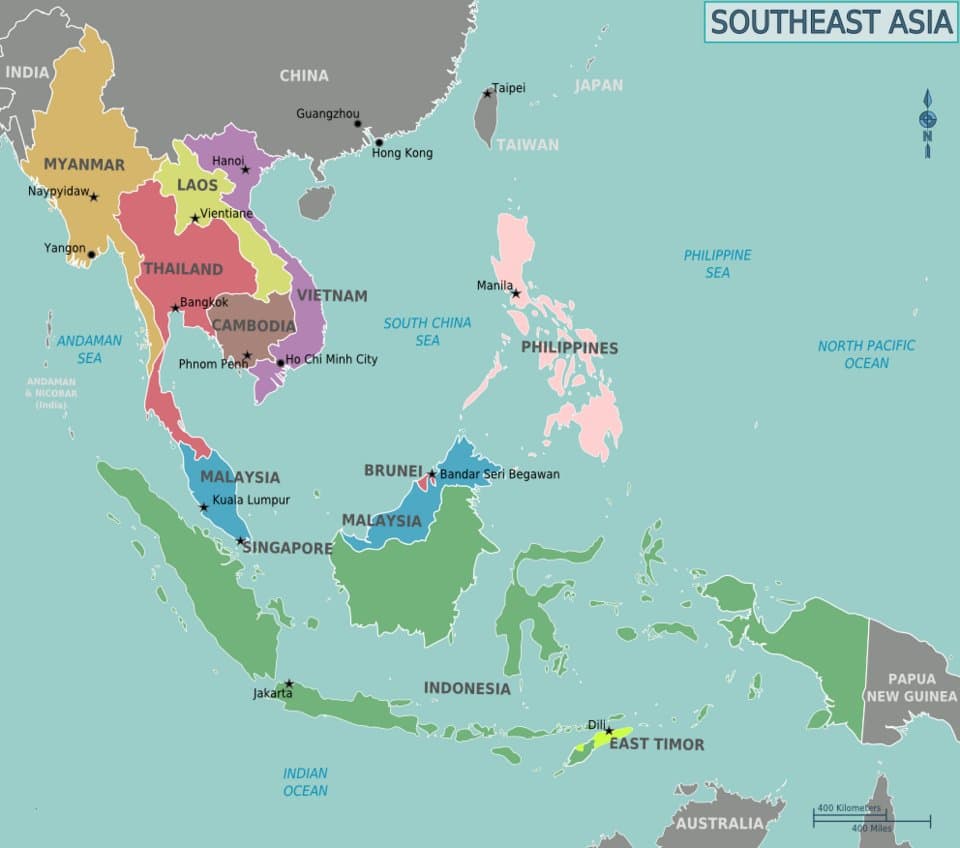
| Origin | Southeast Asia (Thailand, Laos, Cambodia, Vietnam) |
| Care Level | Intermediate |
| Temperament | Semi-Aggressive |
| Diet | Omnivore (primarily carnivorous) |
| Tank Level | Bottom |
| Maximum Size | 4 inches (10 cm) |
| Minimum Tank Size | 30 gallons (114 liters) |
| Temperature | 75 – 84°F (24 – 29°C) |
| pH | 6.0 – 7.5 |
| Hardness | 5 – 12 dGH |
| Lifespan | 5 – 8 years |
Classification
| Order | Cypriniformes |
| Family | Botiidae (Pointface Loaches) |
| Subfamily | Botiinae |
| Genus | Yasuhikotakia |
| Species | Y. Morleti (Tirant, 1885) |
The taxonomy of this species has gone through several revisions over the decades. It was originally described as Botia morleti and was also known for many years as Botia horae. In 2002, it was moved into the genus Yasuhikotakia, which was named after the Japanese ichthyologist Dr. Yasuhiko Taki. You may still see it sold under the older Botia name in some shops.
Origin & Natural Habitat
Skunk Loaches are native to mainland Southeast Asia. They are found throughout the middle and lower Mekong River basin in Thailand, Laos, Cambodia, and Vietnam, as well as in the Chao Phraya and Mae Klong drainages in western and central Thailand. The species was originally described from a tributary of the lower Mekong in Kampong Speu province, Cambodia.
In the wild, these loaches inhabit lowland rivers, streams, and floodplain channels. They are demersal fish, spending most of their time near the bottom in areas with moderate to strong current. The substrate in their natural habitat is typically a mix of sand, gravel, and smooth rocks, with submerged root systems and fallen branches providing shelter.
One of the more interesting things about Skunk Loaches in the wild is their seasonal migration. In the lower Mekong basin, they move from tributaries and flood plains into the main river channels around November and December. During the monsoon season, they travel into flooded areas to spawn, and the fry develop in those temporary habitats before migrating back to the rivers as water levels recede.
Appearance & Identification
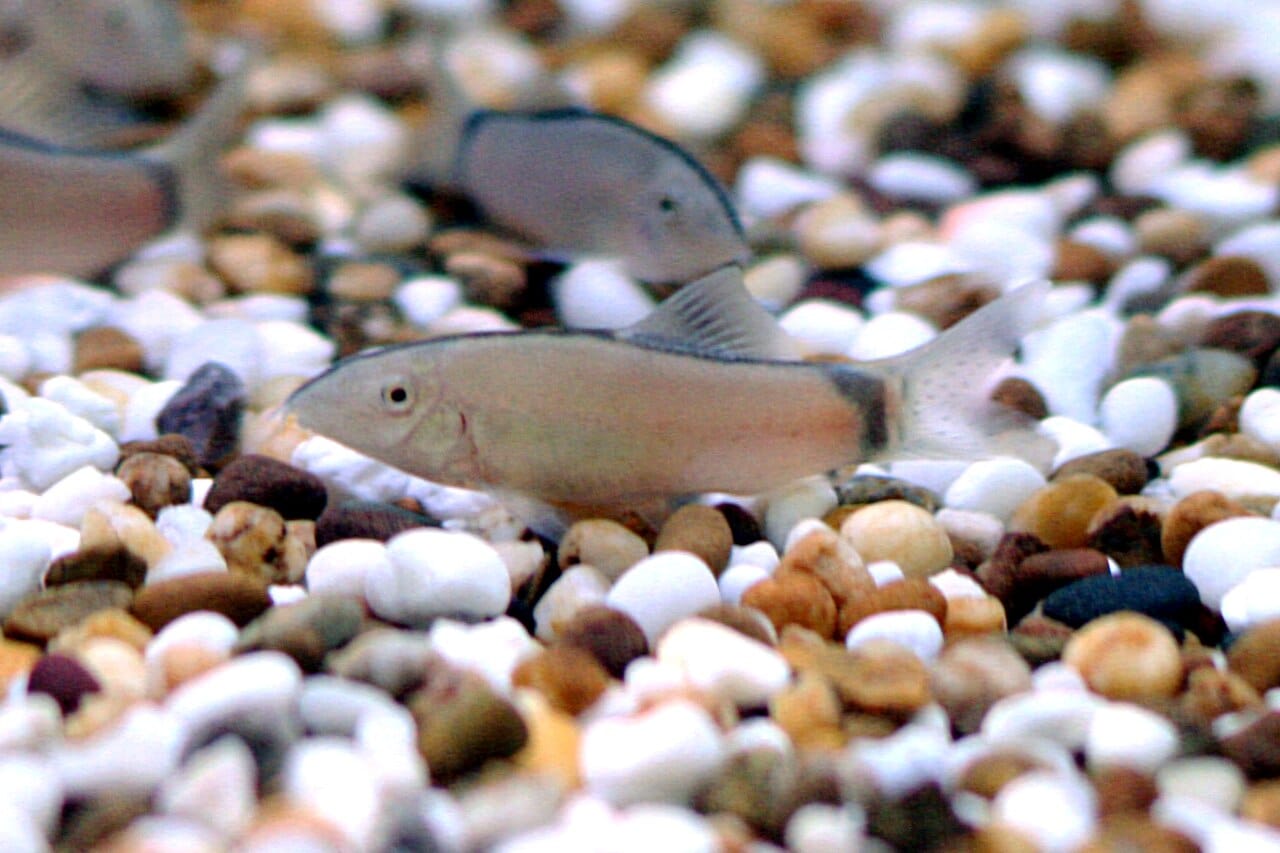
The Skunk Loach has a sleek, torpedo-shaped body typical of the Botiidae family. Its base color is a warm, pale pinkish-cream to light gold. The defining feature is a bold black or dark brown stripe that starts at the tip of the snout, runs along the dorsal ridge (the back), and extends to the base of the caudal fin. This dorsal stripe is what gives the fish its common name.
The pectoral, anal, and pelvic fins are translucent with a subtle orange tint, while the dorsal fin is translucent pale yellow. The caudal (tail) fin is pale yellow with some dark spotting. Juveniles often display a series of faint, dark vertical bars along the flanks, but these fade as the fish matures.
Like other botiid loaches, the Skunk Loach has a pair of sharp, retractable subocular spines, one located beneath each eye. These spines are a defensive mechanism. The fish can flick them outward when threatened, which is something to keep in mind when netting. Never use a fine-mesh net for this species, as the spines can get tangled and cause serious injury to the fish. A soft, coarse-weave net or a container is a much safer option.
The Skunk Loach can look similar to the rarely seen Yasuhikotakia longidorsalis, but you can distinguish the two by the presence of the dorsal stripe, which Y. Longidorsalis lacks.
Male vs. Female
Sexing Skunk Loaches is not straightforward, especially in younger fish. The differences become more apparent in mature specimens, but even then, they are subtle.
| Feature | Male | Female |
|---|---|---|
| Body Shape | Slightly slimmer and more streamlined | Fuller, more rounded abdomen when mature |
| Overall Size | Slightly smaller on average | Is slightly larger |
| Coloration | No reliable difference | No reliable difference |
Average Size & Lifespan
Skunk Loaches reach a maximum size of about 4 inches (10 cm) in total length, though most aquarium specimens settle in the 3 to 3.5 inch (7.5 to 9 cm) range. They are not a large fish, but they are active enough that they need room to move.
With proper care in a well-maintained aquarium, Skunk Loaches typically live 5 to 8 years. Hobbyists have reported keeping them longer, but this depends heavily on water quality, diet, and stress levels. Keeping them in an appropriate group size and providing plenty of cover goes a long way toward maximizing their lifespan.
Care Guide
Tank Size
A minimum tank size of 30 gallons (114 liters) is recommended for a group of Skunk Loaches. Since these are active, bottom-dwelling fish that need to be kept in groups of at least 6, you want to prioritize floor space over height. A long, wide aquarium is far more useful than a tall, narrow one. If you plan to keep a larger group of 8 to 10 (which is ideal), consider stepping up to a 40 to 55 gallon (150 to 210 liter) tank.
Water Parameters
| Temperature | 75 – 84°F (24 – 29°C) |
| pH | 6.0 – 7.5 |
| General Hardness (GH) | 5 – 12 dGH |
| Ammonia | 0 ppm |
| Nitrite | 0 ppm |
| Nitrate | <20 ppm |
Stability is the name of the game with Skunk Loaches. They are sensitive to fluctuations in water chemistry and will not do well in tanks that have not fully cycled. Always introduce them to a mature, established aquarium. Weekly water changes of 25 to 30 percent will help keep nitrate levels in check and maintain the pristine conditions these loaches need.
Filtration & Water Flow
Strong filtration is non-negotiable for Skunk Loaches. They are intolerant of organic waste buildup, so your filter should be rated to turn over the tank volume at least 4 to 5 times per hour. A canister filter is an excellent choice for tanks in the 30 to 55 gallon range. Botiid loaches naturally come from environments with moderate to strong water flow, so a good amount of current in the tank will actually make them more comfortable. Position your filter output to create a steady flow across the length of the tank.
Lighting
Skunk Loaches are not picky about lighting, but they do appreciate shaded areas to retreat to. Moderate lighting works well, especially if you are growing live plants. The key is to provide enough cover through hardscape and plant growth that the loaches always have dim, sheltered spots available. They are most active during twilight and evening hours, so do not be surprised if they are a bit shy under bright lights.
Plants & Decorations
Decoration is one of the most important parts of setting up a Skunk Loach tank. These fish are curious and love to explore, so the more hiding spots and visual barriers you provide, the better. Use a combination of driftwood, rocks, slate caves, and even PVC pipes or overturned terracotta pots as shelters. Make sure there are enough hiding spots for each fish in the group to claim its own space.
One important note: avoid any decorations with sharp edges, and fill in gaps that are small enough for a fish to wedge itself into with aquarium-grade silicone sealant. Skunk Loaches are notorious for squeezing into tight spaces and getting stuck. Hardy plant species like Java Fern, Anubias, and Vallisneria work well, as they can tolerate the occasional uprooting that these active bottom dwellers may cause.
A tight-fitting lid is essential. Skunk Loaches are known jumpers, especially when they are new to a tank or feel stressed.
Substrate
Soft sand is the best substrate for Skunk Loaches. Like other loaches, they spend time sifting through the substrate and have delicate barbels around their mouths that can be damaged by rough or sharp gravel. A fine, smooth sand substrate protects their barbels and allows them to exhibit natural foraging behavior. If you prefer a gravel look, choose a smooth, rounded variety and keep the grain size small.
Is the Skunk Loach Right for You?
Before you buy, run through this honest checklist. The Skunk Loach is a great fish for the right keeper, but it is not for everyone.
- You have a 30-gallon or larger tank with a mature filter and stable water parameters
- You enjoy watching bold, active fish with distinct personalities rather than shy hiders
- You can commit to keeping a group of at least 6. Anything less leads to serious aggression problems
- Your tank does not include slow-moving, long-finned species like bettas, fancy guppies, or angelfish
- You are comfortable feeding a varied diet including frozen and live foods
- You want an effective snail control species that actually earns its keep
- You are NOT looking for a peaceful, low-maintenance bottom dweller. This species demands planning
Avoid If:
- You want a peaceful, conflict-free bottom dweller (skunk loaches are bold and territorial by nature)
- Your tank is under 30 gallons or you cannot keep a group of 6 or more
- You keep slow-moving, long-finned fish like bettas, fancy guppies, or angelfish
- You are not ready to manage their snail-hunting behavior and potential aggression at feeding time
Tank Mates
Choosing tank mates for Skunk Loaches requires some thought. This is not a peaceful community fish in the traditional sense. They are fin nippers and can be outright bullies toward slow-moving or timid species, especially in groups smaller than 6. The aggression stays within the group when the school is large enough, but in small numbers, they redirect that energy toward other fish.
Best Tank Mates
- Active barbs – Tiger Barbs, Cherry Barbs, Odessa Barbs
- Danios – Zebra Danios, Giant Danios
- Active rasboras – Scissortail Rasboras
- Other robust loaches – Yoyo Loach (Botia almorhae), Polka Dot Loach (Botia kubotai), other Yasuhikotakia species
- Larger tetras – Congo Tetras, Buenos Aires Tetras
- Medium catfish – Bristlenose Pleco, larger Corydoras species
The general rule is to choose tank mates that are fast-moving, occupy the mid to upper water column, and are not easily intimidated. Fish that can hold their own without being aggressive themselves are ideal.
Tank Mates to Avoid
- Long-finned species – Bettas, Fancy Guppies, Angelfish (fins will get nipped)
- Slow-moving fish – Discus, Rams, most Gouramis
- Small, shy species – Neon Tetras, Celestial Pearl Danios, small Rasboras
- Shrimp – Cherry Shrimp, Amano Shrimp (will be eaten or harassed)
- Snails (as primary inhabitants) – Skunk Loaches will eat snails, so do not keep them with prized snail collections
Food & Diet
Skunk Loaches are primarily carnivorous in their dietary preferences, though they will accept a range of foods. In the wild, they feed on small crustaceans, insect larvae, worms, and snails. In the aquarium, a varied diet keeps them healthy and brings out their best coloration.
A good feeding plan includes high-quality sinking pellets or wafers as a staple, supplemented with live or frozen foods several times per week. Bloodworms, brine shrimp, daphnia, and tubifex worms are all excellent choices. They will also graze on blanched vegetables like zucchini or cucumber on occasion, though meaty foods are always preferred.
If you have a pest snail problem, Skunk Loaches will absolutely help with that. They are effective snail eaters, though snails alone should not be their entire diet.
One feeding tip to keep in mind: Skunk Loaches are most active in the evening and at night. Offering food shortly before or just after the lights go out ensures they get their share, especially in a community tank where faster-feeding mid-water fish might otherwise grab everything first.
Breeding & Reproduction
Breeding Difficulty
Let me be upfront: breeding Skunk Loaches in a home aquarium is essentially not possible with current hobbyist methods. There are no confirmed reports of private aquarists successfully spawning this species without hormonal intervention. The commercial specimens you see in stores are produced on fish farms using hormone injections to induce spawning.
Spawning Tank Setup
Because home breeding has not been achieved, there is no established protocol for a hobbyist spawning setup. If you were to attempt it, you would want to replicate the conditions of their wild spawning environment as closely as possible. That means a large tank with a sand substrate, plenty of cover, moderate current, and the ability to simulate seasonal changes in water depth and flow.
Water Conditions for Breeding
In the wild, Skunk Loaches are seasonal, migratory spawners. They move into flooded areas during the monsoon season when water is warm, soft, and slightly acidic. Simulating a gradual temperature increase toward the higher end of their range (82 to 84°F / 28 to 29°C) combined with slightly softer, more acidic water and increased water flow might theoretically help trigger spawning behavior, but this remains unproven in home aquariums.
Conditioning & Spawning
If you want to condition your Skunk Loaches in hopes of observing spawning behavior, feed a protein-rich diet of live foods for several weeks. Increase the frequency of bloodworm, daphnia, and brine shrimp feedings. Hobbyists have theorized that simulating the wet season with large, slightly cooler water changes followed by a gradual warm-up could serve as a trigger, but again, no confirmed success has been reported.
Egg & Fry Care
Since home breeding has not been documented, there is no established fry care protocol for hobbyists. In their natural habitat, fry develop in seasonal floodplain pools and eventually migrate back to main river channels as the water recedes. If breeding were somehow achieved, the fry would likely require very small live foods such as infusoria or newly hatched brine shrimp, with pristine water quality being absolutely critical.
Common Health Issues
Skunk Loaches are reasonably hardy once established in a mature tank, but like all botiid loaches, they have some specific vulnerabilities you need to be aware of.
Ich (White Spot Disease)
Botiid loaches, including Skunk Loaches, are particularly susceptible to Ich (Ichthyophthirius multifiliis). The small white spots typically appear on the body, fins, and gills. The challenge with treating Ich in loaches is that they are sensitive to many common medications, especially those containing copper or malachite green at full strength.
The safest approach for loaches is a heat treatment. Gradually raise the water temperature to 86°F (30°C) over 24 to 48 hours while increasing aeration, since warmer water holds less dissolved oxygen. Maintain this temperature for at least two weeks to break the parasite’s life cycle. If medication is needed, use a loach-safe product at half the recommended dose and always increase oxygenation during treatment.
Skinny Disease (Internal Parasites)
Skinny disease is a common issue in wild-caught loaches, including Skunk Loaches. Affected fish eat normally but gradually lose weight and become emaciated. This is typically caused by internal parasites such as intestinal worms or protozoan infections. Treatment with praziquantel (Prazi Pro) or levamisole is effective and well-tolerated by loaches. Quarantining new arrivals and prophylactically treating for internal parasites is a smart practice.
Bacterial Infections
Poor water quality is the primary trigger for bacterial infections in Skunk Loaches. Symptoms can include redness at the base of the fins, cloudy eyes, or open sores. Maintaining pristine water quality is the best prevention. If treatment is necessary, broad-spectrum antibiotics like Maracyn or Maracyn 2 are considered loach-safe. Always remove activated carbon from your filter during any medication treatment.
Common Mistakes to Avoid
- Keeping them alone or in pairs. This is the single biggest mistake. Solitary Skunk Loaches or those kept in groups of 2 to 3 become extremely stressed and aggressively take it out on other fish. A group of 6 is the minimum.
- Adding them to a new tank. Skunk Loaches should never go into a freshly cycled or immature aquarium. They need stable, established water conditions with zero ammonia and nitrite.
- Choosing the wrong tank mates. Putting Skunk Loaches with Bettas, Guppies, or other slow-moving, long-finned fish is a recipe for torn fins and stressed fish. Choose active, robust companions.
- Using a rough substrate. Sharp or coarse gravel will damage their sensitive barbels over time, leading to infections and reduced ability to find food. Use sand or smooth, fine-grained substrate.
- Netting them carelessly. Their subocular spines can easily get tangled in fine-mesh nets, which can injure or even kill the fish. Use a container or a coarse-mesh net instead.
- Medicating at full dose. Loaches are sensitive to many common fish medications. Always use loach-safe products at half dose when treating, and increase aeration during treatment.
Where to Buy
Skunk Loaches are common in the hobby and can usually be found through specialty online retailers. Here are two reliable sources I recommend:
- Flip Aquatics – A trusted online retailer with a solid reputation for healthy, well-conditioned fish. Check their loach selection for availability.
- Dan’s Fish – Another great source for freshwater fish, with a wide variety of loach species often in stock.
When purchasing Skunk Loaches, always buy a group of at least 6 at once. This helps them establish their social hierarchy from the start and reduces the stress of adding new members to an existing group later. Look for active fish with clear eyes, intact fins, and a healthy body weight. Avoid any individuals that look thin or lethargic.
FAQ
Are Skunk Loaches aggressive?
Yes, Skunk Loaches are more aggressive than most other commonly kept loach species. They are known fin nippers and will harass slow-moving, long-finned, or timid tank mates. Keeping them in groups of 6 or more helps contain the aggression within the group, but they still need robust, active tank mates that can hold their own.
How many Skunk Loaches should I keep together?
A minimum of 6 is recommended, but a group of 8 to 10 is ideal. In smaller groups, they become more stressed and significantly more aggressive toward other fish. A larger group spreads out the social interactions and results in more natural, less problematic behavior.
Do Skunk Loaches eat snails?
Absolutely. Skunk Loaches are effective snail predators and will readily consume pest snails like bladder snails, ramshorn snails, and Malaysian trumpet snails. However, snails should be a supplement to their diet, not the primary food source. They still need a balanced diet of sinking pellets, frozen, and live foods.
Can I keep a single Skunk Loach?
I strongly advise against it. Skunk Loaches are social fish that rely on group dynamics to feel secure. A solitary Skunk Loach will be stressed, hide constantly, and often redirect its aggression toward other species in the tank. Always keep them in groups.
What is the spine under a Skunk Loach’s eye?
Skunk Loaches have a sharp, retractable spine called a subocular spine located beneath each eye. It is a defensive weapon that the fish can deploy when threatened or stressed. This spine can get caught in fine-mesh nets and even puncture plastic bags during transport. Handle these fish carefully and avoid fine-mesh nets.
Can Skunk Loaches be kept with Kuhli Loaches?
This is not recommended. Kuhli Loaches are peaceful, shy, and much more delicate than Skunk Loaches. Skunk Loaches are likely to bully and outcompete Kuhli Loaches for food and hiding spots. If you want multiple loach species, pair Skunk Loaches with other robust botiids like Yoyo Loaches or Polka Dot Loaches instead.
Who Grows Most With This Fish
Skunk loaches suit intermediate keepers who have experience with loach behavior and want an active, personality-driven species for snail control and bottom activity. If you have a 30 to 75-gallon community tank with semi-robust tank mates and a snail problem that has gotten out of hand, a group of skunk loaches solves both problems at once. Beginners who want a simple, peaceful cleanup crew are better served by smaller corydoras species until they are ready for the skunk loach’s personality demands.
How the Skunk Loach Compares to Similar Species
Skunk Loach vs. Dwarf Chain Loach
Both are active, social loaches that need groups, but the Dwarf Chain Loach is significantly more peaceful and better suited to community tanks with smaller fish. Skunk Loaches grow larger (4 inches vs 2.5 inches) and are noticeably more aggressive, especially toward slow-moving tank mates. If you want the loach personality without the attitude, the Dwarf Chain Loach is the safer choice. However, if snail control is your goal, the Skunk Loach is the more effective hunter.
Skunk Loach vs. Bengal Loach
The Bengal Loach is another semi-aggressive botiid that needs a group, but it grows considerably larger (6+ inches) and needs a bigger tank. Both species have the retractable subocular spine and similar temperaments. The Skunk Loach is a better option for mid-sized tanks (30. 55 gallons), while the Bengal Loach needs 55 gallons or more. Neither is a good fit for a peaceful community with small, timid fish.
What It Is Actually Like Living With Skunk Loach
Living with skunk loaches means accepting that your tank has a cast of characters, not just a collection of fish. Each one has a personality. The bold one that always eats first. The sneaky one that steals food from the other side of the tank. The one that claims the best cave and defends it like it is real estate.
They are one of the few loach species that will look you in the eye. When you approach the tank, a skunk loach will swim to the front glass and stare at you, waiting for food with an intensity that is either endearing or unsettling depending on your perspective.
The snail hunting is genuinely entertaining. Watching a skunk loach extract a snail from its shell is a precision operation. It pins the snail, works the meat out, and discards the shell. Then it goes looking for the next one.
Closing Thoughts
The skunk loach does not share. Not caves, not food, not your attention. That is the entire appeal.
The Skunk Loach is not a fish for every community tank, and that is perfectly fine. What it is, is a genuinely interesting, active, and intelligent bottom dweller for the fishkeeper who is willing to plan around its needs. Give them a mature tank with clean water, the right group size, appropriate tank mates, and plenty of hiding spots, and they will reward you with years of entertaining behavior.
In my 25+ years in the hobby, the fish that require a little extra thought in setup are often the ones that end up being the most rewarding to keep. The Skunk Loach is a perfect example of that. If you go in with realistic expectations and do the planning upfront, you will not be disappointed.
Recommended Video
References
- Seriously Fish. “Yasuhikotakia morleti – Skunk Loach.” seriouslyfish.com
- FishBase. “Yasuhikotakia morleti, Skunk botia.” fishbase.se
- Loaches Online. “Skunk Loach (Yasuhikotakia morleti).” loaches.com
- The Aquarium Wiki. “Yasuhikotakia morleti.” theaquariumwiki.com
- About the Author
- Latest Posts

I’m Mark Valderrama, founder of Aquarium Store Depot and a fishkeeper with over 25 years of hands-on experience. I started in the hobby at age 11, worked at local fish stores, and have kept freshwater tanks, ponds, and reef tanks ever since. I’ve been featured in two best-selling aquarium books on Amazon and built this site to share practical, experience-based fish keeping knowledge.
Leave a Reply