
Last Updated: June 25, 2026
Thank you for visiting! By the way… any links on this page that lead to products on Amazon and other stores/partners are affiliate links Aquarium Store Depot earns a commission if you make a purchase.
Table of Contents
- What Care Guides Get Wrong
- The Reality of Keeping Bengal Loach
- Key Takeaways
- Species Overview
- Classification
- Origin & Natural Habitat
- Appearance & Identification
- Average Size & Lifespan
- Care Guide
- Is It Right for You?
- Tank Mates
- Food & Diet
- Breeding & Reproduction
- Common Health Issues
- Common Mistakes to Avoid
- Where to Buy
- FAQ
- Species Comparison
- Closing Thoughts
- Recommended Video
- References
The Bengal loach is one of the most active and boldly patterned loaches in the hobby, and it has zero patience for a stagnant tank. It needs strong water flow, a group of at least five, and enough space to patrol. Keep it in a small, low-flow setup and you will see stress stripes, aggression, and a fish that looks nothing like the one you bought.
In the right tank, Bengal loaches are constantly on the move, displaying vivid banding and genuine social behavior within their group. They are not shy, they are not fragile, and they are not background fish. This guide covers what it takes to give them what they need, because this species rewards effort and punishes shortcuts.
Bengal loaches do not hide like kuhlis. They patrol the tank like they are on a mission. Give them the flow and space to do it.
The Reality of Keeping Bengal Loach
The Bengal loach is a larger, more assertive botia that reaches 6 inches and needs a group of five or more. Solitary Bengal loaches become territorial and aggressive toward other bottom dwellers. In a proper group, the aggression stays internal and follows a predictable hierarchy.
This is not a beginner loach. It needs a 55-gallon minimum, strong filtration, and regular water changes. The bioload from five 6-inch loaches is significant, and water quality drops faster than you expect if you skip maintenance.
Half-dose medication protocols are mandatory. The Bengal loach is scaleless and sensitive to copper, malachite green, and most standard ich treatments at full concentration.
Biggest Mistake New Owners Make
Keeping one or two in a community tank. Bengal loaches in small numbers become bullies. They need five or more to establish a social hierarchy that keeps the sparring among themselves. Underpopulated Bengal loaches redirect their energy onto anything nearby.
Bengal loaches (Botia dario) are active, social loaches from fast-flowing Indian rivers. They need strong oxygenation, good filtration, and a group of at least 5 to show their natural behavior.
Expert Take (Mark Valderrama, AquariumStoreDepot)
The Bengal loach is the middle ground between the massive clown loach and the small kuhli loach. It has genuine personality, bold patterning, and interactive behavior, but in a 6-inch package that fits a 55-gallon tank. A group of five with sand substrate, multiple caves, and moderate current is the formula. It is more manageable than clown loaches and more visible than kuhlis.
Key Takeaways
- Group fish that need company: Bengal Loaches must be kept in groups of at least 5, with 10 or more being ideal. Solitary individuals often become withdrawn or aggressive toward tank mates.
- Need a mature, well-filtered aquarium: These loaches are intolerant of poor water quality and organic waste buildup. Never add them to a newly cycled tank.
- Natural snail controllers: Bengal Loaches will eagerly eat pest snails, making them a useful addition to tanks battling snail outbreaks. However, they shouldn’t be purchased solely for this purpose.
- Jumpers that need a tight lid: Like most botiids, Bengal Loaches are accomplished jumpers. A well-fitting aquarium cover is non-negotiable.
- Striking appearance that changes with age: Juveniles display crisp golden-and-dark banding, but the pattern becomes more complex and subdued as they mature.
Species Overview
| Property | Details |
|---|---|
| Scientific Name | Botia dario |
| Common Names | Bengal Loach, Queen Loach, Geto Loach, Scarf Botia, Indian Loach |
| Family | Botiidae |
| Origin | India, Bangladesh, Bhutan |
| Care Level | Intermediate |
| Temperament | Semi-aggressive, social |
| Diet | Omnivore |
| Tank Level | Bottom |
| Maximum Size | 6 inches (15 cm) |
| Minimum Tank Size | 55 gallons (210 liters) |
| Temperature | 73 – 79°F (23 – 26°C) |
| pH | 6.0 – 7.5 |
| Hardness | 1 – 10 dGH |
| Lifespan | 8 – 12 years |
| Breeding | Egg scatterer (unconfirmed in home aquaria) |
| Breeding Difficulty | Extremely difficult |
| Compatibility | Semi-aggressive community |
| OK for Planted Tanks? | Yes |
Classification
| Taxonomic Rank | Classification |
|---|---|
| Order | Cypriniformes |
| Family | Botiidae |
| Subfamily | Botiinae |
| Genus | Botia |
| Species | B. Dario (Hamilton, 1822) |
The Bengal Loach was first described by Francis Hamilton in 1822 as Cobitis dario. It has also appeared in older literature under the synonym Cobitis geto. The species was eventually moved into the genus Botia, where it remains today within the family Botiidae. Unlike some botiid genera that have undergone recent reclassification, Botia dario has stayed relatively stable taxonomically. It’s one of the smaller members of its genus, though it’s still considerably larger than the popular Dwarf Chain Loach (Ambastaia sidthimunki).
Origin & Natural Habitat
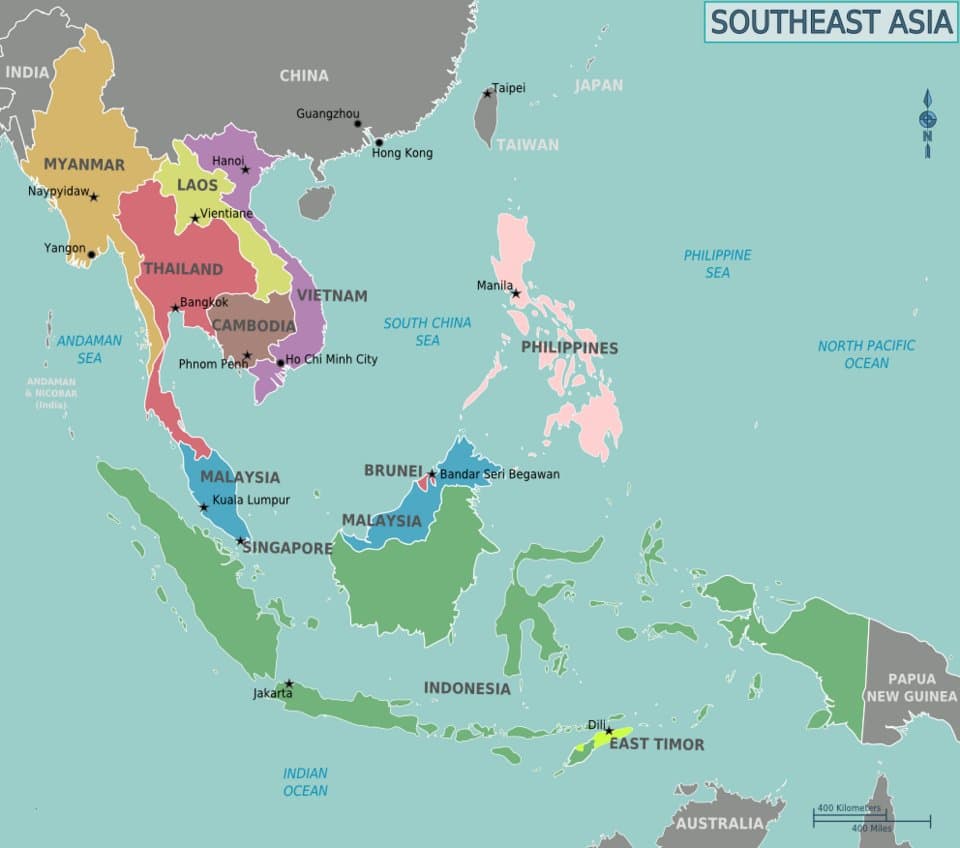
The Bengal Loach is native to the Ganges and Brahmaputra river drainages across northern India and Bangladesh, with additional populations recorded in the Gaylegphug River basin of Bhutan. These are fish of the foothills, found in clear mountain streams and tributaries rather than the sluggish, muddy lowland rivers that many people associate with the Indian subcontinent.
In the wild, Bengal Loaches inhabit well-oxygenated streams with moderate current over substrates of sand, gravel, and smooth river stones. Their habitats are typically shaded by overhanging vegetation and feature submerged roots, fallen branches, and scattered rocks that create a maze of hiding spots. The water in these streams is slightly acidic to neutral, soft to moderately hard, and stays relatively cool compared to lowland tropical habitats. Understanding these natural conditions is key to replicating a healthy environment in your home aquarium.
Appearance & Identification
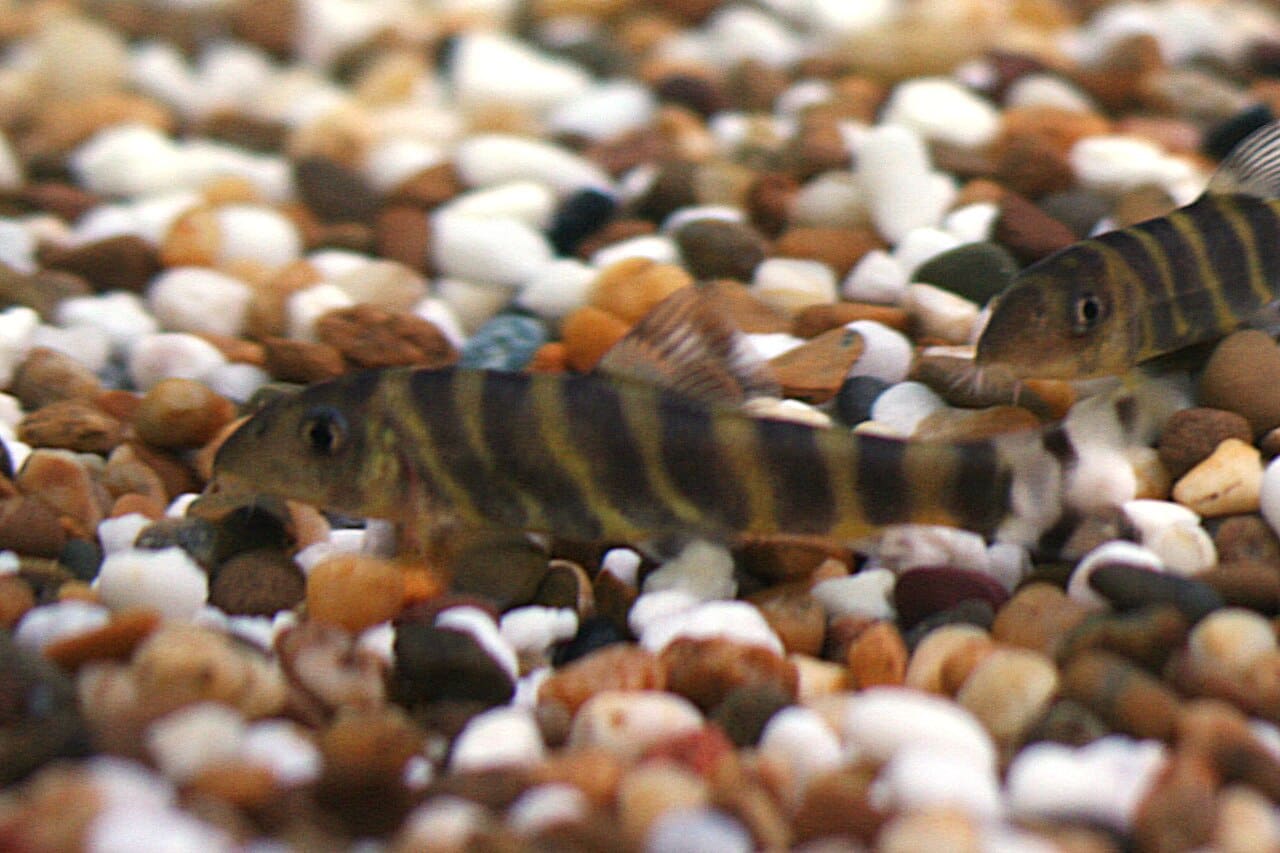
The Bengal Loach is a genuinely striking fish. Its base color ranges from golden yellow to warm olive, overlaid with 7 to 9 bold vertical bands that can appear blue, green, grey, or black depending on the fish’s mood, health, and lighting. In healthy, well-kept specimens, the contrast between the golden body and dark banding is absolutely gorgeous. The bands sometimes connect or break apart in a process called anastomosis, giving each individual a unique pattern.
As Bengal Loaches mature, the banding becomes wider and more numerous, and the overall coloration can become more muted compared to the vivid contrast seen in juveniles. They have a slightly curved, downturned snout equipped with four pairs of sensitive barbels used for foraging in the substrate. Like all botiids, they possess a sharp, erectile suborbital spine beneath each eye. This spine is a defense mechanism, but it also means you need to be careful when netting them, as it can get tangled in mesh. Use a container or cup instead of a net whenever possible.
Male vs. Female
| Feature | Male | Female |
|---|---|---|
| Body Shape | Slimmer, more streamlined | Fuller, rounder belly when mature |
| Size | Slightly smaller at maturity | Slightly larger at maturity |
| Coloration | Often slightly more vivid banding | Similar coloration, less contrast when gravid |
Honestly, sexing Bengal Loaches visually is very difficult, especially in younger fish. The most reliable indicator is body shape in fully mature specimens, where females are noticeably fuller-bodied than males. There are no reliable color or finnage differences between the sexes, so unless you have a large group of mature adults to compare side by side, telling males from females is largely guesswork.
Average Size & Lifespan
Bengal Loaches typically reach 4 to 5 inches (10 to 13 cm) in the home aquarium, though the maximum recorded size is around 6 inches (15 cm). Most specimens you’ll find at your local fish store will be juveniles in the 1.5 to 2 inch (4 to 5 cm) range, so keep in mind they’ll grow considerably from the size you purchase them at. This isn’t a nano tank fish by any stretch.
With proper care, Bengal Loaches can live 8 to 12 years in captivity. Hobbyists report even longer lifespans when conditions are consistently maintained. The keys to longevity are excellent water quality, a varied diet, and appropriate social housing. A stressed Bengal Loach kept alone in a suboptimal setup will rarely reach its full lifespan potential.
Care Guide
Tank Size
I recommend a minimum of 55 gallons (210 liters) for a group of Bengal Loaches. Seriously Fish recommends a base footprint of at least 48 x 18 inches (120 x 45 cm), which aligns with a standard 55- or 75-gallon tank. Given that these fish grow to 4 to 6 inches and need to be kept in groups of at least 5, they need serious swimming room. A longer tank is always better than a taller one for bottom-dwelling species like this.
If you plan to keep a larger group of 10 or more, which they truly prefer, a 75-gallon (285-liter) or larger tank would be a much better choice. These are active, social fish that establish hierarchies within their group, and a cramped tank leads to stress, aggression, and poor health outcomes.
Water Parameters
| Parameter | Recommended Range |
|---|---|
| Temperature | 73 – 79°F (23 – 26°C) |
| pH | 6.0 – 7.5 |
| General Hardness (GH) | 1 – 10 dGH |
| KH | 2 – 8 dKH |
| Ammonia | 0 ppm |
| Nitrite | 0 ppm |
| Nitrate | < 20 ppm |
Stability is the name of the game with Bengal Loaches. These fish are far more sensitive to parameter swings than they are to being at one end of the range versus the other. They absolutely cannot tolerate ammonia or nitrite, and elevated nitrates will quickly lead to health problems. Weekly water changes of 30 to 50 percent are not optional with this species; they’re a requirement. Only introduce Bengal Loaches to a fully cycled, biologically mature aquarium that has been running for at least a couple of months.
Filtration & Water Flow
Bengal Loaches come from well-oxygenated streams, so your filtration should turn over the tank volume at least 4 to 5 times per hour. A quality canister filter is ideal for a tank this size, though a large hang-on-back filter can also work. The goal is clean, well-oxygenated water with moderate flow. An additional powerhead or air stone can help supplement oxygenation, especially in warmer months when dissolved oxygen levels naturally drop.
These fish do not handle stagnant water or organic waste buildup. If you notice your Bengal Loaches becoming pale, lethargic, or losing their appetite, poor water quality is always the first thing to investigate. A sponge prefilter on your intake tube is a good idea to prevent smaller individuals from getting drawn in.
Lighting
Bengal Loaches prefer subdued lighting that mimics the shaded streams they come from in the wild. Standard aquarium lighting is fine, but provide shaded retreats using floating plants, driftwood overhangs, or rock formations. They will show their best coloration and most natural behavior under moderate lighting with plenty of shaded areas to retreat to. Harsh, direct lighting can make them feel exposed and stressed.
Plants & Decorations
Decorations are where you can really make your Bengal Loach tank shine. Think of it as building an underwater obstacle course. Use smooth, water-worn rocks and pebbles of varying sizes, along with driftwood roots and branches to create a network of caves, gaps, and hiding spots. These loaches are naturally curious and love squeezing into tight spaces to explore and rest.
Plants are welcome and Bengal Loaches won’t typically damage them. Java Fern, Anubias, and Vallisneria are all solid choices that can handle the moderate flow these fish prefer. Floating plants like Water Lettuce or Amazon Frogbit are excellent for diffusing light and adding a sense of security. Just make sure there are no sharp edges on any decorations, and fill in any gaps where a curious loach could get wedged and trapped. And absolutely, positively, use a tightly-fitting lid. Bengal Loaches are notorious jumpers.
Substrate
Sand or fine, smooth gravel is the way to go. Bengal Loaches spend a lot of time on and in the substrate, sifting through it with their sensitive barbels as they forage for food. Coarse or sharp-edged gravel can damage their barbels and lead to infections. A natural sand substrate also looks fantastic with the golden coloration of these fish. If you use gravel, make sure it’s smooth-edged and rounded.
Is the Bengal Loach Right for You?
Before you buy, run through this honest checklist. The Bengal Loach is a great fish for the right keeper, but it is not for everyone.
- You have a 55-gallon or larger tank that can handle a group of active 6-inch loaches
- You want a bold, striped loach with real presence and personality
- You can maintain excellent water quality with robust filtration
- Your tank includes other medium-sized, confident fish that can hold their own
- You can provide a varied diet of frozen, live, and sinking prepared foods
- You do not mind a semi-aggressive bottom dweller that claims territory
Tank Mates
Best Tank Mates
Bengal Loaches do best with active, similarly-sized, peaceful to semi-aggressive tank mates. Good companions include:
- Barbs (Tiger Barbs, Cherry Barbs, Rosy Barbs) – active schoolers that can hold their own
- Larger Rasboras (Scissortail Rasboras, Brilliant Rasboras) – fast-moving, peaceful open water fish
- Rainbowfish (Boesemani, Turquoise) – similarly sized, active community fish
- Other Botia species – they often coexist well with other botiid loaches in large enough tanks
- Medium-sized Corydoras – peaceful bottom-dwellers, though the Bengal Loaches will dominate the substrate
- Larger Tetras (Congo Tetras, Colombian Tetras) – too large to be bullied and occupy different water levels
- Medium Plecos (Bristlenose, Clown Pleco) – occupy different niches and are armored enough to coexist
Tank Mates to Avoid
- Small fish (Neon Tetras, Endlers, small Rasboras) – may be harassed or outcompeted for food
- Slow-moving, long-finned species (Bettas, Fancy Guppies, Angelfish) – their flowing fins make them targets for nipping
- Dwarf Shrimp (Cherry Shrimp, Amano Shrimp) – Bengal Loaches will eat small shrimp
- Ornamental Snails (Nerites, Mystery Snails) – Bengal Loaches are dedicated snail eaters and may damage even larger snail species
- Aggressive Cichlids – territorial conflict, especially over bottom space
- Very timid species (Otocinclus, Pygmy Corydoras) – will be stressed and outcompeted by the Bengal Loaches’ boisterous behavior
Food & Diet
Bengal Loaches are omnivores with a strong carnivorous lean. In the wild, they feed primarily on small invertebrates, insect larvae, and worms, with some vegetable matter mixed in opportunistically. In the aquarium, variety is the key to keeping them healthy and showing their best coloration.
A good base diet of high-quality sinking pellets or wafers should be supplemented regularly with live or frozen foods like bloodworms, brine shrimp, tubifex worms, and daphnia. Fresh vegetables such as blanched zucchini, cucumber slices, blanched spinach, and even melon are appreciated and help round out their nutrition. Feed once or twice daily, offering only what they can consume in a few minutes.
Bengal Loaches are well-known snail eaters. They’ll enthusiastically crack open pest snails like Malaysian Trumpet Snails, Ramshorn Snails, and Bladder Snails. This makes them a natural biocontrol option for hobbyists dealing with snail explosions. However, don’t buy Bengal Loaches solely as a snail cleanup crew. They’re a long-term commitment that needs proper care regardless of whether you have a snail problem or not.
Breeding & Reproduction
Breeding Difficulty
Breeding Bengal Loaches in the home aquarium is essentially unachievable with current hobbyist methods. There are no confirmed reports of successful aquarium breeding under normal conditions. Commercially available specimens are either wild-caught or produced in breeding facilities using hormonal induction techniques that aren’t practical for home aquarists. Some hybrids with other Botia species have also appeared in the trade in recent years.
Spawning Tank Setup
Because natural breeding hasn’t been documented in home aquaria, there’s no established protocol for a spawning tank setup. In commercial operations, large breeding tanks with soft, acidic water and plenty of cover are typically used alongside hormonal treatments. If you’re interested in attempting to breed them, a separate 40-gallon or larger tank with soft water, abundant hiding spots, and excellent filtration would be the starting point.
Water Conditions for Breeding
Based on the limited information available from commercial breeding operations, breeding conditions likely involve:
- Soft, slightly acidic water (pH 6.0 to 6.5)
- Temperature slightly elevated to 77 to 79°F (25 to 26°C)
- Very low hardness (1 to 3 dGH)
- Pristine water quality with frequent water changes
Conditioning & Spawning
If natural spawning were to occur, the fish would likely need extensive conditioning with high-quality live and frozen foods over several weeks to months. In commercial operations, hormonal induction is used to trigger spawning because the fish don’t seem to spawn naturally in captivity. Without these hormones, even well-conditioned, mature fish in ideal water conditions rarely show spawning behavior. This remains one of the great challenges in botiid breeding across the hobby.
Egg & Fry Care
Very little is documented about egg and fry development in Bengal Loaches. Based on related Botia species, eggs are likely small, adhesive, and scattered among rocks and substrate. Fry would be extremely tiny and require infusoria or commercially prepared liquid fry foods initially, transitioning to newly hatched brine shrimp as they grow. Given the near-impossibility of home breeding, detailed fry rearing protocols remain the domain of professional breeders.
Common Health Issues
Ich (White Spot Disease)
Like all scaleless and thin-scaled fish, Bengal Loaches are highly susceptible to ich. The tiny white spots usually appear first on the fins before spreading across the body. The tricky part is that many standard ich medications contain copper or formalin, which can be dangerous to loaches at full dosage. If you need to treat, use half-strength dosing of malachite green-based treatments, or better yet, raise the temperature gradually to 86°F (30°C) combined with aquarium salt at 1 tablespoon per 5 gallons. Always research loach-safe medications before treating.
Skinny Disease
Skinny disease, often caused by internal parasites like Camallanus worms or flagellates, is a common issue with wild-caught Bengal Loaches. Affected fish eat normally but gradually lose weight, becoming visibly emaciated despite a healthy appetite. Treatment typically involves anti-parasitic medications like levamisole or praziquantel. Quarantining new arrivals for 2 to 4 weeks and prophylactically treating for internal parasites is strongly recommended.
Bacterial Infections
Red streaks on the body or fins, cloudy eyes, frayed fins, and lethargy can all indicate bacterial infections. These almost always stem from poor water quality or stress from inappropriate social conditions. Prevention is far better than cure here. Maintain pristine water quality, avoid overstocking, and keep your Bengal Loaches in proper groups. If treatment is needed, broad-spectrum antibiotics like Kanaplex or Furan-2 can be effective, but check that they’re safe for scaleless fish at the dosage you’re using.
Fungal Infections
Cotton-like white growths on the body or fins typically indicate a fungal infection. These often appear secondary to an injury or in fish already weakened by stress or poor water conditions. Treatment with methylene blue or antifungal medications designed for sensitive fish is effective. Address the root cause (usually water quality or an injury from sharp decorations) to prevent recurrence.
Common Mistakes to Avoid
- Keeping them alone or in pairs: This is the single most common mistake. Bengal Loaches are gregarious and need a group of at least 5. Solo fish become stressed, withdrawn, or aggressively territorial.
- Adding them to a new tank: Bengal Loaches should only be introduced to a biologically mature aquarium that has been fully cycled for at least 2 months. A new setup with unstable parameters is a recipe for disaster.
- Underestimating their size: They’re usually sold as small juveniles, but they grow to 4 to 6 inches. A 20-gallon tank is not going to cut it for adult fish.
- Using sharp substrate or decorations: Their sensitive barbels are easily damaged by rough gravel or sharp-edged decor, leading to infections.
- Medicating at full strength: Bengal Loaches are sensitive to many common aquarium medications, especially those containing copper. Always use reduced dosages and research loach-safe treatments.
- Forgetting the lid: These fish are jumpers. An open-top tank or one with gaps around equipment is an escape route waiting to happen.
- Skipping quarantine: Wild-caught Bengal Loaches frequently carry internal parasites. A 2 to 4 week quarantine with prophylactic deworming can save you a lot of headaches.
Where to Buy
Bengal Loaches aren’t always available at big box pet stores, but they show up regularly through specialty online retailers. Here are two reputable sources I recommend:
- Flip Aquatics – A great source for healthy freshwater fish with a strong reputation in the hobby community. They carry a rotating selection of loach species and ship safely.
- Dan’s Fish – Another excellent online retailer known for quality livestock and reliable shipping. Check their stock regularly as Bengal Loaches will sell quickly when available.
When purchasing Bengal Loaches, look for active fish with vibrant coloration, clear eyes, and intact barbels. Avoid any that appear lethargic, pale, or emaciated, as these may already be dealing with health issues. Buying in groups of 5 or more from the same batch is ideal, since these fish establish social bonds and introducing new individuals later will be problematic.
FAQ
How many Bengal Loaches should I keep together?
A minimum of 5, with 10 or more being ideal. Bengal Loaches are highly social fish that establish a pecking order within their group. In groups that are too small, dominant individuals may bully weaker ones relentlessly. Larger groups spread out aggression and result in more natural, confident behavior from all members.
Will Bengal Loaches eat my snails?
Yes, absolutely. Bengal Loaches are enthusiastic snail eaters and will make short work of pest snails like Bladder Snails, Ramshorn Snails, and Malaysian Trumpet Snails. However, they also damage or kill ornamental snails like Nerites and Mystery Snails, so consider this before adding them to a tank with snails you want to keep.
Are Bengal Loaches aggressive?
They’re best described as semi-aggressive. Within their own group, they establish a hierarchy that involves chasing and posturing, but this is normal social behavior. They generally leave appropriately-sized tank mates alone, but they can harass small, slow-moving, or long-finned fish. Keeping them in a proper group and providing plenty of hiding spots minimizes any aggression toward other species.
Can Bengal Loaches live with shrimp?
Small dwarf shrimp like Cherry Shrimp and Crystal Red Shrimp will almost certainly become expensive snacks for Bengal Loaches. Larger shrimp like Amano Shrimp have a better chance of coexisting, especially in a heavily planted tank with lots of cover, but there are no guarantees. If you’re serious about a shrimp colony, Bengal Loaches aren’t the right tank mate.
Do Bengal Loaches need a heater?
In most home environments, yes. Bengal Loaches need stable temperatures in the 73 to 79°F (23 to 26°C) range. Unless your room temperature stays consistently in that range year-round, a reliable heater is necessary. Temperature fluctuations stress these fish and make them more susceptible to disease.
Why is my Bengal Loach lying on its side?
Don’t panic. Many botiid loaches, including Bengal Loaches, rest in unusual positions that can look alarming to keepers who aren’t used to loach behavior. Lying on their side, wedging into crevices, and resting on top of each other in a pile are all perfectly normal behaviors. However, if the fish is also showing signs of illness like faded color, rapid breathing, or loss of appetite, investigate your water parameters immediately.
How the Bengal Loach Compares to Similar Species
Bengal Loach vs. Gold Zebra Loach
The Gold Zebra Loach stays smaller (4-5 inches vs 6+ inches) and works in smaller tanks. Both are attractive botiids, but the Bengal Loach needs more space and has a bolder personality. For tanks under 55 gallons, the Gold Zebra Loach is the better-fitting choice.
Bengal Loach vs. Skunk Loach
The Skunk Loach is smaller and more affordable, but similarly assertive. The Bengal Loach has more visual impact with its striking banding. Both need groups and structured tank environments. The Skunk Loach fits in a 30-gallon; the Bengal Loach really needs 55+.
What It Is Actually Like Living With Bengal Loach
Bengal loaches are the most boisterous fish in any tank they occupy. They chase each other constantly, jockey for position at feeding time, and produce audible clicks during social interactions. Quiet is not a word that applies to this species.
The pecking order is visible every day. The dominant fish eats first, claims the best hiding spot, and pushes subordinates aside without hesitation. It is not subtle. But it is also not dangerous. The subordinates learn their place and the group functions smoothly once the hierarchy settles.
Feeding is a full-contact event. Drop a sinking wafer and every Bengal in the tank converges on it simultaneously. The resulting scrum is chaotic, brief, and over in seconds. Slow feeders in the same tank will go hungry unless you feed at multiple points.
Closing Thoughts
A single Bengal loach in a community tank will not settle in. It will take over the bottom and make every other fish pay rent.
The Bengal Loach is one of those species that rewards the aquarist who does their homework. They’re not a fish you toss into a new tank and forget about. They need clean water, a mature setup, the right group size, and a thoughtfully decorated environment. But when you get it right, the payoff is a group of stunningly beautiful, endlessly entertaining fish that will be a centerpiece of your aquarium for years to come.
If you’re ready for an intermediate-level challenge and you have the tank space to house a proper group, the Bengal Loach is absolutely worth the effort. Just remember the fundamentals: mature tank, strong filtration, sand substrate, lots of hiding spots, and always keep them with friends. Get those basics right, and these golden-banded beauties will thrive.
Recommended Video
Check out this video for more on keeping Bengal Loaches and other loach species in your aquarium:
References
- Seriously Fish. “Botia dario – Bengal Loach.” https://www.seriouslyfish.com/species/botia-dario/
- FishBase. “Botia dario (Hamilton, 1822).” https://www.fishbase.org/summary/Botia-dario.html
- Loaches Online. “Botia dario.” https://www.loaches.com/species-index/botia-dario
- The Aquarium Wiki. “Bengal Loach (Botia dario).” https://theaquariumwiki.com/wiki/Botia_dario
- About the Author
- Latest Posts

I’m Mark Valderrama, founder of Aquarium Store Depot and a fishkeeper with over 25 years of hands-on experience. I started in the hobby at age 11, worked at local fish stores, and have kept freshwater tanks, ponds, and reef tanks ever since. I’ve been featured in two best-selling aquarium books on Amazon and built this site to share practical, experience-based fish keeping knowledge.
Leave a Reply