
Last Updated: June 25, 2026
Thank you for visiting! By the way… any links on this page that lead to products on Amazon and other stores/partners are affiliate links Aquarium Store Depot earns a commission if you make a purchase.
What It Is Actually Like Living With Red Hook Silver Dollar
This is the part no other care guide gives you. Forget water parameters for a minute. Here is what it is actually like to share your tank with this species.
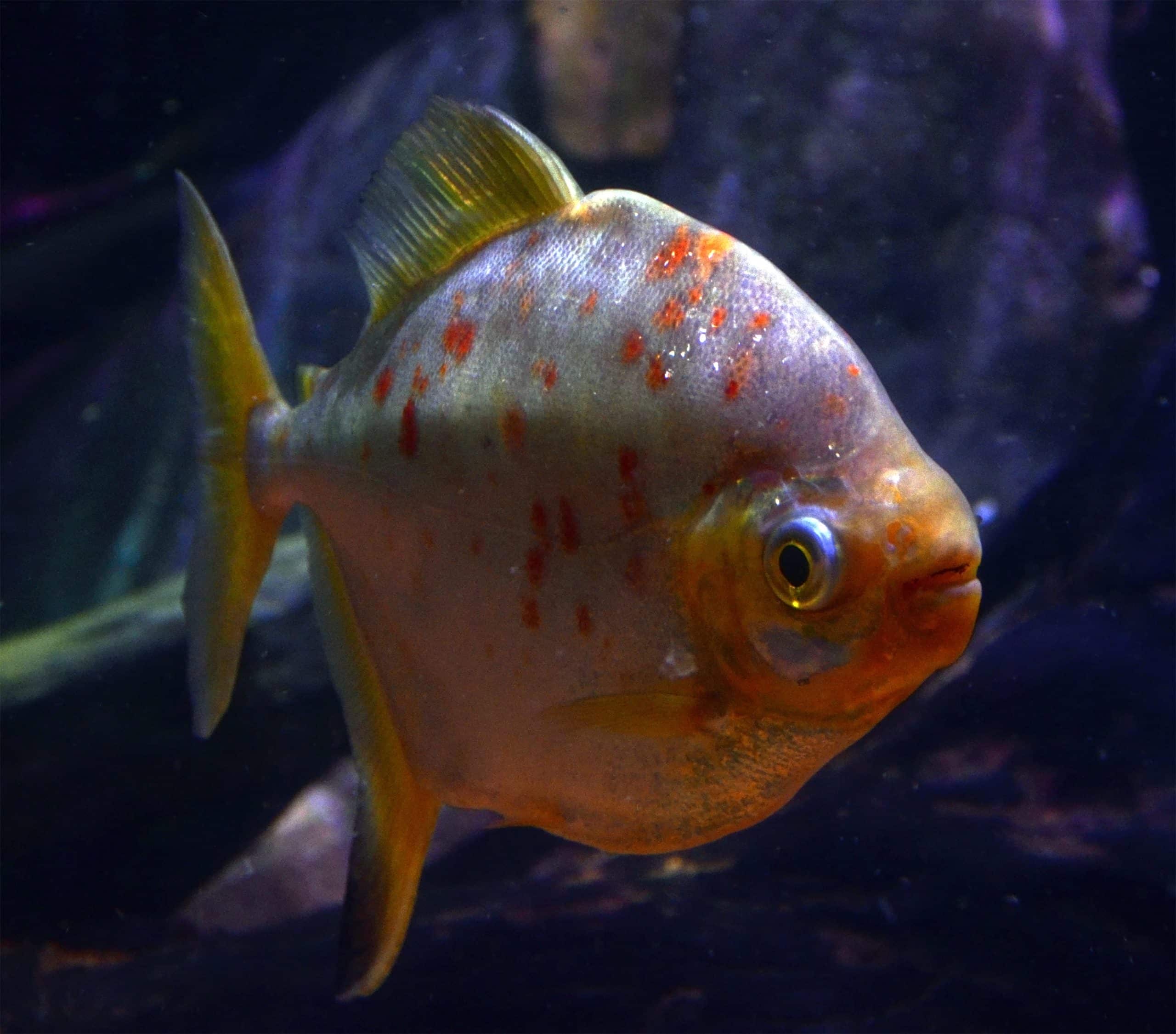
The first thing people notice is the scale. The fish in the store is 2 to 3 inches. The fish in your tank a year from now is 6 to 7 inches, and at 2 to 3 years it’s pushing 8 inches. A group of five of them cruising across a 125-gallon tank is a completely different visual experience than a fish store display. The red hooks give you that presence. They use the whole tank, they move constantly, and when they turn and the red fin catches the light, it’s one of the better spectacles in large freshwater fishkeeping.
The plant situation is real and it is absolute. You cannot have live plants with this species. Not “most” plants – no plants. They are herbivores that evolved to eat aquatic vegetation, and they are very good at their job. The aquascape for this species is driftwood, smooth rocks, and open swimming space. Once you accept that and design around it, the setup actually looks excellent – dramatic, natural, and built for the fish rather than around them.
Group behavior is the payoff. A school of red hook silver dollars develops a social structure you can observe daily. There’s a clear hierarchy, with the largest fish getting first access to food and the best positions in the current. During feeding, the group converges from all areas of the tank simultaneously – eight-inch fish arriving at speed from different directions is a feeding event worth watching. Between feedings, the group drifts and grazes in a loose formation, constantly in motion.
Color tells you the tank’s story. Bright silver bodies with vivid red fins extended mean the group is healthy and comfortable. Pale, washed-out fish that hang near the surface or cluster in one corner mean something is wrong – usually water quality or a temperature issue. Red hook silver dollars are big enough that when something is off, you know it immediately. The visual feedback from this species is harder to miss than with smaller fish.
Expert Take (Mark Valderrama, AquariumStoreDepot)
In my 25+ years in the hobby, the red hook silver dollar remains one of the most underestimated large fish you can keep in a community setup. People worry about the size and the plants issue, then discover this fish is far more manageable long-term than the piranhas it’s related to. What surprises new keepers most is how social they are – a school of five or six settled red hooks is visibly calmer, bolder, and more active than a pair or trio in the same tank. Get the school size right, get the tank size right, and this fish will take care of the rest for fifteen years.
Eight inches of herbivore that needs a school and hates your plants.
Table of Contents
- Key Takeaways
- What Most Guides Get Wrong
- Species Overview
- Classification
- Origin & Natural Habitat
- Appearance & Identification
- Average Size & Lifespan
- Care Guide
- Tank Mates
- Food & Diet
- Is the Red Hook Silver Dollar Right for You?
- How It Compares to Similar Species
- Breeding & Reproduction
- Common Health Issues
- Common Mistakes to Avoid
- Where to Buy
- Frequently Asked Questions
- Closing Thoughts
- Recommended Video
- References
The red hook silver dollar is one of the most visually striking members of the silver dollar family. Its bright red anal fin with a distinctive hook-like extension makes it immediately recognizable and gives the species its common name. This is a large, robust fish that brings real presence to a South American community tank.
In the right setup, this fish shows behavior you will not see in any YouTube video.
Keeping Red Hook Silver Dollar long-term requires consistent water quality, proper diet, and a tank that meets their specific needs. This is not a set-and-forget species.
When kept right, the Red Hook Silver Dollar is one of those fish that makes the entire hobby worth it.
Related to piranhas but entirely peaceful, the red hook silver dollar is a herbivore that spends most of its time grazing on plants and algae. It’s been a popular aquarium fish for decades, appreciated for its bold appearance, schooling behavior, and easy care. If you have the tank space for a group, they’re hard to beat for visual impact. Here’s your complete care guide.
What Most Guides Get Wrong About Red Hook Silver Dollars
Want an easy community fish? This is not it. Want a species that rewards dedicated care with unique behavior? The Red Hook Silver Dollar delivers if you put in the work.
The most common mistake with red hook silver dollars: buying a small group for a medium tank, planning to upgrade “eventually.” These fish grow fast. A juvenile red hook sold at 2 inches reaches 8 or 9 inches within two to three years. A 55-gallon tank with two red hooks is a holding pen, not a home. The second mistake is the planted tank assumption – because they’re peaceful toward other fish, people assume they’re safe for planted setups. They’re peaceful toward fish. They are systematic destroyers of vegetation. A school of red hooks will strip a planted tank to bare substrate within a week, then look at you like they’re still hungry.
The Reality of Keeping Red Hook Silver Dollar
This species has specific needs most generic guides skip. The Red Hook Silver Dollar does not thrive in average community conditions. It needs targeted water parameters, the right diet, and compatible tank mates. Half-measures lead to chronic stress and shortened lifespans.
Observation is your best tool. Watch this fish daily. Changes in color, activity level, or feeding response tell you more about water quality and health than any test kit alone. The Red Hook Silver Dollar shows stress before your test results catch up.
Long-term success requires consistency. This is not a fish that tolerates neglect. Regular maintenance, stable parameters, and a consistent feeding schedule are the foundation of keeping the Red Hook Silver Dollar healthy for years.
Biggest Mistake New Owners Make
Treating this fish like a generic community species. The Red Hook Silver Dollar has specific requirements that differ from the typical tropical fish setup. Ignoring those differences leads to problems within the first few months.
Key Takeaways
- Large species (up to 9 inches) requiring a 75-gallon minimum tank
- Distinctive red anal fin with a hook-shaped extension in males
- Primarily herbivorous and will eat most live plants
- Peaceful schooling fish that does best in groups of 5 or more
- Related to piranhas (Serrasalmidae family) but completely plant-eating and non-aggressive
Species Overview
| Field | Details |
|---|---|
| Scientific Name | Myloplus rubripinnis |
| Common Names | Red Hook Silver Dollar, Redhook Myleus, Red Hook Metynnis |
| Family | Serrasalmidae |
| Origin | Amazon basin, Guyana, Suriname |
| Care Level | Moderate |
| Temperament | Peaceful |
| Diet | Primarily herbivore |
| Tank Level | Mid |
| Maximum Size | 9 inches (22 cm) |
| Minimum Tank Size | 75 gallons (284 liters) |
| Temperature | 75-82°F (24-28°C) |
| pH | 5.5-7.5 |
| Hardness | 4-18 dGH |
| Lifespan | 10-15 years in captivity |
| Breeding | Egg scatterer |
| Breeding Difficulty | Difficult |
| Compatibility | Large community |
| OK for Planted Tanks? | No (will eat most plants) |
Classification
| Taxonomic Level | Classification |
|---|---|
| Order | Characiformes |
| Family | Serrasalmidae |
| Genus | Myloplus |
| Species | M. Rubripinnis (Müller & Troschel, 1844) |
The taxonomy of this species has been confusing for years. It has been placed in Myleus, Metynnis, and Myloplus at various times, and you’ll still see all three genus names used in the hobby. The currently accepted placement is Myloplus rubripinnis. The specific epithet means “red-finned,” a straightforward reference to the vivid red anal fin.
Note on family placement: Silver dollars and piranhas belong to Serrasalmidae, a family entirely separate from Characidae. Serrasalmidae was not affected by the 2024 Melo et al. Phylogenomic revision.
Origin & Natural Habitat
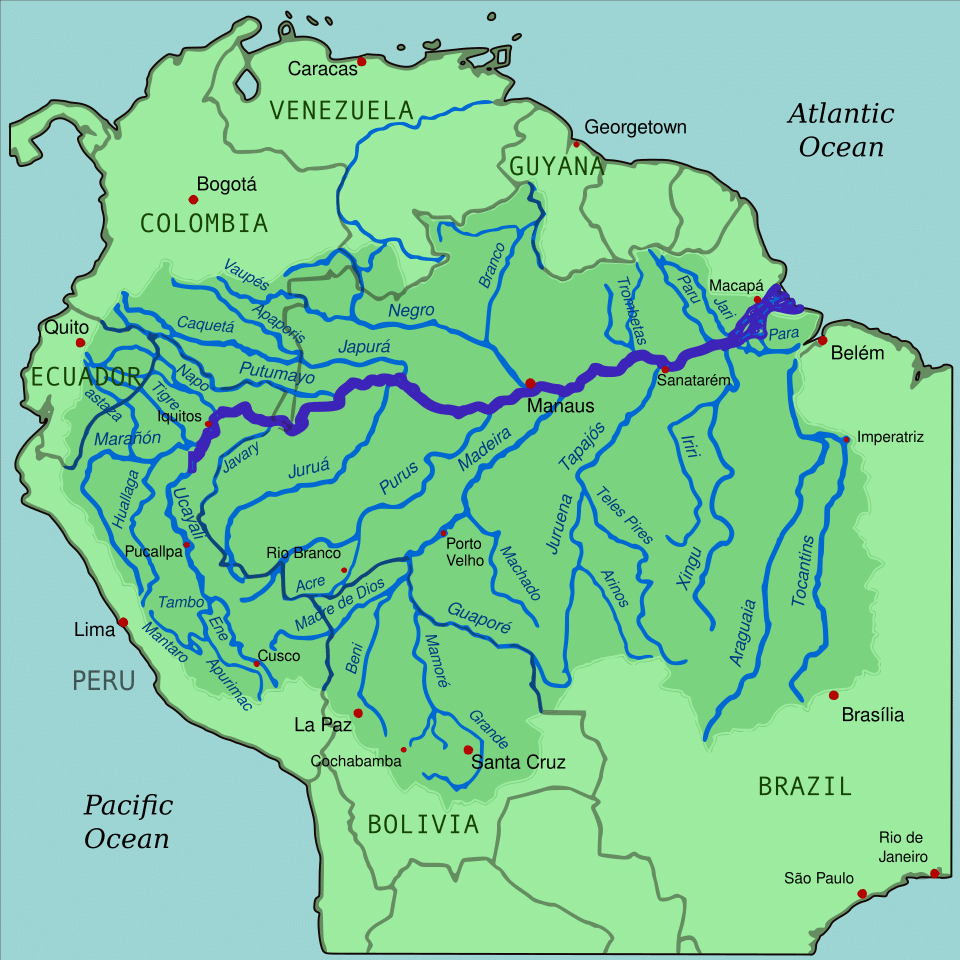
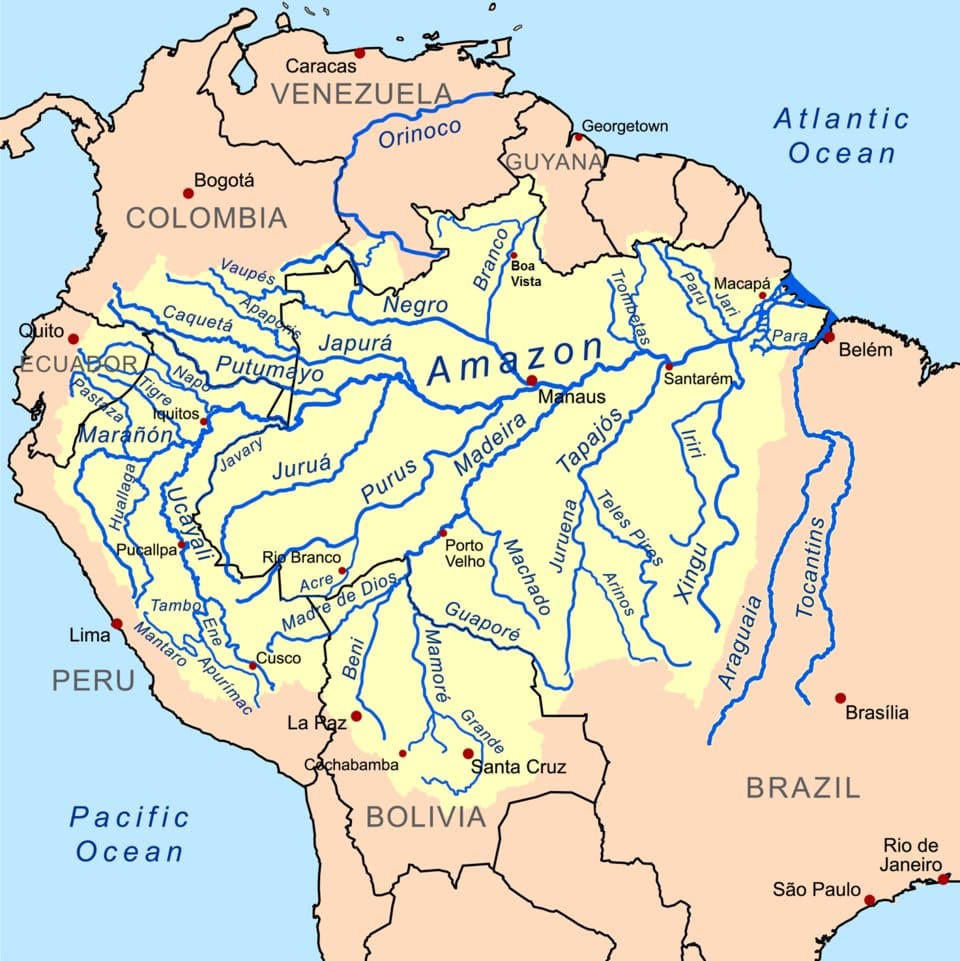
The red hook silver dollar is found throughout the Amazon basin in Brazil, as well as in Guyana and Suriname. It has a wide distribution across multiple river systems, which contributes to its adaptability in aquarium conditions.
In the wild, these fish inhabit rivers, tributaries, and flooded forest areas where they feed on submerged vegetation, fruits, seeds, and algae. During the flood season, they move into inundated forest areas where they have access to abundant plant material. They’re typically found in groups in open water, schooling together as a defense against predators.
Their natural habitat includes a variety of water conditions from blackwater to clearwater, reflecting their adaptability. They’re not as tied to specific water chemistry as many smaller South American species.
Appearance & Identification
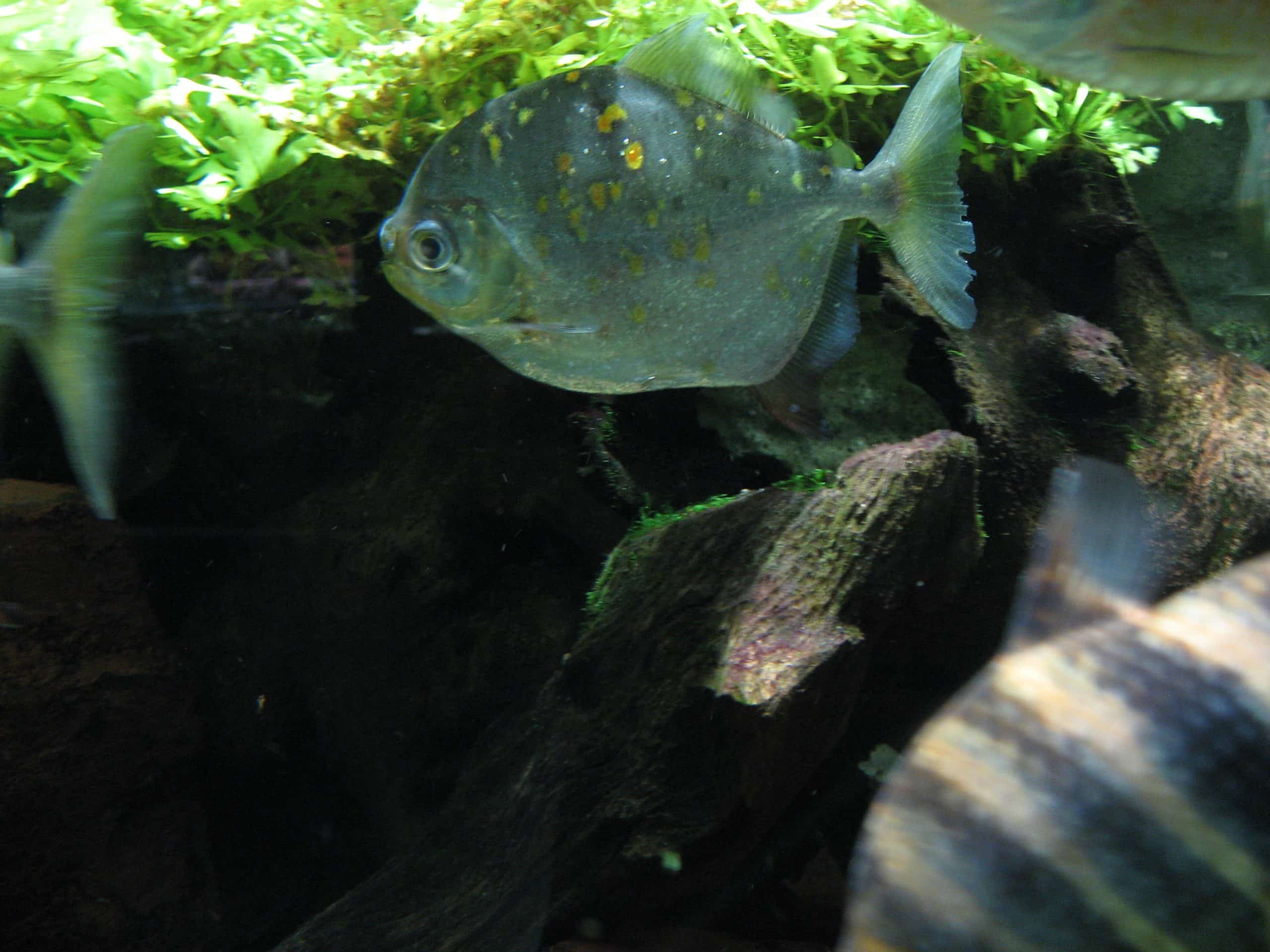
The red hook silver dollar has the classic silver dollar body shape: deep, laterally compressed, and roughly disc-shaped. The body is silvery with a slight greenish or golden sheen. The defining feature is the vivid red anal fin, which in mature males develops an extended, hook-like projection that curves backward. This “red hook” is what makes this species unmistakable.
The caudal fin often shows red or orange coloring, and the body may develop a faint reddish wash along the belly in well-conditioned fish. The eye is large with a dark pupil and often shows a reddish upper iris.
Sexual dimorphism is most visible in the anal fin. Males develop the characteristic hook-like extension on the anal fin, which is absent or much less pronounced in females. Males also will show more intense red coloration. Females are typically fuller-bodied, especially when carrying eggs.
Average Size & Lifespan
This is a large species, reaching up to 9 inches (22 cm) in aquariums. Most individuals grow to 6 to 8 inches. Their disc-shaped body makes them look even larger than their length suggests, and a school of mature red hooks is an imposing sight.
Red hook silver dollars are long-lived fish, with a lifespan of 10 to 15 years in captivity. This is a serious commitment, so plan accordingly.
ASD Difficulty Rating
Intermediate | 5/10
Large, active schooling fish that are adaptable on water parameters but demanding on tank size – 125 gallons or more for a proper school of 5+. The plant destruction is absolute: no live plants in this setup. Water quality tolerance is better than most South American cichlids, which keeps the difficulty below advanced. The real commitment is space and accepting a plant-free aquascape.
Care Guide
Tank Size
A 75-gallon tank is the minimum for a small group of red hook silver dollars. For a proper school of 5 to 6 adults, a 125-gallon or larger is recommended. These are big, active fish that need significant swimming room. A 6-foot tank provides the horizontal space they prefer.
Water Parameters
| Parameter | Ideal Range |
|---|---|
| Temperature | 75-82°F (24-28°C) |
| pH | 5.5-7.5 |
| General Hardness | 4-18 dGH |
| KH | 2-10 dKH |
| Ammonia / Nitrite | 0 ppm |
| Nitrate | Below 30 ppm |
Red hook silver dollars are adaptable to a range of water conditions. They prefer slightly acidic to neutral water but can handle moderate hardness without problems. Their flexibility makes them easier to keep than many other large South American species.
The main challenge is managing water quality with such large, messy herbivores. Their plant-heavy diet produces significant waste. Powerful filtration and weekly water changes of 30 to 40 percent are essential. A canister filter rated for at least twice the tank volume is recommended.
Tank Setup
The most important thing to understand about keeping red hook silver dollars is that they will eat almost any live plant. This is not a planted tank species. Your aquascaping options are limited to:
- Artificial plants: The practical choice if you want greenery
- Hardy, unpalatable plants: Java fern, Anubias, and Bolbitis are sometimes left alone, but results vary
- Driftwood and rocks: The safest decor that can’t be eaten
Open swimming space is essential. These are mid-water swimmers that need room to move as a group. Driftwood along the sides and back provides some structure and territorial boundaries. A sandy substrate works well.
These fish are skittish, especially during water changes or when startled. A tight-fitting lid is mandatory, as they can jump when spooked. Dim lighting or floating plants (if they don’t eat them) helps reduce nervousness.
Tank Mates
Red hook silver dollars are peaceful giants that generally ignore other fish entirely. They can be kept with a wide range of tank mates as long as those tank mates are large enough not to be accidentally intimidated and can tolerate the same water conditions.
Good Tank Mates
- Other silver dollar species
- Peaceful to semi-aggressive cichlids (severums, geophagus, acaras)
- Large tetras (Buenos Aires, Congo)
- Plecos (bristlenose, royal, common)
- Large catfish (Raphael catfish, Pictus catfish)
- Rainbowfish
- Larger barbs (tinfoil barbs)
- Large gouramis (pearl, moonlight)
Tank Mates to Avoid
- Very small fish that are stressed by their size and activity
- Highly aggressive cichlids (large Oscar-sized aggression)
- Fin nippers that might target their large fins
- Slow, delicate species that would be overwhelmed at feeding time
Food & Diet
Red hook silver dollars are primarily herbivores, though they’re technically omnivores that will accept some protein-based foods. Their diet should be heavily plant-based.
- Staple: Spirulina-based flakes or pellets, herbivore wafers
- Fresh vegetables: Blanched spinach, lettuce, zucchini, peas, cucumber
- Occasional protein: Bloodworms, brine shrimp, high-quality pellets (as a supplement, not a staple)
- Live plants: They’ll happily eat duckweed, Elodea, and most other aquarium plants offered as food
Feed two to three times daily. Vegetable matter should make up the majority (70 to 80 percent) of their diet. Growing duckweed or Elodea in a separate container and adding it to the tank as supplemental feeding is a great way to provide natural plant matter. They have strong, molar-like teeth designed for crushing plant material and seeds.
Is the Red Hook Silver Dollar Right for You?
Honest assessment before you buy. The red hook silver dollar is one of the most rewarding large South American fish in the hobby – but it has three non-negotiable requirements that eliminate it for a lot of setups.
- Good fit if: You have a 125-gallon or larger tank (or are planning one). A 75-gallon works for juveniles, but adults need the larger footprint. This is not a fish you buy and then figure out the tank for later.
- Good fit if: You want a showpiece schooling species with real visual presence. A group of five red hook silver dollars in a properly sized tank is a centerpiece display that rivals most public aquarium setups.
- Good fit if: You are comfortable with a plant-free or artificial-plant aquascape. Driftwood and rocks work beautifully with this species and the setup actually suits them better than most planted tanks.
- Think twice if: Your tank is under 100 gallons and you’re not planning an upgrade. You can keep juveniles temporarily, but they outgrow a 75-gallon quickly and the transition is disruptive.
- Think twice if: You have an established planted tank you want to preserve. These fish will destroy it completely and there is no compromise on this point.
- Think twice if: You want a fish you can keep as a single specimen or pair. Red hook silver dollars are schooling fish that are visibly stressed and skittish when kept alone or in small groups. Minimum 5, ideally more.
Breeding & Reproduction
Breeding red hook silver dollars in home aquariums is difficult and rarely achieved. Most specimens in the trade are wild-caught or commercially bred in large pond facilities.
Breeding Requirements
- Tank: Very large (150+ gallons) with soft, acidic water
- Water: pH 5.5-6.5, very soft, temperature 80-82°F
- Conditioning: Heavy feeding with plant matter and occasional protein for several weeks
- Group: A group of 6 or more to allow natural pair formation
When spawning does occur, the pair scatter eggs in open water or over flat surfaces. Females can produce several thousand eggs per spawning. Eggs hatch in about 3 days, and fry become free-swimming within a week. Fry feed on algae and fine vegetable matter from the start.
The main barriers to breeding are tank size and the difficulty of simulating the seasonal flooding triggers that stimulate spawning in the wild.
Common Health Issues
- Ich: Can occur during acclimation or after temperature changes. Their large body size makes treatment with heat (gradually raising to 86°F) effective.
- HLLE (Head and Lateral Line Erosion): Can develop from poor water quality or nutritional deficiencies. A varied, vegetable-rich diet and clean water prevent this.
- Jump injuries: Skittish fish can injure themselves by crashing into the lid or tank walls when startled. A secure lid and avoiding sudden movements near the tank help.
- Obesity: Less common than in some species since their natural diet is plant-based, but overfeeding protein-rich foods can cause issues.
Hard Rule: Do not put red hook silver dollars in a planted tank.
They are dedicated herbivores that will destroy any planted aquascape within days – not weeks, days. Do not put them in a planted tank unless you use only plastic or silk plants or want the tank stripped bare.
Common Mistakes to Avoid
- Tank too small: This is the most common mistake. Juvenile red hooks are sold at 2 to 3 inches and grow to 8 or 9. A 75-gallon minimum is non-negotiable for adults.
- Expecting a planted tank: They will destroy virtually every plant you put in the tank. Plan your aquascape around driftwood and rocks.
- Keeping alone or in pairs: These are schooling fish that are nervous and skittish when kept individually. A group of 5 or more is much calmer and more confident.
- Too much protein: Their diet should be primarily plant-based. A protein-heavy diet leads to digestive issues and poor long-term health.
- No lid: They’re capable jumpers, especially when spooked. A secure, heavy lid is essential.
Where to Buy
Red hook silver dollars are fairly common in the aquarium trade and are found at many fish stores. They may be sold under various names including redhook myleus or redhook metynnis. Check these trusted sources:
Frequently Asked Questions
Yes, they’re in the same family (Serrasalmidae). However, while piranhas are carnivorous predators, silver dollars are primarily herbivores. They have similar body shapes, but their teeth are adapted for crushing plant matter rather than tearing flesh. Red hook silver dollars are completely peaceful and pose no threat to tank mates.
Will red hook silver dollars eat all my plants?
Almost certainly yes. They’re voracious plant eaters that will consume most aquarium plants. Java fern and Anubias are sometimes left alone due to their tough, bitter leaves, but even those aren’t guaranteed safe. If you want a planted tank, silver dollars are not the right choice.
What is the hook on the red hook silver dollar?
Mature males develop a hook-shaped extension on the anal fin. This elongated fin ray curves backward and is used in courtship displays. It’s the defining visual feature that distinguishes this species from other silver dollars and gives it its common name. Females lack this extension or show only a very minor version of it.
How the Red Hook Silver Dollar Compares to Similar Species
If you are deciding between large South American schooling fish, the choice comes down to tank size requirements, aggression level, and what kind of dynamic you want in the tank.
Red Hook Silver Dollar vs. Common Silver Dollar (Metynnis hypsauchen) , Choose the Common Silver Dollar if availability or tank space is the deciding factor. It stays slightly smaller at 6 to 7 inches versus the red hook’s 8 to 9 inches, making it better suited to 75-gallon setups – both are plant eaters that need proper schools, so the keeping experience is similar. Choose the Red Hook Silver Dollar if you want the visual drama of that distinctive red anal fin and hook extension. In a properly sized tank, the red hook is simply a more impressive fish.
Red Hook Silver Dollar vs. Red-Bellied Piranha (Pygocentrus nattereri) : Choose the Red-Bellied Piranha if you want a predatory species in a species-only setup, where the focus is on the hunting behavior and the intense personality of the individual fish. The piranha is a fundamentally different keeping experience – not a community fish. Choose the Red Hook Silver Dollar if you want a large, impressive Serrasalmid that works in a South American community setup. The red hook is peaceful toward fish it cannot fit in its mouth, eats plants rather than tank mates, and commits to 10 to 15 years with good care.
Closing Thoughts
The red hook silver dollar is a big, beautiful fish that brings a real sense of scale and movement to a large aquarium. A school of them cruising through a tank decorated with driftwood, their red fins flashing as they turn, is one of those sights that makes you glad you have a big tank. They’re peaceful, hardy, and long-lived, checking all the boxes for a centerpiece species.
The tradeoffs are clear: you need a large tank, you can’t have live plants, and you’re committing to a decade or more of care. If those work for you, the red hook silver dollar is one of the most rewarding large community fish in the hobby.
Recommended Video
Check out our Tetra Tier List video where we rank popular tetra species for the home aquarium:
References
- Froese, R. And D. Pauly, Eds. FishBase. Myloplus rubripinnis. Accessed 2025.
- SeriouslyFish. Myloplus rubripinnis species profile. Accessed 2025.
Explore More Tetras
The red hook silver dollar is just one of dozens of characin species we cover in our complete species directory. Whether you’re into large showpiece fish or tiny nano species, our guide has you covered.
👉 Tetras: Complete A-Z Species Directory
- About the Author
- Latest Posts

I’m Mark Valderrama, founder of Aquarium Store Depot and a fishkeeper with over 25 years of hands-on experience. I started in the hobby at age 11, worked at local fish stores, and have kept freshwater tanks, ponds, and reef tanks ever since. I’ve been featured in two best-selling aquarium books on Amazon and built this site to share practical, experience-based fish keeping knowledge.
Leave a Reply