
Last Updated: June 25, 2026
Thank you for visiting! By the way… any links on this page that lead to products on Amazon and other stores/partners are affiliate links Aquarium Store Depot earns a commission if you make a purchase.
Table of Contents
- What Care Guides Get Wrong
- Key Takeaways
- Species Overview
- Classification
- Origin & Natural Habitat
- Appearance & Identification
- Average Size & Lifespan
- Care Guide
- Is It Right for You?
- Tank Mates
- Food & Diet
- Breeding & Reproduction
- Common Health Issues
- Common Mistakes to Avoid
- Where to Buy
- Frequently Asked Questions
- Species Comparison
- Closing Thoughts
- Recommended Video
- References
There are corydoras you buy because they’re affordable and easy, and then there are corydoras you buy because you fell in love at first sight. Adolfo’s cory is firmly in that second category. That bold black head band paired with a brilliant orange-gold nape patch makes this one of the most visually striking catfish in the entire hobby. It’s the kind of fish that stops people mid-conversation when they notice it in your tank.
What Most Care Guides Get Wrong About the Adolfoi Cory
The Adolfoi Cory is frequently confused with the Duplicareus Cory, and many guides use photos of the wrong species. The true Adolfoi has a narrower, cleaner orange band behind the head, while the Duplicareus has a wider, more diffuse orange patch. The care misconception is bigger: most guides list this as a standard tropical cory, but the Adolfoi is a warm-water specialist from the Rio Negro that does best at 79 to 84F. Keeping it at 72 to 75F like you would a Panda Cory is a mistake that shortens its lifespan. The other issue is water chemistry. This is a blackwater species that prefers soft, acidic conditions.
But here’s the catch. Adolfo’s cory isn’t your typical beginner-friendly cory. It comes from Rio Negro blackwater habitats in Brazil, where the water is extremely soft and acidic. That means it needs more specific conditions than a bronze or peppered cory, and it carries a higher price tag to match. In my 25+ years in the hobby, I’ve watched this species go from a rare import to a fish that’s still uncommon enough to turn heads at any fish club meeting. If you’re up for the challenge, here’s everything you need to know to keep them successfully.
Key Takeaways
- A premium, higher-priced corydoras from Rio Negro blackwater habitats, best suited for intermediate to advanced keepers
- Signature black head band and bright orange-gold nape patch make it one of the most striking corydoras species available
- Prefers soft, acidic water (pH 5.0 to 7.0, hardness 1 to 10 dGH) and does best in blackwater-style setups
- Keep in groups of 6 or more in at least a 20-gallon tank with fine sand substrate
- Often confused with Corydoras duplicareus, which has a noticeably wider orange band on the nape
Species Overview
| Field | Details |
|---|---|
| Scientific Name | Corydoras adolfoi |
| Common Names | Adolfo’s Cory, Adolfo’s Catfish |
| Family | Callichthyidae |
| Origin | Rio Negro basin, Brazil (upper Amazon) |
| Care Level | Moderate to Difficult |
| Temperament | Peaceful |
| Diet | Omnivore |
| Tank Level | Bottom |
| Maximum Size | 2.2 inches (5.5 cm) |
| Minimum Tank Size | 20 gallons (76 liters) |
| Temperature | 72 to 79°F (22 to 26°C) |
| pH | 5.0 to 7.0 |
| Hardness | 1 to 10 dGH |
| Lifespan | 5 to 8 years |
| Breeding | Egg depositor (T-position spawning) |
| Breeding Difficulty | Difficult |
| Compatibility | Community (soft water species) |
| OK for Planted Tanks? | Yes |
Classification
| Taxonomic Level | Classification |
|---|---|
| Order | Siluriformes |
| Family | Callichthyidae |
| Subfamily | Corydoradinae |
| Genus | Corydoras |
| Species | C. adolfoi (Burgess, 1982) |
Adolfo’s cory was described by Warren E. Burgess in 1982. The species is named after Adolfo Schwartz, a Brazilian tropical fish exporter who helped bring this and several other new species to the attention of the scientific community. The fish was collected from tributaries of the Rio Negro, one of the Amazon’s most significant blackwater river systems.
Note on taxonomy: Unlike many corydoras that were reclassified in the 2024 Dias et al. phylogenetic revision, Corydoras adolfoi has remained within the genus Corydoras (sensu stricto). So the name you see at the fish store is still the scientifically accepted one.
Origin & Natural Habitat
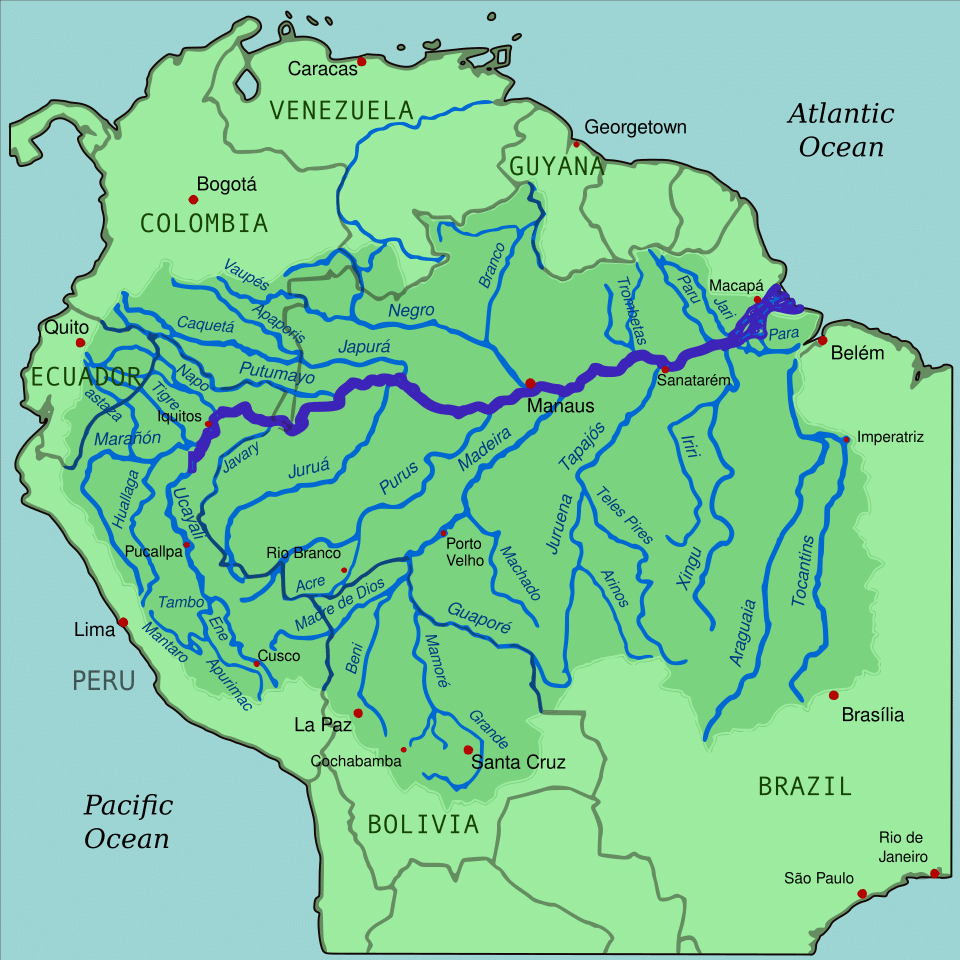
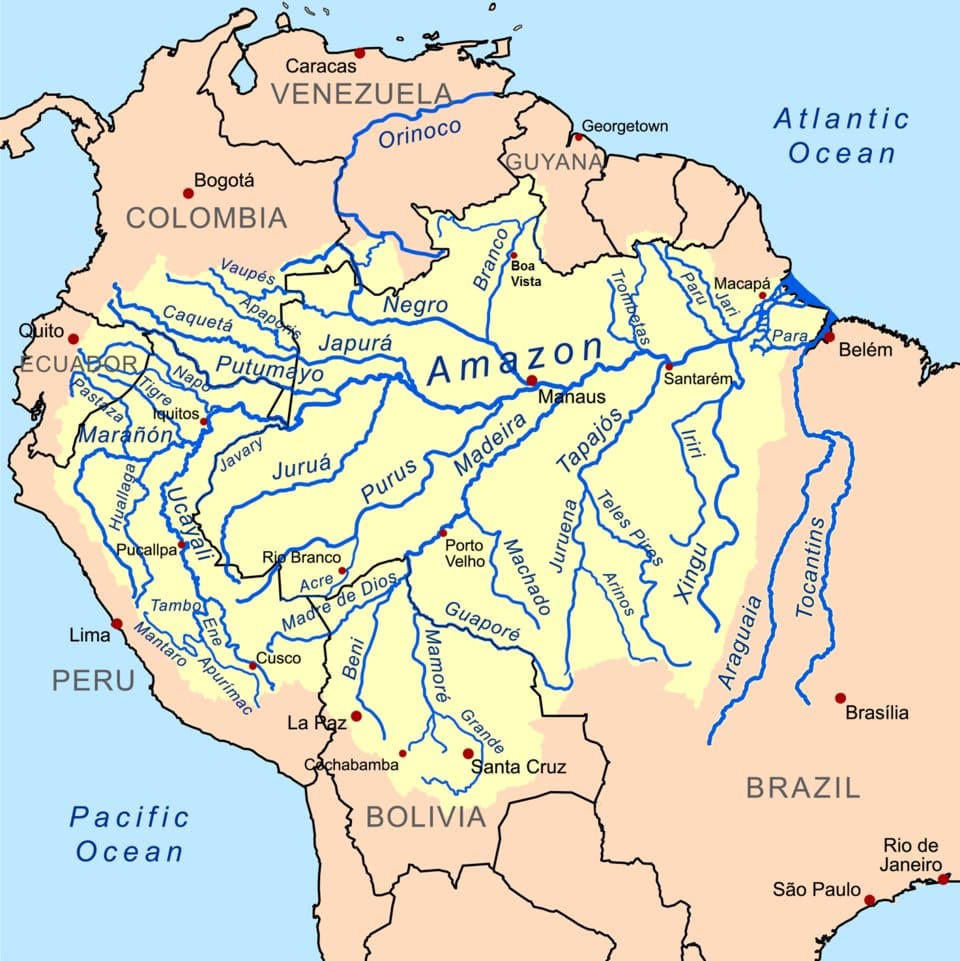
Adolfo’s cory is endemic to the upper Rio Negro basin in the Amazonas state of Brazil, specifically from tributaries near the town of São Gabriel da Cachoeira. The Rio Negro is one of the largest blackwater river systems on the planet, and it’s dramatically different from most Amazonian waterways. The water is stained a deep tea color by tannins released from decomposing leaves and wood, resulting in extremely soft, highly acidic conditions.
In the wild, these corys inhabit slow-moving tributaries and forest streams with sandy or muddy bottoms covered in leaf litter. The water parameters in their native range are quite extreme by aquarium standards: pH values often fall between 4.0 and 6.0, general hardness is virtually zero, and the tannin-stained water filters out much of the light. Despite these dark, acidic conditions, the forest floor and stream bottoms teem with insect larvae, worms, and organic debris that the corys sift through constantly.
Understanding this blackwater origin is the key to keeping Adolfo’s cory successfully. These fish evolved in very specific water chemistry, and while captive-bred specimens are somewhat more adaptable than wild-caught ones, they still do their best in soft, acidic conditions. If you’re running a hard, alkaline tap water setup, this probably isn’t the cory for you.
Appearance & Identification
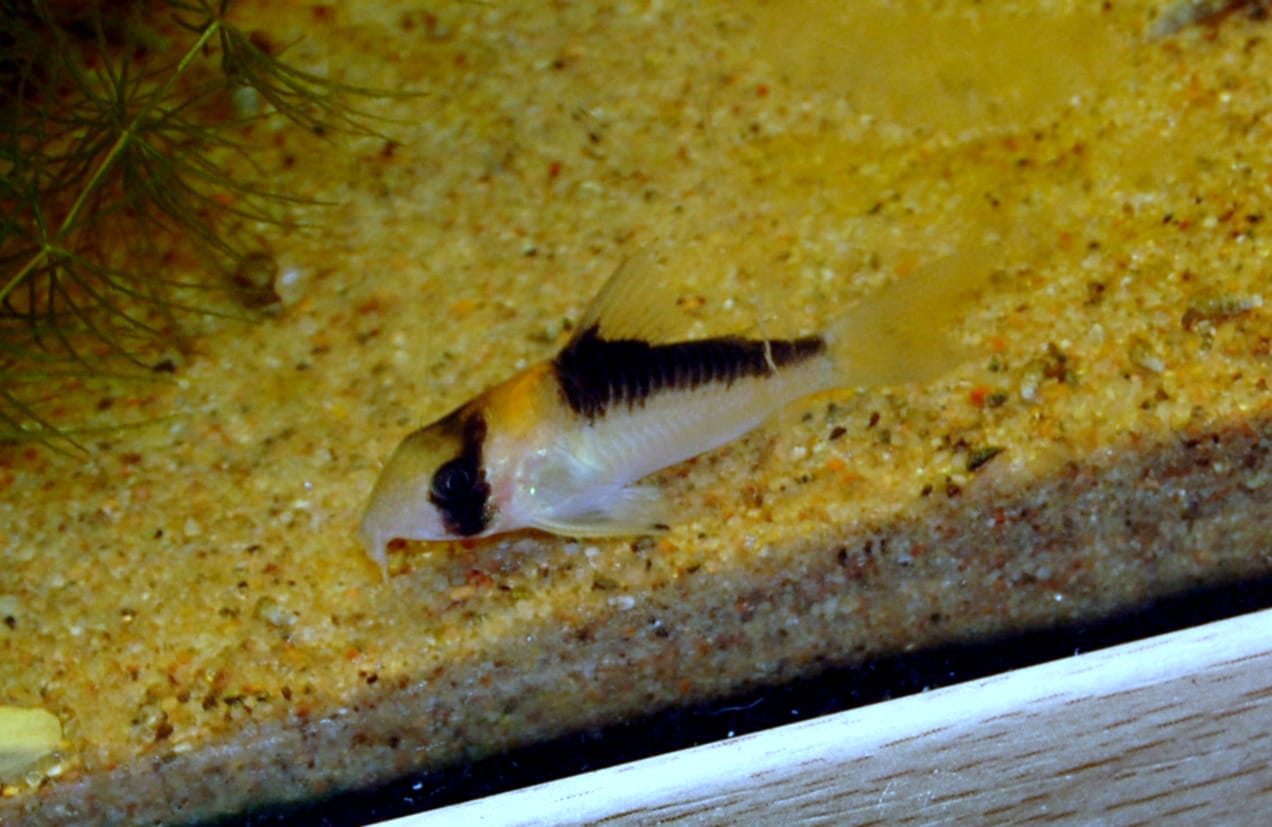
Adolfo’s cory is one of the most distinctive corydoras species you’ll come across, and the color pattern is what makes it so memorable. The body is a clean, pale cream to light tan base color. Running across the top of the head from behind the eyes is a thick, jet-black band that extends along the dorsal ridge. Nestled just behind this dark band, right on the nape (the area between the head and the dorsal fin), sits a vibrant orange to golden-yellow patch. This combination of pale body, black band, and bright orange nape creates a striking contrast that makes Adolfo’s cory instantly recognizable.
The fins are largely transparent or lightly tinted, with no significant markings. The body shape follows the classic corydoras blueprint: compact, laterally compressed, with two rows of overlapping bony scutes along each side. They have the typical downturned mouth with two pairs of barbels used for probing the substrate.
The most common identification mistake is confusing Adolfo’s cory with Corydoras duplicareus. The two species look remarkably similar, but C. duplicareus has a noticeably wider and more vivid orange band that extends further along the back. In C. adolfoi, the orange patch is more compact and contained in the nape area. If the orange band is broad and extends well into the dorsal area, you’re likely looking at C. duplicareus. Both species come from similar blackwater habitats and require the same care, so a misidentification isn’t a disaster, but it’s good to know which one you actually have.
Male vs. Female
Sexing Adolfo’s corys follows the same pattern as most corydoras species. Females are larger and noticeably rounder when viewed from above, especially when carrying eggs. They have a wider body profile, particularly around the belly and pectoral area. Males are slimmer, slightly smaller, and more streamlined. When viewed from the front or above, the difference in girth is usually obvious in mature specimens. Both sexes show identical coloration and patterning, so body shape is the primary way to tell them apart.
Average Size & Lifespan
Adolfo’s cory is a small to medium-sized corydoras, reaching a maximum length of about 2.2 inches (5.5 cm). Females tend to be slightly larger than males. Most specimens you’ll find at retailers are juveniles around 1 to 1.5 inches, so they will grow a bit once settled into your tank, but they won’t get much bigger than that.
With proper care in the right water conditions, Adolfo’s corys can live 5 to 8 years. Reaching the upper end of that range depends on maintaining stable, soft water, providing a varied diet, and keeping them in a stress-free environment with compatible tank mates. Fish kept in water that’s too hard or alkaline for their preferences tend to be more susceptible to health issues over time, which can shorten their lifespan.
Corydoras adolfoi is a striking mid-sized cory with distinctive black banding. It prefers soft, slightly acidic water and is more sensitive to water quality than hardy species like C. aeneus or C. paleatus.
Care Guide
Tank Size
A 20-gallon (76 liter) tank is the minimum for a group of 6 Adolfo’s corys. A 20-gallon long is the better choice over a 20-gallon tall because these bottom dwellers benefit from more floor space rather than more vertical height. If you’re planning a larger group of 8 to 10 (which they’ll appreciate), step up to a 30-gallon (114 liter) or bigger. Since they prefer dimmer conditions and tend to stay near the bottom, floor space and shelter are what matter most.
Water Parameters
| Parameter | Recommended Range |
|---|---|
| Temperature | 72 to 79°F (22 to 26°C) |
| pH | 5.0 to 7.0 |
| Hardness | 1 to 10 dGH |
| Ammonia / Nitrite | 0 ppm |
| Nitrate | Below 20 ppm |
Water chemistry is where Adolfo’s cory separates itself from the “easy” corydoras species. This fish genuinely prefers soft, acidic water, and it does its best when conditions lean toward the blackwater end of the spectrum. A pH in the 5.5 to 6.5 range with very low hardness is ideal. You can keep them in neutral water (pH 7.0) if the hardness is low, but pushing above that isn’t recommended.
If your tap water is moderately hard or alkaline, you’ll likely need to use RO (reverse osmosis) water remineralized to the appropriate softness. Adding Indian almond leaves, alder cones, or other botanical tannin sources not only helps lower pH naturally but also recreates the kind of environment these fish evolved in. A blackwater setup with tannin-stained water isn’t strictly required, but Adolfo’s corys will show their best color and behavior in those conditions.
Like all corydoras, Adolfo’s cory is an obligate air breather. You’ll see them dart to the surface periodically to gulp air, which is processed through a modified section of their intestine. This is completely normal. Constant, frantic surface dashing, however, could indicate a water quality problem.
Filtration & Water Flow
Gentle to moderate filtration is the way to go. In the wild, these fish come from slow-moving streams and tributaries, not rushing rivers. A sponge filter is an excellent choice because it provides biological filtration without creating strong currents and won’t suck up fry if you happen to get a spawn. Hang-on-back filters work fine too, just make sure the output isn’t blasting the substrate area.
Keep the water well-filtered and stable. Adolfo’s corys are less tolerant of water quality swings than hardier species like bronze corys. Consistent weekly water changes of 20% to 25% with properly matched water (same temperature, pH, and hardness) will go a long way toward keeping them healthy. Sudden changes in water chemistry can stress blackwater species more than you’d expect.
Lighting
Adolfo’s corys come from dimly lit blackwater streams where tannin-stained water and forest canopy filter out most of the light. In the aquarium, they’re most comfortable and active under subdued lighting. Bright overhead LEDs running at full intensity all day will make them hide more and show less color. Floating plants are your best friend here, as they diffuse light naturally and create the kind of dappled shade these fish are accustomed to. If you’re running a higher-tech planted tank, just make sure there are shaded retreat areas.
Plants & Decorations
Adolfo’s corys are completely plant-safe. They won’t eat or uproot plants, making them ideal residents for planted tanks. Low-light plants that match their preferred dim conditions work best: java fern, anubias, cryptocorynes, and java moss are all excellent choices. Floating plants like Amazon frogbit, dwarf water lettuce, or red root floaters are practically mandatory for creating comfortable light levels.
For hardscape, driftwood is the standout choice. It leaches tannins that naturally soften and acidify the water, which is exactly what Adolfo’s corys want. Malaysian driftwood, spider wood, and mopani wood all work well. Dried Indian almond leaves and other botanical litter scattered across the substrate replicate their natural leaf litter habitat beautifully. Smooth rocks and coconut caves provide additional hiding spots. Avoid anything with rough or sharp edges that could damage their barbels.
Substrate
Fine, smooth sand is the only appropriate substrate for Adolfo’s corys. This isn’t optional. Like all corydoras, they spend their lives sifting through substrate with their sensitive barbels, and rough or coarse gravel will grind those barbels down to nothing. Play sand, pool filter sand, or dedicated aquarium sand (like CaribSea Super Naturals) all work perfectly.
One of the most enjoyable things about keeping corys on sand is watching them take mouthfuls of substrate, filter out tiny food particles, and expel the clean sand through their gills. It’s their primary feeding behavior, and you simply can’t see it happen on gravel. For a blackwater-style setup, you can add a layer of dried leaves on top of the sand to really complete the natural look.
Is the Adolfoi Cory Right for You?
Before you buy, run through this honest checklist. The Adolfoi Cory is a great fish for the right keeper, but it is not for everyone.
- You keep a warm-water tank (79 to 84F) or a discus community setup
- You can provide soft, acidic water (pH 5.5 to 7.0) that mimics Rio Negro conditions
- You are willing to pay premium prices for a wild-caught or specialty-bred corydoras
- You can keep a group of 6+ on fine sand substrate
- You want one of the most elegant looking corydoras with clean black and orange markings
- You have experience maintaining stable blackwater parameters
Tank Mates
Adolfo’s corys are peaceful, non-aggressive fish that completely ignore other species. The main consideration for tank mates is finding fish that also thrive in soft, acidic water. Pairing them with hard water species creates a compromise where nobody is in their ideal conditions.
Best Tank Mates
- Cardinal tetras, the quintessential blackwater companion that shares the same Rio Negro habitat
- Green neon tetras, another Rio Negro native that thrives in identical conditions
- Rummy-nose tetras, a soft water species that pairs beautifully
- Pencilfish (Nannostomus species), peaceful, small, and adapted to acidic water
- Apistogramma dwarf cichlids, soft water specialists that occupy mid to lower tank levels
- Otocinclus, gentle algae eaters that do well in softer water
- Hatchetfish, top-dwelling fish that stay completely out of the corys’ way
- Other blackwater corydoras, species like C. duplicareus or C. burgessi from similar habitats
Tank Mates to Avoid
- Hard water species (African cichlids, livebearers like mollies and platies) that need alkaline conditions
- Large or aggressive cichlids (oscars, jack dempseys) that will harass or eat them
- Aggressive bottom dwellers that compete for territory on the substrate
- Any fish large enough to swallow them, corydoras have lockable pectoral spines that can injure or choke predators
- Boisterous, fast-moving fish that will outcompete them for food and stress them out
Food & Diet
Adolfo’s corys are omnivores that forage constantly along the substrate. In the wild, their diet consists of insect larvae, worms, small crustaceans, and organic debris sifted from sandy bottoms. In the aquarium, they’re not particularly fussy eaters, which is a nice contrast to their pickier water chemistry requirements.
A high-quality sinking pellet or wafer should be the foundation of their diet. Hikari sinking wafers, Repashy gel foods (Bottom Scratcher and Soilent Green are both good options), and similar products work well. Supplement regularly with frozen or live foods: bloodworms, brine shrimp, daphnia, tubifex worms, and blackworms are all eagerly accepted. Protein-rich live foods are especially important for conditioning breeding groups.
The biggest feeding mistake in community tanks is assuming your corys are eating enough just because you’re feeding the tank. Midwater fish are almost always faster to the food. Drop sinking pellets after lights out, or target-feed by placing wafers right near where your corys like to hang out. Watching a group of Adolfo’s corys mob a freshly dropped wafer is one of the more entertaining sights in the hobby.
Breeding & Reproduction
Breeding Adolfo’s cory is considered difficult, and it’s one of the more challenging corydoras species to spawn in captivity. The main hurdle is water chemistry. These fish need very soft, acidic water to trigger spawning behavior, and even then, success isn’t guaranteed. That said, hobbyists who specialize in blackwater fish have managed it, so it’s far from impossible if you’re dedicated.
Breeding Difficulty
Difficult. The water chemistry requirements for spawning are more specific than most corydoras species, and the fry can be sensitive during early development. This is not a species for your first corydoras breeding attempt. Start with bronze or peppered corys to learn the basics, then work your way up to blackwater specialists like Adolfo’s cory.
Spawning Tank Setup
Set up a dedicated breeding tank of 10 to 20 gallons. Use a bare bottom or a very thin layer of fine sand to make egg collection easier. Include smooth surfaces for egg deposition: glass walls, broad plant leaves (anubias or java fern), and flat stones or slate tiles. Run a sponge filter for gentle filtration that won’t endanger eggs or fry. Keep lighting dim and provide some cover with floating plants or driftwood.
Water Conditions for Breeding
This is where things get specific. Breeding water should be very soft (1 to 4 dGH) and acidic (pH 5.5 to 6.5). Using RO water with minimal remineralization is often necessary to achieve these parameters. The classic corydoras spawning trigger is a large, cool water change that simulates the onset of the rainy season. Drop the temperature by 4 to 6°F with a 50% to 70% cooler water change. Some breeders repeat this over several consecutive days to mimic the natural seasonal transition.
Conditioning & Spawning
Condition your breeding group (aim for 2 males per female) with heavy feedings of live and frozen protein-rich foods for 2 to 4 weeks before attempting to trigger spawning. Bloodworms, blackworms, daphnia, and live brine shrimp are all excellent choices. You want the females visibly plump with eggs before initiating the cool water changes.
When spawning occurs, Adolfo’s corys follow the standard corydoras T-position behavior. The male positions himself perpendicular to the female, who cups her pelvic fins to receive a small batch of eggs. She then swims to a chosen surface and carefully deposits the adhesive eggs, either individually or in small clusters. A single spawning event may produce 20 to 60 eggs, which is on the smaller side compared to more prolific species like bronze corys.
Egg & Fry Care
Remove either the eggs or the adults after spawning, since corydoras will eat their own eggs. Carefully scrape the adhesive eggs from surfaces using a razor blade or credit card and transfer them to a separate hatching container with matching water parameters. Add a few drops of methylene blue to prevent fungal growth, which is a common issue in the very soft water these eggs require.
Eggs typically hatch in 3 to 5 days depending on temperature. Fry absorb their yolk sacs over the next 2 to 3 days, after which they become free-swimming. Feed newly free-swimming fry with microworms, vinegar eels, and baby brine shrimp (BBS). Keep the rearing container impeccably clean with small daily water changes using matched water. Growth is relatively slow, and the fry can be sensitive to water quality swings during the first few weeks.
Common Health Issues
Barbel Erosion
The most common problem across all corydoras species, and it’s almost always caused by improper substrate. Sharp gravel, crushed coral, or even rough sand will wear down the sensitive barbels over time, eventually making it difficult for the fish to locate food. The only fix is prevention: use fine, smooth sand from the start. If you notice barbel damage, switch substrates immediately. Barbels can partially regrow in clean conditions, but badly eroded barbels may never fully recover.
Ich (White Spot Disease)
Adolfo’s corys can contract ich, and like all scaleless or armored catfish, they’re more sensitive to common ich medications containing copper or malachite green. If ich appears, the heat treatment method (raising temperature to 86°F for 10 to 14 days) is generally the safest approach, though be aware that 86°F is at the upper end of this species’ comfort zone. If you use medication, dose at half the recommended strength and monitor the fish closely for signs of stress.
Stress-Related Issues
Because Adolfo’s corys are more sensitive to water chemistry than common corydoras, they’re more prone to stress-related problems when kept outside their preferred parameters. Symptoms include loss of color, reduced appetite, excessive hiding, and increased susceptibility to bacterial infections. Maintaining stable, soft, acidic water is the best preventive measure. Sudden pH swings, hardness changes, or temperature fluctuations hit blackwater species harder than more adaptable fish.
General Prevention
Quarantine all new fish for at least two weeks before adding them to an established tank. Perform consistent weekly water changes with properly matched water. Keep nitrates below 20 ppm, and ideally below 10 ppm for this species. Avoid sudden changes in temperature, pH, or hardness. A stable environment is far more important than hitting a perfect number on any one parameter.
Common Mistakes to Avoid
- Keeping them in hard, alkaline water. Adolfo’s cory is not a “fits any tank” species. They need soft, acidic conditions and will slowly decline in hard, high-pH water. If your tap water is above 10 dGH or pH 7.5, you’ll need to use RO water or choose a different cory species.
- Using gravel instead of sand. This applies to every corydoras species, but it bears repeating. Gravel destroys barbels and prevents their natural sifting behavior. Fine, smooth sand only.
- Buying just one or two. Adolfo’s corys are social fish that need a group of at least 6 to feel secure. Yes, they’re expensive. But a lone cory hiding behind a rock all day isn’t really keeping the species. Budget for a proper group or wait until you can.
- Neglecting targeted feeding. In a community tank, faster fish eat everything before it reaches the bottom. Your corys need dedicated sinking foods dropped near their territory, ideally after lights out.
- Confusing them with C. duplicareus and not caring. Both species need the same care, so a mix-up doesn’t affect husbandry. But if you’re trying to breed them, you need to know exactly which species you have to avoid hybridization.
Where to Buy
Adolfo’s cory is not a fish you’ll find at most chain pet stores. It’s a specialty species that’s typically available through online retailers, dedicated aquarium shops, or hobbyist breeders. Prices tend to run higher than common corydoras, often $15 to $30+ per fish depending on size and source. Wild-caught specimens are still imported periodically, and some captive-bred stock is available from specialty breeders.
For the best selection and healthiest stock, check these trusted online retailers:
- Flip Aquatics. Great selection of specialty corydoras with reliable shipping and healthy arrivals.
- Dan’s Fish. Known for quality livestock and transparent sourcing on their fish.
Because of their higher price point, buying a group of 6 can feel like a significant investment. Look for bundle pricing or group discounts, as many specialty retailers offer better per-fish pricing when you buy a full shoal.
Frequently Asked Questions
What is the difference between Corydoras adolfoi and Corydoras duplicareus?
The most reliable difference is the width of the orange nape band. In C. adolfoi, the orange patch is relatively narrow and confined to the nape area between the head and dorsal fin. In C. duplicareus, the orange band is noticeably wider and extends further along the back. Both species come from similar blackwater habitats and need the same care, so the distinction matters most for breeding purposes and accurate identification.
Are Adolfo’s corys good for beginners?
Not really. Their need for soft, acidic water makes them more demanding than common corydoras species like bronze, peppered, or sterbai corys. If you’re new to corydoras, start with one of those hardier species to learn the basics. Once you’re comfortable with corydoras care and potentially have experience with blackwater setups, Adolfo’s cory is a great next step.
How many Adolfo’s corys should I keep?
A minimum of 6, and more is always better. In larger groups of 8 to 10+, they’re more active, more confident, and show better coloration. Keeping fewer than 6 usually results in stressed, hiding fish that never really settle in.
Can Adolfo’s corys live in a community tank?
Yes, as long as the other fish also thrive in soft, acidic water. They pair perfectly with cardinal tetras, pencilfish, Apistogramma cichlids, and other blackwater species. The challenge is that many popular community fish prefer harder, more neutral water, which limits your tank mate options somewhat.
Why are Adolfo’s corys so expensive?
Several factors drive the price. They’re found in a relatively remote area of the Rio Negro basin, making wild collection costly. They’re harder to breed in captivity than many other corydoras due to their specific water chemistry needs, which limits captive-bred supply. And demand for this strikingly colored species stays consistently high among serious hobbyists. All of that adds up to a premium price tag.
Do Adolfo’s corys need blackwater conditions?
They don’t strictly require tannin-stained blackwater, but they definitely do best in it. The key requirements are soft water (under 10 dGH, ideally under 5) and acidic pH (5.5 to 6.5). You can achieve those parameters without tannins, but adding Indian almond leaves and driftwood naturally creates the right chemistry and gives the fish a more natural environment. Captive-bred specimens tend to be a bit more flexible than wild-caught fish.
Why does my Adolfo’s cory keep darting to the surface?
This is normal corydoras behavior. All corydoras are obligate air breathers that regularly gulp air from the surface, processing it through a modified section of their intestine. Occasional trips to the surface throughout the day are perfectly healthy. If the behavior becomes constant and frantic, that’s a sign to check your water quality and oxygen levels.
How the Adolfoi Cory Compares to Similar Species
Adolfoi Cory vs. Sterbai Cory
Both are warm-water corys that work in discus tanks. The Sterbai is more widely available, cheaper, and slightly more tolerant of harder water. The Adolfoi has a cleaner, more elegant appearance but needs softer, more acidic conditions. For most warm-water setups, the Sterbai is the more practical choice. The Adolfoi is for the keeper who wants something more refined.
Adolfoi Cory vs. Panda Cory
These are opposite-end corys in terms of temperature preference. The Panda does best in cooler water (68 to 77F), while the Adolfoi thrives in warm water (79 to 84F). Never keep them together. Choose based on your tank temperature.
Expert Take (Mark Valderrama, AquariumStoreDepot)
After 25 years in the hobby and time managing fish stores, the adolfoi cory is one of those species I always recommend to hobbyists ready to move beyond the basics. Corydoras adolfoi is a striking mid-sized cory with distinctive black banding. It prefers soft, slightly acidic water and is more sensitive to water quality than hardy species like C. aeneus or C. paleatus. Soft water is not optional for adolfoi cories long-term. In hard tap water, they lose color and become prone to bacterial infections – this species needs water chemistry that matches its soft Amazonian origin.
Closing Thoughts
Adolfo’s cory is one of those fish that rewards you for putting in the extra effort. The combination of that jet-black head band and luminous orange nape patch makes it genuinely one of the most beautiful corydoras species available, and seeing a group of them foraging together across a sandy, leaf-littered bottom is the kind of sight that makes all the water chemistry fussing worth it.
This isn’t a fish for every tank or every keeper, and that’s perfectly fine. If you’ve got the soft, acidic water conditions dialed in (or you’re willing to set up a dedicated blackwater system), Adolfo’s cory will be one of the most visually stunning and rewarding bottom dwellers you’ll ever keep. Just give them sand, soft water, a proper group, and targeted feedings, and they’ll reward you with years of that unmistakable flash of orange and black gliding across the bottom of your tank.
Have you kept Adolfo’s corys? I’d love to hear about your experience with these beautiful catfish. Drop a comment below!
Recommended Video
References
- Seriously Fish, Corydoras adolfoi species profile. seriouslyfish.com
- FishBase, Corydoras adolfoi (Burgess, 1982). fishbase.se
- The Aquarium Wiki, Corydoras adolfoi. theaquariumwiki.com
- Practical Fishkeeping, Corydoras species guides. practicalfishkeeping.co.uk
- About the Author
- Latest Posts

I’m Mark Valderrama, founder of Aquarium Store Depot and a fishkeeper with over 25 years of hands-on experience. I started in the hobby at age 11, worked at local fish stores, and have kept freshwater tanks, ponds, and reef tanks ever since. I’ve been featured in two best-selling aquarium books on Amazon and built this site to share practical, experience-based fish keeping knowledge.
Leave a Reply