
Last Updated: June 25, 2026
Thank you for visiting! By the way… any links on this page that lead to products on Amazon and other stores/partners are affiliate links Aquarium Store Depot earns a commission if you make a purchase.
Table of Contents
- The Reality of Keeping Macmaster’s Dwarf Cichlid
- Key Takeaways
- Species Overview
- Classification
- Origin & Natural Habitat
- Appearance & Identification
- Average Size & Lifespan
- Care Guide
- Tank Mates
- Food & Diet
- Breeding & Reproduction
- Common Health Issues
- Common Mistakes to Avoid
- Where to Buy
- FAQ
- Closing Thoughts
- References
- What Most Care Guides Get Wrong
- Is the Macmaster’s Dwarf Cichlid Right for You?
- What It Is Actually Like Living With Macmaster’s Dwarf Cichlid
- Species Comparison
Macmaster’s dwarf cichlid is one of the most beautiful apistos in the hobby, and one of the least forgiving of sloppy water. They need soft, acidic conditions, a mature tank with established biofilm, and tank mates that will not outcompete them for food. Skip any of that and you will have a dull, hiding fish that dies within months. I have kept macmasteri in planted tanks for years and the difference between a thriving specimen and a dying one is entirely about water quality. The apisto that punishes lazy water changes harder than any other.
What Most Care Guides Get Wrong About Macmaster’s Dwarf Cichlid
The biggest misconception about Macmaster’s Dwarf Cichlid is that it’s “like a cockatoo apisto but more colorful.” It isn’t. Macmasteri punishes water quality lapses faster than A. cacatuoides will. In my 25 plus years in the hobby, I’ve watched buyers walk out with a male in peak color and come back two months later wondering what went wrong. They had the same general maintenance. What they didn’t have was soft enough water and consistent weekly changes. Macmasteri will show you every water quality slip within days. That’s not a disadvantage – it’s a diagnostic tool, if you know how to read it.
The Reality of Keeping Macmaster’s Dwarf Cichlid
Macmasters dwarf cichlids are stunning apistos that punish sloppy water quality faster than almost any other dwarf cichlid.
Water quality must be pristine. More sensitive to nitrate buildup than cockatoo or agassizii apistos. Weekly water changes are not optional.
Soft, acidic water is required. pH 5.0 to 6.5, hardness under 5 dGH. Hard water fades the color and stresses the fish.
Males are territorial but manageable. One male per 20-gallon tank with 2 to 3 females is the safe ratio. Multiple males need 40 gallons with heavy decoration.
They are cave spawners. Without caves, they will not breed. Coconut shells and clay pots are essential, not decorative.
Biggest Mistake New Macmaster’s Dwarf Cichlid Owners Make
Treating them like cockatoo apistos. Macmasters are less forgiving of water quality issues. What works for cacatuoides will not necessarily work for macmasteri. The water needs to be softer, cleaner, and more acidic.
Expert Take (Mark Valderrama, AquariumStoreDepot)
In 25 years in the hobby and time spent managing fish stores, macmasteri is the apisto I’ve seen fail most often in the first year – not because it’s fragile, but because people buy it without checking their tap water. Customers would come in, tell me their fish faded within a month, and when I asked about GH, they had no idea. Nine times out of ten, they were running 15 dGH out of the tap. Hard water kills the color and stresses the fish, slowly, over weeks. If your tap water is above 8 dGH, plan for RO or distilled blending before you buy. When you get the water right – soft, tinted, with leaf litter and caves – this fish becomes one of the most vivid and behaviorally interesting apistos in the genus. The water work is worth it.
Key Takeaways
- Stunning red-finned males: Male Macmaster’s Dwarf Cichlids display vivid red-orange caudal and dorsal fins that intensify dramatically during breeding and territorial displays.
- Manageable tank requirements: A 20-gallon tank with soft, slightly acidic water is sufficient for a pair, making this species accessible to hobbyists without massive setups.
- Cave spawners with devoted mothers: Females take primary responsibility for guarding eggs and fry, and can become surprisingly aggressive toward tank mates during this period.
- Sensitive to water quality: While hardy by Apistogramma standards, they still demand pristine water conditions with zero ammonia and nitrite. Consistent maintenance is essential.
- Best kept in pairs or harems: One male with two or three females is the ideal social arrangement. Multiple males in a small tank will result in constant aggression.
Species Overview
| Property | Details |
|---|---|
| Scientific Name | Apistogramma macmasteri |
| Common Names | Macmaster’s Dwarf Cichlid, Red-Shouldered Dwarf Cichlid, Villavicencio Dwarf Cichlid |
| Family | Cichlidae |
| Origin | Colombia (upper Meta River drainage) |
| Care Level | Intermediate |
| Temperament | Semi-aggressive |
| Diet | Carnivore (primarily) |
| Tank Level | Bottom to middle |
| Maximum Size | 3 inches (7.5 cm) |
| Minimum Tank Size | 20 gallons (75 liters) |
| Temperature | 72 – 82°F (22 – 28°C) |
| pH | 5.0 – 7.0 |
| Hardness | 1 – 5 dGH |
| Lifespan | 3 – 5 years |
| Breeding | Cave spawner |
| Breeding Difficulty | Moderate |
| Compatibility | Peaceful community with caution during breeding |
| OK for Planted Tanks? | Yes (highly recommended) |
Classification
| Taxonomic Rank | Classification |
|---|---|
| Order | Cichliformes |
| Family | Cichlidae |
| Subfamily | Geophaginae |
| Genus | Apistogramma |
| Species | A. Macmasteri (Kullander, 1979) |
Apistogramma macmasteri was formally described by Sven Kullander in 1979. The species was named in honor of Mark McMaster, an American aquarist who collected specimens from Colombia. It belongs to the macmasteri species group within the genus, which also includes several closely related species like A. Viejita and A. Hoignei. There has been considerable taxonomic confusion between A. Macmasteri and A. Viejita over the years, with some fish in the trade mislabeled between the two species. True A. Macmasteri can be distinguished by the red-orange coloration in the caudal and dorsal fins of males, while A. Viejita tends toward darker markings and different cheek patterning.
Origin & Natural Habitat
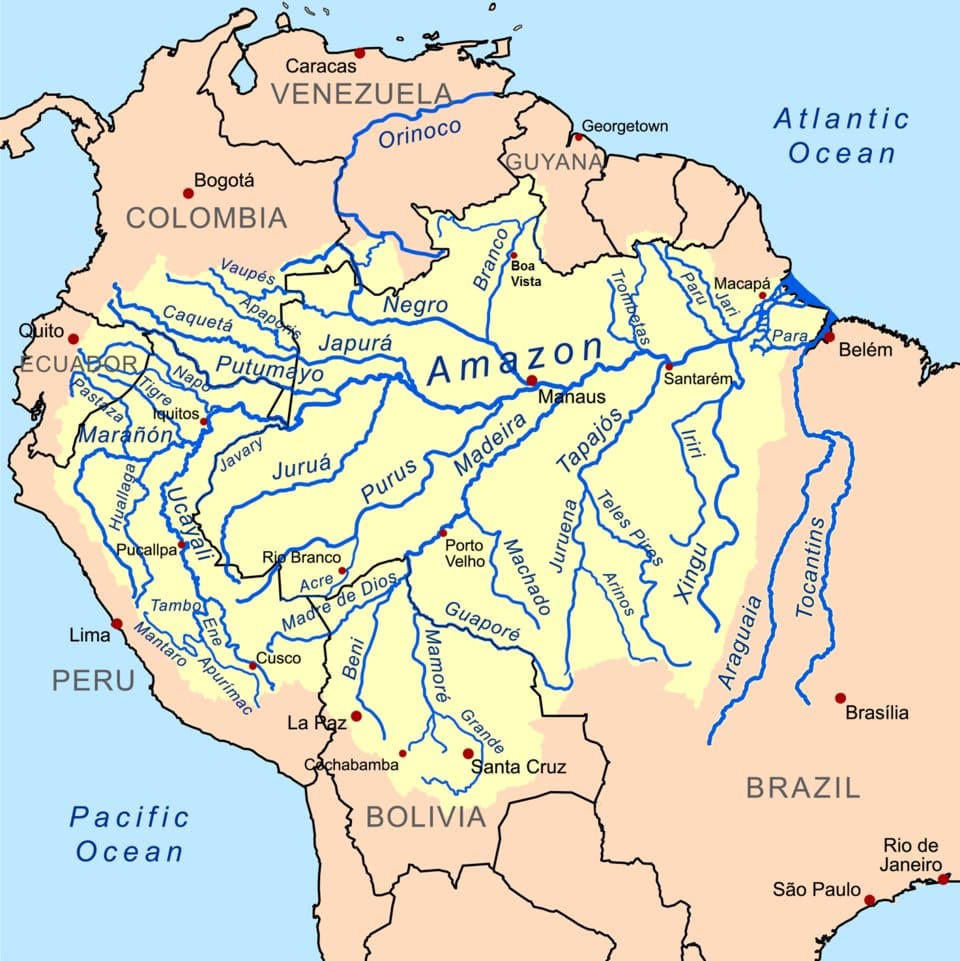
Macmaster’s Dwarf Cichlid is endemic to the upper Meta River system in Colombia, specifically the Rio Guaytiquía and Rio Metica drainages that flow through the department of Meta. This is Orinoco River basin territory, an area of lush tropical lowland forests and winding, often tea-colored waterways. The city of Villavicencio sits near the heart of this fish’s range, which is why you’ll occasionally see it sold under the name Villavicencio Dwarf Cichlid.
In the wild, A. Macmasteri inhabits slow-moving creeks and tributaries where fallen leaves, submerged roots, and overhanging vegetation create a complex, shaded environment. The substrate is soft sand or fine mud covered in decomposing leaf litter. Water conditions in these habitats are warm, soft, and slightly acidic, often stained amber by tannins leaching from organic material. These are not open-water fish. They stick close to cover, weaving through root tangles and leaf beds as they forage for tiny invertebrates. Understanding this habitat is crucial for setting up a successful aquarium for this species.
Appearance & Identification
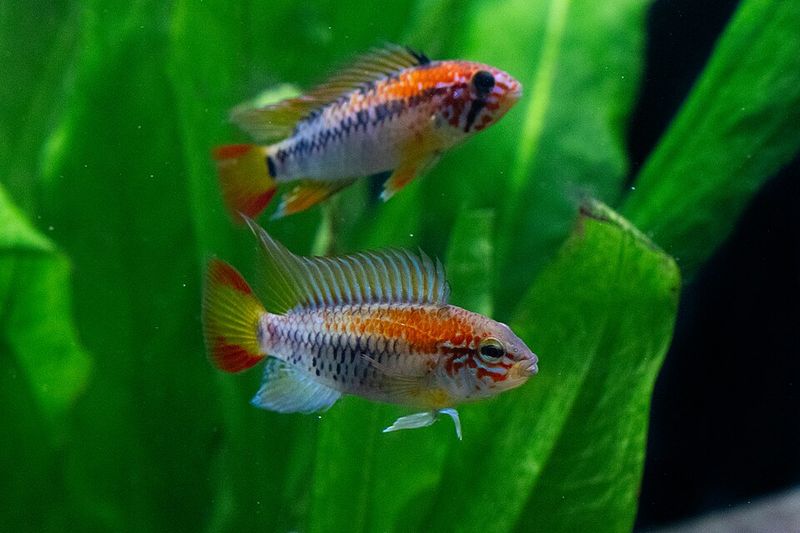
Male Macmaster’s Dwarf Cichlids are genuinely stunning fish. The body is laterally compressed with a base color that ranges from silvery-blue to golden-olive, overlaid with iridescent blue-green scales that shimmer under aquarium lighting. A prominent dark lateral band runs from the snout through the eye to the base of the tail, and depending on the fish’s mood, additional vertical bars may appear or fade. But the real showstopper is the finnage. Males develop brilliant red-orange coloration in the caudal fin and the rear portion of the dorsal fin, creating a dramatic contrast against the metallic body. The dorsal fin is tall and pointed, with subtle lyre-shaped extensions on the caudal fin in mature specimens.
Females are considerably less colorful but attractive in their own right. They display a warm yellow body color, especially when in breeding condition, with a more subdued lateral stripe and smaller, rounded fins. During spawning, the female’s yellow coloration intensifies dramatically, and she takes on a bold, almost golden appearance with contrasting dark markings. Both sexes have small, downturned mouths well-suited for picking invertebrates from the substrate.
Male vs. Female
| Feature | Male | Female |
|---|---|---|
| Size | Up to 3 inches (7.5 cm) | Up to 2 inches (5 cm) |
| Coloration | Iridescent blue-green body with red-orange fins | Yellow to olive body, subdued markings |
| Fins | Extended dorsal and caudal fins, pointed tips | Shorter, rounded fins |
| Body Shape | Slimmer, more elongated | Rounder, especially when gravid |
| Breeding Color | Intensified red-orange and blue hues | Bright yellow with bold dark lateral markings |
Sexing juvenile Macmaster’s Dwarf Cichlids is tricky, but once they reach about 1.5 inches (4 cm), the differences become increasingly obvious. Males begin developing their signature red-orange fin coloration and their fins start extending beyond what you see in females. By the time they hit full maturity, the size difference alone is a dead giveaway, with males outgrowing females by a significant margin.
Average Size & Lifespan
Males reach about 2.5 to 3 inches (6 to 7.5 cm) in the aquarium, while females stay noticeably smaller at around 1.5 to 2 inches (4 to 5 cm). These are true dwarf cichlids, and their compact size is a big part of their appeal. You don’t need a massive tank to enjoy them.
With proper care, Macmaster’s Dwarf Cichlids live 3 to 5 years in captivity. This is fairly standard for Apistogramma species. The keys to reaching the upper end of that range are consistent water quality, a varied diet, low stress, and appropriate social conditions. A well-maintained pair in a dedicated setup will sometimes exceed 5 years, but that’s the exception rather than the rule.
ASD Difficulty Rating
Intermediate | 5/10
Macmaster’s dwarf cichlid is manageable for intermediate keepers who can provide soft, acidic water and a properly decorated tank. The challenge is water chemistry – hard tap water kills the color and suppresses breeding. Get the water right and the rest of the care is straightforward.
Care Guide
Tank Size
A 20-gallon (75-liter) tank is the minimum for a single pair of Macmaster’s Dwarf Cichlids. If you want to keep a harem of one male with two or three females, step up to a 30-gallon (115-liter) or larger. Each female needs her own defined territory with at least one cave or sheltered spawning site, and cramming multiple females into too small a space leads to constant stress and aggression. A longer tank footprint is always preferable to a taller one for this bottom-to-mid-water species.
Water Parameters
| Parameter | Recommended Range |
|---|---|
| Temperature | 72 – 82°F (22 – 28°C) |
| pH | 5.0 – 7.0 |
| General Hardness (GH) | 1 – 5 dGH |
| KH | 1 – 4 dKH |
| Ammonia | 0 ppm |
| Nitrite | 0 ppm |
| Nitrate | < 20 ppm |
Captive-bred Macmaster’s Dwarf Cichlids are considerably more tolerant of varying water conditions than wild-caught specimens. If you’re purchasing tank-raised fish from a reputable breeder, they’ll adapt well to moderately soft, slightly acidic water without needing RO water or extreme blackwater conditions. That said, they still do best in soft, acidic water, and you’ll see the most vibrant coloration and natural behavior when parameters stay in the lower half of the ranges listed above. Avoid hard, alkaline tap water if possible. Weekly water changes of 10 to 15 percent are ideal, keeping things consistent rather than swinging parameters with large changes.
Filtration & Water Flow
Gentle filtration is the way to go with Macmaster’s Dwarf Cichlids. These fish come from slow-moving waters and don’t appreciate strong currents. A quality sponge filter is an excellent choice for a dedicated breeding setup, as it provides biological filtration without creating excessive flow and won’t trap fry. For a community tank, a hang-on-back filter or small canister filter with the output diffused works well. Aim for a turnover rate of about 4 times the tank volume per hour, but make sure the flow isn’t creating a current that blows these small fish around.
Lighting
Subdued lighting best replicates the shaded forest streams where A. Macmasteri lives in the wild. These fish are more active, less stressed, and more colorful under moderate to low light. If you’re growing live plants that need stronger light, use floating plants like Amazon Frogbit or Water Lettuce to create patches of shade below. Tannin-stained water from Indian almond leaves also naturally diffuses light and creates a beautiful, naturalistic atmosphere.
Plants & Decorations
A well-decorated tank is non-negotiable for this species. Think dense, complex, and full of hiding spots. Driftwood roots and branches should form the backbone of your hardscape, creating caves and overhangs that the fish will use for shelter and spawning. Add coconut shells, small clay pots turned on their sides, or purpose-built Apistogramma caves to provide dedicated spawning sites. Each female in the tank should have access to at least one or two potential cave sites within her territory.
Live plants are highly recommended. Java Fern, Anubias, Cryptocoryne species, and mosses like Java Moss or Christmas Moss all work beautifully. These plants thrive under the low-light conditions that A. Macmasteri prefers, and they add both visual appeal and biological filtration. Dried Indian almond leaves scattered across the substrate complete the look while releasing beneficial tannins and fostering microorganism growth that fry can feed on.
Substrate
Fine sand is the only appropriate substrate for Macmaster’s Dwarf Cichlids. These fish spend a significant amount of time sifting through the substrate looking for food, and gravel can damage their delicate gill structures and mouths. A soft, light-colored sand like pool filter sand or aquarium-specific sand works perfectly. Some keepers add a layer of dried leaves on top of the sand to mimic the natural leaf litter habitat, which is both functional and visually stunning.
Tank Mates
Best Tank Mates
The best tank mates for Macmaster’s Dwarf Cichlids are small, peaceful species that occupy different areas of the water column. These fish pair well with mid-to-upper water dither fish that help them feel secure without competing for territory at the bottom. Good choices include:
- Pencilfish (Nannostomus species). Ideal dither fish that stay in the upper water column
- Cardinal Tetras. Peaceful, prefer similar soft, acidic water conditions
- Rummy-Nose Tetras. Active schoolers that stay mid-tank
- Ember Tetras. Tiny, peaceful, and beautiful complement to Apistos
- Hatchetfish. Surface dwellers that won’t interfere with cichlid territories
- Corydoras (smaller species). Peaceful bottom dwellers, though watch for territory conflicts during breeding
- Otocinclus. Non-threatening algae grazers that keep to themselves
Tank Mates to Avoid
Avoid any aggressive or boisterous species that will bully or outcompete your Apistos. This means no other Apistogramma species in the same tank unless you have a very large setup with clearly defined territories. Also avoid:
- Other dwarf cichlids. Territory conflicts are almost guaranteed in typical tank sizes
- Larger cichlids. Even semi-aggressive species will dominate and stress Apistos
- Tiger Barbs or Serpae Tetras. Known fin nippers that will target the male’s elaborate finnage
- Large or aggressive Plecos. Can crush eggs and disturb spawning caves
- Fast-moving, hyperactive species. Create stress and can outcompete for food
Food & Diet
Macmaster’s Dwarf Cichlids are primarily carnivorous, feeding on small benthic invertebrates in the wild. In the aquarium, they do best on a varied diet of high-quality frozen and live foods supplemented with good-quality dry foods. Frozen bloodworms, brine shrimp, daphnia, and cyclops should form the foundation of their diet. Live foods like baby brine shrimp, grindal worms, and microworms are especially valuable for conditioning breeding pairs.
Most captive-bred specimens will accept high-quality sinking pellets and granules, and these can make up a portion of the daily feeding. However, don’t rely solely on dry foods. The best coloration, health, and breeding success come from a diet heavy on frozen and live options. Feed small amounts twice daily rather than one large feeding. These fish have small stomachs and do better with frequent, modest meals. Remove any uneaten food promptly to maintain water quality.
Is the Macmaster’s Dwarf Cichlid Right for You?
Honest assessment before you buy. Macmaster’s dwarf cichlid rewards patience and proper setup with some of the most spectacular color in the dwarf cichlid world – but it will not perform in hard water or an undersheltered tank.
- Good fit if: You have soft water (or are willing to blend with RO or distilled), have experience with water chemistry, and can dedicate a 20-gallon long to a pair or harem.
- Good fit if: You want a fish that actively shows you how good your husbandry is – vibrant color means you’re doing it right, and faded color tells you something is wrong before it becomes a crisis.
- Good fit if: You are ready to try dwarf cichlid breeding. Macmasteri is one of the more accessible Apistogramma species for first-time breeders, with willing pairs and manageable fry care.
- Think twice if: Your tap water is hard (above 8 dGH) and you are not prepared to work with RO or distilled blending. Hard water kills the color and stresses these fish over months.
- Think twice if: You want a beginner-friendly dwarf cichlid. Macmasteri is more demanding than cockatoo or borellii apistos and less forgiving of water quality lapses.
- Think twice if: You have a community tank with boisterous or nippy species. These fish need calm, peaceful tank mates and will hide constantly if stressed.
Breeding & Reproduction
Breeding Difficulty
Moderate. Macmaster’s Dwarf Cichlids are among the more readily bred Apistogramma species, making them a solid choice for hobbyists looking to try their hand at dwarf cichlid breeding for the first time. The challenge isn’t getting them to spawn, it’s raising the fry and managing the female’s aggressive behavior during brood care.
Spawning Tank Setup
A dedicated breeding tank of 10 to 20 gallons (40 to 75 liters) is ideal. Provide multiple cave-like structures using coconut shell halves, small clay pots, or purpose-built cichlid caves. The female will select her preferred cave and defend it vigorously. Include plenty of visual barriers using plants and driftwood so the male has refuge areas if the female becomes overly aggressive after spawning. A sponge filter is the safest filtration option, as it won’t trap tiny fry.
Water Conditions for Breeding
Breeding success improves significantly in soft, acidic water. Target a pH of 5.5 to 6.5, temperature around 78 to 80°F (26 to 27°C), and very low hardness (1 to 3 dGH). If your tap water is hard, mixing with RO or distilled water is often necessary. Indian almond leaves or alder cones can help lower pH naturally and release beneficial tannins. Stability matters more than hitting exact numbers, so make any adjustments gradually over days rather than all at once.
Conditioning & Spawning
Condition your breeding pair with frequent feedings of live and frozen foods for two to three weeks before attempting to breed. The female will signal readiness by intensifying her yellow coloration and spending increasing time near her chosen cave. When ready, she’ll deposit 60 to 120 eggs on the ceiling of the cave, in a tightly packed cluster. The eggs are small, reddish-brown, and adhesive.
The female takes primary responsibility for guarding the eggs and will fan them to keep water flowing over the clutch. At this point, she will become extremely aggressive toward the male and any other fish in the tank. In smaller setups, you need to remove the male to prevent him from being injured or killed by the brooding female.
Egg & Fry Care
Eggs hatch in 2 to 3 days at breeding temperatures. The wrigglers remain attached to the cave ceiling for another 4 to 5 days while they absorb their yolk sacs. Once they become free-swimming, the female will lead them around the tank in a tight school, fiercely protecting them from any perceived threats. First foods should be infusoria or commercially available liquid fry food, followed by freshly hatched baby brine shrimp (Artemia nauplii) once the fry are large enough to consume them. Growth is steady with proper feeding, and fry begin showing color at around 6 to 8 weeks.
Common Health Issues
Ich (White Spot Disease)
Ich is one of the most common diseases in freshwater aquariums, and dwarf cichlids are no exception. It presents as small white spots across the body and fins, accompanied by flashing (rubbing against objects) and clamped fins. Raising the temperature to 86°F (30°C) for 10 to 14 days combined with half-dose medication is the standard treatment approach. Prevention through quarantining new additions and maintaining stable temperatures is always preferable to treatment.
Hole-in-the-Head Disease (HITH)
Dwarf cichlids, including Apistogramma, are susceptible to Hole-in-the-Head disease, which manifests as small pits or erosions on the head and lateral line. It’s associated with poor water quality, inadequate diet, or high nitrate levels. Treatment involves improving water quality, diversifying the diet with vitamin-rich foods, and in severe cases, treating with metronidazole. Keeping nitrates consistently below 20 ppm goes a long way toward prevention.
Bacterial Infections
Stress from poor water quality, aggression, or sudden parameter swings can lead to bacterial infections that present as redness, fin erosion, or cotton-like growths. These secondary infections take hold when a fish’s immune system is compromised. The best prevention is maintaining pristine water conditions and minimizing stress. Broad-spectrum antibacterial treatment is effective when caught early.
Internal Parasites
Wild-caught specimens in particular may carry internal parasites that cause weight loss, hollow belly, and stringy white feces. If you acquire wild-caught A. Macmasteri, a prophylactic anti-parasitic treatment during quarantine is strongly recommended. Tank-raised fish are much less likely to carry parasites but should still be quarantined before introduction to your display tank.
Hard Rule: Never understock caves with macmasteri.
At least 3 caves per female in the tank. Without visual territory breaks, males chase females relentlessly. Females die from exhaustion in undersheltered setups even when well-fed. The caves are not decoration – they are the infrastructure this fish requires to survive.
Common Mistakes to Avoid
- Keeping them in hard, alkaline water: While captive-bred fish are adaptable, consistently hard water above 10 dGH will stress these soft-water fish and suppress their coloration. If your tap water is hard, invest in an RO unit or use distilled water to blend.
- Skipping the caves: Macmaster’s Dwarf Cichlids absolutely need cave-like shelters, both for security and spawning. A tank without caves is an incomplete setup that will lead to stress and failed breeding attempts.
- Overstocking with multiple males: Two or more males in a 20-gallon tank is a recipe for disaster. The subordinate male will be relentlessly harassed and may be killed. Stick to one male per tank unless you have 55 gallons or more with multiple territories.
- Neglecting water changes: These fish are sensitive to dissolved waste. Skipping water changes leads to elevated nitrates, which directly impact health and longevity. Stay consistent with weekly 10 to 15 percent changes.
- Using gravel substrate: Gravel can injure the delicate mouths and gills of these substrate-sifting fish. Always use fine sand as your substrate with Apistogramma species.
- Leaving the male with a brooding female in a small tank: Brooding females can be extremely aggressive, sometimes fatally so. Have a plan to remove the male if needed once spawning occurs.
Where to Buy
Macmaster’s Dwarf Cichlids are popular enough that you can find them through specialty fish retailers, though they’re not always available at big-box pet stores. I’d recommend checking these trusted online sources:
- Flip Aquatics. A reliable source for healthy dwarf cichlids with strong customer service and careful shipping practices.
- Dan’s Fish. Another excellent option for quality fish, with a wide selection of dwarf cichlid species at competitive prices.
When purchasing, look for active fish with bright coloration, clear eyes, and no signs of fin damage or disease. Ask the seller whether the fish are captive-bred or wild-caught, as this influences both their adaptability and any quarantine protocols you should follow. Captive-bred specimens are easier to acclimate and less likely to carry parasites.
FAQ
How many Macmaster’s Dwarf Cichlids can I keep in a 20-gallon tank?
A single pair is ideal for a 20-gallon tank. If you want to keep a harem of one male with two or three females, upgrade to at least a 30-gallon tank with multiple distinct territories and cave sites. Never keep two males in a 20-gallon tank.
Are Macmaster’s Dwarf Cichlids good for beginners?
They’re best suited for intermediate hobbyists who have experience maintaining stable water parameters and understand the basics of cichlid behavior. If you’ve successfully kept other community fish and are ready to step into dwarf cichlids, A. Macmasteri is a reasonable first choice, though species like A. Cacatuoides or A. Borellii are considered slightly easier.
Do Macmaster’s Dwarf Cichlids need soft water?
Soft, slightly acidic water brings out the best in this species. While captive-bred specimens can tolerate moderately soft to neutral water, you’ll see the most vibrant colors and natural behavior in soft water with a pH below 7.0. Hard, alkaline water should be avoided.
Can I keep Macmaster’s Dwarf Cichlids with shrimp?
Adult dwarf shrimp like Amano Shrimp are safe, but smaller species like Cherry Shrimp or Neocaridina will likely be hunted and eaten, especially baby shrimp. Apistos are natural micropredators and will actively seek out small invertebrates. If you’re running a breeding shrimp colony, keep them in separate tanks.
How can I tell if my Macmaster’s Dwarf Cichlid is stressed?
Stress signs include pale or washed-out coloration, clamped fins, hiding constantly (more than normal), loss of appetite, and rapid breathing. Dark stress bars that appear as vertical bands across the body are also a common indicator. Check your water parameters immediately if you notice these signs, as water quality issues are the most common cause of stress.
Will Macmaster’s Dwarf Cichlids eat plants?
No. This species is carnivorous and has no interest in eating aquarium plants. They may occasionally rearrange fine-leaved plants or dig small pits in the substrate near their territories, but they won’t cause any meaningful damage to your planted tank.
What It Is Actually Like Living With Macmaster’s Dwarf Cichlid
This is the part no other care guide gives you. Forget water parameters for a minute. Here is what it is actually like to share your tank with this species.
The first thing you notice is the territory claim. Within days of introduction, your male will have established a clear home base – usually around a cave or a piece of driftwood – and he will make it obvious when another fish crosses into his space. The display is worth watching: fins spread wide, lateral bands intensifying, body turned sideways. He is not actually aggressive toward most fish, but he makes the point clearly every time.
Breeding behavior is where this species really comes alive. When the female is ready, the courtship is unmistakable – the male’s reds and blues intensify to a degree that looks almost artificial. After spawning, the female takes over completely. She will move her fry from spot to spot across the tank floor, and if anything comes close, she engages fish three times her size without hesitation. A 1.5-inch female holding off a 3-inch corydoras is a sight you will not forget.
On a daily basis, macmasteri are more interactive than most dwarf cichlids. They learn your schedule, come to the front of the tank at feeding time, and react to movement outside the glass. The color is the constant feedback loop – when water quality slips, the male fades visibly within a few days. Bring the parameters back up, and the color returns. You will test your water more consistently with this fish than with any other in your fishroom.
How the Macmaster’s Dwarf Cichlid Compares to Similar Species
If you are deciding between dwarf cichlid species, the choice usually comes down to your water parameters and what behavior you want to watch.
Macmaster’s Dwarf Cichlid vs. Cockatoo Apisto (A. cacatuoides) , Choose the Cockatoo Apisto if your tap water is moderately hard or you are new to Apistogramma. Cacatuoides tolerates a wider parameter range and is more forgiving of lapses. Choose Macmaster’s Dwarf Cichlid if you can provide soft, acidic water and want more vivid color – the red-orange fin coloration on a male macmasteri in peak condition is more striking than anything cacatuoides can produce.
Macmaster’s Dwarf Cichlid vs. Agassiz’s Dwarf Cichlid (A. agassizii) : Choose Agassiz’s Dwarf Cichlid if you want a bolder fish with high-contrast markings and a longer, more streamlined body. Choose Macmaster’s Dwarf Cichlid if you want the red-shoulder coloration and a slightly more reliable first breeding experience – macmasteri females tend to be more consistent with fry care than agassizii on a first clutch.
Closing Thoughts
Macmaster’s apistos in clean, soft water glow. In hard, dirty water, they fade and die.
The Macmaster’s Dwarf Cichlid is one of those fish that reminds you why you got into the hobby in the first place. Watching a male display his fiery red fins to a potential mate, or seeing a female shepherd her tiny fry around the tank, is the kind of experience that makes all the water changes and parameter testing worthwhile. This isn’t the most demanding Apistogramma species out there, but it does reward careful husbandry with some of the most spectacular coloration you’ll find in a fish under 3 inches.
If you’re considering your first dwarf cichlid or looking to add another species to your collection, A. Macmasteri deserves serious consideration. Give it soft water, plenty of caves, a varied diet, and stable conditions, and it will repay you with years of color and personality.
This article is part of our South American Cichlids species directory. Explore more South American cichlid care guides.
References
- Seriously Fish. (n.d.). Apistogramma macmasteri. Retrieved from https://www.seriouslyfish.com/species/apistogramma-macmasteri/
- Froese, R. & Pauly, D. (Eds.). (2024). Apistogramma macmasteri in FishBase. Retrieved from https://www.fishbase.se/summary/Apistogramma-macmasteri.html
- Kullander, S.O. (1979). Species of Apistogramma (Teleostei, Cichlidae) from the Orinoco drainage basin, South America. Zoologica Scripta, 8(1-4), 69-79.
- Römer, U. (2006). Cichlid Atlas Volume 2: Natural History of South American Dwarf Cichlids. Mergus Publishers.
- About the Author
- Latest Posts

I’m Mark Valderrama, founder of Aquarium Store Depot and a fishkeeper with over 25 years of hands-on experience. I started in the hobby at age 11, worked at local fish stores, and have kept freshwater tanks, ponds, and reef tanks ever since. I’ve been featured in two best-selling aquarium books on Amazon and built this site to share practical, experience-based fish keeping knowledge.
Leave a Reply