

Thank you for visiting! By the way… any links on this page that lead to products on Amazon and other stores/partners are affiliate links Aquarium Store Depot earns a commission if you make a purchase.
Table of Contents
- Key Takeaways
- What Most Care Guides Get Wrong
- The Reality of Keeping Rosy Barb
- Species Overview
- Classification
- Introduction
- Varieties
- Rosy Barb Care Guide
- Diet And Nutrition
- Behavior And Compatibility
- Breeding Success: Tips and Techniques
- Preventing Health Issues (And Common Diseases)
- Purchasing And Acclimating Rosy Barbs
- Frequently Asked Questions
- Is the Rosy Barb Right for You?
- Species Comparison
- Closing Thoughts
- Recommended Video
The rosy barb is a coldwater fish that most people keep in tropical setups, and that is the first mistake. It does best in the mid-60s to low 70s Fahrenheit. Keep it at 78F long term and you shorten its lifespan, dull its color, and make it more susceptible to disease. It is also bigger than most people expect, reaching 4 to 6 inches, and needs a group of at least six to spread its natural assertiveness.
In the right conditions, male rosy barbs develop a deep pinkish-red coloration that is genuinely impressive. They are active, hardy, and make excellent tank mates for other coolwater species. This guide covers what actually matters for keeping them well, because the rosy barb is not a tropical fish. Treating it like one is the number one reason people get disappointing results.
Rosy barbs do not belong in 78-degree water. Get the temperature right and everything else follows.
What Most Care Guides Get Wrong About Rosy Barb
Most guides give you a cookie-cutter care sheet for Rosy Barb without mentioning the nuances. After 25+ years in this hobby, I have seen how small details in tank setup and maintenance make a real difference in long-term health. Another thing guides gloss over is temperament. Rosy Barb are often described with a single label, but their behavior shifts depending on tank size, tank mates, and territory. You need to plan for the worst-case scenario, not the best. Group size is another area where most guides fall short. Saying ‘keep them in groups’ is not enough. The difference between keeping 3 and keeping 8 or more is night and day when it comes to coloration, confidence, and natural behavior.
The Reality of Keeping Rosy Barb
The rosy barb is bigger than most people expect, reaching 4 to 6 inches in good conditions. That size means it outgrows nano tanks quickly and needs a minimum 30-gallon setup for a proper group.
Males in breeding condition are genuinely beautiful, with deep rose-red bodies and black-tipped fins. But that color requires competition. A single male with no rivals stays pale. Three or more males in a group transforms the color display entirely.
Like gold barbs, rosy barbs are subtropical and prefer temperatures between 64 and 72F. They tolerate warmer water but thrive in cooler setups.
Biggest Mistake New Owners Make
Underestimating their adult size. A 2-inch juvenile rosy barb from the pet store will be 4 to 5 inches within a year. A group of six 5-inch rosy barbs needs a 40-gallon tank minimum. Plan for the adult size on day one.
Expert Take
The rosy barb in a coolwater planted tank is one of the best kept secrets in the hobby. A group of eight in a 40-gallon with live plants, moderate flow, and temperatures around 68F produces males with color that rivals discus in intensity. It is a $3 fish that looks like a $30 fish when kept correctly.
Key Takeaways
- Rosy Barbs are vibrant fish native to India & Bangladesh, living up to 5 years with proper care.
- They do best in at least a 30 gallon tank with soft substrate, plants, and decorations.
- They are one of the most peaceful barbs and do well with many freshwater fish.
- They can live in room temperature water, making them coldwater fish in the aquarium trade
Species Overview
| Scientific Name | Pethia conchonius |
| Common Names | Rosy Barb, Red Barb |
| Family | Cyprinidae |
| Origin | Southeast Asia and Northern India |
| Diet | Omnivorous |
| Care Difficulty | Easy |
| Activity | Active |
| Life Expectancy | 5 – 7 years |
| Temperament | Peaceful – but will nip fancy finned fish |
| Tank Level | All levels |
| Minimum Tank Size | 30 gallons (114 liters) – recommended 40+ |
| Temperature Range | 64-72°F (18-22°C) |
| Water Hardness | 2 – 20 dKH |
| pH Level | 6.0 – 8.0 |
| Filtration/Water Flow | Low to Moderate |
| Water Type | Freshwater |
| Breeding | Egg Scatter |
| Difficulty to Breed | Easy |
| Compatibility | Community Tanks |
| OK, for Planted Tanks? | Yes – may eat some plants |
Classification
| Kingdom | Animalia |
| Phylum | Chordata |
| Class | Actinopterygii |
| Order | Cypriniformes |
| Family | Cyprinidae |
| Genus | Pethia |
| Species | P. Conchonius (Hamilton, 1822) |
Introduction
Rosy Barbs (Puntius conchonius), originating from Southern Asia, are a captivating freshwater species of fish. They boast beautiful colors and possess a gentle nature which makes them an ideal inhabitant in any community tank. This active and hardy cyprinid fish is not difficult to care for. Making it perfect for novice aquarists. They need larger tanks due to their liking to shoal up together, plus the fact that they may sometimes nip on other fish’s fins.
For this introduction part, we will explore more about where these lovely creatures come from, what physical traits Rosy Barb Fish carry with themselves, and how long one can expect them to live, along with details regarding size – so you’d be able to gauge whether your pond or aquarium is suitable or not before adding them! With all this knowledge at hand, you will feel confident enough when preparing the required environment needed by their barbs, giving way to the room to express its beauty in peace within a well run community tank setup.
Origins And Habitats
Rosy Barbs, scientifically known as Pethia Conchonius, have their natural habitat located in India and Bangladesh. Wild rosy barbs are most commonly found living around hill streams and rivers with swift currents full of oxygen-rich water mixed with plants and debris, providing the perfect environment for them to search for food items such as small invertebrates, plant matter, or detritus while also giving shelter from predators thanks to its one dorsal fin.
Although these attractive creatures have been introduced into other regions where feral populations may even be thriving now, Southern Asia is still considered its true home. It’s key then that when kept captive, Rosy Barbs should benefit from conditions similar to those of its native wild surroundings. Create an understanding between aquarium owners and aquatic creatures so they can enjoy a healthy life together without it straying too far away from nature.
Appearance
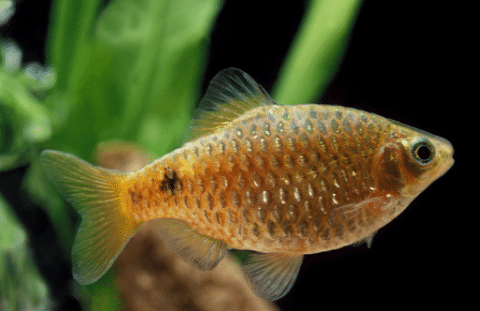
Rosy Barbs are a distinctively colored species that set them apart from other fish. The torpedo-shaped body of these barbs displays an iridescent pinkish hue with glossy scales, creating a vivid show when inside the designated rosy barb tank. Both male and females have a forked tail and only one dorsal fin.
Males have more brilliance in their coloring than females as they typically appear to be reddish orange whereas female Rosy Barbs will shimmer silver or golden tones. Males can also appear slimmer and leaner compared to the rounder shape females often present with.
Due to their attractive hues and unique structure, these creatures make beautiful companions for any community aquarium setting. Breeding is also easy to contain since sexing is easy to do (more on that later). Not only are Rozy Barb eye catching, but peaceful additions bring both life energy & vibrancy within your home environment alike.
Lifespan
Rosy Barbs, with proper maintenance and attention, can live up to five years. Taking care of their environment is key for them to reach that lifespan. This includes having ideal water quality as well as providing balanced nutrition and enough space for the fish to move around in harmony with other tank mates.
On the contrary, lack of effort on their living requirements will result in a shorter life expectancy, poor conditions such as bad water parameters, or stressful settings due to overcrowding and poor tankmates being some prime examples that should be avoided at all costs. Your beautiful freshwater Rosy Barb companions can look forward to a long life if you take heedful measures to ensure they are kept healthy and contented!
Size
Rosy barbs are an impressive breed of freshwater fish that can grow up to six inches in length in the wild (they grow only up to 4 in aquariums), making them quite large compared to other species. Consequently, a larger tank is needed for their comfort and proper development. Provide enough space so they have room to swim and socialize with any potential tank mates. This way, your Rosy Barbs will be able to thrive at their fullest size while exhibiting all the splendor these delightful creatures possess.
Varieties
Rosy Barbs can be found in a variety of subtypes these including the following (video source):
- Long finned
- Gold Neon
- Red Glass
The gold neon and long finned types are considered the more desirable types.
Rosy Barb Care Guide
Their active nature requires particular tank conditions for your Rosy Barbs to flourish. This involves choosing the right substrate and plants for them and carefully maintaining water parameters. With proper care, you can keep these fish for a long time.
Lets look further into this below.
Tank Requirements
Keeping Rosy Barbs requires at least a 30-gallon tank as they prefer to be in a group of 5 at minimum. An optimal setup would be in a 40-gallon aquarium that allows them to move freely and indulge in their regular behaviors more naturally. As these fish are quite active swimmers, it is ideal to use longer tanks if possible.
A filtration system with waterfall outflow has been found effective for replicating fast-flowing waters of their natural environment whilst helping maintain water quality, making it an essential part of the tank setup too! Keep the water temperature between 64°F and 72°F. Most homes will not need a heater to keep these aquarium fish happy.
Substrate And Plant Recommendations
When housing Rosy Barbs, an ideal choice of substrate is one that recreates the conditions found in their natural environment – fine sand or gravel. Decorations such as driftwood offer more locations for exploring and add visual interest too!
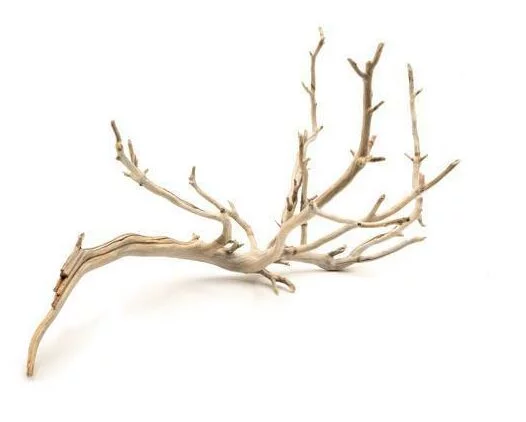
Manzanita Driftwood
Editor’s Choice
Manzanita offers it all. Great shape, low tannins, quick to water log and reasonably priced. It’s the ultimate driftwood!
As for aquatic plants, select ones with hard leaves since softer types may be damaged due to nibbling from these active fish. Java fern makes a great option here. Its tough leaves are resilient against munching! Anubias is another great option. I’ve seen some cases of a Rosy barb eating Java Fern. It can happen, but it can be prevented by feeding them well and keeping a larger tank.

Anubias
Anubias is hardy and more fish and inverts won’t bother it. An excellent choice for beginners!
Water Parameters
Rosy Barbs are known for their hardiness and can be kept in different water conditions. That being said, providing them with the optimal and stable environment will minimize their stress levels An aquarium suitable for Rosy Barbs should have a pH of 6.5-7.0 as well as a hardness between 2-10 dGH, while regular testing and temperature maintenance is essential to avoid health issues appearing in your fish friends’ home. Weekly partial changes should be done to manage nitrate levels. Keep ammonia levels, and nitrites non-existent with proper filtration and stocking.
Diet And Nutrition
Rosy barbs, as omnivorous fish, require a balanced diet to stay healthy. The primary source of nutrients and vitamins should be good quality flake food. Supplementing their meals with meaty foods like brine shrimp or small insects will give them extra protein for growth and energy. They will eat just about any food you provide them, including:
- Flake food
- Pellets
- Freeze dried food
- Frozen
- Live – cultivated
These fish are known for their appetite, but it’s necessary not to overfeed – the amount offered mustn’t exceed 1 to 2 minutes of eating time. If required, reduce portion size so that they don’t overeat!
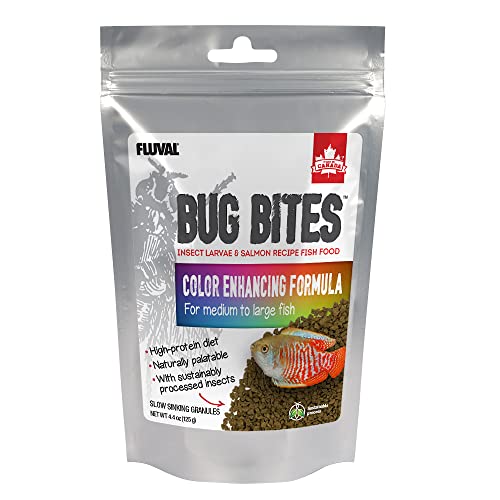
Fluval Bug Bites – Tropical Formula
Fluval bug bites tropical fish is an excellent staple food for most tropical fish. Made of black solider fly larvae
Behavior And Compatibility
When it comes to tank mates, Rosy Barbs are typically a good fit for community tanks. If housed in groups of at least five fish and provided with enough space, they should be peaceful and non-aggressive companions to similarly sized and behaved species. If kept in cramped conditions or stressed out, then fin nipping behavior may arise, so extra care must be taken when selecting suitable partners. To keep your aquarium inhabitants happy, you’ll need an adequate amount of room as well as careful consideration when choosing the right ones that will bring balance into this aquatic world!
Ideal Tank Mates
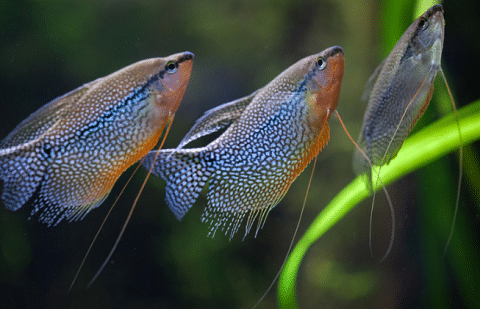 Pearl Gourami Fish” class=”wp-image-554652″/>
When it comes to Rosy Barb tank mates, you want to choose tank mates that share similar water conditions and have short fins. Opting for other Barb species as well as:
- Swordtails
- Gouramis
- Mollies
- Dither fish like Zebra Danios
- Neon Tetras
- Kuhli Loaches
- Clown Loaches
Goldfish can be housed with these barbs, but extra consideration should be made. They should be slim-bodied goldfish and not the fancy types. Fancy-tail goldfish are prone to get nipped.
When it comes to shrimp, only bamboo and amano are okay to try. For snails, nerites are great choices.
To prevent possible fin nipping incidents amongst long-finned fish partners. Pick ones with fast swimming speeds so they’re able to outmaneuver any aggression from your rosy barb tank mates quickly! By considering these guidelines when choosing suitable sidekicks for them, you will help build an ideal situation where all of your fish lives’ are stress free!
Bad Tank Mates
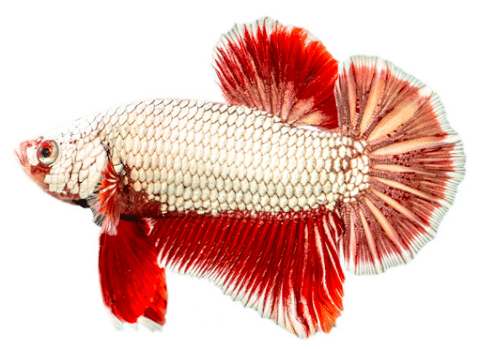
For healthy and peaceful aquariums, it is critical to pick compatible tank mates when introducing Rosy Barbs. Here are a few to avoid
- Fish with longer fins, such as Angelfish or Bettas
- Large cichlids
- Territorial fish
- Any fish that can fit your rosy barb in its mouth
Breeding Success: Tips and Techniques
Breeding Rosy Barbs can be an exceptionally fulfilling undertaking, as their vivid hues and curious conduct make them a captivating expansion to any fish tank. With some basic hints and strategies, you can build the odds of successful rearing and appreciate the cycle of bringing up another age of these delightful fish.
These fish are egg scatters, which means they will not watch over their young. Knowing this, you will want to put them in a container within a breeding tank where there is java moss. This will allow the male to chase the female until they breed. The eggs will get scattered across the java moss. Remove the parents after the eggs are laid. Free swimming fry can be fed powered fish food or infusoria. Shep’s Aquatics shows the process in more detail below.
Males Vs Females
The male Rosy Barbs stand out because of their vibrant red or orange hues, while the females are present in a more subdued gold and silver hue. Males, typically slimmer than their female counterparts, have rounder bodies with fuller shapes. With these distinctions, it is easy to distinguish between males and female fish when selecting breeding pairs, offering an improved chance for successful reproduction.
Utilizing this information, it allows one to make informed decisions on which sex will pair well together, ensuring a greater likelihood of success during mating season for rosy barbs.
Preventing Health Issues (And Common Diseases)
While keeping your barb fish healthy is easy compared to other freshwater fish, they still require attention and the monitoring of water parameters to prevent health issues, such as Ich. This common freshwater disease is a parasite that causes small white spots on the fish’s body, making it necessary to treat it immediately upon noticing symptoms.
To maintain optimal conditions for your Rosy Barbs and limit risk of illness from happening, keep their aquarium environment free of stress by keeping levels for ammonia and nitrate non-existent. Having regular partial water changes can support this effort toward preventing diseases like Ich (also known as white spot disease) or other unwelcome afflictions impacting them negatively. Quarantining is also a great best practice, but I’m aware many hobbyists do not do that.
It’s important that you monitor your fish’s well being closely so if they become sickened by any issue, swift action is taken. Doing what you must quickly could mean life versus death potentially being prevented depending on how bad things have gotten before finding out about those problematic circumstances affecting them specifically!
Purchasing And Acclimating Rosy Barbs
When shopping for Rosy Barbs, you can buy them from the majority of aquatic stores or online. These attractive fish are usually inexpensive. Males cost only a few dollars each, and discounts may be possible when purchasing in bulk. In fact, you can purchase these freshwater fish and other schooling fish by going to our partner Flip Aquatics and getting them there. They all are quarantined at Rob’s facility (he’s the owner). Check out my link in the box below for a special discount code.

Flip Aquatics
Use Promo Code ASDFLIPPROMO
Founded in 2010. Robert and his team at Flip Aquatics have set the standard for conditioned freshwater fish. One of the best selections of freshwater shrimp and nano fish on the internet
To ensure your new fishes adjust well to their environment, they need gradual acclimation – First, place the bag holding the barbs into your aquarium water and let it sit there for 15-20 minutes while incorporating small volumes of tank water at intervals during that period then releasing. This will help diminish stress levels as these barbs adapt better to this method. Fish purchased locally can be drip accumulated. Never drip accumulate a fish purchased online.
Frequently Asked Questions
How the Rosy Barb Compares to Similar Species
The most common alternative to the Rosy Barb is the Cherry Barb, another colorful, peaceful barb. Cherry Barbs are slightly smaller and show deeper red. Rosy Barbs are hardier and tolerate cooler water, making them a better choice for unheated tanks. Both are excellent community fish with minimal aggression.
What It Is Actually Like Living With Rosy Barb
Rosy barbs are active all day. They patrol the tank in a loose school, investigating every corner and responding to your presence at feeding time. The energy level is higher than cherry barbs but less chaotic than tiger barbs.
Males spar constantly in a group. Parallel swimming, fin-flaring, and brief chases that look aggressive but never result in damage. This sparring is what drives the color development.
They eat plants. Not all rosy barbs and not all plants, but soft-leaved species are at risk. Anubias and Java fern survive. Delicate stem plants are fair game.
Closing Thoughts
A male rosy barb in cool water during breeding condition has color that rivals fish ten times its price. Keep it at 78F and you will never see it.
In short, Rosy Barbs are an extraordinary fish species perfect for any freshwater community tank. They possess an eye-catching hue and a gentle character to match their hardiness. By providing the right care requirements, setting up proper conditions in the aquarium, and selecting appropriate companions from similar breeds of fish. You can create a balanced environment where these creatures will shine radiantly with vitality.
Have you kept a Rosy Barb in the past? Let us know your thoughts about this shoaling fish. We love to hear your experience as a fish keeper. Leave a comment below, and let’s have a conversation!
This guide is part of our Barbs: Complete Species Directory. Visit the hub page to explore care guides for all popular barb species.
This article is part of our Barb Species Directory. Visit the hub page to explore all species care guides.
Recommended Video
Check out this video covering barb species for your aquarium:
- About the Author
- Latest Posts

I’m thrilled that you found Aquarium Store Depot! Here you’ll find information on fish, aquariums, and all things aquatics related. I’m a hobbyist (being doing this since I was 11) and here to help other hobbyists thrive with their aquariums! I adhere to a high quality Editorial Process and Review products with real life field usage and practical analysis.

Leave a Reply to KK Cancel reply