
Last Updated: June 25, 2026
Thank you for visiting! By the way… any links on this page that lead to products on Amazon and other stores/partners are affiliate links Aquarium Store Depot earns a commission if you make a purchase.
Table of Contents
- What Most Care Guides Get Wrong
- The Reality of Keeping Ruby Tetra
- Key Takeaways
- Species Overview
- Classification
- Origin & Natural Habitat
- Appearance & Identification
- Average Size & Lifespan
- Care Guide
- Is This Fish Right for You?
- What People Get Wrong
- Tank Mates
- Food & Diet
- Breeding & Reproduction
- Common Health Issues
- Common Mistakes to Avoid
- Where to Buy
- Frequently Asked Questions
- What It Is Actually Like Living With Ruby Tetra
- How It Compares to Similar Species
- Closing Thoughts
- Recommended Video
- References
The ruby tetra is a tiny, jewel-colored fish that only shows its true colors in soft, acidic water with dim lighting and dark substrate. In a bright tank with hard water, it is a pale, forgettable micro fish. This species is living proof that the right environment makes or breaks a fish.
The smallest, reddest tetra that is also the hardest to keep.
Ruby tetras in the wrong water are invisible. In the right water, they are the most vivid micro fish in the hobby.
The Reality of Keeping Ruby Tetra
Group size is not a suggestion. The minimum school size for ruby tetra is not just a guideline. In small groups, these fish lose color, become stressed, and display abnormal behavior. A proper group of 6 to 8+ is where you start to see natural schooling behavior, full color expression, and the confidence that makes them worth keeping.
Hardy does not mean indestructible. The ruby tetra tolerates a range of conditions, but it still needs basic care. Ammonia spikes, dramatic temperature swings, and neglected water changes will catch up to even the toughest species. The difference is margin of error, not immunity.
Store appearance is not home appearance. Fish in store tanks are stressed, crowded, and under inappropriate lighting. The ruby tetra almost always looks better in a properly set up home aquarium than it does at the store. Dark substrate, live plants, and appropriate lighting bring out colors and behaviors you will never see in a retail environment.
Biggest Mistake New Owners Make
Keeping them with fish small enough to eat. This is a predator. It will eat anything it can fit in its mouth. If you stock smaller fish with a ruby tetra, you are feeding it expensive live food.
Ruby tetras are a fantastic nano schooling fish for the hobbyist who wants vivid color without a large footprint. The key is water chemistry — soft, acidic water with subdued lighting and a dark substrate is where this species shows its full potential. Get those conditions right, keep 8 or more, and they are one of the most striking small tetras in the hobby.
Key Takeaways
- True nano fish at just 0.6-0.8 inches (1.5-2 cm), ideal for planted nano tanks
- Deep ruby-red coloration that intensifies with proper water conditions and diet
- Requires soft, acidic water (pH 4.0-6.5) for best health and color
- Must be kept in groups of 10 or more for natural schooling behavior and confidence
- Moderate care level due to sensitivity to water quality and specific parameter needs
- Recently reclassified from Characidae to Acestrorhamphidae (Melo et al. 2024)
Species Overview
| Field | Details |
|---|---|
| Scientific Name | Axelrodia riesei |
| Common Names | Ruby Tetra |
| Family | Acestrorhamphidae |
| Origin | Upper Meta River basin, Colombia (Orinoco drainage) |
| Care Level | Moderate |
| Temperament | Peaceful |
| Diet | Omnivore (micropredator) |
| Tank Level | Mid |
| Maximum Size | 0.8 inches (2 cm) |
| Minimum Tank Size | 10 gallons (38 liters) |
| Temperature | 68-82°F (20-28°C) |
| pH | 4.0-6.5 |
| Hardness | 1-5 dGH |
| Lifespan | 3-5 years in captivity |
| Breeding | Egg scatterer |
| Breeding Difficulty | Difficult |
| Compatibility | Specialist nano community / species only |
| OK for Planted Tanks? | Yes |
Classification
| Taxonomic Level | Classification |
|---|---|
| Order | Characiformes |
| Family | Acestrorhamphidae (Melo et al. 2024) |
| Genus | Axelrodia |
| Species | A. Riesei (Géry, 1966) |
Ruby tetras are beautiful but water-quality sensitive. They need stable, soft, slightly acidic conditions and a mature tank to color up properly. Not recommended for beginners or tanks with inconsistent parameters.
Axelrodia riesei was described by Jacques Géry in 1966. The genus name honors Herbert R. Axelrod, the influential aquarium book publisher and ichthyology patron, while the species name honors Arnim Riese, who collected the original specimens.
Note on family placement: The ruby tetra was historically placed in Characidae, the large “catch-all” family for most South American tetras. However, a major phylogenomic revision by Melo et al. In 2024 moved Axelrodia and several related genera into the family Acestrorhamphidae. This is a small genus with only three described species: A. Riesei (ruby tetra), A. Lindeae, and A. Stigmatias.
Origin & Natural Habitat
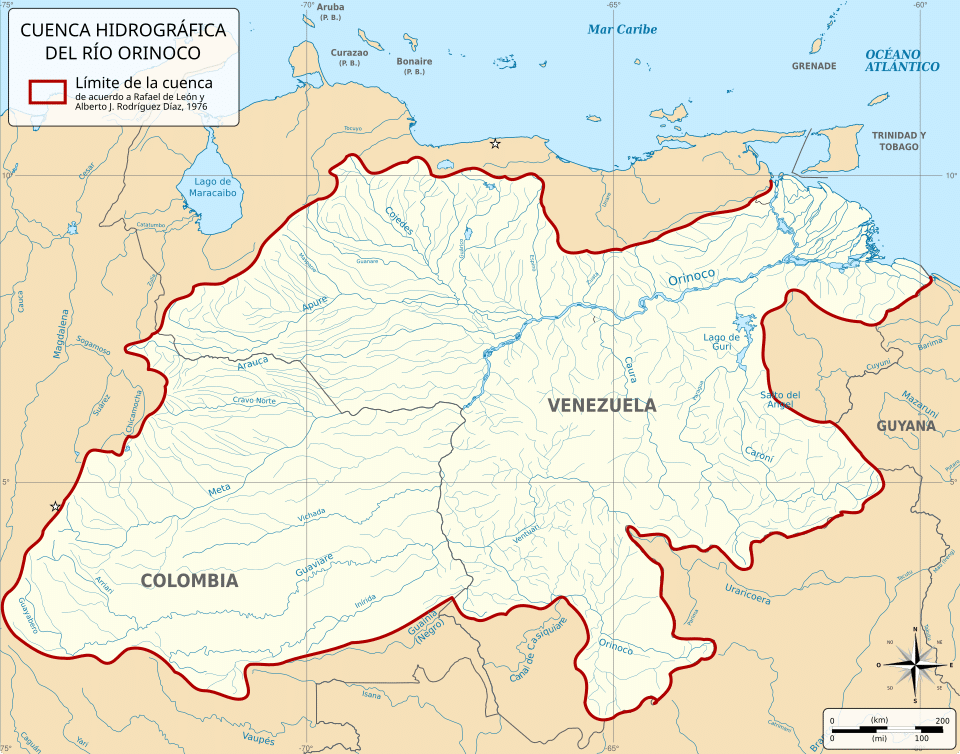
The ruby tetra comes from the upper Meta River basin in Colombia, which is part of the larger Orinoco River drainage system. This is a region of slow-moving, heavily shaded forest streams with extremely soft, acidic water. The water is often stained a deep amber-brown by tannins leaching from decomposing leaf litter and woody debris.
In the wild, these fish inhabit small, shallow streams with minimal current. The substrate is typically soft sand and mud covered with a thick layer of fallen leaves. Overhead canopy provides heavy shade, keeping light levels very low. The water parameters in these habitats is extreme by aquarium standards, with pH values as low as 4.0 and virtually no measurable hardness.
Understanding this natural habitat is key to keeping ruby tetras successfully. They evolved in water that most fishkeepers would consider unusable. Replicating at least some of those conditions, particularly the soft, acidic water chemistry and dim lighting, is essential for long-term health and the best coloration.
Appearance & Identification
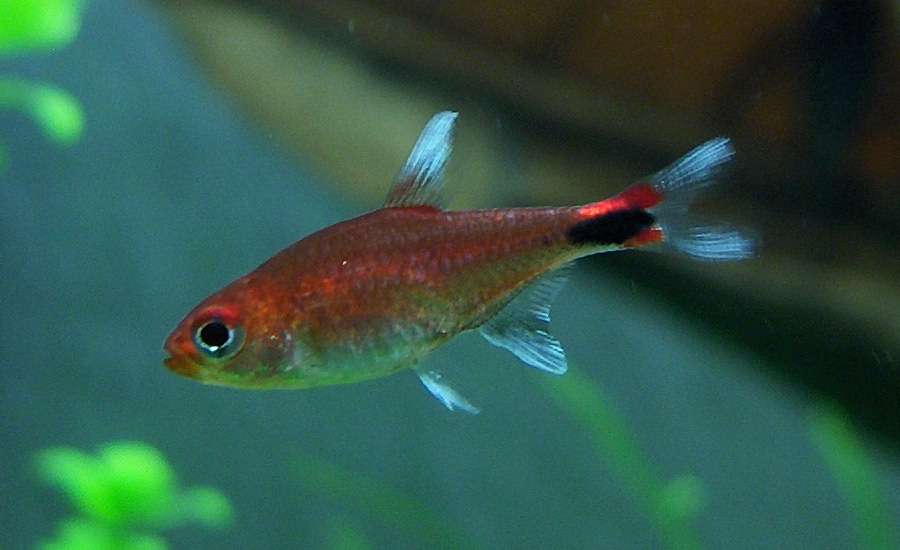
The ruby tetra’s most striking feature is its deep red to ruby-red body coloration. The body itself is somewhat translucent, with the red pigment concentrated along the flanks and intensifying toward the caudal peduncle. When conditions are right and the fish are healthy and settled, the red is remarkably intense for such a tiny fish. It’s not a subtle blush. It’s a rich, saturated ruby that catches the light beautifully.
The body shape is typical of small characins: compressed laterally with a slightly elongated profile. The fins are mostly transparent to slightly reddish. A faint dark spot may be visible at the base of the caudal fin. The eyes are relatively large for the body size, which is common in small species that inhabit dimly lit waters.
Color intensity varies significantly based on water conditions, diet, and stress levels. In hard, alkaline water or under bright lighting, ruby tetras will look washed out and pale. Give them soft, acidic water with tannins, a high-quality diet, and subdued lighting, and the transformation is dramatic.
Male vs. Female
Sexual dimorphism is subtle in the ruby tetra. Males are slightly slimmer and may show more intense red coloration, particularly when in breeding condition. Females are a bit rounder and fuller-bodied, especially when carrying eggs. The size difference between sexes is minimal given how small these fish already are, so telling them apart takes a practiced eye and well-conditioned fish.
Average Size & Lifespan
The ruby tetra is one of the smallest tetras available in the hobby. Adults reach just 0.6 to 0.8 inches (1.5 to 2 cm) in total length. That’s genuinely tiny. To put it in perspective, these fish are roughly the size of a grain of rice when you first get them, and they don’t grow much larger than a small paper clip at maturity.
With proper care and appropriate water conditions, ruby tetras can live 3 to 5 years. That’s a respectable lifespan for such a small fish. Reaching the upper end of that range depends heavily on water quality, stable parameters, and a nutritious diet of appropriately sized foods.
Care Guide
Tank Size
A 10-gallon tank is the minimum for a school of ruby tetras. While they’re tiny fish, they need to be kept in groups of at least 10, and a 10-gallon gives them enough horizontal swimming space while maintaining stable water parameters. For a nano community setup with other small, peaceful species, step up to a 15 to 20-gallon tank.
Smaller tanks like 5-gallon nanos might seem tempting given their size, but the issue isn’t swimming room. It’s water stability. Very small volumes of soft, acidic water can swing dramatically in pH and other parameters, and ruby tetras don’t handle instability well.
Water Parameters
| Parameter | Recommended Range |
|---|---|
| Temperature | 68-82°F (20-28°C) |
| pH | 4.0-6.5 |
| General Hardness (GH) | 1-5 dGH |
| Carbonate Hardness (KH) | 0-2 dKH |
| Ammonia / Nitrite | 0 ppm |
| Nitrate | <20 ppm |
This is where the ruby tetra gets serious. The pH range alone tells you this is not a fish for standard community setups with hard tap water. They genuinely prefer very soft, acidic conditions. If your tap water is hard and alkaline, you’ll need to use RO (reverse osmosis) water remineralized to very low levels, or a mix of RO and tap to bring parameters down.
Indian almond leaves, driftwood, and peat filtration can all help naturally lower pH and add beneficial tannins. These blackwater conditions not only keep the fish healthy but also bring out their best coloration. A temperature in the mid-70s F (around 24-25°C) is a comfortable middle ground for most setups.
Filtration & Water Flow
Ruby tetras come from slow-moving to nearly still waters, so gentle filtration is essential. A sponge filter is the ideal choice for a ruby tetra tank. It provides biological filtration without creating strong currents that would stress these tiny fish. If you’re using a hang-on-back or canister filter, baffle the output to reduce flow.
Good biological filtration is critical because these fish are sensitive to ammonia and nitrite. The filter needs to be well-established before adding ruby tetras. Never add them to a tank that hasn’t been fully cycled.
Lighting
Keep lighting low to moderate. In the wild, ruby tetras live under dense forest canopy where very little direct light reaches the water. Bright aquarium lighting washes out their color and makes them feel exposed and stressed. Floating plants like Amazon frogbit, red root floaters, or salvinia are excellent for diffusing light and creating the kind of dappled shade these fish prefer.
If you’re growing plants that need higher light, use floating plants to create shaded areas where the ruby tetras can retreat. You’ll notice they look their best and behave most naturally under subdued lighting.
Plants & Decorations
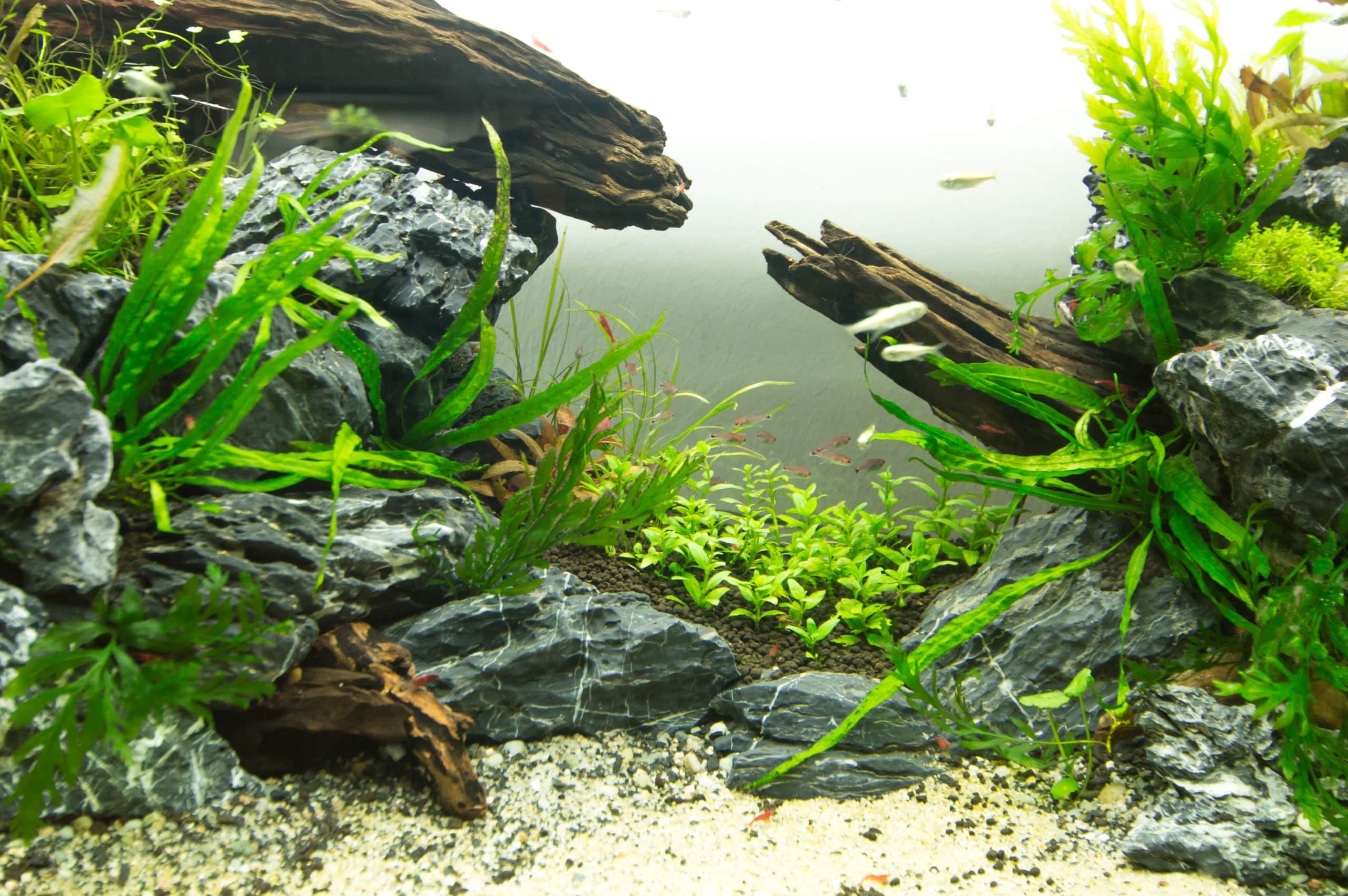
A planted tank is really the only way to go with ruby tetras. Dense plantings of Java fern, Java moss, Cryptocorynes, Anubias, and Bucephalandra provide cover and create the kind of environment where these fish feel secure enough to display their best behavior and coloration.
Driftwood is a must. It leeches tannins that naturally acidify and soften the water while giving the tank a more natural, blackwater feel. Spider wood, mopani wood, and Malaysian driftwood all work well. Add a generous layer of dried Indian almond leaves (catappa) to the bottom of the tank. As they decompose, they release tannins and create a leaf litter habitat that closely mimics the ruby tetra’s natural environment.
Substrate
A fine, dark-colored sand is the best substrate choice. Dark substrates help the fish feel secure and make their red coloration pop against the background. Avoid bright white or light-colored substrates, which can cause the fish to look washed out and feel stressed. Active substrates designed for planted tanks that naturally buffer toward acidic pH (like ADA Amazonia or similar products) is helpful for maintaining the low pH these fish prefer.
Water Changes
Perform weekly water changes of 15-25%. The key with ruby tetras is consistency. Avoid large water changes that causes sudden swings in pH or hardness. Always match the replacement water to the tank’s parameters, especially temperature and pH. If you’re using RO water, make sure it’s remineralized and pH-adjusted before adding it to the tank.
In a well-planted, lightly stocked tank with good filtration, smaller and more frequent water changes are better than large, infrequent ones. Stability matters more than perfection with this species.
Is the Ruby Tetra Right for You?
Ruby tetras are a nano fishkeeper’s dream when kept correctly. Here’s who should be adding them to their setup:
- You’re into nano tanks and want a true micro species with real color impact
- You can commit to a large school of 12-15. This is where ruby tetras transform from ordinary to extraordinary
- You’re running a blackwater or tannin-stained setup. Their colors are unreal in tea-colored water
- You enjoy the aesthetic of a tight, coordinated school moving through plants
- You want a species that’s genuinely tiny. Perfect for 10-15 gallon planted tanks
- Don’t bother if you plan to keep just 5-6. You’ll never see their best behavior or color
What People Get Wrong
Ruby tetras are one of those fish that look spectacular in the right setup and disappointing in the wrong one. The difference is almost always water chemistry. These fish come from soft, acidic South American rivers. Put them in hard alkaline tap water and they’ll never show the ruby-red coloration you’re paying for. Soft water, pH 6.0 to 6.8 — that’s where the color appears.
Group size is routinely underestimated. Ruby tetras kept in groups of 4 are shy, pale, and spend most of their time hiding near the bottom or in plants. A school of 8 to 10 in open midwater is a completely different visual — active, confident, and showing full coloration. The school size is not optional.
Tank lighting and background also matter more than most guides admit. Ruby tetras show their best color under subdued lighting with a dark substrate and background. Bright white lighting and light-colored gravel washes the color out. If the setup doesn’t match the fish’s natural blackwater environment visually, the fish won’t look like the photos.
Tank Mates
Choosing tank mates for ruby tetras requires careful consideration. Their tiny size means anything larger than about 2 inches could potentially see them as food, or at least intimidate them into hiding. The best approach is a species-only tank or a carefully selected nano community.
Best Tank Mates
- Other nano tetras of similar size, such as green neon tetras or ember tetras
- Small rasboras like chili rasboras (Boraras brigittae) or mosquito rasboras
- Pygmy corydoras (Corydoras pygmaeus or C. Habrosus), which share similar water parameter preferences
- Otocinclus catfish as a gentle algae-eating companion
- Small freshwater shrimp like Amano shrimp or neocaridina (though very soft water isn’t ideal for most shrimp)
- Small pencilfish like coral red pencilfish
Tank Mates to Avoid
- Any fish over 2 inches that could view them as food
- Aggressive or territorial species like cichlids, bettas, or gouramis
- Fast-moving, boisterous tetras like Buenos Aires tetras or serpae tetras that would out-compete them for food
- Large bottom dwellers like standard-sized corydoras or plecos
- Any predatory species, even small ones like dwarf cichlids
Honestly, a species-only setup is often the best choice for ruby tetras. A school of 15 to 20 in a well-planted 10 or 15-gallon tank is a beautiful sight, and you won’t have to worry about compatibility issues or food competition.
Food & Diet
Ruby tetras are micropredators in the wild, feeding on tiny invertebrates, insect larvae, and zooplankton. In the aquarium, their tiny mouths mean you need to provide appropriately sized foods. Standard flake food straight from the container is often too large. You’ll need to crush it into a fine powder or, better yet, use foods specifically designed for very small fish.
A good diet for ruby tetras includes:
- Crushed high-quality flake food ground into a fine powder
- Micro pellets designed for nano fish
- Baby brine shrimp (freshly hatched), which are an excellent live food and color enhancer
- Daphnia (smaller varieties), either live or frozen
- Micro worms and vinegar eels as supplemental live foods
- Frozen cyclops, which are perfectly sized for tiny mouths
Feed small amounts two to three times daily rather than one large feeding. Their small stomachs can’t handle large meals, and uneaten food in soft, acidic water breaks down quickly and can foul the water. Live and frozen foods should make up a significant portion of the diet, as these bring out the best coloration and overall vitality.
Breeding & Reproduction
Breeding ruby tetras in captivity is challenging but not impossible. Like most small characins, they are egg scatterers with no parental care. The main difficulties are their small size, the tiny size of the eggs and fry, and the very specific water conditions required to trigger spawning.
Breeding Difficulty
Ruby tetras are considered difficult to breed in the home aquarium. Successful breeding requires very soft, acidic water, well-conditioned adults, and careful management of the eggs and fry. This is not a beginner breeding project.
Spawning Tank Setup
Set up a small breeding tank (5 gallons is sufficient) with a bare bottom or a layer of Java moss. A mesh screen over the bottom helps protect eggs from being eaten by the parents. Keep the tank dimly lit, as both the eggs and the parents prefer low light. A small, air-driven sponge filter provides gentle filtration without creating currents that could scatter the tiny eggs.
Water Conditions for Breeding
Breeding water should be extremely soft (1-2 dGH) and acidic (pH 5.0-6.0). Temperature around 77-79°F (25-26°C). RO water with minimal remineralization is typically necessary. Tannin-stained water from peat filtration or Indian almond leaves helps create the right conditions and has mild antifungal properties that benefit egg survival.
Conditioning & Spawning
Condition breeding pairs with plenty of live foods, particularly baby brine shrimp and daphnia, for two to three weeks before attempting to spawn. Select the plumpest female and the most intensely colored male. Introduce them to the breeding tank in the evening. Spawning typically occurs in the early morning hours.
The female scatters a small number of tiny adhesive eggs among fine-leaved plants or Java moss. Remove the adults immediately after spawning, as they will eat the eggs if given the opportunity.
Egg & Fry Care
Eggs hatch in approximately 24 to 36 hours, and the fry become free-swimming about 3 to 4 days later. The fry are extremely small and require infusoria or liquid fry food for the first week or two before graduating to freshly hatched baby brine shrimp. Keep the breeding tank dark during the egg and early fry stages, as both are light-sensitive.
Growth is slow, and losses is high in the early stages. Maintaining pristine water quality while keeping the fry fed is the biggest challenge. Small, frequent water changes with matched parameters are essential.
Common Health Issues
Ruby tetras are hardy once established in appropriate conditions, but their small size and sensitivity to water quality make them vulnerable to several common issues.
Ich (White Spot Disease)
Ich is a risk for any stressed freshwater fish, and ruby tetras are no exception. White spots on the body and fins, flashing against objects, and clamped fins are telltale signs. Treat with gradually raising the temperature to 82-84°F (28-29°C) and adding aquarium salt at half the normal dose, since these fish are sensitive to salt. Malachite green-based medications can also work but should be used at reduced dosages for small, sensitive species.
Columnaris (Cotton Mouth Disease)
Bacterial infections like columnaris is triggered by poor water quality or sudden parameter swings. Look for white or grayish patches on the body, frayed fins, or lesions around the mouth. Improve water quality immediately and treat with appropriate antibacterial medication. Prevention through stable, clean water is always the best approach.
Fungal Infections
Fungal infections can appear as cotton-like white growths on the body or fins, often at the site of a wound or area of compromised scales. The tannin-rich blackwater conditions that ruby tetras prefer actually have natural antifungal properties, which is another reason to maintain appropriate water chemistry. Treat with an antifungal medication if infection occurs.
Stress-Related Issues
Many health problems in ruby tetras trace back to stress. Being kept in inappropriate water conditions (too hard, too alkaline, too bright), in groups that are too small, or with aggressive tank mates all suppress their immune system. A stressed ruby tetra loses its color, hides constantly, and becomes susceptible to infections. Prevention through proper husbandry is far more effective than treating problems after they develop.
Common Mistakes to Avoid
- Adding them to hard, alkaline water. This is the number one mistake. Ruby tetras need soft, acidic conditions. If your tap water is hard, you need RO water or another method to soften it.
- Keeping too few. A group of 5 or 6 will be perpetually stressed and hiding. Keep at least 10, and 15-20 is even better.
- Feeding food that’s too large. Their mouths are tiny. Crush flakes to powder or use nano-specific foods.
- Adding them to a new or uncycled tank. These fish are sensitive to ammonia and nitrite. Only add them to a fully matured, cycled tank.
- Using bright lighting without shade. They come from heavily shaded forest streams. Bright lights wash out their color and stress them out. Use floating plants to diffuse the light.
- Mixing with larger or aggressive fish. At under an inch, they’re an easy target. Keep them with similarly sized, peaceful species only.
- Large, infrequent water changes. Small, consistent water changes are better than large ones that can swing pH and hardness dramatically in soft water.
Where to Buy
Ruby tetras are a specialty species that you won’t find at big-box pet stores. They’re occasionally available through specialty importers and dedicated online fish retailers. Because they’re wild-caught from Colombia, availability is seasonal and limited. When you do find them, buy a good-sized group right away, as they will not be available again for a while.
Check these reputable online retailers for availability:
Local fish stores with good relationships with specialty importers also be able to special-order ruby tetras for you. It’s worth asking, especially at stores that cater to the planted tank and nano fish community.
Frequently Asked Questions
Are ruby tetras hard to keep?
They’re moderate in difficulty. The biggest challenge is providing and maintaining soft, acidic water. If you can set up a tank with the right water chemistry (using RO water, driftwood, and Indian almond leaves), they’re actually quite resilient little fish. They’re not a good fit for beginners with hard tap water or standard community setups, but experienced nano fishkeepers who understand water chemistry will do well with them.
How many ruby tetras should I keep together?
A minimum of 10, with 15 to 20 being ideal. Ruby tetras are small, shy schooling fish that rely on group numbers for security and confidence. In smaller groups, they hide constantly and never display their best coloration or natural behavior. Larger schools are noticeably more active, more colorful, and more engaging to watch.
Can ruby tetras live with shrimp?
They can, but there’s a catch. Ruby tetras thrive in very soft, acidic water, which isn’t ideal for most freshwater shrimp. Neocaridina shrimp prefer harder, more alkaline conditions. Amano shrimp are more tolerant of varying parameters and can work as tank mates, but they’re also quite large compared to ruby tetras. If you want to try it, aim for a pH and hardness compromise that works for both species, though it won’t be optimal for either.
What’s the best tank size for ruby tetras?
A 10-gallon tank is the minimum for a species-only school. It provides enough volume for stable water parameters while still allowing you to enjoy their behavior up close. For a nano community with other small species, a 15 to 20-gallon tank gives everyone more room and better water stability. Despite their tiny size, bigger tanks make parameter management much easier, which matters a lot with soft water species.
Why are my ruby tetras pale?
Pale coloration in ruby tetras usually points to one of three problems: wrong water parameters (too hard or too alkaline), too much light, or stress from small group size or aggressive tank mates. Check your pH and hardness first. Then evaluate your lighting and add floating plants to create shade. Make sure you have at least 10 fish in the group. A high-quality diet with regular live or frozen foods also helps bring out their best red color.
Are ruby tetras the same as ember tetras?
No, they’re completely different species. Ember tetras (Hyphessobrycon amandae) are orange-red, slightly larger, and significantly easier to keep. They tolerate a much wider range of water parameters and are a better choice for beginners. Ruby tetras (Axelrodia riesei) are smaller, deeper red, and require soft, acidic water to thrive. They’re also rarer and more expensive. Both are great nano fish, but they have very different care requirements.
What It Is Actually Like Living With Ruby Tetra
In a proper school, ruby tetra display natural movement patterns that are genuinely engaging to watch. The fish interact with each other, establish subtle hierarchies, and move through the tank with purpose.
They occupy the middle water column during active hours, creating movement and visual interest in the zone where most fishkeepers want action.
Feeding time is when their personality comes out. They learn your routine quickly and will anticipate feeding before you even open the lid.
Their color and behavior improve over time as they settle into a stable environment. Fish that have been in the same tank for months look noticeably better than recently added stock.
They coexist peacefully with virtually every other appropriately-sized community fish. This compatibility makes tank planning straightforward.
How the Ruby Tetra Compares to Similar Species
Ruby Tetra vs. Ember Tetra
Ember tetras are the most popular nano tetra, and the comparison to ruby tetras is inevitable. Both are tiny warm-toned fish that look best in planted tanks. The key difference is that ember tetras are more orange while ruby tetras are deeper red. Especially in tannin-rich water. Embers are also slightly hardier and more forgiving of beginner mistakes. Ruby tetras demand better water quality and more specific conditions to color up. If you want easy warm tones, go ember. If you want richer reds and don’t mind putting in extra effort, ruby tetras are the upgrade. Check out our Ember Tetra care guide for more details.
Ruby Tetra vs. Phoenix Tetra
Phoenix tetras share warm coloration but are notably larger. They need more tank space and don’t work as well in true nano setups. Ruby tetras are the better pick for 10-15 gallon tanks, while phoenix tetras need 20 gallons or more. Phoenix tetras are also more active swimmers that cover more ground, while ruby tetras will hover in tight schools near plant cover. Both are underrated, but they serve different tank size niches. Check out our Phoenix Tetra care guide for more details.
Closing Thoughts
The ruby tetra is a specialist’s fish, and there’s absolutely nothing wrong with that. Not every species needs to be beginner-friendly to be worth keeping. When you set up a blackwater nano tank with soft, tannin-stained water, dim lighting, leaf litter, and a school of 15 or 20 ruby tetras glowing like tiny embers against the dark background, you’ve created something genuinely special.
If you’re ready to move beyond standard community fish and explore the world of soft water nano species, the ruby tetra is one of the best places to start. It asks for specific conditions in return for incredible color and fascinating behavior. That’s a fair trade in my book.
Recommended Video
Check out our tetra tier list video where we rank the most popular tetras in the hobby, including the ruby tetra:
References
- Froese, R. And D. Pauly, Eds. FishBase. Axelrodia riesei. Accessed 2025.
- SeriouslyFish. Axelrodia riesei species profile. Accessed 2025.
- Melo, B.F. Et al. (2024). Phylogenomics of Characidae: reclassification and family-level revision. Molecular Phylogenetics and Evolution.
- Géry, J. (1966). Original description of Axelrodia riesei. Tropical Fish Hobbyist, 14(6): 29-35.
- About the Author
- Latest Posts

I’m Mark Valderrama, founder of Aquarium Store Depot and a fishkeeper with over 25 years of hands-on experience. I started in the hobby at age 11, worked at local fish stores, and have kept freshwater tanks, ponds, and reef tanks ever since. I’ve been featured in two best-selling aquarium books on Amazon and built this site to share practical, experience-based fish keeping knowledge.
Leave a Reply