
Last Updated: June 25, 2026
Thank you for visiting! By the way… any links on this page that lead to products on Amazon and other stores/partners are affiliate links Aquarium Store Depot earns a commission if you make a purchase.
Table of Contents
- What Most Care Guides Get Wrong
- The Reality of Keeping Kitty Tetra
- Key Takeaways
- Species Overview
- Classification
- Origin & Natural Habitat
- Appearance & Identification
- Average Size & Lifespan
- Care Guide
- Is This Fish Right for You?
- What People Get Wrong
- Tank Mates
- Food & Diet
- Breeding & Reproduction
- Common Health Issues
- Common Mistakes to Avoid
- Where to Buy
- Frequently Asked Questions
- What It Is Actually Like Living With Kitty Tetra
- How It Compares to Similar Species
- Closing Thoughts
- Recommended Video
- References
The kitty tetra is a small, peaceful schooler that works well in nano and community setups. It is not flashy, it is not demanding, and it does not cause problems. But keep fewer than 8 and the schooling breaks down completely. This is a numbers fish. The display only works with a proper group.
Kitty tetras are only interesting in groups of 8 or more. Below that, you have generic silver fish.
The Reality of Keeping Kitty Tetra
Group size is not a suggestion. The minimum school size for kitty tetra is not just a guideline. In small groups, these fish lose color, become stressed, and display abnormal behavior. A proper group of 6 to 8+ is where you start to see natural schooling behavior, full color expression, and the confidence that makes them worth keeping.
Tank mate selection requires thought. The kitty tetra is not aggressive in the traditional sense, but it is assertive enough to cause problems with the wrong companions. Slow-moving, long-finned species are targets. Fast, short-finned fish of similar size are fine. Plan your community around this reality.
Store appearance is not home appearance. Fish in store tanks are stressed, crowded, and under inappropriate lighting. The kitty tetra almost always looks better in a properly set up home aquarium than it does at the store. Dark substrate, live plants, and appropriate lighting bring out colors and behaviors you will never see in a retail environment.
Biggest Mistake New Owners Make
Keeping them with fish small enough to eat. This is a predator. It will eat anything it can fit in its mouth. If you stock smaller fish with a kitty tetra, you are feeding it expensive live food.
Kitty tetras are a rare find that reward specialist hobbyists. They need soft, slightly acidic water and a planted tank to feel secure and show their color. Once established in the right conditions, they are relatively undemanding — the challenge is sourcing them and getting the setup right before they arrive. Not a fish for the general community tank, but a standout species for the dedicated hobbyist.
Key Takeaways
- Tiny but eye-catching, with a golden-tan body and a distinctive dark blotch that gives the species its “kitty” nickname
- Peaceful schooling species that does best in groups of 8 or more
- Soft, slightly acidic water preferred, with a pH range of 5.5 to 7.0
- Recently reclassified from Characidae to Acestrorhamphidae following the 2024 Melo et al. Study
- Great for planted tanks and pairs well with other small, calm community fish
- Moderate care level, suitable for hobbyists with some experience

Species Overview
| Field | Details |
|---|---|
| Scientific Name | Hyphessobrycon heliacus |
| Common Names | Kitty Tetra |
| Family | Acestrorhamphidae |
| Origin | Upper Rio Teles Pires, Tapajós drainage, Brazil |
| Care Level | Moderate |
| Temperament | Peaceful |
| Diet | Omnivore |
| Tank Level | Mid |
| Maximum Size | 1.2 inches (3 cm) |
| Minimum Tank Size | 15 gallons (57 liters) |
| Temperature | 72-82°F (22-28°C) |
| pH | 5.5-7.0 |
| Hardness | 2-10 dGH |
| Lifespan | 3-5 years in captivity |
| Breeding | Egg scatterer |
| Breeding Difficulty | Moderate |
| Compatibility | Peaceful community |
| OK for Planted Tanks? | Yes |
Classification
| Taxonomic Level | Classification |
|---|---|
| Order | Characiformes |
| Family | Acestrorhamphidae (Melo et al, 2024) |
| Genus | Hyphessobrycon |
| Species | H. Heliacus (Moreira, Landim & Costa, 2002) |
Kitty tetras are a specialist fish that rewards hobbyists who do their research. They need soft, acidic water to thrive and are not commonly available, so sourcing requires effort. Once established in the right conditions, they’re relatively undemanding.
This species was formally described by Moreira, Landim, and Costa in 2002 from specimens collected in the upper Tapajós basin. The specific name heliacus refers to the sun, a nod to the golden coloration of the fish.
Note on family placement: The kitty tetra was historically placed in Characidae, the large “catch-all” family for many small tetras. In 2024, a comprehensive phylogenomic study by Melo et al. Reorganized Characidae and moved this species into the family Acestrorhamphidae. You’ll still see older references listing it under Characidae, but the current accepted classification places it in Acestrorhamphidae.
Origin & Natural Habitat

The kitty tetra comes from the upper Rio Teles Pires, which is part of the larger Tapajós river drainage in the state of Mato Grosso, Brazil. The Tapajós is one of the major clearwater tributaries of the Amazon, and it drains a vast area of the Brazilian Shield. This region is known for its relatively clear, slightly acidic water and rocky, sandy substrates.
In its natural habitat, the kitty tetra inhabits shallow streams and tributaries with moderate to slow flow, often in areas where vegetation overhangs the water. The substrate is a mix of sand and leaf litter, with fallen branches and submerged roots providing shelter. The water is soft, slightly acidic, and warm year-round. These aren’t blackwater streams like those in the Rio Negro basin, but they’re not hard, alkaline rivers either. Think warm, gentle, well-oxygenated water with plenty of natural cover.
Understanding this habitat is helpful when you’re setting up a tank for them. They don’t need extreme conditions, but they do appreciate soft water, natural decor, and a setup that offers some cover and structure rather than wide-open swimming space.
Appearance & Identification
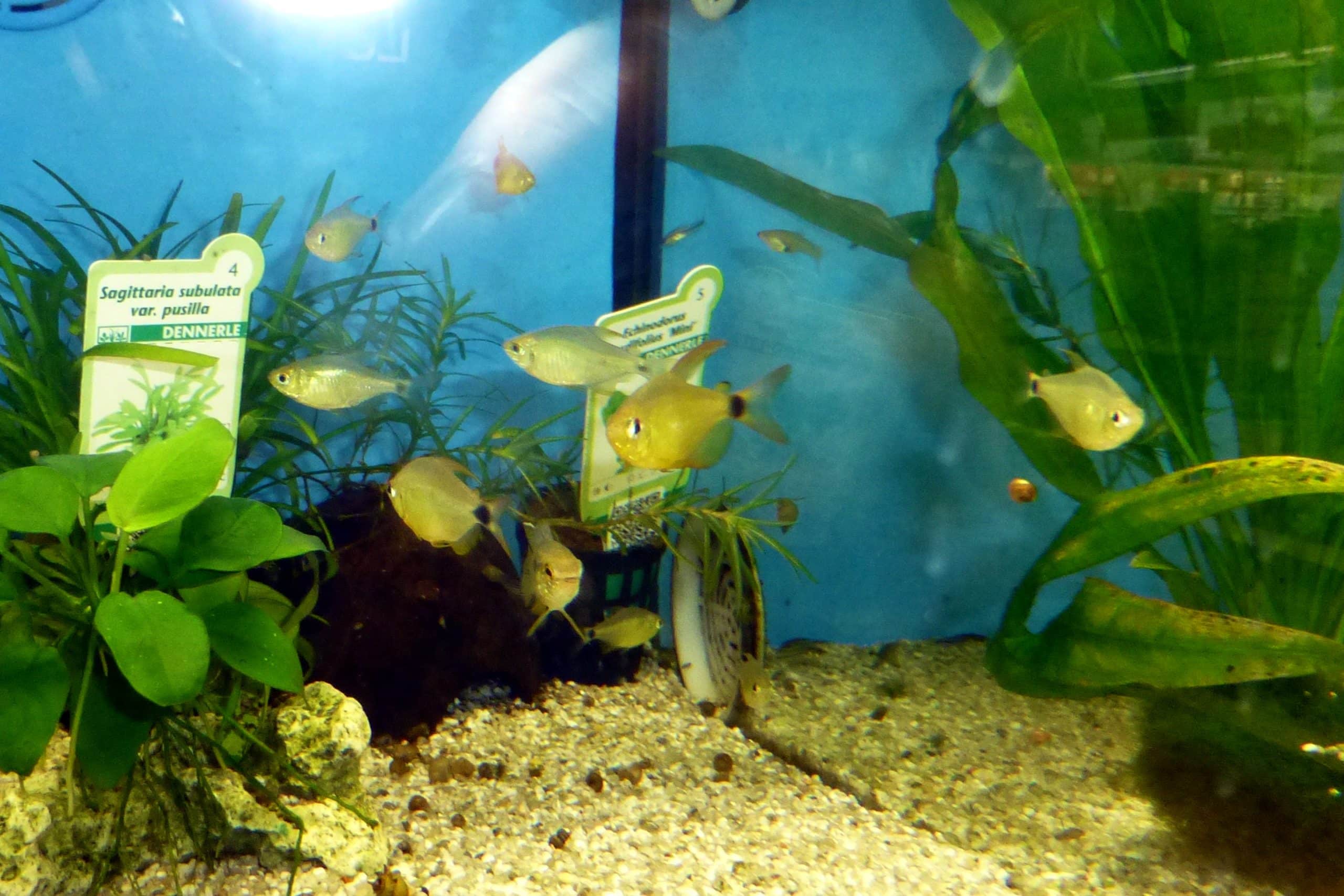
The kitty tetra is a small, subtly beautiful fish. The base color is a warm golden to yellow-tan, which gives it a sun-kissed look under good lighting. The standout feature is a prominent dark blotch on the body, roughly in the middle of the flank, that in my experience, hobbyists say resembles a cat’s face or mask pattern. That’s where the “kitty” name comes from, and once you see it, the resemblance is hard to unsee.
The fins are mostly translucent with a slight golden wash. The body shape is typical of small Hyphessobrycon species: laterally compressed, moderately deep, and streamlined. Overall, the kitty tetra has a clean, elegant look. It’s not flashy in the way a cardinal tetra is, but in a well-planted tank with good lighting, a school of these fish has a warm, natural glow that’s really appealing.
Male vs. Female
Sexing kitty tetras isn’t always straightforward, especially with juveniles. Mature females are slightly rounder in the belly, particularly when carrying eggs. Males are often a touch more slender and may show slightly more intense coloration. The differences are subtle, though, and having a group of 8 or more gives you the best chance of having both sexes well represented without needing to worry about picking individuals.
Average Size & Lifespan
The kitty tetra is a genuinely small fish, maxing out at about 1.2 inches (3 cm) in total length. Most specimens you’ll see in aquariums stay right around that size. This makes them an excellent choice for smaller planted tanks where you want a school of fish that won’t overwhelm the space.
With proper care, clean water, and a good diet, expect a lifespan of 3 to 5 years. That’s a solid run for a fish this size. Consistent water quality and a low-stress environment are the biggest factors in getting them to the upper end of that range.
Care Guide
Tank Size
A 15-gallon tank is the minimum for a school of 8 to 10 kitty tetras. They’re small fish, but they’re active mid-level swimmers and benefit from having enough horizontal space to school naturally. If you want to keep them in a community with other species, stepping up to a 20-gallon long gives everyone more room and makes the tank easier to manage.
A 15-gallon also gives you more stable water chemistry than a 10-gallon would, which matters when you’re keeping soft-water species. Smaller volumes swing faster, and that’s never a good thing.
Water Parameters
| Parameter | Ideal Range |
|---|---|
| Temperature | 72-82°F (22-28°C) |
| pH | 5.5-7.0 |
| General Hardness | 2-10 dGH |
| KH | 1-4 dKH |
| Ammonia / Nitrite | 0 ppm |
| Nitrate | Below 20 ppm |
The kitty tetra does best in soft, slightly acidic water. They’re not as demanding as some of the extreme blackwater species, but they won’t thrive long-term in hard, alkaline conditions. If your tap water is moderately soft (under 10 dGH) with a neutral to slightly acidic pH, you’re fine. If you’re dealing with hard, high-pH tap water, consider blending with RO/DI water or using botanicals like Indian almond leaves and driftwood to soften things up naturally.
Keep the temperature stable somewhere in the 75 to 79°F (24 to 26°C) range for everyday keeping. They can handle the full 72 to 82°F range, but aim for the middle for the best balance of activity and longevity.
Filtration & Water Flow
A good hang-on-back filter or a small canister filter works well for a kitty tetra tank. These fish come from areas with moderate to low flow, so don’t blast them with a powerhead. You want gentle, consistent filtration that turns the tank volume over about 4 to 6 times per hour. A sponge filter is another excellent option, especially in smaller setups, and it doubles as a biological filtration powerhouse.
If your filter creates too much current, use a spray bar or baffle to spread the output. You’ll notice the fish are calmer and school more naturally when the flow is manageable.
Lighting
Moderate lighting works best. Kitty tetras aren’t extreme shade dwellers, but they look their best and behave most naturally under medium-intensity light with some shaded areas. If you’re running a planted tank with higher light, floating plants are your friend. They diffuse the intensity at the surface and create dappled light patterns below, which these fish do appreciate.
Under the right lighting, the golden tones in their body really come alive. Overly bright, clinical lighting washes them out and makes them look pale.
Substrate & Decor
A dark, fine-grained substrate is ideal. Black sand or a dark planted tank soil brings out the golden coloration of these fish beautifully. Light-colored substrates won’t harm them, but the contrast is less striking and the fish may appear more washed out.
For decor, think natural. Driftwood, smooth stones, and live plants create the kind of environment where kitty tetras feel secure. Dense plantings along the back and sides with open swimming space in the middle give them room to school while also providing cover when they want it. Good plant choices include Java fern, Anubias, Cryptocoryne species, and stem plants like Rotala or Ludwigia. A few floating plants on the surface complete the look and help control light.
Adding a few Indian almond leaves or alder cones to the tank provides tannins that lightly tint the water and helps keep the pH in the ideal range. It also gives the tank a more natural, biotope-style feel.
Water Changes
Weekly water changes of 20 to 30 percent are the standard recommendation. Match the temperature and chemistry of the replacement water as closely as possible. Big swings in pH or hardness during water changes are stressful for any soft-water fish, including kitty tetras.
If you’re using RO/DI water, remineralize it with a product designed for soft-water fish before adding it to the tank. Never add straight RO water, as the lack of any mineral content can cause osmotic stress.
Is the Kitty Tetra Right for You?
The kitty tetra is a charming species that offers more personality per inch than most tetras. Here’s who should keep them:
- You want a tetra with genuine personality. Kitty tetras are more interactive than most small species
- You have a mature, well-cycled tank that’s been running for at least two months
- You appreciate the charm of keeping a species with an unusual, memorable name
- You’re looking for a mid-tank schooler that doesn’t just blend into the background
- You can keep a group of 8 or more. They’re noticeably more confident in larger schools
- Hold off if your tank is brand new. These fish need established biological filtration to thrive
What People Get Wrong
Kitty tetras are a rare and specialist species that most hobbyists treat like a standard community tetra. That’s the first mistake. They need specific water conditions — soft, acidic, with stable parameters — and a tank that’s been established long enough to support them properly. A brand-new tank with hard water is not the right setup.
Sourcing is where most hobbyists give up before they start. Kitty tetras are not a fish you’ll find at chain pet stores. Specialty importers and dedicated online retailers are where you’ll find them. Confirm species identification before purchase, as similar-looking species are sometimes mislabeled.
Group size expectations are usually too low. People buy 4 or 5 and expect them to behave like a confident schooling fish. They won’t. Eight is the minimum for natural schooling behavior. Fewer fish means hiding, stress, and fish that never show their full color potential.
Tank Mates
Kitty tetras are peaceful, easygoing fish that do well in a community setting, as long as their tank mates share a similar temperament and water preferences. They’re mid-level swimmers, so pairing them with bottom-dwellers and surface fish creates a well-balanced tank where every zone is occupied.
Good Tank Mates
- Other small, peaceful tetras (ember tetras, green neon tetras, pristella tetras)
- Corydoras catfish (pygmy, habrosus, or smaller species)
- Otocinclus
- Pencilfish (Nannostomus species)
- Small rasboras (chili rasboras, strawberry rasboras)
- Dwarf gouramis and honey gouramis
- Cherry shrimp, Amano shrimp
- Nerite snails, mystery snails
Tank Mates to Avoid
- Large or aggressive cichlids
- Fast, nippy species like tiger barbs or serpae tetras
- Large predatory fish that could eat them
- Species that require hard, alkaline water (African cichlids, livebearers)
The key is to keep things calm. Kitty tetras aren’t going to hold their own against boisterous or aggressive tank mates. Stick with species that prefer similar water conditions and have a peaceful disposition.
Food & Diet
Kitty tetras are omnivores and not particularly picky eaters, which is one of the things that makes them manageable for hobbyists with some experience. In the wild, they feed on small invertebrates, insect larvae, and plant matter. In the aquarium, they’ll accept a wide range of foods.
A good staple diet includes:
- High-quality flake food or micro pellets as a daily staple
- Frozen foods: Bloodworms, daphnia, brine shrimp, cyclops
- Live foods: Baby brine shrimp, daphnia, microworms (great for conditioning)
Feed small amounts once or twice daily. These are tiny fish with small stomachs, so it’s better to offer a pinch they can finish in about two minutes than to dump in a large amount. Variety is important. Rotating between dry, frozen, and live foods keeps the fish healthy, encourages better coloration, and supports their immune system.
If you’re aiming to condition them for breeding, increase the frequency of frozen and live food offerings for a couple of weeks. The extra protein makes a noticeable difference in their readiness to spawn.
Breeding & Reproduction
Breeding kitty tetras is possible in the home aquarium, though it takes some effort and preparation. They’re egg scatterers, which means the female releases eggs freely and the male fertilizes them as they fall. There’s no parental care, and both parents will eat the eggs if given the chance.
Breeding Difficulty
Moderate. They’re not the easiest tetras to breed, but they’re far from impossible if you set up the right conditions and put in the work to condition the adults properly.
Spawning Tank Setup
Set up a dedicated breeding tank of 5 to 10 gallons. Use a bare bottom or cover it with spawning mops or a layer of fine-leaved plants like Java moss. The goal is to give the eggs somewhere to fall where the adults can’t easily reach them. A mesh grid raised slightly above the bottom works well too.
Water Conditions for Breeding
Softer and slightly warmer than normal maintenance conditions will trigger spawning:
- Temperature: 78-80°F (26-27°C)
- pH: 5.5-6.5
- Hardness: 2-4 dGH
Keep the lighting dim. Many small tetras do prefer spawning in subdued light, and kitty tetras are no exception.
Conditioning & Spawning
Condition a breeding pair or a small group (2 males, 3 to 4 females) with frequent feedings of live and frozen foods for about two weeks before moving them to the spawning tank. Daphnia, baby brine shrimp, and bloodworms are all good choices. Well-conditioned females will appear noticeably rounder.
Spawning usually occurs in the early morning hours. The pair will scatter eggs among plants or over the substrate. Once you see eggs (they’re small and slightly adhesive), remove the adults immediately to prevent them from eating the eggs.
Egg & Fry Care
Eggs typically hatch in 24 to 36 hours. The fry will absorb their yolk sac over the next couple of days and become free-swimming around day 3 to 4. At that point, start feeding infusoria or liquid fry food, then transition to freshly hatched baby brine shrimp as the fry grow large enough to take them.
Keep the breeding tank dimly lit and maintain pristine water quality with small, frequent water changes. Fry are delicate in the first two weeks, but once they start accepting baby brine shrimp, survival rates improve significantly.
Common Health Issues
Ich (White Spot Disease)
Ich is one of the most common diseases in freshwater fish and kitty tetras are no exception. You’ll see small white spots on the body and fins, along with flashing (rubbing against surfaces) and clamped fins. It’s usually triggered by temperature fluctuations or stress from transport. Raise the temperature gradually to 82°F (28°C) and treat with a commercially available ich medication. Quarantine new fish before adding them to your main tank to reduce the risk.
Fin Rot
Frayed or deteriorating fins are a sign of bacterial infection, usually caused by poor water quality. The fix is straightforward: clean up the water with extra water changes, check your parameters, and treat with an antibacterial medication if the damage is severe. In mild cases, improving water quality alone is enough for the fins to regenerate.
Stress-Related Illness
Kitty tetras that are kept in groups that are too small, exposed to aggressive tank mates, or maintained in poor water conditions become chronically stressed. Stress suppresses their immune system and opens the door to secondary infections. Keeping them in appropriate group sizes, with the right water chemistry, and in a well-maintained tank is the best preventive medicine you can offer.
Common Mistakes to Avoid
- Keeping too few: A group of 3 or 4 kitty tetras will not behave naturally. You need at least 8 for proper schooling behavior and reduced stress. More is better.
- Hard, alkaline water: While they’re more adaptable than some soft-water species, they won’t do their best long-term in hard, high-pH water. Aim for soft to moderately hard conditions.
- Skipping quarantine: These are small fish that are vulnerable to disease, especially right after shipping. Always quarantine new arrivals for at least two weeks before adding them to your display tank.
- Overfeeding: It’s easy to overfeed tiny fish. A small pinch they can finish in two minutes is plenty. Uneaten food fouls the water fast in smaller tanks.
- Aggressive tank mates: Don’t pair them with fin nippers or boisterous species. They need a calm environment to thrive.
- Neglecting water changes: Consistent weekly water changes are non-negotiable. Small fish in moderate-sized tanks produce less waste, but water quality can still decline quickly if you get lazy with maintenance.
Where to Buy
The kitty tetra is not a species you’ll typically find at chain pet stores. It’s more of a specialty fish that pops up through importers and online retailers who carry unusual South American species. Availability is seasonal, so when you do find them, it’s often worth grabbing a group while you can. Check these trusted sources:
Both retailers ship live fish and are reliable sources for healthy stock. Check their availability pages regularly, as rarer species like the kitty tetra will sell out fast.
Frequently Asked Questions
Why is it called the kitty tetra?
The common name comes from the distinctive dark blotch pattern on the body, which in my experience, hobbyists say resembles a cat’s face or mask. It’s one of those names that makes more sense once you’re looking at the fish in person.
How many kitty tetras should I keep together?
A minimum of 8 is recommended. Like most small tetras, they feel more secure and display better behavior in larger groups. In a group of fewer than 6, they are skittish and stressed. A group of 10 to 12 in a well-planted tank is ideal.
Are kitty tetras good for beginners?
They’re rated as moderate care level, so they’re better suited for hobbyists who have some experience with water chemistry and maintaining stable tank conditions. If you’ve successfully kept other tetras or small tropical fish, you should be able to handle kitty tetras without too much trouble.
Can kitty tetras live with shrimp?
Yes, generally. Adult cherry shrimp and Amano shrimp are safe with kitty tetras. Very small shrimp fry might get picked off, as most small fish will eat anything that fits in their mouth. If you’re breeding shrimp, provide dense plant cover so the shrimplets have places to hide.
What family does the kitty tetra belong to?
As of the 2024 Melo et al. Phylogenomic revision, the kitty tetra is placed in the family Acestrorhamphidae. It was previously classified under Characidae. This reclassification doesn’t change anything about their care requirements, but it reflects a better understanding of how these fish are related to one another.
Do kitty tetras need soft water?
They prefer it, yes. Soft to moderately hard water (2 to 10 dGH) with a slightly acidic pH (5.5 to 7.0) is the target range. They’re more flexible than extreme blackwater species, but they won’t do well in very hard, alkaline conditions. If your tap water is hard, blending with RO/DI water is the most reliable solution.
What It Is Actually Like Living With Kitty Tetra
In a proper school, kitty tetra display natural movement patterns that are genuinely engaging to watch. The fish interact with each other, establish subtle hierarchies, and move through the tank with purpose.
They spend most of their time near the surface, which fills a level of the tank that many other species ignore. This makes them excellent complements to mid-water and bottom-dwelling fish.
Feeding time is when their personality comes out. They learn your routine quickly and will anticipate feeding before you even open the lid.
Their color and behavior improve over time as they settle into a stable environment. Fish that have been in the same tank for months look noticeably better than recently added stock.
They coexist peacefully with virtually every other appropriately-sized community fish. This compatibility makes tank planning straightforward.
How the Kitty Tetra Compares to Similar Species
Kitty Tetra vs. Jelly Bean Tetra
Jelly bean tetras are similarly sized and share that “uncommon but rewarding” appeal. Both species are conversation starters that most visitors won’t recognize. The main difference is temperament. Jelly bean tetras are slightly more reserved, while kitty tetras are bolder and more willing to come to the front of the tank during feeding. Color-wise, jelly bean tetras lean more toward subtle pinks and translucence, while kitty tetras have more defined markings. Both are solid picks for hobbyists who want something different. Check out our Jelly Bean Tetra care guide for more details.
Kitty Tetra vs. Ornate Tetra
Ornate tetras are another overlooked species worth comparing. They’re a bit flashier in terms of fin coloration and patterning, but kitty tetras have the edge in personality and interactive behavior. Ornate tetras are also slightly more adaptable to varied water conditions, making them a better fit if your parameters aren’t dialed in perfectly. For a tank where watching fish behavior matters more than raw color, I’d go with kitty tetras every time. Check out our Ornate Tetra care guide for more details.
Closing Thoughts
The kitty tetra is one of those fish that quietly wins you over. It’s not the flashiest tetra in the hobby, and it doesn’t have the instant name recognition of a neon or a cardinal. But put a school of 10 or 12 in a well-planted tank with warm lighting and soft water, and you’ll see exactly why people seek them out. That golden glow, the quirky dark blotch, and their relaxed schooling behavior make for a tank that’s genuinely enjoyable to watch.
They’re manageable for anyone with a bit of fishkeeping experience, they are a peaceful community fish with a spark of personality. They won’t bother tank mates, but they won’t be wallflowers either, and they don’t demand extreme water conditions. If you’re building a South American community or just looking for something a little different from the usual tetra lineup, the kitty tetra deserves a serious look.
Good luck finding it, but worth the hunt for nano keepers.
Recommended Video
Check out our tetra tier list video where we rank the most popular tetras in the hobby, including the Kitty Tetra:
References
- Froese, R. And D. Pauly, Eds. FishBase. Hyphessobrycon heliacus. Accessed 2025.
- SeriouslyFish. Hyphessobrycon heliacus species profile. Accessed 2025.
- Moreira, C.R, Landim, M.I. & Costa, W.J.E.M. (2002). Hyphessobrycon heliacus: a new characid fish (Ostariophysi: Characiformes) from the upper Rio Tapajós basin, Central Brazil. Copeia, 2002(2), 428-432.
- Melo, B.F, et al. (2024). Phylogenomics of Characidae. Zoological Journal of the Linnean Society, 202(1), 1-37.
- About the Author
- Latest Posts

I’m Mark Valderrama, founder of Aquarium Store Depot and a fishkeeper with over 25 years of hands-on experience. I started in the hobby at age 11, worked at local fish stores, and have kept freshwater tanks, ponds, and reef tanks ever since. I’ve been featured in two best-selling aquarium books on Amazon and built this site to share practical, experience-based fish keeping knowledge.
Leave a Reply