
Last Updated: June 25, 2026
Thank you for visiting! By the way… any links on this page that lead to products on Amazon and other stores/partners are affiliate links Aquarium Store Depot earns a commission if you make a purchase.
Table of Contents
- What Most Care Guides Get Wrong
- The Reality of Keeping Jelly Bean Tetra
- Key Takeaways
- Species Overview
- Classification
- Origin & Natural Habitat
- Appearance & Identification
- Average Size & Lifespan
- Care Guide
- Is This Fish Right for You?
- What People Get Wrong
- Tank Mates
- Food & Diet
- Breeding & Reproduction
- Common Health Issues
- Common Mistakes to Avoid
- Where to Buy
- Frequently Asked Questions
- What It Is Actually Like Living With Jelly Bean Tetra
- How It Compares to Similar Species
- Closing Thoughts
- Recommended Video
- References
The jelly bean tetra is a tiny, delicate species that needs specific conditions to thrive. Soft, acidic water, dim lighting, and a mature tank with stable parameters. This is not a fish you add to a new setup. It is a fish for established tanks where the biology has been running for months.
Jelly bean tetras in a new tank do not last. They need a mature, stable setup or they die.
The Reality of Keeping Jelly Bean Tetra
Group size is not a suggestion. The minimum school size for jelly bean tetra is not just a guideline. In small groups, these fish lose color, become stressed, and display abnormal behavior. A proper group of 6 to 8+ is where you start to see natural schooling behavior, full color expression, and the confidence that makes them worth keeping.
Hardy does not mean indestructible. The jelly bean tetra tolerates a range of conditions, but it still needs basic care. Ammonia spikes, dramatic temperature swings, and neglected water changes will catch up to even the toughest species. The difference is margin of error, not immunity.
Store appearance is not home appearance. Fish in store tanks are stressed, crowded, and under inappropriate lighting. The jelly bean tetra almost always looks better in a properly set up home aquarium than it does at the store. Dark substrate, live plants, and appropriate lighting bring out colors and behaviors you will never see in a retail environment.
Biggest Mistake New Owners Make
Keeping them in groups too small to school properly, or in hard alkaline water that suppresses their color and immune function. These are soft-water West African fish. The setup determines whether you ever see what makes them special.
The jelly bean tetra is a rare find in the hobby and worth the effort to track down. In a mature blackwater setup with a school of 10 or more, the yellow-orange body and active schooling behavior create a distinctly different visual from the usual red or blue tetras. They are a specialist fish for keepers who want something genuinely different.
Key Takeaways
- One of the few African tetras commonly available in the aquarium hobby
- Tiny species (1.3 inches max), ideal for nano and planted tanks
- Translucent amber body with subtle iridescent highlights
- Needs soft, acidic water for best health and coloration
- Peaceful and shy, best kept in species-only tanks or with very gentle tank mates
Species Overview
| Field | Details |
|---|---|
| Scientific Name | Ladigesia roloffi |
| Common Names | Jelly Bean Tetra, Sierra Leone Dwarf Characin |
| Family | Alestidae |
| Origin | Sierra Leone, Liberia (West Africa) |
| Care Level | Moderate |
| Temperament | Peaceful, shy |
| Diet | Omnivore (micropredator) |
| Tank Level | Mid to Top |
| Maximum Size | 1.3 inches (3.5 cm) |
| Minimum Tank Size | 10 gallons (38 liters) |
| Temperature | 72-79°F (22-26°C) |
| pH | 5.5-7.0 |
| Hardness | 1-8 dGH |
| Lifespan | 3-5 years in captivity |
| Breeding | Egg scatterer |
| Breeding Difficulty | Moderate |
| Compatibility | Specialist community / species only |
| OK for Planted Tanks? | Yes |
Classification
| Taxonomic Level | Classification |
|---|---|
| Order | Characiformes |
| Family | Alestidae |
| Genus | Ladigesia |
| Species | L. Roloffi (Géry, 1968) |
Jelly bean tetras need soft, slightly acidic water and are rarely available in stores. They are a specialist fish for dedicated hobbyists rather than a beginner pick.
Ladigesia roloffi was described by Jacques Géry in 1968. It’s the only species in its genus, making it a monotypic genus. The species was named after Erhard Roloff, a German aquarist and ichthyologist who collected extensively in West Africa.
Note on family placement: The jelly bean tetra belongs to Alestidae, the African tetra family. This is a separate family from Characidae (which contains most South American tetras) and was not affected by the 2024 Melo et al. Phylogenomic revision of Characidae.
Origin & Natural Habitat
The jelly bean tetra is native to Sierra Leone and Liberia in West Africa. It inhabits small, slow-moving forest streams and swampy areas in the coastal lowlands. These are shaded waterways running through tropical forest, with soft, acidic water stained dark with tannins.
The habitat is characterized by dense riparian vegetation, leaf litter, and fallen branches that create a dimly lit environment with very soft water. The substrate is typically sand and mud covered in decomposing leaves. These are small, intimate waterways rather than large rivers.
Unfortunately, deforestation in Sierra Leone and Liberia has reduced and fragmented the natural habitat of this species. Wild populations may be under pressure, making captive-bred stock increasingly important for the hobby.
Appearance & Identification
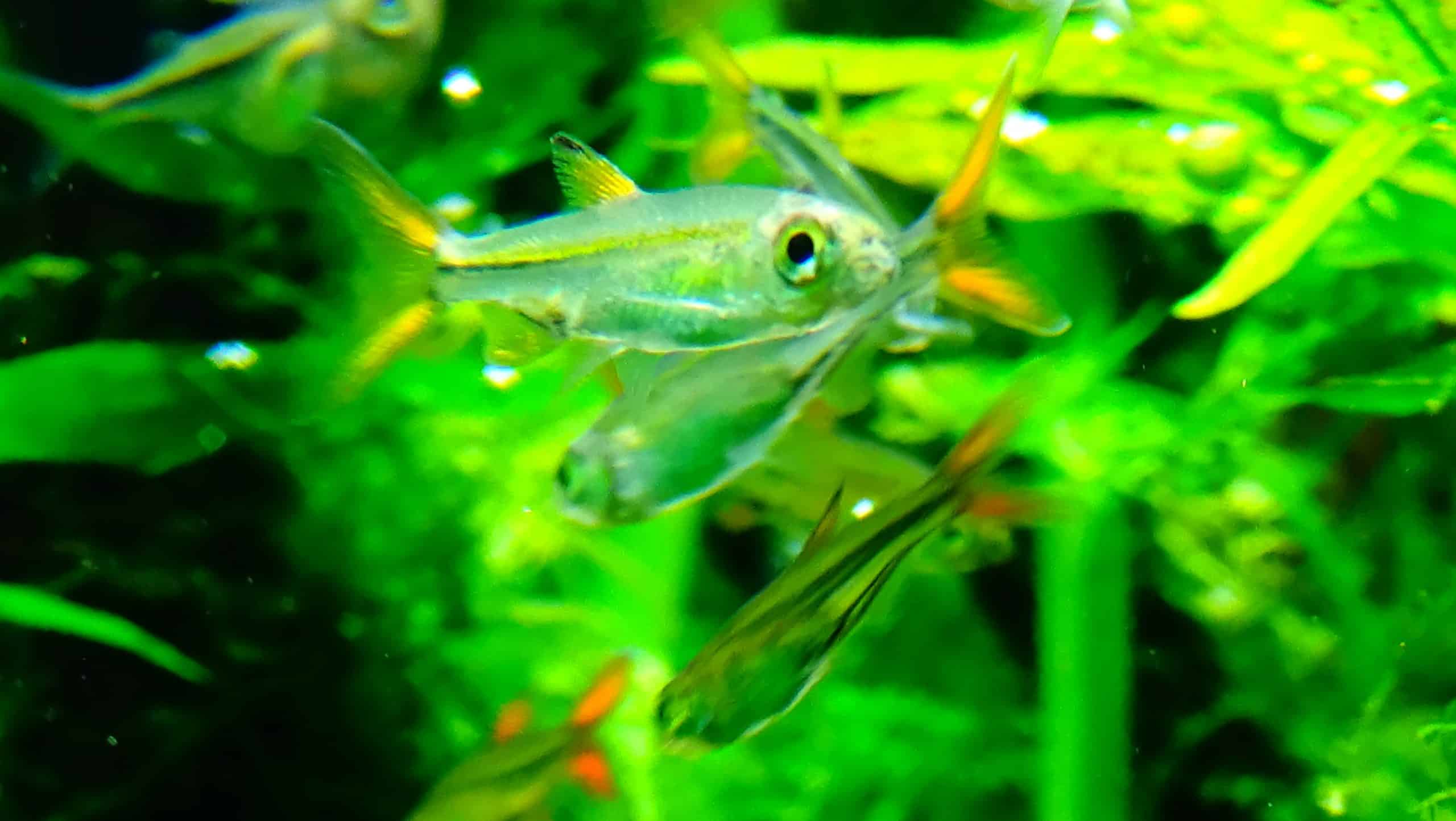
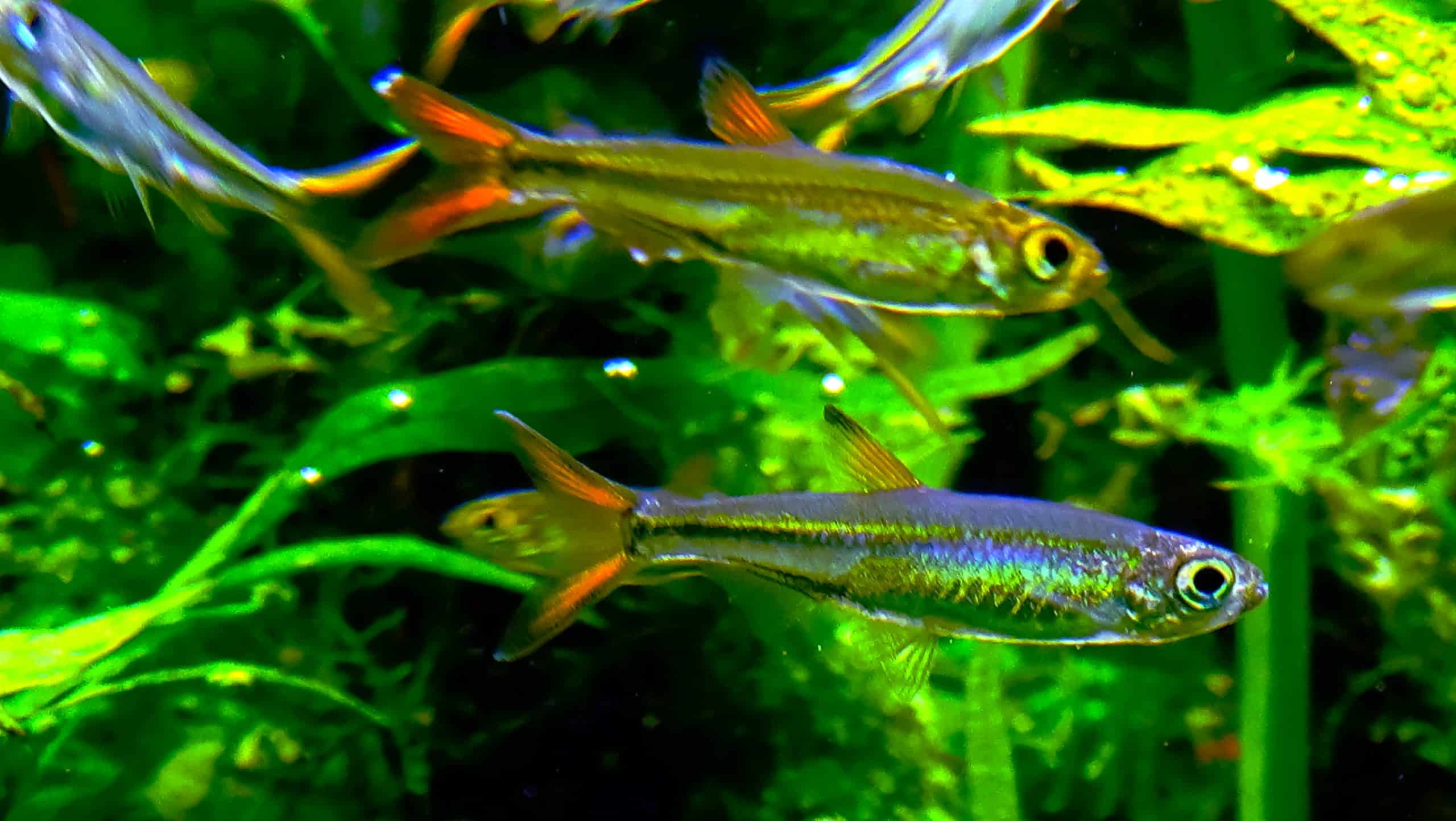
The jelly bean tetra is a small, slender fish with a translucent amber to golden body. In good conditions, the body takes on a warm, honey-like glow that’s quite unlike any South American tetra. The scales have a subtle iridescence that shifts depending on the angle of the light.
The fins are mostly transparent with yellowish to orange tints, particularly in the caudal and anal fins. Males develop slightly more intense coloration and may show a faint reddish tinge. The overall impression is of a delicate, ethereal little fish that does glow from within.
Sexual dimorphism is subtle. Males are slightly slimmer with more pronounced finnage and slightly brighter coloration. Females are rounder, especially when carrying eggs, and have a slightly deeper body. Both sexes remain quite small and delicate in appearance.
Average Size & Lifespan
The jelly bean tetra is a true micro-species, reaching a maximum of about 1.3 inches (3.5 cm). Most individuals in aquariums stay closer to 1 inch. Their small size makes them ideal candidates for nano tanks and heavily planted aquascapes.
With proper care in appropriate water conditions, expect a lifespan of 3 to 5 years. Soft, acidic water and a quality diet are essential for reaching the upper end of that range.
Care Guide
Tank Size
A 10-gallon tank is suitable for a species-only group of jelly bean tetras. For a small community setup with compatible tank mates, a 15 to 20-gallon tank provides more room and greater water stability. Despite their tiny size, they appreciate some horizontal swimming space and should be kept in groups of at least 8 to 10.
Water Parameters
| Parameter | Ideal Range |
|---|---|
| Temperature | 72-79°F (22-26°C) |
| pH | 5.5-7.0 |
| General Hardness | 1-8 dGH |
| KH | 0-4 dKH |
| Ammonia / Nitrite | 0 ppm |
| Nitrate | Below 15 ppm |
Soft, acidic water is strongly recommended for this species. They come from some of the softest, most acidic waters in West Africa, and they simply don’t do well in hard, alkaline conditions. RO/DI water remineralized to target parameters is the most reliable approach. Indian almond leaves and driftwood help maintain the slightly acidic conditions they prefer.
Note the cooler temperature range compared to many tropical fish. Jelly bean tetras prefer temperatures in the low to mid 70s and is stressed by sustained temperatures above 80°F. This makes them a good match for unheated tanks in warm climates or for setups that run slightly cooler than typical tropical temperatures.
Tank Setup
A heavily planted tank with dim lighting is ideal. These are forest stream fish that feel most at home in subdued conditions with plenty of cover. Floating plants are strongly recommended to diffuse overhead light and create a sense of security.
Leaf litter on the substrate mimics their natural habitat and provides both visual interest and beneficial tannins. A dark substrate shows off their warm amber coloration beautifully. Driftwood and smooth stones complete the natural look.
Filtration should be gentle. A small sponge filter or a hang-on-back filter with reduced flow works well. These tiny fish don’t need or want strong current.
Is the Jelly Bean Tetra Right for You?
The jelly bean tetra is a rewarding species for patient hobbyists who prioritize water quality. Here’s who should consider them:
- You have a mature, stable tank that’s been running for at least 2-3 months
- You’re experienced enough to acclimate sensitive fish properly. Drip acclimation is a must
- You appreciate subtle, developing color that improves over time in your care
- You want a less common nano tetra that rewards patience and good water quality
- You keep soft, acidic water naturally. Don’t try to force parameters for these fish
- Not ideal if you want instant gratification. Jelly beans need time to show their best
What People Get Wrong
The biggest challenge with jelly bean tetras is sourcing them. They are a West African species that is rarely stocked in general pet stores. Most hobbyists who keep them get them from specialist importers, online retailers, or dedicated aquarium clubs. If you see them labeled as “jelly bean tetras” in a general pet store, confirm the scientific name Ladigesia roloffi before buying — the name gets used loosely for other species.
Second mistake: wrong tank setup. Jelly bean tetras come from soft, tannin-stained West African streams. They show their best color and behavior in a blackwater setup with soft acidic water, floating plants for diffused lighting, and dark substrate. In a bright, hard-water tank they stay pale and hide. The setup is not optional — it determines whether this fish looks special or unremarkable.
Third: wrong tank mates. Jelly bean tetras are small and peaceful. They need companions that match their temperament and size. Large or nippy tank mates stress them immediately. Congo tetras, larger cichlids, and active mid-sized fish are all inappropriate companions for this species.
Tank Mates
Jelly bean tetras are peaceful and shy. They do best in species-only setups or with very small, gentle tank mates that won’t outcompete them or make them feel threatened.
Good Tank Mates
- Other tiny, peaceful tetras (ember tetras, green neons)
- Small rasboras (chili rasboras, exclamation point rasboras)
- Pygmy corydoras
- Small killifish (Aphyosemion species)
- Dwarf shrimp (cherry shrimp, Amano shrimp)
- Small snails (nerite, ramshorn)
Tank Mates to Avoid
- Anything large enough to eat them
- Active, boisterous species that would stress them or steal food
- Aggressive or territorial fish of any size
Food & Diet
Jelly bean tetras are micropredators with small mouths. They need appropriately sized food items and are more willing to eat live and frozen foods than dry food.
- Best foods: Live baby brine shrimp, daphnia, microworms, grindal worms
- Frozen foods: Cyclops, baby brine shrimp, daphnia
- Dry foods: Crushed high-quality flakes or micro pellets (need training to accept)
Feed small amounts two to three times daily. Live foods are strongly preferred and produce the best growth and coloration. Some individuals is trained to accept high-quality dry foods, but don’t rely on flakes or pellets as the sole diet. A regular supply of baby brine shrimp is the single best food you can offer.
Breeding & Reproduction
Jelly bean tetras is bred in captivity with some effort. They’re egg scatterers that spawn among fine-leaved plants.
Breeding Setup
- Breeding tank: 5 to 10 gallons, dimly lit
- Water: Very soft (1-2 dGH), acidic (pH 5.5-6.0), temperature 75-77°F
- Decor: Java moss, fine-leaved plants, or spawning mops
- Filtration: Gentle sponge filter
Condition breeding groups with plenty of live foods. Spawning typically occurs among fine-leaved plants, with the pair depositing a small number of eggs at a time. Clutch sizes are modest, usually a few dozen eggs. Remove adults after spawning to prevent egg predation.
Eggs hatch in approximately 24 to 48 hours. The fry are extremely tiny and require infusoria or liquid fry food as a first food, transitioning to baby brine shrimp nauplii after about a week. Growth is slow, which is typical of micro-species.
Common Health Issues
- Sensitivity to water chemistry: Hard, alkaline water causes chronic stress and weakened immune function. Soft, acidic conditions are not optional for this species.
- Ich and velvet: Can be problematic during acclimation. Quarantine new arrivals and acclimate slowly.
- Starvation: Their small mouths and shy feeding behavior mean they can lose out to more aggressive feeders. Make sure food is reaching them.
- Temperature stress: Temperatures above 80°F can cause chronic stress. Keep them in the cooler range of tropical temperatures.
Common Mistakes to Avoid
- Hard tap water: This species simply won’t thrive in hard, alkaline conditions. If your tap water is hard, use RO/DI water.
- Too warm: Many keepers run their tanks at 78-80°F for general tropical fish. Jelly bean tetras prefer the low to mid 70s.
- Keeping with boisterous fish: Even peaceful but active species can stress these shy fish into hiding permanently.
- Relying on dry food only: Many individuals refuse dry food entirely. Have a plan for live or frozen foods before buying these fish.
- Groups too small: They’re very shy in small numbers. A group of 8 or more gives them confidence to come out and behave naturally.
Where to Buy
Jelly bean tetras are a specialty species that you’re unlikely to find at chain pet stores. Look for them through dedicated online fish retailers and specialty importers:
Frequently Asked Questions
Are jelly bean tetras hard to keep?
They’re moderate in difficulty. The main challenges are providing soft, acidic water and ensuring they get appropriate food. If you can meet those two requirements, they’re actually very hardy for their size. They’re not a good choice for beginners running a standard community tank with hard tap water, but they’re well within reach for anyone willing to adjust their water chemistry.
Can jelly bean tetras live in a nano tank?
Yes, they’re excellent nano tank candidates. A well-planted 10-gallon tank with appropriate water chemistry makes a beautiful species-only setup for a group of 10 to 12. Their small size and relatively low bioload make them a natural fit for smaller aquariums.
Why are jelly bean tetras called African tetras?
Most tetras in the aquarium hobby come from South America, but the jelly bean tetra belongs to Alestidae, the African tetra family. It’s native to Sierra Leone and Liberia in West Africa. While not as well known as its South American cousins, the Alestidae family includes over 100 species, from tiny jelly beans to the large African tiger fish.
What It Is Actually Like Living With Jelly Bean Tetra
In a proper school, jelly bean tetra display natural movement patterns that are genuinely engaging to watch. The fish interact with each other, establish subtle hierarchies, and move through the tank with purpose.
They occupy the middle water column during active hours, creating movement and visual interest in the zone where most fishkeepers want action.
Feeding time is when their personality comes out. They learn your routine quickly and will anticipate feeding before you even open the lid.
Their color and behavior improve over time as they settle into a stable environment. Fish that have been in the same tank for months look noticeably better than recently added stock.
They coexist peacefully with virtually every other appropriately-sized community fish. This compatibility makes tank planning straightforward.
How the Jelly Bean Tetra Compares to Similar Species
Jelly Bean Tetra vs. Ruby Tetra
Ruby tetras occupy a similar niche. Small, warm-toned, and best in soft water setups. Ruby tetras are slightly hardier in my experience and color up faster. Jelly bean tetras offer a more unique pink-red tone compared to the ruby’s deeper crimson. Both need similar group sizes (10+) to look their best. If you can only pick one small red-toned tetra, ruby tetras are the safer bet for most keepers. Jelly beans are for the hobbyist who’s already successful with soft water species and wants to try something more unusual. Check out our Ruby Tetra care guide for more details.
Jelly Bean Tetra vs. Kitty Tetra
Kitty tetras are similarly uncommon but generally hardier and bolder in community settings. While jelly bean tetras need time and specific conditions to color up, kitty tetras show their character almost immediately. Both are excellent “conversation starter” fish that visitors won’t recognize. Kitty tetras are the better choice for hobbyists who want personality, while jelly bean tetras are for those who prioritize delicate beauty. Check out our Kitty Tetra care guide for more details.
Closing Thoughts
The jelly bean tetra is one of those species that rewards the aquarist who is willing to set up a tank specifically for it. In a dimly lit, heavily planted nano tank with soft, tannin-stained water, a school of these little fish glowing amber against a dark background is genuinely beautiful. It’s not flashy beauty. It’s the kind that sneaks up on you.
If you’re looking for something different from the standard South American tetras and you enjoy the challenge of providing specific water conditions, the jelly bean tetra is well worth seeking out. It’s a unique little fish with a charm all its own.
The tetra shaped like a tetra is not supposed to be shaped.
Recommended Video
Check out our Tetra Tier List video where we rank popular tetra species for the home aquarium:
References
- Froese, R. And D. Pauly, Eds. FishBase. Ladigesia roloffi. Accessed 2025.
- SeriouslyFish. Ladigesia roloffi species profile. Accessed 2025.
- About the Author
- Latest Posts

I’m Mark Valderrama, founder of Aquarium Store Depot and a fishkeeper with over 25 years of hands-on experience. I started in the hobby at age 11, worked at local fish stores, and have kept freshwater tanks, ponds, and reef tanks ever since. I’ve been featured in two best-selling aquarium books on Amazon and built this site to share practical, experience-based fish keeping knowledge.
Leave a Reply