
Last Updated: June 25, 2026
Thank you for visiting! By the way… any links on this page that lead to products on Amazon and other stores/partners are affiliate links Aquarium Store Depot earns a commission if you make a purchase.
Table of Contents
- What Most Care Guides Get Wrong
- The Reality of Keeping Big Blue Hap
- Key Takeaways
- Species Overview
- Classification
- Origin & Natural Habitat
- Appearance & Identification
- Average Size & Lifespan
- Care Guide
- Is This Species Right for You?
- Tank Mates
- Food & Diet
- Breeding & Reproduction
- Common Health Issues
- Common Mistakes to Avoid
- Where to Buy
- FAQ
- What It Is Actually Like Living With Big Blue Hap
- Species Comparison
- Closing Thoughts
Big blue haps are one of the largest haplochromines in Lake Malawi, and that size is the defining challenge. At over 12 inches, this fish needs a minimum of 125 gallons, and even that feels tight. They are open water predators that eat anything they can fit in their mouth and push around anything they cannot. I have kept aristochromis christyi and the single biggest mistake is underestimating how big and how aggressive this fish gets at full size. The hap that makes saltwater keepers do a double-take.
The hap that makes saltwater keepers do a double-take.
What Most Care Guides Get Wrong About Big Blue Hap
The name says it all. Big Blue Haps get big. The most common mistake is buying one without planning for its adult size of 10 to 12 inches. Aristochromis christyi will outgrow most standard tanks within two years. The second misconception is that they are just a larger version of the Electric Blue Hap. They are not. Big Blue Haps are more aggressive, more predatory, and need significantly more space. Their jaw structure is designed for grabbing other fish, and they will eat anything they can catch.
The Reality of Keeping Big Blue Hap
Mbuna keeping is a different discipline from regular fishkeeping. The Big Blue Hap is no exception. Here is what you need to prepare for.
Hard, alkaline water is mandatory. Lake Malawi chemistry means pH between 7.8 and 8.6, high GH, and high KH. There is no faking this. If your tap water is soft and acidic, you need to buffer every water change without exception.
Overstocking is the strategy. Keeping 3 or 4 Big Blue Haps leads to one bully and victims. You need groups of 12 or more to spread aggression. But overstocking only works with heavy filtration and consistent water changes.
Diet is critical. Feed a varied diet appropriate for the species. Quality pellets should be the staple, supplemented with occasional frozen foods.
Rockwork defines territories. Mbuna need piles of rocks with caves and passageways. Without proper rockwork, dominant fish have nowhere to establish boundaries and subordinates have nowhere to hide. Stack rocks from substrate to near the waterline.
Biggest Mistake New Big Blue Hap Owners Make
Understocking. Keeping a small group of Big Blue Haps means the dominant fish picks off the weak ones. You need a large group to distribute aggression. Twelve is the minimum for most mbuna species.
Expert Take
Start with a group of 12 or more in a 55 gallon minimum. Use aragonite or crushed coral substrate to buffer pH naturally. Feed spirulina-based food as the staple. Stack rocks to create territories. This formula works for Big Blue Haps and most other mbuna.
Key Takeaways
- One of Lake Malawi’s largest predators. Reaches 12. 14 inches (30. 35 cm); males are truly massive fish
- 180-gallon minimum. Requires a tank at least 6 feet long; 250+ gallons is strongly preferred for a group
- Dedicated piscivore. Hunts full-grown mbuna in the wild; needs large, meaty foods in captivity
- Very rare in the hobby. Primarily maintained by knowledgeable aquarists and specialized breeders
- Aggressive during breeding. Fairly calm outside spawning but fiercely territorial when breeding
- Maternal mouthbrooder. Females carry eggs for 3. 4 weeks; keep 1 male with 2+ females in a very large tank
Species Overview
| Common Name | Big Blue Hap, Black Belly Tyrannochromis |
| Scientific Name | Tyrannochromis nigriventer |
| Care Level | Advanced |
| Temperament | Predatory / Aggressive |
| Max Size | 12. 14 inches (30. 35 cm) |
| Min Tank Size | 180 gallons (681 liters) |
| Diet | Carnivore (Piscivore) |
| Lifespan | 10. 15 years |
| Water Temp | 76. 82°F (24. 28°C) |
| pH | 7.8. 8.6 |
| Origin | Lake Malawi, Africa |
Classification
| Kingdom | Animalia |
| Phylum | Chordata |
| Class | Actinopterygii |
| Order | Cichliformes |
| Family | Cichlidae |
| Genus | Tyrannochromis |
| Species | T. Nigriventer (Eccles, 1989) |
Origin & Natural Habitat
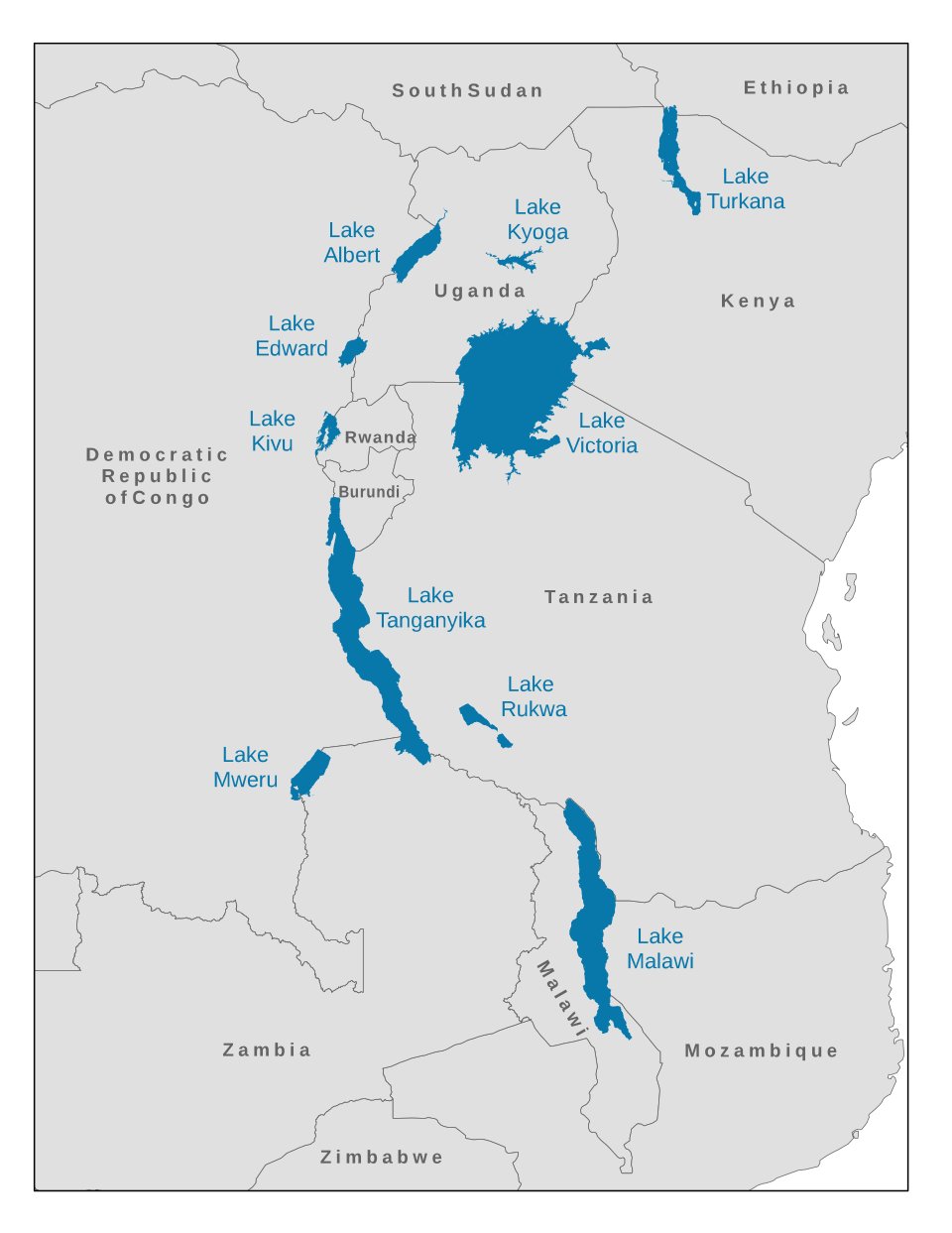
Tyrannochromis nigriventer is found throughout Lake Malawi in East Africa, inhabiting sediment-free rocky habitats and rock-sand interface zones at depths of around 10. 30 meters (33. 100 feet). The genus name “Tyrannochromis”. Tyrant fish. Is well earned. This is one of the true apex predators of the lake’s rocky coastline.
In the wild, Big Blue Haps are ambush hunters that patrol rocky areas with remarkable patience. They swim slowly around rock formations, using the terrain for concealment, until they spot a full-grown mbuna coming around the other side. Then they strike with surprising speed for such a large fish, engulfing their prey with their oversized mouths.
Outside of breeding season, they’re actually fairly solitary. Swimming alone through their territory and only becoming social during spawning. This solitary nature is something to keep in mind when stocking your tank.
Appearance & Identification
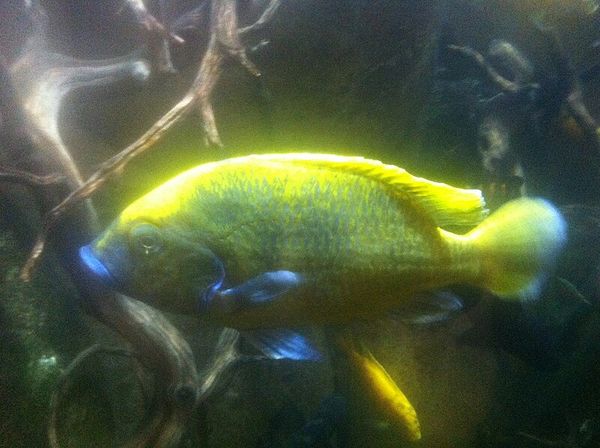
The Big Blue Hap is a genuinely impressive-looking fish. Males develop a steely blue coloration across the body with darker markings, and the species’ namesake black ventral (belly) area becomes prominent in dominant specimens. The head is large and powerful, with an oversized mouth that reveals the fish’s predatory lifestyle.
Females are duller. Greyish-silver with barring and spots. Both sexes are thick-bodied and muscular, clearly built for power rather than speed. The overall impression when seeing a full-grown male is of sheer physical presence. These are fish that look like they own the tank.
Note that T. Nigriventer is often confused with the closely related T. Macrostoma (Big Mouth Hap). The key difference is in the head structure. nigriventer has a thickening between the eyes and lip that’s positioned more centrally, while in macrostoma it sits more toward the eyes.
Male vs. Female
Sexing is straightforward in mature specimens thanks to the male’s color development. Juveniles are much harder to differentiate.
| Feature | Male | Female |
|---|---|---|
| Body Color | Steely blue with black belly; darker barring | Grey-silver with muted barring and spots |
| Size | 12. 14 inches (30. 35 cm) | 8. 10 inches (20. 26 cm) |
| Head | Massive with oversized mouth | Proportionally smaller head |
| Egg Spots | Present on anal fin | Absent or faint |
| Body Build | Thick, heavily muscled | Smaller, less robust |
Average Size & Lifespan
This is one of the largest cichlids you’ll encounter in the Lake Malawi hobby. Males can reach 12. 14 inches (30. 35 cm). That’s a foot-long fish with the muscular build of a predator. Females are smaller but still substantial at 8. 10 inches (20. 26 cm). These are not fish you can keep in a standard-sized tank.
With proper care, Big Blue Haps can live 10. 15 years. That’s a major commitment, especially given the tank size and resources required to keep them properly. Make sure you’re in it for the long haul before acquiring one.
Care Guide
Tank Size
A 180-gallon (681-liter) tank with a minimum length of 6 feet (72 inches) is the absolute baseline for a Big Blue Hap. For a breeding group with other large tank mates, 250+ gallons is strongly recommended. An 8-foot tank is ideal if you can swing it. These are large, powerful fish that need room to move.
Don’t try to keep a Big Blue Hap in anything under 150 gallons. They grow fast, they’re messy, and they produce an enormous bioload. Start with the right tank from day one.
Water Parameters
| Temperature | 76. 82°F (24. 28°C) |
| pH | 7.8. 8.6 |
| General Hardness (dGH) | 10. 20 dGH |
| Carbonate Hardness (dKH) | 10. 15 dKH |
| Ammonia | 0 ppm |
| Nitrite | 0 ppm |
| Nitrate | <50 ppm (lower is always better) |
Standard Malawi chemistry with one important note. With fish this large producing this much waste, keeping nitrates low requires aggressive filtration and large, regular water changes. Plan for 20. 30% water changes monthly at minimum, with more frequent changes for heavily stocked tanks. Stability remains paramount.
Filtration & Water Flow
This is where you can’t cut corners. A large sump system or multiple heavy-duty canister filters rated for well beyond your tank volume are essential. Big Blue Haps are messy eaters of large, meaty foods, and water quality can deteriorate rapidly without serious filtration capacity.
Moderate flow is appropriate. These fish come from rocky areas with moderate current. Good circulation prevents dead spots where waste can accumulate.
Lighting
Standard LED lighting works fine. These fish don’t have special lighting needs, and moderate intensity showcases their coloration nicely. Keep the photoperiod to 8. 10 hours daily.
Plants & Decorations
Focus on large rock structures that reach the surface of the water. In the wild, Big Blue Haps use these formations for ambush hunting, slowly swimming around them to surprise prey on the other side. Create gaps, holes, and crevices large enough for females to shelter in when they need to escape male attention.
Leave a designated spawning area with a small sandy patch. The rest of the aquascape should prioritize the large rock formations. Plants aren’t necessary and would likely be disturbed by fish of this size.
Substrate
Sand is preferred, particularly in the spawning area. The majority of the tank floor is rock-covered, but provide at least one sandy patch for spawning behavior. Pool filter sand or aragonite sand work well for the sandy areas.
Is the Big Blue Hap Right for You?
Big Blue Haps are the apex predator blue cichlid in Lake Malawi. They are massive, powerful, and not for the casual hobbyist.
- Great fit if you have a 150 gallon or larger tank dedicated to large predatory haps
- Great fit if you want the biggest, most imposing blue cichlid available in the hobby
- Great fit if you are experienced with large predatory fish and understand the tank requirements
- Not ideal if your tank is under 150 gallons. This is not a negotiable requirement
- Not ideal if you keep any fish under 5 inches. Everything smaller is potential food
- Not ideal if you are new to African cichlids. Start with something more manageable and work your way up
- Not ideal if you want a peaceful community. Big Blue Haps are dominant fish that reshape the tank hierarchy
Big Blue Haps are the ultimate large Malawi predator for serious hobbyists. If you have the tank space and experience, there is nothing quite like watching a foot long metallic blue cichlid patrol its territory.
Tank Mates
Best Tank Mates
Tank mate selection with Big Blue Haps requires extreme care. Only other large, robust cichlids with strong temperaments should be considered. Even then, monitor closely. This is a fish that hunts full-grown mbuna for breakfast:
- Malawi Hawk (Aristochromis christyi). Another large Malawi predator with compatible size and temperament
- Venustus (Nimbochromis venustus). Large enough to avoid predation, similarly paced
- Malawi Eye-Biter (Dimidiochromis compressiceps). Large, robust, different niche
- Fossorochromis rostratus. Large sand-dwelling Hap that can hold its own
- Large Synodontis catfish. S. Multipunctatus or similar species large enough to avoid predation
Tank Mates to Avoid
- All mbuna. In the wild, mbuna are the primary food source for T. Nigriventer; they’ll be eaten
- Small to medium Haps. Anything under 8 inches is at serious risk
- Peacock cichlids. Too small and too docile for a Big Blue Hap tank
- Any small or slender species. This fish has an enormous mouth and will eat anything that fits
- Other Tyrannochromis males. Males will fight aggressively; keep only one per species
Food & Diet
In the wild, Big Blue Haps hunt full-grown mbuna. They are dedicated, large-prey piscivores. In captivity, they need substantial, meaty foods to maintain their size and condition.
Feed large carnivore pellets or cichlid sticks as the staple diet. Supplement heavily with large meaty frozen foods. Whole prawns, mussels, krill, smelt, sprat, and chopped fish fillet. These are fish that need big food items to satisfy their nutritional needs.
Some individuals refuse dry foods entirely and will only accept fresh or frozen meaty items. This is something to be prepared for. Feed 1. 2 meals per day for adults. Don’t overfeed. Despite their size, bloat is still a risk. Avoid mammalian meat products and low-quality feeder fish.
Breeding & Reproduction
Big Blue Haps are maternal mouthbrooders, though breeding in the home aquarium is uncommon due to the extreme space requirements and the species’ rarity in the hobby.
Spawning Behavior
Keep one male with at least 2 females. More if your tank allows. Males become extremely territorial during breeding season and will fiercely defend their spawning site. Outside of spawning, they’re surprisingly calm for a fish this large.
The male prepares a spawning pit in the sandy substrate and displays to attract females. Spawning follows the standard Malawi mouthbrooder pattern with egg-spot fertilization.
Mouthbrooding & Fry Care
Females carry the eggs for 3. 4 weeks before releasing free-swimming fry. The fry are large at release and can accept baby brine shrimp and crushed foods immediately. Because this species is so rare in the hobby, successful breeding is a significant achievement and contributes meaningfully to the captive population.
Grow fry separately. In the main tank, they’ll quickly become food for the adults and any tank mates.
Common Health Issues
Malawi Bloat
Even large predatory cichlids are susceptible to bloat. Overfeeding, stress, and poor water quality are the primary triggers. With fish this large, waste production is significant, making water quality management critical. Watch for abdominal swelling, white stringy feces, appetite loss, and rapid breathing. Treat with Metronidazole immediately.
Hole-in-the-Head Disease (HITH)
Large cichlids are particularly prone to HITH, which presents as pitted lesions on the head and lateral line. The condition is linked to poor water quality, vitamin deficiencies, and potentially the overuse of activated carbon filtration. Improving water conditions and diet variety halts progression.
Parasitic Infections
If fed live feeder fish (which you should avoid), parasitic infections become a significant risk. Internal parasites can cause weight loss, lethargy, and eventual death. Stick to quality prepared and frozen foods to avoid this issue entirely.
Common Mistakes to Avoid
- Grossly undersized tank. A foot-long predatory cichlid cannot live in a 75-gallon tank; 180 gallons is the absolute minimum
- Keeping with small fish. Full-grown mbuna are this fish’s natural prey; anything under 8 inches is at risk
- Underestimating bioload. Big fish produce big waste; heavy-duty filtration and regular water changes are non-negotiable
- Feeding live feeder fish. Parasites and disease transmission make live feeders not worth the risk
- Impulse buying. This is a rare, specialized species that requires long-term planning and serious resources; don’t buy one without being fully prepared
- Ignoring breeding aggression. Males become dangerously aggressive when spawning; females need adequate shelter and escape routes
Where to Buy
The Big Blue Hap is very rare in the aquarium trade. You won’t find this species at your local fish store. It’s primarily maintained and bred by knowledgeable specialist aquarists. Finding specimens require contacting specialized cichlid clubs, attending cichlid auctions, or working with dedicated breeders. When available, expect premium pricing. $25. $50+ per fish depending on size and origin.
- Flip Aquatics. Check availability for rare Malawi Hap species; stock varies
- Dan’s Fish. May carry Tyrannochromis species on occasion; worth checking periodically
If you find Big Blue Haps available, act quickly. They don’t stay in stock long. Consider joining cichlid forums and clubs to connect with breeders who maintain this species.
FAQ
How big do Big Blue Haps get?
Males can reach 12. 14 inches (30. 35 cm). That’s over a foot long. Females are smaller at 8. 10 inches (20. 26 cm). This is one of the largest cichlids in the Lake Malawi hobby and requires tank sizes to match.
What’s the difference between T. Nigriventer and T. Macrostoma?
Both are large predatory Tyrannochromis species that look very similar. The distinguishing feature is in the head structure. nigriventer has a thickening between the eyes and lip that’s centered, while in macrostoma the thickening sits closer to the eyes. In practice, telling them apart requires close examination and some experience with the genus.
Are Big Blue Haps aggressive?
They’re predatory and is aggressive, especially during breeding season when males defend spawning sites fiercely. Outside of spawning, they’re actually surprisingly calm for their size. The main concern isn’t aggression toward tank mates so much as predation. They eat fish, and anything that fits in their large mouth is fair game.
Can I keep a Big Blue Hap in a 125-gallon tank?
That’s too small for a fully grown Big Blue Hap. A 180-gallon tank is the absolute minimum, and 250+ gallons is strongly recommended. These are massive, active fish that need room proportional to their size. An undersized tank leads to stress, aggression, and health problems.
Where can I find Big Blue Haps for sale?
This is a very rare species in the aquarium trade. Your best bet is connecting with specialized cichlid breeders, joining cichlid forums and clubs, and attending cichlid auctions. Online retailers occasionally stock them, but availability is inconsistent. If you’re serious about keeping this species, networking with the cichlid breeding community is essential.
What It Is Actually Like Living With Big Blue Hap
This is the part no other care guide gives you. Forget water parameters for a minute. Here is what it is actually like to share your tank with this species.
They have more personality than you expect. The Big Blue Hap is not a fish that just sits in the background. Once settled in, they become interactive, curious, and responsive to your presence.
Feeding time reveals their character. Watch how the Big Blue Hap approaches food and you will see real personality. Some are bold, some are cautious, and their feeding behavior tells you a lot about their mood and health.
They establish routines. After a few weeks, your Big Blue Hap will have favorite spots, preferred paths through the tank, and predictable patterns. Learning these routines makes you a better keeper.
Color is a health indicator. The Big Blue Hap’s coloration is a real-time report card on your husbandry. Vibrant color means happy fish. Faded color means something is wrong. Pay attention.
How the Big Blue Hap Compares to Similar Species
Choosing the right Malawi cichlid means understanding how similar species compare. Here is how the Big Blue Hap stacks up against species you will also be considering.
Big Blue Hap vs. Electric Blue Hap
Electric Blue Haps and Big Blue Haps are both blue predatory haps, but the size difference is dramatic. Electric Blues max out around 7 to 8 inches, while Big Blues reach 10 to 12 inches. The aggression difference is equally significant. If you want a blue predator for a 75 gallon tank, the Electric Blue Hap is your fish. Big Blue Haps need 150 gallons minimum and are only appropriate for keepers who can handle a true apex predator. You can learn more in our Electric Blue Hap Care Guide.
Big Blue Hap vs. Venustus Cichlid
Venustus and Big Blue Haps are both large predatory species that occupy the top of the Malawi food chain in aquariums. Venustus offer the unique giraffe pattern, while Big Blues deliver sheer size and intense blue coloring. Keeping both in the same tank requires 200 gallons or more and careful monitoring. Both are excellent choices for a monster hap tank, but only one should be the dominant predator in any standard setup. You can learn more in our Venustus Cichlid Care Guide.
Closing Thoughts
Big blue haps outgrow most tanks and most keepers. Plan for the adult, not the juvenile.
The Big Blue Hap is the ultimate fishkeeper’s fish. A massive, powerful predator that commands respect and demands commitment. Tyrannochromis nigriventer isn’t for everyone, and it’s not meant to be. This is a species for the experienced cichlid keeper who has a very large tank, a heavy-duty filtration system, and the dedication to maintain a specialized setup for a decade or more.
If you can provide what it needs, the Big Blue Hap is genuinely awe-inspiring. There’s something deeply satisfying about maintaining one of Lake Malawi’s apex predators. Watching it patrol the tank with that unmistakable predatory confidence is an experience that smaller, easier fish simply can’t replicate.
This article is part of our Lake Malawi Cichlid Species Directory: Complete A-Z Care Guide List. Visit the hub page to explore care guides for all 28 Lake Malawi cichlid species we cover.
Recommended Video
References
- AquaInfo. (n.d.). Tyrannochromis nigriventer. https://aquainfo.org/article/tyrannochromis-nigriventer/
- FishBase. (n.d.). Tyrannochromis nigriventer. https://www.fishbase.se/summary/Tyrannochromis-nigriventer.html
- Fishi-Pedia. (n.d.). Tyrannochromis nigriventer. https://www.fishi-pedia.com/fishes/tyrannochromis-nigriventer
- Seriously Fish. (n.d.). Tyrannochromis genus. https://www.seriouslyfish.com
- About the Author
- Latest Posts

I’m Mark Valderrama, founder of Aquarium Store Depot and a fishkeeper with over 25 years of hands-on experience. I started in the hobby at age 11, worked at local fish stores, and have kept freshwater tanks, ponds, and reef tanks ever since. I’ve been featured in two best-selling aquarium books on Amazon and built this site to share practical, experience-based fish keeping knowledge.
Leave a Reply