
Last Updated: June 25, 2026
Thank you for visiting! By the way… any links on this page that lead to products on Amazon and other stores/partners are affiliate links Aquarium Store Depot earns a commission if you make a purchase.
Table of Contents
- What Most Care Guides Get Wrong
- The Reality of Keeping Venustus Cichlid
- Key Takeaways
- Species Overview
- Classification
- Origin & Natural Habitat
- Appearance & Identification
- Average Size & Lifespan
- Care Guide
- Is This Species Right for You?
- Tank Mates
- Food & Diet
- Breeding & Reproduction
- Common Health Issues
- Common Mistakes to Avoid
- Where to Buy
- FAQ
- What It Is Actually Like Living With Venustus Cichlid
- Species Comparison
- Closing Thoughts
Venustus cichlids are ambush predators with a giraffe pattern that makes them one of the most recognizable Lake Malawi haps. They get large, they eat small fish, and they need a tank that accounts for both. I have kept nimbochromis venustus for years and the biggest mistake is buying a juvenile and underestimating the adult size. A 10 inch venustus in a 55 gallon tank is not just cramped. It is a stressed, aggressive fish that will destroy everything around it. The giraffe-patterned predator that plays dead and hunts like a livingstonii.
The giraffe-spotted fish that hunts like a crocodile.
What Most Care Guides Get Wrong About Venustus Cichlid
The biggest mistake with Venustus Cichlids is buying one without understanding how large they get. At 10 inches, this is not a fish for standard sized tanks. I have seen too many hobbyists buy a small juvenile Venustus, fall in love with the giraffe pattern, and then struggle when it outgrows their 55 gallon tank within a year. The second misconception is that they are slow and peaceful because they are large. Venustus are ambush predators that will eat any fish small enough to swallow. They play dead in the wild to lure prey. That hunting instinct does not disappear in an aquarium.
The Reality of Keeping Venustus Cichlid
Mbuna keeping is a different discipline from regular fishkeeping. The Venustus Cichlid is no exception. Here is what you need to prepare for.
Hard, alkaline water is mandatory. Lake Malawi chemistry means pH between 7.8 and 8.6, high GH, and high KH. There is no faking this. If your tap water is soft and acidic, you need to buffer every water change without exception.
Overstocking is the strategy. Keeping 3 or 4 Venustus Cichlids leads to one bully and victims. You need groups of 12 or more to spread aggression. But overstocking only works with heavy filtration and consistent water changes.
Diet is critical. Feed a varied diet appropriate for the species. Quality pellets should be the staple, supplemented with occasional frozen foods.
Rockwork defines territories. Mbuna need piles of rocks with caves and passageways. Without proper rockwork, dominant fish have nowhere to establish boundaries and subordinates have nowhere to hide. Stack rocks from substrate to near the waterline.
Biggest Mistake New Venustus Cichlid Owners Make
Understocking. Keeping a small group of Venustus Cichlids means the dominant fish picks off the weak ones. You need a large group to distribute aggression. Twelve is the minimum for most mbuna species.
Expert Take
Start with a group of 12 or more in a 55 gallon minimum. Use aragonite or crushed coral substrate to buffer pH naturally. Feed spirulina-based food as the staple. Stack rocks to create territories. This formula works for Venustus Cichlids and most other mbuna.
Key Takeaways
- Large predatory Hap. Grows to 10 inches (25 cm) in captivity and will eat any fish small enough to swallow
- 125-gallon minimum. These fish need serious space; a 6-foot tank is strongly recommended
- Unique giraffe pattern. The spotted pattern is distinctive; males develop stunning blue and yellow coloration at maturity
- Ambush predator. One of the few cichlids that “plays dead” by partially burying in sand to lure prey
- Long-lived. 10. 12 years with proper care, making this a real commitment
- Maternal mouthbrooder. Females carry 50. 120 eggs for approximately 21 days; keep 1 male to 3. 6 females
Species Overview
| Common Name | Venustus Cichlid, Giraffe Cichlid, Giraffe Hap, Kalingo |
| Scientific Name | Nimbochromis venustus |
| Care Level | Intermediate |
| Temperament | Predatory / Semi-Aggressive |
| Max Size | 10 inches (25 cm) |
| Min Tank Size | 125 gallons (473 liters) |
| Diet | Carnivore (Piscivore) |
| Lifespan | 10. 12 years |
| Water Temp | 76. 82°F (24. 28°C) |
| pH | 7.8. 8.6 |
| Origin | Lake Malawi, Africa |
Classification
| Kingdom | Animalia |
| Phylum | Chordata |
| Class | Actinopterygii |
| Order | Cichliformes |
| Family | Cichlidae |
| Genus | Nimbochromis |
| Species | N. Venustus (Boulenger, 1908) |
Origin & Natural Habitat
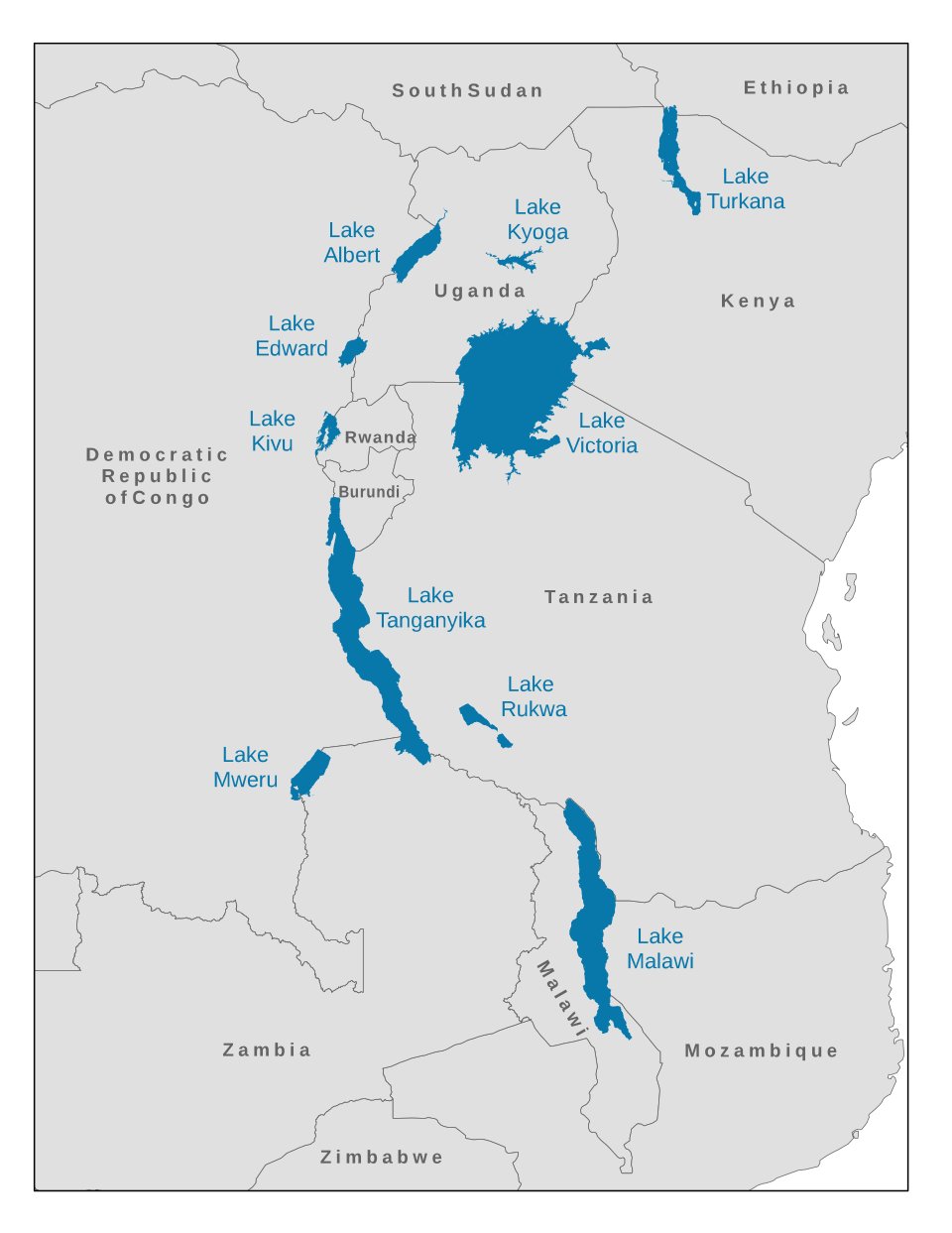
The Venustus Cichlid is found throughout Lake Malawi in East Africa, as well as in Lake Malombe and the upper Shire River, which are connected to the main lake system. It was first described by the Belgian-British zoologist George Boulenger in 1908, originally under the name Haplochromis venustus before being reclassified into the Nimbochromis genus in 1989.
In their natural habitat, Venustus prefer deeper water areas over sandy substrates, though they also frequent transitional zones between sand and rock. This habitat preference is directly tied to their remarkable hunting strategy. They partially bury themselves in the sand, lying motionless until unsuspecting juvenile cichlids wander within striking distance. It’s a behavior that’s rarely seen in freshwater fish and makes Venustus one of the most behaviorally interesting species you can keep.
Like all Malawi cichlids, Venustus come from water that’s warm, hard, and alkaline. Parameters that remain incredibly stable throughout the year. Maintaining this consistency in captivity is a core requirement for long-term success.
Appearance & Identification
The Venustus gets its “Giraffe Cichlid” nickname from its juvenile and female coloration. A golden-tan base color covered with dark brown blotches that genuinely resemble giraffe markings. It’s a unique look among Malawi cichlids and makes this species easy to identify even at a young age.
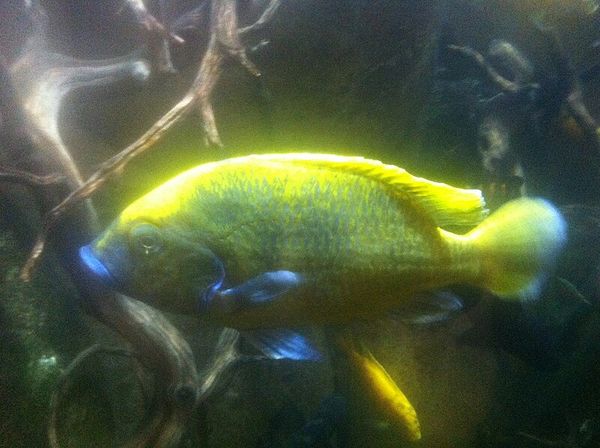
But the real show begins when males reach maturity. The giraffe pattern gradually gives way to a vivid transformation. The head and face develop a deep blue coloration while the body takes on yellow tones. A fully mature dominant male Venustus, with his blue face and golden body, is one of the most striking cichlids you’ll ever see. The color transition happens gradually as the fish grows, becoming apparent at 4. 5 inches.
These are large, stocky fish with a powerful build suited to their predatory lifestyle. The body shape is deep and laterally compressed, with a large head and mouth designed for engulfing prey.
Male vs. Female
Sexing Venustus is challenging when they’re young but becomes obvious as they grow. The males’ color transformation is the most reliable indicator, though it takes patience as they develop more slowly than some other Haps.
| Feature | Male | Female |
|---|---|---|
| Body Color | Blue head with yellow body at maturity | Golden-tan with brown giraffe blotches |
| Size | Up to 10 inches (25 cm) | Up to 8 inches (20 cm) |
| Fins | Longer, more pointed dorsal and anal fins | Shorter, more rounded fins |
| Egg Spots | Present on anal fin | Absent or very faint |
| Throat Color | Blue coloration extends to throat | Yellow coloration around throat area |
Average Size & Lifespan
Venustus are among the larger Haps commonly kept in the hobby. Males routinely reach 10 inches (25 cm) in aquariums, with some wild specimens reported up to 12 inches (30 cm). Females are smaller but still substantial at 7. 8 inches (18. 20 cm). These are fish that make their presence known in any tank.
With proper care, Venustus are long-lived fish. Expect 10. 12 years in captivity. That’s a serious commitment, so make sure you’re prepared for the long haul before bringing one home. Quality water, proper diet, and adequate space are the keys to reaching that upper lifespan range.
Care Guide
Tank Size
A 125-gallon (473-liter) tank is the minimum I’d recommend for Venustus, and even that can feel tight once they reach full size. A 6-foot tank is strongly preferred. These fish are powerful swimmers that need horizontal space. If you’re keeping a harem with other large Haps, pushing into the 150. 180 gallon range gives everyone breathing room.
Don’t underestimate how quickly these fish grow. Starting a juvenile in a smaller tank will work temporarily, but you’ll need that large tank sooner than you think. Plan for the adult size from the beginning and save yourself the headache of an emergency upgrade.
Water Parameters
| Temperature | 76. 82°F (24. 28°C) |
| pH | 7.8. 8.6 |
| General Hardness (dGH) | 10. 20 dGH |
| Carbonate Hardness (dKH) | 10. 15 dKH |
| Ammonia | 0 ppm |
| Nitrite | 0 ppm |
| Nitrate | <20 ppm |
Consistency matters more than hitting exact numbers. Lake Malawi has some of the most stable water chemistry of any freshwater lake on Earth, and these fish have evolved to expect that stability. Sudden swings in pH or temperature cause far more problems than parameters that are slightly off-target but steady. If your tap water is naturally soft, use crushed coral, aragonite, or a cichlid buffer to maintain proper hardness and alkalinity.
Filtration & Water Flow
Venustus produce a lot of waste. They’re big fish with big appetites, and they’re messy eaters. Heavy-duty filtration is essential. A large canister filter or a sump system rated for well beyond your tank volume is the way to go. Many experienced keepers run two filters on Venustus tanks for redundancy and flow distribution.
Moderate water flow is fine. You don’t need heavy current, but good circulation ensures oxygenation and prevents dead spots where waste can accumulate. Weekly water changes of 30. 50% are recommended, especially in larger community setups where bioload is significant.
Lighting
Standard aquarium LED lighting is perfectly adequate. Venustus don’t have specialized lighting needs, and moderate light levels are ideal. Keep the photoperiod to 8. 10 hours daily. Good lighting will help showcase the males’ blue and yellow coloration, which is really the whole point of keeping these gorgeous fish.
Plants & Decorations
The ideal Venustus setup balances rock formations with large open areas. Create rock piles that form caves and hiding spots along the back and sides of the tank, but leave the majority of the floor space open. This replicates their natural deep-water sandy habitat and gives them room to exhibit natural behaviors. Including their ambush hunting technique if you have sand substrate.
Plants are optional. Vallisneria and Anubias can work, but Venustus may uproot anything planted in the substrate during digging. Attach plants to rocks or wood if you want greenery.
Substrate
Sand is the only sensible substrate choice for Venustus. These fish naturally bury themselves in sand as part of their hunting behavior, and you’ll want to observe this fascinating adaptation. A fine-grained pool filter sand or play sand works well. Aragonite sand is another excellent option that doubles as a pH buffer. Avoid coarse gravel or sharp substrates that could injure the fish during their digging behavior.
Is the Venustus Cichlid Right for You?
Venustus Cichlids are one of the most visually unique haps in Lake Malawi. Their giraffe patterning is unlike anything else. But their size and predatory nature demand serious tank space.
- Great fit if you have a 125 gallon or larger tank and want a true showpiece predator
- Great fit if you appreciate the unique giraffe pattern that no other cichlid species offers
- Great fit if you are building a large hap community with other big species
- Not ideal if your tank is under 125 gallons. Venustus need space to grow and will suffer in cramped conditions
- Not ideal if you keep small fish. Venustus will eat anything that fits in their mouth
- Not ideal if you want a fast growing, instantly impressive display. Venustus take time to reach full size and coloring
A mature male Venustus in a large tank is one of the most impressive sights in the African cichlid hobby. Just make sure you have the tank space to do this species justice.
Tank Mates
Best Tank Mates
Venustus are predatory but peaceful with fish too large to be considered food. The key is choosing tank mates that match their size and won’t provoke territorial disputes. Stick to other large Haps and robust species:
- Blue Dolphin (Cyrtocara moorii). A classic pairing; peaceful enough to coexist but large enough to avoid being prey
- Livingstonii (Nimbochromis livingstonii). Similar size and temperament as a fellow Nimbochromis species
- Malawi Eye-Biter (Dimidiochromis compressiceps). Large, robust, and occupies a slightly different niche
- Red Empress (Protomelas taeniolatus). Peaceful Hap with different coloration
- Frontosa (Cyphotilapia frontosa). Large enough to hold their own, though technically a Tanganyikan species
- Synodontis catfish. Bottom dwellers large enough to avoid being eaten
Tank Mates to Avoid
- Small mbuna. Venustus will eat them; it’s not a question of if, it’s when
- Small Peacocks. Any Aulonocara under 4 inches is at risk of being swallowed
- Any small or juvenile fish. Anything that fits in a Venustus mouth is food, period
- Overly aggressive mbuna. While Venustus can handle themselves, constant mbuna harassment is stressful and unnecessary
- Other Nimbochromis males. Males of the same or similar species will clash; keep only one male per species
Food & Diet
Venustus are dedicated piscivores in the wild. Their primary diet consists of small fish and juvenile cichlids. In captivity, there’s no need (and no reason) to feed live fish. They transition readily to prepared foods, which is both safer and more nutritious.
Feed a high-quality carnivore pellet as the dietary staple. Supplement with frozen foods like prawns, krill, mysis shrimp, whitebait, and chopped lancefish 2. 3 times per week. These protein-rich foods maintain coloration and overall health. You can also offer the occasional small piece of fish fillet as a treat.
Feed 2. 3 small meals per day for juveniles, scaling back to 1. 2 meals for adults. Don’t overfeed. Venustus have enthusiastic appetites and will gorge themselves given the chance. This is especially important because overfeeding protein-rich diets is a fast track to Malawi Bloat. Avoid bloodworms, beef heart, and any mammalian meat products.
Breeding & Reproduction
Venustus are polygamous maternal mouthbrooders. Breeding in captivity is achievable but requires patience. These fish are slower to breed than many other Malawi cichlids, and success depends heavily on having the right group dynamics and tank conditions.
Spawning Behavior
Males are solitary by nature and is aggressive toward each other, so keep only one male with a harem of 3. 6 females. When ready to breed, the male’s blue and yellow coloration intensifies dramatically. He’ll choose a spawning site. A flat rock surface or a depression he digs in the sand. And display vigorously to attract females.
When a female is receptive, spawning follows the typical Malawi mouthbrooder pattern. She lays eggs on the chosen surface, picks them up in her mouth, then is attracted to the male’s egg spots on his anal fin. Collecting milt that fertilizes the eggs inside her buccal cavity.
Mouthbrooding & Fry Care
Females carry between 50 and 120 eggs for approximately 21 days, continuing to hold the fry for an additional 7. 10 days after hatching before releasing them. During this entire period, the female won’t eat. Her buccal cavity will be visibly distended, and she’ll become withdrawn and reclusive.
A critical note. Female Venustus are notorious for spitting out or eating their brood when stressed. Handle holding females with extreme care if you need to move them. Many breeders prefer to let the female release naturally in the main tank and then collect the fry, rather than risk stressing her by moving her to a separate breeding tank.
Once released, the fry are large enough to accept baby brine shrimp and finely crushed dry food immediately. Grow them out in a separate tank away from the adults for the best survival rate.
Common Health Issues
Malawi Bloat
Malawi Bloat is the number one health concern for Venustus. Despite being piscivores, they’re still susceptible to the protozoan parasite that causes bloat, particularly when stressed or fed an inappropriate diet. Symptoms include abdominal swelling, white stringy feces, refusal to eat, and rapid breathing. The disease progresses quickly and is fatal within 24. 72 hours if untreated.
Prevention is straightforward. Maintain excellent water quality, avoid overfeeding, don’t use low-quality foods with excessive fillers, and perform regular water changes. If you catch bloat early, isolate the fish and treat with Metronidazole.
Ich (White Spot Disease)
Ich can occur after temperature fluctuations, during acclimation of new fish, or when stress levels are elevated. White spots on fins and body are the telltale sign. Gradually raise the temperature to 82°F (28°C) and treat with a reliable ich medication. Venustus are hardy and respond well to treatment.
Hole-in-the-Head Disease (HITH)
Large Haps like Venustus is prone to HITH, which presents as pitted lesions on the head and lateral line. The causes are linked to poor water quality, vitamin deficiencies, and possibly the overuse of activated carbon filtration. Improving diet quality and water conditions halts the disease, and mild cases can heal completely over time.
Common Mistakes to Avoid
- Undersizing the tank. A 10-inch predatory fish doesn’t belong in a 55-gallon tank; 125 gallons is the minimum, and bigger is genuinely better
- Keeping with small fish. Venustus are ambush predators; anything small enough to fit in their mouth will eventually be eaten
- Keeping multiple males. Males are solitary and will fight aggressively; one male per tank unless you have 300+ gallons
- Overfeeding. Their big appetite makes it tempting to overfeed, but excess protein leads to bloat; moderation is key
- Feeding live feeder fish. Feeder fish carry parasites and diseases; use quality prepared and frozen foods instead
- Neglecting sand substrate. Without sand, you’ll never see their remarkable ambush hunting behavior
Where to Buy
Venustus Cichlids are a staple of the African cichlid hobby and are widely available at most stores that carry Malawi species. Juveniles are affordable at $6. $12 each. For the best quality and genetics, ordering from specialized online breeders is a smart move:
- Flip Aquatics. Known for quality African cichlids with healthy arrivals and responsive customer support
- Dan’s Fish. Carries Venustus regularly along with other large Hap species
Buy a group of 6+ juveniles and grow them out together. This gives you the best chance of ending up with a proper harem. One male and multiple females. As males start to color up, remove the extras before serious aggression begins.
FAQ
How big do Venustus Cichlids get?
Males reach about 10 inches (25 cm) in captivity, with wild specimens potentially growing even larger. Females are somewhat smaller at 7. 8 inches (18. 20 cm). Either way, these are big fish that need big tanks. Plan for their adult size from day one.
Are Venustus Cichlids aggressive?
They’re predatory rather than aggressive in the traditional sense. They won’t chase and harass tank mates like mbuna do. Instead, they’ll calmly eat any fish small enough to swallow. With appropriately sized tank mates, they’re actually quite manageable. Males is territorial toward other males, especially of their own species.
Do Venustus really play dead to catch prey?
Yes, this is one of the most fascinating behaviors of any freshwater aquarium fish. In the wild, Venustus partially bury themselves in sandy substrate and lie motionless, resembling a dead or resting fish. When a curious juvenile cichlid approaches, the Venustus strikes with surprising speed. You may occasionally see this behavior in the home aquarium, especially if the tank has a sandy substrate.
Can Venustus live with Peacock cichlids?
Only with caution. Adult Peacocks that are 5+ inches are safe, but smaller Peacocks and juveniles are at serious risk of being eaten. If you’re mixing the two, make sure your Peacocks are fully grown before introducing Venustus, and watch carefully during the initial period. Many keepers prefer to keep Venustus exclusively with other large Haps.
Why is my Venustus not changing color?
If your Venustus still has the juvenile giraffe pattern, it may be female (they retain this pattern for life) or a young male that hasn’t matured yet. Males can take 2. 3 years to develop their full blue and yellow adult coloration. Stress, subdominant status, poor diet, or suboptimal water conditions can all delay or suppress the color transition.
What It Is Actually Like Living With Venustus Cichlid
This is the part no other care guide gives you. Forget water parameters for a minute. Here is what it is actually like to share your tank with this species.
They have more personality than you expect. The Venustus Cichlid is not a fish that just sits in the background. Once settled in, they become interactive, curious, and responsive to your presence.
Feeding time reveals their character. Watch how the Venustus Cichlid approaches food and you will see real personality. Some are bold, some are cautious, and their feeding behavior tells you a lot about their mood and health.
They establish routines. After a few weeks, your Venustus Cichlid will have favorite spots, preferred paths through the tank, and predictable patterns. Learning these routines makes you a better keeper.
Color is a health indicator. The Venustus Cichlid’s coloration is a real-time report card on your husbandry. Vibrant color means happy fish. Faded color means something is wrong. Pay attention.
How the Venustus Cichlid Compares to Similar Species
Choosing the right Malawi cichlid means understanding how similar species compare. Here is how the Venustus Cichlid stacks up against species you will also be considering.
Venustus Cichlid vs. Livingstonii Cichlid
Venustus and Livingstonii are both large predatory haps that use ambush hunting tactics. Livingstonii are famous for playing dead to lure prey, while Venustus use a similar but less dramatic lurking strategy. Both reach similar sizes and need 125 gallon or larger tanks. Keeping them together works in very large setups (150 gallons plus), but in standard tanks, choose one or the other. Venustus offer the more unique pattern, while Livingstonii have the more fascinating hunting behavior. You can learn more in our Livingstonii Cichlid Care Guide.
Venustus Cichlid vs. Electric Blue Hap
Electric Blue Haps and Venustus are both popular predatory haps, but the Venustus grows significantly larger. In a 125 gallon tank, they can coexist well because they look nothing alike and occupy slightly different zones. If you can only keep one, the Electric Blue Hap is more manageable size wise, while the Venustus is the bigger showpiece. Both are excellent choices for a large hap community. You can learn more in our Electric Blue Hap Care Guide.
Closing Thoughts
Venustus are patient predators. They wait, they ambush, and the small fish vanish.
The Venustus Cichlid is one of those species that rewards patience. Watching a young fish with its giraffe pattern gradually transform into a stunning blue-and-yellow adult male is an experience that never gets old. Add in the fascinating ambush hunting behavior, the impressive size, and a lifespan that can reach 12 years, and you’ve got a fish that truly feels like a pet rather than just a tank inhabitant.
The commitment is real though. You need a big tank, proper tank mates, and the discipline to maintain water quality over the long haul. If you can provide those things, Nimbochromis venustus will be one of the most memorable fish you ever keep.
This article is part of our Lake Malawi Cichlid Species Directory: Complete A-Z Care Guide List. Visit the hub page to explore care guides for all 28 Lake Malawi cichlid species we cover.
Recommended Video
References
- Seriously Fish. (n.d.). Nimbochromis venustus. https://www.seriouslyfish.com/species/nimbochromis-venustus/
- FishBase. (n.d.). Nimbochromis venustus. https://www.fishbase.se/summary/Nimbochromis-venustus.html
- Practical Fishkeeping. (n.d.). Species profile: Nimbochromis venustus. https://www.practicalfishkeeping.co.uk
- The Aquarium Wiki. (n.d.). Nimbochromis venustus. https://www.theaquariumwiki.com/wiki/Nimbochromis_venustus
- About the Author
- Latest Posts

I’m Mark Valderrama, founder of Aquarium Store Depot and a fishkeeper with over 25 years of hands-on experience. I started in the hobby at age 11, worked at local fish stores, and have kept freshwater tanks, ponds, and reef tanks ever since. I’ve been featured in two best-selling aquarium books on Amazon and built this site to share practical, experience-based fish keeping knowledge.
Leave a Reply