
Last Updated: June 25, 2026
Thank you for visiting! By the way… any links on this page that lead to products on Amazon and other stores/partners are affiliate links Aquarium Store Depot earns a commission if you make a purchase.
Table of Contents
- What Most Care Guides Get Wrong
- The Reality of Keeping Electric Blue Hap
- Key Takeaways
- Species Overview
- Classification
- Origin & Natural Habitat
- Appearance & Identification
- Average Size & Lifespan
- Care Guide
- Is This Species Right for You?
- Tank Mates
- Food & Diet
- Breeding & Reproduction
- Common Health Issues
- Common Mistakes to Avoid
- Where to Buy
- FAQ
- What It Is Actually Like Living With Electric Blue Hap
- Species Comparison
- Closing Thoughts
Electric blue haps are one of the most stunning predators in Lake Malawi, and that metallic blue coloration is what sells them. But make no mistake, this is a predator. Anything small enough to eat gets eaten. I have kept sciaenochromis fryeri with peacocks and the combination works, but only if every tank mate is too large to be food. Add a small fish and it disappears overnight. The electric blue hap does not care how much you paid for it. A 10-inch open-water predator with a metallic blue that makes it one of the most visually striking predatory cichlids available.
Beautiful enough to be a centerpiece, predatory enough to clear out your nano fish.
What Most Care Guides Get Wrong About Electric Blue Hap
The most common mistake with Electric Blue Haps is treating them like just another Malawi cichlid and tossing them into a mixed community without enough space. Sciaenochromis fryeri is a predatory hap that reaches 7 to 8 inches and needs a 75 gallon tank minimum. The second misconception is that only males are worth keeping because females are plain silver. While females lack the electric blue coloring, they play an important role in reducing male aggression. Keeping a ratio of 1 male to 3 or 4 females keeps the dominant male calmer and more colorful.
The Reality of Keeping Electric Blue Hap
Mbuna keeping is a different discipline from regular fishkeeping. The Electric Blue Hap is no exception. Here is what you need to prepare for.
Hard, alkaline water is mandatory. Lake Malawi chemistry means pH between 7.8 and 8.6, high GH, and high KH. There is no faking this. If your tap water is soft and acidic, you need to buffer every water change without exception.
Overstocking is the strategy. Keeping 3 or 4 Electric Blue Haps leads to one bully and victims. You need groups of 12 or more to spread aggression. But overstocking only works with heavy filtration and consistent water changes.
Diet is critical. Spirulina and veggie-based foods are essential. High-protein diets cause Malawi Bloat, which is often fatal.
Rockwork defines territories. Mbuna need piles of rocks with caves and passageways. Without proper rockwork, dominant fish have nowhere to establish boundaries and subordinates have nowhere to hide. Stack rocks from substrate to near the waterline.
Biggest Mistake New Electric Blue Hap Owners Make
Understocking. Keeping a small group of Electric Blue Haps means the dominant fish picks off the weak ones. You need a large group to distribute aggression. Twelve is the minimum for most mbuna species.
Expert Take
Start with a group of 12 or more in a 55 gallon minimum. Use aragonite or crushed coral substrate to buffer pH naturally. Feed spirulina-based food as the staple. Stack rocks to create territories. This formula works for Electric Blue Haps and most other mbuna.
Key Takeaways
- Stunning metallic blue coloration. Males develop some of the most intense blue color of any freshwater fish; previously classified as Sciaenochromis ahli
- 75-gallon minimum. These are active swimmers that need horizontal swimming space and room for territories
- Moderate aggression. Less aggressive than mbuna but still territorial; avoid similarly colored tank mates
- Carnivorous diet. Unlike herbivorous mbuna, Electric Blue Haps need a protein-rich diet of quality pellets, krill, and shrimp
- Keep away from Aulonocara females. Males will hybridize with Peacock females, so plan your stocking carefully
- Maternal mouthbrooder. Females carry eggs for 21. 28 days; keep a ratio of 1 male to 4+ females
Species Overview
| Common Name | Electric Blue Hap, Electric Blue Cichlid, Electric Blue Ahli |
| Scientific Name | Sciaenochromis fryeri |
| Care Level | Intermediate |
| Temperament | Moderately Aggressive |
| Max Size | 7. 8 inches (18. 20 cm) |
| Min Tank Size | 75 gallons (284 liters) |
| Diet | Carnivore |
| Lifespan | 7. 10 years |
| Water Temp | 76. 82°F (24. 28°C) |
| pH | 7.8. 8.6 |
| Origin | Lake Malawi, Africa |
Classification
| Kingdom | Animalia |
| Phylum | Chordata |
| Class | Actinopterygii |
| Order | Cichliformes |
| Family | Cichlidae |
| Genus | Sciaenochromis |
| Species | S. Fryeri (Konings, 1993) |
Origin & Natural Habitat
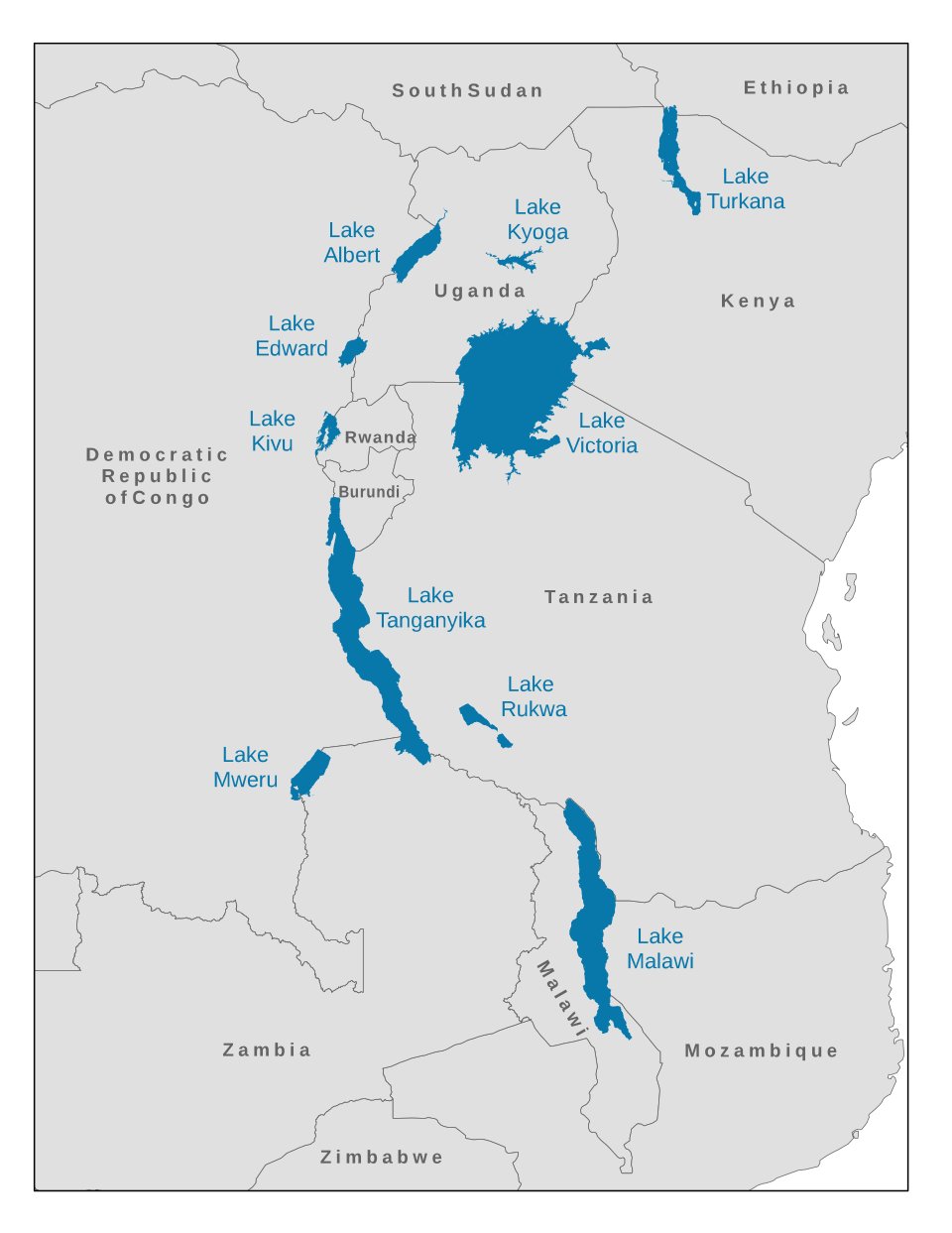
The Electric Blue Hap is endemic to Lake Malawi in East Africa, where it’s found along the coastlines of Malawi, Mozambique, and Tanzania. This species favors transitional zones where rocky cliffs meet sandy substrates, at moderate depths. They’re not strictly rock dwellers like mbuna, and they’re not open-water swimmers either. They occupy that sweet spot in between.
In their natural habitat, S. Fryeri males establish territories around rock formations while females and juveniles move more freely through the surrounding areas. The rocky habitat provides both hunting grounds and spawning sites, as males often build volcano-shaped sand structures near rock bases for breeding.
Lake Malawi’s water is consistently warm, hard, and alkaline. Conditions that have been stable for thousands of years. Replicating this stability in the home aquarium is one of the most important aspects of keeping any Malawi cichlid successfully.
Appearance & Identification
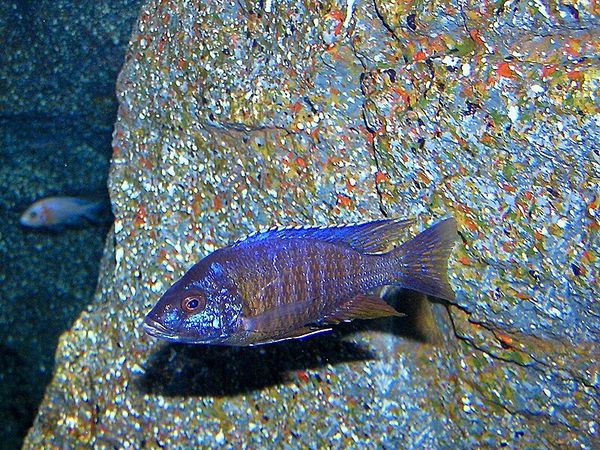
There’s a reason this fish earned the “Electric Blue” name. Mature males develop an all-over metallic blue coloration that is genuinely striking. It’s bright, it’s intense, and it practically glows under good aquarium lighting. The blue covers the entire body from head to tail, with darker blue or black edging on the dorsal and anal fins. Some specimens develop a subtle orange blush on the anal fin as well.
Juveniles and females are a completely different story. They display a muted silvery-gray body color, sometimes with faint vertical barring. This drastic difference makes sexing mature fish straightforward, though young fish is tricky to tell apart until the males start coloring up at around 2. 3 inches.
One important note on taxonomy. You’ll still see this fish labeled as Sciaenochromis ahli in many stores and older references. That name was applied in error for decades. The fish we keep in the hobby is properly classified as S. Fryeri, while the true S. Ahli is a different species that rarely appears in the trade.
Male vs. Female
Telling males from females is simple once the fish reach maturity. The transformation males undergo is dramatic and unmistakable.
| Feature | Male | Female |
|---|---|---|
| Body Color | Intense metallic electric blue | Dull silver-gray |
| Size | 7. 8 inches (18. 20 cm) | 5. 6 inches (13. 15 cm) |
| Fin Color | Blue with dark edging; orange blush on anal fin | Clear to slightly tinted fins |
| Egg Spots | Present on anal fin | Absent or very faint |
| Behavior | Territorial, displays to females | Less territorial, more social |
Average Size & Lifespan
Electric Blue Haps are a medium-sized Hap species. Males reach 7. 8 inches (18. 20 cm) in captivity, with females staying notably smaller at 5. 6 inches (13. 15 cm). They’re solidly built fish with a slightly elongated body shape that’s typical of predatory haplochromines.
With consistent water quality and a proper diet, you can expect an Electric Blue Hap to live 7. 10 years. Hobbyists have kept them beyond the decade mark, but that takes dedication to water changes and tank maintenance over the long haul.
Care Guide
Tank Size
A 75-gallon (284-liter) tank is the minimum for Electric Blue Haps, and honestly, bigger is always better with these fish. They’re active swimmers that cover a lot of ground, so tank length matters more than height. A standard 4-foot tank is acceptable, but a 6-foot tank in the 125-gallon (473-liter) range gives you much more flexibility for building a proper Hap community.
If you’re planning to keep a breeding group of one male with multiple females plus additional tank mates, push for 100 gallons (379 liters) or more. The extra space helps diffuse aggression and gives subdominant fish room to stay out of trouble.
Water Parameters
| Temperature | 76. 82°F (24. 28°C) |
| pH | 7.8. 8.6 |
| General Hardness (dGH) | 10. 20 dGH |
| Carbonate Hardness (dKH) | 10. 15 dKH |
| Ammonia | 0 ppm |
| Nitrite | 0 ppm |
| Nitrate | <20 ppm |
Like all Malawi cichlids, stability is everything. These fish come from a lake where water chemistry barely fluctuates, so wild swings in pH or temperature will stress them out fast. If your tap water runs soft, buffer it with crushed coral or aragonite. Large, regular water changes. 25. 40% weekly. Are essential for keeping nitrates low and water quality high.
Filtration & Water Flow
Strong filtration is a must. A quality canister filter rated for at least 1.5. 2 times your tank volume is ideal. Hap tanks will carry a decent bioload, and these fish are messy eaters that can foul the water quickly if filtration isn’t up to the task. Adding a supplemental powerhead or wavemaker provides good oxygenation and replicates the moderate water movement found in their natural habitat.
Stay on top of filter maintenance. Rinse mechanical media every 2. 3 weeks and keep biological media undisturbed. Clean water is the single biggest factor in keeping any Malawi cichlid healthy long-term.
Lighting
Standard aquarium LED lighting works well for Electric Blue Haps. Moderate lighting actually helps show off their metallic blue coloration beautifully. Keep the photoperiod to 8. 10 hours daily. If you notice excessive algae, dial back the duration slightly, but a moderate amount of algae growth on rocks is natural and not something to worry about.
Plants & Decorations
Create a layout that blends rocky structures with open swimming areas. Electric Blue Haps need both. The rocks provide territories and hiding spots, while the open water gives them room to cruise. Stack rocks to form caves and overhangs, but don’t fill the entire tank. Leave at least 40. 50% of the tank as open swimming space.
Hardy plants like Anubias and Java Fern attached to rocks can work, though most Hap keepers focus on the rockwork instead. Vallisneria can also do well if planted in the substrate along the back wall, providing a natural backdrop without getting in the way of territory establishment.
Substrate
Sand is the way to go. Fine pool filter sand or aragonite sand both work well. Aragonite offers the added benefit of buffering pH, which is helpful in soft-water areas. Interestingly, Electric Blue Haps will show their best colors over a darker substrate, so if pH buffering isn’t a concern for your water, a dark sand can really make those blues pop. You can always place aragonite or crushed coral in a media bag inside your filter for buffering purposes.
Is the Electric Blue Hap Right for You?
Electric Blue Haps are one of the most iconic African cichlids in the hobby. Their metallic blue coloring is legendary, but they need a properly sized tank and the right companions.
- Great fit if you want one of the most intensely blue freshwater fish available anywhere
- Great fit if you have a 75 gallon or larger tank dedicated to haps and Peacocks
- Great fit if you enjoy watching predatory feeding behavior. These are active hunters
- Not ideal if your tank is under 75 gallons. Electric Blue Haps need space to grow and establish territory
- Not ideal if you keep small fish under 3 inches. Electric Blue Haps will eat anything small enough to fit in their mouths
- Not ideal if you want a mbuna community. Electric Blue Haps should not be housed with aggressive mbuna
A fully colored male Electric Blue Hap is breathtaking. If you can provide the tank size and compatible tankmates, this species delivers a level of blue that no other freshwater fish can match.
Tank Mates
Best Tank Mates
Electric Blue Haps sit in the middle of the aggression spectrum for Malawi cichlids. They’re not pushovers, but they’re also not the outright bullies that some mbuna are. The key is choosing tank mates of similar size and temperament that look different enough to avoid triggering territorial aggression. Good choices include:
- Venustus (Nimbochromis venustus). Large, different coloration, similarly paced temperament
- Red Empress (Protomelas taeniolatus). Peaceful Hap, different color palette
- Blue Dolphin (Cyrtocara moorii). Gentle giant that coexists well with most Haps
- Red Kadango (Copadichromis borleyi). Peaceful Hap, occupies different tank areas
- Synodontis catfish. Excellent bottom dwellers that stay out of Hap territory disputes
Tank Mates to Avoid
- Mbuna species. Most mbuna are too aggressive and occupy different niches; the constant harassment stresses Haps
- Peacock cichlids (Aulonocara). Male Electric Blue Haps will hybridize with female Peacocks, creating unwanted hybrids
- Similarly colored blue fish. Any blue Hap or Peacock will be targeted as a rival; avoid Placidochromis and blue Aulonocara
- Small fish of any kind. Electric Blue Haps are predators that eat small fish and fry in the wild
- Very large predatory Haps. Species like Tyrannochromis may bully or consume smaller Electric Blues
Food & Diet
Unlike the herbivore-leaning mbuna, Electric Blue Haps are true carnivores. In the wild, they patrol rock formations hunting for small fish and fry. That’s their primary food source. In captivity, they transition easily to prepared foods, which makes feeding straightforward.
A high-quality carnivore pellet should form the staple diet. Supplement with frozen foods like mysis shrimp, krill, brine shrimp, and chopped prawns 2. 3 times per week. These treats maintain vibrant coloration and provide dietary variety. Some keepers also offer small pieces of fish fillet occasionally, which Electric Blues relish.
Feed 2. 3 small meals per day rather than one large feeding. Avoid bloodworms and beef heart, as these are linked to digestive issues in Malawi cichlids. And while these fish are carnivores, don’t feed live feeder fish. They carry parasites and provide poor nutritional value compared to quality prepared and frozen foods.
Breeding & Reproduction
Electric Blue Haps are polygamous maternal mouthbrooders, following the same general breeding pattern as most Malawi cichlids. Breeding is achievable in home aquariums, and it’s one of the more rewarding aspects of keeping this species.
Spawning Behavior
When a male is ready to breed, his already-impressive blue coloration intensifies even further. In the wild, he constructs a volcano-shaped sand mound near a sloping rock face as a spawning site. In the aquarium, he’ll choose and clean a flat or angled rock surface, then display vigorously to attract females. Lots of body shaking, fin flaring, and color flashing.
When a female accepts, she deposits eggs on the chosen surface. As the eggs roll toward the base of the rock, the male fertilizes them using the classic egg-spot method. The female attempts to collect the spots on his anal fin, taking in milt that fertilizes the eggs already in her mouth.
Mouthbrooding & Fry Care
The female carries the fertilized eggs for 21. 28 days, during which she won’t eat. Her jaw will appear noticeably swollen, and she’ll become more reclusive, spending time in sheltered areas. Don’t disturb holding females. Stress can cause them to spit out or swallow the brood prematurely.
Once released, the fry are surprisingly large and immediately capable of eating baby brine shrimp, microworms, and crushed dry foods. For maximum fry survival, either move the holding female to a separate tank a few days before release, or use a breeder box. In the main tank, fry will be consumed quickly by the adults.
Keep a ratio of at least 1 male to 4 females. Ideally more. This distributes the male’s attention and reduces stress on individual females. In a breeding colony with 8+ females, you’ll see much more natural behavior and better breeding success.
Common Health Issues
Malawi Bloat
Malawi Bloat affects all Malawi cichlids, not just herbivorous mbuna. It’s caused by a protozoan parasite that flourishes when fish are stressed or water quality slips. Symptoms include abdominal swelling, white stringy feces, loss of appetite, and labored breathing. Left untreated, it damages internal organs and can kill within 24. 72 hours.
Prevention centers on water quality and diet. Keep nitrates below 20 ppm, perform regular water changes, and feed a varied carnivore diet without excessive fat or fillers. If you spot early symptoms, isolate the affected fish and treat with Metronidazole.
Ich (White Spot Disease)
Ich can appear after temperature fluctuations, new fish introductions, or prolonged stress. The characteristic white spots on fins and body are easy to identify. Raise the temperature gradually to 82°F (28°C) and treat with a quality ich medication. Electric Blue Haps are hardy fish that respond well to treatment when you catch it early.
Hole-in-the-Head Disease (HITH)
HITH presents as small pits or lesions on the head and lateral line. It’s linked to poor water quality, vitamin deficiencies (particularly vitamins C and D), and the overuse of activated carbon in filtration. Improving water quality and diet halts progression, and mild cases often heal on their own once conditions improve.
Common Mistakes to Avoid
- Mixing with Peacock females. Male Electric Blue Haps will readily hybridize with Aulonocara females, producing unwanted hybrid offspring that muddy the gene pool
- Keeping with mbuna. Mbuna aggression is a different animal than Hap aggression; the constant harassment from mbuna will stress Electric Blues and suppress their coloring
- Choosing similarly colored tank mates. Any blue fish in the tank will be treated as a rival; diversify your color palette
- Undersized tank. These fish grow to 7. 8 inches and are active swimmers; cramming them into a 55-gallon is asking for trouble
- Neglecting water changes. Haps are less tolerant of poor water quality than mbuna; keep up with your maintenance schedule
- Feeding too many live feeder fish. They carry parasites and diseases; stick to quality prepared and frozen foods
Where to Buy
Electric Blue Haps are one of the most popular Malawi cichlids in the hobby, so availability is excellent. Most local fish stores that carry African cichlids will stock them, and they’re reasonably priced. $8. $15 for juveniles. For the best color genetics and healthiest stock, ordering from reputable online breeders is worth considering:
- Flip Aquatics. Quality African cichlids with a strong reputation for healthy arrivals and excellent customer service
- Dan’s Fish. Regularly stocks Electric Blue Haps along with a wide selection of other Malawi Haps
When shopping, be aware of the S. Ahli vs. S. Fryeri naming confusion. The fish you want is fryeri, which is the common hobby species. Try to buy a group. At least 6 juveniles. And let them grow out so you can identify and remove excess males later. Buying sexed adults is also an option if you want to skip the grow-out period.
FAQ
Are Electric Blue Haps aggressive?
They’re moderately aggressive by Malawi cichlid standards. Males will defend territories and is aggressive toward similarly colored fish, but they’re nowhere near as combative as mbuna species like Auratus or Kenyi. In a properly sized tank with appropriate tank mates, their aggression is very manageable.
Can Electric Blue Haps live with Peacocks?
This is complicated. Male Electric Blue Haps will hybridize with female Peacock cichlids (Aulonocara species), which creates unwanted hybrids. If you want to keep both, you’d need to keep only male Peacocks. But even then, blue-colored Peacocks will likely be harassed. Many experienced keepers choose one or the other.
Why is my Electric Blue Hap not turning blue?
Only males develop the full electric blue coloration, so your fish is female. If it is male, coloration depends on dominance status, diet quality, and age. Most males don’t show full color until 3. 4 inches. Poor water quality, stress from tank mates, or a bland diet can all suppress coloring. A high-quality varied diet and stable tank conditions bring out the best color.
What’s the difference between Sciaenochromis fryeri and Sciaenochromis ahli?
S. Fryeri is the species commonly kept in the hobby. The classic Electric Blue Hap. S. Ahli is a separate, rarer species that was initially confused with fryeri. For decades, the hobby fish was incorrectly labeled as ahli, and you’ll still see that old name used in many stores and older care guides. When buying, the fish you’re almost certainly looking at is fryeri.
How many Electric Blue Haps should I keep?
Keep only one male with at least 4 females, though 6. 8 females is even better for distributing breeding stress. Multiple males in the same tank will result in constant fighting and suppressed coloring in subordinate males. If you start with a group of juveniles, plan to rehome extra males as they mature.
What do Electric Blue Haps eat?
They’re carnivores. Feed a staple diet of quality carnivore pellets supplemented with frozen mysis shrimp, krill, brine shrimp, and chopped prawns. Avoid bloodworms, beef heart, and live feeder fish. Feed 2. 3 small meals daily for the best results.
What It Is Actually Like Living With Electric Blue Hap
This is the part no other care guide gives you. Forget water parameters for a minute. Here is what it is actually like to share your tank with this species.
They have more personality than you expect. The Electric Blue Hap is not a fish that just sits in the background. Once settled in, they become interactive, curious, and responsive to your presence.
Feeding time reveals their character. Watch how the Electric Blue Hap approaches food and you will see real personality. Some are bold, some are cautious, and their feeding behavior tells you a lot about their mood and health.
They establish routines. After a few weeks, your Electric Blue Hap will have favorite spots, preferred paths through the tank, and predictable patterns. Learning these routines makes you a better keeper.
Color is a health indicator. The Electric Blue Hap’s coloration is a real-time report card on your husbandry. Vibrant color means happy fish. Faded color means something is wrong. Pay attention.
How the Electric Blue Hap Compares to Similar Species
Choosing the right Malawi cichlid means understanding how similar species compare. Here is how the Electric Blue Hap stacks up against species you will also be considering.
Electric Blue Hap vs. Venustus Cichlid
Both Electric Blue Haps and Venustus are large predatory haps from Lake Malawi, but they differ significantly in appearance and size. Venustus grow larger (up to 10 inches) and display a unique giraffe like pattern, while Electric Blue Haps max out around 8 inches with solid metallic blue coloring. Both can share a tank in a 125 gallon or larger setup. They occupy similar ecological niches but are different enough in appearance that territorial competition is manageable. You can learn more in our Venustus Cichlid Care Guide.
Electric Blue Hap vs. Red Empress Cichlid
Red Empress Cichlids are often called the most colorful hap in Lake Malawi, and pairing them with Electric Blue Haps creates one of the best color combinations in the Malawi hobby. Red Empress are more peaceful than Electric Blue Haps, so make sure the tank is large enough that the Electric Blue does not bully the Red Empress. A 75 gallon minimum is necessary for this pairing. You can learn more in our Red Empress Cichlid Care Guide.
Closing Thoughts
Electric blue haps are gorgeous. They are also eating machines. Both things are true at the same time.
The Electric Blue Hap is one of those species that earns its popularity. That metallic blue coloration is genuinely show-stopping, and unlike some of the more demanding Malawi cichlids, S. Fryeri is manageable for anyone with a bit of cichlid-keeping experience. You don’t need to be an expert. You just need to be thoughtful about tank size, tank mate selection, and water quality.
The two things most likely to trip you up are hybridization with Peacock females and choosing tank mates that are too similar in color. Get those two factors right, keep the water clean, and feed a quality diet, and you’ll have a fish that looks like a million bucks for the better part of a decade.
This article is part of our Lake Malawi Cichlid Species Directory: Complete A-Z Care Guide List. Visit the hub page to explore care guides for all 28 Lake Malawi cichlid species we cover.
Recommended Video
References
- Seriously Fish. (n.d.). Sciaenochromis fryeri. https://www.seriouslyfish.com/species/sciaenochromis-fryeri/
- FishBase. (n.d.). Sciaenochromis fryeri. https://www.fishbase.se/summary/Sciaenochromis-fryeri.html
- Tropical Fish Hobbyist Magazine. (n.d.). It’s Electric: Sciaenochromis fryeri. https://www.tfhmagazine.com
- The Aquarium Wiki. (n.d.). Sciaenochromis fryeri. https://www.theaquariumwiki.com/wiki/Sciaenochromis_fryeri
- About the Author
- Latest Posts

I’m Mark Valderrama, founder of Aquarium Store Depot and a fishkeeper with over 25 years of hands-on experience. I started in the hobby at age 11, worked at local fish stores, and have kept freshwater tanks, ponds, and reef tanks ever since. I’ve been featured in two best-selling aquarium books on Amazon and built this site to share practical, experience-based fish keeping knowledge.
Leave a Reply