
Last Updated: June 25, 2026
Thank you for visiting! By the way… any links on this page that lead to products on Amazon and other stores/partners are affiliate links Aquarium Store Depot earns a commission if you make a purchase.
Table of Contents
- What Most Care Guides Get Wrong
- The Reality of Keeping Red Kadango
- Key Takeaways
- Species Overview
- Classification
- Origin & Natural Habitat
- Appearance & Identification
- Average Size & Lifespan
- Care Guide
- Is This Species Right for You?
- Tank Mates
- Food & Diet
- Breeding & Reproduction
- Common Health Issues
- Common Mistakes to Avoid
- Where to Buy
- FAQ
- What It Is Actually Like Living With Red Kadango
- Species Comparison
- Closing Thoughts
The Red Kadango is a Lake Malawi mbuna, and if you do not know what that means, here is the short version: small, colorful, and aggressive enough to kill tank mates that do not fit the program. Mbuna are not community fish. They are schooling haps that need groups and open water to display their natural behavior. The peaceful hap that looks best when kept the way it lives in the wild, in a group.
Mbuna are not community fish. They are a controlled chaos that looks incredible when you get it right.
This species lives 8 to 12 years. Every one of those years requires maintaining Lake Malawi water chemistry and managing mbuna aggression dynamics.
What makes this species particularly appealing is its lifestyle. Red Kadango are utaka. Open-water planktivores that spend their time schooling in the mid to upper water column rather than fighting over rocks on the bottom. This means less territorial aggression, more dynamic swimming behavior, and a fish that genuinely uses the entire tank rather than hiding in caves all day.
The main things to get right are tank size (they need swimming room), compatible tank mates (no bullies), and the right male-to-female ratio. Nail those fundamentals and the Red Kadango will reward you with years of outstanding color and engaging behavior.
The Red Kadango is a small fish with big demands. Get them right and your tank looks like a coral reef. Get them wrong and you have a war zone.
What Most Care Guides Get Wrong About Red Kadango
The most common mistake with Red Kadango is keeping them alone or in pairs. Copadichromis borleyi is a schooling species in the wild, and they look and behave their best in groups of 5 or more. A single Red Kadango in a tank will often hide and display poor color. The second misconception is that all Red Kadango are equally red. Color intensity depends heavily on collection point and breeding. The “Kadango” locality produces the most intensely red specimens. Fish sold without a locality name may be less vibrant.
The Reality of Keeping Red Kadango
Mbuna keeping is a different discipline from regular fishkeeping. The Red Kadango is no exception. Here is what you need to prepare for.
Hard, alkaline water is mandatory. Lake Malawi chemistry means pH between 7.8 and 8.6, high GH, and high KH. There is no faking this. If your tap water is soft and acidic, you need to buffer every water change without exception.
Overstocking is the strategy. Keeping 3 or 4 Red Kadangos leads to one bully and victims. You need groups of 12 or more to spread aggression. But overstocking only works with heavy filtration and consistent water changes.
Diet is critical. Spirulina and veggie-based foods are essential. High-protein diets cause Malawi Bloat, which is often fatal.
Rockwork defines territories. Mbuna need piles of rocks with caves and passageways. Without proper rockwork, dominant fish have nowhere to establish boundaries and subordinates have nowhere to hide. Stack rocks from substrate to near the waterline.
Biggest Mistake New Red Kadango Owners Make
Understocking. Keeping a small group of Red Kadangos means the dominant fish picks off the weak ones. You need a large group to distribute aggression. Twelve is the minimum for most mbuna species.
Expert Take
Start with a group of 12 or more in a 55 gallon minimum. Use aragonite or crushed coral substrate to buffer pH naturally. Feed spirulina-based food as the staple. Stack rocks to create territories. This formula works for Red Kadangos and most other mbuna.
Key Takeaways
- Gorgeous metallic blue and red coloration. Males develop a striking blue head with red-orange body and fins; one of the most colorful Haps available
- Exceptionally peaceful. Among the calmest Malawi cichlids; only becomes mildly territorial during spawning
- 75-gallon minimum. Active mid-water swimmers that need a 5-foot-long tank for proper swimming space
- Open-water planktivore. Schools in mid/upper water column; feed a diet that includes small frozen foods to mimic natural plankton
- No hybridization risk with other Copadichromis. Avoid keeping with other Copadichromis species as they will crossbreed
- Maternal mouthbrooder. Females carry eggs for 18. 25 days; easy to breed with a proper 1 male to 3. 5 female ratio
Species Overview
| Common Name | Red Kadango, Red Fin Borleyi, Kadango Red Fin |
| Scientific Name | Copadichromis borleyi |
| Care Level | Beginner to Intermediate |
| Temperament | Peaceful |
| Max Size | 7. 8 inches (18. 20 cm) |
| Min Tank Size | 75 gallons (284 liters) |
| Diet | Omnivore (Planktivore) |
| Lifespan | 8. 12 years |
| Water Temp | 76. 82°F (24. 28°C) |
| pH | 7.8. 8.6 |
| Origin | Lake Malawi, Africa |
Classification
| Kingdom | Animalia |
| Phylum | Chordata |
| Class | Actinopterygii |
| Order | Cichliformes |
| Family | Cichlidae |
| Genus | Copadichromis |
| Species | C. Borleyi (Iles, 1960) |
Origin & Natural Habitat
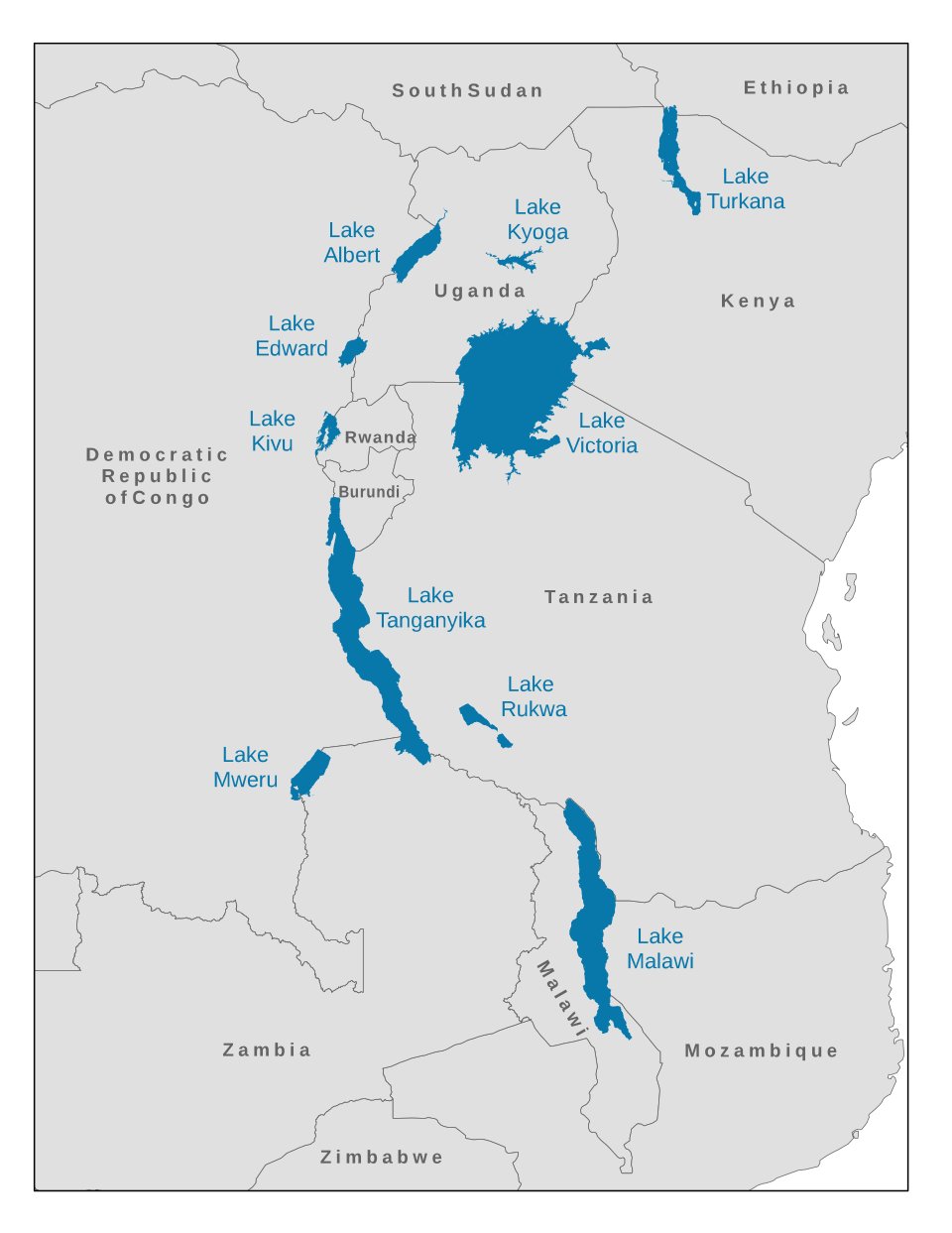
Copadichromis borleyi is endemic to Lake Malawi in East Africa. The “Kadango” name refers to the specific geographical locale where the most popular color form originates, though the species is found at multiple locations around the lake. Several geographical variants exist, each with slightly different coloration. The Kadango “Red Fin” variety is the most popular in the hobby.
In the wild, Red Kadango are utaka. Open-water cichlids that form schools above sandy substrates and rocky areas, feeding primarily on zooplankton suspended in the water column. This pelagic lifestyle sets them apart from both the rock-dwelling mbuna and the substrate-hunting predatory Haps. They’re schooling fish by nature, which means they do best when kept in groups rather than as isolated individuals.
Their natural habitat includes areas where open water meets rocky structures. They use the rocks for spawning sites and shelter but spend most of their active time swimming in open water above the substrate.
Appearance & Identification
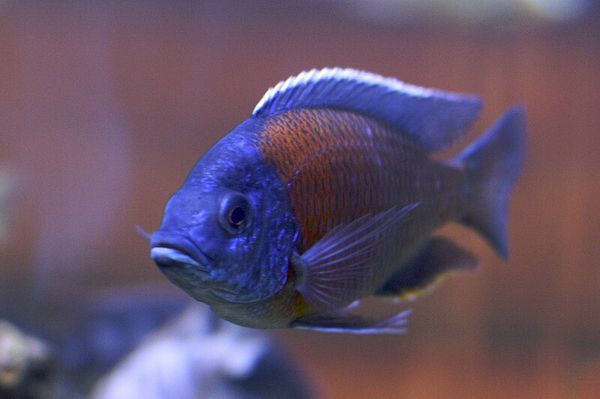
Male Red Kadango in full color are genuinely spectacular. The head and anterior body develop a deep metallic blue, while the posterior body, dorsal fin, and tail take on a vivid red-orange hue. The combination is eye-catching in a way that makes this species a natural centerpiece in any community tank.
Females are much more understated. Silvery to beige body color with orange-red tinted fins. They’re attractive in their own right but lack the dramatic two-tone coloration of the males. The fins on females are notably shorter and less elaborate than on mature males.
The body shape is elongated and laterally compressed, built for open-water swimming rather than maneuvering through tight rock crevices. This streamlined profile is distinctive and helps differentiate Copadichromis from the deeper-bodied rock-dwelling Haps.
Male vs. Female
Sexing Red Kadango is straightforward once males begin showing color. The contrast between the sexes is dramatic.
| Feature | Male | Female |
|---|---|---|
| Body Color | Metallic blue head, red-orange body and fins | Silver-beige body with orange-tinted fins |
| Size | 7. 8 inches (18. 20 cm) | 5. 6 inches (13. 15 cm) |
| Fins | Long, flowing, with intense coloration | Shorter, less elaborate |
| Egg Spots | Present on anal fin | Absent or very faint |
| Behavior | Displays to females; mildly territorial when breeding | Schools in groups; more social |
Average Size & Lifespan
Males reach 7. 8 inches (18. 20 cm) in captivity, with females staying smaller at 5. 6 inches (13. 15 cm). They’re medium-sized Haps. Larger than most Peacocks but smaller than the big predatory species like Venustus and Livingstonii.
Red Kadango are long-lived fish. With proper care, 8. 12 years is a realistic lifespan. Hobbyists report even longer. This kind of longevity makes them a genuine long-term companion. Plan accordingly when you bring them home.
Care Guide
Tank Size
A 75-gallon (284-liter) tank with a minimum length of 5 feet (150 cm) is the starting point for Red Kadango. These are active mid-water swimmers that need horizontal space for schooling behavior. A longer tank is always preferable to a taller one for this species.
If you’re keeping a harem with other community members, 100 gallons (379 liters) or more provides the breathing room everyone needs. Red Kadango look their best when they have space to cruise the open water. Cramped quarters suppress their natural behavior and stress them out.
Water Parameters
| Temperature | 76. 82°F (24. 28°C) |
| pH | 7.8. 8.6 |
| General Hardness (dGH) | 10. 20 dGH |
| Carbonate Hardness (dKH) | 10. 15 dKH |
| Ammonia | 0 ppm |
| Nitrite | 0 ppm |
| Nitrate | <20 ppm |
Standard Lake Malawi parameters. Warm, hard, alkaline, and stable. Red Kadango show their best colors and behavior in well-maintained water. These fish feel safer and display better coloration over darker substrates, so keep that in mind if you’re using aragonite for buffering. You can always place it in a filter media bag instead and use a darker sand in the tank itself.
Filtration & Water Flow
A quality canister filter rated for 1.5. 2x your tank volume handles the job well. Red Kadango aren’t particularly messy compared to larger predatory Haps, but clean water is essential for maintaining their health and coloration. Moderate flow is ideal. Enough for good circulation and oxygenation.
Consistent weekly water changes of 25. 35% keep nitrates in check. Red Kadango are sensitive to declining water quality, and one of the first signs of trouble is dulled coloration.
Lighting
Standard LED lighting works well. The metallic blue and red coloration of males looks outstanding under moderate lighting. Keep the photoperiod to 8. 10 hours daily.
Plants & Decorations
Design the tank with a focus on open swimming lanes in the mid and upper water column. This is where Red Kadango spend most of their time. Place rock piles along the back and sides for shelter and potential spawning sites, but keep the center and front of the tank clear for swimming.
Vallisneria planted along the back wall adds a natural touch and provides some visual barriers without blocking swimming space. Anubias and Java Fern on rocks also work well. These fish won’t uproot or damage live plants.
Substrate
Fine sand is preferred. Red Kadango show noticeably better coloration over darker substrates, so consider dark pool filter sand or black aquarium sand if pH buffering isn’t a concern. If you need the alkalinity boost from aragonite, place it in your filter media instead of using it as the primary substrate.
Is the Red Kadango Right for You?
Red Kadango are a unique hap that combines schooling behavior with beautiful red orange coloring. They are one of the few Malawi cichlids that genuinely prefer groups.
- Great fit if you want a schooling Malawi cichlid that moves together in the open water column
- Great fit if you have a 75 gallon or larger tank and can keep a group of 5 or more
- Great fit if you enjoy a more peaceful, natural looking Malawi community without constant territorial warfare
- Not ideal if you want a single specimen centerpiece fish. Kadango need a group to thrive
- Not ideal if you keep aggressive species that will break up their schooling behavior with constant harassment
- Not ideal if your tank has very little open water swimming space. Kadango need room to school
A school of Red Kadango cruising through open water is a sight that most hobbyists associate with saltwater tanks, not freshwater. If you can provide the group size and tank space, they deliver a truly special display.
Tank Mates
Best Tank Mates
Red Kadango’s peaceful nature makes them compatible with a wide range of similarly tempered Malawi species. They’re ideal community fish:
- Peacock cichlids (Aulonocara spp.). One of the best pairings; similar temperament and complementary colors
- Blue Dolphin (Cyrtocara moorii). Peaceful, appropriately sized, different niche
- Red Empress (Protomelas taeniolatus). Great companion with complementary behavior
- Sulphur Crest (Otopharynx lithobates). Another peaceful Hap with different coloration
- Deep Water Hap (Placidochromis electra). Gentle species that coexists beautifully
- Synodontis catfish. Bottom dwellers that don’t compete for mid-water space
Tank Mates to Avoid
- Aggressive mbuna. Species like Auratus, Kenyi, and most Metriaclima will bully Red Kadango mercilessly
- Other Copadichromis species. They will hybridize with each other, producing unwanted crossbreeds
- Large predatory Haps. Big piscivores like Venustus and Livingstonii may view smaller Red Kadango as prey
- Any boisterous or belligerent species. Red Kadango don’t handle constant harassment well; it suppresses their color and behavior
Food & Diet
In the wild, Red Kadango are planktivores. They feed on zooplankton suspended in the open water column. In captivity, the best approach is to provide a varied diet that mimics this nutritional profile.
A high-quality cichlid flake or granule formulated for Malawi species makes a good staple. Supplement regularly with small frozen foods that replicate their natural plankton diet. Mysis shrimp, brine shrimp, daphnia, cyclops, and krill micro are all excellent choices. A little spirulina content in the diet aids digestion.
Feed 2. 3 small meals per day. These are active swimmers that burn energy, so consistent feeding is important. But don’t overdo the protein and fat. Malawi Bloat can occur if the diet is too rich. Avoid bloodworms and mammalian meat products entirely.
Breeding & Reproduction
Red Kadango are maternal mouthbrooders that breed readily in captivity. They’re considered one of the easier Haps to breed, though getting females into breeding condition can take a bit of patience.
Spawning Behavior
Keep one male with 3. 5 females. Males rarely tolerate rivals in confined tanks, so remove extra males as they mature. When ready to spawn, the male’s coloration intensifies and he selects a spawning site. Either a flat rock surface or a small depression dug in the substrate. He displays vigorously, showing off his colors through body shaking and fin spreading.
Spawning follows standard Malawi mouthbrooder protocol. The female lays eggs, picks them up, and is attracted to the male’s anal fin egg spots to collect milt for fertilization inside her mouth.
Mouthbrooding & Fry Care
Females carry the brood for 18. 25 days, during which they won’t eat. The buccal cavity will be visibly distended, and the female will become reclusive. Handle holding females carefully. Like many Malawi mouthbrooders, stressed females may spit out or consume the brood.
Another important consideration. If a female is removed from the colony for too long (for example, into a breeding tank), she may lose her place in the social hierarchy when returned. Plan your breeding strategy with this in mind.
Newly released fry are large enough to accept baby brine shrimp and crushed dry foods immediately. Grow them out separately from adults for the best survival rate.
Common Health Issues
Malawi Bloat
Bloat is the top health concern for all Malawi cichlids, including Red Kadango. It’s associated with stress, poor water quality, and dietary issues. Particularly diets too heavy in protein and fat. Symptoms include swollen abdomen, white stringy feces, appetite loss, and rapid breathing. The disease progresses quickly and requires immediate action.
Prevention is the best medicine. Maintain excellent water quality, feed a balanced diet with some plant content, and keep stress levels low. Treat early cases with Metronidazole in a quarantine setup.
Ich (White Spot Disease)
Stress from aggressive tank mates, transport, or water quality issues can trigger ich. White spots on fins and body are the calling card. Gradually raise temperature to 82°F (28°C) and treat with ich medication. Red Kadango are hardy and respond well to treatment.
Stress-Related Color Loss
Red Kadango are sensitive to environmental stress, and color fading is often the first warning sign. Aggressive tank mates, poor water quality, inadequate diet, or overcrowding can all cause males to lose their vibrant coloration. Address the underlying stressor and the color returns within a week or two.
Common Mistakes to Avoid
- Keeping with aggressive species. Red Kadango are too peaceful for rowdy mbuna tanks; they need calm tank mates
- Mixing with other Copadichromis. They hybridize readily; keep only one Copadichromis species per tank
- Not enough swimming space. These are open-water fish that need room to cruise; don’t fill the tank wall-to-wall with rocks
- Keeping multiple males in small tanks. Males won’t tolerate rivals; one male per tank unless you have 150+ gallons
- Overfeeding protein. Their planktivore diet means they need balance; too much protein without plant matter leads to bloat
- Using a light substrate. Not harmful, but Red Kadango show dramatically better color over dark substrates
Where to Buy
Red Kadango are popular and available at stores that carry African cichlids. Juveniles run $8. $15 depending on size and color. For the best quality Kadango locale specimens with strong genetics, try these reputable online breeders:
- Flip Aquatics. Carries quality Copadichromis borleyi with excellent customer service and healthy shipping
- Dan’s Fish. Good source for Red Kadango and other peaceful Hap species
Buy a group of 6+ juveniles to grow out and end up with a proper harem. Remove extra males as they color up. When purchasing, look specifically for the “Kadango” locale if you want the classic red-fin coloration. Other C. Borleyi variants have different color patterns.
FAQ
Are Red Kadango good for beginners?
They’re an excellent choice for someone new to Malawi cichlids. Their peaceful temperament means fewer compatibility headaches, and they’re hardy enough to forgive minor mistakes. If you understand basic Malawi water chemistry and have a properly sized tank, Red Kadango are very approachable.
Can Red Kadango live with Peacock cichlids?
Absolutely. This is one of the best pairings in the Malawi hobby. Both genera are similarly sized, similarly tempered, and occupy slightly different niches in the tank. Peacocks and Red Kadango complement each other beautifully in a mixed community.
Why are my Red Kadango losing their color?
Color loss in males is almost always stress-related. Check water quality first. Elevated nitrates are a common culprit. Also evaluate whether tank mates are causing harassment, whether the tank is overcrowded, or whether the diet is adequate. Bright substrate can also suppress coloring. Try switching to dark sand for a noticeable improvement.
Can I keep Red Kadango with other Copadichromis species?
No. Different Copadichromis species will hybridize with each other in aquarium settings, producing unwanted crossbreeds. Stick to one Copadichromis species per tank. If you want Red Kadango, skip the C. Azureus, C. Chrysonotus, and other members of the genus.
How many Red Kadango should I keep?
Ideally one male with 3. 5 females in a 75-gallon or larger tank. Males don’t tolerate rivals, so only keep one unless your tank is very large (150+ gallons). Start with a group of juveniles and remove extra males as they color up.
What do Red Kadango eat?
They’re planktivores in the wild. Feed a quality Malawi cichlid flake or granule as the staple, supplemented with small frozen foods like mysis shrimp, brine shrimp, daphnia, and cyclops. Add some spirulina content for digestive health. Feed 2. 3 small meals daily and avoid bloodworms and fatty foods.
What It Is Actually Like Living With Red Kadango
This is the part no other care guide gives you. Forget water parameters for a minute. Here is what it is actually like to share your tank with this species.
They have more personality than you expect. The Red Kadango is not a fish that just sits in the background. Once settled in, they become interactive, curious, and responsive to your presence.
Feeding time reveals their character. Watch how the Red Kadango approaches food and you will see real personality. Some are bold, some are cautious, and their feeding behavior tells you a lot about their mood and health.
They establish routines. After a few weeks, your Red Kadango will have favorite spots, preferred paths through the tank, and predictable patterns. Learning these routines makes you a better keeper.
Color is a health indicator. The Red Kadango’s coloration is a real-time report card on your husbandry. Vibrant color means happy fish. Faded color means something is wrong. Pay attention.
How the Red Kadango Compares to Similar Species
Choosing the right Malawi cichlid means understanding how similar species compare. Here is how the Red Kadango stacks up against species you will also be considering.
Red Kadango vs. Red Empress Cichlid
Both species feature red coloring, but they behave completely differently. Red Empress are solitary territory holders, while Red Kadango are open water schooling fish. Red Empress display more complex coloring with blue, red, and orange blended across the body. Kadango offer a cleaner orange red along the flanks. They work well together in the same tank because they occupy different zones and have different behavioral patterns. You can learn more in our Red Empress Cichlid Care Guide.
Red Kadango vs. Deep Water Hap
Both Red Kadango and Deep Water Haps are peaceful, open water swimming haps, making them excellent tankmates. Deep Water Haps offer metallic blue coloring that contrasts beautifully with the Kadango’s red orange tones. Both prefer groups and open swimming space. In a 75 gallon or larger tank, this pairing provides stunning color contrast with minimal aggression. You can learn more in our Deep Water Hap Care Guide.
Closing Thoughts
The Red Kadango is one of those rare fish that gives you everything. Outstanding color, peaceful temperament, engaging schooling behavior, and ease of care that makes it accessible to a wide range of hobbyists. A male in full color, cruising the open water of a well-set-up tank, is one of the most striking sights in the freshwater hobby.
The keys to success are simple: give them swimming room, choose peaceful tank mates, maintain clean water, and keep the male-to-female ratio right. Do that, and Copadichromis borleyi will be a highlight of your fishkeeping experience for years to come.
This article is part of our Lake Malawi Cichlid Species Directory: Complete A-Z Care Guide List. Visit the hub page to explore care guides for all 28 Lake Malawi cichlid species we cover.
Recommended Video
References
- Seriously Fish. (n.d.). Copadichromis borleyi. https://www.seriouslyfish.com/species/copadichromis-borleyi/
- FishBase. (n.d.). Copadichromis borleyi. https://www.fishbase.se/summary/Copadichromis-borleyi.html
- Practical Fishkeeping. (n.d.). Copadichromis borleyi. https://www.practicalfishkeeping.co.uk
- The Aquarium Wiki. (n.d.). Copadichromis borleyi. https://www.theaquariumwiki.com/wiki/Copadichromis_borleyi
- About the Author
- Latest Posts

I’m Mark Valderrama, founder of Aquarium Store Depot and a fishkeeper with over 25 years of hands-on experience. I started in the hobby at age 11, worked at local fish stores, and have kept freshwater tanks, ponds, and reef tanks ever since. I’ve been featured in two best-selling aquarium books on Amazon and built this site to share practical, experience-based fish keeping knowledge.
Leave a Reply