
Last Updated: June 25, 2026
Thank you for visiting! By the way… any links on this page that lead to products on Amazon and other stores/partners are affiliate links Aquarium Store Depot earns a commission if you make a purchase.
Table of Contents
- What Care Guides Get Wrong
- The Reality of Keeping Filament Barb
- Key Takeaways
- Species Overview
- Classification
- Origin & Natural Habitat
- Appearance & Identification
- Average Size & Lifespan
- Care Guide
- Is It Right for You?
- Tank Mates
- Food & Diet
- Breeding & Reproduction
- Common Health Issues
- Common Mistakes to Avoid
- Where to Buy
- Frequently Asked Questions
- Species Comparison
- Closing Thoughts
- Recommended Video
- References
The filament barb reaches 6 inches or more and develops long, dramatic fin extensions that make it one of the most visually impressive barbs in the hobby. But those fins and that size need space. This is a 55-gallon minimum species that does better in 75 or more, and it needs a school to look its best.
In a spacious planted tank, a group of mature filament barbs with their flowing fin filaments is genuinely spectacular. In a cramped tank, they are just big, stressed fish with damaged fins. This guide covers the space and conditions they need, because the filament barb is the fish that turns a large tank into a spectacle. In a small tank, it just turns into a problem.
If you cannot give this fish the space it needs for its fins to develop fully, you will never see what makes it special.
The Reality of Keeping Filament Barb
The filament barb gets its name from the extended dorsal fin rays on mature males that trail behind like streamers. These filaments are the defining feature and they only develop in well-cared-for males in a group with competition.
The filament in its name is a promise your tank has to keep. And most tanks can’t.
At 5 to 6 inches, this is a large barb that needs a 55-gallon minimum. It is not a nano fish despite sometimes being sold alongside smaller species.
They are peaceful for their size but their swimming speed and bulk can intimidate smaller tankmates.
Biggest Mistake New Owners Make
Expecting the filaments in a young fish. The dorsal extensions develop gradually over the first year and only reach full length in dominant males. Juveniles look like plain barbs with no distinctive features.
Filament barbs (Dawkinsia filamentosa) are an attractive, medium-sized barb with elongated fin filaments in adult males. They are hardy and peaceful in appropriate group sizes.
Expert Take (Mark Valderrama, AquariumStoreDepot)
A mature male filament barb with fully developed dorsal extensions in a 55-gallon planted tank is one of the most elegant freshwater fish displays available. The filaments trail through the water like pennants. Getting there requires patience, a group with males competing, and a tank large enough for a 6-inch fish.
Key Takeaways
- Filament Barbs are peaceful, active schooling fish that need a group of at least 8 to feel secure and display natural behavior.
- They require a minimum tank size of 75 gallons (284 liters) due to their adult size of 5 inches (13 cm) and active swimming habits.
- Mature males develop dramatic elongated dorsal fin filaments that set this species apart from other barbs.
- They prefer cooler water temperatures of 68-77°F (20-25°C) with moderate to strong flow and excellent oxygenation.
- This species is an easy-to-feed omnivore that accepts flakes, pellets, and live or frozen foods without fuss.
- Formerly classified as Puntius filamentosus, this species was reclassified into the genus Dawkinsia in 2012.
Species Overview
| Scientific Name | Dawkinsia filamentosa (Day, 1871) |
| Common Names | Filament Barb, Blackspot Barb |
| Family | Cyprinidae |
| Origin | Western Ghats, India (Kerala, Karnataka); also Sri Lanka |
| Care Level | Moderate |
| Temperament | Peaceful, active schooler |
| Diet | Omnivore |
| Tank Level | Middle to bottom |
| Maximum Size | 5 inches (13 cm) |
| Minimum Tank Size | 75 gallons (284 liters) |
| Temperature | 68-77°F (20-25°C) |
| pH | 6.0-7.5 |
| Hardness | 5-15 dGH |
| Lifespan | 5-8 years |
| IUCN Status | Least Concern |
Classification
| Order | Cypriniformes |
| Family | Cyprinidae (reclassified from Puntius to Dawkinsia in 2012 by Pethiyagoda et al.) |
| Subfamily | Barbinae |
| Genus | Dawkinsia |
| Species | D. Filamentosa (Day, 1871) |
If you’ve been in the hobby for a while, you might know this fish under its former name, Puntius filamentosus. In 2012, ichthyologist Rohan Pethiyagoda and colleagues revised the South Asian barbs and moved several species out of the catch-all genus Puntius into the newly erected genus Dawkinsia, named after evolutionary biologist Richard Dawkins. You’ll still see the old Puntius name in older references and some fish stores, but Dawkinsia filamentosa is the accepted name today.
Origin & Natural Habitat
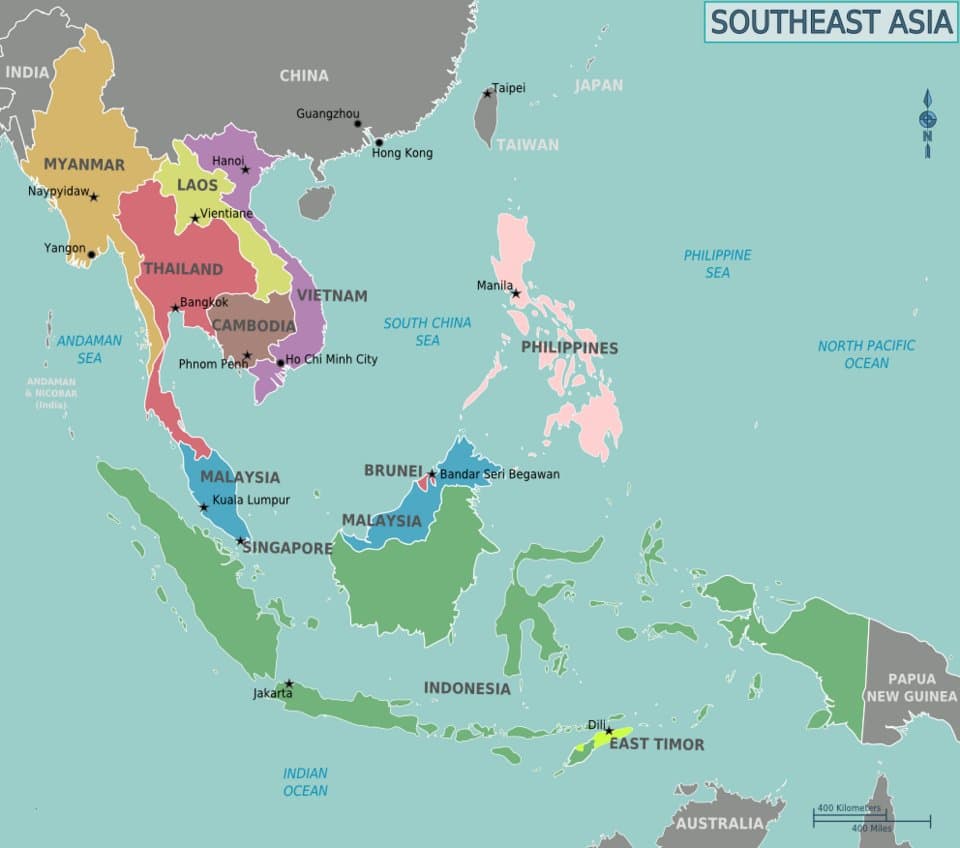
The Filament Barb is native to southern India, primarily found in the Western Ghats mountain range across Kerala and Karnataka. It has also been recorded in Sri Lanka. The Western Ghats are one of the world’s most important biodiversity hotspots, and the Dawkinsia genus is one of several barb groups endemic to this area.
In the wild, Filament Barbs inhabit a range of freshwater environments including clear streams, rivers, lakes, ponds, reservoirs, and marshes. They favor areas with rocky or sandy substrates where water-worn boulders and gravel create natural flow patterns. The water is typically well-oxygenated and clean, with riparian vegetation providing shade along the banks.
Water chemistry across their range is slightly acidic to neutral, with soft to moderately hard conditions. Temperatures stay on the cooler side, generally in the low to mid-70s°F (low 20s°C). These aren’t fish that need the 78-80°F (26-27°C) range that many hobbyists default to for tropical community tanks.
Appearance & Identification
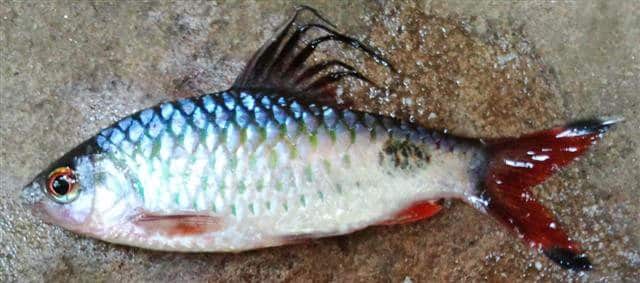
The Filament Barb is a streamlined cyprinid with a fusiform body built for active swimming. The overall color is silvery with a subtle golden or olive-green sheen on the upper half. Scales are well-defined and reflective, catching light nicely as the fish moves. The most distinctive marking is a prominent dark blotch (the “blackspot” that gives rise to one of its common names) on the caudal peduncle, typically covering 2 to 5 scales. The caudal fin tips display dark bands with reddish or yellowish accents.
But the real showpiece is the dorsal fin. In mature males, the branched dorsal fin rays extend into long, elegant filament-like projections that trail behind the fish as it swims. These filaments give the fish a flowing, almost regal appearance unique among barb species. When a male is in peak condition and displaying for females, those trailing filaments combined with intensified coloration create a genuinely impressive sight.
Male vs. Female
Sexing Filament Barbs becomes relatively straightforward once the fish are mature. Males are the ones that develop the characteristic elongated dorsal fin filaments, which is the most obvious difference between the sexes. Males also will display more vivid and intense coloration overall, with stronger hues on the body and fins. When in breeding condition, males may develop small tubercles (breeding spots) on the head and face.
Females, on the other hand, grow slightly larger than males and have a noticeably heavier, rounder body shape, especially when carrying eggs. Their coloration is more subdued compared to displaying males, and their dorsal fin rays remain at a normal length without the dramatic filament extensions. In a school of mature fish, the difference is pretty easy to spot once you know what to look for.
Average Size & Lifespan
Filament Barbs reach a maximum size of about 5 inches (13 cm) in aquarium conditions, though some sources note a total length potential of up to 7 inches (18 cm) in the wild. The common length in a home aquarium is typically closer to 4 to 5 inches (10 to 13 cm). Plan your tank size around their adult dimensions rather than the 1 to 2 inch (3 to 5 cm) juveniles you’ll likely purchase.
With proper care, clean water, and a balanced diet, Filament Barbs can live for 5 to 8 years in captivity. Lifespan is heavily influenced by water quality, diet variety, stress levels, and overall husbandry. A cramped, poorly maintained tank will shorten their lifespan significantly.
Care Guide
Tank Size
A 75-gallon (284-liter) tank is the minimum I’d recommend for a school of Filament Barbs. These are active, fast-swimming fish that need room to move, and anything smaller is going to feel cramped once they reach adult size. Remember, you’re keeping a school of at least 8, and each fish can hit 5 inches (13 cm). The length of the tank matters more than the height here, so prioritize a setup that’s at least 48 inches (120 cm) long. If you have the space, a 90-gallon (340-liter) or 120-gallon (454-liter) tank will give the school even more room to stretch out and school properly.
Water Parameters
| Temperature | 68-77°F (20-25°C) |
| pH | 6.0-7.5 |
| Hardness | 5-15 dGH |
| Ammonia | 0 ppm |
| Nitrite | 0 ppm |
| Nitrate | <20 ppm |
Filament Barbs do best in slightly acidic to neutral water and are intolerant of organic pollution. Keep nitrates low with weekly water changes of 30-50%. The cooler temperature range is important to note. Many hobbyists run their tanks at 78-80°F (26-27°C) out of habit, but Filament Barbs do better around 72-75°F (22-24°C).
Filtration & Water Flow
Good filtration is non-negotiable with Filament Barbs. You want a filter that turns over the tank volume at least 4 to 5 times per hour. A canister filter is ideal for a tank this size, and adding a spray bar or powerhead to create moderate water flow along the length will replicate their natural habitat. They don’t need rapids-level flow, but gentle to moderate current keeps them active. High dissolved oxygen is important, so surface agitation from your filter output or an air stone is a good idea.
Lighting
Standard aquarium lighting works fine for Filament Barbs. Moderate lighting will bring out their coloration best. If you’re running a planted tank, adjust your lighting to suit your plants. The fish are comfortable under a range of light levels and will swim openly regardless. In very bright setups, provide some shaded areas with floating plants or tall background plants where they can retreat.
Plants & Decorations
A setup that mimics a riverbed or flowing stream works perfectly for Filament Barbs. Use a combination of water-worn rocks, smooth boulders, and driftwood to create a natural-looking hardscape. Hardy plants like Microsorum (Java Fern), Bolbitis, and Anubias are excellent choices because they can be attached to rocks and wood rather than planted in substrate, and they tolerate the moderate flow these fish prefer. Leave plenty of open swimming space in the middle and front of the tank for the school to cruise through. Background plantings can provide cover without restricting movement.
Substrate
Sand or fine gravel is the best substrate choice for Filament Barbs. This matches the sandy, rocky bottoms of their natural habitats. A mix of sand with scattered river pebbles and some larger stones creates an attractive and functional riverbed look. Dark substrates will bring out the fish’s coloration more effectively than light-colored options. Avoid sharp or rough substrates that could injure the fish as they forage near the bottom.
Is the Filament Barb Right for You?
Before you buy, run through this honest checklist. The Filament Barb is a great fish for the right keeper, but it is not for everyone.
- You have a 55-gallon or larger tank that can handle a school of 5-6 inch barbs
- You appreciate the elegant trailing dorsal filament on mature males
- You can keep a group of 6+ for proper schooling
- You enjoy watching a species that changes dramatically as it matures
- Your tank has open swimming space with some planted areas
- You want a robust, hardy barb that is easy to care for despite its size
Tank Mates
Filament Barbs are peaceful schooling fish that do well in community setups with other similarly sized, non-aggressive species. They occupy the middle and lower water column. Avoid anything small enough to be food and anything aggressive enough to bully them.
Best Tank Mates
- Other Barbs. Denison Barbs, Rosy Barbs, and other similarly sized, peaceful barb species school well alongside Filament Barbs and create an active, dynamic display.
- Larger Tetras. Congo Tetras, Buenos Aires Tetras, and Colombian Tetras are robust enough to hold their own and appreciate similar water conditions.
- Rainbowfish. Boesemani Rainbowfish, Turquoise Rainbowfish, and other medium-sized rainbows are excellent companions that enjoy the same temperature range and active swimming style.
- Corydoras Catfish. Most Corydoras species work well as bottom-dwelling tank mates. They stay out of the barbs’ way and help clean up leftover food.
- Loaches. Clown Loaches, Yoyo Loaches, and Kuhli Loaches are peaceful bottom-dwellers that complement the barbs nicely.
- Gouramis. Pearl Gouramis and Moonlight Gouramis are calm, medium-sized fish that won’t compete aggressively with the barbs.
- Bristlenose Plecos. A solid algae-eating companion that stays on the glass and driftwood, completely ignoring the barbs.
Tank Mates to Avoid
- Small fish. Neon Tetras, Ember Tetras, Celestial Pearl Danios, and other fish under 1.5 inches (4 cm) may be at risk, especially with larger adult Filament Barbs.
- Long-finned or slow-moving species. Fancy Guppies, Bettas, and Angelfish with elaborate fins can be targets for occasional nipping in an active barb tank.
- Aggressive cichlids. Large or territorial cichlids like Jack Dempseys, Red Devils, or aggressive African cichlids will stress and potentially injure Filament Barbs.
- Dwarf shrimp. Cherry Shrimp and other small shrimp species will be eaten. Amano Shrimp are large enough to be safe, but baby shrimp won’t survive.
- Very slow or timid feeders. Filament Barbs are enthusiastic eaters that can outcompete slow feeders at mealtime.
Food & Diet
Filament Barbs are true omnivores and one of the easiest fish to feed. A good-quality flake or pellet food should form the base of their diet. Supplement regularly with live or frozen foods like bloodworms, brine shrimp (Artemia), and daphnia. These protein-rich treats bring out their best coloration and are important when conditioning for breeding.
Don’t overlook the plant-based side of their diet. In the wild, they graze on algae and plant matter, so include blanched vegetables like zucchini, spinach, or shelled peas. Spirulina-based flakes are another easy way to get greens in. Feed two to three times per day in amounts the school can consume within two to three minutes. Overfeeding with 8 or more barbs can quickly foul the water.
Breeding & Reproduction
Breeding Difficulty
Breeding Filament Barbs is moderately difficult. They’re egg scatterers with no parental care, which means the adults will readily eat their own eggs if given the chance. The spawning act itself isn’t hard to trigger with proper conditioning, but successfully raising fry requires a separate spawning tank and careful management during the first few weeks.
Spawning Tank Setup
Set up a dedicated spawning tank of at least 20 to 30 gallons (76 to 114 liters). The tank should have very dim lighting or be placed in a low-light area, as eggs and newly hatched fry are sensitive to bright light. Cover the bottom with a mesh or grate that allows eggs to fall through but prevents the adults from reaching them. Alternatively, line the bottom with a thick layer of fine-leaved plants like Java Moss or spawning mops that catch and protect the eggs. A gentle air-driven sponge filter provides filtration without creating enough suction to trap eggs or fry.
Water Conditions for Breeding
Slightly warmer, softer water often triggers spawning behavior. Raise the temperature to the upper end of their range, around 75-77°F (24-25°C), and aim for slightly acidic conditions with a pH around 6.0 to 6.5. Soft water in the 5-8 dGH range will produce better results. A partial water change with slightly cooler water will simulate the onset of the rainy season and stimulate spawning.
Conditioning & Spawning
Condition a breeding group with frequent feedings of high-quality live and frozen foods for two to three weeks before introducing them to the spawning tank. You can breed them in pairs or a small group with two males and three females. Spawning typically occurs in the morning. The males chase the females vigorously, and the female scatters hundreds of small eggs among the plants or through the mesh. Remove the adults immediately after spawning to prevent egg predation.
Egg & Fry Care
The eggs hatch in approximately 24 to 48 hours depending on temperature. The fry become free-swimming within about 24 hours after hatching. Start feeding infusoria or liquid fry food for the first few days, then transition to freshly hatched baby brine shrimp within a week. Keep the water clean with small, frequent water changes and maintain consistent temperature. The fry are fragile during the first few weeks, so avoid sudden changes in water chemistry.
Common Health Issues
Filament Barbs are hardy fish that don’t suffer from any species-specific diseases. However, like all freshwater fish, they are susceptible to the common ailments that affect tropical aquarium species, particularly when water quality declines or the fish are stressed.
Ich (White Spot Disease)
Ich is one of the most common diseases in freshwater aquariums and can affect Filament Barbs, especially after introduction to a new tank or during periods of stress. Symptoms include small white spots on the body and fins, rapid breathing, and flashing (rubbing against objects). Raise the temperature gradually to 82-86°F (28-30°C) and treat with a commercial ich medication. The elevated temperature speeds up the parasite’s life cycle, making treatment more effective.
Fin Rot
Fin rot causes the fin edges to become ragged, discolored, and progressively shorter. In Filament Barbs, damage to those dorsal filaments can be slow to regenerate. The primary cause is almost always poor water quality, so test your water and perform a large water change first. In mild cases, improved water quality alone halts the progression. Advanced cases requires antibacterial medication.
Columnaris
Columnaris is a bacterial infection that presents as white or grayish patches on the body, mouth, or fins. It looks similar to a fungal infection but progresses faster. It thrives in warm water with high organic loads, which is another reason to stay on top of water changes. Treatment involves antibacterial medications and lowering the temperature slightly, since the bacteria grow faster in warmer water. Quarantine affected fish and consider treating the entire tank to prevent spread.
Common Mistakes to Avoid
- Keeping too few fish. Filament Barbs are schooling fish that need a group of at least 8. Small groups of 2 to 3 become stressed, hide constantly, and may develop aggressive behavior toward tank mates.
- Using too small a tank. These are 5-inch (13 cm) active swimmers. A 30 or 40-gallon tank won’t cut it. Start with 75 gallons (284 liters) at minimum.
- Keeping the water too warm. Many hobbyists default to 78-80°F (26-27°C) for tropical fish, but Filament Barbs prefer cooler temperatures around 72-75°F (22-24°C). Prolonged exposure to excessively warm water can shorten their lifespan.
- Neglecting water changes. This species is intolerant of accumulated organic waste. Skipping water changes leads to elevated nitrates and increases disease risk. Stick to 30-50% weekly changes.
- Insufficient filtration and flow. These are riverine fish that need well-oxygenated water with moderate current. A weak hang-on-back filter on a 75-gallon tank isn’t going to provide the turnover rate they need.
- Mixing with very small fish. Adult Filament Barbs can swallow small nano fish. Keep them with similarly sized or larger community species.
- Overfeeding. A school of 8 or more barbs will eat enthusiastically, but leftover food breaks down fast and degrades water quality. Feed only what they can consume in 2 to 3 minutes.
Where to Buy
Filament Barbs aren’t as commonly stocked as Tiger Barbs or Cherry Barbs, but they’re available through specialty retailers and online fish stores. Two sources I recommend checking are Flip Aquatics and Dan’s Fish. Both are reputable sellers that ship healthy, well-acclimated fish directly to your door. Availability can vary depending on the season and breeding cycles, so if they’re not in stock when you check, it’s worth signing up for restock notifications.
When purchasing, try to buy a group of 8 or more at once from the same source. Look for fish that are active, alert, and showing clear eyes with no signs of fin damage or white spots. Juveniles won’t display the dramatic dorsal filaments yet, so don’t be disappointed if the young fish look plain. The filaments develop as the males mature, and watching that transformation unfold over months is part of the fun.
Frequently Asked Questions
How many Filament Barbs should I keep together?
Keep a minimum of 8, with 10 being even better. A properly sized school reduces stress, spreads out aggression between males, and encourages natural schooling behavior. Keeping fewer than 6 often leads to skittish fish that hide and may direct aggression toward other tank mates.
Are Filament Barbs aggressive?
No, Filament Barbs are peaceful community fish. Males will spar and display for each other, but this is normal behavior that rarely results in injury. In a large enough group, these interactions stay contained within the school. The only concern is keeping them with very small fish that is seen as food.
Can Filament Barbs live in a planted tank?
Absolutely. Hardy plants like Java Fern, Anubias, and Bolbitis are ideal because they tolerate moderate current and attach to hardscape. They will nibble on softer-leaved plants, but they’re not dedicated plant eaters like some barbs can be.
What is the difference between Filament Barbs and Denison Barbs?
Both come from the Western Ghats of India but are in different genera. Denison Barbs (Sahyadria denisonii) have distinctive red and black lateral stripes, while Filament Barbs (Dawkinsia filamentosa) are silvery with a caudal blotch and elongated dorsal filaments in males. Denison Barbs are classified as Endangered, while Filament Barbs are Least Concern.
Do Filament Barbs need a heater?
It depends on your room temperature. Filament Barbs prefer cooler water in the 68-77°F (20-25°C) range. If your home stays consistently in the low to mid-70s°F (22-24°C), you may not need a heater at all. In cooler climates or during winter months, a heater set to 72-74°F (22-23°C) is a good safety net to prevent temperatures from dropping too low overnight. Avoid overheating their tank, as prolonged exposure to temperatures above 77°F (25°C) can stress them.
Why is my Filament Barb’s dorsal fin not growing filaments?
There are a few possible explanations. First, only males develop the filaments, so your fish may be female. Second, filaments don’t appear until sexual maturity, which can take a year or more. Third, poor water quality, inadequate diet, or chronic stress can suppress fin development. Make sure your fish are well-fed, the water is clean, and the tank is large enough.
How the Filament Barb Compares to Similar Species
Filament Barb vs. Arulius Barb
Both are medium-large barbs with extended dorsal fins. They are often confused in the trade. The Arulius Barb generally shows better iridescence, while the Filament Barb has a more prominent filament extension. Care needs are nearly identical. Check multiple sources to confirm what you are actually buying.
Filament Barb vs. Snakeskin Barb
Both are large barbs needing 55+ gallons. The Snakeskin Barb has more intricate body patterning, while the Filament Barb has the signature dorsal extension. Both are peaceful for their size and work in similar setups.
What It Is Actually Like Living With Filament Barb
Watching a mature male filament barb swim is hypnotic. The dorsal filaments trail behind, undulating in the current. No other commonly available barb offers this aesthetic.
They school in a stately formation, moving slower than smaller barbs but covering the tank with an unhurried confidence that comes from being the biggest barb in the room.
Plant safety varies. They are less destructive than tinfoil barbs but will occasionally nibble soft-leaved plants. Hardy species like anubias and Java fern are safe.
Closing Thoughts
The Filament Barb is one of those species that deserves far more attention than it currently gets. It’s not flashy in the way a Neon Tetra or Discus is, but there’s something deeply satisfying about watching a school of mature males trailing those elegant dorsal filaments through a well-designed tank. It’s a refined beauty that grows on you over time.
They’re hardy, peaceful, eat everything, and don’t demand anything unreasonable. Give them a big enough tank, keep the water clean and cooler than the typical tropical setup, maintain a proper school, and they’ll reward you with years of active, engaging behavior. If you’re looking for a mid-sized barb that brings something unique to the table, the Filament Barb is well worth considering. Give a school a try and let those filaments do the talking.
Recommended Video
Check out our barb overview video where we cover some of the most popular barbs in the hobby, including the Filament Barb:
References
- Froese, R. And D. Pauly, Editors. FishBase. Dawkinsia filamentosa (Day, 1871). https://www.fishbase.se/summary/Dawkinsia-filamentosa.html
- Seriously Fish. Dawkinsia filamentosa. Filament Barb. https://www.seriouslyfish.com/species/dawkinsia-filamentosa/
- Pethiyagoda, R., Meegaskumbura, M., & Maduwage, K. (2012). A synopsis of the South Asian fishes referred to Puntius (Pisces: Cyprinidae). Ichthyological Exploration of Freshwaters, 23(1), 69-95.
- IUCN Red List of Threatened Species. Dawkinsia filamentosa. https://www.iucnredlist.org
- About the Author
- Latest Posts

I’m Mark Valderrama, founder of Aquarium Store Depot and a fishkeeper with over 25 years of hands-on experience. I started in the hobby at age 11, worked at local fish stores, and have kept freshwater tanks, ponds, and reef tanks ever since. I’ve been featured in two best-selling aquarium books on Amazon and built this site to share practical, experience-based fish keeping knowledge.
Leave a Reply