
Last Updated: June 25, 2026
Thank you for visiting! By the way… any links on this page that lead to products on Amazon and other stores/partners are affiliate links Aquarium Store Depot earns a commission if you make a purchase.
Table of Contents
- What Care Guides Get Wrong
- The Reality of Keeping Snakeskin Barb
- Key Takeaways
- Species Overview
- Classification
- Origin & Natural Habitat
- Appearance & Identification
- Average Size & Lifespan
- Care Guide
- Is It Right for You?
- Tank Mates
- Food & Diet
- Breeding & Reproduction
- Common Health Issues
- Common Mistakes to Avoid
- Where to Buy
- Frequently Asked Questions
- Species Comparison
- Closing Thoughts
- Recommended Video
- References
The snakeskin barb reaches 5 to 6 inches and develops a reticulated pattern that gets more impressive with size and age. It needs a school of at least six and a tank large enough to let them move. In a cramped setup, you get washed-out color and stressed behavior. In a spacious planted tank, you get a striking, active group that shows why this species deserves more attention.
This is not a common pet store fish, but for keepers who find it, the snakeskin barb is a rewarding species that combines pattern, size, and peaceful temperament. This guide covers what it takes to keep them right, because the snakeskin barb needs room to become the fish it is supposed to be.
Give it 55 gallons or more and a proper school. Anything less and you will never see the pattern at its best.
That cute two-inch barb in the store bag is going to need a tank upgrade before the year is out.
The Reality of Keeping Snakeskin Barb
The snakeskin barb is a large, patterned species that reaches 6 to 8 inches. The reticulated scale pattern that gives it the snakeskin name is distinctive and unusual among barbs.
At this size, it needs a 55-gallon minimum for a group. They are active swimmers that cover the entire tank throughout the day.
Despite the large size, they are peaceful fish that coexist well with similarly sized community species.
Biggest Mistake New Owners Make
Underestimating the space requirements. Six to eight inches of active barb needs real swimming room. A 40-gallon is too small for a group. Start at 55 gallons and go larger if possible.
Snakeskin barbs (Desmopuntius rhomboocellatus) are an attractive barb with unique scale patterning. They are peaceful, hardy, and suitable for community tanks with similarly active fish from 20 gallons.
Expert Take (Mark Valderrama, AquariumStoreDepot)
The snakeskin barb is the large barb option for keepers who want size and pattern without the 14-inch commitment of a tinfoil barb. A group of five in a 75-gallon with sand and driftwood gives you a shoal of patterned fish that commands attention without overwhelming the tank.
Key Takeaways
- A true blackwater specialist from Borneo’s peat swamp forests that thrives in soft, acidic water with a pH as low as 4.0
- Small and peaceful at just 2.5 inches (6 cm), making it suitable for tanks as small as 20 gallons (76 liters)
- Keep in groups of 8 or more to bring out natural schooling behavior and reduce stress
- Distinctive snakeskin pattern of diamond-shaped dark spots across the body that intensifies under proper blackwater conditions
- Related to the five-banded and six-banded barbs, sharing the Desmopuntius genus with these similarly patterned Southeast Asian species
Species Overview
| Field | Details |
|---|---|
| Scientific Name | Desmopuntius rhomboocellatus (Koumans, 1940) |
| Common Names | Snakeskin Barb, Rhombo Barb |
| Family | Cyprinidae |
| Origin | Borneo (Kalimantan, Indonesia) |
| Care Level | Moderate |
| Temperament | Peaceful |
| Diet | Omnivore |
| Tank Level | Middle |
| Maximum Size | 2.5 inches (6 cm) |
| Minimum Tank Size | 20 gallons (76 liters) |
| Temperature | 72 to 82°F (22 to 28°C) |
| pH | 4.0 to 7.0 |
| Hardness | 1 to 8 dGH |
| Lifespan | 4 to 6 years |
| Breeding | Egg scatterer |
| Breeding Difficulty | Moderate to Difficult |
| Compatibility | Community (small, peaceful fish) |
| OK for Planted Tanks? | Yes |
Classification
| Taxonomic Level | Classification |
|---|---|
| Order | Cypriniformes |
| Family | Cyprinidae |
| Subfamily | Smiliogastrinae |
| Genus | Desmopuntius |
| Species | D. Rhomboocellatus (Koumans, 1940) |
The snakeskin barb was originally described as Barbus rhomboocellatus by Koumans in 1940. Over the years it’s been shuffled through Puntius as well, which is where you’ll still find it listed on many retailer websites and older reference books. The current accepted placement is in Desmopuntius, a small genus that was established by Kottelat in 2013 to group together several banded barb species from Southeast Asia. Its closest relatives in this genus include the five-banded barb (D. Pentazona) and the six-banded barb (D. Hexazona), though the snakeskin barb’s diamond-shaped spot pattern is distinct from the vertical banding seen in those species.
Origin & Natural Habitat
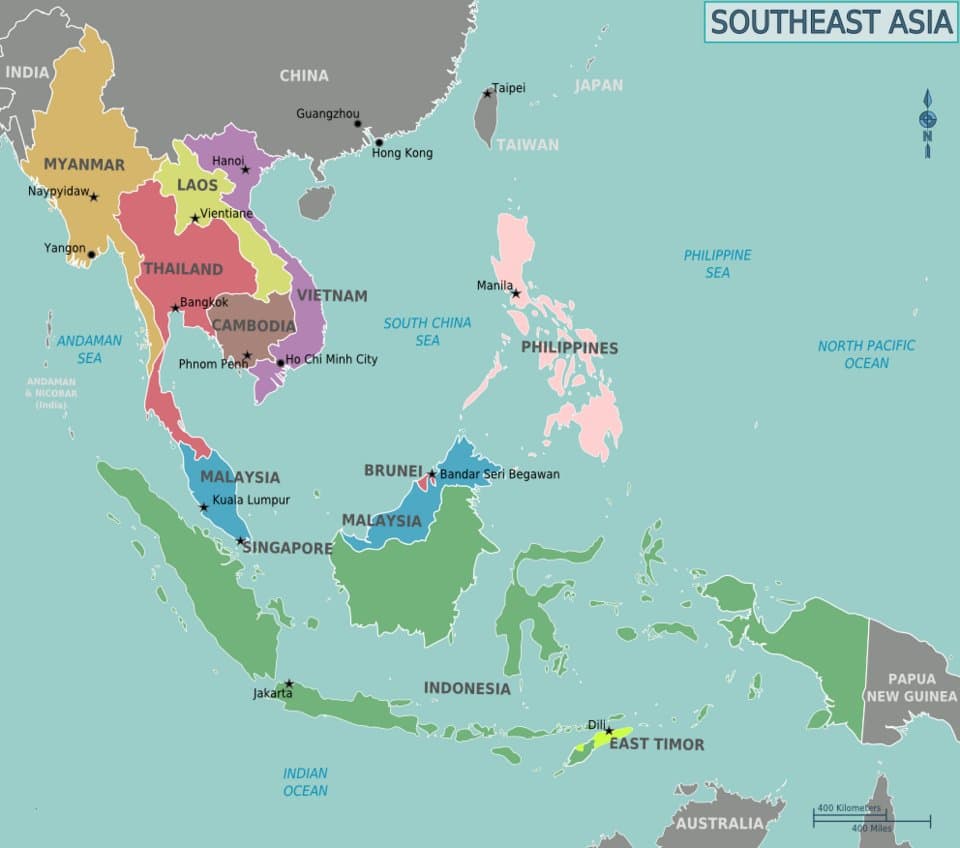
The snakeskin barb is endemic to Borneo, specifically the Kalimantan region of Indonesian Borneo. It’s found in the lowland peat swamp forests that characterize much of southern and western Kalimantan. These are some of the most chemically extreme freshwater habitats on Earth, and understanding them is key to keeping this fish well.
Peat swamps in Borneo produce water that looks like strong black tea. Decaying leaf litter, fallen branches, and waterlogged peat release massive amounts of humic acids and tannins, driving the pH down to levels that would kill most aquarium fish. We’re talking pH values between 3.0 and 5.0. The water is extremely soft with virtually no dissolved minerals, and light barely penetrates the tannin-stained surface. The snakeskin barb shares these streams and pools with other Bornean specialists like chocolate gouramis, licorice gouramis, and various rasbora species.
This habitat context matters a lot. The snakeskin barb is adapted to water conditions that most general community fish would struggle with. If you want to see this fish at its best, you need to lean into those blackwater conditions rather than fight against them.
Appearance & Identification
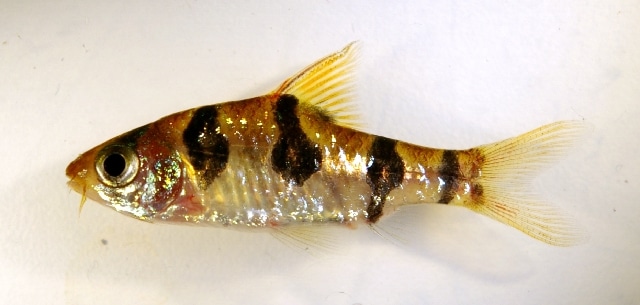
The snakeskin barb has a laterally compressed, somewhat deep body shape typical of the Desmopuntius genus. What sets it apart from its banded cousins is its namesake pattern: a series of dark, diamond-shaped or rhomboid spots arranged in rows across the flanks. These spots create a reticulated appearance that genuinely resembles snakeskin, hence the common name. The effect is subtle and complex, unlike the bold vertical bars you see on species like the tiger barb.
The base body color ranges from golden-brown to reddish-bronze, and it deepens significantly when the fish is kept in proper blackwater conditions with tannin-stained water. Under bright lights and in clear water, the colors wash out and the pattern becomes less defined. The fins are translucent to slightly yellowish, with the dorsal fin sometimes showing a faint dark marking near the base. Overall, this is a fish that rewards you for creating the right environment. In a well-set-up blackwater tank with dark substrate and subdued lighting, the snakeskin pattern pops in a way you simply won’t see in a standard brightly-lit community tank.
Male vs. Female
Sexing snakeskin barbs can be tricky, especially with younger fish. Mature males are slimmer with more intense reddish coloration. Females are rounder and heavier-bodied, especially when carrying eggs, with slightly more muted tones. During spawning condition the differences become more obvious, but outside of breeding, body shape is the best clue: the deeper-bellied fish are almost always females.
Average Size & Lifespan
Snakeskin barbs max out at around 2.5 inches (6 cm) in total length, comparable in size to cherry barbs and five-banded barbs. Don’t let the small size fool you. What they lack in bulk, they make up for in pattern complexity and group dynamics.
With proper care, expect a lifespan of 4 to 6 years. Water quality is the biggest factor. Fish kept in clean, soft, acidic water with a good diet will consistently outlive those in suboptimal conditions. Stress from poor water chemistry, inadequate group sizes, or aggressive tank mates shortens their lifespan significantly.
Care Guide
Tank Size
A 20-gallon (76 liter) tank is the minimum for a group of snakeskin barbs. While they’re small fish individually, you’re keeping a group of 8 or more, and they’re active swimmers that use the full middle water column. A standard 20-gallon long (30 inches / 76 cm) is a good starting point because it provides more horizontal swimming space than a tall tank of the same volume. If you can go larger, a 30 to 40-gallon (114 to 151 liter) tank gives you more room for tank mates and a more impressive blackwater biotope.
Water Parameters
| Parameter | Recommended Range |
|---|---|
| Temperature | 72 to 82°F (22 to 28°C) |
| pH | 4.0 to 7.0 |
| Hardness | 1 to 8 dGH (18 to 143 ppm) |
| Ammonia/Nitrite | 0 ppm |
| Nitrate | Below 20 ppm |
Here’s where the snakeskin barb really separates itself from the typical barb species. That pH range of 4.0 to 7.0 isn’t a typo. You don’t need to push your tank down to pH 4.0, but a pH of 5.0 to 6.5 is the sweet spot for the best coloration and most natural behavior. RO (reverse osmosis) water or a mix of RO and tap water is usually necessary to get the hardness low enough. Indian almond leaves, peat filtration, and driftwood all help drive the pH down naturally while releasing beneficial tannins. Weekly water changes of 20 to 30% help maintain stability, but make sure your replacement water matches the tank’s chemistry. Dumping hard, alkaline tap water into a soft, acidic tank is a recipe for a dangerous pH swing.
Filtration & Water Flow
Gentle to moderate filtration is the goal. Snakeskin barbs come from slow-moving or nearly stagnant water, so you don’t want a powerhead blasting current through the tank. A sponge filter is an excellent choice for a dedicated blackwater setup. If you prefer a hang-on-back or canister filter, baffle the output to create a calm zone. Adding peat filtration media to your filter is a natural way to maintain acidic conditions and release tannins, but monitor your pH regularly since peat can drive it lower than intended.
Lighting
Dim lighting is strongly preferred. In the wild, snakeskin barbs live under dense forest canopy where very little direct sunlight reaches the water. Bright LED fixtures will wash out their colors and stress the fish. Use floating plants to diffuse light, or run your fixture at a lower intensity. The tannin-stained water in a proper blackwater setup naturally dims things further, and your snakeskin barbs will be more active, colorful, and confident under low light.
Plants & Decorations
A blackwater biotope is the ideal setup. Use driftwood as the primary hardscape with a generous layer of dried leaf litter (Indian almond leaves, Ketapang leaves, or oak leaves). The leaf litter provides foraging opportunities, releases tannins, and mimics the natural habitat. If you want to include plants, stick with low-light species that tolerate acidic conditions: Java fern (Microsorum pteropus), Java moss (Taxiphyllum barbieri), and Cryptocoryne species are all good choices. Floating plants like Amazon frogbit, Salvinia, or red root floaters work beautifully to dim the light and give the tank a natural, shaded feel.
Substrate
Dark sand or fine gravel works best, helping bring out the warm tones in the snakeskin barb’s coloration. Avoid bright white or colorful substrates that wash out the fish’s colors. Some keepers opt for a bare bottom covered entirely in leaf litter, which closely replicates the natural habitat and simplifies maintenance.
Is the Snakeskin Barb Right for You?
Before you buy, run through this honest checklist. The Snakeskin Barb is a great fish for the right keeper, but it is not for everyone.
- You have a 55-gallon or larger tank that can handle a school of 5-6 inch barbs
- You want a unique pattern that stands out from typical barb species
- You can keep a group of 6-8+ for proper social behavior
- Your tank includes other medium-sized, active species
- You appreciate a fish that looks better the larger it gets
- You have robust filtration for a large school of active fish
Tank Mates
Best Tank Mates
The key to choosing tank mates for snakeskin barbs is finding species that share their preference for soft, acidic water. A standard community fish that needs a pH of 7.5 and moderate hardness isn’t going to work here. Focus on other blackwater or soft-water species that will thrive in the same conditions.
- Other small barbs from similar habitats (five-banded barbs, six-banded barbs)
- Small rasboras (harlequin rasboras, lambchop rasboras, chili rasboras)
- Chocolate gouramis and licorice gouramis (classic Bornean blackwater species)
- Sparkling gouramis
- Kuhli loaches
- Corydoras catfish (species that tolerate soft, acidic water like C. Habrosus)
- Small tetras that prefer soft water (cardinal tetras, ember tetras)
- Otocinclus catfish
Tank Mates to Avoid
- Hard-water species like livebearers (guppies, mollies, platies) that need alkaline, mineral-rich water
- Large or aggressive cichlids that will bully or eat these small barbs
- Fast, aggressive feeders like tiger barbs or Buenos Aires tetras that will outcompete them at mealtimes
- Large predatory fish of any kind, since snakeskin barbs at 2.5 inches are easy prey
- African cichlids that require hard, alkaline water. The opposite of what snakeskin barbs need
Food & Diet
Snakeskin barbs are omnivores that accept a wide range of foods. In the wild, they feed on small insects, worms, crustaceans, and organic matter found among the leaf litter. In captivity, a high-quality micro pellet or crushed flake can serve as the daily staple. Because these are small fish with small mouths, make sure your dry food is appropriately sized. Supplement regularly with frozen or live foods like baby brine shrimp, daphnia, cyclops, and bloodworms (chopped if they’re full-sized).
Feeding variety is important. Rotating between 3 or 4 different food types throughout the week covers all the nutritional bases. Feed once or twice daily in small amounts the group can consume in about 2 minutes. Overfeeding in a soft, acidic tank is particularly risky because the low pH can slow down the nitrogen cycle, making uneaten food and waste more dangerous than in a neutral or alkaline setup.
Breeding & Reproduction
Breeding Difficulty
Breeding snakeskin barbs is moderate to difficult. Like other Desmopuntius species, they are egg scatterers with no parental care. The main challenge isn’t getting them to spawn. It’s replicating the extremely soft, acidic water conditions they need to trigger breeding behavior and successfully hatch the eggs. If your water chemistry is right, breeding becomes much more achievable.
Spawning Tank Setup
Set up a separate breeding tank of 10 to 15 gallons (38 to 57 liters). Keep the lighting very dim or use no artificial light at all. The bottom should be covered with fine-leaved plants like Java moss or spawning mops that give the eggs a place to settle where the adults can’t easily reach them. A mesh grid raised slightly off the bottom is another option that prevents egg predation. Use a gentle sponge filter for water movement and filtration.
Water Conditions for Breeding
This is where things get specific. Breeding water should be very soft, ideally 1 to 3 dGH, with a pH of 5.0 to 6.0. Temperature should be in the warmer end of their range, around 78 to 82°F (26 to 28°C). Using pure or near-pure RO water with added tannins from Indian almond leaves or peat extract is the most reliable way to achieve these conditions. The water should be amber-tinted from tannins, replicating the blackwater conditions of their native habitat.
Conditioning & Spawning
Condition the breeding group with frequent feedings of live and frozen foods for 1 to 2 weeks. Females will become noticeably plumper as they develop eggs. Introduce a pair or small group to the breeding tank in the evening. Spawning typically occurs the following morning, with the female scattering adhesive eggs among the plants or moss. Remove the adults immediately after spawning, as they will eat their own eggs.
Egg & Fry Care
Eggs typically hatch within 24 to 36 hours. Keep the breeding tank dark during incubation, as the eggs are light-sensitive. The fry become free-swimming about 24 to 48 hours after hatching. First foods should be infusoria or liquid fry food, transitioning to freshly hatched baby brine shrimp after about a week. Maintain impeccable water quality with small daily water changes matched to the tank’s chemistry. Growth is slow, and it may take several months before fry develop the characteristic snakeskin patterning.
Common Health Issues
Ich (White Spot Disease)
Ich is always a concern, and snakeskin barbs are susceptible. The classic white spots on the body and fins are easy to identify, usually triggered by temperature fluctuations or transport stress. Treatment involves gradually raising the temperature to 82 to 86°F (28 to 30°C). Be cautious with salt-based treatments in a soft, acidic tank. Ich medications containing malachite green or formalin are safer, but use half-doses with small, sensitive species.
Bacterial Infections
Fin rot and other bacterial infections can occur when water quality slips. In a blackwater tank, the tannin-stained water makes it harder to visually spot declining conditions, so regular testing with a reliable liquid test kit is essential. If you see frayed fins, red streaks, or lethargic behavior, check your parameters immediately. Clean water alone often resolves early-stage infections, while advanced cases requires antibacterial medication.
Velvet Disease (Oodinium)
Velvet presents as a finer, dust-like gold or rust-colored coating rather than distinct white spots, making it harder to spot early. Snakeskin barbs subjected to sudden water chemistry changes can be vulnerable. Treatment involves dimming the lights (the parasite is partially photosynthetic), raising the temperature slightly, and using a copper-based medication. Be cautious with copper doses in soft water, as the treatment can be more concentrated without the buffering that harder water provides.
Common Mistakes to Avoid
- Keeping them in hard, alkaline water. This is the single biggest mistake. They’re blackwater specialists. A pH of 7.5 and 15 dGH won’t kill them outright, but you’ll see faded colors, increased stress, and a shortened lifespan. If you can’t provide soft, acidic water, this isn’t the right species for you.
- Keeping too few. A pair or trio will be constantly stressed and hiding. You need a group of 8 or more to see confident, active fish with natural schooling behavior.
- Using bright lighting with no cover. These fish come from shaded peat swamps. Intense LED light washes out their colors and makes them nervous. Use floating plants, tannins, or low-intensity lighting.
- Mixing with incompatible species. Pairing snakeskin barbs with hard-water species like mollies or African cichlids means one group will always be in suboptimal conditions. Choose tank mates that share the same water chemistry needs.
- Neglecting water chemistry stability. In soft, acidic tanks, the water has very little buffering capacity. Small mistakes like adding untreated tap water or overfeeding can cause sudden pH swings. Test regularly and make changes gradually.
Where to Buy
Snakeskin barbs are not a species you’ll find in most chain pet stores. They’re an uncommon import that will show up through specialty retailers and online fish stores. Your best bet for finding healthy, well-acclimated specimens is to check reputable online dealers who specialize in freshwater tropical fish.
- Flip Aquatics is a reliable source for hard-to-find freshwater species. They’re known for careful packing and shipping practices that get fish to you in great condition.
- Dan’s Fish carries a wide selection of barbs and cyprinids, including uncommon species. They ship directly and offer good pricing on schooling fish when you buy in groups.
When you find snakeskin barbs available, buy a group of at least 8. These fish are often wild-caught, so quarantining for 2 to 4 weeks is especially important. Have your blackwater setup already established and stable before the fish arrive.
Frequently Asked Questions
How big do snakeskin barbs get?
Snakeskin barbs reach a maximum size of about 2.5 inches (6 cm). They’re a small barb species, comparable in size to cherry barbs and five-banded barbs. Their compact size makes them suitable for tanks as small as 20 gallons (76 liters) when kept in a proper group.
Are snakeskin barbs good community fish?
They’re peaceful and community-friendly, but their tank mates need to thrive in the same soft, acidic water conditions. You can’t keep them in a general hard-water community tank. In a properly set up blackwater community, they’re excellent alongside small rasboras, chocolate gouramis, and other Southeast Asian soft-water species.
What pH do snakeskin barbs need?
They tolerate a pH range of 4.0 to 7.0, but do best in acidic conditions between 5.0 and 6.5. Pushing toward the lower end of that range brings out their best colors and most natural behavior.
How many snakeskin barbs should I keep?
A minimum of 8 is recommended. They’re a shoaling species that feels most secure and displays the best behavior in larger groups. In a group of 8 to 12, you’ll see tight schooling, reduced stress, and more natural interactions. Smaller groups hide and show faded coloration.
Do snakeskin barbs need a blackwater tank?
They don’t strictly require a full blackwater setup, but they absolutely look and behave their best in one. At minimum, you need soft, acidic water. Adding Indian almond leaves and driftwood to tint the water and lower the pH naturally is a simple way to move in the right direction. The closer you get to replicating their peat swamp habitat, the more rewarding the results.
Can snakeskin barbs live with shrimp?
Small dwarf shrimp like cherry shrimp may be at risk, especially baby shrimp. Adult Amano shrimp are usually safe given the barb’s small size. Many popular shrimp species prefer harder, more neutral water than what snakeskin barbs need, so compatibility is limited by water chemistry as much as predation risk.
What’s the difference between a snakeskin barb and a five-banded barb?
Both belong to the Desmopuntius genus, but the patterning is distinctly different. Five-banded barbs (D. Pentazona) have five dark vertical bands running down the body, while snakeskin barbs have diamond-shaped spots arranged in a reticulated pattern resembling snakeskin. They share similar water chemistry requirements and can even be kept together in a blackwater community.
What It Is Actually Like Living With Snakeskin Barb
Snakeskin barbs are stately fish. They move through the tank with the confidence of a large species and the pattern catches light at every angle.
The reticulated pattern becomes more defined with age. Adult specimens show the snakeskin effect far more clearly than juveniles.
They school in a loose, dignified formation. Not the frantic tight school of smaller barbs, but a coordinated drift that covers the tank methodically.
Closing Thoughts
The snakeskin barb reaches half a foot and its pattern gets better every inch. If you want presence without aggression, this is the large barb to keep.
The snakeskin barb isn’t a fish for everyone, and that’s part of what makes it special. It asks you to commit to a specific kind of setup. Soft water, low pH, dim lighting, tannin-stained conditions. And in return, it gives you a display you simply can’t replicate with more common species.
If you’re the kind of fishkeeper who enjoys recreating a natural habitat and appreciates subtle beauty over flashy colors, the snakeskin barb belongs on your shortlist. Get the water chemistry right, keep them in a proper group, and give them the dim, tannin-rich environment they evolved in. Do that, and you’ll have a tank that stands out from anything you’d see at a typical fish store.
Recommended Video
Check out our barb species video where we cover some of the most popular barbs in the hobby, including the snakeskin barb:
References
- Froese, R. & Pauly, D. (Eds.). (2024). Desmopuntius rhomboocellatus in FishBase. fishbase.se
- SeriouslyFish. (2024). Desmopuntius rhomboocellatus species profile. seriouslyfish.com
- Kottelat, M. (2013). The Fishes of the Inland Waters of Southeast Asia: A Catalogue and Core Bibliography of the Fishes Known to Occur in Freshwaters, Mangroves and Estuaries. Raffles Bulletin of Zoology, Supplement No. 27.
- Practical Fishkeeping. Snakeskin Barb care guide and species profile. practicalfishkeeping.co.uk
- About the Author
- Latest Posts

I’m Mark Valderrama, founder of Aquarium Store Depot and a fishkeeper with over 25 years of hands-on experience. I started in the hobby at age 11, worked at local fish stores, and have kept freshwater tanks, ponds, and reef tanks ever since. I’ve been featured in two best-selling aquarium books on Amazon and built this site to share practical, experience-based fish keeping knowledge.
Leave a Reply