
Last Updated: June 25, 2026
Thank you for visiting! By the way… any links on this page that lead to products on Amazon and other stores/partners are affiliate links Aquarium Store Depot earns a commission if you make a purchase.
Table of Contents
- Key Takeaways
- Species Overview
- Classification
- Origin & Natural Habitat
- Appearance & Identification
- Average Size & Lifespan
- Care Guide
- Tank Mates
- Food & Diet
- Breeding & Reproduction
- Common Health Issues
- Common Mistakes to Avoid
- Where to Buy
- Frequently Asked Questions
- What It Is Actually Like Living With Blind Cave Tetra
- Closing Thoughts
- Recommended Video
- References
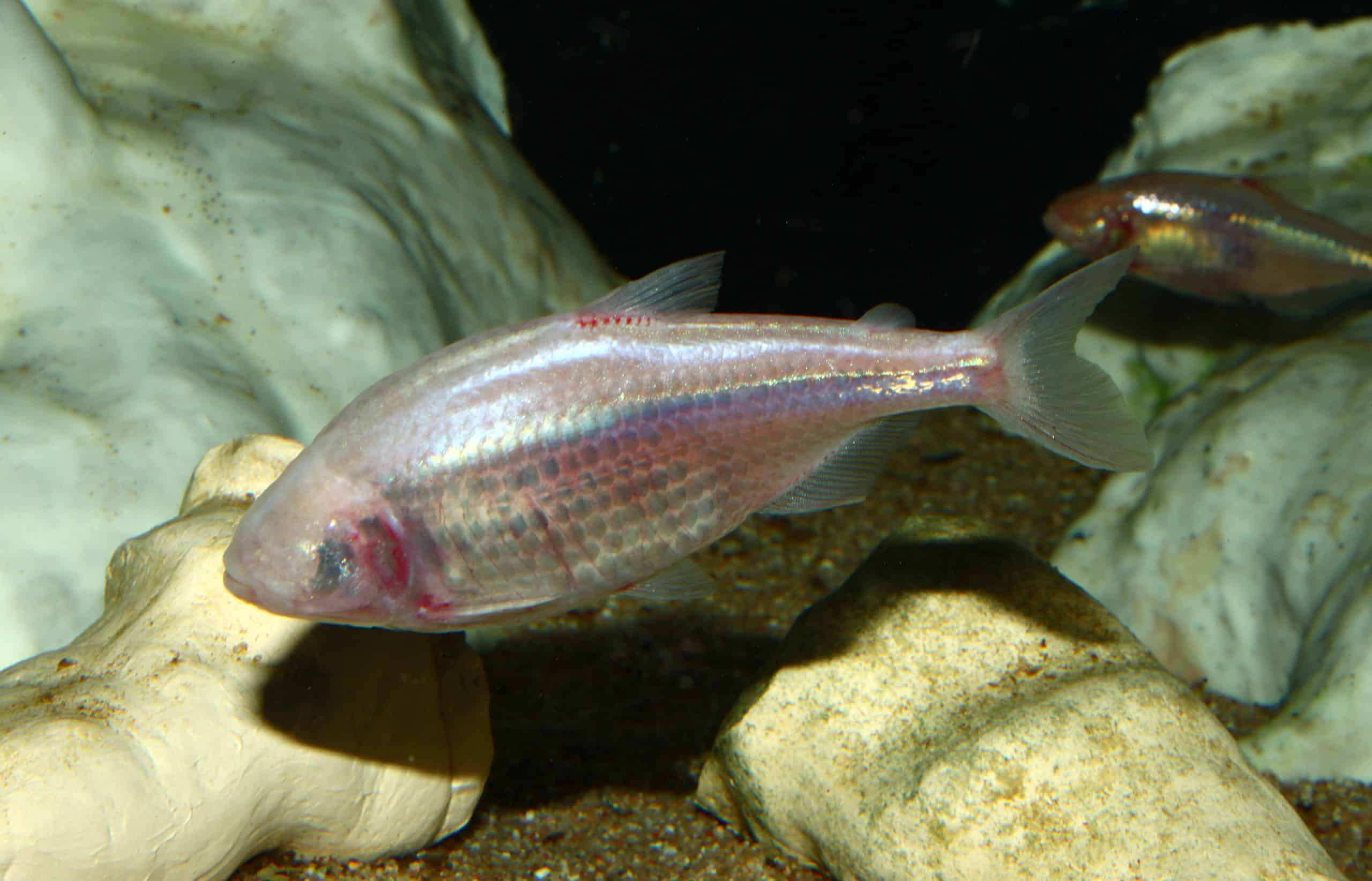
The blind cave tetra has no eyes and navigates entirely by lateral line pressure detection. It does not need your sympathy. It is one of the hardiest, most adaptable fish in the freshwater hobby. It eats anything, tolerates wide parameter ranges, and outlives most tank mates. The only mistake people make is assuming it is fragile because it is blind.
The blind cave tetra does not need eyes and it does not need your pity. It is tougher than most fish that can see.
The Reality of Keeping Blind Cave Tetra
They navigate better than you expect. Despite having no functional eyes, blind cave tetras rarely bump into decorations or glass. Their lateral line system creates a pressure-based “map” of the tank that is remarkably accurate. Watching them navigate a complex aquascape without sight is genuinely impressive.
They are aggressive feeders. Blind cave tetras locate food by smell and vibration, and they are surprisingly effective at it. They are assertive feeders that will outcompete many sighted species. In a community tank, their feeding aggression is problematic.
The lack of pigmentation is the visual feature. The pink-white, eyeless body is striking and strange. It is not conventionally beautiful, but it is fascinating. The fish’s appearance sparks conversation and questions from every visitor.
Biggest Mistake New Owners Make
Assuming they are fragile or disabled because they are blind. Blind cave tetras are tough, assertive fish that have been surviving without eyes for millions of years. They do not need your pity. They need proper care.
Expert Take (Mark Valderrama, AquariumStoreDepot)
The blind cave tetra is one of the most scientifically fascinating fish you can keep. It is a living example of evolutionary adaptation that happens to be hardy and easy to maintain. For anyone interested in biology, this is a must-keep species.
Key Takeaways
- Completely eyeless but navigates using its lateral line system and enhanced sensory organs
- Hardy and easy to care for, making it one of the best “weird fish” for beginners
- Tolerant of a wide range of water parameters, including cooler temperatures
- Active and surprisingly fast feeders despite having no vision
- Fascinating conversation piece and a great way to teach kids about evolution and adaptation
Species Overview
| Field | Details |
|---|---|
| Scientific Name | Astyanax mexicanus (cave form) |
| Common Names | Blind Cave Tetra, Blind Cave Fish, Mexican Blind Cave Tetra |
| Family | Characidae |
| Origin | Limestone caves of northeastern Mexico (Sierra de El Abra) |
| Care Level | Easy |
| Temperament | Peaceful to Semi-aggressive |
| Diet | Omnivore |
| Tank Level | All levels |
| Maximum Size | 4.7 inches (12 cm) |
| Minimum Tank Size | 20 gallons (76 liters) |
| Temperature | 64-82°F (18-28°C) |
| pH | 6.5-8.0 |
| Hardness | 5-30 dGH |
| Lifespan | 5-8 years in captivity |
| Breeding | Egg scatterer |
| Breeding Difficulty | Moderate |
| Compatibility | Community (with caveats) |
| OK for Planted Tanks? | Yes |
Classification
| Taxonomic Level | Classification |
|---|---|
| Order | Characiformes |
| Family | Characidae |
| Genus | Astyanax |
| Species | A. mexicanus (De Filippi, 1853) |
The blind cave tetra was originally described as a separate species, Anoptichthys jordani, when it was first scientifically documented in 1936. However, genetic studies have since confirmed that the cave and surface forms are the same species, Astyanax mexicanus. The cave populations represent independently evolved cave-adapted morphs, not a distinct species.
Note on classification: Astyanax remains in the family Characidae following the 2024 phylogenomic revision by Melo et al. While that study split many genera out of Characidae into new families, Astyanax is the type genus for Characidae and stayed within the core family. This is one of the few popular tetra genera that was not reclassified.
Origin & Natural Habitat
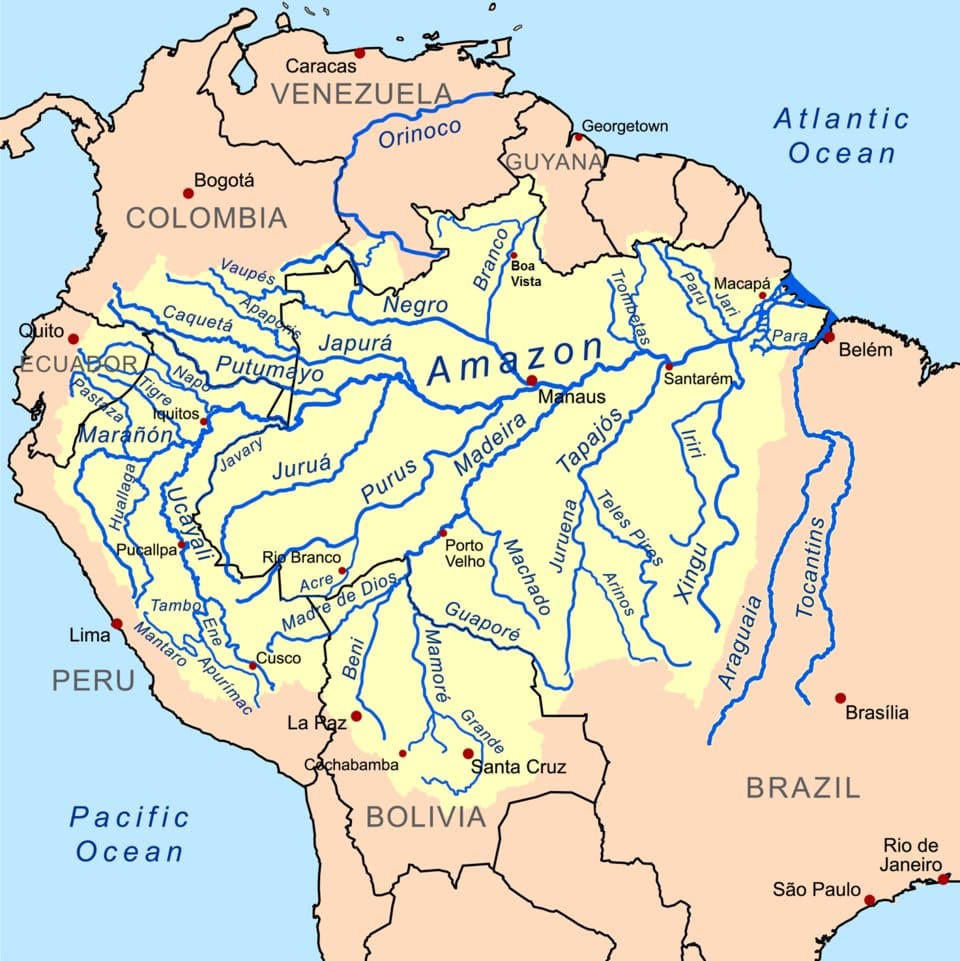
The blind cave tetra comes from limestone caves in the Sierra de El Abra and Sierra de Guatemala mountain ranges in the states of San Luis Potosi and Tamaulipas in northeastern Mexico. At least 30 distinct cave populations have been identified, each having evolved independently from surface-dwelling ancestors that became trapped in underground waterways.
The cave environments are characterized by complete and permanent darkness, relatively stable temperatures (around 68 to 77°F year-round), and water chemistry influenced by the surrounding limestone. The water is moderately hard and slightly alkaline, quite different from the soft, acidic conditions preferred by most South American tetras.
Food in these caves is scarce. The fish rely on organic matter washed in by seasonal floods, bat guano that falls into the water, and whatever small invertebrates they can find. This scarcity has shaped their behavior in interesting ways that are still visible in captivity, including their tendency to feed aggressively and their reduced sleep patterns compared to surface fish.
The surface form of Astyanax mexicanus is a perfectly normal-looking, silvery tetra found throughout Mexico and into Texas. It has fully functional eyes and normal pigmentation. The cave form and surface form can still interbreed and produce viable offspring, which is part of why they’re classified as the same species.
Appearance & Identification
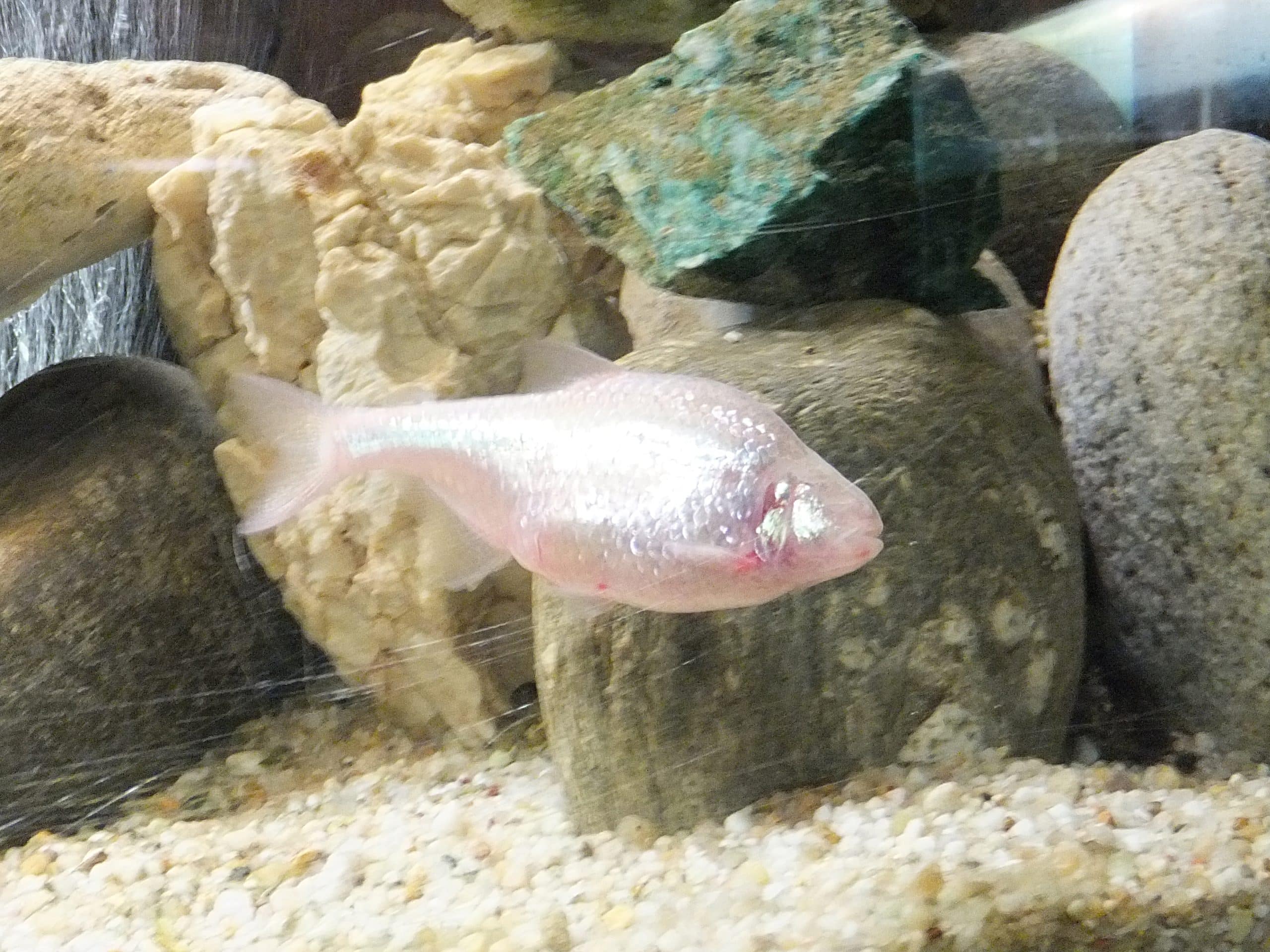
The blind cave tetra is unmistakable. The body is pinkish-white to pale flesh-colored with no pigmentation whatsoever. Where eyes would normally be, there is smooth skin. In some specimens, you can see slight indentations where the eye sockets would have developed, but in most captive-bred fish, the area is completely smooth.
The body shape is typical of the Astyanax genus: moderately deep, laterally compressed, and robust. They’re larger than most popular tetras, reaching up to 4.7 inches in length. The fins are translucent, and in good lighting, you will sometimes see the fish’s internal organs through its unpigmented skin.
What you can’t see is arguably more interesting. Blind cave tetras have an enhanced lateral line system that is significantly more sensitive than that of their sighted relatives. They also have more numerous and larger neuromasts (the sensory cells that detect water movement), increased numbers of taste buds on their jaws, and a heightened sense of smell. These adaptations allow them to build a detailed “picture” of their surroundings using pressure waves and chemical signals instead of light.
Sexual dimorphism is subtle. Females are slightly larger and rounder-bodied when carrying eggs. Without eyes or color patterns to distinguish them, sexing these fish relies mainly on body shape.
Average Size & Lifespan
Blind cave tetras are one of the larger tetra species commonly available. They reach a maximum length of about 4.7 inches (12 cm), with most aquarium specimens settling in at 3 to 4 inches. This is considerably larger than neons, cardinals, or most other popular tetras.
They’re also longer-lived, with a typical lifespan of 5 to 8 years in captivity. Some well-maintained specimens have reportedly lived over 10 years. Their hardiness and adaptability contribute to their longevity.
ASD Difficulty Rating: Beginner
Beginner. One of the easiest community fish in the hobby. Tolerates a wide range of parameters, eats almost anything, and is genuinely hardy. The only surprise is how assertive it is at feeding time – it outcompetes slower fish without hesitation.
Care Guide
Tank Size
A 20-gallon tank is the minimum for a small group of blind cave tetras, but 30 gallons or more is recommended given their adult size and activity level. A 36-inch or longer tank footprint gives them adequate swimming space. These fish are active swimmers that use the entire water column.
Water Parameters
| Parameter | Ideal Range |
|---|---|
| Temperature | 64-82°F (18-28°C) |
| pH | 6.5-8.0 |
| General Hardness | 5-30 dGH |
| KH | 4-12 dKH |
| Ammonia / Nitrite | 0 ppm |
| Nitrate | Below 30 ppm |
This is one of the most adaptable tetras you’ll ever keep. They tolerate a remarkably wide range of temperatures, including unheated rooms down to the mid-60s Fahrenheit. They do fine in hard, alkaline water that would stress most South American tetras. If your tap water is suitable for livebearers or African cichlids, it’s fine for blind cave tetras too.
That said, consistency matters more than hitting a specific number. Avoid dramatic swings in temperature or pH, and keep up with regular water changes.
Tank Setup
You have a lot of creative freedom with the tank setup. in my experience, keepers go for a cave-themed biotope with piles of rocks, slate caves, and subdued lighting. Others keep them in standard planted community tanks. Both approaches work.
A few considerations:
- Lighting doesn’t matter to the fish. Since they have no eyes, light levels are irrelevant to their comfort. Choose lighting based on your plants or your aesthetic preference.
- Smooth decor is important. These fish navigate by sensing pressure waves. Sharp rocks or jagged decorations can cause injuries since they can’t see obstacles visually. Use smooth river stones, rounded driftwood, and soft-leaved plants.
- Open swimming space should make up the majority of the tank. While hiding spots are appreciated, these fish are active swimmers that use the entire water column.
- Substrate: Sand or smooth gravel works well. They’ll occasionally forage along the bottom.
Tank Mates
Blind cave tetras are peaceful, but they have some quirks that affect compatibility. They’re active and is pushy at feeding time, which can stress out slow-moving or timid species. They also nip at long-finned fish.
Good Tank Mates
- Medium-sized tetras (black skirt, serpae, Buenos Aires tetras)
- Corydoras catfish
- Bristlenose plecos
- Medium-sized barbs (cherry barbs, gold barbs)
- Swordtails, platies, and other robust livebearers
- Rainbow fish
- Medium-sized danios
Tank Mates to Avoid
- Slow-moving, long-finned fish like bettas, fancy guppies, or angelfish
- Very small or timid species that would be outcompeted for food
- Aggressive cichlids that might target them
- Shrimp (blind cave tetras will eat smaller shrimp)
Food & Diet
In the wild, blind cave tetras are true opportunistic omnivores. Food in caves is unpredictable, so they’ve evolved to eat almost anything organic: bat guano, dead insects, algae, small crustaceans, and whatever washes in during floods. This scarcity-driven evolution means captive fish are enthusiastic, sometimes aggressive feeders.
In the aquarium, they’ll eat pretty much everything:
- Staple: High-quality flakes, pellets, or granules
- Frozen foods: Bloodworms, brine shrimp, daphnia
- Live foods: Blackworms, daphnia, brine shrimp
- Vegetables: Blanched zucchini, spinach, peas
- Sinking foods: Algae wafers, bottom-feeder tablets
Despite being blind, they find food with remarkable speed using their enhanced sense of smell and taste. You’ll notice they locate food almost as quickly as sighted fish, sometimes faster. Feed two to three times daily in moderate amounts. Be aware that they will overeat if given the opportunity, so don’t be too generous with portions.
Breeding & Reproduction
Blind cave tetras are egg scatterers and is bred in captivity with some effort. They’re actually a popular research organism, so breeding protocols are well documented.
Breeding Setup
- Breeding tank: 20 gallons or larger
- Water: Slightly alkaline (pH 7.0 to 7.5), moderate hardness
- Temperature: 72 to 77°F (22 to 25°C)
- Decor: Marbles or a mesh screen on the bottom to protect eggs from being eaten
- Filtration: Sponge filter for gentle water movement
Condition pairs with high-protein foods for two to three weeks. A drop in water level followed by a large water change with slightly cooler water can simulate the seasonal flooding that triggers spawning in the wild. Females can scatter several hundred eggs during a single spawning event.
Remove the adults after spawning, as they will eat the eggs. Eggs hatch in about 24 to 48 hours, and fry become free-swimming in 3 to 5 days. Feed fry infusoria or liquid fry food initially, then graduate to baby brine shrimp. The fry actually develop eyes initially, which gradually degenerate as they grow. This is one of the most visible demonstrations of their evolutionary history that you can observe in a home aquarium.
Common Health Issues
- Obesity: The most common health issue. Their evolutionary programming drives them to eat aggressively whenever food is available. Overfeeding leads to fatty deposits and shortened lifespans. Feed measured amounts and fast them one day per week.
- Collisions with sharp decor: Without vision, they rely on pressure waves to navigate. Sharp rocks or rough decorations can cause injuries and secondary infections. Use smooth decor.
- Ich (white spot disease): Can occur after temperature drops, especially if keeping them in unheated tanks in rooms with variable temperatures.
- Skin infections: Their unpigmented skin offers less UV protection than pigmented fish. In brightly lit tanks, they are more susceptible to certain skin conditions, though this is rare in practice.
Overall, blind cave tetras are among the hardiest aquarium fish available. Their tolerance for a wide range of conditions and their robust constitution make health problems uncommon with basic proper care.
Hard Rule
Do not keep blind cave tetras with slow-moving or long-finned species. They outcompete slow feeders and may nip at flowing fins – not out of aggression, but because they sense movement with their lateral line.
Common Mistakes to Avoid
- Sharp decorations: Jagged rocks and rough decor are especially problematic for eyeless fish. Always choose smooth surfaces.
- Overfeeding: They will eat everything you give them and then look for more. Resist the temptation. Obesity is the number one health risk.
- Keeping them with timid fish: Their aggressive feeding style can starve out slow, shy species. Choose tank mates that can hold their own at mealtime.
- Expecting them to be slow or inactive: New keepers sometimes assume blind fish will be sluggish. They’re not. These are active, fast-moving fish that zip around the tank with confidence.
- Too small a group: Keep at least 5 or 6 together. They’re social fish and display more natural behavior in groups.
Where to Buy
Blind cave tetras are fairly common in the aquarium trade and is found at many local fish stores and chain pet stores. For guaranteed quality and healthy specimens, check these trusted online sources:
Frequently Asked Questions
Can blind cave tetras see anything at all?
No. They have no functional eyes. The eyes begin to develop in embryos but degenerate during development, leaving the fish completely blind. However, they navigate effectively using their enhanced lateral line system, which detects pressure waves in the water, along with their heightened senses of smell and taste.
Do blind cave tetras need special lighting?
Lighting makes no difference to the fish since they can’t see it. You can use whatever lighting suits your plants, your aesthetic, or no light at all. They’ll behave the same regardless.
Can blind cave tetras live with normal sighted fish?
Yes. They do well with medium-sized, active community fish. Avoid pairing them with very small or very slow species, as blind cave tetras is pushy feeders. They get along well with other robust tetras, barbs, corydoras, and livebearers.
Do blind cave tetras need a heater?
Not necessarily. They tolerate temperatures down to the mid-60s Fahrenheit. If your room stays above 64°F consistently, they can live without a heater. However, if room temperature fluctuates significantly (especially in winter), a heater set to a stable temperature is a good idea to prevent stress.
What It Is Actually Like Living With Blind Cave Tetra
Watching blind cave tetras navigate a complex tank by feel alone is endlessly fascinating. They use their lateral line to detect obstacles, food, and other fish with remarkable accuracy.
They are more social than most people expect. In a group, they swim together and interact with each other despite having no visual contact.
Visitors to your home will always notice and ask about the eyeless fish. It is the best conversation starter in the hobby.
They are surprisingly hardy and long-lived. A well-maintained group will thrive for years with basic care.
Closing Thoughts
The blind cave tetra is proof that you don’t need bright colors or elaborate fins to be fascinating. It’s a fish that makes people stop and stare, ask questions, and genuinely learn something about how life adapts to extreme conditions. Watching an eyeless fish navigate a tank, find food before its sighted tank mates, and interact socially with its group is genuinely compelling in a way that few other aquarium fish can match.
From a care perspective, they’re about as easy as it gets. They tolerate a huge range of water conditions, eat everything, rarely get sick, and live for years. If you want a fish that sparks conversation and requires minimal fuss, the blind cave tetra is hard to argue against. Just go easy on the feeding and make sure your decor doesn’t have sharp edges. That’s really all there is to it.
Recommended Video
Check out our Tetra Tier List video where we rank popular tetra species for the home aquarium:
References
- Froese, R. and D. Pauly, Eds. FishBase. Astyanax mexicanus. Accessed 2025.
- SeriouslyFish. Astyanax mexicanus species profile. Accessed 2025.
- Gross, J.B. (2012). The complex origin of Astyanax cavefish. BMC Evolutionary Biology, 12, 105.
- Melo, B.F, et al. (2024). Phylogenomics of Characidae. Zoological Journal of the Linnean Society, 202(1), 1-37.
Explore More Tetras
The blind cave tetra is just one of dozens of tetra species we cover in our complete species directory. Whether you’re into evolutionary oddities or classic community tetras, our guide has you covered.
👉 Tetras: Complete A-Z Species Directory
- About the Author
- Latest Posts

I’m Mark Valderrama, founder of Aquarium Store Depot and a fishkeeper with over 25 years of hands-on experience. I started in the hobby at age 11, worked at local fish stores, and have kept freshwater tanks, ponds, and reef tanks ever since. I’ve been featured in two best-selling aquarium books on Amazon and built this site to share practical, experience-based fish keeping knowledge.
Leave a Reply