
Last Updated: June 25, 2026
Thank you for visiting! By the way… any links on this page that lead to products on Amazon and other stores/partners are affiliate links Aquarium Store Depot earns a commission if you make a purchase.
Table of Contents
- Key Takeaways
- Species Overview
- Classification
- Origin & Natural Habitat
- Appearance & Identification
- Average Size & Lifespan
- Care Guide
- Tank Mates
- Food & Diet
- Breeding & Reproduction
- Common Health Issues
- Common Mistakes to Avoid
- Where to Buy
- Frequently Asked Questions
- What It Is Actually Like Living With Splash Tetra
- Closing Thoughts
- Recommended Video
- References
The splash tetra is the only freshwater fish that lays eggs out of the water. The male jumps and deposits eggs on overhanging leaves, then splashes them to keep them moist until they hatch. If you do not have overhanging plants or a low water line, you cannot breed this species. It is that specific.
The splash tetra’s breeding behavior is unique in the entire freshwater world. No other fish does what it does.
The Reality of Keeping Splash Tetra
The breeding behavior is the entire reason to keep this fish. Splash tetras are not the most colorful or dramatic-looking species. Their appeal is entirely behavioral. If you are not interested in observing and potentially witnessing the above-water breeding behavior, there are flashier options.
A proper setup is needed to see the breeding. You need overhanging surfaces above the water level. Emergent plant leaves, driftwood extending above the waterline, or even a strip of plant attached to the lid. Without these surfaces, the fish cannot breed naturally.
The male’s parenting behavior is extraordinary. After the eggs are deposited above water, the male positions himself below and uses his tail to splash droplets of water onto the eggs for 2 to 3 days until they hatch and drop into the water. This dedicated parental care is unique among small aquarium fish.
Biggest Mistake New Owners Make
Keeping them in a sealed tank with no above-water surfaces and then wondering why they never breed. The entire appeal of this species depends on providing the right breeding setup.
Expert Take (Mark Valderrama, AquariumStoreDepot)
The splash tetra is the most unique small fish in the hobby from a behavioral standpoint. If you set up the tank correctly and the pair breeds, witnessing the above-water egg laying and tail-splashing is an experience you will never forget.
Key Takeaways
- Unique breeding behavior where eggs are laid above the waterline on overhanging surfaces
- Tight-fitting lid is absolutely essential because these fish are powerful jumpers
- Peaceful community fish that does well in groups of 6 or more
- 15+ gallons recommended with floating plants and overhanging vegetation
- Micropredator that thrives on small live and frozen foods
Species Overview
| Field | Details |
|---|---|
| Scientific Name | Copella arnoldi |
| Common Names | Splash Tetra, Spraying Characin, Spraying Tetra |
| Family | Lebiasinidae |
| Origin | Lower Amazon basin, Guyana, Suriname, French Guiana |
| Care Level | Moderate |
| Temperament | Peaceful |
| Diet | Omnivore (micropredator) |
| Tank Level | Top to Mid |
| Maximum Size | 3.2 inches (8 cm) |
| Minimum Tank Size | 15 gallons (57 liters) |
| Temperature | 75-84°F (24-29°C) |
| pH | 6.0-7.5 |
| Hardness | 2-8 dGH |
| Lifespan | 3-5 years in captivity |
| Breeding | Egg depositor (above water!) |
| Breeding Difficulty | Moderate |
| Compatibility | Community |
| OK for Planted Tanks? | Yes |
Classification
| Taxonomic Level | Classification |
|---|---|
| Order | Characiformes |
| Family | Lebiasinidae |
| Subfamily | Pyrrhulininae |
| Genus | Copella |
| Species | C. arnoldi (Regan, 1912) |
This species was described by Charles Tate Regan in 1912 and named after Johann Paul Arnold (1869-1952), a German aquarist who sent the first specimens to Regan for scientific study. Arnold was an influential figure in the early days of the tropical fish hobby.
Note on family placement: The splash tetra belongs to the family Lebiasinidae, which is separate from Characidae. It was not affected by the 2024 phylogenomic revision by Melo et al. that reorganized Characidae into four families. Lebiasinidae has remained stable taxonomically. Some older references may list this fish under the genus Copeina, but Copella is the current accepted placement.
Origin & Natural Habitat

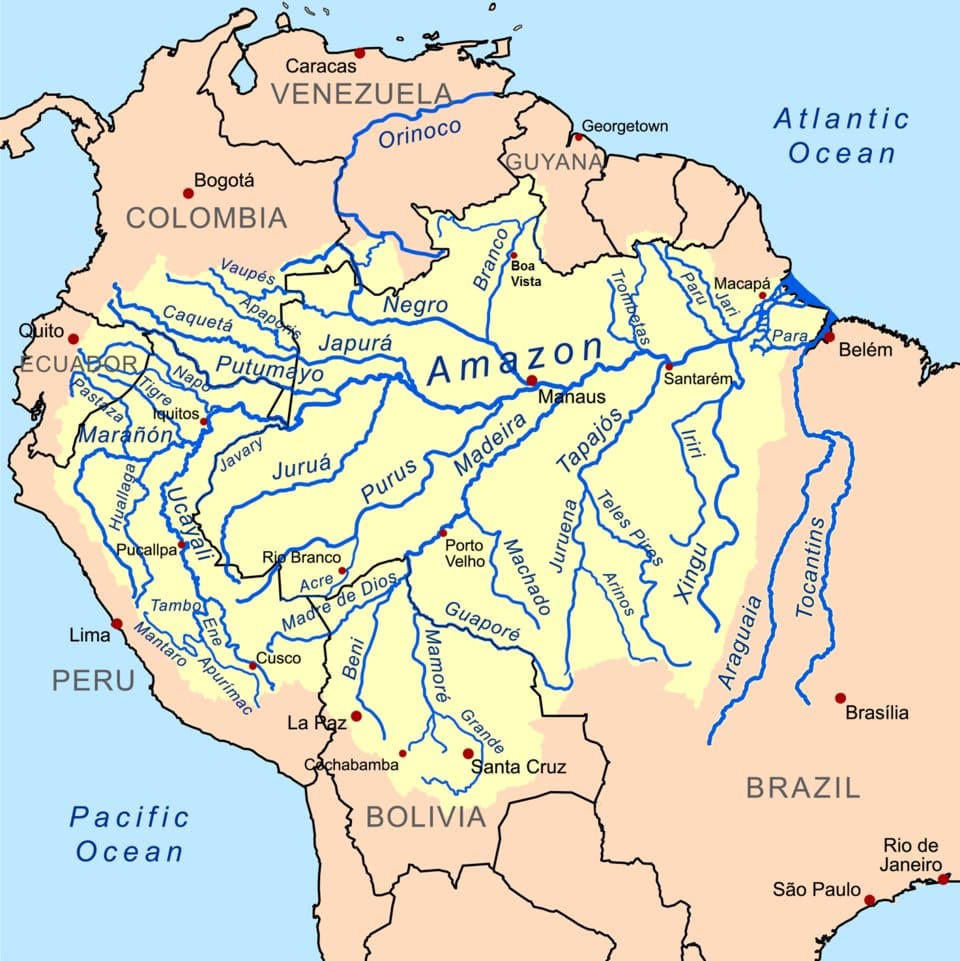
The splash tetra is found across a relatively wide range in northeastern South America. Populations occur in the lower Amazon basin in Brazil (Pará and Amapá states), as well as in Guyana, Suriname, and French Guiana. Some records also place it in coastal drainages of Venezuela near the mouth of the Orinoco River.
In the wild, splash tetras inhabit small streams, tributaries, and forest creeks with overhanging vegetation. That last part is critical to their biology. They specifically seek out habitats where leaves and branches extend over the water surface, because that’s where they lay their eggs. The water is typically soft, slightly acidic, and stained with tannins from decaying plant material.
During the rainy season, many of these habitats flood into the surrounding forest, giving the fish access to additional food sources and spawning sites among the low-hanging foliage.
Appearance & Identification
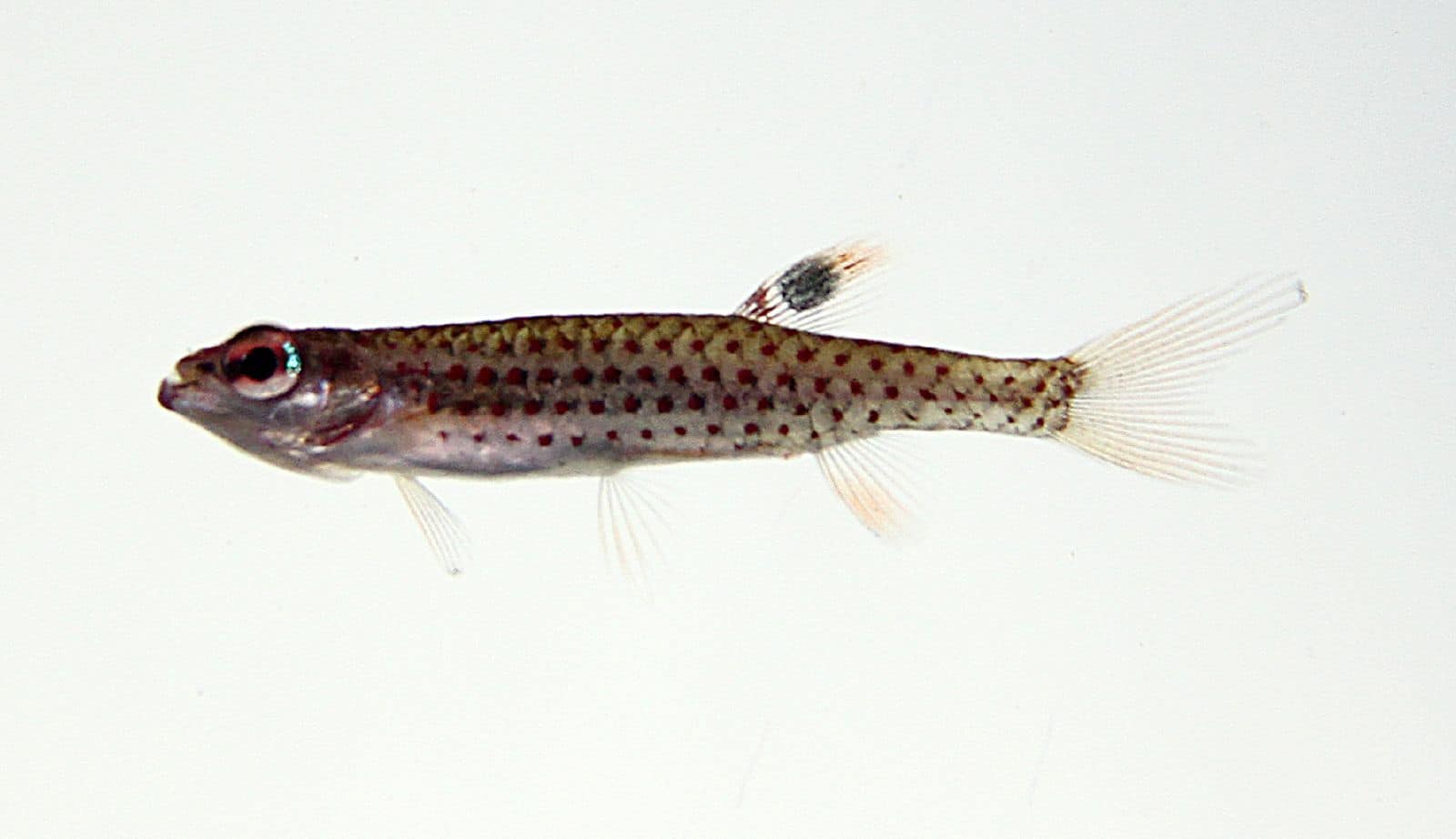
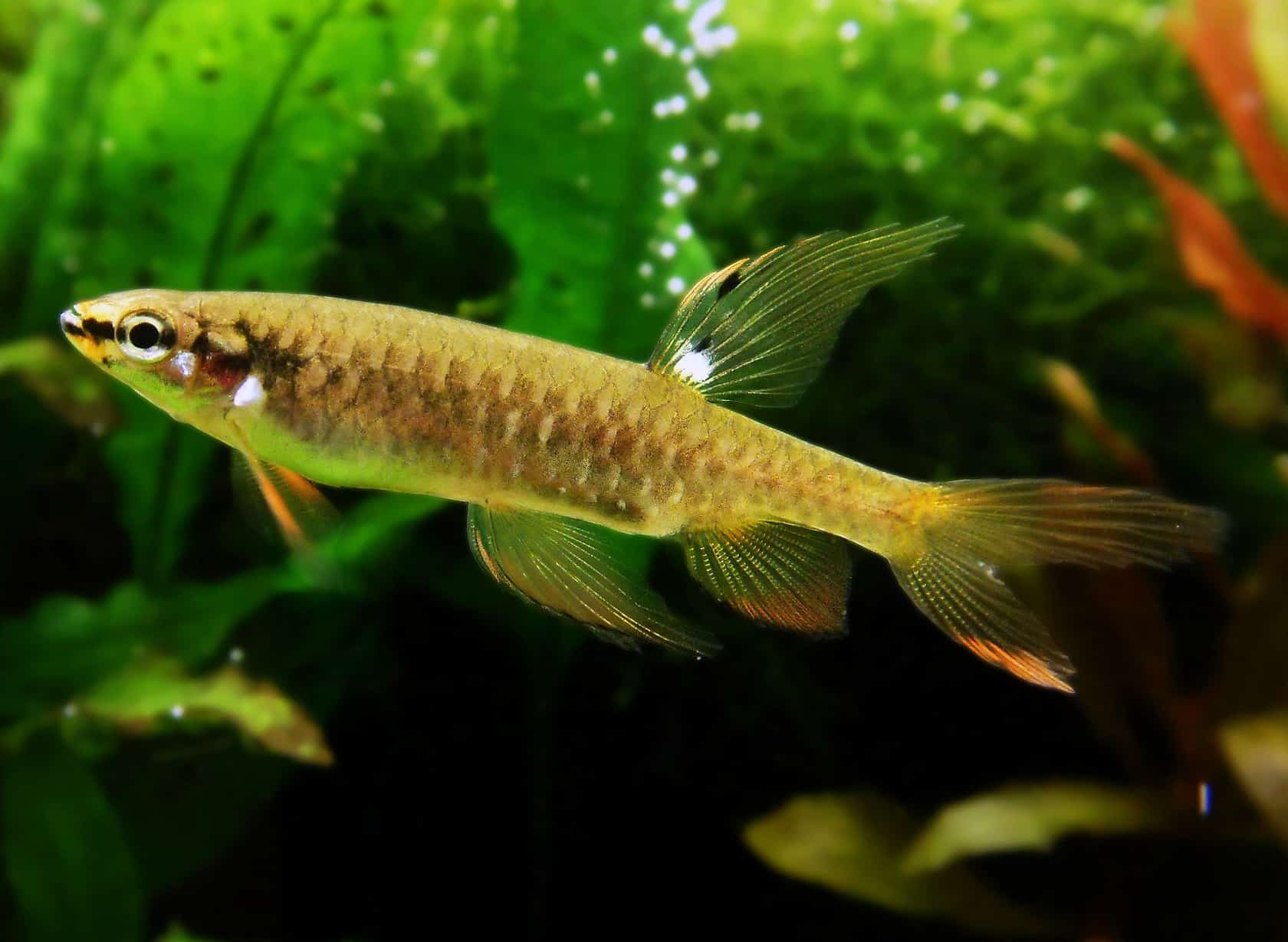
The splash tetra has a slender, elongated body that sets it apart from the deeper-bodied tetras most hobbyists are familiar with. The base color is brownish to golden with a subtle iridescent sheen. A dark lateral stripe runs from the snout through the eye and along the body, and the scales can show a faint pattern of reddish-brown markings.
The fins are where things get interesting, especially on males. Males develop extended dorsal and anal fins with colorful markings, and the upper lobe of the caudal fin is often elongated. The overall effect is an elegant, streamlined fish that looks built for speed and precision jumping.
Sexual dimorphism is pronounced in this species. Males are noticeably larger, more colorful, and have significantly more developed fins than females. Females are smaller, rounder when carrying eggs, and have more subdued coloration. In a group, the differences are easy to spot once you know what to look for.
Average Size & Lifespan
Males reach up to 3.2 inches (8 cm) in total length, while females stay smaller at around 2.4 inches (6 cm). This makes the splash tetra a medium-sized species that works well in community tanks without dominating the space.
With proper care, expect a lifespan of 3 to 5 years. Good water quality, a varied diet, and appropriate tank conditions are the main factors in reaching the upper end of that range.
ASD Difficulty Rating: Moderate
Moderate. Easy to keep but requires specific tank setup to display the behavior that makes it worth keeping. A tight lid, broad-leaved plants near the surface, and a slightly lowered water level are essential if you want to see the signature above-water egg-laying. Without those conditions, it is just another small tetra.
Care Guide
Tank Size
A 15-gallon tank is the minimum for a small group of splash tetras, but a 20-gallon long or larger is strongly recommended. These fish appreciate horizontal swimming space and a tank footprint of at least 30 inches long. For a mixed community, 30 gallons or more gives everyone room to thrive.
The most important tank feature is a tight-fitting lid. This cannot be overstated. Splash tetras are powerful jumpers by nature. Jumping is literally part of their reproductive behavior. Any gap in your lid is an invitation for a dried-out fish on your floor. If you have an open-top tank, this is not the species for you.
Water Parameters
| Parameter | Ideal Range |
|---|---|
| Temperature | 75-84°F (24-29°C) |
| pH | 6.0-7.5 |
| General Hardness | 2-8 dGH |
| KH | 1-6 dKH |
| Ammonia / Nitrite | 0 ppm |
| Nitrate | Below 20 ppm |
Splash tetras prefer soft, slightly acidic water, but they’re more adaptable than some of the more demanding blackwater species. Most hobbyists can keep them successfully in moderately soft water with a neutral to slightly acidic pH. Adding Indian almond leaves or driftwood helps create conditions closer to their natural habitat.
Good water quality is important. Perform weekly water changes of 25 to 30 percent, and make sure your filtration is adequate. Some gentle surface agitation is beneficial, but avoid strong currents since these fish naturally inhabit calm waters.
Tank Setup
The ideal splash tetra tank replicates a shallow forest stream with overhanging vegetation. Use a dark substrate to bring out their coloring, and provide plenty of floating plants like Amazon frogbit, Salvinia, or red root floaters. These serve double duty: they dim the lighting (which these fish prefer) and can even serve as potential spawning sites.
Driftwood and root tangles create natural hiding spots and visual barriers. Live plants like Java fern, Anubias, and Cryptocoryne do well in the lower light conditions these fish enjoy. Leave open areas in the middle and top of the tank for swimming.
If you want to observe the breeding behavior (and honestly, why wouldn’t you?), keep the water level a couple of inches below the lid. This gives the fish room to jump and potentially deposit eggs on the underside of the cover glass or on leaves positioned near the surface.
Tank Mates
Splash tetras are peaceful and get along well with other calm community species. They spend most of their time near the surface, so pairing them with mid-level and bottom-dwelling species works particularly well.
Good Tank Mates
- Small to medium tetras (cardinal tetras, ember tetras, rummy nose tetras)
- Pencilfish (Nannostomus species)
- Corydoras catfish
- Small Loricariids (otocinclus, small plecos)
- Dwarf cichlids (Apistogramma, rams)
- Cherry shrimp, amano shrimp
- Small rasboras
Tank Mates to Avoid
- Large or aggressive species that would bully them
- Very active, boisterous fish that would outcompete them for food at the surface
- Fin nippers that might target the males’ elongated fins
Food & Diet
In the wild, splash tetras are micropredators that feed primarily on small insects, insect larvae, and tiny invertebrates at or near the water surface. They naturally take food from the surface film, and you’ll notice they will feed from the top of the tank rather than chasing food through the water column.
In the aquarium, offer a varied diet:
- Staple: High-quality flakes or micro pellets (surface-floating types preferred)
- Frozen foods: Bloodworms, daphnia, brine shrimp, cyclops
- Live foods: Daphnia, baby brine shrimp, wingless fruit flies, grindal worms
- Treats: Small crickets, mosquito larvae (if you can source them safely)
Live and frozen foods make a big difference with this species. While they’ll accept quality flakes, you’ll see the best color, health, and behavioral displays when live foods are offered regularly. Feed two to three times daily in small amounts. Because they feed at the surface, make sure food doesn’t sink before they can get to it.
Breeding & Reproduction
This is the section you’ve been waiting for. The splash tetra has one of the most remarkable breeding strategies in the entire freshwater fish world.
The Spawning Behavior
When a pair is ready to spawn, the male courts the female near the surface. Once she’s receptive, both fish jump simultaneously out of the water and stick to the underside of an overhanging leaf, the tank lid, or any solid surface above the waterline. They use their enlarged pelvic fins to cling to the surface for up to 10 seconds while the female deposits a small batch of 6 to 10 eggs, which the male immediately fertilizes.
They repeat this jumping sequence dozens of times until the female has deposited all her eggs, usually 100 to 200 total. The entire process can take a couple of hours.
The Splashing
Here’s where it gets really fascinating. After spawning, the male takes up position below the egg clutch and splashes water up onto the eggs with his tail to keep them from drying out. He does this roughly 38 times per hour, around the clock, for the entire incubation period. Males can remember and tend multiple nest sites simultaneously, visiting each one in sequence to splash water on the eggs.
Eggs typically hatch in 48 to 72 hours. When the fry emerge, they drop down into the water and begin swimming freely. The fry are tiny and should be fed infusoria or liquid fry food for the first few days, then transitioned to baby brine shrimp as they grow.
Breeding Setup Tips
- Lower the water level to about 4 inches (10 cm) below the lid to give the fish room to jump
- Provide spawning surfaces by taping pieces of plastic or placing broad leaves at an angle near the water surface
- Keep the lid tight with a small gap for air exchange
- Temperature: 79 to 82°F (26 to 28°C) to trigger spawning
- Condition pairs with plenty of live and frozen foods for 2 weeks before breeding
- Gentle filtration: A sponge filter is ideal for the breeding tank
Common Health Issues
- Jumping injuries and death: The number one health threat is escape. A poorly sealed tank will lead to losses. Always check for gaps around filter intakes, heater cords, and tubing.
- Ich (white spot disease): Can occur after temperature fluctuations or shipping stress. Treat with raised temperature and appropriate medication.
- Fin damage: Males’ elongated fins can be nipped by aggressive tank mates. Choose companions carefully.
- Stress from poor water quality: Like most small characins, they’re sensitive to ammonia and nitrite spikes.
Overall, splash tetras are reasonably hardy once established. The biggest risk factor is jumping, not disease. A secure lid solves 90% of the potential problems with this species.
Hard Rule
Splash tetras require a secure lid with no gaps and a water level lowered 4 to 6 inches (10 to 15 cm) from the top. These fish jump intentionally during spawning – the eggs are deposited on the underside of a leaf above the waterline. Without the right setup, the breeding behavior you are keeping them for will never happen.
Common Mistakes to Avoid
- Open-top or poorly sealed tanks: This is the most common and most fatal mistake. These fish will jump, and they will find any gap in your lid.
- Keeping only dry foods: While they’ll survive on flakes alone, they won’t thrive. Live and frozen foods are important for this species.
- Too few fish: Keep at least 6. Males are more confident and display better in groups.
- Strong current: These are calm-water fish. Powerful powerheads and canister filter outputs pointed at the surface will stress them out.
- Ignoring the surface zone: Don’t fill the tank to the brim. Leave 2 to 3 inches of airspace between the water and the lid for natural behavior.
Where to Buy
Splash tetras are available from specialty retailers who carry unusual and lesser-known species. They’re not common at chain pet stores, but you can find them through these trusted online sources:
Frequently Asked Questions
Is the splash tetra actually a tetra?
Technically, it belongs to the family Lebiasinidae, not Characidae, so it’s not a “true” tetra in the strict taxonomic sense. But it’s in the same order (Characiformes) and is universally referred to as a tetra in the hobby. The common name has stuck, and most fish stores sell it under the tetra category.
Do splash tetras really jump out of the water to lay eggs?
Yes. Both the male and female leap out of the water together and deposit eggs on surfaces above the waterline. The male then stays below and splashes water up onto the eggs to prevent them from drying out. This has been well-documented scientifically and observed in aquariums for over 100 years.
How do I prevent my splash tetras from jumping out?
Use a tight-fitting glass or acrylic lid with no gaps larger than a few millimeters. Seal around filter intakes, heater cords, and airline tubing with foam or mesh. Jumping is an instinctive behavior for this species, so there’s no way to train them not to do it. The lid is your only defense.
What It Is Actually Like Living With Splash Tetra
Even outside of breeding, splash tetras are active, engaging fish that patrol the upper water column with confidence.
The male’s parenting behavior is one of the most remarkable things you will ever see in a home aquarium. Watching him splash water onto above-water eggs for days is genuinely moving.
They are surface-oriented fish that share the top level with hatchetfish, though they are more active and exploratory.
A pair that bonds and breeds regularly will provide ongoing entertainment and a conversation piece that no other fish can match.
Closing Thoughts
The splash tetra is one of those species that rewards you for paying attention. Sure, it’s a nice-looking fish with attractive finnage and graceful movement. But the real draw is the behavior. Watching a pair coordinate their jumps, seeing eggs appear on the underside of a leaf, and then observing the male’s dedicated splashing routine is genuinely captivating. It’s nature at its most creative.
The care requirements aren’t complicated. Soft water, a secure lid, a varied diet with live foods, and a group of at least six. If you can provide those basics, you’ll have one of the most interesting fish in the hobby. And if you manage to breed them, you’ll have a story that nobody else at your local fish club can match.
Recommended Video
Check out our Tetra Tier List video where we rank popular tetra species for the home aquarium:
References
- Froese, R. and D. Pauly, Eds. FishBase. Copella arnoldi. Accessed 2025.
- SeriouslyFish. Copella arnoldi species profile. Accessed 2025.
- IUCN Red List. Copella arnoldi. Status: Least Concern. Assessed September 2020.
Explore More Tetras
The splash tetra is just one of dozens of tetra species we cover in our complete species directory. Whether you’re looking for surface-dwelling specialists or beginner-friendly community tetras, our guide has you covered.
👉 Tetras: Complete A-Z Species Directory
- About the Author
- Latest Posts

I’m Mark Valderrama, founder of Aquarium Store Depot and a fishkeeper with over 25 years of hands-on experience. I started in the hobby at age 11, worked at local fish stores, and have kept freshwater tanks, ponds, and reef tanks ever since. I’ve been featured in two best-selling aquarium books on Amazon and built this site to share practical, experience-based fish keeping knowledge.
Leave a Reply