
Last Updated: June 25, 2026
Thank you for visiting! By the way… any links on this page that lead to products on Amazon and other stores/partners are affiliate links Aquarium Store Depot earns a commission if you make a purchase.
Table of Contents
- What Most Care Guides Get Wrong
- The Reality of Keeping Sailfin Tetra
- Key Takeaways
- Species Overview
- Classification
- Origin & Natural Habitat
- Appearance & Identification
- Average Size & Lifespan
- Care Guide
- Is This Fish Right for You?
- What People Get Wrong
- Tank Mates
- Food & Diet
- Breeding & Reproduction
- Common Health Issues
- Common Mistakes to Avoid
- Where to Buy
- Frequently Asked Questions
- What It Is Actually Like Living With Sailfin Tetra
- How It Compares to Similar Species
- Closing Thoughts
- Recommended Video
- References
The sailfin tetra is a predatory characin that will eat anything small enough to fit in its mouth. It is not a community fish. It is a display predator that needs a species-appropriate setup with tank mates large enough to avoid becoming food. Get this wrong and you will lose fish.
The sailfin tetra eats small fish. Not sometimes. Always. Size your tank mates accordingly.
The Reality of Keeping Sailfin Tetra
Group size is not a suggestion. The minimum school size for sailfin tetra is not just a guideline. In small groups, these fish lose color, become stressed, and display abnormal behavior. A proper group of 6 to 8+ is where you start to see natural schooling behavior, full color expression, and the confidence that makes them worth keeping.
Tank mate selection requires thought. The sailfin tetra is not aggressive in the traditional sense, but it is assertive enough to cause problems with the wrong companions. Slow-moving, long-finned species are targets. Fast, short-finned fish of similar size are fine. Plan your community around this reality.
Store appearance is not home appearance. Fish in store tanks are stressed, crowded, and under inappropriate lighting. The sailfin tetra almost always looks better in a properly set up home aquarium than it does at the store. Dark substrate, live plants, and appropriate lighting bring out colors and behaviors you will never see in a retail environment.
Biggest Mistake New Owners Make
Keeping them with fish small enough to eat. This is a predator. It will eat anything it can fit in its mouth. If you stock smaller fish with a sailfin tetra, you are feeding it expensive live food.
The sailfin tetra is one of those fish that looks unassuming in photos but commands attention in person. When a male fully extends that large dorsal fin, it is genuinely impressive for a fish this size. They do have predatory tendencies toward very small fish, so tank mate selection matters — but for a keeper who wants an unusual, visually striking species with real behavioral interest, the sailfin tetra is worth the effort to find.
Key Takeaways
- Males are territorial and display like dwarf cichlids, not typical schooling tetras
- Dramatically enlarged dorsal fin in males gives this species its common name
- Cavity spawner with parental care, highly unusual for a tetra
- Needs soft, acidic water and a well-structured tank with territories
- Rare in the hobby but worth seeking out for dedicated keepers
Species Overview
| Field | Details |
|---|---|
| Scientific Name | Crenuchus spilurus |
| Common Names | Sailfin Tetra, Sailfin Characin |
| Family | Crenuchidae |
| Origin | Amazon basin, Guyana, Suriname |
| Care Level | Moderate to Advanced |
| Temperament | Territorial (males), peaceful toward other species |
| Diet | Omnivore (micropredator) |
| Tank Level | Bottom to Mid |
| Maximum Size | 2.4 inches (6 cm) |
| Minimum Tank Size | 20 gallons (76 liters) |
| Temperature | 75-82°F (24-28°C) |
| pH | 4.0-6.5 |
| Hardness | 0-5 dGH |
| Lifespan | 3-5 years in captivity |
| Breeding | Cavity spawner with parental care |
| Breeding Difficulty | Moderate |
| Compatibility | Specialist community |
| OK for Planted Tanks? | Yes |
Classification
| Taxonomic Level | Classification |
|---|---|
| Order | Characiformes |
| Family | Crenuchidae |
| Subfamily | Crenuchinae |
| Genus | Crenuchus |
| Species | C. Spilurus (Günther, 1863) |
Sailfin tetras are predatory toward very small fish and need specific tank mate consideration. They are not difficult to keep in terms of water parameters, but their behavior requires an appropriately stocked tank.
Crenuchus spilurus is the sole member of its genus, making it a monotypic genus. It belongs to Crenuchidae, a small family of South American characins commonly known as darter tetras or South American darters. Despite the “tetra” common name, crenuchids are quite different from typical Characidae tetras in both behavior and biology.
Note on family placement: Crenuchidae is a separate family from Characidae and was not affected by the 2024 Melo et al. Phylogenomic revision. The sailfin tetra’s family placement has been stable.
Origin & Natural Habitat

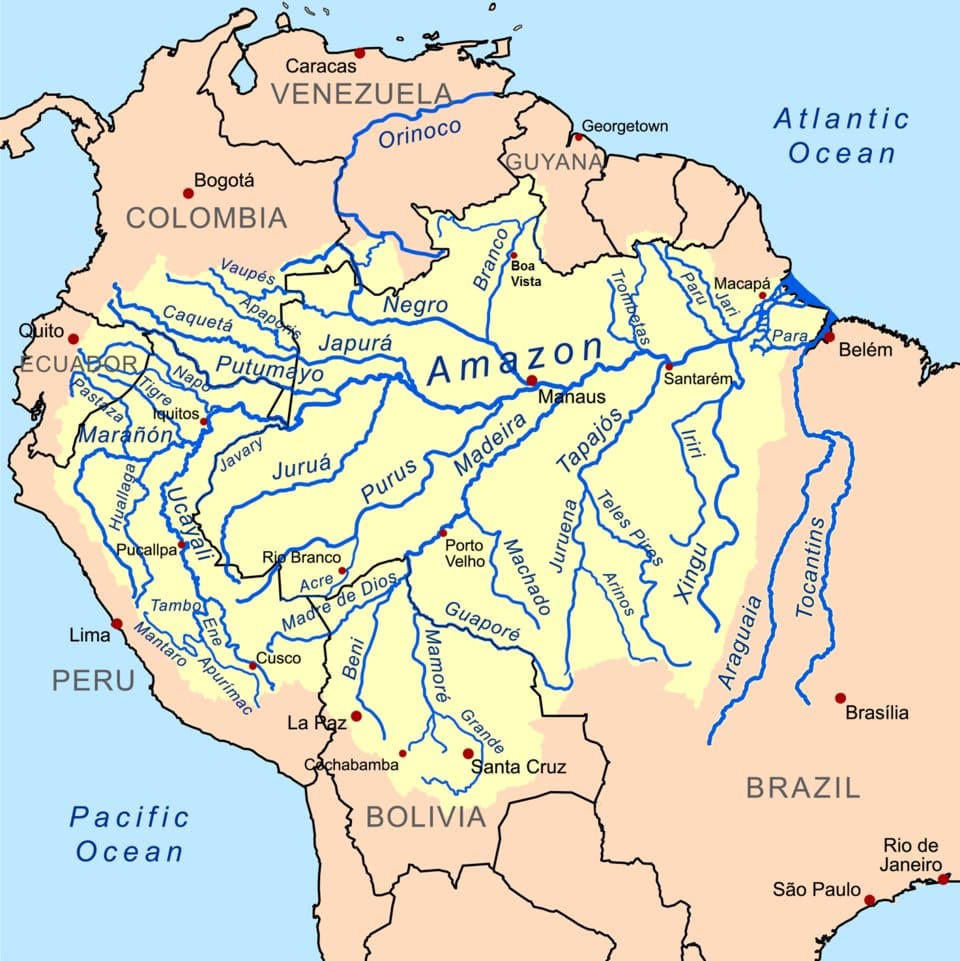
The sailfin tetra has a broad range across the Amazon basin in Brazil as well as the coastal rivers of Guyana and Suriname. Despite this wide distribution, it’s not commonly encountered due to its preference for specific microhabitats.
In the wild, sailfin tetras inhabit slow-moving or still blackwater streams and forest pools. They’re found in shallow water with dense leaf litter on the bottom and overhanging vegetation providing heavy shade. The water is extremely soft and acidic, often with a pH below 5.0, and heavily stained with tannins from decomposing organic matter.
Males establish territories around submerged structures like hollow logs, leaf litter caves, and root tangles. This territorial behavior is unusual for characins and gives the sailfin tetra a very different ecological niche compared to typical schooling tetras.
Appearance & Identification
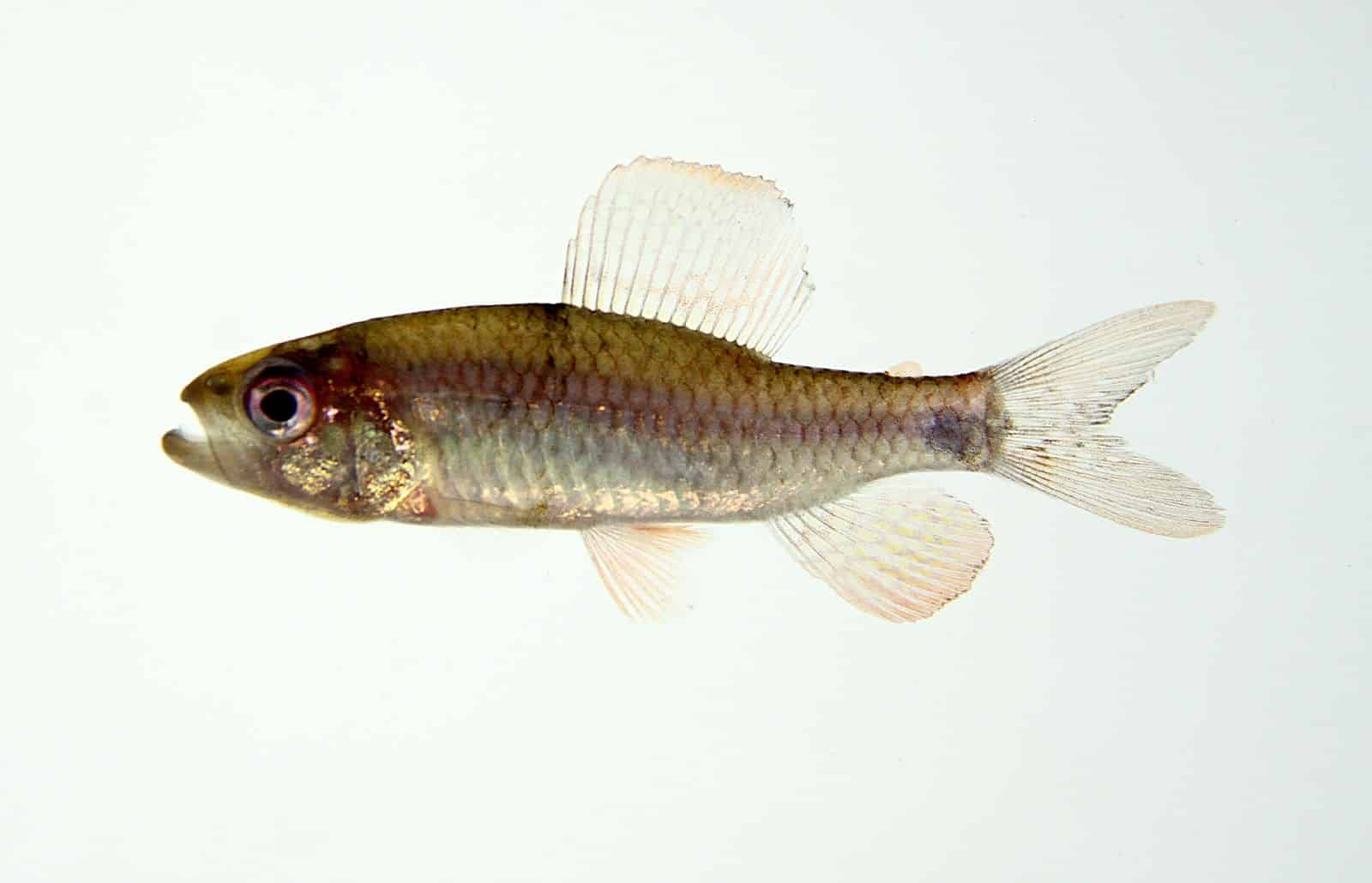
The sailfin tetra has a moderately elongated body with a distinctive dark spot at the base of the caudal fin (the species name “spilurus” means “spotted tail”). The base coloration is brownish to olive with subtle iridescent scales. A dark horizontal stripe runs along the midline of the body.
The real spectacle is the dramatically enlarged dorsal fin in mature males. When raised during territorial displays, the dorsal fin expands into a broad, sail-like structure marked with bold patterns of black, white, and sometimes reddish tones. Males also develop more vivid body coloration during breeding condition, with intensified markings and a warm brownish-red hue.
Sexual dimorphism is very pronounced. Males are larger, more colorful, and have the enlarged, ornate dorsal fin. Females are smaller, plainer in coloration, and have a normally proportioned dorsal fin. The difference is obvious in mature specimens.
Average Size & Lifespan
Sailfin tetras reach about 2.4 inches (6 cm), with males typically larger than females. They’re a mid-sized species that has enough presence to be a focal point in a smaller tank.
With proper care, expect a lifespan of 3 to 5 years. Maintaining appropriate water chemistry and providing a well-structured environment are the keys to longevity.
Care Guide
Tank Size
A 20-gallon tank is the minimum for a pair or trio (one male, two females). For keeping multiple males, you’ll need a larger tank (30 gallons or more) with enough structure to establish separate territories. Each male needs his own small domain with visual barriers from other males.
Water Parameters
| Parameter | Ideal Range |
|---|---|
| Temperature | 75-82°F (24-28°C) |
| pH | 4.0-6.5 |
| General Hardness | 0-5 dGH |
| KH | 0-2 dKH |
| Ammonia / Nitrite | 0 ppm |
| Nitrate | Below 10 ppm |
This is a true blackwater species that needs very soft, acidic water. RO/DI water is essentially required unless your tap water happens to be extremely soft. Indian almond leaves, driftwood, peat, and alder cones help maintain the acidic conditions and provide the tannin-rich water these fish thrive in.
Water quality must be excellent. Keep nitrates as low as possible through small, frequent water changes. These are sensitive fish that respond poorly to organic waste buildup.
Tank Setup
The tank setup for sailfin tetras is all about creating territories and hiding spots. Think of it more like setting up a dwarf cichlid tank than a typical tetra tank:
- Leaf litter: A deep layer of dried Indian almond leaves or oak leaves on the substrate
- Caves and hollows: Small coconut shell caves, PVC tubes, or dense leaf litter piles serve as spawning sites
- Driftwood: Branchy driftwood creates visual barriers between territories
- Plants: Dense planting helps break up sight lines. Cryptocoryne, Java fern, and mosses work well in the low-light, acidic conditions
- Lighting: Dim. Floating plants are highly recommended
- Substrate: Sand or fine gravel, covered in leaf litter
Is the Sailfin Tetra Right for You?
The sailfin tetra is a showstopper that demands commitment. Here’s who should keep them:
- You have a 55-gallon or larger tank. These fish need serious space
- You want a tetra with real visual drama. Fully developed males are jaw-dropping
- You can handle semi-assertive fish that might push around smaller species
- You enjoy watching dominance displays and natural social hierarchies
- You want something that looks like it belongs in a magazine spread, not a beginner tank
- Don’t attempt these in anything under 40 gallons. You’ll stunt their development and amplify aggression
What People Get Wrong
The most common mistake is adding sailfin tetras to a community tank with small fish without understanding their predatory nature. Neon tetras, chili rasboras, microrasboras, and similar nano species are at serious risk. Sailfin tetras are ambush predators — they will stalk and consume any fish small enough to swallow. This is not a compatibility issue you can work around with tank arrangement. It is instinct.
Second mistake: underestimating how impressive the male’s dorsal fin display is when you actually see it in person. Photos of sailfin tetras rarely capture what makes this fish special. The large, rounded dorsal fin on a displaying male is one of the more dramatic visual displays available in a small freshwater fish. It is why dedicated hobbyists seek this species out.
Third: sourcing challenges. Sailfin tetras are not commonly stocked in general pet stores. They come in through specialist importers and dedicated aquatic retailers. If you find them, they are worth buying when stock is available. Waiting for a specific size or gender mix is often not an option.
Tank Mates
Sailfin tetras are territorial toward their own kind but generally ignore other species. The challenge is finding tank mates that share their water chemistry requirements and won’t outcompete them for food or territory.
Good Tank Mates
- Small, peaceful tetras (ember tetras, green neons, cardinal tetras)
- Pencilfish (Nannostomus species)
- Pygmy corydoras
- Otocinclus
- Small, peaceful dwarf cichlids (Apistogramma in large enough tanks)
- Dwarf shrimp (in well-established, planted tanks)
Tank Mates to Avoid
- Active, boisterous species
- Large or aggressive fish
- Bottom-dwelling species that would invade their territories
- Fish requiring hard, alkaline water
Food & Diet
Sailfin tetras are micropredators that feed primarily on small invertebrates in the wild. They have a preference for live and frozen foods and is reluctant to accept dry food.
- Best foods: Live baby brine shrimp, daphnia, grindal worms, blackworms
- Frozen foods: Bloodworms, brine shrimp, daphnia, cyclops
- Dry foods: High-quality micro pellets or crushed flakes (some individuals accept these after training)
Feed small amounts two to three times daily. Males often feed from within or near their territories, picking food items off the substrate or catching them as they drift past. A diet rich in live foods promotes the best coloration and displays.
Breeding & Reproduction
The breeding behavior of the sailfin tetra is what truly sets it apart from other tetras. Unlike the egg-scattering strategy used by most characins, sailfin tetras are cavity spawners with male parental care. This is exceptionally rare among characins and makes their breeding biology more similar to cichlids.
Breeding Setup
- Spawning sites: Small caves, coconut shells, or dense leaf litter piles where the male can establish a nest
- Water: Very soft, acidic (pH 4.5-5.5, near-zero hardness)
- Temperature: 78-82°F (25-28°C)
- Pair or trio: One male with one or two females
The male selects a spawning site (typically a small cave or hollow) and courts the female with dramatic dorsal fin displays. Eggs are deposited inside the cavity, and the male guards the eggs and fry. He fans the eggs to keep water flowing over them and aggressively defends the nest from intruders.
Clutch sizes are small, usually 30 to 60 eggs. Eggs hatch in about 36 to 48 hours. The male continues to guard the fry for several days after hatching. First foods should be infusoria or paramecium, transitioning to baby brine shrimp as the fry grow.
Common Health Issues
- Water chemistry stress: The most common issue. These fish deteriorate in hard, alkaline water. Soft, acidic conditions are essential.
- Ich and velvet: Can occur during acclimation. Use slow, careful acclimation with drip methods.
- Male aggression: In small tanks, dominant males can injure subordinates. Provide adequate space and visual barriers.
- Bacterial infections: Usually secondary to stress from poor water conditions. Maintain pristine water quality.
Common Mistakes to Avoid
- Treating it like a typical tetra: This is not a schooling fish. Males are territorial and need individual territories with spawning sites.
- Hard, neutral water: They need very soft, acidic water. Standard tap water in most areas is too hard for this species.
- No caves or hiding spots: Males need cavities for spawning and territorial display. Without them, the fish won’t show natural behavior.
- Bright lighting: These are shade-dwelling forest stream fish. Bright lights stress them and wash out their coloration.
- Keeping only males: Multiple males in a small tank without enough territory leads to constant aggression and stress.
Where to Buy
Sailfin tetras are a rare specialty species that is difficult to find. They’re occasionally available through specialty importers and dedicated online retailers. Check these trusted sources:
Never add them to an uncycled tank. Sailfin tetras need pristine water from the start. Ammonia and nitrite will cause immediate stress in a species already sensitive to water quality changes.
Frequently Asked Questions
Are sailfin tetras actually tetras?
They belong to the order Characiformes like other tetras, but they’re in a different family (Crenuchidae) from the typical tetras you see in pet stores (Characidae). Their behavior is also very different. They don’t school, males are territorial, and they show parental care. Calling them tetras is technically correct at the order level but undersells how unique they are.
Can sailfin tetras be kept in groups?
Yes, but with structure. You can keep multiple males if the tank is large enough (30 gallons or more) with clear territorial boundaries created by driftwood, plants, and cave structures. Each male needs his own small territory. Females is kept together without issue. A ratio of one male to two females works well in a 20-gallon tank.
Do sailfin tetras really guard their eggs?
Yes. Males guard the eggs inside the spawning cavity and continue to protect the fry for several days after hatching. This cavity-spawning behavior with paternal care is extremely rare among characins and is one of the most fascinating aspects of keeping this species.
What It Is Actually Like Living With Sailfin Tetra
In a proper school, sailfin tetra display natural movement patterns that are genuinely engaging to watch. The fish interact with each other, establish subtle hierarchies, and move through the tank with purpose.
They occupy the middle water column during active hours, creating movement and visual interest in the zone where most fishkeepers want action.
Feeding time is when their personality comes out. They learn your routine quickly and will anticipate feeding before you even open the lid.
Their color and behavior improve over time as they settle into a stable environment. Fish that have been in the same tank for months look noticeably better than recently added stock.
How the Sailfin Tetra Compares to Similar Species
Sailfin Tetra vs. Emperor Tetra
Emperor tetras share that regal, elegant presence with extended finnage on males, but in a much more manageable package. Emperors work in 20-30 gallon tanks and are genuinely peaceful community fish. Sailfin tetras are larger, need bigger tanks, and have a more assertive temperament. If you love the idea of a tetra with dramatic fins but have a smaller tank, emperor tetras deliver that aesthetic at a more practical scale. Sailfins are for keepers who have the space and want maximum impact. Check out our Emperor Tetra care guide for more details.
Sailfin Tetra vs. Diamond Tetra
Diamond tetras are another species where mature males develop impressive finnage, but they stay smaller and are more peaceful than sailfin tetras. The diamond tetra’s iridescent scales catch light beautifully, creating a different kind of visual impact. Sparkle versus drama. Both species look best in mature planted tanks with moderate lighting. Diamond tetras are the safer community choice, while sailfin tetras are the bold pick for keepers who want something truly commanding. Check out our Diamond Tetra care guide for more details.
Closing Thoughts
The sailfin tetra is one of the most interesting and unusual fish you can keep. Watching a male flare his enormous dorsal fin in a territorial display is one of those moments that reminds you why you got into fishkeeping. Add in the cavity-spawning behavior with paternal care, and you have a fish that feels more like keeping a dwarf cichlid than a tetra.
It’s not a fish for everyone. The water chemistry requirements are specific, it’s hard to find for sale, and it needs a thoughtfully set up tank rather than a generic community setup. But for the aquarist who wants something truly different and is willing to meet this species halfway, the sailfin tetra is one of the most rewarding fish in the hobby.
Recommended Video
Check out our Tetra Tier List video where we rank popular tetra species for the home aquarium:
References
- Froese, R. And D. Pauly, Eds. FishBase. Crenuchus spilurus. Accessed 2025.
- SeriouslyFish. Crenuchus spilurus species profile. Accessed 2025.
- About the Author
- Latest Posts

I’m Mark Valderrama, founder of Aquarium Store Depot and a fishkeeper with over 25 years of hands-on experience. I started in the hobby at age 11, worked at local fish stores, and have kept freshwater tanks, ponds, and reef tanks ever since. I’ve been featured in two best-selling aquarium books on Amazon and built this site to share practical, experience-based fish keeping knowledge.
Leave a Reply