
Last Updated: June 25, 2026
Thank you for visiting! By the way… any links on this page that lead to products on Amazon and other stores/partners are affiliate links Aquarium Store Depot earns a commission if you make a purchase.
Table of Contents
- What Most Care Guides Get Wrong
- The Reality of Keeping Livingstonii Cichlid
- Key Takeaways
- Species Overview
- Classification
- Origin & Natural Habitat
- Appearance & Identification
- Average Size & Lifespan
- Care Guide
- Is This Species Right for You?
- Tank Mates
- Food & Diet
- Breeding & Reproduction
- Common Health Issues
- Common Mistakes to Avoid
- Where to Buy
- FAQ
- What It Is Actually Like Living With Livingstonii Cichlid
- Species Comparison
- Closing Thoughts
Livingstonii cichlids play dead to hunt. That is not an exaggeration. They lie on their side on the substrate and wait for curious small fish to investigate, then strike. I have kept nimbochromis livingstonii and watching this hunting behavior in person is one of the most fascinating things in the hobby. But it also means any small fish in the tank is a meal waiting to happen. If you stock this fish with anything it can eat, you will witness the strategy firsthand. The predator that learned patience before it learned to chase.
The fish that hunts by pretending to be a corpse.
What Most Care Guides Get Wrong About Livingstonii Cichlid
Most people know Livingstonii as “the fish that plays dead,” and that unique behavior often overshadows the practical care requirements. The biggest mistake is keeping them in tanks that are too small. At 8 to 10 inches, they need the same space as other large haps. The second misconception is that they are constantly playing dead. In aquarium settings, this behavior is less common because they do not need to ambush prey. You will see it occasionally, but do not buy this fish expecting a daily theatrical performance. Their real appeal is their interesting patterning and calm demeanor among the large haps.
The Reality of Keeping Livingstonii Cichlid
Mbuna keeping is a different discipline from regular fishkeeping. The Livingstonii Cichlid is no exception. Here is what you need to prepare for.
Hard, alkaline water is mandatory. Lake Malawi chemistry means pH between 7.8 and 8.6, high GH, and high KH. There is no faking this. If your tap water is soft and acidic, you need to buffer every water change without exception.
Overstocking is the strategy. Keeping 3 or 4 Livingstonii Cichlids leads to one bully and victims. You need groups of 12 or more to spread aggression. But overstocking only works with heavy filtration and consistent water changes.
Diet is critical. Feed a varied diet appropriate for the species. Quality pellets should be the staple, supplemented with occasional frozen foods.
Rockwork defines territories. Mbuna need piles of rocks with caves and passageways. Without proper rockwork, dominant fish have nowhere to establish boundaries and subordinates have nowhere to hide. Stack rocks from substrate to near the waterline.
Biggest Mistake New Livingstonii Cichlid Owners Make
Understocking. Keeping a small group of Livingstonii Cichlids means the dominant fish picks off the weak ones. You need a large group to distribute aggression. Twelve is the minimum for most mbuna species.
Expert Take
Start with a group of 12 or more in a 55 gallon minimum. Use aragonite or crushed coral substrate to buffer pH naturally. Feed spirulina-based food as the staple. Stack rocks to create territories. This formula works for Livingstonii Cichlids and most other mbuna.
Key Takeaways
- “Plays dead” to catch prey. Uses thanatosis (death feigning) as an offensive hunting strategy, one of the few fish species to do so
- Large predatory Hap. Reaches 10 inches (25 cm) in captivity; will eat any fish small enough to fit in its mouth
- 125-gallon minimum. Needs a big tank with plenty of open floor space and a sandy substrate
- Sandy substrate is essential. Without sand, you won’t see the death-feigning behavior that makes this species so remarkable
- Moderately aggressive. Predatory but not overly combative with appropriately sized tank mates
- Maternal mouthbrooder. Females carry eggs for 18. 21 days; keep 1 male to 3. 6 females
Species Overview
| Common Name | Livingstonii Cichlid, Livingston’s Cichlid, Sleeper Cichlid |
| Scientific Name | Nimbochromis livingstonii |
| Care Level | Intermediate |
| Temperament | Predatory / Semi-Aggressive |
| Max Size | 10 inches (25 cm) |
| Min Tank Size | 125 gallons (473 liters) |
| Diet | Carnivore (Piscivore) |
| Lifespan | 8. 12 years |
| Water Temp | 76. 82°F (24. 28°C) |
| pH | 7.8. 8.6 |
| Origin | Lake Malawi, Africa |
Classification
| Kingdom | Animalia |
| Phylum | Chordata |
| Class | Actinopterygii |
| Order | Cichliformes |
| Family | Cichlidae |
| Genus | Nimbochromis |
| Species | N. Livingstonii (Gunther, 1894) |
Origin & Natural Habitat
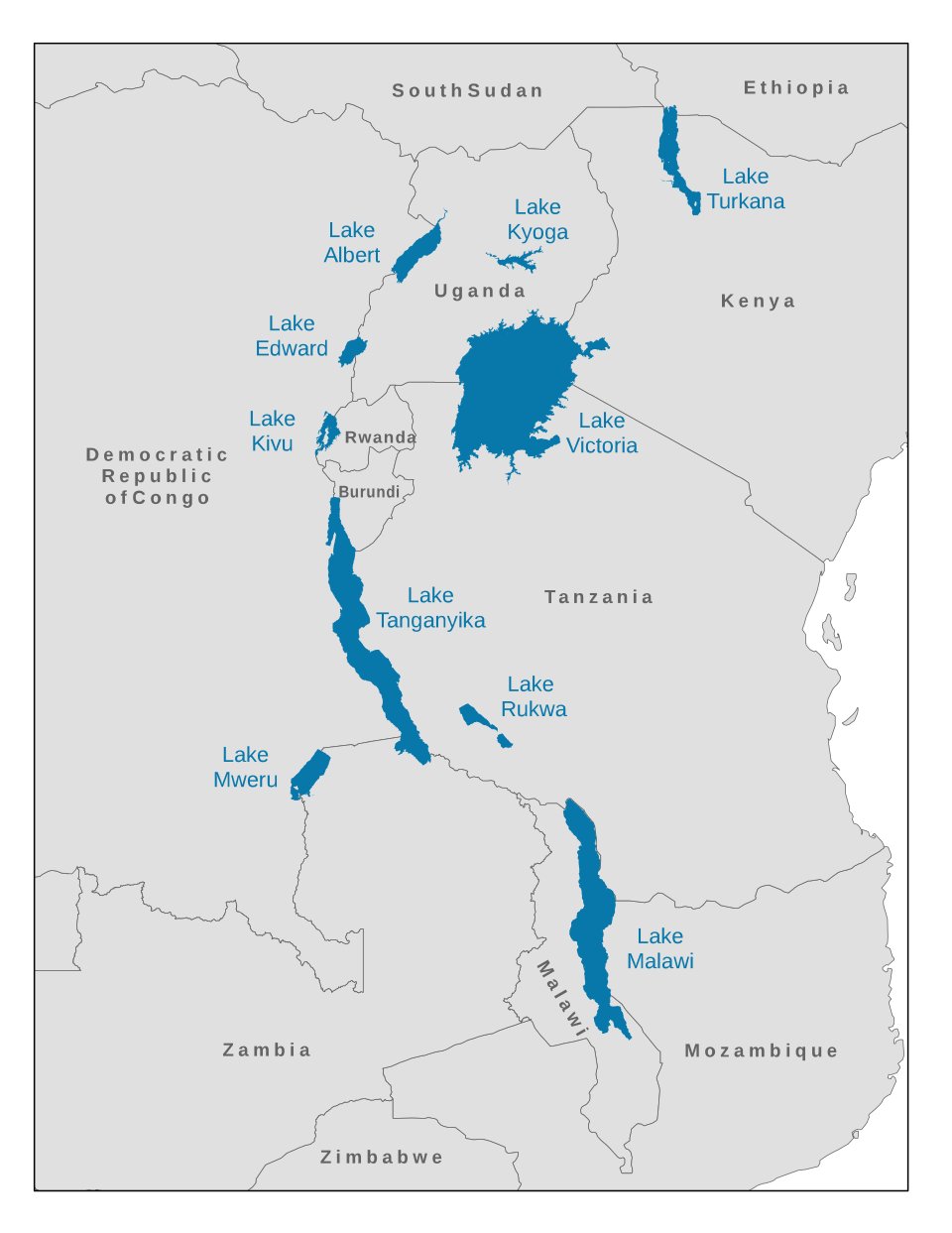
The Livingstonii Cichlid is endemic to Lake Malawi in East Africa, where it’s distributed widely throughout the lake. It inhabits sandy and muddy substrates in shallow to moderately deep water, often near beds of Vallisneria and other aquatic vegetation. This habitat preference makes sense when you understand the fish’s hunting strategy. It needs soft substrate to lie in and vegetation to lurk near while waiting for prey.
The species was named after the famous explorer David Livingstone and was originally classified under the catch-all genus Haplochromis before being moved to Nimbochromis in 1989, along with its close relative N. Venustus.
In the wild, Livingstonii are solitary predators that rely on ambush rather than pursuit. Their mottled coloration provides camouflage against sandy and rocky substrates, allowing them to blend in as they wait for small fish to approach. This behavioral adaptation. Called thanatosis. Is extremely rare in the fish world and makes N. Livingstonii one of the most behaviorally unique cichlids you can keep.
Appearance & Identification
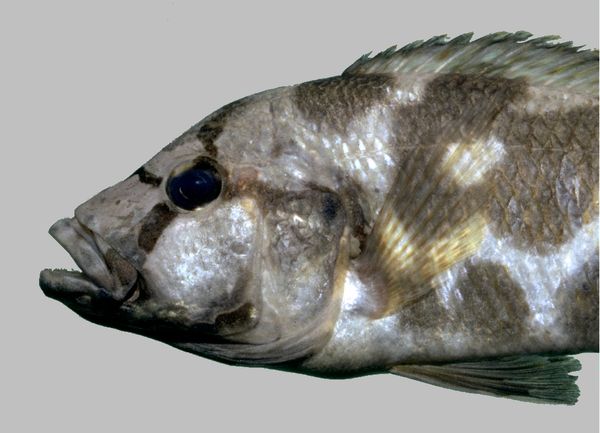
The Livingstonii has a distinctive mottled pattern that serves as natural camouflage. Irregular brown and dark patches on a lighter base that breaks up the fish’s outline against sandy substrates. Juveniles and females retain this camouflage pattern throughout their lives, and it’s one of the easiest ways to identify the species.
Males undergo a significant color transformation as they mature. The mottled pattern fades as an intense blue coloration develops across the body, though traces of the darker patterning often remain visible. Males in full breeding dress are strikingly beautiful. Deep metallic blue with residual dark markings that give them a complex, multi-layered appearance.
Body shape is deep, stocky, and powerful, built for sudden bursts of speed during ambush strikes. The mouth is large and upward-angled, designed for engulfing prey from the lying-down position.
Male vs. Female
Sexing juveniles is difficult, but mature specimens are fairly easy to distinguish. The male’s color change is the most obvious indicator, but size and fin shape also help.
| Feature | Male | Female |
|---|---|---|
| Body Color | Metallic blue with traces of mottled pattern | Mottled brown/white camouflage pattern |
| Size | Up to 10 inches (25 cm) | Up to 8 inches (20 cm) |
| Fins | Longer, more pointed dorsal, anal, and caudal fins | Shorter, more rounded fins |
| Egg Spots | Present on anal fin | Absent or faint |
| Behavior | Territorial, displays intense color when breeding | More reclusive, stronger camouflage instinct |
Average Size & Lifespan
Livingstonii are large Haps. Males reach 10 inches (25 cm) in aquaria, with some specimens growing even larger under ideal conditions. Females are smaller but still substantial at around 8 inches (20 cm). These are thick, heavy-bodied fish that carry real weight.
With excellent water quality and a proper diet, Livingstonii can live 8. 12 years in captivity. Like most large cichlids, longevity is directly tied to water quality and diet consistency. This is a long-term commitment species. Don’t bring one home unless you’re prepared to care for it for a decade.
Care Guide
Tank Size
A 125-gallon (473-liter) tank is the minimum for Livingstonii, and a 6-foot tank length is strongly recommended. These fish need significant floor space. Both for territory and for their unique lying-down hunting behavior. If you’re building a community with other large Haps, 150 gallons or more is the better target.
The tank layout matters as much as the size. Livingstonii need open areas of sandy substrate where they can perform their ambush behavior, combined with some rock structures for territory markers and hiding spots. Don’t fill the tank with wall-to-wall rock like you would for mbuna.
Water Parameters
| Temperature | 76. 82°F (24. 28°C) |
| pH | 7.8. 8.6 |
| General Hardness (dGH) | 10. 20 dGH |
| Carbonate Hardness (dKH) | 12. 20 dKH |
| Ammonia | 0 ppm |
| Nitrite | 0 ppm |
| Nitrate | <20 ppm |
Lake Malawi stability applies here. Keep parameters consistent and avoid sudden changes. Buffer soft water with aragonite or cichlid-specific products. Large weekly water changes of 25. 40% keep nitrates in check, which is essential for preventing bloat and other stress-related issues in these large fish.
Filtration & Water Flow
Heavy-duty filtration is non-negotiable with a fish this size. A large canister filter or sump rated for 2x your tank volume is ideal. These are messy eaters with a significant bioload, and water quality can deteriorate quickly without adequate filtration.
Keep water flow gentle to moderate. Livingstonii come from calmer water areas and don’t appreciate strong currents. Position filter outputs to create good circulation without blasting the fish.
Lighting
Standard LED lighting works fine. Moderate intensity is ideal. Bright enough to enjoy the fish’s coloration but not so intense that it stresses them. Livingstonii naturally inhabit areas with vegetation cover, so they appreciate some shaded spots. An 8. 10 hour photoperiod is appropriate.
Plants & Decorations
A mix of open sandy areas and rock structures works best. Create rock piles along the sides and back for territorial markers and hiding spots, but leave the center and front of the tank as open sand. Dense plantings of Vallisneria along the back wall provide an excellent natural touch and replicate the Livingstonii’s natural vegetated habitat.
Anubias and Java Fern attached to rocks also work well and add visual interest without being uprooted during digging activities.
Substrate
Sand is absolutely essential for Livingstonii. Not optional, essential. These fish bury themselves in the substrate as part of their hunting behavior, and they need fine, smooth sand to do so safely. Pool filter sand or play sand are great choices. Avoid anything coarse or sharp that could injure the fish as they dig in and settle on their sides. Aragonite sand is another solid option if you need pH buffering.
Is the Livingstonii Cichlid Right for You?
Livingstonii Cichlids are one of the most behaviorally fascinating haps in Lake Malawi. Their ambush hunting strategy is unique among aquarium fish. But they need the right setup to thrive.
- Great fit if you want a large hap with genuinely unique behavior that you will not see in any other species
- Great fit if you have a 125 gallon or larger tank with compatible large haps
- Great fit if you appreciate the mottled brown patterning that helps them camouflage in sand
- Not ideal if you want a brightly colored show fish. Livingstonii are attractive but not flashy
- Not ideal if you keep small fish under 4 inches. They will become prey
- Not ideal if you want constant action. Livingstonii can be sedentary, spending long periods lying still
Livingstonii are for hobbyists who appreciate behavior over pure color. If you find predatory ecology fascinating and have the tank space, this species offers something truly different from every other Malawi cichlid.
Tank Mates
Best Tank Mates
Livingstonii are predatory but not particularly aggressive with fish too large to eat. Choose large, robust tank mates with different coloration and niche preferences:
- Venustus (Nimbochromis venustus). Fellow Nimbochromis with compatible temperament and size
- Blue Dolphin (Cyrtocara moorii). Peaceful sand-sifter that occupies a different niche
- Red Empress (Protomelas taeniolatus). Good size match with different color palette
- Malawi Eye-Biter (Dimidiochromis compressiceps). Another large predator that coexists well
- Synodontis catfish. Large species like S. Multipunctatus make excellent bottom-dwelling companions
Tank Mates to Avoid
- Small mbuna. They’ll be eaten; Livingstonii are built to catch and consume exactly this type of prey
- Small Peacocks or juvenile fish. Anything under 4 inches is at serious risk
- Highly aggressive mbuna. The constant harassment disrupts Livingstonii’s more relaxed lifestyle
- Slow, delicate species. Any fish that can’t escape quickly is vulnerable to ambush
- Other Nimbochromis males. Keep only one male per Nimbochromis species to prevent fighting
Food & Diet
Livingstonii are dedicated piscivores in the wild, but they adapt readily to prepared foods in captivity. A high-quality carnivore pellet should be the dietary foundation, supplemented with frozen foods like shrimp, krill, mysis, and chopped prawns several times per week.
These fish have enormous appetites and will eat everything you offer, so portion control is critical. Overfeeding is one of the biggest risk factors for Malawi Bloat. Feed 2. 3 small meals per day for growing juveniles and 1. 2 meals for adults. Each feeding should be an amount they can finish in 2. 3 minutes.
Skip the live feeder fish. They carry parasites and provide inferior nutrition compared to quality frozen and prepared foods. Avoid bloodworms and any mammalian meat products.
Breeding & Reproduction
Livingstonii are polygamous maternal mouthbrooders that is bred in captivity with the right setup and group dynamics. They will reach breeding maturity at 2. 3 years of age.
Spawning Behavior
Keep one male with 3. 6 females for the best results. When breeding season arrives, the male develops intense blue coloration and selects a spawning site. Either a flat rock surface or a depression he excavates in the substrate. He displays vigorously to attract females, showcasing his coloring through body shaking and fin flaring.
Spawning follows the classic Malawi pattern. The female lays a line of eggs, then moves away while the male fertilizes them. She then picks up the fertilized eggs. The male’s anal fin egg spots play a key role, attracting the female to collect milt during the process.
Mouthbrooding & Fry Care
Females hold the eggs for 18. 21 days before releasing the free-swimming fry. During this time, the female won’t eat and will appear withdrawn with a visibly swollen jaw. Like their cousin the Venustus, Livingstonii females are sensitive to stress during brooding and may spit the brood prematurely if disturbed.
If you plan to raise fry, either set up a dedicated breeding tank or carefully move the holding female about a week before the expected release date. Newly released fry are large enough to eat baby brine shrimp, microworms, and finely crushed dry foods right away.
Grow fry out separately from adults. In a community tank, fry will quickly become food for the adults, including their own parents.
Common Health Issues
Malawi Bloat
Bloat is the primary health threat for Livingstonii, as it is for all Malawi cichlids. It’s triggered by stress, poor water conditions, and dietary issues. Particularly overfeeding or feeding inappropriate foods. Symptoms include abdominal swelling, stringy white feces, loss of appetite, and rapid breathing. This disease kills fast, often within 24. 72 hours of visible symptoms.
Keep water quality high, feed measured portions of quality food, and avoid fillers and fatty protein sources. If bloat appears, isolate the fish immediately and treat with Metronidazole.
Ich (White Spot Disease)
Stress and temperature fluctuations are the usual triggers for ich. The white spots on fins and body are unmistakable. Treat by gradually raising temperature to 82°F (28°C) and applying an ich-specific medication. Livingstonii are robust fish that handle treatment well when caught early.
Skin Injuries from Substrate
Because Livingstonii bury themselves in substrate, using rough or sharp gravel can cause abrasions and scale damage. These injuries can lead to secondary bacterial or fungal infections if water quality isn’t pristine. This is why fine, smooth sand is non-negotiable for this species.
Common Mistakes to Avoid
- Using gravel instead of sand. Livingstonii need to bury themselves in substrate; rough gravel causes injuries and prevents natural behavior
- Undersizing the tank. A 10-inch predator needs 125+ gallons with significant open floor space
- Keeping with small fish. If it fits in a Livingstonii’s mouth, it becomes food; don’t mix with small tank mates
- Overfeeding. These fish have huge appetites and will eat well past the point of fullness; discipline with portions prevents bloat
- Too much rock, not enough open space. Unlike mbuna, Livingstonii need open sandy areas for their hunting behavior; don’t fill the tank edge-to-edge with rocks
- Stressing holding females. Moving or startling mouthbrooding females causes them to spit out or eat the brood
Where to Buy
Livingstonii Cichlids are reasonably available in the hobby, though not as commonly stocked as some other Malawi Haps. Expect to pay $8. $15 for juveniles. For healthy, well-bred stock with good genetics, ordering from reputable online breeders is your best bet:
- Flip Aquatics. Carries quality African cichlids including the larger Hap species
- Dan’s Fish. Good source for Livingstonii and other Nimbochromis species
Purchase a group of 6+ juveniles to grow out together. You’ll be able to identify males once they start developing their blue coloration, at which point you should remove extras and keep a single male with your harem of females.
FAQ
Do Livingstonii Cichlids really play dead?
Yes, and it’s genuinely remarkable to witness. In the wild, N. Livingstonii drops onto its side on sandy substrate, lying completely motionless with its mottled camouflage blending into the bottom. Curious small fish approach to investigate the “dead” fish, and the Livingstonii strikes with a sudden burst of speed. You’ll sometimes see this behavior in the home aquarium, especially if the tank has a sandy substrate and the fish is in a relaxed, natural environment.
How big do Livingstonii Cichlids get?
Males reach about 10 inches (25 cm) in captivity, with females slightly smaller at around 8 inches (20 cm). Wild specimens is even larger. This is a fish that requires a big tank. 125 gallons minimum. And should be planned for at adult size.
Are Livingstonii aggressive?
They’re predatory but moderately aggressive. They won’t constantly chase and harass tank mates the way mbuna do. Their aggression is focused on eating smaller fish and defending spawning territories. With appropriately sized tank mates, they’re quite manageable in a large Hap community.
Can I keep Livingstonii with Venustus?
Yes. This is actually one of the better pairings. Both are Nimbochromis species with similar size and temperament, and their different coloration minimizes territorial conflict. Just make sure you have a large enough tank (150+ gallons is ideal) and keep only one male of each species.
What substrate is best for Livingstonii?
Fine, smooth sand is the only appropriate choice. Pool filter sand, play sand, or aragonite sand all work well. The sand must be fine enough and soft enough for the fish to safely bury itself without abrasions or scale damage. Never use gravel or coarse substrates with this species.
How long do Livingstonii Cichlids live?
With proper care, 8. 12 years is typical. Hobbyists have reported specimens living even longer. Longevity is directly connected to water quality, diet, and stress levels. Consistent maintenance and a stable environment are the keys to a long-lived Livingstonii.
What It Is Actually Like Living With Livingstonii Cichlid
This is the part no other care guide gives you. Forget water parameters for a minute. Here is what it is actually like to share your tank with this species.
They have more personality than you expect. The Livingstonii Cichlid is not a fish that just sits in the background. Once settled in, they become interactive, curious, and responsive to your presence.
Feeding time reveals their character. Watch how the Livingstonii Cichlid approaches food and you will see real personality. Some are bold, some are cautious, and their feeding behavior tells you a lot about their mood and health.
They establish routines. After a few weeks, your Livingstonii Cichlid will have favorite spots, preferred paths through the tank, and predictable patterns. Learning these routines makes you a better keeper.
Color is a health indicator. The Livingstonii Cichlid’s coloration is a real-time report card on your husbandry. Vibrant color means happy fish. Faded color means something is wrong. Pay attention.
How the Livingstonii Cichlid Compares to Similar Species
Choosing the right Malawi cichlid means understanding how similar species compare. Here is how the Livingstonii Cichlid stacks up against species you will also be considering.
Livingstonii Cichlid vs. Venustus Cichlid
Venustus and Livingstonii are both ambush predators that grow large and need big tanks. The Venustus has the more striking appearance with its giraffe pattern, while the Livingstonii has the more dramatic hunting behavior. Both make excellent choices for large hap communities. If aesthetics are your priority, the Venustus wins. If behavioral interest drives your fishkeeping, the Livingstonii is the more fascinating species. You can learn more in our Venustus Cichlid Care Guide.
Livingstonii Cichlid vs. Malawi Eye-Biter
Both Livingstonii and the Malawi Eye-Biter are large predatory haps with intimidating reputations. The Eye-Biter is more aggressive and got its name from its tendency to attack the eyes of other fish in confined spaces. Livingstonii are calmer in comparison and coexist better with other large species. If you want a predatory hap with a manageable temperament, the Livingstonii is the safer choice. You can learn more in our Malawi Eye-Biter Care Guide.
Closing Thoughts
Livingstonii play dead. It is not a sign of illness. It is a trap.
The Livingstonii Cichlid is one of those fish that makes you appreciate just how creative nature is. Death-feigning as a hunting strategy in a freshwater fish. You almost have to see it to believe it. Combined with impressive size, attractive coloration, and a manageable (if you plan correctly) temperament, N. Livingstonii is a genuinely special addition to any large Malawi tank.
The commitment is real. Big tank, sandy substrate, appropriate tank mates, and consistent water quality over many years. But if you can provide those things, you’ll be rewarded with one of the most behaviorally fascinating cichlids in the hobby. Few fish will get you as many questions from visitors as a Livingstonii lying on its side, playing dead in the sand.
This article is part of our Lake Malawi Cichlid Species Directory: Complete A-Z Care Guide List. Visit the hub page to explore care guides for all 28 Lake Malawi cichlid species we cover.
Recommended Video
References
- Seriously Fish. (n.d.). Nimbochromis livingstonii. https://www.seriouslyfish.com/species/nimbochromis-livingstonii/
- FishBase. (n.d.). Nimbochromis livingstonii. https://www.fishbase.se/summary/Nimbochromis-livingstonii.html
- Practical Fishkeeping. (n.d.). Species profile: Nimbochromis livingstonii. https://www.practicalfishkeeping.co.uk
- The Aquarium Wiki. (n.d.). Nimbochromis livingstonii. https://www.theaquariumwiki.com/wiki/Nimbochromis_livingstonii
- About the Author
- Latest Posts

I’m Mark Valderrama, founder of Aquarium Store Depot and a fishkeeper with over 25 years of hands-on experience. I started in the hobby at age 11, worked at local fish stores, and have kept freshwater tanks, ponds, and reef tanks ever since. I’ve been featured in two best-selling aquarium books on Amazon and built this site to share practical, experience-based fish keeping knowledge.
Leave a Reply