
Last Updated: June 25, 2026
Thank you for visiting! By the way… any links on this page that lead to products on Amazon and other stores/partners are affiliate links Aquarium Store Depot earns a commission if you make a purchase.
Table of Contents
- What Most Care Guides Get Wrong
- The Reality of Keeping Malawi Eye-Biter
- Key Takeaways
- Species Overview
- Classification
- Origin & Natural Habitat
- Appearance & Identification
- Average Size & Lifespan
- Care Guide
- Is This Species Right for You?
- Tank Mates
- Food & Diet
- Breeding & Reproduction
- Common Health Issues
- Common Mistakes to Avoid
- Where to Buy
- FAQ
- What It Is Actually Like Living With Malawi Eye-Biter
- Species Comparison
- Closing Thoughts
The Malawi Eye-Biter is a Lake Malawi haplochromine that looks deceptively calm until feeding time. This laterally compressed predator grows large, hunts efficiently, and needs tank mates that will not fit in its mouth. Keeping this predatory hap means understanding that anything small is food, not a friend. Anything small is food, not a friend. The predator with a name that tells you exactly what it does if you ignore the warnings.
Mbuna are not community fish. They are a controlled chaos that looks incredible when you get it right.
This species lives 10 to 14 years. Every one of those years requires maintaining Lake Malawi water chemistry and managing a large predatory hap in a community setting.
What the dramatic name doesn’t convey is just how striking this fish is. D. Compressiceps has one of the most distinctive body shapes in Lake Malawi. Radically compressed laterally, almost like a knife blade, allowing it to slip through dense vegetation undetected while stalking prey. Males in full color develop an intense metallic blue-green that rivals anything else in the Hap world.
This is an advanced-level species. It grows large, it’s a dedicated predator that will eat anything that fits in its mouth, and it needs a big tank with careful tank mate selection. But for the experienced keeper who can provide the right setup, the Malawi Eye-Biter is a genuinely fascinating and rewarding fish to maintain.
The Malawi Eye-Biter is a small fish with big demands. Get them right and your tank looks like a coral reef. Get them wrong and you have a war zone.
What Most Care Guides Get Wrong About Malawi Eye-Biter
The name “Eye-Biter” scares many hobbyists away, and while the reputation is earned, it is also somewhat exaggerated for aquarium settings. In the wild, Dimidiochromis compressiceps hunts small fish by ambushing from the side, and the “eye biting” behavior occurs in overcrowded tanks where the fish cannot escape. In a properly sized tank with appropriate tankmates, Eye-Biters are actually manageable predators. The real mistake is keeping them with small fish or in undersized tanks. Give them space and properly sized companions, and the horror stories do not apply.
The Reality of Keeping Malawi Eye-Biter
Mbuna keeping is a different discipline from regular fishkeeping. The Malawi Eye-Biter is no exception. Here is what you need to prepare for.
Hard, alkaline water is mandatory. Lake Malawi chemistry means pH between 7.8 and 8.6, high GH, and high KH. There is no faking this. If your tap water is soft and acidic, you need to buffer every water change without exception.
Overstocking is the strategy. Keeping 3 or 4 Malawi Eye-Biters leads to one bully and victims. You need groups of 12 or more to spread aggression. But overstocking only works with heavy filtration and consistent water changes.
Diet is critical. Feed a varied diet appropriate for the species. Quality pellets should be the staple, supplemented with occasional frozen foods.
Rockwork defines territories. Mbuna need piles of rocks with caves and passageways. Without proper rockwork, dominant fish have nowhere to establish boundaries and subordinates have nowhere to hide. Stack rocks from substrate to near the waterline.
Biggest Mistake New Malawi Eye-Biter Owners Make
Understocking. Keeping a small group of Malawi Eye-Biters means the dominant fish picks off the weak ones. You need a large group to distribute aggression. Twelve is the minimum for most mbuna species.
Expert Take
Start with a group of 12 or more in a 55 gallon minimum. Use aragonite or crushed coral substrate to buffer pH naturally. Feed spirulina-based food as the staple. Stack rocks to create territories. This formula works for Malawi Eye-Biters and most other mbuna.
Key Takeaways
- Distinctive compressed body shape. Extremely laterally compressed, knife-like profile adapted for ambush hunting in vegetation
- Large predatory Hap. Reaches 8. 10 inches (20. 25 cm); a dedicated piscivore that will eat any small fish in the tank
- 125-gallon minimum. Needs a spacious tank with long sightlines and plenty of open swimming room
- Stunning male coloration. Males develop intense metallic blue-green with red-orange fin accents
- Tank mates must be large. Only keep with fish at least 6 inches in length; anything smaller is potential prey
- Maternal mouthbrooder. Females carry 40. 100+ eggs for about 3 weeks; keep 1 male to 3. 6 females
Species Overview
| Common Name | Malawi Eye-Biter, Compressiceps, Malawi Compressiceps |
| Scientific Name | Dimidiochromis compressiceps |
| Care Level | Intermediate to Advanced |
| Temperament | Predatory / Semi-Aggressive |
| Max Size | 8. 10 inches (20. 25 cm) |
| Min Tank Size | 125 gallons (473 liters) |
| Diet | Carnivore (Piscivore) |
| Lifespan | 10. 14 years |
| Water Temp | 76. 82°F (24. 28°C) |
| pH | 7.8. 8.6 |
| Origin | Lake Malawi, Africa |
Classification
| Kingdom | Animalia |
| Phylum | Chordata |
| Class | Actinopterygii |
| Order | Cichliformes |
| Family | Cichlidae |
| Genus | Dimidiochromis |
| Species | D. Compressiceps (Boulenger, 1908) |
Origin & Natural Habitat
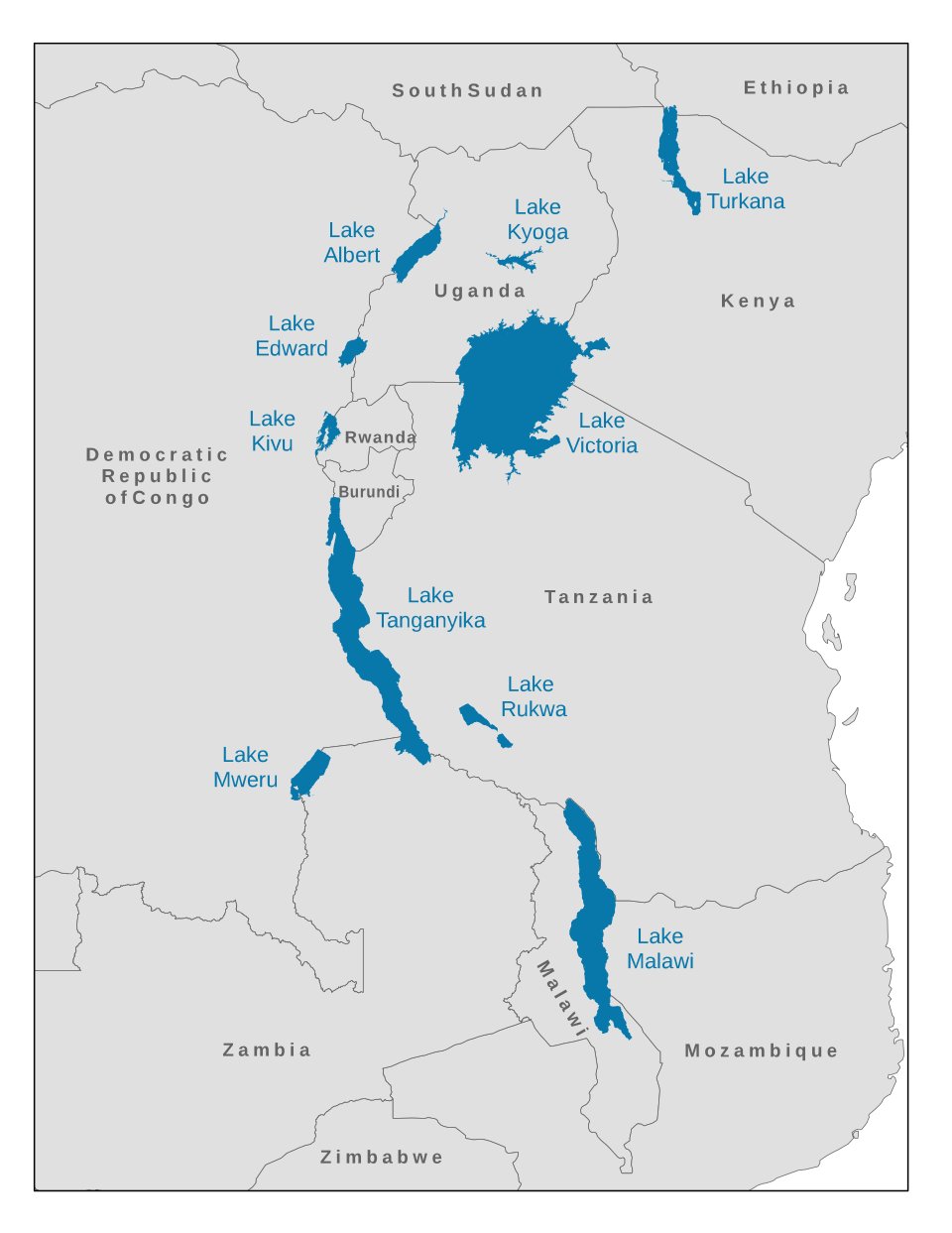
The Malawi Eye-Biter is found throughout Lake Malawi in East Africa. Unlike rock-dwelling mbuna or open-water utaka, D. Compressiceps is most closely associated with Vallisneria beds and other aquatic vegetation in shallow to moderate depth water. This vegetated habitat is directly tied to its hunting strategy. The compressed body shape allows it to slip between plant stems virtually undetected, positioning itself for ambush strikes on passing small fish.
The species name “compressiceps” refers to the laterally compressed body and head, which is the most immediately obvious feature of this fish. This compressed profile reduces the fish’s visible silhouette when viewed head-on, giving prey less warning before the strike.
Despite the “Eye-Biter” common name, research has shown that D. Compressiceps is actually a generalist predator that feeds primarily on small fish, including juvenile utaka and other shoaling species. The eye-biting behavior, while documented, is not its primary feeding strategy. It’s more of a territorial behavior between similarly sized rivals.
Appearance & Identification
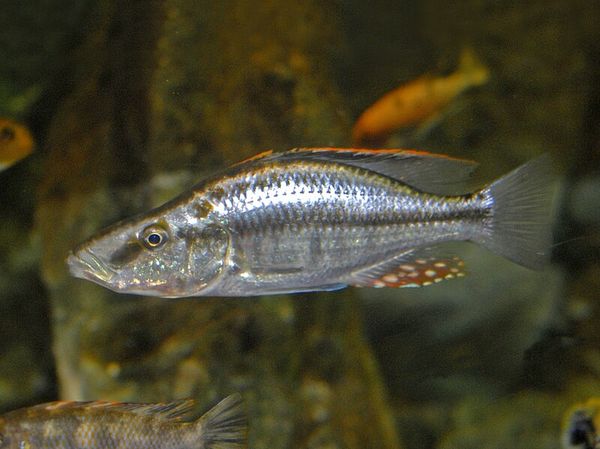
The most distinctive feature of the Malawi Eye-Biter is its body shape. Dramatically compressed from side to side, creating a narrow, knife-like profile that’s immediately recognizable. The head is large with a pronounced, slightly upturned mouth designed for striking at prey from a concealed position.
Males in breeding condition develop a breathtaking metallic blue-green coloration across the body, often with red-orange edging on the dorsal and anal fins. The color is intense and iridescent, shifting depending on the angle of light. Females and juveniles are silvery with a prominent dark lateral stripe that aids camouflage among vegetation.
An albino form also exists in the hobby and is popular with some keepers for its unique pale orange-pink appearance, though the wild-type coloration is far more striking on the males.
Male vs. Female
Mature males and females are easy to tell apart thanks to the dramatic color difference. Juveniles are more challenging. Look for subtle size differences and early hints of coloring.
| Feature | Male | Female |
|---|---|---|
| Body Color | Intense metallic blue-green with red-orange fin edging | Silver with dark lateral stripe |
| Size | 8. 10 inches (20. 25 cm) | 6. 8 inches (15. 20 cm) |
| Fins | Extended, colorful dorsal and anal fins | Shorter, less ornate fins |
| Egg Spots | Present on anal fin | Absent or very faint |
| Body Shape | Deeper body, more pronounced compression | Slightly less deep-bodied |
Average Size & Lifespan
Males reach 8. 10 inches (20. 25 cm) in captivity, with females somewhat smaller at 6. 8 inches (15. 20 cm). The compressed body shape means they don’t carry as much mass as other Haps of similar length, but they’re still substantial fish that command a big tank.
The Malawi Eye-Biter is one of the longer-lived Malawi cichlids. With proper care, 10. 14 years is achievable. That’s a real commitment. Make sure you’re ready for a decade-plus relationship before bringing one home.
Care Guide
Tank Size
A 125-gallon (473-liter) tank is the starting point for Malawi Eye-Biters. A 6-foot tank length is strongly recommended. These are powerful swimmers that need long sightlines and room to maneuver. Shorter tanks create stress because the fish can’t build up momentum before hitting a wall, and startled Eye-Biters can sprint fast enough to injure themselves on tank glass.
If you’re keeping a breeding group with other large Haps, 150+ gallons is the better target. Tank length and width matter more than height for this species.
Water Parameters
| Temperature | 76. 82°F (24. 28°C) |
| pH | 7.8. 8.6 |
| General Hardness (dGH) | 10. 20 dGH |
| Carbonate Hardness (dKH) | 10. 15 dKH |
| Ammonia | 0 ppm |
| Nitrite | 0 ppm |
| Nitrate | <20 ppm |
Standard Lake Malawi chemistry. Hard, alkaline, warm, and stable. These fish are sensitive to sudden parameter shifts, so consistency is critical. Buffer soft water appropriately and maintain a disciplined water change schedule. Weekly changes of 30. 50% keep water quality where it needs to be.
Filtration & Water Flow
Heavy-duty filtration is essential for a fish this size. A large canister filter or sump rated for at least 2x your tank volume keeps water quality in check. Eye-Biters are messy eaters that can foul the water quickly after feeding on meaty foods.
Keep water flow gentle to moderate. These fish come from calmer vegetated areas, not fast-flowing currents. Position filter outputs to create good circulation without creating a current that the fish has to fight against.
Lighting
Moderate lighting is best. The natural habitat of D. Compressiceps includes vegetated areas with dappled light, so extremely bright lighting can stress them. Standard LED lighting at moderate intensity showcases their metallic coloration nicely while keeping them comfortable. Maintain an 8. 10 hour photoperiod.
Plants & Decorations
This is one of the few Malawi Haps that actually benefits from live plants in the aquarium. Dense plantings of Vallisneria replicate their natural habitat and provide the vegetated cover they use for hunting. Create rock “islands” scattered throughout the tank to break up sightlines and reduce aggression, but leave plenty of open water between them.
Long sightlines are important. Avoid cluttering the tank so densely that the fish can’t see from one end to the other. When startled, Eye-Biters can sprint suddenly, and obstacles in the way lead to collisions and injuries.
Substrate
Fine sand is the preferred substrate. It accommodates Vallisneria planting, allows for natural digging behavior, and provides a natural appearance. Aragonite sand or pool filter sand both work well.
Is the Malawi Eye-Biter Right for You?
The Malawi Eye-Biter has one of the most intimidating names in the hobby. The reality is more nuanced. Here is whether this unique predator belongs in your tank.
- Great fit if you want a large, laterally compressed predator with genuinely unique body shape and hunting behavior
- Great fit if you have a 125 gallon or larger tank dedicated to large haps
- Great fit if you appreciate predatory species and understand how to manage them responsibly
- Not ideal if you keep any fish under 4 inches. They will become meals, not tankmates
- Not ideal if your tank is under 125 gallons. Cramped quarters bring out the worst in this species
- Not ideal if you are uncomfortable managing a predator. Eye-Biters require experience and attention
- Not ideal if you want a peaceful community. Even in a proper setup, Eye-Biters add tension to a tank
Malawi Eye-Biters are not for everyone, and they should not be. But for experienced keepers with large tanks and an appreciation for predatory species, they offer a keeping experience that few other freshwater fish can match.
Tank Mates
Best Tank Mates
The golden rule with Eye-Biters is simple. Tank mates must be too large to fit in their mouth. A good benchmark is keeping only fish that are at least 6 inches in length. Similarly tempered large Haps are the best companions:
- Blue Dolphin (Cyrtocara moorii). Peaceful sand sifter, different feeding niche, appropriately sized
- Red Empress (Protomelas taeniolatus). Robust enough to hold its own without provoking aggression
- Venustus (Nimbochromis venustus). Similar size and predatory temperament
- Livingstonii (Nimbochromis livingstonii). Compatible large predatory Hap
- Red Kadango (Copadichromis borleyi). Works if fully grown and the tank is large enough for both
- Large Synodontis catfish. Bottom dwellers that stay out of the conflict zone
Tank Mates to Avoid
- All mbuna. Too small and too aggressive; most mbuna will be eaten or will stress the Eye-Biter with constant harassment
- Small Peacocks. Anything under 5 inches is at serious risk of being eaten
- Small or slender fish. The Eye-Biter’s compressed body and large mouth can engulf surprisingly large prey
- Ornamental livebearers. Obviously too small; guaranteed predation
- Juvenile fish of any species. Grow tank mates to adult size before introducing them to an Eye-Biter tank
Food & Diet
The Malawi Eye-Biter is a dedicated piscivore in the wild, but it adapts readily to dead and prepared foods in captivity. Which is exactly what you should feed. High-quality carnivore pellets make a solid staple, supplemented with frozen foods like prawns, mysis shrimp, krill, chopped lancefish, mussel, and cockle.
Feed 1. 2 meals per day for adults, with each feeding being an amount they can finish in a few minutes. These are fish that will gorge if given the chance, so measured portions are important for preventing bloat and maintaining water quality.
Skip the live feeder fish. They carry parasites and diseases that aren’t worth the risk. Quality frozen and prepared foods provide superior nutrition without the health concerns. Avoid bloodworms and mammalian meat products entirely.
Breeding & Reproduction
Malawi Eye-Biters are polygamous maternal mouthbrooders. Breeding in captivity is possible but requires a dedicated setup and careful management of the breeding group.
Spawning Behavior
Maintain a harem of 1 male to 3. 6 females. Males can be hard on individual females, so having more females distributes his attention. The breeding tank should be at least 5 feet long with flat rocks for potential spawning sites and areas of Vallisneria for cover.
When ready to spawn, the male intensifies his coloration and selects a spawning site. A flat rock surface or a cleared depression in the substrate. He displays with full color to attract the female. Spawning follows the standard egg-spot pattern. The female lays eggs, picks them up, and is attracted to the male’s anal fin spots to collect milt for fertilization.
Mouthbrooding & Fry Care
Females carry a brood of 40. 100+ eggs for approximately 3 weeks. During incubation, the female won’t eat and her buccal cavity will be visibly swollen. Eye-Biter females are notorious for spitting out the brood early when stressed, so handle holding females with extreme care if you need to move them.
Ideal breeding conditions are pH 8.0. 8.5 with temperatures between 77. 81°F (25. 27°C). Once released, the fry are large enough to eat baby brine shrimp and finely crushed dry food immediately. Raise them separately from adults. Fry will be consumed quickly in the main tank.
Common Health Issues
Malawi Bloat
Even dedicated carnivores like the Eye-Biter are susceptible to Malawi Bloat. Stress, poor water quality, and overfeeding are the primary triggers. Watch for abdominal swelling, white stringy feces, appetite loss, and labored breathing. This disease kills fast. Often within 24. 72 hours. So act immediately if you see symptoms.
Prevention comes down to water quality and portion control. Maintain pristine conditions, feed measured amounts, and avoid low-quality foods with excessive fillers. Treat with Metronidazole at the first sign of trouble.
Ich (White Spot Disease)
Ich can appear after stressful events or temperature fluctuations. White spots on fins and body are unmistakable. Raise temperature gradually to 82°F (28°C) and treat with ich medication. Eye-Biters are robust fish that respond well to prompt treatment.
Injury from Panic Sprints
Eye-Biters spook easily and can sprint at impressive speed when startled. In tanks that are too short or cluttered with obstacles, these sudden bursts can result in collisions with glass or decor, causing snout injuries, scale damage, or worse. Keep long sightlines clear, avoid tapping on the glass, and don’t make sudden movements around the tank.
Common Mistakes to Avoid
- Keeping with small fish. Anything that fits in the Eye-Biter’s mouth becomes food; keep only large tank mates 6+ inches in length
- Undersized tank. A 55 or 75-gallon tank is far too small for this species; 125 gallons minimum with a 6-foot length
- Too many obstacles. Cluttered tanks lead to panic injuries; keep sightlines clear with open swimming lanes
- Startling the fish. These fish spook easily; avoid tapping glass, sudden movements, and abrupt lighting changes
- Feeding live feeder fish. Parasites and diseases aren’t worth the risk; quality frozen and prepared foods are superior
- Too few females in the breeding group. Males can be rough on females; keep at least 3 females per male to distribute aggression
Where to Buy
Malawi Eye-Biters are available in the specialty cichlid market, though they’re not as commonly stocked as entry-level Haps like the Electric Blue. Expect to pay $10. $20 for juveniles. The albino form may command a premium. For healthy, well-bred specimens, try these reputable online sources:
- Flip Aquatics. Quality African cichlids including predatory Hap species
- Dan’s Fish. Carries Eye-Biters and other large Malawi Haps
Buy a group of 6+ juveniles to grow out and establish a proper harem. Remove extra males as they mature and begin showing color. Given their long lifespan and space requirements, make sure you’re committed before purchasing.
FAQ
Do Malawi Eye-Biters actually bite eyes?
The name is somewhat misleading. While eye-biting behavior has been documented between territorial rivals, D. Compressiceps is primarily a generalist fish predator in the wild, feeding on small juvenile cichlids and other shoaling fish. In the home aquarium, eye-biting is extremely rare when tank mates are appropriately sized. The behavior occurs more in crowded conditions with similarly sized rivals.
How big do Malawi Eye-Biters get?
Males reach 8. 10 inches (20. 25 cm) in captivity, with females slightly smaller. Despite their impressive length, the extremely compressed body means they carry less mass than other Haps of similar size. Still, they need a big tank. 125 gallons minimum with a 6-foot length.
Are Malawi Eye-Biters aggressive?
They’re predatory rather than aggressive in the mbuna sense. They won’t chase and harass tank mates. They’ll simply eat ones that are small enough. With appropriately sized companions, they’re actually quite manageable. Males is aggressive toward females during breeding, which is why a harem of 3. 6 females is recommended.
Can I keep an Eye-Biter with Peacock cichlids?
Only if the Peacocks are fully grown adults. Even then, exercise caution. The Eye-Biter’s large mouth can handle surprisingly large prey due to its compressed profile. Adult male Peacocks at 5+ inches are safe, but smaller individuals or females is at risk. Monitor carefully.
Why does my Eye-Biter lie on its side?
Don’t panic. This is actually natural behavior. D. Compressiceps sometimes rests or lurks on its side, particularly near vegetation or on sandy substrate. This is related to their natural ambush hunting instinct. However, if the fish appears lethargic, has clamped fins, or shows other signs of illness, that’s a different story. Check water parameters immediately.
How long do Eye-Biters live?
With proper care, 10. 14 years is typical. This is one of the longer-lived Malawi cichlids, making it a significant long-term commitment. Consistent water quality, proper diet, and appropriate tank size are the keys to longevity.
What It Is Actually Like Living With Malawi Eye-Biter
This is the part no other care guide gives you. Forget water parameters for a minute. Here is what it is actually like to share your tank with this species.
They have more personality than you expect. The Malawi Eye-Biter is not a fish that just sits in the background. Once settled in, they become interactive, curious, and responsive to your presence.
Feeding time reveals their character. Watch how the Malawi Eye-Biter approaches food and you will see real personality. Some are bold, some are cautious, and their feeding behavior tells you a lot about their mood and health.
They establish routines. After a few weeks, your Malawi Eye-Biter will have favorite spots, preferred paths through the tank, and predictable patterns. Learning these routines makes you a better keeper.
Color is a health indicator. The Malawi Eye-Biter’s coloration is a real-time report card on your husbandry. Vibrant color means happy fish. Faded color means something is wrong. Pay attention.
How the Malawi Eye-Biter Compares to Similar Species
Choosing the right Malawi cichlid means understanding how similar species compare. Here is how the Malawi Eye-Biter stacks up against species you might also be considering.
Malawi Eye-Biter vs. Livingstonii Cichlid
Both Eye-Biters and Livingstonii are large predatory haps with intimidating reputations. The key difference is aggression. Eye-Biters are more actively predatory, while Livingstonii rely on ambush tactics and are calmer in community settings. If you want a predatory hap but prefer a more manageable temperament, the Livingstonii is the safer option. Eye-Biters are for keepers who want the full predator experience. You can learn more in our Livingstonii Cichlid Care Guide.
Malawi Eye-Biter vs. Malawi Hawk
The Malawi Hawk and Eye-Biter are both apex predators in Lake Malawi, but their hunting styles differ dramatically. The Hawk dives from above like a bird of prey, while the Eye-Biter attacks from the side with its compressed body. Both need 125 gallon or larger tanks and should only be kept by experienced hobbyists. Keeping them together requires a very large tank (200 gallons plus) and careful monitoring. You can learn more in our Malawi Hawk Care Guide.
Closing Thoughts
The Malawi Eye-Biter is a fish for the cichlid enthusiast who wants something genuinely different. That compressed body, the ambush hunting instinct, the metallic blue-green coloration. Nothing else in Lake Malawi looks or behaves quite like D. Compressiceps. It’s a predator with real presence and personality.
The commitment is significant. Big tank, large tank mates only, careful handling to avoid spooking, and over a decade of dedicated care. But if you’re ready for that, the Malawi Eye-Biter rewards you with one of the most unique and visually stunning fish in the freshwater hobby.
This article is part of our Lake Malawi Cichlid Species Directory: Complete A-Z Care Guide List. Visit the hub page to explore care guides for all 28 Lake Malawi cichlid species we cover.
Recommended Video
References
- Seriously Fish. (n.d.). Dimidiochromis compressiceps. https://www.seriouslyfish.com/species/dimidiochromis-compressiceps/
- FishBase. (n.d.). Dimidiochromis compressiceps. https://www.fishbase.se/summary/Dimidiochromis-compressiceps.html
- The Aquarium Wiki. (n.d.). Dimidiochromis compressiceps. https://www.theaquariumwiki.com/wiki/Dimidiochromis_compressiceps
- Practical Fishkeeping. (n.d.). Malawi Eye-Biter profile. https://www.practicalfishkeeping.co.uk
- About the Author
- Latest Posts

I’m Mark Valderrama, founder of Aquarium Store Depot and a fishkeeper with over 25 years of hands-on experience. I started in the hobby at age 11, worked at local fish stores, and have kept freshwater tanks, ponds, and reef tanks ever since. I’ve been featured in two best-selling aquarium books on Amazon and built this site to share practical, experience-based fish keeping knowledge.
Leave a Reply