Last Updated: June 25, 2026
Thank you for visiting! By the way… any links on this page that lead to products on Amazon and other stores/partners are affiliate links Aquarium Store Depot earns a commission if you make a purchase.
Table of Contents
- What Most Care Guides Get Wrong
- The Reality of Keeping Long-finned African Tetra
- Key Takeaways
- Species Overview
- Classification
- Origin & Natural Habitat
- Appearance & Identification
- Average Size & Lifespan
- Care Guide
- Is This Fish Right for You?
- What People Get Wrong
- Tank Mates
- Food & Diet
- Breeding & Reproduction
- Common Health Issues
- Common Mistakes to Avoid
- Where to Buy
- Frequently Asked Questions
- What It Is Actually Like Living With Long-finned African Tetra
- How It Compares to Similar Species
- Closing Thoughts
- Recommended Video
- References
The long-finned African tetra is a larger schooling fish that needs space and current. Males develop dramatic fin extensions that only show in tanks with proper flow and enough room to display. Cram them into a small tank and those fins never develop. This species rewards the keeper who provides room to grow.
Long-finned African tetras in a small tank never develop their signature fins. Space is not optional.
The Reality of Keeping Long-finned African Tetra
Group size is not a suggestion. The minimum school size for long-finned african tetra is not just a guideline. In small groups, these fish lose color, become stressed, and display abnormal behavior. A proper group of 6 to 8+ is where you start to see natural schooling behavior, full color expression, and the confidence that makes them worth keeping.
Tank mate selection requires thought. The long-finned african tetra is not aggressive in the traditional sense, but it is assertive enough to cause problems with the wrong companions. Slow-moving, long-finned species are targets. Fast, short-finned fish of similar size are fine. Plan your community around this reality.
Hardy does not mean indestructible. The long-finned african tetra tolerates a range of conditions, but it still needs basic care. Ammonia spikes, dramatic temperature swings, and neglected water changes will catch up to even the toughest species. The difference is margin of error, not immunity.
Store appearance is not home appearance. Fish in store tanks are stressed, crowded, and under inappropriate lighting. The long-finned african tetra almost always looks better in a properly set up home aquarium than it does at the store. Dark substrate, live plants, and appropriate lighting bring out colors and behaviors you will never see in a retail environment.
Biggest Mistake New Owners Make
Adding them to a peaceful community tank without researching compatibility. The nipping and chasing will stress your existing fish, and by the time you realize the problem, fin damage is already done.
The long-finned African tetra is one of those fish that rarely gets the attention it deserves. In a large school in a planted African biotope setup, the combination of the extended fins on males and the schooling behavior creates a distinctive visual that stands apart from the typical New World tetra community tank. If you want something different from your usual tetras, this is worth tracking down.
Key Takeaways
- Males develop spectacular elongated dorsal fins that make this species a showstopper
- Larger tetra species (up to 5 inches) that needs at least a 40-gallon tank
- Hardy and adaptable to a range of water conditions
- Active schooling fish that does best in groups of 6 or more
- Easy to breed compared to many other tetra species
Species Overview
| Field | Details |
|---|---|
| Scientific Name | Brycinus longipinnis |
| Common Names | Long-finned African Tetra, Longfin Tetra, Long-finned Characin |
| Family | Alestidae |
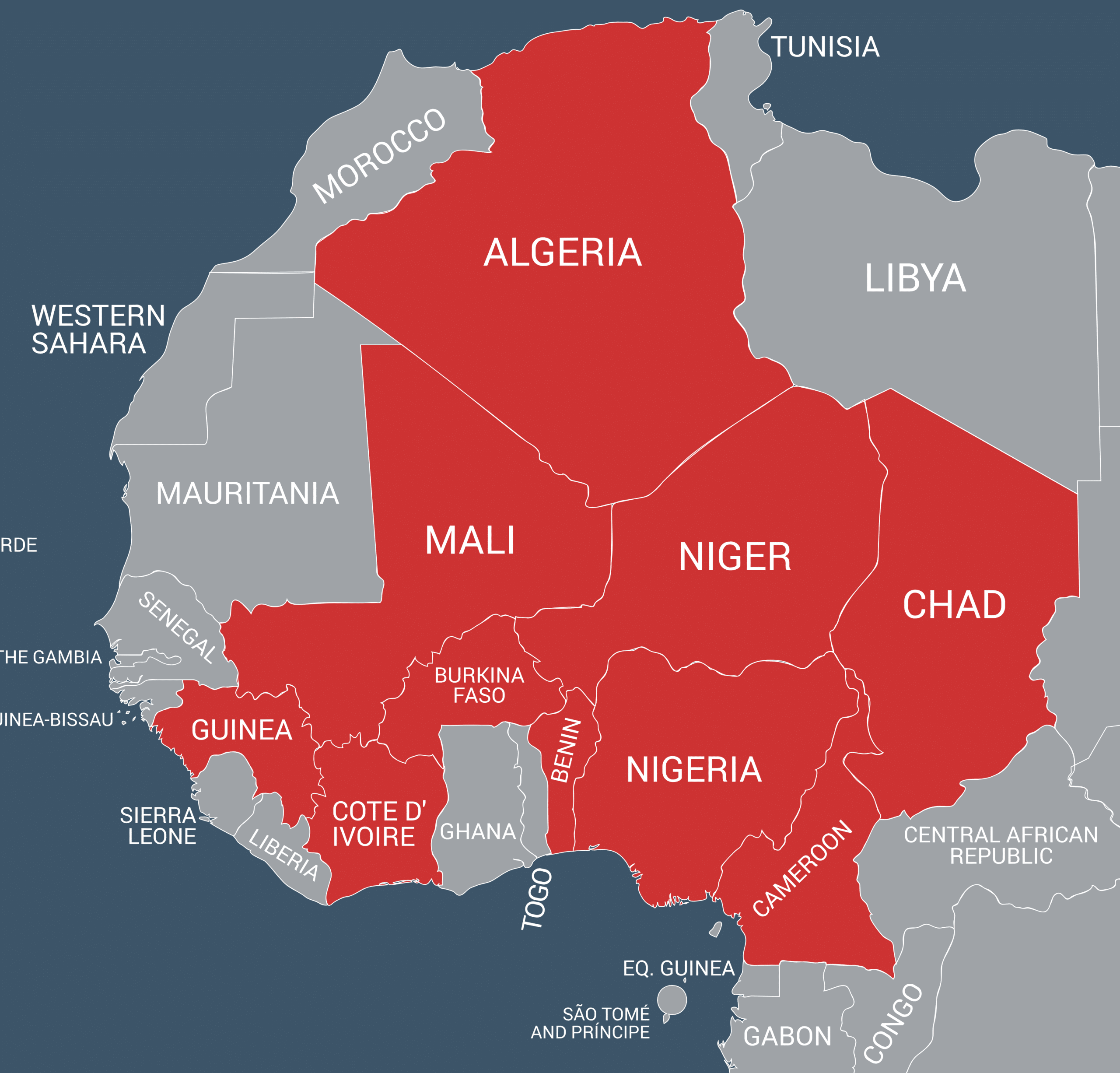
| Origin | West Africa (Sierra Leone to Nigeria) |
| Care Level | Easy |
| Temperament | Peaceful, active |
| Diet | Omnivore |
| Tank Level | Mid to Top |
| Maximum Size | 5 inches (13 cm) |
| Minimum Tank Size | 40 gallons (150 liters) |
| Temperature | 72-79°F (22-26°C) |
| pH | 6.0-7.5 |
| Hardness | 4-18 dGH |
| Lifespan | 5-8 years in captivity |
| Breeding | Egg scatterer |
| Breeding Difficulty | Easy |
| Compatibility | Community (with similarly sized fish) |
| OK for Planted Tanks? | Yes (may uproot delicate plants) |
Classification
| Taxonomic Level | Classification |
|---|---|
| Order | Characiformes |
| Family | Alestidae |
| Genus | Brycinus |
| Species | B. Longipinnis (Günther, 1864) |
Long-finned African tetras need appropriate group size and tank mates to show their best behavior. They are less commonly kept than South American tetras and require some research to source and set up correctly.
This species was originally described by Albert Günther in 1864. It has been placed in several genera over the years, including Alestes and Brycinus, and you may still see it listed under either name in older references. The current accepted placement is Brycinus longipinnis.
Note on family placement: The long-finned African tetra belongs to Alestidae, the African tetra family. This family is entirely separate from Characidae and was not affected by the 2024 Melo et al. Phylogenomic revision.
Origin & Natural Habitat
The long-finned African tetra has a broad range across West Africa, from Sierra Leone and Guinea in the west through Liberia, Ivory Coast, Ghana, Togo, and Benin to Nigeria in the east. It’s found in the Niger River basin and numerous smaller coastal drainages throughout this range.
In the wild, these fish inhabit rivers, streams, and flooded forest zones with varying water conditions. They’re adaptable to both clear and slightly turbid water and is found in a range of habitats from fast-flowing streams to quiet pools. This broad habitat tolerance is reflected in their adaptability in aquarium conditions.
They’re typically found in groups in mid-water, feeding on insects, small invertebrates, and plant matter that falls into the water. Their natural diet reflects their opportunistic omnivore nature.
Appearance & Identification
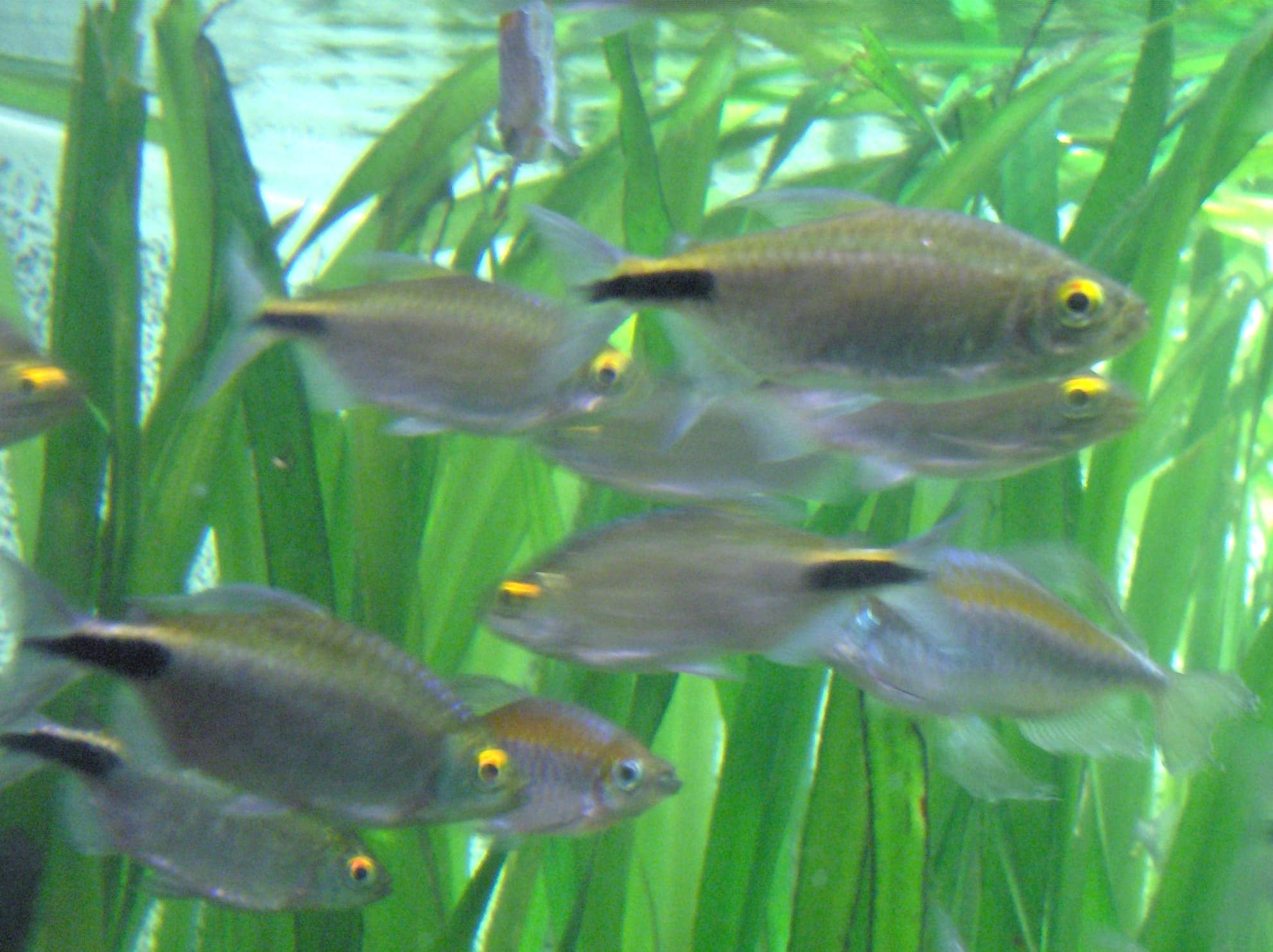
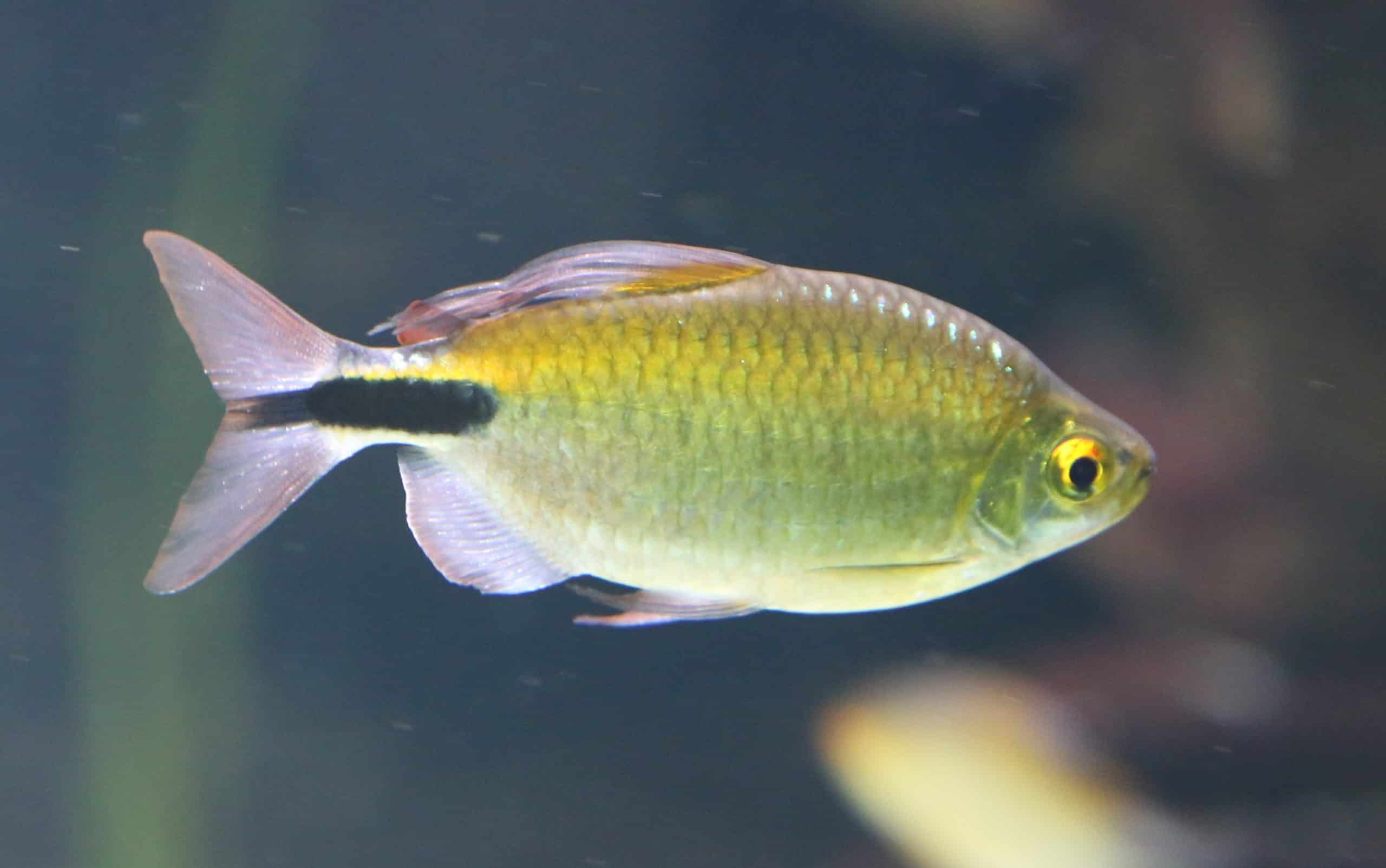
The long-finned African tetra is a moderately large, streamlined fish with a silvery body that picks up golden and greenish iridescent highlights depending on the lighting. The scales are well defined and reflective, giving the fish a polished, metallic appearance.
The defining feature is the dramatically elongated dorsal fin in mature males. This fin extends well beyond the body, creating an impressive trailing banner that flows behind the fish as it swims. The dorsal fin filaments can reach remarkable lengths in well-kept specimens. The effect is striking and gives this species a distinctly different look from any South American tetra.
Sexual dimorphism is very pronounced. Males are more colorful with the elongated dorsal fin and often show more vivid iridescence. Females are slightly larger and fuller-bodied but lack the extended dorsal fin, having a normally proportioned fin instead. Juveniles of both sexes look similar until they begin to mature.
Average Size & Lifespan
This is a substantial tetra species, reaching up to 5 inches (13 cm) in total length. Most individuals in aquariums reach 3.5 to 4.5 inches. Their size, combined with the flowing dorsal fin of males, gives them a commanding presence in the tank.
With good care, expect a lifespan of 5 to 8 years. Their hardiness and adaptability mean they’re easy to keep healthy over the long term.
Care Guide
Tank Size
A 40-gallon tank is the minimum for a small group of long-finned African tetras. For a proper school of 8 or more with other community fish, a 55-gallon or larger is recommended. These are active, mid-sized fish that need swimming room, and the elongated dorsal fins of males need space to display without being damaged.
Water Parameters
| Parameter | Ideal Range |
|---|---|
| Temperature | 72-79°F (22-26°C) |
| pH | 6.0-7.5 |
| General Hardness | 4-18 dGH |
| KH | 3-10 dKH |
| Ammonia / Nitrite | 0 ppm |
| Nitrate | Below 25 ppm |
Long-finned African tetras are quite adaptable when it comes to water chemistry. They do well in slightly acidic to neutral water and can handle moderate hardness without issue. This makes them easier to keep than many specialty tetras that demand very specific conditions.
Note the slightly cooler temperature preference compared to many tropical fish. They do well in the low to mid 70s and don’t need water as warm as many South American tetras. Regular water changes of 25 to 30 percent weekly keep the water fresh and parameters stable.
Tank Setup
An open layout with plenty of swimming space works best for these active fish. Plant the sides and back of the tank, leaving the center open for the school to move freely. Robust plants like Java fern, Anubias, and Vallisneria are good choices, as these fish is a bit rough on delicate plantings.
Moderate current from the filter is appreciated, as these fish come from riverine environments. A sandy or fine gravel substrate works well. Driftwood and smooth rocks provide visual interest and some territorial boundaries.
A tight-fitting lid is essential. Long-finned African tetras are capable jumpers and will find any gap in the tank cover.
Is the Long-finned African Tetra Right for You?
The long-finned African tetra is a rewarding species for hobbyists looking beyond the usual South American options. Here’s who they suit best:
- You want an African characin that stays smaller than Congo tetras
- You appreciate flowing fins and subtle iridescent coloring
- You’re prepared for some male-on-male sparring. It’s normal and rarely causes harm
- You have a 30-gallon or larger tank with dim lighting and floating plants
- You want something genuinely different from the South American tetra norm
- Skip these if you want a perfectly peaceful species. Males can be pushy during breeding condition
What People Get Wrong
The biggest issue is availability and sourcing. Long-finned African tetras are not a staple in general pet stores. Most hobbyists source them from specialist importers or online retailers. If you find them, they are worth buying when available, as stock comes and goes unpredictably.
Second mistake: mixing them with fin-nippers. The elongated fins on male long-finned African tetras are a target. Tiger barbs, serpae tetras, and similar species will damage those fins within days. Choose peaceful tank mates of similar size, ideally other African species for a biotope setup.
Third: keeping too few. In small groups, male long-finned African tetras compete aggressively with each other, which ironically increases fin damage within the school. A group of 10 or more distributes social pressure, reduces individual targeting, and produces the coordinated schooling behavior that makes this fish impressive to watch.
Tank Mates
Long-finned African tetras are peaceful community fish that work well with similarly sized, active species. Their size means they should be kept with fish large enough not to be intimidated or outcompeted at feeding time.
Good Tank Mates
- Congo tetras and other African tetras
- Larger South American tetras (black skirt, Buenos Aires, bloodfin)
- Rainbowfish
- Corydoras catfish
- Bristlenose and rubber lip plecos
- Peaceful cichlids (kribensis, rams)
- Gouramis (pearl, blue, moonlight)
- Medium-sized barbs (cherry, gold, rosy)
Tank Mates to Avoid
- Very small fish that is intimidated (neons, embers)
- Aggressive cichlids that may damage the elongated dorsal fins
- Fin nippers (tiger barbs) that would target the trailing fin
- Slow, long-finned species (bettas, fancy guppies)
Food & Diet
Long-finned African tetras are enthusiastic omnivores that accept virtually any aquarium food. They have good appetites and are eager feeders.
- Staple: High-quality flake food or pellets
- Frozen foods: Bloodworms, brine shrimp, daphnia, mysis shrimp
- Live foods: Brine shrimp, daphnia, blackworms, small insects
- Vegetable matter: Spirulina flakes, blanched vegetables
A varied diet that includes both meaty and plant-based foods promotes the best coloration and fin development. Live and frozen foods help bring out the metallic iridescence. Feed two to three times daily in amounts the school can finish within a couple of minutes.
Breeding & Reproduction
Long-finned African tetras are among the easier tetra species to breed in captivity. They’re prolific spawners under the right conditions.
Breeding Setup
- Breeding tank: 20 to 30 gallons
- Water: Slightly acidic (pH 6.0-6.5), soft to moderately soft, temperature 77-79°F
- Decor: Fine-leaved plants or spawning mops, mesh bottom to protect eggs
- Filtration: Gentle sponge filter
- Lighting: Subdued, morning light can trigger spawning
Condition breeding groups with rich live and frozen foods for 1 to 2 weeks. Males display their elongated dorsal fins prominently during courtship. Spawning typically occurs in the morning, with the pair scattering eggs among plants. A single spawning can produce several hundred eggs.
Remove adults after spawning, as they will consume eggs readily. Eggs hatch in 24 to 36 hours, and fry become free-swimming within 4 to 5 days. Feed fry infusoria initially, then baby brine shrimp. Growth is reasonably fast, and young males begin showing the elongated dorsal fin at around 3 to 4 months of age.
Common Health Issues
- Fin damage: The elongated dorsal fin of males can be damaged by aggressive tank mates or sharp decorations. Damaged fins usually regrow if the fish is otherwise healthy and water quality is good.
- Ich: Can occur during acclimation or temperature swings, though this species is resistant.
- Jumping injuries: These are active jumpers. A tight-fitting lid prevents escape and injury.
- Obesity: Their hearty appetites make overfeeding easy. Monitor body condition and adjust portions accordingly.
Common Mistakes to Avoid
- Tank too small: Their size and activity level demand a 40-gallon minimum. Cramped quarters lead to stunted growth and fin damage.
- No lid: These fish jump. An unsecured tank will lose fish.
- Keeping with fin nippers: The elongated dorsal fin is an irresistible target for species like tiger barbs. Choose tank mates carefully.
- Not enough school size: Males display their best fin development and coloration when competing with other males. Keep at least 6, with a ratio of 2 to 3 females per male.
- Expecting warm water fish: They prefer slightly cooler temperatures (72-79°F) than many tropical species. Don’t overheat the tank.
Where to Buy
Long-finned African tetras are occasionally available through specialty fish retailers and online sellers. They may be listed under the names longfin tetra, long-finned characin, or Brycinus longipinnis. Check these trusted sources:
Frequently Asked Questions
How big do long-finned African tetras get?
They can reach up to 5 inches (13 cm), though most individuals in aquariums top out at 3.5 to 4.5 inches. Their size, combined with the flowing dorsal fin of males, makes them one of the larger tetra species commonly kept in home aquariums.
Do all long-finned African tetras have the long dorsal fin?
No, only mature males develop the dramatically elongated dorsal fin. Females have a normally proportioned dorsal fin. Juvenile males also start with regular-looking fins and develop the extension as they mature, usually becoming noticeable around 3 to 4 months of age.
Can long-finned African tetras live with Congo tetras?
Yes, this is actually an excellent pairing. Both species are African tetras from the Alestidae family with similar care requirements and temperaments. They make for a stunning West African biotope display when kept together in a large enough tank (55 gallons or more for both species).
What It Is Actually Like Living With Long-finned African Tetra
In a proper school, long-finned african tetra display natural movement patterns that are genuinely engaging to watch. The fish interact with each other, establish subtle hierarchies, and move through the tank with purpose.
They occupy the middle water column during active hours, creating movement and visual interest in the zone where most fishkeepers want action.
Feeding time is when their personality comes out. They learn your routine quickly and will anticipate feeding before you even open the lid.
Their color and behavior improve over time as they settle into a stable environment. Fish that have been in the same tank for months look noticeably better than recently added stock.
They coexist peacefully with virtually every other appropriately-sized community fish. This compatibility makes tank planning straightforward.
How the Long-finned African Tetra Compares to Similar Species
Long-finned African Tetra vs. Yellow Congo Tetra
Yellow Congo tetras are the bigger, flashier African option. They grow larger, show more intense color, and need bigger tanks. Long-finned African tetras are the more practical choice for 30-gallon setups. They deliver that African tetra aesthetic in a more manageable size. Both species is assertive, but yellow Congos need more space to spread that energy. If you’re choosing between the two, tank size is your deciding factor. Check out our Yellow Congo Tetra care guide for more details.
Long-finned African Tetra vs. Emperor Tetra
Emperor tetras are a South American species but share the long-finned African tetra’s elegant, flowing fin aesthetic. Emperors are more widely available and generally more peaceful, making them the easier community choice. Long-finned African tetras offer something different with their African origin and slightly more assertive personality. For a hobbyist who already has emperor tetras and wants variety, the long-finned African tetra is a natural next step. Check out our Emperor Tetra care guide for more details.
Closing Thoughts
The long-finned African tetra is one of those species that deserves more attention than it gets. A group of mature males with their dorsal fins streaming behind them as they swim through a planted tank is a sight that rivals anything in the South American tetra world. And unlike many flashy fish, they’re genuinely easy to care for.
If you have a 40-gallon or larger tank and you’re looking for something different from the usual neon and cardinal tetra crowd, the long-finned African tetra is an outstanding choice. Hardy, beautiful, easy to breed, and just different enough to stand out. That combination is hard to find in the hobby.
Recommended Video
Check out our Tetra Tier List video where we rank popular tetra species for the home aquarium:
References
- Froese, R. And D. Pauly, Eds. FishBase. Brycinus longipinnis. Accessed 2025.
- SeriouslyFish. Brycinus longipinnis species profile. Accessed 2025.
- About the Author
- Latest Posts

I’m Mark Valderrama, founder of Aquarium Store Depot and a fishkeeper with over 25 years of hands-on experience. I started in the hobby at age 11, worked at local fish stores, and have kept freshwater tanks, ponds, and reef tanks ever since. I’ve been featured in two best-selling aquarium books on Amazon and built this site to share practical, experience-based fish keeping knowledge.
Leave a Reply