
Last Updated: June 25, 2026
Thank you for visiting! By the way… any links on this page that lead to products on Amazon and other stores/partners are affiliate links Aquarium Store Depot earns a commission if you make a purchase.
Table of Contents
- What Most Care Guides Get Wrong
- The Reality of Keeping Saulosi Cichlid
- Key Takeaways
- Species Overview
- Classification
- Origin & Natural Habitat
- Appearance & Identification
- Average Size & Lifespan
- Care Guide
- Is This Species Right for You?
- Tank Mates
- Food & Diet
- Breeding & Reproduction
- Common Health Issues
- Common Mistakes to Avoid
- Where to Buy
- FAQ
- What It Is Actually Like Living With Saulosi Cichlid
- Species Comparison
- Closing Thoughts
Saulosi cichlids are the color changing dwarf mbuna that every African cichlid keeper should know about. Males shift from yellow to deep blue as they mature, and that transition is spectacular. But their smaller size does not mean less aggression. I have kept saulosi in mixed mbuna tanks and the males are every bit as territorial as species twice their size. The difference is they do it in a 55 gallon instead of a 75. The mbuna that gives you two fish for the price of one, yellow females and blue males in the same school.
Buy yellow fish, get blue-and-yellow fish, help save an endangered species.
What Most Care Guides Get Wrong About Saulosi Cichlid
The biggest misconception about Saulosi is that they are fragile because they are small. At 3 inches, they are compact, but they are fully capable mbuna with solid hardiness. The real care mistake is not keeping them in a large enough group. Saulosi thrive in groups of 10 or more, where females display bright yellow and males show blue barring. A group of 4 or 5 will not give you the colony dynamics or the color contrast that makes this species special. Commit to a proper colony or choose a different species.
The Reality of Keeping Saulosi Cichlid
Mbuna keeping is a different discipline from regular fishkeeping. The Saulosi Cichlid is no exception. Here is what you need to prepare for.
Hard, alkaline water is mandatory. Lake Malawi chemistry means pH between 7.8 and 8.6, high GH, and high KH. There is no faking this. If your tap water is soft and acidic, you need to buffer every water change without exception.
Overstocking is the strategy. Keeping 3 or 4 Saulosi Cichlids leads to one bully and victims. You need groups of 12 or more to spread aggression. But overstocking only works with heavy filtration and consistent water changes.
Diet is critical. Spirulina and veggie-based foods are essential. High-protein diets cause Malawi Bloat, which is often fatal.
Rockwork defines territories. Mbuna need piles of rocks with caves and passageways. Without proper rockwork, dominant fish have nowhere to establish boundaries and subordinates have nowhere to hide. Stack rocks from substrate to near the waterline.
Biggest Mistake New Saulosi Cichlid Owners Make
Understocking. Keeping a small group of Saulosi Cichlids means the dominant fish picks off the weak ones. You need a large group to distribute aggression. Twelve is the minimum for most mbuna species.
Expert Take
Start with a group of 12 or more in a 55 gallon minimum. Use aragonite or crushed coral substrate to buffer pH naturally. Feed spirulina-based food as the staple. Stack rocks to create territories. This formula works for Saulosi Cichlids and most other mbuna.
Key Takeaways
- Dramatic sexual dimorphism. Females are bright yellow; dominant males are electric blue with black bars
- Dwarf mbuna. Stays small at 3. 4 inches (7.6. 10 cm); suitable for 55-gallon tanks
- Moderate aggression. Males is territorial, but manageable with proper stocking
- Vulnerable in the wild. IUCN Red List status; found only at Taiwan Reef in Lake Malawi
- Herbivore. Vegetarian diet is essential for long-term health
- Maternal mouthbrooder. Easy to breed; typical brood size of 10. 15 fry
Species Overview
| Common Name | Saulosi Cichlid, Dwarf Mbuna |
| Scientific Name | Chindongo saulosi (formerly Pseudotropheus saulosi) |
| Care Level | Easy |
| Temperament | Moderately Aggressive |
| Max Size | 3. 4 inches (7.6. 10 cm) |
| Min Tank Size | 55 gallons (208 liters) |
| Diet | Herbivore |
| Lifespan | 5. 8 years |
| Water Temp | 76. 82°F (24. 28°C) |
| pH | 7.8. 8.6 |
| Origin | Lake Malawi, Africa (Taiwan Reef) |
Classification
| Kingdom | Animalia |
| Phylum | Chordata |
| Class | Actinopterygii |
| Order | Cichliformes |
| Family | Cichlidae |
| Genus | Chindongo |
| Species | C. Saulosi |
Origin & Natural Habitat
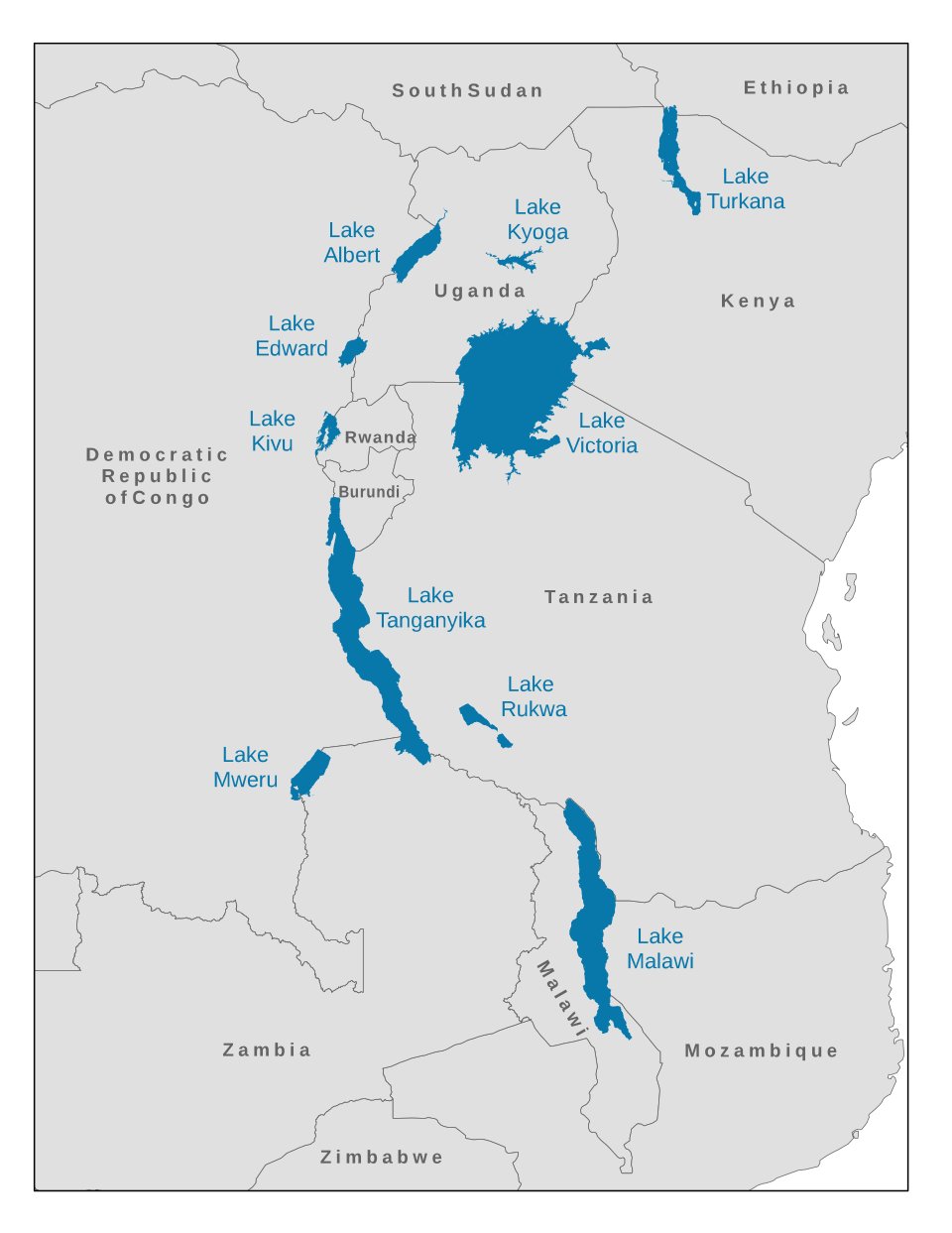
The Saulosi Cichlid is endemic to a single location in Lake Malawi. Taiwan Reef, which sits north of Chizumulu Island. This extremely limited range is why the species is listed as Vulnerable on the IUCN Red List. It’s one of the smallest natural habitats of any popular mbuna in the hobby.
At Taiwan Reef, Saulosi inhabit rocky areas where they graze on the aufwuchs. The algae-based biofilm that coats every rock surface. In the wild, you’ll see an interesting social structure: females and non-territorial males form large yellow schools of up to 50 individuals that move through the habitat together, while territorial males. Now transformed to blue. Hold individual territories among the rocks. Only males who’ve secured a good spawning site undergo the full color transformation.
The conservation story of the Saulosi is actually a positive one. The species was once considered endangered, but a collaborative effort between exporters, scientists, and importers helped reintroduce captive-bred specimens back to their natural habitat.
Appearance & Identification
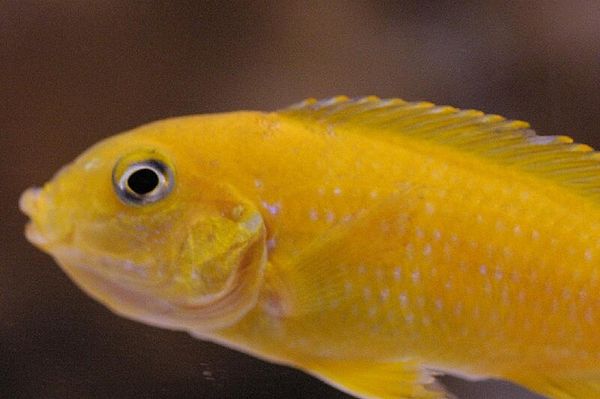
The Saulosi’s standout feature is its dramatic sexual dimorphism. All juvenile Saulosi start out as bright golden-yellow fish. An attractive color in its own right. As males mature and establish dominance, they undergo a complete color transformation, shifting to an electric blue body with prominent black vertical bars. The change is gradual but striking, and it’s fascinating to watch develop.
This dimorphism means a colony of Saulosi naturally creates a stunning visual display. Golden yellows swimming alongside barred blues, all from the same species. It’s one of the reasons this fish is so popular for species-only tanks.
Male vs. Female
Sexing adult Saulosi is straightforward once males have colored up. The challenge is with juveniles and subdominant males, which retain the yellow coloration.
| Feature | Male | Female |
|---|---|---|
| Color (Adult) | Electric blue with black vertical bars | Bright golden yellow |
| Size | Up to 4 inches (10 cm) | Up to 3.5 inches (9 cm) |
| Egg Spots | Present on anal fin | Fewer or absent |
| Body Shape | Slightly larger, more robust | Slightly smaller, rounder when gravid |
| Behavior | Territorial, displays to females | Schools with other females and juveniles |
Note that subdominant males may remain yellow and look identical to females. Only the territorial dominant male will display the full blue transformation. This means you’ll often end up with more males than you realize when buying a group of juveniles.
Average Size & Lifespan
Saulosi are one of the smaller mbuna species, reaching just 3. 4 inches (7.6. 10 cm) in captivity. Males are the larger sex, reaching about 4 inches, while females stay around 3. 3.5 inches. Their compact size makes them ideal for medium-sized tanks where larger mbuna would feel cramped.
With proper care, Saulosi can live 5. 8 years in a home aquarium. Healthy, stress-free individuals may exceed this range. Females can begin breeding at just 2 inches (5 cm), so you can expect to see reproductive behavior relatively early in their development.
Care Guide
Tank Size
A 55-gallon (208-liter) tank works for a species-only colony. Saulosi are active swimmers that enjoy having room to roam, and since they do best in larger groups, the extra space is needed. For a mixed mbuna community, 75 gallons (284 liters) or more is preferred.
One approach that works well with Saulosi is buying a large group. 15. 25 juveniles. For a species-only tank. This lets the natural social hierarchy develop and ensures you end up with a good ratio of males to females. The yellow-and-blue display of a large Saulosi colony is genuinely breathtaking.
Water Parameters
| Temperature | 76. 82°F (24. 28°C) |
| pH | 7.8. 8.6 |
| General Hardness (dGH) | 10. 20 dGH |
| Carbonate Hardness (dKH) | 10. 15 dKH |
| Ammonia | 0 ppm |
| Nitrite | 0 ppm |
| Nitrate | <20 ppm |
Standard Lake Malawi parameters. Use aragonite sand or crushed coral to maintain the alkaline pH naturally. Stability is more important than hitting exact numbers. Avoid sudden swings.
Filtration & Water Flow
A canister filter rated for your tank volume with a supplemental powerhead provides the filtration and circulation these fish need. Good oxygenation through surface agitation replicates their natural environment. Weekly water changes of 25. 30% are essential.
Lighting
Moderate LED lighting works well. Both the yellow and blue colorations really pop under good aquarium lighting. An 8. 10 hour photoperiod is ideal.
Plants & Decorations
Lots of rockwork with caves and hiding spots is essential. Males dig pits in the sand as part of their breeding behavior, so expect some landscaping. Create multiple territories with visual barriers to allow subordinate fish to stay out of the dominant male’s line of sight.
Hardy plants like Anubias and Java Fern can work if attached to rocks. Vallisneria is another option that can tolerate mbuna activity.
Substrate
Fine sand is preferred. Saulosi dig pits in the substrate as part of their breeding display. Aragonite sand provides natural pH buffering and creates a clean, natural look. Males will actively rearrange the substrate in their territory, so sand makes this natural behavior easy to accommodate.
Is the Saulosi Cichlid Right for You?
Saulosi Cichlids are the dwarf mbuna that gives you two colors in one species. Males turn blue, females stay yellow. But you need to keep a real colony to see the magic.
- Great fit if you want a single species tank that still delivers two distinct color forms
- Great fit if you have a 55 gallon or larger tank and can keep a group of 10 to 15
- Great fit if you enjoy watching natural colony behavior with breeding, color changes, and hierarchy dynamics
- Not ideal if you only want a few fish. Saulosi do not display their best behavior or color in small groups
- Not ideal if you want to mix them with more aggressive mbuna like Auratus or Kenyi. They will get overwhelmed
- Not ideal if you want instant results. Males take time to color up and the colony needs to mature
A mature Saulosi colony is one of the most visually satisfying setups in the mbuna hobby. The blue and yellow contrast in a properly stocked group is hard to beat. Just commit to the numbers.
Tank Mates
Best Tank Mates
Saulosi work well with other similarly sized, moderately aggressive mbuna. Choose species that don’t share blue or yellow coloration to minimize territorial conflicts. Good options include:
- Rusty Cichlid (Iodotropheus sprengerae). Peaceful, different color, similar size
- Red Zebra (Metriaclima estherae). Different color, compatible temperament
- Acei Cichlid (Pseudotropheus acei). Uses different tank zones
- Powder Blue Cichlid (Pseudotropheus socolofi). Mild temperament, different niche
- Synodontis catfish. Reliable bottom-dwelling companions
Tank Mates to Avoid
- Auratus (Melanochromis auratus). Far too aggressive; will bully Saulosi
- Yellow Lab (Labidochromis caeruleus). Yellow coloration overlap can trigger aggression
- Demasoni (Pseudotropheus demasoni). Blue bar pattern similarity causes conflict
- Large aggressive mbuna. Saulosi are too small and mild for the heavyweights
- Peacock cichlids. Mixed results; some keepers report success, but size difference is a concern
Food & Diet
Saulosi are true herbivores. Their wild diet consists almost entirely of the algae they graze from rocks. In captivity, a vegetarian diet keeps them healthiest. Spirulina-based flakes or pellets should be the staple, supplemented with blanched vegetables like spinach, peas, and zucchini.
Algae wafers and nori sheets on a veggie clip are excellent additions. Avoid protein-heavy foods. No bloodworms, no beef heart, and go easy on brine shrimp. The herbivorous digestive system of Saulosi makes them highly susceptible to Malawi Bloat if fed too much protein.
Feed small amounts 2. 3 times per day. Multiple small feedings better match their natural grazing behavior.
Breeding & Reproduction
Saulosi are maternal mouthbrooders that breed readily in captivity. Their prolific nature is one reason they’re so well-established in the hobby despite their vulnerable wild status.
Spawning Behavior
The dominant blue male digs a pit in the sand within his territory and courts passing yellow females. When a female is receptive, she follows him to the spawning site. She deposits eggs a few at a time, collects them in her mouth, and is then attracted to the male’s egg spots on his anal fin. As she tries to collect these false eggs, she picks up milt that fertilizes the real eggs in her mouth.
Females can breed at a surprisingly small size. As small as 2 inches (5 cm). This early maturity means you can expect breeding activity relatively soon after setting up a colony.
Mouthbrooding & Fry Care
The female holds the eggs for 12. 18 days, fasting throughout. Typical brood sizes are 10. 15 fry, though this varies with the female’s size and experience. Broods of fewer than 20 are normal for this species.
Once released, the fry are free-swimming and can take crushed spirulina flake and baby brine shrimp right away. For maximum survival, move the holding female to a grow-out tank before she releases. Use a sponge filter in the fry tank to provide gentle filtration without risk of sucking up the tiny fish.
Be aware that you’ll likely end up with more males than expected. Subdominant males remain yellow and look like females until they establish territory, so what looks like a female-heavy group may actually be fairly evenly split.
Common Health Issues
Malawi Bloat
The top health concern for all herbivorous mbuna. Malawi Bloat is triggered by stress and improper diet (especially excess protein). Symptoms include abdominal swelling, white feces, loss of appetite, and labored breathing. Fatal within 24. 72 hours if untreated. Prevention through vegetarian diet and pristine water is essential. Treat early with Metronidazole.
Ich (White Spot Disease)
Stress-related ich appears as white spots on the body and fins. Gradually raise temperature to 82°F (28°C) and treat with ich medication. Saulosi are hardy and respond well to treatment.
Stress from Male Aggression
In tanks with multiple males, the dominant male can aggressively pursue subordinate males, causing chronic stress that leads to disease susceptibility. Watch for subdominant males that are hiding constantly, have clamped fins, or are losing color. Removing excess males is sometimes necessary for the health of the colony.
Common Mistakes to Avoid
- Buying too few fish. Small groups lead to male-dominated ratios. Buy at least 15. 25 juveniles for a species-only tank
- Not removing extra males. As males color up, the dominant male will harass the others. Remove subordinate males to reduce stress
- Mixing with blue or yellow species. Color overlap triggers aggression with both the male (blue) and female (yellow) colors
- Feeding too much protein. Saulosi are strict herbivores. Keep the diet vegetarian
- Insufficient rockwork. Males need territories with caves; subordinate fish need escape routes
- Ignoring water quality. Regular water changes are non-negotiable for mbuna health
Where to Buy
Saulosi Cichlids are reasonably available in the hobby, though not as ubiquitous as Yellow Labs or Red Zebras. Expect to pay $5. $12 per fish. For healthy stock from reputable sources:
- Flip Aquatics. Quality African cichlids with reliable shipping
- Dan’s Fish. Good selection of mbuna including Saulosi
Buy a large group of juveniles. At least 12. 15 if possible. Since all juveniles start yellow, you won’t know your male-to-female ratio until the dominant males color up. A larger starting group gives you better odds and creates the stunning colony display that makes this species so special.
FAQ
Why are all my Saulosi yellow?
All juvenile Saulosi. Both males and females. Start out bright yellow. Males only transform to blue when they reach sexual maturity and establish territorial dominance. If all your fish are still young, give them time. If they’re adults, it means you may have all females, or the males haven’t established territories yet. Adding more rockwork can encourage males to claim territories and color up.
Are Saulosi good for beginners?
Yes, they’re considered one of the best beginner mbuna. Their manageable size, moderate aggression, and easy care requirements make them an excellent introduction to Lake Malawi cichlids. They’re hardy, breed readily, and their dramatic dimorphism makes them endlessly fascinating.
How many males can I keep?
In most home aquariums, only 1. 2 dominant males will color up and hold territories. Extra males will remain yellow to avoid conflict with the dominant male. In a 75-gallon species-only tank, you will support 2 territorial males if there’s enough rockwork to create separate territories. Removing excess males that are being bullied is sometimes necessary.
Can Saulosi live with Yellow Labs?
It’s not recommended. Female Saulosi and Yellow Labs are both bright yellow, which can trigger territorial aggression and lead to hybridization. Stick to tank mates with distinctly different coloration for the best results.
Why did my blue Saulosi turn yellow again?
This means the male has lost his dominant status. Either a more dominant male has displaced him, or stress has caused him to revert. It can also happen after being moved to a new tank. Once a male reestablishes territory and confidence, the blue coloration returns.
What It Is Actually Like Living With Saulosi Cichlid
This is the part no other care guide gives you. Forget water parameters for a minute. Here is what it is actually like to share your tank with this species.
They have more personality than you expect. The Saulosi Cichlid is not a fish that just sits in the background. Once settled in, they become interactive, curious, and responsive to your presence.
Feeding time reveals their character. Watch how the Saulosi Cichlid approaches food and you will see real personality. Some are bold, some are cautious, and their feeding behavior tells you a lot about their mood and health.
They establish routines. After a few weeks, your Saulosi Cichlid will have favorite spots, preferred paths through the tank, and predictable patterns. Learning these routines makes you a better keeper.
Color is a health indicator. The Saulosi Cichlid’s coloration is a real-time report card on your husbandry. Vibrant color means happy fish. Faded color means something is wrong. Pay attention.
How the Saulosi Cichlid Compares to Similar Species
Choosing the right Malawi cichlid means understanding how similar species compare. Here is how the Saulosi Cichlid stacks up against species you will also be considering.
Saulosi Cichlid vs. Demasoni Cichlid
Saulosi and Demasoni are both dwarf mbuna that need to be kept in groups, but the similarities mostly end there. Demasoni are significantly more aggressive and require groups of 12 or more to manage their behavior. Saulosi are calmer and more suitable for hobbyists who want colony dynamics without extreme aggression. If you like the idea of a dwarf mbuna colony but the Demasoni’s reputation intimidates you, Saulosi are the perfect alternative. You can learn more in our Demasoni Cichlid Care Guide.
Saulosi Cichlid vs. Rusty Cichlid
Both Saulosi and Rusty Cichlids are considered peaceful mbuna, but they offer very different aesthetics. Rusties are subtle with their brownish purple tones, while Saulosi deliver high contrast blue and yellow in a single colony. They actually pair well together in a community tank. The Rusty’s calm demeanor complements the Saulosi colony without adding competitive pressure. You can learn more in our Rusty Cichlid Care Guide.
Closing Thoughts
Saulosi males change from yellow to blue. Their aggression stays exactly the same.
The Saulosi Cichlid is one of the most rewarding mbuna you can keep. The combination of stunning dimorphism, manageable size, and reasonable temperament hits a sweet spot that appeals to both newcomers and experienced keepers. A species-only colony. A school of golden yellows punctuated by one or two magnificent blue males. Is one of the most beautiful displays in the freshwater hobby.
Give them a properly sized tank, plenty of rockwork, a strict vegetarian diet, and clean water, and Saulosi will reward you with years of vibrant color and fascinating behavior. And knowing you’re helping maintain a captive population of a vulnerable species adds a meaningful layer to the experience.
This article is part of our Lake Malawi Cichlid Species Directory: Complete A-Z Care Guide List. Visit the hub page to explore care guides for all 28 Lake Malawi cichlid species we cover.
Recommended Video
References
- Seriously Fish. (n.d.). Chindongo saulosi. https://www.seriouslyfish.com/species/chindongo-saulosi/
- FishBase. (n.d.). Chindongo saulosi. https://www.fishbase.se/summary/Chindongo-saulosi.html
- Practical Fishkeeping. (n.d.). Saulosi Cichlid species profile. https://www.practicalfishkeeping.co.uk
- The Aquarium Wiki. (n.d.). Pseudotropheus saulosi. https://www.theaquariumwiki.com/wiki/Pseudotropheus_saulosi
- About the Author
- Latest Posts

I’m Mark Valderrama, founder of Aquarium Store Depot and a fishkeeper with over 25 years of hands-on experience. I started in the hobby at age 11, worked at local fish stores, and have kept freshwater tanks, ponds, and reef tanks ever since. I’ve been featured in two best-selling aquarium books on Amazon and built this site to share practical, experience-based fish keeping knowledge.
Leave a Reply