
Last Updated: June 25, 2026
Thank you for visiting! By the way… any links on this page that lead to products on Amazon and other stores/partners are affiliate links Aquarium Store Depot earns a commission if you make a purchase.
Table of Contents
- What Most Care Guides Get Wrong
- The Reality of Keeping Scrapermouth Mbuna
- Key Takeaways
- Species Overview
- Classification
- Origin & Natural Habitat
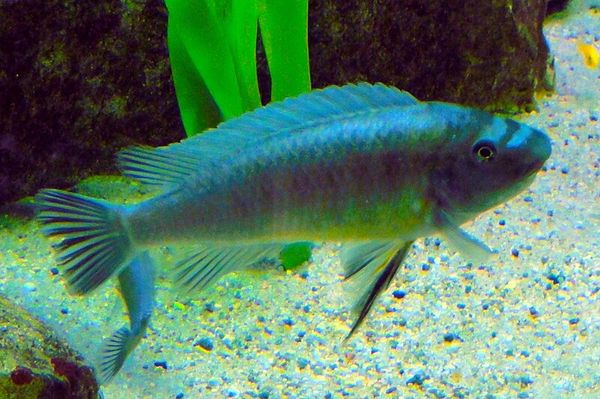
- Appearance & Identification
- Average Size & Lifespan
- Care Guide
- Is This Species Right for You?
- Tank Mates
- Food & Diet
- Breeding & Reproduction
- Common Health Issues
- Common Mistakes to Avoid
- Where to Buy
- FAQ
- What It Is Actually Like Living With Scrapermouth Mbuna
- Species Comparison
- Closing Thoughts
Scrapermouth mbuna are the algae grazing specialists of Lake Malawi. Their entire mouth structure is designed to scrape biofilm off rocks, and that specialization means they need a tank setup that supports that behavior. I have kept labeotropheus for years and the number one mistake is not providing enough rock surface for grazing. A scrapermouth in a bare tank with no algae covered surfaces is a stressed, malnourished fish. The algae grazer with an underslung mouth designed for scraping biofilm off rocks, filling the same niche as plecos but in a cichlid body.
The mbuna that eats your algae but demands you grow it first.
What Most Care Guides Get Wrong About Scrapermouth Mbuna
Most hobbyists have never heard of the Scrapermouth Mbuna, and those who have often assume it is just a boring algae eater. That could not be further from the truth. Labeotropheus trewavasae has one of the most specialized feeding adaptations in Lake Malawi, with an underslung mouth designed specifically for scraping algae from rocks. The mistake people make is feeding them like a typical mbuna. These fish need a heavily vegetable based diet more than almost any other mbuna species. High protein foods will cause Malawi Bloat faster in Scrapermouths than in most other mbuna.
The Reality of Keeping Scrapermouth Mbuna
Mbuna keeping is a different discipline from regular fishkeeping. The Scrapermouth Mbuna is no exception. Here is what you need to prepare for.
Hard, alkaline water is mandatory. Lake Malawi chemistry means pH between 7.8 and 8.6, high GH, and high KH. There is no faking this. If your tap water is soft and acidic, you need to buffer every water change without exception.
Overstocking is the strategy. Keeping 3 or 4 Scrapermouth Mbunas leads to one bully and victims. You need groups of 12 or more to spread aggression. But overstocking only works with heavy filtration and consistent water changes.
Diet is critical. Spirulina and veggie-based foods are essential. High-protein diets cause Malawi Bloat, which is often fatal.
Rockwork defines territories. Mbuna need piles of rocks with caves and passageways. Without proper rockwork, dominant fish have nowhere to establish boundaries and subordinates have nowhere to hide. Stack rocks from substrate to near the waterline.
Biggest Mistake New Scrapermouth Mbuna Owners Make
Understocking. Keeping a small group of Scrapermouth Mbunas means the dominant fish picks off the weak ones. You need a large group to distribute aggression. Twelve is the minimum for most mbuna species.
Expert Take
Start with a group of 12 or more in a 55 gallon minimum. Use aragonite or crushed coral substrate to buffer pH naturally. Feed spirulina-based food as the staple. Stack rocks to create territories. This formula works for Scrapermouth Mbunas and most other mbuna.
Key Takeaways
- Unmistakable appearance. Wide downturned mouth and enlarged fleshy nose; impossible to confuse with any other species
- Multiple color variants. Blue, yellow, orange, OB (orange blotched), and combinations depending on location
- Aggressive and territorial. Males are highly territorial, especially during breeding
- Specialized algae grazer. Mouth structure is perfectly adapted for scraping aufwuchs from rocks
- Medium-sized mbuna. Reaches about 4.5 inches (11 cm); needs at least 55 gallons
- Maternal mouthbrooder. Standard mbuna breeding; females carry eggs for 3 weeks
Species Overview
| Common Name | Scrapermouth Mbuna, Trewavas’ Mbuna |
| Scientific Name | Labeotropheus trewavasae |
| Care Level | Intermediate |
| Temperament | Aggressive |
| Max Size | 4. 4.5 inches (10. 11 cm) |
| Min Tank Size | 55 gallons (208 liters) |
| Diet | Herbivore |
| Lifespan | 8. 10 years |
| Water Temp | 76. 82°F (24. 28°C) |
| pH | 7.8. 8.6 |
| Origin | Lake Malawi, Africa |
Classification
| Kingdom | Animalia |
| Phylum | Chordata |
| Class | Actinopterygii |
| Order | Cichliformes |
| Family | Cichlidae |
| Genus | Labeotropheus |
| Species | L. Trewavasae |
Origin & Natural Habitat
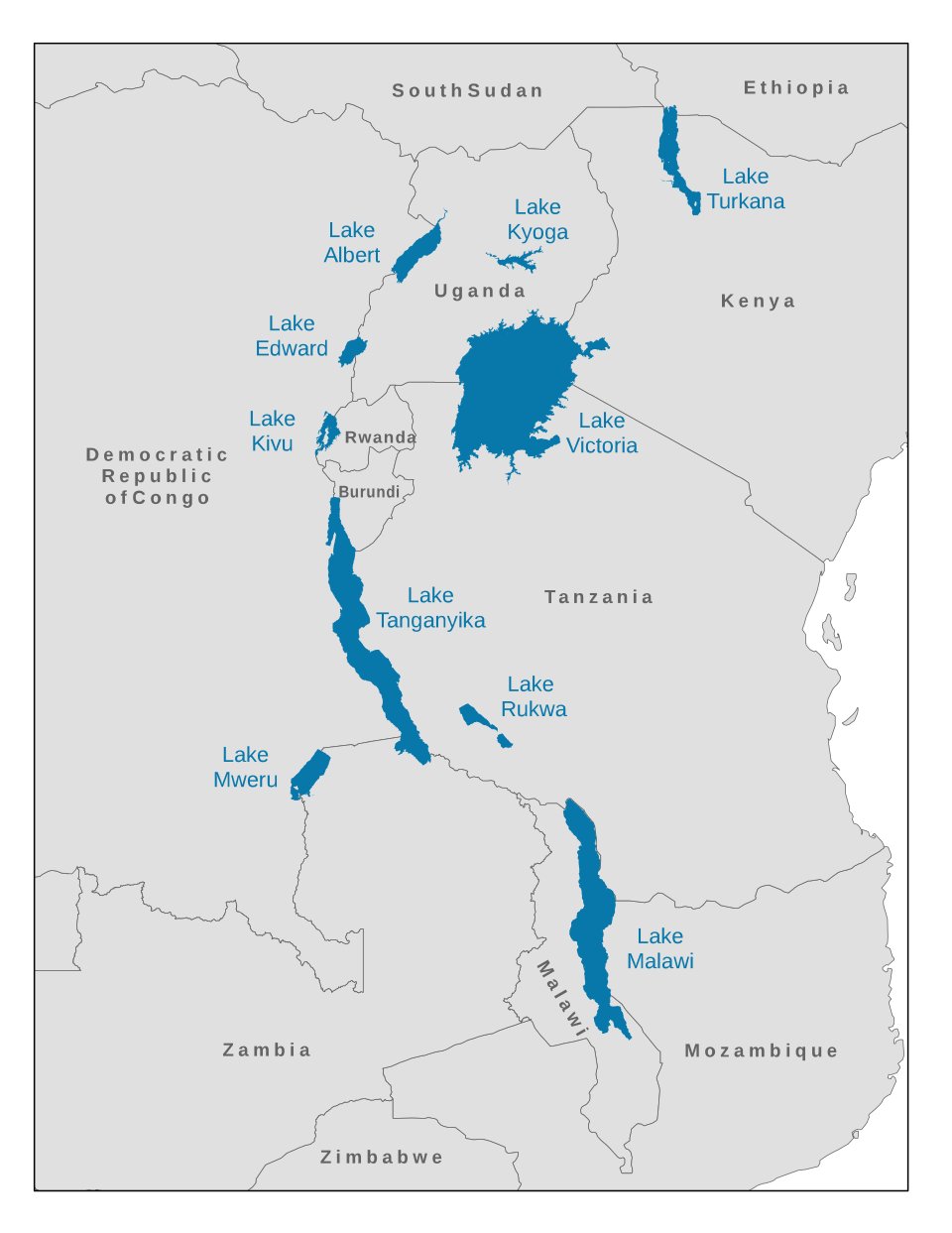
The Scrapermouth Mbuna is endemic to Lake Malawi in East Africa, where it has a wide distribution along the rocky coastlines of the lake. Unlike some mbuna species that are restricted to tiny geographic areas, L. Trewavasae is found throughout the lake, which has led to the development of numerous geographic color variants. This wide distribution is also why the species isn’t considered threatened.
In the wild, Scrapermouth Mbuna inhabit rocky areas where they can exploit their specialized feeding anatomy. Their unique downturned mouth and fleshy snout are perfectly designed for scraping aufwuchs. The biofilm of algae, diatoms, and tiny invertebrates. From rock surfaces. They can graze effectively at angles that most other mbuna can’t reach, giving them a competitive advantage in their ecological niche.
The species was named in honor of Ethelwynn Trewavas, a renowned ichthyologist at the British Museum of Natural History who made significant contributions to cichlid taxonomy.
Appearance & Identification
The most immediately recognizable feature of the Scrapermouth Mbuna is its mouth. Wide, flat, and positioned underneath a prominent, enlarged fleshy nose (rostral protuberance). This gives the fish an unmistakable facial profile that’s unlike anything else in the mbuna world. The mouth is designed to press flat against rock surfaces for efficient scraping, and the fleshy nose acts as a kind of bumper or guide.
Color variation in this species is extraordinary. Depending on the collection location, you will see males that are solid blue, blue with dark barring, or even orange. Females are often OB (orange blotched). A marbled pattern of orange, brown, and cream that’s highly variable between individuals. Some locations produce yellow or spotted forms. This diversity means no two tanks of Scrapermouth Mbuna look exactly the same.
Male vs. Female
Sexual dimorphism in Scrapermouth Mbuna is often quite pronounced, especially in the typical blue male / OB female form.
| Feature | Male | Female |
|---|---|---|
| Color (typical) | Rich blue with dark barring; yellow-brown anal/caudal fins | OB (orange blotched). Marbled orange, cream, brown |
| Size | Up to 4.5 inches (11 cm) | Slightly smaller, around 3.5. 4 inches |
| Egg Spots | Prominent on anal fin | Fewer or absent |
| Body Shape | More robust, larger head | Slightly slimmer, rounder belly when gravid |
| Behavior | Highly territorial, especially during breeding | Generally more peaceful |
Note that color patterns vary significantly by location, so not all populations follow the blue male / OB female pattern. Always purchase from a seller who can identify the specific variant.
Average Size & Lifespan
Scrapermouth Mbuna are a medium-sized species, reaching 4. 4.5 inches (10. 11 cm) in aquarium conditions. Males are slightly larger than females. Their stocky, robust build makes them look larger than their actual length suggests.
With proper care, Scrapermouth Mbuna can live 8. 10 years in captivity. Their hardiness and adaptability contribute to their longevity, provided they receive consistent water quality and appropriate nutrition.
Care Guide
Tank Size
A 55-gallon (208-liter) tank is the minimum for a small group. For a mixed mbuna community, 75 gallons (284 liters) or more is strongly recommended. Given the territorial nature of males, the more space you provide, the better. A 4-foot or longer tank provides the horizontal territory these fish need.
Water Parameters
| Temperature | 76. 82°F (24. 28°C) |
| pH | 7.8. 8.6 |
| General Hardness (dGH) | 10. 20 dGH |
| Carbonate Hardness (dKH) | 10. 15 dKH |
| Ammonia | 0 ppm |
| Nitrite | 0 ppm |
| Nitrate | <20 ppm |
Standard Lake Malawi parameters. Buffer with aragonite substrate or crushed coral if needed. Consistency is key. Avoid sudden swings in any parameter.
Filtration & Water Flow
Heavy filtration is essential. A quality canister filter rated for at least 1.5 times your tank volume, supplemented with a powerhead for circulation, provides the clean, well-oxygenated water these fish need. Weekly water changes of 25. 40% are non-negotiable. More frequently if heavily stocked.
Lighting
Moderate lighting works well and encourages algae growth on rocks for natural grazing. Something Scrapermouth Mbuna are perfectly adapted to take advantage of. An 8. 10 hour photoperiod is ideal.
Plants & Decorations
Lots of rockwork with complex formations creating caves, passages, and territories. Scrapermouth Mbuna are not plant-compatible. They’re efficient herbivores that will make quick work of most aquarium plants. Skip the greenery and focus on creating an impressive rock aquascape with limestone, lava rock, or ocean rock.
Build multiple line-of-sight breaks to reduce aggression. Each male needs a definable territory with a cave, and subordinate fish need escape routes.
Substrate
Fine sand is recommended. Aragonite sand for pH buffering, or a mix of pool filter sand and crushed coral. Scrapermouth Mbuna will rearrange the substrate in their territories, so sand accommodates this natural behavior better than gravel.
Is the Scrapermouth Mbuna Right for You?
Scrapermouth Mbuna are a unique and underappreciated species. They offer something genuinely different from the standard mbuna selection, but they have specific care needs you should understand first.
- Great fit if you want a mbuna with a truly unique appearance and specialized feeding behavior
- Great fit if you maintain a heavily algae producing tank with strong lighting and natural grazing surfaces
- Great fit if you want a moderately aggressive mbuna that fits well in a mixed community
- Not ideal if you feed primarily carnivorous or high protein foods. Scrapermouths are strict herbivores
- Not ideal if you want a beginner species. Their specialized diet makes them slightly more demanding than standard mbuna
- Not ideal if you prefer a clean, minimal aquascape. These fish need textured rocks and surfaces for natural grazing
Scrapermouth Mbuna reward keepers who appreciate unique biology and natural behavior. If you set up their environment correctly, watching them graze across rockwork is genuinely fascinating.
Tank Mates
Best Tank Mates
Scrapermouth Mbuna need tank mates that can hold their own. Choose robust species with different color patterns. Good options include:
- Yellow Lab (Labidochromis caeruleus). Different color, manages well
- Red Zebra (Metriaclima estherae). Tough enough to coexist
- Cobalt Blue Zebra (Metriaclima callainos). Comparable temperament
- Demasoni (Pseudotropheus demasoni). Both territorial but different enough in appearance
- Synodontis catfish. Hardy bottom dwellers that stay out of territorial disputes
Tank Mates to Avoid
- Peacock cichlids (Aulonocara spp.). Too docile for a tank with aggressive mbuna
- Labeotropheus fuelleborni. Same genus; hybridization risk and doubled aggression
- Rusty Cichlids (Iodotropheus sprengerae). Too peaceful; will be overwhelmed
- Any small or slow-moving species. Will be harassed relentlessly
- Haplochromis species. Most are too peaceful for a Scrapermouth tank
Food & Diet
The Scrapermouth Mbuna is a dedicated herbivore. Arguably the most specialized plant eater among commonly kept mbuna. Their entire mouth structure is built for scraping algae from rock surfaces, and their diet in captivity should reflect this.
High-quality spirulina-based flakes or pellets should be the staple food. Supplement with blanched vegetables like spinach, zucchini, lettuce, and shelled peas. Algae wafers and nori sheets are excellent additions. If you encourage algae growth on your rocks with extended lighting, Scrapermouth Mbuna will graze on it naturally throughout the day.
Avoid high-protein foods entirely. No bloodworms, no beef heart, and minimal brine shrimp. Their herbivorous digestive system is highly susceptible to problems from protein-heavy diets. Feed 2. 3 small meals per day.
Breeding & Reproduction
Scrapermouth Mbuna are maternal mouthbrooders, following the standard mbuna breeding pattern.
Spawning Behavior
Males become particularly aggressive and colorful during breeding season. The dominant male establishes and vigorously defends his territory, displaying intensely to passing females. The spawning follows the familiar egg-dummy routine. The female deposits eggs, picks them up in her mouth, and is attracted to the male’s anal fin egg spots, where she inadvertently picks up milt for fertilization.
Keep a ratio of 1 male to at least 3 females to distribute the male’s considerable aggression during breeding.
Mouthbrooding & Fry Care
The female carries the developing eggs for approximately 3 weeks. During this time, she won’t eat and will be noticeably reclusive. Clutch sizes vary depending on the female’s size and experience, but 15. 30 fry is typical.
Once released, fry can take crushed spirulina flake, baby brine shrimp, and finely ground fry food. For the best survival rates, isolate the holding female in a separate breeding tank before release. The fry grow steadily with proper nutrition and clean water.
Common Health Issues
Malawi Bloat
As a strict herbivore, the Scrapermouth Mbuna is extremely susceptible to Malawi Bloat if fed an improper diet. Symptoms include abdominal swelling, white feces, loss of appetite, and rapid breathing. Fatal within 24. 72 hours if untreated. Keep the diet plant-based and the water clean. Treat early with Metronidazole if caught in time.
Ich (White Spot Disease)
Stress from transport, poor water quality, or aggression can trigger ich. White spots on the body and fins are the telltale sign. Raise temperature to 82°F (28°C) and treat with ich medication. Scrapermouth Mbuna are hardy and respond well to treatment.
Aggression-Related Injuries
Territorial disputes can result in torn fins, missing scales, and scrapes. Minor injuries heal on their own with excellent water quality. More serious wounds need antibiotic treatment. Providing ample rockwork and maintaining proper stocking ratios minimizes injury risk.
Common Mistakes to Avoid
- Feeding protein-heavy foods. These are strict herbivores. No bloodworms, no beef heart, minimal brine shrimp
- Mixing with L. Fuelleborni. Same genus species will hybridize and aggression doubles
- Underestimating male aggression. Males are highly territorial; provide ample space and rockwork
- Keeping with peaceful species. Rusties and Peacocks will be overwhelmed
- Not enough hiding spots. Territorial disputes escalate quickly without adequate cover
- Attempting a planted tank. These fish will destroy plants efficiently; focus on rockwork instead
Where to Buy
Scrapermouth Mbuna are moderately available in the hobby. They’re less common than Red Zebras or Yellow Labs but is found through specialized African cichlid retailers. Expect to pay $6. $15 per fish depending on the color variant and size. For quality stock:
- Flip Aquatics. Quality African cichlids including various Labeotropheus variants
- Dan’s Fish. Trusted source for mbuna species with reliable shipping
When purchasing, try to buy a group of at least 4. 6 from the same variant/location to avoid hybridization and ensure visual consistency. Aim for a female-heavy ratio.
FAQ
What’s the difference between L. Trewavasae and L. Fuelleborni?
Both species share the distinctive Labeotropheus snout and mouth structure, but L. Trewavasae is slightly smaller and more slender, while L. Fuelleborni is stockier and more robust. Color patterns differ between the two species and their many geographic variants. They should never be kept together due to hybridization risk.
Why does my Scrapermouth have such a big nose?
That prominent, fleshy nose (called a rostral protuberance) is a specialized adaptation for feeding. It acts as a bumper or guide, allowing the fish to press its wide, flat mouth directly against rock surfaces for efficient algae scraping. It’s one of the most specialized feeding adaptations among mbuna.
Are Scrapermouth Mbuna good for beginners?
They’re better suited for intermediate keepers. While they’re hardy and not particularly difficult to care for, their aggressive temperament. Especially males during breeding. Requires experience managing mbuna aggression through proper stocking and tank design. Start with milder species like Yellow Labs or Rusty Cichlids first.
What color variants are available?
Quite a few. Common variants include “Thumbi West” (blue males, OB females), “Marmalade Cat” (orange/marbled), “Chilumba” (blue/red), and “Mpanga” (blue males, mottled females). The OB (orange blotched) female pattern is particularly popular and visually striking. Each geographic variant has its own distinct look.
Can I keep Scrapermouth Mbuna with plants?
Not recommended. Their specialized scraping mouth is incredibly efficient at removing plant material, and they will quickly demolish most aquarium plants. Stick to an all-rock aquascape for this species.
How long do Scrapermouth Mbuna live?
With proper care, they can live 8. 10 years. Consistent water quality, a strictly plant-based diet, and proper tank management are the keys to reaching the upper end of that range.
What It Is Actually Like Living With Scrapermouth Mbuna
This is the part no other care guide gives you. Forget water parameters for a minute. Here is what it is actually like to share your tank with this species.
They have more personality than you expect. The Scrapermouth Mbuna is not a fish that just sits in the background. Once settled in, they become interactive, curious, and responsive to your presence.
Feeding time reveals their character. Watch how the Scrapermouth Mbuna approaches food and you will see real personality. Some are bold, some are cautious, and their feeding behavior tells you a lot about their mood and health.
They establish routines. After a few weeks, your Scrapermouth Mbuna will have favorite spots, preferred paths through the tank, and predictable patterns. Learning these routines makes you a better keeper.
Color is a health indicator. The Scrapermouth Mbuna’s coloration is a real-time report card on your husbandry. Vibrant color means happy fish. Faded color means something is wrong. Pay attention.
How the Scrapermouth Mbuna Compares to Similar Species
Choosing the right Malawi cichlid means understanding how similar species compare. Here is how the Scrapermouth Mbuna stacks up against species you will also be considering.
Scrapermouth Mbuna vs. Rusty Cichlid
Rusty Cichlids are another herbivorous mbuna, but they lack the Scrapermouth’s specialized mouth structure and feeding behavior. Rusties are more peaceful and easier to feed since they accept standard spirulina flakes without issue. If you want an herbivorous mbuna without the extra dietary considerations, the Rusty is the simpler choice. But if you enjoy watching specialized natural feeding behavior, the Scrapermouth is far more interesting. You can learn more in our Rusty Cichlid Care Guide.
Closing Thoughts
Scrapermouth mbuna need rocks covered in algae. Without that, you are starving them slowly.
The Scrapermouth Mbuna is one of the most unique and visually interesting species in the Lake Malawi hobby. That distinctive face alone sets it apart from everything else in your tank, and the incredible variety of color forms means you can find a variant that appeals to almost any aesthetic preference. Add in their specialized feeding behavior and fascinating territorial displays, and you’ve got a fish that never gets boring to watch.
They’re not the easiest mbuna to manage. The males require respect, the diet needs to be strictly plant-based, and tank mate selection matters. But for intermediate to experienced keepers, Labeotropheus trewavasae is a genuinely rewarding species that offers something no other mbuna can.
This article is part of our Lake Malawi Cichlid Species Directory: Complete A-Z Care Guide List. Visit the hub page to explore care guides for all 28 Lake Malawi cichlid species we cover.
Recommended Video
References
- Seriously Fish. (n.d.). Labeotropheus trewavasae. https://www.seriouslyfish.com/species/labeotropheus-trewavasae/
- FishBase. (n.d.). Labeotropheus trewavasae, Scrapermouth Mbuna. https://www.fishbase.se/summary/Labeotropheus-trewavasae.html
- Practical Fishkeeping. (n.d.). Labeotropheus trewavasae species profile. https://www.practicalfishkeeping.co.uk
- The Aquarium Wiki. (n.d.). Labeotropheus trewavasae. https://www.theaquariumwiki.com/wiki/Labeotropheus_trewavasae
- About the Author
- Latest Posts

I’m Mark Valderrama, founder of Aquarium Store Depot and a fishkeeper with over 25 years of hands-on experience. I started in the hobby at age 11, worked at local fish stores, and have kept freshwater tanks, ponds, and reef tanks ever since. I’ve been featured in two best-selling aquarium books on Amazon and built this site to share practical, experience-based fish keeping knowledge.
Leave a Reply