
Last Updated: June 25, 2026
Thank you for visiting! By the way… any links on this page that lead to products on Amazon and other stores/partners are affiliate links Aquarium Store Depot earns a commission if you make a purchase.
Table of Contents
- What Most Care Guides Get Wrong
- The Reality of Keeping Sulfur Head Peacock
- Key Takeaways
- Species Overview
- Classification
- Origin & Natural Habitat
- Appearance & Identification
- Average Size & Lifespan
- Care Guide
- Is This Species Right for You?
- Tank Mates
- Food & Diet
- Breeding & Reproduction
- Common Health Issues
- Common Mistakes to Avoid
- Where to Buy
- Frequently Asked Questions
- What It Is Actually Like Living With Sulfur Head Peacock
- Species Comparison
- Closing Thoughts
- References
Sulfur head peacocks are one of the most timid aulonocara species, and that timidity is the single biggest challenge in keeping them. They get outcompeted for food, bullied by more aggressive peacocks, and stressed into hiding by active tank mates. I have kept sulfur heads and the difference between a thriving specimen and a dying one is almost always about tank mate selection. Get that wrong and this fish starves while hiding behind a rock. The peacock that needs its own space or it disappears.
The peacock that needs a quiet corner to show its best colors.
The Reality of Keeping Sulfur Head Peacock
Mbuna keeping is a different discipline from regular fishkeeping. The Sulfur Head Peacock is no exception. Here is what you need to prepare for.
Hard, alkaline water is mandatory. Lake Malawi chemistry means pH between 7.8 and 8.6, high GH, and high KH. There is no faking this. If your tap water is soft and acidic, you need to buffer every water change without exception.
Overstocking is the strategy. Keeping 3 or 4 Sulfur Head Peacocks leads to one bully and victims. You need groups of 12 or more to spread aggression. But overstocking only works with heavy filtration and consistent water changes.
Diet is critical. Spirulina and veggie-based foods are essential. High-protein diets cause Malawi Bloat, which is often fatal.
Rockwork defines territories. Mbuna need piles of rocks with caves and passageways. Without proper rockwork, dominant fish have nowhere to establish boundaries and subordinates have nowhere to hide. Stack rocks from substrate to near the waterline.
Biggest Mistake New Sulfur Head Peacock Owners Make
Understocking. Keeping a small group of Sulfur Head Peacocks means the dominant fish picks off the weak ones. You need a large group to distribute aggression. Twelve is the minimum for most mbuna species.
Expert Take
Start with a group of 12 or more in a 55 gallon minimum. Use aragonite or crushed coral substrate to buffer pH naturally. Feed spirulina-based food as the staple. Stack rocks to create territories. This formula works for Sulfur Head Peacocks and most other mbuna.
Key Takeaways
- Among the most peaceful and timid Peacock species, often recommended for species-only setups to prevent more assertive fish from overshadowing it
- Distinctive appearance with a dark body and bright yellow-orange dorsal stripe, unlike the all-over color patterns of most other Peacocks
- Extremely limited wild range, found only on two reefs in southeastern Lake Malawi, making wild populations vulnerable
- Sand substrate is essential for natural sand-sifting feeding behavior
- Minimum 75-gallon tank with hard, alkaline water (pH 7.8-8.6) and excellent water quality
Species Overview
| Field | Details |
|---|---|
| Scientific Name | Aulonocara maylandi |
| Common Names | Sulfur Head Peacock, Sulphurhead Peacock, Sulphurhead Aulonocara |
| Family | Cichlidae |
| Origin | Lake Malawi, East Africa (southeastern arm) |
| Care Level | Moderate |
| Temperament | Very Peaceful |
| Diet | Micro-predator / Omnivore |
| Tank Level | Bottom to Mid |
| Maximum Size | 5-5.5 inches (12-14 cm) |
| Minimum Tank Size | 75 gallons (284 liters) |
| Temperature | 76-82°F (24-28°C) |
| pH | 7.8-8.6 |
| Hardness | 10-20 dGH |
| Lifespan | 5-8 years |
| Breeding | Maternal mouthbrooder |
| Breeding Difficulty | Easy to Moderate |
| Compatibility | Peacock & Hap community (species tank recommended) |
| OK for Planted Tanks? | Limited (may uproot plants while sifting) |
Classification
| Taxonomic Level | Classification |
|---|---|
| Order | Cichliformes |
| Family | Cichlidae |
| Subfamily | Pseudocrenilabrinae |
| Genus | Aulonocara |
| Species | A. Maylandi (Trewavas, 1984) |
The Sulfur Head Peacock was described by Ethelwynn Trewavas in 1984. The species is named after Hans-Joachim Mayland, a German author and cichlid enthusiast who first brought the fish to Trewavas’ attention. The genus name Aulonocara means “flute face” in Greek, referencing the enlarged sensory pores on the head used for detecting prey in the substrate.
A population from Kande Island on the central-western shoreline was once described as a subspecies, Aulonocara maylandi kandeensis (Tawil & Allgayer, 1987), but this name was subsequently placed in synonymy with A. Maylandi by Eccles and Trewavas in 1989. The Kande Island form differs in that males display a whitish dorsal stripe instead of the yellow-orange sulfur stripe seen in the southeastern populations. Both forms possess enlarged lower pharyngeal bones, suggesting similar dietary adaptations.
Origin & Natural Habitat
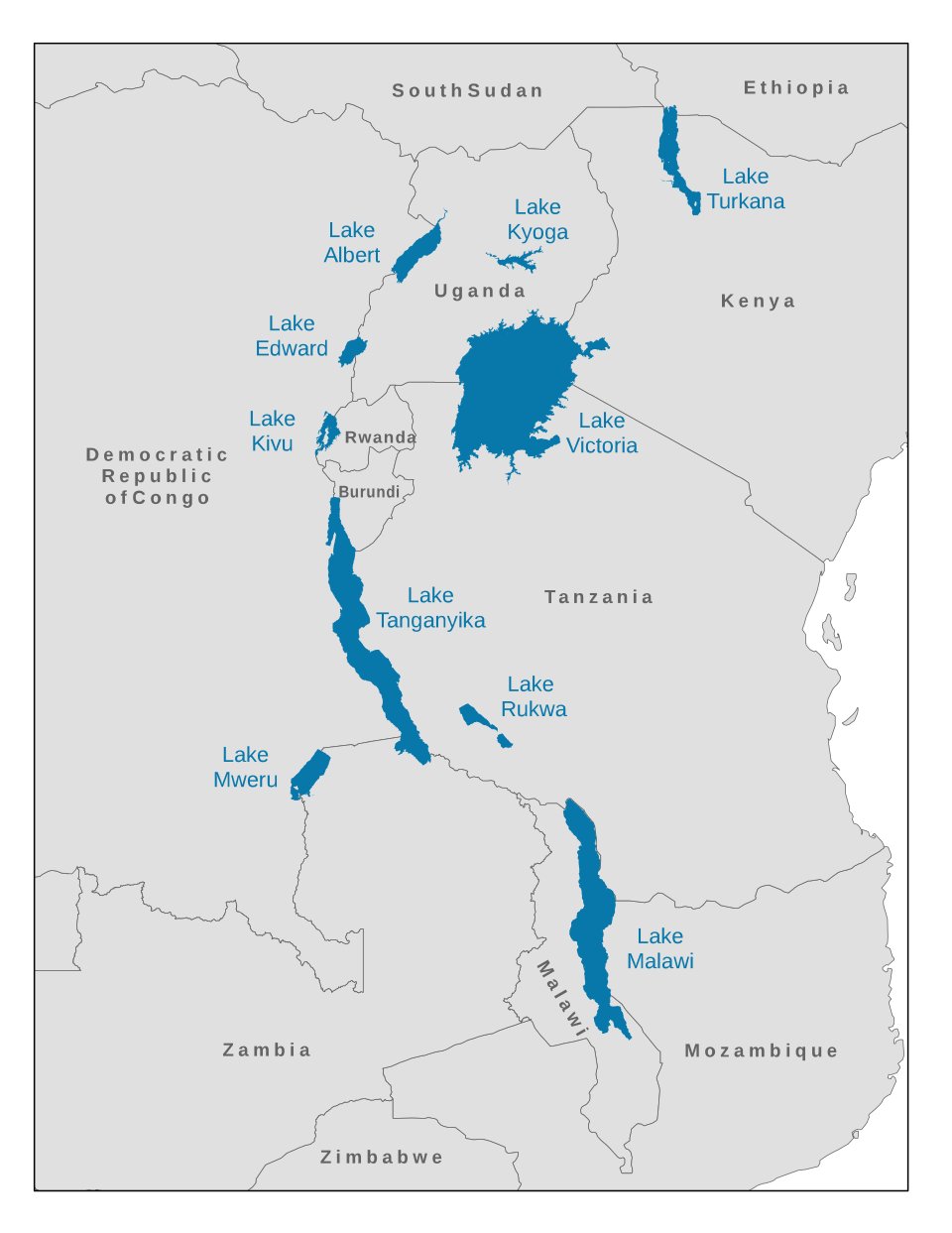
The Sulfur Head Peacock is endemic to Lake Malawi in East Africa, with an extremely restricted natural range. The classic “sulphurhead” color form is found only at two locations in the southeastern part of the lake: Chimwalani Reef (formerly known as Eccles Reef) and Luwala Reef (formerly known as West Reef), both near Makanjila Point. A second color form with a whitish dorsal stripe instead of yellow occurs at Kande Island on the central-western shoreline.
This incredibly limited distribution makes the species vulnerable. Collection for the aquarium trade has reportedly caused a roughly 70% decline in wild populations. While captive-bred specimens are readily available to hobbyists, the species’ wild future remains a conservation concern.
Like all Peacock cichlids, A. Maylandi inhabits the intermediate zones of Lake Malawi where rocky habitats transition to sandy substrates. At the Kande Island population, nuptial males establish territories at depths around 30 feet (10 meters), right at the point where rocks meet sand. Females roam in foraging groups across the sandy areas, sifting for food. The water in Lake Malawi is characteristically hard, alkaline, and extraordinarily stable year-round.
Appearance & Identification
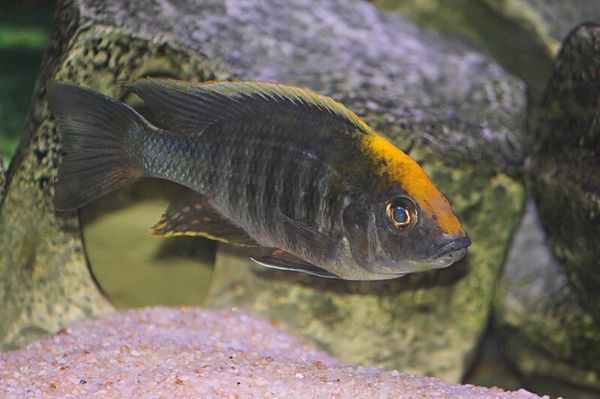
The Sulfur Head Peacock has a look that’s quite distinct from most other Peacock species. Rather than the all-over yellow, blue, or red coloration typical of many Aulonocara, male Sulfur Heads display a dark steel-blue to black body with a vivid yellow-orange blaze that runs from the tip of the snout, over the top of the head, and along the upper margin of the dorsal fin. This sulfur-colored stripe against the dark body creates a bold, eye-catching contrast that’s unlike any other Peacock in the hobby.
The overall body color of males ranges from dark metallic blue to near-black, and the intensity can vary significantly based on mood and dominance. When “fired up” and displaying, a dominant male shows stunning depth of color with the sulfur crest practically glowing. When stressed or subdominant, the body color becomes washed out and the yellow stripe fades considerably. This means the Sulfur Head can look like two completely different fish depending on its state, which is important to understand when evaluating these fish at a store.
As with all Peacocks, juveniles are plain silver-grey regardless of sex. Males begin showing color later than some other Peacock species, and the full dark body with sulfur crest develops gradually over several months.
Male vs. Female
Sexual dimorphism is pronounced, as it is across the entire Aulonocara genus.
| Feature | Male | Female |
|---|---|---|
| Color | Dark steel-blue/black body with yellow-orange dorsal stripe | Plain silver-grey with faint barring |
| Size | 5-5.5 inches (12-14 cm) | 4-4.5 inches (10-11 cm) |
| Body Shape | Slightly larger and more elongated | Smaller with rounder belly |
| Fins | Longer, pointed dorsal and anal fins | Shorter, rounded fins |
| Egg Spots | Present on anal fin | Usually absent or very faint |
Because the Sulfur Head’s coloration is quite different from most Peacocks, the male is easy to identify among a mixed Peacock collection once it colors up. However, stressed or subdominant males can appear disappointingly drab. This species really needs a low-stress environment to show its best appearance.
Average Size & Lifespan
Sulfur Head Peacocks reach a maximum size of 5 to 5.5 inches (12-14 cm), making them one of the slightly smaller Peacock species. Males are a bit larger than females. Most fish sold in stores are 1.5 to 2-inch juveniles that will need 12-18 months to approach full size.
With proper care, expect a lifespan of 5 to 8 years. Excellent water quality, a stable environment, appropriate diet, and low-stress tank mates are the keys to longevity. Because this species is more timid than most Peacocks, stress from aggressive companions can significantly reduce lifespan and overall quality of life.
Care Guide
Tank Size
A minimum of 75 gallons (284 liters) is recommended for a group of Sulfur Head Peacocks. The tank should be at least 4 feet (120 cm) long to provide adequate territory. Because of this species’ timid nature, ample space is even more important than usual. A cramped tank amplifies stress, which directly impacts coloration and health.
Many experienced keepers recommend a species-specific tank for Sulfur Heads rather than a mixed community. In a mixed Peacock setup, more assertive species can overshadow the Sulfur Head, causing it to retreat, lose color, and become a wallflower. If you do keep them in a community, make sure the tank is large (125+ gallons) and all companions are genuinely peaceful.
Water Parameters
| Parameter | Ideal Range |
|---|---|
| Temperature | 76-82°F (24-28°C) |
| pH | 7.8-8.6 |
| General Hardness (GH) | 10-20 dGH |
| Carbonate Hardness (KH) | 6-12 dKH |
| Ammonia | 0 ppm |
| Nitrite | 0 ppm |
| Nitrate | Below 20 ppm |
Sulfur Heads are among the most sensitive Peacock species when it comes to water quality. They do not tolerate deteriorating water conditions or swings in chemistry well at all. Seriously Fish notes that they should never be introduced to a biologically immature aquarium. The best approach is to over-filter the tank and perform weekly water changes of 30-50% to maintain pristine, stable conditions.
If your source water is naturally soft, use aragonite substrate or a commercial cichlid buffer to maintain the high pH and mineral content these fish need. Consistency matters more than hitting an exact number within the acceptable range.
Filtration & Water Flow
Over-filtration is the standard recommendation for any Malawi cichlid, and it’s especially important for the sensitive Sulfur Head. A canister filter rated for at least 1.5 to 2 times your tank volume is ideal. Many keepers combine a canister filter with a sump system for maximum biological filtration capacity and water volume stability. The tank should be well-oxygenated, so surface agitation is important.
Water flow should be moderate. Peacocks come from calmer areas of the lake, not the wave-battered rocky zones. Gentle to moderate circulation is sufficient.
Lighting
Moderate lighting is recommended. The Sulfur Head’s unique coloration actually shows best under moderate to slightly subdued lighting, which brings out the contrast between the dark body and the bright dorsal stripe. Overly bright lighting can make this already-timid species feel exposed and stressed. Provide shaded areas through rock formations where the fish can retreat from direct light.
Interestingly, the Sulfur Head is one of those Peacock species that many keepers describe as looking somewhat plain under unfavorable conditions but absolutely stunning when it’s comfortable and displaying. The right lighting helps achieve that display state.
Plants & Decorations
The aquarium should combine open expanses of sand with some rocky areas. Unlike a densely packed Mbuna tank, a Sulfur Head setup should emphasize open floor space with rock formations concentrated along the back and sides. Males will establish territories near the rock-to-sand transition, which mirrors their natural habitat.
Caves and overhangs are important for this species because of its timid nature. Females and subdominant fish need hiding spots to feel secure. Hardy plants like Anubias attached to rocks, Java Fern, and Vallisneria can work, but avoid anything delicate or rooted in the sand, as it will be disturbed during substrate sifting.
Substrate
Fine sand is essential, as it is for all Peacock cichlids. Aulonocara maylandi sifts through sandy substrate to locate small invertebrates using its specialized sensory pores. Gravel is unsuitable and can damage gills and inhibit natural feeding behavior.
An interesting care note specific to this species: while aragonite or coral sand is often recommended for maintaining alkaline water chemistry, many keepers report that Peacocks, including the Sulfur Head, feel safer and display better colors over a darker substrate. A dark pool filter sand or black aquarium sand can make a noticeable difference in how confidently this fish displays. You can always buffer pH through other means (filter media, commercial buffers) if you choose a darker sand.
Tank Mates
This is where the Sulfur Head Peacock requires the most careful consideration. It’s among the most peaceful and timid members of the entire Aulonocara genus, which means it is easily overshadowed, bullied, or outcompeted for food by more assertive fish. A species-specific setup is the ideal approach for getting the best out of this fish.
Best Tank Mates
- Other Sulfur Head Peacocks (species tank) — This is the recommended approach. A group of one or two males with 5 or more females in a species-only tank allows the Sulfur Head to show its full potential without competition from more assertive species.
- Midwater Haplochromines — If you must keep them in a community, choose genuinely peaceful midwater species like Copadichromis spp. And Placidochromis spp. That won’t compete directly for territory.
- Cyrtocara moorii (Blue Dolphin) — A mild-mannered Hap that leaves bottom-dwelling fish alone.
- Synodontis catfish — Synodontis petricola and Synodontis multipunctatus are compatible and occupy a similar ecological niche without causing territorial disputes.
- Labidochromis caeruleus (Yellow Lab) — The only Mbuna mild enough to potentially coexist, though even this pairing should be monitored.
Tank Mates to Avoid
- Aggressive Mbuna — This is absolutely critical. The Sulfur Head is too timid to handle the constant aggression of Mbuna like Melanochromis, Metriaclima, or Pseudotropheus species. It will hide permanently, refuse to eat, and eventually develop stress-related health problems.
- More assertive Peacock species — Even within the Aulonocara genus, some species are more aggressive than the Sulfur Head. In a mixed Peacock tank, A. Jacobfreibergi and some A. Stuartgranti variants can dominate and suppress the Sulfur Head. If keeping with other Peacocks, choose the gentlest species.
- Other Aulonocara males — Seriously Fish specifically recommends that the Sulfur Head be the only Peacock species in the aquarium to prevent hybridization and avoid competition with more dominant males.
- Large predatory Haps — Nimbochromis and other large, aggressive Haplochromines are far too much for this peaceful species.
If keeping a group, maintain a ratio of one or two males with five or more females. The higher number of females helps distribute male attention and creates a more natural social dynamic. Males will establish territories beneath large rocks and display from cave entrances, so provide suitable sites.
Food & Diet
Like all Peacock cichlids, the Sulfur Head is a micro-predator that feeds on small invertebrates found in and on the sandy substrate. It uses the characteristic Aulonocara hunting method: hovering motionless above the sand, using the enlarged sensory pores in its head to detect the movements of tiny crustaceans, insect larvae, and other organisms hidden below the surface. When prey is located, a quick plunge into the sand secures the meal.
In the aquarium, offer a variety of high-quality foods. A good sinking cichlid pellet or granule should form the staple diet. Supplement with frozen foods like Mysis shrimp, vitamin-enriched brine shrimp, mosquito larvae, and cyclops. Some vegetable matter is also beneficial, and spirulina-enriched foods are a good option. Feed once or twice daily, offering only what is consumed within 2-3 minutes.
Avoid foods that are too high in fat, particularly mammalian-based proteins like beef heart. The digestive system of Malawi cichlids is not adapted for fatty foods, and a diet too rich in fat is a major contributor to Malawi Bloat. A varied diet of quality pellets supplemented with small frozen invertebrates is the best approach for long-term health.
Breeding & Reproduction
The Sulfur Head Peacock is a maternal mouthbrooder that is bred reasonably easily in the aquarium, particularly in a species-specific setup where the fish feel secure and stress levels are low.
Spawning Behavior
Males establish territories beneath large rocks or at cave entrances, which mirrors their behavior at the rock-to-sand transition zones in the wild. When ready to spawn, the male intensifies his dark coloration and the sulfur stripe becomes particularly vivid. He displays from his territory entrance, performing fin-flaring courtship dances to attract passing females. Spawning occurs in the typical Aulonocara fashion: the female deposits eggs, picks them up in her mouth, then mouths at the male’s egg spots to trigger fertilization.
Mouthbrooding & Fry Care
The female carries fertilized eggs for approximately 21 to 28 days. She does not eat during this period and will appear reclusive, sticking to sheltered areas. Her throat will be visibly swollen, and she’ll exhibit the characteristic chewing motion common to all mouthbrooding cichlids.
Brood sizes are 10 to 30 fry depending on the female’s size and condition. The fry are released fully formed and can immediately accept baby brine shrimp and finely crushed flake food. For best fry survival, strip the female around day 18-21 or transfer her to a separate tank before she releases.
Hybridization Warning
All Aulonocara species can hybridize freely. Given the Sulfur Head’s already-vulnerable wild populations, maintaining pure captive breeding lines is especially important for this species. Keep it as the only Aulonocara in the breeding tank. This is another strong argument for the species-specific setup that most experts recommend for this fish.
Common Health Issues
Malawi Bloat
The most serious health threat for all Peacock cichlids, and the Sulfur Head’s sensitivity to water quality makes it particularly susceptible. Symptoms include abdominal swelling, loss of appetite, white stringy feces, lethargy, and rapid breathing. It can progress to death within days. The primary causes are elevated nitrates, poor water quality, stress from aggressive tank mates, and high-fat diets.
Prevention is essential. Maintain pristine water quality with weekly water changes of 30-50%, keep nitrates below 20 ppm, feed a balanced diet, and provide a low-stress environment with appropriate companions. If bloat symptoms appear, perform an immediate large water change, isolate the fish, and treat with Metronidazole. Time is critical.
Ich (White Spot Disease)
Stress and temperature fluctuations can trigger ich outbreaks. White salt-grain spots on the body and fins are the hallmark sign. Treatment involves gradually raising temperature to 82-86°F (28-30°C) and using a commercial ich medication. Remove activated carbon during treatment. The Sulfur Head tolerates standard ich medications well.
Stress-Related Issues
Because the Sulfur Head is one of the most timid Peacock species, chronic stress is a significant concern. A stressed Sulfur Head will hide constantly, refuse food, display washed-out coloration, and become susceptible to secondary infections. Stress almost always comes from environmental factors: aggressive tank mates, poor water quality, insufficient hiding spots, or an unstable environment. Addressing the root cause is more important than treating the symptoms.
Common Mistakes to Avoid
- Keeping with aggressive species. This is the single biggest mistake. The Sulfur Head is one of the most timid Peacocks and cannot handle aggression from Mbuna or even from more assertive Peacock species. In a tank with aggressive companions, it will permanently hide, never show color, and eventually succumb to stress-related illness.
- Expecting immediate color. Sulfur Heads can appear very plain when stressed or in unfavorable conditions. At a fish store, surrounded by more colorful fish in a bright, stressful environment, they often look drab. Give them a proper setup and time, and the dark body with sulfur crest will emerge beautifully.
- Using gravel substrate. Like all Peacocks, sand is essential. Gravel prevents natural sand-sifting behavior and can damage gills.
- Insufficient water changes. Sulfur Heads are among the most sensitive Peacocks to water quality. Weekly water changes of 30-50% are recommended, more than the 20-25% that might suffice for hardier species.
- Adding to a new tank. This species should never be placed in an immature aquarium. It requires a fully cycled, biologically stable tank with consistent parameters.
- Keeping multiple Aulonocara species together. While this works with some Peacock species, the Sulfur Head is best kept as the only Peacock in the tank to prevent being outcompeted and to avoid hybridization.
Where to Buy
Sulfur Head Peacocks are less commonly available than popular species like the Eureka Red or Sunshine Peacock, but they can still be found through specialty African cichlid retailers and dedicated breeders. You’re unlikely to find them at chain pet stores. Because of their rarity and the need for properly identified stock, buying from reputable sources is especially important with this species.
Check Flip Aquatics and Dan’s Fish for availability. Both are reputable online retailers that ship quality, properly identified fish. Expect to pay $12-$30 per fish depending on size and sex. Because Sulfur Heads can look underwhelming in transit and in store conditions, don’t judge the fish by how it looks at purchase. Give it a proper setup and time, and the transformation is remarkable.
Frequently Asked Questions
Are Sulfur Head Peacocks aggressive?
No, they’re among the most peaceful and timid members of the Aulonocara genus. Males will defend a small territory during breeding, but their overall demeanor is remarkably gentle for a cichlid. This extreme peacefulness is actually why they require careful tank mate selection, as they can’t compete with more assertive fish.
Should I keep Sulfur Heads in a species-only tank?
A species-only tank is the recommended setup by most experts, including Seriously Fish. This allows the Sulfur Head to display its natural behavior and full coloration without being overshadowed by more dominant species. If you do keep them in a community, choose only the most peaceful companions and provide a large tank with plenty of hiding spots.
Why does my Sulfur Head look plain and grey?
Sulfur Heads are notorious for looking bland when stressed or in unfavorable conditions. The most common reasons are aggressive or dominant tank mates, poor water quality, bright lighting without enough cover, or the fish simply hasn’t had enough time to settle in and show color. Address environmental stressors, ensure water quality is excellent, and provide hiding spots. When comfortable and dominant, the transformation to the dark body with vivid sulfur crest is striking.
Can Sulfur Head Peacocks live with Mbuna?
Absolutely not. The Sulfur Head is far too timid for the aggression that Mbuna bring. Even the mildest Mbuna species is too much for this fish. Stick to a species tank or pair with only the gentlest Haplochromines like Copadichromis species.
What’s the difference between the Sulfur Head and the Kande Island form?
Both are considered Aulonocara maylandi. The southeastern “sulphurhead” form from Chimwalani and Luwala Reefs has a bright yellow-orange dorsal stripe. The Kande Island form has a whitish dorsal stripe instead. Both share similar body shape and behavioral characteristics, and care requirements are identical.
How rare are Sulfur Head Peacocks in the wild?
Very rare. Wild populations have reportedly declined by approximately 70% due to collection for the aquarium trade. The species’ natural range is extremely limited, restricted to just two reefs in southeastern Lake Malawi (plus the Kande Island population). Fortunately, captive breeding has made the species readily available to hobbyists without further pressure on wild populations.
What It Is Actually Like Living With Sulfur Head Peacock
This is the part no other care guide gives you. Forget water parameters for a minute. Here is what it is actually like to share your tank with this species.
They have more personality than you expect. The Sulfur Head Peacock is not a fish that just sits in the background. Once settled in, they become interactive, curious, and responsive to your presence.
Feeding time reveals their character. Watch how the Sulfur Head Peacock approaches food and you will see real personality. Some are bold, some are cautious, and their feeding behavior tells you a lot about their mood and health.
They establish routines. After a few weeks, your Sulfur Head Peacock will have favorite spots, preferred paths through the tank, and predictable patterns. Learning these routines makes you a better keeper.
Color is a health indicator. The Sulfur Head Peacock’s coloration is a real-time report card on your husbandry. Vibrant color means happy fish. Faded color means something is wrong. Pay attention.
Closing Thoughts
Sulfur head peacocks are beautiful but fragile. One bully and they give up.
The Sulfur Head Peacock is a fish for the keeper who appreciates something different. It doesn’t have the in-your-face flash of a Eureka Red or the all-over brilliance of a Sunshine Peacock. Instead, it offers a refined, dramatic contrast of dark body and vivid crest that’s unique among Peacock cichlids. When a dominant male is fired up and displaying from the entrance of his rocky territory, it’s one of the most impressive sights in the Malawi cichlid world.
The trade-off is that this fish demands more thoughtful care than many other Peacocks. It needs excellent water quality, a stress-free environment, and ideally a species-specific setup where it won’t be outcompeted or bullied. If you’re willing to give it those conditions, the Sulfur Head rewards you with behavior and coloration that you simply can’t get from any other fish. It’s one of those species that separates the casual cichlid keeper from the dedicated enthusiast.
This article is part of our Lake Malawi Cichlid Species Directory: Complete A-Z Care Guide List. Visit the hub page to explore care guides for all 28 Lake Malawi cichlid species we cover.
Recommended Video
References
- Aulonocara maylandi (Sulphurhead Peacock) — Seriously Fish
- Aulonocara maylandi, Sulfurhead Aulonocara — FishBase
- Cichlids with a sixth sense — Practical Fishkeeping
- Aulonocara maylandi — The Aquarium Wiki
- About the Author
- Latest Posts

I’m Mark Valderrama, founder of Aquarium Store Depot and a fishkeeper with over 25 years of hands-on experience. I started in the hobby at age 11, worked at local fish stores, and have kept freshwater tanks, ponds, and reef tanks ever since. I’ve been featured in two best-selling aquarium books on Amazon and built this site to share practical, experience-based fish keeping knowledge.
Leave a Reply