AquariumStoreDepot

Tag: Fishkeeping

  • Caring for Peacock Gudgeon: Tank Setup, Food, Tank Mates, Breeding & And More

    Caring for Peacock Gudgeon: Tank Setup, Food, Tank Mates, Breeding & And More

    A peaceful fish species like Peacock Gudgeons will add vibrancy to your home aquarium. They are great centerpiece fish. Here we can give you insight into the right tank setup and breeding techniques needed for these vibrant creatures to flourish in their environment.

    Key Takeaways

    • Peacock Gudgeons are an attractive, peaceful species that prefer live food and shallow bodies of water.
    • Create a comfortable tank for your Peacock Gudgeon with dark sand substrate, decorations & hiding places to mimic their natural habitat.
    • Feed them high quality dry & live foods twice daily and choose compatible tankmates for optimal health!

    Species Overview

    Scientific NameTateurndina ocellicauda
    Common NamesPeacock Gudgeon, Peacock Goby
    FamilyEleotridae
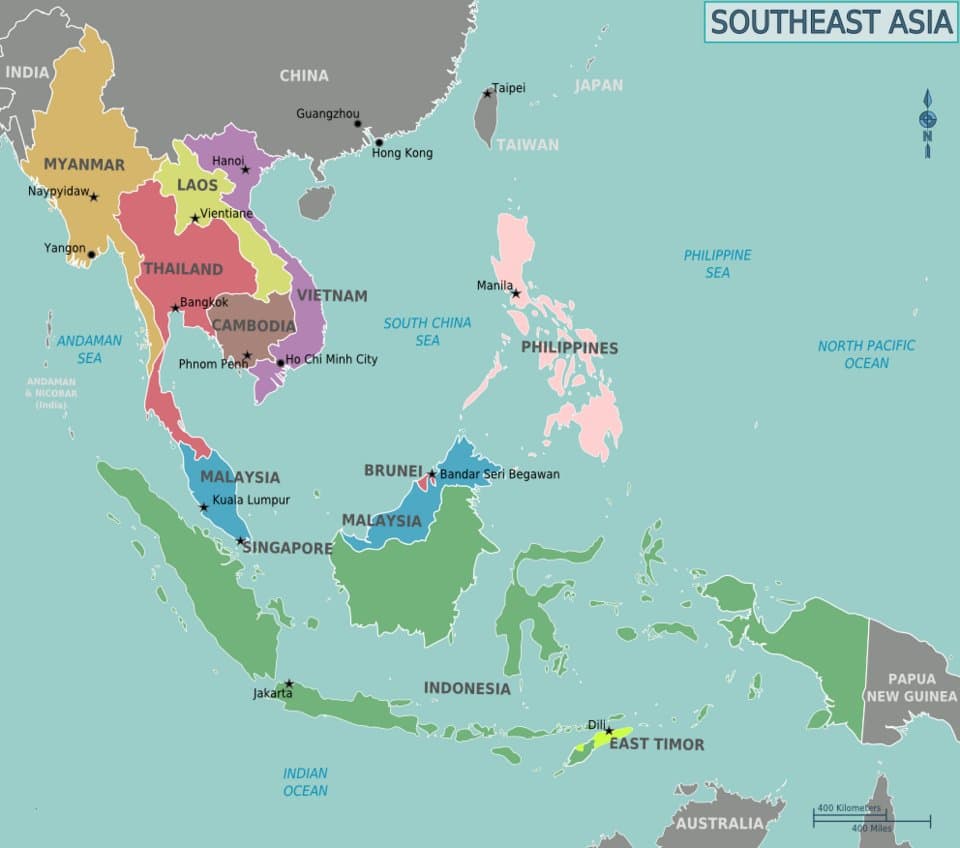
    OriginPapua New Guinea
    DietOmnivorous
    Care DifficultyEasy
    ActivityActive
    Life Expectancy4 – 5 years
    TemperamentPeaceful
    Tank LevelMiddle to bottom
    Minimum Tank Size10 gallons (38 liters) for a pair.
    Temperature Range72-79°F (22-26°C)
    Water Hardness5 – 12 dKH
    pH Range6.0 – 8.0
    Filtration/Water FlowModerate
    Water TypeFreshwater
    BreedingCave Spawner – Male guards eggs
    Difficulty to BreedModerate
    CompatibilityCommunity Tank
    OK, for Planted Tanks?Yes

    Introduction

    Peacock Gudgeons, also known as the Peacock Goby (and scientifically as tateurndina ocellicauda), are a captivating species of freshwater fish native to Papua New Guinea and Australia. Admired for their appealing colors and mild-mannered demeanor, they make an outstanding addition to community tanks. With the right care and diet, it is possible that the average lifespan of this fish to reach up to 4-5 years!

    The peacock gudgeon is a beautiful freshwater fish that have no issues diet wise. Preferring live foods, though they easily adapt to prepared foods. Due too needing shallow bodies of water during growth stages, you will want to seek out juvenile specimens around 6 – 8 months when purchasing these fish from breeders.

    Origin And Habitat

    Native to Papua New Guinea, Peacock Gudgeons inhabit slow-flowing bodies of water abundant in vegetation and warm temperatures with soft water. To recreate this natural environment in the aquarium setting it is essential to include hardy plants such as Anubias, Java ferns or Water Wisteria for them to hide within while also enhancing their colors against a dark sand substrate similar to what can be found naturally.

    Because a Peacock Gudgeon prefers warmer and softer waters than other fish species, careful research is needed when choosing tankmates.

    Appearance

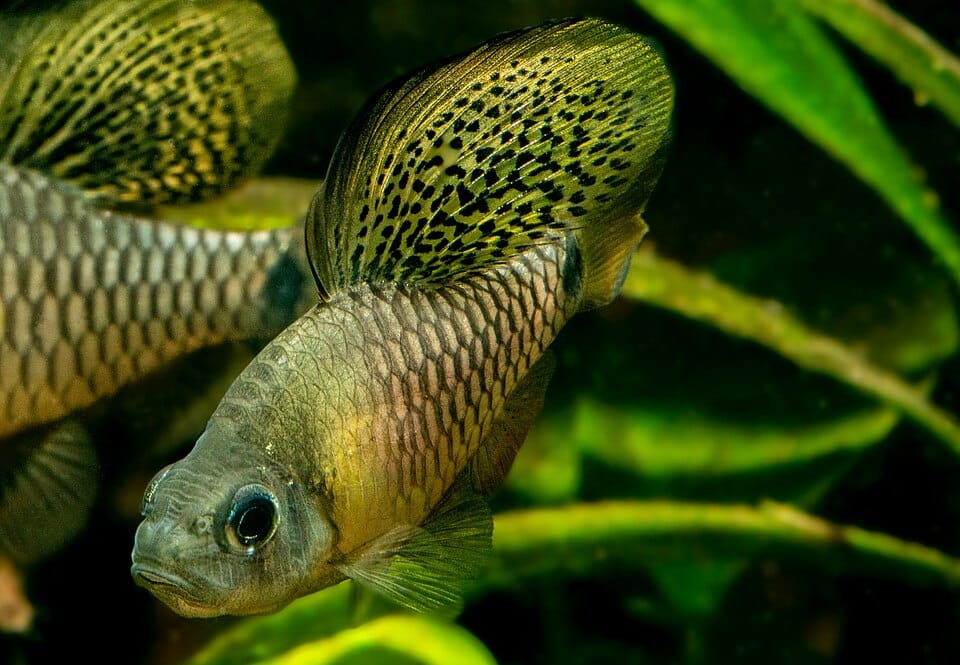
    Peacock Gudgeon Fish

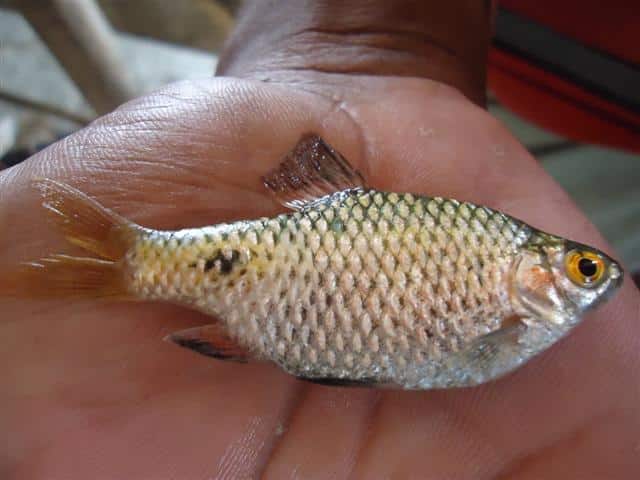
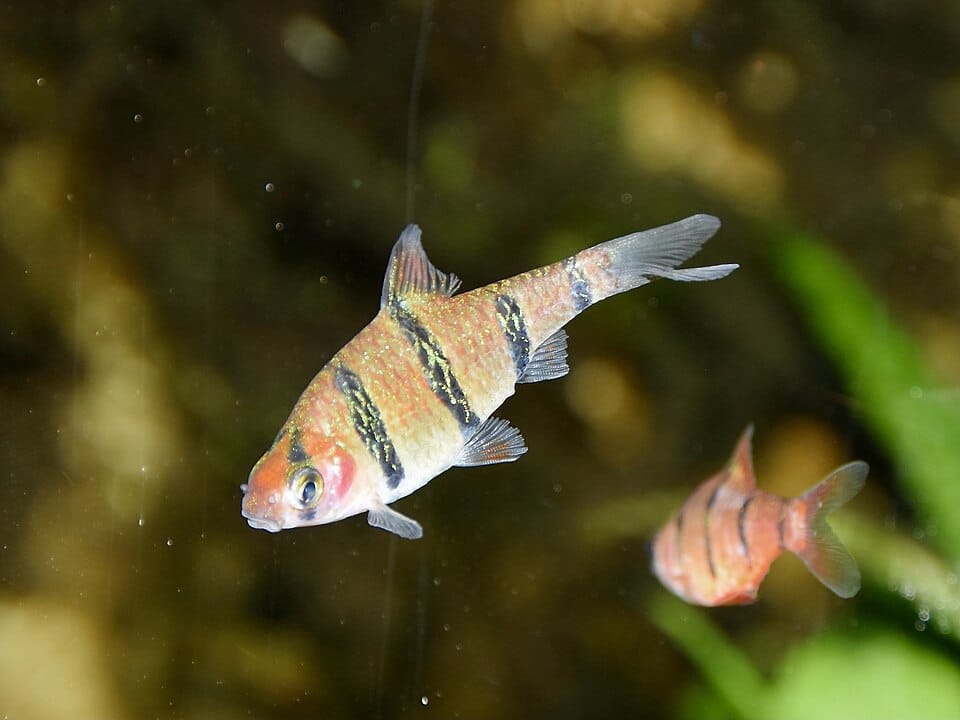
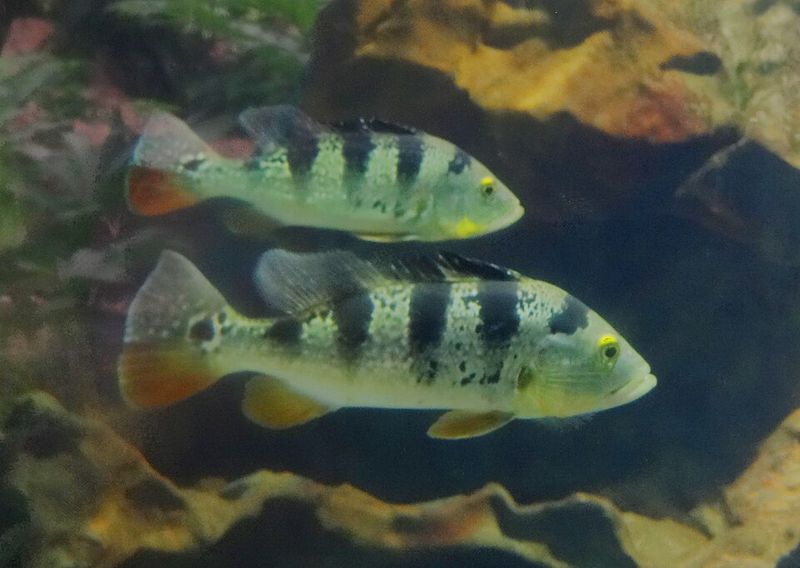
    Peacock Gudgeons are a popular choice among aquarists for their stunning blue-silver hue and vibrant yellow abdomen, that is complemented by black and red stripes. It’s easy to distinguish a male Peacock Gudgeon from a female – the former have an unmistakable head lump while the latter feature dark fin lines. The fantastic pattern of these fish not only creates beautiful visual effects but also helps deter predators – with its distinct tail spot diverting attention away from more vital areas such as the head.

    Tank Setup And Requirements (Peacock Gudgeon Care Guide)

    When setting up a tank for Peacock Gudgeons, it is important to create an environment that accommodates their needs and also looks attractive. This means doing research on the best decorations, rocks, and hideaways that will keep them contented. To have healthy growth rates as well as low stress levels, Peacock gudgeon require slow moving water so adjusting pump or filter settings may be necessary in order to achieve this effect plus adding some decorative pieces to break the current could help too.

    Tank Size And Water Parameters

    Peacock Gudgeons need a tank of at least 10 gallons in order to thrive, although the ideal size is 15-gallon. The water temperature should range from 72 – 79°F with pH levels between 6.0 and 7.8, and water hardness 5 to 12dKH. Frequent testing of these parameters is helpful for keep these levels stable. A dark sand substrate that’s similar to its natural habitat would make your peacock gudgeon feel comfortable and show off their vivid colors best while adding rocks and driftwood can also provide an inviting environment for them too.

    Decorations And Hiding Places

    To replicate the natural environment of Peacock Gudgeons, add a few aquatic plants to your tank as well as driftwood and caves for hiding places. These elements not only enhance their habitat aesthetically, but also provide similar biotope conditions to those found in Oceania.

    Anubias, Java Ferns and water wisteria are some recommended plant choices which serve various functions such as providing shade or acting like filters during spawning periods. Rocks, including hollowed out stones, can act like makeshift homes offering homes. Having such decorations will keep the stress levels of your Peacock Gudgeon low.

    Editor’s Choice!
    Ohko Dragon Stone

    Editor’s Choice

    Ohko is the premier aquascaping rock today. Granite based with amazing shapes and selection

    Buy on Buce Plant Buy on Glass Aqua

    Feeding Your Peacock Gudgeon

    The diet of Peacock Gudgeons should be primarily composed of high-quality, dried food, but it is beneficial to supplement their meals occasionally with protein-rich live options like bloodworms, blackworms, or daphnia. To ensure they remain healthy and that the colors are vibrant, you must feed them only as much as necessary twice a day. Too little can lead to malnutrition while an excess could upset water quality.

    Feeding Frequency And Tips

    Peacock Gudgeons may not be as specific in their diet when compared to other fish species, yet they still have distinct dietary needs. As predators, these fish relish live insects, grubs and other small animals. To ensure good nutrition for your Peacocks, it is recommended that a selection of both fresh and dried foods are offered daily or every few days.

    Hikari Bio-Pure Freeze Dried Daphnia

    Daphnia is a great food source for fish. Comes multi-vitamin enhanced and easy to feed.

    Buy On Amazon

    Maintaining proper water quality is important with the Peacock Gudgeon – so any remaining food should always be removed quickly after feeding time has passed if you want the best health outcomes for them overall. Providing an assortment of high-quality dry goods together with some kind of living feed will make sure that all nutritional requirements for your Peacock Gudgeon are met properly over time.

    Potential Tank Mates

    When selecting tank mates for Peacock Gudgeons, you must be mindful of their size and temperament as well as the environment they are placed in. It is important to choose fish that will fit comfortably with peaceful species like your Peacock Gudgeon without disturbing or intimidating them.

    CELESTIAL PEARL DANIO

    Larger territorial fish should not share a habitat with Peacock Gudgeons unless there’s enough space in the tank. Any smaller fish that can fit in their mouths may become prey very quickly! To create an ideal cohabitation atmosphere, it is recommended to include compatible schooling and small catfish-like creatures too. An adequately sized aquarium paired up with plenty of shelter creates beautiful harmony between all its inhabitants while still keeping everyone safe from harm’s way. In saying that, here are a few great peacock gudgeon tank mates to try:

    Bad Tank Mates

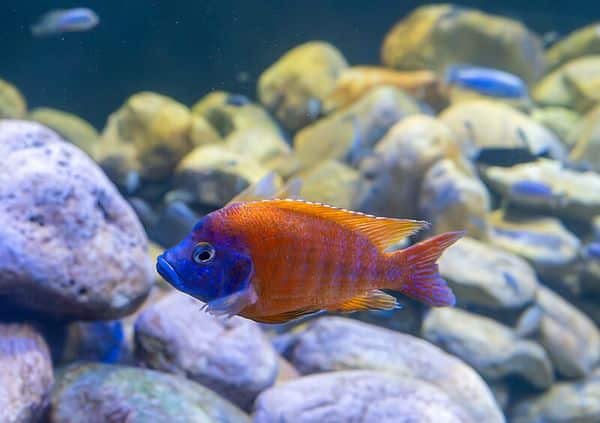
    When considering tankmates for Peacock Gudgeons, make sure to choose peaceful fish species that won’t pose a threat. Aggressive or larger varieties like cichlids, big catfish and predatory fish should be avoided as they can harm the gudgeons or even eat them! Here are a few bad examples:

    Breeding

    Peacock Gudgeon breeding is an enjoyable and rewarding pastime for experienced freshwater aquarium keepers. To initiate breeding, it’s important to source a mating pair of the species before transferring them into their own separate breeding tank. Providing nutrient-rich live food together with places they can hide, such as in caves or PVC pipes, will help enhance reproductive success. The female will lay between 50 – 100 adhesive eggs which the male then fertilizes. There is an excellent video by Dans Fish below that goes through the process.

    The Peacock Gudgeon is unique as its the males who take care of the eggs until they hatch. They look after them until hatching happens 8 – 10 days later on average. It’s actually a better idea to have the male watch the eggs over female peacock gudgeons (as the female may actually eat the eggs).

    Once those eggs have hatched, parental duties stop from that point forward and you must provide suitable meals for your new Peacock Gudgeon fry. Foods like powdered feed plus infusoria so your fry can thrive properly until reaching maturity when eating baby brine shrimp becomes necessary again. With attentive care breeders should find experiencing reproduction within this fish species both fascinating & beneficial!

    Mating Behavior And Egg Care

    When it comes to breeding, the unique courtship rituals of Peacock Gudgeons are noteworthy. An aquarium containing 6-8 individuals will allow each one an opportunity to choose their desired mate, during which time the male displays outstretched fins in order attract his counterpart into a secure hideout.

    Once there, she lays her eggs on the ceiling and is then expelled from this chamber by him. Who then assumes responsibility for protecting them until they hatch? During this incubation period, he vigilantly guards over them while fanning with his gills as well as helping clean any dirt that may form around them both assisting with oxygen circulation when necessary (the female can lend assistance here).

    By being mindful of these behaviors associated with reproduction, hobbyists should have no problem successfully raising these captivating freshwater fish species!

    Common Health Issues

    Aquarium fish such as Peacock Gudgeons can be prone to common freshwater fish illnesses, including ich, worms and parasites, hole-in-head disease and gill flukes. It is important for aquarists to recognize the signs of these potential issues in order to ensure their aquatic friends remain healthy.

    Early diagnosis followed by appropriate treatment is essential if you spot any indications that your Peacock Gudgeons could be suffering from an illness – whether it’s white spots on its body (indicative of ich), rubbing against decorations (suggesting a parasite infestation) or abnormal growths on its head/face area (symptomatic of hole-in-head).

    Preventative Measures and Treatment

    In order to maintain the wellbeing of Peacock Gudgeons, it is essential to keep their tanks clean and cycled. Regularly check on water conditions. Check for the follow levels regularly:

    Stress is another major factors. Keep compatible tank mates as explained in the previous section and feed your fish a balanced diet. Make sure any potential health issues can be addressed quickly before they become more severe.

    When introducing new fish or treating existing illnesses such as ich, worms, or hole-in-head diseases, isolation in a quarantine tank along with relevant medication are critical steps for prevention and treatment methods respectively. Providing them an adequate diet while also creating a stress free environment plays equally significant roles in protecting these fishes’ health both short term and long term from possible problems down the road.

    Frequently Asked Questions

    Is Peacock a gudgeon community fish?

    If you’re pondering the idea of having Peacock Gudgeons in your tank, it’s beneficial to maintain a group. They are peaceful and non-violent creatures, so living together will support their physical health as well as emotional wellbeing. The ideal number is 6 to 8 members – that way there’ll be ample space for them to explore and swim around freely.

    How many peacock gudgeons in a 10 gallon?

    If you have a 10-gallon tank, how many Peacock Gudgeons should you keep? Generally speaking, it’s best to keep 6 or fewer in a 10-gallon tank. That being said, some people believe that even a 10-gallon tank is big enough for this species of fish since they don’t swim a lot.

    Ultimately, it’s up to you!

    Is Peacock a gudgeon community fish?

    The Peacock Gudgeon is an ideal selection for any type of community tank due to its peaceful disposition and attractive colors. It’s recommended that you add a minimum of three to four in order for them all to get along comfortably, so if this vibrant fish appeals to you, it would be beneficial keeping at least the specified number together.

    This species will bring life into your tank with their vibrancy and presence – don’t miss out on having these lovely creatures as part of your aquatic family!

    Can I keep 1 Peacock Gudgeon?

    When it comes to Peacock Gudgeons, experts suggest that a group of at least 6-8 individuals is the ideal setup. Even though these fish can survive in smaller groups or by themselves, they are small. More content when there’s plenty of social interaction among them. Thus, for optimal wellbeing and happiness levels, keeping your gudgeons as part of an extended family is highly recommended!

    Are peacock gudgeons aggressive?

    From what people have shared, peacock gudgeons are usually peaceful, but male peacock gudgeons may become aggressive toward each other when they’re competing for resources. Though aggression is rare, it’s best to keep an eye out in case any disputes arise between fish of the same size.

    Generally speaking, peacock gudgeons should be okay living with other species peacefully.

    Closing Thoughts

    Caring for Peacock Gudgeons is truly gratifying as these captivating and serene creatures give a vivid look to your tank. By understanding how to best meet their needs in terms of setup, water parameters, feeding routines and even breeding practices, you will be able to create an ideal habitat where they can prosper. With the right attention given to them, peacock gudgeons will bring splendor into your aquatic environment that should last many years ahead.

  • A Care Guide to The Bolivian Ram: Tank Setup, Mates, & Breeding

    A Care Guide to The Bolivian Ram: Tank Setup, Mates, & Breeding

    Learn all about Bolivian Rams, a mesmerizing and easy to keep freshwater fish that will soon become the centerpiece of your aquarium! This guide provides extensive knowledge on these captivating creatures – from where they originated to what their appearance is like, how to set up an ideal tank for them, as well as providing info on feeding habits, social behavior in captivity. Tips regarding breeding characteristics and health are also discussed. It’s time to start exploring this underwater world of Bolivian Rams!

    Key Takeaways

    • Bolivian Rams are a peaceful, hardy species native to the Amazon River Basin.
    • Caring for Bolivian Rams requires suitable tank setup and maintaining optimal water parameters.
    • Appropriate tank mates should be chosen to ensure a stress-free social environment and prevent common health issues.

    Species Overview

    Scientific NameMikrogeophagus altispinosus
    Common NamesBolivian Ram, Bolivian Butterfly, Ruby Crown Cichlid
    FamilyCichlidae
    OriginBolivia, Brazil
    DietOmnivorous
    Care DifficultyIntermediate
    ActivityActive
    Life Expectancy4 – 6 years
    TemperamentPeaceful
    Tank LevelMiddle to bottom
    Minimum Tank Size30 gallons (113 liters) for a pair
    Temperature Range75-82°F (24-28°C)
    Water Hardness3-10 dKH
    pH Range6.0 – 7.5
    Filtration/Water FlowModerate
    Water TypeFreshwater
    BreedingMouthbrooder
    Difficulty to BreedModerate
    CompatibilityPeaceful when not breeding
    OK, for Planted Tanks?Yes

    Overview And Origins

    Mikrogeophagus altispinosus, commonly known as Bolivian Rams, are an incredibly popular choice among freshwater aquarium enthusiasts due to its stunning colors and peaceful behavior. This South American species is native to the Amazon River Basin in Bolivia where it can be found swimming around slow-moving shallows with plenty of plant life and overhanging trees providing shade for them on river beds that may consist of sand or mud. The hardy fish reach between 5 – 8 cm (2 inches, 3.1 inches) depending on gender. Males usually measure 6cm/2.4inches whereas females stand at about 5-5.5 cm / 2”).

    Due to their docile nature, they are perfect tankmates for a community tropical fish tank containing other equally calm species from different regions which will all coexist peacefully together, granted they have space to swim and a natural-looking habitat to call home.

    Appearance

    The Bolivian Rams are eye-catching with their pale yellow body and orange head and chest, coupled with vertical gray stripes. A large black spot on the fish’s extended oval shaped frame is marked by vertical faded black lines. They have pointed fin rays edged in a vibrant red hue which makes them visually outstanding for any aquarium environment.

    Bolivan Ram Cichlid

    These colorful aquatic animals come in a range of hues such as silver, blue, yellow or even red. Male Rams can be identified easily due to their more elongated dorsal fins when compared to females, creating an interesting sexual dimorphism between genders of this species.

    Caring For Your Bolivian Ram

    Creating the ideal conditions for your Bolivian Rams involves setting up a suitable tank, staying on top of water parameters, and implementing the necessary equipment and decor to recreate their natural habitat.

    In this guide we will cover what is essential for proper care: from selecting the right size aquarium, monitoring optimal levels in the water environment to using supplies that replicate their native ecosystem. Taking these steps in this guide will give your Bolivian rams the best start possible when introducing them to their new home.

    Tank Size and Setup

    A Bolivian Ram tank of at least 30 gallons is suggested to mimic their natural surroundings which typically include a sandy or muddy riverbed with various plants and shaded sections. This set-up should incorporate a fine sand base, rock formations, decorations such as driftwood and caves alongside live plants like:

    It’s important that the setup has wide open areas in the center so they can comfortably swim around while also providing enough hiding spots. This replicates their original habitat letting them feel secure.

    Editor’s Choice
    Manzanita Driftwood

    Editor’s Choice

    Manzanita offers it all. Great shape, low tannins, quick to water log and reasonably priced. It’s the ultimate driftwood!

    Click For Best Price Click For Branch Pieces

    Water Parameters

    It is vital for the wellbeing of your Bolivian Rams to have ideal water conditions. These fish are happiest in shallow and slow waters with a hardness rating between 6-14 dGH, preferably at 10dGH.

    The temperature should remain within 73.4 – 78°F while keeping their pH levels around 6–7.5. Keeping the water flow as close as possible to what they would find naturally helps a lot. They prefer a low flow filter and plants that provide light shade. To ensure these beautiful creatures stay healthy it is important to constantly monitor the parameters with test kits and a thermometer and keep them under control. If you live in a colder environment, it would make sense to purchase a heater as their preferred water temperature is in the mid level of tropical fish.

    Essential Equipment

    The well-being of Bolivian Rams can be maintained by installing the right equipment in their habitat. External canister filters like a OASE Biomaster or a hang-on filter can provide an environment that has plenty of biologicial filtration to keep the tank stable. Both these filters can have their flow adjusted to stimulate slow flowing waters, which these fish thrive in best. Low nitrate levels and dim lighting should also be considered to give them more sheltered areas.

    By having all this essential gear installed for your rams, you are ensuring they have everything they need to lead healthy lives. The use of live plants is highly beneficial to these peaceful freshwater fish. Aquarium driftwood also provides some color variation while also being a stabilizing factor in keeping the pH lower and the hardness on the softer side.!

    Feeding Your Fish

    A nutritious diet that is varied will keep your Bolivian Rams in good shape and bring out their best colors. They are omnivores, so they can eat both live or frozen food items like bloodworms, brine shrimp, daphniae, tubifex and prepared foods like flakes and pellets. To get the most benefit for them, it’s ideal to give them a combination of easy to feed food like a high quality pellet or flake food, plus some fresh-frozen options from time to time.

    Best Flake Formula
    Cobalt Aquatics Cichlid Flakes

    With probiotics and specially formulated for Cichlids, this is bar none the best flake formula available for your Africans

    Buy On Amazon Buy On Chewy

    You should dish out small amounts several times daily. Pellets work best since this type of food won’t drift away before reaching the bottom, where these fish hang out most often. Pellet food can also be fed into an automatic feeder easier, which is great for ensuring they are fed the correct amounts and often.

    When offered a range of healthy meals on a regular basis, you’ll find that all aspects improve: physical condition along with looks, better behavior, and even breeding will occur when your fish is in optimal condition!

    Social Behavior And Compatibility

    Bolivian Rams are known to be an excellent addition to any community aquarium due to their placid nature. They do best when kept in a group of 6-8 and often roam about the open spaces or scavenge the tank for food.

    Top Tank Mates

    When creating a community tank, the addition of Bolivian Rams must be approached carefully. These fish are peaceful and can exist harmoniously with various tankmates like Cherry Barbs, Platyfish, Molly Fish etc – it is important to consider each species’ requirements when adding them in order to create an environment suitable for all involved.

    These fish live harmoniously with other peaceful, similar size fish, so selecting compatible Bolivian Ram tank mates is important for creating a low stress environment. Such suitable companions include:

    Keeping appropriate water parameters that are appropriate for all the fish you are planning to house as well as providing plenty of swimming space along will help diffuse any possible aggression or stress from overcrowding. Do your best to ensure that everyone cohabits happily together!

    Make sure you do your research carefully when selecting Bolivan Ram tank mates. Correct selection of other peaceful species will create a wonderful community tank where all fish can thrive!

    If done correctly, then including other fish varieties within the same aquarium as your Bolivians should not cause any issues meaning you can enjoy watching how they interact peacefully amongst one another giving endless hours of entertainment and peace!

    Bad Tank Mates

    Jack Dempsey Fish

    The Bolivian Rams, although peaceful in nature, need to be kept away from aggressive tank mates and territorial fish species. Here are a few examples:

    • Large aggressive Cichlids
    • Arowanas
    • Any fish that can fit your ram in its mouth

    These aquatic animals should not share the tank as they can cause considerable distress, harm, or even kill/eat your rams.

    To create an optimal environment for them, you must make sure their tankmates are calm and non-threatening. Too much stress is a recipe for disease outbreaks and livestock losses. It is the #1 killer catalyst in aquariums.

    Breeding

    For aquarists passionate about fish, breeding Bolivian Rams can be a satisfying and rewarding experience. I’m suppling a video from Lowell’s Fish Lab that describes breeding Bolivians at homes. I’ll go over more detail below.

    Breeding is attainable if the necessary conditions for successful reproduction are met. Here are a few conditions to keep in mind.

    • Having a species-only tank with just these fish
    • Suitable substrate and rocks like flat stones or plants of small leaves
    • Specific hardness and proper pH

    Let’s look closer at the breeding process. We’ll go over how to produce spawns as well as taking care of newly hatched fry from birth until they become adults.

    Spawning Process

    When it comes to reproduction, female Bolivian Rams look for flat stones or cavities as their spawning place. The number of eggs is usually between 100 and 300, which are then fertilized by the male. Both parents take on a protective role, even transferring fry in their mouths from one part of the tank to another so they can be better concealed. To ensure successful hatching of these eggs as well as healthy growth. Temperature levels needs to stay within 80.6-82°F and pH should be kept around 7-7/5.

    Raising Fry

    After the eggs are hatched, Bolivian Ram larvae will rely on their egg sacs as sustenance for approximately a week. Once they have developed enough to move around in water (7 days old), the parents guide them into groups and search for food sources. At this point, it is beneficial to feed these fry infusoria then move up to brine shrimp.

    It’s recommended that keeping Bolivian Rams at least two, three months within the breeding tank before placing them in community aquariums. This provides them with optimal growth and health benefits, which they carry over when transferred to their permanent home.

    Common Health Issues and Prevention (Common Freshwater Tank Ailments)

    By monitoring the water quality and parameters, as well as providing a suitable environment with appropriate tankmates for your Bolivian Rams, you can significantly lessen their risk of disease. Ich is one such health issue that these freshwater fish are particularly vulnerable to due to inadequate or inappropriate environments that allow for this parasite to take hold.

    Increasing the temperature of the water or applying copper-based medications may be necessary treatments. We cover diseases in more detail in our fish diseases blog post.

    To prevent any sickness from arising in your bolivian rams it’s important to ensure high standards of overall aquatic wellbeing so they remain healthy and happy.

    Frequently Asked Questions

    Are Bolivian Ram cichlids aggressive?

    The Bolivian Ram cichlid, although naturally shy and timid around other fish in a community aquarium setting, can show some territorial behavior when protecting its young. They are not overly aggressive toward their tankmates. It is safe to say that Bolivian ram cichlids typically do not cause problems for most fish that cohabitant with them.

    How big do Bolivian Ram cichlids get?

    When it comes to Bolivian Rams, they normally reach 8-10cm in size and should be kept in an aquarium that is 15 gallons or bigger. This species of fish has the potential to grow up to 3-4 inches long, so going to some bigger will be best for if you want to house other fish with them.

    Do Bolivian Rams need to be kept in pairs?

    It is recommended to keep Bolivian Rams in pairs, as they are a social species. Having two of them together makes the tank more active and vibrant, something that these fish truly appreciate! It helps ensure that their environment is comfortable and pleasing so they can feel secure.

    Having companionship for this type of fish will increase its happiness level. Since they are easy to differentiate between male and female, you can also buy a pair, and maybe one day they could breed.

    Will Bolivian Rams eat small fish?

    Bolivian Rams have a tendency to eat small fish, so it is best to be wary of any which are too small in size and can fit in their mouths. Small fish like Chili Rasboras would be an example of fish not to house with them.

    Are Bolivian Rams easy to keep?

    Bolivian rams can be an amazing fish for any aquarium and are quite hardy as long as the tank conditions are kept up. They possess sociable behavior, making them suitable to live in community tanks with other species. Caring for these cichlids doesn’t require too much knowledge; only a basic understanding of their needs should suffice.

    Closing Thoughts

    Creating a thriving home aquarium for Bolivian Rams requires dedicated effort to provide the right tank setup, keep ideal water parameters and choose compatible tank mates. With care and an eye towards offering their well-rounded diet, these beautiful peaceful fish can add much to any community aquascape – providing captivating entertainment with your own underwater oasis.

  • A Comprehensive Guide to Bala Shark Care: Tank Size, Food, Lifespan, and More

    A Comprehensive Guide to Bala Shark Care: Tank Size, Food, Lifespan, and More

    Let’s explore the fascinating world of Bala Shark care together! These beautiful freshwater fish will add some life to your aquarium, so let us guide you through everything from their origin and look to diet requirements, social behavior in captivity, breeding habits and potential health issues. With this comprehensive overview on caring for Balas Sharks under our belts, we can become true experts at it!

    Key Takeaways

    • Large and peaceful, Bala Sharks make a captivating addition to any large community tank!
    • With proper care and nutrition, they can live up to 10 years
    • They do best in a group in at least a 150 gallon tank with specific substrate & decorations.
    • Choose compatible freshwater tank mates wisely for a harmonious environment + follow preventative measures for optimal health!

    Species Overview

    Scientific NameBalantiocheilos melanopterus
    Common NamesBala Shark, Tricolor Shark, Silver Shark, Tricolor Minnow
    FamilyCyprinidae
    OriginSoutheast Asia – found in rivers and lakes of Thailand, Borneo, Sumatra, and Malaysia
    DietOmnivorous
    Care DifficultyIntermediate
    ActivityActive
    Life Expectancy10 – 15 years
    TemperamentGenerally peaceful buy may eat small fish
    Tank LevelMid to top level
    Minimum Tank Size125 gallons
    Temperature Range75-82°F (24-28°C)
    Water Hardness5-15 dKH
    pH Range6.5-8.0
    Filtration/Water FlowModerate to Strong
    Water TypeFreshwater
    BreedingLive births
    Difficulty to BreedDifficult
    CompatibilityPeaceful and social larger fish
    OK, for Planted Tanks?With caution

    Bala Shark Basics

    Bala Sharks, also known as Tricolor Shark, Silver Shark, Bala Fish, and Balantiocheilos melanopterus, have a very distinct appearance with their silver scales along with black edged fins that make them appear similar to sharks. These freshwater fish are native to Southeast Asia, but they can be found in community tanks around the world due to their peaceful nature and active behavior making for delightful aquarium companions!

    An adult Bala Shark typically reaches up to thirteen inches (over 1 foot) so it makes quite an impressive centerpiece species when kept properly. They feature a unique triangular shaped dorsal fin which adds even more of this ‘shark like‘ appeal while swimming enthusiastically throughout your tank setting.

    A Peaceful shoaling and active fish by nature, these freshwater beauties peacefully interact alongside other comparable varieties within its environment -plus, you’re sure to enjoy having them around, too, since some may live up to 10 years or longer!

    Origin

    Bala Sharks are native to rivers and lakes of Southeast Asia, which provide ideal fast-flowing waters in their natural environment. These omnivorous creatures both consume animals and vegetation as food sources.

    It is noteworthy that Bala Sharks have been labeled endangered by the IUCN1. Most today sold in aquariums come from farms so they can be purchased with a sustainable mindset for your personal community tank.

    Appearance

    How Does A Bala Shark Look Like

    The beauty and grace of Bala Sharks with their metallic silver bodies and pointed fins bring plenty of joy to home aquarium owners. It’s possible to identify the gender by looking at physical differences – while females are typically more curvaceous on their bellies, while males tend to be larger in size.

    These aquarium fish have a very gentle demeanor which makes them adored around the world, captivating anyone who catches sight of them swimming about their environment.

    Lifespan

    When it comes to their lifespan, the Bala Shark can enjoy up to ten years in a healthy environment. The longevity of these fish species greatly depends on factors such as diet and tankmates. Proper water quality is key for them living out their full lifespan.

    To guarantee this creature reaches its maximum potential, you must offer balanced meals and provide ideal conditions like enough room, low stress, or compatible companions. Avoid overcrowding at all costs! Stressors should be avoided if you want your Balas to make the most of every moment they have with us!

    Tank Requirements

    Creating the ideal environment for Bala Sharks is imperative in order to maintain their well-being and contentment. These peaceful fish can grow quite large, making it necessary that they have ample swimming space available within the tank. Replicating their natural habitat with a selection of suitable decorations and correct water parameters are key components when providing proper care for these aquatic creatures.

    For successful bala shark care, regularly checking up on tank conditions is an absolute must as this will minimize common ailments amongst them while keeping them healthy at all times, including offering plenty of hiding places plus compatible companions! Nutrition plays another important factor too. By providing your fishy friends with quality feed, you can guarantee that they stay nourished in their underwater abode.

    Ideal Tank Size

    Since a Bala Shark gets large, they need sufficient space to grow properly. A minimum tank size of 120 gallons is suggested for them. If the fish are fully grown and supported by a group, then a large aquarium of 150-gallon and at minimum, a 5 feet wide tank should be provided. When setting up an aquarium with multiple bala sharks, remember that more room may be needed as they increase in number, so there must always be enough swimming area available for all occupants to move freely without crowding each other.

    Substrate And Decorations

    For Bala Sharks, a natural environment can be replicated with a dark pebbly substrate. Driftwood, large rocks and aquatic plants should also cover the water surface without blocking any view from underneath, creating an ideal living space for these creatures to thrive in!

    Premium Pick
    Buce WSYSIWYG Driftwood

    What You See Is What You Get!

    Buce offers a WSYSIWYG show pieces. Great for aquascaping. They make your aquascapes pop like no other!

    Click For Best Price

    Water Parameters And Filtration

    In order to keep your Bala Shark healthy and happy, water conditions as well as filtration, should be kept at ideal levels. It is recommended that the temperature of their tank stay between 22–28°C (72-82°F) for optimal health. The pH level should also remain within the 6.0, 8.0 range with soft to medium hardness (5 – 12 dGH).

    Keep your ammonia and nitrites at 0. Nitrates should ideally stay under 40 PPM. While they are documented cases of these fish doing fine at higher levels, you still try to adhere to general tank-keeping best practices.

    Having a quality external filter plus regular 25-35% weekly water changes are both necessary for maintaining the pristine condition of your fish’s habitat so they can swim comfortably at all times.

    Diet And Feeding Recommendations

    Maintaining your Bala Shark’s well-being requires providing a balanced diet with all the necessary nutrients. This should include live and dried foods such as insects, crustaceans, bloodworms, brine shrimp, or anything from plant matter to diced fruits and vegetables. Such variety will keep them vigorous throughout their life.

    It is important that you give them an assortment of nourishing foods in order for them to remain healthy and vibrant – both with regard to movement & appearance!

    Feeding Schedule

    Your bala shark should have a regular meal plan for you in order to keep them healthy. It’s advised that you give the fish 3 meals daily due to their high activity levels. Only give them enough food so they take around 1 minute each time eating it. Monitoring these portions correctly is fundamental since too much of it could lead to unhealthy water conditions. Providing a balanced diet along with steady feedings will help ensure the thriving existence of your Bala Shark!

    Social Behavior And Ideal Tank Mates

    Bala Sharks are usually peaceful and get along well with other fish types, making them a great choice for any shared aquarium. When deciding which tank mates to select for your Bala Shark, it is essential to be mindful of the best compatible species, as not all will work out harmoniously together.

    These attractive peaceful fish can peacefully live in an environment with various different kinds of fish while still maintaining their community tank habitat. Nevertheless, some combinations may prove fatal if incompatible species are selected. It’s important that careful consideration when choosing fishes suitable for coexistence alongside Bala Sharks should occur before doing so.

    Good Tank Mates

    Lake Tebera Rainbowfish

    When selecting tank mates for Bala Sharks, it is important to choose larger non-aggressive fish that will not compete with them in terms of food or territory. Here are some good choices:

    As long as the fish are peaceful creatures and large enough, they should make ideal companions, whereas smaller fish should be avoided as they may end up being eaten by your rapidly growing bala sharks! To ensure harmony between all the aquatic animals living together, pay close attention when deciding which species share a space. A stress-free environment can then be created thanks to carefully curated compatible tank mates for these majestic freshwater swimmers.

    Bad Tank Mates

    Maintaining a suitable tank environment for your Bala Shark is paramount, so it’s important to ensure compatible fish species are selected as their tank mates. Here are some bad tank mates:

    Semi-aggressive and competitive types of fish should not be cohabited with these sharks due to the fact that they may bully your bala shark. It would also be wise not to include small specimens such as small tetras in the same aquarium – as the bala shark have been known to consume them too! Finding appropriate bala shark companions will create an enjoyable atmosphere where both can thrive peacefully together.

    Breeding: Challenges and Tips

    Breeding Bala Sharks can be a difficult task due to the specific prerequisites for successful reproduction. Most of those in the aquarium trade are spawned on Asian fish farms, with few aquarists succeeding at breeding them in their tanks. This section will explore the struggles associated with growing these tropical fish and suggest some tips to anyone wanting to try it out themselves.

    Sexual Maturity and Identification

    Identifying the sex of Bala Sharks is important if you wish to breed them. Female Bala Sharks are more common than males in the wild. Female Bala Sharks are smaller than males and their bodies tend to be curvier, while they reach sexual maturity at around three years old with a size of five inches (13 cm). It’s possible for one to differentiate between sexes based on their shaped body and length (video source for reference).

    It’s key that when attempting breeding procedures in regards to the Bala Shark, one can distinguish male from female due not only to achieving better results, but also having higher success rates altogether.

    Breeding Environment

    In order to breed Adult Bala Sharks, you must create an environment that replicates their native habitat in a tank of at least 55 gallons. Tank water temperature should be kept between 72-82°F with a pH level around 6.5-8 and 10, 13dGH hardness levels for the best breeding results.

    Fast flowing water and plenty of vegetation is recommended as it creates a more inviting atmosphere which often helps these silver sharks spawn successfully. Although difficult, if one pays close attention to detail when setting up this specific type of aquarium, they may witness fascinating spawning behavior from Bala sharks!

    Common Health Issues And Prevention

    Bala Sharks, although usually quite hardy and disease-resistant, can suffer from problems such as dropsy when the tank environment is not up to par. Maintaining optimal water parameters along with a balanced diet are key factors in maintaining their health and preventing these types of issues from occurring.

    To ensure that Bala Sharks remain healthy, it is important to monitor them closely for signs or symptoms of any type of illness. They should also be provided with proper care so that their habitat remains clean and safe at all times. Feeding them a nutritionally sound diet will provide essential nutrients which can help reduce potential risks associated with poor hygiene conditions in an aquarium setting.

    Disease Susceptibility

    Bala Sharks are usually sturdy. They can contract typical fish ailments such as Ich and Dropsy. The signs of Ich typically involve white specks on the body and fins while dropsy is a type of bacterial infection that causes bloating along with scales sticking out from their bodies.

    To address these issues, one needs to change up the water in combination with antibiotics or other medications prescribed. Our blog post regarding fish diseases has several suggestions on medications to use.

    Preventative Measures

    To keep your Bala Sharks healthy and free from diseases, you should take several steps. Firstly, make sure to maintain high water quality in the tank they live in. Also, ensure that your Bala Shark diet is balanced and there isn’t overcrowding of fish inside the aquarium to prevent stress.

    On top of this, it’s important to regularly inspect your Bala Shark for signs of common illnesses so any necessary treatment can be administered right away. Look for warning signs in your Bala Shark such as:

    • Rapid breathing
    • Flashing or rub on surfaces
    • Staying at the top of the tank or current to aid in breathing
    • Swimming upside down
    • Loss of appetite

    By taking these measures, you’re looking after them properly, ensuring their wellness will last!

    Frequently Asked Questions

    Is a bala shark aggressive?

    Bala sharks have a shy and mild personality, so they’re not troublesome in any way. You should always keep them with five or more of their own kind for social and safety reasons as these non-aggressive fish do not possess the ferocity needed to stand up against semi-aggressive and aggressive aquatic life forms in the aquarium.

    What you can expect is some amazing enjoyment watching these delightful animals!

    How big of a tank does a bala shark need?

    When it comes to tank size for a Bala Shark, the minimum capacity should be at least 125 gallons. Going bigger if you can, is even better. Because the Bala Shark enjoys swimming actively around their environment and need lots of space so they don’t become easily stressed out or frightened.

    What fish can go in a tank with a bala shark?

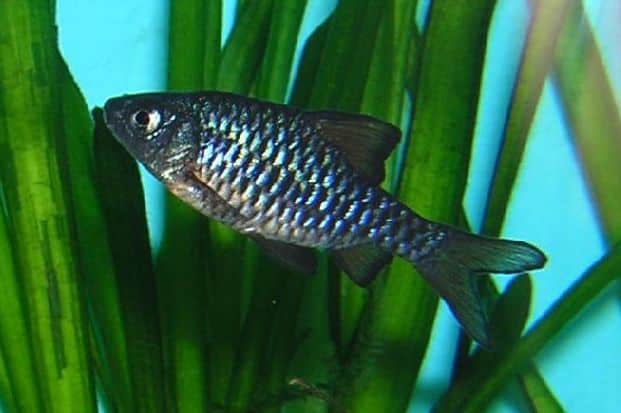
    Tiger Barbs are an ideal choice if you’re seeking to inject some excitement into your Bala shark tank. Their lively personalities, vibrancy and vivid orange-black stripes make them a terrific addition that can add life to any aquarium, plus keep the sharks on their toes!

    These small but feisty fish provide perfect amusement for all who look upon it in admiration at its activities. Plus, they’ll give Bala Sharks something interesting (and perhaps even challenging) to interact with in their environment.

    How many Bala sharks should I keep?

    For their wellbeing and pleasure, it is wise to maintain a sizable aquarium with at least five Bala sharks. This will grant them enough room for swimming whilst also helping to shape strong connections between the fish. In turn, this should hinder any kinds of bullying or aggressive postures among each other.

    Are Bala sharks hard to keep?

    If you have the necessary understanding of how to maintain an appropriate living environment for your Bala Sharks, taking care of them should be a simple task. If looked after with proper attention and maintenance, they can stay in excellent health within your tank.

    So why not give it a go? Give the Bala Shark what they need to prosper and watch as their health flourishes!

    Closing Thoughts

    When it comes to Bala Shark care, having the right tank conditions, a nutritious diet, and appropriate tank mates will help ensure that your fish thrives. The captivating appearance of these peaceful creatures makes them a delightful addition to any freshwater aquarium. If you arm your fish keeper self with this guide’s knowledge and confidence, then enjoying an adventure with bala sharks should come easy!

  • A Comprehensive Guide to Red Claw Crab Care (Diet, Breeding, and Tank Setup)

    A Comprehensive Guide to Red Claw Crab Care (Diet, Breeding, and Tank Setup)

    Are you intrigued by the idea of adding a little bit of exotic beauty to your home with a semi terrestrial crab species? Red claw crabs can make excellent pets for those who are prepared to offer them the necessary care and attention. This guide will teach you everything about their diet, breeding needs, and tank setup. So if owning these fascinating creatures is something that interests you, let’s start exploring!

    Key Takeaways

    • Red Claw Crabs are an interesting addition to any aquarium, originating from the brackish mangrove swamps of Asia and requiring a semi-aquatic tank setup.
    • Gender identification is essential for providing suitable habitat and preventing aggression between Red Claw Crabs, promoting their health and successful breeding.
    • Proper care of the Red Clawed Crab requires maintaining correct salinity levels in water parameters, creating a secure environment during molting process, providing balanced diet with variety of food sources can ensure long lifespan & optimal health of Red Claw Crabs.

    Species Overview

    Scientific NamePerisesarma bidens
    Common NamesRed Claw Crab, Red-clawed Crab, Mini Crab, Claw Crab, Thai Crab
    FamilySesarmidae
    OriginSoutheast Asia – found in regions such as Indonesia, Malaysia, and Singapore
    DietOmnivorous
    Care DifficultyIntermediate
    ActivityNocturnal
    Life Span2-4 years
    TemperamentGenerally peaceful but may display territorial behavior towards their own species or similar-looking gobies.
    Tank LevelBottom-dweller, spends most of its time near the substrate
    Minimum Tank Size10 gallons
    Temperature Range75-82°F (24-28°C)
    Water Hardness5-15 dKH
    pH Range7.0-8.5
    Filtration/Water FlowModerate
    Water TypeBrackish Water Tanks
    BreedingEgg Layer
    Difficulty to BreedDifficult
    CompatibilityPeaceful fast moving fish or species only
    OK, for Planted Tanks?With caution

    Overview of Red Claw Crabs

    Red Claw Crabs, a species of crab originating from Asian mangrove swamps, are quite fascinating due to their coloring and size. These animals possess a leg span that can reach up to 4 inches with distinctive red claws set against its dark brown camouflaged body.

    Notwithstanding their small stature, the personality which these Red Claws emit is playful, making them very attractive additions for any aquarium enthusiast seeking something interesting yet captivating at the same time!

    Origin And Habitat

    Red Clawed Crabs are fascinating mini crustaceans that come from mangrove swamps in Asia. Red Claw Crabs live in a brackish water environment that needs to be duplicated in an aquarium setup for them to stay healthy. In nature, these crabs inhabit shallow rivers and estuaries where they hunt for food while avoiding predators. They need a semi-aquatic environment, needing land and water both in the aquarium set-up. This replicates their real environment so that red clawed crab owners know the critters will flourish securely at home.

    Physical Characteristics

    Vivid red to blazing orange claws and legs give Red Claw Crabs a stunning look. Brown designs decorate their carapace, working as camouflage in the wild environment they inhabit. The species of crab features 8 walking limbs and two pincers combined with protruding compound eyes from its shell (meaning they have 10 limbs in total!).

    Red Claw Crab

    Red Claws present various distinctive attributes such as vibrant colors ranging from flaming oranges through reddish-tones together with differences regarding size/shape making them special amongst all possible crustaceans found worldwide due to living in diverse natural habitats.

    There are differences in male and female crabs. These differences will help you tell the sex of your red claw crab. Let’s look into that subject in the next section.

    Sexing Them

    It is of paramount importance to distinguish between the male and female Red Claw Crabs, not only for breeding purposes but also to prevent aggressive behavior within their shared tank. Males have brighter claws that are larger in size while females tend towards a darker coloring with more slender appendages.

    Male specimens exhibiting larger shells along with brighter, more obvious pincers while underneath on their shelve will usually come off oblong or pointed. Female ones show relatively smaller darker claws along with rounded underside pieces instead.

    Housing multiple males will likely result in fighting and even death, so identifying gender beforehand is essential if one wishes to create harmony among these crustaceans living together. This way you ensure your crabs live peacefully without any turmoil arising from territorial disputes due solely to unbalanced gender ratios!

    Male Vs Female

    The male Red Claw Crabs have bigger shells, noticeably brighter claws and the underside of their exoskeleton is pointed or elongated. On the other hand, females possess smaller pincers that are darker in color with a rounded shell underbelly. To provide optimal breeding opportunities for this species, it’s important to understand the sex ratio: having enough males and females allows success in reproduction whilst keeping disputes at bay between them all!

    Below is an identification chart used for Emerald crabs. The same shapes of the abdomen apply for these crabs too.

    Significance of Gender Identification

    It is important to be able to distinguish the genders of your Red Claw Crabs in order to promote their well-being and successful breeding. Having a tank setup that accounts for each gender’s needs allows you to provide them with the environment they need.

    Recognizing the sexes helps you avoid aggressive behavior between crabs as well as any potential territorial disputes which could occur without distinguishing male from female specimens.

    Care

    Proper care is absolutely vital to maintaining the health and contentment of your Red Claw Crabs. A well-managed aquarium, suitable water conditions, and a right diet are all factors that play an important role in taking proper care of these fascinating creatures.

    In this section, we will study various aspects concerning how to take good care of your red clawed crabs, which involve tank needs like heating & lighting as well as creating ideal environment requirements so they can be happy while living in captivity longterm. By adhering to these suggestions you’ll guarantee providing a tranquil habitat where your red clawed crabs feel secure enabling them to remain healthy with joy throughout their time together bringing wonderful memories into your world filled with aquatic wonder!

    Lifespan And Health

    For Red Claw Crabs to push towards that max lifespan of up to 4 years, they need proper care and the right habitat. Brackish water with a paludarium environment is the most optimal environment for their health. It is important that owners pay attention to any possible signs of sickness in their crabs such as fungal infections, bacteria growths and parasites so these can be prevented with regular tank upkeep, a low stress environment, and maintaining ideal tank parameters.

    Providing your red claw crab with appropriate housing conditions together with monitoring its wellbeing regularly will ensure it enjoys a long healthy existence!

    Tank Requirements

    Having a secure tank of appropriate size is important for the health and well-being of your Red Claw Crabs. The minimum suggested container should be at least 10 gallons in volume, but an ideal one would include both dry land and aquatic environments with 24 inches or more widthwise, known as a paludarium. It’s also essential to cover any filtration devices inside so that crabs don’t become trapped trying to enter them, while having strong lids on top prevents those escape artist crabs from leaving!

    Water Parameters

    For proper Red Claw Crab health, brackish water is a must. This mix of salt and fresh water should have around one-sixth the salinity of seawater, with hard water with an alkaline pH between 7.0 and 8.0. To regulate their water temperature ideally at 70 to 88°F (22–26°C), aquarium heaters are recommended along with lamps above land sections so they can bask in warmth comfortably as well.

    Heating And Lighting

    To ensure the health and well-being of Red Claw Crabs, it is necessary to provide adequate heating and lighting. A submersible water heater should be used in their aquarium habitat so that temperatures can remain between 70-88°F (22-26°C). If you live in a warm climate, you may be able to pass on the need for a heater. However, a lamp is helpful for the health of your Red Clawed Crabs so they can replicate a sunny environment

    Positioning a heat lamp above the land portion of the tank provides additional warmth for them as well as an ideal place for molting activities. This basking area helps maintain optimal body temperature levels for your Red Claws too!

    Creating A Suitable Environment

    For the best health and wellbeing of your Red Claw crabs, it is important to replicate their natural habitat as closely as possible. You can do this by providing them with a semi-aquatic environment that has three parts water for every one part land. This type of setup will give your little crustaceans plenty of space to swim, play around in or hide beneath the substrate when they feel like taking some time out from being active!

    When creating an appropriate home for your red claw crab friends, there are certain elements you should take into consideration. Such as what kind of tank decor would suit them best and which substrates will work optimally within their enclosure. By recreating these favorable conditions in our own way, we can create an enjoyable living place specifically tailored just for them so they’ll be thriving happily all throughout life!

    Substrate Selection

    For optimal health and enjoyment of your Red Claw Crabs, selecting an appropriate substrate is essential. The most suitable material for these crabs would be finely textured sand. This allows them to burrow easily, which simulates their natural behavior in the wild. You can use it to design fun landscapes or create perches you can bury in it that will provide hours of entertainment.

    Great For Bottom Feeders
    Fine Natural Sand

    Natural sand is excellent for bottom feeder fish to forage around in.

    Click For Best Price Buy On Amazon

    Ensuring comfortability on walking surfaces is paramount when picking out a medium for your Red Claw Crab tank – sand remains as one of the best options available when caring for this mini crab!

    Decorating the Tank

    When it comes to decorating a tank for Red Claw Crabs, not only is the aesthetic appeal improved, but also an environment that is more natural and stimulating. The addition of rocks, driftwood, caves and dense planting can provide hiding places which are extremely important while they go through their molting process. Unfortunately, live plants should be avoided as these crabs tend to tear apart or pull out leaves from them.

    Editor’s Choice
    Manzanita Driftwood

    Editor’s Choice

    Manzanita offers it all. Great shape, low tannins, quick to water log and reasonably priced. It’s the ultimate driftwood!

    Click For Best Price Click For Branch Pieces

    In order for the Red Claws to have something fun yet challenging within their enclosure, it’s beneficial if you offer various surfaces on which they could climb up onto. Being able to explore around gives them physical activity, keeping red claw crabs from getting bored. This type of aquarium crab species loves climbing, so having plenty of structures available satisfies its need naturally!

    Feeding And Diet

    When it comes to Red Claw Crabs, providing them with a varied and nutritious diet is of utmost importance for their health. Such meals should include both fresh and frozen foods like brine shrimp or bloodworms as well as commercial fish pellets or flakes. A balanced mix will help your crabs stay healthy and happy! The recommended feeding frequency also needs to be considered in order that the Red Claws receive all the nutrients they need throughout their life.

    Varied Diet

    Providing an adequate array of foods is critical to the health and well-being of your Red Claw Crabs, so they receive all their needed nutrients. A balanced diet should include proteins such as bloodworms or small portions uncooked fish/prawns in combination with various veggies like peas, spinach and greens. These crustaceans also consume regular fish food and algae pellets on a daily basis.

    Feeding Frequency

    It’s important not to give them the same meal every day since this can bring about nutritional deficiencies that will end up affecting their health. Thus make sure you provide diversity when it comes to meals for optimal nourishment in Red Claw Crabs.

    It’s important that you keep an eye on how much your red claw crab is eating so they don’t become overfed, which can cause problems with the water quality and their health overall. That being said, establishing a regular feeding schedule while providing them with different foods will promote optimal wellbeing for these crustaceans and help ensure long-term success.

    Behavior And Social Interactions

    It is vital to have knowledge about the habits and social interactions of Red Claw Crabs in order for them to live a cozy and stimulating life. These timid, nocturnal animals hunt at night when they become more active on the floor of their tank. During daytime, they keep out of sight from others due to their territorial nature, where males compete for control while female crabs are seen chasing each other away.

    By being aware with regards to these behaviors as well as taking proper precautions, you can minimize unpleasantness between your crabs while ensuring that all will dwell harmoniously within its habitat: creating an ideal environment for red claw crab living!

    Nocturnal Activities

    Red Claw Crabs are mainly nocturnal animals, meaning they will be more active at night. To ensure their comfort and security during these hours of activity, it’s important to provide them with different places to hide (such as caves or rock crevices) so that they can explore for food on the floor using their walking legs and claws.

    Moonlighting is a great way to encourage daytime behavior in Red Claw crabs too. This should give you ample opportunity to observe your crab’s activities without compromising its wellbeing.

    Another thing to note when it comes to keeping an adult red claw crab is that they will happily redecorate their environment. Do not get hard set with your aquascaping, as it’s likely for them to decide they like the aquarium decorations in other locations instead!

    Territorial Nature

    Red Claw Crabs have a tendency to be territorial and may become aggressive towards each other or the fish in their tank. When it comes to this kind of behavior, males are more prone to fighting for dominance, while females usually just chase away any intruders from their area. It is advised that you give them adequate hiding places as well as space so they can create boundaries within the aquarium, which should help decrease aggression among them.

    Red Claw Crabs aggressive nature is usually attributed to lack of space and not having the proper male to female ratio. In order not only to increase harmony but also reduce hostilities between your Red Claws, having one male with two female crabs would be an ideal ratio when setting up your tank. This creates fewer opportunities for conflict between these species of crustaceans.

    Tank Mates And Compatibility

    When choosing tank mates for Red Claw Crabs, it is important to consider their aggressive and territorial nature as well as the brackish water requirements. This may reduce the number of suitable aquarium companions for these crabs. To ensure compatibility when housing Red Claw Crabs with other aquatic species, certain precautions should be taken into account.

    It can be difficult to find compatible tank mates that suit both environment and behavior needs. Understanding how best to combine different fish or invertebrates in one system will lead you towards a successful community setup involving your Red Claws!

    Suitable Tank Mates

    Black Molly

    When selecting companions for your Red Claw Crabs, it’s best to avoid slow-moving and bottom-feeding species in order to reduce the risk of aggression. Here are a few possible candidates:

    • Fast swimming fish that can avoid your crab in larger tanks
    • Mollies
    • Flagfish
    • Larger gobies

    These fish are usually more tolerant of the brackish water conditions that these crabs prefer, but you should monitor their interactions as individual personalities can differ. Keeping multiple males together isn’t recommended either since they could get into territorial disputes with each other, potentially causing harm or death.

    Bad Tank Mates

    When selecting tank mates for your Red Claw Crabs, it is important to avoid species that could potentially become aggressive towards the crabs. The following are bad choices when it comes to keeping Red Claw Crabs

    These aquatic creatures should be avoided as they may bully or harm them. Small fish or slow-moving creatures are also not ideal companions due to the risk of aggression from the red claw crab itself. To ensure a stress-free environment where everyone can thrive together in harmony within an aquarium setting. Carefully research all potential inhabitants before adding any new creature into the mix!

    Sam Species Cohabitation

    The environment of a large aquarium with plentiful hiding spots and ample space for the Red Claw Crabs to define their areas is critical if you’re looking into having multiple together. This helps avoid hostility or clashes over territories. To guarantee tranquility, it’s suggested that one male be in companionship with two female red claws. With this gender ratio, ensuring minimal aggression among them can be expected as well as being able to witness more peaceful habits between each other compared to unbalanced ratios involving too many males among other species inhabiting your tank.

    Consequently, through properly furnishing an appropriate size enclosure according to numerous factors, including ornamentation, successful housing of several Red Claws will give owners much pleasure due to the fascinating behavior patterns observed from these crustaceans dwelling under our care. If the environment is right and the health of the crab is kept, breeding is possible.

    Breeding Challenges

    Breeding Red Claw Crabs is a difficult process when done in captivity. This species does not exhibit any form of parental care, and so the eggs they lay are left vulnerable to predation or other harm before even having the chance to become juvenile crabs. We will look at what it takes for these animals to breed while kept as pets.

    The fragility of both their eggs and larvae present certain hurdles which must be overcome if you hope for successful breeding with this crustacean. Something that can be tricky considering its lack of nurturing instincts seen among many other creatures. Regardless, anyone hoping to raise Red Claws should know the difficulty posed by making sure their offspring survive long enough beyond hatching in order to succeed with this venture!

    Breeding Process

    The breeding of Red Claw Crabs starts with the female crab carrying her eggs for around three weeks near its tail. When these are hatched, she then transports them into her abdomen area. This process is difficult since their larvae must have particular water qualities and food sources to thrive, which poses a big problem when placed in home aquariums. Despite that, some aquarists still try their luck at raising this species, but it can be extremely challenging and therefore not suitable for novices or intermediates who lack experience in such matters (video source).

    Captive Breeding Obstacles

    Breeding Red Claw Crabs in captivity is a difficult endeavor, especially due to the vulnerability of their larvae. Not only do they have few defenses against other creatures sharing their aquarium home, including adult crabs that may feed on them without providing any parental care. But meeting the specific requirements for water quality and nutrition can also be complicated even with experienced aquarists at hand. These two key issues are great impediments to successfully breeding Red Claw Crabs in captivity.

    Common Health Issues

    Red Claw Crabs are usually quite robust and can resist illnesses if their habitat is taken care of. Yet, they may still contract certain health problems due to overcrowding, inferior water quality, or inadequate tank upkeep. Common ailments that Red Claw Crabs endure include bacterial/fungal infections, as well as parasites (though rare), which can be avoided by attending to the environment in a correct way.

    For this reason, it’s important for those keeping a Red Claw Crab to understand how best to maintain an optimal atmosphere so that these aquatic creatures remain disease-free. By prioritizing cleanliness within the aqua system as well as monitoring density levels among other aspects like pH balance etc., happy, healthy Red Claws will most definitely result!

    Molting Concerns

    Molting is a vital part of the life cycle for Red Claw Crabs, where their old exoskeleton needs to be replaced and they can grow. This process may take anywhere from several days up to a couple weeks depending on size. During this crucial time period it’s imperative that these crabs have secure places in which to hide while molting, as well as having easy access to freshwater so dehydration doesn’t occur during the same timeframe.

    To facilitate successful molts with your Red Claw Crab it’s best practice to provide lots of hiding spots like logs or rocks and fresh water readily available at all times for drinking purposes. Also, try not to handle them too frequently while this process takes place since stress levels are quite high during such an important biological event in their lives.

    The more we help our pet claw crab along by providing safe areas and encouraging healthy behavior overall due to its concern about security while going through this critical process ensures health will remain optimal long term if done correctly each successive molt!

    Other Species To Check Out

    Not sure if this crab is for you? Check out our other crab guides below:

    Frequently Asked Questions

    Are Red claw crabs hard to keep?

    No. If you ensure an appropriate habitat for Red Claw crabs, then they can be relatively simple to maintain. It is important to understand their requirements and correctly create the environment in order for success when keeping these fascinating crustaceans.

    Can Red claw crabs breathe underwater?

    Red claw crabs are capable of respiring underwater, though they do need to occasionally come back up for air. While their capacity for being submerged is not indefinite, these creatures can remain beneath the surface for a period of time.

    How many babies do Red claw crabs have?

    The tremendous breeding capacity of red claw crabs is remarkable. One female can produce up to 100,000 younglings! This means that they have the potential to create hundreds of thousands of babies over a short period.

    Can I hold my red claw crab?

    If you are planning on interacting with your red claw crabs, then caution should be exercised. These creatures can be very aggressive and may pinch if handled too quickly or roughly. It’s best to observe their interactions from a distance instead of handling them directly whenever possible.

    If it is necessary that they must be held by hand, then proceed slowly in doing so with your red crab. Take all the steps needed to ensure safety for both you and the crab while avoiding any unnecessary agitation of the animal during its captivity.

    What do red claw crabs need in their tank?

    To keep Red Claw crabs content and thriving, they require a fish tank filled with sand substrate so that they can burrow and forage undisturbed. For added comfort, one may opt to put in floating platforms within the aquarium creating islets if desired. These two elements make sure these crustaceans live healthily in their domain.

    Closing Thoughts

    Are you looking for an exciting and unique pet? Red Claw Crabs may be just the perfect fit! With proper care that replicates their native environment, a balanced diet, and insight into their behaviors and social patterns, these animals will offer aquariums years of joy.

    Caring for the Red Claw Crab can prove tricky due to potential aggression or reproduction issues. If given the right amount of attention, they can blossom in any home tank. So why not start your journey today with these fascinating crustaceans – give it a try!

  • Caring for Bumblebee Goby – Tank Mates, Diet, Breeding & And More

    Caring for Bumblebee Goby – Tank Mates, Diet, Breeding & And More

    Are you ready to get acquainted with the beautiful bumblebee goby? These captivating striped fish are natives of the brackish waters located in Southeast Asia and could make an interesting addition to your aquarium. It is essential that a comprehensive understanding of their special needs be acquired before taking care of them. Thus providing a healthy atmosphere where they can thrive. So let’s explore how best one can give care to the bumblebee goby!

    Key Takeaways

    • Understanding the specific needs of Bumblebee Gobies is essential for their health and wellbeing.
    • Creating a suitable tank for a Bumblebee Goby involves replicating their natural habitat with water parameters such as temperature, salinity, water hardness, pH levels, & filtration system.
    • Group dynamics are important when selecting tankmates. Care must be taken to avoid incompatible species & provide a protein-rich diet for breeding triggers.

    Species Overview

    Scientific NameBrachygobius spp.
    Common NamesBumblebee Goby, Bumblebee Fish
    FamilyGobiidae
    OriginBrackish water regions of Southeast Asia, including Indonesia, Thailand, and Malaysia
    DietCarnivorous
    Care DifficultyIntermediate
    ActivityMedium to low
    Life Span2-3 years
    TemperamentGenerally peaceful but may display territorial behavior towards their own species or similar-looking gobies.
    Tank LevelBottom-dweller, spends most of its time near the substrate
    Minimum Tank Size10 gallons
    Temperature Range77-82°F (25-28°C)
    Water Hardness9-19 dKH
    pH Range7.0-8.5
    Filtration/Water FlowLow
    Water TypeBrackish Water Tanks
    BreedingEgg Layer
    Difficulty to BreedDifficult
    CompatibilitySpecies only or with other small fish
    OK, for Planted Tanks?Yes

    Understanding the Bumblebee Goby

    The Bumblebee Goby can be found living in the brackish waters of Southeast Asia. They possess a captivating look: yellow stripes covering their body and black spots on clear fins—not to mention those large bulbous eyes! To ensure these unique little creatures remain healthy, it is important for us to provide the Bumblebee Goby with suitable habitat conditions according to their specific requirements. Let’s dive into understanding what they need more closely now.

    Origin And Natural Habitat

    Bumblebee Gobies can be found in estuaries and mangroves with a brackish water mix of saltwater and freshwater across Asia, particularly Indonesia, Vietnam, and Thailand. To ensure the well-being of the Bumblebee Goby, it is important for aquarists to replicate their natural habitat, which includes rivers or streams full of this particular kind of mixture as well as providing adequate places to hide.

    Physical Appearance

    Bumblee Goby in Planted Tank

    The Bumblebee Goby has an unmistakable look with their round head and bulbous eyes, paired with yellow stripes varying in hue. From paler to more vivid oranges, males of the species typically show greater vibrancy in color. Such features make these aquatic creatures a stunning addition to any tank or aquarium setup.

    The Bumblebee Goby has a small head coupled with slender bodies give them quite a distinctive silhouette. The Bumblebee Goby small size provides plenty of options for for the aspiring nano fish keeper.

    Size And Lifespan

    The Bumblebee Goby, when fully grown, usually reach a size of 1.5 inches in length and have an average lifespan of 2-3 years. With proper maintenance and care, it is possible to extend its life expectancy even further.

    For the wellbeing of your Bumblebee Goby, you make the investment to provide the environment they live in is suitable for them by providing clean water conditions while also keeping stress levels low as much as possible.

    Creating The Ideal Tank Environment

    Planted Tank With Inert Substrate

    Creating the ideal home for freshwater Bumblebee Goby requires re-creating their natural habitat in a tank. This means choosing an appropriate size, adequate substrate and decor as well as maintaining the right water parameters. Such conditions will ensure that these gobies can live healthily and happily within their environment at home. It is essential to consider proper sizing of the tank along with other factors such as mimicking its native habitat through suitable decorations which replicate underwater scenes typical to where they reside naturally, together with accurate measurements of key water qualities like pH levels etc., this will create optimal living spaces for your bumblebees!

    Tank Size Requirements

    Bumblebee Gobies should have a minimum of 10-gallon tanks for optimal living conditions. This is the ideal size suggested by experts in order to guarantee their health and longevity when multiple fish are kept together. A smaller tank size down to 5 gallons may be viable options if there’s only one or two specimens present, though owners must remember that this could prove inadequate as they grow larger over time. To ensure optimum results, it is best practice to provide them with an ample sized aquarium such as a large tank due to its many benefits in terms of wellbeing.

    Substrate And Decorations

    To offer a natural habitat for bumblebee gobies, it is suggested to use elements such as driftwood, rocks, and live plants. Ceramic tubes provide ideal hiding places that are essential for these fish’s security. Sand substrate creates comfort in the tank so they can feel at home like their natural environment offers. To achieve maximum safety and serenity, coconut hides must also be integrated into the aquarium setup as well.

    Water Parameters and Filtration

    For the Bumblebee Goby, water temperature, salinity level, pH range, and flow rate should be taken into consideration. Optimal conditions for this freshwater fish include a temperature between 72-84 degrees Fahrenheit with salt grades ranging from 1.002 to 1.006 as well as a pH of 7, 8.5 in order to help prevent stress or shock that can lead to death when transitioning them into their tank environment from where your Bumblebee Goby was raised initially.

    They are brackish water fish, so pure freshwater is not optimal for the. The use of a gentle filter like a sponge or internal filter is recommended due to their small size.

    Editor’s Choice
    OASE Bioplus Thermo

    The Best Internal Filter

    The OASE Bioplus is an internal version of the Biomaster Therm. It’s the only internal filter I trust in aquascapes

    Buy On Amazon Buy On Petco

    Feeding And Nutrition

    Bumblebee Gobies have specific needs when it comes to their diet, compared with other fish species. Feeding them requires providing a nutrient-rich meal using live or frozen foods that move since they tend not to eat flakes. To keep these amazing creatures in optimum health and contentment, an appropriate feeding frequency is essential too.

    The best type of food and how often it should be given to bumblebee gobies must be determined. Be considered carefully, something especially important if you intend on keeping the little fishy company!

    Preferred Foods

    Bumblebee Gobies require protein to stay healthy, and live foods such as tubifex worms, blood worms, daphnia and brine shrimp provide that. They may also consume frozen items like rotifers or daphnia in lieu of the fresh variety. Flakes should be avoided because they don’t contain the right nutrients for these fish’s diet.

    Feeding Frequency

    It is necessary to supply Bumblebee Gobies with either live or frozen food, twice each day and in limited amounts. This practice will help keep your fish healthy and can prevent overfeeding, which might cause health problems along with bad water quality.

    Providing the ideal type of sustenance as well as appropriate feeding periods should be followed so that you can guarantee a cheerful life for your bumblebees gobies.

    Social Behavior And Compatibility

    Bumblebee Gobies require the company of their own kind to thrive. They do best when kept in groups of 6-7 fish inside a single-species aquarium. They may act shy initially, but have been known to become territorial if not properly socialized with other compatible species that won’t attempt to eat them. It is essential for keeping Bumblebees and any other cohabiting aquatic life balanced and content within the same tank environment – an understanding of these creatures’ behaviors as well as compatibility among all occupants being key factors towards establishing harmony.

    Territorial Behavior

    Bumblebee Gobies are very territorial, especially among males. Yet when it comes to members of the opposite sex, they usually do not show any hostile behavior. When considering keeping these fish in an aquarium environment, understanding their tendencies regarding territory is imperative and can’t be ignored. This knowledge will help ensure a successful tank setup for this species of fish as well as promote harmony between them all!

    Group Dynamics (Ideal Group Size)

    Bumblebee Gobies require the companionship of others and should be kept in groups of 6-7 specimens, either within a single species tank or with non-predatory fish. To ensure that all inhabitants enjoy peaceful living conditions, it is beneficial to keep them in larger schools so as to minimize any aggressive tendencies amongst members.

    Hiding spots are essential for these active animals who will also need plenty of open swimming space. Rocks, driftwood and plants can help recreate their habitat whereas using a sandy substrate keeps them active and healthy.

    Suitable Tank Mates

    When it comes to their tank mates, Freshwater Bumblebee Gobies get along relatively well with compatible species such as larger shrimp. It’s essential that these fish are of similar size to the gobies and don’t have aggressive tendencies in order for them all to live happily together. This way, any potential issues or predation can be avoided altogether.

    The biggest barrier with tankmates is their size, and their brackish water preferences. Most other species will not work for them in a brackish tank. Many brackish water species are going to be too large, like archerfish.

    For these reasons, bumblebee fish are best in a species-only tank.

    Inappropriate Tank Mates

    The selection of suitable companions is necessary for maintaining a pleasant environment in the aquarium with Bumblebee Gobies. Fish too large, over-aggressive, or not compatible should be avoided when housing them. Since we talk about how they are best with their own kind, let’s take some time to list some of the obvious bad tank mates:

    It’s important to carefully consider what tank mates can cohabit peacefully with your Bumblebee Goby before making any choices on stocking your aquarium accordingly.

    Breeding Bumblebee Gobies

    Breeding Bumblebee Gobies requires a specific set up, such as a high-protein diet and water temperature of 84 degrees Fahrenheit. When these conditions are provided, females can lay their eggs in ceramic tubes or other similar vessels like shells and flower pots. They may produce around 200 eggs per batch.

    Now let us examine the breeding process. From setting up the appropriate environment to raise baby fry after hatching. Proper care given to the needs of bumblebee gobies will ensure successful breeding results every time!

    I supplied a video below from MaFishGuy, I’ll go over some details below:

    Breeding Triggers

    To get bumblebee gobies to breed, give them a high-protein diet and have optimum water parameters. Giving them healthy live food such as blackworms, will encourage them to breed even more.

    Egg Laying And Hatching

    Bumblebee Gobies can lay up to 200 eggs in ceramic tubes, shells or flower pots. After an approximate week-long incubation period, the fertilized eggs will hatch into little fry that then become a new generation of gobies. These fish are quite hardy and suitable for novice aquarists due to their relatively simple care requirements. All they need is basic equipment!

    Raising Fry

    It is important to provide Bumblebee Goby fry with the correct nutrition in order for them to grow properly. A great source of sustenance for these young fish at first can be infusoria, a type of small organism that is popular to use for young fry. As they mature, introduce larger live food such as brine shrimp and bloodworms/blackworms so that eventually their diet will mirror what their parents consume on an adult level. Maintaining nutritional balance throughout all stages of life is necessary if one hopes to see successful growth within this species.

    Preventing And Treating Diseases

    For Bumblebee Gobies, it is vital that their water conditions are kept to an optimal level since unfavorable settings can bring about illnesses and tension. Monitoring the parameters of the water should be done daily in order for these fragile fish to remain healthy.

    In this section, we shall look at regular health issues and also measures that can be taken as precautionary methods when keeping Bumblebee Gobies. Making sure key components, such as checking on their aquatic environment frequently, will help guarantee a safe habitat for your fish.

    Common Diseases

    To prevent diseases in Bumblebee Gobies, it is important to ensure ideal water conditions, a well-balanced diet, and sufficient space so that they don’t become too crowded. Here are several common diseases to watch out for:

    The most common causes for diseases to take hold are stress and lack of salinity. More is explained below.

    Prevention Strategies

    Stress is the #1 factor to keep low in order to keep your fish from getting sick. You can achieve this by keeping compatible tank mates and having adequate space to avoid any territorial aggression.

    By maintaining cleanliness and caring for your aquatic inhabitants appropriately, you will guarantee the well-being of all bumblebee gobies within an aquatic setting, which may result in preventing future diseases from occurring too!

    Frequently Asked Questions

    Are Bumblebee Goby Aggressive?

    Based on the reports of experienced aquarists, Bumblebee Gobies usually exhibit peaceful behavior and are not typically known to be aggressive. Though they may become more defensive when kept in less-than-ideal conditions or with fish, they are unable to flee from.

    Are bumblebee gobies easy to take care of?

    For those looking to get a bumblebee goby, be aware that they require devoted and careful maintenance of their environment as well as particular dietary requirements. These can make them demanding for inexperienced fishkeepers. If you are ready to invest the time into taking care of your pet fish, it will definitely pay off with an enjoyable experience!

    How big do bumble bee gobies get?

    Hailing from Indonesia, Bumblebee gobies make a delightful addition to any aquarium. These peaceful but territorial little fish typically reach an adult size of 1-1.2 inches and are known for their endearing presence in the tank.

    This species is quite hardy when it comes to water conditions, making them great starter fish! All in all, this tiny creature can be perfect if you’re looking for something small yet with strong character traits that will bring you happiness.

    How many bumblebee gobies in a 5 gallon?

    In a five gallon tank, it is best to keep only one bumblebee goby due to its territorial habits and need for plenty of space. To provide companionship in the new home, we suggest purchasing dwarf peas as tankmates for your fish. This will give it an opportunity to create its own territory while not compromising on room available.

    Are bumblebee gobies aggressive?

    Bumblebee Gobies typically will not act aggressively, but they can become territorial if there is a lack of space or other fish present. To prevent this from occurring, make sure to provide them with ample swimming room and avoid overcrowding the aquarium area. That way these creatures remain at ease in their environment instead of exhibiting aggressive behaviors due to feeling threatened by nearby fish.

    Closing Thoughts

    For the optimal environment, it is essential to understand their natural habitat and create tank conditions suitable for Bumblebee Gobies as well as having compatible fish present in the same aquarium. With proper care and dedication, these fascinating little creatures can bring plenty of joy into any aquarist’s life if given appropriate sustenance from what they would get in their native home. Careful attention must be paid to creating a harmonious ecosystem so that your fish will lead healthy lives – this way you’ll have an enriching experience with them!

  • A Comprehensive Guide To Bladder Snail Care (Diet, Breeding & and More)

    A Comprehensive Guide To Bladder Snail Care (Diet, Breeding & and More)

    Have you ever thought about bringing a Bladder Snail into your aquarium (Or have them living in your tank accidentally)? They have a mixed reputation – to some they are pests and to others they are helpful clean up crew members. Today’s post is to learn about how easy it is to look after them, manage their numbers, and guarantee they thrive in your home-based habitat.

    Key Takeaways

    • Bladder snails are adaptable, have unique respiratory systems and help keep aquariums clean.
    • They’re small & colorful with yellowish-orange spots and a sinistral shell.
    • The bladder snail is known for overpopulation a tank and will be seen as a pest by many fish tank owners
    • To ensure their well being, provide the bladder snail with a diverse diet, maintain tank conditions & introduce natural predators to control population growth.

    Species Overview

    Scientific NamePhysella acuta
    Common NamesBladder Snail, Acute Bladder Snail, Pond Snail (mistakenly)
    FamilyPhysidae
    OriginOriginally from Europe, but now widely distributed globally
    DietHerbivorous
    Care LevelEasy
    ActivityMostly active during the night (nocturnal)
    Life Span1-2 years
    TemperamentPeaceful
    Tank LevelAll levels
    Minimum Tank Size10 gallons
    Temperature Range65-82°F (18-28°C)
    Water Hardness2-15 dKH
    pH Range7.0-8.0
    Filtration/Water FlowAny
    Water TypeFreshwater Tanks
    BreedingAsexual or Sexual – Egg Layer
    Difficulty to BreedEasy
    CompatibilityCommunity Tanks
    OK, for Planted Tanks?Yes

    Understanding Bladder Snails

    The Bladder snail is found in freshwater locations all over the world except Antarctica. The bladder snail’s incredible adaptability is due to a special respiratory system allowing them to float and swim around. This makes for an ideal addition to any aquarium since they consume algae and other waste keeping it clean while having quite a bit of resilience.

    These freshwater snails usually get into home tanks through hitchhiking rides on plants or decorations entering from driftwood, leaves, rocks, etc. Despite this being able bodied species, they can become invasive when not managed properly in some areas making understanding how you care for them even more important than ever before as bladder snails provide amazing benefits if handled correctly!

    Natural Habitat

    Bladder snails (often called pond snails) can be found virtually worldwide, with the exception of Antarctica. They have been discovered in ponds, streams, rivers and lakes, as well as irrigation systems such as rice fields or ditches, even municipal drains! This adaptability has led to fears that they might spread uncontrollably if not managed carefully – thus making it critical to limit their population growth through aquariums and other artificially regulated settings.

    Appearance

    Bladder Snail

    Bladder snails possess a sinistral shell without an operculum, having yellowish-orange spots on their mantle and thin tentacles with small black eyes. Their size is small. Restricted to 0.6 inches or smaller in length. You can differentiate them from pond snails by the shape and color of their shells. They are equipped with little feet which allow for mobility across your aquarium. Providing fun entertainment during observation of them scuttling around!

    Comparing With Pond Snails

    When it comes to looks and adaptability, bladder snails are more remarkable looking than pond snail counterparts. There are a few differences:

    • They appear in a range of vibrant colors while being more capable of withstanding varying water temperatures as compared to the latter (making them more hardy than the pond snail).
    • Pond snails are usually bigger – about 2-3 times larger
    • Their shell spinal are to the left, otherwise known as sinistral. Pond snails shells sping to the right
    • The bladder snails lack a operculum lid to protect itself

    Behavior & Adaptability

    When danger is detected, bladder snails react in a unique manner. They shake their bodies and swim rapidly to the bottom of the tank for protection using air from their pulmonary cavity. This action helps them expel any parasites or microbes that may be present on their body too.

    Their respiratory system plays an essential role when it comes to survival as well. Not only does it provide necessary oxygen, but also enables them to move quickly away from potential predators or dangers present in the environment they live in. The presence of an air bladder within this species gives even more agility during such times, giving these animals better chances at evading threats successfully by fleeing through waters swiftly towards safety.

    Movement & Defense Mechanisms

    Bladder snails showcase their agility by being able to quickly move around the water using just their feet, and even can swim upside down at the surface for breathing air. When facing a predator, they display resourcefulness in defense with an impressive movement of flipping back and forth between inside and outside of its shell rapidly (video source).

    Adapting to Tank Conditions

    Bladder snails are excellent for new aquarists, as they require little effort to maintain and can tolerate a variety of water parameters. Their impressive adaptability means that bladder snails will thrive in diverse tank conditions, from temperature and pH levels to hardness. They are incredibly hardy animals which makes them a great option when it comes to a clean up crew, and they will help with consuming fish waste.

    Diet & Feeding Habits

    Bladder snails are omnivores, meaning they will feast on whatever is available in an aquarium, such as algae and decaying waste. To prevent overpopulation due to excessive feeding, moderation must be practiced when offering food. Along with a diverse diet that could include eggshells or cuttlefish bones for calcium-rich nutrients, bladder snails require other items like algae wafers and blanched vegetables (as well as sinking pellets) to stay healthy in their environment. Monitoring the balance of dietary intakes helps keep these bladder snails happy too!

    Preferred Food Sources

    Bladder snails should consume a variety of foods to stay healthy and grow, such as decaying plant matter, biofilm, algae, insects, veggies and meat. They will scavage edibles meant for fish if given the opportunity. Supplying an assorted diet (and plenty of algae) that includes all the needed nutrients will keep bladder snails in good health condition.

    Impact on Aquarium Plants

    ludwigia peruensis plant

    It is a common misconception that Bladder snails eat plants. In actuality, these snails will not consume live lives in freshwater tanks. Their man issue is the rare they reproduce at.

    Bladder snails are beneficial to have in your aquarium, as they eat any decaying plant matter and detritus present. This helps keep the tank clean without threatening healthy plants. As long as your flora is doing well, these little critters will be a welcome addition for keeping an orderly environment underwater.

    Creating a Suitable Environment

    Bladder snails can survive in a freshwater tank of any size due to their adaptability, although it is recommended that larger ones are kept for maintenance purposes. They don’t necessarily require live plants or hiding spots as they prefer warm, still waters and the main factor involved in creating a good environment for them should be cleanliness.

    This entails regular water changes and proper filtration which will help maintain an ideal balance between temperatures ranging from 64-84 Fahrenheit with pH 7-8 degrees of hardness so ammonia/nitrate levels remain safe. This helps guarantee bladder snails live a healthly life along with other aquatic life within their habitat too!

    Tank Size & Setup

    When keeping bladder snails, it is necessary to have an aquarium of at least 10 gallons. The water temperature should be maintained between 65 and 75 degrees Fahrenheit for the optimum health of your creatures. Creating such conditions will keep them active and in good shape.

    Water Parameters & Calcium Needs

    The well-being and longevity of bladder snails depend on having the right water conditions, such as warm temperatures with little to no current. For them to have healthy shells and for their growth and reproduction, it is essential that calcium-rich sources are available. These may include cuttlefish bones or eggshells. Maintaining appropriate water parameters should be a priority in order to ensure your bladdersnail’s health.

    Breeding & Population Control

    Bladder snails reproduce asexually when there isn’t an available mate. This is accomplished by self-fertilization due to their male and female reproductive organs. This will occur if the population of them is threatened. Due to their ability for rapid reproduction, it can be difficult managing population levels within an aquarium environment.

    To combat this problem, one should pay close attention to how much food they are consuming, as too much will lead quickly towards overpopulation issues. Some methods which may aid in keeping populations under control include housing them alongside natural predators or by trapping existing snails out of the tank periodically, all effective measures that help create balance when caring for these creatures properly.

    Reproduction Methods

    Mating for bladder snails can be a lengthy process that involves each individual climbing onto the other’s shell and covering their partner’s reproductive organs. The egg capsules of these creatures may contain between 10 to 50 eggs, with hatching occurring in around 6-7 days.

    Baby Bladder Snails

    When they emerge from the capsule, baby bladder snails are very small, typically just 1mm long! These baby bladder snails will reach maturity in as little as one month!

    Controlling Population Growth

    In order to manage the bladder snail population, consider introducing natural predators into your tank such as loaches, puffers and assassin snails. Be aware that excess food given to fish can also contribute towards an increase in their numbers. Thus it is important you only give them what they need for growth. Regular water changes are likewise necessary so as not to let the snail population get out of control, manual removal may even be required at times too!

    It is also something to note that the bladder snail is equipped with a sperm storage organ. Even if one makes it into your aquarium, the bladder snail can use this organ to reproduce. This is similar to female livebearers, who are able to store sperm for several months.

    By utilizing these strategies correctly, a balanced ecosystem will undoubtedly follow suit within your aquarium habitat.

    Tank Mates & Predators

    Bladder snails can form a beneficial addition to an aquatic setting due to their versatility and ability of coexisting with other freshwater creatures. To ensure that the population does not become out-of-hand, it may be wise to house them alongside fish like betta fish which eat bladder snails in order maintain balance inside your tank ecosystem.

    Compatible Tank Mates

    Bladder snails are safe to live alongside:

    It is best not to cohabit these aquatic snails with aggressive types such as crayfish, yoyo loaches, betta fish or puffers – which could cause harm to the bladder snail’s wellbeing (unless you want to reduce their population — more on that below).

    Natural Predators

    Pea Puffer Eating Snail

    Bladder snails have a few natural predators, including:

    These creatures can reduce the number of bladder snail populations while also maintaining balance in aquariums. Crayfish are likely to feast on softer and smaller specimens, whereas assassin snails tend to feed on adult and baby snails. Housing these creatures with their predators will help bring down their numbers accordingly.

    Health & Disease Prevention

    Bladder snails can remain in excellent health if their environment is kept optimal. By regularly monitoring the water parameters and making necessary adjustments to maintain steady conditions within the tank, bladder snail owners are helping ensure that these creatures stay healthy and thriving. It is also important for them to have access to a nutritious diet with items such as algae wafers, blanched vegetables or sinking pellets.

    This will provide essential nutrients which help promote good growth of shells of your bladder snails while preventing potential digestive issues like indigestion from occurring. An effective way of maintaining hygiene is through regular water changes so their habitat remains clean at all times – something proven vital when it comes sustaining strong calcium-rich shells & successful reproduction rates!

    Common Health Concerns

    Healthy bladder snails can be affected by a few common ailments, including bacterial and fungal infections and damage to their shells. Shell help is a common aliment if your calcium levels stay long. Parasites are usually less of a worry since the bladder snail has this cool ability to remove bugs and parasites away with its unique respiratory system. These aquatic snails were built to be tough!

    Preventative Measures

    Maintaining a clean, hygienic environment and regularly changing the water are essential steps to preventing diseases in bladder snails. Providing them with varied nutrition that is rich in calcium can also help keep them healthy and strong. By following these tips you will greatly increase the chances of keeping them around (then probably worrying about how many they are afterward)!

    Frequently Asked Questions

    Are bladder snails bad for your tank?

    Bladder snails, in general, are harmless and can even be beneficial to your tank. They will not cause any damage to other fish or plants. Instead they help by eating leftover food scraps that would otherwise decompose at the bottom of your tank. It is essential to ensure their population doesn’t exceed a certain size as too many bladder snails may overrun the aquarium environment if there’s too much extra food being supplied into it.

    Is the bladder snail invasive?

    It is advisable to be cautious when bringing in plants and animals into an aquarium since bladder snails (Physa acuta) can become a problem. They are considered invasive species because of their tendency for quick proliferation. This makes them hard to eliminate from any water container once established.

    Thus, taking steps beforehand may help avoid adding these creatures which could cause complications later on if allowed to thrive unchecked.

    What is the benefit of bladder snail?

    The Physella acuta, commonly known as the Bladder Snail, is a great addition to any aquarium. Not only does it scour the substrate and feast on algae growths, but also doesn’t touch or consume your aquatic plants!

    What’s more? They are incredibly hardy animals that can easily enter an aquarium by hitting rides with live plants – so you don’t even need to make deliberate efforts of introducing them into your system. All in all, when considering cleanup crew options, Bladder Snails should be high up on anyone’s list!

    Will bladder snails eat live plants?

    Contrary to what some may think, bladder snails will not feed on any living plant matter, a trait which sets them apart from pond snails. Thus it can be confidently stated that these particular species of mollusks consume no vegetation at all.

    Are bladder snails bad for your tank?

    Bladder snails can be a boon or a bane to your aquarium based on the situation. They bring huge benefits in terms of waste management and reducing algae, so long as they don’t end up taking over due to unchecked growth. It is necessary for their numbers to remain regulated if you want them around. Otherwise it will become too chaotic!

    Closing Thoughts

    Bladder snails can be a beneficial “accidental” addition to any fish tank, as they help maintain a clean tank. However, they are known for reproducing like crazy, so understanding how to keep their numbers down is helpful if you are planning to keep them around.

    Taking care to ensure the right environment and keeping your bladder snails population in check will result in a thriving population that brings life into your tank if you want to enjoy all the benefits these resilient creatures offer fully, be sure to give them proper attention (and monitoring) they require!

  • Vampire Crab Care Guide: A Comprehensive Overview of Care, Breeding, Tank Size, and Disease

    Vampire Crab Care Guide: A Comprehensive Overview of Care, Breeding, Tank Size, and Disease

    Discover the mesmerizing realm of vampire crabs! These eye-catching, secretive animals make remarkable additions to paludariums. Let’s explore together their needs for care, tank requirements, diet preferences, social dynamics and health management, all essential parts of keeping these fascinating creatures happy and healthy in captivity.

    Key Takeaways

    • Vampire crabs require a tank that has both land and water areas
    • Vampire crabs prefer to be with live plants, perch, caves & rocks
    • Vampire crabs enjoy water temperature from 75 – 82F (24-28C)
    • Feed once a day with commercial shrimp to bloodworms & provide compatible tank mates for a safe living environment.

    Overview of Species

    Scientific NameGeosesarma dennerle
    Common NamesVampire Crab, Mini Crab, Red Devil Crabs, Carnival Crabs
    FamilySesarmidae
    OriginSoutheast Asia (specifically Indonesia)
    DietOmnivore
    Care LevelIntermediate 
    ActivityMostly active during the night (nocturnal)
    Life Span2-3 years
    TemperamentGenerally peaceful, but males can be territorial towards each other
    Tank LevelSemi terrestrial, with access to both land and water areas in the tank
    Minimum Tank Size5 gallons (18 liters) for a single crab, larger if keeping a group
    Temperature Range75-82°F (24-28°C)
    Water Hardness0-10 dKH
    pH Range6.0-7.5
    Filtration/Water FlowSlow to Moderate
    Water TypeFreshwater Tanks
    BreedingEgg Carrier
    Difficulty to BreedModerate
    CompatibilityCompatible with like-minded and like-sized fish species and inverts
    OK, for Planted Tanks?With Caution

    Understanding Them

    Geosesarma dennerle, also known as vampire crabs (video from our official YouTube Channel), red devil crabs or carnival crabs, are nocturnal freshwater crustaceans found in the Indian Ocean. The Vampire Carb are small sized and have breathtaking beauty that make them an attractive addition to any aquarium. During daylight hours they hide away from the light, often staying motionless for many hours within their preferred spot – both on land and in water – before continuing to roam around their vampire crab tank at night time.

    Origin and Natural Habitat

    Vampire crabs live in the wild on the islands in the Indian Ocean like Java, Sulawesi and Riau as well as Krakatau, find their home in freshwater rivers and lakes across regions such as Southeast Asia and Indonesia that are typically hot & humid. They prefer shallow waters with an abundance of vegetation & land. Which closely resembles their natural habitat.

    Live plants provide excellent shelter for these creatures while being protected from consumption by them – hence it’s a necessary part of vampire crab habitats. The Vampire crab needs soft sandy substrates beneath the surface so that breeding or molting can happen conveniently underground.

    Physical Appearance

    Vampire Crab On Rock

    Vampire crabs stand out from other crab species due to their distinct deep purple hue on both their legs and bodies, lacing the color with white or cream spots. They are identified by yellow eyes and small pincers, plus male vampire crabs have lighter claws compared to those of the female vampire crabs. The latter can be done. Distinguished through an abdominal flap – a sharp one for males while it is wider yet rounder in females.

    An amazing occurrence that vampire crabs go through is molting when old exoskeletons get discarded so as to grow new ones bigger than before. This also serves them protection against possible predators in nature’s wild areas.

    Caring for Your Vampire Crab

    The well-being of vampire crabs rests upon the environment they are kept in, which ideally should include a 10 gallon fish tank with an 80:20 ratio of land to water. This partially terrestrial habitat should also contain live plants and offer perching opportunities. Maintaining aquarium water within slightly alkaline water parameters is essential for their survival.

    A quality filter, heater, and regular partial changes every month will ensure ammonia and nitrite levels remain undetectable – and keeps your nitrate levels low. The humidity level should remain at 75% or higher. Without proper care, the vampire crab cannot thrive as desired, so it’s very important that all aspects be taken into account when setting up the ideal space for them to inhabit safely!

    Tank Setup and Environment

    When it comes to setting up the ideal habitat for vampire crabs, a 10-gallon tank is the perfect size. The land/water ratio should be 80:20 with plenty of live plants, and somewhere they can perch – replicating their semi-terrestrial environment. Ensure there are enough hiding places in the form of caves or rocks so they feel safe.

    Water Parameters and Maintenance

    In terms of water parameters. pH levels from 7.5-8., temperature 24–28°C (75–82 °F). An efficient filter system as well as a heater and humidifier, will also come in handy in order to keep optimal quality standards maintained at all times.

    Humidity levels are especially important for these aquatic creatures. Humidity needs to remain at or above 75%. To maintain this environment within the tank, a filter and heater should be purchased. Ammonia and nitrates should also be monitored regularly, with monthly partial water changes being performed in order to keep them under control.

    Diet and Feeding

    Vampire crabs are a great choice for aquarists that want to keep an easy-to-maintain pet. These omnivores need only one daily feeding and require minimal maintenance in their tanks, making them accessible for all aquatic enthusiasts. As scavengers, vampire crabs eat almost anything they find on the substrate, which adds variety to their diet. It is important not to forget to provide them with well balanced meals so as to ensure optimal health over time.

    Food Options

    For a balanced and healthy diet, vampire crabs should be provided with live and frozen foods as well as some dried options such as flakes, pellets, or algae wafers. Calcium-rich items like peas, spinach or broccoli are important for strong shell development in the animal. Other suitable food sources include brine shrimp feed along with earthworms, plus other meaty treats like bloodworms and crickets. Fruits, veggies, and natural plant matter can also provide variety to the vampire crab diet when fed on occasion.

    Feeding Frequency

    Vampire crabs should be fed a well-balanced diet so they are given the necessary nutrition and energy on a daily basis. To accomplish this, a regular feeding routine should be established – establish an appropriate schedule for them so they can live healthy in their aquatic habitat.

    If you keep up with consistent feedings of nutrients, it will lead to contentment within the crab population while also helping maintain good health levels as well! Feeding once a day should suffice for them.

    Social Behavior and Tank Mates

    Vampire crabs are sociable animals and can be quite aggressive if they feel threatened by other water-dwellers. So, it is important to make sure the tank mates for these creatures coexist peacefully with them as they tend to get along well among their own kind. A harmonious aquarium should be created so that vampire crabs stay contented in their environment. This means avoiding crab species or large carnivorous fish, which could create a hostile atmosphere towards them. In contrast, similarly sized passive fish can live in harmony with the vampire crabs without any problems arising from territorial issues.

    Vampire Crab Compatibility

    When keeping vampire crabs, it is vital to ensure that their tank mates are compatible. This crustacean species tends to be highly aggressive towards other crab species and larger fish.

    Ideal Tank Mates

    The best vampire crab tank mates should be similar in size and gentle fish that don’t present any danger. Other crab varieties must not join them since they might cause territorial issues among each other or lead to aggressive behaviors.

    Fortunately, some aquarists have experienced great success pairing these creatures with smaller peaceful freshwater varieties such as:

    If you select compatible companions for your vampires carefully, it will help create a harmonious atmosphere in their habitat which would consequently ensure good health, contentment, and longevity of these animals.

    Breeding and Reproduction

    Breeding vampire crabs can be an exciting and fulfilling experience for any aqua enthusiast. The breeding involves the male fertilizing eggs carried by female vampire crab around 30 days, then they hatch into independent babies that need to be isolated from their parents in order to avoid cannibalism.

    Note there isn’t any established method of breeding available in the aquarium trade. Just keep your vampire crabs in optimal health, and they will generally attempt to breed on their own. That being said, Christoper Scott has a wonderful video on how to breed vampire crabs that could be helpful to you. Check out the video below:

    Breeding Process

    Breeding vampire crab is an intermediate level challenge. Male fertilization of the female’s eggs results in between 20 and 80 offspring, which will take roughly a month to hatch. To successfully breed these unique creatures, it’s necessary to provide adequate space, food sources and environment for them while closely observing the process.

    Caring for Baby Crabs

    Baby vampire crabs need to be housed away from adult vampire crabs and each other in order to avoid cannibalism. That’s correct – even the babies will attempt to eat each other!

    Hideaway should be offered to the infant crustaceans so they can feel at ease during this sensitive stage and to ensure the survival of as many young vampire crabs as possible. The young vampire crabs must have a nutritious diet consisting of quality fish flakes, frozen brine shrimp or bloodworms. All given once daily will allow them to grow into healthy adults.

    Common Health Issues and Prevention

    The well-being of vampire crabs can be easily compromised, just like any other aquatic creature. Such health issues could include various parasites, bacteria and fungi. This is why it’s important to maintain a clean environment with the correct water parameters in order to help prevent these illnesses from occurring. By taking preventive steps such as isolating new specimens or providing them with balanced diets – you will minimize risks significantly of a disease outbreak into their habitat while keeping your crab population healthy and active!

    Parasites, Fungal and Bacterial Infections

    The health of vampire crabs can be compromised by various parasites, such as flukes, nematodes and ciliates. Fungal infections and bacterial issues are common as well. Because of their invert makeup, they are not susceptible some common fish diseases like white spot disease (ich).

    To ensure the wellbeing of your pet you should keep up with regular water changes. If any outbreaks occur, make sure the medication used is safe for these inverts. Make sure they have adequate nutrition from a balanced diet in order to prevent any potential illnesses arising down the line for your beloved vampire crab(s).

    Aside from illnesses, Vampire Crabs are very sensitive to copper and copper poisoning. If you have a planted tank, make sure the fertilizer you use does not contain copper. Many fertilizers that are designed for freshwater shrimp will be safe to use with vampire crabs.

    Great For Shrimp Tanks!
    Thrive S Fertilizer

    An aquarium plant fertilizer specifically designed for shrimp tanks

    Buy On Amazon

    Molting and Shell Health

    Vampire crabs molt in order to grow, but this process can make them vulnerable. It is important for owners of these crustaceans to provide secure hiding places during the molt and practice good water quality standards as well as quarantine procedures. These practices will ensure their vampire crab pets remain healthy throughout life.

    A nutritious diet that contains an ample amount of calcium needs to be provided so the exoskeleton stays strong and robust. Adding foods such as spinach or peas packed with this mineral into their meals is recommended, along with offering supplements if necessary.

    Other Species To Check Out

    Not sure if this crab is for you? Check out our other crab guides below:

    Frequently Asked Questions

    Are vampire crabs aggressive to humans?

    Vampire crabs are quite territorial, often exhibiting aggressive behavior towards other vampire crabs and species. Nevertheless, the tiny claws on these little crustaceans pose no threat to humans. They make excellent additions to any aquarium as they offer a fascinating yet risk-free experience for all!

    Are vampire crabs good pets?

    Vampire crabs make amazing pets for newbies, as they are tough and easy to care for. Vampire crab behavior is known for being charming and energetic. They like climbing surfaces or taking refuge in dark corners also add an extra layer of interest to owning them! As long as you provide good nutrition and keep their environment clean, vampire crabs can be awesome little companions.

    What’s a vampire crab?

    Vampire crabs, one of nature’s most interesting creations, inhabit the Indonesian island of Java. These charismatic little animals live mostly on land, but they become particularly active around twilight when their big luminous eyes search for food. Their semi-terrestrial lifestyle and sinister common name make them a truly remarkable species!

    What is the lifespan of a vampire crab?

    When taken care of correctly, vampire crabs can have a lifespan up to two years. For optimal well-being, their tank should be at least 10 gallons in size and the temperature as well as pH levels needs to remain consistent throughout. If these water conditions are met properly, your pet crab is sure to enjoy an active and fulfilling life for two years!

    Are Vampire Crabs aggressive to humans?

    Vampire crabs may appear aggressive towards other species due to their territorial nature, yet they are harmless toward humans as their claws only possess minimal strength. Despite the small size of these creatures, caution should still be taken when interacting with them in order to avoid potential conflicts.

    Closing Thoughts

    At the end of the day, ensuring that your vampire crabs are healthy and happy requires thoughtful vampire crab care, a nutritious diet, compatible tank mates, and appropriate natural habitat for breeding.

    Taking good observation practices seriously, along with caring deeply about these fascinating crustaceans, will help to build a harmonious space in which they can prosper. By learning more about the vampire crab, we can provide future generations of enthusiasts with advice on how best to look after their own vampire crab colonies, making sure everyone is able to enjoy life alongside this mysterious species.

  • The 15 Best Cherry Barb Tank Mates (And 3 To Avoid)

    The 15 Best Cherry Barb Tank Mates (And 3 To Avoid)

    Looking to add an unusual color to your tropical fish tank? The bright orangey-red cherry barb is an often overlooked species that is great for most community tank setups. These fish are moderately active and grow to a couple of inches in length. They demonstrate schooling behaviors that pop out against a deep green backdrop of live plants.

    These peaceful fish should get along with everyone, but some fish aren’t good choices. Let’s go over the best cherry barb tank mates to add to your fish tank!

    Key Takeaways

    • Cherry barbs are peaceful schooling fish that need a densely planted tank.
    • These fish are relatively hardy and can be kept in a wide range of aquarium conditions.
    • Compatible tank mates include other schooling fish as well as several larger feature species.
    • Cherry barbs have the potential to become slightly aggressive towards each other and smaller, slower species.

    Introduction

    Cherry barbs have become increasingly popular over the past several years and for good reason. Before these small, colorful fish became mainstream, the term ‘barb’ generally referred to tiger barbs (Puntius tetrazona). As many hobbyists quickly found out, tiger barbs are aggressive fish that aren’t the best choice for a community tank. Because of this negative connotation, many hobbyists still relate the barb term to aggression.

    The fact of the matter is that cherry barbs are some of the most community-friendly fish available for freshwater aquariums. Cherry barbs (Puntius titteya) are in the same scientific genus as their aggressive cousins but replace overaggression with intense coloration.

    Appearance

    The cherry barb is named after its bright orange coloration. Some individuals may have a noticeable dark red line from the tip of their face to the dorsal fin.

    Male Cherry Barb
    Male

    Cherry barbs grow to be about 2 to 3 inches long and have a torpedo-shaped body. Though this body shape allows them to quickly dart through the water column if threatened by a predator, cherry barbs are generally very relaxed and controlled swimmers; they are slightly more active than small species of tetra but demonstrate the same jagged movements.

    Male cherry barbs are smaller in size and more torpedo-shaped than female fish. Female cherry barbs are much plumper and have less intense coloration that is usually more brown than red or orange.

    Tank Requirements

    Cherry barbs aren’t necessarily difficult fish to keep, but some responsibility comes with having them in your freshwater aquarium. Unfortunately, cherry barbs are only endemic to small flooded regions throughout the country of Sri Lanka and are now considered a vulnerable species1. This is due to deforestation and the destruction of their native rivers and floodplains.

    To have these fish thrive in your own aquarium, they should be kept in conditions similar to those found in their natural habitat. Luckily, cherry barb fish have been successfully bred in the aquarium trade so most individuals are not wild-caught.

    But are cherry barbs easy to keep in the aquarium?

    Cherry barbs are relatively easy to keep in standard freshwater tanks. There are a few special considerations needed when setting up their aquarium and keeping them with other species. This mostly includes matching their natural habitat as best as possible while ensuring they don’t outcompete other species for food during feeding times. Otherwise, their needs are very similar to those of any other tropical fish.

    Here’s how to set up the best fish tank for cherry barbs!

    Tank Setup

    Like many other tropical fish, the cherry barb is a schooling fish that needs to be kept in groups of at least six or more. As a result, this increases the minimum tank size recommended to about 30 gallons for comfortably keeping a school. That being said, many hobbyists have kept a school of cherry barb fish in a 20 gallon long tank, though this is only recommended if the overall tank stocking is very light.

    Otherwise, these freshwater fish can be kept with a variety of species as long as tank conditions are catered around them. Cherry barbs come from waters filled with dense vegetation and life that protects them from the strong overhead sun. In the aquarium, these conditions should be met by having a well-planted tank with plenty of plants that cover the surface of the water, like floating species. A gravel or sand substrate may be based on preference but should facilitate healthy root growth.

    Cherry barbs are not messy fish and do not require a ton of filtration. Allowing the tank to be messier than average can be extremely beneficial for heavily planted tanks that need constant nutrient input. Filtration should offer a low to medium water current and keep water quality stable between water changes.

    Water Parameters

    Cherry barbs aren’t one of the most hardy fish available in the aquarium hobby but captive-bred individuals can withstand most water parameters as long as they don’t fluctuate. That being said, the ideal water quality parameters for a cherry barb tank are:

    Cherry barbs are tropical fish and need a constant water temperature between 74-82° F.

    What Do You Feed Them?

    Cherry barb fish are omnivores and will readily eat anything that can fit inside their mouths. This includes various tiny insects and plant matter they might find floating in the water.

    In the aquarium, they can be given high-quality flake foods and pellets that sink to the middle of the water column. They especially like an occasional treat of brine shrimp, bloodworms, and daphnia.

    Will They Breed in a Community Tank?

    In the right home aquarium, cherry barbs will breed when they feel ready. This barb species is an egg layer that can be spawned in the display aquarium or a separate tank. As males and females are easy to differentiate, it’s recommended to keep a single male with a small group of females.

    When ready, the female will lay her eggs and the male will fertilize them. At this point, both the male and female cherry barbs should be removed.

    How many cherry barbs should you keep together?

    The cherry barb is a schooling species and should be kept in groups of at least six or more at all times. Male cherry barbs can become aggressive towards each other so only one male should be kept for every small group of females. For a larger tank, multiple males may be kept as long as there is room to disperse the aggression.

    Are they aggressive?

    Cherry barbs are not very aggressive, but they are still a barb species. This means that there may be some intraspecies aggression, particularly between males during spawning periods. Large cherry barb individuals may also start to nip at smaller, less active species.

    The Best Cherry Barb Tank Mates

    While a school of cherry barb fish can easily fill a planted tank on their own, many hobbyists like to keep these bright fish with other species. Luckily, they are one of the best community-friendly species available as they are colorful and present in the aquarium.

    All this considered, here are some of the best cherry barb tank mates available for a community tank setup.

    1. Zebra Danio

    What Does A Zebra Danio Look Like
    • Scientific Name: Danio rerio
    • Adult Size: 3 inches
    • Care Level: Easy
    • Temperament: Peaceful
    • Swimming Level: Top and middle
    • Minimum Tank Size: 10 gallons
    • pH: 6.5-7.5
    • Water Temperature: 64-75° F

    Zebra danios are one of the most popular freshwater fish available in the aquarium trade. These are peaceful yet active fish that can bring life to the upper portions of the aquarium.

    Zebra danios can be a great cherry barb tank mate, especially in aquariums with a lower average water temperature. However, the activity level of the zebra danio should be considered. Most times, their activity will cause cherry barbs to also become bold in character. But sometimes, this activity can be too much and cause you cherry barbs to become timid and reclusive.

    If you find that your cherry barbs turn into timid fish, then you may need to increase their schooling size or remove the zebra danios altogether.

    2. Rosy Barbs

    Rosy Barb in Planted Tank
    • Scientific Name: Puntius conchonius
    • Adult Size: 6 inches
    • Care Level: Easy
    • Temperament: Semi-aggressive
    • Swimming Level: All
    • Minimum Tank Size: 30 gallons
    • pH: 6.0-7.0
    • Water Temperature: 64-74° F

    Rosy barbs are large fish that can do well with cherry barbs if some specific conditions are met. These fish are labeled as semi-aggressive fish as they can sometimes be fin nippers among themselves and with slower fish. This shouldn’t be a problem for keeping them with cherry barbs as their moderate activity will influence your cherries to be more active.

    Rosy barbs are also unique in the fact that they do best in cooler water temperatures. This means that some acclimation may be necessary to get your cherry barbs in the temperatures preferred by your rosy barbs.

    3. Guppy Fish

    • Scientific Name: Poecilia reticulata
    • Adult Size: 2 inches
    • Care Level: Very easy
    • Temperament: Peaceful
    • Swimming Level: Top
    • Minimum Tank Size: 10 gallons
    • pH: 5.5-8.0
    • Water Temperature: 64-82° F

    Guppy fish get a lot of hate due to being the stereotypical beginner species, but this incredibly hardy fish can bring a ton of color and movement to an aquarium.

    Though cherry barbs have unique coloration, they can be difficult to match with other tank mates. Guppies come in almost every color imaginable, which can be used to either complement or contrast those of your cherry barbs.

    Keep in mind that guppies are prolific livebearers that can quickly overpopulate a small fish tank.

    4. Mollies

    How Do Molly Fish Look Like
    • Scientific Name: Poecilia sphenops
    • Adult Size: 3-5 inches
    • Care Level: Very easy
    • Temperament: Peaceful
    • Swimming Level: Top and middle
    • Minimum Tank Size: 10 gallons
    • pH: 7.0-8.0
    • Water Temperature: 72-82° F

    Similarly, mollies are also a great, beginner-friendly cherry barb tank mate. Mollies are much larger than guppies and have bigger splashes of color and movement. They can sometimes overpower other fish, especially during feeding times. It may be necessary to feed your mollies and cherries in two different locations of the aquarium.

    Like guppies, mollies are livebearers. In addition to their large size and active demeanor, it’s recommended to only keep cherry barbs and mollies together in aquariums with plenty of swimming space.

    5. Platy Fish

    Platy Fish
    • Scientific Name: Xiphophorus maculatus
    • Adult Size: 2 inches
    • Care Level: Easy
    • Temperament: Peaceful
    • Swimming Level: Top and middle
    • Minimum Tank Size: 10 gallons
    • pH: 7.0-8.0
    • Water Temperature: 64-82° F

    If mollies are too much for your aquarium, then platies are just as easy but at half the size. Platy fish come in a variety of bright colors that can be used to compliment those of your cherry barbs. They are still very active fish but are more relaxed than guppies or mollies. That being said, they are also prolific livebearers that can quickly overpopulate an aquarium.

    6. Dwarf Gouramis

    Dwarf Gourami in Aquarium
    • Scientific Name: Trichogaster lalia
    • Adult Size: 2-3 inches
    • Care Level: Moderate
    • Temperament: Peaceful to semi-aggressive
    • Swimming Level: Top and middle
    • Minimum Tank Size: 10 gallons
    • pH: 6.0-8.0
    • Water Temperature: 72-82° F

    The dwarf gourami is a popular freshwater fish that’s often used as a featured species, especially in smaller aquariums. For the most part, dwarf gouramis are great tank mates for a cherry barb tank. However, some dwarf gouramis have been known to be aggressive towards each other and to other fish. If considering a dwarf gourami, it’s strongly recommended to keep larger schools of cherry barb and only one gourami.

    7. Neon Tetra

    • Scientific Name: Paracheirodon innesi
    • Adult Size: 1-2 inches
    • Care Level: Moderate
    • Temperament: Peaceful
    • Swimming Level: Middle
    • Minimum Tank Size: 10 gallons
    • pH: 5.0-7.0
    • Water Temperature: 68-82° F

    Another popular tropical fish, the neon tetra is a moderate-level fish. These fish are relatively delicate when transporting and acclimating and often die within the first few days of having them in the aquarium. Even after they’re established, they are likely to die off one by one.

    That being said, if you have success keeping neon tetras, they can be great tank mates for cherry barbs. Of the two, cherry barbs tend to be more aggressive than neons and so there should be more neon tetras than cherry barbs.

    8. Cardinal Tetra

    • Scientific Name: Paracheirodon axelrodi
    • Adult Size: 2 inches
    • Care Level: Moderate
    • Temperament: Peaceful
    • Swimming Level: Middle
    • Minimum Tank Size: 10 gallons
    • pH: 5.0-7.0
    • Water Temperature: 68-82° F

    Cardinal tetras are almost exact in color and behavior to neon tetras but are slightly larger and a little more sensitive to water parameters. As another type of schooling fish, the number of cardinals should be greater than the number of cherry barbs; the larger size of cardinals helps deter some cherry barb aggression, but greater numbers will help keep them safe from potential nipping.

    9. Penguin Tetra

    Penguin Tetra in Planted Tank
    • Scientific Name: Thayeria boehlkei
    • Adult Size: 2-3 inches
    • Care Level: Easy
    • Temperament: Peaceful
    • Swimming Level: Middle
    • Minimum Tank Size: 30 gallons
    • pH: 5.5-8.5
    • Water Temperature: 64-82° F

    Penguin tetras are very adaptable fish that can be great tank mates for the cherry barb. Penguin tetras are very similar in shape, size, and behavior to the cherry barb. The benefit of keeping penguin tetras is that they bring schooling fish behavior without offering color. This can be useful for hobbyists looking to accent their cherry barbs instead of other species.

    10. Rasboras

    Rasboras
    • Scientific Name: Rasbora spp.
    • Adult Size: <4 inches
    • Care Level: Easy
    • Temperament: Peaceful
    • Swimming Level: Top and middle
    • Minimum Tank Size: 10 gallons
    • pH: 6.5-8.0
    • Water Temperature: 75-80° F

    Many species of Rasbora can be ideal tank mates for cherry barbs. One of the most popular rasboras kept with cherry barb fish is the harlequin rasbora (Trigonostigma heteromorpha). These peaceful fish feature some of the same colors seen on the cherry barb but have a much smaller body and angular patterns.

    Each species of Rasbora will be different from the next. Some are more stagnant swimmers, like harlequin rasboras, while others enjoy being just as, if not more, active than cherry barbs. Make sure to research compatibility before placing these fish with each other.

    11. Kribensis

    Kribensis Cichlid Male and Female
    • Scientific Name: Pelvicachromis pulcher
    • Adult Size: 4 inches
    • Care Level: Easy
    • Temperament: Semi-aggressive
    • Swimming Level: Middle to bottom
    • Minimum Tank Size: 55 gallons
    • pH: 6.0-8.0
    • Water Temperature: 72-82° F

    You might be surprised to find a cichlid on this list of the best tank mates for a cherry barb tank, but kribensis typically don’t mind a schooling fish in their aquarium; in setups like this, aquarium conditions and species should be chosen based on the kribensis.

    For the most part, kribensis and cherry barbs will ignore each other in the aquarium. However, kribensis are cichlids that have the potential to breed and become aggressive during spawning periods. This can cause some conflict with the cherry barbs.

    If there is serious aggression, the kribensis should be moved to a breeding tank during these times. Additional cherry barbs and aquarium plants may also be added for more protection in numbers and structure.

    12. Celestial Pearl Danio

    • Scientific Name: Celestichthys margaritatus
    • Adult Size: 1 inch
    • Care Level: Moderate
    • Temperament: Peaceful
    • Swimming Level: Middle and bottom
    • Minimum Tank Size: 10 gallons
    • pH: 6.5-7.5
    • Water Temperature: 72-82° F

    Many hobbyists that keep cherry barbs are likely to keep celestial pearl danios. For whatever reason, these two fish species are often paired together as being more challenging or unusual fish tank options. In reality, both these hardy fish species are readily available, easy to keep, and even great tank mates with the right setup.

    There is a large difference in demeanor between celestial pearl danios and cherry barbs. Cherry barbs eat very quickly and are moderately active in general. Celestial pearl danios take their time and can be reclusive in overstimulating situations.

    To help balance this difference, special attention will need to be given during feeding times. Though not likely, there is also a chance that large cherry barbs could eat particularly small celestial pearl danios.

    13. Honey Gourami

    • Scientific Name: Trichogaster chuna
    • Adult Size: 2 inches
    • Care Level: Easy
    • Temperament: Peaceful
    • Swimming Level: All
    • Minimum Tank Size: 10 gallons
    • pH: 6.0-7.5
    • Water Temperature: 72-82° F

    If a dwarf gourami is giving you trouble, then the honey gourami might be a better alternative for your cherry barb tank. Honey gouramis are actually smaller than their dwarf counterparts and much more community tank appropriate.

    While not aggressive, the honey gourami can be overly inquisitive. This could potentially stress out smaller cherry barb individuals. In return, large cherry barbs can also stress out a smaller honey gourami.

    14. Kuhli Loach

    • Scientific Name: Pangio spp.
    • Adult Size: 3-5 inches
    • Care Level: Moderate
    • Temperament: Peaceful
    • Swimming Level: Bottom
    • Minimum Tank Size: 20 gallons
    • pH: 6.5-7.5
    • Water Temperature: 75-86° F

    Kuhli loaches are a great choice for a cherry barb tank that needs some life at the bottom of it. These fish prefer warmer tank water temperatures so some acclimation may be needed to get them in the same range as cherry barbs.

    Another consideration for keeping these freshwater fish is that they are bottom feeders. Cherry barbs are very active feeders and will quickly eat any food that floats down the water column. It may be necessary to supplement sinking pellets or other heavy foods that float past the barbs and onto the substrate for the loaches to eat.

    15. Otocinclus

    • Scientific Name: Otocinclus spp.
    • Adult Size: <4 inches
    • Care Level: Difficult
    • Temperament: Peaceful
    • Swimming Level: All
    • Minimum Tank Size: 20 gallons
    • pH: 6.5-7.5
    • Water Temperature: 75-82° F

    If you’re struggling with an algae problem in your cherry barb aquarium, you may have been recommended Otocinclus, or otos for short. Otos are very efficient algae eaters that can clean a tank overnight. But this is what also makes them so difficult to keep.

    Otocinclus are schooling fish that need a constant supply of algae. This limits them to mature tanks that have plenty of natural food available. If this describes your aquarium, then otos are good tank mates for cherry barbs as the two will rarely interact.

    Bad Choices

    While cherry barbs can get along with most fish species, there are some that they will never be compatible with. This includes overly aggressive or active species such as:

    • Aggressive small to medium-sized cichlids, like convict cichlids (Amatitlania nigrofasciata)
    • Large African or South American cichlids, like Oscar fish (Astronotus ocellatus)
    • Any other fish species that can easily fit a cherry barb in its mouth

    Conclusion

    The cherry barb is an often overlooked fish that is highly compatible with most other fish species available. A school of cherry barbs can offer intense color and movement in a small or large tank setup with minimal additional work. Some of the best cherry barb tank mates are other schooling species, but they can also be kept with several larger feature species.

  • How Long Can Fish Go Without Food – A Complete Guide

    How Long Can Fish Go Without Food – A Complete Guide

    When fish owners are planning a vacation or an extended period away from home, they may be wondering how long their aquatic pets can go without food. Knowing the different factors such as species, age, and size which influence feeding frequency is crucial to understanding when fasting is okay for your finned friends. This guide will provide insight on this topic in order to ensure that you know what steps need to be taken before leaving them alone for any length of time.

    Key Takeaways

    • In general, aquarium fish can survive without food for anywhere from 3 days to 2 months. It will depend on the fish species
    • Fasting is a beneficial practice for the health of individual fish, but juveniles should not fast.
    • Fish fasting duration depends on species and factors such as metabolism, activity levels, water temperature, and dietary preferences.
    • Automatic feeders or fish sitters are reliable options to provide care while you’re away from home.

    How Long Can Fish Go Without Food?

    To answer this quickly for our readers, in general, fish can survive without food anywhere from 3 days to 2 months, depending on the species. There really isn’t a quick answer to this because fish species are so varied1.

    Let’s look at a few examples. Cichlids are known for having long fasting periods after breeding. The female cichlid can go as long as a month during this mouth-brooding period while taking care of their young. That’s some parent dedication right there!

    Other fish like Mandarian Gobies in saltwater tanks need to eat because they don’t have a stomach. These fish cannot fast at all and require fauna like copepods to feed off of them constantly.

    As you can see, you can go extreme ends of the spectrum with fish! Let’s look into understanding why a fish would fast and the various factors that would determine how long your fish can go without food.

    Understanding Fasting With Aquatic Animals

    Pearl Gourami Fish

    Fish fasting means withholding food from your fish for a certain period of time. Although it may seem counterproductive, going without daily meals can be beneficial to the fish, most species are capable of managing up to 7 days with no nutrition, but some types have greater endurance. Skipping one meal per week is necessary in order to prevent health issues such as constipation and swim bladder disease. Juvenile fish must eat regularly, or else they won’t develop properly, resulting in malformations that stop them from flourishing.

    The Importance of Fasting

    Periodically fasting fish can contribute to their overall health and the well-being of an entire aquarium community. The process helps empty a fish’s digestive system, allowing it to more efficiently absorb nutrients from its food. This is particularly important for round-bodied species, which may otherwise experience difficulty swimming due to pressure on the swim bladder caused by excess consumption.

    These fasts should last anywhere between 24 to 48 hours before introducing nutrient rich meals such as meat or fresh vegetables back into their diets. Avoiding overfeeding prevents water quality issues associated with increased waste production along with excessive nutrients that are likely to encourage the growth of algae and add stress to your fish from poor quality water.

    Species-Specific Fasting Duration

    For aquarium hobbyists, it is vital to understand that how long a certain species of fish can survive without food. How long largely varies and depends on its type. For example, betta fishes have the ability to go for about two weeks with no meals, whereas goldfishes may be able to stay alive up to a week or more without consuming any nourishment.

    Such fasting periods are not ideal for sustaining their health in the long-term, but rather help them strengthen their digestive system and better get accustomed to their habitats as they grow older. Temperature levels existing in water as well as activity rates along with individual preferences when picking what kind of food also influence feeding frequency significantly within various types of creatures under consideration here, namely fish!

    Fasting for Juveniles

    The nutrition requirements of young fish are quite different than those of adult specimens. Young fish need multiple feeding daily to support their growth and development. Insufficiently feeding baby fish may lead to deformities, sickness, or even death due to malformations caused by a lack of proper nourishment.

    It is important for fry’s diet to include live/frozen food sources as well as pellets, flakes, and vegetables in order to maintain good health until reaching maturity, after which fasting days can be introduced into the eating regime in order to optimize any potential future issues with digestion.

    Factors Affecting Feeding Frequency

    School of Rasboras

    How long fish can survive without food is determined by numerous factors, such as their metabolism and activity levels, water temperature, and eating habits. All these criteria play an important role in deciding how often the fish need to feed or go for days without nourishment.

    In this section, we shall examine every factor closely so that you have a better understanding of its influence on your fish’s feeding practices. The temperature of the tank water, along with metabolic rate and lifestyle, all figure heavily into determining just how much time a species can stay healthy while skipping meals.

    Metabolism and Activity Levels

    The energy requirements of smaller, more active fish differ greatly from larger ones that are slower in nature. The activity levels and metabolism of these creatures determine how often they need to be fed. The former requires two or three meals per day as their high-energy lifestyle calls for a large amount of food intake, which typically includes plankton and insect larvae.

    On the other hand, bigger species require less frequent sustenance because they don’t expend too much energy due to their calmer existence. It is important to understand your pet’s metabolic rate so you can give them enough nourishment at regular intervals for optimal health conditions.

    Water Temperature’s Role

    Eheim Jagar Heater

    The water temperature is a key factor in the frequency of fish feeding. When it gets too hot or cold, eating may decrease due to discomfort. Too much food at any temperature can cause harm to your fish, so be sure that you are adjusting their intake accordingly based on the temperature of the water.

    Water should stay regulated according to what best suits each particular type of aquatic life living inside it. This includes regulating meal times by taking into consideration both temperate ranges as well as optimal meals given out daily per individual species.

    Adequately providing nutritional needs correlated with changes in the atmosphere will assist not only towards maintaining appropriate body functions but also establishing overall well-being for all inhabitants (such as fish) found inhabiting these environments. Monitoring fluctuations occurring from warmer/cooler climates is part of being responsible ownership practices!

    Dietary Preferences: Herbivores vs. Carnivores

    Feeding frequency is an important factor to consider when caring for different types of fish. Carnivorous varieties require fewer meals than herbivores as they eat prey items that provide more concentrated energy sources. This means they can get by on a single meal, whereas their vegetarian counterparts need regular feedings since plant matter offers them less energy per mouthful.

    Providing the correct diet based on what each type likes to consume helps keep your fish healthy and happy. Herbivore species should be offered live plants or algae so they always have access to low-energy food while carnivores need fresh, meaty fare like live or frozen prey instead in order to meet their nutritional needs properly.

    Here are examples of these types of freshwater fish:

    Herbivores

    Carnivorous Fish

    Size and Feeding Habits

    African Cichlids in a Rock Aquarium

    Fish, regardless of size, need to be fed regularly. Larger fish with slow metabolism can go longer periods without being provided food when compared to smaller fish which possess faster metabolisms. This is because a bigger body requires fewer calories to function optimally, while the opposite applies in case of small sized fish and they require fewer calories, but more frequent feedings to function. Frequent feedings are necessary for those fishes that have high metabolic rates, but not so much for big fish with slow metrics.

    Large Species And Slower Metabolism

    When it comes to adult fish, which are of a larger size, their cells can have an influence on the oxygen availability and, as such cause them to have lower metabolic rates compared with smaller varieties. This then leads to less frequent feedings being necessary for large adults than those of more diminutive sizes – typically, many fish hobbyists suggest providing sustenance just once per day in order maintain optimal health in these bigger organisms.

    The amount administered needs careful consideration also so not too much is consumed. Overfeeding may bring about issues like constipation or swim bladder disease while having ill-effects upon water quality within aquariums altogether. Appropriate feeding frequency is essential if we wish our larger aquatic friends remain healthy and happy!

    Her are examples of large freshwater fish species

    Small Species and Faster Metabolism

    Small fish are characterized by having a higher metabolism, which requires them to consume food more frequently than their larger counterparts. This can be beneficial for the small fish, as it provides extra sources of nutrition that will help increase its chances of survival.

    Congo-Tetra

    To meet these particular dietary needs with fast metabolisms, regular and light feedings must occur so they get what is needed nutritionally without overwhelming themselves or creating an imbalanced tank environment.

    The frequency at which you should properly feed your smaller fish is critical in ensuring good health and well-being all around!

    Examples Of Small Species

    Special Considerations for Goldfish

    Goldfish require particular diets compared to other fish species, that consist of approximately 30% protein and encompass various types of foods like live or frozen items, flakes, pellets as well as vegetables. Adult goldfish have a tendency to eat too much if not managed correctly, so fasting them once in a while is suggested for optimal health. By properly providing the right diet balance along with periodic fasts, you can guarantee your pet fish remains healthy and content.

    Preparing Your Aquatic Pets for Your Absence

    Fish Tank In Living Room

    If you need to be away from home for any length of time, it is important that your fish get the food and care they require while you are gone. To help address this issue, there are several solutions available like automatic fish feeders, hiring a fish-sitter, or using specialized blocks of compressed nutrition specifically designed for fish.

    To make sure that your underwater buddies have enough nourishment in your absence, these options should provide ideal choices when deciding what solution will best suit them.

    Automatic fish feeders can easily dispense preset amounts at predetermined times so all nutritional needs are met on schedule. Sometimes leaving specific instructions with someone familiar with their dietary habits may be preferable, especially if more than one type of food is required such as flakes plus frozen treats!

    Fish owners might even consider feeding items made up of specially formulated cubes that last longer because moisture evaporates slower.

    Utilizing Automatic Feeders

    An automatic fish feeder is a battery-operated device designed to establish set feeding schedules for your pet fish, even when you are not around. Bear in mind that some types of these tools can only disperse dry food such as flakes and pellets. To ensure the well being of your aquatic friends, it’s important to give them just enough nourishment – what they’re able to eat within three minutes should do the trick!

    Having an automatic fish feeder ensures that your aquatic pets will get all their necessary nutrients while also keeping their environment clean by limiting excessive eating or waste, which might lead to poor water quality, ultimately affecting the health status of your gilled pals negatively. This piece of equipment could be quite a reliable solution for providing food during one’s absences from home.

    Hiring Sitting Services (Or Finding A Friend)

    Having a knowledgeable fish sitter can be incredibly advantageous for any aquarium owner who plans to go away from home for an extended period of time. You can hire a service to ensure your beloved aquatic creatures are fed, and their fish tank stays in good condition.

    However, the best sitter is likely one you can find from a local aquarium society. These hobbyists are experienced and will know how to care for your pet fish. Facebook groups are useful to find local people as well. Spent time in these groups and get to know them. Find someone you trust so when the time comes you travel without worry.

    Aquarium Society

    Investing wisely on the right person guarantees that your fish will get optimal care when they need it most. Meaning that during holidays or business trips you’ll have one less thing to worry about, knowing perfectly well that your finned friends are being taken care of by an expert hand.

    Considering Food Blocks

    Fish food blocks are composed of protein derived from both animals and plants that gradually release nutrients into the water. These blocks can break down and leave uneaten food in an aquarium, which can result in poor water quality. Manufacturers have reduced nutritional values to counter this problem, so they must not be used without filtration systems or proper circulation of the water for them to dissolve well.

    Though fish food blocks may appear as a suitable way of feeding your pet fish when you’re away, it should still be employed with caution. The best option is making sure your fish tank has enough filtration plus adequant current. Otherwise, think about using automated feeders or getting assistance from someone who knows how to take care of fish (fish sitter).

    Frequently Asked Questions

    Can my fish go a week without food?

    Adult aquarium fish can usually endure up to a week without food. Due to their low fat stores, younger fish may not last as long. For this reason, it is crucial that you consult the pet shop prior if planning an extended leave of absence from home. When departing for more than several days, make sure your aquatic friends have enough food beforehand in order to maintain healthy conditions while away.

    How many days can a fish go without eating?

    Fish are relatively hardy, and they can endure a few days without nourishment. For them to stay healthy, it is recommended that aquarium fish should be fed at least once every two or three days. Adult healthy fish could manage up to fortnight with no food intake. On the other hand, young ones don’t have enough fat reserves as adults do, so providing them nutrition in intervals of 2-3 days will help maintain their health is much better.

    What happens if you don’t feed your fish for 2 days?

    Adult fish are able to exist without nutrition for two days due to the fat reserves in their bodies. Younger specimens require regular feeding or else they could have health complications arise from going too long without food. Thus it is important that you feed your fish on a routine basis so that both mature and young fish stay healthy.

    How can I feed my fish while on vacation?

    If you are going on vacation, it is vital to take steps in order to make sure your fish get the right amount of food. A great solution for this problem is a battery-operated automatic fish feeder – this allows you to pre-program meal times so that even while away from home, your aquatic friends will still be fed as usual.

    Can fish survive 4 days without food?

    Fish are capable of surviving for up to four days without food. It is crucial that they maintain a balanced diet and optimal health beforehand. Their habitat must meet all criteria necessary in order for them to survive during the period when no meals are consumed.

    Even though fish can last several days with nothing nourishing them, providing regularly scheduled nutritious feedings alongside an ideal living space ensures that they stay healthy and happy.

    Closing Thoughts

    It is important for fish owners to understand the dietary needs, frequency of feedings, and preferences of their aquatic pets. This knowledge can be used to make sure that when you are away, your aquarium inhabitants receive proper care by taking into account factors such as size and metabolism rate along with activity levels in combination with water temperature. To ensure a healthy environment, an automated fish feeder or enlisting the services of a reliable sitter may be employed while food blocks also provide great nutrition sources which will keep your finned friends fit during absences.

  • Aquarium Temperature Ranges (For All Fish)

    Aquarium Temperature Ranges (For All Fish)

    Maintaining a healthy aquarium is all about recreating the natural habitat of your fish, and temperature is one of the most important parameters. But how do you know which temperature to choose? And how do you keep your water at the right temperature all through the year?

    This article covers everything you need to know about aquarium temperature control, so let’s dive right in!

    Aquarium Water Temperature – Why it Matters

    Fish are cold-blooded animals1, which means they are directly affected by the water temperature. Unlike birds and mammals (like ourselves), fish can’t regulate their own body temperature, and they can’t crawl under a blanket either! Check out our video from our YouTube Channel that you can follow along with this blog!

    So what happens when the water gets a little too cold or warm?

    Well, if it gets really hot or really cold, your fish aren’t going to survive. However, keeping your fish even a little outside of their proper temperature range can have serious health impacts in the long run.

    Incorrect water temperatures cause stress and affect your fish’s immune system, leaving them wide open to a whole range of health ailments – fungal, bacterial, and parasitic infections. Unhealthy tank temperatures aren’t only dangerous for your fish. Inverts like shrimp, snails and aquatic plants also have preferred temperature ranges to consider.

    And then there are the organisms that we can’t even see. The beneficial bacteria that live in our aquariums are also sensitive to high temperatures, and without them, the nitrogen cycle can fail and cause serious water quality issues.

    Choosing the Right Temp for Your Fish

    Before you buy any fresh or saltwater fish, be sure to research its temperature requirements and make sure you will be able to maintain that temperature range.

    Each fish species can survive in a range of temperatures, but it’s usually safest to aim for the middle of the range if you’re going to be maintaining a stable temperature.

    Matching Tankmates

    So, aquarists need to maintain a stable water temperature or a suitable temperature range that matches the needs of their specific fish species. But what happens when you keep a community setup with more than one species?

    Goldfish Fins

    Well, it’s vitally important that each fish species you keep is comfortable in the same temperatures. Ideally, you should be choosing tank mates from a similar natural habitat, but at the very least their upper and lower temperature limits should be pretty similar.

    You don’t want a situation where one or more of your fish are always uncomfortable like in the following example:

    From a temperature perspective alone, a goldfish can live in temperatures between 65 and 72 degrees Fahrenheit, and a cockatoo cichlid can survive in 72 – 84 degrees Fahrenheit, but that doesn’t mean you should keep the two species together at 72°F since they will both be right on the limit, and a small swing either way could be dangerous. Note this example is temperature only. There are other factors to consider like temperament, pH, and hardness preference of these fish.

    Stable vs. Fluctuating temps – Which is Best?

    So we know that each fish species prefers a certain temperature range, but should we aim to maintain a specific happy middle ground, or let the water warm and cool slightly? Gradual warming and cooling through the day is perfectly natural as long as the temperatures stay within a safe range, but you want to avoid frequent and rapid water changes.

    You see, water temperature varies in nature, slowly with the seasons, and quickly during storms and hot weather. However, changes happen much slower in large bodies of water, and wild fish have the freedom to move to areas where the water is warmer or cooler. In the ocean, water stability is more critical as a degree or two change can have drastic changes to corals and fish2.

    If you keep your home warm all year, or you live in a tropical environment, you probably won’t need a heater (more on this later), and you can allow your water temperature to fluctuate if it stays within a safe range.

    However, if you need to use a heater (as many folks do), it’s best to maintain a stable temperature throughout the year and only raise or lower it if you have a specific goal like treating an infection or breeding your fish.

    Suggested Ranges for Different Fish

    Now that you know a little more about aquarium temperature and why it’s so important, let’s take a look at some recommended temperature ranges for different aquarium setups. These are general guidelines, but remember to research each fish species needs before choosing a specific temperature.

    Cold Water Fish

    While most of the popular aquarium fish come from warm and tropical parts of the world, some well-known fish actually prefer it a little cooler. Coldwater fish are generally comfortable in water temperatures below 70 °F, and some are even happy below 60 degrees fahrenheit.

    Here are a few examples of coldwater fish and their preferred temperature range:

    Check out our guide to 20 great cold water aquarium fish for more examples!

    Tropical Fish

    Most aquarium fish are tropical species that come from natural habitats near the Earth’s equator. The temperatures are generally warm to hot in these regions, and the seasons don’t change too much, so temperatures are relatively stable.

    Congo-Tetra

    Ideal temperatures for tropical fish vary between the species, but most fish will thrive at 75 to 80 degrees Fahrenheit. However, some fish enjoy even warmer water.

    Here are a few examples of ‘hot’ water fish and their preferred temperature range:

    Reef Tanks

    Tropical reefs are warm water environments, and that means most aquarists will need to run a heater in their reef tanks to keep the temperature in the safe range. Water temperatures fluctuate in the ocean too, but not as quickly or as dramatically as they can in a glass aquarium.

    Toadstool Coral in Reef Tank

    Corals are heat-sensitive organisms that are most comfortable between about 73 and 84 degrees Fahrenheit, and most aquarists agree that ideal reef tank temperatures range between about 73 and 80°F, with the ideal temperature right around 78 degrees Fahrenheit.

    Other Common Setups

    I’m going to list a few other popular tank setups and ranges for your reference. We have links in this section to their respective overview pages.

    WYSIWYG Available!
    Betta Fish

    Use Coupon Code ASDFISH at Checkout

    Betta Fish are one of the most beautiful varieties of freshwater fish available in the hobby. Easy to care for with plenty of varieties!

    Buy Premium Varieties Buy On Petco Online

    Adjusting Your Aquarium Temperature

    In a perfect world, the water in our fish tanks would remain within the same range as our aquatic pets’ natural habitat without any adjustments, but that just isn’t always the case. Fortunately, providing warmer or cooler water is possible with the right techniques and equipment.

    However, before we discuss techniques for increasing and decreasing water temperature, it’s important to mention again that adjustments must be made slowly and carefully. Dramatic changes in water temperatures will cause shock and might even kill your aquatic pets.

    Heating The Water

    Aquarium heaters are simple devices that warm the water in aquariums and maintain a specific stable temperature for tropical fish. Read on to learn whether you need an aquarium heater and how to use these life-saving tools.

    Do you need a heater?

    Cold-water fish usually do not require a heater if kept indoors, but you should monitor their water temperature anyway to stay on the safe side.

    It is possible to maintain warm water for tropical fish without using a heater IF you maintain warm temperatures in your home. Your lighting and other equipment may even provide enough heat, even if your home is a little on the cool side.

    However, if you’re just getting started and you’re not exactly sure how the temperature changes in your home through the year, it’s going to be safer to pick up a heater rather than experiment with fish already in your tank.

    Remember- Just because your aquarium fish might survive temperatures outside of their preferred range doesn’t mean it’s good for them in the long run.

    Choosing A Heater

    Aquarium heaters are sized according to their wattage. In most cases, 5 watts per gallon is going to be adequate, and you can go down to about 3 watts per gallon on larger aquariums over 60 gallons where the water temperature remains more stable. You may need to use more than one heater in a large aquarium, and this has the benefit of creating a more even temperature distribution.

    Best Value
    Eheim Jager Aquarium Heater

    Best Value

    Very accurate, durable, and German made. A great value buy for any aquarium

    Click For Best Price Buy On Amazon

    Most aquarium heaters work on a built-in thermostat, so a heater that is slightly too large for your tank is not going to make the water too hot, although it may warm your water too quickly. However, a heater that is too small for your aquarium volume is not going to cope in a cold room.

    Here are a few examples of suggested minimum heater sizes for various tropical fish tanks:

    • 5-gallon tank: 25 – 50 watts
    • 10-gallon tank: 50 – 100 watts
    • 29-gallon tank: 100 – 150 watts
    • 55-gallon tank: 150 – 200 watts

    These are suggested minimum wattages, but you might need to go bigger if your home is very very cold.

    Using A Heater

    There are various aquarium heater designs on the market, so it’s best to follow the specific instructions of whichever product you choose to buy. However, there are some general guidelines that you should take note of.

    Aquarium heaters use thermostats that tell them when to kick on and off to maintain your desired tank temperature. This means you need to adjust your heater to the temperature your fish need and then leave it powered on permanently.

    Position your heater near a source of water flow in the fish tank to distribute the warmth evenly. Heaters are not the prettiest devices, so I recommend the back of the aquarium where you can hide your hardware with hardscape, ornaments, or plants.

    Heaters are supposed to last several years, although it’s wise to keep a spare, especially if your home is not heated and you don’t live near a fish or pet store. As a best practice, it is best to replace your heater once a year as they have a record of failing. Installing a heater controller will provide the most assurance.

    Protects Against Heater Failure!
    Inkbird Heater Controller

    Protect your investment with this heater controller. An excellent choice for small tanks. WiFi models now available!

    Buy On Amazon Click For Best Price

    Circulation & Oxygenation

    Warm water holds less oxygen than cool water, so increasing the flow and oxygenation in your aquarium can have great benefits for your tropical fish. A small powerhead and an airstone can distribute the heat, break up the water’s surface, and dissolve more oxygen into the water.

    Adequate water circulation in your aquarium will ensure stable water temperatures throughout your fish tank, just remember that power heads and pumps will give off some heat.

    Cooling your Tank

    Warming the water temperature in your aquarium is easy. All you need is a good quality heater, plugged into a reliable power source, and an accurate thermometer to keep an eye on and you’re all set. But what do you do if your water is too warm?

    Well, cooling your fish tank can be a little more complicated, but there are many proven methods to choose from. Let’s take a look at some effective options:

    Use Minimal Equipment

    All internal aquarium hardware that uses electricity gives off some heat. Minimizing your equipment and choosing low energy alternatives are great ways to keep things cool.

    LED aquarium lighting is the best choice if your fish tank is running too warm. LED technology runs cooler than traditional fluorescent and incandescent lights, and it uses less power and lasts longer too.

    Powerfilters create heat too, so consider a sponge filter to save a few degrees. Air-powered filters do not increase water temperature and can even help to cool the tank by surface agitation and evaporative cooling. Running an airstone has the same effect, and has the added benefit of increasing aeration for your fish.

    Create a Cool Environment

    An aquarium in a hot room will naturally warm up to match the surrounding air. Keep your fish tanks in a cool space like the basement or in a room on the north side of your house where the walls don’t get direct sunlight.

    You should also move your aquarium away from sources of heat like computers, refrigerators, and stovetops. Air conditioning the room is highly effective, but cranking up the AC will crank up your utility bills too, so keep that in mind.

    Evaporative Cooling

    It’s possible to cool your aquarium by running a small fan on the water’s surface. You can even set your fan on a timer, for the late afternoon when it gets the warmest or even wire it to a thermostat if you’re handy.

    Aquarium Cooling Fan

    Aquarium cooling fans are cheap and effective ways of pushing heat away from the aquarium

    Buy On Amazon Click For Best Price

    You’ll need to remove the hood of your tank to allow for airflow and the best option is to cover your aquarium with a fine mesh. That way some water can evaporate and heat can escape your tank.

    You could go without the mesh, but then you run the risk of fish jumping out of your tank, and you’d be surprised how well fish can jump! One way of minimizing the risk is to drop your water level by a few inches.

    Evaporative cooling will increase humidity around your tank, which is great for houseplants, but not ideal for electronics. Cooling your aquarium with evaporation also means you’re going to need to top up your tank more often. This is pretty straightforward in a freshwater setup, but it will cause salinity fluctuations in a reef tank (unless you implement an auto top off system).

    Cooling with Ice

    You could also cool your aquarium with ice or cold water in a pinch, but this method is time-consuming, difficult to manage, and has more risks for your fish. One way to do this effectively is to freeze a couple of soda bottles full of water and float them in your tank when necessary.

    Use a Chiller

    The most effective method of cooling your aquarium water is to use a purpose-made aquarium chiller. These devices refrigerate the water as it flows through them, effectively cooling it to your desired tank temperature. Chillers aren’t cheap, but they are adjustable and provide much better fish tank temperature control than some of the other DIY options.

    Editor’s Choice
    JBJ Arctica Aquarium Chiller

    Editor’s Choice

    The name brand in aquarium chillers. The JBJ Arctica efficiently keeps tanks cool and are quiet

    Click For Best Price Buy On Amazon

    Monitoring

    Aquarium heater temperature adjustment systems can be pretty inaccurate, so a good quality thermometer is your safest bet for monitoring your tank temperature.

    There are many designs available in the hobby including old-school floating glass thermometers, stick-on-the-glass designs, systems with submersible probes and LCD screens, and even infrared guns.

    Choose a design that’s easy to read and compare it with others in the shop or test it against a friend’s thermometer to confirm its accuracy if you can.

    FAQs

    How cold is too cold for an aquarium?

    Your aquarium is too cold if your thermometer reads below the minimum temperature range of the fish you keep. Fish in general do take cooler water better than water that is too warm, however, long term exposure will cause harm and your fish may not survive. Some cool water fish like goldfish can survive without heaters in cool indoor temperatures.

    How warm is too warm for an aquarium?

    Most tropical fish can survive in water up to about 80 degrees Fahrenheit. There are some fish that can handle 82-86°F. However, every fish species will have difference needs. This is why you should research the various care requirements of the fish you are looking to purchase.

    Is 82 degrees too hot for aquarium?

    Most cold water and temperate fish will be stressed when their tank’s temperature reaches 82 degrees Fahrenheit. However, some tropical fish thrive at this temperature, and most species will survive for some time. However, most aquarium fish require slightly cooler water for long-term health.

    How do I know if my aquarium is too warm?

    At higher temperatures, fish will usually show signs of hypoxia (suffocation) by reduced activity levels and rapid breathing at the water surface or the bottom of the tank. However, monitoring your tank’s temperature with a thermometer is the most reliable way to safeguard fish health.

    What is the best temperature for a freshwater fish tank?

    Each fish species has its own ideal temperature range, so there is no single best temperature. However, a temperature of about 77 degrees Fahrenheit is suitable for most tropical fresh and saltwater fish.

    Final Thoughts

    Fish tank temperature control is one of the most important factors to be successful in the aquarium hobby. The take-home message is that you don’t have to keep your tank perfectly stable at a specific water temp, but stick within your pet’s ideal temperature range to keep your fish healthy in the long run.

    I hope this article has been helpful to you and your fish tank, and feel free to share your aquarium water temp tricks in the comments below!

  • How Many Fish Per Gallon (A Complete Answer)

    How Many Fish Per Gallon (A Complete Answer)

    You did it! Your fish tank is finally cycled and ready to be filled with every species you’ve ever dreamed of keeping. You can’t wait to go to your local fish store and buy 100 fish for your 10 gallon fish tank.

    But wait, maybe you should rethink that plan. Not all fish can be kept together and there is a limit as to how many you can keep in your tank, no matter how big it might be.

    Here’s how to figure out how many fish per gallon your freshwater or saltwater tank can support.

    Key Takeaways

    • There is no set rule for how many fish per gallon you can keep in your freshwater or saltwater aquarium.
    • Many factors, like experience level, tank shape, tank setup, fish species, and water quality will determine the right number for your tank.
    • Stocking a saltwater aquarium is much different than stocking a freshwater setup and more consideration is needed.

    Freshwater Stocking

    Whether you’re stocking a fish tank for the first time or trying to add a little more biodiversity to an established aquarium, you need to know how many fish per gallon is right for your system. You may have heard of the one inch of fish per gallon rule, especially if keeping a freshwater tank. This means that every inch that your fish is expected to grow in length requires an additional gallon of water.

    We’re here to say that the one inch of fish per gallon rule is obsolete and was never true.

    In reality, this golden stocking number changes from tank to tank and there is no correct answer. In fact, there are many factors that go into determining how many fish can comfortably and safely fit in your aquarium.

    There is a big difference between how many fish can be kept in a freshwater aquarium as opposed to a saltwater aquarium although many of the determining factors are the same. To understand how many fish you can keep in your aquarium, you will need to understand your experience level, tank shape, tank setup, fish species, and water quality.

    Experience Level

    Before you even think about filling your fish tank with water, you need to take a realistic look at your capabilities as a fish owner. For beginners, a larger aquarium is generally easier to keep stable than a small aquarium while also allowing plenty of space for fish. On the other hand, experienced hobbyists can easily fit multiple schooling species and feature species into small tanks without any problems.

    An experienced hobbyist can overfill an aquarium, while inexperienced hobbyists may struggle with maintaining a well-understocked aquarium. Why is this?

    Behind fishkeeping is a ton of science with even more trial and error. Unfortunately, some lessons can only be learned by doing. This experience lets hobbyists make judgments about their tank’s abilities that determine how successful they are and ultimately allow for more fish.

    Tank Shape

    Believe it or not, tank shape influences how many fish you can keep in your aquarium over tank setup. This is because many tropical fish prefer horizontal swimming space as opposed to vertical swimming space; one of the exceptions to this rule might be freshwater angelfish (Pterophyllum scalare)1.

    About a decade ago, bowfront and hexagonal aquariums became very popular. However, hobbyists quickly found out that they are impractical for the natural behavior of fish wanting to swim long distances. It should also be mentioned that it was difficult to find appropriately-fitting equipment.

    One of the best examples of how big of a difference the tank shape can make is with stocking between a 20 gallon long tank and a 20 gallon high tank.

    20 gallon tanks are very desirable for their stretched-out, yet confined space. This is one of the best tank sizes available that can house an assortment of fish, invertebrates, and plants. This is in direct contrast to a 20 gallon high tank which is usually too short for keeping more than one kind of tropical schooling fish.

    In general, a long fish tank allows for more fish than a tall fish tank.

    Tank Setup

    That isn’t to say tank setup isn’t important, though. The more items you put into an aquarium, the less space your fish have to move around. That is, unless, you add live plants.

    There are many different ways to set up a fish tank. For freshwater aquariums, the main setups are split between artificial and natural setups. Artificial setups include aquarium-safe decorations while natural setups include live plants, rocks, and driftwood.

    Editor’s Choice
    Manzanita Driftwood

    Editor’s Choice

    Manzanita offers it all. Great shape, low tannins, quick to water log and reasonably priced. It’s the ultimate driftwood!

    Click For Best Price Click For Branch Pieces

    How does your choice in decorations affect which fish you can keep though?

    Every species of fish comes from a different environment with conditions that are unique to that ecosystem. While many fish were born and raised in the aquarium hobby, recreating their natural habitat in an aquarium setting is ideal. Depending on the species, some fish like wide open swimming areas while others enjoy a tank filled to the brim with plants; some fish even prefer nothing at all in their tank.

    Filtration & plants

    No matter which tank setup you go with, it is always recommended to keep live plants if possible. Live plants offer natural biological filtration as they filter and use harmful compounds, like ammonia, nitrite, and nitrate. Having a balance between live plants and the amount of bioload created in the aquarium allows for naturally safe conditions, and thus more fish as long as more plants are then added.

    Otherwise, additional filtration can make up for having a large amount of fish in the aquarium. For especially dirty species, some hobbyists have filtration systems that are the same size or larger than the display tank! Filter media is necessary surface area for beneficial bacteria to grow and process waste; the more filter media you have, the more potential bacteria you will have.

    Installing a large filtration system with plenty of media can work to process ammonia and nitrite, allowing more biological room for fish and less physical tank maintenance.

    Tank Maintenance

    If you can’t keep aquarium plants and are limited with filtration, then there are ways to have more fish without them. The main way to have more fish without plants or a big filtration system is by performing regular maintenance. This method is not recommended for the average hobbyist as missing even a single water change on an overstocked tank can be fatal.

    Depending on how many fish you have, you may need to perform daily water changes. These water changes can vary in percentage, but some of the larger predatory species may require up to 75% of water changed daily; the more waste created, the bigger and more frequent the water changes need to be.

    Keep in mind that the amount of tank maintenance you need to perform doesn’t necessarily depend on how many fish are in the tank, but rather on the species, the filtration system, what they eat, and the overall bioload created.

    Fish Species

    To answer how many fish you can keep in your aquarium, you need to look at the species being kept. The truth is that there is no correct answer to how many fish can be kept per gallon as every tank is different.

    In general, larger fish need a larger tank and smaller fish need a smaller tank. But if we look at the tank size requirements for a betta fish versus a tetra, we’ll see all of the considerations that must go into making sure our fish are comfortable.

    The smallest tank a betta can be kept in is 3 gallons. The smallest tank a neon tetra can be kept in is 10 gallons. On average, betta fish grow to be about one to two inches bigger than a tetra. So why do they need so much more space?

    Tetras are schooling fish that need to be kept with their own species. When you buy one neon tetra, you’re actually buying at least six due to their schooling behavior. Neon tetras are generally more fast-moving and active than betta fish, so they also need more space to freely swim. Though bettas are larger fish, they excel in small spaces that reflect their natural habitat.

    However, if wanting to put your betta fish with other schooling fish, then you need a much larger tank, like a 10 gallon. This is because you need to account for the betta’s aggression.

    WYSIWYG Available!
    Betta Fish

    Use Coupon Code ASDFISH at Checkout

    Betta Fish are one of the most beautiful varieties of freshwater fish available in the hobby. Easy to care for with plenty of varieties!

    Buy Premium Varieties Buy On Petco Online

    Aggression and territory establishment are the main reasons why some fish need so much space. Many fish in the freshwater hobby are peaceful and suitable for a community tank, meaning that you can keep a lot in one tank. However, aggressive species, like cichlids, need plenty of room to establish and maintain their territories and dominance. This leads to fewer fish in a bigger tank.

    In addition to aggression, fish waste, leftover food, and overall bioload also need to be considered. Bigger fish eat more and create more waste, but they’re not the only ones. Some fish are notoriously messy, like small platies (Xiphophorus sp.) that have very active bowels. Again, the messiness of a fish will vary from species to species regardless of their size.

    Lastly, you need to consider the maximum size of your fish. Many fish are sold as juveniles in the aquarium hobby, but should be expected to grow larger as they mature; for some fish, this is a couple of inches, while others can turn into a couple feet in difference. One good example of this is the fancy goldfish (Carassius auratus).

    It is common to find a fancy goldfish for sale under 4 inches when in reality, their adult size might actually be a foot in length! Considering the maximum size of your fish might make your tank seem empty at first, but give your fish some time to grow into it.

    Water Quality

    No matter your experience level, tank setup, or species kept, water quality is the most important aspect of safely stocking your aquarium. Every aquarium must be cycled and established with good bacteria that are able to process toxic compounds that would otherwise kill your fish. If your tank has not completed the nitrogen cycle, then not even one fish can be safely kept.

    But what does it mean to have good aquarium water?

    Good aquarium water doesn’t mean anything but having safe water parameters that make your fish happy. Ideally, this should read as 0 ppm ammonia, 0 ppm nitrite, and under 40 ppm nitrate with a neutral 7.0 pH and a tropical water temperature in a freshwater setting.

    In general, a greater number of fish equals a greater amount of waste entering the system, which can increase toxic compounds, like ammonia and nitrite. This is why many beginner hobbyists lose all their fish in the first few days of having them due to a low number of beneficial bacteria in an overstocked tank.

    However, even a large aquarium with little fish can have water quality issues. This mainly comes down to not having adequate filtration or regular maintenance but can also be due to leaving a dead fish in the aquarium or overfeeding. If you neglect your tank, then conditions can quickly become unsafe.

    It’s important to keep in mind that while you don’t want an excess of harmful compounds in your aquarium, many hobbyists have kept fish in water parameters outside of these ideal standards for decades.

    Saltwater Stocking

    Stocking a freshwater aquarium is much easier than stocking a saltwater one. Saltwater systems are more delicate regarding tank setup, fish species, and water quality. There is no rule book to stocking when it comes to keeping fish in the saltwater hobby.

    For instance, you need to decide which tank setup you want to have: a reef or fish only with live rock (FOWLR). If setting up a FOWLR tank, then you need to pick whether you want to keep reef species or predatory species. Predatory saltwater fish require a lot of room due to their aggression and food requirements, which in turn, creates a lot of waste. This means that a large tank is required with above-average filtration and a very particular stocking list.

    Reef species are easier to find tank mates for, but still challenging to get right due to increased aggression, territoriality, and special considerations that come along with most saltwater species. The order in which the fish are added can also determine the long-term success of the setup.

    FAQs

    How many fish can live in a 1 gallon tank?

    None! There are no available species of fish that are suitable for a 1 gallon fish tank. The smallest aquarium size ever recommended for keeping fish is 2.5 gallons which will comfortably fit a betta under experienced hands.

    How many fish can you put in 2 gallons?

    Again, none! A half gallon makes a ton of difference in the pico world. The minimum tank size recommended for any fish is 2.5 gallons.

    How many fish can you put in a 5-gallon?

    5 gallon aquariums don’t leave much space for fish. A betta fish tank is the most ideal setup, though freshwater hobbyists have had success keeping specific kinds of killifish and minnows.A 5 gallon saltwater aquarium can comfortably fit some species of goby and invertebrates.

    What fish can be in a 10 gallon tank?

    Many fish, both freshwater and marine, can be kept in a 10 gallon tank. These options include popular tetras, rasboras, and livebearers as well as clownfish and gobies.

    How many tetras can you put in a 10 gallon tank?

    Ideally, six to eight tetras should be kept in a 10 gallon tank to form a complete school. Some hobbyists have had luck keeping two schools of different tetras in a 10 gallon tank, though this is recommended for experienced hobbyists as this would be considered a crowded tank.

    How many fish can I put in a 10 gallon tank with a betta?

    This largely depends on the personality of the betta and how many other fish it will tolerate. In general, a peaceful betta can be safely kept with an active species of schooling fish.

    Conclusion

    There is no rule for how many fish you can keep per gallon of water for freshwater or saltwater setups. Many factors, including experience level, tank shape, tank setup, fish species, and water quality determine the right number of fish for your exact aquarium. In our opinion, it’s always better to understock the aquarium than to deal with water quality issues or aggression problems in the future.

  • Top 20 Fish With Ugly Teeth (With Photos)

    Top 20 Fish With Ugly Teeth (With Photos)

    Fish may be some of the most colorful, elegant, and beautiful creatures on earth, but this doesn’t apply to all of them. In fact, there are many fish out there that our downright terrifying!

    In this article, we’re taking a break from the wonderful world of aquarium pets to look at the dark side of the world’s scariest fish with ugly teeth. So get ready, it’s going to get ugly!

    Key Takeaways

    • All fish have teeth, but their shape, size and functions vary from species to species
    • Fish rely on their teeth for feeding, fighting, and defending themselves
    • The amazing variety of fish teeth exist to allow different species to live and feed in a variety of environments
    • Fish regrow their teeth throughout their lives, and some will lose thousands of teeth in their lifetime

    Why Do Some Fish Have Ugly Teeth?

    Fish use their teeth to eat their food, just like we do. However, these creatures don’t have little fingers and thumbs to pick up a knife and fork like us, so they rely on their dentition for pretty much everything.

    Feeding

    Many fish simply swallow their food whole, but others need to chew through tough shells or bite large meals into smaller chunks before they can swallow.

    Hunting

    Some fish don’t need their teeth for eating but rely on them for catching their prey. Bluefish use their razor-sharp teeth to bite the tails of their prey so they can’t escape.

    Other species like the payara fish have longer, needle-shaped teeth that can impale their prey, causing serious injuries but also trapping them between their jaws.

    Top 20 Fish With Ugly Teeth

    There are between 32,000 and 35,000 fish species1 in the world’s oceans, rivers, and lakes and all of them are extraordinary creatures. However, we’ve narrowed them down to just 20 remarkable examples for this list.

    Ready to meet some of the world’s ugliest toothy fish? Prepare to be amazed!

    1. Payara

    Vampire Fish
    • Scientific name: Hydrolycus scomberoides
    • Origin: Amazon basin, South America
    • Size: 12 to 36 inches and up to 40 pounds

    Also known as the vampire fish or the dogtooth tetra, the Payara is actually a species of tetra fish, although it’s a whole lot meaner than your average neon!

    Payara fish have terrifying teeth on both the upper and lower jaws, but the fangs on the lower jaw are so long that they need special holes in the upper jaw just to close their mouth.

    These fearsome South American fish eat piranhas for breakfast in their natural habitat, but they can actually make pretty peaceful tropical aquarium fish in the right setup.

    2. Frilled Shark

    • Scientific name: Chlamydoselachus anguineus
    • Origin: Oceans from 160 to 5,150 feet
    • Size: 5 – 6.6 feet

    The frilled shark is an elongated, eel-shaped shark that hunts in deep ocean waters. These ugly fish species have large green eyes and a huge mouth filled with about 50 rows of formidable backward facing teeth.

    These strange and ugly teeth are used to grasp their prey. Any unfortunate squid, fish, or small shark gripped between those teeth has little chance of escape against the Frilled Shark! (video source)

    3. Atlantic Wolffish

    Atlantic Wolf Fish
    • Scientific name: Anarhichas lupus
    • Origin: North Atlantic Ocean
    • Size: up to 5 feet and nearly 40 pounds

    The Atlantic Wolf fish is large fish that lives at the bottom on rocky seabeds. These ugly fish live in caves and use their powerful teeth to crush crabs, clams, sea urchins, and other hard-shelled prey.

    In case you were wondering, people have little to fear from these ferocious-looking ugly fish species, and they are actually popular in seafood restaurants.

    4. Sea Lamprey

    Sea Lamprey
    • Scientific name: Petromyzon marinus
    • Origin: Northern & Western Atlantic Ocean, US Great Lakes, and Connecticut Basin
    • Size: Up to 4 feet and 5 pounds

    The sea lamprey is a primitive, eel-like fish with a creepy way of feeding. These jawless ‘dracula fish’ latch onto other fish with their toothy disc-shaped mouths and eat their prey alive!

    These boneless creatures found their way into the American Great Lakes in the 1800s and really took their toll on native fish like the lake trout. Fortunately, the situation is now under control as scientists have developed a poison called lampricide to kill the lamprey larvae before they can go to become full-grown killers.

    5. Blobfish

    • Scientific name: Psychrolutes microporos
    • Origin: Pacific Ocean off the Australian Coast
    • Size: 12 inches

    So the blobfish doesn’t have any ferocious fangs, but these hideous bottom-dwelling fish just had to make this list!

    To be fair, the gelatinous appearance of the blobfish is actually the result of the low air pressure in our atmosphere. You see, these deep sea fish live at crushing depths of over 3000 feet and bringing them up to the surface really changes their features.

    6. Goblin Shark

    • Scientific name: Mitsukurina owstoni
    • Origin: Pacific, Atlantic, and Indian Oceans at 330-4,720 feet
    • Size: 10 to 13 feet

    The goblin shark is one of the coolest (and ugliest) fish species in the world. These strange creatures have a long nose and extendable jaws lined with nail-like teeth (video source).

    The goblin shark is a slow-moving species that feeds on other deepwater fish, squid, and crustaceans. They are not considered dangerous to humans, although I know I wouldn’t want to come face to face with one of these scary sea creatures!

    7. Northern Stargazer

    • Scientific name: Astroscopus guttatus
    • Origin: East Coast of the USA
    • Size: 22 inches

    The northern stargazer is an alien-looking fish with ugly teeth that lives off the northeast coast of the United States. Check out the video above from Animalogic to see how scary these fish are! These fish live down at the bottom of the ocean where they bury themselves into the substrate with their upward facing eyes and mouth ready to spot and then capture their prey.

    As if their hideous appearance wasn’t strange enough, these ugly fish species also have an electric organ in their head that can shock potential predators!

    8. Sheeps Head

    Sheeps Head Teeth
    • Scientific name: Archosargus probatocephalus
    • Origin: East Coast of North America
    • Size: Up to 30 inches

    The Sheepshead is an attractive saltwater fish that lives along the East Coast of the United States. These striped fish are popular with fishermen, although many are surprised to see their human-like teeth!

    Sheepshead fish have a row of incisors on their top jaw that look just like ours. They also have many rows of powerful molar teeth on their top and bottom jaws for crushing crustaceans, mussels, and other hard-shelled sea creatures.

    9. Anglerfish

    Deep Sea Female Angler Fish
    • Scientific name: Lophiiformes
    • Origin: Mostly Atlantic and Antarctic Oceans
    • Size: 2 to 40 inches

    Angler fish are one of the world’s weirdest fish, more like a sci-fi monster than something you’d expect to see in a fish tank! These deep-sea fish species live on the ocean floor in complete darkness and have a very clever way of catching a meal.

    Anglerfish have a long modified fin that extends from their nose to above their mouth. The end consists of a small glowing lure that attracts small fish into striking range of its fang-like teeth.

    10. Sarcastic Fringehead

    • Scientific name: Neoclinus blanchardi
    • Origin: West Coast of the USA
    • Size: 12 inches

    The sarcastic fringehead is an interesting little ugly fish species that lives from 10 to 240 feet deep in the waters from California to Mexico. These territorial fish make their homes in small caves and even discarded trash like glass bottles.

    The male fringehead is not something you want to mess with. This little bad boy lunges at any trespasser that approaches his lair with a truly huge mouth, complete with loads of needle-like teeth! Just check out the thumbnail in the video above by MaverickDiving. It’s a creepy site!

    11. Alligator Gar

    Alligator Gar
    • Scientific name: Atractosteus spatula
    • Origin: Southeast of the USA
    • Size: 6 to 8.5 feet

    The alligator gar is America’s second-largest fish, and probably its toothiest. These prehistoric monsters use their large, alligator-like mouths and sharp teeth to catch other fish and even waterfowl!

    They have other strange adaptations such as large, super tough scales, and a lung-like swim bladder that allows them to survive in oxygen-poor waters by breathing air from the surface.

    12. Great White Shark

    Great White Shark in Ocean
    • Scientific name: Carcharodon carcharias
    • Origin: Widespread in Atlantic, Pacific, and Indian Oceans
    • Size: 11 to 19 feet

    The Great white shark must be the world’s most terrifying fish. Found in all major oceans, these misunderstood and dangerous fish are occasional maneaters, although they much prefer to snack on seals, turtles, and other sharks.

    Great white sharks have about 50 razor-sharp serrated teeth exposed in their mouths at any time, but they constantly shed old teeth and replace them with new ones. In fact, these apex predators can go through over 20,000 chompers in a single lifetime!

    13. Black Piranha

    Black Piranha Swimming
    • Scientific name: Serrasalmus rhombeus
    • Origin: Northeast of South America
    • Size: 13 to 16 inches

    The black piranha is one of the largest piranha species and can reach over 6 pounds. Adults from some waters are jet black, but young fish tend to be silvery with mottled skin.

    These toothy critters are omnivores and use their terrifying teeth to eat everything from fallen fruits to smaller fish.

    The black piranha has an incredibly strong bite for its size too. Research has shown that these fish can bite down with a force of over 70 pounds – three times more than their body weight!

    14. Goliath Tigerfish

    Goliath Tigerfish
    • Scientific name: Hydrocynus goliath
    • Origin: Congo river basin, Africa
    • Size: 5 feet and 150 pounds

    The goliath tigerfish is an apex predator that embodies speed and strength, although its massive teeth and powerful jaws are just plain ugly!

    In fact, their scientific name literally means goliath water dog, and it’s easy to see why. These ferocious fish hail from Central Africa and make their living out of terrorizing other freshwater fish.

    15. Great Barracuda

    Barracuda Fish in Ocean
    • Scientific name: Sphyraena barracuda
    • Origin: Warm waters of the Atlantic, Pacific, and Indian Oceans
    • Size: 2 to 5 feet and up to 100 pounds

    The Great Barracuda is another notorious fish with big teeth and a mean attitude. Barracudas are one of the most ferocious ugly fish on the reef and they can reach an impressive speed of 36 miles per hour when pouncing on their unsuspecting prey.

    Fortunately, attacks on humans are very rare, and probably only happen in poor visibility or when the fish attempt to steal from spearfishermen. Nevertheless, this is definitely one fish you don’t want to mess with!

    16. Sloane’s Viperfish

    Viperfish
    • Scientific name: Chauliodus sloani
    • Origin: Deep waters of the Pacific, Atlantic, and Indian Oceans
    • Size: 12 inches

    Imagine a fish crossed with an alien and a venomous snake. Now take a look at the scary sea creature that is the Sloane’s Viperfish. Not far off right?

    This must be one of the ugliest fish in the world, but it’s also a remarkable predator, with the ability to unhinge its jaw and open its mouth a full 90 degrees!

    They have massive teeth too, and they can take prey more than half their own body size. Fortunately, these living fossils grow to just a foot long, so we have little to fear.

    17. Northern Pike

    Pike Fish Teeth
    • Scientific name: Esox lucius
    • Origin: Widespread in Northern Hemisphere including North America, Europe, and Asia
    • Size: 5 feet and 60 pounds

    A powerful predator lurks in lakes and rivers across the Northern Hemisphere. The Northern Pike is popular with fishermen because of the way it aggressively strikes into their baits, and to be fair, these fish do have beautiful markings and camouflage.

    Pike are top predators, with huge mouths full of razor-sharp teeth. They hunt everything from frogs to fish, and even water birds! There’s little chance of escape once those ugly teeth sink in, and these fish swallow prey whole.

    18. Deep-sea Fangtooth

    • Scientific name: Anoplogaster cornuta
    • Origin: Worldwide in deep temperate and tropical waters
    • Size: 7 inches

    Looking back over this list you might agree that the deep sea is home to some of the ugliest fish in the world. If the blobfish, angler fish, and Sloane’s Viperfish aren’t proof enough, there’s one more spooky deep sea creature with big teeth you need to meet.

    The fangtooth fish has the largest teeth relative to its own body, and these natural predators know how to use them too. These miniature killers stay down deep during the day but migrate into shallower water at night to prey on any fish or squid small enough to swallow.

    19. Titan Triggerfish

    Titan Triggerfish Closeup
    • Scientific name: Balistoides viridescens
    • Origin: Indo-Pacific reefs down to about 160 feet
    • Size: up to 30 inches

    Titan triggerfish are strange and interesting tropical reef fish from the Indian and Pacific Oceans. These fish have big, mean-looking teeth that they use to bite through tough food like sea urchins and coral.

    They can be aggressive too, and some territorial females have even bitten unwary divers that approach too close to their nest.

    20. Wolffish (Giant Trahira)

    • Scientific name: Hoplias aimara
    • Origin: Northern South America
    • Size: Up to 47 inches and 88 pounds

    The giant trahira is a large ambush predator with some serious jaws. These dark brown freshwater fish hang out among tangled tree roots and rock piles, just waiting for a small animal to fall into the water or an unwary fish to pass by close to its huge head.

    FAQs

    What is an ugly fish with sharp teeth?

    There are loads of ugly fish with sharp teeth out there, with diverse species living everywhere from tropical rivers in the Amazon rainforest to the dark depths of the Atlantic and Arctic Oceans!

    There are loads of ugly fish with sharp teeth out there, with diverse species living everywhere from tropical rivers in the Amazon rainforest to the dark depths of the Atlantic and Arctic Oceans!

    What fish has weird front teeth?

    The sheepshead fish has front teeth that look just like our own. Sure, human teeth look very normal in our mouths, but a stripey fish with a mouth full of pearly whites is a really strange sight!

    Are the ugly fish good to eat?

    Ugly fish can be surprisingly tasty! Some good-eating fish like the monkfish have a face only a mother could love.

    What kind of fish have teeth?

    All fish species have teeth, but their size and shape vary tremendously. Some fish have toothless jaws with teeth only in their throat, while others have huge crushing molars or even razor-sharp fangs.

    Final Thoughts

    So there you have it, twenty of the world’s ugliest toothy fish. To be fair, each of these incredible creatures is awesome and beautiful in its own way. Still, you might want to check out a few of our other fascinating articles first if you’re getting ready for bed – we don’t want anyone having nightmares!

    Which species do you think is the ugliest fish? Share your choice in the comments below!