Generic selectors

Exact matches only

Search in title

Search in content

Post Type Selectors

Tag: Fishkeeping

  • Gold Gourami Care: The Temperament Issue Nobody Warns You About

    Gold Gourami Care: The Temperament Issue Nobody Warns You About

    The Gold Gourami is one of the most misunderstood fish in the hobby. I have watched beginners buy them expecting a peaceful, easy community fish, only to deal with aggression, disease, or slow decline within months. After keeping gouramis for over two decades, I know exactly where most people go wrong.

    Most gourami problems start with the tank, not the fish.

    Gouramis live 4 to 6 years in good conditions. That means consistent water quality, proper tank mates, and an environment that lets them feel secure enough to show their natural behavior.

    The right gourami in the right tank is one of the most graceful fish in freshwater. The wrong gourami in the wrong tank is a stressed, aggressive nightmare.

    What It Is Actually Like Living With Gold Gourami

    Gouramis move slowly and deliberately through the tank, using their modified pelvic fins to “feel” their surroundings. Watching them gently tap plants, substrate, and decorations with those threadlike feelers is genuinely mesmerizing.

    Males display regularly, spreading their fins and deepening their colors. In good conditions, this happens daily and is one of the most visually striking behaviors in freshwater fishkeeping.

    Gouramis surface breathe. You will see them rise to the top and gulp air several times an hour. This is normal labyrinth organ function, not a sign of low oxygen.

    In a well-planted tank, gouramis are surprisingly curious. They investigate new decorations, follow your finger along the glass, and react to activity outside the tank.

    Key Takeaways

    • Gold Gouramis are a popular aquarium choice due to their striking appearance and hardiness.
    • Creating the perfect home for your Gold Gouramis requires understanding their specific requirements, such as tank size, water parameters & filtration, substrate/plants/decorations & diet
    • These fish are semi-aggressive and grow to 6 inches in length
    • They need lots of space to curb aggression in order to keep in community tanks with other fish
    • The Reality of Keeping Gold Gourami
    • What It Is Actually Like Living With Gold Gourami

    The Reality of Keeping Gold Gourami

    Disease susceptibility is a real issue with commercially bred stock. Dwarf gouramis in particular carry Iridovirus at alarming rates. Even honey gouramis from mass-production facilities arrive stressed and immune-compromised. Buying from a reputable source matters more with gouramis than with almost any other community fish.

    Males get territorial. The “peaceful community fish” label on gouramis is misleading. Male gouramis of most species will harass other males, especially in tanks under 30 gallons. One male per tank is the safest approach for most setups.

    Surface access is non-negotiable. Gouramis are labyrinth fish. They breathe air from the surface. Strong surface agitation or tall tanks with limited surface area stress them out. Leave the top of the tank calm with floating plants for cover.

    Biggest Mistake New Owners Make

    Keeping multiple male gouramis in the same tank. One dominant male will relentlessly chase and stress the others. In a community setup, stick with one male and two or three females at most.

    Expert Take (Mark Valderrama, AquariumStoreDepot)

    I always tell new gourami keepers the same thing. Buy from a breeder, not a chain store. The quality difference in health and coloration is worth the extra cost every single time.

    ASD Difficulty Rating: Tier 1 – Beginner

    Gold gouramis are a golden color variant of the three-spot gourami – hardy, adaptable, and suitable for community tanks from 30 gallons. Males can be aggressive toward other gouramis and similar-shaped fish.

    Species Overview

    Scientific NameTrichopodus trichopterus
    Common NamesGold Gourami, Three Spot Gourami
    FamilyOsphronemidae
    OriginSoutheast Asia
    DietOmnivore
    Care LevelModerate
    ActivitySlow to Moderate
    Lifespan4 to 6 years
    TemperamentSemi-Aggressive
    Tank LevelMid to Top
    Minimum Tank Size40 gallons (3 foot length minimum)
    Water Temperature Range72°-82°F
    Water Hardness4. 18 dKH
    pH Range6.0. 7.5
    Filtration/Water FlowModerate
    Water TypeFreshwater
    BreedingEgg Layers in Bubble Nests
    Difficulty to BreedModerate
    CompatibilityCommunity fish – with the right fish
    OK, for Planted Tanks?Yes

    Species Introduction

    Their looks and their adaptability make them great showcase fish, and with the right tankmates they is housed in a community thank.

    Origin And Habit

    Gold Gouramis, a type of labyrinth fish hailing from Southeast Asia and Indonesia with their natural habitat consisting mostly of vegetation in slow-moving waters. Their diets predominantly comprised crustaceans, insect larvae, and zooplankton, which dictate what kind of foods they require to thrive as captives. It is important that one familiarize oneself with the conditions necessary to replicate Gold Gourami’s original environment so you can keep them under low stress conditions that allow them to thrive.

    Appearance (Physical Characteristics)

    Gold Gouramis, a gourami species of fish, display an attractive golden hue that transitions into stripes near the rear. This is especially visible in male Gold Gouramis. They have wide fins and flat bodies with beautiful orangish-yellow pigmentations. An interesting aspect about them is their labyrinth organ, which allows for direct air breathing from water surfaces, something not commonly found among other fish types (though standard with Betta Fish – a close causing of the gouramis)!
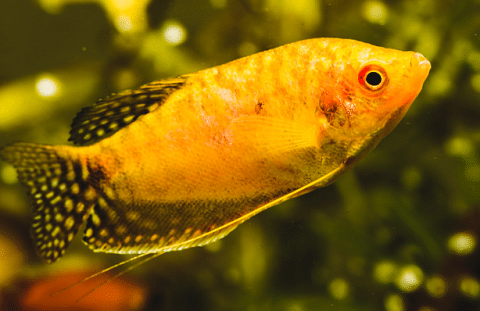
    Gold-Gourami

    Males and females are easy to differentiate thanks to sexual dimorphism1: Males possess pointed dorsal fin while females feature rounder fins in comparison. Thus, it makes mating selection much simpler if one chooses to add variety to aquariums containing these creatures. There is also a blue color variation of this fish called the Blue Gourami with a similar temperament.

    These fish are sometimes classified incorrectly. Trichopodus trichopterus is another species that is known as the three spot gourami. These fish are differentiated by the shorter dorsal fin base on the Trichopodus versus the Trichogaster gouramis.

    Average Size

    Gold Gouramis will grow up to 6 inches in size, with males having a longer length than females. They grow quite quickly when young and can reach up to an inch each month of growth. Their rate slows as they mature. Having knowledge about how big they may get is essential for creating the right environment by selecting compatible tank mates as small species or species that look like them is targeted.

    Lifespan

    Gold Gouramis, if taken good care of and kept in suitable tank conditions, have a life expectancy of anywhere between 4 to 6 years. It is important that their environment be calm as well as nutritionally balanced for them to live out their full lifespan. It’s essential you choose appropriate tankmates that sync with the gourami’s temperament so they can stay happy throughout those many years.

    Creating The Ideal Gold Gourami Environment

    Want a peaceful labyrinth fish for a community tank? Get a honey gourami. Want more color and size? Get a pearl gourami. Avoid dwarf gouramis from chain stores unless you are willing to gamble on Iridovirus.

    Creating a suitable habitat for Gold Gouramis is essential to keep them healthy and active. This includes selecting the right tank set up, water parameters, and decorations. We will review all these elements in upcoming sections so that you can create an ideal living space with stunning visuals pleasing to your fish friends!

    Tank Size And Setup

    When setting up a tank for Gold Gouramis, the minimum recommended size is 40 gallons to provide adequate room for their growth and movement.

    Aqueon 40 Gallon Breeder

    Your standard 40 gallon breeder tank. Great dimensions, easy to find, and well priced

    Buy On Petco Buy On Amazon

    It’s essential that you cover the aquarium with either a lid or mesh, as these fish can jump out of their tanks. To best mirror its natural habitat and make it a comfortable environment for your gourami, include hiding spots along with some floating plants and dark substrate decorations around the bottom area of your gold gourami tank setup. Given that gourami fish, in general, are surface dwellers, floating plants will help promote their natural behaviors.

    Water Parameters And Filtration

    The health and welfare of Gold Gouramis highly depend on the maintenance of ideal water conditions. The preferred temperature should lie between 73°F to 82°F, with a pH that ranges from 6.0 to 8.0 as well as hardness range from 5-30 dGH. To maintain cleanliness in the aquarium, it is recommended that an appropriate filtration system be set up. Power filters and canister filters are recommended since these aquatic creatures do grow larger and need to be fed in greater quantities to stay healthy.

    Continuous monitoring coupled with frequent 25% changes must be done regularly for optimal tank conditions. You can keep track of your parameters like Ammonia, Nitrite, and Nitrate using aquarium test kits. We would recommend keep nitrates under 40PPM for the general health of the fish and any inverts or plants you plan on keeping.

    Substrate, Plants, And Decorations

    When designing a Gold Gourami tank, it is important to consider how the environment is constructed. While they don’t care about the substrate type you chose, the other inhabitants and plants you may want will have different needs. For example, if you add bottom dwellers like Corydoras, you will want a sandy substrate for them to rummage through. If you decide on plants like carpeting plants or rooted plants, you will want a substrate that can hold nutrients or an aquasoil.

    We recommend that you keep Gold Gouramis in a planted tank. This not only is natural for them, but it will also curb their aggression. Having lots of hiding spaces will allow for refuge for other fish. Here are a few easy to care for plants you can consider with Gold Gouramis:

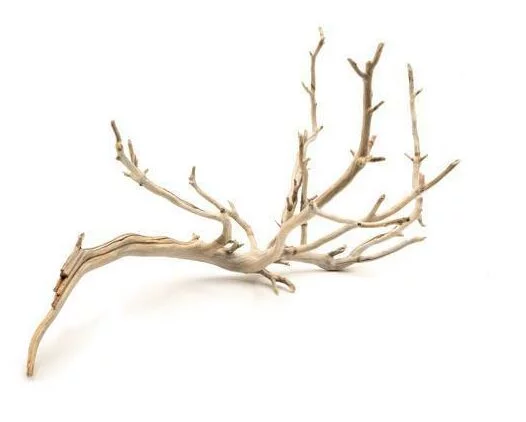
    Also, adding items such as caves, driftwood, and soft rocks can give your gourami shelter while also creating a visually appealing display within the aquarium. For driftwood, Manzanita is a top choice. Avoid any chemistry altering rocks, such as limestone.
    Editor’s Choice
    Manzanita Driftwood

    Editor’s Choice

    Manzanita offers it all. Great shape, low tannins, quick to water log and reasonably priced. It’s the ultimate driftwood!

    Click For Best Price Click For Branch Pieces

    Floating vegetation is especially beneficial for these fish in part because they feel more comfortable when close cover resembles their native conditions. Incorporating some into your setup provides many benefits both aesthetically and filtration wise. Consider these floating plants with your Gourami:

    Feeding (Diet And Nutrition)

    When it comes to Gold Gouramis, a balanced omnivorous diet is essential in order for them to receive the nutrients they need for optimal growth and good health. This involves giving them both meat-based and vegetable based meals on a regular basis.

    To ensure their vitality, here are some tips for maintaining your gold gourami’s nutritional needs. Firstly, by creating an appropriate feeding schedule that provides nourishment at set intervals. Secondly, make sure these foods contain diverse nutrient sources within each meal plan.

    Feeding Schedule And Tips

    Gold Gouramis should be fed once or twice a day with only enough food that they can consume in 2 minutes to avoid any water quality issues. This Gourami species is prone to bloating, so a balanced diet is key to prevent this ailment. Too much protein in their diet will cause bloating, so you will want to mix in green matter in their diets. For protein, consider the following foods:

    • Live brine shrimp, blackworms
    • Frozen bloodworms, brine shrimp
    • High quality flake food and pellet food

    For vegetables, consider blanched vegetables such as:

    • Cucumber
    • Zucchini
    • Yam
    • Shelled Peas

    Fasting is a must with this fish. You will need to fish this fish at least once a week to clear their digestive system. By watching their eating habits closely, you can prevent potential digestive problems related to overfeeding and poor food selection while maintaining good health for your Gold Gouramis.

    Behavior

    When it comes to Gold Gouramis, they are described as peaceful fish yet can become semi-aggressive with maturity. Due to their temperament issues, they are not considered appropriate for beginner aquarists. When selecting tankmates for a community aquarium setup, careful consideration needs to be given in order for everyone to enjoy a low stress environment.

    One of the biggest issues we encounter with these fish is that they are placed in tanks too small. This is due to poor care guides published at chain fish stores or online that regularly recommend these fish in a 20 gallon tank. If the tank is too small, you are bound to deal with aggression as they get older. A 3 foot minimum tank size is recommended if you are going to attempt to place these fish with other community fish.

    In saying that, let’s talk about what tankmates is good candidates.

    Good Tankmates

    Lake-Kutubu-Fish

    When it comes to selecting tankmates for Gold Gouramis, the key is finding peaceful fish that are not too small to be eaten or bullied. Some suitable choices are:

    One should also consider Otocinclus Catfish or a Bristle Nose Pleco when making their selection for general cleanup. Note that these fish listed are medium sized, or even semi aggressive. You will want fish that can stand up to their aggression and aren’t too small. For schooling fish, consider medium sized schooling fish and keep them in large numbers to keep your Gourami from singling one out.

    It’s important to remember all these aquatic creatures need similar water parameters plus adequate space along with plenty of places where they could hide out if necessary. This guarantees a low stress environment. By choosing compatible inhabitants, you’re sure to provide your beloved Gold Gouramis an enjoyable home!

    Bad Tankmates
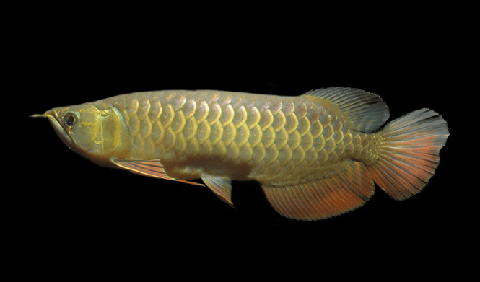
    Arowana Fish

    When keeping Gold Gouramis in a community tank, it is important to be aware of their semi-aggressive behavior and the possible effects that mixing with aggressive or timid fish could have. Here are some fish that are absolute no’s. They may be okay when the Gold Gourami is small, but there will be issues when they reach adulthood:

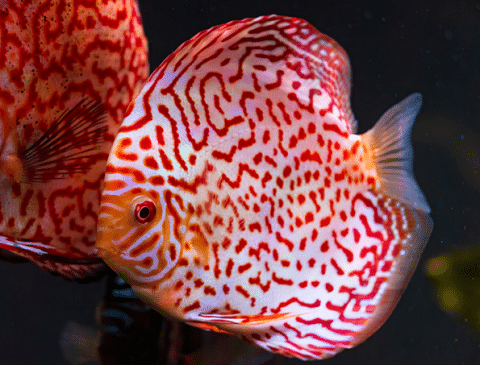
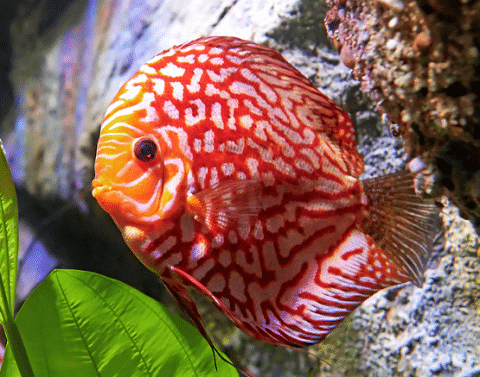
    Slow moving species like Discus Fish may not suit these more boisterous creatures. One must take care when choosing suitable companions for your gourami so no occupant will feel unnecessary stress within this environment.

    Breeding Gold Gouramis: Tips and Techniques

    Want a peaceful labyrinth fish for a community tank? Get a honey gourami. Want more color and size? Get a pearl gourami. Avoid dwarf gouramis from chain stores unless you are willing to gamble on Iridovirus.

    Breeding Gold Gouramis is an enjoyable endeavor for both novice and seasoned aquarists alike. A successful setup should include a tank with plenty of floating plants, caves, and ample surface area. The temperature must also be increased to 80°F (26°C). To encourage breeding, bubble nests will need to be constructed by the male gold gourami, who will also look after any eggs that are laid. Once the eggs are placed in the bubble nest, remove the female, as the male will chase her away. After the fry are born, it’s important for the male to be removed from the tank, or else he may eat his own fry! We have included a great video by Kaimuki Backyard that documents the behavior below.

    Once hatched small amounts baby brine shrimp can then be given as nourishment while they grow up before transitioning them onto other types suitable foods. Breeding is most successful in a separate breeding tank. Breeding in the display tank could result in added aggression and the fry getting eaten by other tank mates.

    Common Health Issues And Prevention

    Gold Gouramis, while hardy freshwater fish, can still suffer from common health issues such as ich, bacterial infections, and constipation. To maintain a healthy environment for these creatures, it is essential to tend to the water quality regularly by making water changes and keeping up with filter maintenance.

    Any new fish you want to add should be thoroughly checked or quarantined before introducing them into your already settled aquarium so they do not disturb its balance nor cause diseases. Keeping an eye out on how Gold Gouramis are doing and check for signs of illness such as:

    • Flashing or scratching on rocks or substrate
    • Rapid breathing
    • Torn fins
    • White spots
    • White stringy poop

    You can visit our fish diseases post to learn how to tackle and cure various illnesses you can come across in the aquarium trade!

    Frequently Asked Questions

    How big do gold Gouramis get?

    Gold Gouramis can reach a maximum of 6 inches in length. Ales are characterized by their extravagant fins, which are Bigger than those of female gouramis. Males are also more aggressive than females

    Are Golden gouramis peaceful?

    No, Golden Gouramis are only peaceful when they are juvenile fish. As they reach adulthood, they will come into their own and become territorial. They will attack fish that are smaller and timid and swim near their territory. The best way to curb this aggression is to have a bigger tank and to avoid fish that prefer to swim at the top of the tank.

    What size tank does a gold gourami need?

    Gold gouramis should be kept in an aquarium no smaller than 40 gallons that contains plenty of plants and hiding places such as driftwood and rocks. We recommend that you place them in a tank no shorter than 3 feet in length.

    Are gold honey Gouramis aggressive?

    Yes, Gold Gouramis are semi-aggressive when they reach adulthood. They are most aggressive to fish that swim to the top of the tank or look like them. To avoid aggression, purchase bottom feeders or mid level swimmers or consider large fish that will stand up to themselves but who also can’t eat them.

    What should I feed my Gold Gouramis?

    For Gold Gouramis to stay healthy, it’s important to give them a nutritious omnivorous diet composed of quality flake foods, frozen food, and pellets. Vegetable matter should be considered either with prepared fish foods or blanched vegetables.

    Hard Rule

    Gold gourami males are aggressive toward other gouramis and similar-shaped species. Keep only one male gourami per tank or ensure sufficient space (75+ gallons) with dense planting to break line of sight between competing males.

    Closing Thoughts

    This misunderstood fish does get a bad reputation in the aquarium industry due to how aggressive it can become as it gets older. Honestly, I’m surprised that it isn’t as infamous as the Tiger Barb given it is more aggressive than them. As long as you place them in a sizable tank with the right tankmates, you can succeed with them in a community fish tank.

    How has your luck been with this fish? Any horror stories you would like to share? Leave them in the comments below. I really want to get the word out on how these fish really are as there is a lot of misinformation on the internet about their temperament. I hope this article helped you in learning more about them. Until next time fellow fish keepers!


    📘 Want to learn more? This article is part of our complete Freshwater Fish Guide. Your ultimate resource for freshwater species, care tips, tank setup, and more.

  • Panther Grouper Care: What They Don’t Tell You at the Fish Store

    Panther Grouper Care: What They Don’t Tell You at the Fish Store

    The Panther Grouper grows to 2 feet and eats anything that fits in its expanding mouth. Pet stores sell adorable 3-inch juveniles without mentioning the adult size.

    That cute spotted juvenile will eat every tankmate in your aquarium within a year.

    Saltwater fish do not forgive mistakes the way freshwater fish do.

    Saltwater fish require stable parameters, quality food, and a mature tank. The startup cost and ongoing maintenance are significantly higher than freshwater.

    In saltwater, the tank runs on stability. Every shortcut you take shows up weeks later as a problem.

    What It Is Actually Like Living With Panther Grouper

    The Panther Grouper is more active and aware of its surroundings than most people expect. In a properly set up tank, it shows behaviors that generic care guides never mention.

    Feeding becomes a routine both you and the fish look forward to. The Panther Grouper learns your schedule and responds to your presence near the tank within the first few weeks.

    Maintenance is consistent, not difficult. Regular water changes and parameter monitoring become second nature. The fish rewards consistent care with better color, more activity, and visible health.

    Over time, you notice personality traits unique to your individual fish. Some are bold explorers. Others are cautious observers. That individual personality is what turns casual fishkeeping into a genuine hobby.

    Key Takeaways

    • Panther Grouper is a popular reef fish native to the Indo-Pacific, growing up to 27” in length and living for 20+ years with proper care.
    • Provide a tank size of 300 gallons or more, strong filtration & natural decorations like live rocks/corals for hiding spots.
    • Feed them freeze dried/frozen foods and raw seafood. Use feeder fish sparingly
    • Choose aggressive tank mates that can defend themselves such as large angelfish and eels.
    • The Reality of Keeping Panther Grouper
    • What It Is Actually Like Living With Panther Grouper

    The Reality of Keeping Panther Grouper

    A mature tank is mandatory. Most saltwater fish need a tank that has been running and stable for at least 3 to 6 months. New tanks have unstable parameters that stress saltwater fish far more than freshwater species.

    Diet is not just flake food. Many saltwater fish need frozen mysis, brine shrimp, or specialty foods to thrive. A pellet-only diet leads to malnutrition, faded colors, and immune suppression. Variety is not optional.

    Quarantine is essential. Marine ich and velvet are common in newly purchased saltwater fish. A proper quarantine tank before adding fish to your display tank prevents devastating disease outbreaks.

    Biggest Mistake New Owners Make

    Skipping quarantine and adding a new saltwater fish directly to the display tank. One infected fish introduces marine ich to your entire system. Treatment in a reef tank is nearly impossible because copper kills corals and invertebrates.

    Expert Take

    Quarantine every new fish for 4 to 6 weeks before adding it to your display. I have never met a serious reefer who regretted quarantining. I have met dozens who regretted skipping it.

    Species Overview

    Scientific NameCromileptes altivelis
    Common NamesPanther Grouper, High Finned Grouper, Barramundi Cod, Humpback Grouper, Polka Dot Grouper
    FamilyPomacanthidae
    OriginIndo-Pacific, Red Sea, Austral Islands, New Caledonia, Southern Japan
    DietOmnivore
    ColorsPurplish-pink, blue, yellow, orange, green
    Care LevelModerate
    TemperaturementSemi-aggressive to Aggressive
    Minimum Tank Size125 gallons (473 liters) 200+ Gallons recommended (757 liters)
    Max Size12 inches
    Temperature Range76. 82 degrees F (24. 27 C)
    pH Range8.0. 8.4
    Salinity1.025 or 35 PPT
    Reef SafeWith Caution

    Introduction – Origin and Habitant

    The Panther Grouper (Cromileptes altivelis) is a small reef fish known for its unique appearance and inhabiting the tropical Western Pacific Ocean, eastern Indian Ocean as well as Nicobar Islands and the Australian coral reefs. These active creatures are from the subfamily Epinephelinae, which extends with the family Serranidae. This family includes fish like sea basses and anthias. These fish bring an exciting element to their environment with their lively character. In a tank with fish of similar size to them, they are known for being relatively mild but will eat anything they can fit in their mouth.

    Appearance

    Panther Grouper with Cleaner Wrasse

    The Panther Grouper, also known as the humpback grouper or polka dot grouper is easily recognisable with its sloping back and spots scattered across a white body. Juveniles exhibit larger black polka dots along with large fins, while adult specimens develop small black dots against a darker background when stressed. They become less colorful as they get older and larger. They will look their cutest and their whitest as juvenile fish.

    Average Size

    The Panther Grouper can grow up to 27 inches. They are one of the largest fish in the saltwater aquarium trade. This means it is critical to pick the right tank mates for them as fish that are significantly small will be at risk of being eaten. A young Panther Group will increase its length by a number of inches each month. Thus necessitating ample living area with an adequate large aquarium. Lack of space will not slow down the growth of this fish and will make it more aggressive if space is cramped.

    Lifespan

    The life span of Panther Groupers is highly variable, ranging from 9 to 37 years in the wild. With good husbandry practices like offering a nutritious diet and providing proper water quality while minimizing stress levels, they have been known to live up to 20 years or more when kept as pets. Factors such as their environmental conditions play an important role in determining how long these fish will survive over time.

    Aggressive Behavior And Temperament

    For Panther Groupers to remain peaceful, they need plenty of space in the tank as well as compatible fish companions. Aggressive or territorial behavior towards other inhabitants could result if it feels threatened by smaller aquatic life or if the tank is undersized for the fish.

    It’s also important to note that this fish, while aggressive is less aggressive than other groupers. It is best to house them with large fish that won’t bully them. Avoid very aggressive fish like an Undulate Triggerfish

    Creating The Ideal Panther Grouper Environment

    Want a hardy first saltwater fish? Get clownfish. Want more personality? Get a six-line wrasse. Want a showstopper? This fish is worth the effort if your tank is ready.

    To ensure your Panther Grouper is happy and healthy, it’s critical to replicate its natural habitat in the aquarium. This includes providing a sandy base for burrowing, live rock as well as hiding places so that the fish can explore but still feel safe.

    Tank Size Requirements

    For Panther Grouper, a minimum tank size of 300 gallons is needed. This is due to the size of the adult fish and also to keep aggression to a minimum. Given the minimum tank size, the panther group is not suited for most aquarists.

    If you do not have the tank size for such a fish, consider purchasing a different one. A good alternative to the panther grouper is the Marine Betta, which is smaller (grows to 8 inches) and has beautiful coloration.

    Water Parameters And Filtration

    Panther Groupers are large saltwater fish that need specific water parameters to remain healthy. The temperature should be between 75-82°F, pH levels from 8.1-8.4, and specific gravity at 1.020 – 1.025 for optimal living conditions.

    Because this fish is large and consumes a lot of food, filtration is key in keeping their tank clean of waste materials. You should have an aquarium sump to provide the best filtration and stability in the tank. Monitor your ammonia, nitrite, and nitrate levels. Keep your nitrates below 40 PPM. You can keep nitrates down in the aquarium with water changes, using a high quality protein skimmer, or utilizing a refugium to house macro algae that will absorb nitrates.

    It’s essential to look after your filtration equipment. Regularly maintain your equipment. Equipment in saltwater environments does not last as long as freshwater equipment. This is due to the quality of the manufacturer (many top quality manufacturers in freshwater make their products in Italy/Germany) and also the saltwater itself, which breaks down equipment over time.

    Decorations And Hiding Places

    When it comes to setting up the environment for your Panther Grouper, try incorporating natural materials like live rocks and corals that mimic their habitat in the wild. By providing sufficient hideouts as well as ample space for swimming around, you’ll create a place where they can feel secure. Just be careful not to overcrowd. Ensure there is enough room so that these fish have plenty of opportunity to explore!

    Real Reef Rock

    This is the best aquacultured rock you can find in stores and online

    Buy On Amazon Click For Best Price

    Diet And Feeding Schedule

    Panther Groupers are carnivores, so it’s essential to provide them with the necessary nutrition and a steady feeding schedule in order for their health to stay strong. To maintain balance in its diet, they need an array of meaty food items.

    Preferred Foods

    To keep your Panther Grouper happy and healthy, you should provide them with a varied diet. Consider including the following:

    • Frozen silversides
    • Krill
    • Mysis Shrimp

    For a complete frozen food meal, consider a top quality brand like LRS foods and their Chunky blend. This blend includes scallops, shrimp, perch, squid, clams, oysters, and more. It also includes probiotics.

    You can also consider purchasing raw seafood like clams and squid from the supermarket and feeding this to your Panther Grouper

    While you can feed your fish feeder goldfish, it is not recommended as a staple as these fish are not nutritious, have an evalated level of thiminase1 (which is toxic to saltwater fish), and can transfer diseases.

    Tank Mates And Compatibility

    In establishing a balanced home for your Panther Grouper, it is important to consider which tank mates are suitable. Smaller fish and invertebrates may become prey for the grouper. Thus, larger and more aggressive specimens that can defend themselves should be selected instead.

    Suitable Tank Mates

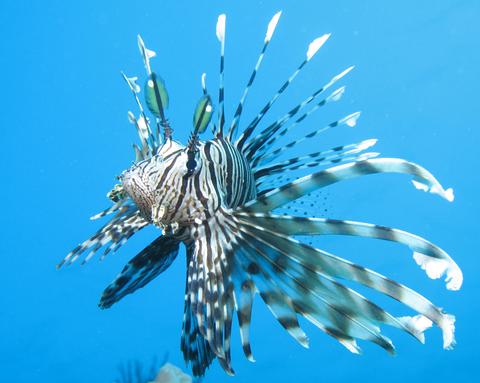
    Lionfish in Aquarium

    Having enough space for all the tank inhabitants to swim and hide is essential in creating a stress-free habitat. Thus, suitable species that can cohabitate with Panther Groupers include:

    We will note that you need to have a sizable tank to house all these fish species in one tank.

    Incompatible Species

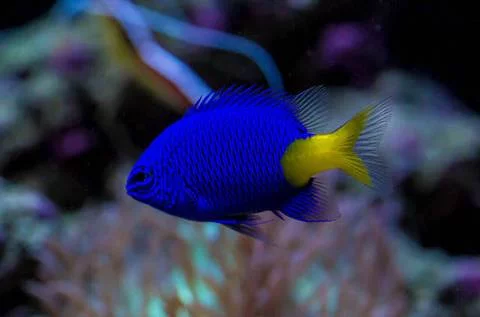
    Yellow Tail Damsel

    To ensure a harmonious aquarium, it’s important to choose tank mates carefully when keeping Panther Groupers. Here are some fish that should be avoided:

    • Small fish such as damsels and clownfish
    • Timid fish that is bullied
    • Very aggressive fish, such as clown triggers
    • Other groupers

    Reef Tank Compatibility

    Including Panther Groupers in a reef tank is feasible since they do not harm corals. You should, however, consider that your Panther Grouper will happily eat any inverts in your tank. This will include crabs, shrimp, and clams. As long as you don’t mine only keep live rock and corals only, you can keep a panther group in a reef tank. Keep in mind that these fish will get large and may knock down corals or snap off hard corals like SPS corals.

    Disease Prevention And Treatment

    If you want to keep your Panther Grouper healthy, the two most important things are keeping a clean environment and quarantining new arrivals. Test water quality regularly and do partial water changes when needed in order to ensure optimal panther grouper care. If sickness does arise, determine what disease your fish may have and quarantine the fish so you can treat the fish efficiently. Note that diseases in saltwater tanks are deadlier and hit faster and harder than in a freshwater tank.

    Frequently Asked Questions

    How big does a Panther Grouper get?

    Panther groupers can rapidly reach up to 27 inches (68.6 cm) in size when fully grown, thus making them unfit for small home aquariums that are unable to house such large fish. A spacious tank is needed as they expand their adult dimensions quickly and cannot be contained by most domestic aquaria due to the significant space required.

    Are Panther Grouper aggressive?

    Panther Groupers is quite hostile when facing off with other fish in cramped spaces. However, in large tanks they are more docile then other aggressive fish. However, they will eat anything that they can fit in their mouths.

    What size tank do you need for a Panther Grouper?

    A Panther Grouper requires a massive aquarium. To successfully house one without having serious aggression issues and to be able to house other fish, you will need an aquarium at least 300 gallons in size.

    What are the ideal water parameters for a Panther Grouper?

    For optimal health and contentment of a Panther Grouper, the water parameters should stay within 75-82°F for temperature, 8.1-8.4 pH levels, and specific gravity at 1.020 to 1.025 range, respectively. Ammonia and Nitrites should be 0 PPM, and nitrates should be kept to under 40 PPM.

    What type of diet should I provide for my Panther Grouper?

    To care for your Panther Grouper effectively, feed it a diet of frozen and freeze-dried krill, silversides, and mysis shrimp. You can also feed them store bought raw seafood like calms or shrimp.

    Closing Thoughts

    Caring for a Panther Grouper is extremely rewarding, and following these guidelines is key to giving them the long life they deserve. Here we have covered their origin, habitat needs, diet requirements as well as compatibility with other fish and reef tanks in order to create an ideal environment for your beloved pet fish. Dedication combined with attention to detail will ensure that you are able to provide proper care while enjoying watching it thrive in its new home!

  • Dalmatian Molly Fish Care Guide: Tips Most Guides Skip

    Dalmatian Molly Fish Care Guide: Tips Most Guides Skip

    The Dalmatian Molly carries the same water chemistry demands as every other molly. Hard, alkaline water or constant disease. The pattern fades or changes as the fish ages.

    Buy dalmatian mollies for hardiness in the right water, not for a pattern that will shift.

    The biggest challenge with Dalmatian Molly Fish is not keeping them alive. It is managing how fast they multiply.

    The Dalmatian Molly Fish breeds constantly and lives 3 to 5 years. You need a plan for fry before you buy your first pair, or your tank will be overrun within months.

    Livebearers teach you more about population management than any textbook ever will.

    ASD Difficulty Rating: Tier 1 – Beginner

    Dalmatian mollies are a black-and-white spotted color variant of regular mollies with identical care requirements. Hardy livebearers that prefer slightly hard, alkaline water and breed prolifically without intervention.

    Hard Rule

    Dalmatian mollies breed constantly – females can store sperm and produce fry without a male present. Keep only males if you do not want fry, or have a plan for rehoming them. A single mixed-sex trio will produce dozens of fry per month.

    Table of Contents

    In this guide, we’ll dive deep into all things related to these beautiful freshwater fish. From where they originate, what they look like right down to how best take care of them so that they may have an enjoyable life in our tanks. We’ve got everything covered for anyone who wishes know more about keeping a happy & healthy dalmatain molly (or two!) So let’s get started on exploring this wonderful species today!

    Mollies in soft, acidic water get sick. Mollies in hard, alkaline water thrive. If your water does not match, this fish is not for you.

    What Most Care Guides Get Wrong About Dalmatian Molly Fish

    Most guides give you a cookie-cutter care sheet for Dalmatian Molly Fish without mentioning the nuances. After 25+ years in this hobby, I have seen how small details in tank setup and maintenance make a real difference in long-term health. Another thing guides gloss over is temperament. Dalmatian Molly Fish are often described with a single label, but their behavior shifts depending on tank size, tank mates, and territory. You need to plan for the worst-case scenario, not the best. Group size is another area where most guides fall short. Saying ‘keep them in groups’ is not enough. The difference between keeping 3 and keeping 8 or more is night and day when it comes to coloration, confidence, and natural behavior.

    The Reality of Keeping Dalmatian Molly Fish

    Breeding is not optional. It is automatic. If you have males and females, you will have fry within weeks. Most new owners are not prepared for the population explosion. You need a plan, whether that is a grow-out tank, selling to a local store, or keeping predators that naturally control numbers.

    Water hardness matters more than people realize. Livebearers come from hard, alkaline water. Keeping them in soft, acidic conditions leads to chronic health problems, fin clamping, and shortened lifespans. If your tap water is soft, livebearers are not ideal unless you buffer the water.

    Male aggression is constant. Males chase females relentlessly. Without a ratio of at least two females per male, the females get stressed, stop eating, and weaken. Overcrowding males does not solve this. It makes it worse.

    Biggest Mistake New Owners Make

    Buying one male and one female thinking it will be manageable. Within three months you have 30 to 50 fish in a tank designed for 10. Always plan for breeding output before you buy your first pair.

    Expert Take (Mark Valderrama, AquariumStoreDepot)

    If you are keeping livebearers, you are a breeder whether you planned to be or not. Accept it early and have a plan for the fry. That single decision prevents 90% of livebearer problems.

    Key Takeaways

    • Dalmatian Mollies are a peaceful fish species perfect for home aquariums.
    • Provide the right tank size and parameters to create a healthy environment with compatible tank mates.
    • Monitor water quality, feed them properly & take proactive steps to prevent diseases
    • They can live 3-5 years and grow to 3-5 inches in length

    Fish Stats Overview

    Scientific Name Poecilia sphenops / poecilia latipinna (For sailfin molly type)
    Common Names Dalmatian Molly, Marbled Molly
    Family Poecilia 
    Origin Southern North American, South America
    Diet Omnivore
    Care Level Easy 
    Activity Slow to Moderate
    Lifespan 3 to 5 years
    Temperament Peaceful
    Tank Level All
    Minimum Tank Size 20 gallons
    Water Temperature Range 75°-82°F
    Water Hardness 10 – 25 dGH
    pH Range 7.0. 8.0
    Filtration/Water Flow Low
    Water Type Freshwater
    Breeding Livebearers
    Difficulty to Breed Easy to breed
    Compatibility Community fish
    OK, for Planted Tanks? Yes

    Classification

    Taxonomic Rank Classification
    Common Name Dalmatian Molly
    Scientific Name Poecilia latipinna
    Order Cyprinodontiformes
    Family Poeciliidae
    Genus Poecilia
    Species P. Latipinna

    Species Introduction

    The unique tropical fish species known as Dalmatian Mollies, or Marbled Molly, are quite recognizable thanks to the black and white pattern similar to that of a Dalmatian dog. Its distinctive appearance makes it stand out, its body is pale while adorned with numerous dark spots. Scientifically labeled Poecilia sphenops, they originated from south United States and their robustness combined with adaptability made them popular amongst both inexperienced aquarists but also more experienced hobbyists alike.

    Origin And Habitat

    The Dalmatian Molly hail from the southeastern United States. In this region, these fish inhabit lakes, rivers and streams with a particular partiality for slow-moving habitats that are abundant in mud bottoms that possess tropical or subtropical freshwaters. This allows them to be versatile when living around different types of water conditions, making these fish perfect pets for beginner aquarists and making them compatible with a host of potential tankmates.

    That doesn’t mean that we should place it in an undesirable environment though. Its tank should be looked after closely so as not to compromise on temperature levels, pH levels or hardness range. Let’s good over their appearance and types next.

    Appearance And Types

    Dalmatian Mollies are an interesting type of fish, as each variety has its own unique pattern. All have in common the iconic body with black spots that resemble a Dalmatian dog’s coat.

    A popular variant type amongst them is the Dalmatian Lyretail Molly: this species stands out due to its lyre-shaped caudal fin, accompanied by a distinct anal fin adding elegance to their striking appearance.

    The Sailfin Dalmatian Molly is the most stately of all types with its large dorsal fin. Be careful of introducing this species with fish that like to nip long fins or fish that may see it as a threat, like Betta fish.

    Another remarkable variation is the Balloon Dalmation Molly, which features an arched back, a rounded belly, and a similarly shaped tailfin like on the former variety mentioned before. These three available types in the hobby also you to pick and choose what look you prefer to go with.

    Personally, I enjoy the Lyretail and common variants the most.

    Average Size

    When cared for properly, Dalmatian Mollies can reach between 3-5 inches in length with males being smaller than females. This modest size allows them to fit comfortably into almost any aquarium setup while having enough room with their tank mates to swim around freely. Their added bulk also allows them to be housed with medium sized fish without the risk of being eaten (though temperatures should be matched)

    Lifespan

    For a successful lifespan of 3-5 years, or even up to 10 in certain conditions, your Dalmatian Mollies need careful attention and suitable living arrangements. Feed them an appropriate diet consisting of nutrient-rich food and ensure their environment is kept tidy. This will help keep them strong and healthy throughout the years. Overcrowding should be avoided because it can lead to health risks that drastically shorten life expectancy. Overcrowing occur if breeding gets out of hand (which is definitely possible as all livebearer fish will reproduce quickly).

    Temperament And Activity Level

    In order to keep your Dalmatian Mollies stress free and their behavior in check, a clean and adequate tank is important. Regarding aggression, our experience with Mollies is that they are social creatures. They will do best in a group, and this will curb their aggression. However, sole species will can lean more on the semi-aggressive size. To maximize your success in a community tank, consider purchasing several and keeping a ratio of 3 females to 1 male or just consider keeping all males or or all females to prevent breeding.

    Caring for Your Dalmatian Molly: Tank Setup

    When setting up a sand tank for your Dalmatian Mollies, the tank’s size is important to consider. These fish also being able to go from freshwater, to brackish, to even saltwater environments while versatile should be kept in target parameters.

    Tank Size and Space Requirements

    When it comes to Dalmatian Mollies, a 20-gallon tank is the smallest you can go, with an additional five gallons of space needed for each extra fish. This will provide enough room for them to swim around and have stress-free interactions with their tank mates. But don’t forget that bigger tanks offer some distinct advantages like increased swimming area, more stability in water conditions, greater oxygenation and filtration capabilities, as well as decorations or hiding spots – all promoting your fish’s overall health.

    It’s also important not to overcrowd the aquarium. Too many individuals could lead to aggression issues, poor water quality, and lead to disease outbreaks.

    Water Parameters And Quality

    In order to keep your Dalmatian Mollies healthy, it is important for you to maintain the right temperature and pH level in their tank. Aiming at a range between 74-81°F with a pH of 7.0 to 8.0 will ensure they are in the most comfortable environment for them. They can still be kept in acidic pH waters but do best with higher pH and harder water parameters.

    Proactive measures should be taken such as regular water changes that can help prevent health issues like Ich, which may occur due to poor water conditions if these parameters aren’t met correctly

    Aquatic Plants And Decorations

    Aquatic plants and hiding spots are great for enhancing your aquarium and improving the health of your Dalmatian Mollies. These elements provide a sense of security, shelter, and reduction is harmful nutrients that help them live their best life in your tank. Here are a few plants that do well with the Dalmatian Molly’s parameters:

    When selecting decorations, remember to achieve harmony between providing a natural open environment while still avoiding overcrowding. Too many add-ons could lead to stress by limiting swim space available for these fish. You will also need to keep in mind water chemistry alternative decor such as driftwood or limestone rock sources. For substrates, either consider a sand tank setup or use a fine gravel.

    Feeding And Diet

    The health of Dalmatian Mollies is highly impacted by the type and amount of food they consume. They are omnivorous. These fish eat small insects and happily will pick at algae in the aquarium. Knowing this, it’s important to offer them a nutritious, balanced diet that consists of animal-based foods like bloodworms and brine shrimp and vegetable matter such as algae. For optimal health benefits, feed your molly no more than what is eaten within 1-2 minutes.

    When fish are young or you have fry present, it’s okay to feed twice a day. As the fish reach adulthood, you can cut down to once a day. Overfeeding will have detrimental effects on their environment due to its effect on water quality. Adjust feeding schedules when necessary in order for your fish to remain contented and healthy!

    For foods, look at the following in your food rotation:

    • High quality flake or pellet foods
    • Greens based foods such as spirulina
    • Meats such as insect matter, brine shrimp, blood worms, and daphnia
    • Frozen foods as fish get bigger for added nutrition
    • Supplementation of freeze dried or pellet foods with products such as Vita-Chem

    Tank Mates And Social Behavior

    When looking for tank mates, it’s critical to take the size, temperament and other characteristics of fish into consideration. You’ll want fish that aren’t too small that could get picked on by the Molly and those not so large they can eat them. Dalmatian Mollies have a peaceful disposition meaning they are well-suited to living with compatible companions in harmony without added stress on any inhabitants involved. It is essential that this dynamic works effectively so all parties will benefit from being housed together harmoniously

    Peaceful Tank Mates

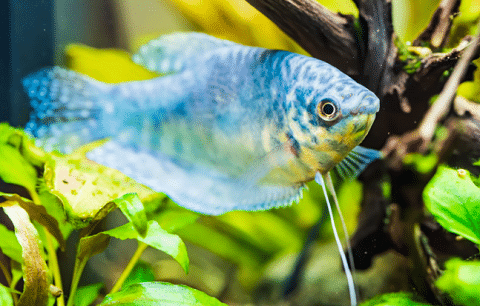
    Blue Gourami Fish

    When selecting suitable fish tank mates for Dalmatian Mollies, it’s important to think about their compatibility. Species with a similar temperament and activity level should be chosen in order to create an environment of peace amongst all inhabitants. Suitable choices include:

    Each provides different benefits that are equally beneficial for the health and happiness of your fishy friends! Finally, don’t forget Nerite snails, which not only add aesthetic beauty but are also suitable companions and compliement each other as cleanup crew members! Bettas can also be safely added as the Mollies can stand up to them. We would recommend sticking to common variants if you want to house a Betta and keeping a group of mollies.

    By carefully curating this selection, you’ll ensure a harmonious atmosphere so that everyone can thrive together without any risk of aggression or stress within the tank.

    Tank Mates To Avoid

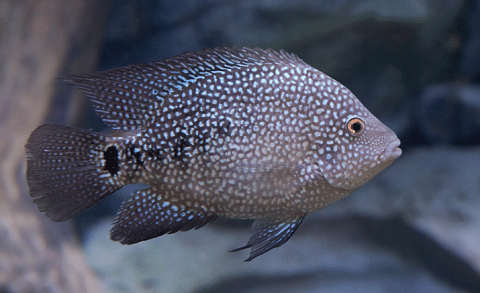
    <a href=Texas Cichlid” class=”wp-image-553069″/>

    Dalmatian Mollies need compatible tank mates in order for their environment to be harmonious and healthy. Other fish species can cause stress or aggression, so it’s important to research suitable companions before adding them to your Dalmatian Mollies’ habitat.

    Such species that is problematic are:

    Different types of Mollies should not be placed together if you want to avoid mixed breeding. Mixed breeding can result in birth defects with offspring and should be avoided.

    Breeding And Reproduction

    Dalmatian Mollies are fish that give birth to their young rather than laying eggs. If you are looking into breeding them, creating an ideal environment and a separate tank for the fry is necessary to prevent predation. Keeping up with water parameters is essential as well when caring for both the expecting Dalmatian Molly and her developing offspring.

    Breeding dalmatian mollies is one of the easiest fish species to breed and will actively breed in a display tank if healthy. Your main challenge with a group of male dalmatian mollies and females is overpopulation over time. Try to keep your numbers down, or consider raising fry in a separate breeding tank if you want to breed and give them to friends or the local fish store.

    Health And Disease Prevention

    Keeping a clean tank, properly monitoring water quality and avoiding overcrowding are key elements to protect Dalmatian Mollies from the common diseases of Ich and Dropsy. Symptoms of Ich include white spots covering the fish’s body with breathing difficulties, while Dropsy affects them by causing fluid retention in their bulging eyes along with protruding scales. To ensure good health for your pet mollies it is best practice to maintain ideal parameters within their environment such as keeping stress free conditions on an ongoing basis. Proactive prevention will help preserve these wonderful aquatic companions throughout time so you can admire their breathtaking beauty inside your aquarium year after year!

    Gender Differences And Identification

    When distinguishing between male and female Dalmatian Mollies, differences in color, size, fin shape and behavior is observed. Males have brighter coloring with longer fins than their female counterparts who will display larger bodies of a more roundish shape.

    Another easily identified part of the male fish is called the gonopodium1. This looks like an extendable stick on the male. Knowing the differences between both sexes of fish will allow you to keep a proper mix of male and females – or give you the ability to chose either males or females for your tank.

    Frequently Asked Questions

    How many Dalmation mollies should be kept together?

    When housing three to four Dalmation mollies, a 20-gallon tank is the minimum required. Make sure not to overcrowd the environment by following a 1:3 male-to-female ratio as these fish prefer being with their own kind.

    How big do Dalmation mollies get?

    Poecilia sphenops, commonly known as dalmatian mollies, Reach a length of between 3-5 inches. Males are smaller than the females, and when cared for in an optimal environment they can survive up to 10 years.

    What is the behavior of a Dalmatian molly?

    Dalmatian mollies are Peaceful, yet they become aggressive if provoked. They enjoy having plenty of space in an aquarium to swim around and explore as these fish are quite lively.

    Can you keep one Dalmatian molly?

    When keeping Dalmatian mollies, it is recommended to have at least two in order to prevent them from becoming aggressive. For a tank containing up to four of these fish species, a 10-gallon aquarium should be sufficient. An additional three gallons will need to be allocated per extra mushroom added.

    Can Dalmatian Mollies live in a community aquarium?

    Dalmatian Mollies make a great addition to any community aquarium. They have been known for their peaceful nature and are compatible with tank mates. However, this temperature is at its best when they are in a group of mollies. If kept as a sole species, they can become semi-aggressive with their tanks mates.

    How the Dalmatian Molly Fish Compares to Similar Species

    Want color and activity without breeding headaches? Get all males. Want a self-sustaining colony? Get a proper male-to-female ratio and a grow-out tank.

    The most common alternative to the Dalmatian Molly Fish is the Platy Fish, another easy livebearer. Platies are smaller and come in more color varieties, while Dalmatian Mollies are larger and more active. Both are beginner-friendly and breed readily. Mollies prefer slightly harder, alkaline water and can tolerate brackish conditions.

    Closing Thoughts

    Dalmatian Mollies are incredibly attractive freshwater fish that can make an exceptional addition to any aquarium. To guarantee the best results for these remarkable animals, it is essential to supply a suitable tank setup, regulate ideal water quality parameters, present them with balanced nutrition, judiciously select compatible tankmates, and prevent overcrowding.

  • How to Raise pH in Aquarium Water – 6 Safe and Effective Ways

    How to Raise pH in Aquarium Water – 6 Safe and Effective Ways

    pH management trips up hobbyists at every level. and the solutions that seem obvious (adding baking soda, using pH-up products) often cause more instability than they fix. After 25 years managing pH across freshwater and reef systems, I know what works long-term and what approaches create more problems than they solve.

    Are you struggling to maintain a healthy and stable environment for your aquatic friends? Fear not, because you’re about to discover safe and effective strategies on how to raise pH in aquarium water, ensuring the well-being of your fish. Let’s dive into the world of pH levels and learn how to keep our finned friends happy and healthy!

    Key Takeaways

    • Understand the importance of pH levels in aquariums and research ideal levels for different fish species.
    • Use natural methods such as crushed coral, aragonite sand, or limestone rocks to raise pH levels safely.
    • Signs of low pH include algae growth, fish laying on the bottom, and pale looking fish
    • Monitor your aquarium’s pH regularly with test kits to maintain a healthy environment for your fish.

    Understanding What It Is And How it Works

    Maintaining the proper pH level of your aquarium is essential to the health of your aquatic inhabitants. With a few helpful tips, raising pH in tank water can be easily accomplished with minimal stress on both you and your fish.

    The key factor here lies in keeping stable pH in your aquarium for extended periods. something that’s attainable by understanding what lowers you pH and how to balance it. Having insight into these components will allow all parties involved (yourself included) to ensure their aquatic family remains happy and healthy through maintaining safe ph levels!

    The Scale And Its Significance

    The pH scale is a measurement of acidity or alkalinity, which ranges from 0 to 14 where 7 represents neutrality1. It has an incredible impact on the health of your fish inhabiting the aquarium. Any variations can cause strain or even death in some cases. Consequently, keeping stable ph levels for your tank inhabitants should be one’s top priority!

    Generally, most freshwater fish will live within pH levels of 6.5 and 7.5, giving you sufficient room within both boundaries as well as ensuring good health conditions for them at all times. It is important that you do your research on the fish you are purchasing of their preferred levels as living in incompatible pH levels will result in stress, which can lead to illness or death.

    Ideal Levels For Different Fish Species

    In order to provide the ideal environment for your fish, you must research and abide by their specific pH requirements. For example, saltwater tanks Require a range of 7.5-8.5. With reef systems on the higher end of that scale.

    Regarding freshwater fish, usually, Cichlids enjoy higher pH levels, with African Cichlids preferring the highest levels.

    Identifying Issues in Your Aquarium

    It is essential to identify and tackle low pH issues in your aquarium. Such levels are usually the result of fish waste, uneaten food particles, or excess carbon dioxide accumulating in water. Let’s have a look at how it affects not only the water quality but also the inhabitants’ health as well as other aspects of an aquarium ecosystem with regard to ph levels.

    Symptoms associated with lower than normal values may include lethargic behavior from your fish population and irregular activity patterns due to hindered oxygen supply caused by higher concentrations of CO2, making them more susceptible to diseases and infections, among other things. This leads ultimately to the deterioration of overall environmental conditions for all dwellers present within that particular tank habitat.

    Symptoms Of Wrong Parameters In Fish

    Low pH levels can have serious repercussions for fish in your aquarium. Symptoms such as erratic movements, difficulty breathing, and excessive mucus secretion may appear if the pH is too low. You might also see an increase in algae growth or dirt accumulation on the bottom of the tank, which could indicate this issue.

    Cichlids

    Stressed-looking fish lying at the base are also a warning sign that something’s wrong with their environment – namely its acidity level (pH). If not properly addressed quickly enough, it could lead to other severe problems like loss of appetite or weaker immune systems. Both risks of disease exposure increase significantly when left unaddressed. Thus, watch out for these indications and take action swiftly to ensure your aquatic pets’ safety!

    Effects On Water Quality And Aquarium Environment

    It is important to keep a close eye on the pH levels of your aquarium as low ones can have serious implications for water quality and impact fish health. To help reduce them, regular monitoring and adjustments are needed in order to avoid potential crashes that could disrupt biological filtration.

    How To Raise pH in Aquarium – 6 Safe Methods

    When you notice low pH levels in your aquarium, it’s important to take the necessary steps to bring them back up. To increase these levels, safe and effective approaches such a water change for the tank, buffering solutions, adding chemistry changing substrates, and more can ensure an optimal environment for fish residing within.

    We have 6 methods that are safe and effective to share with you. Let’s start with the first that is tried and true.

    1. Regular Water Changes

    Maintaining and increasing the pH levels of an aquarium can be done regularly through water changes. It is suggested to change 20% of the tank water every two or three weeks in order to keep away any pollutants like nitrates. However, when you have pH that is off, a 50% water change could be helpful. If the acidity in your tank falls below ideal ph standards, then partially replace the fish tank water using clean water and add a buffering solution, which will raise its pH accordingly.

    Use clean freshwater that is close to the desired ph for replenishment. Doing so will help increase the pH and do so gradually. You may need to do several water changes over a week’s time to get your pH back in check, depending on how off it is. Do not attempt to increase pH by more than .5 each day when adjusting.

    2. Buffering Solutions

    There are buffering solutions that are designed for fish that prefer high pH in a freshwater aquarium. One of the most popular solutions is SeaChem Malawi Victoria buffer. This Buffering solution is great to use with your water source to get it to the correct levels. It’s also great to use if you use RODI water as this solution will also adjust the pH and TDS to the correct levels for your fish.

    Seachem Malawi/Victoria Buffer

    This buffering solution by SeaChem is great to use for African Cichlid tanks

    Buy On Amazon

    For saltwater, we have a natural buffering system with aquarium salts. Marine salts and reef tank salts will have buffering solutions that will increase both the hardness and the pH of the water to suit your marine animals. Just follow the directions and you should be good to go!

    3. Incorporating Crushed Coral Or Aragonite Sand

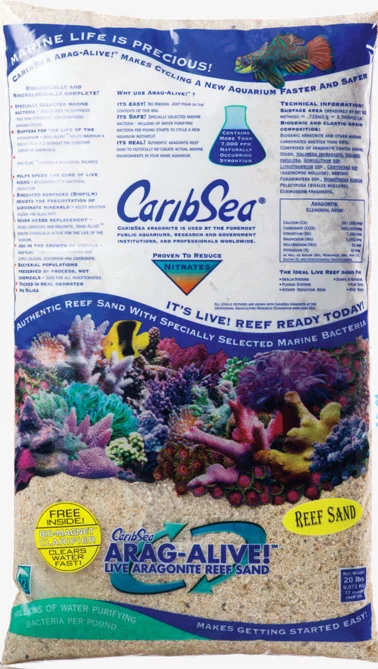
    The use of crushed coral and aragonite sand as buffering solutions is a great way to boost pH levels in aquariums. These all-natural materials discharge minerals into the water, which slowly boosts, and then stabilizes the level of pH over time. Simply add them to your fish tank’s filter or substrate for an effective result. It offers a number of advantages that chemical alternatives don’t: no potential risks involved with utilizing chemicals, relieves stress on aquatic life due to gradual increases in ph balance, and contributes towards healthier living conditions overall within the environment.

    Monitoring pH levels is crucial when incorporating crushed coral and aragonite sand into an aquarium to help raise the water’s PH. It is possible to overdo it and add too much crushed coral or aragonite sand. Monitor your pH levels with test kits regularly when you first add the substrate.

    For a long lasting solution, consider putting the substrate in media bags behind your background if you use a 3D background or use hollow rocks and place them inside the rocks. Both solutions will buffer the water and keep

    4. Using Limestone Rocks Or Coral Rocks

    Adding limestone rocks or coral rocks to your aquarium’s decor is another natural way of increasing the pH levels in the water. These sedimentary formations are composed mostly of calcium carbonate and can help enhance both the hardness and pH of the environment. Careful monitoring must be done when incorporating these materials, as higher concentrations might end up causing levels to rise too high. Aside from maintaining an optimal balance for all inhabitants, including such decorations also augments its aesthetic appeal dramatically!

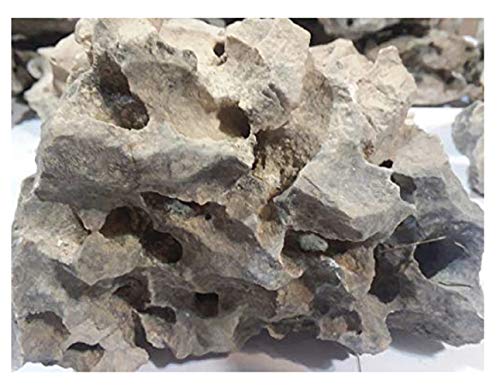
    For cichlids, Texas Holey Rock is great to use for African setups. Any live rock or aragonite-based rock for reef tanks will do the job.

    Great For African Cichlids
    Texas Holey Rock Natural Limestone

    With its ability to raise pH and hardness, this rock is an excellent choice for African Cichlids

    Buy On Amazon

    5. Utilizing Baking Soda

    If you’re seeking a cost-efficient and short-term solution to increase the pH of your aquarium, baking soda could be the right solution. Sodium bicarbonate (baking soda) can raise pH levels by adding small amounts to the tank water. Adding approximately one teaspoon per 5 gallons is advisable as a rule of thumb. Be sure to keep track of how much changes occur with regards to ph level when using this method, never exceeding 0.5 increments each day for safety reasons, ensuring that there will remain an adequately stable environment for all aquatic life within your fish tank habitat!

    6. Chemical Solutions

    When trying to raise pH levels in an aquarium, one may consider using chemical solutions. This should be done with extreme caution as it can potentially have dangerous consequences for the fish and other aquatic life. Instead of going down that path, there are several natural ways to keep a stable pH level, such as crushed coral or aragonite sand, made from calcium carbonate. If you must, you can use solutions like pH up or down depending on what you need to adjust in the aquarium.

    API pH Proper

    API offers a pH proper series for various pH targets. This will allow you to set your pH to the desired level for your fish

    Buy On Amazon Buy On Chewy

    Limestone rocks and baking soda (sodium bicarbonate) are much safer than many chemicals, however. All these options provide reliable methods of increasing your tank’s pH without risking adverse effects on any living beings within the aquarium environment itself.

    Acclimating New Fish To Your Environment

    In order to ensure the best possible transition for your fish into their new home, acclimation to aquarium conditions is key. To do this effectively, you should adjust temperature and pH levels incrementally so that they can become accustomed with ease.

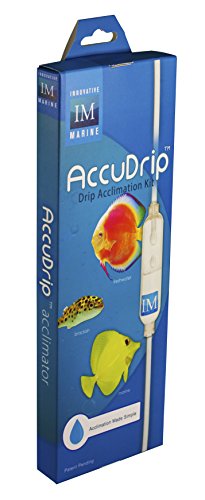
    Utilizing a drip method is the best way to accomplish this with new fish introduction. A drip method is releasing the fish into a container with an air pump where you can drip the display aquarium water. This drop lasts for 1-2 hours. Once this is done, you can release the fish into the display tank.

    Get For Acculimation
    Accudrip Acclimator

    Most of us know that fish and shrimp are sensitive creatures, who don’t do well with sudden changes. The Accudrip Acclimator is here to help adjust your aquatic creatures to new tanks and conditions

    Click For Best Price Buy On Amazon

    Note that the drip method cannot be used for fish that have been shipped to you overnight. Only use the drip method for fish you purchase locally. Shipped fish have trapped ammonia in the bag, which is released once you open the bag. If you lost a shipped fish shortly after introduction to its new home and you dripped them – this was like the culprit.

    Monitoring And Maintaining Stable Levels

    Maintaining a stable pH level in an aquarium is essential for the health of your inhabitants and can be achieved through regular monitoring and upkeep. Most test kit sets will include a pH tester standard. I would recommend using the API master test kit for freshwater tanks and the Red Sea kit bundle for saltwater tanks.

    Adapting To Your Fish’s Needs

    Having the right pH level in your aquarium is essential to sustaining a healthy environment for all fish species. To achieve this, it’s important to research their individual needs and ensure they’re met accordingly. Appropriate filtration and aeration are both key components of maintaining steady pH levels as nitrates and ammonia can lead to lower pH levels. Circulation allows oxygen exchange more effectively while good amounts of air provide optimal oxygen quantities that benefit ph stability too. CO2 can also decrease pH, which could be problematic if you house fish that prefer higher pH.

    Frequently Asked Questions

    Closing Thoughts

    Having a stable pH level in your aquarium is an essential element for the health all aquarium fish. With that being said, it’s important to know what the scale looks like and keep tabs on how high or low it gets, as you can increase these levels with safe methods whenever necessary. Have you dealt with pH imbalances before? Let us know how you fixed it in the comments below. Until next time aquarists!

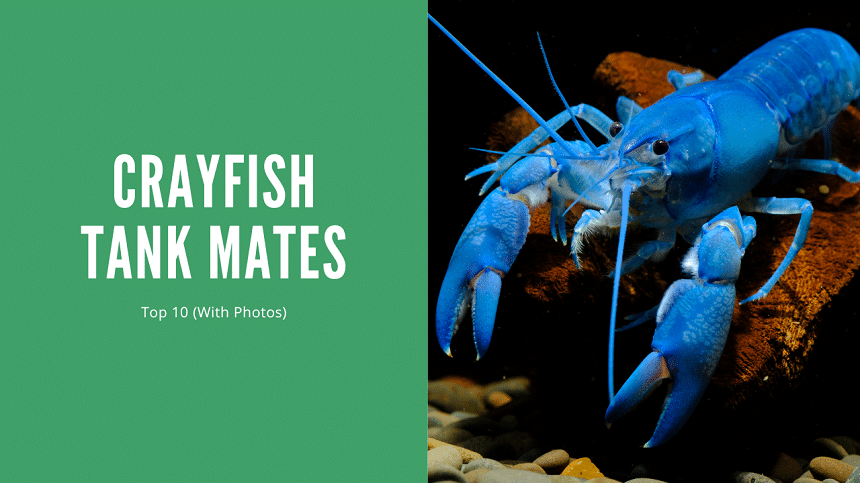
  • Top 15 Crayfish Tank Mates: What Can Actually Live With Them

    Top 15 Crayfish Tank Mates: What Can Actually Live With Them

    Most people set up a crayfish tank, add a few fish they think look good with it, and then wonder why those fish are disappearing one by one. Here’s what’s actually happening: crayfish hunt at night. They’re slow during the day, almost lazy, but once the lights go out, they patrol the bottom and grab anything within claw reach. Tails, fins, whole small fish. They’re more dangerous than they look, and the danger is almost entirely invisible until you wake up to a missing fish.

    The crayfish owns the bottom of the tank. Every tank mate decision starts there.

    This isn’t a list of fish that are “safe” with crayfish, nothing is truly safe. This is a list of fish with the best odds of surviving the setup, because they’re fast, they live in the upper water column, and they’re smart enough (or wired enough) to stay out of claw range. If you go in with that mindset, you’ll have a far better experience than the hobbyist who adds a slow corydoras and calls it a compatible tank mate.

    Key Takeaways

    • Crayfish are nocturnal ambush predators, they hunt at night when lights are off and fish are least alert
    • No tank mate is truly safe; this list covers the species with the best odds of survival
    • The only reliable survival strategy for tank mates: fast swimming, mid-to-top water column, stay off the bottom
    • Shrimp, snails, and slow-finned fish will be eaten, it’s not a matter of if, it’s when
    • Keep the crayfish well-fed; a hungry crayfish is a far more aggressive hunter
    • Provide plenty of hiding spots for the crayfish, a secure crayfish is less likely to spend energy hunting

    What People Get Wrong

    The biggest misconception about crayfish is that they’re slow, clumsy invertebrates that fish can easily outswim. During the day, that’s basically true. At night, it’s a completely different animal. Crayfish are sit-and-wait ambush predators, they don’t chase fish across the tank. They wait near cover, extend their claws, and grab whatever passes close enough. A fish resting on or near the substrate at night is in serious danger. A slow fish, a fancy-tailed fish, or a sick fish that drifts too low is a meal.

    The second major misconception is that feeding the crayfish well means tank mates are safe. Feeding does reduce aggression, but a well-fed crayfish still hunts. It’s instinct, not hunger. Don’t mistake a full crayfish for a safe one.

    And the third mistake, adding any invertebrate to the tank and expecting it to survive. Shrimp, snails, small crabs: the crayfish will find them and eat them. It’s what they do.

    Understanding Crayfish Behavior

    Behavior And Temperament

    Crayfish are territorial, curious, and surprisingly destructive. They’ll rearrange substrate, uproot plants, knock over decorations, and establish a home territory they’ll defend aggressively. In a tank, their world is the bottom, they patrol it, claim it, and hunt in it. Any fish that spends time near the substrate is inside the crayfish’s kill zone.

    Different species have meaningfully different aggression levels and claw reach:

    • Dwarf Crayfish (CPO, Blue Dwarf), smallest claw reach, highest community tank success rate
    • Electric Blue Crayfish: moderate aggression, moderate success with careful stocking
    • Red Swamp Crayfish: highly aggressive, poor community tank candidate
    • Marmorkrebs: invasive, reproduces parthenogenetically; legal restrictions in many areas
    • Australian Red Claw Crayfish: large and aggressive; poor community tank candidate
    • Yabby: highly territorial; best kept species-only

    Dwarf crayfish are the only species where a community setup is genuinely reasonable. Larger species like the Electric Blue can work, but the margin for error is thin. The Australian Red Claw is essentially a species-only animal.

    Ideal Tank Environment And Parameters

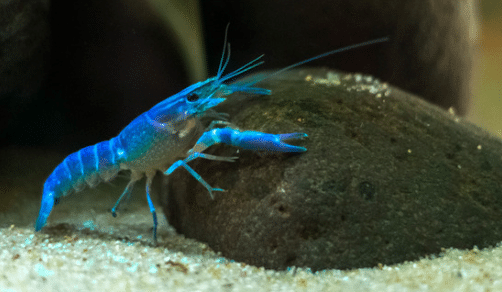
    Blue-Crayfish

    Water parameters for most crayfish: pH 6.5–7.5, temperature 65–75°F (18–24°C), moderate hardness, moderate water flow. A 55-gallon (208 L) tank is the minimum for an Electric Blue Crayfish with community fish, the extra space reduces territorial pressure and gives fish more room to stay out of the danger zone. Smaller tanks increase the odds of contact between the crayfish and its tank mates.

    Dense planting and heavy hardscape serve two purposes: the crayfish gets cover to feel secure (a secure crayfish hunts less), and fish get visual barriers that break line of sight. Floating plants benefit surface-dwelling species by keeping them oriented toward the top of the tank. Java moss and hornwort are sacrificial, the crayfish will shred them, but that’s actually fine. Losing some plant mass is better than losing fish.

    Top Crayfish Tank Mates

    A few hard truths before the list:

    • Every fish on this list carries risk, there is no zero-risk tank mate for a crayfish
    • The crayfish will eat anything that spends time near the substrate at night
    • Larger aggressive fish may seem safer, but post-molt crayfish are soft and defenseless, large fish will attack them
    • The best tank mates are fast, schooling, mid-to-top swimmers that are cheap enough to replace

    Quick-Reference Comparison Table

    Species Adult Size Min Tank Ease Compatibility
    Other Crayfish 4–6 inches (10–15 cm) 40+ gal (151+ L) 7/10 Moderate
    Zebra Danios 2–2.5 inches (5–6 cm) 10 gal (38 L) 9/10 High
    Livebearers 2–5 inches (5–13 cm) 20 gal (76 L) 9/10 High
    Ricefish 2 inches (5 cm) 10 gal (38 L) 7/10 High
    Pencilfish 2 inches (5 cm) 10 gal (38 L) 7/10 High
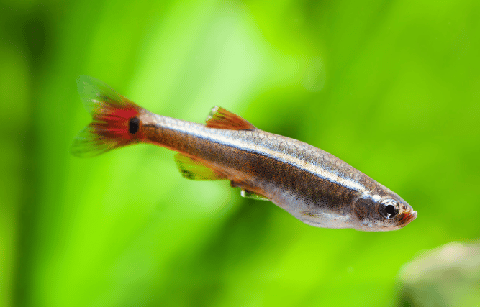
    White Cloud Mountain Minnows 1.5 inches (4 cm) 10 gal (38 L) 9/10 High
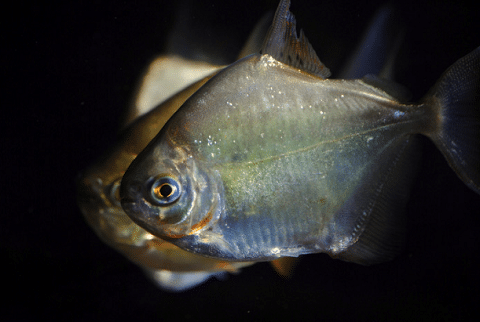
    Silver Dollars 6 inches (15 cm) 75 gal (284 L) 9/10 High
    Goldfish (single-tail only) 6+ inches (15+ cm) 40 gal (151 L) 7/10 Moderate
    Hatchetfish 1.5 inches (4 cm) 20 gal (76 L) 7/10 High
    Rainbowfish 3–6 inches (8–15 cm) 40 gal (151 L) 8/10 High

    Expert Take

    After 25+ years keeping and selling freshwater fish, my take on crayfish tank mates is blunt: most combinations people try don’t work, and most of the failures are predictable. At the stores I managed, crayfish tanks always had a sign on them, no slow fish, no fancy fins, no shrimp. Crayfish are escape artists, habitat destroyers, and nocturnal hunters. People fall in love with their personality and their looks, and then underestimate how methodically they work through a tank after dark. I’ve seen crayfish pull fish out of the water column at night, uproot entire planted sections, and wipe out a shrimp colony in under a week. The safest crayfish tank mate strategy is fast, mid-to-top-dwelling fish that are expendable enough that losing one or two doesn’t hurt. Build the tank for the crayfish first. Add fish second. — Mark Valderrama, AquariumStoreDepot

    1. Other Crayfish

    Ease: 7/10: Possible, but requires careful planning and a large tank.

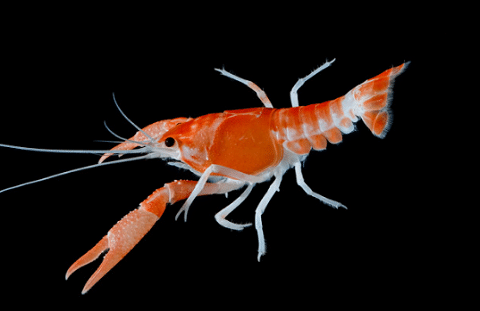
    Red-Crayfish
    • Scientific Name: Procambarus spp.
    • Adult Size: 4–6 inches (10–15 cm)
    • Water Temperature: 65–75°F (18–24°C)
    • Minimum Tank Size: 40+ gallons (151+ L)
    • Care Level: Moderate
    • Diet: Omnivore
    • Origin: North America
    • Swimming Level: Bottom

    Two crayfish in the same tank is doable, but it takes space, structure, and vigilance. Each animal needs its own territory with clear visual separation. A minimum 4-foot tank (40+ gallons / 151+ L) is required just to attempt it. Males are the most aggressive toward each other and will fight to injure or kill given the opportunity. If you see one consistently being chased or losing limbs, separate them immediately, they don’t heal fast enough to survive prolonged harassment.

    The one scenario where multiple crayfish genuinely work is a breeding pair with a large tank and a plan to separate the female post-spawning. Otherwise, plan for a species-only tank or very large footprint.

    2. Zebra Danios

    Ease: 9/10: The gold standard for crayfish tank mates.

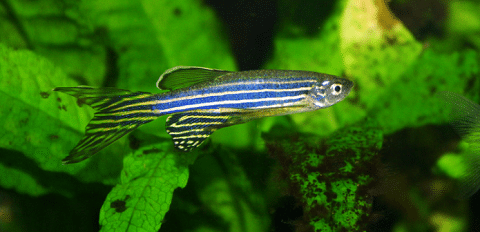
    What Does A Zebra Danio Look Like
    • Scientific Name: Danio rerio
    • Adult Size: 2–2.5 inches (5–6 cm)
    • Water Temperature: 72–81°F (22–27°C)
    • Minimum Tank Size: 10 gallons (38 L)
    • Care Level: Easy
    • Diet: Omnivore
    • Origin: India
    • Swimming Level: All levels, primarily surface

    Zebra danios are the single best fish you can add to a crayfish tank. They’re fast (genuinely fast) and they have the nervous energy to match. A crayfish cannot catch a healthy danio. They dart constantly, stay near the surface, and school tightly in groups, which further reduces individual predation risk. Keep them in groups of at least 8; a larger school means each individual fish spends less time exposed.

    They’re also cheap enough that losing one to a crayfish ambush isn’t a disaster. That’s exactly the kind of tank mate you want in this setup. If you want one fish to build a crayfish community around, this is it.

    Choose danios over neon tetras for a crayfish tank, danios are faster, hardier, and far less likely to drift near the substrate. Neon tetras look appealing, but they’re slower and the casualties are higher.

    3. Livebearers

    Ease: 9/10: High survival rate, especially in well-planted setups.

    Platy Fish
    • Scientific Name: Poecilia, Xiphophorus spp.
    • Adult Size: 2–5 inches (5–13 cm)
    • Water Temperature: 64–82°F (18–28°C)
    • Minimum Tank Size: 20 gallons (76 L)
    • Care Level: Easy
    • Diet: Omnivore
    • Origin: North/Central America
    • Swimming Level: Middle to Top

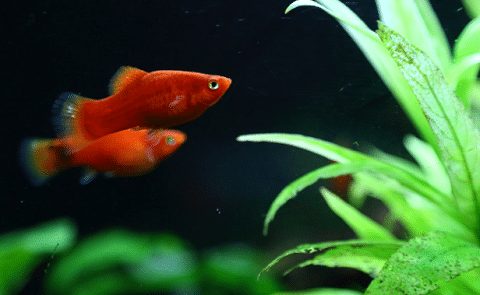
    Guppies, mollies, platies, and swordtails all work reasonably well with crayfish. They’re quick enough to avoid most claw grabs, they breed fast enough to replace their own losses, and they naturally stay in the upper half of the tank. Platies and mollies are your best picks here, they’re stockier than guppies, harder to grab, and less likely to drift low.

    One important caveat: fancy guppies with long, flowing tails are a trap. Those tails slow them down and give the crayfish something to grab at night. I’ve seen it at the store, a customer comes in proud of their crayfish-guppy tank, and a week later they’re back buying replacements. Every time, it was the fancy-finned males that went first. Stick to standard short-fin guppies or skip guppies entirely and go with mollies or platies. Feed the crayfish well, a well-fed crayfish is noticeably less aggressive toward its tank mates. A starving crayfish will hunt everything it can reach.

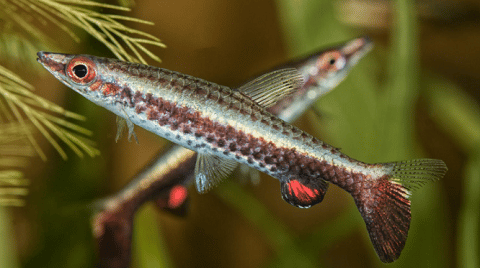
    4. Ricefish

    Ease: 7/10: Great choice in well-planted tanks with floating cover.

    • Scientific Name: Oryzias latipes
    • Adult Size: 2 inches (5 cm)
    • Water Temperature: 61–75°F (16–24°C)
    • Minimum Tank Size: 10 gallons (38 L)
    • Care Level: Moderate
    • Diet: Omnivore
    • Origin: Japan, East Asia
    • Swimming Level: Middle to Top

    Ricefish are an underrated option. They’re naturally surface-oriented, in the wild, they live in shallow rice paddies and spend their entire lives near the top of the water column. That behavior translates directly into crayfish avoidance. Add floating plants like frogbit or water lettuce, and the ricefish will stay anchored near the surface all day and night.

    The risk is that ricefish are small. A large crayfish with a long reach can theoretically grab one if it drifts too low. Keep the floating plant cover dense, maintain a large school (10+), and the odds are in your favor.

    Hard Rule: Never add snails, shrimp, or any slow-finned bottom fish to a crayfish tank. Shrimp disappear overnight. Snails get cracked open and eaten like snacks. Fancy-tailed guppies and slow corydoras are just scheduled meals. The crayfish won’t announce it, you’ll just find them missing.

    5. Pencilfish

    Ease: 7/10: Excellent surface dwellers with a naturally safe behavioral profile.

    Pencil-Fish
    • Scientific Name: Nannostomus spp.
    • Adult Size: 2 inches (5 cm)
    • Water Temperature: 64–82°F (18–28°C)
    • Minimum Tank Size: 10 gallons (38 L)
    • Care Level: Moderate
    • Diet: Omnivore
    • Origin: South America
    • Swimming Level: Middle to Top

    Pencilfish hold a horizontal, near-surface position almost constantly. They’re slim, quick, and instinctively avoid the bottom. They won’t compete with the crayfish for food, sinking pellets hit the substrate before pencilfish react, which means you can feed the crayfish at the bottom without the pencilfish interfering. That separation makes daily feeding much cleaner to manage.

    Keep them in groups of 8 or more. A small school of pencilfish will feel insecure and may start hovering lower in the tank, that increases their risk significantly. Large schools stay near the surface where they belong.

    6. White Cloud Mountain Minnows

    Ease: 9/10: One of the safest, most resilient options for this setup.

    • Scientific Name: Tanichthys albonubes
    • Adult Size: 1.5 inches (4 cm)
    • Water Temperature: 57–72°F (14–22°C)
    • Minimum Tank Size: 10 gallons (38 L)
    • Care Level: Easy
    • Diet: Omnivore
    • Origin: China
    • Swimming Level: Middle to Top

    White cloud mountain minnows are fast, cold-tolerant, and naturally mid-to-top dwellers. They’re one of the best options specifically for crayfish setups that run on the cooler end (65–72°F (18–22°C)) where warmer-water fish like danios may not thrive as well. If you’re running an unheated or lightly heated tank, white clouds are often the smarter choice than danios.

    Keep numbers high, 10 or more. A small group of white clouds gets nervous, and nervous fish drift lower in the water column. That’s exactly where you don’t want them. A big, confident school stays near the surface and the crayfish below becomes irrelevant to them.

    7. Silver Dollars

    Ease: 9/10: One of the safest choices due to size and speed.

    Common Silver Dollar
    • Scientific Name: Metynnis argenteus / Metynnis hypsauchen
    • Adult Size: 6 inches (15 cm)
    • Water Temperature: 72–82°F (22–28°C)
    • Minimum Tank Size: 75 gallons (284 L)
    • Care Level: Easy
    • Diet: Omnivore (primarily herbivore)
    • Origin: South America
    • Swimming Level: Middle to Top

    Silver dollars are one of the safest options purely because of size. At 6 inches (15 cm) and fast, they’re simply too large for a crayfish to catch or consume. They school tightly, stay in the middle and upper tank, and their size means even an aggressive crayfish won’t attempt a grab. They also won’t harass the crayfish post-molt, which makes this combination unusually stable.

    The tradeoff: silver dollars need a 75-gallon (284 L) tank minimum, and they’ll absolutely destroy soft-leaved plants. This is a bare-bottom or artificial-plant setup. If you’re okay with that trade, silver dollars with crayfish is one of the most reliably peaceful combinations on this list.

    8. Goldfish (Single-Tail Only)

    Ease: 7/10: Works only with the right variety. Most goldfish are disqualified.

    Goldfish Fins
    • Scientific Name: Carassius auratus
    • Adult Size: 6+ inches (15+ cm)
    • Water Temperature: 60–72°F (16–22°C)
    • Minimum Tank Size: 40 gallons (151 L)
    • Care Level: Easy
    • Diet: Omnivore
    • Origin: China
    • Swimming Level: All levels

    Goldfish with crayfish is a complicated answer. The fancy-tailed varieties (orandas, ranchus, bubble eyes) are slow, low-swimming, and easy targets. A crayfish will grab them by the tail at night. Don’t do it. Full stop.

    Single-tail varieties are a different story. Shubunkins, comets, and common goldfish are fast, large, and spend less time near the substrate. Their size alone is a meaningful deterrent. The key rule: the goldfish must be larger than the crayfish at the time of introduction, and must stay that way. A goldfish that’s smaller than the crayfish is at risk. One that outgrows it is reasonably safe.

    Good single-tail picks for this setup: Shubunkin, Comet. Avoid Fantails: they straddle the line and slow down with age.

    9. Hatchetfish

    Ease: 7/10: Nearly untouchable by crayfish, but requires a covered tank.

    Marble Hatchet Fish
    • Scientific Name: Gasteropelecus sternicla
    • Adult Size: 1.5 inches (4 cm)
    • Water Temperature: 72–81°F (22–27°C)
    • Minimum Tank Size: 20 gallons (76 L)
    • Care Level: Moderate
    • Diet: Insectivore/surface feeder
    • Origin: South America
    • Swimming Level: Top (surface)

    Hatchetfish are permanently surface-dwelling, they don’t go down. They eat at the surface, rest near the surface, and spend their entire lives in the top 2 inches (5 cm) of water. In theory, this makes them virtually immune to crayfish predation. In practice, there’s one serious catch: hatchetfish jump. A stressed or startled hatchetfish will clear the waterline instantly. This tank needs a tight-fitting lid with no gaps, not just a recommendation, a requirement.

    Keep them in groups of 6 or more. A lone hatchetfish or small group will be stressed and more prone to jumping. A secure, larger group with surface cover (floating plants) will settle down and thrive in this setup.

    10. Rainbowfish

    Ease: 8/10: Fast, mid-to-top, and large enough to be low-risk.

    Lake-Tebera-fish
    • Scientific Name: Melanotaenia spp.
    • Adult Size: 3–6 inches (8–15 cm)
    • Water Temperature: 72–77°F (22–25°C)
    • Minimum Tank Size: 40 gallons (151 L)
    • Care Level: Moderate
    • Diet: Omnivore
    • Origin: Australia, Indonesia, New Guinea
    • Swimming Level: Middle to Top

    Rainbowfish are large, fast, and visually stunning, and they’re a serious upgrade for anyone who wants more than small schooling fish in a crayfish tank. Species like Boesemani or Turquoise rainbowfish reach 4–5 inches (10–13 cm), which combined with their speed makes them nearly claw-proof. They school actively in the middle and upper water column, rarely venturing near the substrate.

    The tank size requirement is the main limiting factor. Choose rainbowfish over cichlids if you want a larger centerpiece fish in a crayfish tank, cichlids are either too small and get eaten, or too large and will attack the crayfish after it molts. There’s no winning with cichlids in this setup. Rainbowfish don’t have that problem. They’re big enough not to be prey, peaceful enough not to be a threat, and fast enough to stay out of trouble.

    Other Considerations: Fish That Don’t Work

    These species come up frequently in online discussions about crayfish tank mates. Here’s why they’re not on the main list:

    • Red Tail Sharks: Large but slows with age and spends too much time near the substrate. Bottom territory conflict with the crayfish is near-certain.
    • Golden Wonder Killifish: Surface dweller, but not as reliably fast or evasive as danios. Higher loss rate in practice.
    • African Butterfly Fish: Good behavioral match (pure surface dweller), but needs a larger tank and a lid. Worth considering for advanced setups.
    • Tiger Barbs: Too curious. They’ll investigate the crayfish, nip at its antennae, and eventually provoke a response that ends badly, usually for the barb.
    • Bala Sharks: Work, but need very large tanks (6 feet / 1.8 m minimum). Not practical for most setups.
    • Neon Tetras: Often cited online but perform worse than danios. Slower, smaller, and more prone to resting near the substrate. Loss rates are higher.
    • Cichlids: Too unpredictable. Small cichlids get eaten. Large cichlids attack post-molt crayfish. There’s no reliable middle ground.
    • Corydoras: Bottom dwellers. Do not add. They spend their entire lives in the crayfish’s kill zone.
    • Any shrimp or snails: Not a tank mate discussion. They’re food.

    The Biggest Mistake Crayfish Keepers Make

    Build the tank around the crayfish first. That’s the thing most people get backwards. They already have a community tank, they add a crayfish because it looks cool, and then they watch their fish disappear one by one over the next few weeks. I’ve seen this exact scenario play out more times than I can count, at the stores, online in forums, and with customers who come back confused why their tank is emptying. By the time they figure out what’s happening, they’ve lost a corydoras, a guppy, and probably that mystery snail they forgot was even in there.

    The crayfish needs to go in first. Let it settle, make sure it’s eating, and build your hiding spots before you add a single fish. Then pick tank mates based on where they swim and how fast they move, not how they look in the store. If you’re not okay with occasionally losing one, don’t put it in this tank.

    And don’t forget the molt. Every few weeks, your crayfish will shed its exoskeleton and spend 24–72 hours completely defenseless, soft body, can barely move. Fish that have been perfectly peaceful will sometimes turn on it during this window. Know which species you’re keeping. If there’s any doubt, have a breeder net ready to drop the crayfish into until it hardens back up. It takes maybe 10 minutes to set up and it can save the crayfish’s life.

    Tips For A Successful Setup

    Providing Hiding Spots

    A well-hidden crayfish is a less aggressive crayfish. Crayfish are nocturnal, they need secure cover during the day, and without it they get stressed and hungry. A stressed crayfish hunts more, not less. Set up caves, PVC pipe sections, rocks, and driftwood structures they can fully enter and feel secure inside. Multiple hiding spots reduce territorial competition if you’re keeping more than one.

    Maintaining Water Parameters

    Crayfish are messy, they shred food, scatter debris, and generate more waste than most people expect from a single invertebrate. In a community tank, that mess adds up fast. Target pH 6.5–7.5, temperature 65–75°F (18–24°C), moderate hardness (100–200 ppm GH). Test pH, temperature, and hardness weekly. Do 25–30% water changes weekly. Non-negotiable.

    Monitoring Feeding Habits

    Feed the crayfish before lights-out, that’s when they’re most active and hungry. A well-fed crayfish at the start of the night is far less likely to go hunting. Sinking pellets, blanched vegetables, and occasional protein (bloodworms, shrimp pellets) all work. Remove uneaten food within a few hours. Crayfish will eat decaying food off the substrate, but it’s not worth the water quality hit.

    Mark’s Pick: Zebra danios and white cloud mountain minnows are my go-to combination for a crayfish community tank. Both are fast, both stay in the upper water column, both are inexpensive, and both school actively enough that the crayfish essentially ignores them. Add 10–15 of each in a 40-gallon (151 L) setup, give the crayfish plenty of cover, and feed it well every evening. That’s the version of this tank that actually works long-term.

    Frequently Asked Questions

    Can crayfish live with any fish at all?

    Yes, but with realistic expectations. No fish is 100% safe in a crayfish tank, the crayfish may eat any tank mate given the right opportunity. The goal is to choose fish that minimize that opportunity: fast swimmers, mid-to-top water column, and schooling species that don’t linger near the substrate.

    Do crayfish really eat fish at night?

    Yes. Crayfish are nocturnal ambush predators. During the day they hide and appear slow and harmless. After lights-out, they patrol the bottom actively. Any fish resting on or near the substrate is at risk. This is why daytime observations of fish-crayfish interactions don’t tell you the full story, the actual predation happens when you’re not watching.

    Can I keep shrimp with crayfish?

    No. Shrimp are crayfish food, period. Even dwarf crayfish will eat small shrimp given the chance. There is no shrimp species that is reliably safe in a crayfish tank. If you want shrimp, build a separate tank.

    What happens when the crayfish molts?

    Post-molt, the crayfish is soft, slow, and defenseless for 24–72 hours. During this window, even normally peaceful fish may pick at it. Remove the old exoskeleton (or leave it for the crayfish to eat, it recycles the calcium). Watch tank mates closely. If you have larger or aggressive fish, be prepared to temporarily isolate the crayfish in a breeder net during molt recovery.

    Are dwarf crayfish different from regular crayfish for community tanks?

    Significantly. Dwarf crayfish like the Orange CPO (Cambarellus patzcuarensis) max out around 1.5–2 inches (4–5 cm) and have a fraction of the claw reach of a full-sized Electric Blue or Red Claw. They can be kept with small shrimp in some cases and have a much higher community tank success rate overall. If you want a crayfish in a community setup, start with a dwarf species.

    How many fish should I keep with a crayfish?

    Schooling fish should always be kept in groups of 10 or more in a crayfish tank. A large, confident school is harder to pick off individually and spends more time in the upper water column where they’re safest. A small group of 4–5 fish will be nervous, swim lower, and experience higher losses.

    Does tank size matter for crayfish tank mate success?

    Significantly. A larger tank gives fish more room to stay out of the crayfish’s range and reduces the territorial pressure that leads to aggression. A 55-gallon (208 L) or larger tank dramatically improves the odds of a stable community setup compared to a 20-gallon (76 L). More space, fewer incidents.

    Closing Thoughts

    Crayfish are one of the most fascinating invertebrates you can keep, they have personality, they interact with their environment, and they’re endlessly entertaining to watch. But they’re not community fish. They’re nocturnal predators that happen to share a tank with your fish, and the fish you choose need to be selected with that reality in mind.

    The formula isn’t complicated: fast fish, mid-to-top water column, large schools, well-fed crayfish, plenty of hiding spots. Get those things right and this setup genuinely works. Skip any of them and you’ll be replacing fish on a regular basis wondering what keeps going wrong.

    Crayfish aren’t community fish. They’re a centerpiece that other fish survive around. Build the tank for the crayfish first, everything else follows from there.


    📘 Want to learn more? This article is part of our complete Freshwater Fish Guide, your ultimate resource for freshwater species, care tips, tank setup, and more.

  • Top 15 Bichir Tank Mates: What Works With This Prehistoric Predator

    Top 15 Bichir Tank Mates: What Works With This Prehistoric Predator

    Bichirs are one of those fish that immediately turn heads in any tank. that prehistoric, armored look is unlike anything else in freshwater. They’re also one of the more misunderstood species when it comes to tankmates. The key thing to understand is that bichirs are ambush predators at night and will eat anything small enough to fit in their mouth. so small fish and shrimp are off the table. But they’re actually quite peaceful with fish their own size or larger. Get the tankmate selection right and they’re fascinating long-term residents. Here’s what works.

    Key Takeaways

    • Choose tank mates for Bichirs carefully, understanding their behavior and needs
    • Small tankmates are bad choices as they can be eaten
    • A large tank is a must if you want to keep other tankmates

    Understanding Them

    Bichirs should primarily feed on meat or aquatic invertebrates since they are carnivorous and could live for up to 15 years, making it all the more important to research this ambush predator’s behavior prior to introducing other types of fish into the environment. What’s even more unique about these bottom dwellers is how they take advantage of both their gills and lungs to survive!

    We need to keep in mind what makes the Senegal bichir so different from others while looking for suitable tank mates based on our knowledge regarding behaviors such as capabilities before joining two separate worlds within one ecosystem.

    Overview Of Types

    There are various types of Bichirs, all with different sizes. Below are a few with their average sizes below for reference.

    • Dinosaur Bichir – 12 inches
    • Ornate Bichir – 24 inches
    • Saddled – 30 inches
    • Delhezi – 14 inches

    For this post, we’ll focus on the Dinosaur Bichir. Other Bichirs will require larger tanks and more careful tankmate selection.

    Ambush Predator Nature

    Bichirs are ambush predators, so it is necessary to choose tank mates that they cannot view as prey or competition for hiding places. Fish that inhabit the middle and top part of an aquarium and active during the daytime work well. Just ensure there’s sufficient space to establish their individual territories. Silver dollar fish make excellent peaceful partners since conflicts can be prevented this way. If looking at larger types, note aggression levels beforehand too!

    With regards to food items like frozen food, one should pick carefully and try to feed separately to avoid aggression. Keep in mind that due to their ambush nature, they will sneak up on fish and eat them. This leaves out the typical fast schooling fish like Danios that can actually be snuck up on and eaten. What I’ve observed over the years (in store display tanks and my own setups) is that the bichir looks completely harmless during daylight hours. It’s motionless, tucked under a piece of driftwood, not bothering anyone. Then the lights go out. That slow, patient fish turns into exactly the ambush predator it is. Fish that survived side-by-side for weeks disappear overnight with no sign of a fight.

    Ideal Aquarium Size And Water Parameters

    When constructing a habitat for Bichirs, the minimum tank size should be around 55 gallons. It is crucial to ensure that conditions such as water temperature (74-82°F) and pH level (6.2-7.8) are kept stable in order to provide them with an optimal living environment. They prefer a of sandy substrate that replicates their natural freshwater habitats, plus plenty of hiding spots where fish can make themselves at home safely and conduct their ambush behaviors.

    The next step would include introducing compatible tank mates who possess particular traits that could easily fit into this established ecosystem alongside our beloved Bichir friends (and not become lunch).

    Also, note that Bichirs are compatible with aquatic plants. However, not all fish on this list will be.

    Top 10 Bichir Tank Mates

    Bichirs should be kept with certain fish species when setting up a community tank to ensure harmony and visual appeal. This diet includes fish that are going to be generally safe to keep with them but be aware that every fish is different and could have a more aggressive or passive personality than what is considered normal for their species. With that, let’s get started.

    Expert Take

    After 25+ years working with predatory fish (in my own tanks and at the aquarium stores I managed) bichirs are the species that surprises newcomers the most. They look slow and docile during the day, so people assume they’re safe with a much wider range of fish than they actually are. Bichirs are prehistoric fish that have survived 400 million years, which tells you something about their instincts. They’re not aggressive in the cichlid sense, but they are ambush predators that will eat anything that fits in their mouth, and their mouths are larger than they look. I’ve seen bichirs eat large tetras, small cichlids, and feeder goldfish nearly as wide as the bichir’s head. Size is the only reliable protection. — Mark Valderrama, AquariumStoreDepot

    Quick-Reference Comparison Table

    Species Adult Size Min Tank Ease Compatibility
    Eels 6 to 150+ inches 20 – 55+ gallons 7/10 High
    Silver Dollars 6 inches 75 gallons 9/10 High
    Hoplo Catfish 6 inches 40 gallons 7/10 High
    Oscars 12+ inches 55 gallons 7/10 High
    Tinfoil Barb 14 inches 75 gallons 7/10 High
    Knife Fish 14+ inches 100 gallons 6/10 High
    Bala Shark 12 inches 125 gallons 7/10 High
    Giant Gourami 18 inches 200 gallons 7/10 High
    Arowana 2+ feet 250 gallons, 8 foot long tank 6/10 High
    Denison Barbs 4 inches 40 gallons 7/10 High
    Elephant Nose Fish 9 inches 55 gallons 6/10 High
    African Butterfly Fish 6 inches 30 gallons 7/10 High
    Clown Loaches 12 inches 100 gallons 6/10 High
    Severum 8 inches 55 gallons 7/10 High
    Leopard Bush Fish 6 inches 50 gallons 7/10 High

    1. Eels

    Ease: 7/10. Good choice with a few conditions to watch.

    Fire Eel in driftwood
    • Scientific Name: Various
    • Adult Size: 6 to 150+ inches
    • Water Temperature: 72°F to 82°F
    • Minimum tank size: 20 – 55+ gallons
    • Care Level: Moderate
    • Diet. Carnivore
    • Origin. Various
    • Swimming Level. Bottom

    Eels make potentially great tank mates. These creatures all prefer to dwell at the bottom of the tank, where they can hide away from potential conflicts with other occupants. This makes them a great fit as peaceful companions in your aquarium environment (with the right fish). With ample hiding spots supplied alongside compatible diets for each species, you’ll be sure that both parties live harmoniously together. Lots of shelter and hiding spots are a must to house both species.

    2. Silver Dollars

    Ease: 9/10. One of the safest choices for this tank setup.

    Common Silver Dollar
    • Scientific Name: Metynnis argenteus / Metynnis hypsauchen
    • Adult Size: 6 inches
    • Water Temperature: 72°F to 82°F
    • Minimum tank size: 75 gallons
    • Care Level: Easy
    • Diet. Omnivore
    • Origin. South America
    • Swimming Level. Middle to top

    Silver Dollars are an ideal addition to a community tank as they are peaceful tank mates and social. These freshwater fish thrive in schools of at least six but will require ample swimming space for them all. They have slim build bodies that make for interesting viewing in the aquarium while having a diet mostly based on plants – they’re omnivores so that other foods may be offered too!

    These Silver Dollars can make great companions with Bichirs and other fish. When given proper care and attention, they both create quite an engaging atmosphere within any tank setup. They are very fast and large, which keeps them from getting targeted by your Bichir.

    3. Hoplo Catfish

    Ease: 7/10. Good choice with a few conditions to watch.

    Hoplo Catfish
    • Scientific Name: Megalechis thoracata
    • Adult Size: 6 inches
    • Water Temperature: 72°F to 82°F
    • Minimum tank size: 40 gallons
    • Care Level: Moderate
    • Diet. Omnivore
    • Origin. South America
    • Swimming Level. Middle to top

    Hoplo Catfish are the perfect tank mates for Bichirs due to their peaceful nature, size, and adaptability. Native to South America, these armored bottom dwellers can grow up to 8 inches in length, making them an ideal companion for a Bichir. For optimal living conditions, it is necessary that when housing Hoplo catfish alongside Bichirs you have a minimum of 55 gallons as well as numerous hiding spots with sandy substrate present within the aquarium environment so both species may thrive comfortably together.

    Note that this catfish is considered on the riskier end. Not because the fish could get eaten but because Bichirs do have a habit of biting off the whiskers of catfish. Careful observation should be taken and action should be taken immediately if a fish is attacked.

    4. Oscars

    Ease: 7/10. Good choice with a few conditions to watch.

    Tiger <a href=Oscar Fish” class=”wp-image-1059319″/>
    • Scientific Name: Astronotus ocellatus
    • Adult Size: 12+ inches
    • Water Temperature: 74°F to 81°F
    • Minimum tank size: 55 gallons
    • Care Level: Moderate
    • Diet. Omnivore
    • Origin. South America
    • Swimming Level. Middle to top

    Oscars are large and hardy aquatic creatures that, with the proper precautions taken to prevent aggression between them and Bichirs, can peacefully inhabit the same tank. These fish showcase a dark body complete with bright orange designs on their head as well as fins for extra visual interest in any aquarium setting. Pellets and frozen food will comprise most of an Oscar’s diet, but they also benefit from some live foods such as worms, insects, and occasionally feeder fish (if that’s your thing)!

    5. Tinfoil Barb

    Ease: 7/10. Good choice with a few conditions to watch.

    Tinfoil Barb in Tank
    • Scientific Name: Barbonymus schwanenfeldii
    • Adult Size: 14 inches
    • Water Temperature: 72°F to 77°F
    • Minimum tank size: 75 gallons
    • Care Level: Moderate
    • Diet. Omnivore
    • Origin. East Asia
    • Swimming Level. All

    Tinfoil barbs are a highly engaging species native to Southeast Asia that thrive in community tanks. These fish require ample space and an array of dietary components, including both plant-based foods and protein-rich options for best health results. They can grow quite large too!

    When housing these active schooling fish with Bichirs, be sure your tank is at least a 6 foot long tank so their needs can be met. With adequate care, Tinfoil Barbs coexist peacefully alongside their tankmates, leading to hours of viewing pleasure from the vibrant aquarium environment created by these two beautiful creatures.

    Hard Rule: Any fish smaller than half the bichir’s body length is potential prey. This applies at night especially, bichirs are most active in low light and will take fish that peacefully ignore them during the day.

    6. Knife Fish

    Ease: 6/10. Works, but requires more careful management.

    Black Ghost Knife Fish in Aquarium
    • Scientific Name: Apteronotus albifrons
    • Adult Size: 14+ inches
    • Water Temperature: 73°F to 82°F
    • Minimum tank size: 100 gallons
    • Care Level: Carnivorous
    • Diet. Omnivore
    • Origin. South America
    • Swimming Level. Middle to Bottom

    When housing Knife Fish with Bichirs, creating an environment suitable for both is essential. This means providing a large tank of at least 125 gallons and plenty of cover to comfortably house both. These peaceful fish need the ability to hide away from light during the day. They must be fed meaty treats, including worms, larvae, shrimp, and other small fish(via silver sides if you go the frozen route) in order to stay healthy, and if adequately cared for, they can make great companions!

    Their unique rod-shaped tail without dorsal or caudal fins helps distinguish them as one-of-a-kind amongst aquarium occupants, making excellent tank mates with your Bichir.

    7. Bala Shark

    Ease: 7/10. Good choice with a few conditions to watch.

    How Does A Bala Shark Look Like
    • Scientific Name: Balantiocheilos melanopterus
    • Adult Size: 12 inches
    • Water Temperature: 75°F to 82°F
    • Minimum tank size: 125 gallons
    • Care Level: Moderate
    • Diet. Omnivore
    • Origin. Southeast Asia
    • Swimming Level. Middle to Top

    Bala Sharks are a Southeast Asian species of active, social fish that can grow up to 12 inches long, making them ideal companions for Bichirs. For the best results when keeping Balas with these bottom dwellers, an aquarium size of 125 gallons is necessary, and water conditions must be kept between 72-82°F. They like to socialize and should be kept in groups – hence the larger aquarium size requirement.

    With proper care, you can create a thriving, dynamic tank environment where both species happily exist.

    8. Giant Gourami

    Ease: 7/10. Good choice with a few conditions to watch.

    Giant Gourami Fish
    • Scientific Name: Osphronemus goramy
    • Adult Size: 18 inches
    • Water Temperature: 69°F to 86°F
    • Minimum tank size: 200 gallons
    • Care Level: Moderate
    • Origin: Southeast Asia
    • Swimming Level – Middle to Top

    Giant Gouramis are relatively placid, sizable fish, which can be kept with Bichirs in a suitably spacious tank that includes areas for them to hide. These specimens have the potential to reach up to 18 inches and live an average of 10 years so they provide a good companion option when placed alongside Bichirs.

    Tank size is the biggest hurdle to house both a Bichir and a Giant Gourami. The Gouramis themselves need a 200+ gallon aquarium, keeping them out of the reach of many aquarists. However, it’s a great combination if you are able to house them in a tank that large.

    9. Arowana

    Ease: 6/10. Works, but requires more careful management.

    Arowana Fish
    • Scientific Name: Scleropages formosus
    • Adult Size: 2+ feet
    • Water Temperature: 75°F to 82°F
    • Minimum tank size: 250 gallons, 8 foot long tank
    • Care Level: Advanced
    • Origin: Amazon
    • Swimming Level – Middle to Top

    Arowanas, native to tropical climates and growing large in size, are a good companion fish for Bichirs when kept in tanks of 250 gallons or larger. These predatory creatures need a high-protein diet comprised mostly of live foods such as worms, insects, and shrimp as well as frozen meals like fish. When given proper care, including ample space and the right food, Arowanas can create an exciting atmosphere with their tank mates while being healthy simultaneously. As long as you keep a tank large enough, it is possible to keep both species.

    10. Denison Barbs

    Ease: 7/10. Good choice with a few conditions to watch.

    Dension Barb In Aquarium
    • Scientific Name: Sahyadria denisonii
    • Adult Size: 4 inches
    • Water Temperature: 72°F to 79°F
    • Minimum tank size: 40 gallons
    • Care Level: Moderate
    • Origin: Southern India
    • Swimming Level – Middle to Top

    Denison barbs are active and social fish native to Southeast Asia. When given enough room for swimming in a community tank with plenty of variety in their diet, these schooling creatures can happily co-exist with Bichirs. With proper care provided by an aquarist, Denison Barbs will create dynamic aquarium life that engages the viewer.

    These two fish species in a community tank provide a colorful display when harmoniously kept together. However, careful observation should be made as it is possible for the Bichir to eat them.

    11. Elephant Nose Fish

    Ease: 6/10. Works, but requires more careful management.

    Elephant Nose Fish in Planted Tank
    • Scientific Name: Gnathonemus petersii
    • Adult Size: 9 inches
    • Water Temperature: 73°F to 82°F
    • Minimum tank size: 55 gallons
    • Care Level: Difficult
    • Origin: Africa
    • Swimming Level – Bottom of the tank

    Elephant Nose Fish are a distinctively sized species of fish that can co-exist well with Bichirs, but in order for this to be the case, they need specific tank conditions. These medium size fish have several characteristics that you should take into consideration when setting up their home. They can act both sensitive and aggressive, and an aquarium not smaller than 50 gallons is required due to their dimensions. Using sand or silt as substrates is essential since these will help protect its delicate trunk from any harm.

    Being carnivorous creatures, they must feed on bugs and larvae while also having access to various types of worms & crustaceans. When housing Elephant Noses along side Bichir, provide them generous space plus places where they could hide out – this way preventing possible aggression among them. With good care given by aquarists, Elephant Nose Fish would look splendid swimming alongside your precious finned friends!

    12. African Butterfly Fish

    Ease: 7/10. Good choice with a few conditions to watch.

    Freshwater Butterfly Fish
    • Scientific Name: Pantodon buchholzi
    • Adult Size: 6 inches
    • Water Temperature: 75°F to 82°F
    • Minimum tank size: 30 gallons
    • Care Level: Moderate
    • Origin: Africa
    • Swimming Level – Top

    African Butterfly Fish are somewhat aggressive inhabitants of the top-most area in an aquarium and can cohabit with Bichirs when proper conditions are met. Coming from Africa, these fish need to have a tank that is at least 30 gallons large, which provides them plenty of hiding places and live or frozen foods available so they can feed their carnivorous diet. They should work well with Bichirs since they take up difficult aquarium areas.

    13. Clown Loaches

    Ease: 6/10. Works, but requires more careful management.

    Clown Loach in Aquarium
    • Scientific Name: Botia macracantha
    • Adult Size: 12 inches
    • Water Temperature: 75°F to 85°F
    • Minimum tank size: 100 gallons
    • Care Level: Difficult
    • Origin: Indonesia
    • Swimming Level – Bottom

    Clown Loaches, native to Southeast Asia and renowned for their playful social nature, make a fun addition to any community tank. To ensure the health of these fish when housed with Bichirs, it is necessary that they be placed in a group. This will push up your tank requirements to the larger tanks available in the hobby.

    As long as you take into account such considerations, your entertaining pet clowns will enjoy living alongside other species like Bichirs!

    14. Severum

    Ease: 7/10. Good choice with a few conditions to watch.

    Severum Cichlid Fish
    • Scientific Name: Heros severus
    • Adult Size: 8 inches
    • Water Temperature: 75°F to 84°F
    • Minimum tank size: 55 gallons
    • Care Level: Moderate
    • Origin: South America
    • Swimming Level – Bottom to Mid

    Severums, native to South America and growing up to 8 inches in length, are a species of cichlid that can be housed with Bichirs. It is arguably considered the perfect tankmate for a Bichir.

    This gentle giant requires at least 75 gallons of aquarium size when housed with a bichir, as well as offering numerous hiding places such as caves or driftwood. They need a balanced diet, including high quality pellets along with frozen foods for optimal growth and health. This is a slam dunk pick that shouldn’t have issues with each other as long as you have a large enough aquarium.

    15. Leopard Bush Fish

    Ease: 7/10. Good choice with a few conditions to watch.

    Leopard Bush Fish Near Substrate
    • Scientific Name: Ctenopoma acutirostre
    • Adult Size: 6 inches
    • Water Temperature: 72°F to 82°F
    • Minimum tank size: 50 gallons
    • Care Level: Moderate
    • Origin: Africa
    • Swimming Level – Bottom to Mid

    Leopard Bush Fish, native to Africa with an attractive yellowy-brown color and dark spots all over their tall bodies, is a visually striking addition compatible in community tanks. These ambush predators need at least 50 gallons of water and should have plenty of hiding places such as hides or caves for them to feel safe. They must get fed live or frozen items like bloodworms, brine shrimp, and other meat based meals on a regular basis for proper care.

    They could get eaten by larger Bichirs, but Dinosaur Bichirs should be fine.

    Honorable Mentions

    We left some fish off our list since we limited ourselves to 15. Here are some others you can consider.

    • Convict Cichlid
    • Pink Convict Cichlid
    • Blue Acara
    • Peacock Bass

    Bad Choices

    When selecting suitable tank mates for Bichirs, it’s important to be mindful of size, aggression levels, and other particular needs. Opting for tankmates such as fish species that are less aggressive, at least a medium size, and aren’t slow will increase your chances of success. In saying this, here are a few fish species to avoid:

    • Small schooling nano fish
    • Danios – while fast, they will get ambushed
    • Small cichlids
    • Corydoras catfish – too small
    • Bettas
    • Plecos – they will suck on the slime coat of the Bichir
    • Any fish on this list purchased small – while they could be compatible as adults juvenile fish like Bala Sharks could be snacks for a Bichir when small! I’ve made this mistake myself, a fish that looked big enough at the store was gone two weeks later. The bichir didn’t even leave evidence. If it fits in the mouth at night, it’s gone.

    Mark’s Pick: Large cichlids (Oscar, green terror, or large South American species) are the safest tank mates. They’re big enough to ignore and aggressive enough to defend themselves if the bichir gets curious.

    Frequently Asked Questions

    What fish can be with a bichir?

    A fish needs to at least medium sized and non aggressive larger fish to live with a Bichir. This would include possible mates like Oscars, Silver Dollars, Severums, or top dwelling fish like African Butterfly fish

    Can bichir live in a community tank?

    Bichir can coexist in a community tank as long as there is plenty of room and hiding places. As they are relatively slow-moving, it’s best to avoid putting them with aggressive fish who could harass or scare the bichirs. Their diet should include live foods such as bloodworms and frozen items like brine shrimp to meet their nutritional needs.

    How big of a tank do Bichirs require?

    Be sure to have a minimum of 90 gallons when planning for Adult Bichirs. This size tank is essential in order to provide them with enough space and keep any possible aggression low among tankmates.

    What type of substrate is best for Bichir?

    A sandy substrate is highly recommended for Bichirs, allowing them to hide and burrow in their surroundings. A sandy substrate allows them to exhibit their natural behaviors and conduct their ambush predator actions – though you should pick fish they cannot fit in their mouths!

    Are Bichirs compatible with smaller fish species?

    Given their predatory nature, it is suggested that smaller fish species not be kept with Bichirs as they may choose to attack them. They are also ambush predators and can eat small athletic fish like neon tetras and zebra danios.

    Who Is This Setup Right For?

    Good Fit If:

    • You have a large tank (75+ gallons) with medium to large companion fish
    • You want a prehistoric-looking display fish to anchor a large predator tank
    • You keep fish that are clearly too large to be eaten (6 inches / 15 cm+)
    • You enjoy watching unusual nocturnal behavior and feeding responses

    Avoid If:

    • You have fish under 4 inches (10 cm), they will be eaten eventually, usually at night
    • You want active schooling fish, bichirs outpace slow schools at feeding time
    • You plan to keep them with other bottom dwellers that compete for territory and hiding spots
    • You want a daytime display fish, bichirs spend most of the day motionless

    Closing Thoughts

    When selecting tank mates for Bichirs, it is important to consider the size, aggression levels, and needs of each fish species. I hope this list is of use to you in finding the right tankmates for your setup. Ultimately, every Bichir is different. They can be model citizens or absolute terrors. Always have a backup plan when it comes to any fish that can be aggressive or eat fish.

    Have you kept Bichirs with fish before? Let us know in the comments below what your experience has been with keep a Dinosaur Bichir Tank. Thank you for reading and see you next time!


    📘 Want to learn more? This article is part of our complete Freshwater Fish Guide. your ultimate resource for freshwater species, care tips, tank setup, and more.

  • How Often to Feed Betta Fish: My Actual Schedule (And Why Less Is More)

    How Often to Feed Betta Fish: My Actual Schedule (And Why Less Is More)

    Overfeeding is one of the most common mistakes I see with bettas. and it’s not because people don’t care, it’s because bettas act like they’re starving even when they’re not. Their stomachs are roughly the size of their eye, which means a few pellets is genuinely enough per feeding. I feed my bettas once or twice a day, small amounts, and skip a day once a week to let their digestive system clear out. That simple routine prevents the bloating and constipation issues that cut a lot of bettas’ lives short. Here’s the full breakdown of what I actually do.

    1. Your tank set-up
    2. The personality and age of your betta fish
    3. Fish food

    Therefore, in this article, I won’t give a generic, one-size-fits-all response. Instead, you’ll get complete guidelines about your betta fish feeding regime, food options, etc.

    Stay with me to explore more about this exciting topic!

    Key Takeaways

    • Betta fish eat protein-rich diet. If there are no proteins in their meal, they will eat algae roots as a means of survival.
    • Betta fish have small stomachs. They only need around 4-7 pellets as one meal.
    • Betta fish can go without food for 10-14 days, so you can leave them unattended for a weekend trip.
    • You should always have a fasting day a week for the healthy well-being of your betta fish.

    Types Of Food

    According to a recent study,

    “The growth rate, weight gain, and final weight of Siamese fighting fish were exceptional with mixed diet treatment, i.e., a varied diet.”

    And rightfully so.

    Since betta fish are strictly omnivores, they need a varied diet to ensure optimal health. We, as their owners, need to overcome any nutritional value deficiencies in foods in order to promote breeding and natural behaviors.

    Therefore, fish experts suggest feeding betta fish a balanced diet that contains live food, frozen foods, commercial food, and vegetables.

    Pellet foods

    Betta pellets are the most common food for betta fish because they provide all the essential nutrients required for the optimal growth of your fish. However, refrain from getting inferior-quality pellets as they cause more harm than good.

    My favorite betta fish pellets are Fluval’s bug bites formula because wild betta’s diet mainly comprises insect larvae, and the primary ingredient of these pellets is Black Solider Fly larvae. Therefore, it is the perfect diet with the perfect size to fit small mouths of betta fish.

    You can also get floating pellets because betta have upturned mouths and are surface feeders.

    Live Food

    When it comes to feeding your betta, they thrive on live food as in the wild. Their diet mainly contains insects and small crustaceans. Therefore, captive betta should be fed brine shrimp, daphnia, mosquito larvae, and blood worms to replicate their natural diet and stimulate their hunting instincts.

    If live food is not available in your nearest pet stores, you can also make your own live food with baby brine shrimp eggs. In a few days, you’ll have a wholesome colony of baby brine shrimp that you can feed betta fish easily. You can also opt to grow your own worms, but that is a messy process and better suited for larger aquarium setups where all the worms can be eaten quickly

    Frozen food or freeze-dried foods

    If you don’t have live food or cannot make your own live food, freeze-dried of frozen food is an excellent option. You can get blood worms, brine shrimp, and daphnia in freeze-dried food form and let your betta fish enjoy the flavor and nutritional value.

    Vegetables

    Although bettas are not very fond of vegetables, occasionally feeding as treats are highly recommended to improve their digestive system. Peas are best used to aid in digestion.

    Flake Foods

    Flake foods are not recommended for bettas because they are not as nutritionally dense compared to other fish food options. However, you can feed them if you really want. Lean on using betta food made in flake form if you want to use this type of food.

    Fluval Bug Bites Flakes

    A flake version of Fluval’s amazing pellet bug bits products. Great for all tropical fish and high in protein.

    Buy On Amazon Buy On Petco

    How Often Should They Be Fed – Factors To Consider

    There are some factors to consider before setting a betta fish feeding schedule.

    Age

    The age of your betta fish largely impacts your food intake. Young betta or betta fry need more food than adult betta fish. However, adults require only once or twice feedings a day.

    Size

    After age, the size of your betta fish should be an indicator of your feeding frequency. The bigger the fish, the more food they need.

    Activity Level

    Betta in Planted Aquarium

    If you have short-finned betta fish, such as Plakats, you know they are more active than your long-finned betta varieties. And thus, they need more food and energy. The size of your tank will matter too. Fish in small tanks will not be as active, while fish in larger setups with other fish to interact with will be more active.

    In short, the more active your fish is, the more food they need.

    Stomach Size

    Your betta fish’s stomach is the most prominent factor in determining your betta fish feeding. If your betta fish has a rounded stomach, it has had a hearty meal and is now happy.

    However, make sure your betta doesn’t have a bloated stomach, as it can lead to constipation and other digestive issues.

    Visible Swim Bladder

    One of the most important factors to look out for is the prominence of the swim bladder in your betta, which is present near the tail of your betta fish.

    If it’s easily visible, your betta fish is severely underweight, and you should increase the amount of food you’re feeding betta fish. However, if the swim bladder is not visible at all, chances are your betta is absolutely healthy, and you don’t need to adjust its diet.

    Water Temperature

    Since betta fish are tropical fish, they prefer warm water. And so, their metabolism also increases with warmer water temperatures. Thus, need more food.

    How often?

    So, you’ve already sorted out your preferred food for your betta fish and the condition of your betta fish is also clear. It’s time to answer the most asked question: How often to feed betta fish food?

    If your fish is already healthy, feed an adult betta fish once or twice a day, provided your tank is adjusted at the ideal water temperature and the water quality is also pristine. I recommend spacing the fish meal at least 8 hours apart into smaller feedings if you’re feeding twice a day.

    In the case of juveniles, you can feed a betta fish several times a day, provided that you’re not overfeeding and offering appropriate amounts.

    However, if your fish is breeding, spread out more frequent meals at a 4 to 6-hourly gap and make sure your fish eat food within 2 minutes

    Fish experts also recommend having one fasting day a week to keep the digestive system on track and reduce the risk of bloating and constipation.

    How many pellets do I feed them in a meal?

    Pellet food size differs from brand to brand, so the answer is subjective. Follow the package instructions and feed a betta fish the amount of pellet food that fits their mouth. As a rule of thumb 4-7 pellets is okay to use in a feeding.

    How To Prevent Overeating

    Betta fish are voracious eaters. Wild bettas eat whatever they can whenever they find it. Therefore, if you have a wild-caught betta fish, chances are it will end up overeating and bloating.

    Of course, overeating leads to several health issues in betta fish, such as obesity, swim bladder disease, and digestive issues.

    Therefore, it is important to control their diet and ensure what you provide is a balanced and healthy diet. Always feed your betta fish the recommended daily amount of food and clean the excess food or too much uneaten food after each feed with a net or turkey baster. 

    Fry And Juvenile Considerations

    After 3 days of hatching, the yolk is attached to a fry. Therefore, it will feed off the yolk sac for the first 48 hours. After 48 hours, betta fry will search and hunt for food. It is recommended to feed insect larvae or infusoria or baby brine shrimp to young bettas as this food is much like a liquid. You can also feed them live food as it is full of nutrients and easy to hunt. 

    However, make sure the amount you’re feeding to young bettas should be bite-sized

    What To Do If They Aren’t Hungry

    The good part about betta fish’s diet is it can go without eating for 10-14 days. So, even if you forget to feed them for a couple of days, they should be okay.

    However, there are a few concerns if your betta fish stops eating altogether.

    Stress

    There are several reasons for stress in betta fish. It could be due to changes in water temperature, tank decors, environmental change, or the introduction of new tank mates. Mostly, the change in water temperature doesn’t do well for bettas. Therefore, I always recommend installing an aquarium water thermometer and heater to control the temperature.

    Editor’s Choice
    Finnex STE Series

    Best Aquarium Heater

    Finnex has achieved what we as hobbyist have asked for decades. A reliable heater that won’t fail. Japanese components. Receives our top recommendation.

    Click For Best Price Buy On Amazon

    Small Tank

    The other reason could be insufficient swimming space. Though bettas are not surprisingly active fish, they still need at least a 5 gallon tank to thrive as a solo fish or 10 gallons to have other fish tankmates. Betta fish kept in small bowls or small tanks mostly stop eating and become unhappy. Therefore, always ensure your betta has a lot of swimming space and tank decors to explore the tank.

    Aging

    If your betta is not eating the amount of food it usually does, that’s because it is growing old. As betta age, they become less active and eat less food. 

    FAQs

    How much should I feed my betta fish daily?

    The daily recommended food intake for your betta depends upon various factors, including the size of your fish, age, activity levels, food type, and stomach size. However, a healthy adult betta fish eats a maximum of twice a day with recommended daily portions while juveniles need several feedings a day. 

    How long can a betta fish go without food?

    Betta fish can go without food for 10-14 days. However, they should be regularly feed so they can stay healthy. If your fish is not eating for several days when you attempt to feed them, this could be a sign an illness or stress.

    Should I skip 1 day of feeding betta? 

    Yes, fish experts (including myself) suggest having at least 1 fasting day a week for a healthy digestive system and preventing issues like constipation and bloating. 

    What does an overfed betta look like?

    An overfed betta looks like a swollen balloon that is about to explode. It means it will have a noticeably rounded or distended abdomen, which is not healthy. Also, because of bloating, an overfed betta fish will have difficulty in swimming, and it will be mostly lethargic. In a tank with other tankmates, this excessive bloating could be seen as a sign of weakness of the fish which could lead them to getting picked on.

    Is it OK to feed Betta once a day?

    Yes, it is OK to feed a betta fish once a day, provided you filtration is good and your betta fish is not underweight. Fish that need to gain weight can be fed twice a day

    How often should I feed my betta?

    You should feed a betta fish once or twice a day. If you are using pellets – 4-7 pellets per betta is a good standard feeding.

    Will a betta fish be OK without food for 2 days?

    Yes, betta fish go without food for 10-14 days. Therefore, it is absolutely OK for a betta fish to go without food for 2 days. However, if your fish is not eating when you attempt feeding, this could be a warning sign of poor health. If you go out of town and don’t feed for a couple of days that should be okay.

    Final Thoughts

    Betta fish are beautiful creatures that bring a spark to your aquarium. A healthy, happy betta is essential to keeping your home aquariums colorful and playful. Therefore, it is recommended to feed them twice a day with the recommended portion size to avoid issues like bloating, constipation, and other digestive problems. 

    Make sure you feed high-quality, protein-based food to your female bettas and male bettas to ensure they’re up to the task of mating. 


    📘 Want to learn more? This article is part of our complete Betta Fish Guide. your ultimate resource for betta care, types, tank setup, feeding, tank mates, and more.

    References

  • 21 Types of Discus Fish: A Visual Guide to Every Major Variety

    21 Types of Discus Fish: A Visual Guide to Every Major Variety

    Expert Take | Mark Valderrama. AquariumStoreDepot

    Discus are the one fish where I’ve watched more experienced hobbyists fail than beginners succeed. The color is extraordinary. The care requirements are unforgiving. These fish don’t just need warm, soft, acidic water, they need it to stay that way. Any spike, any temperature drop, any ammonia reading above zero, and you’re in trouble. After 25 years in this hobby, I tell people the same thing: discus aren’t hard to learn about. They’re hard to execute on, week after week. If you can do that, they’re worth every dollar and every hour.

    Discus have a reputation as the king of freshwater fish, and honestly, it’s earned. The color variety in modern captive-bred discus is extraordinary, and the breeding programs have produced some genuinely stunning morphs over the decades. That said, they’re not beginner fish. Discus need warm, soft, slightly acidic water, a mature tank, and frequent water changes to really thrive. I’ve seen too many people buy them based on looks without doing the homework and then struggle. If you’re serious about keeping them, this guide covers the major types and what distinguishes each one.

    They don’t tolerate mistakes. They expose them.

    Key Takeaways

    • Discus fish are one of the world’s most sought-after aquarium fish
    • These South American cichlids are available in countless color strains and breeds
    • Discus require excellent water quality and high temperatures. They are not recommended for beginners
    • Wild discus are considerably harder than captive-bred strains and need near-exact replication of Rio Negro conditions

    Avoid If

    • You’re a beginner. This is not a starter cichlid. Start with angels or German blue rams and work up.
    • Your tank is under 55 gallons (208 L) or under one year old. Discus crash in immature tanks.
    • You’re not prepared for 25-50% water changes multiple times per week, every week, indefinitely.
    • You want to mix them with most community fish. Most community species can’t handle 84-86°F (29-30°C) long-term.
    • You’re buying wild-caught discus for your first attempt. Start with captive-bred. Always.

    Difficulty Tiers | Wild vs. Captive-Bred Discus

    • Advanced (Captive-Bred Strains): Blue Diamond, Pigeon Blood, Cobalt, Snakeskin, Marlboro, Red Melon, Albino Golden, and most man-made color forms. These have been selectively bred for aquarium conditions over generations. They’re more forgiving of slight parameter variation, more likely to eat prepared foods, and significantly easier to breed. Still not beginner fish, but this is where any serious discus keeper should start.
    • Expert Only (Wild-Caught Discus): Heckel discus, brown discus, and wild-caught green discus. These fish need near-perfect replication of their Amazon basin home: pH 5.5-6.5, hardness 1-3 dKH, temperatures 82-84°F (28-29°C), and near-zero nitrates. They’re slower to adapt to prepared foods and much more prone to stress-related disease during acclimation. Only attempt wild-caught discus after successfully keeping captive-bred fish for at least a year.

    A Brief Species Overview

    Discus fish are tropical freshwater fish from the cichlid family. There are three species of discus in the Symphysodon genus: the Heckel discus (Symphysodon discus), the green discus (S. tarzoo), and the blue discus (S. aequifasciatus).

    These disc-shaped fish come in many different color forms, both natural and developed by selective breeding. Adult discus are large fish that can reach about 8 inches (20 cm) in captivity, with most individuals settling around 6 inches (15 cm). Despite their flattened shape, adults weigh roughly half a pound. They’re substantial fish that need substantial space.

    Why Are They So Popular?

    Discus fish are some of the world’s most visually striking freshwater fish. They’re challenging to care for, come in rare and sought-after breeds, and they bond with their owners in a way that’s unlike most cichlids. A well-lit display tank with 6-8 adult discus is genuinely one of the most impressive sights in the freshwater hobby. With proper care, these fish live 10-15 years, so this is a long-term commitment, not an impulse buy.

    Where It All Started

    Discus were first discovered by European explorers in the 1800s, but it wasn’t until the 1930s that the first fish successfully survived the trip to the Old World1. Natural color forms became popular with breeders in Europe and Asia, and the real explosion in color strains began in the 1980s and 1990s, producing fish with colors completely unlike anything seen in the wild.

    Natural Habitat

    Discus (also known as pompadour fish) are native to the tropical freshwaters of the Amazon River Basin in South America. They live in still and very slow-flowing warm water habitats near the banks of clear lakes and river courses, particularly in the Rio Negro and its tributaries. The water there is soft, warm, and acidic: the kind of water that most aquariums never achieve without deliberate effort. This is exactly why getting their water right is the whole game.

    The Top 21 Discus Fish Types

    Discus breeding is a fascinating topic. The number of different strains in the hobby today is remarkable. We have a video from our YouTube Channel you can check out while you read. Subscribe if you enjoy our content as we post new videos every week.

    Let’s look at 21 of the most notable discus varieties you can keep.

    1. Heckel

    Heckel-Discus
    • Adult Size: Up to 8 inches (20 cm)
    • Color Pattern: Red, brown, blue, turquoise
    • Unique Traits: Very round body; pronounced dark 5th vertical bar

    The Heckel discus (Symphysodon discus) is a wild species, first described by an Austrian ichthyologist in the mid-1800s. Also known as the red discus, these are native to the Rio Negro and major Amazon tributaries. You can identify them by nine vertical stripes with an especially bold 5th bar. Beautiful fish, expert-level care. Not a starting point for discus keeping.

    2. Wild

    • Adult Size: Up to 8 inches (20 cm)
    • Color Pattern: Various, depending on species
    • Unique Traits: Natural coloration; no selective breeding

    Wild discus are simply fish that have not been selectively bred into new colors. They can come from any of the three recognized species. They don’t have the solid saturated colors of man-made strains, but the natural patterning of a wild specimen is stunning in its own right. These are the fish that started the whole obsession. Expert-level care required.

    3. Blue Diamond

    Blue-Diamond-Discus
    • Adult Size: 6 inches (15 cm)
    • Color Pattern: Solid metallic blue
    • Unique Traits: Deep oval shape; no bars or patterning

    The blue diamond discus is a metallic blue breed first developed in Asia in the early 1990s. These oval-shaped fish have been bred to be a solid base color without vertical bars, with deep red eyes as contrast. As a captive-bred strain developed over generations, they’re more forgiving than wild fish, which makes them a common starting point for serious discus keepers.

    4. Red Turquoise

    Red-Turquoise-Discus
    • Adult Size: 6 inches (15 cm)
    • Color Pattern: Red and turquoise
    • Unique Traits: Light blue body with red markings extending onto fins

    The red turquoise discus was among the first captive-bred color strains, first developed in Asia in the 1980s. The background body color is metallic turquoise, covered in deep red markings that extend onto the fins. They come in blue base (predominantly blue) or red base (predominantly red) varieties. One of the classics, and still one of the most striking.

    5. Brilliant Turquoise

    • Adult Size: 6 inches (15 cm)
    • Color Pattern: Turquoise and green
    • Unique Traits: Greenish tint; fine reddish markings

    The brilliant turquoise discus combines bright turquoise and green shades with dark red eyes. These fish feature fine reddish markings and may show some faint vertical striping. One of the most colorful strains available, and a great choice for a multi-strain display tank.

    6. Tangerine

    • Adult Size: 6 inches (15 cm)
    • Color Pattern: Solid pale orange
    • Unique Traits: Deeper tangerine shading above and below fins

    The tangerine discus (video source) features a solid pale orange body with deeper tangerine shades just above and below the anal and dorsal fins. A genuinely eye-catching display fish.

    7. Cobalt

    Cobalt-Discus
    • Adult Size: 6 inches (15 cm)
    • Color Pattern: Deep metallic blue
    • Unique Traits: May show dark vertical bars; red-tinged fins

    The cobalt discus is a solid blue strain that may still show dark vertical stripes, along with red-tinged fins and some red spotting on the sides. First developed in the 1970s, it remains one of the most popular strains in the modern hobby. A classic for a reason.

    8. Ghost

    • Adult Size: 6 inches (15 cm)
    • Color Pattern: Gray or light blue with transparent fins
    • Unique Traits: Pale, almost ethereal appearance

    The ghost discus (video source) is an unusual strain: pale gray or light blue with transparent fins and occasional yellow markings around the head and tail base. Perfect for discus keepers who want something genuinely different in their collection.

    9. Snakeskin

    Snakeskin-Discus
    • Adult Size: 6 inches (15 cm)
    • Color Pattern: Various
    • Unique Traits: 14 vertical stripes instead of the standard 9

    The snakeskin discus first appeared in the mid-1990s when Asian breeders produced fish with 14 vertical stripes rather than the usual 9. Today this unique gene has been crossed into several different color forms, creating an entire family of snakeskin variants.

    10. Marlboro

    Marlboro-Discus
    • Adult Size: 6 inches (15 cm)
    • Color Pattern: Solid red body with pale yellow or white head
    • Unique Traits: Darker fins; pale patch at tail base

    The red marlboro discus is immediately striking: bright red body, light yellow or white head, red eyes. Their caudal, anal, and dorsal fins are often darker, sometimes nearly black, with a pale patch at the tail base. Hard to miss in a display tank.

    11. Ring Leopard

    • Adult Size: 6 inches (15 cm)
    • Color Pattern: Red, blue, yellow, white in ring formations
    • Unique Traits: Spots arranged in rings creating a leopard-print pattern

    The ring leopard discus (video source) has ring-shaped body markings, like a jaguar or leopard. Available in several color combinations, with faint vertical stripes visible on either side of the body in most specimens.

    12. Checkerboard

    Checkerboard-Discus
    • Adult Size: 6 inches (15 cm)
    • Color Pattern: Red or orange honeycomb pattern on white or pale blue
    • Unique Traits: Complete red honeycomb over the entire body

    Checkerboard strains like the checkerboard red map discus have white or pale blue background colors covered entirely in a red honeycomb pattern. Red eyes and yellowish face markings are typical. The full-body patterning makes these particularly striking in a planted display tank.

    13. Panda

    • Adult Size: 6 inches (15 cm)
    • Color Pattern: Various
    • Unique Traits: Large fused color patch surrounded by turquoise spots

    The panda discus has a heavily patterned body where markings fuse to form a large orange cluster or patch surrounded by turquoise spots. The face tends toward yellow, and this shade may also appear at the tail base. One of the more unique pattern expressions in the captive-bred world.

    14. Pigeon Blood

    Pigeon-Blood-Discus
    • Adult Size: 6 inches (15 cm)
    • Color Pattern: Cream yellow with yellow-red patterning
    • Unique Traits: Black speckling; bright red eyes; distinctive black tails

    The pigeon blood discus is a hardy man-made strain, first developed by Thai fish breeder Kitti Phanaitthi. The fine black speckling that gave early specimens a “peppered” look has been reduced through selective breeding in modern stock. Bright red eyes and black tail markings are the signature features. Among the more forgiving captive-bred strains.

    15. Albino Golden

    • Adult Size: 6 inches (15 cm)
    • Color Pattern: Solid yellow
    • Unique Traits: Golden body; contrasting red eyes

    The albino golden discus (video source) has a solid golden yellow body throughout, sometimes extending onto the fins or transitioning to white or light red markings. The red eyes provide strong contrast. A good choice for adding brightness and variety to a multi-strain display.

    16. Brown

    Brown
    • Adult Size: 6-8 inches (15-20 cm)
    • Color Pattern: Brown with dark bars, red, and turquoise accents
    • Unique Traits: Natural wild-type coloration

    The brown discus (Symphysodon aequifasciatus), also called the blue discus, is one of the three recognized wild species from the Amazon basin. These fish don’t have the saturated solid colors of man-made breeds, but their natural patterning is genuinely beautiful. Worth appreciating for what they actually are rather than comparing them to captive-bred color forms.

    17. Tiger Turquoise

    • Adult Size: 6 inches (15 cm)
    • Color Pattern: Brilliant turquoise with red vertical stripes
    • Unique Traits: Long, bold vertical striping pattern

    The tiger turquoise discus (video from Jack Wattley Discus) has a brilliant turquoise background with bold red stripes running vertically. The natural dark bars may also be visible, adding to the striped effect. Pair it with a ring leopard and a blue snakeskin in the same tank for a dramatic contrast of pattern styles.

    18. Red Spotted Green

    Red-Spotted-Green-Discus
    • Adult Size: 6 inches (15 cm)
    • Color Pattern: Golden body with red spots
    • Unique Traits: Wild-type appearance with enhanced color contrast

    The red spotted green discus is the right choice for hobbyists who appreciate the wild look of the brown discus but want more visual pop. Golden sunset body color, small red spots, visible dark vertical bars, and significant turquoise and red coloring around the head and vent areas. Wild-looking but with more contrast.

    19. White Butterfly

    • Adult Size: 6 inches (15 cm)
    • Color Pattern: Pure white with yellow accents
    • Unique Traits: Gleaming solid white body

    The white butterfly discus (video source) stands out in any display tank with its solid white body. Red eyes and yellow face markings provide the contrast. Some specimens show spots or stripes over the white body. In a well-lit tank with darker strains, these fish catch every eye.

    20. Millennium Golden

    • Adult Size: 6 inches (15 cm)
    • Color Pattern: Solid golden yellow
    • Unique Traits: One of the purest solid-color strains available

    The millennium golden discus (video source) is one of the cleanest solid-colored strains in the hobby. The golden color may extend throughout the fins or be replaced with white and transparent finnage. A great choice for a display that values color consistency over pattern complexity.

    21. Red Melon

    • Adult Size: 6 inches (15 cm)
    • Color Pattern: Red or orange with yellow or white face
    • Unique Traits: Similar to marlboro but with warmer contrasting tones

    The red melon discus (video source) is closely related to the red marlboro, and their names are sometimes used interchangeably. Red melons tend toward brighter red and orange on the body with pale yellow or white on the face. The contrast between the warm body and pale head is what makes this strain stand out. Mixing red melons with wild-type strains in the same display is a fascinating way to showcase how far captive breeding has taken discus.

    Other Notable Breeds

    • Brilliant blue discus
    • Mercury discus
    • White dragon discus
    • Albino platinum discus
    • Heckel cross discus

    Mark’s Pick | Where to Start With Discus

    If you’re entering the discus hobby, start with captive-bred pigeon blood or blue diamond. They’re more forgiving, easier to feed on prepared foods, and give you a realistic picture of what discus keeping actually requires before you commit to wild-caught fish. For the best display tank, I’d mix 5-6 strains: a pair of cobalt, a pair of red turquoise, and two or three solid-color fish like the albino golden or white butterfly. The color contrast is what makes a discus tank unforgettable. Get the water right first. Everything else follows.

    Tank Setup

    After seeing all the discus strains, you’re probably thinking about a setup. These fish are not for beginners, but a well-prepared intermediate keeper can succeed with the right equipment and consistent routine.

    Tank Size

    Discus are large, deep-bodied fish. The minimum tank size for discus is 55 gallons (208 L), and at that size you’d be better off with a 75 gallon (284 L) from the start. These are not fish you downsize on. Taller tanks are preferred over long shallow ones because the vertical body shape of discus makes them more comfortable with more water column height.

    Filtration

    Maintaining excellent water quality is the central challenge of discus keeping. A small HOB or sponge filter is not sufficient. Focus on large filters with high media volumes. I recommend a large canister filter with a full complement of mechanical, chemical, and biological media.

    Discus don’t like strong water flow. Keep that in mind when positioning your filter outflow. Running two filters is a smart safety net: it keeps biological filtration going during media changes and provides backup if one unit fails.

    Heating

    This is non-negotiable: discus need stable temperatures between 82 and 86 degrees F (28-30 degrees C). A reliable heater with a temperature controller is the professional approach. Always keep a spare heater. Heater failure in a discus tank is an emergency.

    Editor’s Choice


    Finnex STE Series

    Best Aquarium Heater

    Finnex has achieved what hobbyists have asked for decades. A reliable heater that won’t fail. Japanese components. Receives our top recommendation.


    Click For Best Price


    Buy On Amazon

    Many experienced discus keepers prefer 86 degrees F (30 degrees C), though lower temperatures are better for heavily planted tanks or multi-species setups. Always keep your fish at the temperature they were raised in and acclimate slowly if you need to make a change.

    Other Important Parameters

    • pH: 6.0-7.0
    • Hardness: 1-4 dKH
    • Ammonia: 0 ppm
    • Nitrite: 0 ppm
    • Nitrate: Under 20 ppm (ideally under 10 ppm)

    Plants and Decorations

    Discus can be kept in bare-bottom tanks, which makes cleaning easier and keeps nitrates lower. A decorated display tank looks better and provides a more natural environment, but it takes more maintenance discipline.

    Plated-Tank-Discus

    A thin layer of sand or fine smooth gravel works as substrate. Rooted plants are tricky at this depth, so choose epiphytes like Java Fern and anubias that attach to hardscape. Select aquarium driftwood like mopani or manzanita. Boil dark woods well before use to remove most tannin. Avoid limestone-based rocks that will raise your pH.

    Editor’s Choice


    Manzanita Driftwood

    Editor’s Choice

    Manzanita offers it all. Great shape, low tannins, quick to waterlog and reasonably priced. The ultimate driftwood.


    Click For Best Price


    Click For Branch Pieces

    Care Guidelines

    Feeding

    In the wild, discus eat algae and small invertebrates. In captivity, feed a high-quality prepared flake or pellet food as the base, supplemented with spirulina flake or algae-based food, and live or frozen bloodworms and invertebrates. Good food sources include:

    Feed 1-3 times per day, only what they can finish in about one minute. Remove uneaten food immediately. Discus produce significant waste as large fish, and uneaten food compounds water quality problems fast.

    Tankmates

    The best tank mates for discus are other discus. A group of six is the starting point for a proper display and to encourage natural, confident behavior.

    Leopard Angelfish

    If you want to add other species, they must tolerate 82-86 degrees F (28-30 degrees C) long-term, be peaceful, and not compete for food. Possible companions include:

    Breeding

    Discus are difficult to breed successfully. Their fry need excellent water quality to survive. That said, pairs do spawn in home aquariums once comfortable. You’ll need a dedicated breeding tank to raise fry successfully.

    The female lays sticky eggs on a flat surface: a large leaf, rock, driftwood, or even aquarium glass. The male fertilizes in stages. Parents fan the eggs to keep them oxygenated, and they hatch in about 3 days. Fry become free swimming around day 4 and feed on mucus from their parents’ skin for the first few weeks before transitioning to adult food. At that point, remove the parents and focus on growing out the young fish.

    Health Problems

    Discus are most vulnerable when kept in cool water or poor water quality. The warning signs are the same regardless of strain: low appetite, clamped fins, buoyancy issues, white spots or cottony growths, or cloudy and swollen eyes. When you see any of these, check your water first. Temperature and nitrates are the two most common culprits. Address the water before adding any medications.

    Where to Buy

    Buy from reputable, experienced breeders who can tell you the fish’s bloodlines and the conditions they were raised in. Discus are not cheap fish. Protect your investment. Research both local breeders and online options.

    Discus Types at a Glance

    Strain Type Difficulty Best For
    Heckel Wild species Expert only Collectors, wild biotope
    Blue Diamond Captive-bred Advanced First-time discus keepers
    Pigeon Blood Captive-bred Advanced First-time discus keepers
    Red Turquoise Captive-bred Advanced Display tanks, classic look
    Cobalt Captive-bred Advanced Multi-strain displays
    Snakeskin Captive-bred Advanced Pattern enthusiasts
    Wild (Brown/Green) Wild species Expert only Biotope tanks, experienced keepers
    White Butterfly Captive-bred Advanced High-contrast display tanks

    FAQs

    Which discus fish is the best?

    The best discus fish is the strain that matches your goals and experience level. For first-time keepers, captive-bred pigeon blood or blue diamond are more forgiving starting points. For display tanks, mixing 4-6 strains creates far more visual impact than keeping just one variety.

    How many species of discus fish are there?

    There are just three recognized species: the blue/brown discus (Symphysodon aequifasciatus), the Heckel discus (S. discus), and the green discus (S. tarzoo). All are native to the Amazon River system. The hundreds of color strains in the hobby are man-made varieties derived from these three species.

    Can you mix discus with other fish?

    Yes, but only with species that genuinely tolerate 82-86 degrees F (28-30 degrees C) long-term. Cardinal tetras, blue ram cichlids, and high-temperature corydoras strains are reasonable options. Avoid any large or aggressive species and any fish that will outcompete discus for food.

    What is the most popular discus strain?

    Blue diamond and pigeon blood remain among the most popular and widely available strains. Classic early breeds like cobalt and red turquoise also stay consistently in demand. These are the workhorses of the hobby for good reason: they’re more forgiving and more widely bred than specialty strains.

    What is the most beautiful discus fish?

    That depends on what you find beautiful. The white strains like albino platinum and white diamond can be breathtaking under the right lighting. The snakeskin pattern varieties are striking for their patterning density. And for sheer impact, a mixed display of 6-8 different strains together is more impressive than any single strain kept alone.

    Closing Thoughts

    Discus are genuinely the king of freshwater aquarium fish. The color, the size, the personality, the pair bonding during breeding: there’s nothing quite like a proper discus display. Yes, they’re demanding. The water requirements are strict, the temperature requirements are non-negotiable, and the maintenance commitment is real. But for experienced fishkeepers who are ready to put in the work, discus reward that effort in a way few freshwater fish can match.

    If you’re ready to source quality specimens, both Flip Aquatics and Dan’s Fish are solid options for finding captive-bred discus from reputable stock. Start captive-bred, get your water dialed in, and build from there.


    📚 Want to learn more? This article is part of our complete Freshwater Fish Guide, your ultimate resource for freshwater species, care tips, tank setup, and more.

    References

  • 15 Best Female Betta Tank Mates: What Works and What to Watch For

    15 Best Female Betta Tank Mates: What Works and What to Watch For

    Female bettas are considerably more community-friendly than males, but they still need the right tank mates. I’ve kept female betta sororities and community tanks over the years and the compatibility questions come up constantly. Here’s my honest guide to which species actually coexist peacefully with female bettas.

    Female bettas get overlooked in a lot of tank mate discussions that focus entirely on males. but they have their own personality quirks worth understanding before you start pairing them up. In my experience, females are generally far more community-friendly than males, but they’re still bettas: they can and will establish a pecking order, and certain fin-heavy tank mates will still trigger aggression. The good news is the pool of compatible species is much larger. Here are the 15 tank mates I’d actually recommend, with honest notes on which ones work consistently and which need more careful monitoring.

    • Scientific Name: Atyopsis Mollucensis
    • Adult Size: 2 inches
    • Minimum tank size: 20 gallons
    • Compatibility: High
    • Care Level: Moderate
    • Water Temperature: 68-77°F
    • Diet: Filter feeder
    • Origin: Southeast Asia
    • Swimming Level: Bottom dweller

    Bamboo shrimp are peaceful invertebrates that make a unique addition to any betta tank, helping to keep the water clean and healthy (video source). As such, they need an environment with plenty of plants for cover. It’s essential if you want them to be comfortable in their new home. With this setup, these shrimp can coexist perfectly alongside other aquatic species like Bettas, creating beautiful scenery within your aquarium!

    Fish To Avoid

    Convict Cichlid

    When setting up a community tank for female bettas, it is important to pick the right fish species that are compatible and won’t be aggressive towards them. Species such as cichlids, tiger barbs, or any fish that could fit them in their mouths should definitely be avoided since they can cause harm to your beautiful fish.

    To ensure an environment where all of its inhabitants will have peace and harmony among themselves, you must consider each one’s temperament along with water parameter requirements before selecting any tank mates for a female betta’s home.

    It would also make sense to stay away from anything incompatible so there is no threat to the health or happiness of our beloved creatures. This way, we create peaceful surroundings where everyone can enjoy together.

    Creating A Peaceful Community Aquarium

    Creating a peaceful and beautiful aquarium filled with female bettas and their compatible tank mates is both enjoyable and rewarding. The key to success in this endeavor lies in understanding the particular needs of your female betta fish, along with those of their partners, while providing them with an appropriate habitat.

    Here are a few general tips for picking out tankmates that may not be on this list:

    • Choose tankmates that tolerate higher temperatures (78 degrees Fahrenheit)
    • Introduce the most aggressive fish last
    • Choose fish of similar sizes and temperatures. For schooling fish, having a large school helps
    • Pick mid and bottom dwelling fish over surface dwellers to prevent any aggression issues

    All such considerations will help maintain balance within a community tank, allowing you to enjoy harmonious living among colorful creatures without worrying about turf wars!

    Frequently Asked Questions

    Can female bettas go in a community tank?

    Female bettas can be placed in a shared aquarium, provided it is sufficiently large and has plenty of plants and/or shelter. They are usually not as aggressive compared to males so they can easily adjust to living with other fish species in one environment.

    Do female betta fish need companions?

    Female bettas can be kept in tanks of at least 10 to 20 gallons with plants and plenty of hiding spots. Careful consideration must go into the choice of tankmates. They mustn’t be too large or aggressive so that fighting can be prevented within their aquarium environment. Keeping a female betta with suitable companions can ensure an enjoyable experience for both her and those who appreciate her beauty.

    What do female betta fish like in their tank?

    Female betta fish need specific living conditions for them to stay healthy and content. They should be kept in temperatures between 76°F – 82°F, water hardness of 5 dGH – 20dG, pH levels around 6.5-7.0 neutral. Plenty of foliage or decorations are available as hiding spots/places within the tank environment. Female bettas can be kept in groups but require a much larger tank to pull off without aggression breaking out between females.

    What are some suitable tank mates for female bettas?

    Female bettas make an excellent addition to tanks, as they can be paired with Corydoras Catfish, Harlequin Rasbora, Cardinal Tetra, Ember Tetra, Honey Gouramis, and Bamboo Shrimps.

    What fish Cannot live with female bettas?

    Female bettas should not be housed with other males, tiger barbs, cichlids or tetras of any kind. For an optimal living environment for your female Betta fish, it is better to choose peaceful tank mates such as guppies and brightly colored species including ember and rummy nose tetras.

    Female Betta Tank Mates at a Glance

    Fish Compatibility Notes
    Corydoras Excellent Bottom dwellers, peaceful, do not compete for territory
    Otocinclus Excellent Algae cleaners, tiny and non-threatening
    Ember Tetra Good Small, fast, peaceful schoolers
    Harlequin Rasbora Good Mid-water schoolers, peaceful
    Amano Shrimp Good Large enough to avoid being eaten, good cleanup crew
    Nerite Snails Excellent Algae control, ignored by bettas
    Male Guppies Poor Flowing fins trigger betta aggression
    Gouramis Poor Compete for territory, similar body shape to bettas

    Closing Thoughts

    To sum up, having a successful community tank with your female bettas and their compatible mates can be enjoyable as well as rewarding. By recognizing the particular traits and habits of female betta fish, along with selecting fitting aquarium partners accordingly, you’ll have an eye-catching and peaceful environment in which to house them.

    We wish this guide gave you all that is necessary so your aquatic community will thrive. Bear in mind that comprehending -and considering specific requirements of both the female bettas together with its tankmates should always come first! With luck on your side, everything should go smoothly. enjoy setting it up!

  • 15 Best Rainbow Shark Tank Mates: Compatible Species That Work

    15 Best Rainbow Shark Tank Mates: Compatible Species That Work

    Rainbow sharks are one of the most visually striking freshwater fish you can put in a community tank, and one of the most misunderstood when it comes to compatibility. That dark blue body with vivid orange-red fins turns heads. But before you build a stocking list around them, you need to understand something fundamental: the rainbow shark owns the bottom of your tank.

    You don’t keep a rainbow shark in a community tank. You build a community tank around a rainbow shark.

    Get it right and you’ve got a spectacular display fish that anchors the whole setup. Get it wrong: add a second shark, a red-tailed shark, or a tank full of corydoras, and you’ll have stressed, injured, or dead fish within weeks.

    Key Takeaways

    • Rainbow sharks are territorial bottom-dwellers, they claim the lower third of the tank and defend it aggressively.
    • One rainbow shark per tank. No exceptions, regardless of tank size.
    • Best tank mates are fast, mid-water schooling fish that don’t resemble the shark and don’t compete for the bottom zone.
    • Minimum tank: 50 gallons (189 L) with at least a 4-foot (122 cm) footprint to give the shark enough territory.
    • Add the rainbow shark last. An established shark is far more aggressive to newcomers than a newly introduced one.

    Expert Take (Mark Valderrama, AquariumStoreDepot) After 25+ years in the hobby, I’ve kept rainbow sharks with most of the species on this list, the first two weeks tell you everything about whether the stocking is going to work. Rainbow sharks are one of the most misunderstood fish sold as ‘community-compatible.’ They’re territorial toward anything that resembles them, other bottom-dwellers, fish with red markings, other sharks, and they defend that territory aggressively, especially after settling in for a few weeks. I’ve seen keepers add tank mates to an established rainbow shark tank and lose fish they’d had for months. The tank needs to be big, the fish need to be carefully chosen, and the shark goes in last.

    Understanding Rainbow Shark Behavior

    With their dark blue bodies and vivid orange or red-black fins, rainbow sharks are a popular addition to freshwater aquariums. The albino variant, white body, red fins, is equally striking. But looks are the easy part. Behavior is what determines whether your tank works.

    Aggression and Territorial Nature

    Rainbow sharks are bottom-territory fish. They pick a zone, usually around caves, driftwood, or rocky structures at the substrate level, and they enforce it. In practice, that means the shark patrols a defined stretch of the bottom, darting out to bluff-charge or chase anything that crosses into its zone. The first few days after introduction it’s often calm. By day 5 to 14, as the shark settles in and establishes its territory, the aggression ramps up noticeably. Any fish that drifts into that zone gets chased. Slow fish get nipped. Fish that look like the shark, anything with red fins, a similar body shape, or a “shark-like” profile, get attacked outright.

    Albino Rainbow Shark

    I’ve watched this pattern play out consistently: the introduction looks fine, then days 5–14 hit and the shark starts enforcing its territory in earnest. The fish that work are the ones that stay out of the bottom zone, move fast enough that the shark can’t corner them, or are large enough that the shark doesn’t bother trying. Everything else is a problem waiting to happen.

    What People Get Wrong

    The most common mistake is treating rainbow sharks like a semi-aggressive community fish that just needs “compatible” tank mates. That framing misses the point. It’s not about compatibility in the usual sense; it’s about not competing for the bottom zone. Three specific scenarios cause the most damage:

    • Keeping two rainbow sharks together. One will dominate and chase the other without stopping. In tanks under 150 gallons (568 L), the subordinate fish will likely die from stress even if there are no visible injuries. Even in larger tanks, this rarely ends well.
    • Adding a red-tailed shark. These two species share almost identical territorial instincts. They will fight until one is dead or permanently mutilated. Do not attempt this.
    • Loading the bottom with corydoras or loaches. These fish compete directly for the bottom zone. The shark will chase them constantly. It’s stressful for the corys, stressful for the shark, and a tank that never settles.

    Biggest Mistake: Two Rainbow Sharks

    Keeping two rainbow sharks in the same tank is the single most common and most harmful error. People assume a bigger tank will give them enough space. It won’t. These fish don’t divide territory equally. One establishes dominance and pursues the other relentlessly. The subordinate shark stops eating, hides constantly, and dies. One rainbow shark per tank. No exceptions, no matter the tank size.

    Ideal Tank Size and Parameters

    Rainbow sharks need space, not just volume, but footprint. The tank needs to be at least 50 gallons (189 L) with a 4-foot (122 cm) length minimum. Anything shorter and the shark can see and reach every corner, which means it spends all its time policing the whole tank instead of settling into a defined territory.

    Water parameters: pH 6.0–8.0, hardness 3–14 dKH, temperature 72°F–79°F (22°C–26°C). Nitrates should stay under 40 ppm. Zero ammonia and zero nitrite, like any healthy freshwater setup. Decorations like rocks, driftwood, and caves give the shark a defined territory to claim, which actually reduces roaming aggression.

    Top 15 Rainbow Shark Tank Mates

    Every fish on this list works because it either stays in the mid-to-upper water column (out of the shark’s territory), moves fast enough to avoid confrontation, or is assertive enough to handle itself if approached. Build the school sizes recommended here, underschooled fish are more likely to become targets.

    Quick-Reference Comparison Table

    Species Adult Size Min Tank Ease Compatibility
    Tiger Barbs – 4 inches 20 gallons 9/10 High
    Gouramis 4 – 7 inches 30 gallons 9/10 High
    Congo Tetra 3- 4 inches 30 gallons 9/10 High
    Rainbowfish 4- 5 inches 40 gallons 7/10 High
    Bristlenose Pleco 4 to 5 inches 30 gallons 9/10 High
    Danio Fish 1 – 4 inches 10 gallons 9/10 High
    Severum 8 inches 55 gallon tank 7/10 High
    Odessa Barbs 3 inches 30 gallons 9/10 High
    Black Shirt Tetra 3 inches 15 gallons 9/10 High
    Blue Acara 6 inches 40 gallons 7/10 High
    Scissortail Rasbora 3.5 inches 20 gallons 7/10 High
    Harlequin Rasbora 1.75 inches 10 gallons 9/10 High
    Cory Catfish 2 to 3 inches 10 gallons 9/10 High
    Hillstream Loach 2.0 to 2.5 inches 20 gallons 7/10 High
    Hemichormis Exsul 4 inches 29 gallons 7/10 High

    1. Tiger Barbs

    Ease: 9/10. One of the safest choices for this tank setup.

    Tiger Barb Fish
    • Scientific Name: Puntius tetrazona
    • Life Span: 5 to 7 years
    • Adult Size: up to 4 inches (10 cm)
    • Water Temperature: 73°F–86°F (23°C–30°C)
    • Minimum tank size: 20 gallons (76 L)
    • Care Level: Easy
    • Diet: Omnivore
    • Origin: Southeast Asia
    • Swimming Level: Mid

    Tiger Barbs are one of the best choices for a rainbow shark tank, they’re fast, they school tightly in groups of 8 or more, and they spend their time in the mid-water column where the shark has no interest. Keep at least 8 together. A smaller group turns their fin-nipping energy inward toward each other or toward slower tank mates, which defeats the point.

    Hard Rule: One rainbow shark per tank. No exceptions, no matter the tank size. Two rainbow sharks means one dead rainbow shark, eventually, without fail.

    2. Gouramis

    Ease: 9/10. One of the safest choices for this tank setup.

    Blue Gourami Fish
    • Scientific Name: Trichopodus spp.
    • Life Span: 4 to 6 years
    • Adult Size: 4–7 inches (10–18 cm)
    • Water Temperature: 76°F–82°F (24°C–28°C)
    • Minimum tank size: 30 gallons (114 L)
    • Care Level: Easy to Moderate
    • Diet: Omnivore
    • Origin: East Asia
    • Swimming Level: Top to Mid

    Medium-to-large gouramis work well with rainbow sharks because they stay toward the middle and upper water column, are big enough that the shark won’t bother them, and aren’t interested in the bottom zone. Blue Gourami, Pearl Gourami, and Moonlight Gourami are the best picks. Avoid dwarf gouramis, they’re too small and too slow, and the shark will harass them.

    3. Congo Tetra

    Ease: 9/10. One of the safest choices for this tank setup.

    Congo-Tetra
    • Scientific Name: Phenacogrammus interruptus
    • Life Span: 3 to 5 years
    • Adult Size: 3–4 inches (7.5–10 cm)
    • Water Temperature: 73°F–82°F (23°C–28°C)
    • Minimum tank size: 30 gallons (114 L)
    • Care Level: Easy
    • Diet: Omnivore
    • Origin: Africa (Congo Basin)
    • Swimming Level: Top to Mid

    Congo Tetras are a great visual contrast to a rainbow shark, their iridescent shimmer in the mid-water against the shark’s bold colors makes for a striking display. Keep them in schools of 6 or more. They’re fast, peaceful, and completely uninterested in the bottom of the tank, which means they’re invisible to the shark’s territorial radar.

    4. Rainbowfish

    Ease: 7/10, Good choice with a few conditions to watch.

    Rainbow Fish in Planted Tank
    • Scientific Name: Melanotaenia spp.
    • Life Span: 5 to 8 years
    • Adult Size: 4–5 inches (10–13 cm)
    • Water Temperature: 72°F–77°F (22°C–25°C)
    • Minimum tank size: 40 gallons (151 L)
    • Care Level: Moderate
    • Diet: Omnivore
    • Origin: Australia and Indonesia
    • Swimming Level: Middle

    Rainbowfish are fast, active swimmers that stay in the middle column and are too quick for the shark to bother. Their water temperature requirements (72°F–77°F / 22°C–25°C) run slightly cooler than the rainbow shark’s preferred range, so keep the tank toward the lower end of both species’ comfort zones. Boesemani and Australian rainbowfish are good fits at this size.

    5. Bristlenose Pleco

    Ease: 9/10. One of the safest choices for this tank setup.

    Bristle Nose Pleco
    • Scientific Name: Ancistrus cirrhosus
    • Life Span: 5 to 12 years
    • Adult Size: 4 to 5 inches (10–13 cm)
    • Water Temperature: 73°F–80°F (23°C–27°C)
    • Minimum tank size: 30 gallons (114 L)
    • Care Level: Easy
    • Diet: Herbivore
    • Origin: Amazon Basin
    • Swimming Level: Bottom

    Bristlenose Plecos are the one bottom-dwelling exception that works reliably with rainbow sharks. Their armored body, sucker mouth, and general disinterest in anything but algae and the glass make them almost invisible to the shark’s territorial instincts. The rainbow shark will occasionally investigate or bluff-charge the pleco, the pleco ignores it completely. Plenty of caves and wood for each fish is still important in a 50+ gallon (189+ L) tank.

    6. Danio Fish

    Ease: 9/10. One of the safest choices for this tank setup.

    Leopard Danio in Planted Tank
    • Scientific Name: Danio spp.
    • Life Span: up to 5 years
    • Adult Size: 1–4 inches (2.5–10 cm)
    • Water Temperature: 64°F–75°F (18°C–24°C)
    • Minimum tank size: 10 gallons (38 L)
    • Care Level: Easy
    • Diet: Omnivore
    • Origin: India
    • Swimming Level: All levels

    Danios are fast enough that a rainbow shark can’t catch them even if it tries. Giant danios and pearl danios are the best picks, they’re large enough not to look like an easy target and they spend their time in the upper portions of the tank. Zebra danios work too but note their temperature preference runs cooler (64°F–75°F / 18°C–24°C), so they’re better suited to tanks kept toward the lower end of the rainbow shark’s range.

    7. Severum

    Ease: 7/10, Good choice with a few conditions to watch.

    Severums Fish
    • Scientific Name: Heros severus
    • Life Span: 7 to 10 years
    • Adult Size: 8 inches (20 cm)
    • Water Temperature: 75°F–84°F (24°C–29°C)
    • Minimum tank size: 55 gallons (208 L)
    • Care Level: Moderate
    • Diet: Omnivore
    • Origin: South America
    • Swimming Level: Bottom to Mid

    A Severum is large enough that the rainbow shark gives it a wide berth. These peaceful cichlids don’t compete for the substrate in the same focused way the shark does, and their size means the shark’s bluff-charges don’t land. The one caveat: a breeding pair of severums will become territorial themselves, at which point you’ve got two territorial species in the same space. In a 75+ gallon (284+ L) tank with plenty of structure, this is manageable, in anything smaller, it’s a problem.

    8. Odessa Barbs

    Ease: 9/10. One of the safest choices for this tank setup.

    • Scientific Name: Pethia padamya
    • Life Span: 3 to 5 years
    • Adult Size: 3 inches (7.5 cm)
    • Water Temperature: 70°F–78°F (21°C–26°C)
    • Minimum tank size: 30 gallons (114 L)
    • Care Level: Easy
    • Diet: Omnivore
    • Origin: Asia (Myanmar)
    • Swimming Level: Middle

    Odessa Barbs (video source) are underrated for this setup. They’re fast, they school in the midwater, and the males’ red stripe actually looks good paired with the shark’s red fins. Keep at least 6, preferably 8. A group this size stays busy with each other and doesn’t drift toward the bottom where the shark will notice them.

    9. Black Skirt Tetra

    Ease: 9/10. One of the safest choices for this tank setup.

    What Does Black Shirt Tetra Look Like
    • Scientific Name: Gymnocorymbus ternetzi
    • Life Span: 3 to 5 years
    • Adult Size: 3 inches (7.5 cm)
    • Water Temperature: 70°F–82°F (21°C–28°C)
    • Minimum tank size: 15 gallons (57 L)
    • Care Level: Easy
    • Diet: Omnivore
    • Origin: South America
    • Swimming Level: Middle

    Black Skirt Tetras are a solid mid-water schooling fish that stays well clear of the bottom. Keep them in a school of 8 or more, a large group curbs any fin-nipping tendency and gives them enough confidence to ignore the shark entirely. They’re not the most dramatic fish in the tank visually, but they’re reliable and hardy enough to handle a more aggressive tank environment.

    10. Blue Acara

    Ease: 7/10, Good choice with a few conditions to watch.

    Electric Blue Acara in Planted Tank
    • Scientific Name: Andinoacara pulcher
    • Life Span: 7 to 10 years
    • Adult Size: 6 inches (15 cm)
    • Water Temperature: 74°F–82°F (23°C–28°C)
    • Minimum tank size: 40 gallons (151 L)
    • Care Level: Moderate
    • Diet: Omnivore
    • Origin: Hybrid (selective breeding)
    • Swimming Level: Middle to Bottom

    The Electric Blue Acara is large enough to handle the shark’s attention and assertive enough to stand its ground. Space is the critical requirement, a 4-foot (122 cm) tank minimum, with plenty of structure so the shark can claim one end and the acara can do its own thing in the mid-zone. The one watch-out: if the acara breeds, it becomes more territorial itself. In a smaller tank, that’s a conflict waiting to happen.

    11. Scissortail Rasbora

    Ease: 7/10, Good choice with a few conditions to watch.

    Scissortail Rasbora in Planted Tank
    • Scientific Name: Rasbora trilineata
    • Life Span: 5 years
    • Adult Size: 3.5 inches (9 cm)
    • Water Temperature: 73°F–78°F (23°C–26°C)
    • Minimum tank size: 20 gallons (76 L)
    • Care Level: Moderate
    • Diet: Omnivore
    • Origin: Southeast Asia
    • Swimming Level: Middle

    Scissortail Rasboras thrive in larger tanks and prefer the open middle zone, which makes them a natural fit with Rainbow Sharks. Keep them in schools of 8+. Their constant mid-water movement keeps them visible and active, which actually distracts the shark’s attention and reduces fixation on any single tank mate.

    12. Harlequin Rasbora

    Ease: 9/10. One of the safest choices for this tank setup.

    How Do Harlequin Rasboras Look Like
    • Scientific Name: Trigonostigma heteromorpha
    • Life Span: 5 to 8 years
    • Adult Size: 1.75 inches (4.5 cm)
    • Water Temperature: 71°F–80°F (22°C–27°C)
    • Minimum tank size: 10 gallons (38 L)
    • Care Level: Easy
    • Diet: Omnivore
    • Origin: South Asia
    • Swimming Level: Middle

    Harlequin Rasboras are one of the cleanest choices for this setup, they’re in the mid-water, they school tightly, and they’re completely uninterested in the bottom zone. In a planted 55-gallon (208 L) tank, a school of 12–15 harlequins looks spectacular while leaving the shark to do its thing undisturbed. Like the scissortail, keep the school large.

    13. Cory Catfish

    Ease: 9/10. One of the safest choices for this tank setup, with caveats.

    Albino Cory Catfish
    • Scientific Name: Corydoras spp.
    • Life Span: 7 to 10 years
    • Adult Size: 2 to 3 inches (5–7.5 cm)
    • Water Temperature: 72°F–77°F (22°C–25°C)
    • Minimum tank size: 10 gallons (38 L)
    • Care Level: Easy
    • Diet: Omnivore
    • Origin: South America
    • Swimming Level: Bottom

    Cory Catfish are bottom-dwellers living in the shark’s territory, so this pairing requires the right conditions to work. In a large tank, 75 gallons (284 L) or more, with plenty of caves and structure at the substrate level, the shark claims one zone and the cories operate in another. The shark will chase them occasionally, that’s unavoidable, but a large school of 8+ cories in a properly sized tank gives them safety in numbers. In tanks under 55 gallons (208 L), this combination creates constant stress for the cories and isn’t worth attempting.

    14. Hillstream Loach

    Ease: 7/10, Good choice with a few conditions to watch.

    Hillstream Loach in Tank
    • Scientific Name: Sewellia lineolata
    • Life Span: 5 to 10 years
    • Adult Size: 2.0 to 2.5 inches (5–6 cm)
    • Water Temperature: 64°F–80°F (18°C–27°C)
    • Minimum tank size: 20 gallons (76 L)
    • Care Level: Moderate
    • Diet: Omnivore
    • Origin: Vietnam
    • Swimming Level: Bottom

    Hillstream Loaches are bottom-dwelling fish that hug the glass and rocks with their sucker-like body, they barely move in the way the shark cares about. The rainbow shark will occasionally dart at them, but hillstream loaches are quick and their flat body profile means the shark can’t get a grip. High flow rate, rocky surfaces, and a group of 3–5 loaches in a large tank makes this combination work. It’s not beginner-simple, but it’s doable.

    15. Hemichromis Exsul

    Ease: 7/10, Good choice with a few conditions to watch.

    • Scientific Name: Rubricatochromis exsul
    • Life Span: 5 to 10 years
    • Adult Size: 4 inches (10 cm)
    • Water Temperature: 73°F–80°F (23°C–27°C)
    • Minimum tank size: 29 gallons (110 L)
    • Care Level: Moderate
    • Diet: Omnivore
    • Origin: Kenya (Lake Turkana)
    • Swimming Level: Mid to Top

    Hemichromis Exsul (video source), also known as the Turkana Jewel Cichlid, is a mid-water cichlid that will stand its ground if the rainbow shark approaches. They’re not aggressive like standard Jewel Cichlids, but they’re assertive enough that the shark learns to leave them alone. Space is the biggest factor, a 4-foot (122 cm) tank with clear zone separation gives both fish room to establish their own areas without constant friction.

    Mark’s Pick: If I were building this tank today, I’d go with tiger barbs in a group of 8+ and a school of Congo tetras in the mid-water. Both are too fast for the shark to corner, neither touches the bottom zone, and together they create a visually active display that makes the tank look intentional, the shark owns the floor, the barbs and tetras own everything above it. That’s the setup that works.

    Fish to Avoid

    Yellow Lab Cichlid in Aquarium

    Iffy Choices, Proceed With Caution

    I always recommend giving rainbow sharks plenty of horizontal swimming space and clearly defined territories, that’s the single biggest thing I tell new keepers. These fish are commonly considered but come with real risks. Research each thoroughly before attempting:

    • Angelfish, Possible, but 60/40 odds. Long fins make them a target. In very large, structured tanks they sometimes work.
    • African Cichlids, Africans will bully the shark, not the other way around.
    • Green Terrors. The green terror may turn on the shark as it matures.
    • Oscars, Highly individual temperament; some work, some don’t.

    Bad Choices, Don’t Try It

    Veil Tail Betta
    • Red-Tailed Shark, Same territorial instincts, same bottom zone. One will die. Full stop.
    • Second Rainbow Shark, Same result. Don’t.
    • Betta Fish, Slow, long-finned, and they’ll be targeted constantly.
    • Dwarf Shrimp, Will be eaten. Not occasionally, systematically.
    • Discus, Too slow, too fragile, and the shark’s aggression will cause chronic stress that kills discus before you notice anything is wrong.

    Tips for Introduction

    The right fish list gets you halfway there. How you introduce them gets you the rest of the way. The rainbow shark is most aggressive toward fish added to its established territory, so the order matters. Follow this:

    • Add the shark last. A newly introduced shark is focused on orienting itself, it’s far less aggressive than an established one defending known territory.
    • Rearrange the decor before adding the shark. Breaking up the existing territorial markers resets the dynamic and makes the shark treat the whole tank as new rather than defending an established zone.
    • Use a breeder box for the first 24–48 hours. Let the shark see its tank mates through mesh before full contact. It reduces the initial aggression spike significantly.
    • Provide multiple caves and sight-line breaks at the bottom level. If the shark can’t see other fish from its primary cave, it won’t chase them.
    • Watch for the first 2 weeks closely. Aggression from a rainbow shark ramps up as it settles in, the first few days look fine, then problems appear around days 5–14 as it establishes territory.

    Is This Setup Right for You?

    Good Fit If:

    • You have a 55+ gallon (208+ L) tank with at least a 4-foot (122 cm) footprint and plenty of caves, driftwood, and sight-line breaks
    • Your planned tank mates are medium-to-large, fast-moving fish that stay in the mid-to-upper water column
    • You’re adding the rainbow shark as your last fish, not your first
    • You want a bold, territorial bottom fish that creates a dynamic display tank

    Avoid If:

    • You want to keep two rainbow sharks, they’ll fight and one will die
    • Your existing fish are slow-moving, long-finned, or occupy the bottom zone
    • Your tank is under 50 gallons (189 L), the shark needs enough territory to settle without cornering every other fish
    • You keep red-tailed sharks, bala sharks, or other “shark” species, the territorial conflict is predictable and severe

    Frequently Asked Questions

    Can rainbow sharks live with other sharks?

    No. Not with red-tailed sharks, not with other rainbow sharks. These species share the same territorial instincts and the same bottom zone. In 25+ years of keeping and recommending fish, this is one of the questions I get most often, and the answer never changes. In every tank I’ve seen attempted, one fish dominates and the other either dies from injuries or chronic stress. Even in large tanks, the constant aggression makes this a losing setup. One shark per tank, that’s the rule.

    What is the minimum tank size for a rainbow shark with tank mates?

    50 gallons (189 L) is the floor, but 75 gallons (284 L) gives you real flexibility. The footprint matters more than volume, a 55-gallon (208 L) tank that’s 4 feet (122 cm) long is far better than a taller, shorter 55 that gives the shark nowhere to establish a distinct territory.

    Will rainbow sharks kill their tank mates?

    I personally recommend this pairing based on experience. I’ve kept these two together at the stores I managed without major issues when the tank was large enough. Rarely through direct attack, more often through chronic stress. A fish that’s being chased constantly stops eating, loses color, and eventually dies. The most at-risk fish are slow swimmers, bottom-dwellers entering the shark’s zone, and anything with long fins the shark interprets as a threat display. Pick the right tank mates and this isn’t a concern.

    Can cory catfish live with rainbow sharks?

    Yes, with conditions. The shark will chase corydoras because they share the bottom zone. In a large tank, 75 gallons (284 L) or more, with plenty of bottom structure and a school of 8+ cories, both fish can coexist. In tanks under 55 gallons (208 L), the constant chasing makes this combination stressful for the corydoras and isn’t worth attempting.

    Should I add the rainbow shark first or last?

    Last. Always last. A rainbow shark that’s already established in the tank is far more aggressive toward newcomers than one being introduced to a tank where other fish are already present. When the shark goes in last, it has to orient itself rather than defend existing territory, which dramatically reduces the initial aggression.

    What fish look good with a rainbow shark visually?

    Tiger barbs complement the shark’s orange-red fin color. Congo tetras add iridescent shimmer in the mid-water. Boesemani rainbowfish bring orange-blue contrast that plays off the shark’s coloration. Build the mid-water layer with color and movement, the shark provides the drama at the bottom level, and the mid-water fish complete the display.

    Closing Thoughts

    After 25+ years in this hobby, I recommend rainbow sharks to intermediate keepers who have done their homework on semi-aggressive species. I’ve never regretted keeping them. After keeping and recommending rainbow sharks for over 25 years, I’ll tell you this: Rainbow sharks are a statement fish. That dark body, those vivid red fins, that territorial swagger across the bottom of the tank, nothing else does what they do in a freshwater setup. But they require the tank to be built around them, not alongside them.

    One shark per tank. Fast mid-water schoolers that stay out of the bottom zone. A 50+ gallon (189+ L) footprint with real structure. Shark goes in last. Follow those four rules and you’ve got a display tank that looks intentional and runs smoothly. Ignore them and you’ll be troubleshooting aggression problems within two weeks.

    Got questions about your specific stocking list? Drop them in the comments, happy to help you figure out if your planned setup will work.


    📚 Want to learn more? This article is part of our complete Freshwater Fish Guide. Your ultimate resource for freshwater species, care tips, tank setup, and more.

  • 15 Of The Best Convict Cichlid Tank Mates (With Photos)

    15 Of The Best Convict Cichlid Tank Mates (With Photos)

    Convict cichlids are one of my favorite Central American cichlids. tough, personality-driven fish that are entertaining to watch but genuinely challenging to pair with tank mates. I’ve kept convicts over the years and finding compatible companions requires understanding exactly how territorial they get. Here’s what I’ve found actually works.

    Ah, the Convict Cichlid. This is one of the more difficult fish to find a tankmate for. They are aggressive and territorial and are extremely prolific breeders. In this blog post, we do all the research for you so you can choose the best Convict Cichlid Tank Mates for your aquarium. Ready to get started? Let me provide a quick summary first:

    Key Takeaways

    • Convict Cichlid need a sizable tank to diffuse their aggressive behavior. They to shoot for at least 55 gallons when considering tank mates
    • Tankmates should be as large, larger, or near the same size and very fast
    • Some great tank mates include Severums, Firemouths, and Jack Dempsey fish

    Understanding Them

    Known as Zebra Cichlids, Convict Cichlids are aggressive fish that tend to be territorial. In the wild, they usually inhabit bigger rivers and streams near rocks and branches that have been sunken for shelter. These omnivorous creatures can reach up to 6 inches in size with nine black stripes across a paler body, sometimes showing hints of pinkish hue.

    Behavior And Temperament

    When considering tankmates for Convict Cichlids, it can be tricky due to their highly territorial nature. It is usually advised against keeping them in community tanks with other incompatible fish species as this may cause aggression issues. To create a more calming environment, there should also be plenty of hiding places within the space, plus decorations. As these fish are heavy breeders, it’s best to keep them as a solo species in a tank with other fish. The added aggression when the breed can be too much for many other fish.

    Ideal Tank Requirements And Parameters

    When caring for Convict Cichlids, it is essential to provide the ideal tank environment. The optimal conditions include a pH between 6.5 – 8.0, water temperature of 74-84°F and hardness at 9-20 dkH. This wide range of parameters give you a ton of options when it comes to potential tankmates. However, we have to keep in mind the other fish’s nature and size.

    The Top 15 Convict Cichlid Tank Mates

    Finding suitable tank mates for your Convict Cichlids is no simple task, so we’ve made a list of the best options to choose from. We took into account compatibility, size, temperament, and needs when selecting these fish – from peaceful bottom dwellers as well as more vibrant semi-aggressive freshwater fish species, can be found in this carefully crafted selection.

    No matter, if you need something calm or aggressive for your cichlid tank setup, our top picks are sure to have what you’re looking for!

    1. Severum

    Severum Cichlid Fish
    • Scientific Name: Heros severus
    • Adult Size: 8 inches
    • Water Temperature: 75°F to 84°F
    • Minimum tank size: 55 gallons
    • Care Level: Moderate
    • Diet. Omnivore
    • Origin. South America
    • Swimming Level. Bottom to mid

    Severum, a South American cichlid species known for its peaceful nature, can be kept in the same tank as Convicts. To keep both fish happy and content, it’s crucial to create several distinct hiding places and territories within the aquarium. Although these Cichlids usually tolerate one another well, Convicts may show aggression towards other types of fish, so close observation is recommended when introducing new specimens.

    The Severum can sometimes act as a peacekeeper if they become the dominant fish in the tank, which is a high probability if all other fish are smaller than them. Fortunately, the Severum handles its top dog status with grace!

    2. Electric Blue Acara

    Electric Blue Acara in Planted Tank
    • Scientific Name: Andinoacara pulcher
    • Adult Size: 6 inches
    • Water Temperature: 74°F to 82°F
    • Minimum tank size: 40 gallons
    • Care Level: Moderate
    • Diet. Omnivore
    • Origin. Hybrid
    • Swimming Level. Middle to Bottom

    The Electric Blue Acara is a hybrid cichlid that makes for an ideal Convict Cichlid tank mate due to their similar size and care requirements. Renowned for its docile behavior, this colorful, stunning fish can add visual beauty as well being able to stand up to your Convict’s aggression.

    That being said, you should keep close watch over them in case any signs of aggression begin developing between the two species. Your best chances would be if the Acara is larger and is introduced first into the display tank.

    3. Green Terror

    Green Terror Cichlid in Aquarium
    • Scientific Name: Andinoacara rivulatus
    • Adult Size: 12 inches
    • Water Temperature: 72°F to 80°F
    • Minimum tank size: 55 gallons
    • Care Level: Moderate
    • Diet. Omnivore
    • Origin. South America
    • Swimming Level. All

    The Green Terror is a cichlid that boasts beautiful colors and an aggressive demeanor, which, when given ample room to swim as well as hiding areas, can make it the ideal tankmate for convict cichlids.

    Despite their combative personality, having them present in your aquarium could be beneficial by shifting their aggression away from any other fish co-inhabiting the environment. Make sure you provide enough space so these vibrant swimmers can remain healthy and thrive. Supplying havens for both fish will help them find security while allowing others to dwell peacefully beside them without fear of danger or attack.

    The Green Terror is generally more aggressive than the Convict, so you should introduce it after the convict. You need at least a 75 gallon tank to ensure the highest chance of success.

    4. Pleco Fish

    Gold Nugget Pleco
    • Scientific Name: Various
    • Adult Size: 4 – 12 inches +
    • Water Temperature: 72°F to 79°F
    • Minimum tank size: 40+ gallons
    • Care Level: Moderate
    • Diet. Herbivore
    • Origin. South America
    • Swimming Level. Bottom

    Pleco Fish make great tankmates for Convict Cichlids since they provide algae control and eat up leftover food. They have armor on their scales that can take a beating, though generally they are left alone as long as you get at least a medium sized species like a Bristle nose or Tiger Pleco.

    To guarantee a healthy habitat for them, it’s best to have plenty of places where they can take refuge while still having adequate space in the cichlid tank. Your main issue here is not select a Pleco species that gets extremely large, like a common pleco. Stick to the medium sized species, and you should be good to go!

    5. Large Tetras

    <a href=Buenos Aires Tetra” class=”wp-image-549600″/>
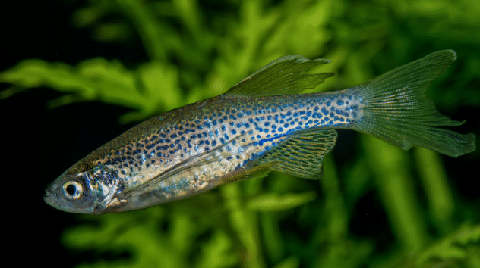
    • Scientific Name: Various
    • Adult Size: 2 – 4 inches
    • Water Temperature: 72°F to 82°F
    • Minimum tank size: 30 gallons
    • Care Level: Moderate
    • Diet. Herbivore
    • Origin. South America
    • Swimming Level. Bottom

    Large schooling fish, such as Tetras, can be suitable tankmates for Convict Cichlids if the right breeds are selected. The large breed are not only big enough not to be eaten, but their activity will have them act as dither fish in the environment. This will help bring out your Cichlid in the open more, and their ability to swim away quickly will allow both species of fish to coexist peacefully. For recommended breeds, look for the following at stores:

    • Congo Tetra
    • Bleeding Heart Tetra
    • Columbian Tetra
    • Buenos Aires Tetra

    Their active presence in the aquarium adds activity that may even help reduce any hostility between other tankmates. It is necessary to provide plenty of room and hiding places for these peaceful fish so they are able to feel comfortable and safe from aggression by others within the same habitat. As schooling fish, they need to be purchased in groups. They will need at least a school of 15 to keep from getting singled out by your Convict Cichlid.

    6. Sajica (T Bar)

    • Scientific Name: Cryptoheros sajica
    • Adult Size: 5 inches
    • Water Temperature: 75°F to 82°F
    • Minimum tank size: 30 gallons
    • Care Level: Moderate
    • Diet. Omnivore
    • Origin. Central America
    • Swimming Level. Bottom to Mid

    T Bar Cichlids (video source) are considered semi-peaceful central American cichlids, which makes them a suitable tankmate for Convict Cichlids since they share similar size and disposition. If confronted by larger fish, these cichlid species will stand up to defend themselves.

    To ensure an environment where both varieties can live harmoniously, provide ample hiding places in the community tank while maintaining proper water parameters that suit all inhabitants of this aquatic space.

    7. Salvini

    Salvani Cichlid
    • Scientific Name: Cichlasoma salvini
    • Adult Size: 8 inches
    • Water Temperature: 75°F to79°F
    • Minimum tank size: 5 gallons
    • Care Level: Moderate
    • Diet. Omnivore
    • Origin. South America
    • Swimming Level. Mid

    The Salvini Cichlids are known to be a colorful and somewhat belligerent breed, though they can coexist with Convict Cichlids if the tank is large enough and has hiding spaces. These eye-catching fish make aquariums look lovely while also claiming their own territories.

    A balanced diet that includes brine shrimp and blood worms should be served up for both types of cichlids so as not to stir any conflict between them. Monitoring how they interact will help create an atmosphere of peace in the environment. The Salvini cichlid is more aggressive and should be added after the Convict.

    8. Firemouth (Thorichthys meeki)

    Firemouth Cichlid Aquarium
    • Scientific Name: Thorichthys meeki
    • Adult Size: 6 inches
    • Water Temperature: 75°F to 86°F
    • Minimum tank size: 40 gallons
    • Care Level: Easy
    • Diet. Omnivore
    • Origin. Central America
    • Swimming Level. Bottom to Mid

    The Firemouth Cichlid is the perfect tankmate when kept with Convict Cichlids. They can make for an entertaining aquarium thanks to their vivid colors. They are both of similar temperament and while they may chase each other, oftentimes no harm will come from it as long as you plan to have a 4 foot long tank or longer.

    To avoid any potential conflict between the two types of cichlids, it is recommended that plenty of places to hide be provided to maintain suitable water parameters for both species. This should ensure all inhabitants have access to what they need while creating a peaceful atmosphere in the tank environment as well.

    Both Firemouth Cichlids and Convicts are readily available and easy to purchase together if you are shopping around.

    9. Pictus Catfish

    Pictus Catfish Swimming
    • Scientific Name: Pimelodus pictus
    • Adult Size: 5 inches
    • Water Temperature: 75°F to 82°F
    • Minimum tank size: 75 gallons
    • Care Level: Moderate
    • Diet. Omnivore
    • Origin. South America
    • Swimming Level. Bottom

    The Pictus Catfish are mild-mannered, active aquatic creatures that can be suitable companions for Convicts Cichlids since both require similar environments. Despite being bottom feeders, their serene demeanor and swift movement make them a perfect fit to exist in harmony with the cichlids without causing any major disruptions.

    They should be kept in a sizable group to keep them from getting singled out. Except to house them in a larger tank to accommodate everyone.

    10. Nicaraguan (Hypsophrys nicaraguensis)

    • Scientific Name: Hypsophrys nicaraguensis
    • Adult Size: 8 inches (female), 10 inches (male)
    • Water Temperature: 74°F to 80°F
    • Minimum tank size: 55 gallons
    • Care Level: Moderate
    • Diet. Omnivore
    • Origin. Central America
    • Swimming Level. Bottom to Mid

    The Nicaraguan Cichlid is known for its vibrant colors and moderately aggressive nature, making it a compatible tankmate in the same environment as Convicts. The females (video source) are smaller than the males, but are also colorful. This species of fish is considered to be quite sturdy, so caring for them will not require particular attention when it comes to water parameters. They are able to defend themselves against the aggression of the Convict Cichlid.

    Despite their potentially territorial attitude towards other small fish they can fit inside their mouths, these pretty-looking creatures won’t likely be antagonistic toward Convicts if both have enough space.

    11. Jack Dempsey

    Jack Dempsey Fish
    • Scientific Name: Rocio octofasciata
    • Adult Size: 10 inches
    • Water Temperature: 75°F to 86°F
    • Minimum tank size: 55 gallons
    • Care Level: Intermediate
    • Diet. Omnivore
    • Origin. Central America
    • Swimming Level. All levels

    The Jack Dempsey is an eye-catching, slower cichlid that can be kept together with Convict Cichlids in the same tank, although this arrangement might not suit beginners. Adequate space and shelter need to be provided for both kinds of fish so they do not feel threatened around one another. It’s recommended to keep a watch on how things unfold between them, as Jack Dempseys may become aggressive if disturbed or challenged by other fish species.

    12. Clown Loaches

    Clown Loach in Aquarium
    • Scientific Name: Chromobotia macracanthus
    • Adult Size: 12 inches
    • Water Temperature: 75°F to 86°F
    • Minimum tank size: 75 gallons
    • Care Level: Intermediate
    • Diet. Omnivore
    • Origin. Indonesia
    • Swimming Level. Bottom

    Clown Loaches are lively, sizable, and vivid creatures that bring a lot of animation to the fish tank. They get along peacefully with Convict Cichlids and like to spend most of their time hiding near the bottom of aquariums. However, due to their very large size and their schooling requirement, they need a large tank to house both species.

    If the right tank is provided, but can successfully coexist without aggression issues.

    13. Oscar Fish

    Oscar Cichlids in Aquarium
    • Scientific Name: Astronotus spp.
    • Adult Size: 12+ inches
    • Water Temperature: 74°F to 81°F
    • Minimum tank size: 55 gallons
    • Care Level: Intermediate
    • Diet. Omnivore
    • Origin. South America
    • Swimming Level. Bottom to middle

    Oscar fish are intelligent yet aggressive creatures that have the potential to be compatible tankmates with Convict Cichlids if they can occupy sufficient living space and have ample hideouts. As these curious swimmers tend to explore their environments thoroughly though greater care must be taken when housing them.

    This is one of the more iffy combinations, which the highest risk being that the Oscar gets so large that it may eat the Convict. Other times, the Convict may bully the Oscar, even is the Oscar is larger. Careful observation is a must if you are going to attempt this.

    14. Giant Danios

    <a href=Giant Danio Fish in Aquarium” class=”wp-image-557080″/>
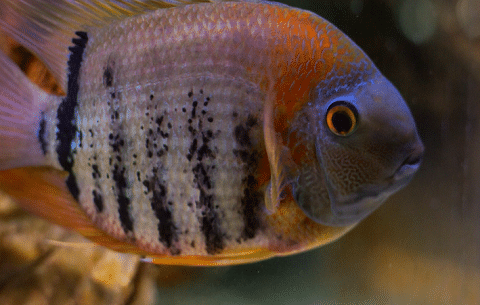
    • Scientific Name: Danio aequipinnatus
    • Adult Size: 4 inches
    • Water Temperature: 72°F to 75°F
    • Minimum tank size: 30 gallons
    • Care Level: Easy
    • Diet. Omnivore
    • Origin. India
    • Swimming Level. Bottom to middle

    Giant Danios, as schooling fish that swim rapidly, can inhabit the same aquarium with Convict Cichlids and introduce activity. This helps to avoid disputes among aggressive types of fish by giving them a diversion instead. For both these species’ welfare in harmony, provide enough space for hiding places inside the tank plus maintain suitable water temperature levels specific to their needs. They should be kept in larger numbers to keep the Convict cichlid active.

    15. Honduran Red Point

    • Scientific Name: Amatitlania siquia
    • Adult Size: 5 inches
    • Water Temperature: 70°F to 82°F
    • Minimum tank size: 30 gallons
    • Care Level: Moderate
    • Diet. Omnivore
    • Origin. Central America
    • Swimming Level. Bottom to middle

    The Honduran Red Point Cichlid (video source) offers red to orange fins and black bars similar to its cousin, the Convict Cichlid. Like the convict, they are known for producing a large amount of offspring. It is best to keep a single species when housing with a Convict to prevent any aggression issues. While they are less aggressive, they have no problem standing up to your Convict if it does display aggression behaviors.

    Honorable Mentions

    Here are fish that could work with Convicts, but require more substance to write about in order to provide proper guidance. When I’m able to write more about them, I’ll link to their respective articles:

    • Tiger Barbs
    • African Cichlids
    • Jewel Cichlid

    Fish Species To Avoid

    Wolf Cichlid

    When deciding which tank mates to select for Convict Cichlids, it is necessary to mention certain fish species that should be avoided. These kinds of fish may either be too small or overly aggressive. To help out, here are some bad choices to add:

    Tips For Creating A Stress Fish Aquarium

    When setting up an aquarium for Convict Cichlids and their tankmates, it’s important to plan carefully and understand the individual needs of each species. The best way to ensure that everyone remains safe is by allowing sufficient swimming space while also providing multiple hiding places like caves, rocks, or plants. this will reduce any possible aggression between them.

    Aside from there, here are a few quick tip to increase your chances of success:

    • Plan on at least a 4 foot long tank when housing Convicts and other fish species
    • Introduce the least aggressive fish first and the most aggressive fish last
    • Consider placing your convict fish in a breeding container when first introduced to observe interactions the first few days
    • Always have a backup plan – whether returning the fish to the fish store or giving the fish to a friend

    Frequently Asked Questions

    Can convict cichlids live with other fish?

    Convict cichlids can be tricky to house in community tanks due to their aggressive nature. They are known for bullying and even harming other fish which are not as feisty, while they themselves become intimidated by more threatening species. To keep the environment stress free, it is recommended that these particular cichlids either live alone or with similarly combative aquatic pals. This way everyone can swim happily together!

    How aggressive are convict cichlids?

    Convict cichlids are known for their aggressive and territorial nature, often forming stable breeding pairs. By offering places of refuge to these fish, it is possible to decrease this type of behavior which usually manifests itself as chasing and biting. This change in environment can ensure a more tranquil atmosphere that allows the monogamous pair-bond formation so important during spawning season.

    What type of fish make the best tank mates for Convict Cichlids?

    Convict Cichlids can make great tank mates with fish of similar size, temperament and care requirements such as Green Terrors, Pictus Catfish, Clown Loach or Giant Danios – this makes for excellent ‘mates’ in the same tank.

    How can I reduce aggression in my Convict Cichlid tank?

    The proper environment is a critical factor for successful Convict Cichlid tank maintenance. To reduce aggression, it’s important to provide plenty of hiding spots and maintain the right water parameters in the aquarium. Creating an atmosphere that is stress-free with sufficient space also can help foster peace among fish inhabiting the cichlid tank.

    What are the ideal water parameters for Convict Cichlids?

    Have Convict Cichlids requires that you create the right environment for them to thrive. You should aim for a pH between 6.5-7.5, an optimal temperature of 75-80°F and a hardness from 5-15 dGH in your tank water, these are essential parameters needed to guarantee their healthiness and wellness. Make sure all conditions meet these standards so that your fish can benefit fully!

    How Many Convict Cichlids Can I Keep In A Tank?

    It is recommended if you want to mix convicts with other fish that you only keep one in the tank. This is because they breed a lot and will get aggressive when breeding. Many fish aren’t able to withstand their aggression, and they will fight bigger fish that could cause harm to both fish and infections. Keep multiple convicts only if you want to breed them.

    Closing Thoughts

    Finding the perfect tank mates for your Convict Cichlids may be challenging, but with careful consideration and planning, you can create a harmonious environment for all the fish in your aquarium. From peaceful bottom-dwellers like Pleco Fish and Clown Loaches to colorful and moderately aggressive fish like Green Terror and Nicaraguan Cichlid, there’s a suitable tankmate for every Convict Cichlid owner. By understanding their behavior, providing adequate space, hiding spots, and maintaining proper water parameters, you can create a thriving aquarium that both you and your fish will enjoy.

  • Top 15 Red Tail Shark Tank Mates: What Can Handle Their Aggression

    Top 15 Red Tail Shark Tank Mates: What Can Handle Their Aggression

    The red tail shark doesn’t share the bottom. That’s the whole story.

    Red tail sharks look harmless at the fish store. A 2-inch juvenile darting around a display tank gives no hint of what’s coming. By the time yours hits 4 inches, it will own the bottom of your aquarium, and everything that gets too close will know it. This fish is one of the most visually striking freshwater species you can keep. It’s also one of the most misunderstood when it comes to stocking.

    One red tail shark per tank. No exceptions. Plan your stocking around that rule before you buy anything else.

    Key Takeaways

    • Red tail sharks are intensely territorial bottom-dwellers, one per tank, always
    • Tank mates need to be fast, mid-water swimmers that don’t compete for bottom space
    • Minimum 55 gallons (208 L), but 75–100 gallons (284–379 L) gives everyone room to breathe
    • Add the red tail shark last in your stocking sequence or expect aggression to spike
    • Never pair with rainbow sharks, other red tails, or any bottom-dwelling shark-shaped fish

    Understanding the Red Tail Shark

    Behavior and Temperament

    The red tail shark (Epalzeorhynchos bicolor) is not a true shark; it’s a cyprinid from Thailand. But the name fits its personality. This fish patrols the bottom of the tank like it owns it, because to its mind, it does. Aggression is worst toward fish that look similar (rainbow sharks are a guaranteed disaster), occupy the same bottom territory, or are slow enough to be cornered.

    What Does A Redtail Shark Look Like

    They’re also commonly confused with rainbow sharks at fish stores, often mislabeled, and rainbow sharks are noticeably less aggressive. If you’ve had trouble with aggression right out of the gate, double-check what you actually brought home.

    Reality of Keeping

    Here’s what daily life with a red tail shark actually looks like: the fish patrols the bottom in wide, deliberate loops, checking its cave, cruising the substrate perimeter, occasionally darting up to chase anything that drifts too close. Feeding time is the most active period. The shark comes out fast, eats aggressively, and will charge competitors off food that lands near its territory. Mid-water fish learn quickly to stay above the bottom third of the tank. Fish that don’t learn that lesson get chased repeatedly until they do, or until they’re stressed enough to stop eating. In a properly sized, properly stocked tank, the harassment settles into a stable routine. In an undersized tank, it never does.

    What People Get Wrong

    Most keepers run into trouble because they bought the fish as a 2-inch juvenile, put it in a 29-gallon tank, and assumed everything was fine. It is fine, until the shark hits 3–4 inches (7–10 cm). That’s when its territorial instincts fully activate, and by then you’ve already stocked the tank around it. I’ve seen it play out dozens of times: the fish that seemed compatible at purchase become targets once the shark matures. The juvenile shows you nothing. The adult tells you everything. The mistake isn’t the stocking choice, it’s the tank size and the failure to plan for what this fish becomes.

    Ideal Tank Environment and Parameters

    A minimum of 55 gallons (208 L) for a single shark. A 100-gallon (379 L) tank gives the best long-term results. Tank footprint matters as much as volume, the tank needs to be at least 4 feet (122 cm) long, with 6 feet (183 cm) preferred. A 6-foot tank lets the shark stake out one end while other fish have clear escape routes.

    Keep temperature between 72–82°F (22–28°C) and pH between 6.5–7.5. Plenty of caves, driftwood, and visual breaks at the substrate level reduce aggression by giving the shark a defined territory to defend rather than the entire tank floor.

    Top 15 Red Tail Shark Tank Mates

    These 15 picks each have a reason they work, and a reason they can fail. Some are slam dunks. Others require specific conditions. I’ll be direct about both.

    Quick-Reference Comparison Table

    Expert Take

    At the stores I managed, the red tail shark was always the fish we gave customers a full briefing on before they left, because the 2-inch juvenile in the bag gives zero indication of what it becomes. After 25+ years in this hobby, my experience is consistent: get the setup right and this fish is spectacular; get it wrong and you’re managing casualties. Red tail sharks are sold as juveniles that look peaceful, then grow into 6-inch (15 cm) territorial animals that own the bottom of whatever tank they’re in. By the time most keepers realize the issue, other fish are showing stress or injury. The key is understanding the trajectory, not just the current behavior. Choose fast, mid-water tank mates that don’t compete for bottom space, add the shark last, and give the tank enough room to establish natural distance. — Mark Valderrama, AquariumStoreDepot

    Species Adult Size Min Tank Ease Compatibility
    Severums 8 inches (20 cm) 55 gallons (208 L) 7/10 High
    Geophagus 5–8 inches (13–20 cm) 55–75+ gallons (208–284+ L) 7/10 High
    Pearl Gourami 4–5 inches (10–13 cm) 30 gallons (114 L) 6/10 High
    Tiger Barbs 4–5 inches (10–13 cm) 20 gallons (76 L) 9/10 High
    Peacock Cichlids 4+ inches (10+ cm) 55 gallons (208 L) 7/10 High
    Hap Cichlids 6+ inches (15+ cm) 75 gallons (284 L) 7/10 High
    Tinfoil Barb 14 inches (35 cm) 75 gallons (284 L) 7/10 High
    Silver Dollars 6 inches (15 cm) 75 gallons (284 L) 9/10 High
    Rainbowfish 4–5 inches (10–13 cm) 40 gallons (151 L) 6/10 High
    Yoyo Loach 2.5 inches (6 cm) 30 gallons (114 L) 6/10 High
    Bristlenose Pleco 4–5 inches (10–13 cm) 30 gallons (114 L) 9/10 High
    Odessa Barb 3 inches (7.5 cm) 30 gallons (114 L) 9/10 High
    Roseline Shark 6 inches (15 cm) 55 gallons (208 L) 7/10 High
    Congo Tetra 2.5–3.5 inches (6–9 cm) 30 gallons (114 L) 7/10 High
    Blue Acara 6 inches (15 cm) 40 gallons (151 L) 7/10 High

    1. Severums

    Ease: 7/10, Good choice with a few conditions to watch.

    Yellow Severum Cichlid
    • Scientific Name: Heros severus
    • Adult Size: 8 inches (20 cm)
    • Water Temperature: 75–84°F (24–29°C)
    • Minimum Tank Size: 55 gallons (208 L)
    • Care Level: Moderate
    • Diet: Omnivore
    • Origin: South America
    • Swimming Level: Bottom to mid

    Severums are one of the best options for a red tail shark tank. They’re big enough not to be bullied, confident enough to hold their own, and calm enough not to escalate conflict. In a well-sized tank, the Severum typically establishes itself as the dominant mid-level fish while the red tail controls the bottom, they divide the tank naturally without constant fighting. This is a pairing that actually works in practice, not just on paper. Get a Severum that’s close to or larger than the shark at purchase, and add the shark last.

    2. Geophagus

    Ease: 7/10, Good choice with a few conditions to watch.

    Geophagus
    • Scientific Name: Geophagus spp.
    • Adult Size: 5–8 inches (13–20 cm)
    • Water Temperature: 76–83°F (24–28°C)
    • Minimum Tank Size: 55–75+ gallons (208–284+ L)
    • Care Level: Moderate
    • Diet: Omnivore
    • Origin: South America
    • Swimming Level: Middle to bottom

    Geophagus are substrate-sifting cichlids, they spend most of their time with their head in the sand picking up mouthfuls of substrate. That bottom-dwelling habit puts them in the shark’s zone, which is the risk. The key is tank size and group size. A group of 3–5 Geophagus in a 75-gallon (284 L) or larger tank creates enough movement and presence that the shark has trouble singling one out. Buy them larger than your shark when possible. And run serious filtration, Geophagus are constantly sifting substrate and the water will show it fast if your filter isn’t keeping up.

    3. Pearl Gourami

    Ease: 6/10, Works, but requires more careful management.

    Pearl Gourami Fish
    • Scientific Name: Trichopodus leerii
    • Adult Size: 4–5 inches (10–13 cm)
    • Water Temperature: 75–82°F (24–28°C)
    • Minimum Tank Size: 30 gallons (114 L) for the gourami; 55+ gallons (208+ L) with the shark
    • Care Level: Intermediate
    • Diet: Omnivore
    • Origin: Southeast Asia
    • Swimming Level: Mid to top

    Pearl Gouramis work because they live up top, the shark doesn’t spend time in the upper water column, so these two barely cross paths. The 6/10 reflects the risk: pearl gouramis are peaceful fish, and if the shark decides to go upstairs and throw its weight around, they don’t have much of a response. Keep a group of 3 or more, add them before the shark, and give them floating plants or surface cover to hide behind. One lone pearl gourami with an established red tail shark is a slow-motion disaster.

    4. Tiger Barbs

    Ease: 9/10. One of the safest choices for this tank setup.

    Tiger Barb Fish
    • Scientific Name: Puntigrus tetrazona
    • Adult Size: 4–5 inches (10–13 cm)
    • Water Temperature: 73–86°F (23–30°C)
    • Minimum Tank Size: 20 gallons (76 L) for the barbs; 55+ gallons (208+ L) with the shark
    • Care Level: Easy
    • Diet: Omnivore
    • Origin: Southeast Asia
    • Swimming Level: Mid

    Tiger barbs are genuinely one of the best picks for a red tail shark tank. They’re fast, they school tightly, they stay mid-water, and they’re bold enough not to panic when the shark charges. The shark will chase, that’s normal, but barbs are quick enough to avoid real harm. The number matters here. A school of 6 isn’t enough. Plan on 12 or more to keep the group tight and confident. A small school breaks apart under harassment and individual fish become targets. A large school is basically immune.

    5. Peacock Cichlids

    Ease: 7/10, Good choice with a few conditions to watch.

    Blue Peacock Cichlid
    • Scientific Name: Aulonocara spp.
    • Adult Size: 4–6 inches (10–15 cm)
    • Water Temperature: 74–82°F (23–28°C)
    • Minimum Tank Size: 55 gallons (208 L)
    • Care Level: Moderate
    • Diet: Omnivore
    • Origin: East Africa
    • Swimming Level: Mid to bottom

    Peacock cichlids are a smart pairing because they push back. Unlike passive community fish that just absorb harassment, peacocks have enough backbone to establish a stalemate. The red tail shark charges, the peacock holds its ground, and eventually both fish accept the other’s presence. In a 75-gallon (284 L) or larger, this usually works well. In a 55-gallon with a juvenile peacock, the dynamic is different, the shark chases it constantly, the peacock retreats to a corner, stops eating, and slowly declines. By the time you notice the problem, you’re dealing with a stressed, underfed fish that needs to be removed. Stick with medium-sized peacocks (4+ inches / 10+ cm), give them a 75-gallon (284 L) minimum, and add the shark last.

    Hard Rule: Never keep a red tail shark with another red tail shark, a rainbow shark, or any shark-shaped fish. The aggression between similar species is extreme and routinely fatal to the subordinate fish. This isn’t a compatibility issue you can manage with tank size, it’s a species incompatibility.

    6. Hap Cichlids

    Ease: 7/10, Good choice with a few conditions to watch.

    Hap Cichlid
    • Scientific Name: Sciaenochromis spp.
    • Adult Size: 6+ inches (15+ cm)
    • Water Temperature: 76–82°F (24–28°C)
    • Minimum Tank Size: 75 gallons (284 L)
    • Care Level: Moderate
    • Diet: Omnivore
    • Origin: East Africa
    • Swimming Level: Mid to bottom

    Hap cichlids work because they’re large, semi-aggressive, and not intimidated. A 6-inch (15 cm) hap is not getting bullied into a corner by a 5-inch (13 cm) red tail. The two species establish a mutual avoidance, the shark controls the bottom perimeter, the haps roam the mid-level and open water. One note: skip Mbunas. Most Mbunas are far too aggressive, they’ll turn the tables and bully the shark to death. Electric Yellows are the one Mbuna exception, but Haps are the safer overall choice for this setup.

    7. Tinfoil Barb

    Ease: 7/10, Good choice with a few conditions to watch.

    Tinfoil Barb in Tank
    • Scientific Name: Barbonymus schwanenfeldii
    • Adult Size: 14 inches (35 cm)
    • Water Temperature: 72–77°F (22–25°C)
    • Minimum Tank Size: 75 gallons (284 L)
    • Care Level: Moderate
    • Diet: Omnivore
    • Origin: Southeast Asia
    • Swimming Level: All levels

    Tinfoil barbs grow to 14 inches (35 cm) and need to be kept in groups, a school of 5+ requires a 200-gallon (757 L) or larger tank. That’s not a casual commitment. But if you’re running a large display tank anyway, tinfoils are one of the cleanest pairings you’ll find. They’re too big and too fast for the shark to bother, they fill the open water beautifully, and their movement keeps the whole tank dynamic. Just know what you’re signing up for, these are large fish that grow fast and need serious filtration.

    8. Silver Dollars

    Ease: 9/10. One of the safest choices for this tank setup.

    Silver Dollar Fish
    • Scientific Name: Metynnis argenteus / Metynnis hypsauchen
    • Adult Size: 6 inches (15 cm)
    • Water Temperature: 75–82°F (24–28°C)
    • Minimum Tank Size: 75 gallons (284 L)
    • Care Level: Easy
    • Diet: Omnivore / herbivore
    • Origin: South America
    • Swimming Level: All levels

    Silver dollars are one of my favorite pairings for a red tail shark tank. They function as large dither fish, their constant movement and open-water confidence tells every fish in the tank that there’s no immediate threat. The shark chases? Silver dollars are too fast to catch. They’re athletic, schooling fish that spend their time in open water, completely out of the bottom territory the shark is defending. The combination works beautifully visually too, the shark’s black and red against the silver flash of a school of 5–6 dollars. The only tradeoff: silver dollars will eat every live plant in the tank. Go with hardscape.

    9. Rainbowfish

    Ease: 6/10, Works, but requires more careful management.

    Lake Tebera Rainbowfish
    • Scientific Name: Melanotaenia spp.
    • Adult Size: 4–5 inches (10–13 cm)
    • Water Temperature: 72–77°F (22–25°C)
    • Minimum Tank Size: 40 gallons (151 L) for the rainbowfish; 55+ gallons (208+ L) with the shark
    • Care Level: Intermediate
    • Diet: Omnivore
    • Origin: Australia / Indonesia
    • Swimming Level: Middle

    Rainbowfish are active, mid-water swimmers that bring serious color to the upper portion of the tank. The 6/10 rating is honest: small rainbowfish species and small schools can run into trouble. Stick to the larger species, Boesemani, Turquoise, Red Irian, and keep a school of 8+. The bigger and faster they are, the less the shark bothers with them. These also do better when added before the shark establishes its territory.

    10. Yoyo Loach

    Ease: 6/10, Works, but requires more careful management.

    Yoyo Loach in Aquarium
    • Scientific Name: Botia almorhae
    • Adult Size: 2.5 inches (6 cm)
    • Water Temperature: 72–77°F (22–25°C)
    • Minimum Tank Size: 30 gallons (114 L) for the loaches; 75+ gallons (284+ L) with the shark
    • Care Level: Intermediate
    • Diet: Omnivore
    • Origin: India
    • Swimming Level: Bottom

    Yoyo loaches are a bottom dweller, which puts them squarely in the shark’s territory, hence the 6/10. What saves this pairing is the yoyo’s speed and activity level. They don’t sit still, they dart quickly, and a group of 5+ makes it genuinely difficult for the shark to pin any single individual. A very large tank, 75 gallons (284 L) minimum, is where this combination becomes manageable. In smaller tanks, the shark will harass them relentlessly. If you have a 6-foot (183 cm) tank, you could also consider clown loaches as an alternative, though their size requirements are even more significant long-term.

    11. Bristlenose Pleco

    Ease: 9/10. One of the safest choices for this tank setup.

    Bristle Nose Pleco
    • Scientific Name: Ancistrus cirrhosus
    • Adult Size: 4–5 inches (10–13 cm)
    • Water Temperature: 73–80°F (23–27°C)
    • Minimum Tank Size: 30 gallons (114 L) for the pleco; 55+ gallons (208+ L) with the shark
    • Care Level: Easy
    • Diet: Herbivore
    • Origin: Amazon Basin
    • Swimming Level: Bottom

    The bristlenose pleco earns its 9/10 because it genuinely doesn’t care what the shark does. It suction-cups to a surface and keeps grazing. The shark may charge it once or twice, but the pleco doesn’t flee and doesn’t fight, and the shark typically loses interest. They also don’t compete for the same food, which removes another source of conflict. In larger tanks, these two coexist with almost zero drama. A cave or two for the pleco to claim as its own helps smooth the introduction. This is one of the cleanest bottom-dweller pairings on this list.

    12. Odessa Barb

    Ease: 9/10. One of the safest choices for this tank setup.

    • Scientific Name: Pethia padamya
    • Adult Size: 3 inches (7.5 cm)
    • Water Temperature: 70–80°F (21–27°C)
    • Minimum Tank Size: 30 gallons (114 L) for the barbs; 55+ gallons (208+ L) with the shark
    • Care Level: Easy
    • Diet: Omnivore
    • Origin: Southeast Asia
    • Swimming Level: Mid

    Odessa barbs are underrated in this context. They’re fast, confident, school tightly, and spend most of their time in the mid-water column, well away from the shark’s domain. They’re also visually striking, with the males showing a bright red lateral stripe that stands out against a planted or darkly scaped tank. Their social nature means they’re almost impossible to isolate and bully when kept in proper numbers. Keep 8+ for the best results. A great pick for a red tail shark tank that also wants visual impact. (video source)

    13. Roseline Shark

    Ease: 7/10, Good choice with a few conditions to watch.

    Rosaline Shark
    • Scientific Name: Sahyadria denisonii
    • Adult Size: 6 inches (15 cm)
    • Water Temperature: 65–77°F (18–25°C)
    • Minimum Tank Size: 55 gallons (208 L)
    • Care Level: Moderate
    • Diet: Omnivore
    • Origin: India
    • Swimming Level: Mid

    Roseline sharks are fast, active swimmers, and that speed is what makes them viable. The red tail can’t keep up. Keep them in a large group (6+) so they can’t be singled out. The risk with roselines is actually the reverse of the usual problem: a large, tight group of roselines will eventually outcompete the red tail shark at feeding time, and the shark may go hungry if you’re not watching. The fix is targeted feeding, drop food near the shark’s cave, separate from where the roselines are feeding. Manageable, but worth knowing upfront.

    14. Congo Tetra

    Ease: 7/10, Good choice with a few conditions to watch.

    Congo-Tetra
    • Scientific Name: Phenacogrammus interruptus
    • Adult Size: 2.5–3.5 inches (6–9 cm)
    • Water Temperature: 73–82°F (23–28°C)
    • Minimum Tank Size: 30 gallons (114 L) for the tetras; 55+ gallons (208+ L) with the shark
    • Care Level: Moderate
    • Diet: Omnivore
    • Origin: Democratic Republic of Congo
    • Swimming Level: Middle to top

    Congo tetras are one of the larger tetra species in the hobby, at 3.5 inches (9 cm), they’re not nano fish. That size, combined with their speed and mid-to-top water column preference, puts them well outside the shark’s reach most of the time. They’re best in schools of 10+, and the males’ iridescent finnage looks stunning in a large tank. Don’t try this with small tetra species like neons or cardinals, they’re too small and too slow for this setup.

    15. Blue Acara

    Ease: 7/10, Good choice with a few conditions to watch.

    How Does An Electric Blue Acara Look Like
    • Scientific Name: Andinoacara pulcher
    • Adult Size: 6 inches (15 cm)
    • Water Temperature: 74–82°F (23–28°C)
    • Minimum Tank Size: 40 gallons (151 L) for the acara; 75+ gallons (284+ L) with the shark
    • Care Level: Moderate
    • Diet: Omnivore
    • Origin: South America
    • Swimming Level: Middle to bottom

    Blue acara is a solid choice, they’re calm cichlids with enough size and confidence to avoid becoming a target. The critical factor is size at introduction: if your acara is smaller than the red tail shark when introduced, it will be bullied. Purchase an acara that’s visibly larger than your shark, and introduce the shark after the acara has had time to establish. The electric blue variant is particularly striking alongside the red-and-black of the shark. A pair of electric blue acaras in a 75-gallon (284 L) with a red tail shark and a school of tiger barbs is one of the cleaner mixed setups you can build.

    Bad Tank Mate Choices

    These don’t fail because of water parameters, they fail because of behavior. The red tail shark will target them specifically, and the outcome is predictable:

    Biggest Mistake Keepers Make

    They put the red tail shark in first. It claims every inch of the tank, the caves, the driftwood, the substrate, the corners. Then they try to add other fish into an already-established territory. The shark treats every new arrival as an intruder, and the introductions turn into harassment campaigns. The stress doesn’t stop, fish begin dying, and the keeper assumes the shark is just “too aggressive.”

    The actual problem is introduction order. Add your community fish first, let them establish, then add the red tail shark last. The shark enters a tank that’s already populated and has to navigate around established residents rather than defending fresh territory. It’s not a guarantee of peace, but it dramatically changes the aggression dynamic.

    Tips for a Successful Red Tail Shark Tank

    • Add the red tail shark last, or temporarily relocate it for a few weeks before reintroducing to reset territories
    • Use a breeding box or divider when introducing the shark to observe early aggression before full integration
    • When pairing with similarly sized fish, buy the shark smaller than the tank mates at introduction
    • A 6-foot (183 cm) tank footprint is significantly better than a 4-foot (122 cm) for managing this species, the extra length gives the shark defined territory at one end
    • Pack in the hardscape, rocks, driftwood, caves. The more visual breaks you create, the shorter the shark’s chases get. This is one tank where a heavily decorated setup genuinely changes the aggression level

    Mark’s Pick: I’ve put this combination together more than once in my years in the hobby, it works every time in the right-sized tank. Silver dollars in a group of 5–6, tiger barbs in a school of 12+, and a bristlenose pleco, paired with a red tail shark in a 75-gallon (284 L) or larger tank. The silver dollars and barbs handle the open water and mid-column, the pleco handles the glass and substrate cleanup, and the shark owns the bottom perimeter. Everyone stays in their lane. It’s one of the most reliable semi-aggressive community setups I’ve put together in my years in the hobby.

    Frequently Asked Questions

    Can two red tail sharks live together?

    No. Two red tail sharks in the same tank almost always results in one being killed or severely injured. The aggression between conspecifics is extreme, this is a strictly one-per-tank species. There is no tank size that reliably makes two red tail sharks cohabitate peacefully.

    Can red tail sharks live with rainbow sharks?

    No. Rainbow sharks occupy the same territory type and have similar body shapes, which triggers maximum aggression from the red tail shark. This is one of the worst possible pairings. Don’t attempt it.

    What is the minimum tank size for a red tail shark with tank mates?

    55 gallons (208 L) is the bare minimum, and only with fast, mid-water fish as tank mates. A 75-gallon (284 L) or larger is where this setup becomes genuinely comfortable. The bigger the tank, the more territorial buffer the shark has, and the less it focuses aggression on specific tank mates.

    Why is my red tail shark so aggressive?

    Usually one of three reasons: the tank is too small, the shark was added first, or the tank mates are bottom dwellers that compete for the same territory. Address whichever applies. If the tank is under 55 gallons (208 L), rehoming one species is the only real solution.

    Can red tail sharks live with cichlids?

    Yes: with the right cichlids. Peacock cichlids, hap cichlids, severums, and blue acaras all work well in properly sized tanks. Avoid aggressive Mbuna cichlids, which are likely to bully the shark rather than the other way around. Oscars and other large aggressive cichlids are also too much for this setup.

    Will a red tail shark eat smaller fish?

    It won’t actively hunt fish to eat them, but nano fish and small shrimp are absolutely at risk. The shark charges and nips, a very small fish that can’t escape fast enough will be injured and will eventually die from stress or wounds. Keep nano species completely out of this setup.

    Closing Thoughts

    The red tail shark is one of the most visually striking fish in the freshwater hobby. That black body with a vivid red tail is impossible to miss in a well-set-up tank. But the fish earns its keep in a specific type of setup, a larger tank, fast mid-water companions, and a stocking sequence that adds the shark last. Get those three things right and you’ll have a centerpiece fish that’s genuinely impressive to watch.

    Get them wrong and you’ll spend your time managing casualties. The shark doesn’t cause problems in the right setup. It causes problems when the setup isn’t built around what it is.

    Have you kept red tail sharks before? What tank mates worked for you? Drop your experience in the comments below.


    📘 Want to learn more? This article is part of our complete Freshwater Fish Guide. Your ultimate resource for freshwater species, care tips, tank setup, and more.