AquariumStoreDepot

Tag: Freshwater

  • Clown Killifish – A Complete Care Guide

    Clown Killifish – A Complete Care Guide

    Clown Killifish are small and colorful freshwater fish species with an interesting prefatory nature. They are ideal for nano tanks and know how to grasp their prey using their upturned mouths from the surface areas.

    While they are pretty simple to care for, they have a drawback. Their expensive rates often stand as a barrier between potential buyers and sellers. So, you’ve to go through a long list of good retailers on your own to cut the deal.

    There’s also a lot of information about them already dispersed among beginners. And those care sheets sometimes contradict each other, leaving you confused.

    So in this extensive care guide, I’ve compiled what actually makes them worth your investment and time. From their habits to their essential needs, you can learn everything about your Clown Killifish here.

    Key Takeaways

    • Clown Killifish are small and do well in aquariums as small as 5 gallons
    • They only grow to 1.5 inches in length
    • They are non-annual Killifish. They can live close to 5 years in captivity

    An Overview

    Scientific NameEpiplatys annulatus
    Common NamesClown Killifish, Clown Killi, Banded Panchax, Rocket Killifish, Bony Fish, African Killifish
    FamilyNothobranchiidae
    OriginGuinea, Sierra Leone, Liberia, West Africa
    DietCarnivore
    Care LevelEasy to moderate
    ActivityPlayful
    LifespanUp to 5 years
    TemperamentPeaceful Predator
    Tank LevelTop
    Minimum Tank Size5 gallons
    Temperature Range73-79 F°
    Water Hardness4 to 8 KH
    pH Range6.0 to 7.0
    Filtration/Water FlowLow to moderate
    Water TypeFreshwater
    BreedingEgg layer
    Difficulty to BreedEasy
    CompatibilityCommunity tanks
    OK, for Planted Tanks?Yes

    What is it?

    The Clown Killifish is one of the smallest Killifish in the aquarium hobby. They are scientifically known as Epiplatys annulatus from the Nothobranchiidae family.

    In addition to their beautiful color patterns, their peaceful predatory behavior is fun to observe. And while some aquarists identify Clown Killifish as slightly wild, you will often see them getting along with their tanks in peace and harmony.

    It doesn’t matter whether you’re new to fish-keeping or know your way around keeping them, you can house Clown Killifish in captivity as long as you meet their basic care needs.

    Origin and Habitat

    Clown Killifish originate from different Western African regions. You can see them spread all through Guinea, Liberia, and Sierra Leone.

    They first appeared in 1915 when a naturalist named George Albert Boulenger spotted them giving a marvelous look to the water. Ever since that, they have never failed to amaze aquarists with their appearance and fascinating attacking nature.

    In their natural habitat, Epiplatys annulatus prefer slightly warm and acidic waters. And while they have a good life expectancy in captivity, Clown Killifish can’t put up with disturbed water parameters.

    Appearance

    If you want a colorful fish species to keep your observing nature intact, consider adding Epiplatys annulatus to your aquariums.

    While they have a beautiful spectrum of colors, knowing the complete range of their body coloration is tough.

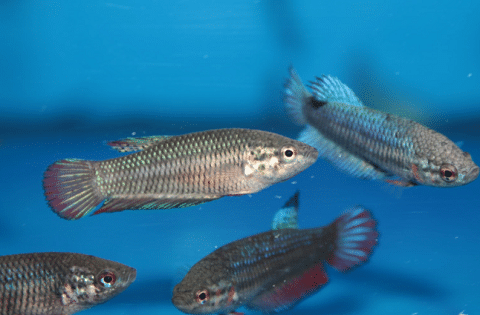
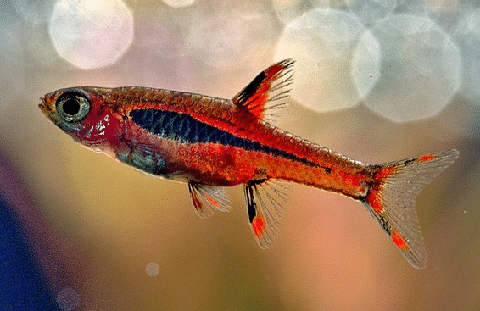
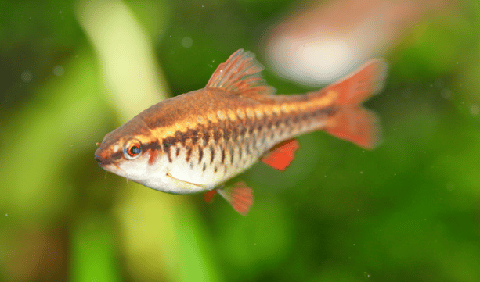
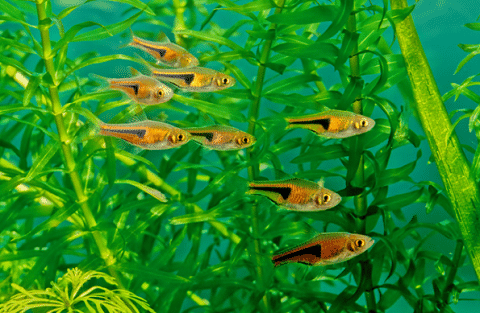
    Clown Killifish usually feature deep black, lemon yellow, purplish blue, deep bronze, and sometimes plain black and white shades. But the core reason they are famous for their appearance is the presence of thick bands on their bodies.

    The width and color pattern of the bands can differ based on their gender. Sometimes, Clown Killifish exhibit a different variety of colors and stripes within the group of individual fish of the same kind.

    Clown Killifish are tiny and absolutely wonderful fish species to keep in captivity. Their torpedo-like body got them one of their common names Rocket Killifish. This rocket shape makes them look like miniature pike.

    Since they always stay on top water levels, their upturned serves the purpose of hunting down floating insects or invertebrates.

    The head of a Clown Killifish looks partially rounded, with a pair of eyes that appears bright neon blue. They are usually slim in shape which makes their appearance even smaller.

    Apart from this, you can see a set of 4 vertical fins on their tiny bodies. These fins sit closer to their tail which looks like a spade. The anal fins of Clown Killifish, like their dorsal fins, have projecting rays. These rays are lengthy and emerge right above one another. You can also see elongated rays running on the center of their caudal fin.

    The color of their bands ranges from cream color to light yellow. These stripes run between their snouts to their caudal fins.

    Clown Killifish grow into wonderful multicolored fish. But with young Clown Killifish, you will notice duller shades appearing on their bodies.

    They develop strong coloration as they grow. And another thing to notice is their natural body color vividness going dim when they are stressed. It happens only for a few moments, so there’s nothing to worry about.

    Difference between Male and Female

    As with most fish species, the easiest way to tell the genders apart is by looking at the color deepness of the male Clown Killifish and the female Clown Killifish.

    Clown Killifish are sexually dimorphic. The males and females share the same base and stripes color, marking a major difference through their fin color variations.

    In a female Clown Killifish, the dorsal fin looks clear. But with the males, you usually see deep blue, bright red, or cream shades. While this is normally what you would see, the male Clown Killifish can also feature deep blue fins marked with red hues.

    The male Clown Killifish also has caudal fins which look lavender or bright blue. The exciting part about their caudal fins is the color of their rays sitting on these fins. You can see a composed shade of bright yellow, red, or bright orange in males visible on their caudal fins.

    Lifespan

    Clown Killifish lifespan depends on the number of effort you put into their maintenance. They are considered a non-annual Killifish.

    They typically live up to 5 years in captivity and in the wild. Sometimes, irregular water shifting, larger amounts of dirt, and the threat of any aggressive fish around them influence their life cycle.

    While the latter factor isn’t directly contributing to a shorter lifespan, constant mental disturbance does.

    Average Size

    Clown Killifish are really small. They go only as big as 1.5 inches. As compared to other fish, young Epiplatys Annulatus are fast at becoming sexually mature.

    They take almost 7-8 weeks to reach their full size. And within only half a year, a juvenile can mature into an adult Clown Killifish.

    Typical Behavior

    Clown Killifish are peaceful fish species with a raptorial behavior propensity. And this is one of the best things about them.

    Unlike other fish species, they don’t chase insects or flies. Rather, they lay waiting on the surface of the tank for any potential prey to cross their lane. Once they spot any prey, they use their upturned mouth to get it down from the surface of the water (video source).

    And when it comes to their behavior with their tank mates, the Clown Killifish tolerates a good number of fish species.

    We will go through a detailed list of what fish species are ideal for your Clown Killifish later in the article.

    Also, their size might trick you into believing them to be on the safe side in jumping. These Banded Panchax are small. But if you don’t monitor them, they can jump off their tanks pretty easily.

    Care

    As a total beginner, creating a proper care sheet is pretty demanding.

    Clown Killifish can withstand minor environmental changes. But you’ve to keep an eye out for proper water balance and cleanness. In the wild, they live in shallow water and inhabit areas like streams.

    Aside from maintaining water parameters, you have to find suitable tank mates for your Clown Killifish. They don’t get in the way of their tank mates. But you can see conflicts within their groups and they are small fish.

    In addition to that, some common diseases can also inflict your fish. This typically happens when you don’t weed out toxins from water on time or your fish is stressed.

    Aquarium Setup

    Along with dietary care, behavior management, and other contributing care factors, a proper aquarium setup is essential, too.

    In the wild, Clown Killifish inhabit areas with lots of plants. These areas give them a warm summer touch, moderate pH levels, and water hardness that goes from 4 to 8 KH.

    If you want to see them thriving, you need to monitor water parameters closely and with proper attention.

    They are resilient. But withstanding poor water quality seems out of control in their case. Also, if you don’t weed out toxins like ammonia and nitrate from their aquarium from time to time, Clown Killifish can fall ill and eventually die.

    Tank Size

    For a tiny fish like Clown Killifish, a small-sized nano tank is good to go with.

    But Clown Killifish need to move in groups to feel protected. Therefore, it’s better to get a bigger tank that can house them easily.

    Also, they spend almost all their time on the water surface. This allows you to keep them with fish that stay at mid or bottom water levels.

    Pro Tip: In the wild, they are found in shallow waters. That is why you should always get a tank that's low and long for your pet.

    Water Parameters

    Clown Killifish are tropical fish. While going through what goes into their tank and how to gauge the right water parameters, know that they prefer warm waters.

    You should maintain water temperatures that ranges from 73° F to 79 F°. Clown Killifish prefer soft water, so keep the water hardness somewhere between 4 to 8 KH. Another important water parameter is the pH level. It should be around 6.0 to 7.0.

    Filtration and Aeration

    Since Clown Killifish can be placed in 5-gallon tank and are prone to diseases developed by unclear water, you will feel tempted to get them a filter.

    A filter does a good job of keeping the tank clean. But in a smaller tank, a strong filter can create strong currents that will disturb the calm swimming pace of your fish.

    Rather than going for a filter for Clown Killifish, you should use live floating plants to boost oxygenation. Apart from this, live plants are a good fit for carrying eggs of Clown Killifish during breeding seasons.

    But remember to perform frequent water changes of up to 50%. Live plants and water changes work side by side in creating a safe environment for your fish to live in. In case you still want a filter to ensure proper water cleanness, you can use a sponge filter or power filter.

    Lighting

    In the wild, Clown Killifish use floating plants to hide beneath. Because any direct contact with vivid lighting stresses them out.

    In your aquarium, you have to replicate the same condition for their comfort. Since they are going to be live plants, partial access to sunlight is good. Also, you can use subdued led lights to detect any unusual activity in their habitat during the night or consider low light plants.

    Aquatic Plants and Decorations

    You have to give your Clown Killifish plenty of plants to feel at home.

    Including live plants, you can also use plastic plants. But since these plants can’t act as a natural oxygen booster and water cleaner, live plants are ideal to consider.

    During the breeding season, the pairs sometimes feel shy. Therefore, they need caves to hide in. Introduce manufactured caves throughout their tanks which should not be too big to suffocate their free moving. Moreover, avoid using caves with sharp edges and artificial coloring.

    And as there is no compromise on plants, here are some choices:

    Tank Maintenance

    Other than keeping the water clean by doing water changes, you have to clean the tank itself for an even better and healthy aquarium environment.

    Waste plant material and the debris your Clown Killifish will produce can promote ammonia levels.

    To avoid any potential environmental threats, you can always follow these tips:

    1. Remove waste plant material and trim plants when you do water changes.
    2. Take out decorative items and scrub them clean with a toothbrush. Do not use cleaning products. Boiling is okay if the rock or decoration can take it
    3. Use an algae scraper and water to clean the surface of the tank walls.

    Substrate

    Any sandy or clay substrate is perfect for Clown Killifish. The only thing you need to focus on is the size of the grains. The grains will matter more for tank mates and plants. We’ll discuss tank mates below.

    Community Tank Mates

    As long as selecting Clown Killifish tank mates goes, you have plenty of options to choose from.

    Because there is almost no problem in keeping them with fish from other species. And as they prefer staying in groups, you should never keep them solo.

    They love participating regularly in social gatherings. While you will never see them crossing paths with their tank mates to harass them, the chance of outbreaks within their groups is common.

    Usually, the males engage in chasing each other as a means of harmless fun. I would recommend you keep at least 8-10 Clown Killifish together. Make sure they have plenty of space to swim freely.

    Here’s a list of some most compatible tank mates for your Clown Killifish:

    1. Small Plecos
    2. Betta Fish
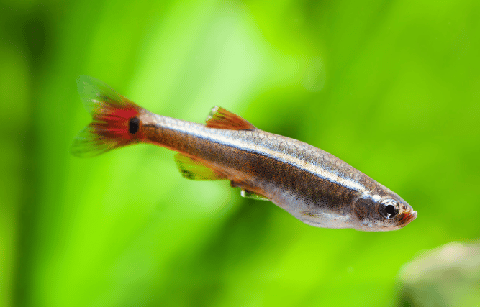
    3. White Cloud Minnows
    4. Gouramis
    5. Small Barbs
    6. Corydoras Catfish
    7. Danios
    8. Small and peaceful Tetras

    Poor Tank Mates

    Any aggressive fish or fish that is too small to end up in their diet is a poor choice.

    Even if their tank mate is a peaceful fish but doesn’t match their size, Clown Killifish can get eaten up by the hungry tank mate.

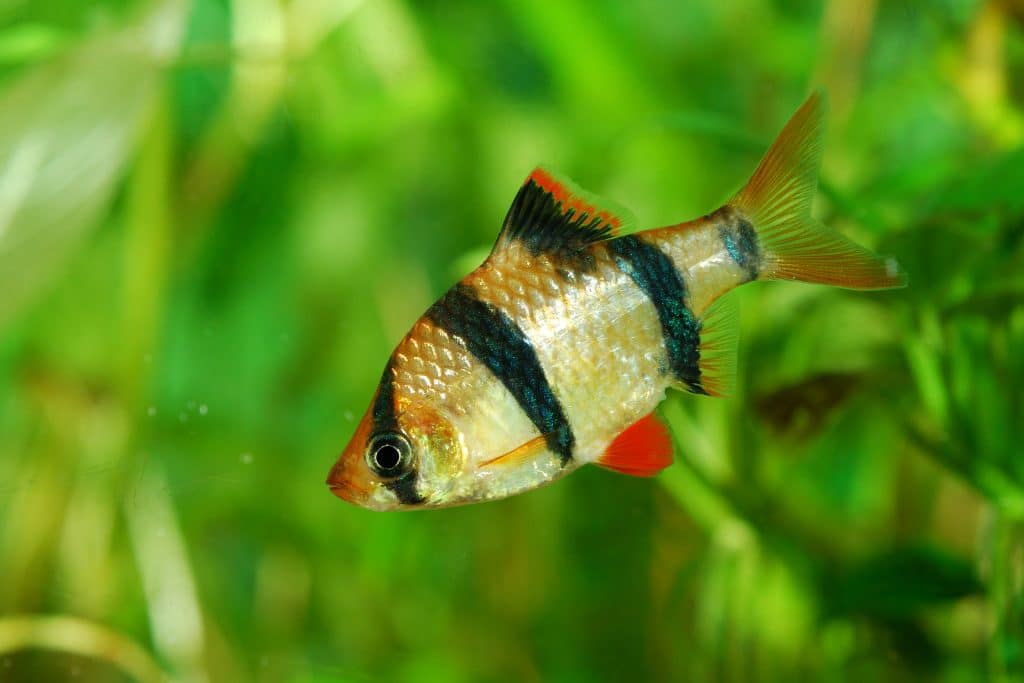
    1. Tiger Barbs
    2. Cichlids
    3. Large Plecos

    Breeding

    If you’re someone with past fish-keeping experience, you can breed them without any hassle in a home aquarium. But before you move on to the first part of their breeding method, understand their behavior.

    Males tend to act harshly toward females. And due to their conduct, you might see a female unable to cope with her counterpart. Here is one breeder’s perception of this process from The Secret History Living In Your Aquarium. Check it out below.

    To avoid unsuccessful breeding, you can keep 2 females with one male. This way, if the first female doesn’t show interest, the male can pair up with the second one.

    Just make sure the pair gets along trouble-free.

    Now, you can start off with creating a separate breeding tank. It is almost impossible to breed them in community tanks. The reason is obvious: larger numbers of fish will result in mismanagement.

    In their breeding tank, place live floating plants. They will use these plants to lay their eggs on. Also, they can act shy during and right after pairing up. Make sure you give them different hideouts to use.

    Some fish-keepers use spawning mops. They place the mops and eggs somewhere else for the eggs to hatch. If you choose plants from my recommendations, they will easily serve the purpose.

    To condition, a perfect breeding environment, maintain pH levels. The ideal count should range from 5.8 to 6.5. The water temperature should be around 71° F to 77° F. And the water should be soft for helping them feel a homely effect.

    They pair after every two months and can produce up to 1200 eggs in a course of a year.

    Diet plays an important role in preparing them for a healthy breeding season. Feed them foods like brine shrimp, mosquito larvae, bloodworms, and earthworms. Whatever food you go for should be rich in protein.

    Once you’re done with creating an ideal tank for breeding, leave them to breed on their own. They start the procedure within one day, given you have been preparing them for breeding for a couple of weeks.

    Clown Killifish are not good to stay with their eggs. The parents can attack and eat the fry. So, it’s better to guide the fry to a separate tank with the same water parameters. Or, you can remove the parents from the tank.

    Initially, the fry will hide among the floating plants at the surface. They do so either because they don’t feel comfortable or because they naturally feel good around surface areas.

    For the proper nourishment of the fry, feed them green algae. After a couple of days, introduce infusoria to their menu.

    They will also start taking juvenile nematodes. Make sure you feed them twice or thrice a day. As they stay on the surface and find it hard to get food on their own, you should give them vinegar eels. You can also add newly hatched brine shrimp for further nourishment.

    Vinegar eels stay at the surface, which makes them an easy target for young Clown Killies.

    Food and Diet

    As carnivores, Clown Killifish need a mixed diet of live and frozen food. Given their size, they need only small portions of protein for a better living.

    In their natural habitat, they eat insects using their upturned mouths. Or whatever they get in the shallow water.

    You can feed them:

    • Baby Brine Shrimp
    • Mosquito Larvae
    • Microworms
    • Moina
    • Fruit Flies
    • Small Grindal Worms
    • Walter Worms

    Common Health Problems

    Throughout the article, I have kept stressing over how important clean water is for a healthy Clown Killifish.

    Whenever the water quality gets compromised, these freshwater fish can interact with different fish diseases.

    Unlike other species, Clown Killifish can handle these messy and troublesome situations. But how long they stay upbeat is difficult to tell.

    They are small fish coming from slow-moving streams. While as a beginner, keeping Clown Killifish might sound easy. But if any disease intrudes on your tank, you are very likely to mess up the situation even more.

    Here are some common diseases they are likely to fall prey to:

    Flukes

    Fluke is a parasitic infection. It commonly attacks tropical fish.

    Here are some common symptoms:

    1. Increased Mucus
    2. Staying very close to the surface
    3. Red spots
    4. Lethargy
    5. Loss of appetite

    Cottonmouth

    Your Epiplatys annulatus can get affected by a bacterial infection called Columnaris. This disease is commonly known as Cottonmouth.

    Unlike other diseases, this ailment grows rapidly and infects other body parts really fast. It can lead your pet to die if you don’t treat it on time.

    Here are some common symptoms:

    1. Frayed fins
    2. White spots/patches appearing on the head gills or other body parts
    3. Presence of lesions on the back

    Ich

    Ich is a very common disease in fish. Like fluke, it happens due to parasites.

    Here are some common symptoms:

    1. Visible white spots on fins or all over the body
    2. Severe itching
    3. Lack of activity

    Fish Lice

    Like humans, a lot of different fish species can get lice. It is easy to help your fish get rid of these tiny crustaceans.

    Here are some common symptoms:

    1. A drastic change in activity
    2. Itchy skin
    3. Abnormal swimming

    Apart from the cottonmouth disease, you can easily treat other ailments. In case there any severity of disease in any of your fish, it’s better to separate them from the rest of the community.

    FAQs

    How big do they get?

    The average size of a Clown Killifish is 1.2 inches. They can sometimes stretch themselves up to 1.4 inches based on the individual fish. Females are usually smaller than males. They are usually just over an inch overall.

    How many of these should be kept together?

    The ideal number is 8. You should never keep a solo Clown Killifish. Because moving into communities helps them stay happy. If you have a larger tank, feel free to go over the recommended number.

    Are they easy to keep?

    Clown Killifish are very small, fun-loving, and social. Even though you should not house them as a total beginner, a good understanding of what goes into making ideal tank conditions for them will help.

    Are they Hardy?

    Clown Killifish are pretty hardy and a wonderful addition to home aquariums. But they are a few diseases you have to keep an eye out for. Such as Ich, Cottonmouth, Fish Lice, and Flukes.

    What size tank do they need?

    A 5-gallon tank gives a single Clown Killifish plenty of space to swim around, explore what is in their tank and arrange social gatherings without any hindrance. But keeping them in larger groups or with other fish determine the size of tank. If you keep them in groups, and add fish from other species, go for a bigger tank.

    Where are the rocket types?

    Clown Killifish come from Western Africa. They inhabit shallow streams, rivers or sometimes ponds located in Guinea, Liberia, and Sierra Leone. You can also find them on and offline now. Because they are successfully bred worldwide and are sold locally.

    Are they aggressive?

    clown killifish Their predatory nature might force you into believing that they are aggressive. It is true to some extent though. Since males tend to act hostile towards each other. But their hostility is always fun-intended.

    How do you take care of them?

    To properly look after a Clown Killifish, you need to understand how it tends to behave in a new environment or around fish from other kinds. As they are immune to drastic water changes and water impurities, never let ammonia and nitrate levels sit in the tank for longer periods. Keep water temperature around 73 F° to 79 F°. Also, keep the water soft (4 to 8 KH) with slightly higher pH levels (6.0 to 7.0).

    Closing Thoughts

    Clown Killifish are a great option for anyone looking for an active and interesting nano fish to add to their aquarium. With their great personalities and easy breeding, they make a perfect choice for any aquarist. Have you kept them before? Let us know in the comments!


    📘 Want to learn more? This article is part of our complete Freshwater Fish Guide — your ultimate resource for freshwater species, care tips, tank setup, and more.

  • Dwarf Neon Rainbowfish – A Complete Care Guide

    Dwarf Neon Rainbowfish – A Complete Care Guide

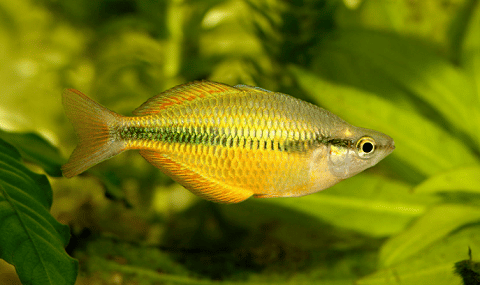
    If you’re looking to grace your aquariums with a fish that is; easy to keep, active and beautiful swimmer, showcase bright, vivid colors that are eye candy, and loves the company of other fish, you should definitely look into dwarf neon rainbowfish.

    Dwarf neon rainbowfish is an almond-shaped fish with an iridescent blue sheen that flashes under the light. Otherwise easy to keep, this fish is not for beginners, and in this article, I’ll tell you why. Not just that, I’ll also discuss everything related to the Dwarf neon rainbowfish.

    Let’s get started.

    Key Takeaways

    • Dwarf Rainbowfish live for 4 years and are schooling fish
    • They grow up to 2.5 inches and require a 20 gallon tank
    • They will not bother plants and most inverts in aquascape environments

    A Quick Overview

    Scientific NameMelanotaenia praecox
    Common NamesDiamond rainbowfish, neon rainbowfish, Praecox rainbowfish, dwarf neon rainbowfish, peacock rainbowfish, and Teczanka neonowa
    Family
    OriginNew Guinea, Indonesia
    DietOmnivore
    Care LevelEasy
    ActivityVery active
    Lifespan4 years
    TemperamentPeaceful and compatible with community tanks
    Tank LevelTop to Middle Dweller
    Minimum Tank Size20 Gallons
    Temperature Range72° to 82 F
    Water Hardness8 to 12 dKH
    pH Range6.8 – 7.5
    Filtration/Water FlowModerate
    Water TypeFreshwater
    BreedingEgg layer
    Difficulty to BreedEasy
    CompatibilityCommunity tanks
    OK, for Planted Tanks?Yes

    What Is It?

    Neon Dwarf rainbowfish, melanotaenia praecox, is a small freshwater fish species reaching a small size of around 2.5 inches in length. In the freshwater fishkeeping trade, it’s a popular fish that are an inexpensive yet wonderful addition to your aquariums. Dwarf neon rainbowfish are a schooling fish, perfect for a community tank with other fish of similar size and characteristics.

    Origin and Habitat

    In 1922, the dwarf neon rainbowfish, melanotaenia praecox, was first described by Weber and Beaufort. However, it first came to light in 1992. Neon rainbowfish is a beautiful fish found in small jungle streams in Western New Guinea (Irian Jaya) and the Mamberamo river of West Papua.

    It is a schooling fish that prefers living in community tanks. Nowadays, the rainbow fish is raised in captivity, and research suggests it was listed as rare species in the wild in 1994.

    Appearance

    The dwarf neon rainbowfish showcases the same characteristics as other members of the rainbow fish family. However, they are much smaller in size. Neon Rainbowfish, melanotaenia praecox can only reach up to 2.5 to 3 inches in length. 

    The body of neon rainbowfish is long and it deepens with age. The adult male fish develop pinched faces with bigger eyes and twin dorsal fins than their cousins.

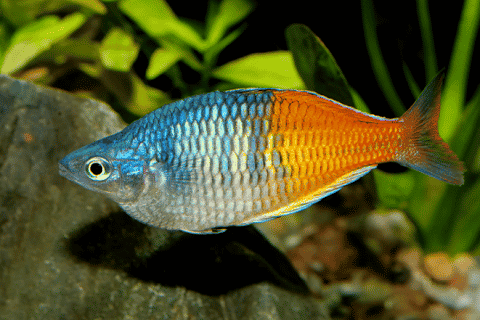
    The neon rainbowfish have bright fins where the male fins are predominantly red and the females’ fins are yellow. The base of the body is usually greyish pink where the scales usually light up forming a bright blue (lavender to teal) color, depending on the light.

    The overall appearance of dwarf neon rainbowfish is dazzling and allows for a beautiful fishkeeping experience. 

    Size

    Neon rainbowfish are the smallest in the rainbow fish family reaching not more than 2.5 inches in length. The maximum size of the fish is around 3 inches in length in some cases.

    Lifespan

    The lifespan of neon rainbowfish is around 4 years. However, under optimum conditions, they can live for up to three to five years in captivity.

    Care Guide

    The neon rainbowfish is very hardy and easy to care for, but it is still not recommended for novice aquarists. The reason is they are very sensitive to water parameters and water changes. Despite their small size, they still require a decent-sized tank dedicated to around a group of 10 or more fish. 

    I recommend keeping dwarf neon rainbowfish in a 20-gallon tank that is at least 20 inches long. Also, since these fish are omnivores, they will accept almost everything offered to them. However, the food at the bottom of the tank remains untouched. Therefore, I always advise removing the food from the bottom to avoid tank contamination.

    They also remain healthy provided the water in their tank is kept clean and the tank conditions are hygienic. Thus, a good filtration system with good water movement is essential.

    Aquarium Setup

    Rainbowfish Neon are fast-swimming fish. Therefore, a longer aquarium is recommended to keep them swimming freely. Also, I recommend covering the tank securely. as they are active jumpers.

    The aquarium plants should be added since these fish species look the best with floating plants, fine leaved plants, and these live plants also mimic their natural habitat and block the line of sight, especially when the males are aggressive with each other.

    Tank Size (Minimum Tank Size)

    Neon dwarf rainbowfish are fast swimmers and thrive in a community aquariums. Therefore, we recommend at least a 20-gallon tank. A 20-gallon long could be a good option for extra swimming space.

    Tank Parameters

    As mentioned earlier, neon dwarf rainbowfish are sensitive to water conditions. Therefore, the water parameters should be carefully monitored and maintained.

    They are specifically vulnerable to pH levels and prefer slightly acidic water with a pH range of around 6.8 to 7.5. In a breeding tank, the pH levels should be kept lower.

    The water hardness should be between 8 to 12 dKH and the ideal temperature is around 72 to 82° F.

    The strict water requirements are the only reason I don’t recommend neon rainbowfish to beginners because they need more stable water than other school fish and they are larger.

    Besides keeping water conditions optimal, you also need to observe water hygiene, the water should be very clean. Thus, I recommend doing 30% weekly water changes to keep your fish healthy and increase their life expectancy. Using a gravel siphon will reduce half of your time while doing water changes.

    Filtration and Aeration

    Before introducing the fish into your tank, check the levels of ammonia, nitrates, and nitrites to prevent the transfer of diseases and harmful toxins to your fish.

    Investing in a good filter and air pump is necessary for your Dwarf neon rainbowfish tank. These fish species appreciate a highly aerated and oxygenated tank because they are very active and fast swimmers.

    Since their tank requires dense vegetation, the amount of waste produced by fish and live plants should be cleaned proactively. The fish with high ammonia levels will eventually die. Therefore, to prevent this, I recommend installing internal or external power filters in the neon rainbowfish tank. The reason I recommend these filters is because they not only clean the tank but also generate current that your fish enjoys.

    Editor’s Choice
    Hagen AquaClear

    The Best Aquarium Power Filter

    The worlds best selling and most reliable power filter on the market. Unchanged for years because it’s so reliable and versatile

    Buy On Amazon Click For Best Price

    Besides installing an aquarium, aim to change 25% of the water every week to keep water parameters in control.

    Lighting

    For the aquarium lights, you need to carefully choose your options. Neon rainbowfish prefer darker environments. However, since their tank is densely vegetated, you can provide low, subdued light.

    The low light will also help prevent the overpopulation of algae in the water tank.

    Aquatic Plants and Decorations

    The native rivers of neon rainbowfish have a lot of plants to swim through and use as hiding spots if they are bullied by the larger, aggressive fish.

    Therefore, always aim for densely planted aquariums to provide your fish with sufficient cover in the form of tall plants. However, while filling your tank with tall and floating plants, make sure they have a lot of free swimming places available, especially in the middle of the tank.

    Substrate

    Choosing substrate is the most important and fun part of keeping the neon rainbowfish. 

    Since Praecox rainbowfish are colorful fish, I suggest a dark substrate backing on the tank that contrasts with colors that make them look gorgeous and secure simultaneously.

    Thus, a sandy, dark substrate with a densely vegetated tank and driftwood would do just fine for your Neon rainbowfish.

    Community Tank Mates 

    Neon rainbowfish loves a community aquarium with lots of aquarium plants. They get along with similar-sized, peaceful fish. However, avoid keeping them with large fish showing aggressive behaviors.

    Another fun but important factor in keeping these fish happy in large schools is the ratio of males to females. Many aquarists keep the same sexes in the tank. However, adding both genders add more diversity and colors to your home aquarium. 

    I know proper stocking of the fish can be daunting. Thus, here’s a little guide to help you choose the type of school you want to keep and the amount of fish.

    Amount of fish to keep in a community tank

    • 5 rainbowfish – Do not mix sexes
    • 6 rainbowfish – 3 males + 3 females
    • 7 rainbowfish – 3 males + 4 females
    • 8 rainbowfish – 3 males + 5 females
    • 9 rainbowfish – 4 males + 5 females
    • 10 rainbowfish – 5 males + 5 females

    The neon rainbowfish remains happy in a group of 10 fish or more. But please be informed there should be multiple females available for the males so they don’t stress them out. 

    I also advise adding some bottom feeders in the tank as scavengers because your neon rainbowfish never eats at the bottom.

    The ideal tank mates for Neon rainbowfish are:

    1. Tetras
    2. Platys
    3. Guppies
    4. Gouramis
    5. Barbs
    6. Other species of rainbow fish

    Breeding

    Breeding Neon rainbowfish is fairly an easy task as compared to other freshwater fish. However, they are egg scatterers and so no parental care whatsoever.

    Therefore, setting up a separate breeding tank is essential.

    Once you have both sexes available in the appropriate ratio, they spawn every day. However, their eggs are just 1mm which produces a very small fry that is hard to raise.

    Requirements for a separate breeding tank

    Cleanliness and tank hygiene should be your utmost priority for the breeding tank as these fish are highly sensitive to water conditions. Here is a video by TM Aquatics below that goes over breeding.

    I also recommend placing a floating spawning mop so that the adult fish can lay their eggs on it. Also, It’s advisable to place a catch-up because hanging a catch cup on the inside of the tank keeps the water warm and you can keep the spawning mop inside the catch cup with an air stone to keep the water oxygenated.

    If you want to prevent fungal growth in the tank, you can add cherry shrimps in the tank to help clean the eggs.

    The eggs of dwarf neon rainbowfish hatch in around one week. The newly hatched fry should be fed 3 to 5 times a day with infusoria or vinegar eels, or commercially prepared fry food. After a few days, the fry is large enough to feed on live foods such as baby brine shrimp.

    To keep the breeding tank clean, I suggest setting up a sponge filter and fine-leaved plants or a spawning mop.

    Keep these points in mind while breeding neon rainbowfish:

    1. The water temperature of the breeding tank should be set at 78.8 degrees Fahrenheit.
    2. The ideal pH range of the breeding tank is around 7.0
    3. When your fish are ready to spawn, they shine with vivid colors
    4. Observe the adult fish as they are egg scatterers

    Food and Diet

    Neon rainbowfish are omnivores and eat both animal and plant matter. However, in captivity, they should be well fed with high-quality flake or pellet food to maintain good health. 

    You should also feed them live food such as brine shrimp, bloodworms, and tubifex worms. You can also feed them with blanched lettuce, leaves, or plant-based food from time to time.

    How often should you feed them?

    You should feed them multiple times a day but only if they can consume it within a minute.

    Common Health Problems

    Neon rainbowfish are very hardy and any disease in a well-maintained aquarium is highly unlikely. However, there’s no guarantee when it comes to life.

    Always remember anything you add to your aquarium can bring diseases to your fish. Thus, before adding plants, substrate, decorations, and other fish, monitor them properly.

    The best thing about Neon rainbowfish is their ability to fight disease. Thus, if you diagnose any disease earlier, there are high chances that your fish will recover from it.

    Here are some common fish diseases: 

    1. White spot disease
    2. Velvet
    3. Fungal Infections

    Differences Between Male and Female

    It’s very easy to distinguish between a male and female rainbow fish. Look out for the fins, if the fins have a red outline, the fish is male. If the fins are yellow or orange outline, you’ve got the female. Females usually show a more silvery color than males.

    FAQS

    How big do they get?

    Neon rainbowfish are very small species growing for around 2.5 to 3 inches in length.

    How many should be kept together?

    Since neon rainbow fish are schooling fish, a group of 10 fish or more is recommended in a community tank.

    Where are dwarf kind from?

    The dwarf neon rainbowfish come from small jungle streams in Western New Guinea (Irian Jaya) and the Mamberamo river of West Papua.

    How long do praecox kind live?

    Neon rainbows (praecox) live for around 4 years. However, if the proper tank conditions are met, they can live for up to five years or longer.

    What fish can live with them?

    Rainbowfish get along with similar-sized, peaceful fish. However, avoid keeping them with large fish showing aggressive behaviors. They do best in community tanks with other schooling fish or other rainbowfish.

    Final Thoughts

    Neon rainbowfish are very active, beautiful, and hardy fish. They showcase striking colors that add opulence to your home aquariums. The best part about these fish is they live in harmony in a group of around 10 fish with lots of plants and free swimming space.

    However, they are vulnerable to poor water conditions and may even die due to frequent water parameter changes.

    Have you kept neon rainbows before? If so, share your experiences in the comments below!

  • African Dwarf Frog (A Complete Care Guide)

    African Dwarf Frog (A Complete Care Guide)

    African Dwarf Frogs are one of the best aquatic frogs you can bring to your aquariums.

    They have a good inclination of staying active. And while these energetic frog species bring entertainment to your aquarium life, they are fully able to coexist with different freshwater fish species. Whether you’re a novice or someone with prior fish-keeping experience, their low-key maintenance is worth admiring.

    In this article, I’ll provide you with a detailed care sheet for African Dwarf Frogs to help you understand their elemental needs. So, make sure you walk through this article without skipping anything essential.

    Key Takeaways

    • African Dwarf Frogs can live up to 10 years in aquariums
    • They need at least 10 gallons of aquarium space to thrive
    • They are peaceful that do best with schooling fish that take up the middle and top of the aquarium

    An Overview

    Scientific NameHymenochirus
    Common NamesDwarf Clawed Frog
    FamilyPipidae
    OriginEquatorial Regions, Africa
    DietOmnivore
    Care LevelIntermediate
    ActivityEnergetic
    Lifespan5 to 10 years
    TemperamentPeaceful
    Tank LevelBottom
    Minimum Tank Size10 gallons
    Temperature Range74 – 80 F°
    Water Hardness5 to 20 dGH
    pH Range6.5 to 7.8
    Filtration/Water FlowLow
    Water TypeFreshwater
    BreedingEgg Layer
    Difficulty to BreedEasy
    CompatibilityCommunity tanks
    OK, for Planted Tanks?Yes

    What are they?

    African Dwarf Frogs are technically recognized as Hymenochirus. They are a part of the Pipidae family from the order Anura.

    Unlike other frogs that have a mixed interest in dry and watery lands, the African Dwarf Frog tends to stay at the bottom water levels throughout its lifespan.

    African Dwarf Frogs make excellent community tanks. But failing to look after their dietary needs induces predatory behavior in them. And as a result, they munch on their tank mates to fill their stomachs.

    Origin and Habitat

    The African Dwarf Frogs are native to multiple African regions. Their natural territories are spread all over the continent of Africa. These include areas like Eswatini, Mozambique, Congo, and Cameron.

    In addition to these localities, they also appear in West Africa including Nigeria.

    The African Dwarf Frog was first sighted in the year 1896. Other species from the same group were discovered at minor intervals after these frogs were found.

    Ever since entering the pet trade, they have never failed to connect their owners to their fun-filled activities.

    Appearance

    African Dwarf frogs are one of the most popular aquatic frogs to date. They are curious and energetic. Their cuteness can influence your passion for getting them a few tank mates from their own species.

    How Does an African Dwarf Frog Look Like

    African Dwarf frogs don’t have a traditional appearance. In fact, if you compare them to other frogs, they stand out pretty well because of their appearance.

    They have flat, slender bodies with streamlines on them. This trait functions as a helping hand for trouble-free moving in waters. In the wild, African Dwarf frogs have to keep their pace intact with water currents that are closer to river beds. Their streamlined bodies help them do that.

    The African Dwarf frogs compose a middle shade of dark olive green and light brown. They can also feature gray, a darker mud-brown shade, and sometimes a subtle tan color. On the base of their bodies, they have deep black dots dispersed throughout their bodies.

    These spots help them mix in with the substrate, plants, and leaves to avoid predators in the wild. These frogs have a set of four legs that are slender with webbed feet. Because they don’t live on land, their webbed feet help them flit freely through the water.

    African Dwarf Frogs are devoid of sticky tongues and teeth, unlike other frog species. So to chase down any floating living thing, they use their small claw that sits on the tip of each toe.

    Aside from this function, the feet of the African Dwarf frog help it swallow the prey down its throat much more easily. They have smooth heads similar to their bodies with a prominent snout. You can see the pair of their eyes visible on the sides of their head like other frogs.

    Differentiating a male and a female is quite easy. Apart from other differences, the major distinguishing characteristic is the abdomen of the female. The females have an ovipositor used for laying eggs. The males have a pair of white-colored glands sitting behind their feet instead of the ovipositor.

    These glands give way to a subtle effect that makes the identification even easier. Another difference is their size. Females are larger than males with plump bodies and more projecting genital areas.

    While African Dwarf Frogs don’t have teeth, they also lack ears. And to steer through the water, they use their lateral line. The lateral line also functions as a detector of environmental changes. The African Dwarf frog doesn’t have gills to breathe under the water. They often travel to the water’s surface to breathe air using their lungs.

    Four Common Species

    It’s essential to mention that mistaking a different frog species for African Dwarf Frogs is common.

    African Dwarf Frogs are linked with the Hymenochirus genus. There are generally four species in the same genus having similar personalities and physical traits.

    The variations in their diet and water temperatures are also quite simple.

    1. Zaire Dwarf Clawed

    • Scientific Name: Hymenochirus boettgeri
    • Temperature Range: 75 F° to 80 F°
    • Lifespan: 15 to 20 years

    2. Gaboon Dwarf Clawed

    • Scientific Name: Hymenochirus feae
    • Temperature Range: 75 F° to 82 F°
    • Lifespan: 5 to 10 years

    3. Eastern Dwarf Clawed

    • Scientific Name: Hymenochirus boulengeri
    • Temperature Range: 75 F° to 82 F°
    • Lifespan: 8 years

    4. Western Dwarf Clawed

    • Scientific Name: Hymenochirus curtipes
    • Temperature Range: 75 F° to 80 F°
    • Lifespan: 10 years

    Typically, the African Clawed Frog (video source) is sold under the name of African Dwarf Frogs. While there’s nothing wrong with the former frog species, their size and temperament are very problematic.

    The average size of an African Clawed frog is 5 inches. They can stretch themselves up to even more in length in the wild. Aside from the difference in size, there are some other notable features that African Dwarf Frogs have but African Clawed Frogs don’t.

    The African Dwarf Frog has four webbed feet while the other species don’t. They also have a pointed snout, unlike African Clawed Frogs that have curved but smooth snouts. You will notice the different locations of their eyes. Your intended frog species have eyes sitting on the sides of their heads. But the larger species have eyes on the top of their heads.

    Lifespan

    The average life cycle of the African Dwarf frog is 5 years. But species like Zaire Dwarf Clawed Frog can live as long as 20 years in captivity.

    African Dwarf Frogs are pretty resilient. And this makes them ideal to house in aquariums even if you’re just starting out as an aquarist. But like other freshwater species, they also go through common diseases. And if you want to improve their longevity, you need to properly look after them.

    Average Size

    African Dwarf Frogs don’t grow above 3 inches. Even in the wild, this is the typical size they can hit.

    A female African Dwarf Frog, however, is slightly bigger than the male African Dwarf Frog. They look even bigger during the breeding season.

    Care

    Before starting off with the idea of purchasing African Dwarf Frogs, understanding their behavior and natural scaling system of growth is essential.

    The apparently easy-going frogs can sometimes do things contrary to their typical practices.

    The African Dwarf Frog has a good tolerance for its tank mates. But if the dwarf frogs are starving, they can eat the undersized fish easily. A proper tank setup can improve the life quality of your African Dwarf Frog. As in their natural habitat, their association is always with warmer temperatures, you should construct their tanks with that in mind.

    Aquarium Setup

    African Dwarf Frogs spend their time inhabiting shallow water levels with still to moderate water currents.

    And while they pay great attention to exploring their accommodation, they still chatter about what’s missing in their tank. These frogs don’t live on land. In their natural habitat, water areas with warm temperatures and plenty of hiding spaces help them stay happy.

    They don’t have gills. So to breathe air, they regularly travel up to the surface of the water. This can last for as long as they want. Since they prefer moisture in their environment, you’ve to replicate that condition in their aquarium.

    Although African Dwarf Frogs are completely aquatic, they can jump out of the tank at any moment. You need to secure the surface of the tank with a tight lid to control their potential sudden movements.

    Tank Size

    The minimum African Dwarf Frog Tank should be at least 5 gallons. It’s better to bump that number up to a 10 gallon tank in order to give them enough space to freely move.

    If there are other fish with these fully aquatic frogs, get them a larger tank.

    For example, you should have a 20-gallon tank for 5-6 frogs. And fish species with higher demands will influence the number, too.

    Water Parameters

    Their preferred water temperature is 74° F to 80° F, with water hardness around 6.5 to 7.8.

    They live in slightly acidic water and can tolerate water hardness ranging from 5 to 20 KH.

    These frogs can put up with warmer temperatures. The reason is inhabiting areas that are sometimes at their hottest during the year.

    Filtration and Aeration

    African Frogs have sensitive skin. Like oxygen, they can absorb toxins like ammonia and nitrate through their skin which eventually ends their life.

    So no matter what species from their genus you go for, proper water filtration is equally important as other care measurements. Generally, African Dwarf Frogs like water areas that contain natural minerals. So, using tap water will be extremely toxic for them.

    Before there’s an outbreak of ammonia and nitrate levels, get a power filter or a canister filter for proper filtration.

    Editor’s Choice
    Hagen AquaClear

    The Best Aquarium Power Filter

    The worlds best selling and most reliable power filter on the market. Unchanged for years because it’s so reliable and versatile

    Buy On Amazon Click For Best Price

    Also, occasional water changes up to 30% are great for further water cleanness.

    Make sure any filtration system that you use doesn’t disturb water currents.

    Pro Tip: Don’t leave your pet without water for more than 15 minutes. Because exceeded time can cause severe dehydration or even death. These frogs are 100% aquatic and should be out of water!

    Lighting

    You don’t have to use bright lighting for the African Dwarf Frog Aquarium. Mild exposure to Natural sunlight or standard aquarium lights is more than enough.

    These frogs love to hide in any manufactured caves that you introduce to their tanks. And if there’s none, they will hide behind plants and rocks to feel at ease.

    Aquatic Plants and Decorations

    As far as decoration goes, the African Dwarf Frog is good to go with pretty much everything you put in the tank.

    Most frogs from their species act shy. And to feel good, they resort to hideaways. To give them that secure environment, you can use manufactured caves, clay-pot caves, or stones for creating ideal hideouts. You can also go for smooth rocks as hiding spaces.

    There’s nothing wrong with using plastic plants. But live plants are always better for boosting oxygenation within the tank. The frogs need to regulate their breathing cycles. Live plants help with that.

    Some great choices can be live plants like:

    Pro Tip: Make sure the plants are not hindering their free movement. Especially, when they go up to the surface of the water for breathing. African dwarf frogs while needing to live completely in water, do need to go to the surface to breath oxygen as they have lungs instead of gills.

    Also, avoid using decor items with rough edges. While swimming, African Dwarf Frogs can hurt their frail skin if they bump into rocks.

    Tank Maintenance

    As far as tank maintenance goes, the procedure is pretty simple.

    Apart from cleaning tank water using a strong filtration system, you have to clean the tank, decorations, and plants as well.

    Pro Tip: Never use any liquid or a bar of soap that contains chemicals. These frogs can sense the presence of chemicals and can absorb them through their skin. And if they do so, they can get seriously sick!

    Substrate

    They live at the bottom of the tank. Hence, substrate holds intrinsic value to their overall physical fitness.

    Choosing the color of the substrate is entirely up to you. But make sure the grains are not too small for your pet to consume. If you use larger grains, that too can host problems for the pet.

    So, layer the base of the tank using the sandy substrate. Fine aquarium gravel is another great option for layering the foot of the tank.

    Add rocks, caves, and live plants throughout the tank as well.

    Community Tank Mates

    They do well with a number of peaceful community fish species. Though they can attack small fish if hungry, any aggressive fish can do the exact same to them.

    In most cases, the behavior African Dwarf Frogs display is friendly and encouraging. However, under certain situations, they can act hostile to non-aggressive fish or fish that are smaller than them.

    To avoid their predatory conduct or getting attacked by other fish, here’s a list of some of the ideal tank mates you can select for your pet.

    1. Congo Tetras
    2. Swordtails
    3. Mollies
    4. Kuhli Loaches
    5. Giant Danios
    6. Zebra Danios
    7. Black Skirt Tetras
    8. Rummy Nose Tetras
    9. Guppies
    10. Platys
    11. Rabbit Snails
    12. Nerite Snails
    13. Gabon Shrimp
    14. Cory Catfish
    15. Betta Fish

    Poor Tank Mates

    Any aggressive fish or frog will be a poor choice to group up with your pet. Or, if the fish is too small and with poor defensive skills, your African frog can make them their next meal.

    1. African Clawed Frogs
    2. Goldfish
    3. Shrimp

    Breeding

    These amphibians are easy to breed as long as you know your way around carrying out the procedure.

    To successfully condition these frogs for breeding, create a separate breeding tank. It’s always better to guide the intended pair to the tank, excluding them from the other African Dwarf Frogs until the breeding process lasts.

    Over a course of three weeks, you have to keep water levels 3 inches deep. With that, start gradually raising the temperature up to 85° F degrees. Here is a quick video from IHTW Reptiles/Amphibians that has some additional tips.

    While they can breed on their own, you’ve to stimulate a proper breeding season for them that resembles the season of their native towns.

    Apart from the above, include protein-based foods on their menu to further increase the chances of successful breeding. You can feed them brine shrimp, bloodworms, mosquito larvae, and insect larvae.

    Also, make sure the frequency of feeding goes up for at least a couple of weeks. While you’re busy feeding them excessive amounts of food, don’t let the food scraps get piled up in the aquarium. Because neglect of cleaning the tank can raise nitrate levels.

    The best way to know whether they’ve begun breeding is by looking at the size of females. The female frogs will appear larger because of the eggs. Within a span of two to three weeks, she will get swollen with eggs.

    And once she is filled with eggs, the male will attract her attention by singing. He will then cover the lower half of her body with his before they travel up to the surface.

    During swimming, the female will produce eggs in the water which the male will fertilize. He releases sperm into the water by traveling behind her.

    After this, separate the pair from the fry. Within 3-5 days, all the eggs will hatch. The female can lay almost 1000 eggs in a single spawning. And that means you should prepare yourself for raising that many tadpoles.

    The tadpoles will stay at the water surface for another set of 5 days until there’s no yolk sac.

    But before you start feeding tadpoles brine shrimp, stick to infusoria for as long as it takes them to grow legs and hit the froglet stage. The juvenile frogs will take almost a month to develop into adults. They will get fully mature within 2 months.

    And as I mentioned earlier, raising the eggs is pretty demanding. If you see the eggs sinking to the bottom, know that they won’t hatch and therefore should be removed from the tank. The eggs are sticky. As a result, you need to place a glass jar in the tank to collect them.

    Unlike the parents, you need to lower the temperature of the water up to 80° F for the eggs to flourish. Similar to adult frogs, the fry also needs a clean water aquarium to stay healthy and upbeat. Because poor water quality is way more dangerous in their case than it is for adult frogs.

    Food and Diet

    If fed properly, your pet will never attack any smaller fish to fill their stomachs.

    But there’s one problem. These frogs will give you a tough time with eating anything. Before they actually start consuming the food down their throats, you have to train them.

    It includes placing their food at the bottom until they get familiar with the spot. Aside from this, you’ve to set a proper feeding routine to feed them daily. This will get them used to both the routine and the spot, making it easier for you to feed and for them to eat.

    They’re omnivores and can eat plant materials and algae. But for optimal nourishment, foods like brine shrimp, frozen brine shrimp, bloodworms, and insect larvae are recommended. You can also add fish fry and earthworms to their core diet. Some other great choices can be daphnia, moina, and mysis shrimp. Like other species, they also appreciate variations in their regular diets.

    For that, you can go for tuna, salmon, and beef heart to make them happy. They are fond of fatty foods so make sure you don’t overfeed them. To monitor their fitness, feed them only once a day. But their diet should include high-quality foods as mentioned above to keep them healthy and active.

    Common Health Problems

    Their skin is extremely sensitive to bacterial infections.

    If you touch them with bare hands or neglect weeding out toxins from their tank, your frog will end up developing different health issues.

    While they are not too resilient, treating them is easy. But only if you know the cause of their disease. They are also susceptible to fungal infections and some other common ailments.

    1. Fungal Infection

    Contaminated water is the core reason your frog will catch this infection. If you fail to detect the presence of ammonia and nitrate levels within the tank, things can get pretty serious.

    Here are some common symptoms your pet might show:

    1. Excessive skin shedding
    2. Reddening of the skin
    3. Seizures
    4. Patches on skin

    2. Dropsy

    This is another common disease among frogs. It usually occurs as a result of some bacterial infection or poor food management.

    Here are some common symptoms:

    1. Severe bloating
    2. Lethargy
    3. Unusual behavior

    Handling African dwarf frogs while they are infected is not that easy. They can easily spread diseases to other frogs, as well as humans. If you notice any symptoms in them, seek veterinary help immediately. Antibiotics can help them get rid of these ailments. But make sure to isolate the infected frog from the rest of their community.

    Author's Note: African Dwarf Frogs shed skin at least once in a while. Before they do that, their skin will look whitish. These frogs shed skin while growing. So, it's perfectly normal behavior among them.

    FAQs

    Are they easy to take care of?

    They are pretty easy to manage. Their friendly disposition and ability to withstand slight water changes are some of their best qualities. But if your frog is infected, you will have a tough time managing them as a beginner.

    How many should be kept together?

    You can keep 4-5 frogs together. They appreciate social gatherings and therefore keeping African Dwarf Frogs in groups is easier than you think. As their size is small, you might want to increase the number. But doing this can result in overcrowding the tank and strong interruption in their day-to-day practices.

    Do they need land?

    They have webbed feet that can’t sustain their movements on land. They are designed like this because they stay in watery areas almost all their lives. In fact, if you put them outside water for more than 10-15 minutes, they can get seriously dehydrated that eventually leading them to their death.

    What do they eat?

    They can eat algae off the plants and other plant materials you give them. In the wild, they attack floating living things and eat worms to stay healthy. In your aquarium, you can give them brine shrimp and foods that are rich in protein.

    How do I know if my croaker is happy?

    If they display active physical traits, bright body coloration, and speed in eating food, know that your pet is completely fine and happy with you.

    Do they like being held?

    Their sensitive skin doesn’t allow them to get in direct contact with humans. But since they’re social and friendly, you can play with them by taking precautions.

    How big do they get?

    They can grow a maximum size of 3 inches. It is necessary to feed them healthy foods for proper growth in your aquarium.

    Can they live in a tank with a filter?

    They certainly can live with a filter that doesn’t disturb water currents. In fact, a strong filtration water system is extremely essential for water cleanness and overall fitness.

    Closing Thoughts

    African Dwarf Frogs are one of the most popular amphibians kept in captivity, and for good reason–they’re cute, active, and relatively easy to care for. However, as with any new pet, there is a bit of research that should be done before adding them to your tank. In this article, we’ve tried to cover all the basics so you can make an informed decision about whether or not ADFs would be a good fit for your aquarium. Have you kept African Dwarf Frogs before? Let us know in the comments! We’d love to hear about your experiences.

  • Assassin Snail – Complete Care Guide

    Assassin Snail – Complete Care Guide

    Looking for a way to get rid of pest snails? If so, an Assassin Snail may be an option for you. You’ll want to read this complete care guide that goes over these unique inverts. I’ll cover their diet, tank requirements, breeding, and more. So if you are interested in learning more about these snails, keep on reading!

    Key Takeaways

    • Assassin snails are given their names because they will eat most snails in the aquarium
    • They are great at removing many types of pest snails in an aquarium
    • They are known for eating shrimp
    • Assassins are not hermaphrodites. They require a male and female to reproduce

    A Quick Overview

    Scientific NameAnentome helena/Clea helena
    Common NamesAssassin snail, Bumblebee snail, Snail eating snail
    FamilyNassariidae
    OriginSoutheast An
    DietCarnivore
    Care LevelEasy
    ActivityModerate
    Lifespan2-3 years
    TemperamentAggressive to other snails and shrimp
    Tank LevelBottom level and substrate
    Minimum Tank Size30 gallons
    Temperature Range70 to 80° F
    Water Hardness2-15 KH
    pH Range6.5 – 7.5
    Filtration/Water FlowSlow to fast
    Water TypeFreshwater
    BreedingEgg layer
    Difficulty to BreedEasy
    CompatibilityCommunity tanks
    OK, for Planted Tanks?Yes

    Origin and Habitat

    The assassin snail originates from Southeast Asia, including Vietnam, Thailand, Sumatra, and Malaysia. There, they live in freshwater rivers, streams, and lakes. They prefer a muddy substrate where they can easily burrow and wait to emerge for prey. Sometimes they will keep their proboscis exposed to stay alert about nearby food.

    Assassin snails are very resilient and will adapt to most water conditions. This has led them to become the most predominant snail in some ecosystems as well as to become an invasive species in other countries. If left unmonitored, this can start to affect local snail populations.


    Introduction

    Got a snail problem? Assassin snails might just be the answer.

    Assassin snails are unlike any other freshwater snail available for purchase in the aquarium trade. Though gruesomely named, the assassin snail is actually a perfect, peaceful candidate for the planted community aquarium.

    As with most planted aquariums, live plants from the pet store may bring in unwanted pest snails that quickly reproduce and overpopulate the system. While some hobbyists use manual removal or chemical intervention to keep a snail population down, others turn to a natural predator: the assassin snail.

    These small snails stay about an inch big at full size but have a big appetite for other snails and other meaty foods!

    How Long Do They Live?

    Assassin snails don’t live for a long time like other snails. On average, they live to be about 2-3 years. As we’ll see though, these snails are surprisingly very easy to breed, making for exponential replacement when the time comes.

    Are They Good For Your Freshwater Tank?

    Assassin snails are good for some freshwater tanks. They are pure carnivores that feed mostly on smaller snails and uneaten food. Unlike other freshwater snails, they will not clean algae or plant detritus though they will take care of a pest snail infestation in exchange. This means that if you don’t have a snail problem, the assassin snail is most likely not for you.

    How Do They Kill

    But how do these apex predators of the snail world kill? We’ll be honest, this isn’t for the faint of heart but the method used undoubtedly earns these snails their killer name.

    How Do They Kill?

    The assassin snail isn’t poisonous or venomous. Instead, they have a deadly tongue-like structure called a radula.

    In most other aquarium snails, the radula is lined with tiny teeth that scrape away algae from hard surfaces and are harmless to other snails. In the assassin snail, the radula is designed to extend into the shell of other snails, scraping away and eating the mucus and flesh of the other snail while it’s still alive.

    During this process, different fluids and smells enter the water column, attracting other assassin snails and leading to a frenzy. In no time, the only thing left of the victims is empty snail shells alongside a group of full assassins.

    In most cases, assassin snails will only eat snails that are smaller than them or about the same size. This leaves larger snails, like nerites and mystery snails, largely unscathed; however, there is the chance that your assassin snails gang up on a larger snail and ambush prey them. Still, they prefer eating trumpet snails, ramshorn snails, and pond snails.

    It should be noted that assassin snails have been known to eat freshwater shrimp as well as shrimp fry. While more uncommon to see, they will eat the dwarf shrimp from the inside out in the same style.

    Can They Kill Fish?

    Of course, many new assassin snail owners question whether or not these snails are safe to keep with their fish. The answer is yes! Assassin snails are regularly kept with all types of tropical fish in a community setting, including bottom feeders.

    If you happen to find an assassin snail eating a fish, it’s very likely that the fish was already dead. Remember, assassin snails are very efficient scavengers that feed on meaty foods other than pest snails. They will gladly take the opportunity to eat a dead fish.

    There is also the chance that your assassin snail will eat fish eggs as well as other snail eggs. However, they favor soft egg capsules. The hard egg capsule from snails like nerite snails will usually be ignored.

    Can They Sting You?

    No, the assassin snail does not have a stinger and is not venomous. You are completely safe to work in and around your tank without having to worry about upsetting or getting injured by your assassin snail.

    More than likely, this myth came about due to their somewhat similar appearance to the unrelated cone snail (Conus spp.) that is extremely venomous. No worries, though! There is no chance of an aquarium store confusing an assassin snail for a cone snail.

    How Many Snails Do They Kill?

    On average, one assassin snail eats one to three snails every one to three days. Of course, this will depend on a few factors including food availability and the size and appetite of the individual snail.

    The biggest concern with this is that once the snails disappear, the food also disappears. At this point, other foods will need to be supplemented.

    Do They Kill Each Other?

    Interestingly, assassin snails do not kill each other. It is not known what allows an assassin snail to recognize its own species, but they will firstly starve to death before turning to cannibalism.

    How To Identify One

    Though more uncommon to happen, assassin snails can unknowingly come in on live plants and other aquarium decorations.

    If you have decorative snails that you want to keep, then you’ll definitely want to know how to identify an assassin snail before they start eating your prized snails; to help prevent any pest snails from entering the aquarium at all, it’s always recommended to dip-treat live plants and quarantine.

    The problem is that assassin snails stay small for a very long time and stay buried in the substrate. Once they’ve grown, they are very easy to identify, though.

    Assassin snails grow to be about an inch big at mature size. Some of the larger individuals reach closer to 2 inches. They have alternating vertical black and yellow stripes along the sides of their shell.

    They are most identifiable by the shape of their conical shell that ends in a sharp whorl. Along the sides of the shell are noticeable ridges that lead to their small foot. Two antennae and a proboscis will stick out from under the shell. The proboscis is the nose of the snail which helps to locate food.

    Care

    Keeping assassin snails is easy though keeping them fed can be difficult once the number of pest snails available starts to decline.

    Tank Size

    There is some discussion about the minimum tank size required for assassin snails. These are small snails that don’t create a lot of waste, but their diet and heavy preference for live foods make their recommended tank size bigger than expected.

    In general, a 30 gallon tank is recommended to keep assassin snails. About one to three snails are recommended for a tank this size. More or less should be added based on the number of pest snails present.

    If you are adding assassin snails for decoration only and planning to regularly supplement meaty foods, then hobbyists have had success keeping assassin snails in as little as 5 gallons. In these cases, waste management needs to be monitored as uneaten meaty foods can quickly affect water quality.

    Aquarium Setup

    For the most part, assassin snails stay buried in the substrate. They will greatly prefer a sandy, silty bottom as opposed to gravel. Otherwise, there are no special aquarium setup requirements for keeping these snails.

    Great For Bottom Feeders
    Fine Natural Sand

    Natural sand is excellent for bottom feeder fish to forage around in.

    Click For Best Price Buy On Amazon

    Assassin snails can gladly be kept in a planted aquarium. They are strictly carnivores and will not eat live plants. Since they don’t require algae to eat, providing surface area for algae to grow does not matter as much as it does for other species; always keep in mind the needs of your other tank mates, though!

    Water Parameters

    Assassin snails are very hardy and can adapt to most water parameters. They need 0 ppm ammonia, 0 ppm nitrite, and minimal nitrates. They are intolerant to traces of copper.

    However, assassin snails are somewhat more sensitive to incorrect water temperatures than other snails. They do best at a constant water temperature between 70-80° F. Though they originate from tropical climates, they prefer relatively cooler temperatures–though, not as cold as some snails can endure, like pond snails.

    Filtration and Aeration

    Many freshwater snail species like to graze on the algae and detritus collected by sponge filters. Assassin snails do not benefit from this additional filtration.

    Editor’s Choice
    Hikari Bacto Surge Sponge Filter

    The Best Sponge Filter

    With a name brand and high quality reputation, the Bacto Surge separates itself from the pack

    Buy On Chewy Buy On Amazon

    Instead, they will happily live with whatever kind of filtration you choose to give them, including sponge, hang on the back, canister, and sump filtration. Some hobbyists even keep them in unfiltered tanks that rely solely on beneficial bacteria and live plants.

    Additional aeration is also not needed. This may change due to the other species being kept in the tank and the overall bioload.

    Lighting

    Assassin snails can be kept in low, moderate, and high lighting. Again, lighting will depend more on the other fish, invertebrates, and plants being kept in the aquarium.

    That being said, assassin snails spend the majority of their time in the substrate. If the lighting does bother them, they will have no problem correcting the situation by hiding more.

    Aquatic Plants and Decorations

    Assassin snails don’t care if you have plants or not, but their food might. As carnivores, assassin snails will not touch plants. However, many other species of snail, like Malaysian trumpet snails and ramshorn snails, love to feed on the algae that grow on leaves and stems.

    To help create a natural habitat for these freshwater snails to grow and to supply your assassin snail with food, it’s strongly recommended to keep live plants.

    Community Tank Mates

    Assassin snails can be kept in a tropical community fish tank. However, they should not be kept with wanted snails or shrimp.

    Compatible community tank fish include:

    These snails are not bothered by fish, including bottom-dwellers, though avoid snail-eating fish species as assassin snails are easily preyed upon. There is some discussion as to whether or not they can eat small fish, but it’s likely they only target fish that are already dying.

    How Many Should Be Kept Together?

    It can be difficult to gauge how many assassin snails your aquarium needs. They eat about one to three snails every one to three days, so the total number should be considered in regard to food availability.

    In general, about one to two snails are recommended per every 10 gallons.

    Can You Keep Just One?

    Yes! You can keep just one assassin snail. These snails aren’t particularly social and don’t need others to feel safe. In most cases, it’s best to keep only one assassin snail so that feedings stay easy.

    Food and Diet

    Feeding assassin snails isn’t as difficult as it sounds.

    First and foremost, these snails will appreciate pest snails as the staple of their diet. If you find that your snails are eating more than your snails can reproduce, then it may be worthwhile to cultivate those snails in a separate aquarium. This doesn’t need to be anything elaborate. A 5 gallon aquarium with some fast-growing plants can be the breeding ground for many species of freshwater snails.

    If you don’t have the space to set up another tank, then you will need other options. Believe it or not, assassin snails will accept fish flakes and pellets. A protein-rich food should help supplement your snail’s diet, but try a live and frozen food source such as blood worms.

    These snails will appreciate a variety of live and frozen brine shrimp, mysis shrimp, and bloodworms. Feedings should be at least two to three times a week.

    Breeding

    For a long time, it was believed that assassin snails reproduce slowly. While they may lay only one egg at a time, they are efficient reproducers (video source).

    https://youtu.be/Pwb4OTZCmqs

    Breeding assassin snails is straightforward. They are likely to breed on their own without any hobbyist intervention if a male and female are present in the tank. To begin breeding, gradually raise the water temperature over the course of a few days. Provide a rich diet.

    If successful, the female will lay fertilized eggs. These eggs can be moved to breeding tanks to ensure that nothing eats them, though this is usually unnecessary. Assassin snail eggs are about 1 millimeter in size and translucent yellow or white. The eggs should hatch in about one to two months.

    Many hobbyists think they are unsuccessful when they see the egg missing with no baby assassin snails in sight. Babies are very small and likely to hide in and around the substrate for the first several months, so it’s not uncommon to not see them for a while.

    If you want to stop breeding assassin snails, simply squash the eggs as you see them appear.

    Do They Reproduce Asexually?

    Unlike other freshwater snails, assassin snails do not breed asexually; a male and female need to be present. They are also not hermaphrodites, meaning that they stay one sex for the entirety of their lives.

    There are no observable differences between males and females, so breeding will need to happen in a group setting where there’s a good chance of having both sexes present.

    Final Thoughts

    If you’re struggling with a snail infestation, then an assassin snail or two will help keep small population explosions in check. These snails are very undemanding and can adapt to most aquarium conditions. They especially love spending time in the substrate but will emerge to hunt for other snails as well as to help clean up dead fish and other meaty wastes.

    Just make sure that you can supplement your snail with foods after the pest snails have run out! It’s one of the most fascinating snails in the aquarium hobby. Let us know your experience with them in the comments below!


    📘 Want to learn more? This article is part of our complete Freshwater Fish Guide — your ultimate resource for freshwater species, care tips, tank setup, and more.

  • Plakat Betta ( A Complete Care Guide)

    Plakat Betta ( A Complete Care Guide)

    If you’re looking for a fish that keeps you occupied with its fascinating activities, then the Plakat Betta is the right species to try out.

    There are a lot of misconceptions about the fish in the aquarium line. And because of that, you might mistake them to be on a completely different care level than on what they originally are.

    To help you understand their behavior, care requirements, gender differences, and breeding process, we will walk through this extensive care guide together.

    Key Takeaways

    • Plakat Bettas are a breed of Bettas that have shorter fins
    • They are more active and athletic than fancy fin Bettas
    • Female Plakat can be colorful compared to other female betta types
    • They are hardier than most other Betta types

    An Overview

    Scientific NameBetta splendens
    Common NamesSiamese fighting fish, Plakat Morh, Plakat Betta, Wild Betta, Thai Betta, Shortfin Betta, Dragonscale Betta, Halfmoon Plakat Betta
    FamilyOsphronemidae
    OriginSoutheast Asia
    DietOmnivore
    Care LevelIntermediate
    ActivityNocturnal active fish species
    LifespanUp to 5 years
    TemperamentSemi-Aggressive
    Tank LevelTop
    Minimum Tank Size10 gallons
    Temperature Range72-82 F°
    Water Hardness2 to 12 dKH
    pH Range6.0 to 7.5
    Filtration/Water FlowModerate to fast
    Water TypeFreshwater
    BreedingEgg layer
    Difficulty to BreedModerate
    CompatibilitySolo or Community tanks (with caution)
    OK, for Planted Tanks?Yes

    What is It?

    Plakat Betta, famously termed as Siamese fighting fish, is a part of the Osphronemidae family. They are a variant of Betta Fish though slightly less popular than their cousins.

    Their enticing kaleidoscopic bodies make them ideal candidates for dull tanks. Another appealing fact is their lively activities.

    The fish is not the best option for beginners. The reason is their territorial instincts and strong interest in attacking some tank mates to death.

    Origin and Habitat

    Plakat bettas are native to Southeast Asia. The regions include Cambodia, Thailand, Indonesia, Malaysia, Laos, Vietnam, and Myanmar.

    They were first sighted in Thailand by King Rama III almost 150 years ago. They were initially distributed within different Thai regions. But with time, the fish made successful attempts at inhabiting aquariums around the world.

    Their water conditions and pH levels might slightly differ due to their different origins. We are going to discuss that in depth so stick around till the end.

    Appearance

    When it comes to offering a ton of different shades, Plakat Bettas are invariably ahead of other fish in the competition.

    Plakat Betta Fish

    There are several varieties of them traded around the world. Some of them feature a silver base and sharp blue-colored fins with red patches scattered across their fins and overall bodies.

    While the others come in a spectrum of deep-red fins with a touch of orange at the edges. These fish also have a bright silver base laced with deep blue hues. These patches are usually visible at their anal fins.

    You might also see some Plakat Bettas featuring their full bodies in a lighter shade of mauvelous pink. The others, however, can report bright yellow fins with shimmery tons of blue. The head looks pink and sometimes red in these species.

    If you have a prior experience with bettas, finding the most common variant will be pretty easy.

    Plakat Bettas have cylindrical-shaped bodies. As a result, they look quite compressed when compared to a standard betta.

    There are only minor differences to tell them apart. One of which is the head. The head recedes to a certain point at their mouths. They have upturned mouths which add to their uniqueness.

    However, one of the major differences between them is the fins of Plakat Bettas. They have sword-like pelvic fins, circular-shaped dorsal fins, and elongated anal fins. Their dorsal fins are apparent on the lower side of their back.

    Overall, the Plakat Betta has a dramatic tail and a strong frame.

    Their fins are generally smaller, helping them stand firm against their opponents. Another reason why they are called strong fighting fish is the prominent rays on their tail and dorsal fins. These rays help them protect their fins from shedding.

    Typically, bettas with long flowing fins are seen in aquariums. These long-finned bettas are prone to fin nipping and fin rot. And that’s why aquarists only house them with peaceful fish species.

    As common with other fish, telling their genders apart is easy.

    The male Plakat Bettas are brighter than the females. They also look larger when compared to their female counterparts. The female Plakat Bettas, however, have multi-colored fins that set them apart.

    While in the deeper levels of water, the fish often travel up to the surface. Aside from their gills. they have a labyrinth organ that helps them respire oxygen from the air.

    There are some common varieties available in the aquarium line. Here are a few of them that might strike your attention.

    Types

    There are several Plakat Betta types you can try. Here are the most popular below

    1. Dragon

    Dragon Betta (video source) or Dragon Scale Betta is variety of Plakat Bettas. They feature a metallic-colored base and sharply pointed scales.

    The color of their scales can vary from deep black to reddish brown.

    2. Samurai

    Samurai Koi Betta

    From the repeated attempts of breeding the Dragon Betta over a lengthy period, the result came out beautifully shocking and unique.

    The Samurai Betta might look like the Dragon Betta. But, it has a strong deep black base color with a silver coating around the scales.

    There’s another coating of the same shade on the face. You can also see a thick silvery band running lengthwise down its body to the edges.

    Samurai Bettas sometimes have their heads covered with white gold, with their middle body sections completely devoid of color patterns. Other times, they have shimmery silver shades striking their fins, backs, and heads.

    3. Blue Rim

    As a result of intense breeding taking place over the years, this is another beautiful type of Plakat Betta (video source).

    The fish from this category has up to 3 different shades. The base appears white, with the fins having a beautiful shade of blue. Sometimes the base can look different depending on the lighting.

    4. Nemo

    Nemo Koi Betta

    Nemo Betta or the classic Nemo Betta has two different shades. It has a deep red color and a cool shade of melon.

    The classic Nemo Betta is often confused with the multi-colored. The easiest way to distinguish them is by looking at their colors.

    5. Mustard

    Mustard Tail Betta

    Mustard Betta though extremely rate to find is another betta variety.

    This type of Plakat Bettas was bred almost 25 to 30 years ago. They are now going extinct due to this fact.

    These fish have blue bottoms with mustard-colored fins. Their fins can vary in the deepness of color depending on the process of breeding.

    Their fins are not completely the color of mustard. You can light hues of their base color connecting the fins to their bottoms.

    While swimming, their fins spread out like fans. And this makes them more enticing to watch.

    6. Hellboy

    The Hellboy Betta fish (video source) got its name from its unique appearance. This variety of Plakat Bettas has a color combination of charcoal black and bright red.

    Like some other types of Plakat Betta, this category is also quite rare to find.

    7. Koi Plakat

    Galaxy Koi Betta

    The Koi Plakat Betta is a high-grade colored fish. Every individual fish from this variety has over 5 different colors which look amazing to the eye. The body coloration in these fish is usually strong, with different shades mixing into one another.

    Plakat vs Halfmoon Plakat Betta

    The major difference between a Plakat Betta and a Halfmoon Betta is their fins.

    If you compare Plakat Bettas with their cousins, fins will be the most noticeable difference among them.

    A Halfmoon Betta has long fins. But to dart quickly around, on the battlefield, A Plakat Betta needs short fins to protect them from getting ripped up.

    Another contrasting difference is their anal fins. Unlike Plakats, Halfmoon Bettas have shorter anal fins. These fins extend from their abdomens. While the former species have elongated anal fins that project from their backs.

    Lifespan

    The generally predicated lifespan of healthy Plakat Bettas is between 3 to 5 years.

    However, their life expectancy can improve with the level of care and efforts you put into their maintenance.

    As Plakat Bettas are almost always in the game of fighting other fish to death. As a result, their overall life endurance can get seriously influenced. So, it’s always better to monitor them closely for as long as possible.

    Average Size

    Plakat Bettas are pretty small, reaching up to 2 to 3 inches in length only. There’s no difference between the Plakat Bettas coming from the wild versus those who are captive-bred.

    Care

    In this part, I’ll give you some insights into exactly what goes into their proper management.

    Since these fish are infamous for their high territorial behavior, you should be careful about this.

    It’s almost impossible for them to open themselves up to other species. The acceptance rate is low. And there’s no way to stem the flow of their constant aggression.

    But a proper care guide can improve their health. Apart from food requirements, proper tank setup and water parameters also hold intrinsic value to their transition.

    Aquarium Setup

    The fish in the wild inhabits areas with low oxygenation levels and high vegetation. They are sometimes found in rice paddies and small rivers and basins.

    These fish are naturally trained to adapt to slight acidic-level changes and water shifting. But it’s good to replicate their natural habitat as closely as possible.

    They are active swimmers who love to travel. While setting up their tanks, keep the surface open. If the oxygen levels are low, these wild bettas will use their labyrinth organ to fill in their oxygen needs from the surface.

    Tank Size

    Due to their small size, they are often sold in tiny jars and containers. While the stay in these jars is momentary, beginners fail to realize that they are active fish species.

    The minimum tank size of a Plakat Betta is 10 gallons. Because they prefer staying alone, this is a good aquarium size. However, thick supplementation of live plants might disturb their free movement.

    Therefore, a larger aquarium setup is better.

    Water Parameters

    These tropical fish prefer warm water temperatures. So, in their aquariums keep the temperature between 72° F to 82° F. The water hardness should be around 2 to 12 KH with slightly high acidic levels.

    But to keep the pH levels accurately regulated, get a water testing kit. You can also use almond leaves in their tank for proper pH control.

    Filtration and Aeration

    Although these fish are kept alone, negligence in environmental cleanness can lead them to fish diseases.

    To give them a healthy environment, you can go for a hang-on-back filter or a sponge filter. A strong filtration system weeds out toxins like ammonia and nitrate, making it safer for your fish to live.

    Editor’s Choice
    Hagen AquaClear

    The Best Aquarium Power Filter

    The worlds best selling and most reliable power filter on the market. Unchanged for years because it’s so reliable and versatile

    Buy On Amazon Click For Best Price

    Lighting

    Unlike other freshwater fish sensitive to bright lighting, things are different for a Plaket Betta. The fish in the wild is often exposed to natural lighting. They frequently travel to upper water levels to breathe using their labyrinth organ. As a result, their tolerance of bright lighting is pretty good.

    While constructing their habitat, you can replicate this condition completely risk-free. You will always see them active during the day while taking rest throughout the night. When the sun goes down, just dim the aquarium light for your fish’s comfort.

    Aquatic Plants and Decorations

    Plaket fish gives you the freedom to choose what goes into their tanks.

    In their natural habitat, you can see a lot of plants. There are caves, as well as other hideouts that they use during the night hours. But these hiding spots will be beneficial if the fish is stressed.

    An anxious Plaket Betta fish losses its ability to withstand potential environmental changes and personal adversities. To keep their remaining energy intact, the last resort is almost always caves or other hideouts.

    Also, make sure to introduce live floating plants. Some great recommendations can be Java Fern, Java Moss, Moneywort, Anubias Nana, and Narrow Leaf. These can boost oxygenation levels which is strongly advisable.

    For caves, both rock caves and plastic caves are great. Just make sure the edges are smooth because jagged surfaces can hurt your pet.

    While using live plants, leave plenty of space on the surface so that the fish can head toward the surface for breathing.

    Tank Maintenance

    Regardless of how small you think your fish is, tank maintenance holds great importance. Not only does it help you with protecting your investment from going to waste, but it is also essential for your fish’s health.

    The easiest way to do this is to follow these tips.

    1. Take out plants that have worn leaves and remove dead leaves.
    2. Use an algae scrubber to clean off the aquarium walls.
    3. Get all the decors out of the tank and wash them off with aquarium water and a toothbrush.

    Substrate

    They are originally from Southeast Asia where they live in rice paddies and warm water areas. Generally, these areas have a sandy substrate that’s really soft to the touch.

    So, adding a good layer of sandy substrate to the base of their aquarium is ideal. You can also use soft rocks and driftwood.

    Community Tank Mates

    While it’s true that these fish are largely kept solo, you can still find some good tank mates for them in a community tank.

    Mostly, the male Plakat Betta has no tolerance for its parallel. The moment two males bump into each other is the moment they start fish fighting. The reason is simple yet quite funny. Both males think that the other will take hold of their territory. To stop the other, they start fighting.

    While the males can’t coexist, females have no problem sharing the same tank.

    Here are some good tank mates to consider.

    1. Honey Gouramis
    2. Cory Catfish
    3. Diamond Tetras
    4. Congo Tetras
    5. Cherry Barbs
    6. Odessa Barbs

    Poor Tank Mates

    Any fin-nipping fish is a poor choice for Plaket Bettas and long-finned bettas. Avoid these fish from housing with a Plakat Betta fish.

    1. Tiger Barbs
    2. Danios
    3. Neon Tetras

    Breeding

    Breeding Plakat Bettas is of course challenging. But it’s not impossible even if you’re a novice. All you need is proper guidance that can lead you to successfully breeding them.

    Create a separate breeding tank for them. Then, heat up the water using a heater. You can also cover the surface to raise the temperature. The ideal water temperature should be above 78° F and below 80° F.

    The pre-conditioning system should be based on feeding them high-quality protein foods. The timeline for getting ready to mate is at least 2 weeks. In these two weeks, you have to feed them a protein-based diet twice or thrice a week.

    After this, guide the pair to the breeding tank. Let them get comfortable with the transition while feeding them the same diet.

    While mating, the female Plakat Betta will show deeper shades of colors. The male as a typical methodology will keep chasing her until she gets filled with eggs.

    Once they are done, the male will make a bubble nest. To support the nest, there should be plants already in the tank.

    The first indication of successful mating and breeding is the male Plakat Bettas blowing bubbles up to the surface. The female will then release the eggs into the water which the males will take to the nest.

    The male will fertilize the eggs until they are ready to hatch. It takes them up to three days to hatch. At this point, remove the parents because they can eat up the fry.

    The babies take a couple of days to move from egg sacs to other foods. You can give them powdered food at the start. Then, move on to feeding them baby brine shrimp.

    Food and Diet

    In the wild, these carnivorous fish hunt down insect larvae and bug larvae to thrive. Brine shrimp, micro worms, and other live food are some other sources of protein that they need for healthy survival.

    In the aquarium, the diet Plakat Bettas prefer is no different! It is also quite an easy dietary task to perform. 

    Sometimes you might find it demanding to give these foods to them. As a result, you will go for commercial foods that pet stores sell. But remember to use a high-end brand. Many pet stores use chemicals in fish foods that are toxic for your pet.

    Common Health Problems

    Almost every freshwater is susceptible to fish diseases. In the Plakat Betta case, there is no exception. However, they are quite resilient and able to ward off common ailments easily.

    According to our knowledge, selective breeding is the prime reason that they withstand common health issues. Here are some common diseases with symptoms of the diseases.

    Fin Rot

    Plakat Bettas can fight off fin rot, unlike long-finned bettas who are an easy target.

    But, not attending to your fish can result in their catching this common disease in freshwater

    Some common symptoms of fin rot are:

    • Black, white or brown dots on fins or other body parts
    • Ragged edges to the fins or tail
    • Loss of appetite
    • Lethargy

    Swim Bladder Disorder

    This disease is usually caused by overeating in betta fish.

    Symptoms are:

    • Staying at the bottom
    • Curved back
    • Unable to stay upright
    • Change in appetite

    Ich

    Ich is another common disease in fish. This ailment can attack long finned bettas, as well as your biting fish.

    Some common symptoms are:

    • Lack of activity
    • Unable to stay focused
    • Visible weakness

    Where To Purchase

    The best place to purchase Plakat Betta is likely going to be from an online seller. You can also find them at local fish stores, but the best varieties are usually from premium specialized sellers. The link below goes to a trusted seller of ours who sells What You See Is What You Get (WYSIWYG) fish. Give them a try!

    WYSIWYG Available!
    Betta Fish

    Use Coupon Code ASDFISH at Checkout

    Betta Fish are one of the most beautiful varieties of freshwater fish available in the hobby. Easy to care for with plenty of varieties!

    Buy Premium Varieties Buy On Petco Online

    FAQs

    Are they more aggressive?

    Plakat Bettas are the most aggressive member of their family. Adult Plakat betta tends to show hostility if their domain is endangered.

    How do I know if my fish is a Plakat?

    The easiest way to identify your Plakat Betta fish is by looking at its tail. Another possible way is to see their reaction to their own species and tank mates.

    How much does it cost?

    Plakat Bettas are quite inexpensive. They usually cost 5$ to up to 7$. However, if the type that you’re looking for is rare, the price can certainly go up.

    Is my fish male or female?

    Males are typically brighter, but the fins of a female look more beautiful. Another difference is in their size. The male Plakat betta goes over the general size of a female, which is 1.7 inches to 2 inches.

    Closing Thoughts

    If you’re looking for an active and beautiful fish to add to your aquarium, the Plakat Betta may be perfect for you. With a little research into their temperament and what other fish they can live with, you can have these fascinating creatures swimming in your tank in no time. Have you kept Plakat Bettas before? Let us know your experience in the comments!


    📘 Want to learn more? This article is part of our complete Betta Fish Guide — your ultimate resource for betta care, types, tank setup, feeding, tank mates, and more.

  • Tiger Barb Tank Mates – 15 Great Choices (With Pictures!)

    Tiger Barb Tank Mates – 15 Great Choices (With Pictures!)

    Tiger Barbs don’t have a friendly composition, but how they drive out lethargy from your aquariums is worth admiring.

    While going through different fish profiles, they are listed among the most incompatible tank mates. One of the reasons why they give a tough time to aquarists is lack of information on their behavior tendencies.

    Tiger Barbs don’t get along with every fish, but they don’t live alone either. So, when choosing Tiger barb tank mates, you need to consider the results of species combinations.

    I have outlined the 15 most compatible tank mates with their detailed fundamentals to house your Tiger Barb with. So while many aquarists end up removing their presence in their tanks, you can keep Tiger Barbs happily and completely risk-free.

    Key Takeaways

    • Tiger barbs are sem-aggressive and will nip the fins of tankmates
    • You can curb aggression with large schools of Tiger Barbs
    • Large livebearers like Mollies and other barbs are the best tank mates for Tiger Barbs

    Choosing Tank Mates – What You Need to Know

    As I mentioned earlier, if you don’t understand how Tiger Barbs tend to behave with different fish species, they will be pretty hard to handle.

    Matching water parameters, size, temperament, and tolerance power are some contributing factors in a healthy community tank. Sometimes, it depends on how strong the potential tank mate is.

    Important: Tiger Barbs are semi aggressive fish with a deep interest in fin nipping. Long finned fish from their own species or fish from other groups can't survive with them.

    Here are some of the most essential things to note down before you pick tank mates for your fish.

    Temperament

    Temperament is the key factor in avoiding/encouraging conflicts between fish species. While many freshwater fish are friendly, calm, and believe in growing their social communities, Tiger Barbs are famous for their territorial aggression.

    Since they have temperamental issues, don’t put them with fish that are prone to getting their fins nipped. Any slow-moving fish should be avoided as well.

    Size

    Choosing tank mates for your Tiger Barbs that align with their size and water conditions is absolutely recommended. Even though Tiger Barbs are only 2 to 3 inches long, they are quick to get hostile which ends in picking on the other fish.

    And if the fish is smaller than them, then the chances of consuming the fish are even higher.

    Competition

    When it comes to competition for food, Tiger Barbs are always ahead of other fish and can even eat tiny fish in the tank. To prevent this from happening, make sure that you are giving good access to food in your aquarium.

    Parameters and Tank Setup

    Similar to other fish species, Tiger Barbs also need the water parameters of their tank to match their requirements. And while you center your focus on this, don’t forget that there are going to be other fish in the tank that need you to meet their water conditions equally as well.

    No matter what fish you choose to pair up with your Tiger Barb, no species can survive incorrect water parameters.

    Though some of the fish can tolerate slight changes, remember to consider these parameters before you construct a community tank for Tiger Barbs.

    • pH Levels – 6.0 – 8.0
    • Water Hardness – 5-19 dGH
    • Water Temperature – 77 – 82 degrees Farenheit
    • Tank Size – 30 gallons
    • Water Flow – Moderate to high

    15 Best Tank Mates For Them

    Before we delve into the list of their ideal tank mates, I want you to know that Tiger barbs are schooling fish. Housing a single Tiger barb will encourage its hostility towards other fish.

    But you can avoid their aggression by keeping a group of 5 or 6 Tiger barbs together. This way, they will keep one another engaged with minor conflicts and won’t disturb their mates.

    Also, introducing them after other fish in the tank will reduce their chances of going hostile. We have a video just for you from our YouTube channel. Our blog post goes into more detail so you can check out both. If you enjoy our content, be sure to subscribe as we post new videos each week.

    Now let’s go through the list of some of the best Tiger Barb tank mates you can house with them. These fish species are fast-moving, their size, and can withstand minor water siftings.

    1. Clown Pleco

    Clown-Pleco
    • Scientific Name: Panaque maccus
    • Adult Size: 3.5 inches
    • Water Temperature: 73-82 F°
    • Minimum Tank Size: 20 gallons
    • Care Level: Easy
    • Diet: Omnivore
    • Origin: Venezuela
    • Swimming Level: Midwater

    Plecos are generally quiet and relaxing with a number of fish species. These tropical freshwater fish are famous as algae eaters and you can also refer to them as armored catfish.

    As a general rule of thumb, if a fish has a placid nature, it should be large enough to thrive in tanks inhabited by Tiger Barbs.

    Clown Plecos, therefore, are perfect tank mates for Tiger Barbs. They can stretch themselves up to 3.5 inches and live in larger tanks with lots of plants and caves to use as hideouts.

    Despite the conflicts within the same species, you will hardly see them harassing their other tank mates.

    2. Neon Tetras

    Neon Tetra
    • Scientific Name: Paracheirodon innesi
    • Adult Size: 1.5 inches
    • Water Temperature: 70-79 F°
    • Minimum Tank Size: 10 gallons
    • Care Level: Intermediate
    • Diet: Omnivore
    • Origin: Brazil, Colombia, and Venezuela
    • Swimming Level: Middle and top

    With offering you a vast range of types to look up to, Neon Tetras are the ideal Tiger Barb tank mates you will ever run into. These active fish are pretty small, going as big as only one and a half inches. But they hardly intend to disturb other tank mates they live with.

    And as much as they are loved for their non-territorial conduct, their unique appearance is yet another plus point. They are fast and athletic enough to deal with a Tiger Barbs behavior

    3. Ember Tetra

    Ember Tetra
    • Scientific Name: Hyphessobrycon amandae
    • Adult Size: 0.8 inches
    • Water Temperature: 73-84 F°
    • Minimum Tank Size: 10 gallons
    • Care Level: Easy
    • Diet: Omnivore
    • Origin: Brazil
    • Swimming Level: Middle

    Like Neon Tetra, Ember Tetras are also a very popular aquarium fish. Despite their small size, they make peaceful tank mates for most aquarium fish.

    They can live in the same tank where you put Tiger Barbs, but you have to monitor them closely for a couple of days. Like the neon, this tetra species is fast and agile enough to handle the Tiger Barb’s aggression.

    Because they are smaller fish compared to other species on the list, they only need a 10-gallon tank to thrive.

    4. Clown Loach

    Clown Loach in Aquarium
    • Scientific Name: Botia macracantha
    • Adult Size: 12 inches
    • Water Temperature: 75-85 F°
    • Minimum Tank Size: 100 gallons
    • Care Level: Difficult
    • Diet: Carnivore
    • Origin: Indonesia
    • Swimming Level: Bottom

    Clown Loaches feature probably the most striking colors from the Loach family. Due to its unique appearance that includes deep horizontal stripes with orange and red hues on the body, the fish can help you improve the beauty standard of your community tank.

    These peaceful community fish lack scales, making them almost defenseless to poor water conditions.

    The standard size of Clown Loaches is 12 inches. But they are wonderful to group with Tiger Barbs. And like other schooling fish, their preference for healthy survival is living in groups.

    5. Kuhli Loach

    Kuhli Loach in Aquarium
    • Scientific Name: Pangio kuhlii
    • Adult Size: 3 to 4 inches
    • Water Temperature: 73-86 F°
    • Minimum Tank Size: 20 gallons
    • Care Level: Easy
    • Diet: Omnivore
    • Origin: Southeast Asia
    • Swimming Level: Bottom

    Despite their size, Kuhli Loaches can feel endangered by Tiger Barbs. To help them shield themselves, you have to give them plenty of caves to use as hiding spots.

    They usually stay in caves during the day and travel through the bottom levels during the night hours. This helps them stay away from Tiger Barbs as much as they need.

    They are shy and need to live in groups to stay confident.

    Kuhli Loaches are not good with fast food consumption, which means you have to opt for both sinking and floating foods for their physical fitness.

    6. Swordtail Fish

    Swordtail Fish in Planted Tank
    • Scientific Name: Xiphophorous hellerii
    • Adult Size: 6.5 inches
    • Water Temperature: 70-82 F°
    • Minimum Tank Size: 20 gallons
    • Care Level: Easy
    • Diet: Omnivore
    • Origin: Mexico and northern Central America
    • Swimming Level: Middle and top

    For a Swordtail fish, there is no downside that can hold you back from housing them.

    This moderate-sized fish has colorful and striking bodies with a typically larger tail. They are known for establishing harmony within the tanks and species.

    Pro Tip: Inhabiting males and females in larger numbers will result in uncontrollable fry. So, it's better to have a limited group of pairs.

    7. Red Tail Shark

    What Does A Redtail Shark Look Like
    • Scientific Name: Epalzeorhynchos bicolor
    • Adult Size: 6 inches
    • Water Temperature: 72-79 F°
    • Minimum Tank Size: 55 gallons
    • Care Level: Intermediate
    • Diet: Omnivore
    • Origin: Thailand
    • Swimming Level: Bottom

    A high compatibility rate is essential to consider when choosing Tiger Barb tank mates. Red Tail Shark, therefore, is an excellent and sensible option to go with.

    These freshwater sharks can hunt down small fish or any slow-moving fish completely hassle-free. And like Tiger Barbs, they love to play mischievous around fish with sensitive fins or flowing fins.

    But apart from these somewhat negative traits, they are known for their super energetic activities and striking color combination. In case you don’t know, Red Tail sharks are good at jumping out of the tank. So, keep a tight-fitting lid on the tank to ensure their safety.

    8. Corydoras Catfish

    What Does A Cory Catfish Look Like
    • Scientific Name: Corydoras
    • Adult Size: 4.5 inches
    • Water Temperature: 74-80 F°
    • Minimum Tank Size: 10 gallons
    • Care Level: Easy
    • Diet: Omnivore
    • Origin: South America
    • Swimming Level: Bottom and middle

    There are plenty of tank mate options to choose from. But Corydoras Catfish can live up to your expectations as perfectly as other fish species do.

    They have a friendly temperament and a good size to coexist with Tiger Barbs.

    Aside from bringing along tank cleaning abilities, this hardy fish is a peaceful fish. And it gives you the freedom to choose their diet as long as it matches their basic taste.

    They enjoy dense vegetation with properly gauged water parameters. But you have to give them enough swimming space to encourage tourism within.

    9. Rosy Barb

    Rosy Barb in Planted Tank
    • Scientific Name: Puntius conchonius
    • Adult Size: 6 inches
    • Water Temperature: 64-72 F°
    • Minimum Tank Size: 30 gallons
    • Care Level: Easy
    • Diet: Omnivore
    • Origin: India
    • Swimming Level:

    Rosy Barb is apparently one of the largest barb fish from its family. This active fish can give your tank a subtle rosy look in addition to enhancing the activity level within the tank.

    Rosy barbs are another schooling fish that pose great qualities and skills to share a mutual tank with Tiger Barbs.

    10. Cherry

    Cherry Barb Profile
    • Scientific Name: Puntius titteya
    • Adult Size: 2 inches
    • Water Temperature: 74-79 F°
    • Minimum Tank Size: 25 gallons
    • Care Level: Easy
    • Diet: Omnivore
    • Origin: Sri Lanka
    • Swimming Level: Middle and top

    Known for their capacity to withstand temper issues of Tiger Barbs, Cherry Barbs are an excellent candidate for community tanks.

    Including their mesmerizing red-colored bodies, these schooling fish are friendly and peacefully tolerant of subtle water changes.

    Cherry Barbs prefer planted tanks with plenty of rocks and hideouts. But make sure to give them enough space to swim through the middle water sections.

    11. Tinfoil

    Tinfoil Barb in Tank
    • Scientific Name: Barbonymus schwanenfeldii
    • Adult Size: 14 inches
    • Water Temperature: 72-77 F°
    • Minimum Tank Size: 125 gallons
    • Care Level: Intermediate
    • Diet: Omnivore
    • Origin: Thailand
    • Swimming Level: Bottom and middle

    Tinfoil Barbs are pretty large but peaceful fish. They are exceptionally active swimmers that need a minimum 125 gallon tank to enjoy free swimming.

    If there are small fish species that feel threatened by a large and very active fish like Tinfoil Barbs, then it’s recommended to avoid the combination.

    They are not aggressive fish, which means they can live through the cross temperamental issues of Tiger Barbs.

    Pro Tip: Since they are quite big, don't add adult Tinfoil fish with young Tiger Barbs.

    12. Platy

    Red Wagtail Platy
    • Scientific Name: Xiphophorus maculatus
    • Adult Size: 3 inches
    • Water Temperature: 70-77 F°
    • Minimum Tank Size: 10 gallons
    • Care Level: Easy
    • Diet: Omnivore
    • Origin: Central America
    • Swimming Level: Top

    Platy fish are bright-colored fish that know how to bring peace to community tanks.

    They come in various shades, ranging from orange, deep black, subtle red, yellow and silver to sometimes green.

    The Platy fish are almost the same size as the typical Tiger Barn size. And like other fish that live in schools, these fish also thrive in groups of at least 5 or 6 from their species.

    13. Odessa

    • Scientific Name: Pethia padamya
    • Adult Size: 3 to 4 inches
    • Water Temperature: 74-79 F°
    • Minimum Tank Size: 30 gallons
    • Care Level: Easy
    • Diet: Omnivore
    • Origin: Southeast Asia
    • Swimming Level: Bottom

    Odessa Barb (video source) is perfect to put together with Tiger Barbs due to the similarities between their preferred aquarium type and acidic levels.

    These fish are quite energetic that want to leave their mark almost in every corner of their tank. If you want to boost their overall health, keep them in a group of 5, which is actually the least.

    Apart from this, another added advantage of keeping them together is their identical dietary requirements.

    14. Black Ruby

    • Scientific Name: Pethia nigrofasciata
    • Adult Size: 3 to 4 inches
    • Water Temperature: 72-79 F°
    • Minimum Tank Size: 30 gallons
    • Care Level: Easy
    • Diet: Omnivore
    • Origin: Sri Lanka
    • Swimming Level: Bottom

    Black Ruby Barb (video source) stands out pretty well in aquariums because of their peaceful qualities.

    They feature beautiful shades of black and purple and love exploring well-planted tanks. Although their water conditions are similar to what a Tiger Barb prefers, they are better off with reduced pH levels.

    Fish that are immune to fin-nippers can be an easy target for Black Ruby Barbs. So, I would recommend you to choose tank mates that have small fins.

    15. Silver Dollar

    • Scientific Name: Metynnis argenteus
    • Adult Size: 6 inches
    • Water Temperature: 75-82 F°
    • Minimum Tank Size: 20 gallons
    • Care Level: Intermediate
    • Diet: Herbivore
    • Origin: Brazil
    • Swimming Level: Top

    On this list, Silver Dollar is another fish that has a strong interest in constant and fast swimming. These fish mainly consume plants and are cousins of Piranha.

    Their shimmering stripes help them stay ahead of other fish in the aquarium line. Not only this, they become instant favorites of beginner and advanced aquarists because of their interesting habits.

    Silver Dollar fish do great when kept in a group of 5 or 6. They are rather large fish species when compared to Tiger Barbs, but that’s totally fine. They don’t disturb their tank mates under normal circumstances.

    This fish. however, has sensitive fins that your barb can attack pretty easily.

    Tank Mates to Avoid

    On this list, I walked you through the 15 most compatible tank mates including some of the most popular freshwater fish.

    But as much as you want to find the ideal tank mates for your Tiger Barb, there are several fish species you should keep off limits for the welfare of your pet and these species.

    Any fish, for example, susceptible to fin nipping should never be kept with tiger barbs. Also, most fish species discussed in this article are fast-moving. Therefore, avoid any slow-moving fish, as well as species that are too small.

    Here’s a list of the fish species you should avoid.

    1. Gold Fish
    2. Betta Fish
    3. Guppy Fish
    4. Angelfish
    5. Discus Fish
    6. Fancy Gold Fish

    You should avoid housing Tiger Barbs with Angelfish because their fins are long and sensitive to attacks. Another fish species is Gold Fish or Fancy Gold Fish. They too have beautiful long and delicate fins which are an easy target for Tiger Barbs and the temperature preferences are different.

    Fish species like Guppy Fish, Betta Fish and Discus Fish are some other bad choices because of their fins.

    Community Tank Setup

    A perfect aquarium setup is more than necessary here. Since we are going to accommodate different fish species together, understanding their basic water conditions is close to their well-being.

    Tank Size

    Generally, the size of your community aquarium depends on the number of fish species you have. If there are two Tiger Barbs and a single Clown Loach, then you need to have a tank size of 180 gallons.

    Some tropical fish on this list are quite big and need larger tanks for themselves. While others are small, they thrive in groups. Either way, a bigger tank will help you give them the best aquarium life.

    In addition to this, fish that are active swimmers need space to enjoy their day-to-day activities. Since you won’t like them running into fish that avoid rapid movements, keep a tank with plenty of space.

    Filtration and Aeration

    A single fish can produce enough waste to disturb water quality. And when you keep different fish in groups that vary in size and activity, the result will be way more toxic and demanding to handle.

    The best possible way to prevent toxins from piling up in your tank is to get a strong filtration system. A hang-on-back filter or a canister filter will be ideal. But make sure whatever devices you go for can create moderate water currents.

    Tank Maintenance

    Tank maintenance is the key factor directly involved with the overall comfort of your fish.

    To get you off the ground, here are some easy tips to follow.

    1. Make occasional water changes up to 45-50%.
    2. Remove excess food and waste plant material.
    3. Use a toothbrush to clean caves and other decors.
    4. Clean the aquarium walls with an algae scrubber and top off tank as needed

    Aquatic Plants and Decorations

    While live plants give way to more oxygenation, they are important for almost all the fish on the list. The species do well when they feel at home, and thick vegetation can give them that home effect.

    Some great recommendations for live plants can be:

    Substrate

    For creating substrate, layer the base of the tank with a soft sandy substrate that is at least 2 inches deep. Some bottom dwellers will scan through the substrate for food while others with sensitive bodies can stay safe with a soft substrate.

    Use manufactured caves for the bottom. Because bottom dwellers like Clown Pleco and Kuhli Loach can feel safe by their presence in their habitat.

    Food and Diet

    Your fish need a good range of foods to survive. Even if they tolerate variations in their diet, they still need you to feed them their favorite foods.

    Since we have a lot of fish that are active, peaceful, and slightly wild, fair access to food is important.

    You can give Tiger Barbs and their tank mates a mixed diet of live food and frozen food. Including, brine shrimp. algae wafers, and fish flakes. Bloodworms, insect larvae, mosquito larvae, and algae are some other great options.

    The chances of competition can be really high based on the species. Fish that have friendly dispositions can be left to survive on leftovers. The other species that live in different water sections can also struggle to eat. In this case, using sinking and floating foods will be optimal.

    Another crucial thing to keep on the forefront is the amount of food you put in the tank. Some species can get overfed if you don’t monitor who is eating how much.

    Pro tip: Keep your Tiger Barbs well-fed to prevent them from nipping at the fins of their mates.

    Where to buy their tank mates

    All species on this list are hugely popular in the aquarium trade and easy to find. You can check them individually in your local store. And in case your desired fish type is not available, you can check out some online fish stores that you trust for the purchase.

    FAQs

    Can I put them in a community tank?

    Tiger Barbs are aggressive and handling them in community tanks is challenging. But despite their traditional behavior, they don’t live alone. You can introduce a wide range of fish species to them that can align with your Tiger Barb.

    Are they aggressive?

    Yes. This is the core reason you have to be cautious while choosing their tank mates. While you can’t change the way they behave, you can reduce their aggression.

    The easiest way to do this is to keep at least 3-4 barbs together. And when you add them to community tanks, put them when there are already other fish species living in the tank.

    Do they eat other fish?

    Any small fish that can’t defend itself and can end up as their diet. Tiger Barbs are already aggressive since smaller fish will be an easy target for them.

    How many should be together?

    Ideally, a group of 5 to 6 Tiger Barbs do well. But if you want to keep them with other species, don’t go under the count of 3.

    How big do they get?

    Tiger Barbs that live in the wild can go as big as 4 inches. But captive-bred fish are usually 2.5 inches to 3 inches long.

    Fulfilling their food needs, aquarium demands and other basic requirements might help them grow bigger.

    Do they and Neon Tetras get along?

    Tiger Barbs and Neon tetras are compatible to live together. Neon tetras are smaller, but they know how to make their way around these aggressive barbs.

    Closing Thoughts

    If you’re looking for a little more excitement in your tank, tiger barbs can be a great choice. However, finding the right tank mates is key – without them, your tigers may become stressed and aggressive. With the right mix, though, they can be community fish that add beauty and interest to any aquarium. Have you kept tiger barbs before? Let us know your experience in the comments!


    📘 Want to learn more? This article is part of our complete Freshwater Fish Guide — your ultimate resource for freshwater species, care tips, tank setup, and more.

  • Kuhli Loach – A Complete Care Guide

    Kuhli Loach – A Complete Care Guide

    The Kuhli Loach is a freshwater fish found in the tropical regions of southeast Asia, which include China and the Philippines. They’re a very unique looking fish that features long eyelashes, long whisker-like barbels (known as mystacial vibrissae), and a slim body that resembles that of an eel.

    If you are new to the aquarium trade, I’d recommend reading the complete fish care guide for a better understanding of basic aquarium keeping information.

    Let’s go!

    Key Takeaways

    • Kuhli Loaches are bottom dwellers that burrow in the substrate
    • They grow to 4 inches in length and can live up to 15 years
    • They are peaceful and do great in community tanks

    Species Overview

    Scientific NamePangio Kuhlii
    Common NamesCoolie Loach, Slimy Loach, Leopard Loach, Giant Coolie Loach, etc.
    FamilyCobitidae
    OriginSouthest Asia (Indonesia and Malaysia)
    DietOmnivore
    Care LevelIntermediate
    ActivityNocturnal active fish species
    Lifespan10 to 15 years
    TemperamentPeaceful
    Tank LevelBottom Dweller
    Minimum Tank Size20 gallons
    Temperature Range73 to 86° F
    Water Hardness3 to 10 KH
    pH Range5.5 to 6.5
    Filtration/Water FlowSlow
    Water TypeFreshwater
    BreedingEgg layer
    Difficulty to BreedDifficult
    CompatibilityCommunity tanks
    OK, for Planted Tanks?Yes

    What Is It?

    Kuhli loach, also known as Coolie Loach, Pangio kuhlii, or Acanthophthalmus kuhli belongs to Indonesia and can be commonly found in Singapore, Malaysia, Borneo, and Java. They occupy the bottom of the tank and are scavengers with downward-facing mouths and protruding four pairs of barbels. Kuhli loach is a nocturnal and social animal that enjoys the company of members of their own species.

    Kuhli loach is also known as Prickle eye because of the presence of a prickle near their eyes. The prickle near the eyes of Kuhli loach provides protection from predatory fish.

    Origin and Habitat

    The Kuhli loach or Pangio kuhlii, Coolie Loach is native to Indonesia, Malaysia, and Thailand. Their natural habitat is near the south of the equator where the water is warm and the temperature is around 75 and 86 degrees Fahrenheit.

    Appearance

    Kuhli loach is an eel-shaped fish with an elongated, scaleless fish body.

    How Does a Kuhli Loach Look Like

    Their shape and color combination is more like a snake than a fish. At first glance, it is impossible for novice fish keepers to distinguish the Kuhli loach from eels. Also, they have alternating dark and light color bands that circle their bodies. Like snails or eels, Kuhli loaches slither at the bottom of the tank. The bodies of Kuhli loach are thin with relatively smaller fins and eyes covered in transparent skin. While it has a dorsal fin, it is located much closer to the tail then with other fish.

    There are other subtypes of this species as well. These would be the Silver Kuhli Loach. It’s native to Southeast Asia and has a round pointed tail.

    Like all scavenger fish, the mouth of Kuhli loach is downward facing with protruding barbles that contain taste buds.

    The color of Kuhli loaches is one of the most distinctive characteristics. They are multi-colored with a light pink to brassy yellow base. And over the base color, you can find at least 10 to 15 dark brown stripes.

    Size

    Wild kuhli loaches grow around 5 inches in length. However, in captivity, Kuhli loaches grow around 3 to 4 inches long.

    Lifespan

    Under the right conditions, Kuhli Loach lifespan can be between 10 to 15 years. The adult Kuhli Loaches are medium-sized fish. Your fish will grow slowly but steadily throughout their life, and adults can reach a length of 3 to 4 inches (7.6 to 10.1 cm).

    Care Guide

    Kuhli Loaches are a hardy beginner fish that get along with a variety of other fish. They are also tolerant of cold water and are active when most fish are not. Let’s look into what’s required for their care.

    Aquarium Setup

    It’s vital that you research your Kuhli Loach thoroughly before you decide to keep it. I can’t stress enough how many people get this fish only to realize later that Kuhli Loach isn’t the best choice for their aquarium. Often, the time and money spent on the Kuhli Loach are wasted. You might as well just replace them if you’re not taking good care of them.

    The ability of these fish to adapt to pollution is amazing. But that doesn’t mean they can survive any amount of it. You still have to be very careful about your home aquarium conditions. When you’re introducing a new Kuhli Loach, keep a close eye on water quality and temperature until you’re certain they’re acclimated. Overfeeding your Kuhli Loach can also cause problems. Unfortunately, they do like to eat a lot.

    Kuhli Loaches are a very social fish and should ideally be kept in groups of at least three, but larger groups are definitely better. They are not very aggressive towards other fish but may eat smaller fish. This can be prevented by keeping them with larger, peaceful tank mates. They also frequently nip at plants, so keeping them with fast-growing plants (such as swords) may be beneficial.

    Kuhli Loach fish are very striking in appearance, with their black vertical stripes against yellow and orange body colors. As I mentioned above, they’re very active fish, and they love to play together.

    Tank Setup and Size (Miniumum Tank Size)

    10-gallon tank will work well. If you want to keep a pair. However, if you want to give the fish space to grow, you should set up a 30-gallon aquarium.

    Then again, you don’t want to crowd them either. As a general rule of thumb, you should never have less than 10 gallons of water per fish. This will give them plenty of room to swim, hide, and thrive.

    Water Parameters (Tank Conditions)

    Kuhli loaches love it when their natural habitat is imitated. And thus, they prefer slow-moving water with water temperatures around 73 to 86 degrees Fahrenheit.

    As for the water, they like it slightly acidic with a pH range of around 5.5 to 6.5. Also, the water hardness should be no more than 5 dGH.

    Filtration and Aeration

    Filtration rate: 2 to 3 times the aquarium water volume per hour is a good range for Kuhli Loach aquariums.

    Being scavengers, Kuhli Loaches are aware of their surroundings. Any change in condition or food is quickly recognized by them. They can leave your aquarium quickly if you are planning to take a vacation for some days. So they help in maintaining a clean fish tank.

    If the tank is not cleaned properly, high nitrate & phosphate levels develop that can harm your loaches. Kuhli Loaches need a high level of oxygen in the water to survive. Since they are bottom dwellers, they need to be given some sand as they clean their selves daily on the substrate. They love to dig in the sand too. Allow them to engage in their burrowing habits but purchasing a finer substrate.

    Canister filters need a good flow of water to work properly. They are not the best option if you are setting up a small aquarium. However, they are the best mechanical aquarium filters that clean your aquarium water. They can help tank owners keep their fish healthy.

    Lighting

    The lighting should be moderate to low in an aquarium setting. I advise investing in a dimmable, adjustable LED light.

    Aquatic Plants and Decorations (Aquarium Environment)

    Kuhli Loaches are nocturnal and emerge from the safety of rockwork, caves, and underneath dense foliage to feed at night. During the day they like to hide out in the dark, so provide plenty of places for them to hide, including driftwood or rock hiding places, as well as leaf litter. Kuhli loaches need a lot of space to explore and should be kept in a minimum 10-gallon aquarium if possible.

    Editor’s Choice
    Manzanita Driftwood

    Editor’s Choice

    Manzanita offers it all. Great shape, low tannins, quick to water log and reasonably priced. It’s the ultimate driftwood!

    Click For Best Price Click For Branch Pieces

    Substrate

    If you plan on having plants and clay or black substrate, it is a good idea to break up large clumps of the substrate or use fine gravel as a substrate. Avoid the use of crushed gravel, as it can harm delicate loach eyes. Sandy substrate is highly recommended.

    It is important to not handle the fish roughly; they are delicate fish that are susceptible to barotrauma and swim bladder disease.

    Community Tank Mates

    They won’t bother fish that like to hang out at the top or mid-levels of the tank. Pairing a Kuhli Loach with some Smaller cichlids. You can also add some South Asian loaches, catfish, and eels. If you want to get really creative, you can find some other species of fish that are native to the same area as your loaches.

    So having a mid-to-bottom dwelling fish with them is a good idea. One of the best tank mates for them would be freshwater snails, red cherry shrimp, and small catfish (Corydoras). While you’ll almost never see them interacting with other fish, this species is very social. They swim in groups and sometimes even bury themselves in substrate right next to each other.

    Avoid putting them with larger, aggressive fish such as large cichlids. Aggressive fish that are smaller or territorial where they swim at (the bottom of the tank) should also be avoided.

    Breeding

    Breeding Kuhli loaches is a daunting task because sociability is the major reason for their daytime disappearance. While kuhlis tolerate each other very well in the confines of a small tank, they tend to squabble when kept in a large group (video source).

    As a general rule, it is best to keep no more than three kuhlis per tank. If you have a tank that is large enough to leave them alone (such as 100 gallons or more) and you choose your initial stock wisely, you can keep larger groups than that.

    Unfortunately, as Kuhli Loaches mature and start looking for mates, they become shy once again. Both sexes become sexually mature in the first year of their long five-year lifespans (which is longer than much other fish). The dominant male and female will pair up and start to call each other. The eggs are laid on a flat surface, usually a driftwood root or rock.

    Still, if you do want to see your fish exploring your tank, there are a few things you can do. 1. 1. 1. First, make sure the tank is large enough.

    1. If it has too many hiding places, it can be claustrophobic for the fish.
    2. Try adding a few more fish. The more loaches you have, the more likely it is that there will be someone out and about.
    3. Finally, try changing the tank’s decor a bit.

    Filtration for a kuhli loach separate breeding tank needs to be strong enough to keep ammonia levels low. With a group of kuhlis, the bio-load on the aquarium water is significant and filtration must be able to handle it. The loaches are extremely sensitive to ammonia and nitrite, they will hide, stop eating, and if the levels get too high, will die.

    Setting up a separate breeding tank

    To breed kuhli loaches, you need to set up an aquarium tailored to their requirements 

    1. Fill the tank with water and then add a thin layer of sand (1/2 inch should be plenty).
    2. Add lots of hiding place for kuhlis 
    3. A fluorescent light about three inches above the tank will serve to provide enough light for plants. I’ve also had good luck with floating plants like water lettuce, which will provide a food source for the fry. The fish will lay their eggs in the space between the saucers and the side of the tank and both parents will guard them.
    4. You can also add salt to your water to encourage the adults to spawn, you’ll want a small pump-driven powerhead to circulate that salt water. Keep the salinity at 1.005 to 1.010.
    5. Set the aquarium lights on a timer, it’s best if you turn them on before getting up in the morning and turn them off in the evening.
    6. Get an aquarium thermometer that reads in tenths of degrees and can be easily attached to the glass.
    7. The temperatures should be between 20 degrees C and 24 degrees C (about 70 degrees F to 75 degrees F).

    I recommend using a piece of slate tile as the platform because it is easy to clean, and the little “potholes” (little crevices between individual pieces of slate) will provide a safe haven for the fry. A single male with six to 12 females, depending on the size of your tank, will be a good ratio for starting out. If you have less than six female kuhlis, there will not be enough eggs for the male to fertilize.

    Food and Diet

    Since Kuhli loaches live at the bottom of the tank and are scavengers, they pretty much eat anything accessible to them. But it’s recommended to provide them with regular meals. Kuhli loaches love:

    • Plant material
    • Insects and larvae
    • Brine shrimp
    • Bloodworms
    • Daphnia
    • Artemis
    • Microworms
    • Grindal worms
    • Fish Flakes and pellets
    • Vegetables
    • Frozen bloodworms

    The fry of Kuhli loach should be given commercial fry foods or infusoria for the first week of their life.

    How often should you feed?

    Loaches should be fed at least twice per day but no more than four times per day. That too, only if they can finish their food in 3 to 4 minutes.

    Do they eat snails?

    Many aquarists get Kuhli loaches because they want to eradicate snails from their home aquariums. Upon asking a few friends, I received mixed answers. Some said they noticed a significant reduction in the eggs of the snails while others said Kuhli loaches did not affect the population of snails at all. Therefore, it is not proven that Kuhli loach will steer your aquarium clean of snails.

    However, since it’s a scavenger and despite being a peaceful fish, an opportunistic eater, Kuhli loaches eat snails with damaged shells or dying snails. Again, it’s not proven. 

    Common Health Problems

    Kuhli loaches are one of the hardiest freshwater fish I know. However, like other fish species, the well-being and life expectancy of kuhli loach depend on water conditions and aquarium requirements.

    Kuhli loach diseases are rare, but not uncommon in the aquarium fish industry. 

    Bloating

    If you notice red streaks on your Kuhli loaches, chances are it’s suffering from bloating. Bloating can be treated by exposing the Kuhli loach fish in 10 to 20 percent saltwater at room temperature.

    Symptoms 

    1. Bloated stomach
    2. Expanded scales that allow more air to enter the body
    3. Eyes sunken into the eye sockets
    4. Swollen fins

    Skinny or Wasting

    Surprisingly, Kuhli loaches may appear healthy and happy while deep inside, they are getting skinner even after multiple feedings. This condition is called skinny or wasting. 

    Symptoms

    1. Protruding stomach
    2. Visible spine and ribs

    Ich

    Like any other freshwater fish, Kuhli loaches can get Ich. However, unlike other fish, the symptoms of ick in Kuhli loaches are mild. The early diagnosis of Ich help in the fast treatment of the disease. However, if it’s more severe, proper medications need to be administered. Also, you may need to quarantine the fish for at least 10 to 14 days.

    Symptoms

    1. Erratic movements
    2. Scratching the bodies against sharp objects in the tank

    Differences Between Male and Female Kuhli Loaches

    The difference between male and female Kuhli loaches lies in the bodies. Male Kuhli loach has a leaner body as compared to females. Also, the pectoral fins in males are bigger, resembling the shape of a paddle than females.

    FAQs

    How many should be kept together?

    Kuhli loach is a social freshwater fish species that grow around 3 to 4 inches long. It’s recommended to keep a group of at least 6 Kuhli loaches in a 20-gallon tank.

    Can you keep a single one?

    No, Kuhli loach is not a schooling fish. But it enjoys company and prefers to stay in groups. A single kuhli loach will feel insecure and never come out to explore the tank. Hence, it will remain stressful and show abnormal behaviors.

    What are they good for?

    Since Kuhli loach is a scavenger, scaleless fish produces less waste as compared to others. Many fish hobbyists prefer to keep them as cleaner fish.

    However, it makes excellent tank mates for most fish and has a brilliant appearance that makes them an ideal fit for most tanks.

    Do they need to be in groups?

    Yes, Kuhli loach is not schooling speciesBut they are always happy to be in a group of at least six or more.

    Do the black ones need to be in groups?

    Yes, like Pangio kuhlii, the black kuhli loach also likes to be in a group of at least six or more in a 20-gallon tank.

    What do the black ones eat?

    Like Pangio kuhlii, black kuhli loach is an omnivore that eats plant matter as well as meat content. You can feed black kuhli loach:

    Plant material
    Insects and larvae
    Brine shrimp
    Bloodworms
    Daphnia
    Artemis
    Microworms
    Grindal worms
    Flakes and pellets
    Vegetables
    Frozen bloodworms

    Can the black ones live alone?

    No, the black kuhli loach is also a social creature that enjoys the company of more kuhli loaches and other fish species. Therefore, it is not recommended to keep them alone. The tank mates for Black Kuhli loaches are the same as the Pangio kuhlii.

    Do the black ones eat shrimp?

    Yes, Black kuhli loach will eat shrimps and any other small fish since they are opportunistic feeders.

    Final Thoughts

    Kuhli Loach is a unique eel-like peaceful fish that can be a beautiful addition to your aquarium. They are non-aggressive fish and natural tank cleaners that eat anything at the bottom of the tank except your aquatic plants. 

    They are hardy freshwater fish species and easy to care for. Just take care of their environment and food and be prepared to nurture them for at least 10 years.


    📘 Want to learn more? This article is part of our complete Freshwater Fish Guide — your ultimate resource for freshwater species, care tips, tank setup, and more.

  • Yoyo Loach (A Complete Care Guide)

    Yoyo Loach (A Complete Care Guide)

    Not every freshwater fish can elevate the beauty of your aquariums while offering you unique physical and personality traits. You might see many aquarists trying to get their hands on a fun-loving fish with low maintenance requirements. But the task is really demanding.

    But don’t worry! Yoyo Loach is that fish that knows how to soak up the dullness of your tank and bring liveliness to your fish-keeping experience.

    They are hugely popular among aquarists because of their unique appearance and ability to mix in with different fish species.

    Even though Yoyo Loaches are pretty hardy, they are not ideal for novices.

    From where they hail from to how to look after them, in this guide, you will learn everything about this amazing fish.

    Key Takeaways

    • Yoyo Loaches grow to 2.5 inches in length and need an aquarium of at least 30 gallons
    • They are great for eliminating pest snails
    • They enjoy schooling with their own kind
    • They are peaceful fish that enjoy a community tank environment

    An Overview

    Scientific NameBotia Almorhae or Botia Lohachata
    Common NamesYoyo Loach, Pakistani Loach, Almora Loach, Tiger Loach, Yo Loach, Leopard Loach
    FamilyBotiidae
    OriginPakistan, Northern India, Nepal
    DietOmnivore
    Care LevelModerate
    ActivityVery Active
    Lifespan5 to 8 years
    TemperamentPeaceful
    Tank LevelBottom Dweller
    Minimum Tank Size30 Gallons
    Temperature Range75 to 86° F
    Water Hardness3 to 10 KH
    pH Range6.5 – 7.5
    Filtration/Water FlowLow to Moderate
    Water TypeFreshwater
    BreedingEgg layer
    Difficulty to BreedDifficult
    CompatibilityCommunity tanks
    OK, for Planted Tanks?Yes

    What Is It?

    Yoyo Loach, scientifically referred to as Botia Almorhae or Botia Lohachata, is a part of the Botiidae family. These fish are commonly identified as Pakistani Loach or Almora Loach among aquarists.

    Despite being pretty small, they are super energetic and social. And across different parts of the world, they are famous for having a cool temperament and the ability to bring uniqueness to the tanks.

    Since they have a friendly disposition, a beginner might mistake them to be an easy-to-handle fish species. They are super hardy and there is no argument on that. But they are not devoid of complicated water tank conditions that are difficult for a beginner to handle.

    But If you are someone with prior fish-keeping experience, then they are ideal for you to introduce to your tank.

    Origin and Habitat

    A Yoyo Loach was first sighted in 1920 by a photographer named Ken Childs. They got their name from him and became a colossal hit in the aquarium line right after their discovery.

    The reason Ken Childs gave them this name is directly linked with their rapid body movements and color patterns. Someone familiar with Yo-yos would instantly understand why exactly we call them Yoyo Loaches.

    These energetic fish live in different regions of Pakistan and Northern India and can also appear in a few territories of Nepal.

    Appearance

    When it comes to scaling down monotony from freshwater tanks, relying on a Yoyo Loach helps. Aside from their ability to get along with a good range of fish species, Yoyo Loaches are famous for their unique appearance.

    YoYo Loach in Aquarium

    But before delving into their full-body description, remember that there are appearance differences within the same group. Their main profile is the same. But they originate from various regions, leading them to have color and pattern variations.

    A typical Yoyo Loach has a long cylindrical-shaped body with a head that looks conical. Excluding other physical characteristics, their head shape helps them stand out pretty well.

    While going over color differences, you will notice a Pakistani Yoyo Loach is deeper and brighter than those that come from India and Nepal. And this difference makes the process of identification almost seamless.

    Most Yoyo Loaches have a silvery base. But some can feature tan, yellow, stone-gray, and brown-colored bottoms. On top of their prime color sits a distinct reticulated pattern. This is another unique feature that sets them apart.

    This pattern is net-like or branch-shaped with thin lines and dots scattered across it. In some fish, this pattern is thinner and slightly subdued. Also, the fish are pros at deepening their base color, helping the pattern to give off a refined look.

    The mouth of a Yoyo Loach appears downward with a slightly prominent snout. There is then a visible set of four barbels on the snout that helps them operate in the dark. These barbels can fade out whenever Yoyo Loaches are excited or stressed.

    They are quite small and due to their very small scales, they look like scaleless fish to some people.

    But apart from all these traits, we know them because of their unique golden-black pattern. When young, the bands on their back look like Y or O alphabets, spelling out the word Yoyo.

    The stripes can sit closely or at a distance on their bodies. But with time, these bands tend to grow deeper and thicker. These stripes also help them change their coloration according to the background and avoid falling prey to predators in the wild.

    And like their branch-shaped pattern, they have a spine that also functions as a shield. This spine is located beneath their eye. But we can’t really see it because of a tissue hiding it.

    Including a tiny dorsal fin and a V-shaped caudal fin, they have 6 fins in total. Their fins are overall small and beautiful including a pair of pectoral fins, a pelvic fin, and an anal fin.

    To tell their genders apart, look at the size of male Yoyo Loaches and female Yoyo Loaches.

    Like other freshwater fish, females are fuller and duller. And while breeding, a female looks even plumper from the abdomen.

    Another difference is long red barbels in males that project from their snouts.

    Pro Tip: To determine their age, look at the thickness or thinness of their pattern. Younger Yoyo Loaches have narrow lines while adults have wide ones.
    Extra Pro Tip: The spine ejects whenever their safety is threatened. So, while shifting them, make sure you don't have direct contact with their knife-like spine.

    Lifespan

    The average lifespan of a Yoyo Loach ranges from 5 to 8 years in captivity.

    A fish that usually lives for this period gives you enough time to understand it completely and become more experienced as an aquarist. While this is an overall healthy lifespan estimation, some aquarists recorded their Yoyo Loaches living up to 10 years.

    To get them to live that long, you need to house them in an aquarium that is a solid copy of their natural habitat.

    Average Size

    A full-grown captive-bred Yoyo Loach is typically 2.5 inches long, which is a pretty small size. Because in the wild, Yoyo Loaches can easily go as big as 6 inches.

    A home-bred Yoyo Loach, however, finds it demanding to stretch up to this size.

    There are some contributing factors that influence their growth and can help them grow bigger. The major ones are diet, tank size, fish species that they are kept with, and genetics.

    Care

    A Yoyo Loach is an easy-going fish with a decent tolerance for water shifting. But as I mentioned earlier, they are not beginner friendly.

    There are several conditions that you need to consider before housing them. The most important one is the water quality.

    In their natural habitat, Yoyo Loaches prefer slightly acidic waters with a temperature above 75° F. The fish doesn’t like fast water currents and react to drastic water changes quite negatively.

    They move in schools but can act aggressively toward other fish due to many reasons.

    This bottom-feeding fish always loves to have live food on their menu including mosquito larvae and brine shrimp.

    Before venturing out to buy them, there are some essential things you need to know.

    Fun fact: Yoyo Loaches love to play dead like their cousin Clown Loaches. And they can easily recognize their owners.

    Aquarium Setup

    A good tank setup is one of the major factors that contribute to their overall fitness.

    In the wild, A Yoyo Loach inhabits areas with low pH levels with slightly warmer waters. The streams, tributaries, and rivers they come from comprise freshwater, rocks, and plants.

    They are bottom feeders and keep themselves adhered to the foot of water areas. While constructing their habitat, go for a tank that is really deep and at least 30 gallons large.

    Another thing to consider is vegetation. Introduce plenty of plants throughout the tank to make the Pakistani Loaches feel at home.

    Tank Size

    As far as the size of the aquarium goes, a tank that is at least 30 gallons is ideal. For a group of Almora Loach, have a tank that is around 110-112 gallons.

    A Yoyo Loach can go as big as 6 inches in the wild. And it clearly shows the ideal size of the tank they need to be in. While a captive-bred Yoyo Loach is typically 2.5 inches long, a bigger and deeper tank will improve its growth rate.

    Though the fish is less likely to travel to the upper water sections, it is better to cover the surface with a tight lid or hood to prevent them from displaying their jumping skills.

    Water Parameters

    A Yoyo Loach can put up with decent water shiftings. But the reason they are not beginner-friendly is their pristine water demands.

    Generally, Yoyo Loaches are happy with water temperature that is between 75° F to 86° F. They prefer slightly acidic water. So, keep the pH level between 6.5 to 7.5, with water hardness around 3 to 10 KH.

    Filtration and Aeration

    The apparently scaleless fish is immune to toxins. Because their scales are too small, they can’t survive in unfiltered water. And the slight presence of ammonia and nitrates can put your fish through different fish diseases.

    To help them keep thriving, you can go for a hang-on-back filter or a canister filter.

    The filtration system should be strong but should not disturb water currents at a higher level. Some of the fish might enjoy a fast water flow depending on their origin. But they usually love low to moderate flow of water.

    To boost oxygenation, consider having air stones or a good bubbling device. Even though Yoyo Loaches tend to do well with moderate water currents, these devices can create a good flow down there.

    Pro Tip: To break the water flow, place some plants in the stream, Or you can reroute the vent of the filter against the aquarium glass.

    Lighting

    A Yoyo Loach does well in a dimly-lit tank. Since you are going to be introducing live plants to their aquarium hobby, mild exposure to natural lighting is perfect.

    But to monitor them, you need to have some artificial lighting. So in this case, low-watt aquarium bulbs are a sound choice.

    Aquatic Plants and Decorations

    Healthy Yoyo Loaches never want to get deprived of plants. In fact, the presence of live floating plants is a solid replication of their natural environment.

    But keeping plants and Yoyo Loaches together can be a bit tough. The reason is their passion for diving into the substrate and consequently damaging the plants.

    Also, they will occasionally nibble on plants once in a while to leave their mark on them.

    To prevent this from happening while keeping your fish happy, go for thick plants. Some great recommendations are Asian Ambulia, Amazon Sword, Anubias, and Ludwigia repens. You can also consider having Jungle Vallisneria and Corkscrew Vallisneria.

    Also, the fish need hiding spots when stressed. Hence, adding manufactured caves throughout the tank is a great choice. But remember to have caves that are similar to their size. They don’t like broad hiding spots and end up getting stressed even more if there’s no hideout.

    Tank Maintenance

    Tank maintenance is really important that many fish keepers overlook. A good tank provides an ideal environment for the fish to live in. Moreover, a Yoyo Loach is immune to toxins. Therefore, occasional water column changes can keep fish diseases at bay.

    Here are some really simple tips to get you started:

    How to clean their Tank?

    1. Clean the tank walls with mild soap.
    2. Change at least 20% water weekly.
    3. Use mild soap or liquid for caves.
    4. Weed out the waste plant material from the bottom.
    5. Do gravel vacuuming every once in a while.

    Substrate

    As much as other Yoyo Loach care requirements are important, so is the substrate. In fact, the fish is in constant contact with the bottom areas. And because of that, their sensitive barbels can get damaged pretty easily.

    In the wild, they spend some portions of their lives inhabiting areas with low to no rocks and vegetation. But the other times they travel to the streams or tributaries where there is thick vegetation.

    In their tank setup, go for the latter option.

    Create the base of the tank with a soft sandy substrate and add small chunks of driftwood and rocks. The fish tend to dig into the substrate for chewing down any eatable thing or while playing. A gravel substrate can tear their fragile barbels apart. So, stick to a soft sandy substrate.

    And as I mentioned earlier, Almora Loaches can uproot plants while looking through the substrate. Therefore, use plants that can withstand their day-to-day activities.

    Community Tank Mates

    On a typical basis, the fish is easy to pair up with a good range of species. And because they are schooling fish, housing them in groups is better for them to grow healthy.

    Even though they have a relaxed temperament, there are fish species they can almost be fatal for. Typically, a Pakistani Loach can be mildly aggressive fish as compared to other loaches.

    There are also some aggressive fish that can be a threat to their peace and harmony.

    But before listing out ideal tank mates for them, remember that minor conflicts within the same specie or with other fish are pretty normal. During the fight, the fish will appear somewhat dull. But once the peace is established again, they will go back to their earlier state.

    Here’s a list of some compatible Yoyo Loach tank mates:

    1. Tetras
    2. Glass Catfish
    3. Clown Loaches
    4. Freshwater Angelfish
    5. Clown Plecos
    6. Mollies
    7. Corydoras
    8. African Kribensis
    9. Goldfish
    10. Platys
    11. Bristlenose Plecos

    Poor Tank Mates

    Avoid housing them with fish that are aggressive or can fall prey to your Pakistani Loach.

    1. Fancy Goldfish
    2. Cichlids
    3. Tiger Barb
    4. Large Plecos
    5. Red Tail Sharks
    6. Oscars
    7. Bettas
    8. Peacock Bass
    9. Jack Dempseys

    Breeding

    Unfortunately, there are no proven strategies or methods to breed them successfully in captivity. It is true that some professional breeders were successful in breeding them in home aquariums. But as someone who is not that experienced cannot do that.

    There are multiple reasons why it is hard to breed them in community fish tanks. The major one is that they travel to different areas in the wild.

    It is almost impossible to know how exactly they plan out the spawning from attracting the females to laying eggs there (video source of Yoyo loaches spawning). Also, replicating those conditions is extremely demanding.

    However, if you persist in breeding them, there are some important things to keep in mind.

    To condition them to breed, keep the temperature above 77° F in a 40-gallon aquarium.

    A proper diet should include more vegetables on the Yoyo Loach menu with a mild restriction on meaty foods.

    Once you are done with that, line the tank with a net to protect the eggs from breaking. Wait for almost a day for the fry to hatch. The eggs look clear initially. Then, they will change the color to gray after a while.

    In a single spawning season, a female can lay almost 5000 eggs. But not all of them survive.

    Food and Diet

    For a healthy fish, you need to give it a good-round diet. Thus, adding good variables of foods on the menu Yoyo Loach prefers should be the priority.

    They are omnivorous species of fish. In the wild, they hunt down live foods such as mosquito larvae and insect larvae to thrive. They also love eating fresh vegetables as a good variation.

    Fortunately, they are not picky eaters, which means you can give them almost everything to consume.  

    As they live at the bottom, feed the food that sinks down the aquarium. You can go for bottom feeder pellets and algae wafers.

    Apart from this, source their diet with freeze-dried food and live food. Some good recommendations are mosquito larvae, brine shrimp, earthworms, bloodworms, and snails.

    Excluding mosquito larvae and brine shrimp, feeding Yoyo Loaches daphnia, bristle worms, algae, plant material, and fish flakes are some wonderful options.

    Common Health Problems

    Among other freshwater fish, a Yoyo Loach will be the first one to catch common freshwater diseases.

    The reason is their small scale. As compared to other fish, the scales on this fish do not offer too much protection. And as a result, they are the first ones to get affected by ailments.

    Even though this is common, there is no specific disease to worry about. Due to various reasons, they can come across common fish diseases. Such as Ich, Skinny Disease, and Cotton Ball Disease.

    They are also prone to stress so avoid things that can lead them to stress.

    Ich

    This disease can intrude on your tank because of protozoan Ichthyophthirius multifiliis. This disease is contagious and can affect other fish rapidly. To avoid this, segregate the affected fish. And give mild medication to the single Yoyo loach.

    Here are some common symptoms:

    1. White patches on fins, gills, and other body organs.
    2. Scratching the body against rough surfaces.

    Cotton Ball Disease

    This is another common fish ailment caused by poor water quality.

    Some common symptoms are:

    1. While mucus layering around the gills.
    2. Shortage of breath
    3. Strange swim patterns

    Skinny Disease

    This skinny disease usually occurs due to internal parasites. This is also known as Chronic Wasting Syndrome.

    Some common symptoms are:

    1. Loss of color
    2. Rubbing against rough objects
    3. Loss of appetite
    4. Unusual hiding

    Treating all these diseases is possible. But you have to be really careful while giving them any medicine. Since they can’t withstand a higher dose or even a normal dose of medication, consider checking labels for products that are safe for loaches.

    FAQs

    How many should be kept together?

    Ideally, a group of six will keep them happy. But if you can’t monitor a large group, keep at least 3-4 Yoyo Loaches together. And because you are going to house them in a group, they need a larger tank to fully flourish. A tank size of 105 to 110 gallons will be excellent to house them in.

    Can they live with tetras?

    Yes. A Yoyo Loach can be paired up with tetras but there are potential threats of a Yoyo Loach disturbing the tetras. So, when you put them together, keep an eye out for how they are treating each other.

    Do they like to hide?

    They love to hide while playing or to take some rest. Adding manufactured caves and aquarium rocks that are their size will function as excellent hideouts for Yoyo Loaches.

    How big do they get?

    In the wild, they can stretch themselves up to 6 inches. but a captive-bred Yoyo Loach is only 2.5 inches long. Going over 2.5 inches is also possible if they are properly looked after.

    Are they algae eaters?

    Yoyo loaches are not the best algae eaters in the aquarium line. But to get a varied diet, they can consume algae or algae wafers.

    Closing Thoughts

    If you’re looking for a generally peaceful, colorful fish to add to your planted or community tank, the Yoyo Loach is a great option. These little guys are social and love to swim in schools, so make sure you have plenty of space for them in your aquarium. Have you kept Yoyo Loaches before? Let us know your experience in the comments!


    📘 Want to learn more? This article is part of our complete Freshwater Fish Guide — your ultimate resource for freshwater species, care tips, tank setup, and more.

  • Pencil Fish – A Complete Care Guide

    Pencil Fish – A Complete Care Guide

    Are you thinking of adding a pencil fish to your fish tank? If so, you’ll want to read this complete care guide first. In this guide, we’ll cover everything you need to know about keeping pencil fish healthy and happy in your tank. We’ll discuss their habitat, diet, and care requirements, as well as how to properly set up and maintain a tank for pencil fish. So whether you’re a beginner aquarium keeper or just thinking about getting a pet pencil fish, read on for all the information you need to make sure your little aquatic friend stays healthy and happy!

    Key Takeaways

    • Pencil fish are one of the more peaceful barb fish available in the aquarium trade
    • They grow from 1.5 to a little over 2 inches depending on the type
    • They enjoy schooling and prefer to be in groups of at least 5
    • They do great in community tanks are won’t eat plants

    Overview

    Scientific NameNannostomus spp.
    Common NamesPencil fish
    FamilyLebiasinidae
    OriginSouth America
    DietOmnivore
    Care LevelModerate
    ActivityLow to Moderat
    Lifespan3 to 5 years
    TemperamentPeaceful but aggressive feeders
    Tank LevelBottom to medium level
    Minimum Aquarium Size10 gallons
    Temperature Range64°F to 82°F
    Water Hardness4 to 8 KH
    pH Range6.0 to 7.5
    Filtration/Water FlowModerate
    Water TypeFreshwater
    BreedingEgg layer
    Difficulty to BreedModerate
    CompatibilityCommunity tanks
    OK, for Planted Tanks?Yes

    Origin and Habitat

    Like many other fish in the aquarium hobby, pencil fish originate from South America. These fish have a wide range and can be found throughout parts of the Amazon River basin as well as in Venezuela, Peru, Guyana, Suriname, and Colombia. There, they can be found schooling above a leaf-littered substrate or in and out of dense vegetation.

    Unlike the many other species they’re found swimming alongside, pencil fish aren’t the most colorful fish. That isn’t to say that these fish aren’t worth keeping, though!

    Pencil fish are not commonly found in typical fish stores. They’re easy to keep and can be kept in a community tank, but hobbyists tend to shy away from them. The fact of the matter is that there are more exciting and colorful fish available. However, a school of pencil fish can encourage other fish to come out of hiding and provide an interesting topic for onlookers.

    Pencil fish belong to the Nannostomus genus, meaning small mouth. As we’ll see, these fish have very small mouths that can make stocking tank mates easy but feeding difficult. As of now, there are about 19 discovered species, many of which have made their way into the home aquarium.

    Appearance

    Pencil fish aren’t the biggest or brightest fish you’ll see in the aquarium. However, these fish are still interesting to look at and can definitely bring excitement to the tank where other species can’t.

    Pencilfish

    These fish get their name from their very slender bodies with two pointed ends. Oftentimes, these fish will have thick lateral stripes that help give them a pencil-like appearance. Pencil fish come in relatively plain colors, like browns, yellows, and muted reds. Some of the more intensely colored species may resemble a cherry barb (Puntius titteya).

    On average, pencil fish grow to be about 1.5 – 2.0 inches. There are few differences between males and females; males typically have more intense coloration while females are plainer and rounder in shape.

    Care

    Though not common to see in the aquarium setting, pencil fish are pretty easy to care for. They are small schooling fish with low activity levels that can make a great alternative to a more traditional school of tetras or rasboras.

    The only challenging aspect of keeping pencil fish can be fed.

    Tank Size

    Pencil fish are small fish that don’t need a lot of open swimming space. They’ll float around the middle and bottom portions of the tank in a loose school, investigating each other and the environment around them.

    While these freshwater fish only grow to be a couple of inches, they need to be kept in schools. Because of this, the minimum tank size recommended is 10 gallons for the smallest pencil fish species. It is strongly recommended to get upwards of a 29 gallon aquarium to allow for tank mates.

    Pencil fish are one of the few fish that does better in a tall tank than in a long tank. Different species of pencil fish prefer different regions of the water column, allowing hobbyists to mix and match for a full spectrum from top to bottom.

    Aquarium Setup

    Like many other Amazonian species, pencil fish thrive in a planted aquarium. These fish love to pick through leaf litter and forage vegetation for any algae growth. The waters of their natural habitat are typically stained with tannins from driftwood and detritus littering the sandy substrate. These conditions should be matched in the aquarium as best as possible.

    Pencil fish are bold and curious fish, but appreciate a backdrop of plants to occasionally swim through. The best part about these fish is that they are considered a dither fish, motivating other shyer-planted tank species to come to the front of the aquarium.

    At the same time, pencil fish can be kept in a simple tank setup. These aquarium fish are also suitable for beginners that might not be ready to tackle a full freshwater ecosystem with live plants just yet.

    Water Parameters

    Pencil fish are tropical fish that need relatively consistent water parameters. They need a constant water temperature between 72-82°F with slightly acidic and soft water. pH should remain between 6.0-7.5 with water hardness between 4-8 KH.

    Water pH and water hardness may be lowered by using dried botanicals that release tannins. Not only does this improve water quality, but leaf litter can also be used to provide your fish with food and protection.

    Filter and Aeration

    Pencil fish do not create a lot of waste, but a lot of waste can be created due to their feeding.

    Pencil fish have very small mouths that sometimes make it hard for them to accept traditional fish flake foods or pellets. Because of this, hobbyists often need to crush up foods or give protein-rich live foods. On top of this, many pencil fish refuse to eat off the bottom of the substrate. This can lead to some waste management issues.

    The best filtration for pencil fish will be a sponge filter, hang-on back filter, or canister filter that is rated for at least 2x the aquarium size. Additional aeration can help keep waste off the substrate and improve oxygenation but is not necessary for the success of the fish.

    Lighting

    Like most South American fish, pencil fish appreciate the coverage. Most of the small rivers and streams that run throughout the continent are stained black from botanicals. This makes for very shaded water that helps fish swim in the open.

    Pencil fish will do best with dimmed lighting along with some floating plants. Larger background plants may also be used to create more areas of refuge. This will help your pencil fish be more present in the aquarium, which will subsequently encourage other fish to be brave, too.

    Community Tank Mates

    In general, pencil fish are considered peaceful fish that can be kept with a variety of tank mates. However, there are a few stories about a school of pencil fish being very aggressive to each other and to other fish.

    It should be noted that pencil fish can become considerably aggressive for several reasons. Pencil fish can become territorial during feeding times and breeding periods. Try to keep your fish well fed and feed in a separate part of the tank away from the other species. Add additional fish if there is intraspecies aggression.

    That being said, pencil fish luckily have very small mouths and they can’t do a ton of damage, especially if they can’t catch the other fish. Some of the best pencil fish tank mates include:

    Because of their ability to be more aggressive, pencil fish are a popular tank mate for South American dwarf cichlids, like Apistogramma. Pencil fish can help cichlids be more in the open and there is little need to worry about potential fry being eaten.

    How Many Should You Get?’

    Pencil fish are social schooling fish and need to be kept in groups of at least 6 or more. If you are having intraspecies aggression, then adding more pencil fish to the group may help decrease tensions.

    Food and Diet

    Pencil fish are omnivores but are mostly carnivorous. Feeding these aquarium fish can be slightly more challenging than keeping more common tropical fish, but is relatively straightforward.

    There are two things to consider when feeding your pencil fish. One is that they have very small mouths. Two is that these fish are unlikely to eat off the bottom of the tank. This means that small foods that don’t sink fast are ideal.

    A varied diet can include live and frozen food, like brine shrimp, daphnia, and microworms. A high-quality fish flake food or pellet may be broken up into smaller pieces. For the most part, these fish will get all the green nutrition they need from the natural flora growing in the aquarium, but an algae flake or pellet along with blanched vegetables may also be supplemented.

    All uneaten food should be removed.

    Breeding

    Pencil fish aren’t the easiest species of freshwater fish to breed, but it has been done before. Beckford’s pencil fish seem to be the easiest to breed (video source).

    Pencil fish are egg scatters that don’t provide any care for their young; the eggs are laid, fertilized, and hatched, leaving the fry to fend for themselves. For the best results, a breeding tank is recommended.

    This breeding tank should be dimly lit with a dark substrate and plenty of aquatic plants. A sponge filter will keep the aquarium clean and oxygenated without the threat of sucking up babies. When ready, move a group of pencil fish to the aquarium. This is necessary as it can be very difficult to tell males apart from females.

    Slowly adjust the water temperature to about 84° F. Feed a high-protein diet. Eventually, males should start to intensify in color. Females may begin to deposit their eggs among the leaves, which will then be fertilized by the male.

    It is strongly recommended to remove the adult pencil fish from the aquarium once the eggs have been laid. The eggs hatch and fry and become free-swimming after about a week. The fry should be able to sustain itself on the microorganisms available in the tank, especially if a sponge filter is available. However, crushed-up fish flakes may also be offered.

    Eventually, the fry will be able to be removed from the breeding tank.

    Types

    Of the 19 species of pencil fish known, many have made their way into the aquarium trade. These fish are generally inexpensive, but certain species fetch more money than others.

    It should also be noted that pencil fish are still largely wild-caught, which can make for a more difficult transition to the home aquarium.

    1. Diptail

    Pencil Fish In A Planted Tank
    • Scientific Name: Nannostomus eques
    • Adult Size: 1.5 inches
    • Color Pattern: Brown, black, tan
    • Unique Traits: Lateral black stripe

    Also known as the brown pencil fish or hockey stick pencil fish, the diptail pencil fish has a very natural appearance. These fish live in the Amazon and are excellent micro predators. They are one of the shyer species of pencil fish and will spend their time hunting for small organisms around the tank.

    At first glance, this fish might resemble a Siamese algae eater (Crossocheilus oblongus) or Otocinclus catfish.

    2. Dwarf

    Dwarf Pencil Fish Planted Tank
    • Scientific Name: Nannostomus marginatus
    • Adult Size: 1 inch
    • Color Pattern: Brown, black, yellow, red
    • Unique Traits: Lateral black stripes and red-tipped fins

    The dwarf pencil fish is a favorite for nano hobbyists. Some experienced pencil fish keepers like to keep these fish in as little as 5-gallon aquariums.

    The dwarf pencil fish originates from Guyana and Suriname with very acidic and soft water. They have been found in pH as low as 4.0.

    3. Coral Red

    Coral Red Pencil Fish in Aquarium
    • Scientific Name: Nannostomus mortenthaleri
    • Adult Size: 1.5 inches
    • Color Pattern: Brown, white, red, black
    • Unique Traits: Broad lateral red stripe outline in black

    The coral red pencil fish is one of the most popular species of pencil fish in the hobby. These fish are small with a brilliant stripe of red across their bodies. They originate from Peru–given their second most common name, the Peruvian red pencil fish–and appreciate a densely planted aquarium that helps bring out their intense coloration.

    4. Golden

    Golden Pencil Fish in Aquarium
    • Scientific Name: Nannostomus beckfordi
    • Adult Size: 1.5 inches
    • Color Pattern: Brown, yellow, black, red
    • Unique Traits: Lateral black stripe with red fins

    Also known as Beckford’s pencil fish, the golden pencil fish is probably the most common species to come across in fish stores. These fish are usually plain in color but can turn incredible shades of red in correct environmental settings and/or during spawning periods.

    These fish originate from northeast regions of South America but have been successfully commercially bred.

    5. Purple

    • Scientific Name: Nannostomus rubrocaudatus
    • Adult Size: 2 inches
    • Color Pattern: Red, blue, black, brown
    • Unique Traits: Lateral black stripes with bluish-white to red gradient

    Probably one of the most expensive pencil fish available, the purple pencil fish might not be what you expect (video source). These fish are not completely purple as their name suggests. Instead, purple pencil fish have a bluish-white to red gradient from their head to their tail which can appear purple under certain lighting.

    Although these Peruvian fish might not be purple, they are one of the larger pencil fish species that can be used to fill up a planted aquarium with intense coloration.

    Final Thoughts

    When thinking of freshwater fish to add to your aquarium, pencil fish might not be at the top of your list. They might not even be on your list at all. Over the next few years, this will likely change. Pencil fish are great beginner fish that are small and easy to keep.

    Hobbyists may run into some initial problems during feeding times and when picking the right tank mates, but pencil fish can either fill up their own space in the aquarium or be used to encourage other shyer species.


    📘 Want to learn more? This article is part of our complete Freshwater Fish Guide — your ultimate resource for freshwater species, care tips, tank setup, and more.

  • Types Of Killifish – Top 8 (With Pictures!)

    Types Of Killifish – Top 8 (With Pictures!)

    Are you looking for a new fish to add to your tank? Killifish can be a great choice for any tank, no matter the size. There are many different types of killifish, and each has its own unique personality and features. In this blog post, we will introduce you to the top 8 types of killifish. We’ll include pictures of each type so that you can get a better idea of what they look like. We’ll also discuss some of the pros and cons of keeping killifish as pets. So without further ado, let’s get started!

    Key Takeaways

    • Killifish are small pretty fish with multiple types available
    • Annual Killifish only live for one season while non-annual can live for a few years
    • Most species will do fine in tanks under 20 gallons
    • The largest Killifish can grow up to 5 inches while the smallest only grows to 1.5 inches

    What Is It?

    As a child, you might have caught little freshwater fish in a nearby river or stream. More likely than not, these were a type of wild killifish that thrive in calm and densely vegetated environments. But did you know that these fish are available in the aquarium hobby, too?

    Killifish have become increasingly popular in the home aquarium over the past few years. With over 1,200 species to choose from for both freshwater, brackish, and saltwater aquariums, these hardy and colorful fish are great fish for beginner, intermediate, and advanced hobbyists alike.

    Killifish are largely native to freshwater streams, ponds, lakes, and rivers throughout North and South America though some have adapted to brackish and saltwater conditions. Their range even extends to parts of Southern Europe and into Africa and Asia.

    Due to their large range in mostly contained systems, most killifish have adapted to specific niches within their environment. As a result, many of them are extremely hardy aquarium fish.

    Unfortunately, one of these adaptations is a short life span. Some species of killifish only live for several months at a time as they are temporary inhabitants of temporary puddles and flood plains.

    Are They Hard To Keep In The Aquarium?

    Killifish are very easy to keep in the aquarium and are quickly becoming a popular starter fish for beginner hobbyists. This is because these fish are very forgiving of less-than-ideal water conditions and fit into nano tanks under 20 gallons while still being colorful and full of personality; in many ways, these fish are similar to betta fish, but more than one can be kept per tank!

    There are some unique challenges that come along with killifish, though. Like betta fish, killifish, especially males, can be overly aggressive towards each other and other fish. Because of this and their preference for lower water temperatures, a high male-to-female ratio needs to be maintained in a species-only setup.

    Otherwise, these fish can be pretty shy. They will need dimmed lighting, lots of live plants, and plenty of available hiding spots.

    What Is The Biggest Species In Them?

    As a type of nano fish, you might be worried that your killifish is underwhelming once you put it into your tank. These are small fish undoubtedly, but there are many sizes to choose from. One of the largest killifish species is the gulf killifish (Fundulus grandis), reaching adult sizes of 6.0-7.0 inches. On average, most killifish available in the aquarium hobby are about 1.5-2.0 inches at full size.

    What Is The Longest Living Species In Them?

    Sadly, killifish don’t live long. Some are even considered annual species, which means that they hatch, mature, give birth, and die all within the span of one year. This is the result of these fish inhabiting temporary waterways that fill up and dry with the seasons.

    As hobbyists, we want fish that will last a long time! If you’re looking for fish that will last a decade, then killifish are not for you. However, some species of killifish can live a relatively long time. These are known as non-annual killifish that live for 2-5 years in permanent waterways.

    Care

    Killifish aren’t difficult fish to keep in the aquarium, but they do require some unique considerations. That being said, these fish are great for hobbyists at all levels and will reward their owners with spectacular colors and bright personalities.

    Tank Size

    Most species of killifish are considered nano fish. This means that they’ll comfortably fit into smaller tanks, usually under 20 gallons.

    For a 1.5-2.0 inch killifish, a 10-20 gallon aquarium is recommended. If planning to keep more than a single pair of killis, then a larger fish tank is preferred to allow for aggression. Depending on the size of the specific species, more advanced hobbyists have successfully kept a killifish in as little as 5 gallons.

    Aquarium Setup

    Killifish will show their best colors when they’re completely happy in their aquarium setup. Getting the right setup can be difficult at first, especially if killis are your first fish ever, but it will be one of the most rewarding setups you can design. This is because these freshwater fish heavily rely on live plants for shade and protection.

    There are many benefits to keeping live plants in the aquarium, including improved water quality and shelter. Killifish need dense vegetation that lets them hide while providing shade throughout the aquarium. These fish do not tolerate bright lighting, so a dimmed lighting setting plus floating plants will help your fish be more active in the front of the tank.

    Killifish need low water movement as they aren’t incredibly strong swimmers. A low water current will also help keep a sand substrate in place without damaging plants.

    Driftwood and rocks may be added throughout the aquarium for additional structure.

    Filtration And Equipment

    Killifish are small fish that don’t typically create a lot of waste. They require average filtration through a sponge filter, hang on the back filter, or canister filter. Larger filters may need to be baffled to keep water movement low throughout the aquarium.

    Editor’s Choice
    Hagen AquaClear

    The Best Aquarium Power Filter

    The worlds best selling and most reliable power filter on the market. Unchanged for years because it’s so reliable and versatile

    Buy On Amazon Click For Best Price

    As we’ll see, some killifish might require a high-protein diet with live food. In these cases, filtration may need to be improved to help keep organics out of the water column. For the most part, the live plants, beneficial bacteria, and frequent water changes will be able to remove excess wastes.

    Most killifish species prefer lower water temperatures than other tropical fish. They prefer a water temperature range between 68-75° F. Some hobbyists are able to keep their killifish aquariums without a heater, though we recommend one to keep temperature stable.

    Temperature And Other Important Parameters

    In addition to a 68-75° F water temperature, killifish prefer relatively neutral pH water conditions between 6.0-7.0. Unlike other colorful tropical fish, killifish do not need extra tannins added to the aquarium for slightly acidic water conditions.

    Ammonia and nitrite should always remain at 0 ppm, though these fish will be able to tolerate some traces in the event of an accident. More importantly, nitrates should always remain available to help keep live plants fed. If nitrates are limited, then liquid or dry fertilizers may need to be dosed.

    Live Plants And Decorations

    Live plants are essential for the success and happiness of killifish. This doesn’t mean that you need to spend a bunch of money for a high-tech setup, though! There are plenty of low-light live plant species that killifish will love, such as Cryptocoryne spp., Anubias spp., and Java fern (Microsorum pteropus). They will especially love floating plants that help dim lighting, like duckweed (Lemna spp.) and water lettuce (Pistia stratiotes).

    Fake plants can help your fish feel more at home as long as the material doesn’t cause injury. Natural driftwood and rocks are much preferred for a safe biotope setup.

    Tank Mates

    Killifish are most often kept in species-only tanks in small groups. Though peaceful in temperament, killis can become aggressive during breeding times. Killifish keepers also need to consider that these fish prefer lower water temperatures and water currents than other tropical fish.

    That being said, hobbyists successfully keep some types of killifish with other peaceful species. Popular pairings include:

    How Many Should Be Kept Together?

    For the best results, a small school of about 2-3 females and 1 male should be kept per tank. Males are very easy to tell apart from females as they are much more colorful and ornate. In order to add additional male killifish to the aquarium, more space will be needed as well as more females.

    The ideal tank mates for killifish will be each other. However, killifish aren’t regarded as true schoolers; some species may take part in group activities more than others, but they don’t need to be kept in schools to be happy.

    One thing is for sure though and that’s that you don’t want to have too many male killifish in the same tank. Though small, these fish can be very aggressive towards each other, especially during breeding times.

    Diet

    Killifish are insectivores. This means that the majority of their nutrition comes from insects that land on the water surface and that live on the substrate. In the aquarium, this diet can be difficult to replicate for some hobbyists.

    This is mainly due to some killifish refusing to adapt to conventional aquarium foods. It is not unheard of for a killifish to refuse freshwater fish flakes and pellets.

    Instead, these fish will need to be given a variety of freeze-dried, live, and frozen foods. They will especially enjoy brine shrimp, mysis shrimp, and a variety of worms. They may also be given mosquito larvae to help stimulate their natural instincts.

    Breeding

    For a fish that lives less than a year, you might want to learn how to breed them to keep your tank full. Luckily, both annual killifish and non-annual killifish are easy and exciting to breed. Most of the time, these fish are already sold in pairs.

    For breeding killifish, it’s recommended to have a separate breeding tank.

    First, isolate the male annual killifish you would like to breed as they have the quickest life spans. Place 2-3 females with rounded stomachs alongside him. Place a sunken cup or bowl of peat moss into the breeding tank. The group should spawn over the next day.

    To help replicate dry season conditions in their natural habitat, the peat moss with the killifish eggs should be removed, gently squeezed out, and placed between newspapers for 24 hours in a semi-sealed container. After that time has passed, take a small piece of peat moss and place it into the water.

    Annual killifish eggs are meant to hatch in batches for the best success of making it through the dry season. If successful, killifish eggs will hatch over the next few days. If no killifish eggs hatch, then re dry the same peat moss for another month or simply respawn your fish. Amazingly, killifish eggs can survive in these dry conditions for up to 3 months. You can check out this video above for how to hatch killifish eggs.

    To spawn non-annual killifish, perform the same routine. However, the eggs do not need to be removed from the aquarium and the fry will hatch underwater. It is best to remove the adult fish to prevent loss.

    Types

    Freshwater killifish, brackish killifish, and saltwater killifish. There’s a killifish for everyone!

    Even though these fish are easy to keep, there are some that are more popular than others. This can make it difficult and expensive to find certain ones in local fish stores. However, once you have a pair, you can easily breed them to keep your killifish tank always full!

    1. Clown

    • Killifish Species: Epiplatys annulatus
    • Adult Size: 1.5 inches
    • Color: Black and yellow
    • Unique Traits: Red and blue tail fin
    • Annual or nonannual? Non-annual

    Probably the most well-known species of killifish on this list, the clown killifish doesn’t look like your typical killi. The African clown killifish has alternating black and yellow broad stripes which earn them their second name, the banded panchax (video source).

    Clown killis are also much smaller than the average killifish, only growing to about 1.0-1.5 inches at full size. Because of this, some hobbyists have had luck keeping them in 5 gallon aquariums.

    2. Gardneri

    Gardneri-Killifish
    • Killifish Species: Fundulopanchax gardneri
    • Adult Sizes: 2.5 inches
    • Color: Green, yellow, blue, and red
    • Unique Traits: Red spots that cover the body
    • Annual or nonannual? Non-annual

    The gardneri killifish is a somewhat colorful killifish similar in appearance to the related blue gularis killi. In contrast, gardneri’s are half the size and nowhere near as ornate. However, this African killifish is great for simple setups where appearance doesn’t matter as much.

    3. Blue Gularis

    • Killifish Species: Fundulopanchax sjostedti
    • Adult Size: 5.5 inches
    • Color: Blue and red
    • Unique Traits: Red spots and stripes, enhanced tail
    • Annual or non-annual? Non-annual

    One of the larger species of killifish, the blue gularis grows to be about 5.5 inches and is one of the most ornate species available. These fish are native to the rainforests of Nigeria and Cameroon and are immediately identifiable by their speckled appearance.

    Blue gularis have an electric blue body that is covered in deep red spots and stripes; sometimes there is so much red that it might look like the body of the fish is red and the markings are blue. Male fish often exhibit a long, ornate tail as well.

    4. Lyretail

    Lyretail-Killifish
    • Killifish Species: Aphyosemion australe
    • Adult Size: 2.5 inches
    • Color: Yellow and orange, sometimes blue
    • Unique Traits: Red and dark orange stripes and spots
    • Annual or non-annual? Non-annual

    Aphyosemion australe is commonly known as the golden lyretail or lyretail panchax and was one of the first popular species of killifish in the aquarium hobby. These African fish are beautifully colored with yellows, oranges, and blues, with accents of reds and dark oranges. They have ornate dorsal, anal, and tail fins.

    Some other selectively bred varieties exist from this species, including gold, orange, and chocolate colorations.

    5. Rachovi

    • Killifish Species: Nothobranchius rachovii
    • Adult Size: 2.25 inches
    • Color: Red and blue
    • Unique Traits: Black tail fin margin
    • Annual or non-annual? Annual

    The rachovi killifish, also known as the bluefin notho, is one of the more popular types of killifish. This fish originates from African flood plains that dry up with the seasons (video source). Because of this, they are annual killifish and will live for less than a year.

    6. Florida Flagfish

    Florida-Flagfish
    • Killifish Species: Jordanella floridae
    • Adult Size: 2.5 inches
    • Color: Silver, blue, and orange
    • Unique Traits: Algae-eater
    • Annual or non-annual? Non-annual

    The Florida flagfish isn’t one of the most colorful killifish species available, but they’re endemic to Florida and can make great outdoor pond fish in freshwater or saltwater ecosystems. Florida flagfish are one of the few fish in the aquarium hobby that eats black beard algae.

    Interestingly, the Florida flagfish holds the spot for being the fish with the fewest eggs in a clutch, only laying about 20 eggs over the course of several days.

    7. Two Stripe Lyretail

    Two-Stripe-Lyretail-Killifish
    • Killifish Species: Aphyosemion bivittatum
    • Adult Size: 2 inches
    • Color: Rainbow
    • Unique Traits: Enhanced fins
    • Annual or non-annual? Non-annual

    Also known as the rainbow killifish, the two stripe lyretail killifish, is extremely colorful with enhanced fins. These fish are named after the two black stripes that run along the stomach and dorsal fins of both the males and females. They originate from parts of Nigeria and Cameroon in Africa.

    Male two stripes can have an array of colors and spots across their bodies, consisting of reds, oranges, yellows, greens, and blues with a silver base coat. Females are mainly silver in color but still feature the two stripes.

    8. Golden Wonder

    • Killifish Species: Apolcheilus lineatus
    • Adult Size: 4 inches
    • Color: Silver and yellow
    • Unique Traits: Orange spotted and striped body and fins
    • Annual or non-annual? Non-annual

    The golden wonder killifish, also known as the malabar killifish or striped panchax, originates from India and Sri Lanka. They have been found in freshwater and brackish water conditions and are sometimes used for mosquito control.

    Male golden wonder killis are yellow with some silver and blue undertones. They have notable red and orange stripes and spots across their body and fins.

    Final Thoughts

    For most, a fancy guppy or a betta is the first fish added to the freshwater aquarium. Though more expensive than the typical guppy, killifish are much more colorful and interesting and can do great as the first fish in the aquarium as long as the tank is fully cycled.

    Some important requirements to take into consideration are their need for cooler water temperatures and limited tank mate options. Otherwise, they will happily live in a planted nano aquarium for several years.


    📘 Want to learn more? This article is part of our complete Freshwater Fish Guide — your ultimate resource for freshwater species, care tips, tank setup, and more.

  • Types Of Loaches – 12 Popular ones (With Pictures!)

    Types Of Loaches – 12 Popular ones (With Pictures!)

    Have you thought about adding loaches to your freshwater aquarium? These amazing Asian fish are so versatile that there’s a species for just about any community setup. Loaches can add high activity levels to your tank, or just chill out on the bottom. One thing they all have in common is really interesting looks, however.

    There are so many awesome species available in the hobby today that choosing the best one for your tank can be tricky, and that’s why I’ve written this article.

    Read on to learn about 12 types of loaches that you can keep. You’ll also learn the basics of how to set up their aquarium and provide them with great care.

    Let’s get started!

    Key Takeaways

    • Loach fish are bottom dweller fish that enjoy being in groups
    • Many loach species do a stellar job at removing pest snails
    • Larger Loaches like the Clown Loach can do well in semi-aggressive setups
    • Small loaches do great in community tank setups

    What Is A Loach?

    Loaches are freshwater fish from Asia and Europe, although most species in the aquarium hobby are from Southeast Asia. Their body shape varies from shark-like to eel-like, or even flat like a stingray!

    Most loaches in the aquarium hobby are medium-sized fish that grow to a few inches, although there is a loach for pretty much every tank size. Rosy loaches, for example, are a great nano species, while the clown loach can reach a foot in length and needs a really large tank to thrive.

    Most loaches are bottom feeders that forage for insect larvae and snails, although many species also feed on plant material. They are generally peaceful, although these fish can be very boisterous, so they do not make the best tank mates for shy fish.

    Best 12 Types Of Loaches For Freshwater Aquariums

    Now that you have the general background to this popular group of aquarium fish, it’s time to learn about the best 12 loach fish species that you can keep in your tank. I’ll be listing the following important information for each species:

    • Scientific Name
    • Other Names
    • Adult Size
    • Care Level
    • Temperament
    • Minimum Tank Size
    • pH
    • Water Temperature
    • Unique Traits

    I have included a video from our YouTube channel below for those of you who are visual learners. I go over more detail in the blog post below. If you like our content, be sure to subscribe as we release new videos every week!

    Let’s get started!

    1. Yoyo Loach

    Yoyo-Loach
    • Scientific Name: Botia almorhae
    • Other Names: Pakistani loach
    • Adult Size: 5-6 inches
    • Care Level: Moderate
    • Temperament: Peaceful
    • Minimum Tank Size: 55 gallons
    • pH: 5.5-7.5
    • Water Temperature: 66-81°F
    • Unique Traits: Awesome Yo-Yo markings when young

    Yoyo loaches get their name from the interesting markings on the sides of young fish that often literally spell out the word ‘yoyo’. Yoyo loaches scavenge on the bottom of the aquarium and are highly active and bold fish. They are social too, so be sure to pick up a group of 6 or more.

    2. Zebra Loach

    Zebra-Loach
    • Scientific Name: Botia striata
    • Other Names: Candy stripe loach, zebra botia, crossbanded loach
    • Adult Size: 3.5 inches
    • Care Level: Easy
    • Temperament: Peaceful
    • Minimum Tank Size: 30 gallons
    • pH: 6-7.5
    • Water Temperature: 70-78°F
    • Unique Traits: Beautiful zebra stripes

    If you ask me, the zebra loach is one of the best-looking bottom feeders in the aquarium hobby. The stripy pattern of the zebra loach has earned them the alternative name of candy stripe loach.

    These active swimming fish love to hang out with their own kind, so pick up a group of 5 or more.

    3. Dwarf Chain Loach

    • Scientific Name: Ambastaia sidthimunki
    • Other Names: dwarf loach, ladderback loach, chain loach
    • Adult Size: 2 inches
    • Care Level: Easy
    • Temperament: Peaceful
    • Minimum Tank Size: 30 gallons
    • pH: 5.5-7.5
    • Water Temperature: 68-86°F
    • Unique Traits: Excellent for pest snail control

    The dwarf chain loach or ‘sid’ is a highly sought-after loach species. These fish stay small at 2 inches or so, but are very active in their school, so make sure they have plenty of swimming space.

    Dwarf chain loaches are bottom feeders but they can be bold and have no problem moving higher in the water column in their school. They need to be kept in a decent size group, however, so make sure you budget for 6 or more.

    4. Kuhli Loach

    • Scientific Name: Pangio kuhlii/semicincta
    • Other Names: Coolie loach, leopard loach
    • Adult Size: 3-4 inches
    • Care Level: Easy
    • Temperament: Peaceful
    • Minimum Tank Size: 15 gallons
    • pH: 5.5-7
    • Water Temperature: 70-79°F
    • Unique Traits: Eel-shape body

    The kuhli loach is one of my favorite clean-up crew fish for freshwater aquariums. These eel-like loach fish can be really goofy as they dart around, although they tend to be a more nocturnal species.

    Kuhli loaches have tiny eyes but they can be quick to find a tasty sinking pellet or wafer on the bottom of the fish tank. The regular kuhli loach is probably the best-looking species, but there are other awesome species like the black and the silver kuhli loach that you can choose from.

    5. Dojo Loach

    Dojo Loach
    • Scientific Name: Misgurnus anguillicaudatus
    • Other Names: Weather loach, pond loach
    • Adult Size: 8-11 inches
    • Care Level: Easy
    • Temperament: Peaceful
    • Minimum Tank Size: 50 gallons
    • pH: 6-8
    • Water Temperature: 64-74°F
    • Unique Traits: Coldwater hardy

    The dojo loach is a large loach species that makes an awesome tank mate for goldfish. These unique eel-shaped loaches grow relatively large, and they are available in interesting golden and albino varieties. They are also known as pond loaches but you should not keep them outdoors in case they escape into local waterways.

    6. Hillstream Loach

    • Scientific Name: Sewellia lineolata
    • Other Names: Reticulated hillstream loach
    • Adult Size: 2-2.5 inches
    • Care Level: Moderate
    • Temperament: Peaceful
    • Minimum Tank Size: 30 gallons
    • pH: 6.5-7.5
    • Water Temperature: 68-75°F
    • Unique Traits: Stingray body shape

    The reticulated hillstream loach is one of the strangest looking fish in the hobby, which makes them a really interesting choice for your aquarium! Their natural habitat is flowing streams, so they prefer good water flow and oxygenation in their tank. You can easily set this up with a small power head and an airstone.

    Hillstream loaches should be fed prepared and live frozen/foods, although this peaceful species will also graze on algae and biofilm in your aquarium. Like other loaches, these fish are social so it is best to keep them in a small group.

    7. Golden Zebra Loach

    Golden-Zebra-Loach
    • Scientific Name: Botia histrionica
    • Other Names: Silver striped loach
    • Adult Size: 5 inches
    • Care Level: Easy
    • Temperament: Peaceful
    • Minimum Tank Size: 55 gallons
    • pH: 6.5-7.2
    • Water Temperature: 77-82°F
    • Unique Traits: Placid and curious personality

    The golden zebra loach is quite similar to other loach species like the polka dot and the yoyo loach. It is a peaceful fish that is easy to feed and fits in great with other species in a community aquarium.

    8. Rosy Loach

    • Scientific Name: Petruichthys sp. ‘rosy’
    • Other Names: None
    • Adult Size: 1 inch
    • Care Level: Easy
    • Temperament: Peaceful
    • Minimum Tank Size: 15 gallons
    • pH: 6.5-8
    • Water Temperature: 68-78°F
    • Unique Traits: Great nano loach for a smaller tank

    If you’re looking to add a few loaches to your collection but you don’t have a lot of room, the rosy loach could be a perfect choice (video source).

    The rosy loach is a true nano species but they are very active and need to be kept in a group of 8 or more to really shine. These small fish get along great with other nano fish in planted aquariums and should get along well with adult shrimp.

    9. Clown Loach

    • Scientific Name: Chromobotia macracanthus
    • Other Names: Tiger botia
    • Adult Size: 8-12 inches
    • Care Level: Moderate
    • Temperament: Peaceful
    • Minimum Tank Size: 100 gallons
    • pH: 5-7
    • Water Temperature: 75-86°F
    • Unique Traits: Bright colors

    Clown loaches are one of the most colorful loach species in the hobby. They have great personalities and are usually very active and outgoing.

    Many fishkeepers accidentally add clown loaches to their aquariums without realizing just how big they can grow, however. These large loaches prefer to be kept in groups, so you will need a tank of over 100 gallons if you plan on keeping these beautiful fish.

    10. Polka Dot Loach

    • Scientific Name: Botia kubotai
    • Other Names: Angelicus loach
    • Adult Size: 5-6 inches
    • Care Level: Moderate
    • Temperament: Peaceful
    • Minimum Tank Size: 55 gallons
    • pH: 6-7.5
    • Water Temperature: 72-82°F
    • Unique Traits: Vibrant outgoing personality

    The polka dot loach is also known as the Angelicus loach. These fish are similar to yoyo loaches but more peaceful and even better looking!

    These social fish do best when kept in groups of 5 or more. They will feel right at home in a tank with a sandy bottom and plenty of caves and other hiding places.

    11. Horsehead Loach

    • Scientific Name: Acantopsis dialuzona
    • Other Names: Horseface loach, banana fish
    • Adult Size: 8 inches
    • Care Level: Moderate
    • Temperament: Peaceful
    • Minimum Tank Size: 75 gallons
    • pH: 6-8
    • Water Temperature: 61-75°F
    • Unique Traits: long horse-like face

    The horsehead loach (video source) is a funny-looking bottom dweller that adds great interest to cool water aquariums. These elongated loaches do best in a tank with good water flow and a sandy substrate.

    The horsehead loach is a great choice for larger unheated aquariums and has the added bonus of being great for controlling pest snails. These fish should be kept in groups of 6 or more.

    12. Panda Loach

    • Scientific Name: Yaoshania pachychilus
    • Other Names: None
    • Adult Size: 2.25 inches
    • Care Level: Moderate
    • Temperament: Peaceful
    • Minimum Tank Size: 20 gallons
    • pH: 6.5-7.5
    • Water Temperature: 68-75°F
    • Unique Traits: Juveniles are pure black and white

    The panda loach (video source) is still pretty new in the hobby, but already a popular aquarium fish. These small loaches come from mountain streams in their native habitat so they prefer cool water with good flow and oxygenation.

    Keep a group of 4 or more of these small fish in a hill stream biotope for a really interesting aquarium!

    Loach Tank Setup

    Keeping happy and healthy loaches starts with setting up a great fish tank that they can call home. Read on to learn the basics of loach tank setup.

    Tank Size

    The tank size you will need depends on the species of loach you keep. The smallest species like rosy loaches can be kept in tanks as small as 15 gallons, although these active fish would prefer more room.

    Large species like clown loaches grow to 10 inches or more, live in schools and are very active. These fish need large aquariums of over 100 gallons. All loaches are strong jumpers, so a secure lid is a must!

    Filtration

    Excellent filtration is recommended for all loach species. Panda, horsehead, and hillstream loaches live in freshwater streams as their natural habitat and require good flow and increased oxygen levels.

    A filter that can process all the water in your fish tank 10 times or more every hour is recommended for these fish, and an airstone should be used in warmer water. A canister filter is going to be the best option for these fish.

    Best Value
    Fluval Canister Filters

    Our Subscriber’s Choice

    Top name brand, Italian made, and updated design. The next gen Fluval Canisters are a best buy!

    Buy On Amazon Buy On Petco

    Temperature And Other Important Parameters

    The different loach species prefer different water temperatures. Panda loaches and dojo loaches, for example, are cool water species from temperate zones that can be kept in unheated aquariums that do not exceed the mid-70s Fahrenheit.

    Tropical species will require a heater designed for your tank size and a thermometer to help you monitor the water temperature.

    Substrate

    Fish from the loach family have tiny scales that do not protect their skin well from abrasion and scratches. Their sensitive barbels can also be damaged by sharp substrates. Sand or smooth gravel and stones are recommended.

    Live Plants And Decorations

    Loaches thrive in planted aquariums. Some species do feed on soft aquarium plants from time to time, however.

    Provide plenty of hiding spaces in the form of rocks, driftwood, and cave ornaments. Loaches love to squeeze into tight spaces and can damage their skin if there are any sharp edges.

    How To Care For Your Loaches

    Continue reading to learn the basics of loach care.

    Testing & Water Quality

    Loaches require excellent water quality, so weekly water changes are recommended in most cases.

    Most loach species are happy in a relatively wide variety of water parameters but it is essential to test your water before adding any fish to your aquarium.

    Test for hardness and pH in your water supply, and wait for your ammonia and nitrite levels to drop to zero so that you know your tank has cycled.

    You’ll also need to test your water regularly to monitor your water quality. Aim to keep your nitrate levels to 20 ppm or lower.

    Aquarium Maintenance

    Keeping your aquarium clean and healthy requires regular maintenance. Set aside an hour every week or two to perform a partial water change, vacuum your substrate, and clean your glass.

    Remember to use a water conditioner if you’re using tap water in your aquarium, and only rinse your filtration media in old tank water to keep your beneficial bacteria colonies healthy.

    Feeding Your Loaches

    Most loaches are easy to feed. These fish are bottom feeders so choose a high-quality sinking tablet, pellet, or wafer as their regular diet.

    Avoid overfeeding your loaches as this can cause poor water quality and ammonia spikes. Remove food that is not finished after 2 minutes or so.

    Supplement this with blanched vegetables and live or frozen foods like brine shrimp and blood worms to improve their condition.

    Hill stream loaches need a healthy supply of algae and biofilm to feed on so they should be kept in mature aquariums and be supplemented with algae wafers when necessary.

    Loach Tankmates

    Most loaches are peaceful fish that can be kept in a well-planned community aquarium. They can be intimidating to other fish because of their boisterous personalities, however.

    They are social fish that live in schools or shoals in nature, so it is important to keep them in groups of the same species. It is possible to keep a single loach, but you should not keep just 2 or 3 because they may fight.

    Choose tank mates that enjoy the same water parameters as the loach species you keep. You should avoid species with long fins and any species that could be aggressive towards your loaches.

    Loaches love to eat snails, so avoid keeping loaches if you enjoy seeing snails in your aquarium. Most species will also feed on shrimps so these fish are generally not safe with small inverts.

    Breeding Loaches

    Loaches are very difficult to breed in the home aquarium. Unfortunately, you probably won’t be able to breed your own loaches, although some aquarists have had success with kuhli loaches and some other species.

    Loach Health Problems

    Loaches are generally hardy and problem-free fish to keep. They can be affected by common health problems if kept in poor water quality or otherwise stressful conditions.

    Look out for the following common illnesses in your loaches:

    Loaches have relatively sensitive skin and barbels(whiskers) that can be damaged on sharp ornaments and substrates. Sandy substrates and a smooth hardscape are recommended to avoid injuries.

    The best way to avoid illness in your fish is to keep them in a well-maintained, clean aquarium. I recommend quarantining new fish for 3 weeks or so in a hospital tank before adding them to a community aquarium.

    Where To Buy Loaches

    Most local fish stores will sell a selection of common loach species like clown loaches, kuhli loaches, and zebra loaches. The widest range of species can be found online, however, especially if you’re looking for rare species like panda loaches.

    FAQs

    What is the most peaceful loach?

    Loaches are generally very peaceful fish, but they can be very active and boisterous. The awesome zebra loach is one of the most peaceful species in the hobby.

    What kind of fish is a loach?

    Loaches are bottom-dwelling freshwater fish from the Cobitidae family. They can be cold water, sub-tropical, or tropical fish and there are many popular species in the fish-keeping hobby.

    Are loaches friendly fish?

    Most loach species are very social and friendly fish. The clown loach is a colorful fish from the loach family with a great personality. These friendly fish can even learn to recognize their owner.

    Do loaches clean tanks?

    Loaches can be great clean-up crew fish because they love to eat uneaten food from the bottom of the tank. Hillstream loaches can even help to keep your aquarium free of algae.

    How big does a loach fish get?

    The different species of loach grow to different sizes. Some large species like clown loach and the weather loach can reach nearly a foot in length. Smaller species of loach like the dwarf chain loach, hillstream loach, and rosy loach grow to just 2 inches or less.

    Final Thoughts

    Loaches are awesome odd-ball fish for freshwater aquariums. These bottom-dwelling fish vary greatly in size, shape, and color, so there’s a perfect loach for just about any aquarium!

    Do you love loaches? Tell us about your favorite species in the comments below!


    📘 Want to learn more? This article is part of our complete Freshwater Fish Guide — your ultimate resource for freshwater species, care tips, tank setup, and more.

  • Red Eye Tetra – A Complete Care Guide

    Red Eye Tetra – A Complete Care Guide

    Speaking of tetra species, one can never neglect the red eye tetra. 

    Despite their dull colors, unlike most tetras, the red eye tetra is adored by many aquarists that adorn their aquariums with bright red hues with yellow accents to add opulence to their interiors.

    If you’re also looking to add outstanding variety to your home aquariums, let’s dive into the characteristics of the red eye tetra.

    Let’s roll.

    Key Takeaways

    • Red Eye Tetras grow up to 2 inches and can live up to 5 years
    • They are peaceful schooling fish that do great in community tanks
    • They are safe around plants
    • They need at least a 15 gallon aquarium to maintain a healthy school

    A Quick Overview

    Scientific NameMoenkhausia sanctaefilomenae
    Common NamesLamp Eye Tetra, Yellow-banded Moenkhausia, Monk Tetra, Red Monk Tetra, Redeye Tetra
    FamilyCharacidae
    OriginFound in South America in Paraguay, eastern Bolivia, eastern Peru, and western Brazil.
    DietOmnivore
    Care LevelEasy
    ActivityActive
    Lifespan3 to 5 years
    TemperamentPeaceful
    Tank LevelBottom to medium level
    Minimum Aquarium Size15 to 20 gallons
    Temperature Range72 to 79 °F​
    Water Hardness5 to 20 dH
    pH Range6 to 8
    Filtration/Water FlowSlow
    Water TypeFreshwater
    BreedingEgg layer
    Difficulty to BreedDifficult
    CompatibilityCommunity tanks
    OK, for Planted Tanks?Yes

    What Is It?

    The red eye tetra is a freshwater aquarium fish with a full body and a typical tetra shape. They reach around 3 inches in length and live up to 5 years in captivity. Red eye tetra is a beginner-friendly fish that feed on animal and plant matter.

    Origin and Habitat

    The red eye tetra originates from South America in Brazil, Paraguay, and Argentine. However, there are rarely any wild fish available for sale. Because of its popularity, red eye tetras are bred in vast numbers commercially for trade purposes in Asia.

    In their natural habitat, they come from clear water with dense vegetation of floating aquarium plants, including Eichhornia and Salvinia. Besides, being a fish from clear waters, the red eye tetras are known to inhabit the cloudy and murky waters of Amazon with heavy plantations.

    Appearance

    The name, red eye tetra perfectly fits the appearance of these fish since their bodies are shiny and silver in color accentuated by black tails and eyes. Also, the tails of red eye tetra are black with a prominent white border around its edges, making a beautiful outline that grabs attention instantly.

    Red Monk Tetra

    The eyes of red eye tetra have a red outline with the outer rim, bright red, and a black dot on the inside. These colors and markings make red eye tetra a beautiful addition to your aquarium settings.

    Average Size

    The red eye tetra is a medium-sized fish growing for around 3 inches in the wild and 2 inches in captivity.

    Lifespan

    If taken good care of, these species of fish can live for up to 5 years in captivity.

    Tank Care Guide

    Red eye tetras are one of the hardiest tetra species that can live up to 5 years or longer if taken good care of. They are excellent schooling fish and very easy to breed. Thus, the amount of care required to raise a happy and healthy red eye tetra is like any fish that demand nothing but a clean, hygienic aquarium.

    Aquarium Setup

    If you want to raise a happy and healthy red eye tetra, all you can do is mimic their natural habitat. Red eye tetra thrives in a planted aquarium with low to moderate water flow, a great filtration system, and optimal lighting. Also, since they are schooling fish, the aquarium must have a lot of free swimming space and they should always be kept in a group of 6 or more.

    Tank Size

    The red eye tetra is an active species of tetra that prefers a tank size of at least 15 gallons if kept in a group of 6. However, if you’re planning to set up a community tank, I recommend a tank size of no less than 20 gallons.

    Water Parameters

    The Red eye tetra is a tropical freshwater fish that prefers warm, very soft water that is slightly acidic. However, they are known to adapt to hard alkaline water parameters, thus, they can do well in a normal community tank with mixed fish species.

    Temperature range: The ideal temperature range for red eye tetras is around 72 to 79 °F

    pH range: The optimal pH range of the red eye tetra tank should be between 6 to 8. Always avoid the drastic shift of pH in the red eye tetra fish tank.​

    Water Hardness: Red eye tetra prefers very soft to hard water. The ideal water hardness should be under 180 ppm.

    Filtration and Aeration

    While installing an aquarium filter, make sure you get one with light currents so there is less water movement since red eye tetra is not a good swimmer and may fall a victim to stress with fast currents. A functional filter with slow water movement is ideal to keep such slow-moving fish happy and thriving.

    A good filter will keep your tank clean while an air pump keeps the tank nicely oxygenated, especially if you have fry or a breeding tank with breeding fish. Also, in most cases, the water is Chlorine treated which is harmful to your fish.

    Thus, I recommend getting a water conditioner to make the water safe without compromising anything.

    Pro Tip: You can also place a small net bag filled with aquarium-friendly peat to the filter. This will help in stimulating blackwater conditions loved by the red eye tetra.

    Lighting

    These fish species are not at all a fan of bright lighting so you should go for a dimly lit aquarium. However, if you have many live plants in the tank, I suggest investing in an adjustable LED light that suffices the needs of aquatic live plants.

    Aquatic Plants and Decorations

    Since the natural habitat of the red eye tetra is densely populated with aquatic plants, I highly recommend setting up an aquarium with live plants. You can use foreground, midground, and background plants.

    However, whatever you choose to do, make sure there’s a lot of swimming space available to them. Red eye tetras are surface or middle dwellers and they prefer free swimming space. You can also keep driftwood, Java moss, and Java fern.

    I highly advise keeping driftwood as it gives your tetra tank a more natural feel. Also, driftwood release tannins that help maintain the ideal pH of your Red eye tetra tank.

    Substrate

    To highlight the beautiful colors and patterns of the Red eye tetra fish, you can use a dark substrate. Also, expert aquarists mostly use river sand as the substrate for red eye tetras. 

    Community Tank Mates (moenkhausia sanctaefilomenae)

    Rd eye tetras are playful, active fish that do pretty well with most fish. However, you have to research well before choosing their tank mates. Red eye tetras are slow-moving fish. Thus, any fish that deviates from this principle would be a problem for your beautiful pets. Also, I won’t suggest getting any long-finned fish as their tank mates provided the fact that they are fin nippers.

    The red eye tetra is a schooling fish that should be kept in a group of 6 or more with neutral water conditions. Thus, always keep them in groups and with the same peaceful freshwater fish. If you’re opting for the same species aquarium specimens of the red eye tetra, I recommend getting a tank of at least 15 gallons. The bigger, the better.

    However, if you’re going for a community aquarium with other tetra species and freshwater fish, a larger aquarium of 20 gallons should be your bare minimum tank size.

    Some of the good tank mates for the red eye tetra (moenkhausia sanctaefilomenae) are:

    1. Serpae Tetras
    2. Black Neon Tetra
    3. Buenos Aires Tetra
    4. Rasboras
    5. Platy Fish
    6. Black Diamond Neon Tetra
    7. Rummy Nose Tetra
    8. Zebra Danio
    9. Giant Danios
    10. Western Rainbow Fish
    11. Black Skirt Tetra
    12. Molly fish
    13. L.Guntea Loach
    14. Botia Loach
    15. Pencil Fish
    16. Apple snails

    Avoid keeping your red eye tetras with larger or aggressive fish as they might bully and hurt your red eye tetras.

    Pro Tip: If you're building a community aquarium, I prefer keeping a combination of bright-colored fish with red eye tetra to add aesthetic value to their tanks. For example, you can keep bright-colored fish like Serpae tetra or Albino Buenos Aires Tetra and cherry barbs with the red-eyed tetras with live aquarium plants, driftwood, and river sand to spruce up the look of your freshwater aquarium tank.

    Breeding

    I’ll be very honest – breeding red eye tetras is not a piece of cake.

    To breed red eye tetra, you need to maintain the optimal conditions that are super hard to hold, especially in the standard tank. For example, a breeding pair would thrive in very soft water that is slightly acidic with floating plants. 

    Since the red eye egg tetras are egg scatterers, after successful spawning, they scatter their eggs onto the plants. Thus, floating plants are a requirement for a breeding tank. Therefore, you need separate tanks for a breeding pair of red eyes. Spawning mop material can also be used as shown in the video below by Paul’s Fishroom.

    Setting up a separate breeding tank for Red Eye Tetra

    As mentioned before, red eye tetras scatter their eggs after successful spawning and usually end up eating them. To set up a separate tank for red eye tetras, you need:

    1. An air powered sponge filter to filter out the toxins 
    2. Avoid lighting or adjust the lighting to their lowest level
    3. Add floating plants, java moss, or any other plastic mesh to collect the eggs before the adult fish start eating them. I suggest using spawning mops
    4. Maintain the pH levels and water temperature in your breeding tank. I also suggest adding Indian almond leaf to reduce the pH levels below 7
    5. Keep the adult fish in the breeding tank for at least 2 days and monitor the conditions. Remove the fish if you spot eggs at the bottom of the tank
    6. The female releases about a dozen eggs after each spawn that are translucent and around the size of a grain
    7. The eggs of red eye tetras hatch in around 24 to 48 hours
    8. The newly hatched fry gets its nutrients from the yolk sac and can be found free swimming after two days
    9. Surprisingly, the baby fry of red eye tetras is comparatively bigger than most tetras. Luckily, they are easy to raise unlike most tetra fry
    10. The fry feed on fine live fish food and commercially prepared fry foods. However, during the first few hours of their life, they are fed with infusoria
    11. After 3 days of hatching, you can feed the fry with freshly hatched brine shrimp, crushed flakes, mosquito larvae, micro worms, etc. 
    12. To keep the fry healthy, it’s crucial to follow a 25% water change after every 3-4 days.

    Food and Diet

    Red eye tetras are omnivorous and voracious eaters that feed on a varied diet. Thus, feeding red eye tetras is the easiest job but in moderation. In the wild, the red eye tetra usually feeds on worms, insects, crustaceans and plant matter, etc.

    However, in captivity, you can feed them with high-quality flake food, pellet food, freeze-dried and frozen food, live food, spirulina-based food, micro worms, mosquito larvae, bloodworms, daphnia, brine shrimp. Also, dried flake foods and granules with some vegetable matter such as spinach leaves and algae-based food would work wonders on the overall health of your fish. I believe that fluval bug bites are a great option for most tropical fish as a food staple.

    My Pick
    Fluval Bug Bites – Tropical Formula

    Fluval bug bites tropical fish is an excellent staple food for most tropical fish. Made of black solider fly larvae

    Buy On Amazon Buy On Petco

    How Often Should You Feed Them?

    Since they are voracious eaters, they can eat multiple times a day. However, to keep them healthy and fit, you should always strive to feed them what they can consume in three minutes or less to avoid overfeeding and other freshwater fish diseases. I suggest feeding them twice a day. While the fry needs to be fed thrice a day with a varied fish food diet.

    Common Health Problems and Diseases

    One of the best companions you can get is a hardy red eye tetra fish with little to no problems in a well-managed and maintained aquarium setting. Make sure to observe clearly whatever you add to your tank as anything new can introduce fish diseases in the aquarium. Therefore, I always advise novice fish keepers to properly clean all the equipment and quarantine the new fish before adding it to the community aquarium.

    However, no fish comes with a guarantee, and like other fish, the red eye tetras are vulnerable to such fish diseases:

    1. Skin flukes
    2. Parasitic infestations
    3. Ichthyobodo infection
    4. Parasitic infestations (protozoa, worms, etc.)
    5. Bacterial infections (general)
    6. Bacterial diseases

    If by chance, you find an infected fish in the aquarium, I suggest removing it immediately before the virus spreads in the whole community aquarium. Also, to prevent these diseases, always maintain the water temperature, hardness, and pH, and mimic the natural environment of your red eye tetras. 

    Differences Between Male and Female

    Like most tetras, the difference between male red eye tetra and female red eye tetra is almost indistinguishable. However, when the females are full of eggs, they will appear much bulkier and rounder than males.

    Whereas, the male red eyes get very colorful when they are ready to mate. It is highly recommended to get bright-colored male fish as a breeder fish.

    FAQs

    Are They territorial?

    No, red eye tetras are peaceful fish suitable for a community aquarium with other like-minded peaceful fish. They are best preferred in a freshwater aquarium with a group of at least 6 or even more. However, when there’s just a pair of red eye tetras, they can become aggressive fish toward other fish for protecting their territory.

    Are They schooling fish?

    Yes, red eye tetra is a schooling fish that like to move around freely in a group of at least 6 fish or more. However, while adding other fish to the aquarium, make sure you add the ones that compliment the behavior, size, and water parameters of the red eye tetras.

    How many of them are in a school?

    The red eye tetra is an active, peaceful fish that should be kept in a school of 6 or more with the required plantation, decoration, and water movement. 

    How many can I put in a 10-gallon tank?

    a 10-gallon tank is not suitable for red eye tetras because they appreciate large, open swimming areas. Therefore, if you’re keeping a school of 6 tetras or more, you should go for no less than 15 to 20 gallons tank. However, in a 10-gallon tank, all you can keep is a pair of redeye tetras, which is highly not recommended.

    Are They Hardy?

    Yes, unlike other tetra species, redeye tetra is a hardy freshwater fish that requires little maintenance and upkeep. Just maintain their water parameters and keep the tank clean to enjoy the company of your beautiful fish for 5 years or (maybe) longer

    How often do you feed them?

    Redeye tetras are voracious, omnivores that can eat food any time of the day. However, to keep them active and healthy, it is recommended to feed them twice a day.

    Do they need an air pump?

    Yes, an air pump allows to keep the water oxygenated and redeye tetras appreciate a well-oxygenated tank.

    Are they freshwater fish?

    Yes, redeye tetras are peaceful, freshwater fish native to South America. They are not aggressive or territorial and will get along with most tropical fish available in the hobby. The main concern is other fish bullying them!

    Final Thoughts

    The red eye tetra Moenkhausia sanctaefilomenae are popular freshwater fish that are readily available in the aquarium ecosystem. These fish were first found and caught in the wild. However, now, they are bred in Asia as a hobby. Redeye tetras, despite not being flashy, are an interesting addition to your home aquariums.


    📘 Want to learn more? This article is part of our complete Freshwater Fish Guide — your ultimate resource for freshwater species, care tips, tank setup, and more.