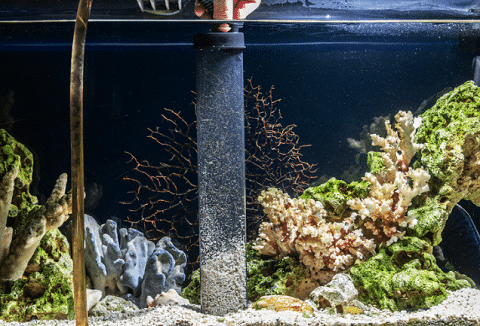
Aquarium moss is one of my favorite plant categories to recommend, because it’s accessible at every skill level but rewards you for improving your technique. Java moss is nearly indestructible and a great starting point. Christmas moss, flame moss, and fissidens get genuinely demanding at the top end. The key thing most hobbyists miss: moss doesn’t attach itself. You need to tie or glue it to hardscape and let it anchor. Once it does, it’s one of the best things in a planted tank.
This plant will grow in almost anything. But if you want it to actually look good, you need to understand what it wants. The gap between alive and thriving is lighting, nutrients, and consistency.
Any plant stays alive. Making it look good takes understanding.
Key Takeaways
BucePlant: My go-to source for aquarium plants online. Great selection of tissue cultures, healthy specimens, and reliable shipping.
Small freshwater fish are where my recommendations start for almost every new hobbyist. they’re manageable, affordable, and the right species in the right school can make a tank look genuinely stunning. After 25 years keeping fish of all sizes, I keep coming back to many of these smaller species as personal favorites.
Are you looking for some great new fish to add to your aquarium? Small freshwater fish are the most versatile options because you can keep them in small, medium, or even large aquariums!
There are so many small freshwater fish available in the hobby that choosing the perfect species can be quite a challenge! Well, this article will make your life a lot easier by introducing 21 amazing small fish species and giving you some great information on their care.
So let’s dive right in!
Expert Take (Mark Valderrama, AquariumStoreDepot)
Small freshwater fish are where I start almost every new hobbyist. After 25 years in the hobby, my recommendation has stayed consistent: begin with fish under 2 inches that school well, tolerate a range of conditions, and give you margin for early mistakes. The species on this list are the ones I have stocked and recommended the most. Some are classics for good reason. Others are underrated. All of them work.
Key Takeaways
Most fish freshwater fish in the aquarium trade are schooling fish
Due to their schooling nature, they require larger tanks, with the exception of a sole Betta Fish
Most small fish except for examples like the Pea Puffer, are peaceful fish
Why Keep Them?
There are many advantages to keeping small fish. The first, and most obvious advantage is that you can keep them in a relatively small aquarium. This is cheaper and easier to set up than a large tank, and obviously takes up less space in your home or office.
Keeping a community tank of small freshwater fish also means you can have more of each fish and more variety than if you kept larger species. Small fish tend to be cheaper than large fish, although they aren’t necessarily easier to keep.
21 Popular Species
Now that you know all the benefits of small fish keeping, it’s time to learn more about 21 awesome species for your freshwater aquarium! I’ll be providing a list of the following important facts and water parameters for each species:
Scientific Name
Common Names
Minimum Tank Size
Adult Size
Temperament
Care Level
Diet
Origin
Temperature
Swimming Level
We got a video from our YouTube channel so you have a visual of all the fish. Our blog post goes into more detail and is always up to date. If you enjoy our videos be sure to subscribe! Let’s get started!
Chili rasboras are awesome schooling fish for a small aquarium. These micro fish don’t even reach an inch in length, so you never have to worry about them outgrowing your tank.
Chili rasboras feel safer in numbers, so make sure you pick up a big group of 10 or more. Keeping them in a nature-style tank with live plants will also bring out the best in them and make for a fascinating display.
The exclamation point rasbora is closely related to the chilli rasbora, but stays even smaller! They are the smallest of the rasboras in the aquarium trade, and the tiniest fish you are likely to come across.
They can be kept in a tank with other fish of the same species, but you’ll want to provide plenty of cover to prevent too much aggression. A group of one male with a few females is the ideal setup in a nano tank.
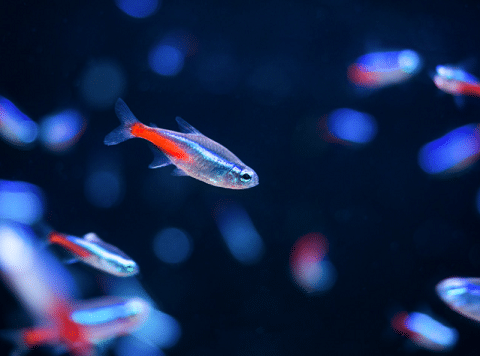
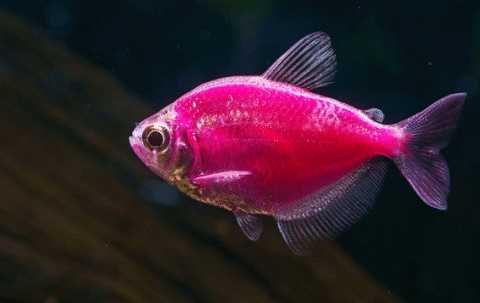
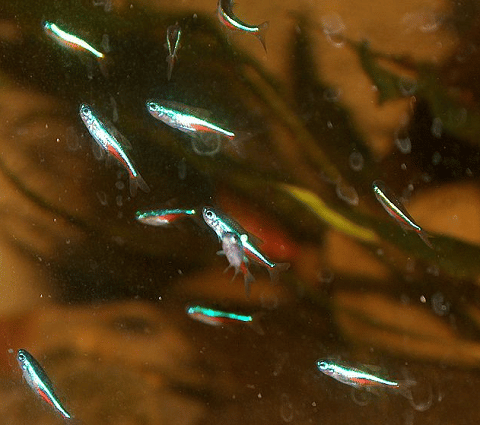
Neon tetras hardly need any introduction. These beautiful schooling fish are superstars of the aquarium world, and they are ideal for a community tank.
Neon tetras are super easy to care for and they will thrive on a diet of flake food. They are social creatures, however, so keep at least 6 to see all that these fish have to offer.
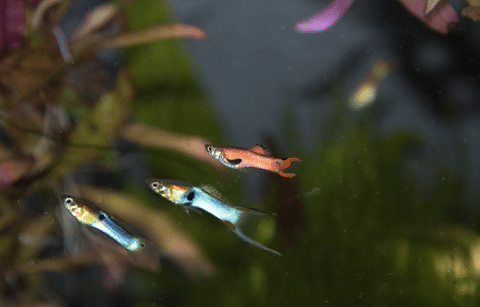
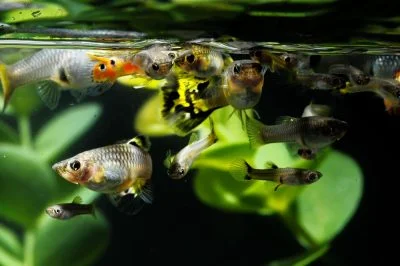
Endler’s livebearers are great fish for beginners who do not have the room for a large fish tank. These fascinating fish have amazing colors, and beautiful fins, and they are really easy to breed!
Male Endler’s livebearers have amazing multi-colored markings, particularly in orange and black. The females are pretty plain in comparison, and also grow much larger.
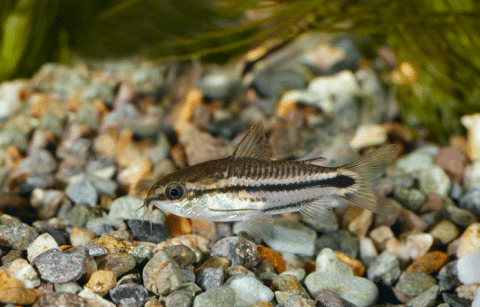
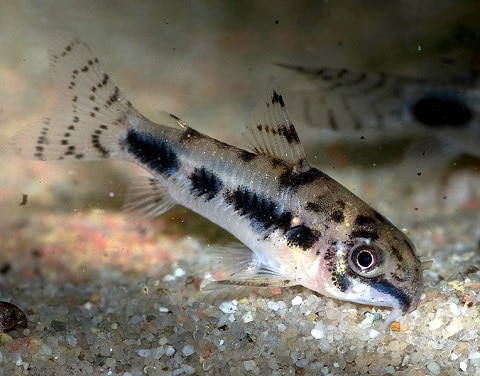
The pygmy cory catfish is just one of the dozens of corydoras species in the aquarium hobby. These peaceful fish are much smaller than most other cories, however, and also have the interesting habit of schooling in the mid-water, rather than on the bottom.
These nano fish are really peaceful and will get along great with other nano schooling fish.
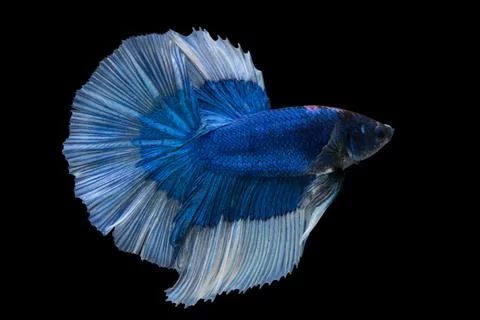
Betta fish are one of the best-looking fish species on the planet. These fish are available in a huge variety of different breed types and colors, so there’s a perfect betta for everyone!
Betta fish are not as small as some of the other nano fish on this list, but they do great in small aquariums. These fish should not be kept in small spaces like cups or bowls, but they can thrive in a 5-gallon tank with filtration and heating.
Betta fish are famously aggressive towards other bettas, but they can actually be kept with some other peaceful tank mates in a well-planned community tank.
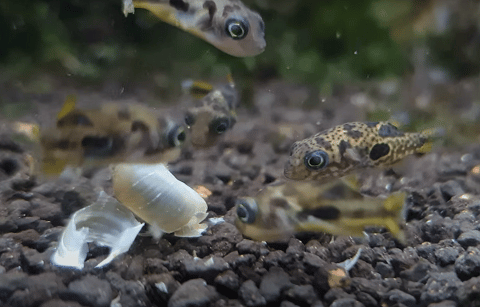
If you’re looking for a small fish with a big personality, look no further than the pea puffer! These tiny fish can be kept in a very small tank, where they will amaze you with their adorable looks but ruthless attitude.
Pea puffers use their razor-sharp teeth to tear into aquarium snails, their favorite food! They are not great community fish, however, because they are known to bite their freshwater aquarium tank mates.
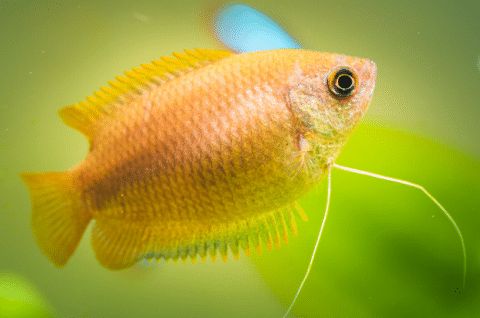
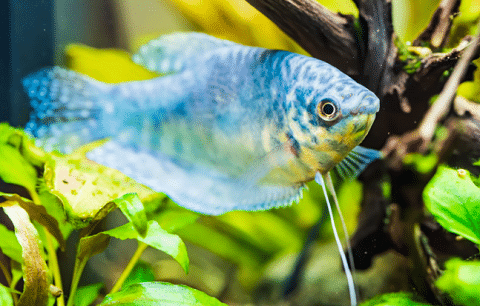
The honey gourami is a beautiful fish from the betta family. These fish are relatively peaceful and can be kept alone as a centerpiece fish, although they will be happier if kept in a small group with plenty of hiding spaces. They also get along great with other species of peaceful community fish like tetras.
Honey gouramis are air-breathing fish, so they need to have access to the surface of the water to survive. These interesting fish also have two long feelers that they can use to explore their environment.
Common Names: Fire tetra, Amanda’s tetra, dwarf red tetra, red tetra
Minimum Tank Size: 10 gallons
Adult Size: 0.75 inches
Temperament: Peaceful
Care Level: Easy
Diet: Carnivore
Origin: Brazil
Temperature: 68-82°F
pH: 5-7
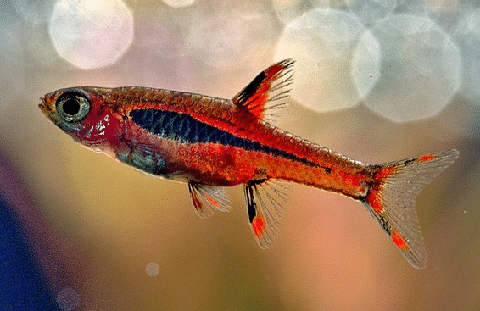
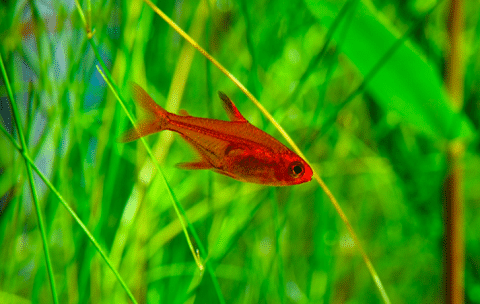
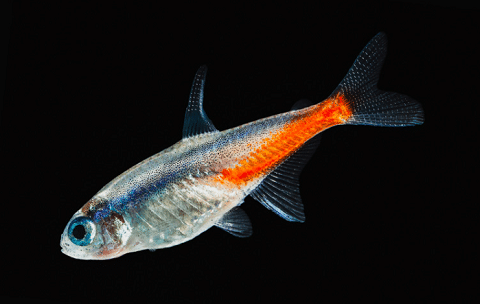
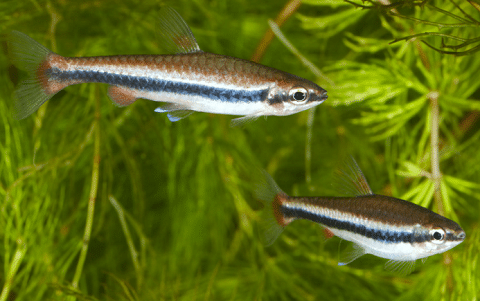
The ember tetra is one of the smallest tetra species in the aquarium hobby. These nano fish are a fiery red color but have very sweet personalities.
These very small fish can be pretty shy so keep a nice big school in a heavily planted tank to increase their confidence. Ember tetras are easy to care for and will thrive on a diet of crushed flakes and micro pellets.
Common Names: Millionfish, rainbow fish, fancy guppies
Minimum Tank Size: 10 gallons
Adult Size: 2.5 inches
Temperament: Peaceful
Care Level: Easy
Diet: Omnivore
Origin: South America
Temperature: 63-82°F
pH: 7-8.5
Guppies are such popular aquarium fish that you’ll find them in just about any fish-keeping store you walk into. They are great beginner fish but still hold interest for expert aquarists interested in breeding projects.
There are many different breeds of guppies and these are generally known as fancy guppies. These fish are livebearers, which means they are really easy to breed.
Japanese rice fish are awesome cold water fish for a nano tank. These shoaling fish are very peaceful and have been kept by fish keepers for centuries. There are many different breeds of Japanese rice fish, including white, pink, and orange types.
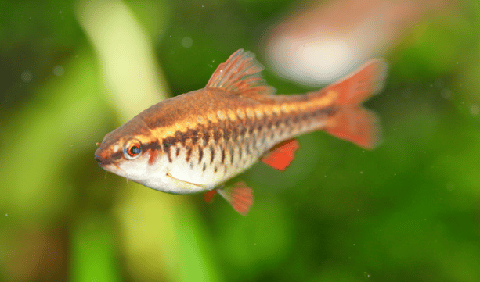
The cherry barb is a classic in the aquarium hobby. They get their name from the beautiful deep red color of the males in their breeding colors, although the females are also very attractive.
Cherry barbs are such popular freshwater fish because they get along great with other freshwater nano fish species. They do not have the fin-nipping tendencies of some other species like tiger barbs.
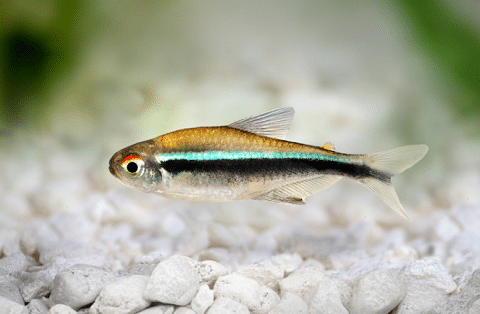
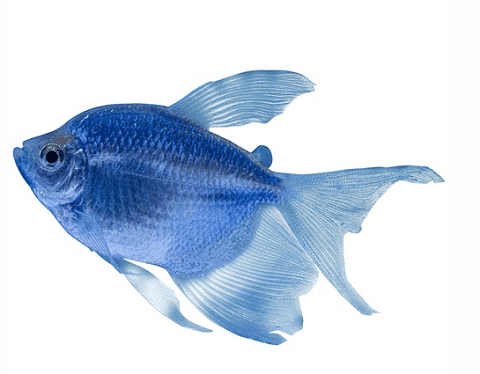
Black neon tetras make the perfect beginner fish for tropical freshwater aquariums. These small fish are incredibly peaceful, so they make an ideal tank mate for other fish.
Black neon tetras are very easy-going and hardy too. They thrive on a diet of flake food, but they will appreciate the occasional treat of live/frozen flake food.
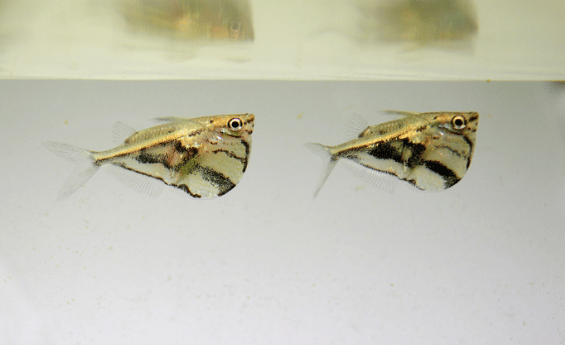
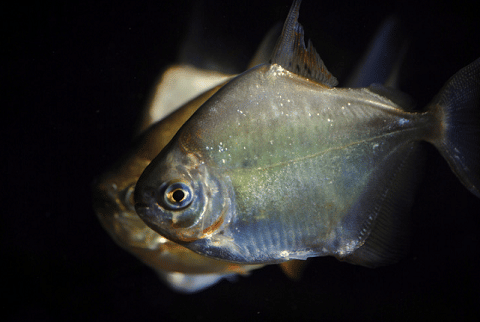
The marble hatchet fish is a really unusual nano aquarium fish that will add life to the top level of your tank. These fish have a really deep, flattened body with interesting black markings and long pectoral fins that they hold above their backs.
Hatchet fish are master jumpers, so make sure your tank is completely sealed to prevent them from escaping. It is best to keep them in a school of ten or more and provide them with plenty of floating plants to bring out their confidence.
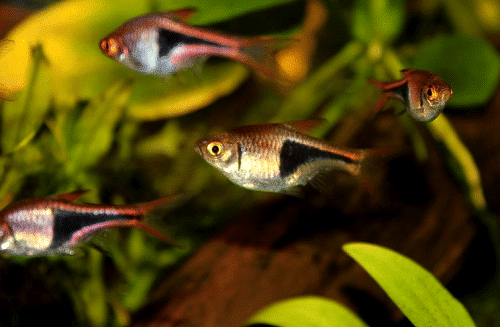
The harlequin rasbora is a peaceful schooling fish with characteristic black triangular markings on the back half of its body. This contrasts with their overall golden orange color to make for a mesmerizing display.
Harlequin rasboras are ideal community fish that get along great with other species of peaceful fish. These fish are great for beginners and will really thrive in a planted tank, especially if kept in a big school of ten or more.
The clown killifish (video source) is a slender banded fish that spends all its time up at the top of the aquarium. Once they color up, these tiny fish show the most amazing colors, especially on their tails.
These awesome nano fish are also known as rocket killifish because their tails look like the bright flames of a jet! Clown killifish can also rocket their way out of your tank, so make sure you have a tight-fitting lid to prevent them from jumping out.
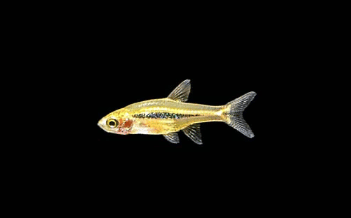
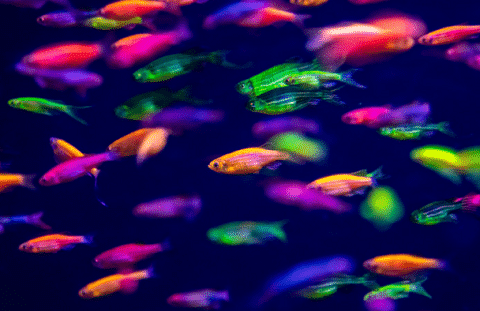
Glolight danios are amazing golden fish from Southeast Asia. These hardy and adaptable fish should be kept in a nice big school of the same species. They are very active little fish, so they need a larger tank to really thrive.
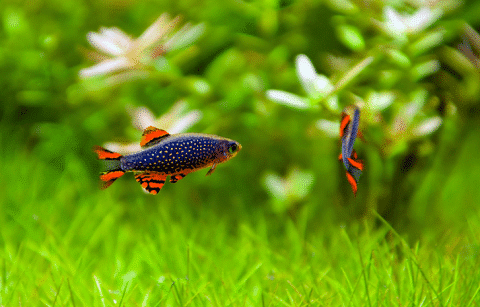
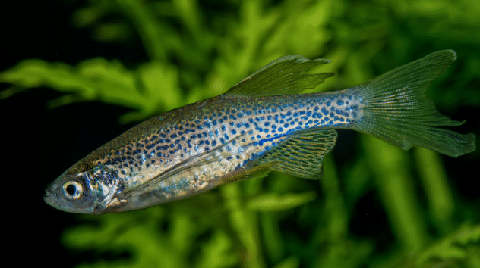
Celestial pearl danios are one of the most beautiful freshwater fish for small tanks. These peaceful fish have vivid orange and black fins, and their bodies are covered in golden spots, just like a sparkling night sky. The females are a little less colorful than males, but they are still great-looking fish.
Celestial pearl danios are pretty shy little fish that thrive in a planted tank. They can be kept with other peaceful nano fish and will do best when kept with bottom and surface dwellers that won’t compete for their space in the midwater of the tank.
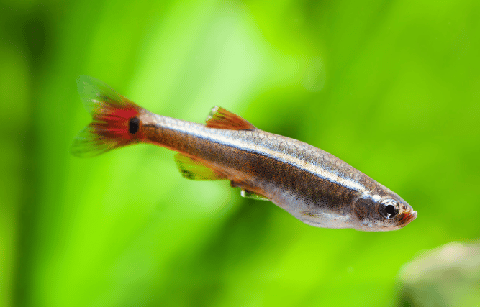
White cloud mountain minnows are very peaceful fish from the mountains of China. These small freshwater fish come from a cold water environment, so they do best when kept in an unheated freshwater tank.
Most white cloud mountain minnows have a neon silvery stripe down their sides and short, bright red fins. Some awesome new varieties are available, however, including a long-finned and a golden form.
Otocinclus catfish deserve a spot in just about any freshwater aquarium. These tiny fish are incredibly peaceful, which makes them the first choice for red cherry shrimp keepers.
These schooling fish are best known for eating algae, and they do an amazing job of keeping their tank clean.
Mark’s Pick
Chili rasboras are my top pick for a planted nano setup. They are tiny, school in open water, their red color pops under LED lighting against green plants, and they are peaceful enough to go with virtually anything. A group of 15 in a planted 10-gallon is one of the most striking nano tanks you can build for under $50.
Tank Setup for Nano Ones
The best way to keep any freshwater nano fish is to create a tank that simulates its natural habitat. Continue reading to learn how!
Tank Size
Tank size can be a controversial issue when it comes to keeping nano fish. Some aquarists are able to keep fish in very small tanks, but this is can be very risky because water temperature and other parameters can swing very quickly in such a low volume.
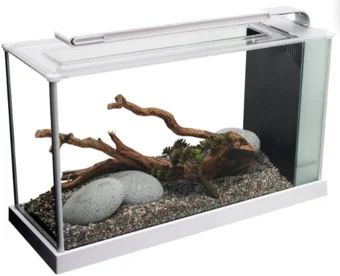
The general rule is to provide as much space as possible for any fish, but most of the species on this list will thrive in a nano tank of 15 gallons or so if it is correctly set up. Of course, you can also keep small fish in large tanks.
Even the smallest aquarium fish can be great jumpers, so you will need a securely fitting hood/lid, no matter which tank size you choose.
Filtration
Once you have your tank picked out, you’re going to need to purchase a good-quality water filter. A small sponge filter or hang-on-back filter is an affordable option for beginners, but make sure the current isn’t blowing your fish around too much in a small tank.
A canister filter is the best choice for planted display tanks, however, because they contain much more filtration media and are housed externally, and don’t take up any space in the tank.
For fish keepers and breeders with multiple tanks, air-powered sponge filters are a very affordable option.
Heating
Most fish keepers will need to use an aquarium heater to keep the water temperature warm enough for tropical fish. Heaters come in various sizes, however, so make sure to pick out a model that matches your tank size.
Some popular aquarium fish prefer cooler water temperatures and will be happier in an unheated aquarium. Japanese ricefish and white cloud mountain minnows are good examples of these coldwater aquarium fish.
Lighting
Your fish need a natural day/night cycle to remain healthy. Set your aquarium lights on a timer to create a natural rhythm, this way you’ll never forget to switch them on or off.
Growing live plants requires good lighting, although not all plants have the same lighting needs. Your tank should never be placed near a window where it receives direct sunlight.
Substrate and Decor
The fun really starts after you have put together all the ‘hardware’! Adding substrate and decorating your tank with hardscape and ornaments is what changes your aquarium from a glass box into an underwater world for your fish.
Dark, natural-colored substrates are always a great choice because they bring out the best colors in your fish. Use aquarium-safe sand or gravel only, and remember to rinse out the dust thoroughly before adding the substrate to your tank.
Adding some driftwood and rocks to the aquarium will create some structure and hiding spaces for your fish. Take care to pack heavy objects carefully, of course, because they can hurt your fish or damage your tank if they fall over.
Live Plants
Growing live plants is a great way to provide your fish with more natural habitats. Some of the benefits of growing live plants include:
Increased oxygen levels
Great hiding spaces
Decreased nitrate levels
Natural food sources like microorganisms
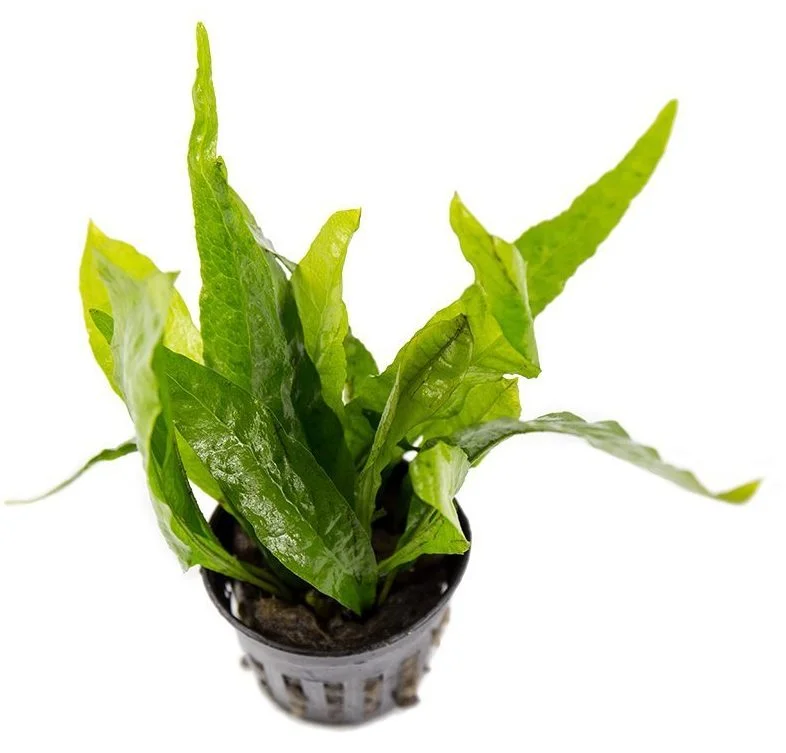
A tank full of green plants looks great too, and many aquarium plants are surprisingly easy to care for. If you’re new to growing live plants, start out with some easy epiphytes like Java ferns and Anubias. These plants can be kept in their pots or attached to your hardscape and can grow well under standard aquarium lighting.
Caring for your small fish is not necessarily easier than caring for larger fish. In fact, maintaining a nano aquarium requires more care and attention. Read on to learn more about keeping your fish healthy.
Water Quality & Maintenance
Maintaining high water quality is your number one priority when keeping a small tank. Water parameters can change very quickly in a small aquarium, so make sure you test your water regularly.
Perform regular partial water changes to keep your nitrate levels below 20 ppm or so. Remember to use a water conditioner to neutralize your tap water, however, because it usually contains chemicals like chlorine or chloramine.
Feeding
Providing your fish with a healthy, balanced diet is essential to keep them in great condition. Most nano fish are predominantly carnivorous and feed on tiny creatures such as insect larvae. Providing this kind of food regularly can be difficult, so most fishkeepers prefer to use prepared foods that contain all the protein, nutrients, and minerals that fish need.
Most of the fish in this article will thrive on a diet of prepared foods like crushed flake food or floating or sinking pellets. Providing live/frozen foods like baby brine shrimp, blood worms, or micro worms is recommended as an occasional treat, although some species like scarlet badis may need to be fed these natural foods on a daily basis.
Xtreme Aquatics Nano formula is specially designed for smaller fish and contained a well balance mix of raw ingredients. It is a great staple food for your nano fish.
Otocinclus catfish are specialist algae eaters that will not feed on fish flakes. They will eat the algae that grow naturally in your tank, but they will need to be fed vegetables and/or algae wafers in a new aquarium with little algae growth.
Choosing Tank Mates
Setting up a small fish community tank can is one of the most exciting parts of fish keeping, but it’s very important that all your fish get along.
Most small fish live in large schools or shoals in nature. They can be stressed, shy, and sometimes even aggressive if kept on their own or in very small groups in aquariums. Most species should be kept in groups of at least 6, although 10, 20, or more in the same tank would be even better!
Small fish should only be kept with other small fish that are not big enough to swallow each other. Each species should also be happy in the same range of water parameters like pH and temperature.
Some fish do great without any other tank mates, however. Keeping more aggressive fish like male betta fish and pea puffers on their own is generally recommended.
Where To Buy Small Freshwater Fish
Most of the small freshwater fish in this list can be found down at your local fish store. If you prefer the convenience of online shopping, I would highly recommend you check out our recommended list of vendors.
FAQs
Which is the tiniest one?
The tiniest freshwater fish are the rasboras from the Boraras genus. At just half an inch or so, the exclamation point rasbora is the smallest freshwater species you’re likely to find for your aquarium!
What is a nano one?
Nano fish are very small species that can be kept in a small aquarium. There is no strict rule, but fish that stay under about 2 inches long can be called nano fish.
Which one do well in a little tank?
Most nano fish do well in a small tank. The best species for small tanks are those that can be kept on their own or in small groups, however. Species like betta fish, scarlet badis, and pea puffers all do well in a 5-gallon tank or larger.
Which one can go in a 1-gallon tank?
A 1-gallon tank is too small to safely keep fresh water fish. Some aquarists are able to keep bettas in a tiny tank of that size but 5 gallons or more would be a safer and easier option.
What is the easiest one to take care of in a little tank?
The betta fish is the easiest fish to care for in a small tank. These wonderful tropical fish do best when kept on their own in a small aquarium with a filter and a heater.
Quick Comparison
Fish
Max Size
Min Group
Min Tank
Difficulty
Chili Rasbora
0.7 in (2 cm)
10+
5 gal (19 L)
Easy
Neon Tetra
1.5 in (4 cm)
6+
10 gal (38 L)
Easy
Ember Tetra
0.8 in (2 cm)
8+
5 gal (19 L)
Easy
Endler’s Livebearer
1 in (2.5 cm)
4+
10 gal (38 L)
Easy
Pygmy Corydoras
1 in (2.5 cm)
6+
10 gal (38 L)
Easy
Celestial Pearl Danio
1 in (2.5 cm)
6+
10 gal (38 L)
Easy-Moderate
Fish to Avoid in Nano Setups:
Any fish over 2 inches that grows fast (will outcompete or eat nano tank mates)
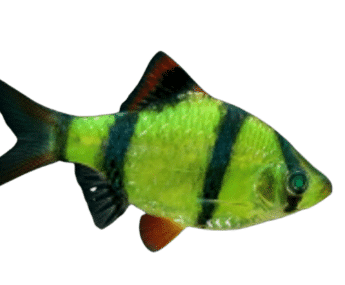
Nippy species like tiger barbs or serpae tetras (will stress small schoolers)
Single specimens of schooling fish (stressed = disease and early death)
Final Thoughts
There is an amazing diversity of small freshwater fish species available to the modern aquarist. This can make deciding which species will work best in your tank kind of daunting, so why not choose from the 21 amazing species in this article? You won’t be disappointed!
Do you keep small freshwater fish? Tell us about your favorite small fish species in the comments below!
Crystal Red Shrimp need acidic, soft water with zero ammonia tolerance. They are not beginner shrimp. One parameter swing and you lose half the colony overnight.
If you cannot maintain a pH of 6.0 to 6.8 with zero ammonia every single day, CRS are not for you.
What It Is Actually Like Living With Crystal Red Shrimp
A shrimp tank is a constant show of activity. Shrimp graze nonstop, picking at every surface with their tiny legs. They crawl over plants, substrate, and even each other. The movement never stops.
Molting is both fascinating and nerve-wracking. You will find translucent shed exoskeletons and panic thinking a shrimp died. It did not. But failed molts, where a shrimp gets stuck in its old shell, are always a risk.
Berried females carrying eggs under their tails are a highlight. You watch the eggs develop over two to three weeks, then suddenly dozens of tiny baby shrimp appear on your moss and plants.
Shrimp are escape artists during water changes. They jump into buckets, climb up siphon tubes, and end up in places you never expected. Always check your equipment and waste water for hitchhikers.
The Crystal Red Shrimp is one of the most rewarding invertebrates in the hobby, but it is also one of the most sensitive. Water parameters matter more here than with almost any fish. After keeping shrimp colonies for years, I have learned exactly what makes or breaks a thriving colony.
One parameter swing and an entire colony dies overnight. That is the reality of keeping Crystal Red Shrimp.
Crystal Red Shrimp do not forgive parameter swings. One bad water change can wipe half a colony overnight. This is not a beginner shrimp.
A Crystal Red Shrimp colony demands stable parameters every single day. One slip and you start over. This is a commitment to precision, not just maintenance.
Shrimp keeping is the most humbling branch of the aquarium hobby. The water does not care about your experience level.
What Most Care Guides Get Wrong About Crystal Red Shrimp
The most damaging myth about Crystal Red Shrimp is that they’re just like Cherry Shrimp but prettier. Crystal Reds are dramatically more sensitive to water parameters and need soft, acidic water with minimal TDS fluctuation. I’ve watched beginners lose entire colonies because they treated them like hardy Neocaridina.
The Reality of Keeping Crystal Red Shrimp
Water parameters rule everything. Shrimp are more sensitive to water chemistry than any fish in your tank. Ammonia, nitrite, and sudden pH swings kill shrimp instantly. A cycled, stable tank is absolutely mandatory before adding your first shrimp.
Copper is lethal. Many fish medications contain copper. Even trace amounts from pipes, fertilizers, or treatments will wipe out an entire shrimp colony. Read every label before adding anything to a shrimp tank.
Molting problems are the most common killer. Shrimp need consistent mineral content to molt successfully. Unstable GH and KH levels cause failed molts, which are fatal. Remineralized RO water gives you the most control.
Biggest Mistake New Owners Make
Adding shrimp to an uncycled tank or a tank that was recently medicated. Both scenarios kill shrimp within days. The tank needs to be fully cycled and medication-free for at least two weeks before shrimp go in.
Expert Take
Drip acclimation is not a suggestion. It is mandatory. Every shrimp I have lost in 25 years died because I rushed the acclimation or ignored a parameter difference.
Key Takeaways
Crystal Red Shrimp require knowledge of their unique grading system, size, lifespan and breeding process for optimal care.
Creating the ideal environment involves maintaining proper water parameters & setting up a tank with compatible tank mates and decorations.
Breeding CRS requires understanding their gender & mating behavior to provide them with the right conditions for successful reproduction.
Species Overview
Scientific Name
Caridina cantonensis ‘Crystal Red’
Common Names
Crystal Red Shrimp, CRS
Family
Atyidae
Origin
Originated from wild black and white bee shrimp in Japan
Diet
Omnivore
Care Level
Moderate
Activity
Moderate
Lifespan
1.5 years
Temperament
Peaceful
Tank Level
Bottom to Mid
Minimum Tank Size
10 gallons
WaterTemperature Range
68°-74°F
Water Hardness
0. 4 dKH
pH Range
6.2. 6.8
Filtration/Water Flow
Moderate
Water Type
Freshwater
Breeding
Oviparous
Difficulty to Breed
Easy
Compatibility
Species only for breeding
OK, for Planted Tanks?
Yes
Classification
Phylum
Arthropoda
Class
Malacostraca
Order
Decapoda
Family
Atyidae
Genus
Caridina
Species
C. Cantonensis (Yu, 1938)
Understanding Them
Crystal Red Shrimp (CRS) (Video from our YouTube Channel), or crystal shrimp, are a selectively bred dwarf species of freshwater red bee shrimp originating from Southeast Asia. Their exquisite pattern and shades make them desired by aquarists who like keeping Crystal Reds in their tanks. They have become very popular since their introduction in the United States in the early 2000s. These little creatures come with their own individual grading system based on the number of red stripes found on its body. Something that is sure to attract even more attention from those keen to find suitable CRSs for home aquarium settings.
Speaking, males attain up to 1 inch while females can grow up as large as 1 ½ inches maximum when full grown at maturity – often living one or two years depending upon the environment provided and care given by owners this type requires sensitive water parameters due, unlike hardier cherry shrimp varieties which have also been subject to selective breeding resulting in miniscule baby shrimps during reproduction phases making it an interesting addition into any tank-based setup!
Origin And Habitant
Crystal Red Shrimp, which have been crafted through a process of careful selective breeding from Bee Shrimp found in Taiwan’s freshwater rivers and streams, don’t naturally occur anywhere. Creating the right environment for them is key to making sure they thrive with ideal water parameters and slightly acidic waters being optimal conditions. This kind of shrimp has evolved over time due to generations upon generations of such specialized breeding practice.
Appearance
The Crystal Red Shrimp with its vibrant red and white stripes stands out among other freshwater shrimp species. Males of the breed are smaller in size, while females have wider tails suited for carrying eggs. This distinct coloring gives a unique contrast to planted aquariums when accompanied by an added boost from algae wafers as well.
Shrimp of this particular type have become quite sought-after due to their eye-catching colors and pattern that make them appear different compared to any other variety found within rivers or ponds. The flashy shade offered by these invertebrates really brings life into any tank they inhabit, making them one of the most beloved breeds available today!
Grading System
The categorization of Crystal Red Shrimp is founded on the intensity and symmetry of their hue, with higher tiers having more vivid colors and designs. In order to progress the quality grade level across a CRS colony, aquarists should only breed shrimp that possess desirable coloration patterns.
This grading scale can range from B grade at its lowest point all the way up to SSS grade. Each individual will have their own patterning intricacies that impact pricing as well as grade value. Surprisingly enough, the grade is determined by the amount of white, not the amount of red.
Types
Crystal Red Shrimp belong to the family of Caridina, which encompasses other popular shrimp varieties such as Bee, Crystal White and Tiger.
The Crystal White is identified by the females having a minty blue-green color near their egg holding sections. Tiger shrimp are bred to be darker. They are also known as orange-eyed tiger shrimp due to the color of their eyes. Crystal bees are rare and also the most delicate. They are inbred to develop their features and command high prices.
There are also crystal black shrimp that exhibit the same characteristics but offer a black instead of a red. The same rules grade them.
This diverse group of freshwater shrimp is acclaimed for its unique colorations and designs. CRS can interbreed with various other types from the same species, but doing so may lead to discoloration into brown instead of their natural black or red hue. All in all, these vibrant colored shrimp make up an exciting part of this aquatic ecosystem!
Average Size
Crystal Red Shrimp are a tiny but impactful addition to any aquarium. Males reach up to 1 inch in size while females can get as large as 1.5 inches, making them an ideal choice for aquarists with limited space due to their dwarf shrimp species status. However, the amount of room they require should not be underestimated since it is necessary for ensuring their health. Too small of tanks could lead to negative results down the line.
Lifespan
Crystal Red Shrimp can have a long life (for a shrimp) of 1.5 years if they are provided with the right water conditions and care. Factors such as their diet, stress levels, and especially water quality all contribute to how well these shrimp do over time. When healthy, one will see this species being brightly colored while also actively swimming around. Signs that they’re thriving is when molting happens every 3-4 weeks.
Creating The Ideal Environment
Having the appropriate environment is vital for your Crystal Red Shrimp’s health. Unlike Neocaridina species, they need specific water parameters to survive. By keeping accurate conditions of temperature and pH levels while equipping the aquarium with plants and compatible tank mates, you’ll craft a suitable habitat for them to live in.
It is essential that you remain consistent when setting up their home. This will lead to healthy, thriving shrimp. There are many things to consider, such as:
Knowing the difference between Neocaridina and Caridina shrimp
Getting your water parameters right
Proper tank setup
Feeding
Keeping stress low
Let’s look at the differences between Neocaridina and Caridina first.
Neocaridina Vs Caridina Species
Both Neocaridina and Caridina genera include a variety of freshwater shrimps with unique color varieties, though they have different care requirements. Neocaridina species are more hardy and easier to take care of. For example, the more forgiving Cherry Shrimp, which belongs to the neocaridina species is widely popular.
Cardina shrimp, on the other hand, are harder to care for and more specific on parameter requirements. When it comes to Crystal Red shrimp from the caridina species, accurate water parameters are essential for its survival. Knowing that water parameters are critical for success, let’s talk about what to target when maintaining their environment.
Water Parameters(Water Values)
For optimal growth and reproduction, Crystal Red Shrimp should be housed in an aquarium with a pH level of 6.2-6.8, temperature ranging from 68-74°F and hardness between 4-6 GH. It is necessary to constantly monitor these water parameters since sudden changes can negatively affect the shrimp’s well lbeing due to their sensitivity levels towards it.
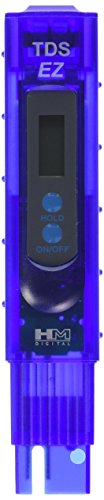
TDS is the biggest concern we have after this. These shrimp should be kept at a TDS of around 150. If your tap water source is higher than that, you will need to use RO water and remineralize to get the TDS to the correct range. Always use a TDS meter to measure your tap water source and your RO output.
This is where most Crystal Red Shrimp keepers run into trouble, myself included in conversations with customers over the years. Unlike cherry shrimp, which can handle a wide range of conditions, Crystal Reds have almost no tolerance for parameter swings. A pH spike, a TDS spike, even a careless water change. And you’ll find them dead within hours. If you’re new to shrimp keeping, I’d genuinely recommend starting with cherry shrimp first. Build your confidence with water chemistry, then step up to Crystal Reds when you’re ready.
Since these shrimp are comfortable at room temperature, you should be able to get away without a heater unless your area experiences cold winters. Water changes are a must if nitrates start getting high. You should keep nitrates lower than 20PPM for these shrimp. Anything higher should call for a water change.
Tank Setup And Decorations
To create the perfect environment for Crystal Red Shrimp, aim for a tank of at least 10 gallons in size.
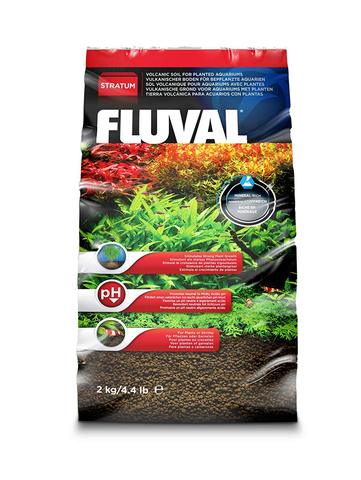
You should consider a buffering substrate so the water parameters can stay stable. A great substrate to use would be fluval stratum. This substrate is also great for planted tanks.
Speaking of which, plants are a must for shrimp. Mosses are one of the best plants you can consider, as it’s great for shrimp to breed and forage in. Carpeting plants are also great for aquascaping and using the active substrate. Floating plants or plants that suck up nutrients like Hornwort are ideal to keep your nutrient levels low.
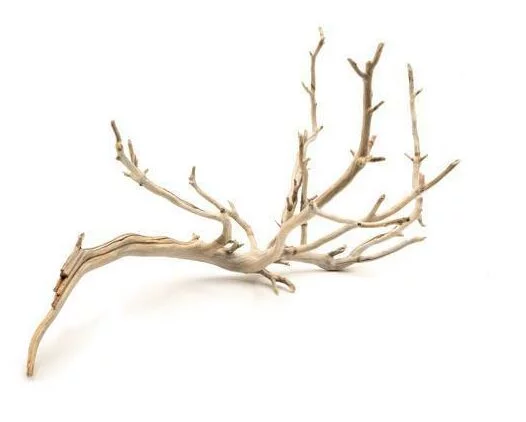
Decorations such as driftwood and rocks will give them spots to hide and graze on algae within the aquarium. You can use additives like Bacter AE to increase the growth of biofilm when your tank is establishing. For driftwood, consider a low tannin variety like Manzanita for ease of use and better control of tannins.
For filtration purposes, you can install a sponge filter that is safe around these creatures while ensuring good water quality remains stable over time. However, it’s not the prettiest. You can install a hang-on back filter or even a canister filter as long as you put a sponge on the intake.
By having all of this set up correctly, you can rest assured your red shrimp are getting everything they need from an enriching habitat without feeling stressed or unsafe.
Feeding
Providing Crystal Red Shrimp with a varied diet plays an important role in their overall health and well being. In its natural habitat, it mostly consumes algae, plant detritus and microorganisms. For successful aquarium care taking they require more than this, such as commercial shrimp food supplemented by blanched vegetables to satisfy their omnivorous tendencies. Keep the portions measured since too much of anything can damage water quality, which inevitably affects them.
Having plenty of biofilm is a must as these shrimp need to eat constantly and too much supplemental feeding will pollute the tank. This is accomplished by having lots of available surface such as plants, rocks, and driftwood where biofilm can grow on them.
Biofilm is even more of a necessary food source when it comes to breeding. The more surface area for biofilm the better!
Social Behavior And Tank Mates
When setting up a crystal red shrimp aquarium, it is important to be mindful of the tank mates you choose for your peaceful CRS. They can thrive in community tanks if other non-aggressive creatures are included – their small size and docile nature mean they won’t pose any harm to them. Nearly every fish will attempt to eat your shrimp, which means if you want to breed them, it’s best to keep them in a species only tank.
Possible Tank Mates
Crystal Red Shrimp need to be provided with appropriate tank mates. These could include other compatible shrimp, such as Cherry or Dwarf varieties. However, these shrimp species will attempt to breed with each other. To avoid cross breeding either only keep one type of shrimp or mix with shrimp like Amanos that will not breed with them.
When it comes to fish, there are only three fish I would consider 100% safe in my personal experience. I haven’t seen many shrimp getting eaten with the following fish. In fact, I’ve never see a clown or octo eat any shrimp I’ve kept with them:
Snails are also great too. Snails like nerites and Malaysian snails are compatible. Avoid large snails like mystery snails, as their bulk can create some issues with your shrimp.
You also have some micro rasboras that can live with these shrimp. However, there is a chance they could pick or attempt to eat your adult crystal red shrimp.
Tank Mates To Avoid
When selecting tank mates for your Crystal Red Shrimp, it is important to be mindful of fish that may be too large or aggressive. Cichlids, goldfish, and barbs should all be avoided as they can easily prey upon the small creature.
Creating an environment in which your shrimp feel safe and secure means choosing creatures with similar temperaments who are not much larger than them. This way, there will likely also exist harmony within the aquarium itself.
Is the Crystal Red Shrimp Right for You?
Before you add a Crystal Red Shrimp to your tank, here is an honest assessment of what you’re signing up for. I’d rather you know exactly what to expect now than find out the hard way after you’ve already bought one.
Experience level: Crystal Red Shrimps are best suited for intermediate to advanced keepers. They have specific requirements that can overwhelm beginners.
Tank size commitment: You’ll need at least 10 gallons, though bigger is always better. Make sure you have room for the tank before buying.
Tank mate planning: Crystal Red Shrimps is territorial, so plan your community carefully. Not every fish will work as a tank mate.
Maintenance demands: Expect regular water testing and consistent water changes. Crystal Red Shrimps are sensitive to parameter fluctuations.
Setup investment: Individual Crystal Red Shrimps are affordable, but the right environment adds up. Factor in the full setup cost.
Time investment: Beyond daily feeding and weekly maintenance, regular observation is the best way to catch health issues early.
Long-term commitment: These are living animals that depend entirely on you. Make sure you’re ready for the ongoing responsibility.
Breeding
Breeding Crystal Red Shrimp can provide a great challenge for any aquarist, whether they be beginners or seasoned veterans. By focusing on the water parameters, tank layout, and behavior of these shrimp, hobbyists will be well equipped to nurture their colonies efficiently. It’s also important to understand the mating rituals involved if you are looking for success with breeding crystal reds! I’ll also supply a video from Soo Shrimp Breeders that breaks down how to breed these shrimp in a short amount of time. I’ll have more details below in our blog post:
Preparing The Tank
When breeding Crystal Red Shrimp, it is important to create the ideal tank conditions. Ensure that water temperature remains at or below 74°F as higher temperatures can have an adverse effect on shrimp reproduction. Having a planted aquarium with plenty of hiding spots and grazing areas will increase your chances for successful mating events. This also helps provide baby shrimp somewhere safe to grow up in.
Many shrimp keepers do not keep a separate breeding tank since you can breed them in a display tank. Also long as you don’t have any fish that will eat the young, you should be fine breeding them in your tank. This is why species only tanks are key if you want to breed shrimp!
Identifying Gender And Mating
Knowing the distinctions between male and female Crystal Red Shrimps is essential when attempting to breed them. Male shrimp are slimmer and smaller, while females possess wider tails in which eggs is carried. As noted above. When a female sheds her exoskeleton, pheromones spread across the water, attracting nearby males who will then commence mating activities with her. Keeping an eye on your shrimp’s behavior so you’re able to identify their gender correctly facilitates successful breeding for this species of red shrimp.
Caring for Babies
It is important to take care of the offspring you have bred from Crystal Red Shrimp. When they hatch, baby shrimps come into this world with all their features ready and these should be given specialized shrimp food for adequate nutrition. Carefully observe how your young red shrimps develop. This will affect the quality of your CRS colony significantly if done well. Powedered foods are your friend when it comes to dealing with baby shrimp. Don’t underestimate it!
Frequently Asked Questions
What type of shrimp are crystal shrimp?
Crystal shrimp, which are selectively bred from Bee shrimp and is identified by their bright red and white coloration, make an excellent pet choice for any enthusiast of the species. Commonly referred to as ‘Crystal Red,’ these shrimps have become increasingly popular amongst keepers across the world.
Are crystal shrimp easy to keep?
Crystal shrimp, although expensive and requiring certain needs to be fulfilled in order to thrive, make great pets for those with some aquarium experience. They are quite active but will not turn aggressive when their environment is suitable. However, given their care requirements, there are better alternative shrimp to keep, such as cherry or amano shrimp, that are more forgiving on parameters and considered beginner shrimp.
Where do crystal shrimp come from?
Crystal Red Shrimp, with their striking red and white stripes that add stunning beauty to a planted tank, are a species native to Taiwan. These captivating crustaceans offer an interesting aesthetic for aquariums of all sizes.
What is the highest grade of crystal shrimp?
Crystal Red shrimp, selectively bred from the Bee shrimp variety, is esteemed as the highest grade of Crystal shrimps due to its abundance in white coloration.
What is the ideal tank size for Crystal Red Shrimp?
For maintaining a little school of Crystal Red Shrimp, it is best to have an aquarium that holds at least 10 gallons or more. You can hold a lot of shrimp in a shrimp only tank. As many as 10 per gallon, but you shouldn’t buy to stock as their numbers will increase over time due to breeding.
How the Crystal Red Shrimp Compares to Similar Species
If you’re considering a Crystal Red Shrimp, you’ve probably also looked at the Cherry Shrimp. Both fill similar roles, but the differences matter when planning your tank. The Crystal Red Shrimp has its own distinct personality and care needs. In my experience, the choice often comes down to the specific community you’re building and whether your water parameters favor one over the other.
The Amano Shrimp is worth considering as well. While the Crystal Red Shrimp and the Amano Shrimp share some overlap in care, they bring different energy to a tank. If you have the space, keeping both in separate setups gives you a great chance to compare their behavior firsthand.
Closing Thoughts
Want easy, forgiving shrimp? Start with cherry shrimp. Want a challenge with stunning payoff? Get crystal reds and commit to RO water.
Crystal reds reward keepers who earn them. Get the RO unit, dial in the TDS, and let the tank mature before adding shrimp. When a Grade S+ crystal red molts cleanly in your tank and the breeding saddles start filling up, you’ll know the setup is right. That moment is why people chase this hobby.
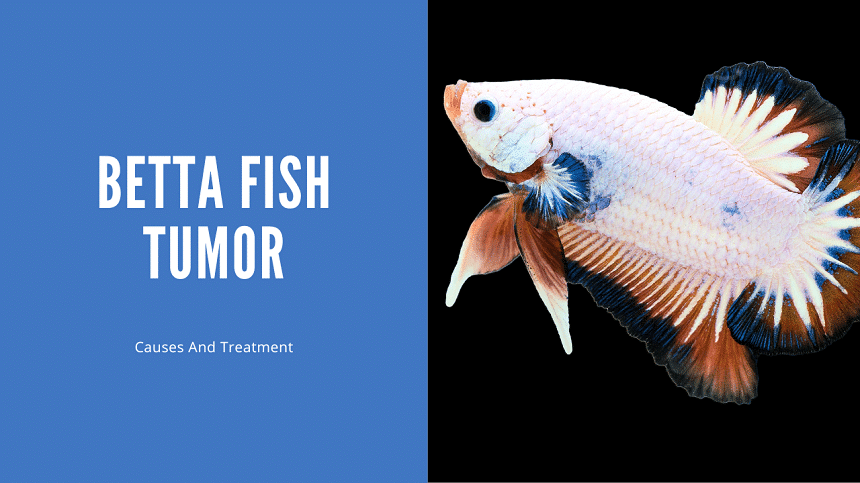
I’ll be honest: in 25 years of keeping bettas, I’ve never personally dealt with a tumor on one of my fish. It’s actually quite rare in standard betta varieties. the kind most hobbyists keep. Where I see it come up more often is with heavily line-bred or exotic varieties that have been pushed genetically over many generations. My general advice has always been to stick with less modified bettas, both for their health and your sanity. That said, if you’re looking at a growth on your fish right now, there is some hope. and this guide covers what you’re dealing with and what your options are.
Key Takeaways
Recognize the signs of tumors in betta fish & know how to differentiate between different types.
Treatments for external/internal tumors vary and may involve surgery, medication, or quarantine.
Preventive strategies include maintaining good water quality, providing a balanced diet & seeking advice from an experienced vet.
How To Recognize A Betta Fish Tumor
It is important for a betta fish owner to be able to recognize the symptoms of tumors in their pet. Betta fish can develop external and internal growths, which appear differently depending on size, area, and other factors. Identifying them quickly will make treatment more successful.
To detect whether there are any lumps or changes in behavior, we should take into account when caring for our beloved betta fish. We will discuss both external and internal tumors and how they are different.
External Types
Betta fish that are healthy typically will not have any visible abnormalities such as lumps or bumps on the scales. Tumors in betta fish can occur and manifest externally. The most frequent causes include abdominal cancerous growths, lumpy lesions resulting from bacterial infections, and a type of abnormal tissue overgrowth called gill hyperplasia1, which leads to tumor-like bulges appearing on their gills.
External tumors can appear in various parts of your Betta’s body, including:
The sides of the betta fish’s body
Fins and tail
Belly
On the gills
On their head
The common tumors you will come across will be external. Betta fish tumor symptoms aside from the obvious growth are lack of appetite and slowing down of activity. The fish may also become blind as a result.
Internal Types
Internal tumors can be a major issue for betta fish, as they tend to develop inside the body and are more difficult to detect. This condition is due to physical damage, bacterial infections, parasites or toxins in aquarium water causing tumor like growths. Unfortunately, internal tumors or damage are harder to cure and often are subject to euthanization.
Often times internal tumor are not actually tumors themselves but are a result of conditions such as bloating, dropsy, or bacterial infections.
Causes
Betta fish can develop tumors and understanding the possible causes of this issue can help in both prevention and treatment. Genetic traits, poor dieting habits, unsanitary water conditions as well as viral infections are contributing factors that could be involved in how these fish get cancerous growths.
The risk of developing such a condition is lowered when taking measures to ensure proper nutrition for betta fish. Feed them high-quality products containing all essential nutrients needed for immunity protection. Unhygienic environments should also not be tolerated, so it’s important to keep tanks clean with regular water changes being done regularly.
My Personal Experience
In my experience, I will say that fancier varieties of Betta fish are more prone to tumors than Plakat bettas. I believe this has more to do with all the experimentation that betta breeder do to get the specific breed of fish they sell you and also a combination of not screening their stock well before sale. Most tumors will not appear on a fish later in adult life, leading to the breeder being unable to resolve the issue, so the cycle repeats itself, especially if the fish is bred.
There is no environmental factor or equipment that I would consider that causes tumors to appear more than others (with the exception of Formalin – but most do not use this unless as a last resort). This is me speaking with 25 years of experience and running multiple fish stores in the past. I frequently notice over the years that it is fancier style bettas and koi bettas that experience this more. If you want to decrease your risk, I would recommend that you seek out plakats and avoid plakat koi bettas.
Benign Or Cancerous
When it comes to betta fish, there are two types of tumors they can develop. Benign and cancerous. Benign growths typically don’t spread throughout the body but instead require medication or surgery as treatment methods. On the other hand, a cancerous tumor is much more severe in its effects – reaching other parts of the body and eventually killing the fish.
It’s critical to be able to identify which kind of tumorous issue your betta fish may possess so that you understand how best to treat them accordingly. Benign tumors can be removed with the assistance of a veterinarian.
I know that veterinarians are hard to find in this hobby, so if you can’t find one, try to find an experienced hobbyist who knows what to do and live with the fact that amateur surgery could result in the death of the fish. It’s up to you if you want to take this risk.
I’ve tried with other conditions before, like with swim bladder disease. I don’t have vets around me who can take care of these conditions. Even with my experience, my success rate isn’t that great. It’s not always the condition itself but the stress of the procedure. When I was new to this, I didn’t use solutions like clove oil to knock out my fish. Learn from my mistakes and talk to hobbyists who are offering to do this for you!
Treatment
Unfortunately, if a tumor is identified, there isn’t much you can do, and it’s best for you to address quality of life issues to maximize the comfort of your fish. There are no home remedies that will cure cancerous tumors in betta fish. For those of you lucky enough to have a vet around you, surgical removal is the best way to address this problem. I have a wonderful video in the next section showing you one of the rare Vets in our space who does this procedure.
Surgical Removal
The best betta fish tumor treatment is removing the tumor itself. However, it is an uncertain process with no guarantees of success. It would be best to seek the assistance of a knowledgeable veterinarian experienced in treating tropical fish for such procedures. The following video describes this process in detail. Note the fish is knocked out to prevent stress from the procedure. The fish is also revived carefully by The Fish Doctor. View this video in detail before attempting this with a Vet or with an experienced hobbyist. Note success is not guaranteed.
Common Non-Tumor Lumps
Betta fish can develop lumps for different reasons that aren’t always tumor related. Abscesses, ulcers, swim bladder disease, dropsy, and constipation are some of the most common causes of these growths on betta fish bodies. Let’s talk about these other conditions that could occur and should be evaluated before considering the next steps:
Abscesses
If you see a large white growth on your betta fish, this is likely an abscess due to a loss of scales that has developed into a bacterial infection. This is typically caused by injuries – either from other fish, running into decorations, or being sucked up by a filter. While most injuries should heal on their own, this large white growth is a troublesome sign.
A betta fish abscess if left untreated, will rupture and cause further damage. It should be treated as a bacterial infection, and you should use antibiotics to treat the condition.
Fungal Infections
A white cotton like growth would indicate a fungal infection not a tumor. Those should be treated with anti-fungal medication and typically have good outcomes with treatment.
Columnaris
Columnaris is shown as red marks or growths. It is a bacterial infection that oftentimes will kill a fish. Immediate antibacterial care should be taken ASAP.
Parasites
Parasites can cause bloating or flattening of a belly. This is usually caused by rings or internal parasites, both of which can be cleared with a medication mix of Seachem Focus and General Cure by feeding the affected fish food treated with these two products.
Swim bladder disease is usually caused by bacterial or parasite infections. Fish suffering from swim bladder disease may experience bump formations because it interferes with their kidney functioning, resulting in fluid retention issues, which manifest through protrusions all over them. They are usually caused by overfeeding, poor temperature stability, or breeding defects.
Dropsy
Dropsy has similar effects since its cause lies within buildups around the body’s cells making scales pop out more than usual due to the bloating processes. A betta fish develops dropsy due to poor water, stress, water temperature instability, and parasites.
Prevention Strategies
Reducing the risk of a tumor on your betta fish developing is a great step and should start before a purchase. Purchasing from a reliable breeder or local store is recommended. Inbred fishes and those coming from poor stock have an increased chance of having health issues like lumps so it’s important that only good quality be chosen.
Providing well balanced diets with keep a healthy fish while regular water changes along with efficient filtration systems need to be implemented along with a low stress environment. Daily checkups are also encouraged as this will allow suspicious activities such as tumors on bodies at early stages to better manage its progress ahead than later times when something unexpected happens already making potential risks hard (or even impossible)to limit if left unchecked longer.
Should I Euthanize?
To euthanize your betta fish is a stressful and heartbreaking decision. Euthanization should be considered if you cannot get an operation and if the stages are advanced. You can euthanize the fish with clove oil, which we have the procedure outlined in our blog post here.
Frequently Asked Questions
How do I know if my fish has a tumor?
External growths in fish can often be identified by feeling for bumps or lumps under the skin. Internal tumors, are harder to detect and are typically fatal. If your fish has a swollen abdomen, it may indicate that they have an internal tumor, which should warrant investigation.
Why does my betta fish have a white bump?
Your betta fish is most likely affected by an external parasitic infection called ick, causing a white bump to appear. This parasite will remain attached for four or five days until it drops off and then attaches itself once more. If the bump is large and raised, this could indicate a bigger issue like a bacterial infection or tumor.
What is the common cause of betta fish death?
The most common explanations for the death of betta fish are issues such as poor water conditions, providing too much food, and having temperatures that are too cool in their habitat, all factors that can harm them physically and create stress levels leading to sickness or demise.
How do you treat betta fish tumors?
For a great majority of tumors and cancers detected in fish, no treatment or cure exists. When discovered early on and the tumor is external, the tumor can be removed with the help of a veterinarian.
How can I differentiate between benign and cancerous tumors?
Benign tumors don’t invade other areas and are simpler to manage than cancerous ones, which can spread.
Closing Thoughts
It is essential for betta fish owners to be aware of the potential issues associated with tumors in their beloved pets. Taking proactive steps such as providing a proper diet and clean tank environment, monitoring your pet’s health daily, and taking prompt action can go far in minimizing any risks related to tumor formation. Catching any warning signs at an early stage is key if effective treatment needs to take place.
Betta fish provide wonderful companionship that should not be taken lightly. It is the owner’s responsibility to ensure they remain healthy and happy through constant caretaking efforts. Always do what’s best for your Betta fish. Let me know if you have any comments to share below, and I’ll be here to answer.
📘 Want to learn more? This article is part of our complete Betta Fish Guide. your ultimate resource for betta care, types, tank setup, feeding, tank mates, and more.
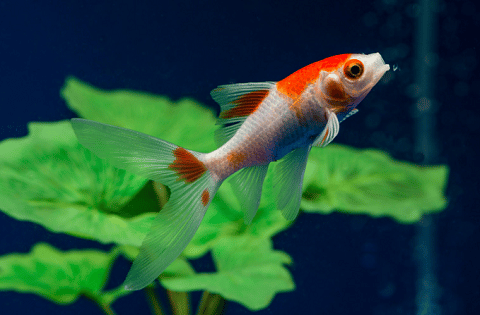
I’ve kept goldfish over the years and I’ll be honest. I’ve never been big on naming them. But I’ve noticed that when people do name their fish, the best names almost always come from two things: color and personality. Watch your fish for a few days before you commit. A bright orange one practically names itself. A bold fish that always charges the surface the moment you walk up? That personality will tell you everything. The 750+ names below are organized to make that process easier, whatever direction you’re leaning.
Key Takeaways
Goldfish come in all shapes and sizes and their personalities can be even more varied.
Every goldfish is different and their name will need to reflect who they are as a fish.
There are many goldfish names available, with some being cute and funny and others being plain yet fitting.
Regardless of name goldfish keeping involved a proper tank an environment
Goldfish Personality
If you’re new to goldfish keeping, you might not be aware that every fish has its own unique personality. This personality results from the given species and the fish’s environment, meaning tank conditions, tank mates, and even diet. In addition to all that, there are parts of a fish’s personality that are completely unique to that one fish. No two goldfish are created equal.
Goldfish have a lot of personality, though sadly, they’re seen as some of the less intelligent fish available. Check out our goldfish facts to learn more about them! These fish from the carp family have a fascinating history that’s discussed in this post.
How To Tell Female From A Male
Like other pets (e.g. betta fish), whether your goldfish is a male or female will probably have a lot of influence on its name. While goldfish aren’t the easiest fish to tell apart, you can see the difference in a few ways.
The easiest time to tell your male and female goldfish apart is during spawning times. This is because both fish undergo both physical and behavioral changes.
Goldfish spawning time is naturally during the spring and summer when waters start to warm. With the power of an aquarium heater and water changes, this water temperature difference can be replicated in the home aquarium or small pond.
During spawning periods, male goldfish develop tubercles on the sides of their gills. These are small, white bumps that rise under the skin and scales. It is unknown how tubercles aid the fish in reproduction, but a greater abundance of them seems to result in more successful responses and matings from female goldfish. Tubercles may also be present on the pectoral fins.
Goldfish tubercles1 can greatly resemble an aquarium parasite, like white spot disease also known as ich. Diagnosing illnesses can be difficult in the home aquarium and even more challenging in a larger pond with more outside factors.
In comparison to tubercles, ich is much less uniform and causes the goldfish to behave differently. Ich covers the entire body of the fish while tubercles stick to the gills and pectoral fins. Ich also causes the fish to appear sick by discoloration and flashing; ich causes the goldfish to have irritated and itchy skin, which results in sudden movements and scratching called flashing.
If your male goldfish presents with bumpy gills and bright coloration, then he is showing that he is ready to mate. If those signs weren’t enough, then your pet fish will also likely chase other fish around the aquarium almost to the point of harassment.
At the same time, female goldfish will also change in appearance, though not as drastically. The major difference is the enlargement of the vent. This is an opening behind the anal fins, which will become much more pronounced when the goldfish is ready to mate. The female goldfish will also deepen in color and produce a more rounded belly as she fills up with eggs.
Otherwise, knowing if your pet goldfish is male or female can be almost impossible. Good thing that there are plenty of gold fish names that are suitable for both!
How To Choose
Naming any pet can be hard, but naming a pet goldfish might seem like an impossible task. How can you name something that you can’t even interact with?
Believe it or not, you will interact with and get to know your pet fish just as much as with any other pet.
Goldfish have personality! And your goldfish’s name should reflect that. Many goldfish names could perfectly encapsulate your goldfish.
Goldfish can be funny, playful, cute, smart, or all of the above. They can also be mysterious, troublesome, lazy, or maybe not as smart as their comrades. Goldfish are unique, which means that they all need unique names.
Some hobbyists like funny goldfish names that play at pop culture references or historical figures. Others opt for more common goldfish names, like the equivalent of a dog being called Max. Some hobbyists change their goldfish’s name every week, while others never get around to giving their fish a name.
Keep in mind that it might be difficult to tell your goldfish apart from one another, which might just lead to every fish having the same name!
How Do You Know If Its The Right One?
It’s pretty easy to look at a list of the most popular names for goldfish and give one to your fish, but how do you know it’s right forever? Goldfish have surprisingly long lives, sometimes surpassing two decades (longer than a family cat or dog), so you definitely need a name that will last as they become long-standing family members in your household.
Something strange happens when naming any pet, including goldfish. You’ll often find that a name comes to the pet all by itself. This could be due to noticing a particular habit in the fish or another moment in life that just seems to perfectly apply to your goldfish.
The best way to see if the goldfish names you’re considering for your fish are good is by trying them on for size. Simply start calling your fish by the name and see if it feels right and if it sticks. If it doesn’t fit, then try another.
If all else fails, let your fish choose its own name. You can do this by writing a couple of goldfish names on a piece of paper, holding them next to the fish tank, and seeing where your goldfish swims. In this way, your goldfish names itself!
For Males
Fin
Oliver
Buddy
Lionel
Hugo
Flynn
George
Pippin
Theodore
Dexter
Max
Leo
Gizmo
Ulysses
Quicy
Elvis
Sammy
Winston
Xavier
Gavin
Kraken
Hank
Chip
Finnegan
Atticus
Squid
Louie
Aflie
Nolan
Nico
Jack
Tucker
Nugget
Hudson
Yannick
James
Gus
Lewis
Owen
Maximus
Samuel
Milo
Ace
Miles
Percival
Noah
Rosco
Franklin
Silas
Orlando
For Females
Duthess
Mia
Charlotte
Cora
Helena
Cynthia
Gigi
Madison
Beatrice
Claudia
Grace
Winnie
Isabella
Delilah
Odette
Lucy
Kiki
Hannah
Ophelia
Daphne
Poppy
Phoebe
Celeste
Ursula
Eloise
Penelope
Piper
Minnie
Cecilia
Gwendolyn
Emma
Roxy
Kitty
Tessa
Minerva
Olivia
Lizzy
Lulu
Wrex
Beatrix
Zoe
Lola
Coco
Fae
Guinevere
Ava
Lulu
Muffin
Una
Roxanne
Gender Neutral
Bubbles
Fish
Mercury
Charlie
Dakota
Lucky
Fishy
Mars
Sailor
Casey
Skipper
Splash
Venus
Echo
Emery
Spark
Kelp
Pirate
Harley
Jamie
Shimmer
Spicy
Riley
Kai
Shiloh
Harper
Pluto
Buddy
Remy
Elliot
Rowan
Sawyer
By Color
Goldfish come in a lot of colors. This list has names for major color variants of goldfish.
Red
Blue
White
Black
Orange
Violet
Multi-Colored
Flame
Blue
Ghost
Night
Goldie
Violet
Freckles
Penny
Azure
Snowflake
Raisin
Golden
Violette
Spot
Rosie
Aquamarine
Snow
Prune
Sun
Violetta
Patches
Crimson
Indigo
Dove
Void
Sunshine
Lavender
Polka
Cherry
Cyan
Chrome
Onyx
Sunny
Thistle
Rainbow
Scarlet
Cerulean
Platinum
Midnight
Tiger
Mauve
Kaleidoscope
Valentine
Teal
Titanium
Panther
Sunkist
Royal
Checkers
Ember
Periwinkle
Steel
Bandit
Fanta
Regal
Motley
Merlot
Cobalt
Nickel
Coal
Paprika
Magenta
Stripes
Bricket
Navy
Frost
Crow
Honeysuckle
Aubergine
Prism
Rojo
Demin
Moonbeam
Raven
Marigold
Purple Haze
Pixel
Poppy
Aqua
Angel
Licorice
Firecracker
Acai
Chroma
Blaze
Nautic
Sterling
Salem
Auburn
Concord
Dotty
Redford
Fjord
Casper
Shadow
Tango
Vivienne
Marble
Sorrel
Nile
Misty
Abyss
Harvest
Domino
Hawk
Voyager
Moon
Eclipse
Mimosa
Dot
Clay
Polaris
Luna
Jet
Firefly
Seashell
Burgundy
Bluemoon
Alabaster
Obsidian
Peaches ‘n Cream
Callie
Vixen
Whale
Yeti
Nightshade
Goldfinch
Technicolor
By Tail Type
A goldfish name based on their tail makes a lot of sense with the types of fancy goldfish and long-finned varieties available in the hobby. Here are several that might help.
Flow
Silky
Wisp
Flutter
Plume
Velvet
Fuzzy
Majesty
Pop Culture References
Who doesn’t like a pet with a Pop Culture reference? Below are names with references and where they come from.
Tinkerbell – a fairy-like character from J. M. Barrie’s novel, “Peter Pan”
Phelps – after the United States Olympic swimmer, Michael Phelps
Lochte – another US Olympic swimmer, Ryan Lochte
Forrest Gump – a 1994 film starring Tom Hanks
Hulk – a large green fictional superhero
Romeo – of “Romeo and Juliet” by William Shakespeare
Juliet – of “Romeo and Juliet”
Elon – named after Elon Musk, an entrepreneur and inventor
Britney – named after pop singer, Britney Spears
Ziggy Stardust – named after British performer, David Bowie
Gilligan – inspired by the TV show, “Gilligan’s Island”
Prince – named after American performer, Prince
Beyoncé – named after American singer, Beyoncé
Gaga – named after American singer and performer, Lady Gaga
Taylor – after American singer and songwriter, Taylor Swift
Kanye – named after American rapper, Kanye West
Jaws – after the 1975 film about a killer shark
Nemo – inspired by Pixar’s “Finding Nemo”
Dory – after the hippo tang in “Finding Nemo”
Marlin – after the father clownfish in “Finding Nemo”
Squirt – after the young sea turtle in “Finding Nemo”
Gil – after the Moorish idol in “Finding Nemo”
Bruce – after the main shark in “Finding Nemo”
Captain Morgan – a popular alcoholic rum brand
Flounder – after the yellow and blue striped fish in Disney’s “Little Mermaid”
Sebastian – after the crab in “Little Mermaid”
Ariel – after the mermaid in “Little Mermaid”
Cleo – after the goldfish in Disney’s “Pinocchio”
Batman – inspired by the superhero in DC Comics
Zorro – after a masked fictional character created by Johnston McCulley
Darth Vader – after a fictional villain in George Lucas’ “Star Wars”
Willy – inspired by the film, “Free Willy”
Captain Jack Sparrow – after the pirate character in “Pirates of the Caribbean”
Captain Barbossa – after the villain in “Pirates of the Caribbean”
Captain Hook – after the villain in “Peter Pan”
Cap’n Crunch – inspired by the cereal character
Chewbacca – a furry character in “Star Wars”
Aquaman – a superhero in the DC Comics
Flipper – after the 1964 TV series, “Flipper”
Moby Dick – inspired by Herman Melville’s novel
Jacques Cousteau – after the famous French oceanographer
Long John Silver – inspired by the American fast food chain restaurant
Rambo – named after the “Rambo” franchise
Simba – inspired by Disney’s “The Lion King”
Nala – from “The Lion King”
Mufasa – from “The Lion King”
Zazu – from “The Lion King”
Spongebob – after the main character in the famous TV series
Dumbledore – named after the great wizard in the “Harry Potter” series
Harry – from “Harry Potter”
Hermoine – from “Harry Potter”
Ron – from “Harry Potter”
Dobby – from “Harry Potter”
Frodo – from J. R. R. Tolkien’s “Lord of the Rings” franchise
Bilbo – from “Lord of the Rings”
Gandalf – from “Lord of the Rings”
Gollum – from “Lord of the Rings”
Aragorn – from “Lord of the Rings”
Jon Snow – after the character in George R. R. Martin’s “Games of Thrones”
Khaleesi – from “Game of Thrones”
Cersei – from “Game of Thrones”
Drogo – from “Game of Thrones”
Tyrion – from “Game of Thrones”
Spock – after Gene Roddenberry’s “Star Trek” franchise
Kirk – from “Star Trek”
Picard – from “Star Trek”
Worf – from “Star Trek”
Sherlock – named after Arthur Conan Doyle’s fictional detective
Goldie Hawn – based on the famous actor
By Gemstones
Opal
Emerald
Amber
Sardonyx
Peridot
Ruby
Amethyst
Topaz
Citrine
Agate
Diamond
Sapphire
Quartz
Onyx
Turquoise
Crystal
Adamite
Moonstone
Pearl
Jasper
Japanese Origins
Kingyo – “Goldfish”
Samurai – “Warrior”
Yoshe – “Beauty”
Kaida – “Little dragon”
Runa – “Moon”
Kenzo – “Healthy”/”Wise”
Sakura – “Cherry blossoms”
Maru – “Round”
Umi – “Sea”
Nori – “Seaweed”
Taiyo – “Sun”
Hoshi – “Star”
Tora – “Tiger”
Kiku – “Chrysanthemum”
Koi – “Love”/”Carp”
Yuki – “Snow”
Chinese Origins
Goldfish originate from China. Here are several names with good meanings behind them.
Bao – “Treasure”
Ginkgo – after the Gingko tree
Sying – “Star”
Longwei – “Dragon greatness”
Dai – “Respect”
Huang – “Bright”
Yang – “Light”/”Sun”
Tao – “Path”/”Virtue”
Hongse – “Red”
Yue – “Moon”
Lin – “Gem”
Asian Origins
China, Japan, and Thailand are the best three countries for goldfish breeders. We have several Asian name ideas that could fit the bill for your fish!
Dalkong (Korean) – “Sweetie”
Dae (Korean) – “Greatness”
Hwan (Korean) – “Bright”
Taeyang (Korean) – “Sun”
Jia (Korean) – “Good”/”Wisdom”
Satang (Korean) – “Candy”
Yejin (Korean) – “Rare”
Bada (Korean) – “Sea”
Dal (Korean) – “Moon”
Cho (Korean) – “Handsome”
Mali (Thai) – “Jasmine flower”
Singha (Thai) – “Lion”
Lukchup (Thai) – “Sweet”/”Candy”
Suriya (Thai) – “Sun”
Sawasdee (Thai) – A greeting
Kao (Thai) – “White”
Oun (Thai) – “Chubby”
Som (Thai) – “Sour”/”Orange”
Lek (Thai) – “Tiny”
Naka (Thai) – “Dragon”
Manis (Indonesian) – “Sweet”
Putih (Indonesian) – “White”
Raja (Indonesian) – “King”
Cinta (Indonesian) – “Love”
Bimo (Indonesian) – “Brave”
Biru (Indonesian) – “Blue”
Pelangi (Indonesian) – “Rainbow”
Bulan (Indonesian) – “Moon”
Ratu (Indonesian) – “Ratu”
Jelita (Indonesian) – “Beautiful”
Nature Based
Wind
Star
Sage
Comet
Smokey
River
Starlight
Aurora
Star
Bee
Rock
Daisy
Tide
Toad
Flower
Autumn
Sunflower
Orion
Frog
Fleur
Spring
Dandelion
Sky
Lily
Forest
Summer
Sunset
Brook
Lilac
Solstice
Winter
Cloud
Maple
Iris
Pinecone
Boulder
Bear
Ivy
Rose
Terra
Stormy
Woody
Reef
Coral
Falcon
Sandy
Blossom
Lunar
Thunder
Sparrow
Mythology Based
Zeus
Peresphone
Anubis
Aphrodite
Selene
Styx
Perseus
Amun
Demeter
Freyja
Thor
Hermes
Dionysus
Cupid
Dragon
Athena
Triton
Osiris
Hecate
Minotaur
Neptune
Titan
Ra
Psyche
Unicorn
Kelpie
Nyx
Njord
Pegasus
Centaur
Hades
Siren
Hercules
Atlas
Nymph
Loki
Selkie
Freya
Midas
Goblin
Poseidon
Horus
Artemis
Icarus
Wyvern
Apollo
Achilles
Bastet
Prometheus
Cyclops
Historic Based
Beethoven
Franklin
Descartes
Fidel
Nelson Mandela
Mozart
Amelia
Nietzsche
Castro
Nikola
Bach
Hemingway
King Henry VIII
Annie Oakley
Michelangelo
Clopatra
Frida
Rosa
Machiavelli
Vincent Van Gogh
Napoleon
Galileo
Confucius
Florence
Salvador Dali
Einstein
Houdini
Frankenstein
Newton
Gustav
Licoln
Alexander
Picasso
Edison
Rembrandt
Shakespeare
Aristole
Marie Antionette
Marco
Polluck
Caesar
Plato
Homer
Abraham
Claude
Socrates
Kant
Gandi
Sojourner
Raphael
Famous Goldfish
Goldfish have been featured in several movies. Here are a few you may be familiar with:
Cleo – Pinocchio
Dennis – Stanley – A talking pet goldfish
Klaus Heisler – American Dad! The pet goldfish of the Smiths
Chuckles – The goldfish from Find Nemo
Dorthy – The goldfish that appears on Sesame Street
Cosmo – From Fairy odd parents
Wanda – From Fairy odd parents
Food Based
Sushi
Nutmeg
Oreo
Latte
Nacho
Sashimi
Sherbert
Cinnamon
Cappuccino
Apricot
Wasabi
Sweet Tea
Honey
Coffee
Truffles
Sugar
Seaweed
Mulberry
Noodle
Clementine
Blueberry
Tofu
Marshmallow
Cheesecake
Creamsicle
Apple
Walnut
Olive
Potato
Mango
Grapefruit
Brandy
Pepper
Wipped Cream
Tangerine
Twix
Citrus
Peppermint
Fudge
Pistachio
Popcorn
Plum
Peanut
Peach
Ginger
Pea
Rosemary
Tater tot
Toffee
Pizza
Sweatpea
Jellybean
Mochi
Kiwi
Lime
Grape
Cheeto
Chestnut
Cheddar
Keylime
Buttercup
Jelly
Eggplant
Gouda
Lemon
Caramel
Jam
Pumpkin
Mozzarella
Lemondrop
By Personality
Killer
Destroyer
Kisses
Zippy
Brainy
Shark
Fury
Pebbles
Mako
Princess
Sparky
Chonky
Dart
Tranquil
Prince
Wiggle
Chuky
Pokey
Gulp
Queen
Hungry
Whisker
Ripple
Trouble
King
Jumper
Nibbles
Mystique
Biggie
Hubris
Funny
Billie Ei-fish
Swimmy Hendrix
Sharkira
Hunter
Pisces
Fin Diesel
Bubbles Galore
Salmon
Mellow
Cavier
Fin-derella
Fishbert
Tuna
Giggles
Grouper
Salmonella
Finnocent
Trout
Shrimp
Algae
Carp Diem
Fishy McFisherson
Anchovy
Jitterbug
Sea Squirt
James Pond
Bubbly Spears
Turbo
Shipwreck
The Captain
Fish Nugget
Sir Swims-A-Lot
Bites
Captain
El Captain
Fishy Smalls
Clam Clowder
Fiet
Nessie
Seabuscuit
Fish And Chips
Sharknado
Typhoon
Orca
Swim Shady
Lake Skywalker
Fintasia
Marine
Blubber
Starfish
Edgy
Venom
Slasher
Rogue
Devil
Savage
Anarchy
Menance
Xena
Diablo
Nemesis
Grim
Maverick
Talon
Obscura
Vortex
Mortis
Havoc
Rex
Euphoria
Thorn
Banshee
Mischief
Axel
Succubus
Tempest
Chaos
Nova
Lucifer
Pandora
Sphinx
Viper
Marauder
Ransom
FAQ
What are some of the most famous fish names?
The most popular names for fish originate from Pixar’s “Finding Nemo”. This film follows father and son, Marlin and Nemo respectively, saltwater clownfish across the ocean. As such, these names have become popular for all fish species, especially orange fish, that resemble those in the movie.
What are funny goldfish names?
Goldfish are funny fish and you might want some funny names to match their personalities. There are a few funny goldfish names on this list, including Billie Ei-fish, Swim Shady, and Fin Diesel.
What are cute goldfish names?
On top of being funny, goldfish can also be pretty cute, especially some of the chubby fancy varieties. Some of the best cute goldfish names include Pumpkin, Daisy, Squirt, and Lemondrop.
What are clever goldfish names?
Even if your goldfish isn’t the smartest doesn’t mean it can’t be named after some of the world’s geniuses. Some clever goldfish names are Socrates, Einstein, and Shakespeare. If you have another favorite author or movie star, then find inspiration in their name!
What should you name your goldfish?
There is no right or wrong name for your pet fish! Whatever you decide to name your goldfish is unique to you and your goldfish.
Final Thoughts
What’s in a fish name? That’s to be decided by you and your aquarium fish!
Goldfish names can be exciting and unique or plain and ordinary. It can be initially difficult to tell male goldfish apart from females, but looking at the male’s tubercles and coloration along with the female’s vent during spawning times can help you spot the differences. Also, don’t feel bad if you mix up one fish with another! These orange fish can start to look very similar after a while.
What names have you called your goldfish? Let us know in the comments below.
📘 Want to learn more? This article is part of our complete Freshwater Fish Guide. your ultimate resource for freshwater species, care tips, tank setup, and more.
One of the questions I get surprisingly often. even from people who’ve been in the hobby for years. is whether fish actually sleep. I noticed it myself early on: my bettas would go still near the surface or rest on a leaf late at night, barely moving. My cichlids would find a corner of the tank and just hover. It took me a while to realize that’s exactly what fish sleep looks like. No eyelids, no lying down. but the rest-state is real, and understanding it actually matters for how you set up your tank and your lighting schedule.
And today, in this article, we’ll cover everything about how a fish sleep.
So, stay with me!
Do fish sleep?
As mentioned earlier, like all living beings, fish sleep too. However, their sleep is different than the sleep of mammals birds, or other animals. That’s because they don’t need a land to rest their body, they don’t need beds, covers, or even eyelids. Basically, most fish cannot even close their eyes (except sharks). Check out the video above from our YouTube Channel and follow along with our blog post.
The Definition
To discuss the topic, we need to talk about the actual definition of sleep so we have the proper frameset when talking about our pets. Here is the definition:
Sleep has a simple definition that includes closed eyelids and a particular brainwave pattern in the neocortex – which makes sleep easy to determine for most animals. However, this makes it difficult for fish because they have neither a neocortex or eyelids.
The University of Zurith did a study of over 150 animals to determine if all animals sleep1. They determined that all animal sleeps – even microbes! This study used Henri Pieron’s definition of sleep. There are 4 key characteristics:
A species specific sleep posture
The maintenance of behavioral quiescence (inactivity/dormancy)
Elevation of arousal threshold (takes effort to get organism to react)
Reversibility with stimulation (we can wake them up)
Fish mostly sleep in the form of activity reduction and lower response to stimulus. So, next time, when you find your fish floating in the tank with minimal body movement and changed body coloration, know that it is just sleeping.
Stanford researchers have found that the freshwater zebrafish slumber much the way we do: They display a type of slow-wave sleep and a type of REM (also known as paradoxical) sleep. The discovery suggests that these neural sleep signatures — present in mammals, reptiles, and birds — emerged at least 450 million years ago.
It is crucial to understand that fish sleep doesn’t include rapid eye movement (REM sleep), which is associated with dreaming in mammals. In fish species, sleep only occurs with reduced activity levels to save energy and undergo physiological changes to restore or rejuvenate the body.
Some diurnal species (fish that sleep at night) will actually be active during day and night if they are doing something very involved such as migration. You will see this with Tilapia and even eels when they are trying to mate.
Fun Fact: Zebrafish species can exhibit two sleep cycles like most higher vertebrates.
Mindblowing Behaviors Of Dolphins
Some animals like marine mammals exhibit even stranger behavior. Dolphins do not have gills and need to surface to breathe. They can maintain a sleep cycle by shutting off half the hemispheres of their brain. This is known as unihemispheric slow-wave sleep. While one half of the brain sleeps, the other half keeps them swimming and tracks their need to surface for air while the other half sleeps.
Other behaviors from dolphins include “logging” which is them floating to the surface on their sides like a log to rest and still breathe air.
How do fish species sleep?
Like other animals that require sleep to stay healthy, fish also need sleep to undergo many bodily changes. However, fish sleep differs from other animals. For example, most fish are sleeping while hovering in the water or lying on the sand or substrate, reducing their activity levels. In such conditions, they conserve energy and their metabolic rate decreases they will not respond to external stimuli like usual. Also, the fact that fish do not have eyelids, makes it challenging to figure out if the fish are sleeping.
Furthermore, many fish seek out shelters or hiding places when they are in resting mode to protect themselves from predators. Therefore, adding crevices, under rocks, and driftwood is recommended to keep in your aquariums.
How does parrot fish sleep?
Parrotfish sleep in a very interesting way. They make their own cocoons in the form of sleeping bag by secreting their mucous around them every night, protecting them from predators and parasites.
How do fish from fast moving water sleep?
Many different fish species, including pelagic fish and sharks, are constantly moving even when they are resting to ensure a constant water flow and oxygen supply over the gills.
Other than that, there are several fish species with swim bladder that maintain buoyancy, so even when the fish sleeps, it still floats in the water.
How can you tell when your aquatic pet is sleeping?
Chances are your fish are sleeping, but showing no apparent signs of sleep because obviously, they don’t human sleep behaviors.
Therefore, it is necessary to figure out how your fish sleeps and provide adequate night time to maintain overall health. Like humans, fish may show signs of sleep deprivation. Thus, provide adjustable aquarium light to understand your fish’s sleep patterns and allow your fish to sleep soundly.
Since fish do not have eyelids, you cannot judge whether it’s sleeping. However, there are a few ways to spot a sleeping fish in your aquarium.
Location
Look out for fish that are resting on the bottom or just hovering without being active. If you have a school of fish, you may notice a small group resting somewhere around the corner. Other fish may be sleeping or resting in or around tank decorations or caves.
Signs of deprivation
There are thousands of research done on sleep deprivation in many invertebrates and other mammals, but there is little available data on fish. In fact, almost all studies have been conducted on some species, like zebrafish, to know the potential signs of sleep deprivation2.
One of the common signs is increased resting
No response to external stimuli even to potential environmental threats
Changes in activity patterns
Difficulty in learning and memory tasks
Potential stress due to increased cortisol levels
Note that 4 and 5 are hard to observe in the tank. However, in the studies cited, fish can suffer from insomnia and can develop sleeping disorders. Their sleep is also regulated by Melatonin3.
How Do I Make Sure They Get Enough?
One of the easiest ways to let your fish fall asleep is by putting your lights on a timer. This provides your fish with a consistent day and night routine like you would normally do for other animals. Avoid having your fish in constant light.
It is also recommended to provide hiding places and cover in your aquarium in the form of rocks, caves, driftwood, and other tank decors or aquarium plants, so your fish feels safe and secure in the aquarium while resting. For example, fish living near coral reefs love to hide during the nighttime. Thus, replicate their environment for a better and deeper sleep.
During their sleep state, avoid slamming the doors or watching TV at loud volume. Also, do not allow your pets to go near the tank when the fish are sleeping.
When transitioning from dark periods to daytime, I recommend gradually brightening the aquarium lights to stimulate natural sleep cycles.
FAQs
How do you know if a fish is sleeping?
There are a few signs of a sleeping fish:
Inactive or motionless during periods of time
Laying on the bottom or just hovering on any aquarium object
Not responding to any external stimuli, even food.
Do Fish Suffer From Sleep Disorder?
Even though there’s not a lot of research material available on sleep disorders in fish, however, studies on zebra danios, suggest that the fish may sleep more when there’s a sleep loss.
Do fish swim when they sleep?
It depends on the fish species and the type of sleep you get. For example, many fish are almost completely inactive during resting period or they just hover in one place or lie on the substrate. While other fish are continuous swimmers, especially those living in fast-flowing waters, such as Pelagic fish. However, some fish find hiding spots so they can rest without swimming between rocks, corals, or other tank decors.
Many species of catfish or rays rest on the bottom during resting periods.
Do fish close their eyes?
No. Fish do not close their eyes during sleep because they don’t have eyelids.
How long do fish sleep at a time?
Aquarium fish may sleep for around 8 to 12 hours, depending on the aquarium light and other factors.
Do fish sleep or close their eyes?
Yes, like all other animals, fish do sleep. No, they don’t close their eyes because they don’t have eyelids.
Final Thoughts
Sleep is important for the well-being of animals, including fish. However, fish don’t sleep in a conventional way like many animals, and they do not follow circadian rhythm as strictly as humans do. Still, they put their bodies at rest and adjust their sleep routine to water temperature, food, migration patterns, and other factors.
GloFish are genetically modified fish that glow under blue or UV light. They are not painted or dyed. The modification is permanent and heritable. The care is identical to their non-GloFish counterparts.
GloFish are the same species with a visual twist. Care requirements do not change because a fish glows.
The biggest challenge with Glofish is not keeping them alive. It is managing how fast they multiply.
The Glofish breeds constantly and lives 3 to 5 years. You need a plan for fry before you buy your first pair, or your tank will be overrun within months.
Livebearers teach you more about population management than any textbook ever will.
What It Is Actually Like Living With Glofish
The Glofish is more active and aware of its surroundings than most people expect. In a properly set up tank, it shows behaviors that generic care guides never mention.
Feeding becomes a routine both you and the fish look forward to. The Glofish learns your schedule and responds to your presence near the tank within the first few weeks.
Maintenance is consistent, not difficult. Regular water changes and parameter monitoring become second nature. The fish rewards consistent care with better color, more activity, and visible health.
Over time, you notice personality traits unique to your individual fish. Some are bold explorers. Others are cautious observers. That individual personality is what turns casual fishkeeping into a genuine hobby.
ASD Difficulty Rating: Tier 1 – Beginner
GloFish are genetically modified fluorescent fish (zebrafish, tetras, or barbs) with care requirements identical to their non-modified counterparts. Zebrafish variants are the hardiest and most beginner-friendly.
Key Takeaways
Glofish are specially bred to contain fluorescent protein genes
There are several types of glofish species, all with unique characteristics
Specialized lighting and gravel are needed to enhance their look in an aquarium
As with any other fish, they require care and maintenance so they can thrive
Glofish are exclusively owned by the Tetra Company and are distributed worldwide to local fish stores
Breeding is not optional. It is automatic. If you have males and females, you will have fry within weeks. Most new owners are not prepared for the population explosion. You need a plan, whether that is a grow-out tank, selling to a local store, or keeping predators that naturally control numbers.
Water hardness matters more than people realize. Livebearers come from hard, alkaline water. Keeping them in soft, acidic conditions leads to chronic health problems, fin clamping, and shortened lifespans. If your tap water is soft, livebearers are not ideal unless you buffer the water.
Male aggression is constant. Males chase females relentlessly. Without a ratio of at least two females per male, the females get stressed, stop eating, and weaken. Overcrowding males does not solve this. It makes it worse.
Biggest Mistake New Owners Make
Buying one male and one female thinking it will be manageable. Within three months you have 30 to 50 fish in a tank designed for 10. Always plan for breeding output before you buy your first pair.
Expert Take (Mark Valderrama, AquariumStoreDepot)
If you are keeping livebearers, you are a breeder whether you planned to be or not. Accept it early and have a plan for the fry. That single decision prevents 90% of livebearer problems.
Understanding Them (Origins)
Fluorescent Protein Genes
The dazzling array of colors that Glofish display is attributed to the fluorescent proteins genes they contain. Genes which carry instructions for producing Green Fluorescent Protein (GFP) and Red Fluorescent Protein (RFP). When hit by certain wavelengths, these proteins emit light resulting in their iconic glow. This phenomenon has made Glofish a popular choice among aquarium owners seeking something special.
Many Glofish kits contain a specialized light to allow these fish to grow. However, you can replicate this “glo” by purchasing actinic fluorescent rights or using your led light’s moonlight feature (AKA blue light).
Types Of Glofish Available In The Hobby
Glofish species vary in their characteristics and care requirements. To provide a full overall post about glofish, I need to cover all the current species available. The list is growing every day (and our video above is a nice visual for you to view) and I will also to this list as new releases occur. I will include comprehensive care details for you to look up. Currently, here is what is offered by the Glofish family:
When researching these Glofish it is important to consider the size of tank they need, what environment will best suit them, diet for each individual fish type including compatibility with other types of fishes living together in one fish tank. Let us take a closer look at those extraordinary creatures!
Cory Catfish are small, gentle fish with an encased body and a highly social nature. They prefer to live in shallow bodies of water such as rivers, streams, marshes or ponds where the visibility is poor. For their safety they rely on strong scales which provide them protection from danger.
Currently, there are two cory glofish available – Electric green and Sunburst Orange. Both cory fish have similar requirements and sizes. These cories are arguably the most exciting addition to the collection as these fish get along with nearly every other glofish on the list. Their bottom dwelling tendencies keeps them away from the aggression of Betta Fish and Tiger barbs (as long as the school of tiger barbs are big enough)
Cory Catfish prefers a fine substrate to dig around in. This means that the glofish gravel you will see onsale are not the best for them. It’s not their natural behavior to work through this type of gravel. They also prefer a heavily planted tank with plenty of hiding spaces.
They will eat just about anything you feed them in the tank and are omnivores. Purchase them in a group of at least 5 or 6 so they can maintain their schooling fish behaviors. You can mix both these species together without any issues.
Temperament: Peaceful – though nippy with certain fish
Adult Size: 2.5 inches
Minimum Tank Size: 20 gallons
Diet: Feed frozen, live, and dried foods
Origin: South America
Temperature: 70-82°F
pH: 6.0-7.5
Planted tank suitability: Yes
Tropical fish, such as tetras, are a popular choice among aquarium enthusiasts for their pleasant temperament and array of colors. They naturally school together in mid-level depths of the tank. These glofish derive from the Black Skirt tetra and come in the following varieties:
Cosmic blue
Electric green
Galactic purple
Moonrise pink
Starfire red
Sunburst orange
You can mix all these colors together in the tank and they will still get along and school together. Note however, that these tetras come from the black skirt tetra and exhibit some behaviors you need to be aware of:
These fish prefer low light – which conflicts with the need of fluorescent light to make them glow
They are nippy in nature and will not get along with some glo fish like Bettas
To design an ideal environment suitable for keeping Tetras healthy and active in your tank at home: Create a space no less than 20 gallons, provide numerous hiding spots that can act as refuge when needed, keep water temperatures between 70°F – 82°F ; lastly feed regularly flakes/pellets along live food options or frozen items alike but be sure all meals comprise of essential nutrients necessary to sustain growth which will help protect against disease development due to deficiency problems over time from unbalanced eating habits.
Temperament: Peaceful – though nippy with certain fish
Adult Size: 2.5 inches
Minimum Tank Size: 20 gallons
Diet: Feed frozen, live, and dried foods
Origin: South America
Temperature: 70-82°F
pH: 6.0-7.5
Planted tank suitability: Yes
These are the long fin varieties of the same black skirt tetra. They are offered in the following colors:
Cosmic blue
Electric green
Galactic purple
Moonrise pink
Starfire red
Sunburst orange
They have the same water chemistry requirements and the same quirks with them regarding being nippy and preferring low light. Given their longer fins though, they will be targeted by more aggressive fish on the glofish catalog like tiger barbs and bettas and will struggle with fast fish like danios to compete with fish.
Danios are the original fish that started it all. Great dither fish. Gets along with many fish. Should be housed in at minimum 10 gallons and in a group
The Danio is the fish that started it all. Originally, the Zebra Danio (also known as Zebra Fish) was the first glofish was available in electric green. Now, you have blue, purple, red, and orange available. These dither fish need a group of at least 5 in order for them to stay less stressed and aggressive. They are best in at least a 10 gallon tank since they need lots of open space to swim in.
Tiger barbs are one of the more aggressive fish available. Should kept in groups of 12 to curb aggression. Should not be housed with fish with long fins.
Barb glofish are one of the most polarizing additions to the collection. Regular Tiger Barbs are semi-aggressive and these varieties are no exception. They will bully and nip every fish in the collection except for the rainbow shark. They are not for beginners and are probably best in a species only tank or housed with a single rainbow shark in a group of at least 12 (versus 5 like suggested on the glofish website.
They come in three colors, electric green, starfire red, and sunburst orange. If anything, I’m hoping one day glofish comes out with a cherry or gold barb instead as those barbs are more community orientated fish.
Pristellas are small, brightly colored freshwater fish native to South America with a peaceful temperament. With regular varieties, males have deeper gray bodies and more vivid red tails than their female counterparts. These species make excellent tank mates for other Glofish as long as they are not kept with any long-finned varieties, as they are known for nipping long nips! They are available in electric green, galactic purple, and sunburst orange.
Origin: Mekong, Chao Phraya, Xe Bangfai, and Maeklong in Indochina
Temperature: 72-80°F
pH: 6.0 – 8.0
Planted tank suitability: Yes
The sharks in the glofish collection come from the rainbow shark. It is the largest and most aggressive in the glofish catalog, requiring an aquarium over over 50 gallons to house them properly. The glofish site states 20 gallons and I will tell you that that is pretty bad information. These fish once they hit 3-4 inches in length will com into their own, and if you house the wrong fish with them, they will experience their aggression.
The only fish I would recommend in Glofish’s catalog would be tiger barbs. Both species of fish go hand in hand and have similar temperaments as long as you can put them all in a big enough tank. These glofish sharks have 4 colors available: cosmic blue, electric green, galactic purple, and sunburst orange.
Temperament: Peaceful, aggressive towards own kind and fish that look like that them
Adult Size: 2-3 inches
Minimum Tank Size: 5 gallons
Diet: Feed frozen, live, and dried foods
Origin: Southeast Aisa
Temperature: 76-82°F
pH: 6.5 – 7.5
Planted tank suitability: Yes
The betta fish glofish is the only Glofish I would recommend in small tanks. They is house alone in a 5 gallon tank or in a community tank at 10 gallons and up. They can also be kept in a group of females if you have a large enough tank (minimum 29 gallons). They prefer planted aquariums and given their fins and slow moving nature they are best not housed with the plastic flake plants that glofish offers in their catalog. You are best to use silk plants or just opt out of the lighting for glofish and go with a planted tank and just use your moonlights when you want to see your betta glo in the tank.
Creating A Suitable Aquarium
Want color and activity without breeding headaches? Get all males. Want a self-sustaining colony? Get a proper male-to-female ratio and a grow-out tank.
To create an optimal environment for your Glofish, begin by selecting the right sized aquarium and tank. Then ensure that it is equipped with suitable lighting which adds to its attractive characteristics while providing a comfortable habitat as well. Whie you can include decorations tailored specifically for enhancing the vibrant look of your Glofish, its best to focus on what’s naturally beneficial to them. Here is some quick points about Glofish before we go into detail:
No fish on this list should be in a tank smaller than 5 gallons
Many of these fish are schooling fish and need to be in groups
Some of these fish are semi-aggressive and require larger tanks
Some of these fish like Bettas and Black skirt tetras, prefer long lit tanks – this is in conflict with Glofish light kits available by Glofish
In order for you to keep live plants, you will need a planted LED lighting system. Use moonlight features to get your fish to “glo” at night time or in the mornings
Tank Size And Environment
When deciding on the proper tank size for your Glofish, keep in mind that at least a 5 gallon capacity is necessary. This is in conflict with the Glofish website as they offer kits smaller than 5 gallons. However, I would NOT recommend any fish for anything under 5 gallons. Between 5-9 gallons I would only consider betta fish. After you hit 10 and up you can consider other fish for a community tank. Note that the largest aquarium offered by Glofish is 10 gallons. However, there is a 20 gallon aquarium by Aqueon that works well for a number of the fish in their catalog. You can check out the list below for a good starter kit option.
30+ gallons would be preferable to allow your fluorescent fish them plenty of space for swimming and staying healthy. Several fish like the tiger barb and the rainbow shark require larger tanks. The best combo for glofish would be a Betta Fish with corydoras or zebra danios with corydoras. Along with providing an appropriate amount of water, it’s important to create a stimulating environment. Including adding plants like rocks or driftwood, which provide extra hiding spots as well as aesthetically enhancing your aquarium.
Lighting And Decor
Creating the perfect environment for Glofish fluorescent fish is essential and involves more than just lighting. To achieve a tank with beautiful vibrancy, proper light should be utilized to enhance their colors while producing an inviting atmosphere in your aquarium. Here are some tips on how best to do so:
Consider a light that has a moonlight feature so you can display the fish’s fluorescent color
Avoid illumination around-the-clock as it may cause algae buildup or disturb sleep patterns of any inhabitants
For decor, Glofish does offer plastic plants that will “glow” in moonlights or with their lighting side, however not that these plants are not appropriate with Betta fish as their fins is damaged by them.
Maintaining Water Quality
It is essential to preserve an appropriate water quality for Glofish. You need to create a steady habitat with suitable temperature and filtration, which will benefit your fish’s health and their contentment. Let’s first talk about temperature.
Temperature And Heater Requirements
Glofish species are native to tropical climates, which means they need heaters in order to keep the water temperature stable and within their preferred range of 61 – 81 degrees Fahrenheit. Of all glofish available, the Betta will 100% require a heater. The danio fish is the only fish on the list that you can keep without a heater. However, for these fish we would consider a heater for them to keep temperatures stable.
For a heater setup, a heater and controller setup is the best practice with Finnex’s Titanium heater set being reasonable and reliable for these types of tanks.
Finnex has achieved what we as hobbyist have asked for decades. A reliable heater that won’t fail. Japanese components. Receives our top recommendation.
In order to ensure a healthy environment for Glofish species, it’s essential to keep track of the water chemistry requirements listed for each fish. I’ll also highlight nutrient parameters to watch out for:
Note that glofish are less hardy their their non modified counterparts. Also, many systems will not include live plants, which will limit the ability to handle nitrates. It’s best to stick to the parameters when considering water changes. If any of these levels are off, you should do a water change ASAP.
Filtration
In order to maintain a healthy environment in an aquarium for Glofish, it is essential that proper filtration be employed.
The ideal system used specifically for the fish would be a hang-on filter. Some of the available kits will offer a baseline filter supplied by tetra, which I consider okay. I would opt for a quality hang-on like an Aquaclear. If you go to an aquarium over 40 gallons or consider adding plants, I would consider a canister filter.
Feeding Your Fish
It’s essential to provide the required nutrients by offering various sorts of edibles while minding how often they get fed and their portion sizes. This way, you can guarantee an optimum level of nourishment necessary for them to showcase their striking appearance.
Types Of Food
When it comes to feeding your Glofish, there are various types of food you can give them. All the fish offered by Glofish are ominvorious so they will all eat the same food. Here are some types of food that work well – most of which are offered in flake, freeze dried, frozen or in pellets.
Bloodworms
Insects
Daphnia
Blackworms
Krill
Also mix your food to keep everything balanced. All these fish will also benefit from a one day fast every week to clear their digestive systems. While Tetra offers a special flake food for glofish, I would not recommend using it only. I think fluval bug bites color enhancing flakes or their standard pellets are a better buy and have fewer preservatives.
Feeding Frequency And Portions
All Glofish are active fish that require frequent feedings. It is important to feed your Glofish two times daily in small amounts, ensuring all of the food has been consumed within a 1-2 minute window. Overfeeding can lead to water contamination, resulting in lower quality and an increased risk for diseases.
Tank Mates And Social Behavior
It is very important to choose the right tank mates when establishing an aquarium with Glofish since each species has their own distinct social behavior. While you can can mix these fish with non glo fish, I’m going to focus on every glofish type and who they mix best with.
Corydoras
Danio
Tetra
Long Fin Tetra
Pristella
Tiger Barb
Shark
Betta
Danio
Corydoras
Corydoras
Corydoras
Corydoras
Shark
Tiger Barb
Corydoras
Tetra
Tetra
Danio
Danio
Danio
Long Fin Tetra
Long Fin Tetra
Long Fin Tetra
Tetra
Tetra
Pristella
Pristella
Pristella
Pristella
Long Fin Tetra
Betta
I highly advise NOT purchasing a community collection package. From what I’ve seen that is included, they often in fish that long-term will not be compatible with each other. For example, the 20 gallon variety pack offered comes with a rainbow shark, which long-term is only compatible with tiger barbs in a tank larger than 50 gallons.
Common Health Aliments
It is essential to keep a watchful eye on the well-being of Glofish for their long life. Knowing common health problems and identifying signs that suggest good health will ensure you can intervene when necessary. Diseases like ich, velvet, and fin rot are common with these fish. The main issue however is the conditioning of the fish.
Identifying Healthy Glofish
Because of the nature of how these fish are sold at pet stores, many are in poor condition. They are often stressed out and put in small tanks. Quarantining is highly recommended for these fish to get them in proper shape before introduction into your main tank.
When purchasing, ensure they have clear eyes, show an appetite, and exhibit bright, uniform coloration. Their swimming should be steady with a slightly rounded abdomen while there are no signs of torn fins or white spots on their body.
Breeding
Several readers have asked me to address breeding Glofish. As a reminder, Glofish are protected by a patent. While they can breed in your tank, you cannot legally sell the fish due to the patent protecting them.
Frequently Asked Questions
Why were Glofish banned?
In 2003, California barred the sale of GloFish due to qualms that genetic engineering a fish species would be an inappropriate use of powerful technology. The regulation had been instated prior to their marketing. As of the publication of those post, they are still banned in California1.
Is it hard to keep Glofish alive?
Maintaining Glofish is easy due to their robustness and suitability for beginner aquarists. To ensure they live contentedly, make sure the aquarium stays clean and you supply them with proper nutrition. All these factors will help your fish flourish in its new home!
How many Glofish should be together?
GloFish Barbs should be kept in groups of at least 12 (to limit aggression), while both GloFish Danios and GloFish Tetras will do well with a school of five or more, but will feel comfortable in larger numbers. To form an eye-catching school of colorful fish, you could get one of each color for a school of six. They will still swim together.
Can you put GloFish in tank right away?
No! First, your tank should be cycled, second you should accumulate your fish before putting in to your tank. Before releasing GloFish into their tank, it’s important to let them acclimate – put the sealed bag in for about 15-20 minutes to temperature accumulate. If you can, quarantining is highly recommended.
Hard Rule
GloFish are the same species as their non-modified counterparts and have identical care requirements. GloFish tetras need groups of 6+ and good water quality. GloFish zebrafish are hardier. Buy based on species requirements, not just the glow.
Closing Thoughts
Creating a suitable environment with the right tank size and providing essential care such as maintaining water quality and offering balanced diets are vital to keeping your vibrant Glofish healthy. By following these guidelines, you will be able to ensure that they continue to captivate in your aquarium for many years ahead.
Have you ever keep these fish in your tank? Let us know your experience in the comments below!
📘 Want to learn more? This article is part of our complete Freshwater Fish Guide. Your ultimate resource for freshwater species, care tips, tank setup, and more.
I get this question a lot, and the short answer is no. bettas and goldfish should not be kept together. I’ve never tried it myself because I knew better, but I understand why people are tempted. Both fish show up at the front of every pet store, both are marketed as beginner-friendly, and both are cheap to buy. It seems logical on the surface. But once you understand the actual care requirements of each species, you realize they’re fundamentally incompatible. Here’s what you need to know.
Key Takeaways
Can betta fish live with goldfish? No, they can’t.
Betta fish and goldfish are very popular fish that are sought after by beginner hobbyists who might not understand why these fish are incompatible.
There are a few reasons why bettas can’t live with goldfish, including differences in behaviors, aquarium setups, and diets.
The main differences between these fish are in water temperature and feeding habits.
Betta Fish Care
Before we jump into why betta fish and goldfish can’t be kept in the same tank, it’s important to understand the basic fishkeeping behind each species.
Betta fish, scientifically known as Betta splendens, is a domesticated species of fighting fish from Southeast Asia. These fish originate from shallow and often temporary pools of water throughout Thailand, Vietnam, and Cambodia. They have been bred over centuries to exhibit the best colors and finnage, but also demonstrate heightened aggression to other fish.
In the aquarium hobby, betta fish can comfortably live in a heated 5 gallon aquarium. As these fish originate from a tropical climate, bettas need to be kept at a constant water temperature between 78 and 80° F. They are hardy to imperfect water conditions but may develop fin rot and other diseases if water parameters aren’t kept stable.
It should also be noted that betta fish enjoy tannin-stained waters with a lot of organic material. This creates a lot of shade and hiding spots for betta fish to live while also lowering pH to as low as 4.0. In the aquarium, most hobbyists keep their betta tank between 6.5 to 7.0.
Wild bettas are naturally carnivores that prefer catching small insects that land on top of the water. While these fish should still be given a varied diet in captivity, betta fish thrive with high-quality flake, pellet food, and frozen food.
Goldfish Care
At one point or another, everyone has a pet goldfish. These fish can be won as a prize from carnival games to guests with little to no fishkeeping experience. While some winners do their best to give their new fish the best life possible, goldfish can be difficult to care for. Because so many people own goldfish at one point or another, they’ve been deemed as beginner fish even though they are not the easiest fish to keep long-term.
Goldfish (Carassius auratus) are another type of domesticated fish derived from wild Prussian carp many centuries ago. Over many years, goldfish were selectively bred to exhibit sought-after features, which led to different breeds. While not all goldfish grow to extreme sizes1, some of the most common breeds can grow over a foot. Because of this, most hobbyists recommend keeping goldfish in either very large tanks or ponds.
On top of their large size, goldfish live a long time. Most goldfish can easily surpass 10 years of age. It’s believed that the oldest goldfish lived to be about 43 years old. In addition, goldfish are very messy fish and easily pollute water conditions. A large goldfish tank helps to disperse waste, but an oversized and efficient filtration system is necessary alongside frequent partial water changes.
Wild carp originated from Europe and Asia, similar to betta fish. However, they come from very different ecosystems with cool water temperatures. In fact, goldfish prefer temperatures between 65 and 72° F. They can survive much colder temperatures (they are considered coldwater fish) than this over the winter by hibernating in deeper sections of water.
Goldfish are very opportunistic feeders and will try to eat anything that fits inside their mouth. Though goldfish food is easy to find at a local pet store, it can be difficult to find a diet that is fulfilling for the fish, and that doesn’t make a mess.
Can Bettas And Goldfish Live Together?
No, betta fish cannot live with goldfish. Now that we have a good understanding of where these fish species originate from and some of their behaviors, we can see why they aren’t compatible with each other in the same aquarium. Here is a video from my YouTube Channel so you have a visual. This blog post goes into more detail, so check out both. If you like my content, be sure to subscribe!
The main reasons why betta fish can’t be kept in the same tank as goldfish are due to differences in behavior, tank setup, and diet.
Differences In Behavior
Betta fish are known as Siamese fighting fish. This is because male betta fish were domesticated for violent competition. Unfortunately, this aggression carried on through the generations, and now both male and even female betta fish can be openly aggressive in the aquarium.
In addition to their aggression, betta fish are actually pretty lazy fish. They are often found floating on plants and other surfaces near the top of the water. Because of their inactivity, some bettas even become overweight and constipated.
This is in stark contrast to goldfish, who are almost always moving around the aquarium looking for their next meal – which makes sense given they don’t have a stomach! Goldfish are very active fish that aren’t necessarily aggressive, but they’re not community friendly either. As mentioned before, goldfish are very opportunistic feeders that will try to eat anything they come across. In some cases, this means fin nipping or nibbling on another fish out of pure curiosity.
A betta’s laziness and aggression cause the fish to become helpless in a situation like this. Goldfish are too big and persistent to be compatible with a betta’s more laid back and defensive demeanor.
Tank Setup Differences
Regardless of compatibility, placing a betta fish in the same tank as a goldfish doesn’t make sense from an aquarium design standpoint. Betta fish love crowded ecosystems filled with plants, driftwood, and dried leaves. Goldfish need almost empty tanks as they will disrupt any plants or substrate placed alongside them. Goldfish also need a strong and flowing water current to keep waste moving, while bettas prefer near-stagnant conditions.
Tank Size
Betta fish might have long flowing fins, but they’re small fish compared to 1 foot long goldfish or an 8 inch bulky fancy goldfish. In general, goldfish need as big of a tank as possible, with a pond being a preferred setting for long term goldfish housing. In contrast, betta fish like to be alone in small, dark, and contained systems.
Betta fish need a 5 gallon tank, while some slim bodied goldfish breeds need at least 75 gallons or more; fancy goldfish breeds have been successfully kept in 40 gallon aquariums.
Remember that goldfish and betta fish should never be kept in a tiny bowl!
Water Parameters
More important than setup and size, water temperatures ultimately make betta fish and goldfish incompatible tank mates.
Bettas are true tropical fish that need warmer temperatures all the time. They cannot tolerate water temperatures much below 72° F or above 84° F. This is in contrast to goldfish, who can tolerate water temperature values in the high 70s for short periods of time.
While this small overlap might seem like betta fish could live with goldfish, goldfish cannot tolerate prolonged exposure to incorrect water temperatures. Instead, they need steady values below 72° F. These cold water fish can tolerate nearly every temperature below this temperature as long as they have a deep space to hibernate. They cannot tolerate sudden swings in temperature, though.
Another water quality concern for both goldfish and betta fish is ammonia. Betta fish live in small tanks with minimal filtration. Even though they don’t create a lot of waste, ammonia can build up from leftover waste and other decaying organics. Similarly, goldfish are very messy eaters and create a lot of organic waste in return. Both these fish are highly susceptible to ammonia poisoning even though they are both relatively hardy fish species.
Keep in mind that many betta fish are kept in acidic fish tank conditions. This is in contrast to goldfish, which prefer a more neutral pH of around 7.0.
Diet
Lastly, dietary and feeding differences between goldfish and betta fish make them incompatible.
Betta fish are primarily carnivores that hunt for their food. In the aquarium, they need to be given a high-quality flake food or pellet along with live, frozen, and freeze-dried options like brine shrimp, bloodworms, and insect larvae. Unlike goldfish, bettas will not eat live plants in the aquarium but may nip at exposed roots.
Goldfish also need a high-quality flake or pellet of goldfish food and may be given algae wafers from time to time. These fish are omnivores and are very eager to try eating whatever they can, so they will also readily accept live, frozen, and freeze-dried options.
Gel foods are a new development in the fish food industry. This food by Repashy includes a mix of inverts like krill and plant matter like Spirulina. Give it a try!
While there is some overlap in diet between goldfish and betta fish, their feeding habits are very different, which ultimately makes them incompatible as tank mates.
Betta fish are very relaxed eaters who will take their time to investigate what they’re about to eat. Most often, these fish enjoy eating at the surface of the water in small portions at a time. Unlike bettas, goldfish will eat anything, anywhere, at any time – including your Betta Fish! Yes, that’s right, it is possible for your goldfish to eat your betta fish over time as the size differences are that significant!
All in all, goldfish are overly active feeders that would not allow a betta fish to eat. They will outcompete your betta and may eventually see your Betta as a food source.
Alternatives
The simple solution to having betta fish and goldfish living together is by having two separate tanks. Unfortunately, these two fish species will never be able to live together in the same aquarium. Instead of focusing on how one aquarium looks by itself, imagine how these two tanks could look side by side. Plan for an overall theme between the two tanks that connects them without sharing tank water.
The best alternative to keeping these popular fish together is keeping them separate! You can also consider other tankmates for each fish. We have posts you can view that talks about tankmates about both fish.
There are several reasons why bettas don’t make good tank mates with goldfish. These reasons include differences in behavior, tank setup, tank size, water parameters, and diet. The biggest factors that prevent this tank mate pairing are differences in temperature and size differences.
Betta fish are tropical fish that need warm water temperatures, while goldfish need much cooler conditions. Goldfish are overly active feeders, and betta fish would be outcompeted during feeding times. The goldfish is also gets so large that it may consider the Betta as food!
Are goldfish easier to keep than bettas?
For the average hobbyist, betta fish are easier to keep than goldfish. Some can argue that goldfish are just as easy to keep as bettas, but their bare minimum requirements make them a little more challenging than other fish.
The simple truth is that goldfish need huge tanks with regular aquarium maintenance. Most goldfish tank setups start at 55 gallons, which is a big commitment for a beginner. This is in contrast to a 5 gallon betta tank setup that can eventually maintain itself.
Which fish can be kept with a betta?
Just because betta fish can’t live with goldfish doesn’t mean that they have to be kept by themselves. Betta fish tank mates depend largely on the behavior of the independent betta. If you have an especially aggressive betta, then options may be limited. However, if your betta is calm and friendly, then certain tetra and rasbora species may be a possibility.
Can betta fish eat goldfish pellets?
Many pet fish foods include the same ingredients. The only thing that changes from one to another is quality. For instance, some cheaper options have mixed fillers and types of meals that don’t provide the fish with any sustenance. Unfortunately, this is most true for goldfish foods, as many first-time owners are unaware of premium products.
In short, betta fish can eat high-quality goldfish food in a hurry, but a specific betta fish food is encouraged.
What fish cannot be with a betta?
Betta fish should not be kept with goldfish. In addition, betta fish should not be kept with other betta fish, especially multiple male bettas. They also should not be kept with similar-looking fish.
Can koi live with betta?
No, koi fish are much bigger and relatively more active than goldfish. If goldfish can’t be in the same tank as bettas, then koi fish definitely can’t!
Are betta fish easier to take care of than goldfish?
Betta fish are generally easier to keep than goldfish. Once established, betta fish will adapt to their surroundings. This doesn’t mean that they can live in poor water quality, though!
Can goldfish eat betta fish food?
Likewise, goldfish can also eat betta fish food in an emergency. This is not ideal as betta fish food is more protein based as they are carnivores, but feeding every once in a while will not hurt a goldfish.
Final Thoughts
Betta fish and goldfish are two fish that many fish keepers own at one point or another. These fish are so popular that some hobbyists might think that they’re able to live together in the same tank. However, due to differences in behaviors, aquarium setups, and diets, goldfish and betta fish cannot live together.
Instead, set up a small separate tank for your betta right next to your large goldfish only setup!
📘 Want to learn more? This article is part of our complete Betta Fish Guide. your ultimate resource for betta care, types, tank setup, feeding, tank mates, and more.
The Gold Nugget Pleco is visually striking and also territorial, aggressive toward other bottom dwellers, and needs warmer water than most community tanks provide.
Gold nugget plecos are territorial. One per tank is the rule, not the suggestion.
Plecos do not survive on algae alone. Period.
Depending on the species, this pleco lives 10 to 20 years and may reach sizes that demand a tank upgrade. Think long-term before bringing one home.
The pleco you see hiding behind the filter during the day is a completely different fish at midnight.
What It Is Actually Like Living With Gold Nugget Pleco
The Gold Nugget Pleco is more active and aware of its surroundings than most people expect. In a properly set up tank, it shows behaviors that generic care guides never mention.
Feeding becomes a routine both you and the fish look forward to. The Gold Nugget Pleco learns your schedule and responds to your presence near the tank within the first few weeks.
Maintenance is consistent, not difficult. Regular water changes and parameter monitoring become second nature. The fish rewards consistent care with better color, more activity, and visible health.
Over time, you notice personality traits unique to your individual fish. Some are bold explorers. Others are cautious observers. That individual personality is what turns casual fishkeeping into a genuine hobby.
Nobody tells you about the poop. Bristlenose plecos produce an astonishing amount of waste relative to their size. You will see long strings of it draped across every surface in your tank. This is normal, but it means your filtration needs to keep up. If you are not doing weekly water changes, your pleco will create a nutrient problem faster than any other fish in the tank.
Key Takeaways
Gold nugget plecos grow up to 10 inches in length and require, at minimum a 55 gallon tank
They originate from South America and are common in their home region
They are best suited in community tanks with plants. Avoid aggressive tankmates for peaceful coexistence.
Feed them a balanced diet of algae, vegetables, and protein rich foods.
Algae is not a diet. Most plecos are omnivores or wood-eaters, not algae eaters. Relying on tank algae to feed your pleco is a recipe for a starving fish. You need to provide sinking wafers, blanched vegetables, and in many cases driftwood for proper nutrition.
Size varies dramatically by species. A bristlenose stays around 5 inches. A common pleco hits 18 to 24 inches. A royal pleco reaches 17 inches. Knowing the adult size of your specific species before buying is essential.
They are nocturnal and territorial. Most plecos hide all day and come out at night. If you have multiple plecos, they need separate hiding spots or they will fight. Territorial disputes between plecos cause real injuries.
Biggest Mistake New Owners Make
Buying a “pleco” without knowing the species. Common plecos sold at chain stores as 2-inch juveniles grow to nearly 2 feet. Most people do not have a tank large enough for the fish they just bought.
Expert Take (Mark Valderrama, AquariumStoreDepot)
Driftwood is not optional for most pleco species. It aids digestion and provides essential fiber. If your pleco does not have wood to rasp on, its long-term health will suffer.
Gold nugget plecos (Baryancistrus xanthellus) are carnivore-leaning plecos from fast-flowing Xingu River habitat. They need high oxygenation, warm water (79-86 degrees F/26-30 degrees C), and a protein-heavy diet – not a simple algae eater.
Species Overview
Scientific Name
Baryancistrus xanthellus
Common Names
Gold Nugget Pleco, Golden Nugget Pleco, Suckermouth Catfish
Family
Loricariidae
Origin
Brazil, in the Rio Xingu basin
Diet
Omnivore
Care Level
Moderate
Activity
Slow to Moderate
Lifespan
5 to 7 years
Temperament
Peaceful (except against fish of its own species)
Tank Level
Bottom
Minimum Tank Size
55 gallons
WaterTemperature Range
74°-84°F
Water Hardness
2 -15 dGH
pH Range
6.5. 7.5
Filtration/Water Flow
High
Water Type
Freshwater
Breeding
Very difficult
Difficulty to Breed
High
Compatibility
Community fish
OK, for Planted Tanks?
Yes
Understanding Them
Origin And Habitat
Gold Nugget Plecos are native to the Amazon basin in Brazil, inhabiting warm and swiftly-flowing waters with plenty of places for them to hide amongst vegetation. In this natural environment, there is no a lot of driftwood available to them because of the faster water flow. It’s also more of a tropical environment, where temperatures stay closer to the high 70s throughout the year.
Appearance
The gold nugget plecostomus, also known as the nugget pleco or golden nugget plecos, are captivating freshwater fish with their distinctive appearance – dark black body decorated by gleaming yellow spots and wide pectoral fins which show a fan-like dorsal fin. As it matures, its forehead shows signs that make males stand out from females due to the elongated cheek spines that develop. This is used for defense against predators and dueling other male counterparts. As the fish ages, it will lose the yellow highlights on its fins and the yellow spots will become smaller over time.
Average Size
When it comes to the Gold Nugget Plecos, their adult size can range from 6 inches up to 12 – with most topping out around 10 inches in length. Aspects such as diet, habitat, and genetics all have an effect on how large they grow. That being said, when constructing your aquarium setup, it’s important to take these factors into consideration in order for this particular nugget pleco breed to prosper properly within its environment.
Lifespan
To help ensure that Gold Nugget Plecos reach their maximum lifespan of 5-7 years, keepers should provide excellent living conditions and maintain proper water quality while offering a healthy diet. Taking these steps can support the nugget pleco’s longevity in captivity.
Explaining The L System Of Naming
Pleco fish have a lot of varieties in the wild and in captivity. So much so that an L system has been developed to help differentiate the various pleco species from each other. The Gold Nugget Pleco is no expectation and has three variants. These are labeled as:
L018 Big Spot Gold Nugget Pleco (Baryancistrus xanthellus)
L081 ‘Special’ Gold Seam Fine Spot Gold Nugget Pleco
Note that two of these species have the same scientific name, which the other does not. Some L species will not have scientific names since they are breeder varieties. These types have different features but similar requirements when it comes to care. It’s best not to purchase any non-common pleco species without knowing the L species number so you can ensure you are purchasing a properly identified fish.
Caring For Your Gold Nugget Pleco
Want a small pleco that stays small? Get a bristlenose or clown pleco. Want a show pleco? Get a gold nugget or zebra pleco. Want an algae eater? Get otocinclus. Plecos are not algae cleaners.
Taking care of your Gold Nugget Pleco is not just about providing food and a comfy home. To ensure the well being of this captivating fish, it’s essential to be aware of water quality levels, feed them with an appropriate diet, and understand their social behavior.
This section will provide you with pertinent information for creating the perfect environment for a healthy Golden Nugget Pleco so that you can learn everything necessary to look after these incredible creatures!
Tank Size Requirements
The size of the tank for your Gold Nugget Pleco is very important to ensure their well being. It’s recommended that you get a setup between 50 and 120 gallons, depending on its current size as well as other possible tank mates it may have. To create an ideal habitat, go with something rectangular, providing plenty of horizontal space for them to explore on the bottom due to their affinity towards being near the floor. More shallow tanks are preferable for them to maximize floor space.
Having more space for your fish will diffuse territorial aggression and make your tank more stable. If your budget and space allows, always go for the larger tank.
Water Quality And Parameters
Properly managing water conditions and parameters is critical to the health of Gold Nugget Plecos. The optimal temperature for these fish should be between 74-84°F, a pH range from 6.5-7.5 with a hardness level of 2 -15 dGH. It’s important to keep an eye on all those values throughout the first couple of weeks after setting up your tank environment in order to ensure their stability over time.
To mirror its natural river habitat, why not try adding an airstone or powerhead? This is because the natural environment of these fish is oxygen rich due to its fast water flow. This will help increase oxygen levels as well as produce a stronger current. This extra detail may make them feel more at ease.
Creating A Suitable Environment
Creating a natural habitat for your Gold Nugget Pleco. The first is to use a soft substrate, such as sand or fine gravel. Secondly, provide several hiding spots with elements like driftwood and caves that make it look more realistic. This will also provide added surface area for algae and biofilm to build on, both of which the pleco will eat.
Lastly, live plants should be present in the tank because they are pleasing visually, positively contribute to water quality, and offer more of a natural environment for the fish.
To replicate their native environment even closer, you could add tannins from Indian almond leaves or driftwood, which will boost the fish’s immune system and stabilize water parameters to more of the natural waters in South America.
These leaves can be added to your aquarium to help promote a natural habitat for bettas, shrimp, and other soft-water loving fish. Betta breeders can use these leaves to help encourage breeding behavior.
Gold Nugget Plecos are omnivorous, necessitating a balanced diet containing algae and plant matter. They will also enjoy protein rich foods that your other fish will eat. Their primary source of nutrition is found naturally within the substrate or on decor as they are bottom feeders, but extra nourishment must be provided to live optimally.
Protein Sources
Make sure to include the following in your gold nugget pleco diet regime:
These protein rich foods is offered freeze dried, frozen, or live (except for the beef heart obviously!) for the proper nourishment they need. Monitoring eating habits and adjusting the meals accordingly is important so that overfeeding or malnutrition will not occur.
Plant Based Sources
Plecos need a varied diet of meat and plant based food. For these types of foods, consider the following:
Blanched vegetables – zucchini, cucumbers, etc
Sinking pellets
Spirulina
Social Behavior And Tank Mates
Gold Nugget Plecos are well suited for a community tank as they tend to remain peaceful. These other freshwater fish can become territorial with other bottom dwellers, such as other gold nugget plecos and any other pleco species living in their tank.
Good Tankmates
The Gold Nugget Pleco’s ideal tank mates would be medium-to-large tropical fish such as:
Make sure you do not get fish so small that they can fit in the mouth of your pleco.
Bad Tankmates
Owners of Gold Nugget Plecos should be wary when deciding to keep their nugget plecos with aggressive types of fish. While they are naturally armored fish, they is bullied and harassed by much larger fish. For more aggressive fish, consider a larger tank with a common pleco instead or just not having plecos at all:
By avoiding these types of fish, you should be able to avoid most conflicts in the tank. Note that all fish have different temperaments and may be more aggressive than the norm. Always have a backup plan!
Challenges In Breeding
Gold Nugget Pleco breeding is exceptionally difficult and not recommended for most aquarium trade hobbyists since their specific requirements make it hard to replicate the conditions they need accurately. Currently, the suggested standard is to use techniques similar to breeding Zebra Plecos.
You will also not be able to tell the differences between males and females until the fish are of breeding size. The best way to tell male and females apart is by their foreheads, as males will have a flatter forehead while females is more round.
When it comes to the breeding aspect of things, it’s best for me to Quote Larry Vines. He is an author at Planet Catfish and publish a book called Loricariidae: The tricks of the trade – a book all about catfish breeding. Quoting him regarding breeding gold nugget plecos below:
“After having spawned this species off and on for nearly 3 years, I had not found the requirement which would make it possible to easily duplicate the success until late last year. Each time, in the past, the fish would dig caves under the same piece of slate mounted driftwood and spawn in my Hypancistrus zebra grow-out tank. Whenever the pair was removed to another tank to attempt a spawning, nothing ever resulted from the effort.
This is where my theory about the effects of current came in. When setting up a new tank system, in an attempt to produce commercial numbers of several species, I intentionally oversize the pump to guarantee a good oxygen supply for all the fishes in the system. However, I had to find a place for my breeders while I made spray bars for the tanks and the fish were left overnight with only a direct flow from the water inlet. The next morning, upon inspection to see if everyone survived what I though would be stressful conditions, I found a cluster of eggs laid in the bottom of the tank in front of a rock.
From that point on, convincing these fish to spawn has not been that difficult. Once a pair of fish is conditioned and have found a suitable spawning suite, the addition of a supplemental powerhead aimed at the cave is all that is required. Raising the fry is not very difficult, but this is a long process. They will not reach beyond 2 inches within 6 months of age. Feedings should be given regularly with baby brineshrimp initially and the food size increase as the fry gain some size.”
Want a small pleco that stays small? Get a bristlenose or clown pleco. Want a show pleco? Get a gold nugget or zebra pleco. Want an algae eater? Get otocinclus. Plecos are not algae cleaners.
By regularly examining the quality of water, providing a balanced diet, and helping reduce stress in Gold Nugget Plecos you can help prevent health issues such as Ich. Since the vast majority of these fish are imported, internal parasites are a common problem. The good thing is deworming a fish is done even in a planted tank with medications such as general cure and focus.
Consider quarantining your fish as a best practice. Imported wild caught fish are the most risky fish to purchase without quarantine because of the transfer stress and lack of conditioning of the fish before sale.
Hard Rule
Gold nugget plecos do not eat algae as their primary diet. They are predominantly carnivorous – feed them with frozen bloodworms, mussels, and high-protein sinking pellets. An algae-only diet will cause nutrient deficiency over time.
Frequently Asked Questions
How big does a golden nugget pleco get?
Golden nugget plecos are commonly kept in captivity and reach a size of 6 inches, but they can grow up to 12 inches when living in optimal conditions.
What is the ideal tank size for Gold Nugget Plecos?
When it comes to Gold Nugget Plecos, an aquarium with a capacity of anywhere from 50-120 gallons is recommended. This will ensure that they have enough space regardless of how many tank mates or their size. They are peaceful fish and relatively low maintenance, making them perfect for large community fish tanks When choosing other species as tankmates, choose ones which share the same calm temperament as gold nugget plecos in order to maintain balance within the ecosystem established by your new pet fish!
What water parameters should I maintain for Gold Nugget Plecos?
Optimal health of Gold Nugget Plecos is attained with the right temperature, pH and water hardness. For these fish to thrive, a range between 74-84°F should be kept in check along with keeping their environment’s pH at 6.5-7.5 and its water hardness no less than 2 dGH but not exceeding 15dGH.
What should I feed my Gold Nugget Pleco?
A balanced diet with algae, veggies, and high protein foods like bloodworms, brine shrimp, and sinking pellets is necessary for a healthy fish. In the wild, food is plentiful for them. Also, ensure they are well fed, and their bellies are not too thin.
Are Gold Nugget Plecos compatible with other fish?
Gold Nugget Plecos are able to live peacefully with their other tankmates, although they can become territorial when it comes to any aquatic life that either looks like them or inhabits the lower regions of an aquarium.
Summary
It is important to provide the right care for Gold Nugget Plecos, a captivating species of freshwater fish that can become an integral part of any aquarium community. Attention must be paid when creating their living environment and ensuring proper water quality while providing them with balanced nutrition as well. Selecting suitable tank mates is essential in order to allow your nugget pleco to have a healthy and happy life. With diligent effort towards these factors, you will find your gold nugget truly thriving among its peers!
Have you kept this fish in your aquarium before? Let us know in the comments below and lets start a conversation. Thank you for reading and see you next time!
📘 Want to learn more? This article is part of our complete Freshwater Fish Guide. Your ultimate resource for freshwater species, care tips, tank setup, and more.
Water quality is the foundation of every successful aquarium. I’ve said this for 25 years and it never stops being true. The source water you use, how you treat it, and how you maintain it over time determines whether your fish and corals thrive or just survive. Here’s everything I’ve learned about choosing and managing aquarium water.
The most important thing about your aquarium is water! Without water, there’s no aquatic life… no decorations – nothing!
But, can you use any source of water for your fish? The answer is subjective!
In this article, I will list the 9 best fish tank water sources for your freshwater and saltwater fish tanks.
Let’s go!
Key Takeaways
Tap water is the most available source of aquarium water for most tropical or freshwater aquariums.
Distilled water is actually a great source of aquarium water only if it is remineralized for aquarium use.
RO water is a big no-no for saltwater fish tanks. Go for RODI water systems for a saltwater aquarium and use a quality saltwater mix for the best water you can provide to your marine animals.
Never use 0 TDS water directly in an aquarium unless for top off purposes. Always remineralize.
What Is TDS?
TDS stands for Total dissolved solids which represents the total concentration of dissolved solids in water, such as inorganic salts, and organic matter. The total TDS level in the aquarium setting determines the amount of dissolved solids present in the aquarium water.
Fish, in general, prefer a stable environment with the same levels of TDS and pH as their natural habitat. Many freshwater aquarium fish prefer a TDS of around 100 – 400. Too high TDS concentrations would cause excessive algae blooms or death of your fish at extreme levels. Too low levels will adversely affect the health of your fish and would kill them if you use 0 TDS water. Note that some fish do better with high TDS and others prefer lower TDS water. Inverts prefer the lowest TDS and discus fish are among one of the tropical fish species that demand a low TDS water source.
The Best Fish Tank Water Sources To Consider
Here are the 9 best fish aquarium water sources you should consider for your adorable pets. We have a video from our YouTube Channel that you can follow along. Be sure to subscribe if you enjoy our content as we post new videos every week.
1. Municipal Tap
Many aquarists use municipal water supply or municipal tap water for their fish, not knowing the fact that it could be extremely dangerous. However, research suggests otherwise!
According to the Central Institute of Fisheries Association1:
Tap water is probably the safest source of aquarium water for the majority of tropical fish. However, pH, dissolved oxygen, hardness, ammonia, chlorine, temperature, salinity, etc. play an important role in the management of an aquarium.
As mentioned, dissolved oxygen, pH, ammonia, chlorine, chloramine, nitrates, silicates, and high phosphate trace elements may alter the quality of your tap water. Therefore, regular filtration systems are needed to improve aquarium water quality. Hardness is also a factor. I’m supplying a map of carbonate hardness by region in the US for your reference (source):
Pros of tap water
It is a readily available and super cheap option
Contains many essential minerals such as calcium, and magnesium, which are important and safe for fish
Mostly consistent in terms of water parameters like pH levels, water hardness, etc. However, the water hardness depends on the area which may be high in some regions, low in many regions, and ideal in some.
Cons of tap water
It has trace elements of Chlorine and Chloramine that are toxic to fish and may damage their gills
Tap water may contain heavy metals, industrial chemicals, and pesticides that may adversely affect your fish.
In many parts, the pH levels, water hardness, and other water parameters are always fluctuating, leading to unnecessary stress in fish.
How to make municipal tap water safe for fish?
Since tap water is the safest option for your fish, it’s a shame to give in to the cons. There are always ways to make municipal water safe for your fish.
Always test the water before adding it to your aquariums for ammonia, nitrates, nitrites, and other essential parameters to make sure it does not contain harmful chemicals or heavy metals.
It is recommended to neutralize Chlorine and chloramine with a de-chlorinator or water conditioner to maintain a healthy aquarium.
Many studies suggest storing water in large containers before adding it to the aquarium allows Chlorine to evaporate naturally. Therefore, you can opt for this method.
Regular and weekly water changes and tank maintenance are crucial to reduce the amount of contaminants and other chemicals in your aquarium.
One thing to note is that tap water is often times loaded with high phosphates or silicates, which will encourage the growth of algae. For those who are considering planted tanks or reef aquariums, it would be best to switch to the other sources we are going to mention in this article.
2. Distilled
Distilled water is devoid of all the contaminants; Chlorine, heavy metals, and other harmful chemicals that may affect your fish’s quality of life. Ideal water choice for your fish tank, no?
No!
If you’re someone who’s always running errands and has no time to make grocery runs last minute, I’d never suggest using PURE distilled water for your fish tank.
That’s because distilled water, despite being free of contaminants, lacks many essential minerals found in natural water sources.
Therefore, to use distilled water for your fish tank, you need to first remineralize distilled water in various ways. Only then you can use it for your tank water. You will want to use a product like SeaChem Equilibrium to bring your minerals to natural levels, which will make it safe for aquarium usage. While you can use distilled water to top off, I would not recommend using pure distilled water for your water changes. Remineralization is a must!
Distilled water is free of all the impurities, and contaminants, including those pesky chlorine, and chloramine.
You will not have aquarium blooms due to the introduction of nutrients from your source water
Cons of distilled water
It lacks essential mineral content such as Calcium, Magnesium
Distilled water is more expensive than tap water.
The water is pH neutral, which may require buffer to increase or lowering agents to decrease
How to remineralize distilled water for your fish tank
So what if distilled water lacks essential minerals? There’s a way to solve that strategically.
You can use commercial remineralizes in the market that helps to remineralize your distilled water, safe for aquarium use.
For easy and cost-effective remineralization, many aquarists mix tap water with distilled water to make up for those missing essential minerals. However, make sure the ratio of tap water and distilled water suits the specific requirements of your fish and aquatic plants. Using a TDS meter can help in this process.
The best recommended method is to add additives like Seachem equilibrium to get your trace elements up
In your filters or substrates, you can also add crushed coral, limestone, and aragonite so they gradually release calcium and magnesium into the water, increasing water hardness and pH. You can use peat moss or driftwood to lower pH and hardness
Regardless of what you add to your aquarium, it’s essential to do regular water testing of water parameters and adjust everything to keep the environment healthy for your fish.
3. Rainwater
As I said, municipal tap water is one of the safest aquarium water for your fish, but rainwater is the purest water for fish. However, like all water forms, it comes with its pros and cons and limitations.
So, let’s just discuss.
Pros of rainwater
Rainwater is naturally soft and acidic and ideal water for tropical fish, including tetras, discus, and other shrimp species.
It is free of chlorine and chloramines.
Rainwater eliminates the use of water softeners in many cases because it is naturally low in dissolved minerals.
It contains many microorganisms essential to maintaining a healthy ecosystem in your aquarium.
Cons of rainwater
Rainwater is not always safe for fish. The safety of rainwater in your tank largely depends on your area and atmosphere, which may include acid rain, dust particles, pesticides, and other additives.
Just like distilled water, the pH and water chemistry of rainwater fluctuates, maintaining a low buffering capacity, which could be detrimental to fish.
How to use rainwater for aquarium use
Collect water in clean and sealed containers to avoid contamination.
Use the water instantly to avoid the chances of stagnation.
Never collect the water from the first rain as it may contain pollutants from the roof, trees, or other surfaces.
Filter the rainwater with activated charcoal to remove contaminants or use a UV sterilizer to kill harmful pathogens
Test the water regularly for pH, water hardness, ammonia, nitrates, and nitrites.
Add minerals and buffers to make the necessary adjustments for your fish.
4. Well
Well water is also commonly used for aquarium water. And it’s one of the best water sources for freshwater fish tanks as it has zero chlorine or chloramines. However, I recommend using it with automated systems.
Pros of well water
Zero traces of chlorine or chloramine.
It has beneficial nutrients like Calcium and Magnesium, useful for fish and many aquatic plants.
Well water is usually stable with consistent water parameters, including pH, hardness, etc.
Cons of water water
Despite being free from chlorine and chloramines, well water may contain other potential contaminants and pollutants such as nitrates, nitrites, pesticides, and heavy metals.
Water from a well is usually hard water or high/low in pH, which could be stressful for your fish.
Sometimes, gases like Methane can accumulate in the well and give off a pungent smell. Therefore, aeration of well water is essential to keeping the water safe for your fish.
5. Lake And River Sources
If you’re setting up a biotope aquarium, using lake and river water is an ideal option to mimic the natural environment.
However, like any other source of water, lake, and river water sources have their pros and cons.
Pros of Lake or River water
It provides a natural environment for your fish in a natural biotope.
Lake or river water contains microfauna and natural bacteria to establish a balanced ecosystem.
No traces of chlorine or chloramines.
Cons of the lake or River water
May contain harmful bacteria, viruses, or parasites.
It could be polluted depending on the location.
May introduce many invasive species such as snails, pests, or plants into your aquarium.
River water has fluctuating parameters. Therefore, water testing is essential before adding lake or river water into your home aquariums.
6. Bottled Water
If you’re choosing the best source of water for yourself, why not get it for your aquarium pets? It seems like a great idea, but you have to take some precautions first. However, it’s always good to use in a pitch. If you’re serious about trying bottled water, I recommend using bottled spring water as it’s readily available in the market and an excellent option for your freshwater fish tank.
Pros of bottled water
Bottled water is 100% pure water that undergoes a filtration process to remove harmful contaminants.
No traces of Chlorine or Chloramines.
You get consistent water parameters, which is beneficial for maintaining a healthy ecosystem.
It’s easily available in the supermarkets.
Cons of bottled water
Regular water changes in your aquarium might be very costly, especially for large fish tanks.
Bottled water comes in plastic bottles that contribute to landfill waste and pollution. So, not environmentally friendly.
Filtered water lacks many essential nutrients necessary for the health of your fish.
Could be low in TDS – always check your source
7. Reverse Osmosis Water (RO)
If you have a heavily planted tank, you should go for reverse osmosis water. However, for saltwater tanks, Reverse osmosis is the preferred option. You can safely use reverse osmosis deionized water for saltwater tanks for top off or after you mix it with a quality marine tank salt mix.
Pros of reverse osmosis (RO)
RO water is free of contaminants such as Chlorine, chloramine, and heavy metals.
Since there are lack of nutrients in RO water, it prevents algae growth in the aquarium.
It’s more suitable for sensitive fish species such as shrimps.
You can also use RO water for home usage
Cons of reverse osmosis (RO)
Since RO water goes through a purification process. The process of filtration can contribute to longer water change prep times.
It is costly to set up an RO system. The maintenance also comes with additional cost.
RO water is not ideal for saltwater aquariums.
How to remineralize RO Water for aquarium use:
If you need higher TDS than what RO water outputs, it is essential to remineralize RO water before use:
You can use commercial remineralizer to add necessary minerals according to the volume of water.
If you want to use natural alternatives, go for crushed coral, or aragonite to naturally introduce minerals into water.
The best way to mix RO water with tap water or well water is to reintroduce minerals.
If you have a saltwater fish tank, I highly recommend using reverse osmosis deionized water. It’s a combination of reverse osmosis water and deionized water process to purify water completely. Of all water options available, this is the go to for any saltwater tank owner.
Pros of RODI water
Highly water quality available in the hobby
It allows precise control over water parameters, ideal for sensitive tank setups.
RODI system gets rid of Chlorine and Chloramine completely.
There are no potential algae or microorganisms in the aquarium.
An ideal water source for heavily planted tanks and delicate fish species such as Discus.
A must for reef tanks
Cons of RODI water
The cost of the RODI system altogether is very high, including the replacement items and DI resins.
It requires lots of maintenance because of the complexity of systems.
Requires remineralization to be used in freshwater systems
pH neutral – water requires buffering for fish that prefer higher pH or hardness
9. The Ocean (For Saltwater Only)
Natural ocean water is a great option only if you have saltwater tanks or live near coastlines. The ocean water contains microfauna and natural bacteria that are very useful for saltwater fish tanks.
Pros of ocean water:
It contains a natural balance of salt minerals and other beneficial organisms completely mimicking the natural environment.
It’s an affordable option for aquarists living near the coastlines.
There’s no salt mix required to maintain the salinity of the aquarium water.
Cons of ocean water
It might contain many pollutants, depending on the location.
There might be a potential risk of introducing pathogens, algae, and other bacterial infections, harmful to your fish.
The saltwater use may not be compatible with the ocean fish you keep. Check parameters!
FAQs
What is the best water to put in a fish tank?
The only answer to this question is: It depends! Any water source could be good or bad depending on your location and other external factors. However, according to the Central Institute of Fisheries Association:
Tap water is probably the safest source of aquarium water for the majority of tropical fish. However, pH, dissolved oxygen, hardness, ammonia, chlorine, water temperature, salinity, etc. plays an important role in the management of aquarium. All these are described here with tips for cleaning the aquarium and selecting an aquarium filter.
Therefore, tap water, when properly filtered and clean, is the best aquarium water source.
Should I use distilled or purified water in my fish tank?
You can use distilled water in combination with tap water for fish tanks. Because distilled water has very low mineral content and tap water can be hard. Therefore, they both can neutralize each other to keep your fish healthy. Always make sure to use a decholorinator when using any solution of tap water!
Is spring water or distilled water better for a fish tank?
Yes, spring water is considered a better source of water than purified water. But avoid using spring water if it’s polluted enough or doesn’t contain natural minerals. Distilled water requires demineralization to be safe to use in aquariums. It is excellent for top off.
What kind of bottled water do you use for a fish tank?
Deionized water is an excellent choice for top off water because it’s free from contaminants and harmful substances. Spring water is best in a pitch and likely does not require demineralization. At all costs, avoid using carbonated water in your fish tanks.
Does distilled water need a conditioner for the fish tank?
Yes, distilled water needs to be remineralized to be used for aquarium water. It is essential for distilled water to undergo the heating and cooling process for the removal of impurities.
How long can fish survive in tap water?
Without proper treatment, your fish will die in a matter of a few hours. I have personally seen this happen with a fish of mine who accidentally used pure tap water when changing their water. Fish will not last long with untreated tap water! If you accidentally do this, promptly remove the fish, and place them in treated freshwater. Treat the tank with a dechlorinator than promptly change the water and add in treated water to replace it.
What kind of water do you use in a fish tank?
You can use any type of water with proper treatment and guidelines. Many freshwater aquarists use treated tap water. Planted tanks will usually use RO water. Saltwater tanks will usually use RODI or distilled water.
Final Thoughts
Choosing aquarium water is the most crucial step to keeping your fish in a healthy environment. Therefore, choose wisely. You can use a combination of tap water and distilled water or if your tank is too small, you can even go for bottled spring water. The choice is entirely up to you, just make sure you’re following all the instructions and guidelines about water usage. If you have any questions, leave a comment below and I’ll get back to you. Thanks for reading!
One thing I’ve told beginners for years: the biggest mistake in tank cleaning isn’t doing too little. it’s doing too much at once. I’ve seen people strip everything out, scrub every surface, and wonder why their fish are stressed or their cycle crashed afterward. A good clean preserves your beneficial bacteria while removing waste. After 25 years of running tanks, my routine is simple, consistent, and takes less time than most people think. Here’s the step-by-step process I actually use.
Key Takeaways
Gather essential supplies and prepare your aquarium before cleaning.
Always change water based off your major water chemistry parameters. Never do a water change to stay on a schedule
Clean interior glass, decorations, substrate & filter media with the right materials. Replace old water & condition new water.
Wipe down the exterior of the tank and reconnect equipment after cleaning
Essential Supplies
Before you begin, make sure to assemble all the required materials. Here is the list of items you will want:
A gravel vacuum
Algae scraper (make sure you purchase the correct one, whether glass or acrylic tanks)
Paper towel, microfiber towel, or bath towesl for exterior glass cleaning
Aquarium safe glass cleaner like Fritz glass cleaner or homemade
You don’t need to splurge on these items since many can be bought at reasonable prices at a local fish store, pet store, or online – so there are no excuses not to have what’s needed for success here! freshwater. For glass of glass construction, you can use a razor blade to clean off algae growth, just be careful around the silicon edges.
Preparing Your Aquarium
Once you are well prepared for the cleaning process, it’s time to begin. Make sure that all equipment such as filters and lights have been turned off so that they are unaffected by the changing water levels while performing the water change. Before reaching into your aquarium, make sure both of your hands and forearms are properly cleaned1. Use an aquarium safe soap when washing your hands. You can use these products as a guideline:
Dr. Bronner’s unscented soap
Plain Dawn dish soap
Reef suds
This will prevent any harmful substances from entering the water.
Make sure your heater is unplugged during your water change so it does not try to heat your tank when dry. Last but not least, ensure that new and existing waters stay within similar temperatures since vast fluctuations may cause temperature shock on fish inside. Now that everything is set up just right, we can start our cleaning procedure!
Interior Glass And Decorations
Begin by wiping down the glass inside your fish tank with an algae pad. Take extra care to scrub off any persistent patches. Cleaning up this area first will help you avoid scattering additional algae when vacuuming the substrate afterward.
Next, attend to decorations as necessary, only once they look dirty and have a buildup of algae matter on them. To clean them within the tank, use a clean toothbrush and brush the decoration to remove the algae. You can also use a toothbrush to clean algae off of a plant’s leaves. Just apply more gentle pressure on live plants, so you do not accidentally damage the leaves.
If you decide to remove driftwood or rocks to clean them, use equal parts water and white vinegar mixed together. Rinse with your used tank water, and then you can safely add them back when done. Another method is boiling rock, which works best on granite and limestone rocks. Do not attempt to boil artificial decor, as they could melt.
Live Plants And Artificial Decor
Maintaining a healthy and attractive freshwater fish tank requires the regular cleaning of live plants as well as artificial decorations. To optimize your tank cleaning process, prune plants so that light can reach lower stems, promoting growth. Use aquascaping tools so you can be extra precise in your plant grooming. You can also prune stem plants and propagate them at this time if you want.
Clean leaves with a cloth sponge or toothbrush to remove algae build up. For stubborn algae on tank decorations, you can place the decor in a half solution of white vinegar and water overnight to remove it. Do not attempt to use a bleach solution artificial decor. While it can be done with the right process, I prefer not to detail it out for the sake of the safety of your aquatic pets.
How To Clean A Fish Tank –Maintaining The Substrate And Filter Media
Cleaning the substrate and filter media is important to keeping your fish tank healthy. First, vacuum out any waste, such as uneaten food or dead leaves.
Media should be cleaned out before vacuuming the substrate. Note there are filtration components that are permanent and others that are temporary and need to be changed out. Let’s differentiate them:
Replaceable media (mechanical filter cartridges and chemical media)
Reusable (sponges)
Permanent (biological media such as bio balls or ceramic media)
For replacement media, you can replace them during a water change. Follow your manufacturer’s instructions regarding when to change out your cartridges, or consider changing them earlier if you run a heavily stocked tank.
For reusable media like sponges, pull some tank water out of the tank into a container so you can squeeze out the sponges. This will release any trapped debris, and using tank water will protect your beneficial bacteria. After squeezing them out several times, you should have removed most of the trapped debris. When done, place the sponge back into the filter and discard the old tank water. Sponges should generally be cleaned out once a month or twice a month for heavily stocked tanks.
For permanent media, cleaning out the media with old aquarium water once a quarter is helpful. This is optional, though. Several aquarium veterans are against cleaning them all together and letting the sludge build up over time. I clean mine out every 3-6 months. It’s entirely optional. Always use aquarium water when cleaning out your permanent media.
Vacuuming The Substrate
Using an aquarium gravel vacuum to keep your tank clean is great if you keep a substrate. Start by dipping the vacuum in the substrate to start siphoning it. If you have more course substrate, consider placing a sponge at the intake of the tube to prevent it from sucking up your gravel.
Continue siphoning gravel until you see clear water come out of the gravel. Aim for 25% to 50% water changes depending on how much water you need to change to regain your water quality parameters.
For fine substrates like sand, you will need to hover the vacuum about an inch from the sand bed and pinch your siphon to pull out the debris and fish waste on the sand. Do not try to put the siphon in the sand, as it will suck it up and may clog the siphon.
Replacing Filter Media
Remember that it is important to replace carbon media regularly at intervals no greater than two-to-six weeks so that the media doesn’t leech out the contaminants removed. Do not forget: tap water should never come into contact with filtration supplies since this can put your fish at risk of harm. Always use old tank water when rinsing any media to keep your fish safe from contaminants.
Water Replacement And Conditioning
Once the inside of your fish tank has been cleaned, changing and conditioning the new water is crucial. Using a conditioner helps eliminate hazardous chemicals while preserving your healthy aquarium habitat. A dechlorinator (AKA water conditioner) such as Seachem Prime should be used when filling up with tap water so that it is safe for your fish species in their new environment.
Water conditioning products are indispensable accessories that make sure chlorine or chloramine levels are neutralized prior to adding them into the tank.
Also note, if you use pure H20 water sources like distilled water or RODI water (also known as 0 TDS water), you will need to remineralize the water to make it aquarium safe. You will not need to use a conditioner for these water sources since they are already filtered for contaminants. For RO water, you will not need to mineralize in most cases. Water conditioned with reef salt for marine tanks will also not need to be remineralized as the salt mix already takes care of that. You can use a product like Seachem Equilibrium to remineralize your water.
When maintaining a healthy and clean environment for your fish, use a gravel vacuum or siphon to draw out 25-50% of the water in your tank. It is important that you do not use any synthetic detergents when cleaning as this could be toxic to fish.
Use a bucket solely used for your aquarium or siphon to a drain. For your new video, if you need to prepare it, prepare it in a clean bucket only meant for aquarium usage. The best brand known for aquariums are Brute trash cans as they are certified food safe. If you cannot find a Brute brand container, ensure that the container you use is food safe grade.
Part of conditioning water is making sure the water is around the same temperature. Use a heater if you need to, and measure the temperature with a thermometer before placing the new water in the aquarium.
Old water can be safely disposed of in the kitchen sink, in your garden, or in your street drain if you have a freshwater tank. Unmediciated used tank water is an excellent fertilizer for garden plants. For saltwater tanks, it’s best to dispose of the water in the sink or to an outside drain.
Adding New, Treated Water
It’s time to introduce fresh, dechlorinated water into your fish tank. There are a few ways to do this:
Use a hose and a return pump to move the water into the display tank
Use a pail to pour in the new water
I personally prefer the return pump method, and that makes a lot more sense to me because I’ve generally kept larger tanks for smaller tanks using a pail works. You will want to have some diffuser though so you can ensure that your decor and substrate are not disturbed. A colander works excellent for this. Again, ensure any items you use for your aquarium are ONLY used for aquariums. You don’t want to mix something like a colander with your own food prep and an aquarium.
Final Touches
Once the inside of your fish tank is neat and tidy, it’s time to focus on making the exterior dazzling. Use a paper towel with some white vinegar to wipe down all surfaces for streaks or marks. Do not apply household glass cleaners like Windex, as they could contain ammonia, which would be toxic for any aquatic species within your tank.
Attach filter systems securely along with lights and heaters, taking note that cords should remain untangled at all times. Once done, turn everything after the new water has been put in. Keep an eye on temperatures in case adjustments need to be made regarding heating levels after setup.
Reconnecting And Turning On Equipment
Once you have all the equipment hooked up, monitor your aquarium carefully to ensure everything works as intended and that the water temperature remains consistent. If anything looks or sounds out of place, investigate if air may be trapped in any part of the filtration system or if a piece of equipment is running dry.
With every detail taken care of, it’s time to admire your sparkling clean tank!
Frequently Asked Questions
How do you properly clean a fish tank?
To clean fish tanks properly, first make sure to turn off any equipment and unplug the filter. Then clean the inside tank glass and decorations with an appropriate acrylic-safe or glass scrub and use a gravel vacuum to get into the substrate crevices. Finally, rinse your filter media, refill the tank with new water, and turn on the equipment.
How often should you clean a fish tank?
For a clean and healthy environment for your freshwater aquarium, cleaning your fish tank when your parameters are off is the best method. Siphon out any uneaten food or debris from gravel, replace 25-50% of the water (depending on how your nitrates are) in the tank and ensure that filter functions as it should.
Do you remove fish when cleaning tank?
When cleaning the tank, it’s preferable to keep your fish in there, taking them out would cause needless worry and potential harm. You can perform maintenance without having to dispose of all the water. Hence you don’t have to remove your pet fish from their home.
What should I put my fish in when cleaning tank?
In most situations, you should keep your fish in your tank while you are cleaning it out. Only consider moving a fish if your tank is very small. However, if you have been reading our articles, you know that our minimum tank size is 5 gallons for a fish. Fish in a 5 gallon tank can be kept in the tank when cleaning the tank. Avoid moving fish around to mitigate any transfer stress.
Can I use tap water to clean my filter media?
Using tap water for cleaning your filter media is not advisable. The safest bet would be to utilize old tank water.
Closing Thoughts
By performing this step-by-step cleaning process, you have created a happy and healthy fish habitat. Take pride and sit back as you admire the now sparkling clean aquarium that will provide happiness and flourishing life to its inhabitants. Regular maintenance is key so those aquatic creatures can enjoy their underwater world fully! Congratulations on making it happen!
🐟 Want to learn more? This article is part of our complete Aquarium Care Guide. your ultimate resource for water chemistry, maintenance, feeding, disease prevention, and everything you need for a healthy tank.
Dither fish are one of those concepts that separate experienced fishkeepers from beginners. Most people focus on what fish they want to keep. The smarter question is what fish will make your main fish behave the way you actually want them to. I used dither fish heavily when I was keeping African cichlids, particularly MBunas, and the difference they made was immediate and dramatic. Add a school of active open-water swimmers and a fish that was hiding 80% of the day suddenly comes out, colors up, and starts acting like the fish you paid for. Here’s how dither fish work and which species actually do the job.
Most fishkeepers learn about dither fish too late, after they’ve already been frustrated with a shy or over-aggressive tank.
Key Takeaways
Dither fish signal safety to shy or territorial fish by swimming openly in mid and upper water columns.
They don’t just reduce hiding, they visibly improve coloration and feeding behavior in stressed tank mates.
Species selection matters: dithers must be fast enough to avoid predation and appropriate to the tank’s water parameters.
Surface swimmers (danios, hatchetfish) are the most effective because they occupy the zone predators come from.
In monster fish or aggressive cichlid tanks, dithers are sometimes consumed. That’s an accepted tradeoff in those setups.
What Dither Fish Actually Do
The principle is behavioral, not decorative. In the wild, fish judge environmental safety by watching other species. If open-water swimmers are moving freely, there’s no active predator threat. When those fish disappear or hide, danger is near. Your aquarium fish are wired with that same instinct.
When you add active dither species to a tank with shy discus, territorial cichlids, or nervous apistogrammas, you’re essentially telling those fish: the coast is clear. The result is less hiding, more time in open water, better feeding response, and in cichlid tanks, reduced redirected aggression between tank mates.
I’ve watched this play out in MBuna tanks, discus setups, and South American cichlid community tanks. The behavioral change is real and often happens within days of introducing the right school.
Dither Fish vs. Target Fish: Know the Difference
Dither fish work by passive reassurance. Target fish work by absorbing aggression. They are not the same thing and should not be confused.
Target fish are added intentionally to redirect the attacks of a dominant fish, giving other tank mates relief. This works in theory but causes real harm to the target fish. Chronic stress, disease, and death are the typical outcomes. I don’t recommend this approach. If a fish is so aggressive that you need a sacrifice fish to manage it, the tank layout or stocking is the real problem.
Dither fish don’t absorb punishment. They signal safety. That’s a completely different role.
When Dither Fish Get Eaten
In large cichlid or monster fish tanks, some attrition is normal and expected. If you’re keeping oscars, Jack Dempseys, or larger South American cichlids, small livebearers or tetras will occasionally become meals. Some keepers accept this and treat dithers as a rotating population. If that’s not acceptable to you, choose dither species that are large enough to survive, such as silver dollars, tinfoil barbs, or bala sharks for the biggest setups.
The 12 Best Dither Fish for Freshwater Tanks
For each species, I’ll cover the basics and, more importantly, which tank setups they actually fit.
Expert Take | Mark Valderrama, AquariumStoreDepot
After 25 years in the hobby and managing fish stores, I’d say the most underused dither fish category is rainbowfish. They’re large enough to survive in aggressive setups, hardy across a wide pH range, active enough to do the job, and frankly beautiful on their own. For cichlid tanks where danios would get eaten, rainbowfish are the move. My second pick for most setups: zebra danios. They’re nearly indestructible and their constant midwater activity is exactly what shy fish need to feel secure.
ASD Dither Fish Tiers: Best Fit by Setup
Tier 1 (Community and Shy Fish Tanks): Danios, tetras, rasboras, livebearers, pencilfish
Tier 2 (Medium Cichlid and Semi-Aggressive Tanks): Rainbowfish, corydoras, small to medium barbs
Tier 3 (Monster Fish and Large Cichlid Tanks): Silver dollars, bala sharks, tinfoil barbs
1. Livebearers
Scientific name: Various
Care level: Easy
Minimum tank size: 10 gallons (38 L)
Temperament: Peaceful
Adult fish size: Up to 2.5 inches (6.4 cm)
Origin: South and Central America
Temperature: 62-82°F (17-28°C)
pH: 6.0-8.0
Diet: Omnivore
Swim Level: Top and mid-water
Livebearers are the easiest entry point into dither fish. Guppies, platys, mollies, and swordtails are all active top and mid-water swimmers that work well in community setups with shy fish. They breed readily, which gives you a self-replenishing population in tanks where some attrition is expected. The catch: fancy guppies with long fins can attract fin nippers in semi-aggressive tanks. Use hardier livebearer varieties or plain females in those setups.
Danios are my go-to recommendation for most dither fish situations. Zebra danios specifically are nearly indestructible, they school tightly, they move fast enough that most cichlids won’t successfully hunt them, and they stay active constantly. That constant midwater movement is exactly what triggers the “safe environment” signal in shy fish. Note: danios are voracious eaters. In tanks with slower-feeding fish, feed danios first or at the opposite end of the tank.
3. Tetras
Scientific name: Various (Paracheirodon spp. and others)
Care level: Easy to moderate
Minimum tank size: 10 gallons (38 L) and up
Temperament: Peaceful
Adult fish size: 1-3 inches (2.5-7.5 cm)
Origin: South America
Temperature: 68-82°F (20-28°C)
pH: 6.0-7.5
Diet: Omnivore
Swim Level: Mid-water
Tetras are the classic dither fish for community tanks, discus setups, and South American biotopes. Cardinal tetras are particularly useful in discus tanks because they share the same warm, acidic water requirements. Rummy nose tetras school the tightest of any tetra I’ve worked with, and that tight school movement is highly effective at drawing out shy fish. Keep them in groups of at least 10 for real impact. A school of 6 barely registers.
Hatchetfish are the most effective surface dither fish available. They occupy the exact zone where predators attack from in nature, which makes their calm, constant movement an especially strong safety signal to bottom-dwelling or cave-dwelling fish. Keep 6 or more. They’re delicate individually but confident in a school. Cover the tank: they jump when startled.
5. Rasboras
Scientific name: Various
Care level: Easy to moderate
Minimum tank size: 5 gallons (19 L) and up
Temperament: Peaceful
Adult fish size: 0.75-2 inches (2-5 cm)
Origin: Southeast and South Asia
Temperature: 62-82°F (17-28°C)
pH: 6.0-7.5
Diet: Omnivore
Swim Level: Mid-water
Rasboras are a great choice for planted tanks and nano setups. Chili rasboras and lambchop rasboras stay very small, so check that they won’t become snacks in your tank. Harlequin rasboras are the most robust option and one of the best mid-water schoolers in the hobby. Like tetras, size your school appropriately: 10+ for real behavioral impact.
6. Corydoras Catfish
Scientific name: Corydoras spp.
Care level: Easy to moderate
Minimum tank size: 10 gallons (38 L) and up
Temperament: Peaceful
Adult fish size: 1-4 inches (2.5-10 cm)
Origin: South America
Temperature: 70-81°F (21-27°C)
pH: 6.0-7.5
Diet: Omnivore (bottom feeder)
Swim Level: Bottom
Corydoras function as bottom-level dithers. They’re not as visually obvious as mid-water schoolers, but their constant, calm movement across the substrate signals safety to bottom-dwelling fish like apistogrammas and kribensis. Don’t use them in tanks where the primary fish claims the bottom territory aggressively: an aggressive cichlid that owns the bottom will harass corys relentlessly. In those setups, use mid or top-level dithers instead.
7. Rainbowfish
Scientific name: Melanotaenia spp.
Care level: Easy to moderate
Minimum tank size: 20 gallons (76 L) and up
Temperament: Peaceful
Adult fish size: 2.5-5 inches (6.4-13 cm)
Origin: New Guinea, Northern Australia
Temperature: 74-80°F (23-27°C)
pH: 6.0-8.0
Diet: Omnivore
Swim Level: Mid to top
Rainbowfish are the most versatile dither fish on this list. Their wide pH tolerance makes them compatible with both acidic South American community tanks and alkaline African cichlid setups. They’re large enough to hold their own in semi-aggressive tanks and active enough to do real dither work. Boesemani and turquoise rainbowfish are both stunning in their own right, so they add visual impact beyond just the behavioral function.
8. Pencilfish
Scientific name: Nannostomus spp.
Care level: Easy to moderate
Minimum tank size: 10 gallons (38 L) and up
Temperament: Peaceful
Adult fish size: 1-2 inches (2.5-5 cm)
Origin: South America
Temperature: 64-82°F (18-28°C)
pH: 6.0-7.5
Diet: Omnivore
Swim Level: Mid to top
Pencilfish are a lower-energy dither option that works well in tanks with gentle or slow-feeding fish that might get outcompeted by more active species. They’re schooling fish with calm, deliberate movement, which makes them excellent for apistogramma setups and planted community tanks where high-speed danios would cause too much disruption.
Silver dollars are the dither fish of choice for large aggressive setups. Their size and speed make them difficult for most cichlids to catch, and a school of 6 creates real visual mass in a large tank. They’re plant destroyers, so don’t pair them with a planted tank. They’ll eat everything green in the aquarium.
10. Small to Medium Barbs
Scientific name: Various
Care level: Easy to moderate
Minimum tank size: 15 gallons (57 L)
Temperament: Peaceful to semi-aggressive (varies by species)
Adult fish size: 2-4 inches (5-10 cm)
Origin: Various
Temperature: 68-80°F (20-27°C)
pH: 6.0-8.0
Diet: Omnivore
Swim Level: Mid to top
Barbs range widely in temperament. Gold barbs and cherry barbs are peaceful enough for community tanks with delicate fish. Tiger barbs are semi-aggressive and better suited for tanks with tougher tank mates. Match the barb to the aggression level of the tank, not just the size. A tiger barb in an apistogramma tank will create more problems than it solves.
11. Bala Shark
Scientific name: Balantiocheilos melanopterus
Care level: Moderate
Minimum tank size: 125 gallons (473 L)
Temperament: Peaceful (will eat small fish)
Adult fish size: 12 inches (30 cm)
Origin: Southeast Asia
Temperature: 75-82°F (24-28°C)
pH: 6.5-8.0
Diet: Omnivore
Swim Level: Mid to top
Bala sharks are the premium dither fish for very large cichlid setups. They’re fast, large, and active enough to hold their own with most big cichlids. The 125-gallon minimum is not negotiable. Bala sharks kept in undersized tanks are chronically stressed and show it. Keep them in groups of 3 or more: they’re schooling fish that do poorly in isolation.
12. Tinfoil Barb
Scientific name: Barbonymus schwanenfeldii
Care level: Moderate
Minimum tank size: 125 gallons (473 L)
Temperament: Semi-aggressive
Adult fish size: 15 inches (38 cm)
Origin: Southeast Asia
Temperature: 72-77°F (22-25°C)
pH: 6.5-7.5
Diet: Omnivore
Swim Level: All levels
Tinfoil barbs are the largest dither fish you’ll find in the hobby. They’re reserved for true monster fish tanks where most other dithers would simply become food. They can nip fins on slower tank mates, so pair them with fish that can handle themselves. A school of tinfoil barbs in a 200-gallon Oscar or arowana tank is genuinely impressive to watch.
Quick Comparison: Which Dither Fish Fits Your Tank?
Species
Best For
Min Tank
Survive Semi-Aggressive?
Danios
Most freshwater setups
10 gal (38 L)
Yes (fast)
Tetras
Community, discus, SA setups
10 gal (38 L)
Moderate
Rainbowfish
Cichlid tanks, wide pH range
20 gal (76 L)
Yes (size helps)
Hatchetfish
Surface dither, apisto/discus tanks
20 gal (76 L)
No
Livebearers
Community, replenishing populations
10 gal (38 L)
Moderate
Silver Dollars
Large aggressive cichlid tanks
75 gal (284 L)
Yes
Bala Sharks
Monster fish tanks
125 gal (473 L)
Yes
Tinfoil Barbs
Very large monster fish tanks
125 gal (473 L)
Yes
Feeding and Care for Dither Fish
Most dither fish on this list are easy to feed. They accept quality flake food, small pellets, frozen bloodworms, and brine shrimp. Feed a varied diet to keep them healthy and colored up. Active schooling fish burn more calories than sedentary species, so don’t underfeed: a skinny school is less active and less effective as a behavioral signal.
Water parameters should match your main fish, not the other way around. You choose the dither fish to fit your tank, not the reverse. In terms of water quality, maintain these baselines:
Your main fish is a confirmed fin nipper: danios and other active dithers will be targeted relentlessly.
Your dither fish are much smaller than your primary fish and there’s no dense cover: they’ll be eaten.
Your bottom-dwelling cichlid is highly territorial over substrate: corydoras will take damage constantly.
You’re using small, fragile dithers (pencilfish, small rasboras) in tanks with semi-aggressive barbs or medium cichlids: the dithers will be stressed out of the equation entirely.
You’re expecting dither fish to fix an overcrowded or poorly laid-out tank. They reduce stress. They don’t eliminate it. Address the root problem first.
Fish That Benefit Most from Dithers
Discus fish (cardinal tetras are the gold standard pairing)
Apistogrammas (spend far more time in open water with active mid-level dithers present)
Frequently Asked Questions
What is the dither effect on fish?
Dither fish give other tank inhabitants behavioral cues that the environment is safe. When active, open-water swimmers move freely without alarm, shy or territorial fish interpret that as a signal that no predator is present. The result is more time in open water, better feeding response, improved coloration, and in many cases reduced aggression between tank mates.
What dither fish work in a discus tank?
Cardinal tetras are the best match for discus. They need the same warm (82-86°F / 28-30°C), soft, acidic water as discus, they school tightly, and their calm mid-water movement is exactly what discus need to feel secure. Keep at least 12 for meaningful effect.
Do guppies make good dither fish?
Yes, in community tanks. Guppies are active surface swimmers and effective dithers. The limitations: fancy guppies with long fins get nipped in semi-aggressive setups, and they breed quickly, so population control matters in closed systems. Plain-finned varieties or feeder guppies hold up better in mixed tanks.
What is the best all-around dither fish?
Zebra danios for most setups. They’re hardy, fast, active, inexpensive, and available everywhere. For cichlid tanks where danios would get eaten, rainbowfish are the better choice. For discus and sensitive South American species, cardinal tetras are the classic pick.
How many dither fish do you need?
More than you think. A school of 4 or 5 has minimal impact. Aim for 10 or more for schooling species like tetras and danios. The school needs to look like a real presence in the tank, not a token addition. In large setups, scale up accordingly.
Closing Thoughts
Dither fish are one of the most practical tools in freshwater fishkeeping, and they’re chronically underused. Most people add them as an afterthought, if at all. The fishkeepers who use them intentionally, matching the right species to their tank’s aggression level and water parameters, consistently end up with healthier, more active, better-behaved fish. That’s the payoff.
If you’re ready to add dither fish to your tank, we recommend starting with Flip Aquatics for nano and schooling species. Their fish are conditioned and quarantined before shipping, which matters a lot when you’re adding a school of 12 tetras to an established system.
Founded in 2010. Robert and his team at Flip Aquatics have set the standard for conditioned freshwater fish. One of the best selections of freshwater shrimp and nano fish on the internet.