
Last Updated: June 25, 2026
Thank you for visiting! By the way… any links on this page that lead to products on Amazon and other stores/partners are affiliate links Aquarium Store Depot earns a commission if you make a purchase.
Table of Contents
- The Reality of Keeping Uaru Cichlid
- Key Takeaways
- Species Overview
- Classification
- Origin & Natural Habitat
- Appearance & Identification
- Average Size & Lifespan
- Care Guide
- Tank Mates
- Food & Diet
- Breeding & Reproduction
- Common Health Issues
- Common Mistakes to Avoid
- Where to Buy
- Frequently Asked Questions
- What It Is Actually Like Living With Uaru Cichlid
- Closing Thoughts
- References
Uaru cichlids are the gentle giants nobody talks about. They get big, they eat your plants, and they need the same warm, soft water conditions as discus. Most people have never even heard of them, and the ones who have often underestimate the tank size these fish require as adults. I have kept uaru alongside discus and the biggest surprise is how sensitive they are to water quality despite their size. A dirty tank shows immediately in their color and behavior. The vegetarian cichlid that takes two years to show you what it really looks like.
The vegetarian cichlid that takes two years to show you what it really looks like.
What Most Care Guides Get Wrong About Uaru Cichlid
The biggest misconception about uaru cichlids is that nobody keeps them. And therefore there must be something wrong with them. The truth is that uarus are rare in the hobby primarily because they’re hard to breed commercially and not as flashy as juveniles compared to oscars or discus. But adult uarus are genuinely beautiful fish with rich chocolate and gold coloring, and their temperament is exceptional for their size. The other common mistake is feeding them like typical cichlids. Uarus are primarily herbivorous. They need a plant-heavy diet that includes blanched vegetables, spirulina-based foods, and algae. Feeding them high-protein cichlid pellets exclusively will cause health problems over time.
So why isn’t it more popular? Partially because juveniles are frankly ugly. Young uaru are brown, blotchy, and thoroughly unimpressive looking. It takes patience and faith to raise them through their awkward phase into the gorgeous adults they become. And partially because they need conditions similar to discus: warm, soft, acidic water with impeccable maintenance. In my 25+ years in the hobby, I’ve found that the people who discover uaru become devoted keepers. This guide will help you understand why, and whether this underappreciated cichlid is the right fit for your setup.
The Reality of Keeping Uaru Cichlid
Uaru cichlids are gentle giants that will eat every plant in your tank and outgrow most setups.
They get big. Uaru reach 10 to 12 inches. A 125-gallon tank is the realistic minimum for a group, and they need to be kept in groups.
They eat plants. Not nibble. Eat. Any planted tank with uaru is a temporary planted tank. Budget for replacing plants or skip live plants entirely.
They need warm, soft water. Same parameters as discus: 82 to 86F, pH 5.5 to 7.0, soft water. This limits tank mate options significantly.
Juveniles look nothing like adults. Young uaru are dark brown with a single eyespot. Adults develop the distinctive triangular body pattern. The transformation takes months and catches new keepers off guard.
Biggest Mistake New Uaru Cichlid Owners Make
Buying juvenile uaru without understanding how big they get and how much they eat. A group of 5 uaru in a 75-gallon tank will outgrow it within a year, and they will strip every plant bare in weeks.
Expert Take (Mark Valderrama, AquariumStoreDepot)
Give uaru a 125-gallon minimum with a group of 5 or more, warm soft water, and a varied diet heavy on vegetables. Blanched zucchini, spinach, and spirulina-based foods keep them healthy. Accept that live plants are food, not decoration.
Key Takeaways
- An underrated gentle giant. Despite reaching 10 inches, uaru are surprisingly peaceful for their size and can coexist with a variety of tank mates
- Similar care requirements to discus. Warm water (77-84°F), soft and acidic conditions, and meticulous water quality
- Mucus-feeding breeders. Like discus, uaru fry feed on a mucus secretion from the parents’ skin during their first days of life
- Heavily plant-based diet. Uaru are one of the most herbivorous cichlids and need significant vegetable matter in their diet
- Juveniles look nothing like adults. Patience is required while young fish go through their drab brown phase before developing adult coloration
- Minimum 75-gallon tank for a pair, with larger setups recommended for groups
Species Overview
| Field | Details |
|---|---|
| Scientific Name | Uaru amphiacanthoides |
| Common Names | Uaru, Triangle Cichlid, Waroo |
| Family | Cichlidae |
| Origin | Amazon basin, northern Brazil and Guyana |
| Care Level | Advanced |
| Temperament | Semi-aggressive (generally peaceful for size) |
| Diet | Omnivore (primarily herbivorous) |
| Tank Level | Middle to Bottom |
| Maximum Size | 10 inches (25 cm) |
| Minimum Tank Size | 75 gallons (284 liters) |
| Temperature | 77 to 84°F (25 to 29°C) |
| pH | 5.0 to 7.0 |
| Hardness | 1 to 5 dGH |
| Lifespan | 8 to 12 years |
| Breeding | Substrate spawner (mucus-feeding parental care) |
| Breeding Difficulty | Difficult |
| Compatibility | Community (with appropriately sized peaceful fish) |
| OK for Planted Tanks? | No (will eat most plants) |
Classification
| Taxonomic Level | Classification |
|---|---|
| Order | Cichliformes |
| Family | Cichlidae |
| Subfamily | Cichlinae |
| Genus | Uaru |
| Species | U. Amphiacanthoides Heckel, 1840 |
The uaru was described by Johann Jakob Heckel in 1840, the same prolific ichthyologist who described the Heckel discus. The genus name Uaru comes from the indigenous Tupi language, where “uarú” refers to this fish. The species name amphiacanthoides derives from Greek, roughly meaning “resembling Amphiacanthus” (a genus of rabbitfish), a reference to the spiny dorsal fin and the fish’s vaguely similar body shape.
There are two recognized species in the genus: U. Amphiacanthoides (the common uaru) and U. Fernandezyepezi (Fernandez-Yepez’s uaru), which is extremely rare in the hobby. Both are native to South America but occupy different river systems. When hobbyists say “uaru,” they’re almost always referring to U. Amphiacanthoides.
Origin & Natural Habitat
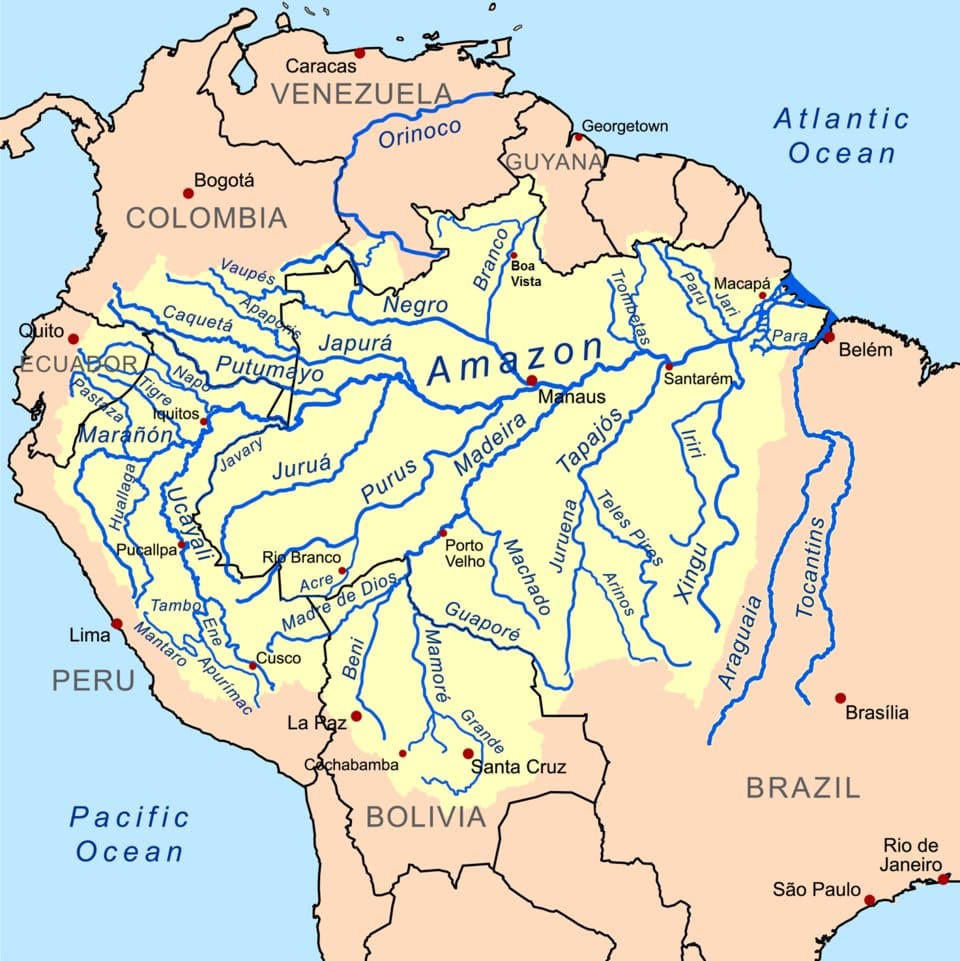
The uaru is native to the Amazon basin in northern Brazil and parts of Guyana. Its range includes the middle to lower Rio Negro, the area between the Rio Japurá and Rio Tapajós, and other tributaries of the main Amazon drainage. This is a region dominated by blackwater and clear water rivers with characteristically soft, acidic conditions.
In the wild, uaru inhabit clear-water tributaries and flooded forest areas with submerged trees, branches, and dense vegetation. They’re closely associated with structure, using fallen wood and overhanging roots as shelter and territory markers. The water in their native habitat is warm (typically 80-86°F / 27-30°C), extremely soft, and acidic, often with pH values below 6.0.
An interesting aspect of their natural history is their dietary preference for plant matter. Wild uaru feed extensively on algae, aquatic plants, fruits, and seeds that fall into the water, supplemented with insects and small invertebrates. This strong herbivorous tendency is unusual among cichlids of their size and has significant implications for their care in captivity, particularly regarding planted tanks (spoiler: they’ll eat them).
Appearance & Identification
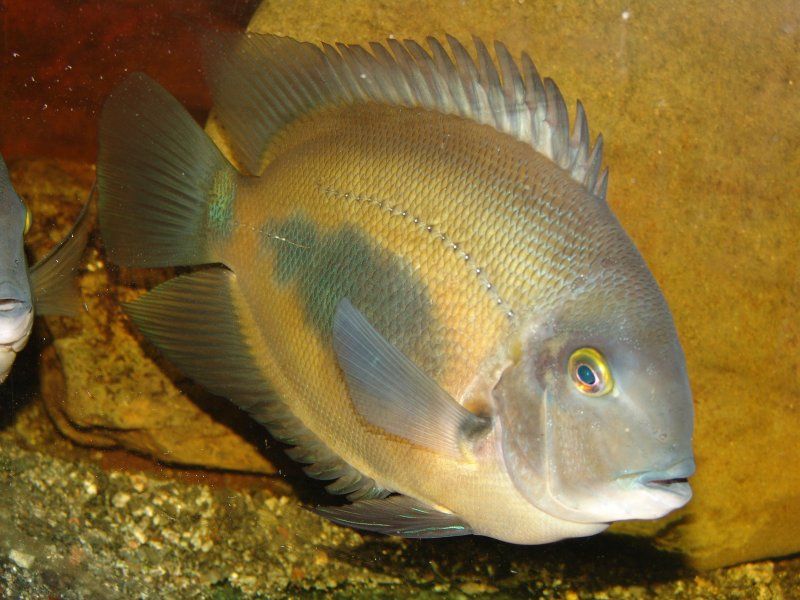
Adult uaru are handsome fish with a distinctive appearance. The body is deep and laterally compressed, similar in overall shape to discus though not quite as extremely round. The base coloration of adults ranges from olive-brown to golden-brown, with a large, dark triangular patch on the midsection that gives them the alternate common name “triangle cichlid.” The edges of the body and fins often show blue or green iridescence, and the eye is red or orange.
The transformation from juvenile to adult is dramatic and can test a keeper’s patience. Juvenile uaru are a dull brown to grayish color with prominent dark blotches and spots. They look, to put it kindly, unremarkable. This mottled juvenile pattern serves as camouflage among leaf litter in the wild. The adult coloration develops gradually over several months, with the triangle marking becoming more defined and the overall colors brightening as the fish matures.
The dorsal fin features spiny anterior rays that are notably sharp, which is something to be aware of when netting or handling these fish. They can inflict a painful poke if you’re not careful.
Male vs. Female
Uaru are not sexually dimorphic, meaning there are no reliable external differences between males and females. This makes sexing them nearly impossible outside of breeding behavior.
| Feature | Male | Female |
|---|---|---|
| Body Size | May be slightly larger | May be slightly smaller |
| Body Shape | No reliable difference | No reliable difference |
| Coloration | No reliable difference | No reliable difference |
| Fins | No reliable difference | No reliable difference |
| Breeding Tube | Narrower and more pointed (visible only when spawning) | Wider and blunter (visible only when spawning) |
The only reliable sexing method is observing the breeding tubes during spawning, as with many cichlids. To obtain a pair, the standard approach is to raise a group of 5-6 juveniles together and let pairs form naturally through social interaction.
Average Size & Lifespan
Uaru reach 8-10 inches (20-25 cm) in captivity, though wild specimens can occasionally reach 12 inches (30 cm) or more. Growth rate is moderate, with fish reaching about half their adult size within the first year. They’re not as fast growing as oscars, but they do need a plan in place for adult-sized housing.
With proper care, uaru can live 8-12 years in captivity. Their longevity depends heavily on water quality and diet. Fish kept in soft, clean water with a varied, plant-rich diet will live longer and maintain better coloration throughout their lives.
ASD Difficulty Rating: Tier 2 – Intermediate
Uaru cichlids are large, peaceful herbivores reaching 12 inches (30 cm) that need groups of 5 or more in a 125-gallon minimum. They will destroy live plants. Feed a heavily plant-based diet and expect them to rearrange any decorations they dislike.
Care Guide
Tank Size
A minimum of 75 gallons (284 liters) is needed for a pair of adult uaru. For a group of 4-6, which displays more natural behavior, 125 gallons or larger is recommended. These are active, moderately large fish that need room to swim and establish territories without constant conflict.
Standard tank dimensions for a 75-gallon (48 x 18 x 21 inches) provide reasonable space, but the deeper footprint of a 90 or 125-gallon tank is preferable. Uaru use all levels of the water column but spend a lot of time in the middle zone, so a tank with at least 20 inches of water depth is beneficial.
Water Parameters
| Parameter | Recommended Range |
|---|---|
| Temperature | 77 to 84°F (25 to 29°C) |
| pH | 5.0 to 7.0 |
| General Hardness | 1 to 5 dGH |
| Ammonia | 0 ppm |
| Nitrite | 0 ppm |
| Nitrate | Below 15 ppm |
Uaru have water requirements similar to discus: soft, acidic, and warm. Most hobbyists will need an RO system or access to naturally soft water to maintain these conditions. Wild-caught uaru are particularly sensitive to hard, alkaline water, while captive-bred specimens (which are less common) may tolerate slightly harder conditions.
Clean water is absolutely critical for this species. Uaru are sensitive to nitrogenous waste and will develop health problems quickly in tanks with elevated nitrate levels. Regular water changes of 25-40% weekly are recommended, with the replacement water carefully matched for temperature and chemistry.
Filtration & Water Flow
A robust canister filter rated for tanks larger than yours is a good starting point. Uaru produce a fair amount of waste for their size, particularly given their plant-heavy diet, so effective biological and mechanical filtration is essential. Moderate water flow is appropriate. Avoid creating strong currents, but ensure good circulation throughout the tank.
Many uaru keepers add peat filtration or Indian almond leaves to help maintain acidic conditions and add beneficial tannins to the water. The resulting tea-colored water not only mimics their natural habitat but also seems to bring out more confident behavior in these sometimes-shy fish.
Lighting
Subdued to moderate lighting is preferred. Uaru come from shaded forest environments and are more active and display better under lower light conditions. Since live plants are not viable in a uaru tank (they’ll eat them), you’re not constrained by plant lighting needs. A simple LED fixture on a timer providing 8-10 hours of moderate light works well.
Plants & Decorations
Here’s the awkward truth about uaru and plants: uaru eat plants. They’re one of the most herbivorous cichlids, and a planted tank is essentially a salad bar for them. Amazon swords, stem plants, and most soft-leaved species will be devoured. The only plants that sometimes survive are tough species like java fern, anubias, and some Cryptocoryne species, though even these may get nibbled.
Instead of plants, build the tank around large pieces of driftwood, smooth rocks, and root-like structures. Driftwood releases tannins that benefit water chemistry and provides the kind of structure uaru associate with security in the wild. Create open swimming areas interspersed with driftwood barriers that allow fish to retreat from sight when needed.
Substrate
Fine to medium sand or smooth gravel works well for uaru. They’re not earth eaters, so substrate type is less critical than it is for geophagus species. Sand gives a more natural appearance and is easier to clean, making it the preferred choice for most keepers. A darker substrate often brings out better coloration in these fish.
Is the Uaru Cichlid Right for You?
Before you commit to this species, here’s an honest assessment of whether it fits your setup and experience level.
- A hidden gem for experienced keepers. If you want something different from the usual oscar/discus/angelfish crowd, uarus deliver a unique experience.
- Need at least 125 gallons. They grow to 10-12 inches and do best in groups, so large tanks are essential.
- Primarily herbivorous. Their diet should be plant-based, which is unusual for large cichlids and requires specific feeding plans.
- Peaceful for their size. One of the gentlest large cichlids available. They rarely cause problems with similarly-sized tank mates.
- Hard to find. Not commonly available in stores. You’ll likely need to source them from specialty importers or breeders.
- Will destroy live plants. Despite being herbivores (or because of it), they eat aquarium plants voraciously. Use artificial decor or accept the losses.
Tank Mates
Despite their size, uaru are surprisingly peaceful and make good community fish when housed with appropriate companions. They will mind their own business and only become territorial during breeding. The main considerations for tank mate selection are matching the soft, warm water requirements and choosing fish that won’t bully or outcompete the uaru.
Best Tank Mates
- Discus. Similar water requirements and peaceful temperament. One of the most natural and attractive pairings
- Angelfish. Can coexist in large tanks with matching water chemistry
- Geophagus species. Peaceful eartheaters like Geophagus spp. And Satanoperca spp. Make excellent companions
- Severums. Another peaceful, similarly sized cichlid that shares water parameter preferences
- Large tetras. Cardinal tetras, rummy-nose tetras, and bleeding heart tetras add movement and occupy different zones
- Plecos and catfish. Bristlenose plecos, royal plecos, and larger Corydoras species coexist well
Tank Mates to Avoid
- Aggressive cichlids. Oscars, Jack Dempseys, and other combative species will bully uaru
- Very small fish. While uaru are primarily herbivorous, very small fish could still be consumed
- Hard water species. African cichlids, livebearers, and other fish requiring alkaline, hard water are incompatible
- Fast, aggressive feeders. Fish that monopolize food will outcompete the more reserved uaru
Food & Diet
Diet is one of the most important aspects of uaru care. These fish are predominantly herbivorous and need a diet much higher in vegetable matter than most cichlids. A diet that’s too heavy on protein can cause digestive problems and health issues over time.
Spirulina-based pellets and flakes should form the foundation of the diet, making up 50-60% of total food intake. Supplement with blanched vegetables like zucchini, spinach, romaine lettuce, shelled peas, and cucumber. These should be offered several times per week, and the uaru will devour them enthusiastically. Fresh greens are one of the best things you can provide for this species.
Round out the diet with occasional protein: frozen bloodworms, brine shrimp, and mysis shrimp once or twice a week. Some high-quality cichlid pellets with moderate protein levels can also be included. The key is balance: uaru need primarily plant-based nutrition with protein as a supplement, not the other way around. Feed 2-3 times daily in moderate amounts and remove uneaten vegetables after a few hours to maintain water quality.
Breeding & Reproduction
Breeding Difficulty
Difficult. Breeding uaru in captivity requires patience, proper water conditions, and often some trial and error. The fish are not easily sexed, pair formation can take time, and the unique mucus-feeding stage adds complexity that many breeders struggle with. However, successful breeding is achievable for dedicated hobbyists.
Spawning Tank Setup
A breeding pair should be housed in a tank of at least 75 gallons. Provide flat rocks, slate pieces, or smooth driftwood surfaces as spawning sites. The pair will select and clean their preferred surface before spawning. Keep the tank relatively simple with driftwood, spawning surfaces, and minimal other décor. Subdued lighting and a quiet location help the pair feel secure.
Water Conditions for Breeding
Breeding uaru requires very soft, acidic water. Target pH 5.5-6.5 with hardness below 3 dGH. Temperature should be at the warmer end of their range, 80-84°F (27-29°C). RO water is necessary. Large water changes with slightly cooler water can help trigger spawning activity. Pristine water quality with near-zero nitrates is essential.
Conditioning & Spawning
Condition the pair with increased feedings of varied foods, including both their staple vegetables and extra protein in the form of frozen foods. When ready, the pair intensifies in color, and both fish begin cleaning a flat spawning surface. The female deposits rows of adhesive eggs on the surface, followed by the male who fertilizes them. Clutch sizes range from 200-500 eggs.
Egg & Fry Care
Both parents guard and fan the eggs, which hatch in approximately 3-4 days. The fry become free-swimming about 4-5 days later. Like discus, uaru fry feed on a protein-rich mucus secreted by the parents’ skin. The fry attach to both parents and graze on this mucus for the first 1-2 weeks of life. This mucus-feeding phase is critical and is one of the main reasons breeding uaru is challenging. If the parents don’t produce adequate mucus or eat the fry, the brood is lost.
After the mucus-feeding stage, fry is transitioned to freshly hatched baby brine shrimp and finely ground spirulina flake. First-time parents frequently fail, either eating eggs or fry. Persistence and multiple breeding attempts are often necessary before a pair successfully raises fry to independence.
Common Health Issues
Hole in the Head Disease (HITH)
Uaru are particularly susceptible to HITH, even more so than many other South American cichlids. The pitting and erosion around the head and lateral line is strongly associated with elevated nitrate levels, vitamin deficiency (particularly vitamin C), and Hexamita infection. Prevention is the best strategy: maintain nitrates below 15 ppm, feed a varied diet rich in vegetables and vitamins, and perform regular water changes. Treatment involves improving water quality and using metronidazole for parasitic involvement.
Bloat
As primarily herbivorous fish, uaru can develop bloat and digestive issues when fed excessive protein or inappropriate foods. Symptoms include abdominal swelling, loss of appetite, and white stringy feces. Prevent bloat by maintaining the plant-heavy diet these fish require and avoiding overfeeding protein-rich foods. Epsom salt (1 tablespoon per 5 gallons) can provide relief for mild cases.
Ich (White Spot Disease)
Uaru can develop ich when stressed by poor water quality or temperature fluctuations. Treatment should be approached carefully, as these fish is sensitive to some medications. Raising the temperature to 84-86°F (29-30°C) combined with aquarium salt (if the soft water permits minimal doses) is often effective. Commercial ich medications is used at half-dose initially to assess tolerance.
Nutritional Deficiency
Because uaru have specialized dietary needs, nutritional deficiency is a real concern when they’re fed a standard carnivorous cichlid diet. Signs include faded coloration, lethargy, stunted growth, and increased susceptibility to disease. Ensuring adequate vegetable matter, spirulina, and vitamin-enriched foods in the diet prevents these issues.
Hard Rule
Uaru cichlids need a 125-gallon minimum for a group of 5. Juveniles can be raised in smaller tanks temporarily, but housing adults in less than 125 gallons produces chronic stress and stunted growth. Do not put them in a planted tank you care about.
Common Mistakes to Avoid
- Feeding a protein-heavy diet. Uaru need primarily vegetable-based nutrition. Treating them like typical carnivorous cichlids leads to digestive problems and reduced health
- Keeping in hard, alkaline water. These fish require soft, acidic conditions. Most tap water is not suitable without RO filtration or other softening methods
- Expecting instant beauty. Juvenile uaru are brown and blotchy. The adult coloration develops gradually over months. Don’t give up on them during their ugly phase
- Neglecting water changes. Uaru are very sensitive to nitrate accumulation. Consistent, frequent water changes are essential for long-term health
- Keeping as a solitary fish. Uaru are social and do better in pairs or small groups. A single uaru often becomes reclusive and stressed
- Attempting a planted tank. Unless you want to watch your plants disappear, accept that uaru and live plants are incompatible. Driftwood and rocks create a beautiful tank without the frustration
Where to Buy
Uaru are not commonly found in mainstream pet stores. They’re a specialty fish that you’ll need to source from dedicated online retailers, specialty fish stores, or cichlid breeders. Availability is seasonal, as most uaru in the trade are wild-caught imports.
Check with Flip Aquatics for availability, as they carry a range of specialty South American cichlids. Dan’s Fish is another reputable source worth checking for this species. Both offer live arrival guarantees and ship carefully.
When buying uaru, don’t be deterred by the dull juvenile coloration. Focus on health indicators: clear eyes, active behavior, intact fins, and good body weight. Avoid fish with pinched bellies, lesions around the head (possible HITH), or lethargic behavior. If buying juveniles (which is the most common option), get a group of at least 4-6 to allow for natural pair formation.
Frequently Asked Questions
Are uaru basically discus?
Not quite, but they share some important similarities. Both require warm, soft, acidic water and meticulous maintenance. Both species’ fry feed on parental mucus. However, uaru grow larger (10 inches vs. 8 inches), have a much more plant-based diet, and are considered slightly hardier than discus. They’re related (both are Neotropical cichlids) but occupy different ecological niches.
Will they really eat all my plants?
Most of them, yes. Uaru are genuinely herbivorous and view soft-leaved aquatic plants as food. Tough plants like java fern and anubias may survive because of their bitter-tasting compounds, but even these aren’t guaranteed. If you’re dedicated to a planted tank aesthetic, uaru probably aren’t the right fish for you.
Why do juvenile uaru look so different from adults?
The drab, mottled brown coloration of juvenile uaru serves as camouflage in the leaf-litter-strewn waters of their natural habitat. As they grow and become less vulnerable to predation, they gradually develop their adult coloration with the characteristic triangle marking and olive-gold tones. This transition takes several months and is one of the more dramatic juvenile-to-adult transformations in the cichlid world.
Can I keep uaru with discus?
Yes, this is actually one of the best pairings in the hobby. Both species share very similar water requirements (warm, soft, acidic) and have compatible temperaments. In a large enough tank (125 gallons or more), a group of uaru and discus can coexist beautifully. Just be mindful of feeding: the uaru need more plant matter, while the discus need more protein. Offer varied foods to ensure both species’ dietary needs are met.
Are uaru hard to keep?
They’re an advanced-level fish, primarily because of their water chemistry requirements and sensitivity to poor conditions. If you have experience maintaining soft, acidic water and keeping up with frequent water changes, uaru are manageable. If you’ve successfully kept discus, uaru won’t present many additional challenges beyond the dietary differences. They’re not beginner fish, but they’re within reach of any committed intermediate to advanced hobbyist.
What It Is Actually Like Living With Uaru Cichlid
This is the part no other care guide gives you. Forget water parameters for a minute. Here is what it is actually like to share your tank with this species.
They have more personality than you expect. The Uaru Cichlid is not a fish that just sits in the background. Once settled in, they become interactive, curious, and responsive to your presence.
Feeding time reveals their character. Watch how the Uaru Cichlid approaches food and you will see real personality. Some are bold, some are cautious, and their feeding behavior tells you a lot about their mood and health.
They establish routines. After a few weeks, your Uaru Cichlid will have favorite spots, preferred paths through the tank, and predictable patterns. Learning these routines makes you a better keeper.
Color is a health indicator. The Uaru Cichlid’s coloration is a real-time report card on your husbandry. Vibrant color means happy fish. Faded color means something is wrong. Pay attention.
How the Uaru Cichlid Compares to Similar Species
The severum cichlid is the most natural comparison. Both are large, round-bodied South American cichlids with herbivorous diets and relatively peaceful temperaments. Severums are much easier to find, come in more color varieties (gold, green, red spotted), and are slightly hardier. Uarus are rarer and develop a unique chocolate-gold coloring that severums can’t match. Both will destroy planted tanks with equal enthusiasm. For most keepers, the severum is the practical choice. For those who want something rare and special, the uaru is worth the search.
The discus comparison is inevitable because of the similar body shape, but the fish are quite different in practice. Discus are pickier eaters, more temperature-sensitive, and more demanding overall. Uarus are hardier, more active, and eat a wider variety of foods (though their diet should be plant-focused). Discus win on color variety and visual refinement. Uarus win on personality, hardiness, and the satisfaction of keeping something genuinely unusual.
Closing Thoughts
Uaru are the fish you keep after you have mastered everything else.
The uaru is one of those fish that rewards patience and dedication with something genuinely special. Yes, the juveniles are ugly. Yes, they need soft water, frequent maintenance, and a plant-based diet that goes against the typical cichlid feeding approach. But an adult uaru in full color, gliding through a tank decorated with weathered driftwood, displaying that distinctive triangle pattern and flashing an orange eye at you, is a sight that stops you in your tracks.
This is the gentle giant you’ve probably never heard of. And once you’ve kept one, you’ll wonder why more people don’t know about them. If you have the setup for soft-water South American cichlids and you’re looking for something different from the usual discus and angelfish crowd, give the uaru a chance. It will just become your favorite fish in the room.
This article is part of our South American Cichlids species directory. Explore more South American cichlid care guides.
References
- Seriously Fish. Uaru amphiacanthoides species profile. seriouslyfish.com
- FishBase. Uaru amphiacanthoides Heckel, 1840. fishbase.se
- Kullander, S.O. (2003). Family Cichlidae. In: Reis, R.E., Kullander, S.O. & Ferraris, C.J. (eds.) Check List of the Freshwater Fishes of South and Central America. Porto Alegre: EDIPUCRS.
- Practical Fishkeeping. Uaru care guide. practicalfishkeeping.co.uk
- About the Author
- Latest Posts

I’m Mark Valderrama, founder of Aquarium Store Depot and a fishkeeper with over 25 years of hands-on experience. I started in the hobby at age 11, worked at local fish stores, and have kept freshwater tanks, ponds, and reef tanks ever since. I’ve been featured in two best-selling aquarium books on Amazon and built this site to share practical, experience-based fish keeping knowledge.
Leave a Reply