
Last Updated: June 25, 2026
Thank you for visiting! By the way… any links on this page that lead to products on Amazon and other stores/partners are affiliate links Aquarium Store Depot earns a commission if you make a purchase.
Most fish can’t live with an axolotl. Not because axolotls are aggressive, they’re not. Because axolotls need water cold enough to kill most aquarium fish. We’re talking 60–68°F (16–20°C). That’s not “cool” water. That’s cold. Add in the fact that axolotls have long, feathery external gills that every curious fish in the tank will want to nip, and you’ve got one of the least forgiving community setups in the freshwater hobby.
This isn’t a community tank article. It’s a “very short list of things that won’t kill your axolotl” article.
After 25 years in this hobby and time working at and managing fish stores, I’ve watched plenty of keepers try to make axolotl community tanks work. They ended badly, fin-nipped gills, stressed animals, impaction, secondary infection. An axolotl does best alone. But if you’re committed to tank mates, here’s what actually works, what doesn’t, and why.
Understanding Your Axolotl
An axolotl is not a fish. It’s a fully aquatic salamander, a neotenic amphibian that stays in its larval form its entire life. It patrols the bottom slowly, hunting by smell and water movement. It is nocturnal. It prefers dim light. And it will absolutely attempt to eat anything that moves and fits in its mouth.
Axolotls are not aggressive the way cichlids are aggressive. They’re opportunistic ambush predators. They don’t chase. They wait, they lunge, and they vacuum-seal their mouths around prey. The problem is that their “prey” instinct doesn’t distinguish between a feeder worm and a $15 fish you just added to the tank.
Their external gills (those flowing, feathery plumes) are one of their most beautiful and most vulnerable features. Nipping damage doesn’t heal cleanly. It opens the door to bacterial infection and can become fatal quickly.
What People Get Wrong
The biggest misconception I see: people look up “cold water fish” and think anything on that list is fair game for an axolotl tank. It’s not.
Goldfish are the most common mistake. They’re cold-water fish, yes. But goldfish are fin-nippers with enough size to seriously damage axolotl gills. They also produce enormous amounts of waste, and axolotls are already messy enough on their own. Even fancy goldfish, which are slower, pose a choking hazard and still nip. I’ve seen goldfish gill damage in customer axolotls more times than I can count, it’s one of the most preventable injuries in the hobby.
The second mistake: adding shrimp as “cleanup crew.” Ghost shrimp and Amano shrimp are just expensive axolotl snacks. Axolotls can smell shrimp through dense plant cover. They will find them. They will eat them. Budget that in if you want to try it.
Third mistake: thinking guppies work because they’re “tough fish.” Guppies actually prefer water in the 74–82°F (23–28°C) range. Axolotl tanks run 60–68°F (16–20°C). That temperature gap will stress guppies and suppress their immune system. They’ll become disease vectors before long.
Biggest Mistake
Adding tank mates when you only have one tank. That’s it. That’s the mistake. When things go wrong (and they will) there’s nowhere to put the fish while you deal with the problem. A stressed axolotl with chewed gills sits in the same water as the fish that are still nipping, because there’s no way to separate them fast enough.
Before you add any tank mates, have a quarantine or backup tank set up and running. Not “I’ll borrow a bucket.” A cycled, temperature-stable tank. This is not optional. It’s the difference between a minor incident and a dead axolotl.
Why Some Fish Aren’t Suitable
Four factors rule out the vast majority of freshwater fish:
- Water temperature: Axolotls need 60–68°F (16–20°C). Tropical fish need 74°F (23°C) and above. These ranges do not overlap. Any tropical fish added to an axolotl tank will be chronically stressed, immunocompromised, and prone to disease.
- Temperament: Aggressive or territorial fish will attack the axolotl. Highly active swimmers will stress it. Even peaceful, fast fish become a problem if they’re curious about those gills.
- Health risks: Cory Catfish have sharp pectoral and dorsal fin spines that puncture the axolotl’s mouth and throat if swallowed. Small snails become choking hazards. Some species carry parasites and pathogens that transfer easily in a shared tank.
- Direct competition: Bottom-dwelling fish compete directly with the axolotl for food. Axolotls are slow eaters. Fast bottom feeders will clean up every pellet before the axolotl gets to it.
How to Set Up a Community Aquarium
Aquarium Setup
The minimum for one adult axolotl is 20 gallons (75 L). If you’re adding tank mates, start at 40 gallons (150 L) minimum, 55 gallons (208 L) preferred. More water volume means more stable temperatures, more territory, and more space for tank mates to escape if the axolotl lunges.
For two axolotls plus tank mates, don’t go below 55 gallons (208 L). Bigger is always better with this species. The cost of the setup is real, but it’s the price of doing this right.
Substrate
Fine sand is the only substrate I’d recommend for axolotl tanks. Axolotls dig. They also accidentally ingest substrate when feeding. Gravel causes impaction. Sand passes through safely.

Water Parameters
Any tank mate you consider must be able to survive (and thrive) in axolotl water. These are non-negotiable:
- Temperature: 59–68°F (15–20°C). Ideal: 60–64°F (16–18°C). Above 72°F (22°C) is dangerous for axolotls.
- pH: 6.5–8.0. Ideal: 7.4–7.6.
- GH: 125–250 ppm (7–14 dGH)
- KH: 53–143 ppm (3–8 dKH)
- Ammonia (NH3): 0 ppm
- Nitrite (NO2-): 0 ppm
- Nitrate (NO3-): <60 ppm
You’ll need an aquarium chiller in most homes, especially during summer. Don’t rely on ambient room temperature. It won’t stay cold enough.
Filtration
Use a sponge filter or a gentle HOB with a baffle. Axolotls need good filtration: they’re messy eaters, but strong flow stresses them. Any tank mate you add should also be fine with low-flow, cool-water conditions.
Decor
Load the tank with hiding spots, driftwood, rocks, caves, and dense planting. Axolotls hide from bright light. Tank mates need refuge from the axolotl. Everyone benefits from more cover.
Lighting
Keep it dim. Axolotls have no eyelids. Bright light is stressful to them. If any of your tank mates require bright light, this isn’t the right setup.
Top Axolotl Tank Mates
This is a short list. That’s intentional. There are only a handful of species that consistently work in an axolotl tank, and even those come with caveats.
Quick-Reference Comparison Table
| Species | Adult Size | Min Tank | Ease | Compatibility |
|---|---|---|---|---|
| Other Axolotls | Up to 12 in (30 cm) | 55 gal (208 L) | 6/10 | Medium |
| White Cloud Mountain Minnows | 1.5 in (4 cm) | 40 gal (150 L) | 7/10 | Medium |
| Zebra Danios | 2 in (5 cm) | 40 gal (150 L) | 6/10 | Medium-Low |
| Apple Snails (adults only) | 3 in (7.5 cm) | 20 gal (75 L) | 9/10 | High |
Expert Take
After 25+ years in this hobby (including years managing aquarium stores where axolotls were a steady seller) I’ve fielded this question hundreds of times. The honest answer about axolotl tank mates is that the safest choice is no tank mates. Axolotls are slow-moving animals with flowing external gills that invite nipping, and they will attempt to eat anything that moves and fits in their mouth. After years of seeing keeper after keeper try to make it work with fish, my position hasn’t changed: a solo axolotl in a well-maintained cold tank is the right setup. Tank mates add risk with almost no benefit to the axolotl itself. If you’re going to try it anyway, the species list below is as good as it gets, and it’s a short list on purpose. — Mark Valderrama, AquariumStoreDepot
1. Other Axolotls
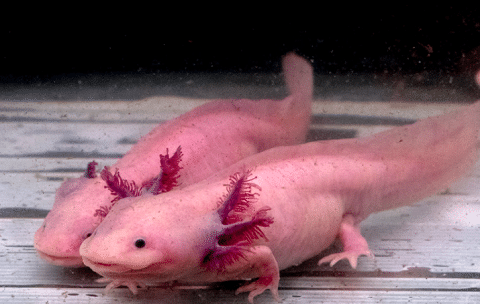
The safest “tank mate” for an axolotl is another axolotl, with important conditions. Adults of similar size coexist reasonably well. A male and female together will breed, so be ready for up to 1,500 eggs. Same-gender pairs reduce that problem.
Never keep a juvenile with a fully grown adult. Juvenile axolotls display cannibalistic behavior, missing limbs are a common outcome. Adults may eat larvae outright. Size-matched adults only.
Even with size-matched adults, watch for recurring aggression. If one axolotl is consistently bullying the other, separate them. One axolotl per tank is the lowest-stress option.
2. White Cloud Mountain Minnows
Ease: 7/10: Best fish option available, with limitations.
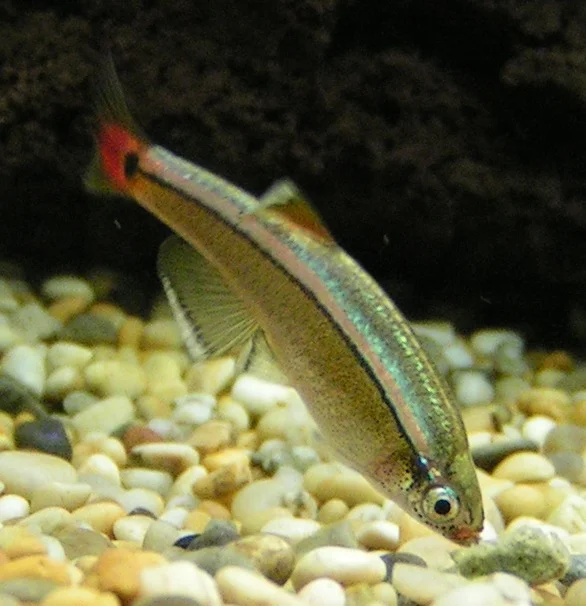
White Cloud Mountain Minnows are the best fish option for an axolotl tank, and that’s not a high bar, but it’s a real one. They thrive in 60–72°F (16–22°C), matching the axolotl’s temperature range closely. They’re fast enough that a healthy adult minnow can usually escape a slow-moving axolotl lunge.
No spines, no hard shells, if they do get eaten, they won’t injure the axolotl. Keep a school of at least 6 to reduce individual stress. Even so, expect attrition. Some will get caught off guard at night when the axolotl is most active. If the minnow population is dropping steadily, remove them before the axolotl develops a taste for hunting them.
Choose White Cloud Minnows if you want the lowest-risk fish option that actually matches the axolotl’s cold water requirements.
3. Zebra Danios
Ease: 6/10: Faster than minnows but more boisterous, watch closely.
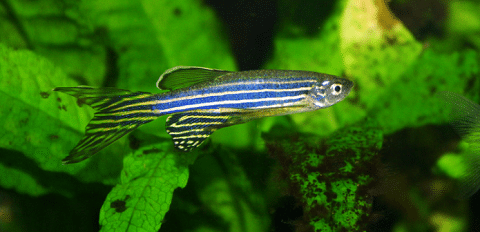
Zebra Danios tolerate water down to around 65°F (18°C), which puts them at the upper edge of the axolotl’s range. They’re extremely fast, probably the hardest fish for an axolotl to catch. They school tightly and stay in the midwater column, which helps them avoid the bottom-dwelling axolotl.
The downside: danios are energetic, active swimmers. Their movement can stress a slow-moving axolotl, especially in smaller tanks. They can also be nippy in cramped conditions. In a large tank (55+ gallons / 208+ L) with plenty of space, this is manageable. In a 20-gallon (75 L), it’s a problem.
Choose Zebra Danios if you have a large tank and want a fish that is nearly impossible for the axolotl to catch. Choose White Clouds instead if you want calmer cohabitation.
4. Apple Snails (Adults Only)
Ease: 9/10: The safest non-axolotl option available.
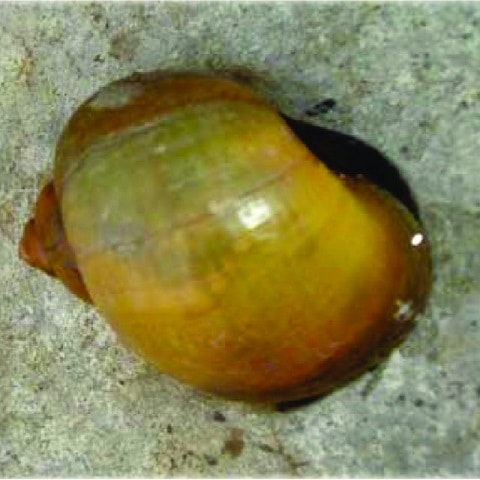
Adult apple snails are too large for an axolotl to eat and don’t pose any risk to the axolotl’s gills. They’re the lowest-drama tank mate option. They’ll cruise the glass and substrate, cleaning up algae and leftover food.
Size matters. Adult apple snails (2–3 inches (5–7.5 cm)) are safe. Juvenile apple snails, bladder snails, and ramshorn snails are not. Small snails are swallowed and cause impaction. Even worse, small snails with hard shells can’t be digested and will block the axolotl’s gut. This can be fatal.
Avoid any snail species that climbs on other tank inhabitants, some trumpet and nerite snails will attach to the axolotl and rasp its slime coat. Adult apple snails don’t do this.
Choose Apple Snails if you want a tank mate that requires zero monitoring and provides actual benefit (cleanup crew). This is the one I’d actually recommend without hesitation.
Hard Rule: Never add any fish or invertebrate that nips, has hard spines, or can’t survive below 68°F (20°C). The axolotl’s external gills are not a novelty feature, they are its respiratory system. Gill damage from fin-nippers causes bacterial infection and can kill the animal. No exceptions.
5. Can More Species Work?
No. That’s the honest answer.
Some keepers report success with hillstream loaches (cold-water bottom feeders with flattened bodies) but hillstream loaches need very high flow, the opposite of what axolotls require. That single conflict kills the idea. Celestial pearl danios tolerate cooler water and are small enough to avoid conflict, but they’re fragile and will be eaten. The list above is the list. It exists for a reason.
If you’re asking whether a fish not on that list can work with your axolotl, the answer is no. Tropical fish (no. Bottom dwellers) no. Anything with spines or a shell small enough to swallow, absolutely not. Stop at the list above.
Fish You Should Avoid
This isn’t an exhaustive list, there are hundreds of fish you shouldn’t keep with axolotls. These are the ones that come up most often because they seem like they might work but don’t.
1. Goldfish
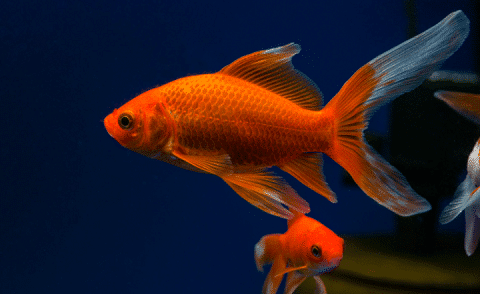
Cold-water fish, yes. Good tank mate, no. Goldfish grow large enough to harass axolotls, they nip fins and gills consistently, and they produce more waste than almost any other common aquarium fish. You’re already dealing with an axolotl’s waste load, adding goldfish doubles or triples your filtration problem.
Fancy fancy goldfish are sometimes suggested because they’re slow. They’re still a choking hazard when small, they still nip, and they still produce enormous waste. Don’t do it.
2. Cory Catfish
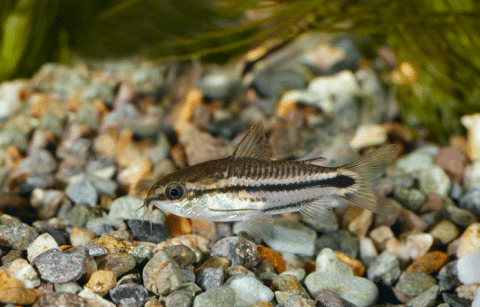
Cory Catfish are peaceful, great community fish, just not with axolotls. Their sharp pectoral and dorsal fin spines will puncture the axolotl’s mouth and digestive tract if swallowed. They also occupy the same bottom territory, creating direct feeding competition. Keep cories in a separate tank.
3. Otocinclus Catfish
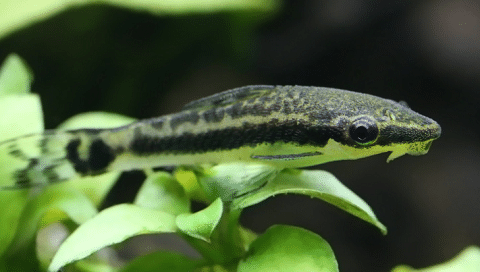
Otocinclus catfish have the same spine problem as cories. On top of that, they need high flow, the opposite of an axolotl’s slow-current environment. Two incompatibilities, zero benefit.
4. Shrimp
Freshwater shrimp (ghost shrimp, Amano shrimp, cherry shrimp) are live food to an axolotl. Full stop. Some keepers add them intentionally as enrichment and treat feeding. If that’s your intention, fine. If you want them as a permanent cleanup crew, save your money. They’ll be gone within days.
Ghost shrimp and Amano shrimp won’t even make it a full week in most axolotl tanks. Axolotls can smell them. Dense plant cover doesn’t stop that.
Reality of Keeping This Setup
Axolotls don’t need companions. They need cold water and stability.
Here’s what daily life with an axolotl community tank actually looks like:
Your axolotl will spend most of its day sitting still on the bottom. It comes alive at night. That’s when the hunting happens. If you’re adding White Cloud Minnows or Zebra Danios, you will see fewer fish each week until you either find a sustainable population balance or the axolotl runs out of prey. Some keepers actively replenish the minnow school every few months and accept this as part of the setup. There’s nothing wrong with that approach if it’s intentional.
Temperature management is the biggest ongoing challenge. Room temperature in summer will kill an axolotl. A chiller is not a luxury for axolotl keepers, it’s essential equipment. Budget $150–400 for a quality chiller and don’t skip it.
Water quality degrades faster in axolotl tanks than in most other freshwater setups. Axolotls are messy eaters. They leave food scraps. They produce a lot of waste relative to their size. Add fish, and you add more waste, more stress on the biofilter, and more frequent water changes. Expect 25–30% weekly water changes minimum.
The axolotl itself is easy to stress. Loud vibrations, bright lights, high flow, and overcrowding all cause stress responses, loss of appetite, floating, fungal infections. If your tank mates are causing any of these behaviors, remove them immediately. Not “monitor for a few days.” Remove them. In my experience, axolotl keepers who hesitate at this step almost always regret it, stress compounds fast in a cold tank, and gill damage shows up overnight.
Should You Set Up an Axolotl Community Tank?
Good Fit If:
- You already keep a successful solo axolotl and want to try a carefully chosen addition
- Your tank is 40+ gallons (150+ L) with stable temperatures at 60–68°F (16–20°C) year-round
- You have a backup tank ready if the community setup doesn’t work out
- You’re specifically interested in adult apple snails, the safest option with the most upside
- You want White Cloud Minnows and understand you’ll likely lose some over time
Avoid If:
- You want tropical fish, the temperature is lethal to them and it will never work
- You don’t have a chiller, without one, you can’t maintain axolotl temperatures reliably
- You want an active, colorful community tank, an axolotl tank will never be that
- You’re not prepared for fish losses, some attrition is inevitable in this setup
- You don’t have a backup tank ready for quick removal if needed
Mark’s Pick: Adult apple snails, full stop. They’re too big to eat, they clean the tank, they don’t nip, and they don’t need the axolotl to ignore them to survive. If you want fish, White Cloud Mountain Minnows in a school of 8–10 in a 40+ gallon (150+ L) tank give you the best realistic shot at a stable cohabitation. Monitor weekly. Have a plan for removal.
FAQ
Can axolotls live with other axolotls?
Yes, with conditions. Keep adults of similar size together only, never juveniles with adults, and never size-mismatched animals. Juvenile axolotls are cannibalistic and will bite limbs off each other. A male and female pair will breed, producing up to 1,500 eggs. Same-gender pairs avoid that. If aggression persists, separate them, one axolotl per tank is the lowest-stress option.
Can axolotls live with angelfish?
No. Angelfish are tropical fish that need water above 75°F (24°C). Axolotls need water below 68°F (20°C). These two temperature ranges are incompatible, one animal will always be suffering. Angelfish are also fin-nippers, which makes them doubly unsuitable for an axolotl tank.
Will axolotls eat their tank mates?
Yes, if they can catch them. Axolotls are ambush predators, they vacuum-seal their mouths around anything that moves and fits. Small, slow, or resting fish are at risk, especially at night when axolotls are most active. This is not a behavioral problem you can train away. It’s instinct.
Can fish live with axolotls safely?
Some cold-water species can coexist with axolotls, but never without risk. White Cloud Mountain Minnows are the most reliable fish option. Zebra Danios work in larger tanks. Every other setup carries significant risk of axolotl gill damage, impaction from swallowed fish, disease introduction, or fish losses. Always have a backup tank ready.
Can axolotls live with turtles?
No. Turtles are aggressive, unpredictable, and will injure or kill an axolotl. They have completely different habitat requirements. This combination doesn’t work under any circumstances.
Do guppies work as axolotl tank mates?
No, this is a common mistake. Guppies thrive at 74–82°F (23–28°C). Axolotls need water below 68°F (20°C). At axolotl temperatures, guppies are chronically cold-stressed, immunocompromised, and prone to disease. They’ll get sick before the axolotl eats them, and a sick fish in the tank is a disease vector for the axolotl. Don’t do it.
Final Thoughts
The axolotl community tank question always comes back to the same answer: the axolotl is better off alone. It doesn’t need tank mates. It doesn’t socialize the way fish do. It’s a slow, solitary ambush predator built for cold, still water, not a community tank.
Adult apple snails are the one addition I’d recommend without hesitation. White Cloud Mountain Minnows work if you’re prepared for attrition. Everything else on the internet is wishful thinking.
If you’re new to axolotls: keep it solo for the first six months. Get your temperature locked in, your water quality stable, and your axolotl thriving before you introduce anything else. After that, the short list above is your entire option set. It’s short for a reason, and the axolotl doesn’t care that you want more choices.
Have a question about a specific species or your setup? Drop it in the comments below.
Recommended Video
References
- Duellman, W.E. & Trueb, L. (1994). Biology of Amphibians. Johns Hopkins University Press.
- Voss, S.R., et al. (2013). Origin of amphibian and fish limbless mutants. Genetics, 193(4), 1–8.
- Serrano-Saiz, E. (2010). Axolotl biology and husbandry. Lab Animal, 39(3), 282–288.
- About the Author
- Latest Posts

I’m Mark Valderrama, founder of Aquarium Store Depot and a fishkeeper with over 25 years of hands-on experience. I started in the hobby at age 11, worked at local fish stores, and have kept freshwater tanks, ponds, and reef tanks ever since. I’ve been featured in two best-selling aquarium books on Amazon and built this site to share practical, experience-based fish keeping knowledge.


Leave a Reply