
Last Updated: June 25, 2026
Thank you for visiting! By the way… any links on this page that lead to products on Amazon and other stores/partners are affiliate links Aquarium Store Depot earns a commission if you make a purchase.
Table of Contents
- What Care Guides Get Wrong
- The Reality of Keeping Denison Barb
- Species Summary
- Origin & Natural Habitat
- Appearance & Size
- Behavior & Temperament
- Tank Requirements
- Diet & Feeding
- Is It Right for You?
- Tank Mates
- Breeding
- Common Health Issues
- Where to Buy
- Recommended Video
- References
The denison barb, also called the roseline shark, is a fast, active schooler that needs more space and more flow than most people give it. It reaches 4 to 5 inches, needs a group of at least six, and requires a long tank with strong current. Put them in a short, low-flow tank and you get stressed fish that pace the glass and lose their color.
In the right setup, a school of denison barbs is one of the most visually striking things in the freshwater hobby. The red stripe, the torpedo body shape, and the speed at which they move through the tank is hard to match. This guide covers what it takes to keep them properly, because denison barbs do not swim. They shoot through the tank like they are late for something, and the tank needs to be built for that.
If your tank is shorter than 4 feet, you are not ready for denison barbs. Length matters more than gallons with this species.
What Most Care Guides Get Wrong About the Denison Barb
The Denison Barb is routinely recommended for 20 or 30-gallon tanks, and that is wrong. These are fast, active schoolers that reach 4-5 inches and need swimming room. A 55-gallon is the realistic minimum for a group, and longer tanks are better than tall ones because these fish swim horizontally. The other critical misconception is about temperature – Denison Barbs prefer cooler water (60-77°F) than most tropical fish, and keeping them at 80°F+ long-term shortens their lifespan significantly.
The Reality of Keeping Denison Barb
The denison barb is a fast, active schooler that needs a long tank. Not a tall tank. Not a cube. A long tank with swimming room. A 55-gallon is the realistic minimum for a group, and a 75-gallon 4-foot tank is where they actually look at home.
They prefer cooler water than most tropical fish. The ideal range is 65 to 77F. Keeping them at 80F or above long term shortens their lifespan and increases disease susceptibility. This is a subtropical species sold as a tropical fish, and that disconnect causes problems.
Wild populations are endangered due to overcollection. Captive-bred specimens are now widely available, which is good for the species but means you should verify the source before purchasing.
Biggest Mistake New Owners Make
Keeping them in a short tank. Denison barbs are horizontal swimmers that need length, not height. A 20-gallon tall is useless for this species. A 55-gallon long is the starting point. Length is the non-negotiable dimension.
Denison barbs (Sahyadria denisonii) are large, striking barbs from fast-flowing Indian rivers. They need well-oxygenated water, strong filtration, and a minimum 55-gallon tank – not a beginner fish.
Expert Take (Mark Valderrama, AquariumStoreDepot)
A school of six denison barbs in a 75-gallon planted tank with moderate flow and temperatures around 72F is one of the most visually striking freshwater displays in the hobby. The red line along the body catches light as they school, creating a torpedo-shaped flash of color that no other barb replicates. But the tank needs to be long, the water needs to be cool, and the group needs to be six or more.
Species Summary
| Scientific Name | Sahyadria denisonii (Day, 1865) |
| Common Names | Denison Barb, Roseline Shark, Red Line Torpedo Barb, Miss Kerala |
| Family | Cyprinidae |
| Order | Cypriniformes |
| Origin | Western Ghats, Kerala and Karnataka, India |
| Care Level | Intermediate |
| Temperament | Peaceful, active schooler |
| Diet | Omnivore |
| Tank Level | Middle to bottom |
| Maximum Size | 6 inches (15 cm) |
| Minimum Tank Size | 55 gallons (208 liters) |
| Temperature | 60-77°F (15-25°C) |
| pH | 6.5-7.8 |
| Hardness | 5-25 dGH |
| Lifespan | 5-8 years |
| IUCN Status | Endangered |
Origin & Natural Habitat
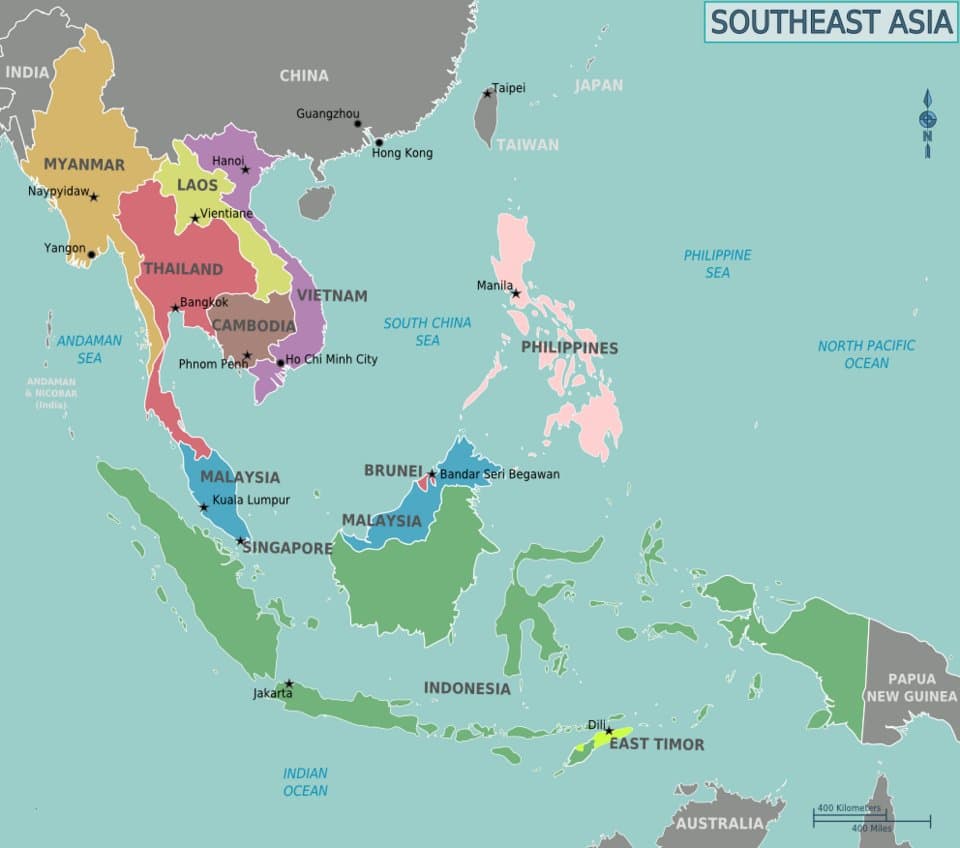
The Denison Barb is endemic to the Western Ghats mountain range in southern India, specifically in the states of Kerala and Karnataka. They inhabit fast-flowing hill streams and rivers with rocky substrates and dense riparian vegetation along the banks. Think cool, well-oxygenated water rushing over boulders and pebbles with patches of aquatic plants growing between the rocks.
These rivers are typically shaded by overhanging vegetation, which keeps the water on the cooler side compared to many tropical fish. The substrate is a mix of sand, gravel, and larger rocks, and the current is strong enough that only well-adapted fish can hold their position.
Here’s the important part that every keeper should know: Denison Barbs are classified as Endangered on the IUCN Red List. Wild populations have declined significantly due to overcollection for the aquarium trade, habitat loss, and pollution. The good news is that the vast majority of specimens available today are commercially bred, which helps reduce pressure on wild populations. Still, it’s worth appreciating that you’re keeping a fish with a vulnerable wild counterpart, and that makes responsible husbandry all the more important.
Appearance & Size
Denison Barbs are genuinely striking fish, and they have a look that’s hard to confuse with anything else. The body is elongated and torpedo-shaped, built for speed in fast currents. Adults reach about 6 inches (15 cm) in length, though some sources report slightly smaller maximum sizes around 4.3 inches (11 cm) in aquarium conditions.
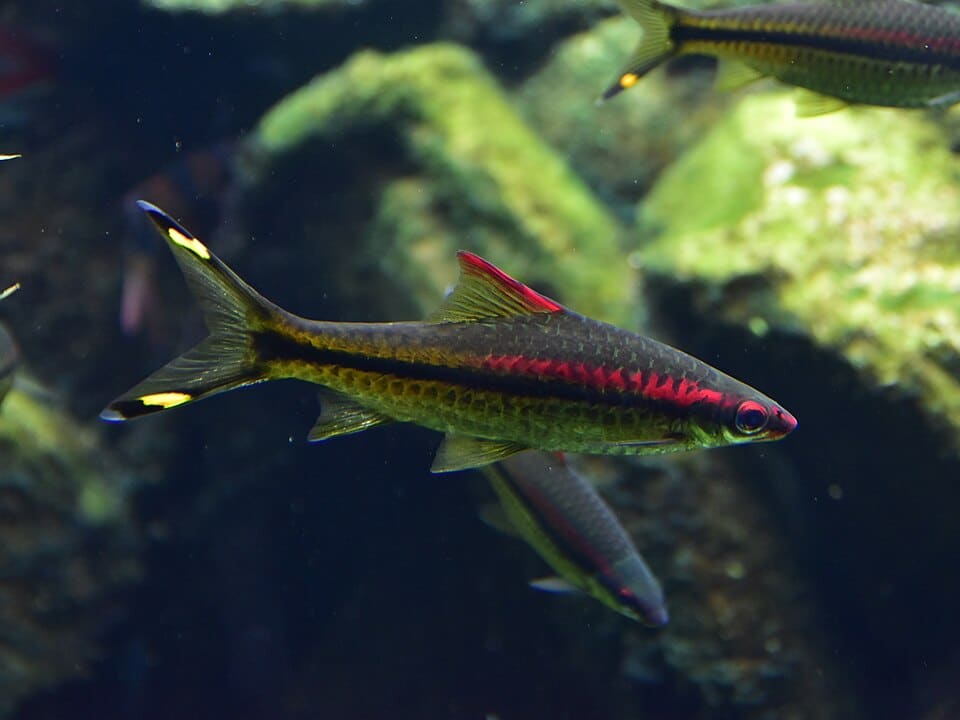
The color pattern is what makes them famous. A bright red stripe starts at the snout and runs through the eye, extending partway along the body. Below that sits a bold black lateral line that runs from the head all the way to the tail. The body itself is silver with a slight golden sheen on the upper half. The dorsal fin has a distinctive yellow-green edge with a splash of red at the leading edge, and the tail features an oblique black band with yellow and black markings on the tips of the caudal lobes.
Male vs. Female
Sexing Denison Barbs is not easy, especially in younger fish. Mature females are slightly heavier-bodied and rounder in the belly compared to the more streamlined males. Hobbyists also report that males may show slightly more vivid red coloration, but this isn’t a reliable indicator on its own. Overall, the differences are subtle and become more apparent when the fish are fully grown and in breeding condition.
Similar Species: Sahyadria chalakkudiensis
There’s a closely related species worth knowing about: Sahyadria chalakkudiensis, sometimes called the Chalakkudy Barb. This fish looks very similar to the Denison Barb and comes from the Chalakkudy River in Kerala. It’s slightly smaller, reaching about 5 inches (12.5 cm), and is also listed as Endangered. While it occasionally appears in the trade, it’s much rarer than S. Denisonii. The two species are easy to mix up, so if you see a Denison Barb that seems a bit off in its markings, it’s worth considering whether you might have the related species.
Behavior & Temperament
Denison Barbs are active, fast-swimming schooling fish. They spend most of their time cruising through open water in the middle and lower portions of the tank, often swimming in tight formation. When they get moving as a group, it’s one of the most impressive displays you’ll see in a freshwater aquarium.
They are peaceful in the right setup, but tank mate selection still matters, but there are a few things to keep in mind. First, they must be kept in groups of at least 6, and 8-10 is even better. When kept in small numbers (2-3), they can become stressed and nippy toward tank mates. Aggression between individuals can also increase in small groups because there isn’t enough of the school to spread out social interactions. In a properly sized group, the fish are far more relaxed and the occasional chasing behavior stays within the school rather than being directed at other species.
They’re also surprisingly bold fish. Unlike many barbs that dart for cover at the first sign of movement, Denison Barbs are front-and-center swimmers once they settle into a tank. They may be a bit skittish for the first week or two, but they adjust quickly and become confident, visible fish.
Tank Requirements
Tank Size
A 55-gallon tank is the absolute minimum for a school of 6 Denison Barbs, but honestly, bigger is better here. These fish are fast swimmers that cover a lot of ground, and a 75-gallon or larger tank will let them display their natural schooling behavior much more effectively. If you’re planning on a larger group of 8-10, you’ll want to go with a 75 to 90-gallon setup. The length of the tank matters more than the height, so prioritize a tank that’s at least 48 inches (120 cm) long.
Water Parameters
| Temperature | 60-77°F (15-25°C) |
| pH | 6.5-7.8 |
| Hardness | 5-25 dGH |
| Ammonia/Nitrite | 0 ppm |
| Nitrate | Below 20 ppm |
One thing that surprises a lot of people is the temperature range. Denison Barbs are subtropical fish, not true tropicals. They do best in cooler water compared to most community fish, with a sweet spot around 72-75°F (22-24°C). They can tolerate temps down to 60°F (15°C), which makes them candidates for unheated tanks in climate-controlled homes. Keeping them in water that’s consistently above 78°F will stress them out over time and shorten their lifespan.
Filtration & Water Flow
This is where tank setup for Denison Barbs really matters. These fish come from fast-flowing streams, so they need strong water movement. Aim for a turnover rate of 4-5 times your tank volume per hour. A good canister filter paired with a powerhead or wavemaker works well. Position the flow so there’s a clear current running the length of the tank. The fish will actively swim into the current, and you’ll see them schooling at their best when they have flow to work against.
Excellent water quality is non-negotiable. Denison Barbs are sensitive to organic waste buildup, so stay on top of your maintenance schedule. Weekly water changes of 30-50% are recommended, especially in tanks with heavy bioloads. A well-maintained filter with good biological media capacity is essential.
Substrate & Decor
Mimic their natural habitat with a substrate of sand or fine gravel mixed with smooth river rocks and pebbles. Driftwood provides additional structure and creates visual barriers that help the fish feel secure. Leave plenty of open swimming space in the center and front of the tank. Denison Barbs are active swimmers, and they’ll use every inch of open water you give them.
Live plants work well with this species, but choose hardy varieties that can handle the strong current. Anubias, Java Fern, and Vallisneria are solid choices. The fish may nibble on softer plants occasionally, so avoid delicate stem plants if you want them to stay intact.
Is the Denison Barb Right for You?
Before you buy, run through this honest checklist. The Denison Barb is a great fish for the right keeper, but it is not for everyone.
- You have a 55-gallon or larger tank, preferably a long tank rather than a tall one
- You can maintain temperatures in the 65-77°F range – this is not a warm-water fish
- You are prepared to invest in a premium species – these are not budget fish
- You can keep a school of at least 6 for proper schooling behavior
- Your tank has excellent water quality and strong filtration
- You want one of the most striking barb species in the freshwater hobby
- You have the space and commitment for a long-lived, active schooler
Diet & Feeding
Denison Barbs are omnivores that accept a wide variety of foods, making them easy to feed. In the wild, they graze on algae, plant matter, small invertebrates, and organic debris. In the aquarium, a balanced diet keeps them healthy and brings out their best coloration.
Start with a high-quality sinking pellet or wafer as their staple food. These fish will feed in the mid-water and near the bottom, so sinking foods work better than floating flakes. Supplement with frozen or live foods like bloodworms, brine shrimp, and daphnia a few times per week. These protein-rich treats encourage natural foraging behavior and keep the fish in top condition.
Here’s a tip: foods rich in carotenoids (like spirulina-based pellets, krill, and certain color-enhancing foods) can help intensify that iconic red stripe. You’ll notice a real difference in coloration when the diet is varied and nutrient-rich compared to a fish fed only basic flakes.
Feed once or twice daily, only as much as the group can consume in about 2-3 minutes. Overfeeding is a bigger risk than underfeeding with these fish, since they’re sensitive to water quality issues that excess food creates.
Tank Mates
Denison Barbs are peaceful community fish, but their size, speed, and preference for cooler water narrow down the compatible species list. The best tank mates are fish that share similar water parameter needs and can handle the strong current without being outcompeted for food.
Best Tank Mates
- Other barbs (Cherry Barbs, Tiger Barbs, Rosy Barbs)
- Larger tetras (Congo Tetras, Buenos Aires Tetras, Emperor Tetras)
- Rainbowfish (Boesemani, Turquoise)
- Corydoras catfish (Sterbai, Bronze, Peppered)
- Loaches (Yoyo Loaches, Zebra Loaches, Hillstream Loaches)
- Plecos (Bristlenose, Rubber Lip)
- Danios (Giant Danios, Zebra Danios)
- White Cloud Mountain Minnows (great match for the cooler temps)
Tank Mates to Avoid
- Slow-moving, long-finned fish (Bettas, fancy Guppies, Angelfish) as the barbs may nip at flowing fins
- Very small fish (Neon Tetras, Ember Tetras, Celestial Pearl Danios) that may be stressed by the barbs’ speed and size
- Aggressive cichlids that may bully or attack the barbs
- Strictly warm-water species (Discus, Rams) that need temperatures above the Denison Barb’s comfort range
- Slow-moving bottom dwellers that is overwhelmed during feeding time
Breeding
Let’s be upfront about this: breeding Denison Barbs in the home aquarium is extremely difficult, and successful hobbyist breeding reports are rare. The vast majority of Denison Barbs sold in the trade are commercially bred in farms, primarily in Southeast Asia, where hormone-induced spawning techniques are used to trigger reproduction.
Why It’s So Difficult
In the wild, Denison Barbs breed during the monsoon season when water conditions change dramatically. The combination of increased flow, temperature drops, altered water chemistry, and seasonal food availability all play a role in triggering spawning. Replicating these conditions precisely in captivity is challenging, to say the least.
There have been occasional reports of spontaneous spawning in large, well-maintained home aquariums, particularly when fish are kept in large groups with excellent water quality and seasonal temperature fluctuations. In these cases, the fish reportedly scatter eggs among fine-leaved plants or Java Moss. The eggs are adhesive and hatch within 24-48 hours, with fry becoming free-swimming a few days later.
Tips for Attempting to Breed
If you want to try, here are the conditions that have been associated with the rare successful spawns:
- A large tank (100+ gallons) with a group of at least 10-12 mature fish
- Gradual temperature drops to mimic monsoon conditions (from 77°F down to 65-68°F over a few weeks)
- Increased water changes with slightly softer, slightly cooler water
- Dense plantings of fine-leaved plants or spawning mops
- Heavy conditioning with high-protein live and frozen foods
- Increased flow to simulate seasonal flooding
Even with all of this in place, success is not guaranteed. If breeding Denison Barbs is your primary goal, manage your expectations accordingly. This is one of those species where simply keeping them healthy and watching them school is the real reward.
Common Health Issues
Denison Barbs are reasonably hardy fish when kept in proper conditions, but like all aquarium species, they’re susceptible to certain health problems. Most issues trace back to water quality, so staying on top of maintenance is your best defense.
Ich (White Spot Disease)
Ich is probably the most common disease you’ll encounter with any freshwater fish, and Denison Barbs are no exception. Look for small white spots on the body and fins, along with flashing (rubbing against objects) and increased gill movement. Raise the temperature gradually to 82°F and treat with a copper-based or malachite green medication. Since Denison Barbs prefer cooler water, this temperature increase alone can be stressful, so act quickly and bring the temp back down once treatment is complete.
Bacterial Infections
Poor water quality can lead to bacterial infections that manifest as fin rot, body sores, or cloudy eyes. These are almost always secondary infections triggered by stress or injury. The fix starts with water quality. Do a large water change, check your parameters, and treat with a broad-spectrum antibiotic if symptoms persist.
Oxygen Deprivation
Because these fish come from well-oxygenated, fast-flowing streams, they’re more sensitive to low dissolved oxygen levels than many other community fish. Signs include gasping at the surface, lethargy, and reduced appetite. Make sure your tank has adequate surface agitation and water movement. An airstone or additional powerhead can help if oxygen levels are a concern, especially during warmer months.
Stress-Related Issues
Denison Barbs kept in groups that are too small, in tanks that are too small, or in water that’s too warm will show chronic stress symptoms. These include faded coloration, hiding, erratic swimming, loss of appetite, and increased susceptibility to disease. The solution is always environmental: bigger group, bigger tank, better water quality, and appropriate temperature.
Common Mistakes to Avoid
- Keeping too few. A pair or trio of Denison Barbs will be stressed and potentially nippy. Always keep at least 6, with 8-10 being ideal.
- Tank too small. These are 6-inch active swimmers. A 20 or 30-gallon tank simply won’t cut it. Start at 55 gallons minimum.
- Water too warm. Treating them like tropical fish and keeping them at 80°F+ will shorten their lives. They’re subtropical and prefer temps in the low to mid-70s.
- Insufficient flow. Without strong water movement, these fish won’t display natural behavior and may become lethargic.
- Skipping water changes. Denison Barbs are sensitive to dissolved organic waste. Consistent weekly water changes are essential, not optional.
Where to Buy
Denison Barbs are widely available in the aquarium trade, though quality can vary. I always recommend buying from reputable online retailers who quarantine their fish before shipping. Here are two trusted sources:
- Flip Aquatics – Known for healthy, well-conditioned fish and excellent customer service. They quarantine all fish before shipping, which gives you peace of mind.
- Dan’s Fish – Another reliable source with a great reputation for quality freshwater fish. They carry a solid selection of barbs and other community species.
When buying Denison Barbs, purchase the entire school at once if possible. Fish from the same batch will school together more readily than individuals added at different times. Look for active fish with bright red coloration and no visible signs of disease. Avoid fish that are pale, hiding, or showing clamped fins.
Frequently Asked Questions
How many Denison Barbs should I keep together?
A minimum of 6 is required, but 8-10 is ideal. Larger groups reduce aggression between individuals and produce far better schooling behavior. Keeping fewer than 6 can lead to stress and fin nipping directed at other tank mates.
Are Denison Barbs aggressive?
Not typically. They’re classified as peaceful community fish. However, they can be nippy if kept in groups that are too small or in cramped tanks. In a proper setup with adequate numbers, aggression is rarely an issue.
Do Denison Barbs need a heater?
It depends on your room temperature. They prefer water between 60-77°F (15-25°C), which is cooler than most tropical fish. In a climate-controlled home that stays around 68-74°F, you may not need a heater at all. In fact, overheating is a bigger risk than the water being too cool.
Can Denison Barbs live with shrimp?
Smaller shrimp like Cherry Shrimp and Neocaridina may become snacks. Larger Amano Shrimp have a better chance of coexisting, but there are no guarantees. If you’re serious about a shrimp colony, this probably isn’t the best barb to pair with them.
Why is my Denison Barb losing its red color?
Faded coloration is usually a sign of stress, poor diet, or suboptimal water conditions. Check your water parameters, make sure the fish is in a proper school, and incorporate carotenoid-rich foods like spirulina pellets, krill, and color-enhancing foods into the diet. Coloration typically improves within a few weeks of correcting the underlying issue.
How long do Denison Barbs live?
With proper care, Denison Barbs live 5-8 years in captivity. Hobbyists have reported specimens living beyond that in well-maintained, spacious setups. Good water quality, appropriate temperature, and a varied diet are the keys to a long life.
How the Denison Barb Compares to Similar Species
Denison Barb vs. Arulius Barb
The Arulius Barb is less expensive, more tolerant of warm water, and slightly easier to keep. The Denison Barb has more dramatic coloring but demands cooler temperatures and larger tanks. For fishkeepers on a budget or with warmer tanks, the Arulius Barb is the practical alternative.
Denison Barb vs. Scissortail Rasbora
Both are active, fast-swimming schoolers that need long tanks and groups. The Denison Barb is far more colorful, but the Scissortail Rasbora is cheaper, hardier, and better suited to standard tropical temperatures. If you want the same energy at a lower cost, the Scissortail Rasbora delivers.
What It Is Actually Like Living With Denison Barb
Denison barbs are the fastest fish in any community tank they inhabit. They cruise the length of the tank constantly, turning in tight formation at the ends. The speed is impressive and slightly alarming the first time you see it.
They are peaceful but their speed intimidates slow-moving fish. Tankmates need to be able to handle the constant motion without becoming stressed. Other active species work best.
Feeding is an event. Denison barbs hit the food at full speed, grabbing portions and circling back. Slow feeders in the same tank need their own feeding spot or they go hungry.
Closing Thoughts
The Denison Barb does not forgive warm, stagnant water. It just quietly declines until you notice too late.
The Denison Barb is one of those fish that genuinely earns its popularity. A school of these torpedo-shaped beauties racing through a well-scaped tank is a sight that never gets old. Yes, they need a bigger tank, cooler water, and strong filtration compared to many common community fish, but the payoff is absolutely worth it. Give them the space and conditions they need, keep them in a proper school, and you’ll have one of the most dynamic, eye-catching displays in freshwater fishkeeping.
Recommended Video
For a closer look at Denison Barbs in action, check out this video covering everything you need to know about this stunning species:
References
- Froese, R. And D. Pauly, Editors. “Sahyadria denisonii.” FishBase. https://www.fishbase.se/summary/Sahyadria-denisonii.html
- “Sahyadria denisonii.” Seriously Fish. https://www.seriouslyfish.com/species/sahyadria-denisonii/
- Raghavan, R. Et al. “Sahyadria denisonii.” The IUCN Red List of Threatened Species. 2010.
- Froese, R. And D. Pauly, Editors. “Sahyadria chalakkudiensis.” FishBase. https://www.fishbase.se/summary/Sahyadria-chalakkudiensis.html
- About the Author
- Latest Posts

I’m Mark Valderrama, founder of Aquarium Store Depot and a fishkeeper with over 25 years of hands-on experience. I started in the hobby at age 11, worked at local fish stores, and have kept freshwater tanks, ponds, and reef tanks ever since. I’ve been featured in two best-selling aquarium books on Amazon and built this site to share practical, experience-based fish keeping knowledge.
Leave a Reply