

Last Updated: May 12, 2026
Thank you for visiting! By the way… any links on this page that lead to products on Amazon and other stores/partners are affiliate links Aquarium Store Depot earns a commission if you make a purchase.
Most Female Betta Fish owners kill their fish slowly without realizing it. Tiny bowls, no heater, zero filtration. I have kept bettas for over 25 years and the difference between a Female Betta Fish surviving and actually thriving is night and day. This is what real Female Betta Fish care looks like.
Female bettas do not form sisterhoods. They form hierarchies, and someone is always at the bottom getting bitten.
If your Female Betta Fish is not flaring, building bubble nests, and actively exploring, something is wrong with the setup.
A healthy Female Betta Fish lives 3 to 5 years. That means years of weekly water changes, a heated and filtered tank, and a varied diet. This is not a disposable pet.
A betta in a filtered, heated 5-gallon tank acts like a completely different animal than one sitting in a cup at the pet store. The difference is not subtle. It is dramatic.
Table of Contents
- What Most Care Guides Get Wrong About Female Betta Fish
- Overview
- Classification
- Origin and Habitat
- Female Betta Fish Appearance
- Average Size
- Care
- Common Health Problems and Diseases
- FAQS
- Is the Female Betta Fish Right for You?
- How the Female Betta Fish Compares to Similar Species
- Final Thoughts
- The Reality of Keeping Female Betta Fish
- What It Is Actually Like Living With Female Betta Fish
Female bettas are genuinely interesting fish that most people overlook entirely. Which is a shame, because a well-set-up betta sorority is one of the more dynamic community tanks you can build. I’ve kept bettas for years and I’ll be honest: a sorority tank is not a beginner project. Females is just as aggressive toward each other as males, and if you set it up wrong you’ll end up with one dominant fish terrorizing the rest. But when done right. 5 or more females, heavy planting, lots of line-of-sight breaks. It works beautifully. This guide covers everything from solo female care to making the sorority work long-term.
What Most Care Guides Get Wrong About Female Betta Fish
Want a centerpiece fish for a nano tank? Get a betta. Want a peaceful community schooler? Get ember tetras instead. Want low maintenance? Get neither. Both need real care.
The most common mistake I see with female betta fishs is keeping too few. Guides will say “minimum 6” and leave it at that. In reality, these fish behave completely differently in a proper group of 8 to 10 or more. Keeping just 3 or 4 often leads to stress, hiding, and fin nipping that wouldn’t happen in a larger school. Another thing most guides miss is how much lighting and decor affect this species. Female Betta Fishs look washed out under bright white LEDs on a light substrate. Dim the lights, add some tannins, use a dark background, and you’ll see colors you didn’t know they had. I’ve also noticed that many care sheets recommend overly broad water parameters. Yes, female betta fishs are adaptable. But “adaptable” doesn’t mean they’ll thrive in just anything. In my experience, keeping them closer to their natural soft, slightly acidic conditions brings out the best color and longevity.
The Reality of Keeping Female Betta Fish
They are not low-maintenance pets. Bettas need a heater, a filter, and weekly water changes just like any other tropical fish. The myth that they thrive in small, unfiltered containers has killed millions of these fish. A proper betta setup starts at 5 gallons with a gentle filter and a heater set to 78 degrees.
Aggression varies wildly between individuals. Some bettas tolerate tank mates without issue. Others attack anything that moves, including snails. There is no way to predict this before you try it. Always have a backup plan if your betta turns out to be a loner.
Fin rot is the number one killer. Poor water quality causes fin rot faster in bettas than in almost any other fish. Those long, flowing fins are bacteria magnets in dirty water. Weekly 25% water changes are not optional. They are the single most important thing you do for this fish.
Biggest Mistake New Owners Make
Putting a betta in an unheated bowl and calling it a day. Bettas are tropical fish that need 76 to 82 degrees. Below 74, their immune system shuts down and they stop eating. A $15 heater is the difference between a vibrant fish and a slow death.
Expert Take
After 25 years of keeping bettas, the single best upgrade you can make is a quality heater in a 5-gallon filtered tank. Everything else matters less than getting the basics right first.
Overview
| Scientific Name | Betta splendens |
| Common Names | Siamese Fighting Fish, Female Betta |
| Family | Osphronemidae |
| Origin | Southeast Asia |
| Diet | Omnivore |
| Adult Size | 2-2.25 inches |
| Care Level | Easy |
| Activity | Moderate |
| Lifespan | 2-5 years |
| Temperament | Semi-aggressive |
| Tank Level | All levels |
| Minimum Tank Size | 5 gallons |
| Temperature Range | 76°F to 82°F |
| Water Hardness | 5-20 dGH |
| pH Range | 6.5 – 8.0 |
| Filtration/Water Flow | Low to moderate |
| Water Type | Freshwater |
| Breeding | Bubble nester, egg layer |
| Difficulty to Breed | Moderate |
| Compatibility | Species only, ‘sorority’ tank, or community tank |
| OK, for Planted Tanks? | Yes |
Classification
| Taxonomic Rank | Classification |
|---|---|
| Common Name | Female Betta Fish |
| Scientific Name | Betta splendens |
| Order | Anabantiformes |
| Family | Osphronemidae |
| Genus | Betta |
| Species | B. Splendens |
Origin and Habitat
Betta fish are native to Thailand in Southeast Asia. They are found in shallow freshwater environments like swamps, marshes, and rice paddies.
The water in these systems stays warm throughout the year thanks to a climate where the air temperature ranges between about 59°F and 104°F. This warm water is full of plant life and small creatures that these fish feed on.
Female Betta Fish Appearance
Female betta fish don’t have the same long flowing fins as the male fish. The male betta fish have much larger pelvic fins in particular. There are always exceptions, however. Some male bettas have short fins, and some females can have pretty long fins.
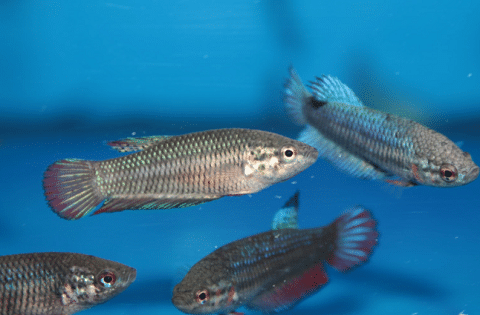
Female bettas aren’t quite as colorful as the males either. Make no mistake though, female bettas can still have amazing colors! They come in a huge variety of colors too, from solid colors to patterns with many different shades.
Female vs Male – What’s The Difference?
There are some other differences between male and female bettas aside from their fins and colors. Let’s take a look at some of the most useful clues that you can use to tell the difference:
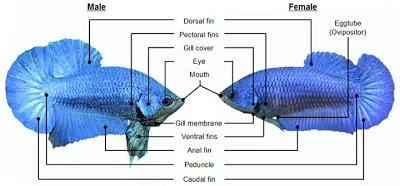
Physical differences:
- Female bettas have vertical bars or stripes on their bodies when they are in breeding condition.
- The body length of the female betta is shorter and wider across
- Female betta fish do not have the same ‘beard’ as the males. The beard is the membrane that these fish flare in territorial encounters.
- Females have an ovipositor tube that is called an egg spot.
Behavioral differences
- Female betta fish can still be aggressive. They are a little less aggressive than their male counterparts, however.
- You can keep female bettas with other female betta fish. Male bettas should never be kept with other males unless you have a large aquarium.
Female Colors & Breeds
Bettas have been kept and bred for hundreds of years and today there are many types of female betta fish to choose from. Male betta fish is more colorful, but many female betta fish also have awesome colors and patterns!
Here are a few examples of the most popular types of female bettas in the hobby:
- Female halfmoon bettas
- Female veiltail bettas
- Female koi bettas
- Female crown tail betta
Average Size
Want a centerpiece fish for a nano tank? Get a betta. Want a peaceful community schooler? Get ember tetras instead. Want low maintenance? Get neither. Both need real care.
Female bettas are small freshwater fish that reach a length of between 2 and 2.25 inches. The females are a little shorter than the males when fully grown. Their bodies are slightly wider across than males, however.
Care
Female betta fish is really easy to care for! In fact, these fish are great for children or newcomers to the fish-keeping hobby. Keeping a single betta female in her own tank is the best bet for beginners, but more experienced fish keepers can even try keeping many females together in the same tank.
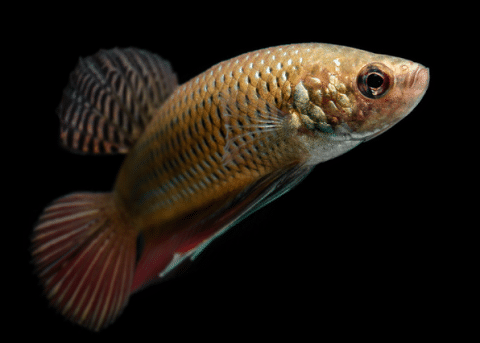
Are you ready to learn more about caring for female betta fish? Let’s dive right in!
Aquarium Setup
The right kind of aquarium is very important for successfully keeping female betta fish. In this section, we’ll take a look at how to set up an awesome female betta tank and discuss how to keep one or more of these beautiful fish.
Tank Size
Your choice of tank size depends on how many female bettas you plan to keep. If you’re just getting started in the aquarium hobby, a single female betta would make an awesome pet! You can keep your betta in a tank as small as 5 gallons, but a ten gallon would be great too, especially if you want to grow some neat plants and add other fish.
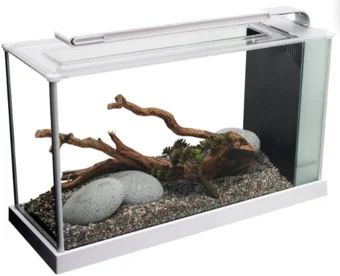
Fluval Spec V
The Best 5 Gallon Fish Tank
The best filtration, best light, and perfect size. Everything you need to get started. It’s the perfect small tank!
You’ll need a much bigger tank if you plan on setting up a female betta sorority tank. 29 gallons or more would be perfect for this kind of setup.
Water Parameters
Maintaining the correct water parameters is very important for keeping your female betta fish healthy. You’ll need a thermometer and a water test kit to monitor your parameters.
Bettas are tropical fish, so make sure you have a heater to keep your water temperature stable between 76 and 82°F.
Bettas prefer neutral water, although slightly acidic or slightly alkaline water is acceptable. A pH of 6.5-8 is ideal. Moderate water hardness of between 5 and 20 dGH is best for these fish.
Filtration and Aeration
Contrary to popular belief, betta fish do need good filtration. A small sponge filter will be perfectly fine for a single specimen, but you’ll need a more powerful filter for a sorority setup.
A canister filter is an ideal choice for a betta sorority because it combines a large volume of filtration media with a low water flow. The fact that it is kept outside of the aquarium also means you’ll have a beautiful display tank.

OASE Biomaster Thermo
The Pro’s Choice
The top choice among professional aquascapers. German engineering and equipped with an intregrated heater.
Betta fish are adapted to live in shallow still water systems where they do not need to fight against any water current. The female fish are stronger swimmers than male fish but they will also struggle in a tank with strong water flow.
Bettas occur in pretty low oxygen, still water environments in nature, so they do not need an air pump with an air stone to stay healthy. Increasing aeration will not harm them, however.
Recommended Filters
- Sponge filter- This type of filter is great for single fish setups.
- Canister filter- These filters are perfect for community aquariums and betta sororities.
- Hang on back filter– HOB filters are a good all-around choice. Choose a model with an adjustable flow.
- Internal power filter – These filters will create quite a strong current which is not ideal. A small model with an adjustable flow rate and a spray bar to reduce the flow rate is used, however.
Lighting
Any standard aquarium lighting consisting of either fluorescent or LED lighting would be ideal for your female betta fish. Your fish will be more confident if you keep the lighting fairly dim, but you’ll need good light if you are growing live plants.
Go ahead and set your lighting on a timer to run for 6-8 hours each day. This will provide your fish with a natural daylight period.
Here’s a very important lighting tip for beginners: Make sure your aquarium is not exposed to any direct sunlight near a window. Strong sunlight is like an invitation for algae!
Aquatic Plants & Decorations
Bettas come from shallow water environments that are full of aquatic plants, so these fish thrive in planted tanks. Live aquarium plants provide your female betta fish with several great benefits, but you can also use artificial plants to simplify your setup.
If you do go the plastic route, just make sure your decorations are aquarium-safe and don’t have any sharp edges that could tear your betta’s beautiful fins.
Bettas love hiding places, so they will love exploring and swimming through the leaves of plants. Amazon sword and other species that have large leaves make a great choice because bettas love to sleep on the leaves!
Some floating plants are also a good choice- just remember that bettas need to get to the surface to breathe.
Add some driftwood, rocks, and aquarium decorations to make your female betta fish tank even more natural and attractive. Bettas love cave decorations, but sunken ships and castles will also give your fish a great place to hide.
Tank Maintenance
Regular tank maintenance will keep your tank looking great and your female bettas healthy. An hour of your time every week or so for a water change is really all that you need to set aside to maintain great water quality.
You can start with a 25% water change once a week and adjust your maintenance schedule based on the nitrate levels in your tank. If your nitrate levels are getting much over 20 ppm before each water change, consider changing out a little more water.
You’ll need a few supplies to keep your female betta fish tank clean and healthy. Let’s take a quick look at what you’ll need and how to use them:
- Gravel vacuum- Use your gravel vacuum to suck dirt and waste from the bottom of your tank. This will keep your substrate clean and looking great.
- Aquarium water test kit – Use your aquarium test kit to monitor your water parameters regularly.
- Water conditioner – You should always treat tap water before adding it to your aquarium. Water conditioners neutralize harmful chemicals like chlorine and make the water safe for your fish.
- Algae scraper – Use your algae scraper to clean your aquarium glass when necessary.
Substrate
Any clean, aquarium-safe substrate is used in your female betta fish aquarium. Sand or gravel in a color of your choice is ideal, just be sure to rinse the substrate thoroughly before adding it to your tank. Most freshwater fish look and feel their best in tanks with a darker substrate, but you can use your creativity and choose any color you like.
Use good quality aquarium soil if you plan on growing loads of aquarium plants. This is a more expensive option than regular gravel because it supplies all the nutrients that plants need to live and grow.
Tank Mates
You’ve probably heard that Siamese fighting fish are super aggressive and can’t be kept with other fish. The truth is that you can set up a betta community tank with other species or even keep more than one betta fish in the same tank as long as they are females.
You should never keep male and female bettas together, but you certainly can keep females with other female bettas in the right kind of tank. Adding a school of dither fish can help to distract your female betta fish and reduce aggression. The best dither fish are active smaller fish like harlequin rasboras that swim in the middle and top levels of the tank.
Here are some good tank mates to keep in a female betta fish community tank:
- Other female betta fish/ female Siamese fighting fish
- Harlequin rasboras
- Otocinclus catfish
- Corydoras catfish
- Khuli loaches
- Nerite snails
Incompatible Tank Mates
The following fish are not recommended for a female betta fish community aquarium:
- Tiger barbs
- Cichlids
- Goldfish
- Any aggressive, nippy, or predatory fish
- Male Siamese fighting fish/ male bettas
- Dwarf shrimp
Keeping a Single
The easiest way to keep female betta fish is to keep just a single female betta fish in its own tank. You can set up a great betta aquarium without spending much, so setting up a few different tanks is also a possibility.
Betta sorority
The great thing about female betta fish is that you can actually keep more than one in the same tank. This takes careful planning, however, and you’re going to want to have some backup plans in place in case anything goes wrong.
In a very large tank, a female betta fish sorority could do well if each has enough personal space. Growing Loads of tall aquarium plants and providing plenty of decorations can also help to keep the fish out of sight of one another. You can see a sorority in action from this tank in the video above by kingofhear4711.
Another completely different technique is used to limit aggressive behavior. Purposefully overstocking the tank will prevent the female betta fish from developing territories and singling out any one fish to bully.
It is best to keep at least 6 female bettas in the same tank and keep a close eye on your fish, especially in the beginning. Any fish that is picking on the others may have to be removed from the tank.
This is where having a backup plan will really come in handy. I would recommend setting up a small tank that is used as a hospital tank and for quarantining new fish. This little tank will come in handy eventually, even if you don’t have any fighting.
Breeding
Breeding betta fish at home is quite easy and is great fun too. The most important thing to understand is that male betta fish can become aggressive and even kill the females if you don’t keep a close eye on things.
Let’s run through the basic steps of breeding betta fish.
- Your male and female bettas should be kept in separate tanks until they are ready to breed.
- Set up and cycle your breeding tank well before you start breeding your bettas.
- Condition your fish by feeding them live foods.
- Introduce your fish to the breeding tank but keep them separated with a divider.
- After a day or so, the male will have built his bubble nest and the pair is allowed to spawn.
- The pair will embrace and the female will drop her eggs. She is moved back to her own tank once the eggs are laid.
- The male will collect the eggs and deposit them in the bubble nest.
- The eggs will hatch after a few days and the male can then be moved back to his tank.
- Feed the baby bettas a diet of tiny food like infusoria for about 2 months until they are ready to be moved into their own tanks.
Breeding Tank Requirements
Now that you have a better understanding of the betta breeding process, let’s take a look at the recommended breeding tank setup:
A tank that holds ten gallons or so is a good size for breeding betta fish. You’ll need a small heater and a sponge filter that creates a very low flow to maintain good water quality for the baby bettas. You only need 5 inches or so of water in the tank, and you don’t need a light or any gravel or substrate.
Add an Indian almond leaf or a piece of floating foam to the tank to give the male a place to build his bubble nest. Finally, lay a sheet of plastic wrap over the top of the tank to maintain humid air above the water.
Food & Diet
Female bettas need a high protein diet consisting of prepared dried foods and live/frozen foods. They is fed the same diet as their male counterparts.
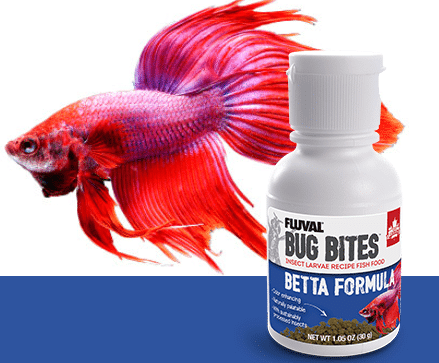
Fluval Bug Bites
Best Betta Food
Fluval bug bites is made of various insect and shrimp ingredients making this a high quality source of protein
A high-quality floating micro-pellet or flake food is the best daily food source for female bettas, but you should supplement this a few times a week with some live or frozen foods like brine shrimp and bloodworms. These supplements will bring out the best color and condition in your fish.
How Often Should You feed them?
You can feed your betta fish once or twice per day. Pick one day per week to fast your fish as this can help prevent the chance of bloating. Don’t worry, your fish can survive for many days without food so just one day won’t do any harm.
Overfeeding is very dangerous for your betta and excess food can cause the water quality in your aquarium to deteriorate. Feed your betta only as much as it can finish in a minute or so and remove the leftovers from the tank.
Common Health Problems and Diseases
Female betta fish are vulnerable to a variety of common fish diseases. Keeping them in a healthy tank with great water quality is the best way to avoid problems.
Follow these steps to prevent illness:
- Quarantine your fish before adding them to a community or sorority tank.
- Make sure your pH, water hardness, and water temperature are in the right range.
- Feed your fish a healthy, balanced diet.
- Keep up with regular tank maintenance.
- Separate fighting fish. Stress is the biggest cause of illness in bettas.
Let’s take a quick look at some of the more common problems that affect betta fish:
Ich
This common freshwater fish disease is characterized by white spots on the fish’s body. Ich is caused by a parasite and is treated with medication like Ich X.
Swim Bladder Disorder
Swim bladder disorders cause fish to struggle to swim properly. They may sink, float or spin in the water. This illness is often caused by overfeeding bettas.
Fin Rot/Tail Rot
Torn and disintegrating fins are a common symptom of stressed betta fish. Fin rot is treated with antibiotics or aquarium salt.
What It Is Actually Like Living With Female Betta Fish
Your Female Betta Fish will learn to recognize you. It will swim to the front of the tank when you approach, flare at its own reflection, and patrol every inch of its territory like it owns the place. Because in its mind, it does.
Feeding time is the highlight of the day. Bettas are aggressive eaters that will snatch food from the surface the moment it hits the water. They prefer variety. Pellets one day, frozen bloodworms the next, an occasional freeze-dried daphnia treat.
Bubble nests appear without warning. Your male will spend hours building and repairing a cluster of bubbles at the surface. This is normal healthy behavior, not a sign that it needs a mate.
At night, bettas sleep. Sometimes in strange positions. On a leaf, wedged behind a filter, or resting on the substrate. The first time you see it, you will think something is wrong. It is not.
FAQS
How can you tell if your fish is a female?
Female betta fish can look very similar to males. The females are less colorful and have smaller fins, however. Female bettas are a little shorter and wider than the males too, and they can have an egg spot and vertical bars on their bodies.
Are female bettas friendly?
Female betta fish can make awesome pets with great personalities. They aren’t always friendly towards other bettas but it is possible to keep them together with some careful planning.
Are they peaceful?
Female bettas is just as aggressive as their male counterparts. Overstocking a sorority tank or just providing loads of space and plants to reduce line of sight are the best ways to avoid conflict when keeping more than one female betta fish in the same tank.
Are they better than males?
It’s difficult to say whether female or male betta fish are better because they are both great! Females are a little less aggressive than the males but they don’t always have the same bright colors and they will have shorter fins.
Can you put 2 female betta fish together?
It is not recommended to put 2 female betta fish together in the same tank. A single female betta or a group of 6 or more in a larger tank would be a safer bet.
Is it normal for them to chase each other?
Female bettas is aggressive towards each other and they will chase each other and fight if you keep two of them in a small aquarium. Some chasing is normal in a sorority tank, however, because the fish need to establish their dominance. Chasing and fighting is a problem if you don’t keep enough of them together in the same tank.
Why is my female betta attacking my other female betta?
Competition for the best territory can make female betta fish aggressive. Unfortunately, this is just a part of their natural behavior. You can try adding more plants and hiding places to the aquarium so that the fighting fish can stay apart but it will be safer to separate them if the conflict gets serious.
How do you know if your fish are fighting?
You should spend some time watching for any fighting fish, especially in the first few days after putting the female fish together. Of course, you can’t watch all the time, however, so keep a lookout for fish with torn fins or other injuries. Female Siamese fighting fish that are stressed or hiding away from their tank mates is a sign of fighting.
ASD Difficulty Rating: Tier 2 – Intermediate — Female betta sororities require careful stocking, heavy planting, and monitoring. They are not beginner-friendly despite being females.
Hard Rule: Female betta sororities require a minimum of 5 females in a 20-gallon (76 L) long tank. Fewer than 5 females results in focused bullying — one dominant fish will harass the others until injuries or death occur.
Is the Female Betta Fish Right for You?
Before you add a female betta fish to your tank, it’s worth asking whether this species actually fits your setup and your goals. Here’s a quick breakdown to help you decide.
This species is a good fit if:
- You have a large enough tank to manage territories. Cramped conditions amplify aggression.
- You’re comfortable managing aggression through stocking ratios, line of sight breaks, and tank layout.
- You can commit to regular water changes. These fish produce more waste than many smaller species.
- You’re not planning a peaceful community tank. Female Betta Fishs need tank mates that can hold their own.
- You enjoy watching active, interactive fish. Cichlids have personality that smaller species simply don’t match.
- You have backup plans. Sometimes a particular fish just doesn’t work out, and you need a way to rehome it.
- You’re feeding a varied, high-quality diet. Color and health depend on nutrition.
If most of those points line up with your setup, the female betta fish is worth serious consideration. If several don’t, it’s better to choose a species that matches your tank now rather than trying to make it work.
Avoid If:
- You want to keep a single female betta – they need groups to establish stable hierarchy
- You cannot provide a 20-gallon (76 L) long with heavy planting and visual barriers
- You are not prepared to remove a bully immediately when hierarchy breaks down
- You expect a sorority to be maintenance-free – they require consistent monitoring
How the Female Betta Fish Compares to Similar Species
Want a centerpiece fish for a nano tank? Get a betta. Want a peaceful community schooler? Get ember tetras instead. Want low maintenance? Get neither. Both need real care.
Choosing between similar species is tricky. Here’s how the female betta fish stacks up against some common alternatives.
The female betta fish occupies a specific niche in the aquarium hobby, and direct comparisons really depend on what you’re looking for. In my experience, the most common question people ask is whether they should choose the female betta fish or something similar that’s more widely available. The answer comes down to three things: tank size, water parameters, and what other fish you’re keeping. If your setup matches what the female betta fish needs, it’s hard to beat. If not, there are alternatives worth exploring.
Final Thoughts
Female betta fish deserve more credit than they get in the hobby. These tropical fish make amazing pets for everyone from beginners right up to experts! If you’re new to fish keeping, a single female betta is the perfect first fish for you. If you’re a more experienced aquarist, however, a betta sorority tank could make a great new project.
Do you keep female betta fish? Tell us about your experiences in the comments below!
- About the Author
- Latest Posts

I’m Mark Valderrama, founder of Aquarium Store Depot and a fishkeeper with over 25 years of hands-on experience. I started in the hobby at age 11, worked at local fish stores, and have kept freshwater tanks, ponds, and reef tanks ever since. I’ve been featured in two best-selling aquarium books on Amazon and built this site to share practical, experience-based fish keeping knowledge.

Leave a Reply to Toni Cancel reply