
Last Updated: June 25, 2026
Thank you for visiting! By the way… any links on this page that lead to products on Amazon and other stores/partners are affiliate links Aquarium Store Depot earns a commission if you make a purchase.
Table of Contents
- What Care Guides Get Wrong
- The Reality of Keeping Reticulated Hillstream Loach
- Key Takeaways
- Species Overview
- Classification
- Origin & Natural Habitat
- Appearance & Identification
- Average Size & Lifespan
- Care Guide
- Is It Right for You?
- Tank Mates
- Food & Diet
- Breeding & Reproduction
- Common Health Issues
- Common Mistakes to Avoid
- Where to Buy
- FAQ
- Species Comparison
- Closing Thoughts
- Recommended Video
- References
The reticulated hillstream loach needs everything every hillstream loach needs: high flow, high oxygen, cool water, and a surface to cling to. The difference is the stunning reticulated pattern on its body that makes it one of the more visually striking species in the group. But no amount of good looks will save it in a warm, low-flow tropical tank.
This guide covers the setup that keeps them alive and thriving, because hillstream loaches are not hard to keep once you commit to the right conditions. The problem is that most people try to compromise, and hillstream species do not compromise.
If your tank does not have a powerhead and stays below 75F, you are not ready for any hillstream loach, including this one.
The Reality of Keeping Reticulated Hillstream Loach
The reticulated hillstream loach shares the same coolwater, high-flow requirements as all hillstream species. Temperature between 65 and 75F, strong current, high oxygen, and mature biofilm-covered surfaces. The reticulated pattern distinguishes it from other hillstream loaches, but the care is identical.
Bought for its looks and placed in a standard tank, it slowly starves because biofilm doesn’t grow fast enough in low-flow environments to sustain it.
This loach doesn’t eat algae. It eats the biofilm that only grows where the current is strongest.
This is another species that dies in standard tropical community tanks. Every hillstream loach needs a specialized setup, and the reticulated variety is no exception despite being marketed as a general community fish by some retailers.
Biofilm and algae are the primary food sources. Supplementing with blanched vegetables and algae wafers helps, but the tank must support natural biofilm growth on rocks and other hard surfaces.
Biggest Mistake New Owners Make
Treating it as interchangeable with any other algae-eating fish. The reticulated hillstream loach is not a substitute for a pleco or an otocinclus. It needs specific temperature and flow conditions that those species do not require. Different fish, different setup.
Expert Take
The reticulated hillstream loach adds visual variety to a dedicated hillstream setup without requiring any care modifications. If you already have the coolwater, high-flow environment running for another hillstream species, adding reticulated hillstreams is a way to diversify the bottom level. The patterning contrasts nicely with plainer hillstream species.
Key Takeaways
- High-flow specialists that need strong water movement (10 to 15x tank volume turnover per hour) and well-oxygenated water to thrive
- Cool water fish preferring 68 to 75°F (20 to 24°C), making them incompatible with most tropical community setups
- Outstanding algae and biofilm grazers that need established tanks with natural biofilm growth as their primary food source
- Social species that should be kept in groups of 3 or more, ideally 6+, in a minimum 30-gallon (114 liter) tank
- Escape artists that can climb wet glass, so a tight-fitting lid is essential
Species Overview
| Field | Details |
|---|---|
| Scientific Name | Sewellia lineolata |
| Common Names | Reticulated Hillstream Loach, Tiger Hillstream Loach, Gold Ring Butterfly Loach |
| Family | Gastromyzontidae |
| Origin | Central Vietnam |
| Care Level | Moderate |
| Temperament | Peaceful |
| Diet | Herbivore / Biofilm Grazer |
| Tank Level | Bottom / Glass surfaces |
| Maximum Size | 2.5 inches (6.4 cm) |
| Minimum Tank Size | 30 gallons (114 liters) |
| Temperature | 68 to 75°F (20 to 24°C) |
| pH | 6.5 to 7.5 |
| Hardness | 1 to 10 dGH |
| Lifespan | 8 to 10 years |
| Breeding | Egg scatterer |
| Breeding Difficulty | Difficult |
| Compatibility | Peaceful community (cool water) |
| OK for Planted Tanks? | Yes (choose cool-water tolerant plants) |
Classification
| Taxonomic Level | Classification |
|---|---|
| Order | Cypriniformes |
| Family | Gastromyzontidae |
| Subfamily | Gastromyzoninae |
| Genus | Sewellia |
| Species | S. Lineolata (Valenciennes, 1846) |
This species was first described by Achille Valenciennes in 1846. The genus Sewellia belongs to the family Gastromyzontidae, a group of specialized loaches adapted for life in fast-flowing streams across Southeast Asia. While several Sewellia species are imported for the aquarium trade, S. Lineolata is by far the most commonly available and widely kept.
Origin & Natural Habitat
The reticulated hillstream loach is native to central Vietnam, where it inhabits shallow, fast-flowing streams and rivers. These waterways are typically clear, well-oxygenated, and flow over substrates of smooth rocks, pebbles, and boulders. The current in these habitats is significant, and the water is relatively cool compared to lowland tropical environments.
In nature, these streams receive dappled sunlight through the forest canopy, promoting the growth of biofilm and algae on rock surfaces. This biofilm is the primary food source for Sewellia lineolata. The fish use their specialized ventral sucking disc to maintain position in the current while grazing continuously. They are typically found clinging to flat rock surfaces in areas of moderate to strong flow, rarely venturing into still water or mid-column swimming.
Understanding this natural habitat is the key to keeping them successfully. Everything about their body shape, diet, and behavior is adapted for life in fast, shallow streams. Replicating these conditions as closely as possible in the aquarium is what separates successful keepers from those who struggle with this species.

Appearance & Identification
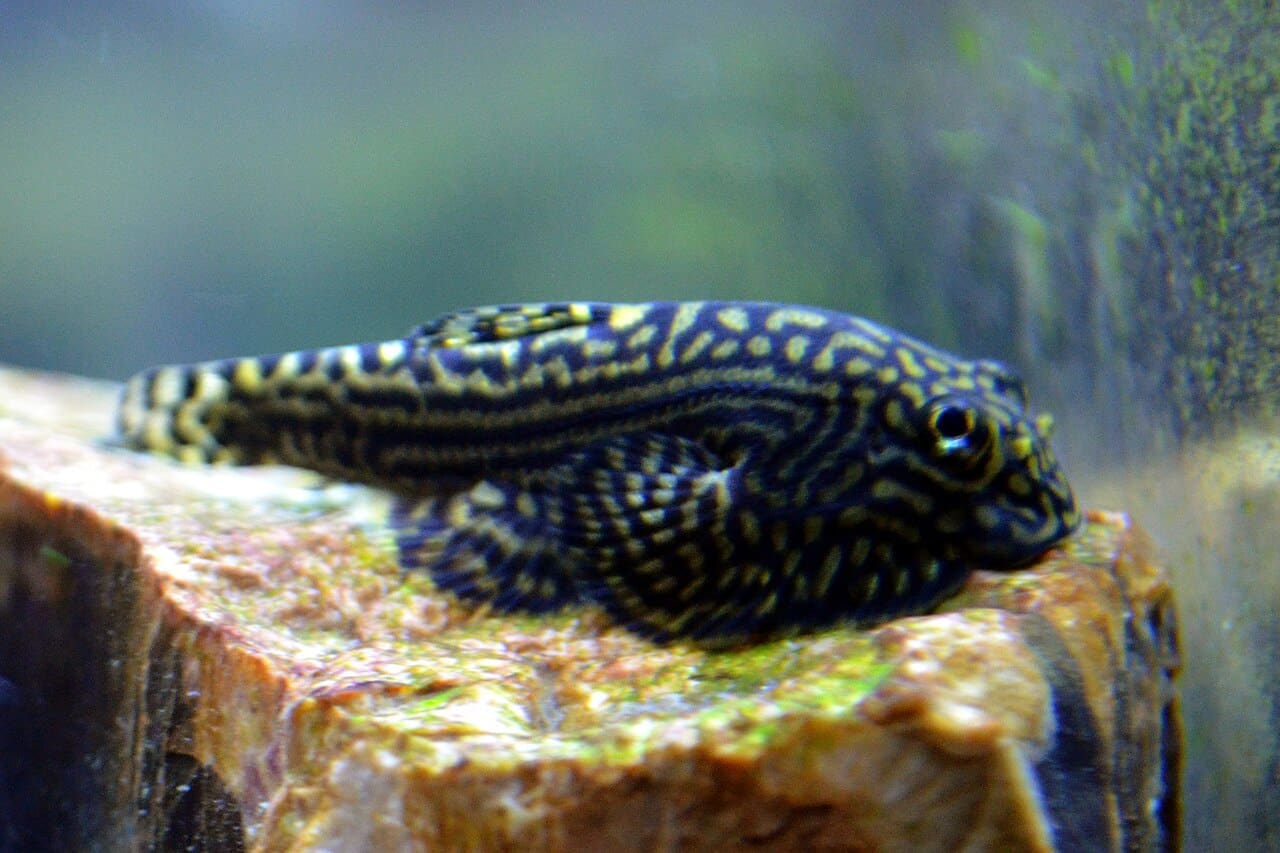
The reticulated hillstream loach is built like no other aquarium fish. Its body is dorsoventrally flattened, almost disc-shaped when viewed from above, with greatly enlarged pectoral and pelvic fins that fuse together to form a broad, flat suction cup along the underside. This disc allows the fish to cling to smooth surfaces in powerful currents where other fish would be swept away.
The dorsal surface displays the species’ namesake reticulated pattern, an intricate network of golden, cream, or yellowish lines and spots against a dark brown to black background. The pattern varies between individuals, and well-conditioned specimens show more vibrant contrast. When they settle on the glass, you can see their underside, which is pale and features the remarkable suction disc that generates negative pressure to hold them in place.
Their movement style is also distinctive. Rather than swimming normally, they will “hop” from surface to surface in short bursts, repositioning their suction disc each time. When they do swim through open water, they use rapid undulations of their body and tail. It’s fascinating to watch.
Male vs. Female
| Feature | Male | Female |
|---|---|---|
| Body Shape | Slimmer, more streamlined | Wider, plumper body |
| Head Shape | More squared-off snout | Slightly rounder head |
| Pectoral Fins | Slightly jagged leading edge near “shoulders” | Smooth leading edge |
| Size | Slightly smaller | Slightly larger |
Sexing reticulated hillstream loaches takes a practiced eye. The most reliable method is checking the leading edge of the pectoral fins near the body. Males develop a slightly jagged or raised edge in this area, while females have a smooth contour. Females also are wider overall when viewed from above, especially when carrying eggs.
Average Size & Lifespan
Reticulated hillstream loaches reach a maximum size of about 2.5 inches (6.4 cm) in total length. Despite their flattened shape making them look larger from above, they’re actually quite compact fish. Most specimens available in stores are around 1.5 inches (3.8 cm).
With proper care, pristine water quality, and adequate nutrition, these loaches can live 8 to 10 years in the aquarium. That’s a notably long lifespan for a fish this size, but it depends heavily on maintaining cool, well-oxygenated water and ensuring they have access to sufficient biofilm. Fish kept in warm, poorly oxygenated conditions often have significantly shortened lifespans.
Care Guide
Tank Size
A minimum of 30 gallons (114 liters) is recommended for a group of reticulated hillstream loaches. While some sources suggest 20 gallons can work, the additional volume makes it much easier to maintain stable, cool water temperatures and support the high-flow filtration these fish require. A longer, shallower tank is preferable to a tall one because these fish are bottom dwellers that need horizontal surface area for grazing.
If you plan to keep a larger group of 6 or more (which is ideal), a 40 to 55-gallon (151 to 208 liter) tank gives everyone enough grazing territory and prevents any territorial squabbles over prime spots.
Water Parameters
| Parameter | Ideal Range |
|---|---|
| Temperature | 68 to 75°F (20 to 24°C) |
| pH | 6.5 to 7.5 |
| GH | 1 to 10 dGH |
| KH | 3 to 8 dKH |
| Ammonia | 0 ppm |
| Nitrite | 0 ppm |
| Nitrate | Under 20 ppm |
Temperature is the single most important parameter for this species. They come from cool mountain streams and do not tolerate sustained warmth. Keeping them at typical tropical temperatures of 78 to 82°F (26 to 28°C) will stress them and shorten their lifespan considerably. If your home runs warm, you need a chiller or fan to keep the water in range.
Pristine water quality is non-negotiable. These fish are extremely sensitive to ammonia and nitrite, and even elevated nitrate levels can cause problems over time. Weekly water changes of 25 to 30% are the minimum, and many successful keepers do 50% weekly.
Filtration & Flow
This is where hillstream loach care differs from virtually every other freshwater fish. You need strong water flow, ideally 10 to 15 times the tank volume per hour in turnover. For a 30-gallon tank, that means combined filtration and powerhead output of 300 to 450 gallons per hour.
A canister filter paired with one or two wavemakers or powerheads is the standard approach. Position the flow to create a strong current across the rock surfaces where the loaches graze. Some keepers build dedicated river manifolds or closed-loop systems for maximum flow. The goal is to simulate the fast-moving stream conditions these fish evolved in.
The high flow also serves a critical purpose: it keeps oxygen levels high. These fish have very high oxygen demands, and stagnant water is a death sentence. An air stone or bubble wall adds extra insurance.
Lighting
Moderate to high lighting is actually beneficial for hillstream loach tanks because it promotes algae and biofilm growth on rock surfaces. This is the opposite of most fish setups where you’re trying to minimize algae. A 10 to 12-hour photoperiod encourages the biofilm production that these fish depend on for nutrition. Just make sure the lighting doesn’t raise your water temperature above the acceptable range.
Plants
Planted tanks work well with hillstream loaches, but you need to choose species that tolerate cool water and strong flow. Anubias, Java fern, and Bucephalandra are excellent choices because they attach to rocks and driftwood, tolerate the current, and their leaves can host biofilm. Avoid delicate stem plants that will be battered by the high flow. Mosses like Java moss and Christmas moss also work well, especially when attached to rocks in the current.
Substrate & Decor
Smooth river rocks and pebbles of various sizes are the ideal substrate and decor for a hillstream loach tank. These provide the flat, biofilm-covered surfaces the loaches need for grazing. A fine sand base with larger cobbles and flat rocks placed on top creates a natural-looking stream biotope.
Avoid sharp-edged rocks that could injure the soft underside of the fish. Slate, granite, and water-worn stones work perfectly. Stack rocks to create caves and gaps where the loaches can retreat, but make sure the current still flows through these areas. Driftwood also works well, especially pieces with flat surfaces.
Important: Use a tight-fitting lid or cover every opening. Reticulated hillstream loaches are notorious escape artists. They can climb wet glass, and they will find any gap in your aquarium cover. Many keepers have found their loaches on the floor, so take this seriously.
Is the Reticulated Hillstream Loach Right for You?
Before you buy, run through this honest checklist. The Reticulated Hillstream Loach is a great fish for the right keeper, but it is not for everyone.
- You can keep water temperatures in the 65-75°F range with high oxygenation
- Your tank has strong flow and smooth surfaces for biofilm growth
- You appreciate intricate lace-like patterning on a unique body shape
- You have experience with hillstream or subtropical fish species
- You can provide supplemental foods like blanched vegetables alongside biofilm
- You want a loach that clings to surfaces and displays fascinating feeding behavior
Tank Mates
The biggest limiting factor for tank mates isn’t temperament, it’s temperature. Most popular tropical fish prefer water warmer than what hillstream loaches need, so your options are restricted to species that thrive in cooler conditions.
Best Tank Mates
- White Cloud Mountain minnows
- Zebra danios and other danio species
- Gold barbs
- Cherry barbs
- Rosy barbs
- Corydoras species (cooler-tolerant types like peppered corys)
- Amano shrimp
- Nerite snails
- Other hillstream loach species
- Medaka / ricefish
Tank Mates to Avoid
- Discus and angelfish (too warm)
- Most cichlids (too warm and/or aggressive)
- Bettas (too warm, slow flow preference)
- Gouramis (prefer calm water)
- Large plecos (may compete for grazing surfaces)
- Any aggressive or territorial bottom dwellers
Food & Diet
Diet is one of the trickiest aspects of keeping reticulated hillstream loaches. Their primary food source is biofilm and algae that naturally grow on surfaces in well-lit, established tanks. This isn’t something you can substitute entirely with prepared foods. An established tank with plenty of rock surfaces and moderate to high lighting is essential so that biofilm is constantly growing.
Supplemental feeding is still important. Offer high-quality algae wafers, spirulina-based sinking pellets, and blanched vegetables like zucchini, cucumber, and spinach. These are especially important when the tank’s natural biofilm can’t keep up with grazing pressure from multiple loaches.
While they’re primarily herbivores and biofilm grazers, reticulated hillstream loaches will also accept small meaty foods. Frozen or live daphnia, baby brine shrimp, and bloodworms can be offered occasionally as supplemental protein. Don’t make these the staple diet, though, because plant matter and biofilm should make up the majority of their nutrition.
One helpful trick is to keep extra rocks in a separate container with water and light, allowing biofilm to grow on them. Rotate these rocks into the main tank periodically to ensure a constant fresh supply of natural grazing material.
Breeding & Reproduction
Breeding Difficulty
Breeding reticulated hillstream loaches in the home aquarium is challenging but not impossible. It has been accomplished by hobbyists who maintain optimal conditions, and some keepers have even had surprise batches of fry appear in well-established tanks.
Breeding Setup
The best breeding results come from established tanks that closely replicate the species’ natural stream habitat. Strong flow, cool temperatures, pristine water quality, and an abundance of biofilm are all prerequisites. Mature, well-conditioned adults that have been fed a varied diet rich in both plant matter and protein are most likely to spawn.
Spawning Conditions
A slight temperature increase combined with a large water change will trigger spawning, simulating seasonal rainfall in their native habitat. Males will perform a courtship “dance” around the female, and if she’s receptive, she’ll follow him to a spawning site. The pair deposits eggs in hidden areas among the rocks, typically in crevices or under flat stones where the current provides good water flow over the eggs.
Fry Care
The eggs hatch after a few days, and the tiny fry are extremely small and vulnerable. They’ll initially feed on infusoria and microorganisms in the biofilm. Cover your filter intake with a fine sponge pre-filter to prevent fry from being sucked in. As they grow, they can transition to vinegar eels, microworms, live baby brine shrimp, and powdered fry foods.
Having a well-established tank with plenty of mulm, biofilm, rock piles, and hiding spots gives fry the best chance of survival. Some breeders report that leaving the fry in the main tank with the adults works, provided there is sufficient cover and food.
Common Health Issues
Skinny Disease (Chronic Wasting)
This is the most common issue with hillstream loaches, and it’s usually a sign that the fish isn’t getting enough to eat. Hillstream loaches that arrive from the store already thin can be extremely difficult to recover. The belly appears sunken and concave when viewed from the side. Prevention is key: always inspect fish before purchasing and reject any with sunken bellies. Ensuring abundant biofilm in the tank and offering supplemental foods regularly helps prevent this in established fish.
Ich (White Spot Disease)
Ich can appear as tiny white spots scattered across the body and fins. Hillstream loaches are sensitive to many common medications, so treatment needs to be approached carefully. Raising the temperature, which is the standard first-line ich treatment for most fish, should be done cautiously with this cool-water species. Use half-dose medications labeled as safe for scaleless fish, and increase aeration during treatment. Many keepers prefer heat-free methods using aquarium salt at a low dose, though some hillstream loach keepers avoid salt entirely.
Oxygen Deprivation
This is a common but often overlooked issue. If your loaches are gasping at the surface, appear lethargic, or are congregating near filter outputs, oxygen levels may be too low. This typically happens when water temperatures rise above 75°F (24°C), flow rates are insufficient, or the tank is overstocked. Increase surface agitation, add air stones, and address the root cause of low oxygen immediately.
Bacterial and Fungal Infections
These can appear as sores, ulcers, cottony growths, or reddened areas on the body. They usually occur in stressed or injured fish, often secondary to poor water quality. Quarantine affected fish and treat with loach-safe antibacterial or antifungal medications. As always, address the underlying water quality issue that caused the infection in the first place.
Common Mistakes to Avoid
- Keeping them in warm water. This is the number one mistake. They are not tropical fish and will slowly decline at temperatures above 78°F (26°C).
- Insufficient water flow. A standard hang-on-back filter doesn’t cut it. You need strong, dedicated flow from canister filters and/or powerheads.
- Adding them to a new tank. These fish need an established tank with mature biofilm on surfaces. A brand-new tank has nothing for them to eat.
- Relying solely on prepared foods. Algae wafers alone won’t keep these fish healthy. They need natural biofilm growing in the tank.
- No lid. Hillstream loaches can and will climb out of uncovered tanks. A secure lid is mandatory.
- Buying skinny specimens. Always inspect before purchasing. Fish with sunken bellies are extremely difficult to recover and may already be too far gone.
- Keeping a single loach. They are social fish that do much better in groups. A lone hillstream loach is a stressed hillstream loach.
Where to Buy
Reticulated hillstream loaches have become increasingly popular and are available from many online retailers and local fish stores. For quality specimens from reliable sources, check out these trusted vendors:
- Flip Aquatics. Known for healthy, well-acclimated fish with excellent packaging and shipping practices
- Dan’s Fish. Offers a solid selection of loach species with reliable overnight shipping
When ordering online, look for sellers who show clear photos of actual stock and have good reviews regarding fish health on arrival. Since hillstream loaches are sensitive to shipping stress, choosing a vendor that ships quickly with proper insulation and oxygen is critical.
Frequently Asked Questions
Can reticulated hillstream loaches live in a tropical tank?
Not ideally. They prefer temperatures of 68 to 75°F (20 to 24°C), which is below the comfort zone for most tropical species. Hobbyists report keeping them at slightly warmer temperatures with heavy oxygenation, but for long-term health and longevity, cooler water is strongly recommended. Sustained exposure to temperatures above 78°F (26°C) will shorten their lifespan.
Do hillstream loaches eat algae?
Yes, but more accurately they eat biofilm, which is the thin layer of algae, bacteria, and microorganisms that grows on surfaces in established tanks. They’re excellent natural algae controllers, though they won’t eliminate heavy algae blooms on their own. Think of them more as maintenance grazers rather than cleanup crew.
How many hillstream loaches should I keep?
Keep at least 3, but a group of 6 or more is ideal. In pairs, the dominant fish may bully the weaker one over territory and food. In larger groups, aggression is spread out and minimized. They’re social fish that display much more natural behavior when kept in groups.
Can hillstream loaches live with shrimp?
Absolutely. Amano shrimp and Neocaridina shrimp are excellent companions for hillstream loaches. They share similar temperature preferences, and the loaches are completely peaceful toward shrimp. Just be aware that both hillstream loaches and shrimp graze on biofilm, so you need to supplement feeding more heavily with both in the tank.
Why is my hillstream loach not moving?
Hillstream loaches can appear very still when they’re resting or grazing. This is normal behavior, as they anchor themselves to surfaces and methodically scrape biofilm. However, prolonged inactivity combined with a sunken belly, loss of color, or heavy breathing could indicate stress, illness, or poor water conditions. Check your water parameters, temperature, and oxygen levels immediately if the fish seems genuinely lethargic.
Will hillstream loaches climb out of my tank?
Yes, they can and will. Their suction disc allows them to climb wet glass above the waterline. A tight-fitting lid with no gaps is essential. Pay special attention to openings around filter intakes, heater cords, and airline tubing where small gaps might exist.
How the Reticulated Hillstream Loach Compares to Similar Species
Reticulated Hillstream Loach vs. Chinese Hillstream Loach
Very similar care requirements, but the Reticulated Hillstream Loach has more intricate patterning. The Chinese Hillstream Loach is more widely available and slightly cheaper. Both make excellent additions to a cool-water, high-flow tank. Choose based on aesthetics and availability in your area.
Reticulated Hillstream Loach vs. Panda Loach
The Panda Loach is rarer and significantly more expensive, with a more dramatic black-and-white pattern. The Reticulated Hillstream Loach is easier to source and less demanding overall. For most hobbyists, the Reticulated Hillstream Loach delivers similar enjoyment at a fraction of the cost.
What It Is Actually Like Living With Reticulated Hillstream Loach
The reticulated pattern makes this hillstream loach easier to spot than plainer species. On light-colored river rocks, the dark reticulation stands out clearly, making it a more visible resident than some other hillstream varieties.
Grazing behavior is constant and methodical. They work across rock surfaces in systematic passes, leaving clean trails in their wake. Two or three reticulated hillstreams can keep a surprising amount of rock surface clean of algae.
They are peaceful with their own species when given enough grazing territory. Unlike some hillstream species that become territorial in tight quarters, reticulated hillstreams generally coexist well as long as there are enough rock surfaces to go around.
Closing Thoughts
The reticulated hillstream loach is one of the most rewarding freshwater fish you can keep, if you’re willing to meet its specific requirements. That cool, fast-flowing, well-oxygenated water isn’t optional, it’s the entire foundation of successful care. But set up a proper hillstream biotope, and you’ll be rewarded with a fish that’s endlessly fascinating to watch, incredibly long-lived, and unlike anything else in the hobby.
These aren’t fish you should impulse-buy at the store. Do the research first (which you’re doing right now), set up the tank ahead of time so biofilm has a chance to establish, and invest in proper filtration and flow. The payoff is a stunning, unique fish that can be with you for a decade or more. That’s hard to beat.
Have you kept reticulated hillstream loaches? I’d love to hear about your setup. Drop a comment below!
This guide is part of our Loaches: Complete Species Directory. Visit the hub page to explore care guides for all popular loach species.
Recommended Video
References
- Sewellia lineolata Profile. Seriously Fish
- Reticulated Hillstream Loach Care Guide. Aquadiction
- Hillstream Loach Ultimate Care Guide. Fish Laboratory
- Sewellia lineolata. Loaches Online
- About the Author
- Latest Posts

I’m Mark Valderrama, founder of Aquarium Store Depot and a fishkeeper with over 25 years of hands-on experience. I started in the hobby at age 11, worked at local fish stores, and have kept freshwater tanks, ponds, and reef tanks ever since. I’ve been featured in two best-selling aquarium books on Amazon and built this site to share practical, experience-based fish keeping knowledge.
Leave a Reply