
Last Updated: June 25, 2026
Thank you for visiting! By the way… any links on this page that lead to products on Amazon and other stores/partners are affiliate links Aquarium Store Depot earns a commission if you make a purchase.
Table of Contents
- What Care Guides Get Wrong
- Key Takeaways
- Species Overview
- Classification
- Origin & Natural Habitat
- Appearance & Identification
- Average Size & Lifespan
- Care Guide
- Is It Right for You?
- Tank Mates
- Food & Diet
- Breeding & Reproduction
- Common Health Issues
- Common Mistakes to Avoid
- Where to Buy
- Frequently Asked Questions
- Species Comparison
- Closing Thoughts
- Recommended Video
- References
Schwartz’s cory is one of those fish that makes you stop and look twice. In a genus where a lot of species look pretty similar at first glance, Corydoras schwartzi stands out with a bold, clean horizontal stripe running down each side of the body. It’s a sharp-looking fish, and once you’ve seen one in person, it’s hard to confuse it with anything else. The stripe is darker and more defined than what you’ll find on the three-line cory or most other spotted corydoras, giving it a look that’s more “racing stripe” than “speckled pattern.”
What Most Care Guides Get Wrong About the Schwartz’s Cory
The Schwartz’s Cory has one of the boldest stripe patterns of any corydoras, but the misconception is that its appearance stays consistent. Color and pattern intensity vary significantly based on mood, lighting, and substrate color. On light sand under bright LEDs, the stripes can look washed out. On dark sand with moderate lighting, the black stripe pops dramatically. The other mistake is keeping this species in water that is too warm. It does best at 72 to 77F and can struggle at temperatures above 80F. This is not a cory for discus tanks.
Despite being a genuinely attractive species, Schwartz’s cory doesn’t get nearly the attention it deserves. It’s not as common in the trade as bronze, peppered, or sterbai cories, so a lot of hobbyists have never even heard of it. That’s a shame, because it’s a solid community fish with all the personality and charm you’d expect from a Corydoras. In my 25+ years in the hobby, I’ve always thought this species was underrated. Let me break down everything you need to know to keep these fish thriving.
Key Takeaways
- Bold horizontal stripe sets Schwartz’s cory apart from other corydoras. Cleaner and more defined than the three-line cory’s pattern.
- Keep in groups of 6 or more in at least a 20-gallon tank. They are social fish that need company to feel secure.
- Sand substrate is essential. Rough gravel damages their sensitive barbels and prevents natural foraging behavior.
- Water parameters: temperature 72 to 79°F (22 to 26°C), pH 6.0 to 7.5, hardness 2 to 15 dGH.
- Moderate care difficulty. Not as beginner-friendly as bronze or peppered cories, but manageable for anyone with some fishkeeping experience.
- Obligate air breathers that dart to the surface regularly for a gulp of air. This is completely normal Corydoras behavior.
Species Overview
| Field | Details |
|---|---|
| Scientific Name | Corydoras schwartzi |
| Common Names | Schwartz’s Cory, Schwartz’s Catfish |
| Family | Callichthyidae |
| Origin | Brazil (Rio Purus basin, Amazon tributary) |
| Care Level | Moderate |
| Temperament | Peaceful |
| Diet | Omnivore |
| Tank Level | Bottom |
| Maximum Size | 2.5 inches (6 cm) |
| Minimum Tank Size | 20 gallons (76 liters) |
| Temperature | 72 to 79°F (22 to 26°C) |
| pH | 6.0 to 7.5 |
| Hardness | 2 to 15 dGH |
| Lifespan | 5 to 8 years |
Classification
| Taxonomic Level | Classification |
|---|---|
| Order | Siluriformes |
| Family | Callichthyidae |
| Subfamily | Corydoradinae |
| Genus | Corydoras |
| Species | C. schwartzi (Rössel, 1963) |
Corydoras schwartzi was described by Ernst Rössel in 1963. The species was named in honor of a Mr. Schwartz who collected the original specimens. It belongs to the massive genus Corydoras, which contains over 160 described species and is one of the largest freshwater fish genera in the world. In the 2024 taxonomic revision of armored catfishes, the genus was reorganized, but C. schwartzi retained its placement within Corydoras. This species is sometimes confused with the three-line cory (C. trilineatus), but the two are quite distinct once you know what to look for.
Origin & Natural Habitat
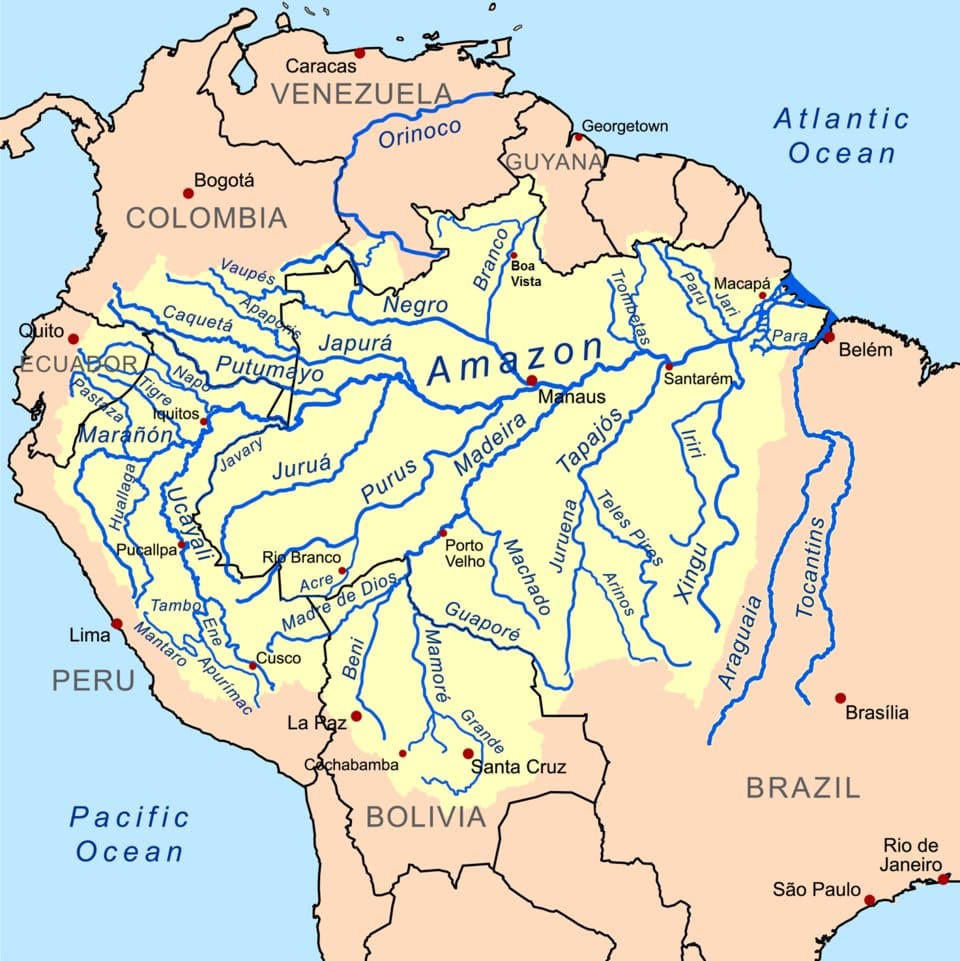
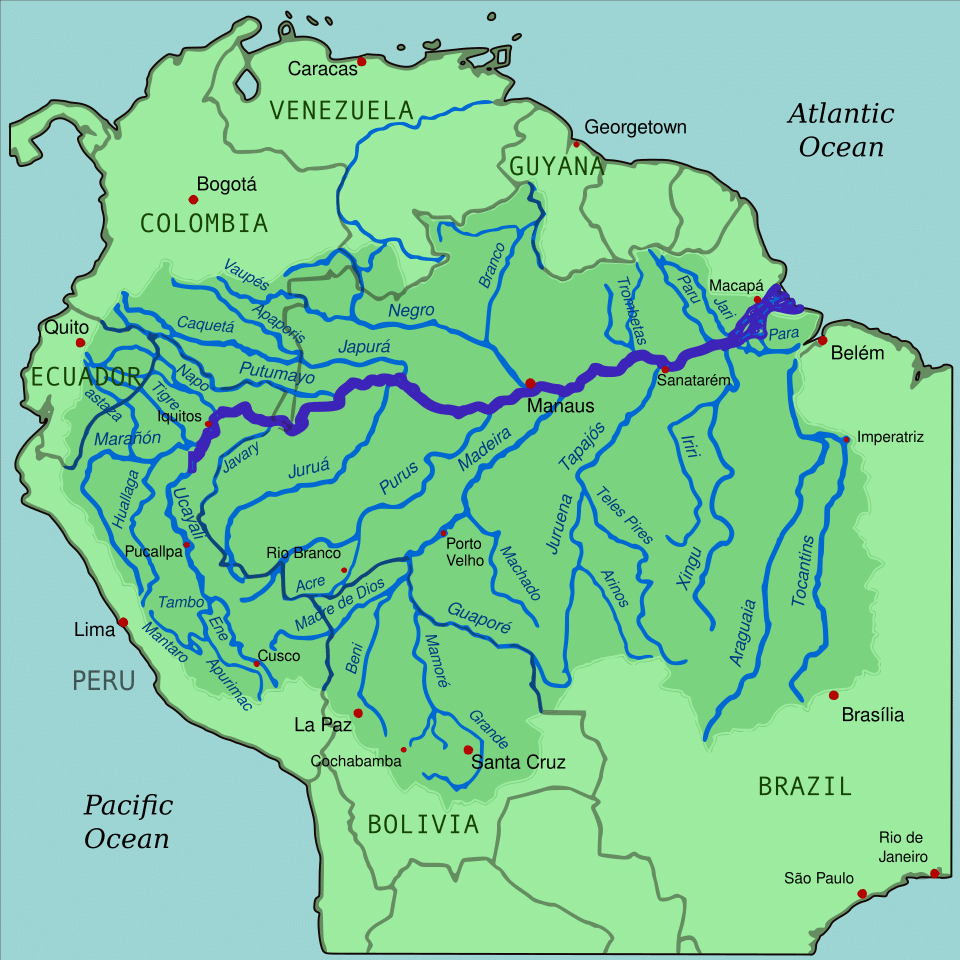
Corydoras schwartzi is native to Brazil, specifically the Rio Purus basin, which is a major tributary of the Amazon River. The Rio Purus is one of the longer tributaries in the Amazon system, draining a vast area of western Brazil before joining the main Amazon channel. This gives the species a relatively localized distribution compared to more widespread corydoras like the three-line cory.
In the wild, Schwartz’s cories inhabit shallow, slow-moving streams and tributaries with soft, sandy bottoms. The water is typically soft and slightly acidic, often darkened by tannins from decomposing leaf litter and submerged wood. They forage in groups along the substrate, picking through sand and organic debris for small invertebrates, insect larvae, and plant matter. Their natural habitats are well-shaded by riparian vegetation, with plenty of driftwood, roots, and fallen leaves providing cover and foraging opportunities.
Appearance & Identification
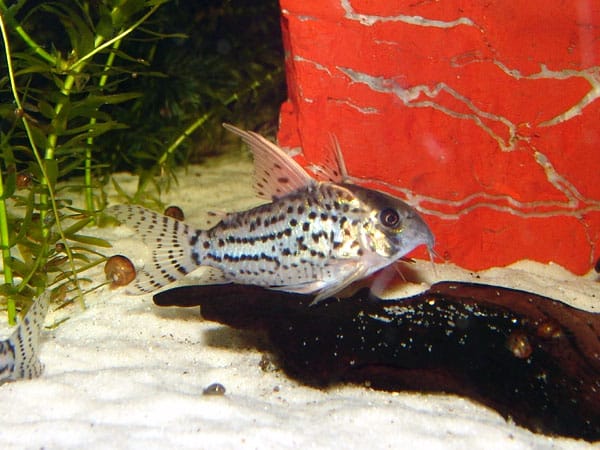
Schwartz’s cory has the typical armored Corydoras body shape, compact and rounded with overlapping bony scutes instead of traditional scales. The base body color is a pale cream to light tan, and what really makes this species pop is the bold, dark horizontal stripe running along the lateral line from behind the gill plate to the base of the tail. This stripe is thick, cleanly defined, and darker than what you’d see on most other patterned corydoras.
Above the main lateral stripe, the body is marked with smaller dark spots and blotches, but they don’t overwhelm the clean look of that primary stripe. The dorsal fin has a prominent dark blotch at the leading edge, which is a classic Corydoras feature. The head is lightly spotted with small dark dots. The overall effect is a fish that looks bold and well-defined rather than busy or cluttered.
People sometimes confuse Schwartz’s cory with the three-line cory (C. trilineatus), but there are clear differences. Schwartz’s cory has a bolder, cleaner horizontal stripe with less of the maze-like reticulated patterning that defines the three-line cory. The markings on the head of C. schwartzi are more discrete spots rather than the connected, network-like lines you see on trilineatus. Side by side, the distinction is obvious.
Male vs. Female
Sexing Schwartz’s cory follows the same general approach as most Corydoras:
- Females: Larger and noticeably rounder-bodied than males, especially when carrying eggs. When viewed from above, gravid females are clearly wider through the midsection. They tend to be slightly longer overall.
- Males: Slimmer and slightly smaller, with a more streamlined body profile when seen from above. Their pectoral fins are often slightly more pointed compared to the rounder fins on females.
The differences become most apparent in well-conditioned, mature adults. If you keep a group of 6 or more, comparing individuals side by side makes it fairly straightforward to pick out who’s who once they’re fully grown.
Average Size & Lifespan
Schwartz’s cory reaches a maximum size of about 2.5 inches (6 cm) in aquarium conditions. That puts it squarely in the medium-sized range for Corydoras, similar in size to the three-line cory and sterbai cory, and noticeably larger than pygmy or dwarf species.
With good care, expect a lifespan of 5 to 8 years in captivity. The key factors for longevity are the same as any Corydoras: clean water, a proper sand substrate, a varied diet, and the social security of being kept in a proper group. Stressed or poorly kept cories rarely make it past a couple of years, so getting the basics right matters a lot.
Schwartz’s corydoras is a mid-sized species often confused with C. similis and C. weitzmani. It is peaceful, adaptable, and does well in standard community tank conditions.
Care Guide
Tank Size
A minimum of 20 gallons (76 liters) is recommended for a group of six Schwartz’s cories. These are active bottom foragers that need horizontal swimming space to do their thing, so a 20-gallon long is actually a better pick than a standard 20-gallon tall because of the larger footprint. If you’re planning a community setup with midwater species, bumping up to 30 gallons (114 liters) or more will give everyone plenty of room.
Water Parameters
| Parameter | Ideal Range |
|---|---|
| Temperature | 72 to 79°F (22 to 26°C) |
| pH | 6.0 to 7.5 |
| Hardness | 2 to 15 dGH |
| KH | 1 to 12 dKH |
Schwartz’s cory is reasonably adaptable, but it does best in softer, slightly acidic water that reflects its Amazonian origins. They’ll tolerate moderately hard water and neutral pH without major issues, but pushing them into very hard, alkaline conditions isn’t ideal. Consistency is more important than chasing a perfect number. Keep parameters stable, stay on top of your water change schedule, and they’ll do well.
Filtration & Water Flow
A hang-on-back filter or canister filter rated for your tank size is all you need. Target a turnover rate of about 4 to 6 times the tank volume per hour. Corydoras come from calm waters, so keep the flow moderate. If your filter pushes too much current near the bottom, use a spray bar or baffle to spread it out. Sponge filters are also excellent for Corydoras tanks, especially as a primary filter in breeding setups.
Good oxygenation matters. Even though Schwartz’s cories are obligate air breathers that will visit the surface for atmospheric air, well-oxygenated water reduces how often they need to make those trips and keeps them more comfortable day to day.
Lighting
Schwartz’s cories are not picky about lighting, but they tend to be more active and confident under moderate to subdued light levels. This makes sense given their natural habitats are shaded by overhanging vegetation. If you run high-intensity planted tank lights, just make sure there are shaded areas created by floating plants, driftwood overhangs, or dense plant growth where the cories can retreat when they want a break.
Plants & Decorations
A well-decorated tank with plenty of cover makes Corydoras feel secure and brings out their natural behavior. Good additions include:
- Driftwood and bogwood for shelter and natural tannin release
- Smooth river rocks and small caves for hiding spots
- Java fern, Anubias, and Amazon swords (attach epiphytes to hardscape so cory foraging doesn’t uproot them)
- Floating plants like Amazon frogbit or water lettuce for shade
- Dried leaf litter (Indian almond leaves, oak leaves) to replicate their natural environment and add beneficial tannins
Leave open areas of sand for foraging. Corydoras spend a huge amount of time sifting through the substrate, and they need clear bottom space to work across. Balance hiding spots with open foraging zones and you’ll have happy fish.
Substrate
This is non-negotiable: sand substrate is a must for Corydoras. Schwartz’s cories spend their lives on the bottom, constantly probing the substrate with their barbels as they search for food. Rough gravel, sharp-edged substrates, or coarse materials will erode and damage those delicate barbels over time, leading to infections and making it harder for the fish to find food.
Fine play sand, pool filter sand, or aquarium-specific sand all work great. If you run an aqua soil in a planted tank, create a dedicated sand zone for the cories. One of the best things about keeping corydoras on sand is watching them take a mouthful, sift it through their gills, and move on to the next spot. It’s endlessly entertaining, and they can only do it properly on sand.
Is the Schwartz’s Cory Right for You?
Before you buy, run through this honest checklist. The Schwartz’s Cory is a great fish for the right keeper, but it is not for everyone.
- You want a corydoras with a bold, distinctive horizontal stripe pattern
- You keep moderately cool to tropical temperatures (72 to 77F)
- You can provide dark substrate to bring out the best pattern contrast
- You are willing to keep a group of 6+ for proper social behavior
- You have a 20-gallon or larger tank with stable water parameters
- You want a mid-priced cory that looks more expensive than it is
Tank Mates
Schwartz’s cory is a classic peaceful community fish. They occupy the bottom of the tank, mind their own business, and get along with pretty much anything that isn’t big enough to eat them or aggressive enough to harass them.
Best Tank Mates
- Tetras: Neons, cardinals, embers, rummy-noses, and other small tetras are ideal companions. They stick to the midwater and leave the bottom to the cories.
- Rasboras: Harlequin rasboras, chili rasboras, and lambchop rasboras make great midwater partners.
- Other Corydoras: You can keep multiple Corydoras species together. Each species tends to shoal with its own kind, so keep 6+ of each species you add.
- Small gouramis: Honey gouramis and sparkling gouramis are peaceful top-dwellers that pair well with bottom-dwelling cories.
- Otocinclus: Another peaceful bottom-dwelling species with similar water preferences.
- Dwarf cichlids: Apistogramma species and German blue rams work well in tanks of 30+ gallons.
- Shrimp: Amano shrimp, cherry shrimp, and other dwarf shrimp are completely safe with Corydoras.
- Snails: Nerite snails, mystery snails, and Malaysian trumpet snails are all compatible.
Tank Mates to Avoid
- Large cichlids: Oscars, Jack Dempseys, and other predatory cichlids will eat or terrorize cories.
- Aggressive bottom dwellers: Red-tailed sharks, rainbow sharks, and territorial loaches can bully cories off the bottom.
- Large catfish: Any species big enough to swallow a 2.5-inch fish is a risk.
- Fin nippers: Tiger barbs and serpae tetras in small groups can harass cories.
Worth noting: like all Corydoras, Schwartz’s cory has mildly venomous spines in its dorsal and pectoral fins. The venom is a defense mechanism, not a threat to tankmates under normal circumstances. But it’s another good reason not to house them with predatory fish that might try to eat them.
Food & Diet
Schwartz’s cories are omnivores and active bottom feeders, but they absolutely should not be treated as your tank’s “cleanup crew.” Relying on whatever scraps drift down from midwater fish will leave them underfed and unhealthy. They need their own dedicated feeding.
- Staple: High-quality sinking pellets or wafers formulated for bottom feeders. These should be the foundation of their diet.
- Frozen foods: Bloodworms, brine shrimp, daphnia, and tubifex worms 2 to 3 times per week. Drop them near the bottom so the cories actually get to them before faster midwater fish grab everything.
- Live foods: Blackworms, live brine shrimp, and daphnia are excellent for conditioning and bring out intense foraging behavior. Corydoras absolutely love live blackworms.
- Vegetables: Blanched zucchini, cucumber, or spinach occasionally. They’ll also graze on soft algae film that grows on surfaces.
Feeding tip: Feed sinking foods in the evening or after lights out. Corydoras are most active during dawn and dusk hours, and evening feeding ensures they get their fair share without competing with faster midwater species. Offer an amount they can finish in about 2 to 3 minutes.
Breeding & Reproduction
Breeding Difficulty
Schwartz’s cory is moderately difficult to breed in captivity. It’s not as straightforward as bronze or peppered cories, which seem to spawn almost on their own. But with proper conditioning and the right triggers, experienced hobbyists have had success. Patience and attention to water quality are key.
Spawning Tank Setup
- A dedicated breeding tank of 10 to 20 gallons (38 to 76 liters) works best
- Bare bottom or a thin layer of fine sand for easy egg management
- Smooth surfaces for egg deposition: broad-leaved plants like Anubias or Amazon swords, flat rocks, or even the tank glass
- A gentle sponge filter for filtration without putting eggs or fry at risk
- Moderate to dim lighting
Water Conditions for Breeding
- Temperature: 72 to 75°F (22 to 24°C), slightly cooler than normal maintenance temperature
- pH: 6.0 to 6.5
- Hardness: 2 to 8 dGH (softer water encourages spawning)
- A large, cool water change (50% or more, 2 to 4°F cooler than tank temperature) is the classic Corydoras spawning trigger. This mimics the onset of the rainy season in their Amazon habitat.
Conditioning & Spawning
Condition a breeding group with a ratio of 2 to 3 males per female, feeding heavily with protein-rich live and frozen foods for 1 to 2 weeks. Bloodworms, blackworms, and live brine shrimp are all great conditioning foods. Well-conditioned females will visibly round out with eggs.
Corydoras are well-known for their distinctive T-position spawning behavior. The female presses her mouth against the male’s genital area, forming a T-shape. She receives sperm (the exact fertilization mechanism is still debated among researchers), then swims to a chosen surface and clasps 1 to 4 eggs between her ventral fins before depositing them on glass, leaves, or other smooth surfaces. This process repeats many times over several hours, producing anywhere from 50 to 150+ adhesive eggs scattered around the tank.
Egg & Fry Care
Remove the adults after spawning is complete, as they will eat the eggs if given the chance. The adhesive eggs are small, about 1.5 to 2 mm in diameter, and pale white to slightly yellowish. They typically hatch in 3 to 5 days depending on temperature.
Fungus is the biggest enemy of Corydoras eggs. Adding a few drops of methylene blue to the water or placing an Indian almond leaf in the tank provides antifungal properties. Remove any eggs that turn white and fuzzy immediately, because the fungus will spread to healthy eggs fast.
Newly hatched fry will absorb their yolk sac over 2 to 3 days before becoming free-swimming. First foods should be microworms, vinegar eels, or freshly hatched brine shrimp (Artemia nauplii). As they grow, gradually introduce crushed sinking pellets and larger frozen foods. Keep the water pristine with small, frequent water changes during the fry-rearing stage.
Common Health Issues
Barbel Erosion
This is the number one health problem in Corydoras across the board, and it’s almost always caused by keeping them on rough or sharp substrates. The barbels gradually shorten, become infected, and eventually make it difficult for the fish to locate food properly.
Prevention: Keep them on fine sand. It’s that simple. If you notice shortened barbels after switching from gravel to sand, maintain pristine water quality and the barbels will typically regrow over time. Severe cases may not fully recover.
Ich (White Spot Disease)
Caused by the protozoan Ichthyophthirius multifiliis, ich shows up as small white spots on the body and fins. Corydoras are particularly vulnerable after transport or when introduced to a new tank, as the stress lowers their immune response.
Treatment: Use caution with medications. Corydoras are scaleless fish (they have bony scutes rather than traditional scales) and are sensitive to many common treatments, particularly copper-based products. Use half-dose medications and slowly raise the temperature to 82 to 84°F (28 to 29°C). Avoid salt treatments or use only very low concentrations, as cories are salt-sensitive.
Red Blotch Disease
Red blotch disease shows up as reddish patches on the belly and is fairly common in Corydoras. It’s usually tied to bacterial infections triggered by poor water quality, high nitrate levels, or dirty substrates.
Treatment: Start with large water changes and get the water quality back on track. Mild cases often resolve with clean water alone. More severe infections may require antibacterial treatment, but always dose conservatively with Corydoras.
General Prevention
- Quarantine all new fish for at least 2 weeks before adding to the main tank
- Maintain clean water with regular 20 to 25% weekly water changes
- Keep the substrate clean by gently vacuuming sand during water changes
- Avoid overcrowding and keep water parameters stable
- Always use medications at reduced doses for Corydoras
Common Mistakes to Avoid
- Using gravel substrate: This is the single biggest care mistake with any Corydoras species. Rough gravel erodes their barbels, causes infections, and prevents their natural sifting behavior. Fine sand is essential.
- Keeping them alone or in small numbers: Corydoras are social fish. A lone cory or a group of 2 to 3 will be stressed, hide constantly, and have a shorter lifespan. Always keep at least 6.
- Relying on leftover food: Schwartz’s cories are not a cleanup crew. They need their own dedicated sinking foods, not whatever scraps happen to drift down from midwater feeders.
- Panicking about surface breathing: New cory keepers often get alarmed when their fish dart to the surface for air. This is completely normal. Corydoras are obligate air breathers that supplement their oxygen through their intestinal lining. They do it every day. However, if the frequency increases dramatically, check your dissolved oxygen levels and aeration.
- Overdosing medications: Corydoras are sensitive to many common fish medications, especially copper-based products and salt. Always use half-doses and monitor closely during treatment.
- Confusing them with three-line cories: The two species have different patterning. Schwartz’s cory has a bolder, cleaner horizontal stripe with discrete spots on the head, while the three-line cory has a more reticulated, maze-like pattern with connected markings. Knowing what you have helps you research the right care information.
Where to Buy
Schwartz’s cory isn’t as widely available as bronze, peppered, or sterbai cories, but it does show up in the trade periodically. Your best bet for finding healthy specimens is through reputable online retailers rather than waiting for your local fish store to stock them:
- Flip Aquatics. A reliable source for quality freshwater fish with careful shipping practices.
- Dan’s Fish. Known for healthy, well-acclimated fish and transparent livestock sourcing.
Always buy a group of 6 or more. Most online retailers offer better per-fish pricing on larger orders, and your cories will be noticeably happier and more active in a proper group.
Frequently Asked Questions
How is Schwartz’s cory different from the three-line cory?
The easiest way to tell them apart is the patterning. Schwartz’s cory has a bold, clean horizontal stripe along its side with individual, discrete spots on the head. The three-line cory (C. trilineatus) has a more reticulated, maze-like pattern where the dark markings on the head connect into chains and squiggly lines. Side by side, the difference is obvious. Schwartz’s cory looks cleaner and more “striped,” while the three-line cory looks busier and more “netted.”
How many Schwartz’s cories should I keep?
A minimum of 6. Like all Corydoras, they are social fish that need a group to feel secure. In groups of 6 or more, they shoal together, forage actively, and spend much more time out in the open. Lone cories or small groups tend to hide, stress out, and are more prone to health problems.
Why does my Schwartz’s cory keep swimming to the surface?
This is completely normal Corydoras behavior. They are obligate air breathers that can absorb oxygen through their intestinal lining. You’ll see them dart to the surface, take a quick gulp of air, and shoot right back down to the bottom. Every healthy cory does this throughout the day. If you notice a significant increase in frequency, it could indicate low dissolved oxygen in the water, so check your aeration and do a water test.
Is Schwartz’s cory good for beginners?
It’s a moderate-difficulty species. If you’re a complete beginner, bronze or peppered cories are more forgiving first choices. But if you have some basic fishkeeping experience and can provide a properly set up tank with sand substrate, stable water parameters, and a varied diet, Schwartz’s cory is absolutely manageable. It’s not a difficult fish, just not quite as bulletproof as the most common species.
Can I keep Schwartz’s cory with shrimp?
Absolutely. Corydoras are completely safe with all commonly kept shrimp species, including cherry shrimp, Amano shrimp, and crystal shrimp. They have zero interest in hunting shrimp. The most “aggressive” interaction you’ll see is a cory accidentally bumping into a shrimp while foraging along the bottom.
Do Schwartz’s cories really need sand substrate?
Yes. This is one of the most important parts of Corydoras care. They constantly probe the substrate with their barbels, take mouthfuls of sand, and sift it through their gills while searching for food. Rough gravel damages their barbels over time, leading to erosion and infections. Fine sand lets them exhibit their full range of natural behaviors and keeps them healthy long-term. Consider it a requirement, not a suggestion.
Can I mix Schwartz’s cory with other Corydoras species?
Yes, different Corydoras species coexist peacefully in the same tank. However, each species prefers to shoal with its own kind. So if you want Schwartz’s cories and sterbai cories in the same tank, for example, you should keep at least 6 of each rather than splitting a group of 6 between two species. They’ll all share the bottom without any territorial issues.
How the Schwartz’s Cory Compares to Similar Species
Schwartz’s Cory vs. Three-Line Cory
Both have prominent stripe patterns, but the Schwartz’s Cory has a cleaner, more defined single horizontal stripe, while the Three-Line Cory has a more complex reticulated pattern. Both are hardy and similarly priced. Choose based on whether you prefer clean lines (Schwartz’s) or intricate patterns (Three-Line).
Schwartz’s Cory vs. Bandit Cory
The Bandit Cory has a distinctive eye mask, while the Schwartz’s Cory has a bold body stripe. Both are medium-sized, hardy corys. The Schwartz’s Cory is slightly more commonly available. Both are excellent choices for the keeper who wants a patterned cory without paying premium prices.
Expert Take (Mark Valderrama, AquariumStoreDepot)
After 25 years in the hobby and time managing fish stores, the schwartzs cory is one of those species I always recommend to hobbyists ready to move beyond the basics. Schwartz’s corydoras is a mid-sized species often confused with C. similis and C. weitzmani. It is peaceful, adaptable, and does well in standard community tank conditions. Schwartz’s cories must have sand or fine substrate – not gravel. Constant bottom foraging on sharp substrate will erode their barbels within months, making eating difficult.
Closing Thoughts
Schwartz’s cory is one of those species that flies under the radar for no good reason. It’s got a sharper look than most patterned corydoras, it’s hardy enough for intermediate keepers, and it brings the same bottom-dwelling charm and personality that makes the entire genus so popular. The bold lateral stripe gives it a clean, distinctive appearance that really stands out in a well-set-up community tank.
If you can find them in stock, pick up a group of 6 or more, give them a sandy substrate, keep the water clean, and feed them well. They’ll reward you with years of active foraging, entertaining group behavior, and that signature Corydoras personality that makes these little armored catfish some of the most beloved freshwater fish in the hobby.
Recommended Video
Check out our cory catfish tier list video where we rank the most popular corydoras in the hobby, including Schwartz’s cory:
References
- Seriously Fish, Corydoras schwartzi species profile. seriouslyfish.com
- FishBase, Corydoras schwartzi (Rössel, 1963). fishbase.se
- The Aquarium Wiki, Corydoras schwartzi. theaquariumwiki.com
- Practical Fishkeeping, Corydoras care and species identification guides. practicalfishkeeping.co.uk
- About the Author
- Latest Posts

I’m Mark Valderrama, founder of Aquarium Store Depot and a fishkeeper with over 25 years of hands-on experience. I started in the hobby at age 11, worked at local fish stores, and have kept freshwater tanks, ponds, and reef tanks ever since. I’ve been featured in two best-selling aquarium books on Amazon and built this site to share practical, experience-based fish keeping knowledge.
Leave a Reply